




Top 20 Edible Mushrooms Popular in Eidsvoll
Unveil the secrets of Eidsvoll's fungal world with our guide to the 20 most commonly found edible mushrooms. Renowned for its lush forests and damp, nutrient-rich soil, Eidsvoll is a haven for these culinary delights. Learn about the unique features, flavors, and culinary applications of each mushroom type, from their distinct appearances to their preferred habitats.
* Disclaimer: Content feedback CAN NOT be used as any basis for EATING ANY PLANTS. Some plants can be VERY POISONOUS, please purchase edible plants through regular channels.

Most Popular Edible Mushrooms
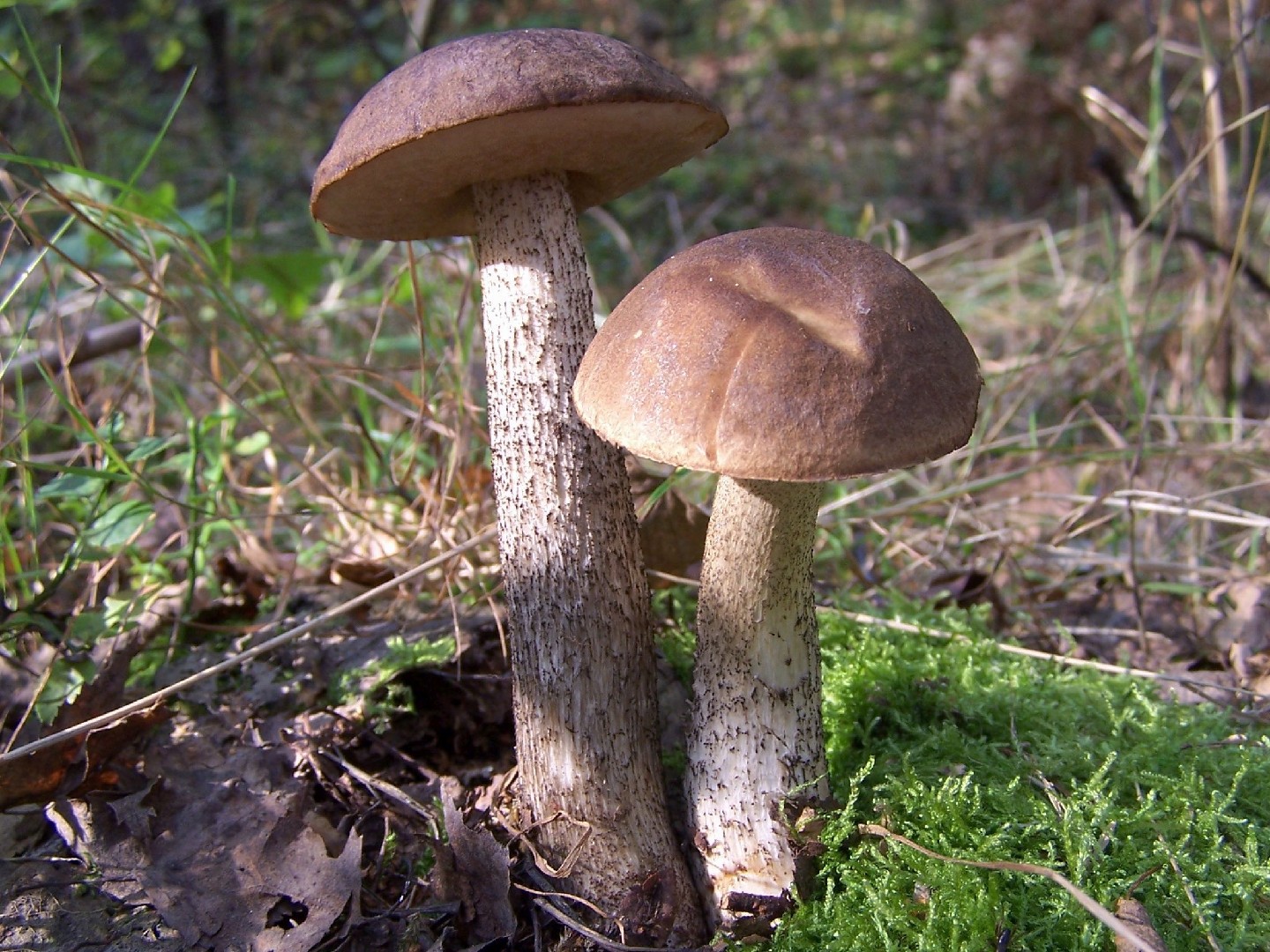
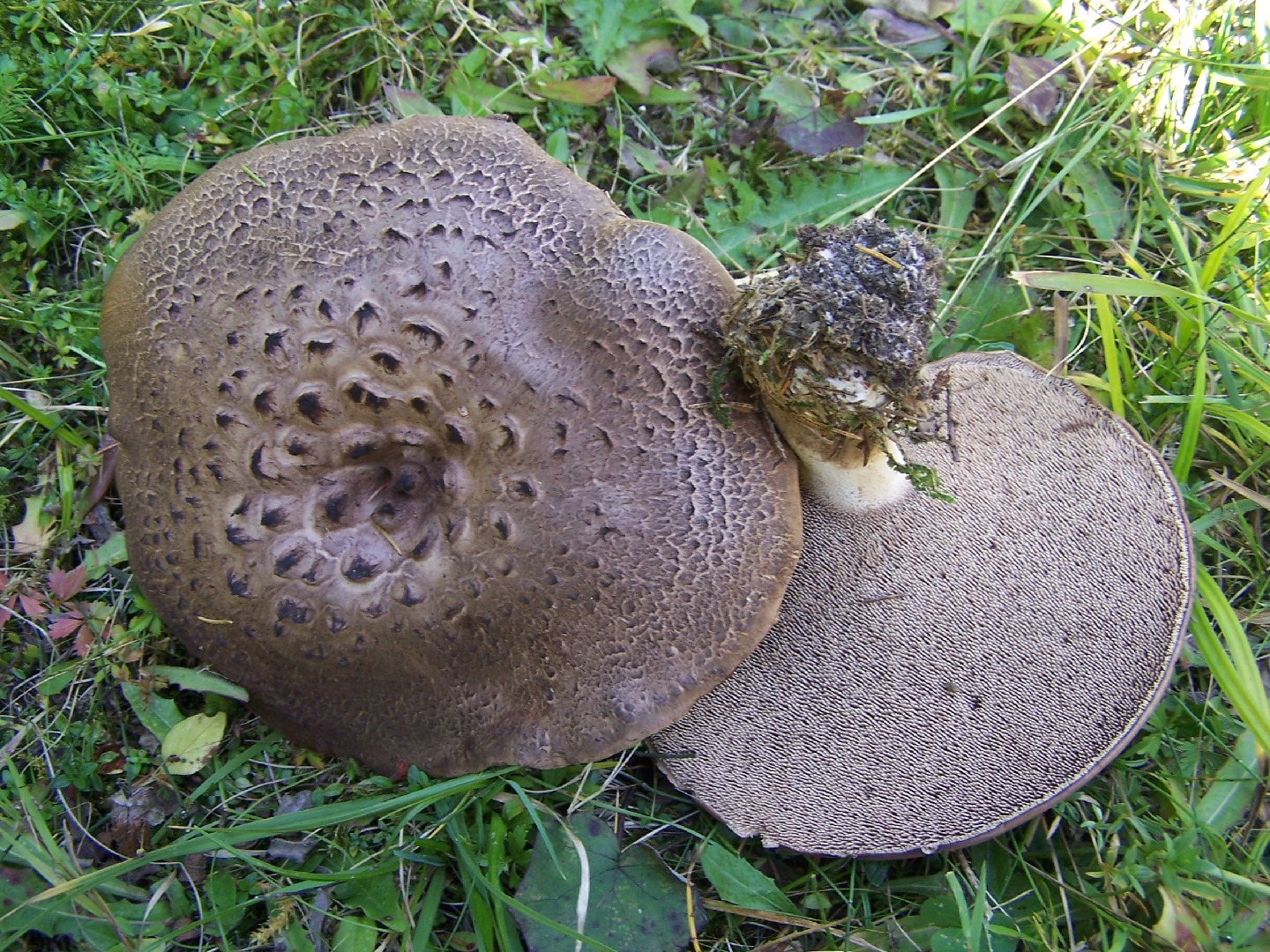
1. Brown birch-bolete
The brown birch-bolete is common around the northern hemisphere. It grows beneath birch trees and is usually easy to identify by its brown cap and scaly stem, the latter of which is referenced in its scientific name Leccinum scabrum. Occasionally, however, it can be found sporting a white cap.
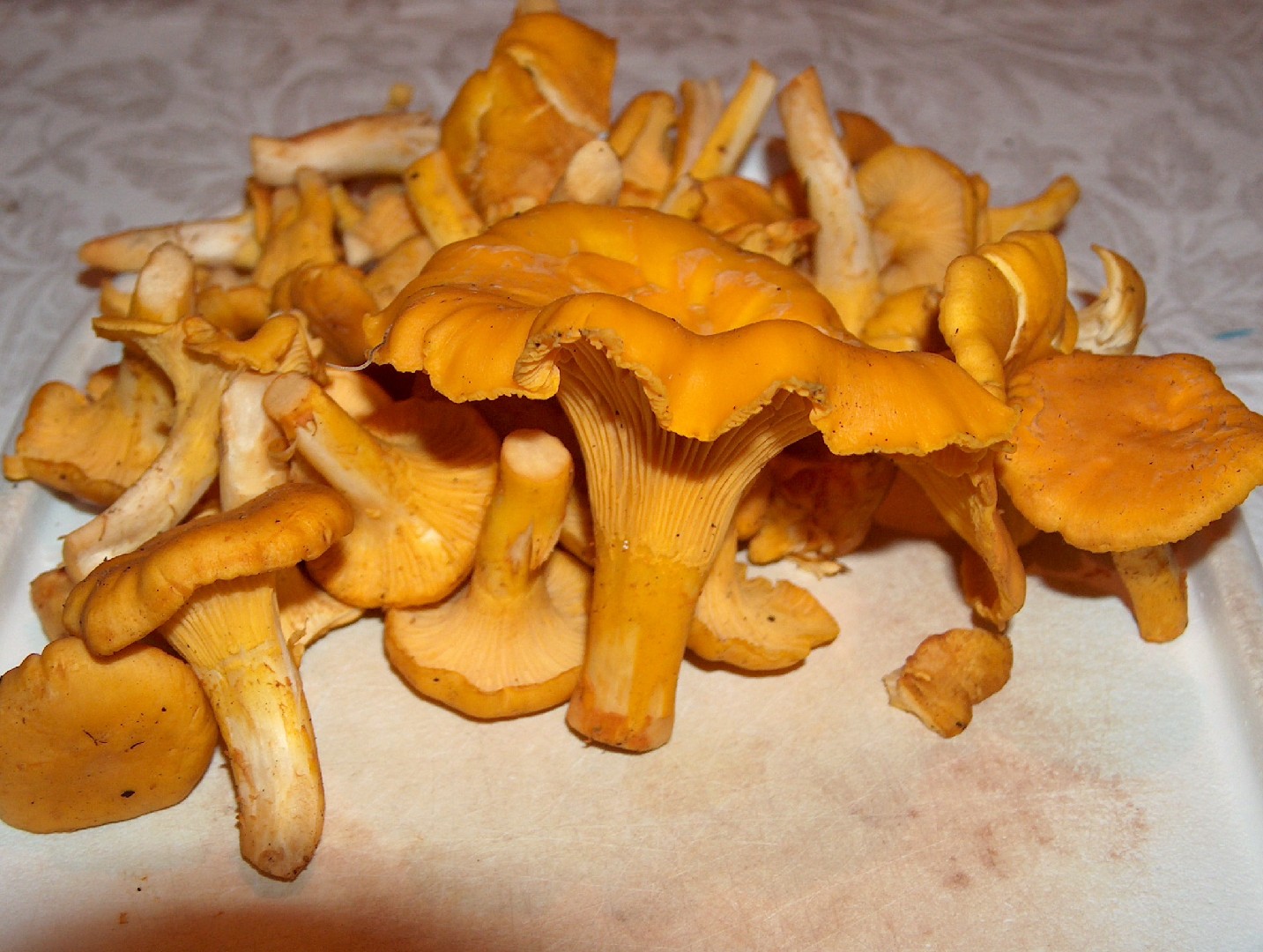
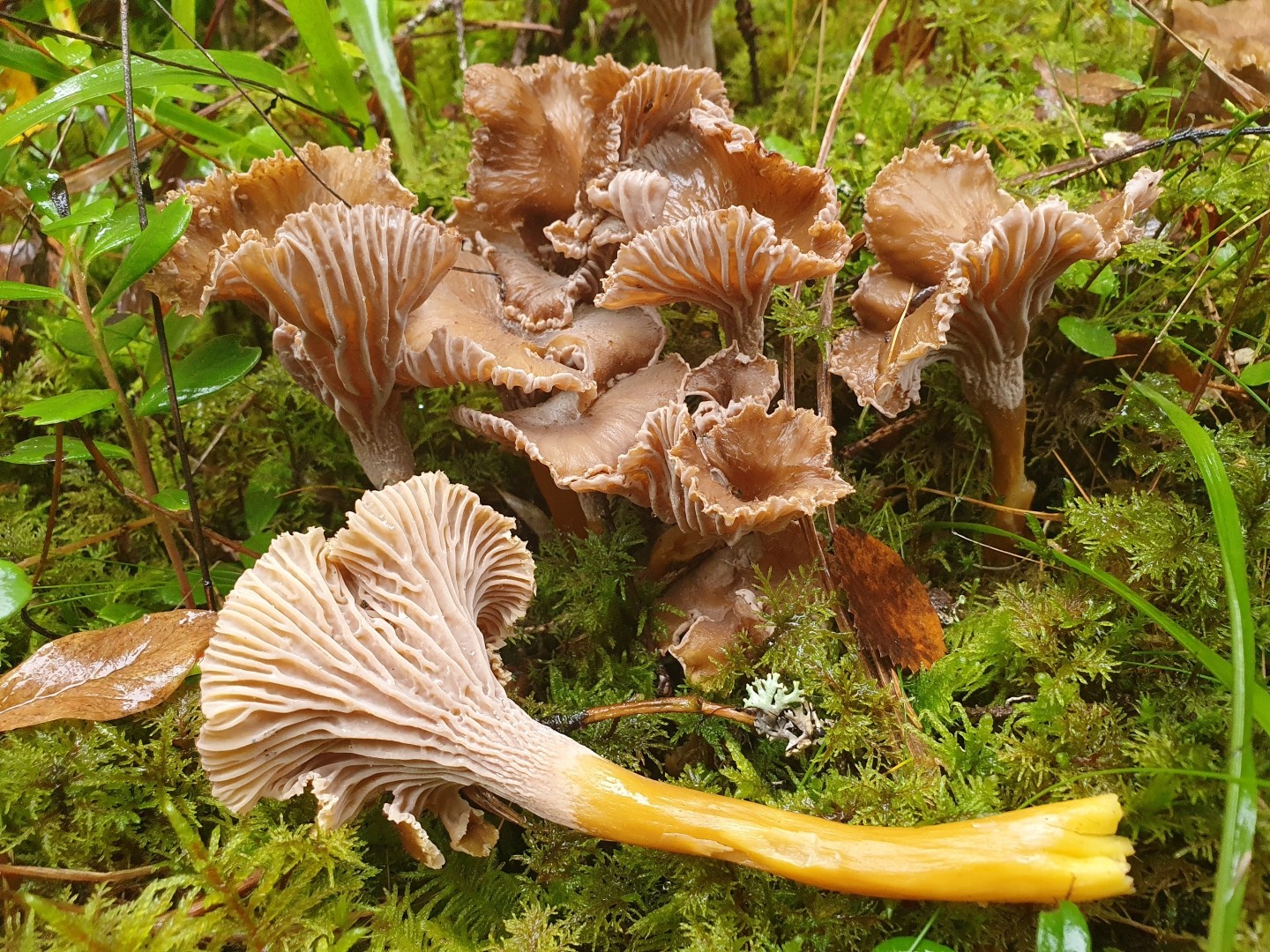
2. Golden chanterelle
Golden chanterelle mushrooms are popular in gourmet cuisine across Europe, where they grow wild during the warm (but not too hot) months. Similar species grow in other countries. Extremely popular with foragers, the golden chanterelle emits an apricot-like scent and contains an array of nutrients that benefit the human body. Several studies suggest consuming extremely large amounts may have detrimental effects on the eyes and muscles.
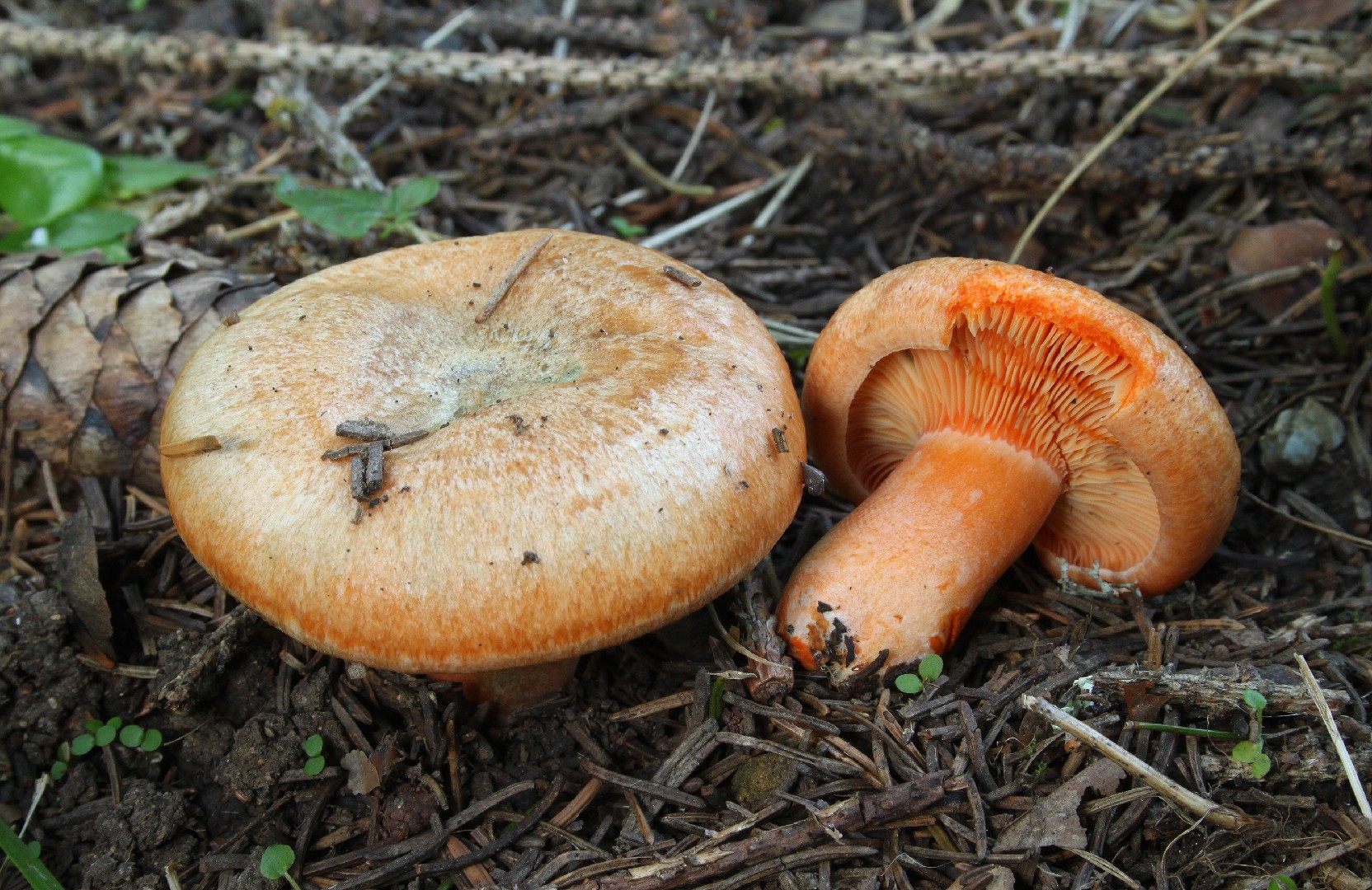
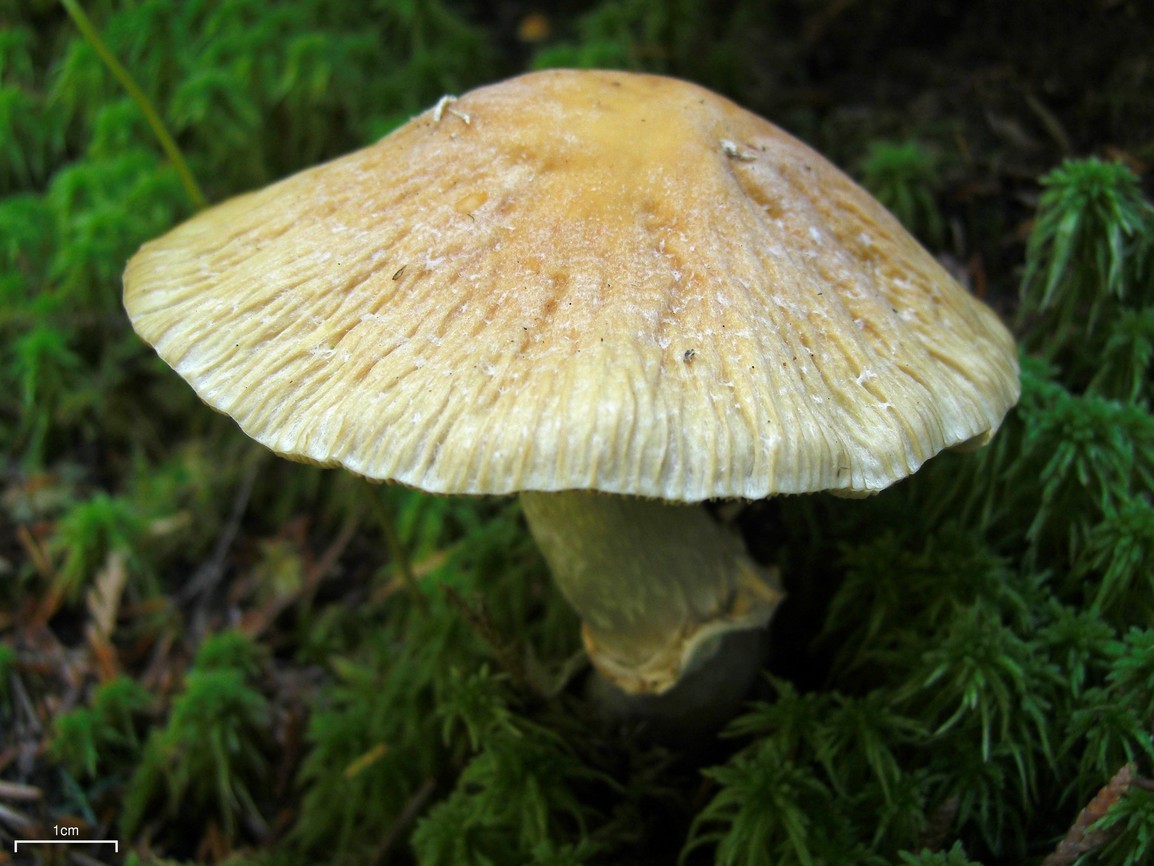
3. False saffron milkcap
A less-tasty cousin of the Saffron milkcap (Lactarius deliciosus), the false saffron milkcap is closely associated with spruce. When it appears in forests, it usually forms a large carpet. Species within the Lactarius genus are hard to differentiate from other, more poisonous mushrooms, and should not be foraged for food by the inexperienced.
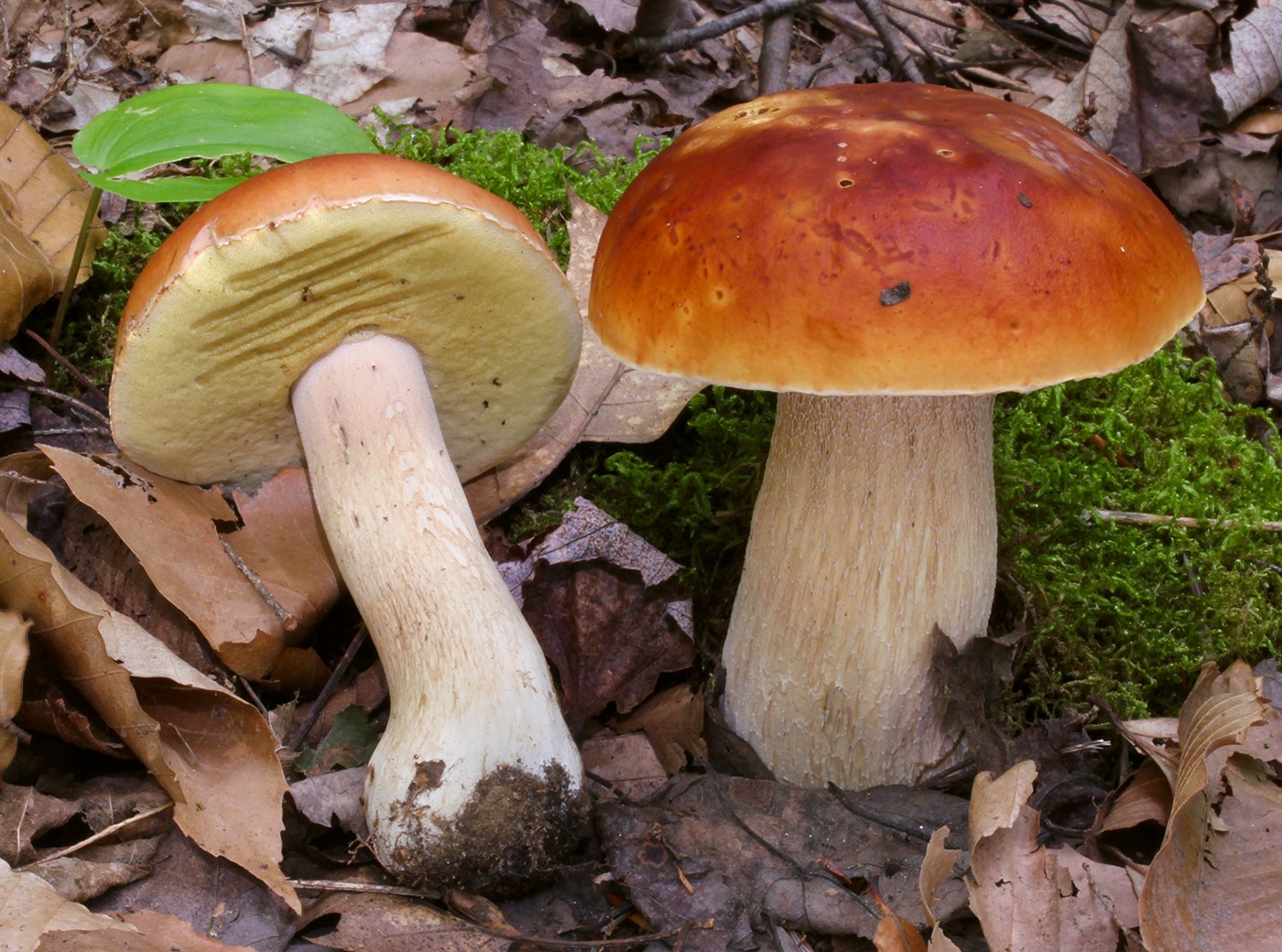
4. King bolete
Extremely popular in many cuisines, this edible wild mushroom grows around the world near the roots of forest trees. In some regions, king bolete mushrooms are collected in great enough volumes that their sale can support entire families during the harvest season. King boletes are reported to be high in fiber, vitamins B and C, calcium, potassium, magnesium, zinc, and several antioxidants.
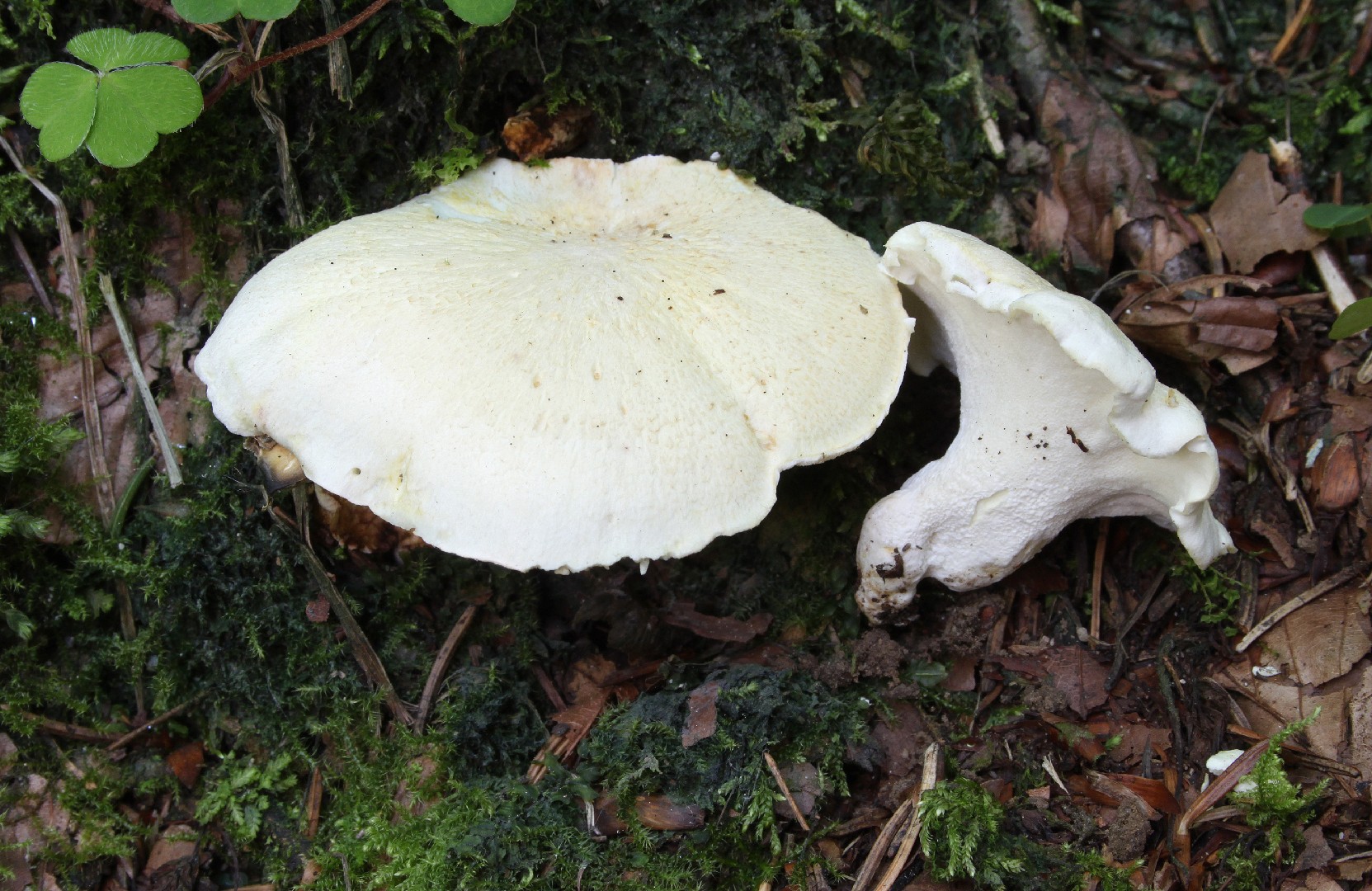
5. Sheep polypore
As its name suggests, sheep polypore is reminiscent of a clump of wool, with its white to tan color and cracks. Sheep polypore is found in forests as it forms connections with pine trees and other conifers. Its growing season extends from the late summer to the late fall or mid-winter in some areas.
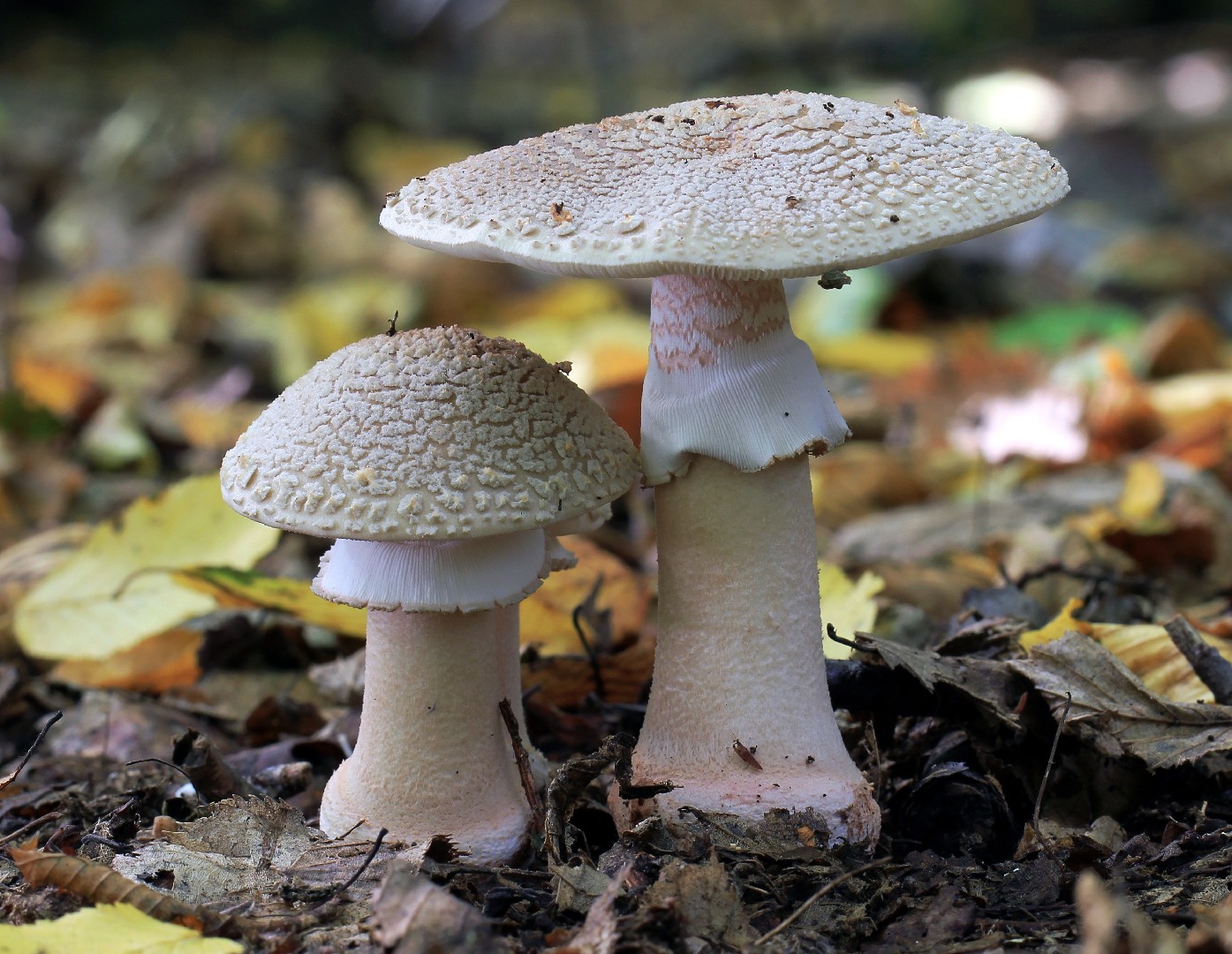
6. Blusher
The blusher mushroom is so named because it “blushes” to a pinkish red color when cut or bruised. It is found in many countries around the world, although it may not be native to the southern hemisphere. It contains a hemolytic toxin that can cause anemia if eaten.
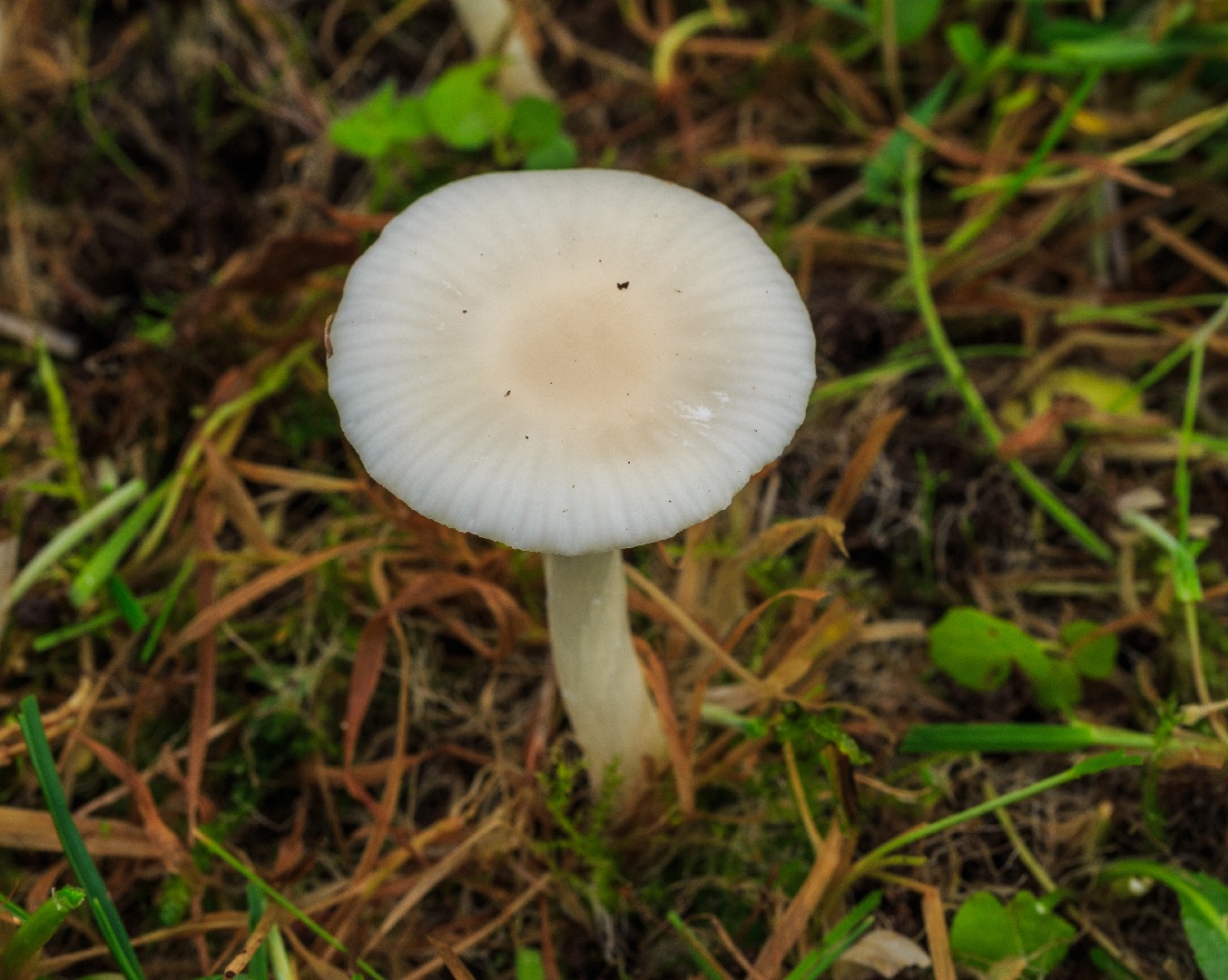
7. Snowy waxcap
The snowy waxcap is so-named because its stalk, cap, and gills are often uniformly white; however, tinges of tan or peach may occur with age, especially on the center of the cap. The species can be found in temperate grasslands and woodlands across the northern hemisphere, and in some parts of Australia.
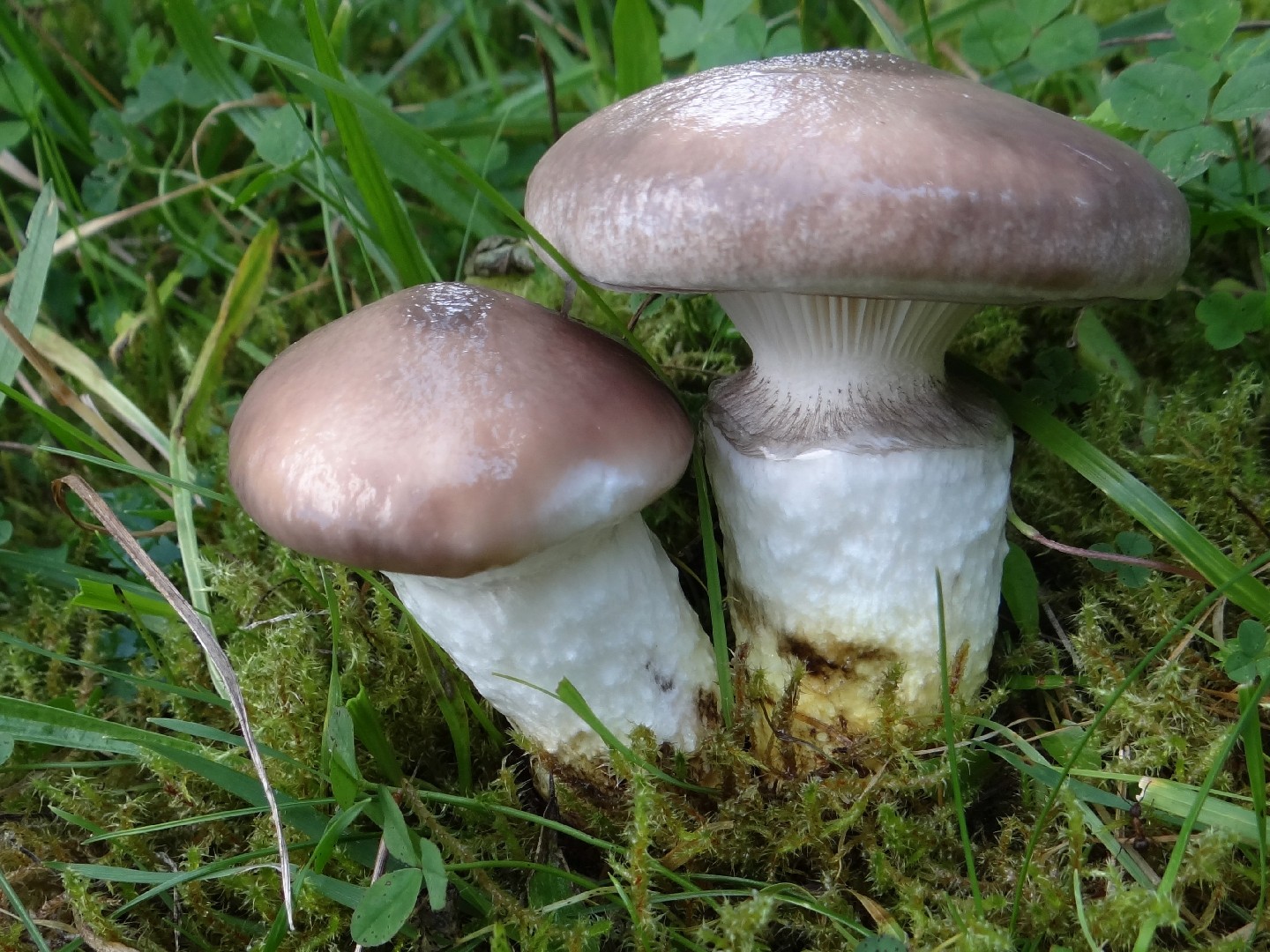
8. Slimy spike
A stocky, almost imposing mushroom, the slimy spike (Gomphidius glutinosus) has a round bulbous cap and a very thick stalk. This species is one of the more unusual members of the bolete order (Boletales) because it has gills, rather than a spongey pore surface. The "slimy" in this species' common name is well-earned - individuals are almost always coated in a shiny layer of slime.
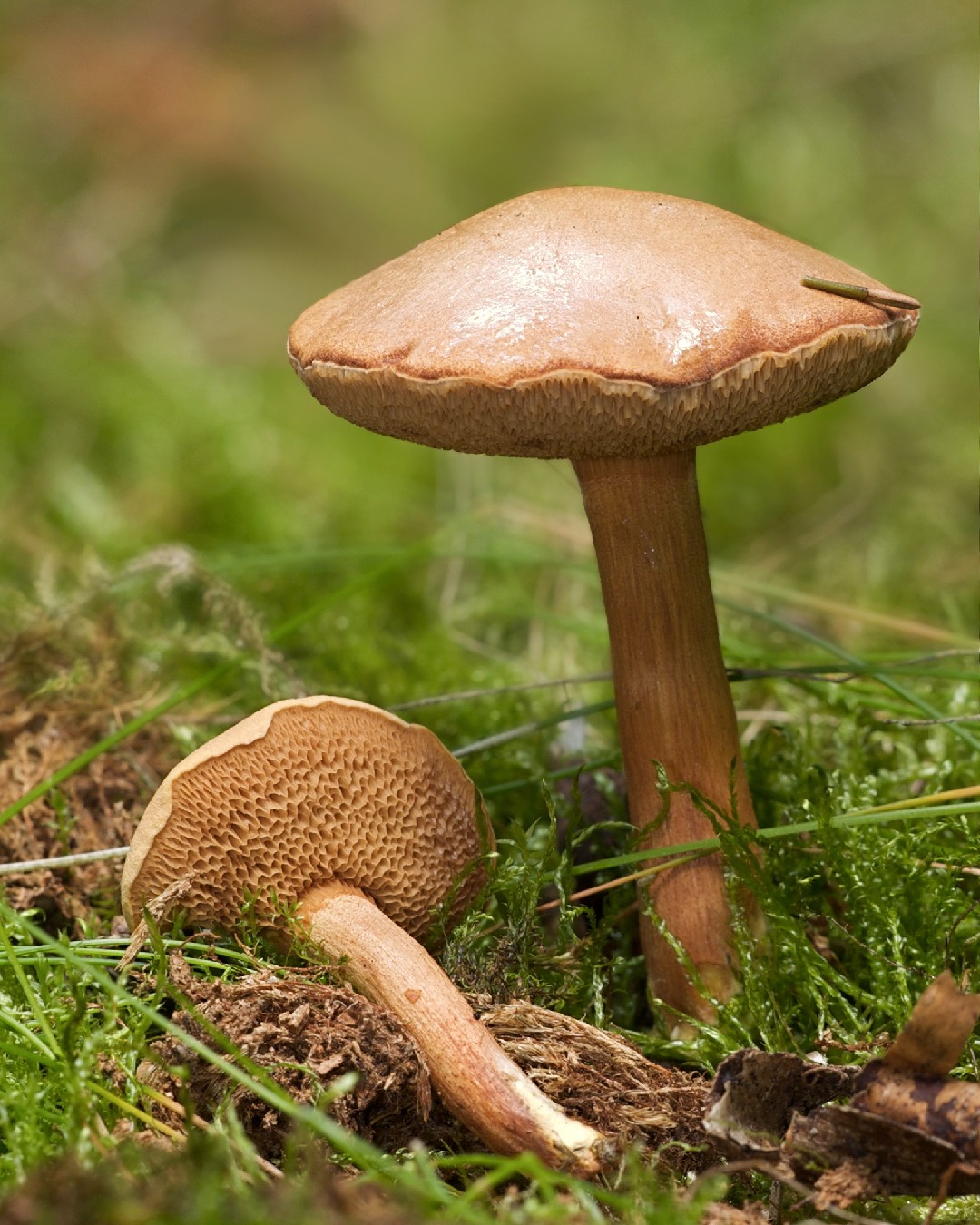
9. Peppery bolete
Peppery bolete(Chalciporus piperatus) has coloration ranging from browns to oranges, from pigments that lend themselves to the creation of natural dyes. Not only does peppery bolete prefer sandy soils and coniferous/beech trees, but it is also known to maintain parasitic relationships with certain other species of mushroom.
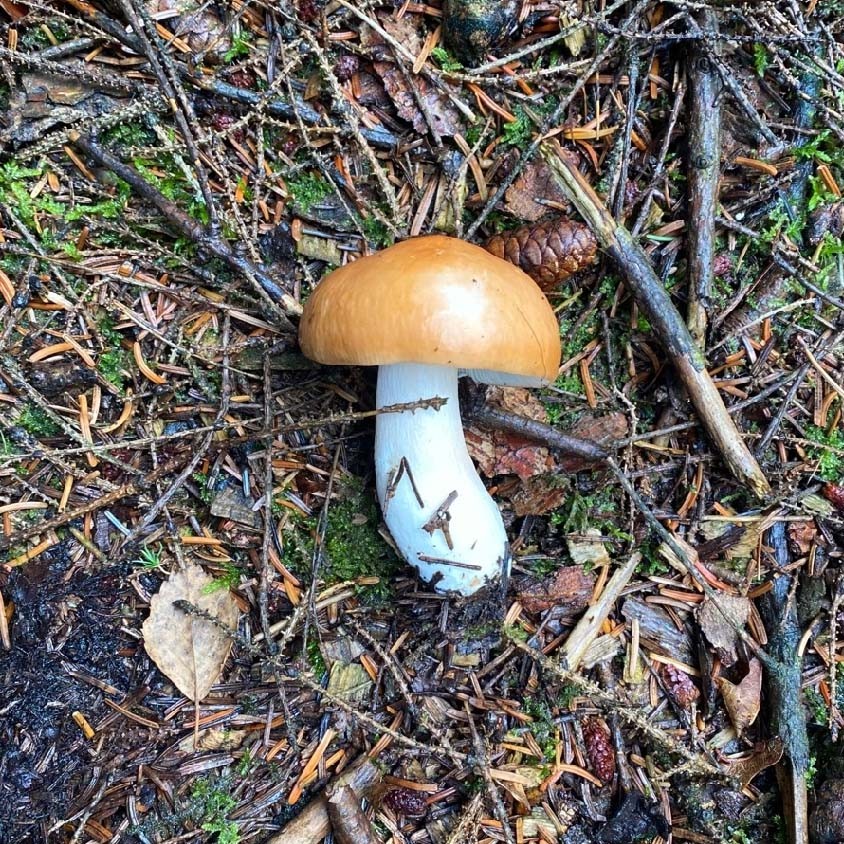
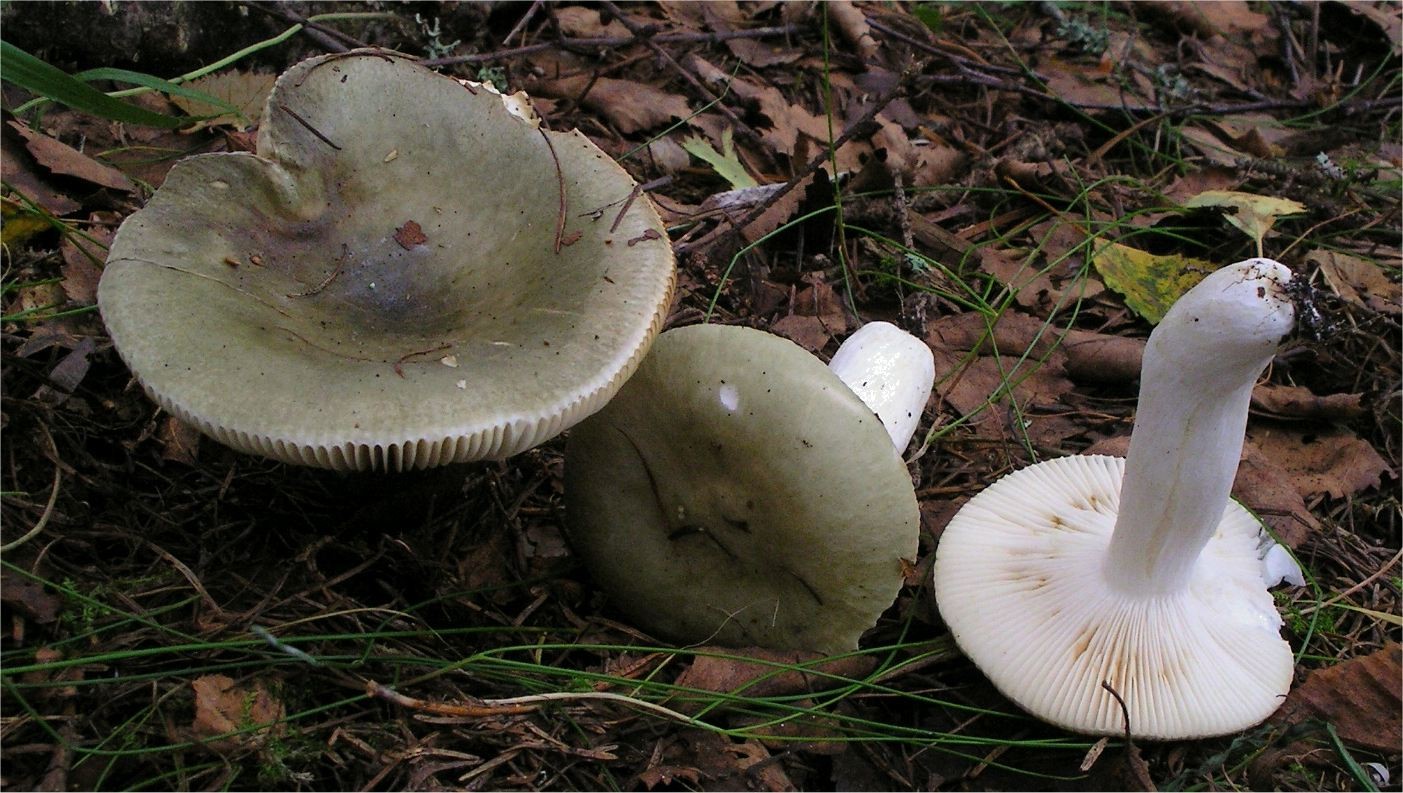
10. Copper brittlegill
Copper brittlegill (Russula decolorans ) has a usefully descriptive name that refers to its characteristic copper-colored cap. When damaged, the white flesh of copper brittlegill quickly fades to a dark grey. This species can be found growing in the leaf litter of coniferous forests. The name russula comes from the Latin word for red.
More







