




Top 20 Edible Mushrooms Popular in Fribourg
Delve into the world of mushrooms with our comprehensive guide that reveals the Top 20 most common mushrooms of Fribourg. Renowned for its dynamic ecosystems and conducive climate for fungi, Fribourg brings a cornucopia of edible mushrooms. Each mushroom species in our list will take you through a fascinating journey of discovery, unveiling distinctive features, intriguing tastes, various habitats, and unique culinary delights. Embrace the charm and mystery of mycology with our thoroughly researched and SEO-compliant content.
* Disclaimer: Content feedback CAN NOT be used as any basis for EATING ANY PLANTS. Some plants can be VERY POISONOUS, please purchase edible plants through regular channels.

Most Popular Edible Mushrooms
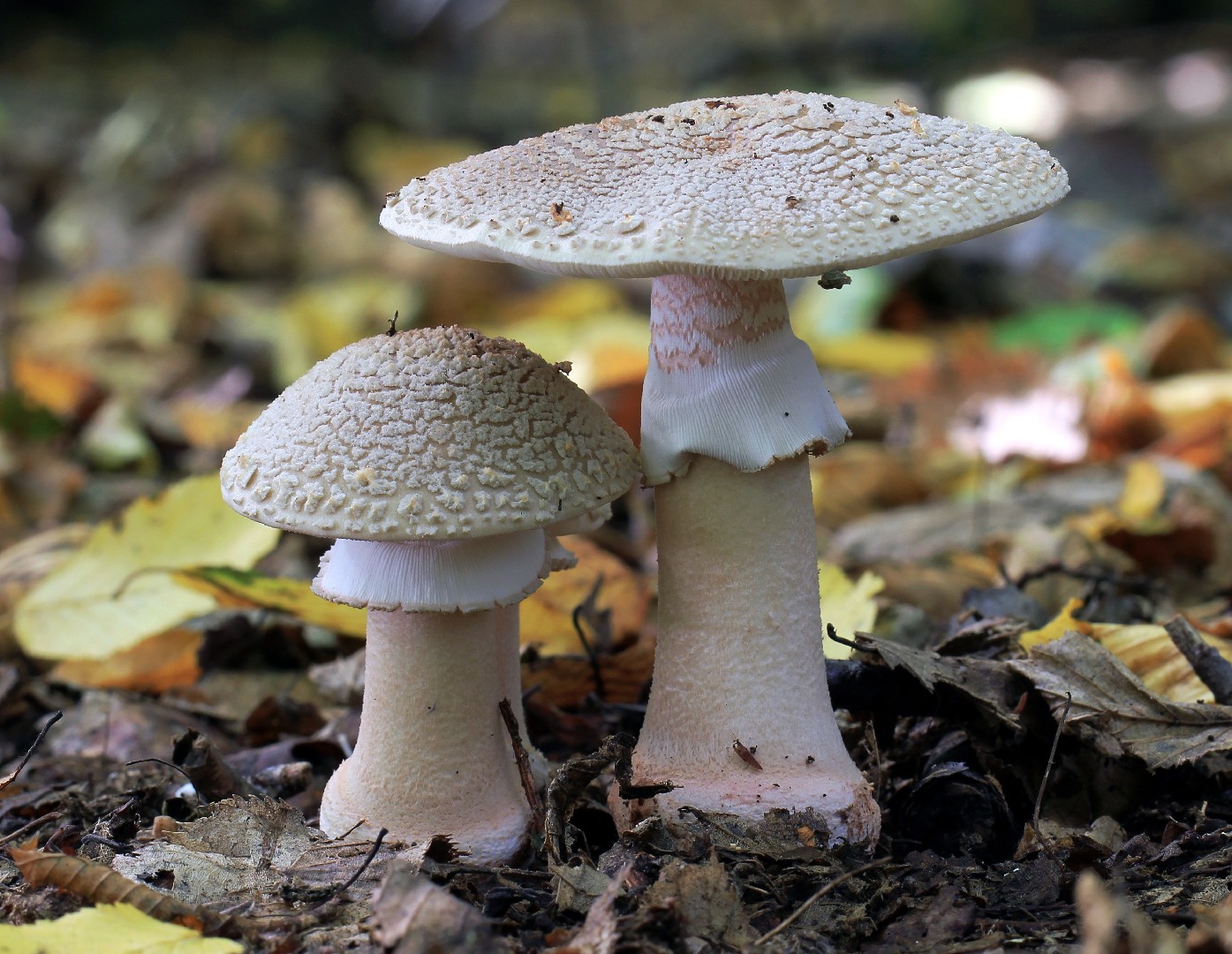
1. Blusher
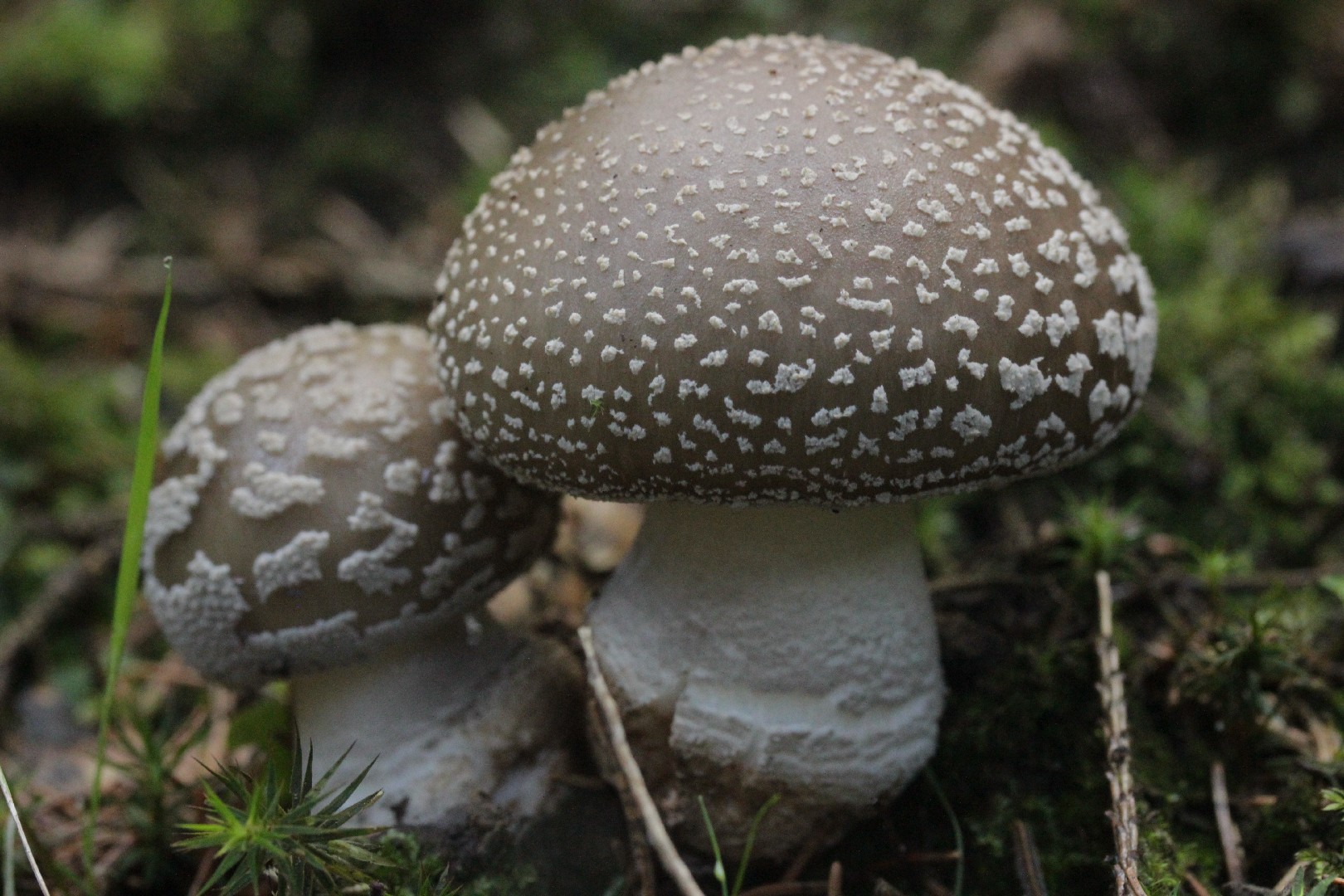
The blusher mushroom is so named because it “blushes” to a pinkish red color when cut or bruised. It is found in many countries around the world, although it may not be native to the southern hemisphere. It contains a hemolytic toxin that can cause anemia if eaten.
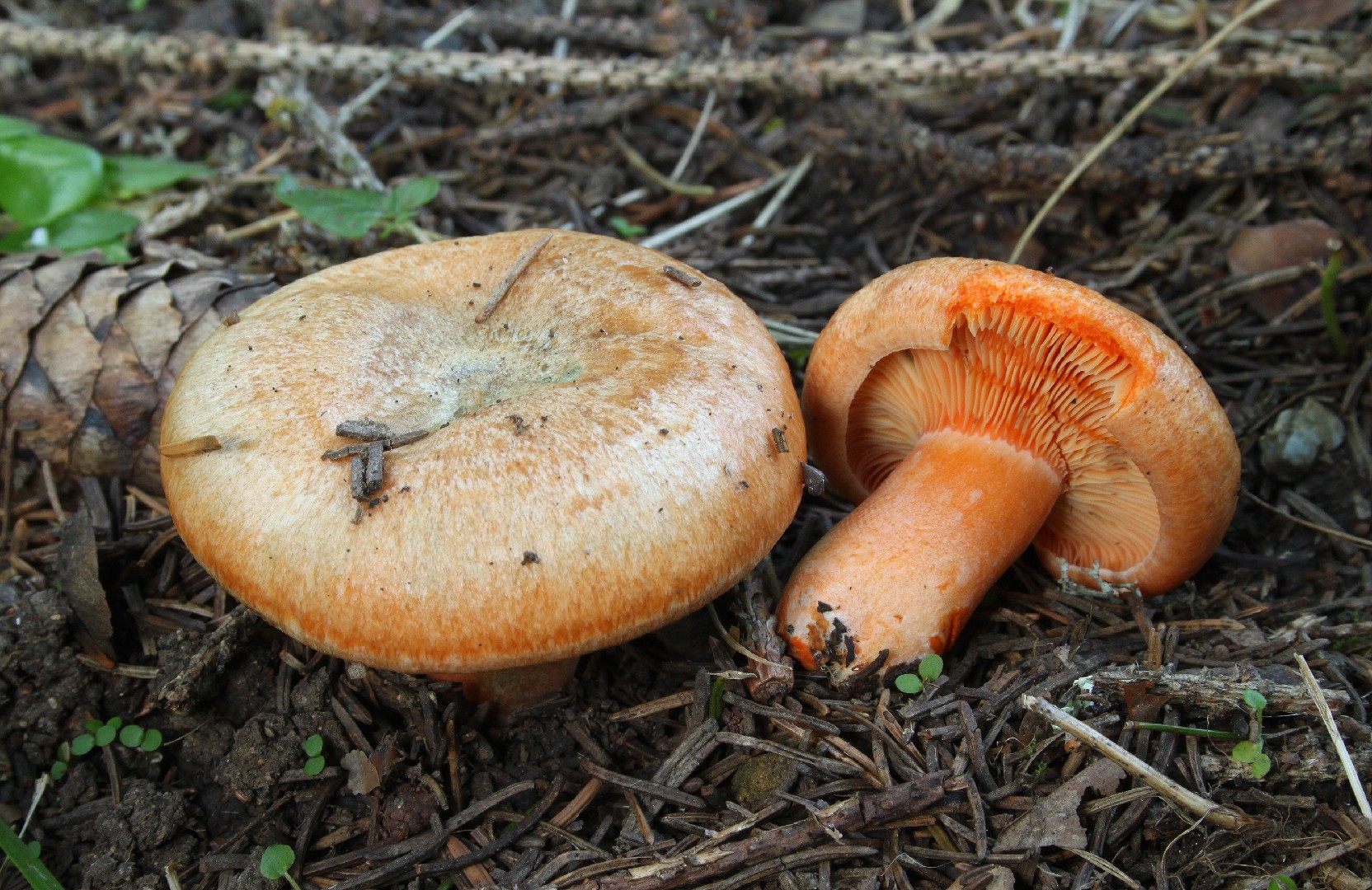
2. False saffron milkcap
A less-tasty cousin of the Saffron milkcap (Lactarius deliciosus), the false saffron milkcap is closely associated with spruce. When it appears in forests, it usually forms a large carpet. Species within the Lactarius genus are hard to differentiate from other, more poisonous mushrooms, and should not be foraged for food by the inexperienced.
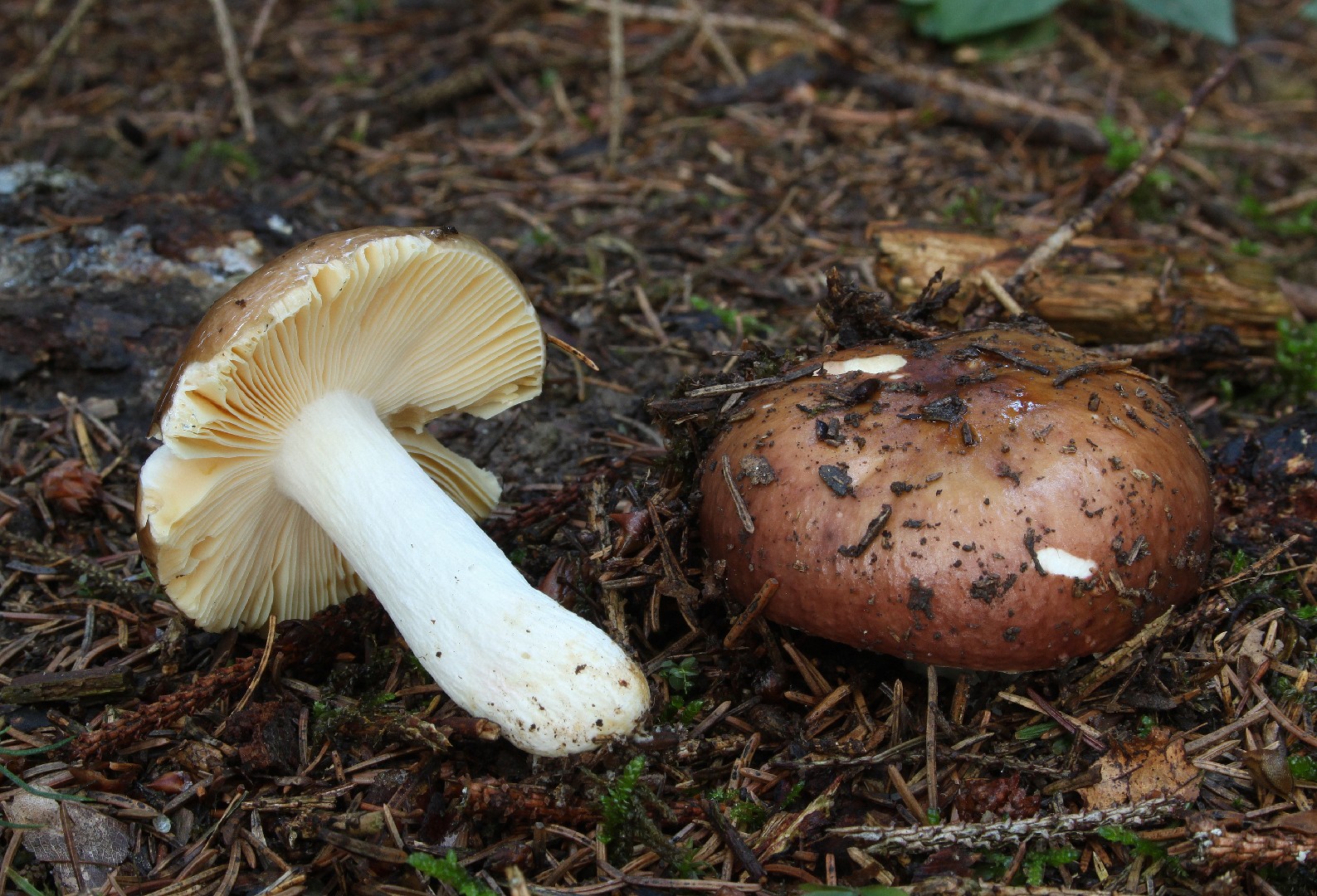
3. Entire russula
A group of very similar fungi, rather than a single species, the entire russula complex is yet to be studied. These mushrooms grow in conifer forests, where they're quite widespread and common. Entire russula is often found in early winter and late fall. 
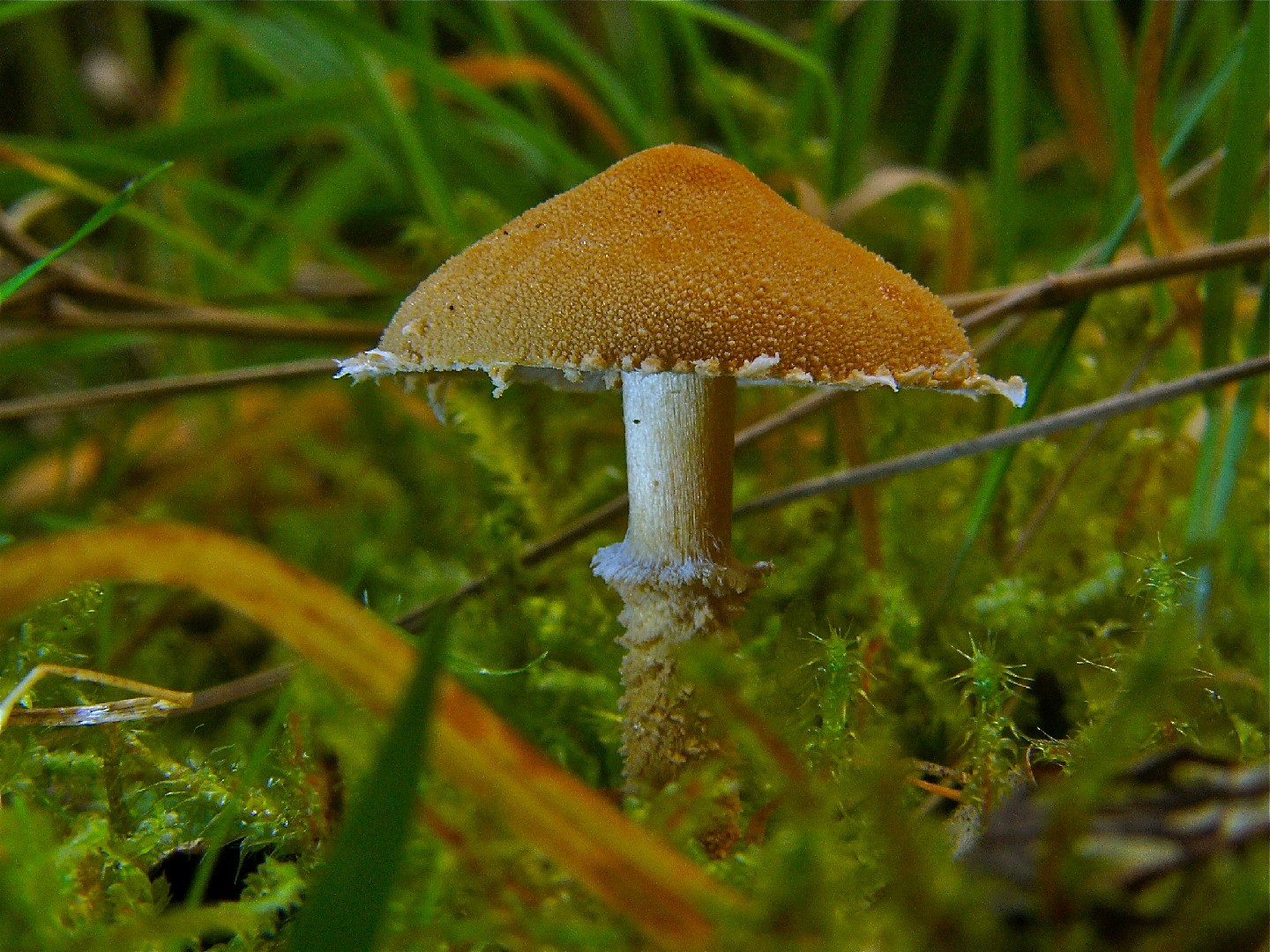
4. Earthy powdercap
Commonly found in lawns, moors, heath, and other wet grasslands, the earthy powdercap (Cystoderma amianthinum) can produce large “fairy rings” in places where fertilizers or chemicals have not been sprayed. Its distinctive stem is smooth just beneath the cap but abruptly shaggy below, giving the appearance that each mushroom is wearing a little sock!
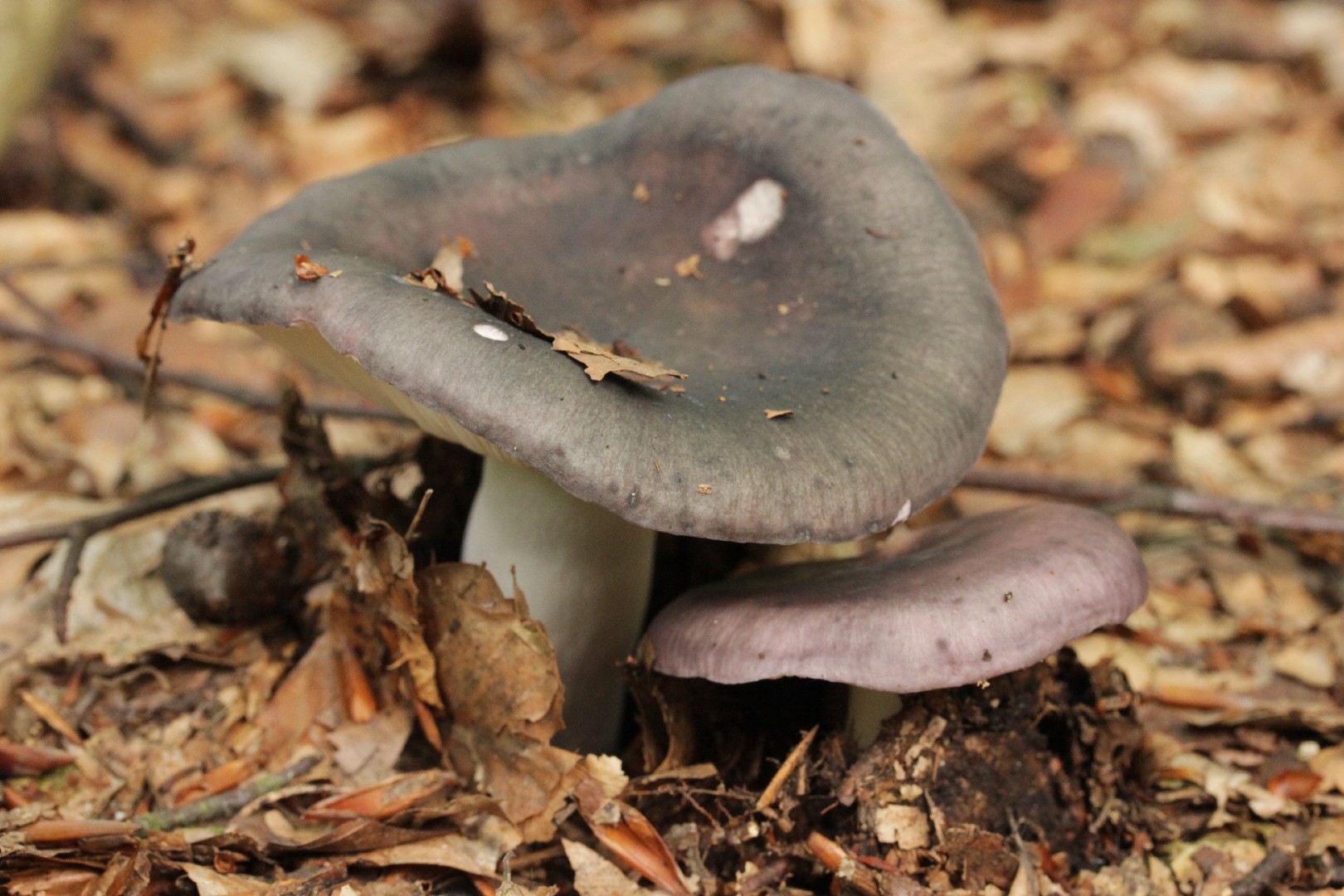
5. Charcoal burner
Most commonly found under beeches in forests or parks, this crumbly mushroom can appear in colors ranging from red and yellow to violet, blue-grey, or even green. Its scientific name represents this variability: Russula cyanoxantha means “reddish blue-blonde.”
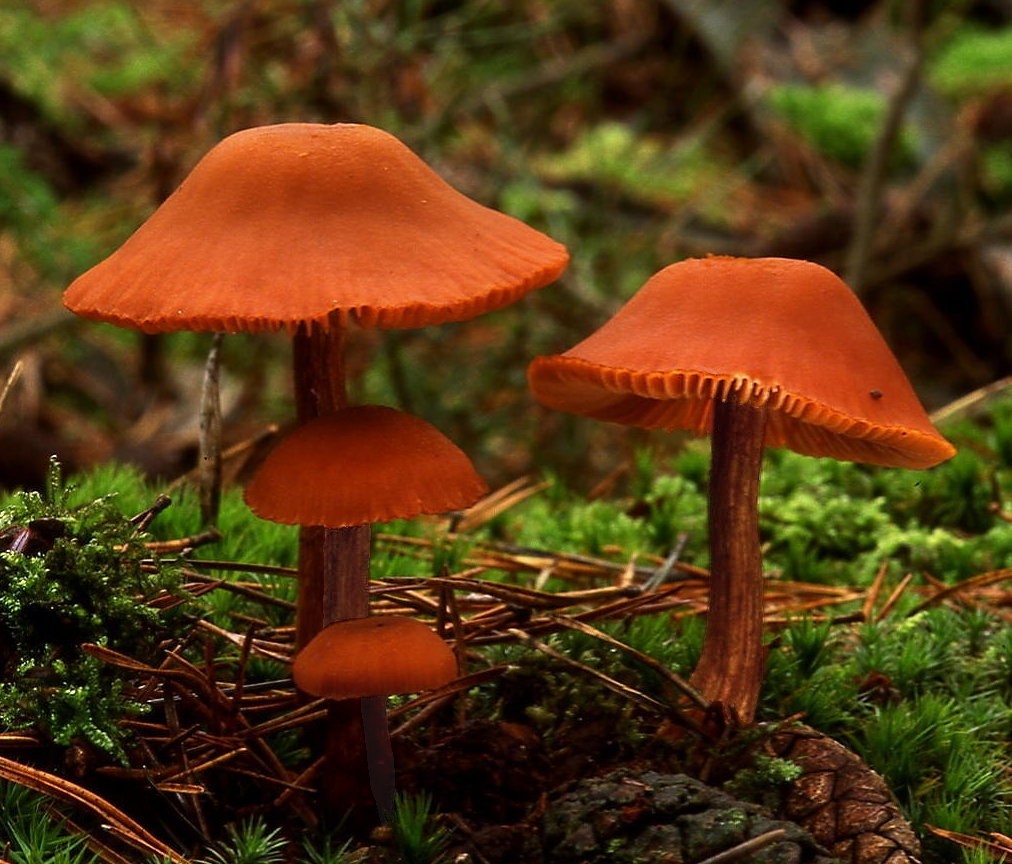
6. Common laccaria
Common laccaria may sound like a malevolent name for a mushroom, but fret not! This species is so-called because its appearance is highly variable, with individual caps taking on a whole host of colors, from whitish to pinkish to dark brown.
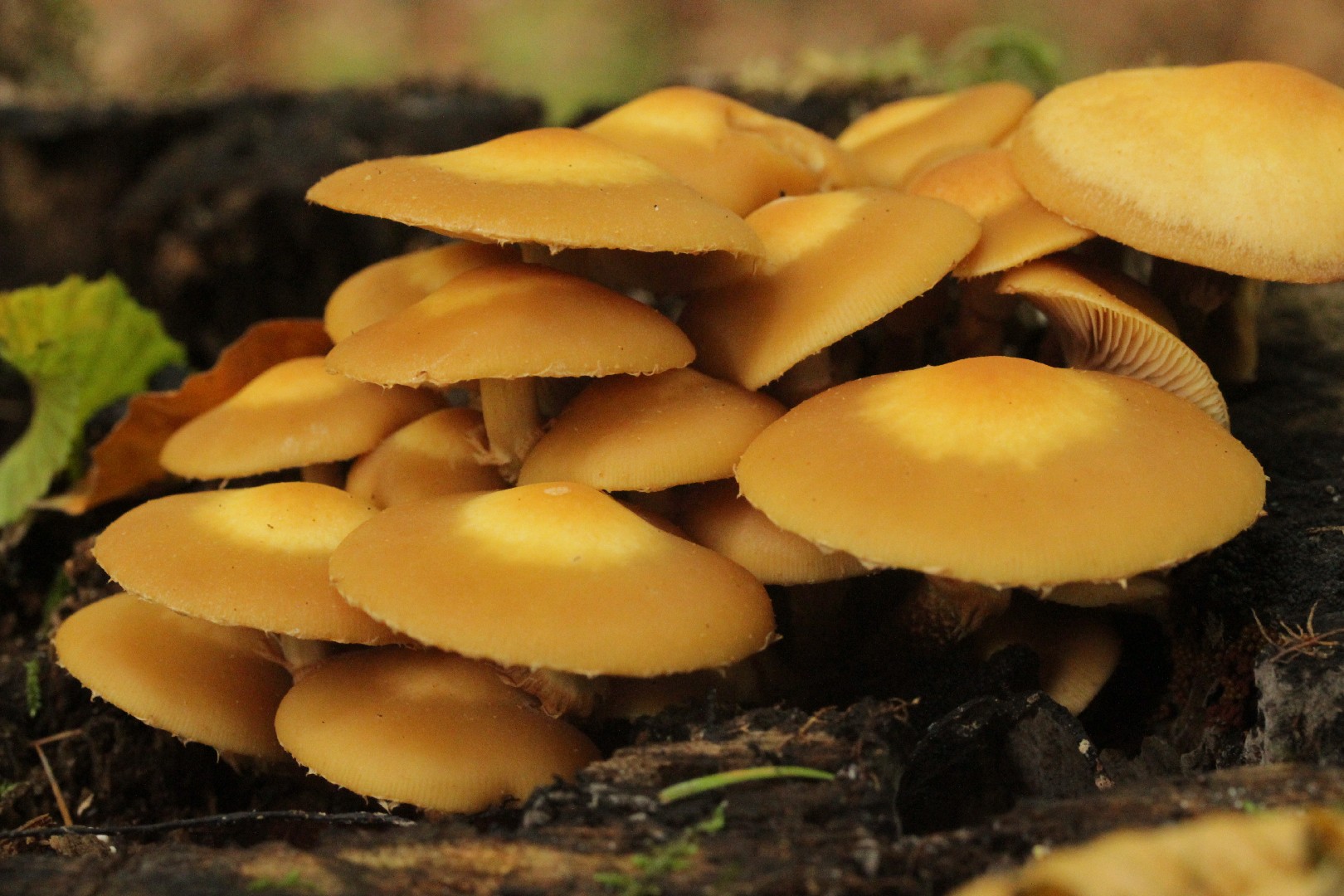
7. Sheathed woodtuft
The sheathed woodtuft (Kuehneromyces mutabilis) is a fairly distinctive species that can be found growing in clusters on dead or dying wood in temperate areas across the world. This mushroom's cap has the unusual trait of being highly hygrophanous - this means that its color changes significantly with changes in moisture level. In the case of the sheathed woodtuft, moist individuals are deep orange brown while dry individuals are a lighter brown or buff color.
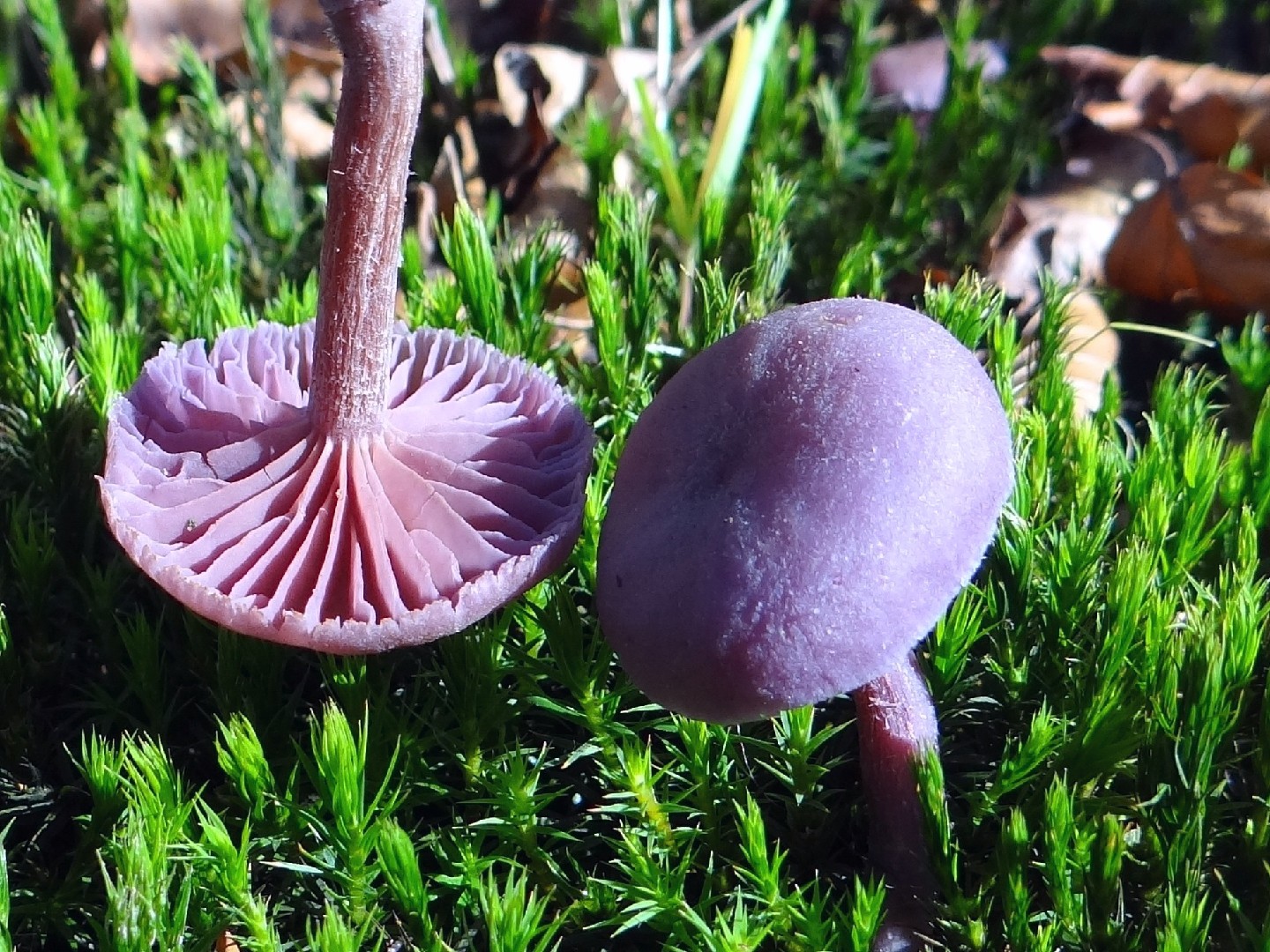
8. Amethyst deceiver
The amethyst deceiver (Laccaria amethystina) is a breathtaking mushroom that pops up from coniferous forest floors. The caps are a striking violet color in youth and are generally flat with a small indentation when the stem connects. As they mature, this violet color transforms to a less than breathtaking grey color, making it quite hard to identify after a certain age positively. Not edible.
9. Sweetbread mushroom
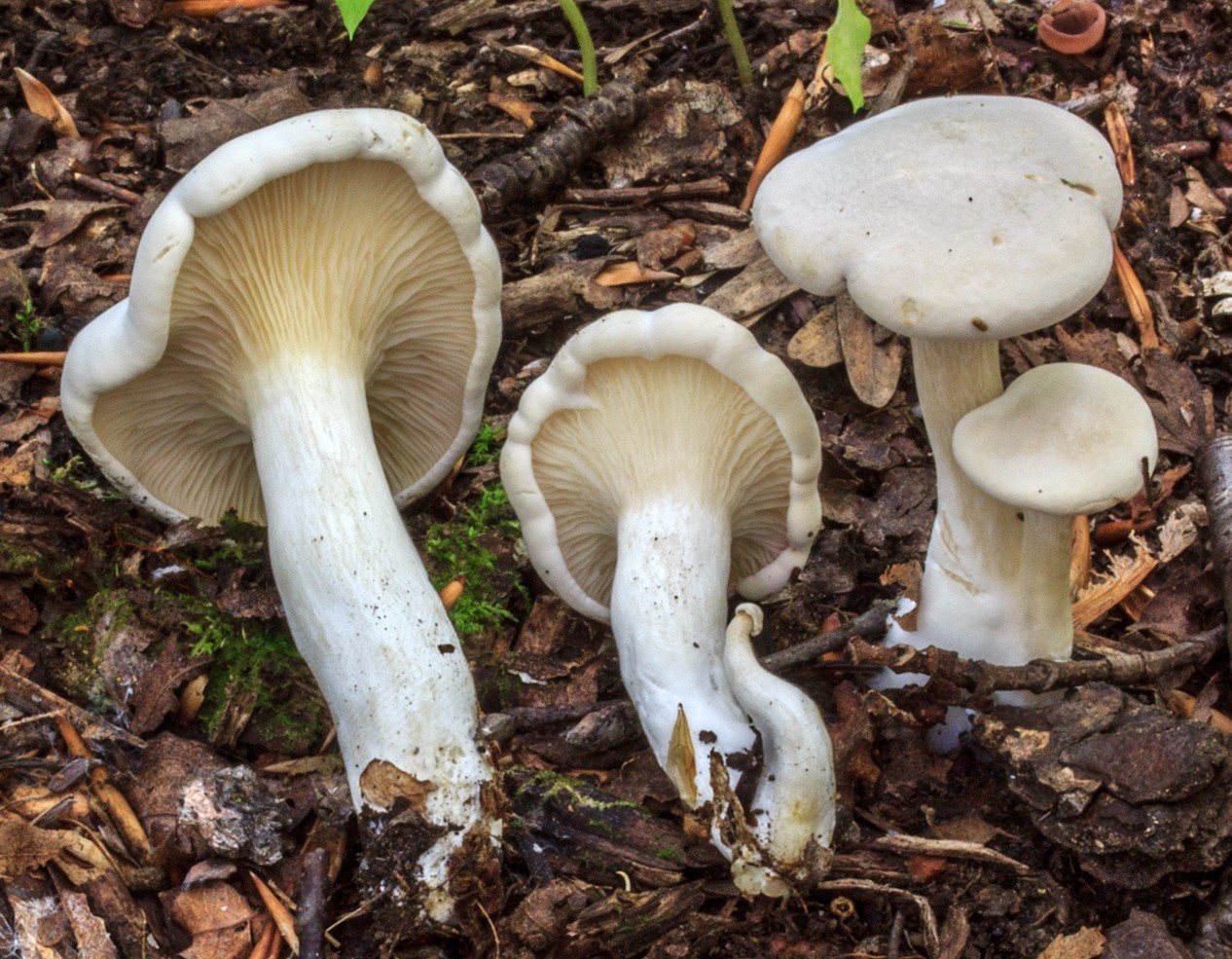
Sweetbread mushroom(Clitopilus prunulus) is commonly found in grasslands, and it may be solitary or found among others of its kind. It exudes a characteristic odor reminiscent of raw pastry, responsible for its alternative common name of "the sweetbread mushroom." Foraging is discouraged for this mushroom, as its appearance is too similar to a deadly species.
10. Buttery collybia
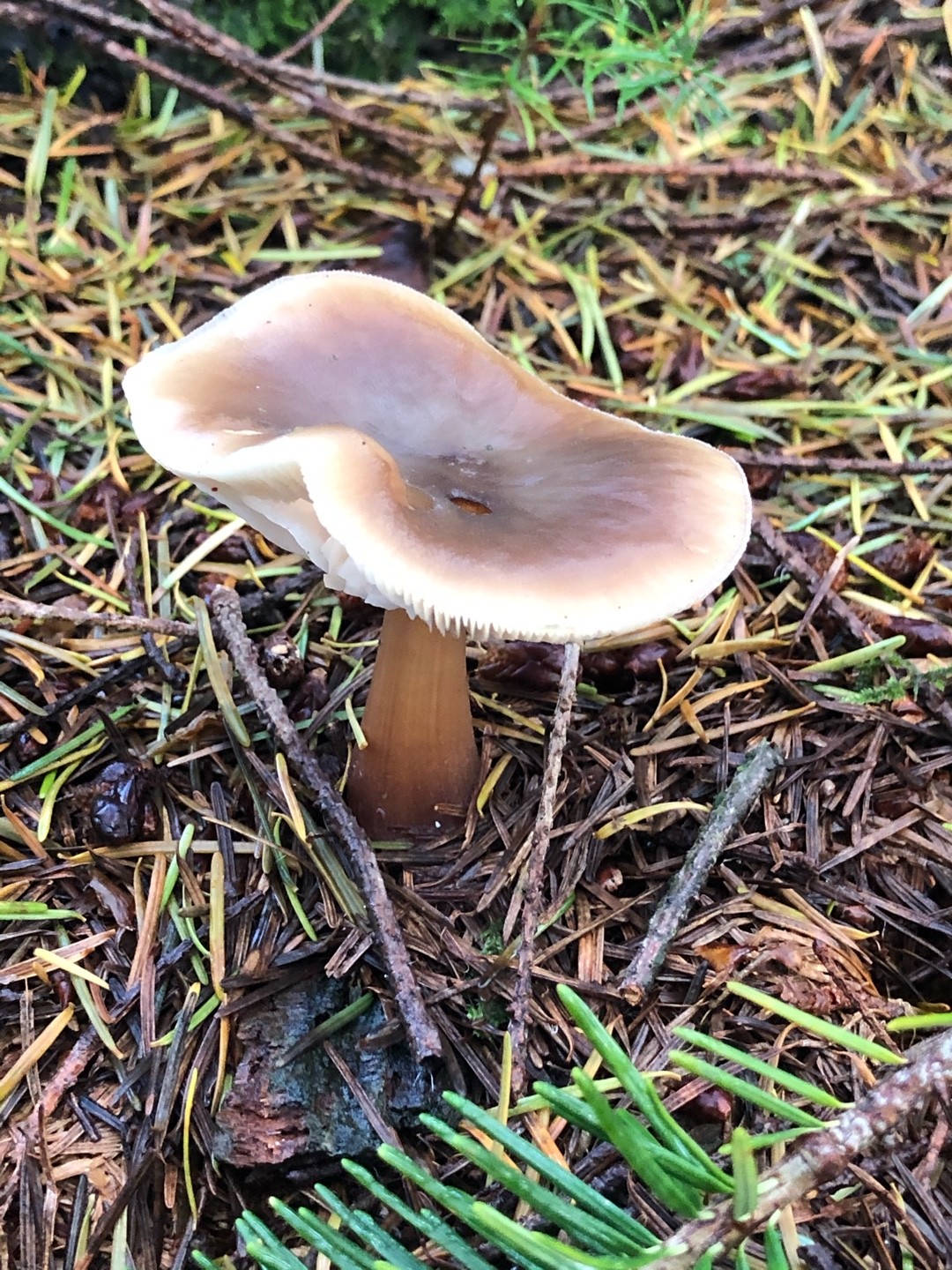
Buttery collybia mushrooms grow mainly on the floors of coniferous forests, from summer to winter across Europe and North America. This mushroom is called “buttery” not for its flavor, but rather the greasy texture of its surface. In the genus name, “rhodo” means pink, a reference to the shade of the gills beneath its cap.

More







