




Top 20 Edible Mushrooms Popular in Norway
Delve into the fascinations of Norway's rich mycological world with our detailed guide to the top 20 most common edible mushrooms. Norway offers a veritable paradise for fungi lovers, blessed with vast forests and wet, temperate conditions perfect for mushroom growth. Savour the diversity, from earthy, aromatic species to subtly flavoured specimens, each with unique gastronomical potentials. Understand their habitats, appearances, and culinary applications, shaped by Norway's distinct flora and time-honoured culinary traditions. Rest assured, our data resonates with proven research, promising an accurate portrayal of each alluring species.
* Disclaimer: Content feedback CAN NOT be used as any basis for EATING ANY PLANTS. Some plants can be VERY POISONOUS, please purchase edible plants through regular channels.

Most Popular Edible Mushrooms
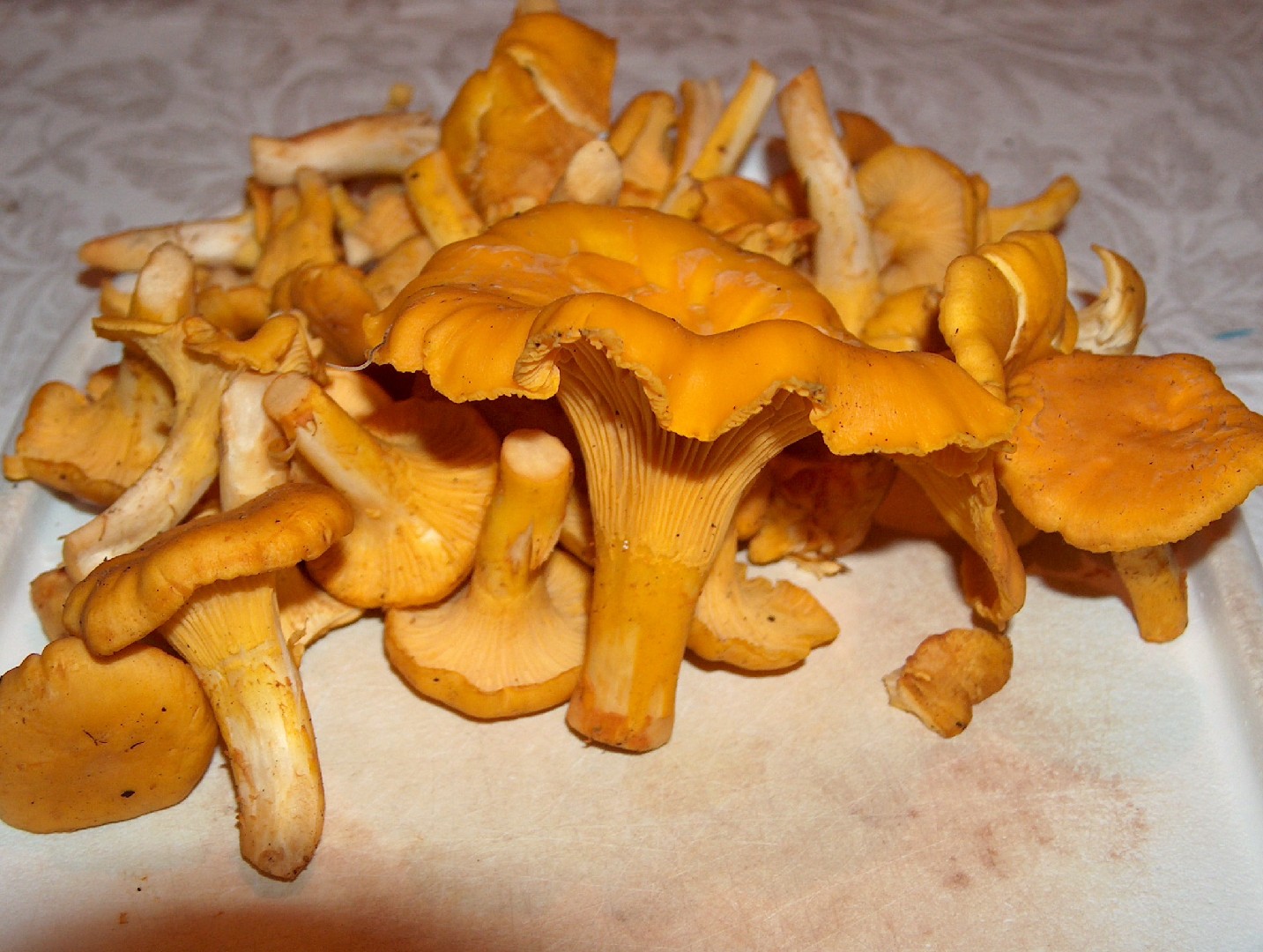
1. Golden chanterelle
Golden chanterelle mushrooms are popular in gourmet cuisine across Europe, where they grow wild during the warm (but not too hot) months. Similar species grow in other countries. Extremely popular with foragers, the golden chanterelle emits an apricot-like scent and contains an array of nutrients that benefit the human body. Several studies suggest consuming extremely large amounts may have detrimental effects on the eyes and muscles.
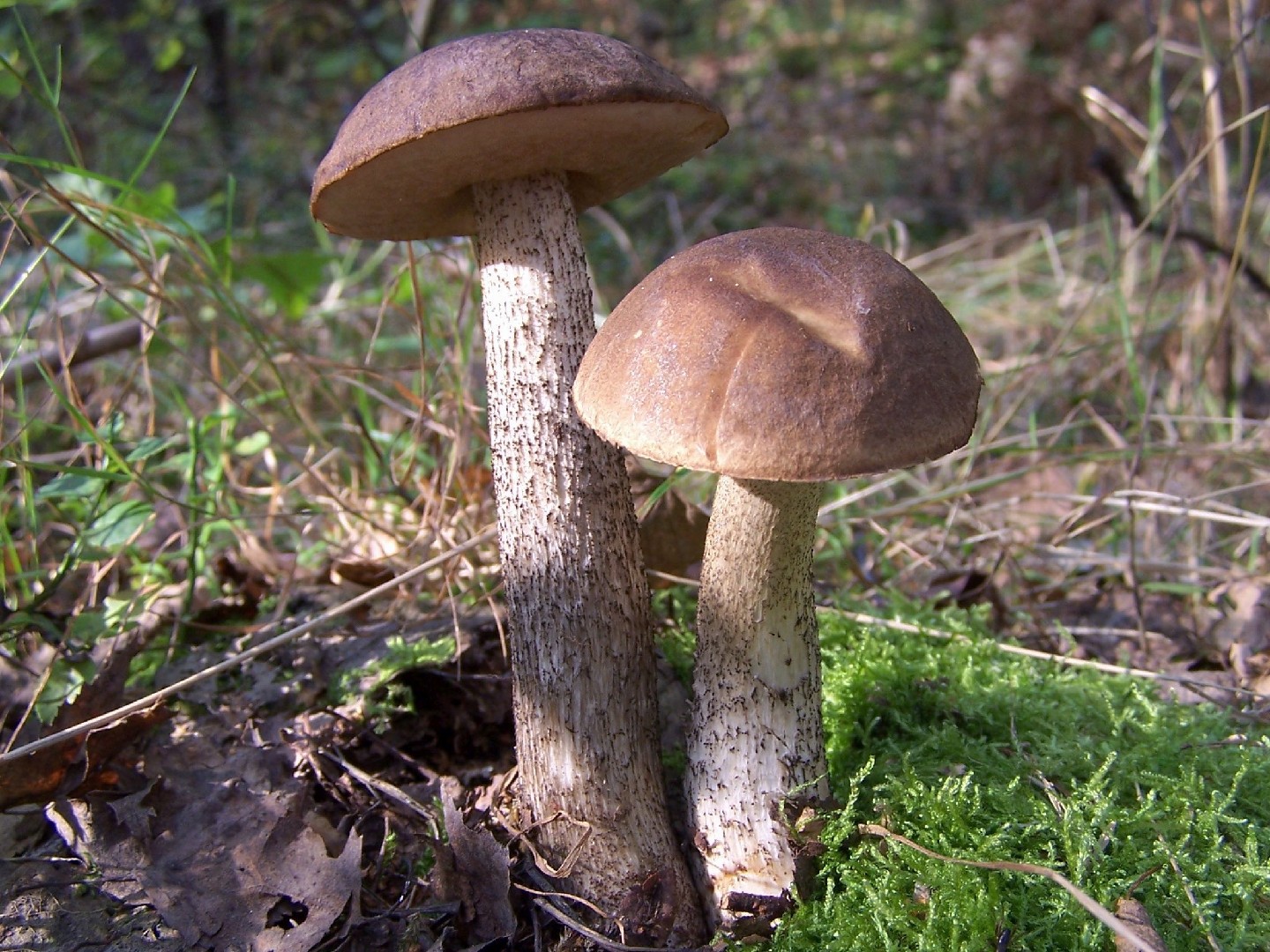
2. Brown birch-bolete
The brown birch-bolete is common around the northern hemisphere. It grows beneath birch trees and is usually easy to identify by its brown cap and scaly stem, the latter of which is referenced in its scientific name Leccinum scabrum. Occasionally, however, it can be found sporting a white cap.
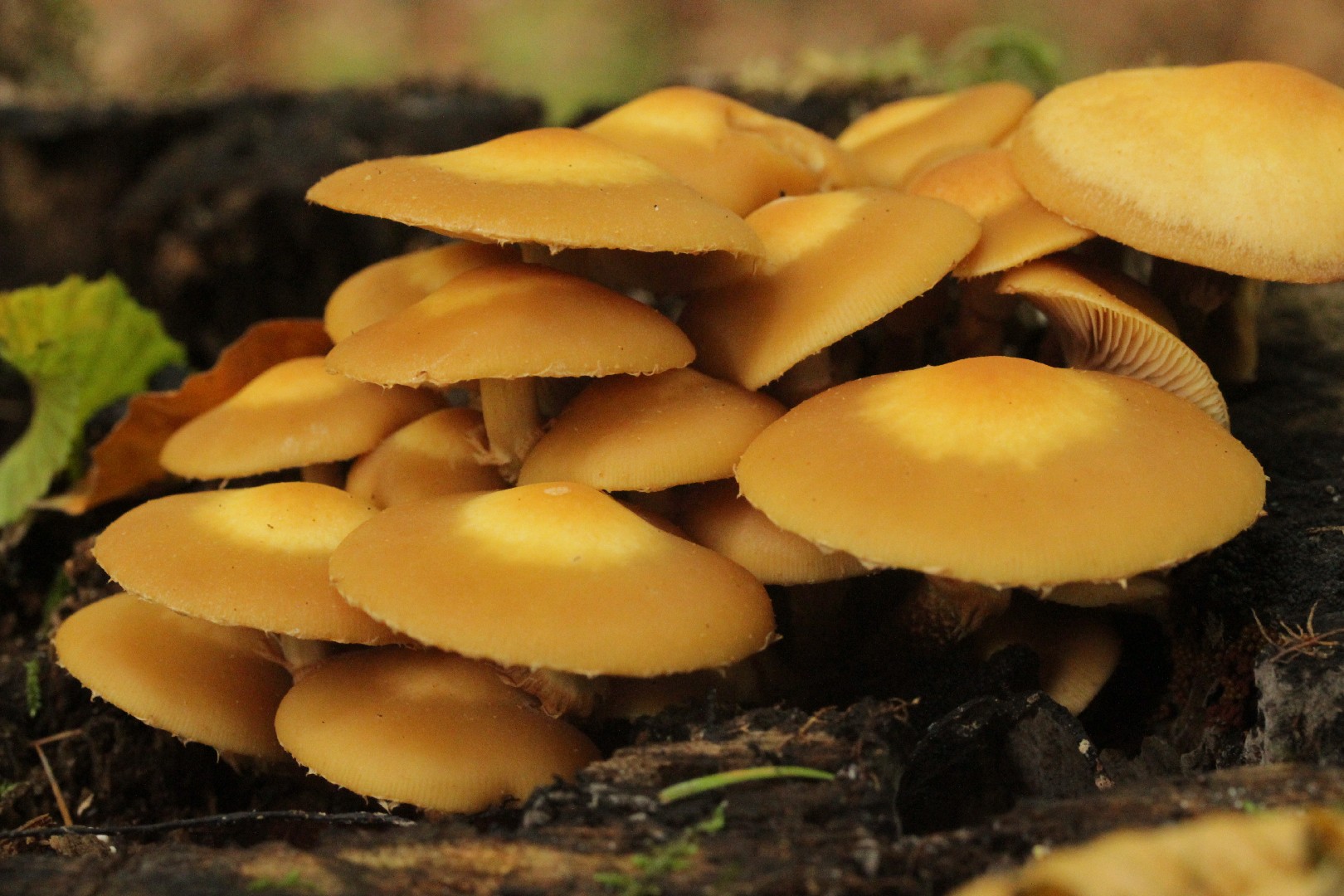
3. Sheathed woodtuft
The sheathed woodtuft (Kuehneromyces mutabilis) is a fairly distinctive species that can be found growing in clusters on dead or dying wood in temperate areas across the world. This mushroom's cap has the unusual trait of being highly hygrophanous - this means that its color changes significantly with changes in moisture level. In the case of the sheathed woodtuft, moist individuals are deep orange brown while dry individuals are a lighter brown or buff color.
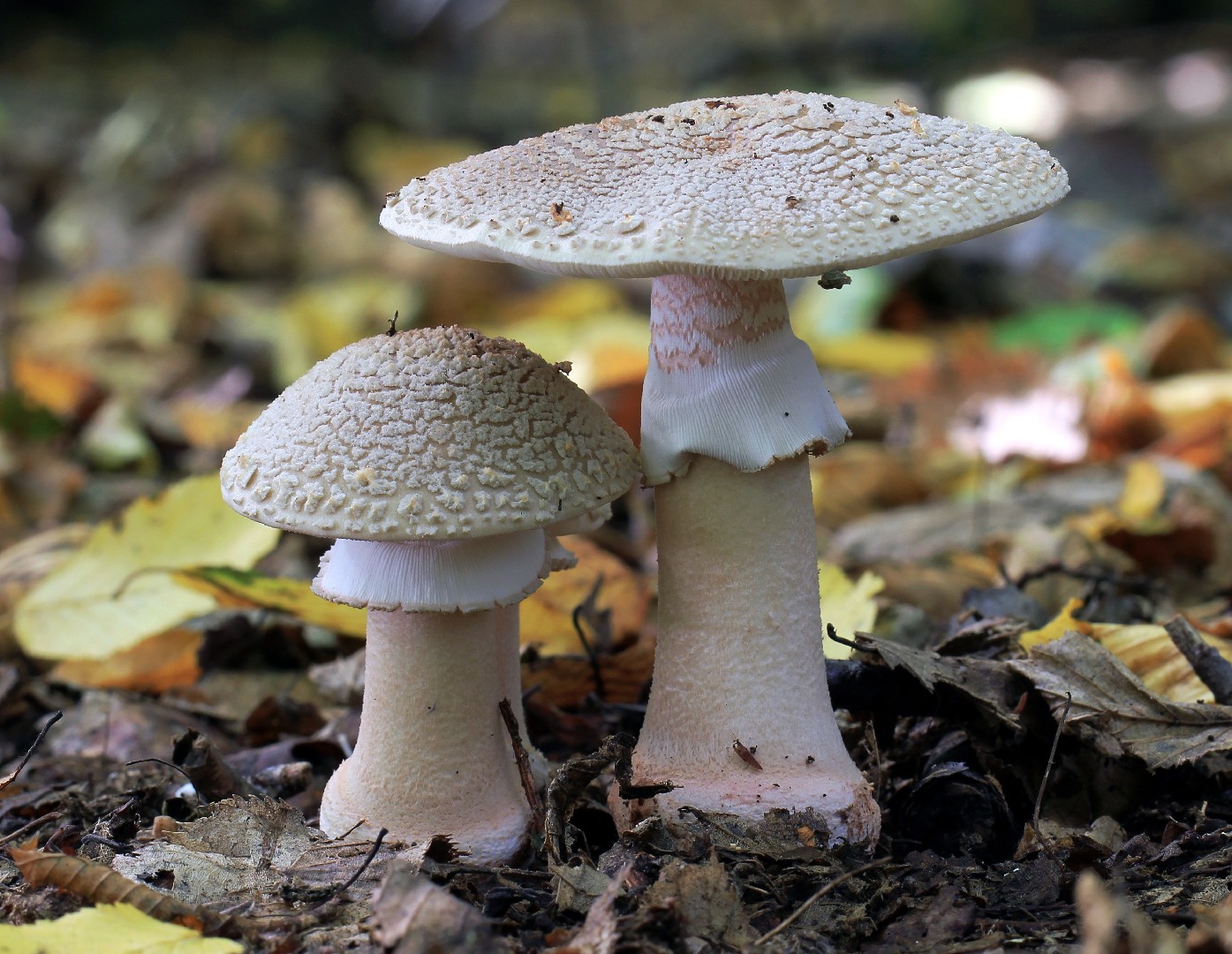
4. Blusher
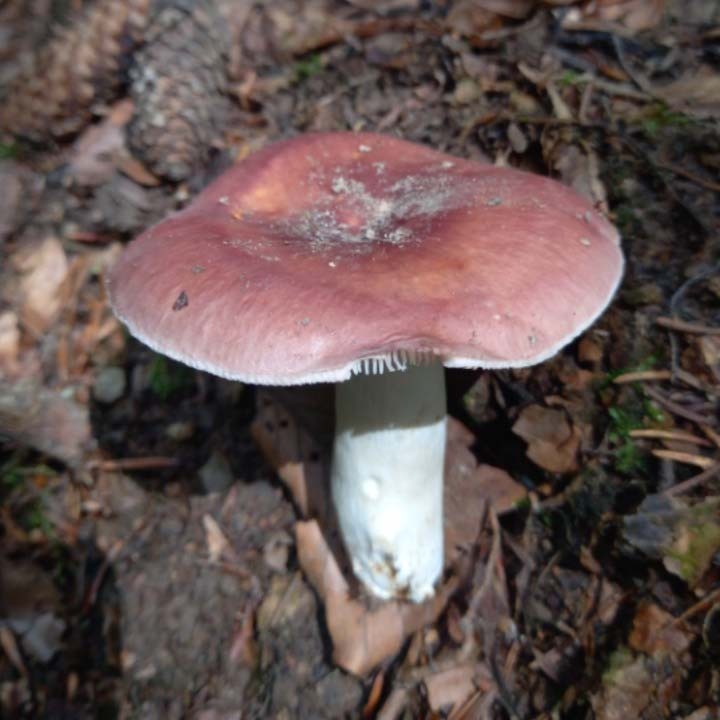
The blusher mushroom is so named because it “blushes” to a pinkish red color when cut or bruised. It is found in many countries around the world, although it may not be native to the southern hemisphere. It contains a hemolytic toxin that can cause anemia if eaten.
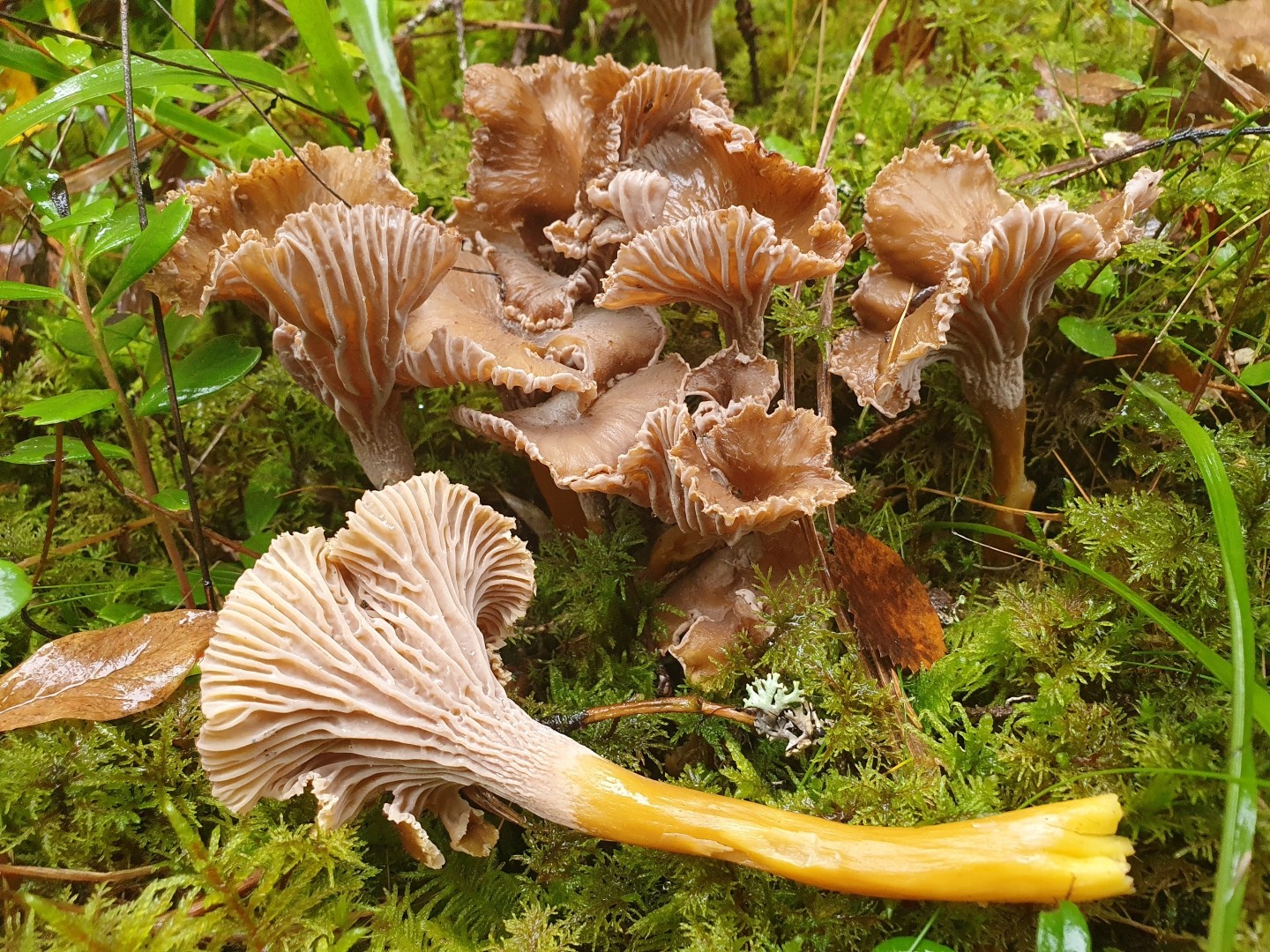
5. Yellowfoot
Found in temperate forests, wetlands, and bogs across the northern hemisphere, the yellowfoot is a highly sought after member of the chanterelle family. Considered a choice edible, it boasts a lovely, complex flavor (though it is somewhat less fruity and sweet then some of its more popular cousins). Yellowfoots are sometimes called "winter mushrooms", as they tend to be very late-season fruiters.
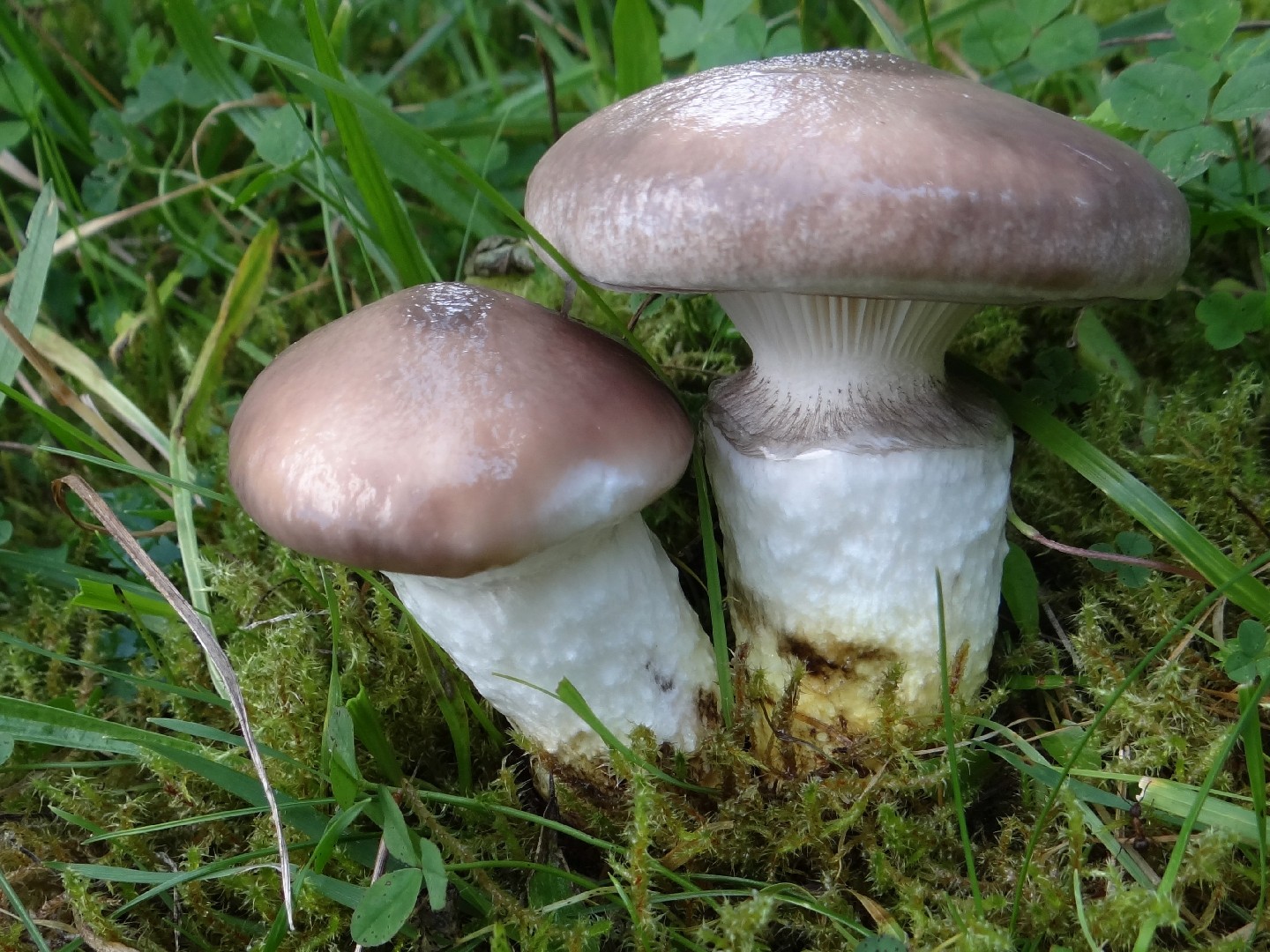
6. Slimy spike
A stocky, almost imposing mushroom, the slimy spike (Gomphidius glutinosus) has a round bulbous cap and a very thick stalk. This species is one of the more unusual members of the bolete order (Boletales) because it has gills, rather than a spongey pore surface. The "slimy" in this species' common name is well-earned - individuals are almost always coated in a shiny layer of slime.
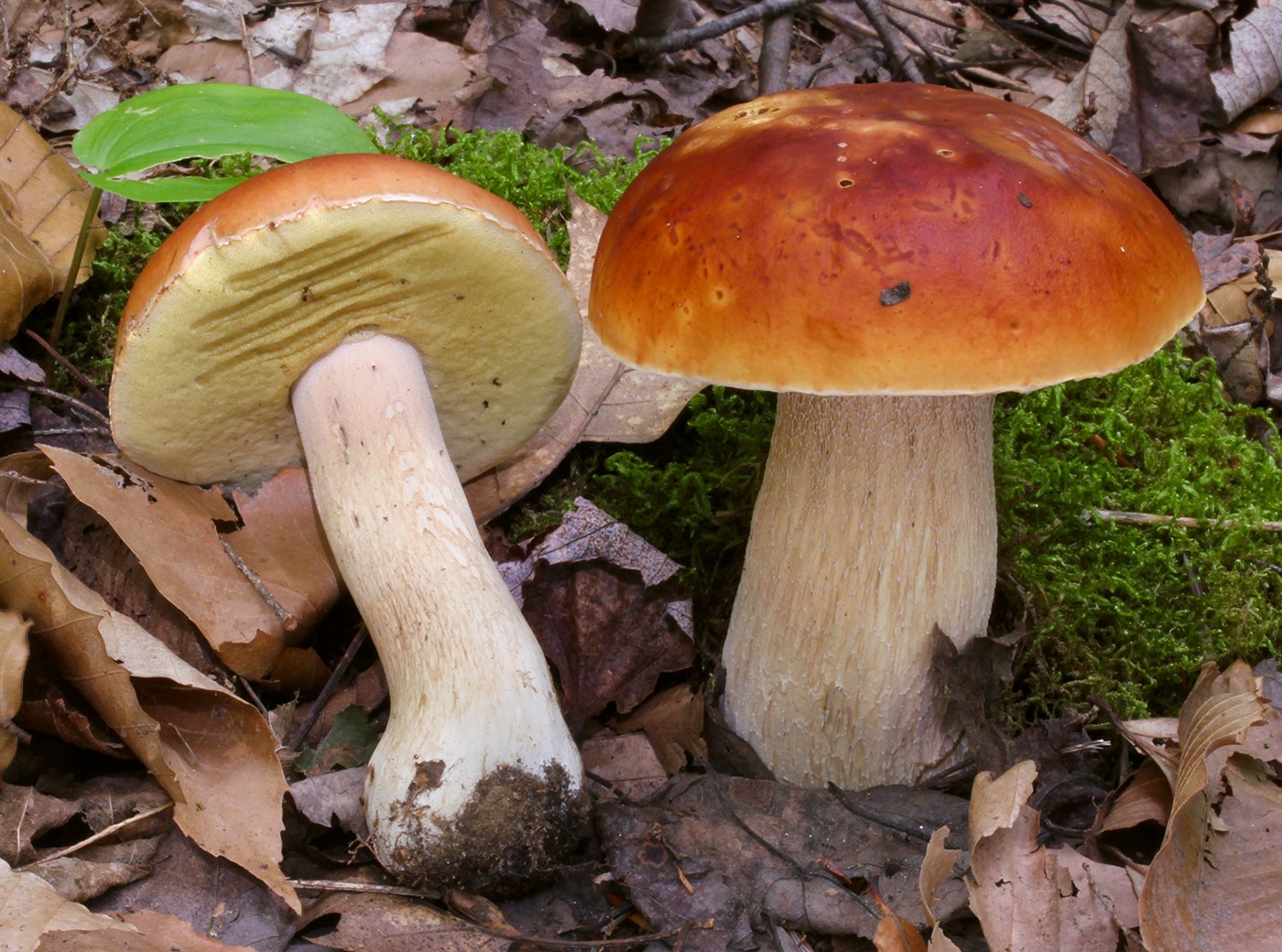
7. King bolete
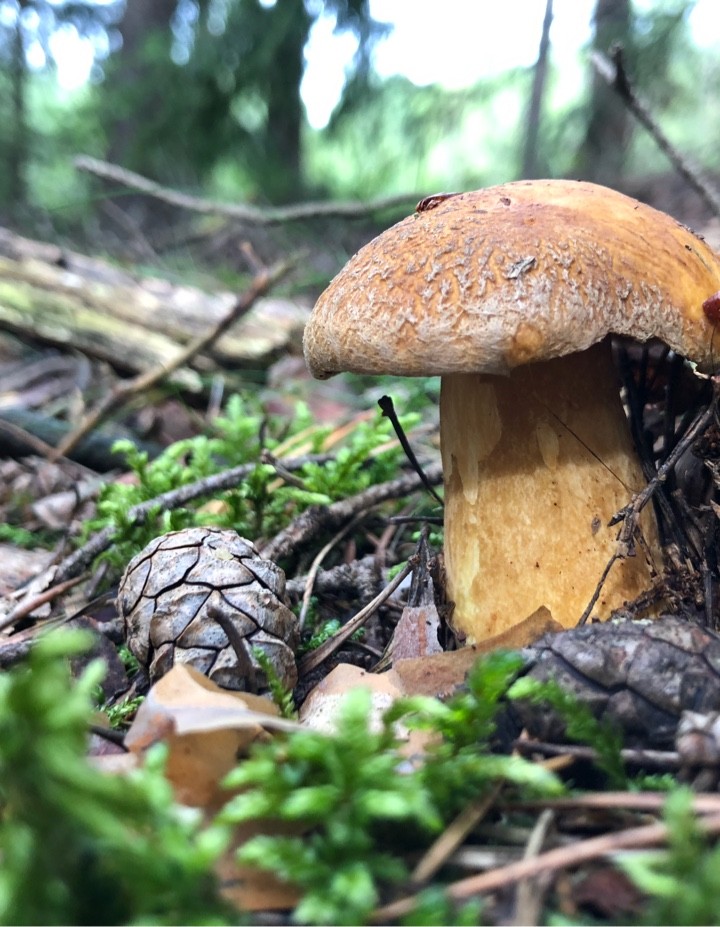
Extremely popular in many cuisines, this edible wild mushroom grows around the world near the roots of forest trees. In some regions, king bolete mushrooms are collected in great enough volumes that their sale can support entire families during the harvest season. King boletes are reported to be high in fiber, vitamins B and C, calcium, potassium, magnesium, zinc, and several antioxidants.
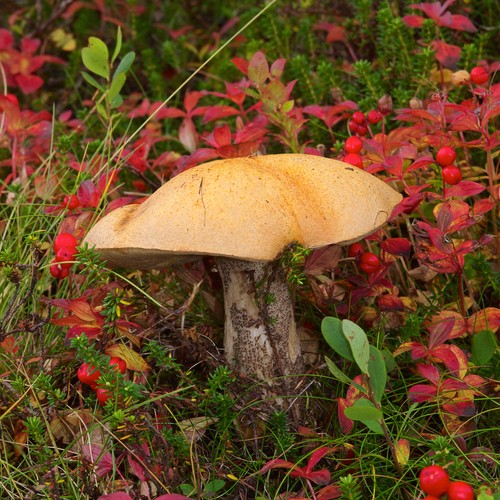
8. Orange birch bolete
You may not be particularly surprised to learn that the orange birch bolete (Leccinum versipelle) is an orange-capped bolete that commonly associates with birch trees. The species has a classic bolete form, boasting a large, bulbous cap, a thick, shaggy stalk, and a sponge-like pore surface. When cut and exposed to air, the flesh of this mushroom will turn blue.
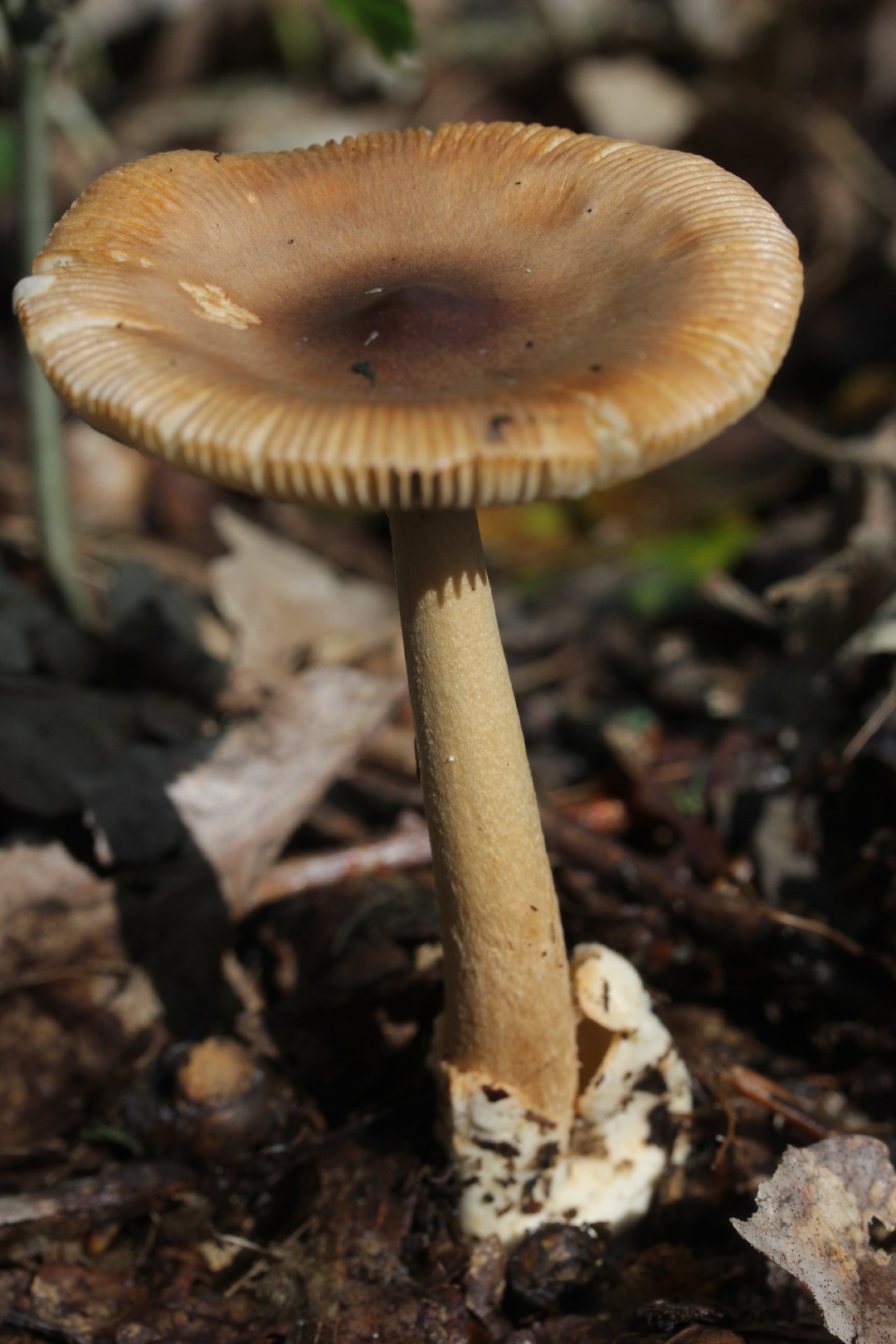
9. Tawny grisette
Tawny grisette (Amanita fulva) is a common species most commonly found in Europe's broadleaf and coniferous forests, with a potential but unverified range in North America. Its name comes from the burnished orange color of its cap, which sits atop a cream-colored stem.
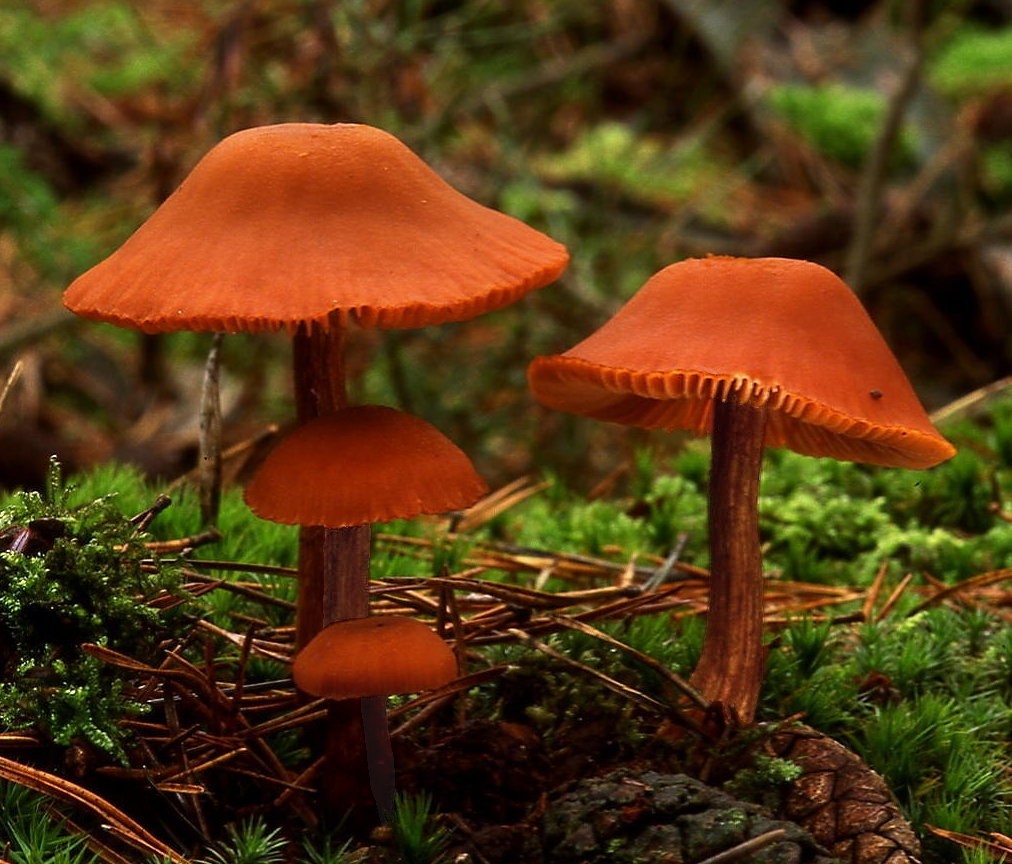
10. Common laccaria
Common laccaria may sound like a malevolent name for a mushroom, but fret not! This species is so-called because its appearance is highly variable, with individual caps taking on a whole host of colors, from whitish to pinkish to dark brown.

More







