




Top 20 Edible Mushrooms Popular in Okinawa
Nestled in the heart of Asia, Okinawa is renowned for its abundance of diverse and uniquely vibrant mushrooms. This region, blessed by mother nature, boasts a perfectly balanced climate that allows the growth of 20 most common edible mushrooms. Be it the warmth of their taste, their quaint appearances, or their profound culinary uses, these fungi have marked their indelible presence in the cultural and gastronomic life of Okinawa. Immerse yourself in the world of edible fungi and discover the captivating species this region has to offer.
* Disclaimer: Content feedback CAN NOT be used as any basis for EATING ANY PLANTS. Some plants can be VERY POISONOUS, please purchase edible plants through regular channels.

Most Popular Edible Mushrooms
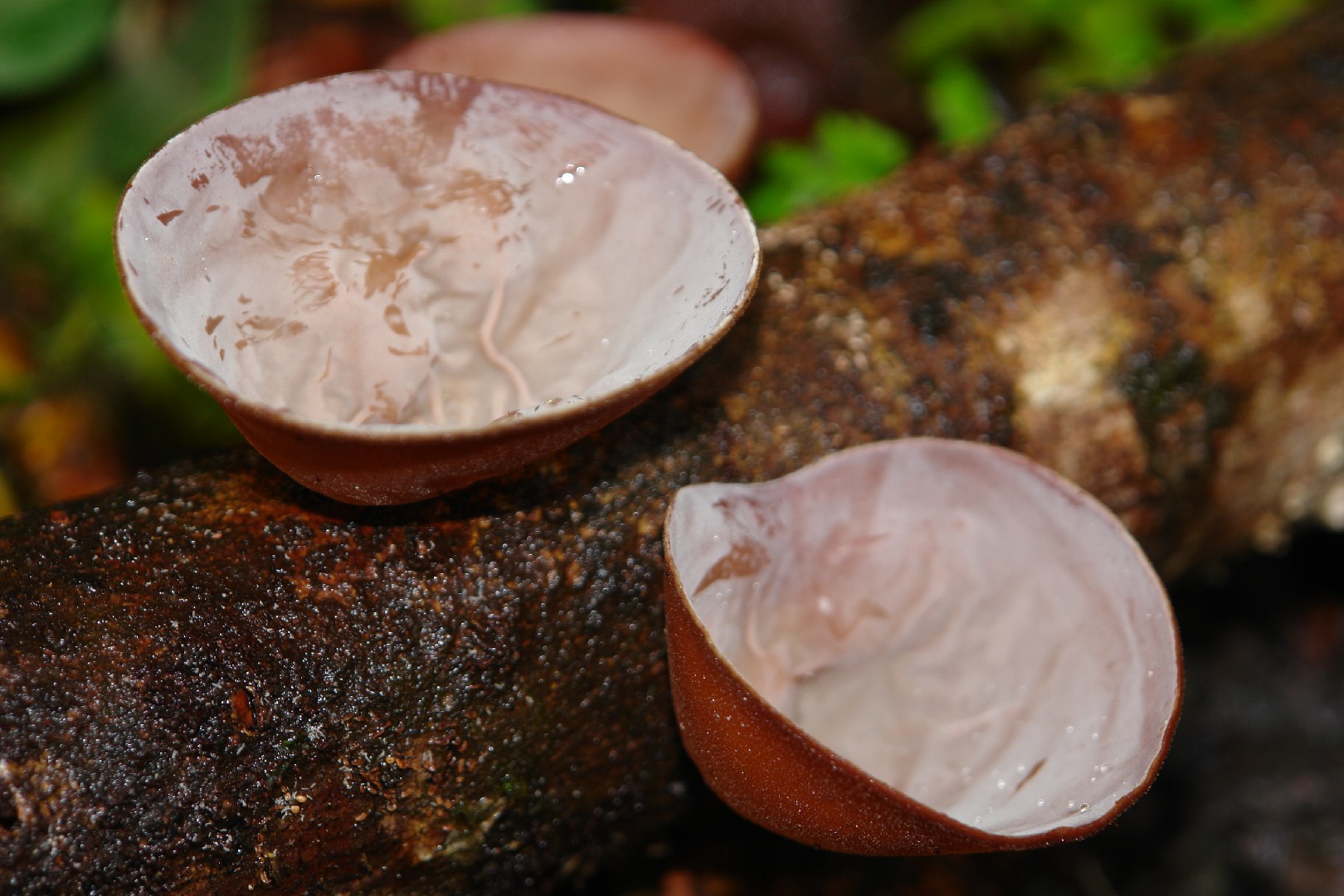
1. Wood ear
The fuzzy surface of the wood ear (Auricularia cornea) is a distinguishable characteristic of this wood-loving mushroom. The hairy, ear-shaped body transforms in color when exposed to moisture and can range from chocolate brown to dull gray.
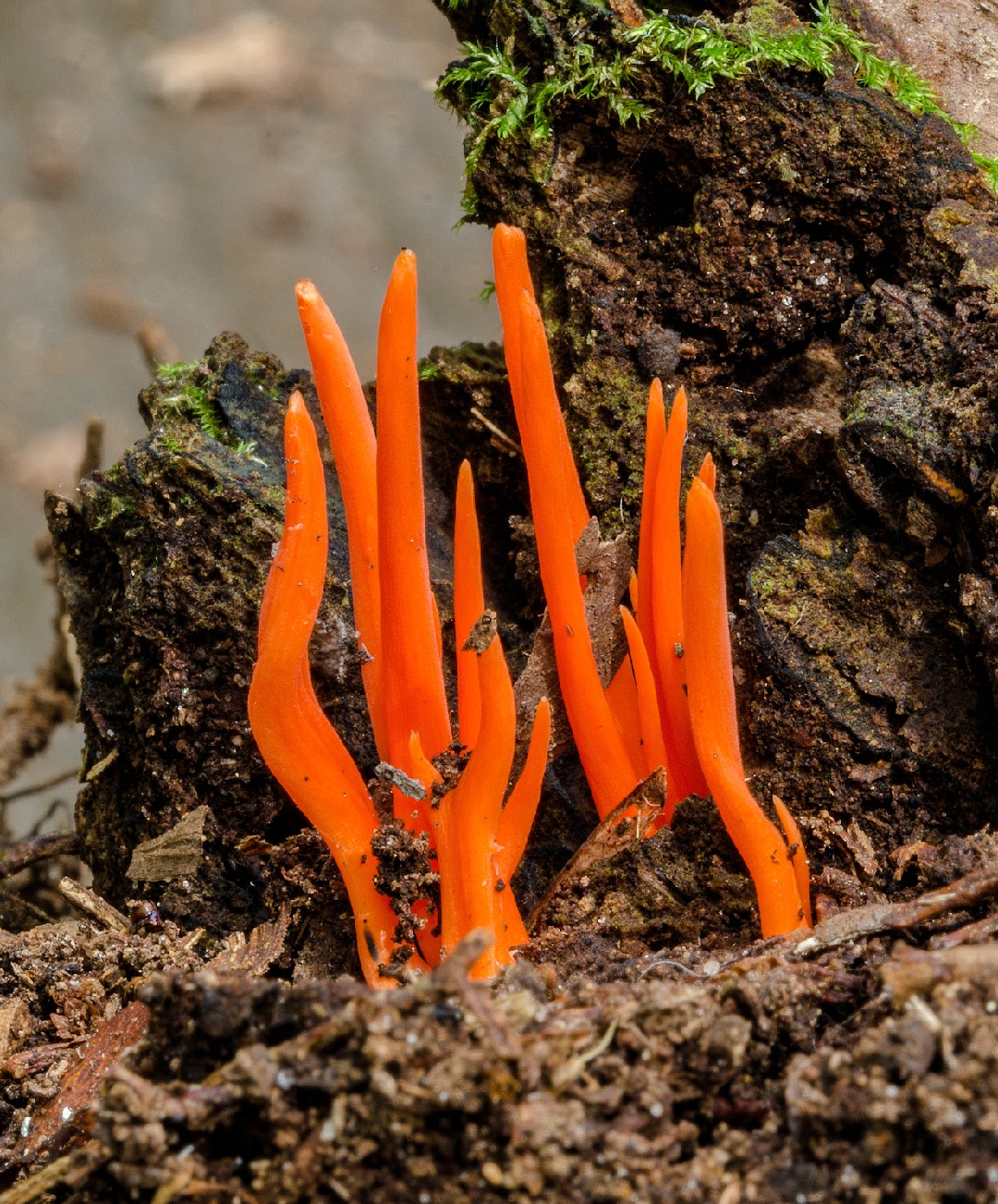
2. Flame fungus
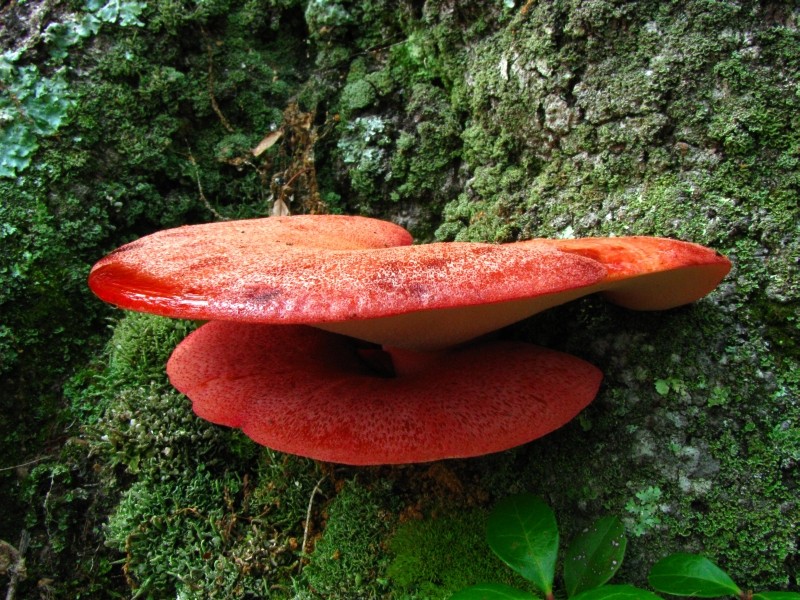
Flame fungus is hard to miss, with its bright colors that range from pink to brilliant red and orange. It is often found singularly or in groups on forest floors and looks similar to a small flame. The tapering stem fills out and becomes waxy as flame fungus matures.
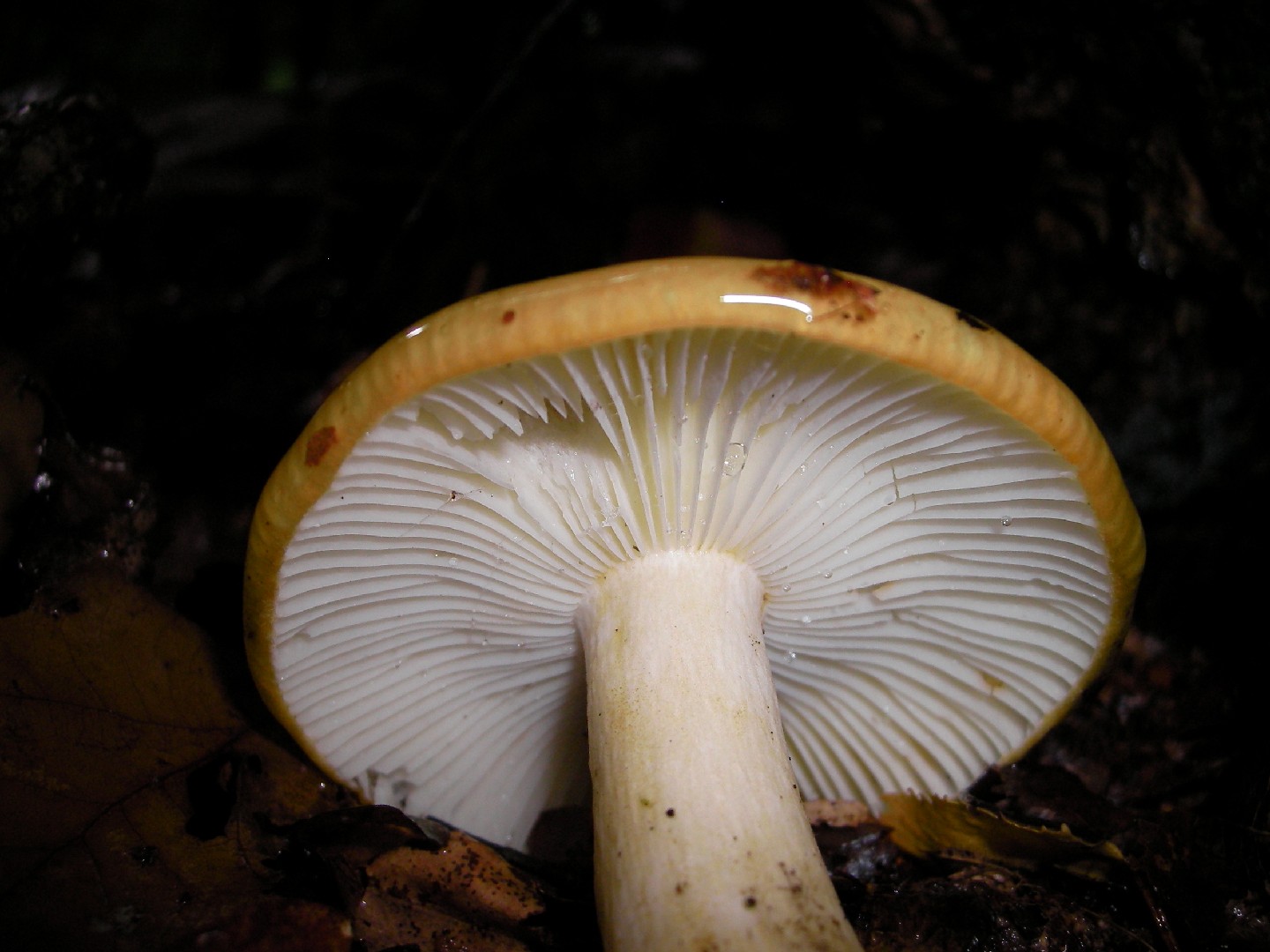
3. Ochre brittlegill
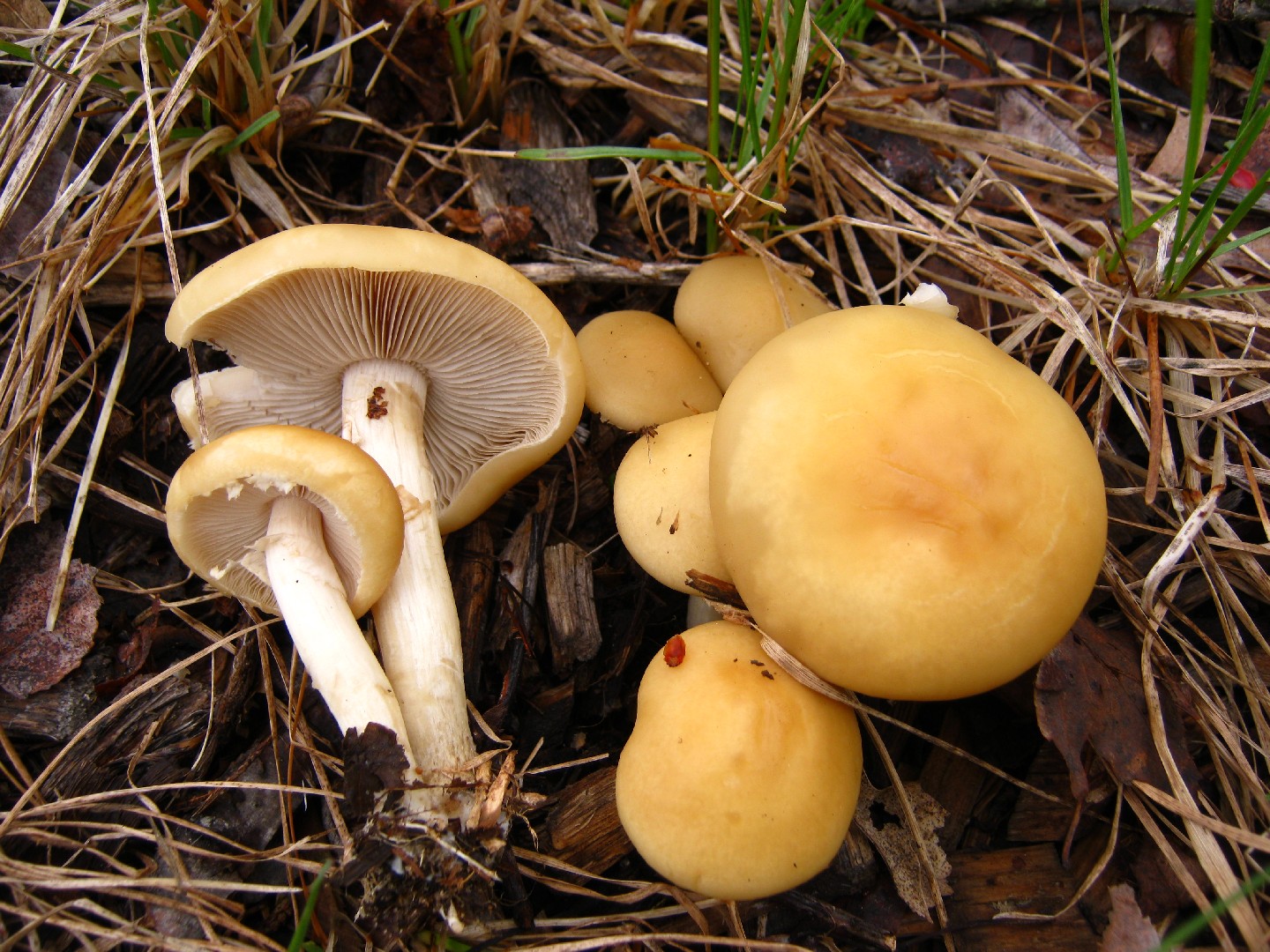
The ochre brittlegill is a large and ubiquitous russula that can be found growing in mixed temperate woodlands across the Northern Hemisphere. This mushroom is distinguished by its smooth ochre cap, which may sometimes have tinges of green, brown, or even purple to it. Ochre brittlegills have brittle gills and bulbous, white stalks.
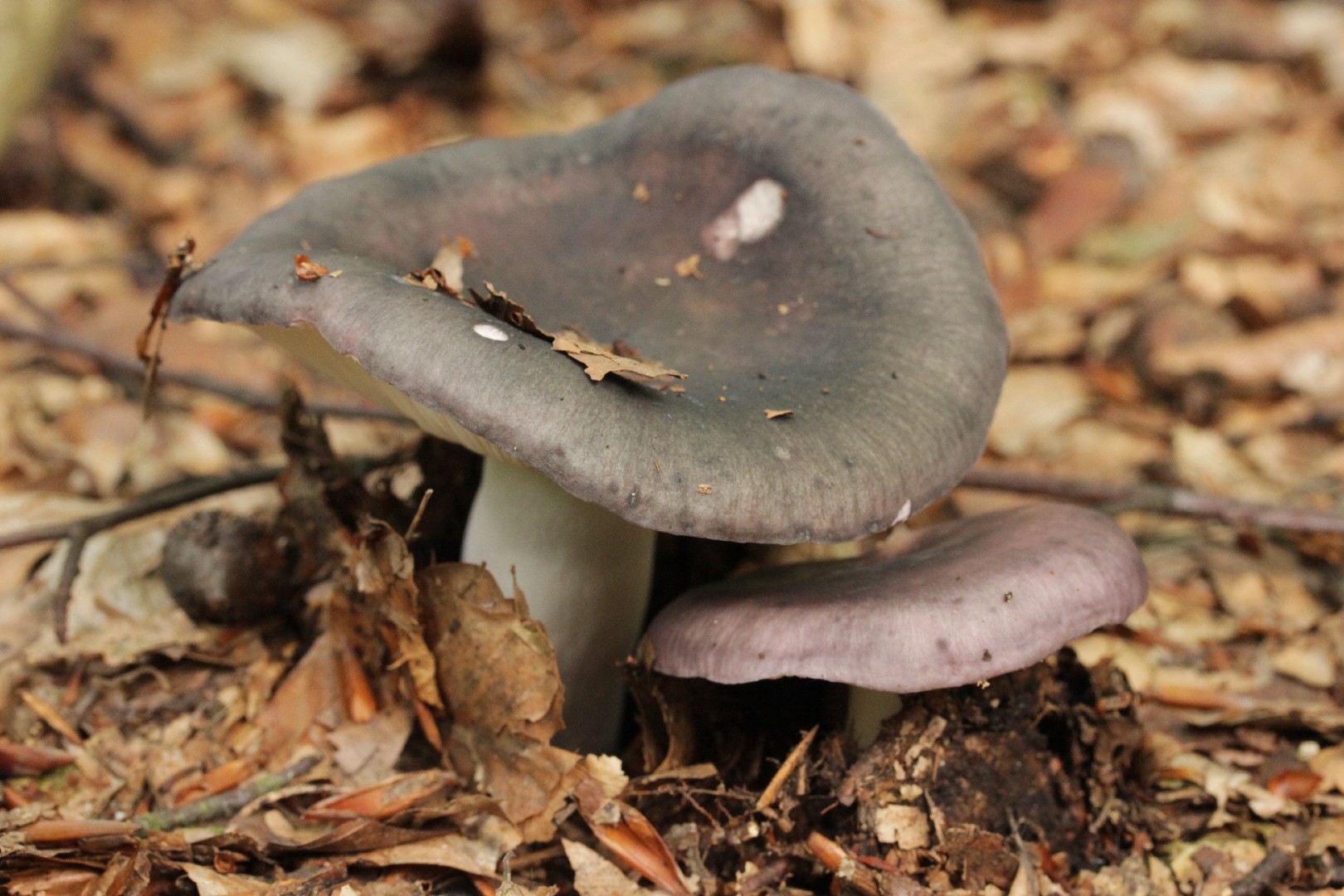
4. Charcoal burner
Most commonly found under beeches in forests or parks, this crumbly mushroom can appear in colors ranging from red and yellow to violet, blue-grey, or even green. Its scientific name represents this variability: Russula cyanoxantha means “reddish blue-blonde.”
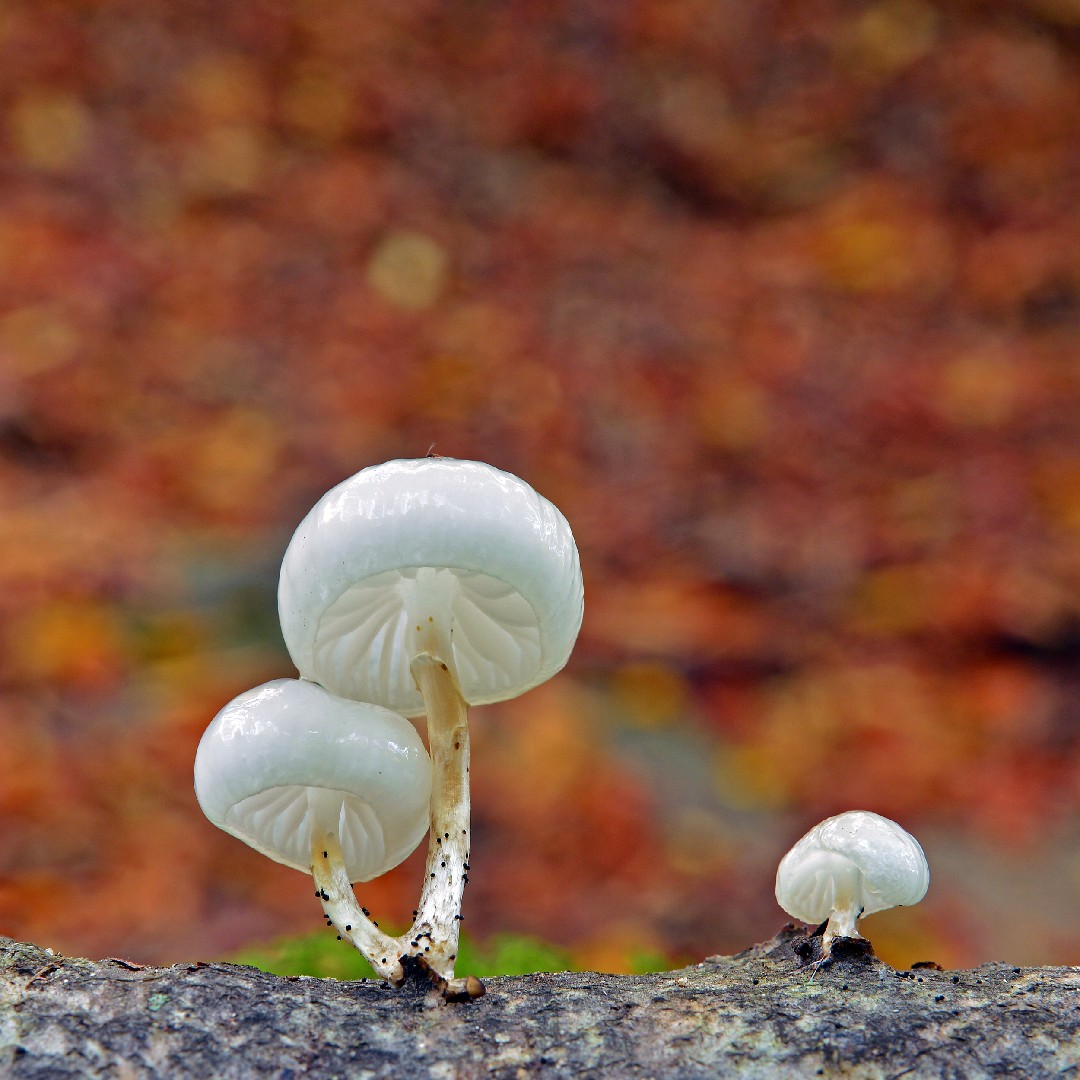
5. Porcelain mushroom
Porcelain mushroom can be found on a variety of deadwood including logs, dead standing trees, and dead upper branches. However, this mushroom is pickier about the type of deadwood, as it only grows on beech trees. This mushroom prefers to keep these trees to itself, releasing fungicides that can kill other mushrooms.
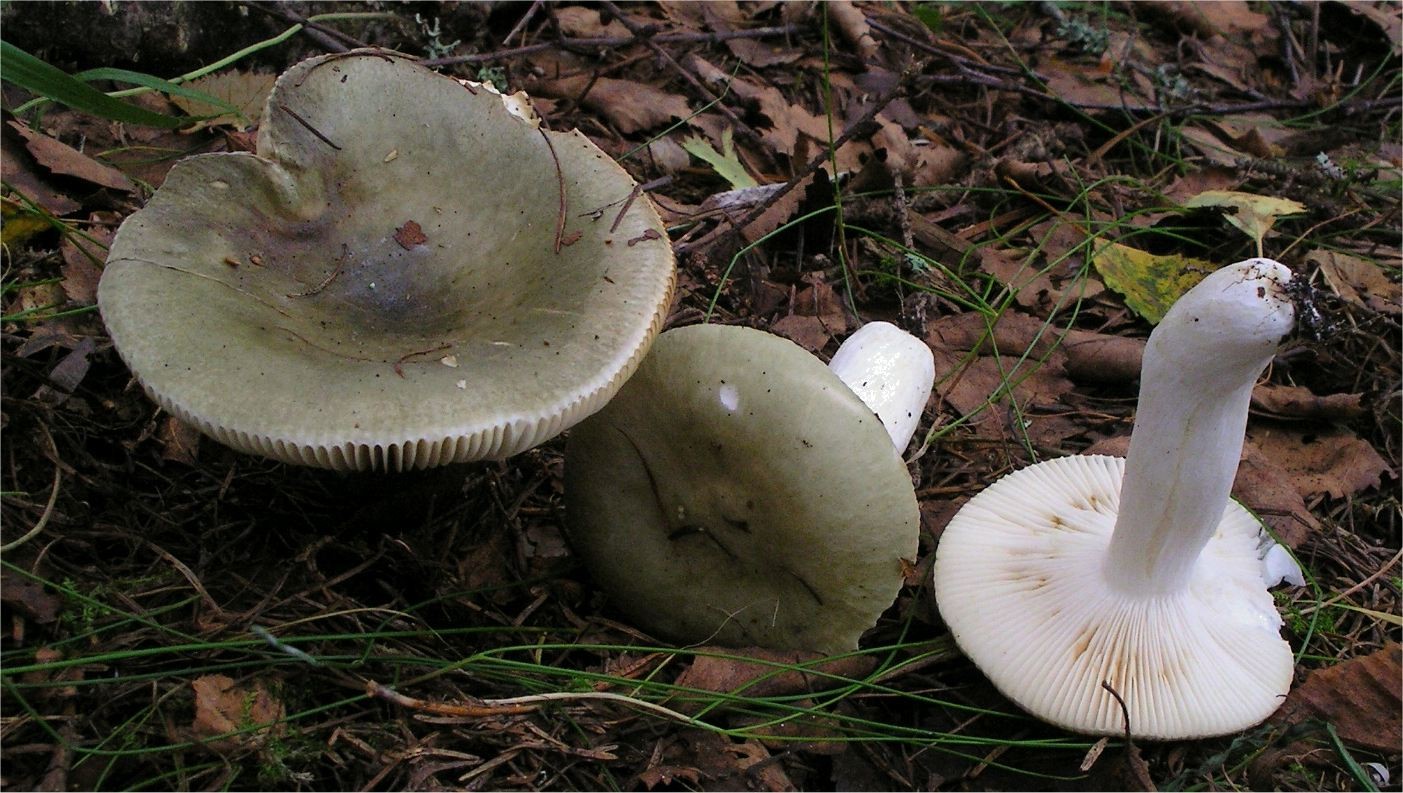
6. Green brittlegill
The color of green brittlegill (Russula aeruginea) caps is quite unusual for a genus named for its usually-reddish color. They appear in small scattered groups under trees or skirting forest edges. The green brittlegill is particularly associated with birch trees.
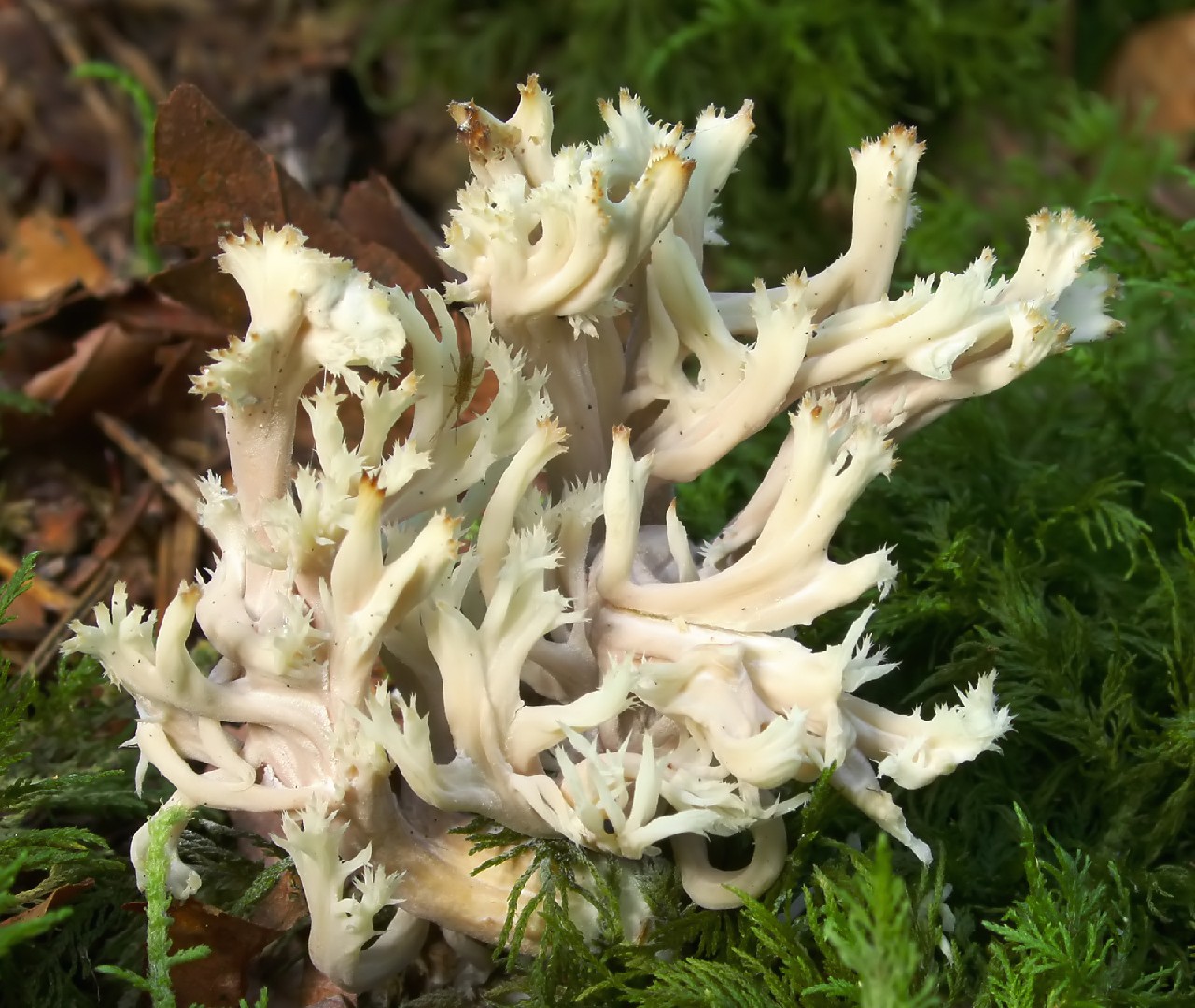
7. Crested coral
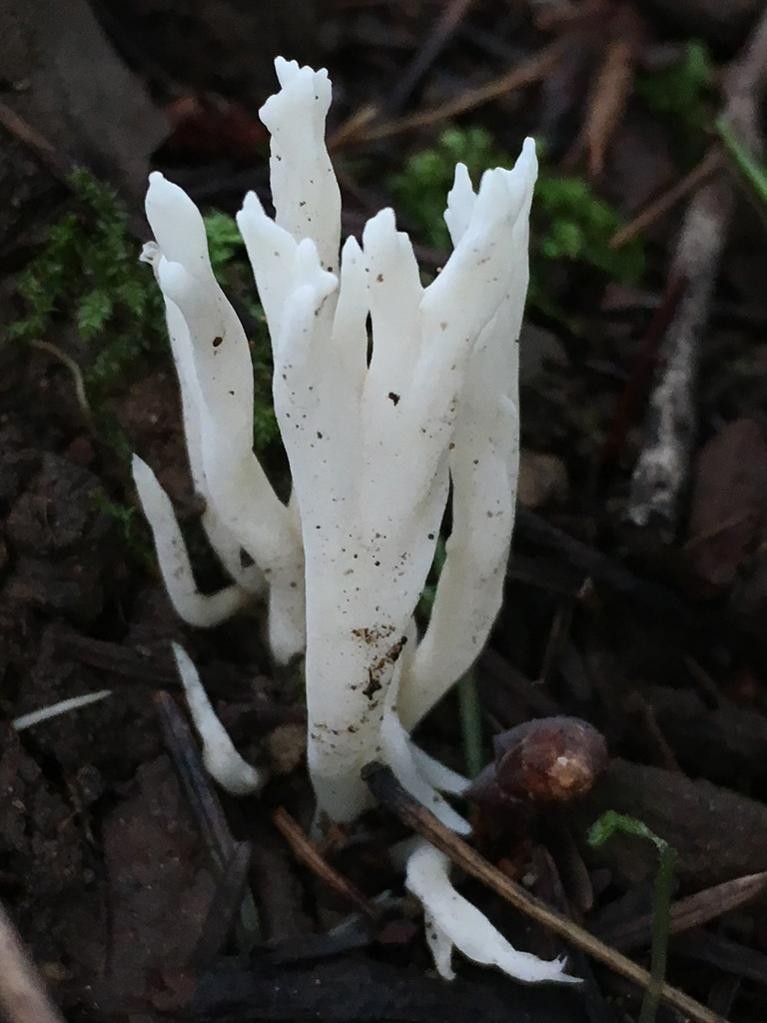
Crested coral(Clavulina coralloides) is a distinctive coral mushroom that is widespread in coniferous and hardwood forests, acting as a decomposer of dead and decaying timber. Endemic to the temperate zones of North America and Europe, it sprouts from late summer to winter.
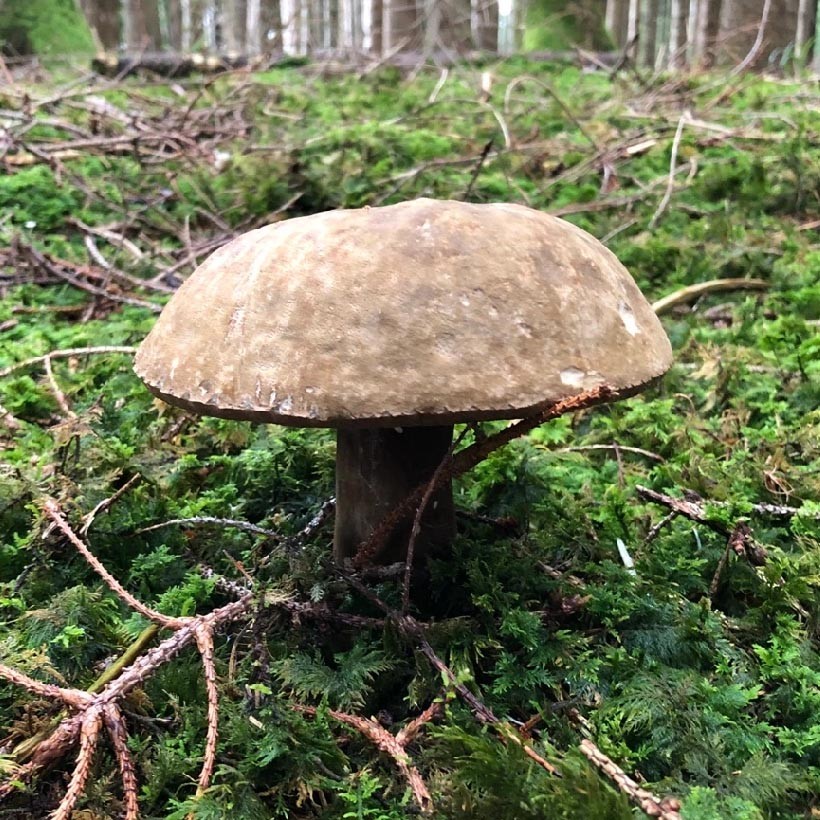
8. Dusky bolete
Dusky bolete (Porphyrellus porphyrosporus) may have a large cap, but its somewhat drab or dusky brown color makes it hard to spot on the forest floor. This mushroom typically grows under pines in low-elevation areas. It is known for its blue to blue-green staining reaction.
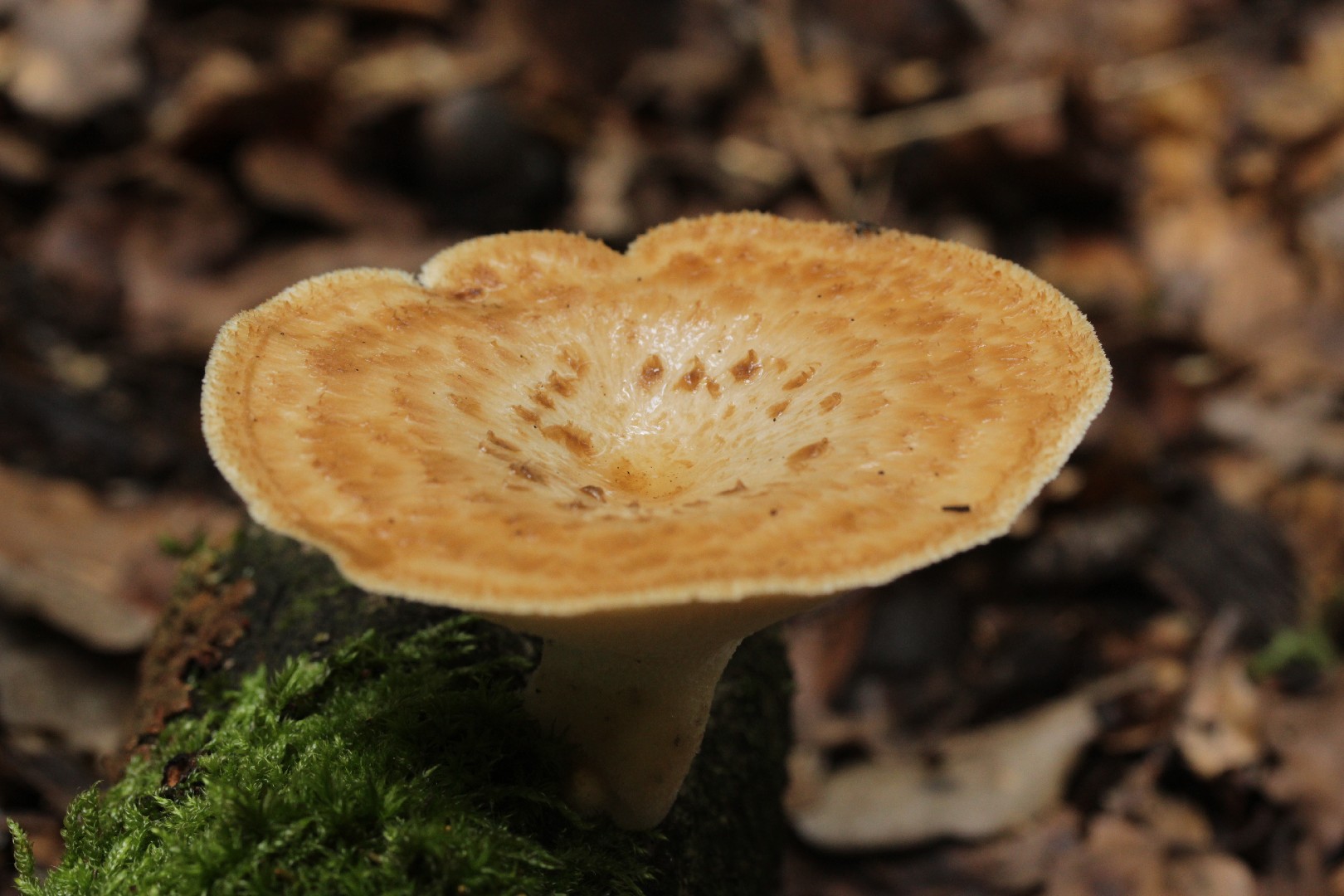
9. Tuberous polypore
The tuberous polypore is a soft-bodied polypore that can be found growing on dead hardwood boles or branches across temperate North America. Sporting a brown or cinnamon cap and a pale stalk, Polyporus tuberaster mushrooms are nondescript and may be confused with several other species.
10. Blue band brittlegill
More







