




Top 20 Edible Mushrooms Popular in Vasterbotten
Dive into the enchanting ecosystem of Vasterbotten, a region famed for its diversity of edible mushrooms. This guide will highlight the top 20 most common specimens you'll find here, each remarkable for their unique flavors, appearances, and growth environments. From the shady forests to the moist riverbanks, discover these fungal treasures, their culinary uses, and how to identify them effortlessly. Stay tuned as we invite you to explore this fascinating world!
* Disclaimer: Content feedback CAN NOT be used as any basis for EATING ANY PLANTS. Some plants can be VERY POISONOUS, please purchase edible plants through regular channels.

Most Popular Edible Mushrooms
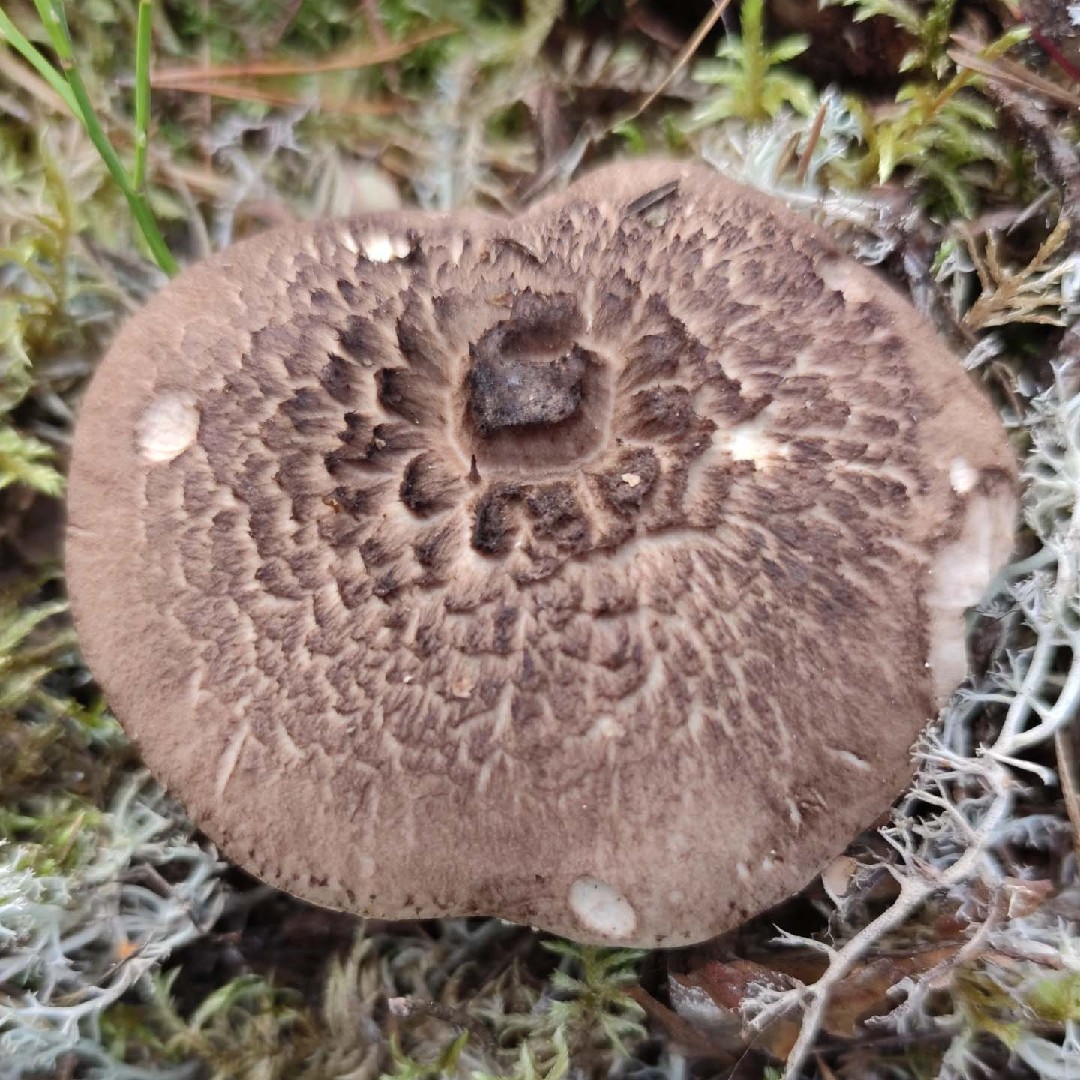
1. Scaly tooth
Found in the pine forests of Europe and North America, the scaly tooth has a blue pigment that can be used to dye textiles. This large mushroom got its name, scaly tooth, from its coarse and scaly, brown cap. It has a mealy scent.
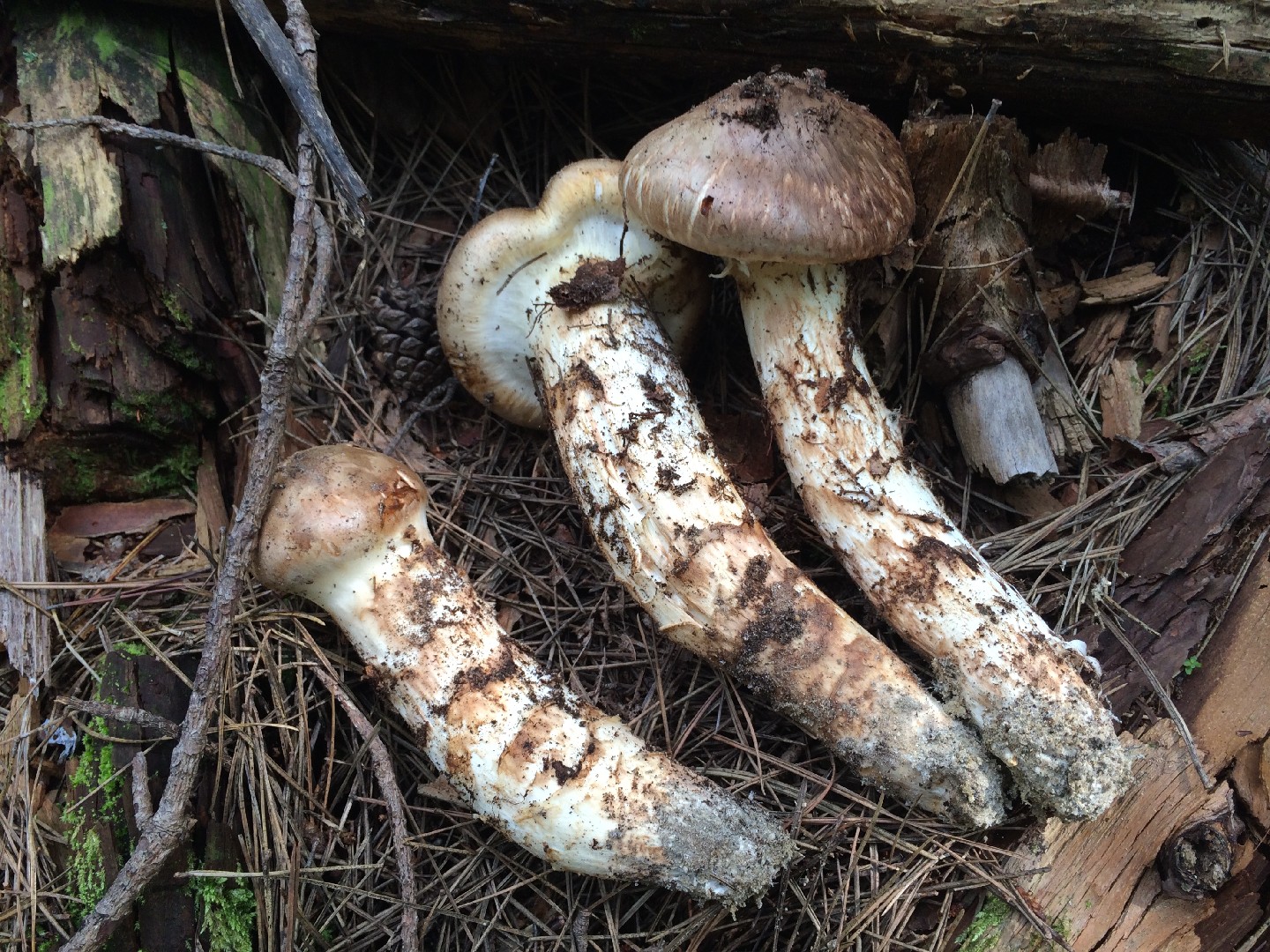
2. Matsutake
A part of many traditional Japanese dishes, this wild mushroom is threatened in its home region by the destruction of the islands' pine forests that play host to the matsutake. It also grows in North America, in large enough numbers to be harvested for commercial sale at extremely high prices. Attempts at specific cultivation have not been successful.
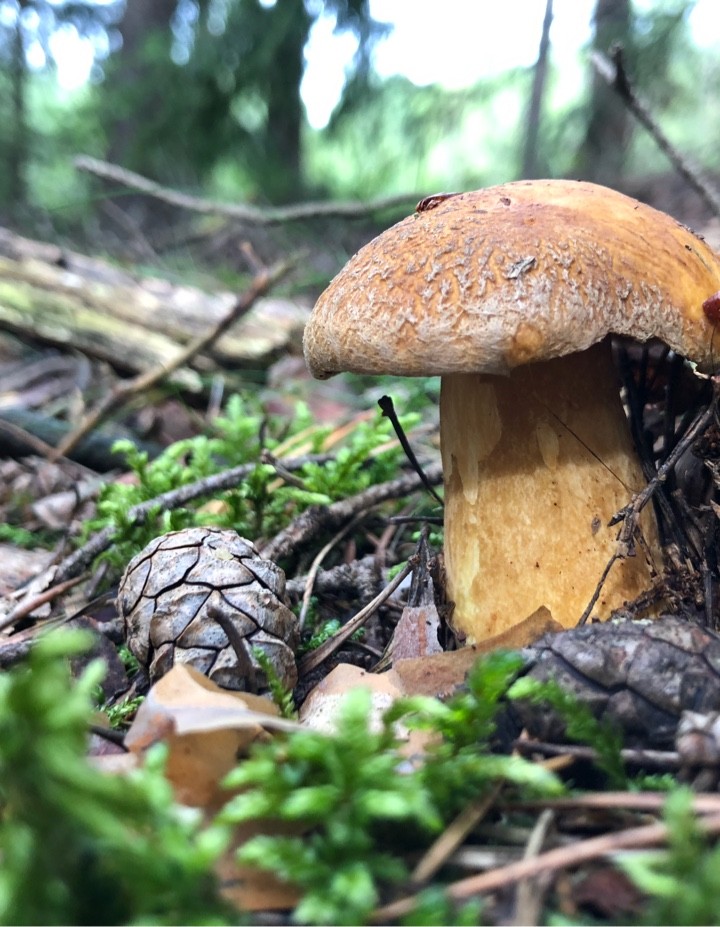
3. Velvet bolete
The velvet bolete is one of the most common mushrooms in pine forests in the northern hemisphere. There have been reports of mild poisoning cases from eating this mushroom, so it is best avoided. The velvet bolete is said to be of poor taste and unpleasant smell, anyway.
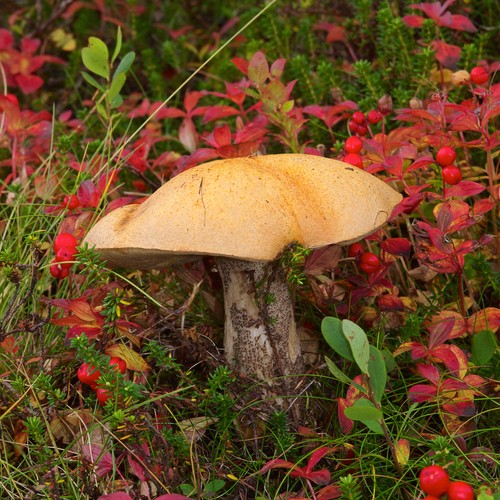
4. Orange birch bolete
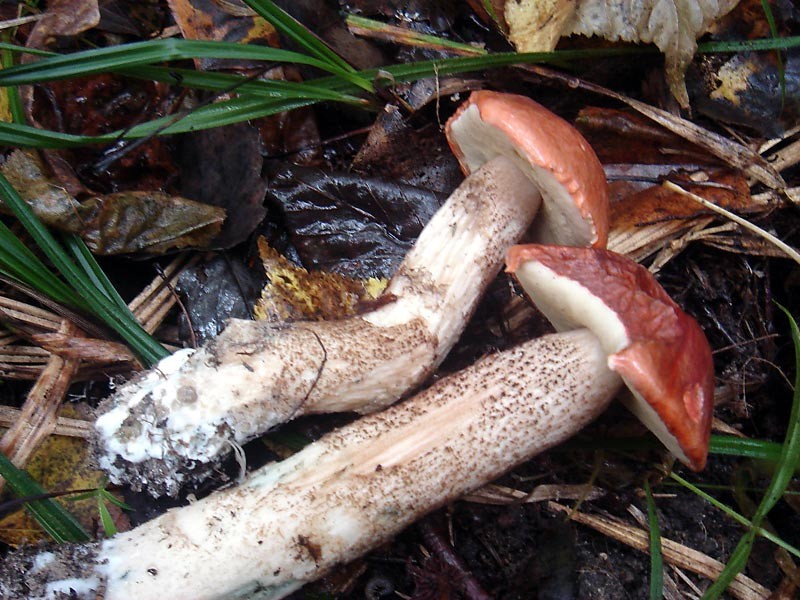
You may not be particularly surprised to learn that the orange birch bolete (Leccinum versipelle) is an orange-capped bolete that commonly associates with birch trees. The species has a classic bolete form, boasting a large, bulbous cap, a thick, shaggy stalk, and a sponge-like pore surface. When cut and exposed to air, the flesh of this mushroom will turn blue.
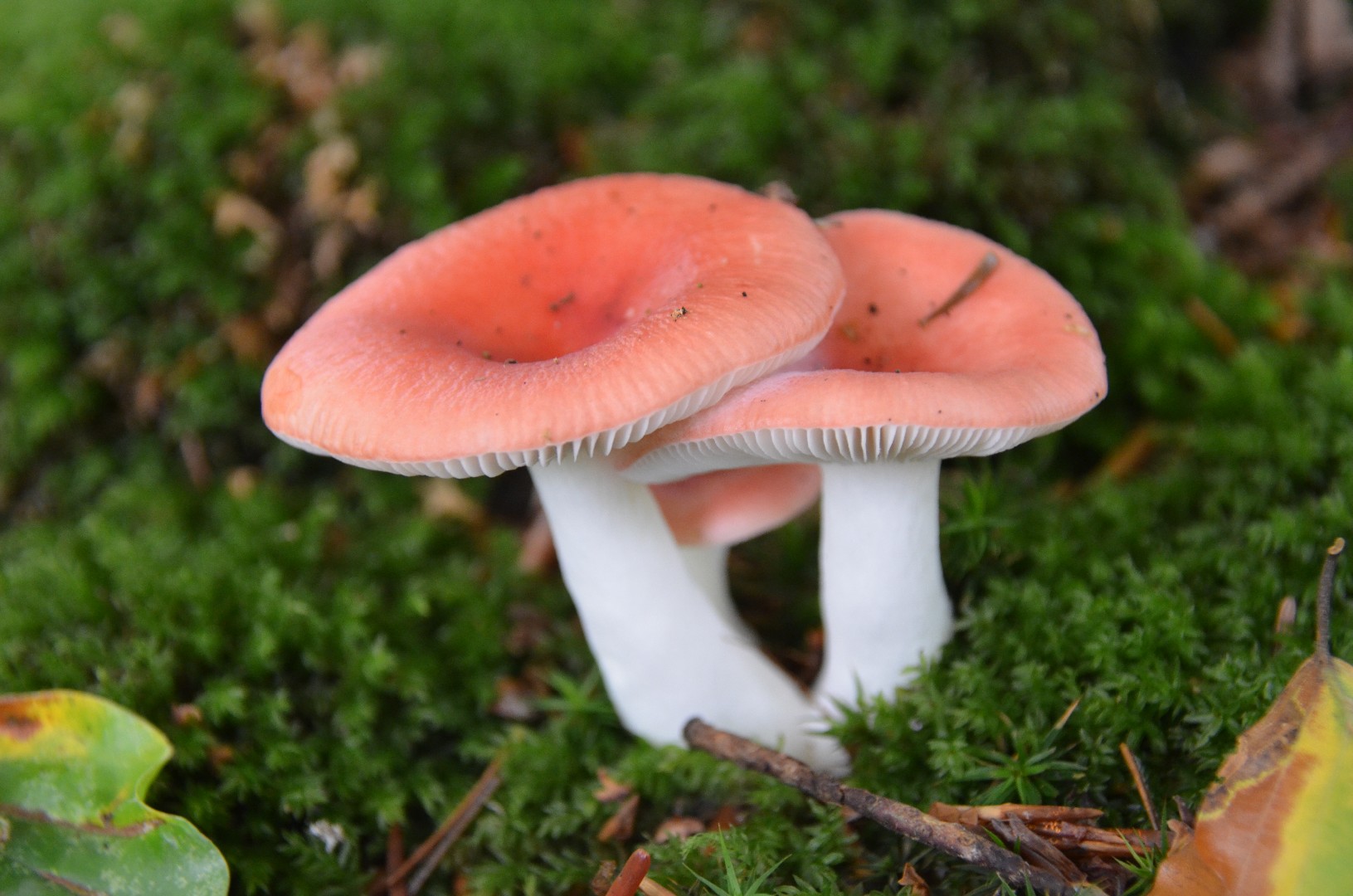
5. Hintapink
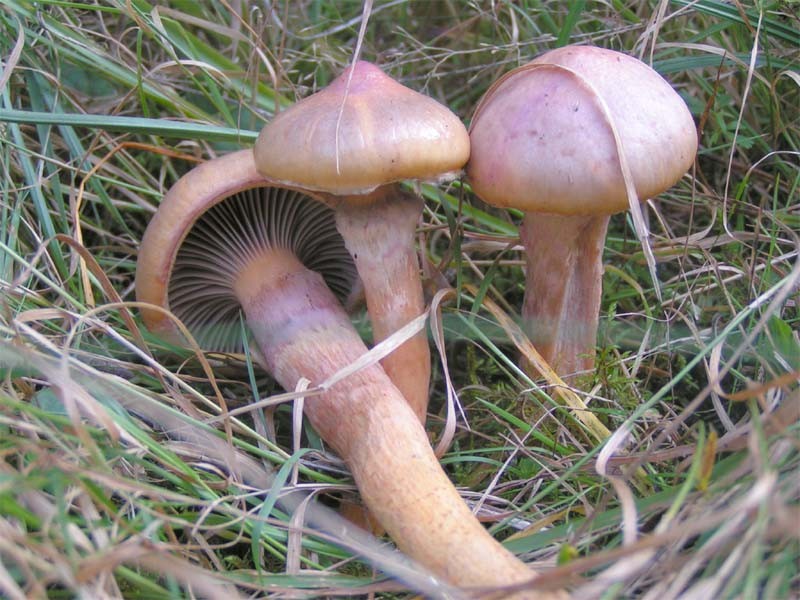
The cap is convex to depressed and is coloured a distinctive bloody red, pink, crimson or purple. Sometimes it may show a yellowish or orange tinge in the centre. It may measure between 6 and 20 cm in diameter. The flesh is white with a mild taste and without scent; it quickly becomes soft and spongy and also greyish. The crowded gills are cream coloured when young, and become yellow with age. They are adnexed and are generally thin. Their edges may sometimes occur reddish. The amyloid, elli spores measure 8–10 by 7–10 μm are warty and are covered by an incomplete mesh. The stem is white, sometimes with a pink hue, slightly clubbed. It may measure 5 to 15 cm in height and up to 3 cm in diameter. 
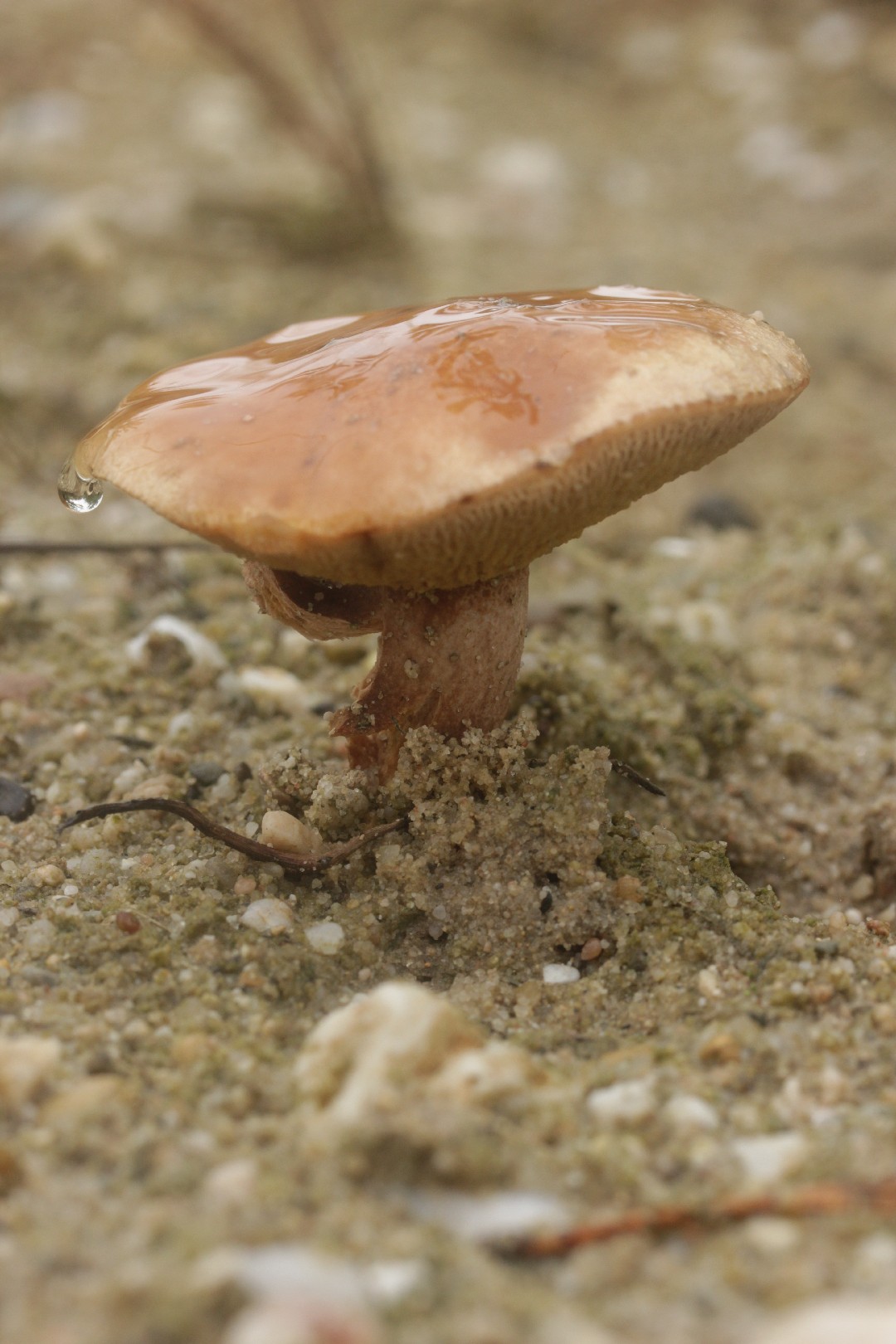
6. Bovine bolete
The bovine bolete (Suillus bovinus) often appears in a three-way relationship not only with the roots of pine trees but also with another parasitic mushroom known as the Rosy Spike. This greasy-capped mushroom appears clustered in tight tufts, which is unusual for a bolete. Bovine boletes give off a faint fruity aroma.
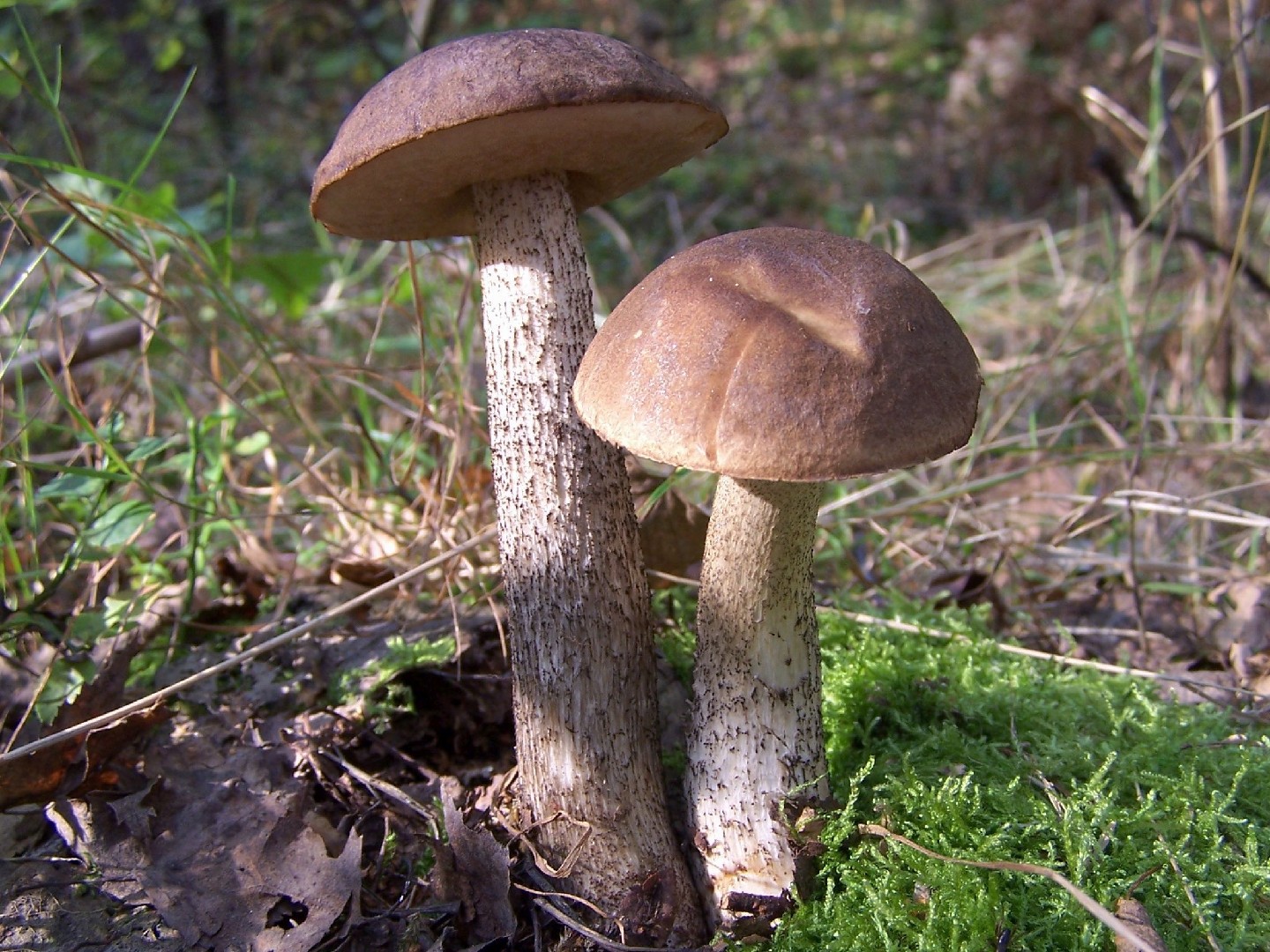
7. Brown birch-bolete
The brown birch-bolete is common around the northern hemisphere. It grows beneath birch trees and is usually easy to identify by its brown cap and scaly stem, the latter of which is referenced in its scientific name Leccinum scabrum. Occasionally, however, it can be found sporting a white cap.
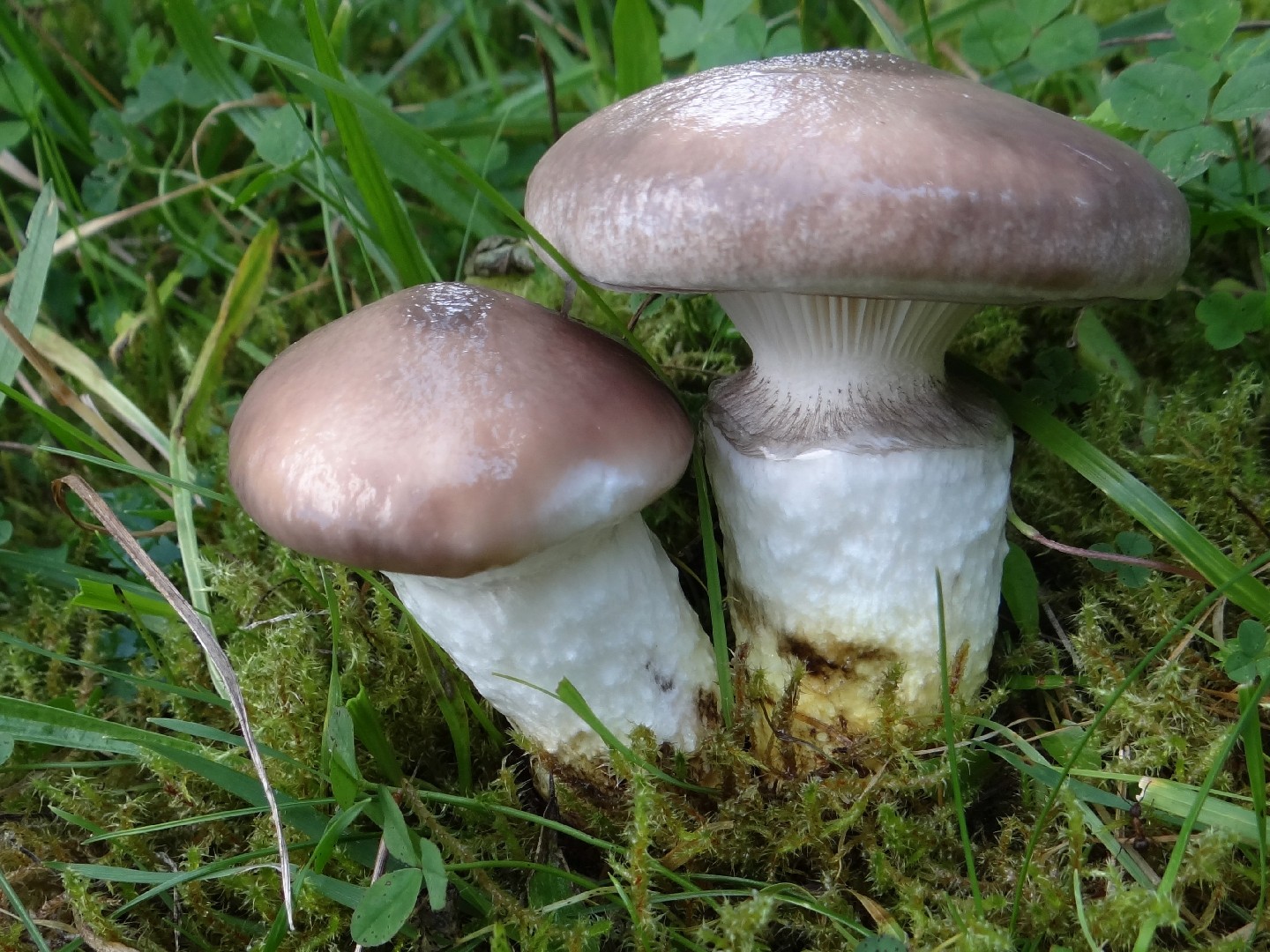
8. Slimy spike
A stocky, almost imposing mushroom, the slimy spike (Gomphidius glutinosus) has a round bulbous cap and a very thick stalk. This species is one of the more unusual members of the bolete order (Boletales) because it has gills, rather than a spongey pore surface. The "slimy" in this species' common name is well-earned - individuals are almost always coated in a shiny layer of slime.
9. Slippery jack
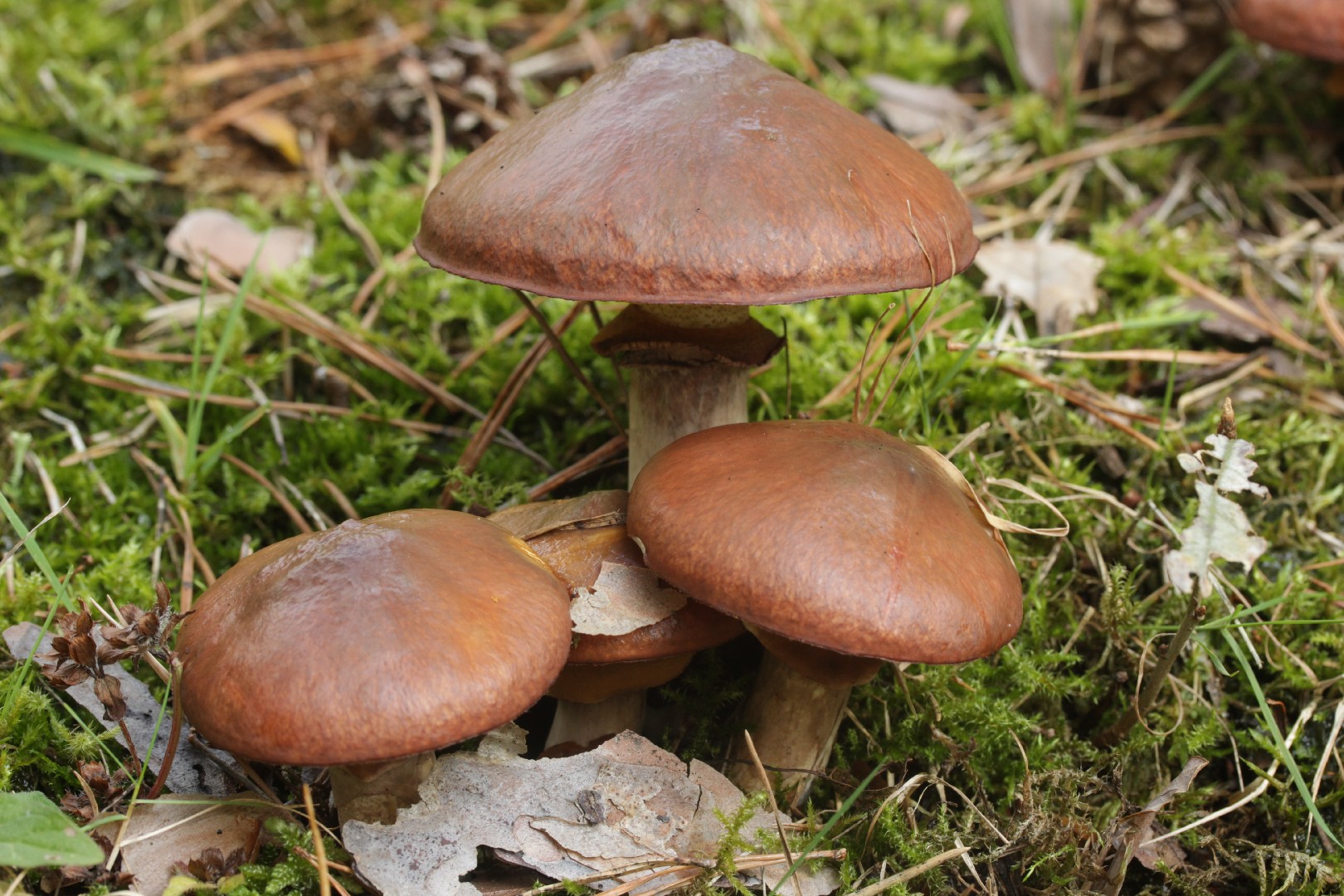
This mushroom blooms in summer and autumn, usually near or beneath pine trees. It does well in cold climates, but can also be found further south all around the northern hemisphere. During moist weather, the slippery jack's caps become quite slimy, leading to their common name.
10. King bolete
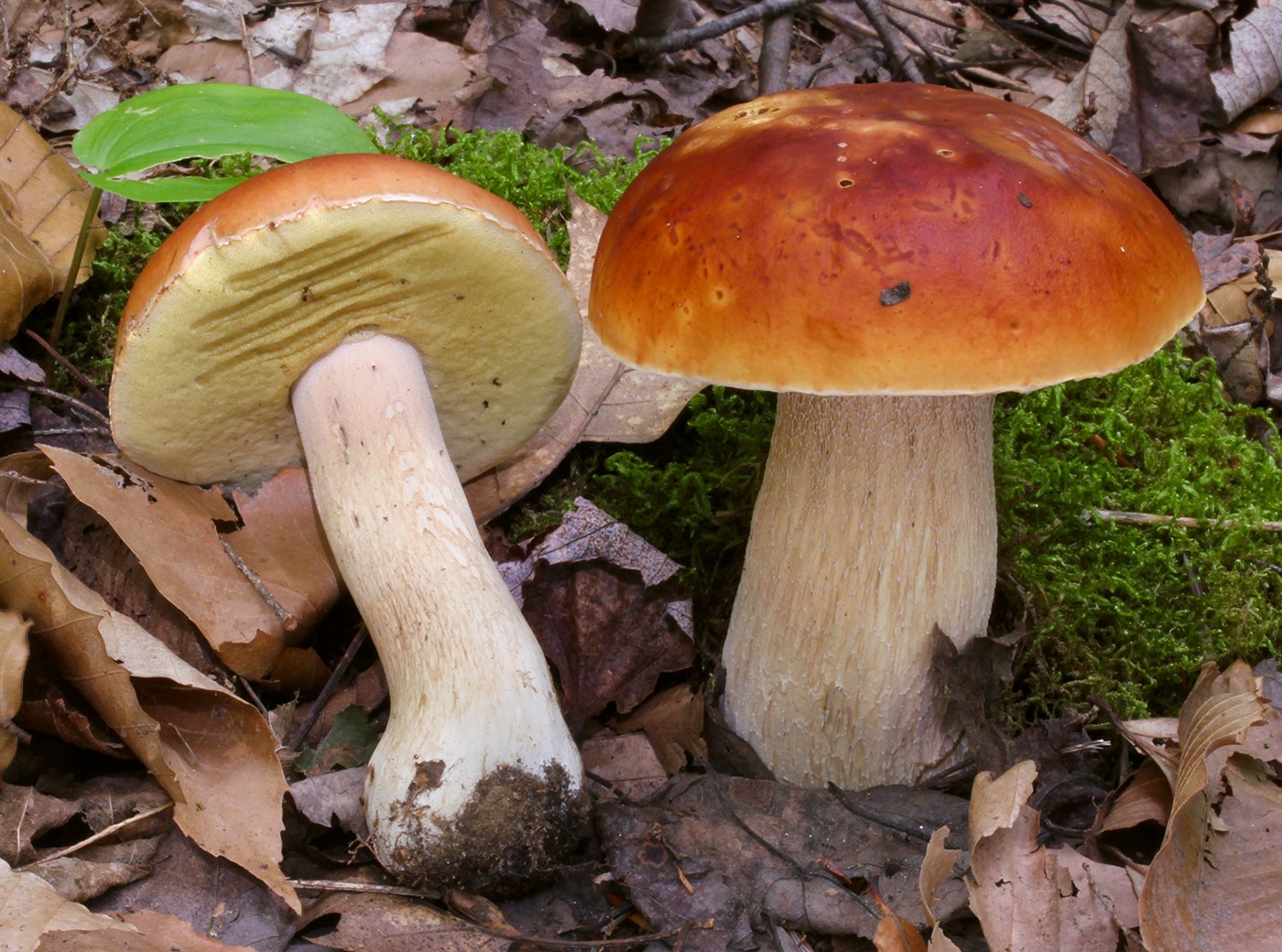
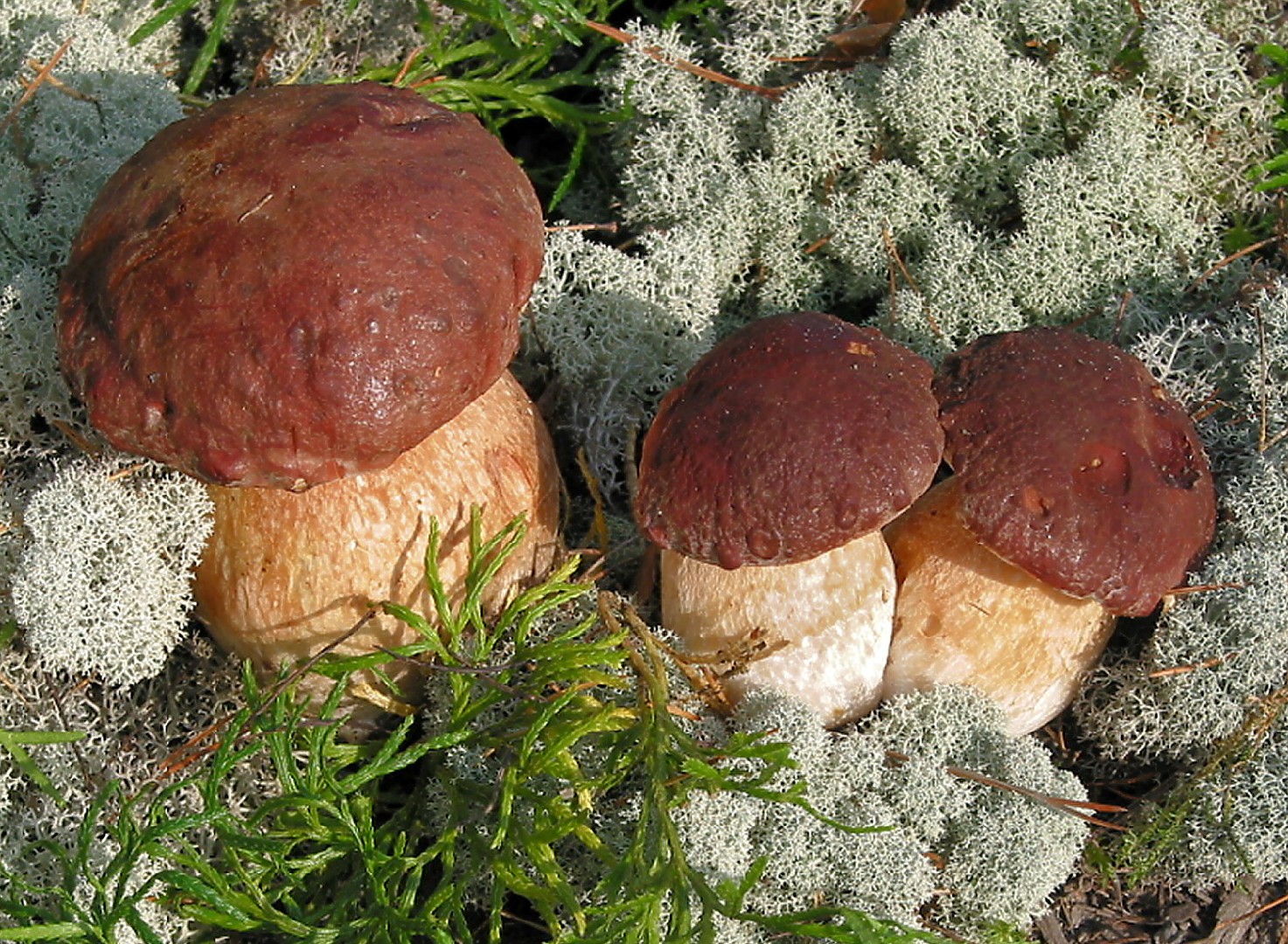
Extremely popular in many cuisines, this edible wild mushroom grows around the world near the roots of forest trees. In some regions, king bolete mushrooms are collected in great enough volumes that their sale can support entire families during the harvest season. King boletes are reported to be high in fiber, vitamins B and C, calcium, potassium, magnesium, zinc, and several antioxidants.
More







