




Top 20 Edible Mushrooms Popular in Durango
Explore the rich diversity of edible fungi in Durango's lush landscapes with our detailed guide on the top 20 most common edible mushrooms. In this region, known for its versatile climate and abundant wilderness, these mushrooms thrive. Each species offers a unique blend of flavor and texture, lending itself to a variety of culinary delights. A deep understanding of their habitats, appearance, and gastronomic uses will accentuate your mushroom foraging experience or simply enhance your knowledge of these fascinating organisms. Buckle up for a captivating journey into the world of Durango's edible fungi.
* Disclaimer: Content feedback CAN NOT be used as any basis for EATING ANY PLANTS. Some plants can be VERY POISONOUS, please purchase edible plants through regular channels.

Most Popular Edible Mushrooms
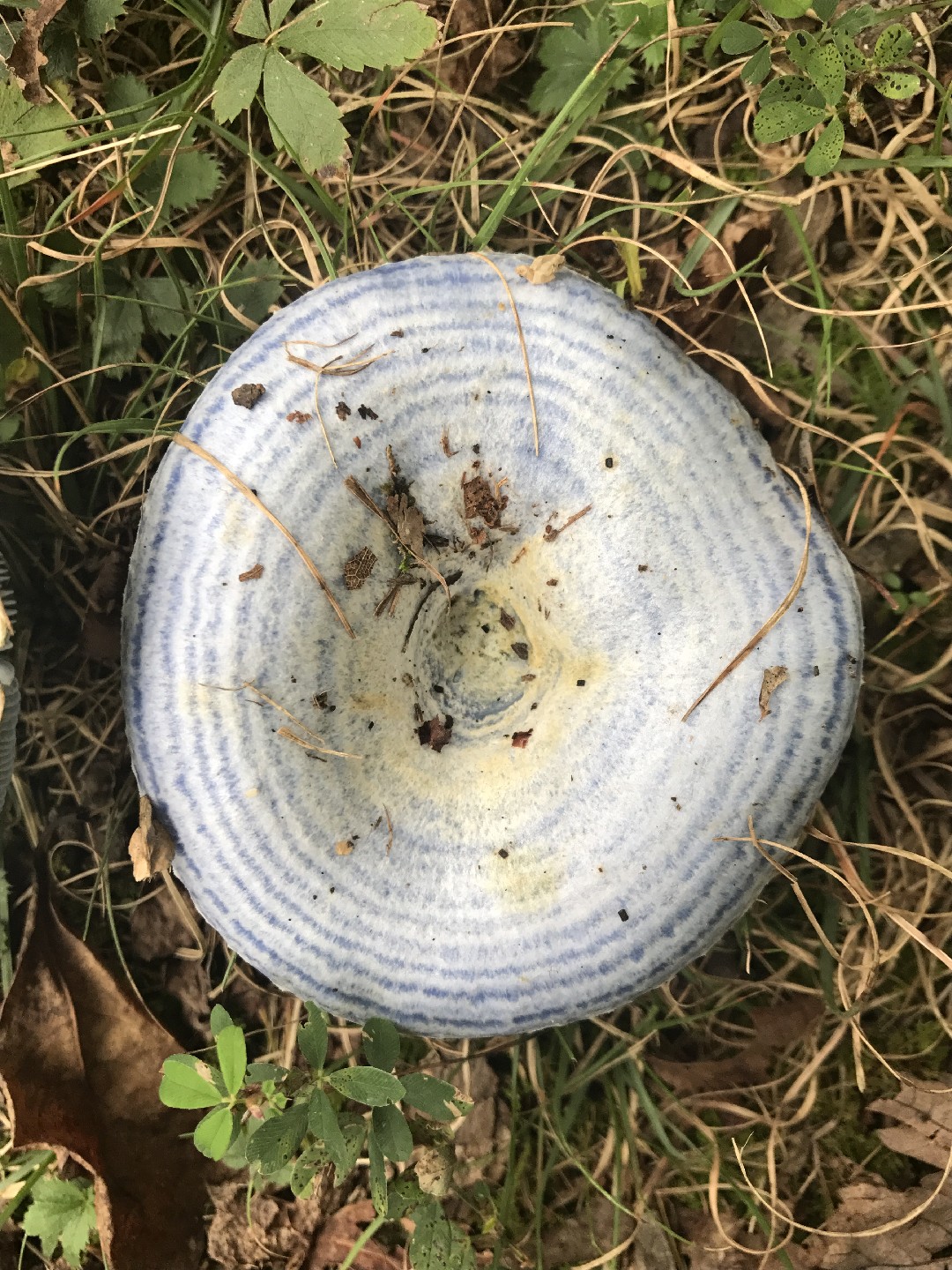
1. Indigo milk cap
This gorgeous species is unlike any other. The indigo milk cap, a member of the often-drab russula family, is deep blue in color. Like other milk caps, it bleeds a latex-like substance when cut or damaged, but instead of the usual white this species bleeds deep blue.
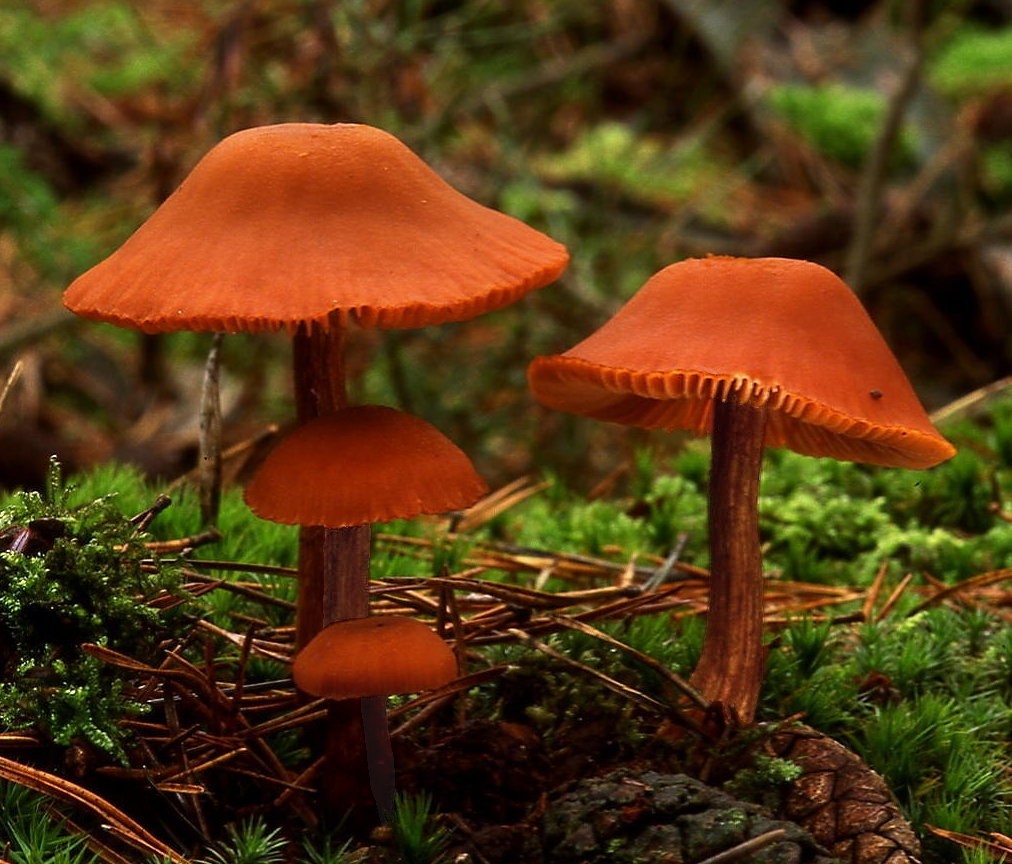
2. Common laccaria
Common laccaria may sound like a malevolent name for a mushroom, but fret not! This species is so-called because its appearance is highly variable, with individual caps taking on a whole host of colors, from whitish to pinkish to dark brown.
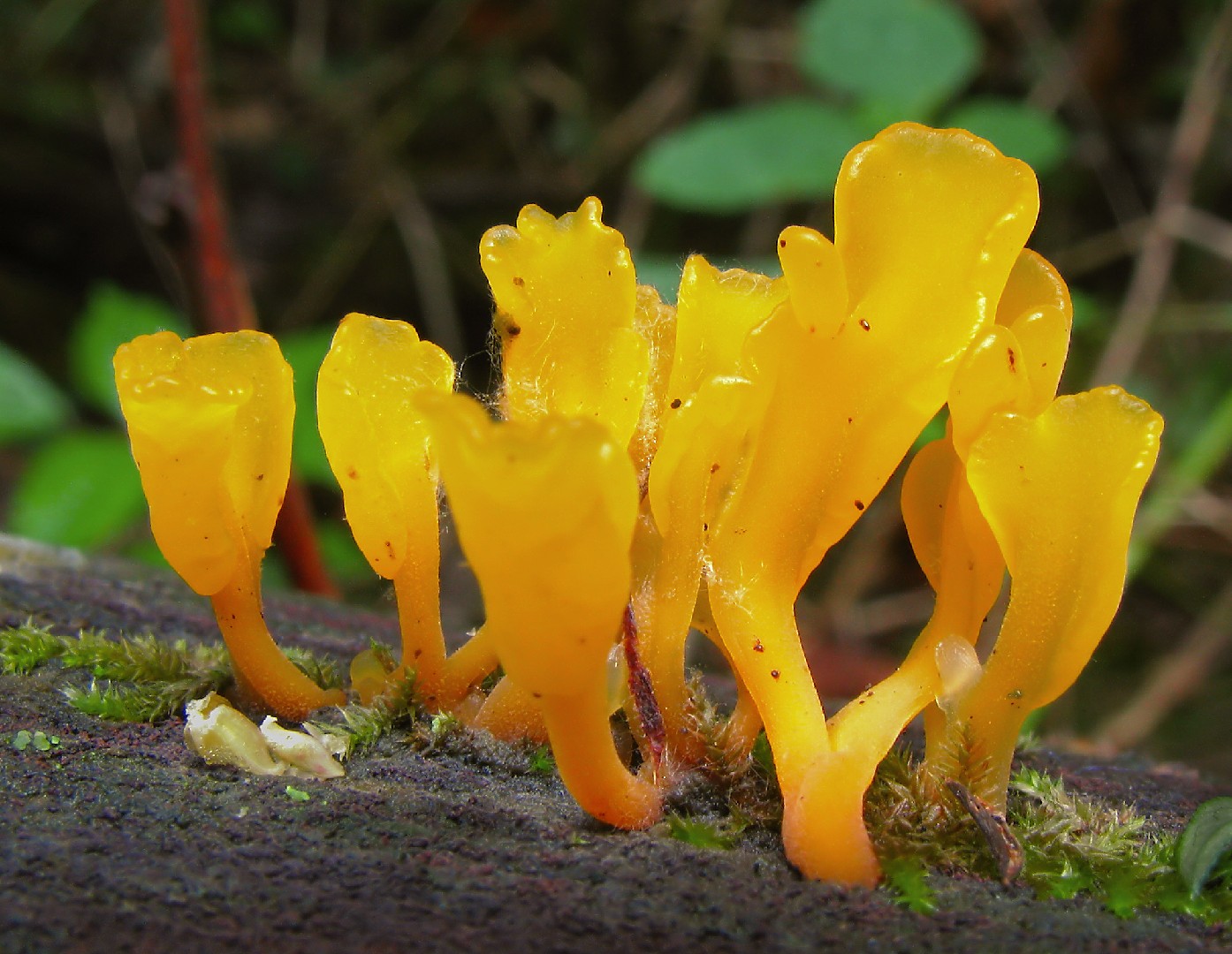
3. Fan-shaped jelly-fungus
Just as its Latin and the common English names suggest, the fan-shaped jelly-fungus (Dacryopinax spathularia) is a fan-shaped or spatula-shaped jelly-like mushroom. It commonly grows in wood cracks and it sometimes even appears in the cracks of the processed wood and lumber. Despite the word "jelly" in its name, the fan-shaped jelly-fungus is not considered edible.
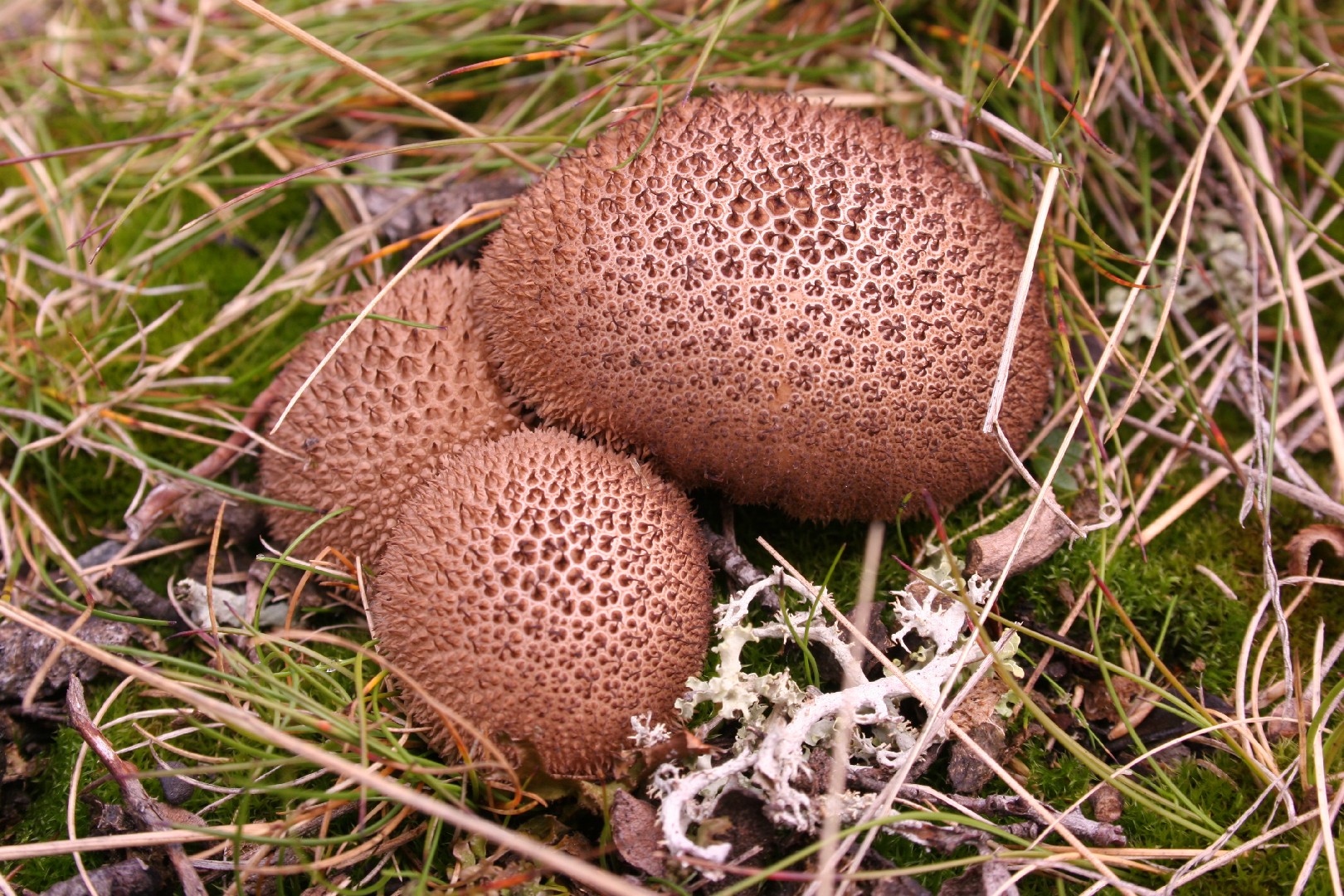
4. Umber-brown puffball
Like all puffballs, this mushroom grows without a distinct stalk, and assumes a sort of inverted-pear shape. The umber-brown puffball is distinguished by its dark color and the short spines, less than 1 mm in length, that cover its cap.
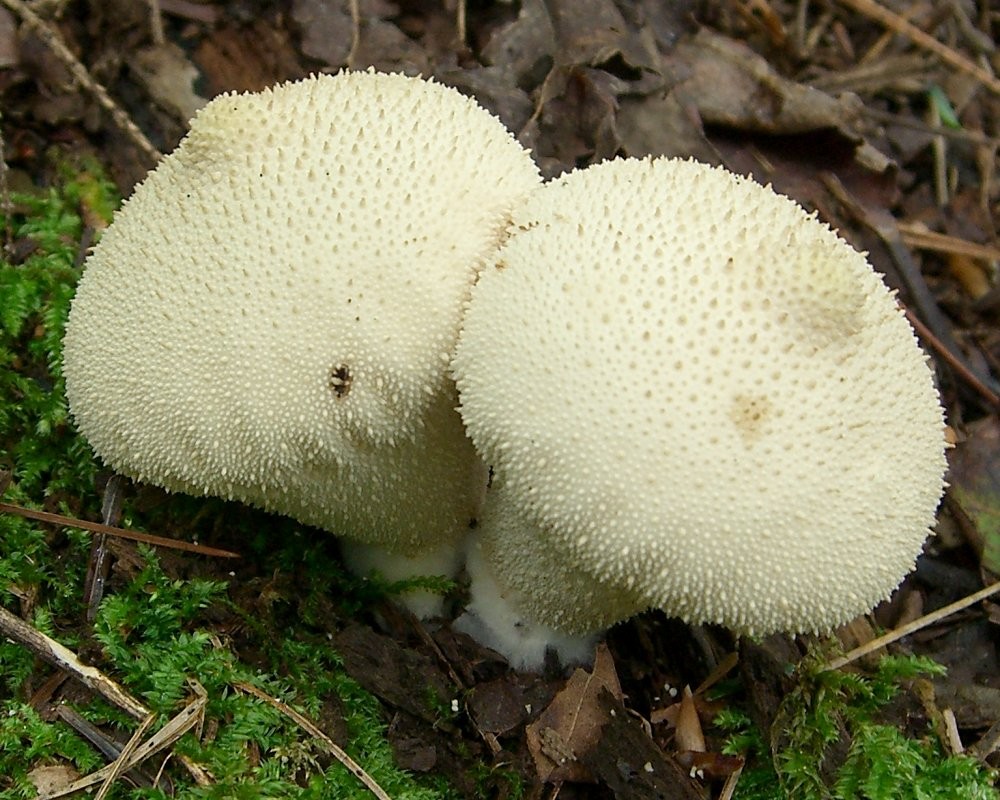
5. Common puffball
These puffy mushrooms grow in small groups on the forest floor. Once they're mature, common puffballs turn yellow and "puff out" smoke-like spore clouds when disturbed. Be very careful when identifying these mushrooms, as their young, immature form looks very similar to the lethal Deathcap.
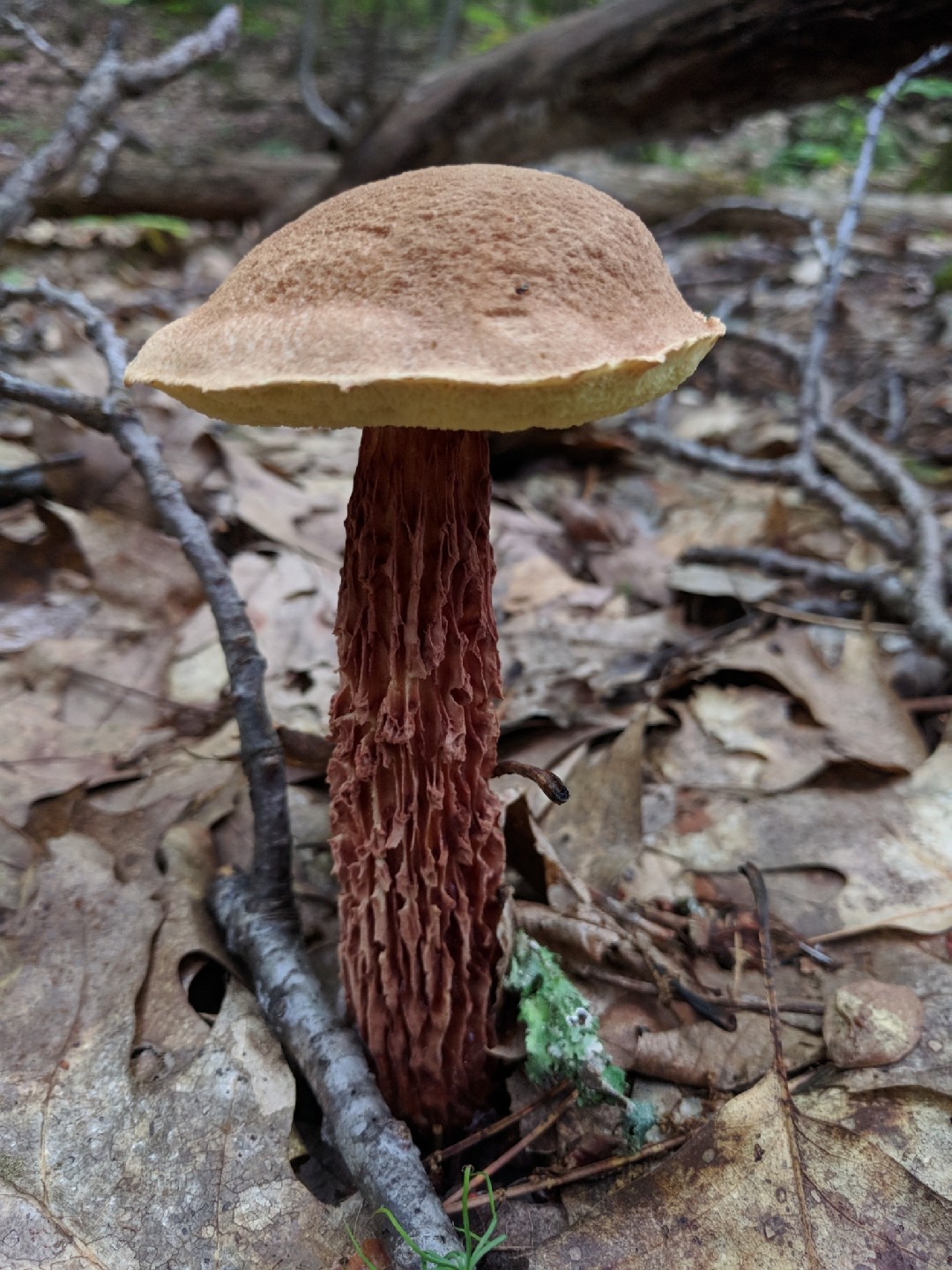
6. Russell's bolete
Russell's bolete is a unique-looking bolete with an attractive appearance that makes it easy to spot underneath oaks and other hardwood trees. It is distinctive for its slender stem which is also shaggy and pocketed. Unlike similar species, russell's bolete’s cap does not become sticky.
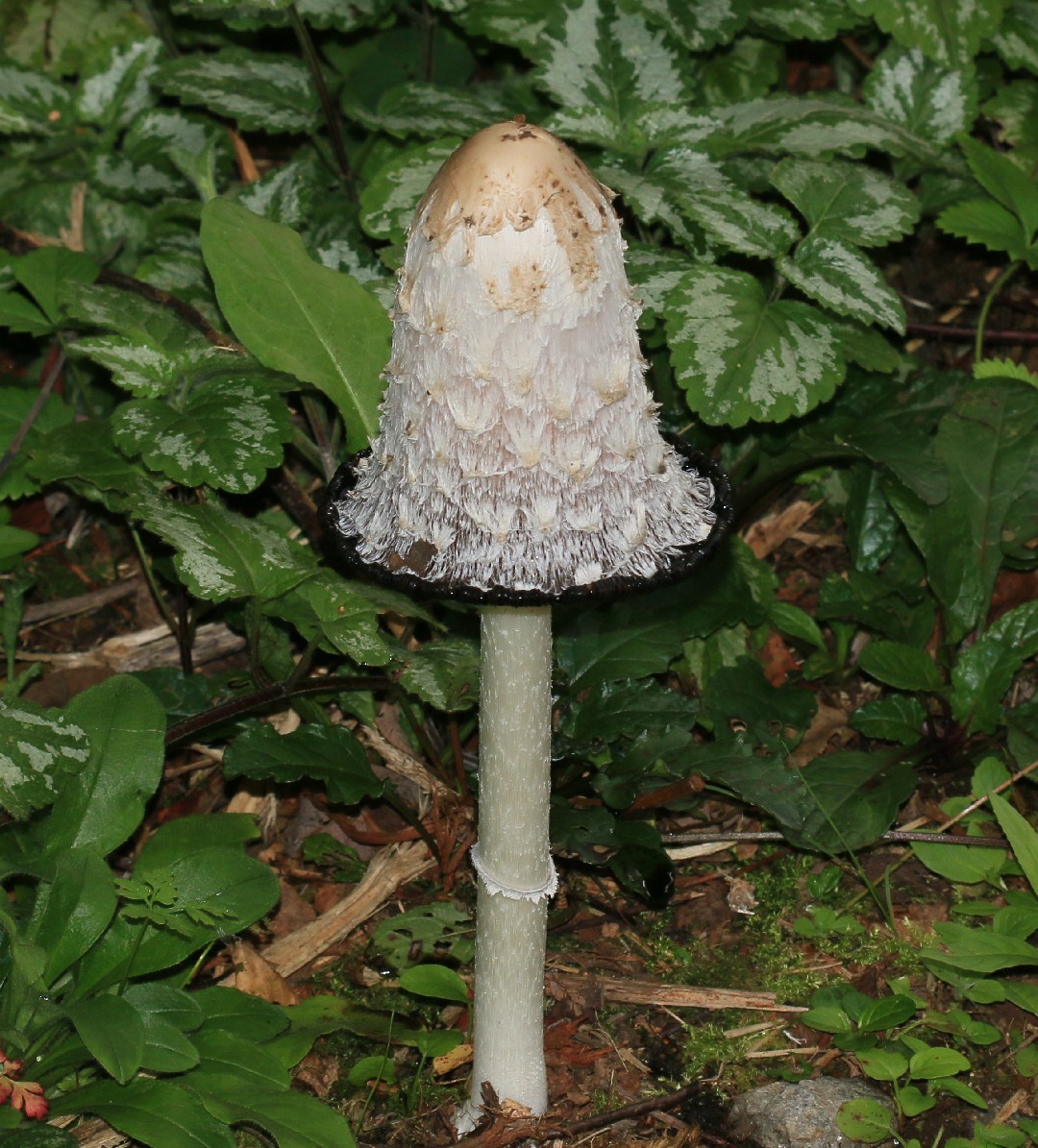
7. Shaggy mane
The shaggy mane mushroom is commonly found in North American and European grasslands. Some peoples foraged for its young egg-shaped caps, but it has more recently been found to be a bioaccumulator of heavy metals, meaning it pulls toxic metals up from the soil where it grows. As a result, shaggy manes should not be eaten. The mushrooms usually appear in clusters or “fairy rings.”
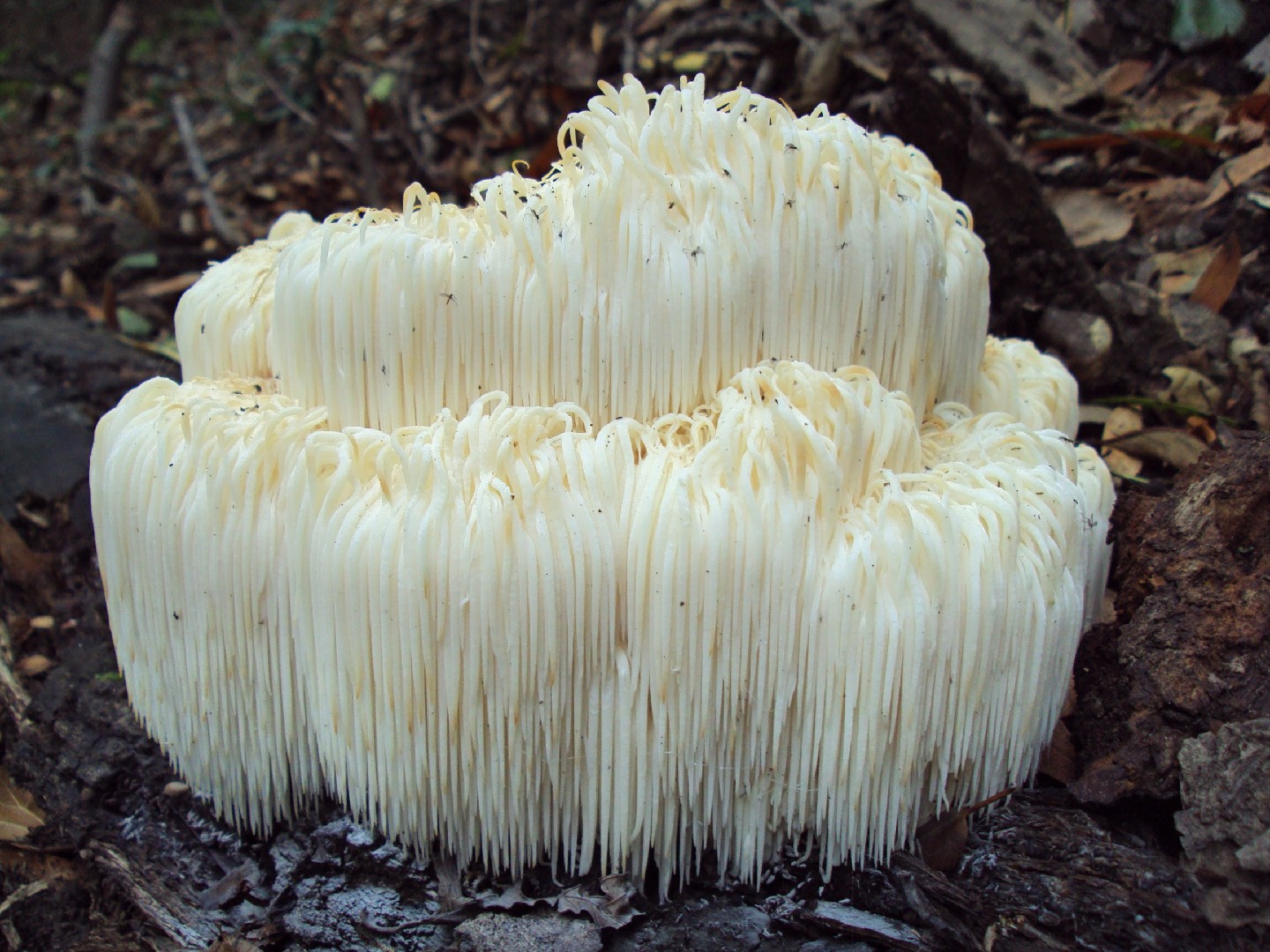
8. Lion's Mane Mushroom
Lion's Mane Mushroom(Hericium erinaceus) is easily identifiable by its characteristic appearance, reminiscent of the majestic mane of a lion. It often sprouts along hardwoods, which may be living or dead. Scientists thus debate whether this species is truly parasitic or merely saprophytic in nature.
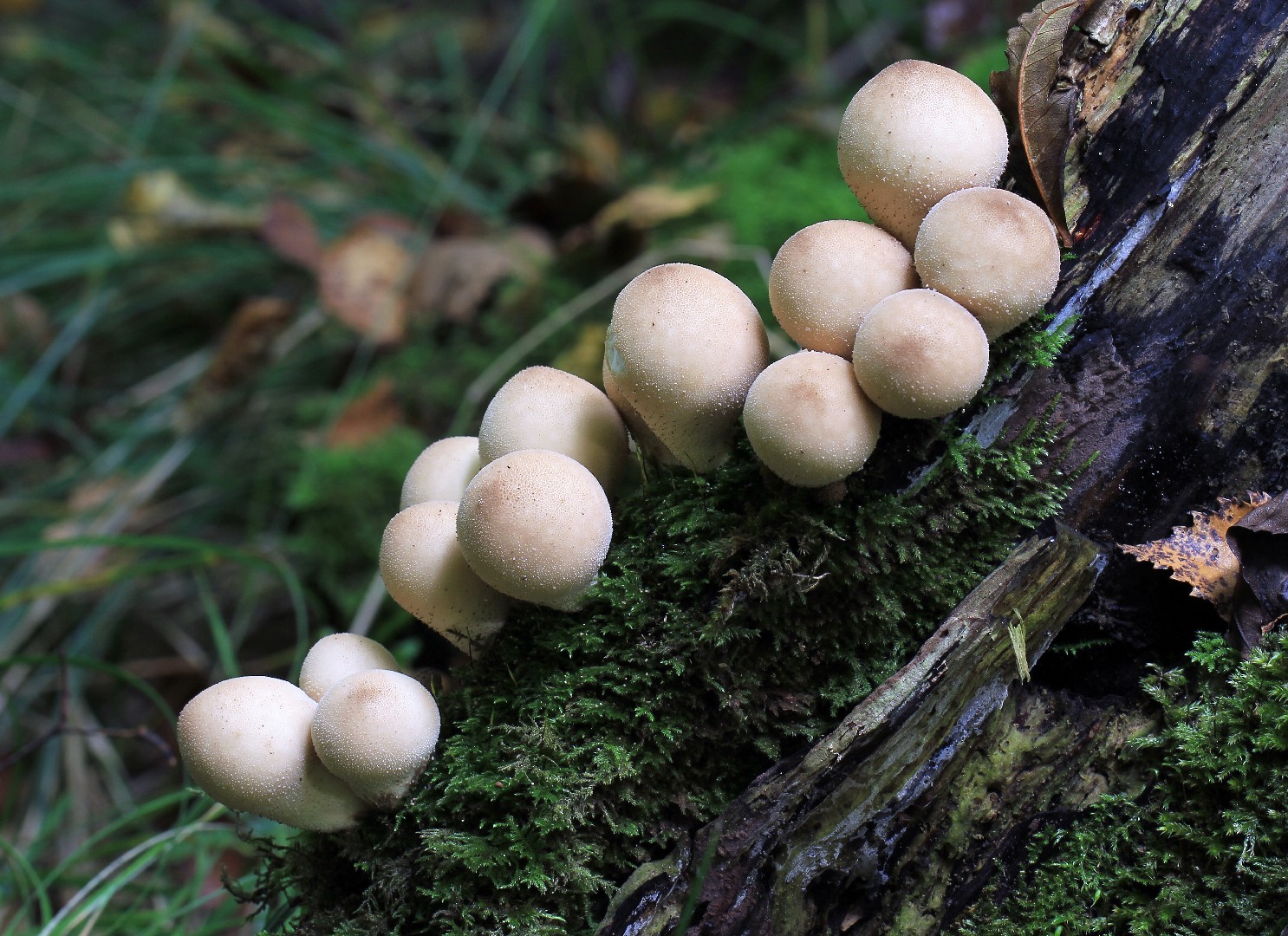
9. Pear-shaped puffball
The mushrooms of this species grow in such tight clusters that they may cover fallen trees and stumps almost entirely in a brownish, puffy coat. Pear-shaped puffballs appear all around the northern hemisphere on decaying hardwoods from fall through winter.
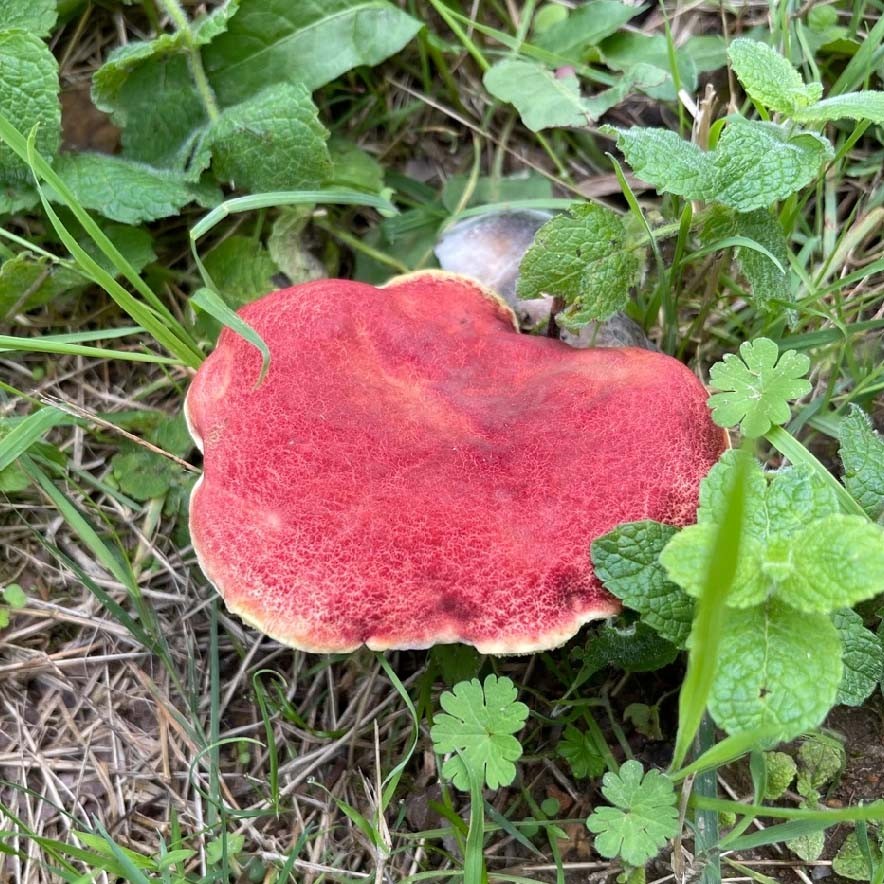
10. Ruby bolete
True to its name, ruby bolete is bright red when young but fades to a greenish-red when older. This mushroom is most commonly found growing in groups in open areas or on forest edges. However, it may be difficult to distinguish ruby bolete from other boletes.
More







