




Top 20 Most Common Mushrooms in Aberdeen
Welcome to our featured article on the top 20 most common mushrooms found in the breathtaking landscapes of Aberdeen. Renowned for its diverse climates and fertile soils, Aberdeen boasts an impressive variety of fungi. From the dense, moss-clad forests to the breezy coastlines, the region is a veritable paradise for mushroom enthusiasts. Join us as we delve into the fascinating world of Aberdeen's abundant mushroom species.

Most Common Mushrooms
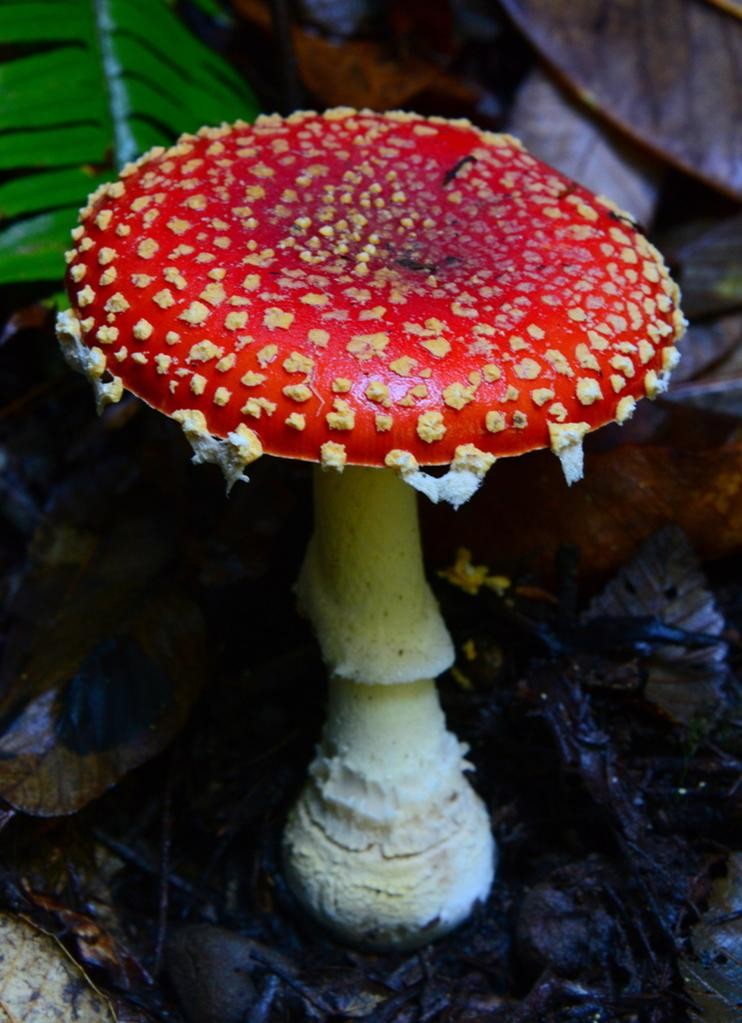
1. Fly agaric
In Northern Asia and Europe, fly agaric grows under trees near the winter solstice and is collected for ritual use tied to the season. Its characteristic shape and coloring are still ubiquitous in many European fairy tale illustrations and Christmas traditions. It is highly toxic.
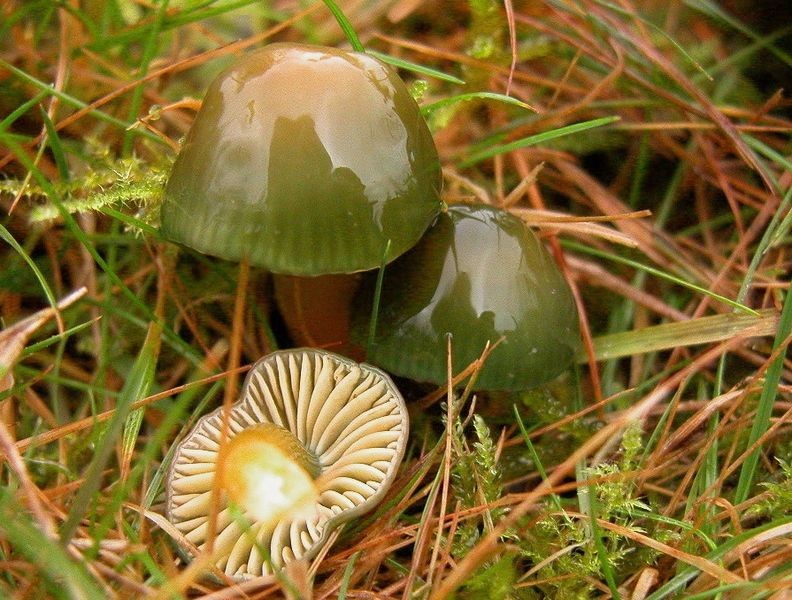
2. Parrot waxcap
This distinctive mushroom is most recognizable when it is young. Freshly-fruited parrot waxcaps boast beautiful caps and stalks that have both the hue and the sheen of polished jade - the gills underneath are often canary yellow, creating a striking and colorful contrast. The species, which is fond of moist grasslands and pastures, can be found across temperate areas of the northern hemisphere, as well as South Africa.
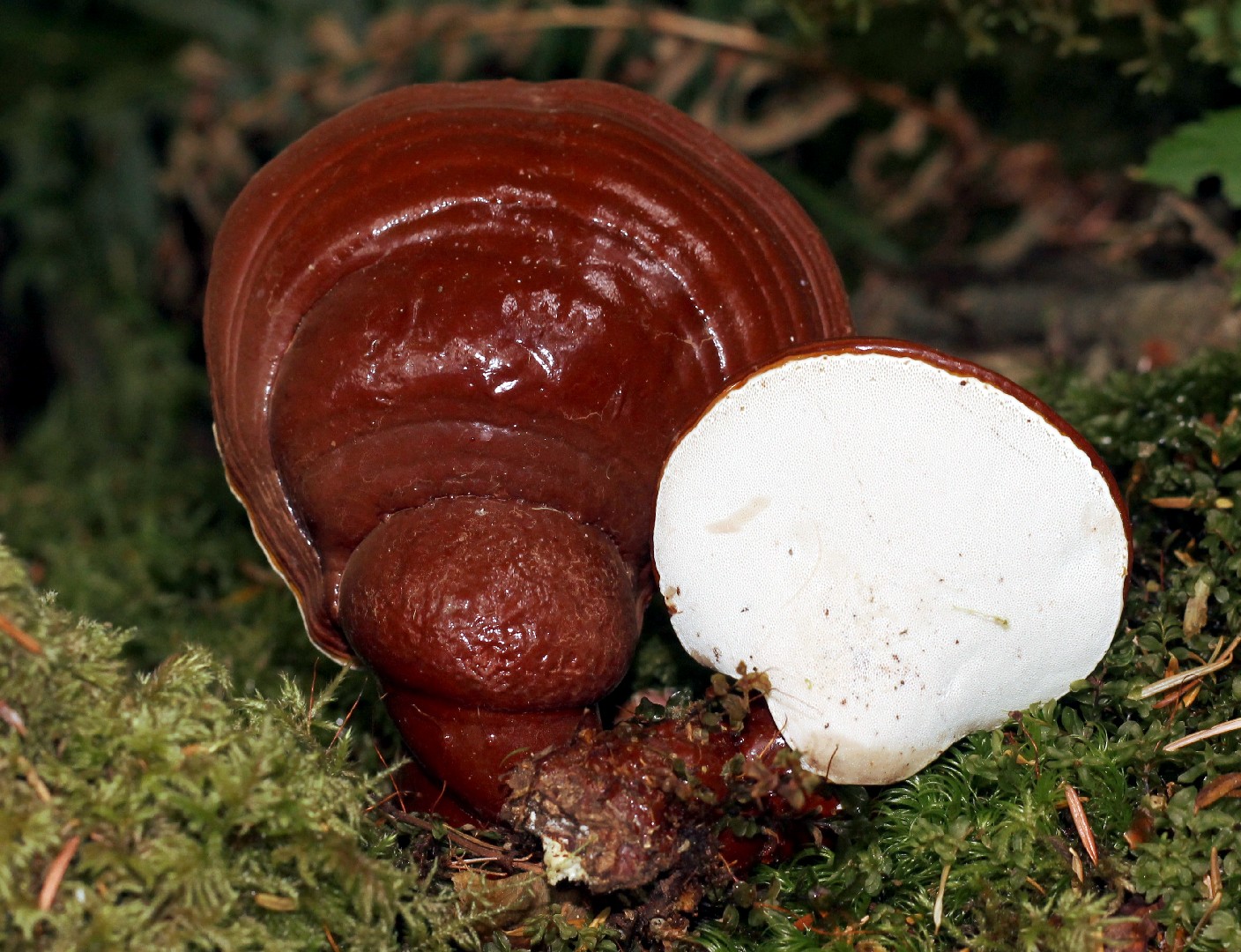
3. Western varnished conk
The western varnished conk (Ganoderma oregonense) is a stunningly attractive mushroom that looks as though the entire cap was dipped in glaze and crafted from terra cotta. They can grow to be quite massive, with each cap stretching up to 50 cm across. They appear even more impressive when several mushrooms are found growing together. Far too pretty to eat, this mushroom is toxic anyway!
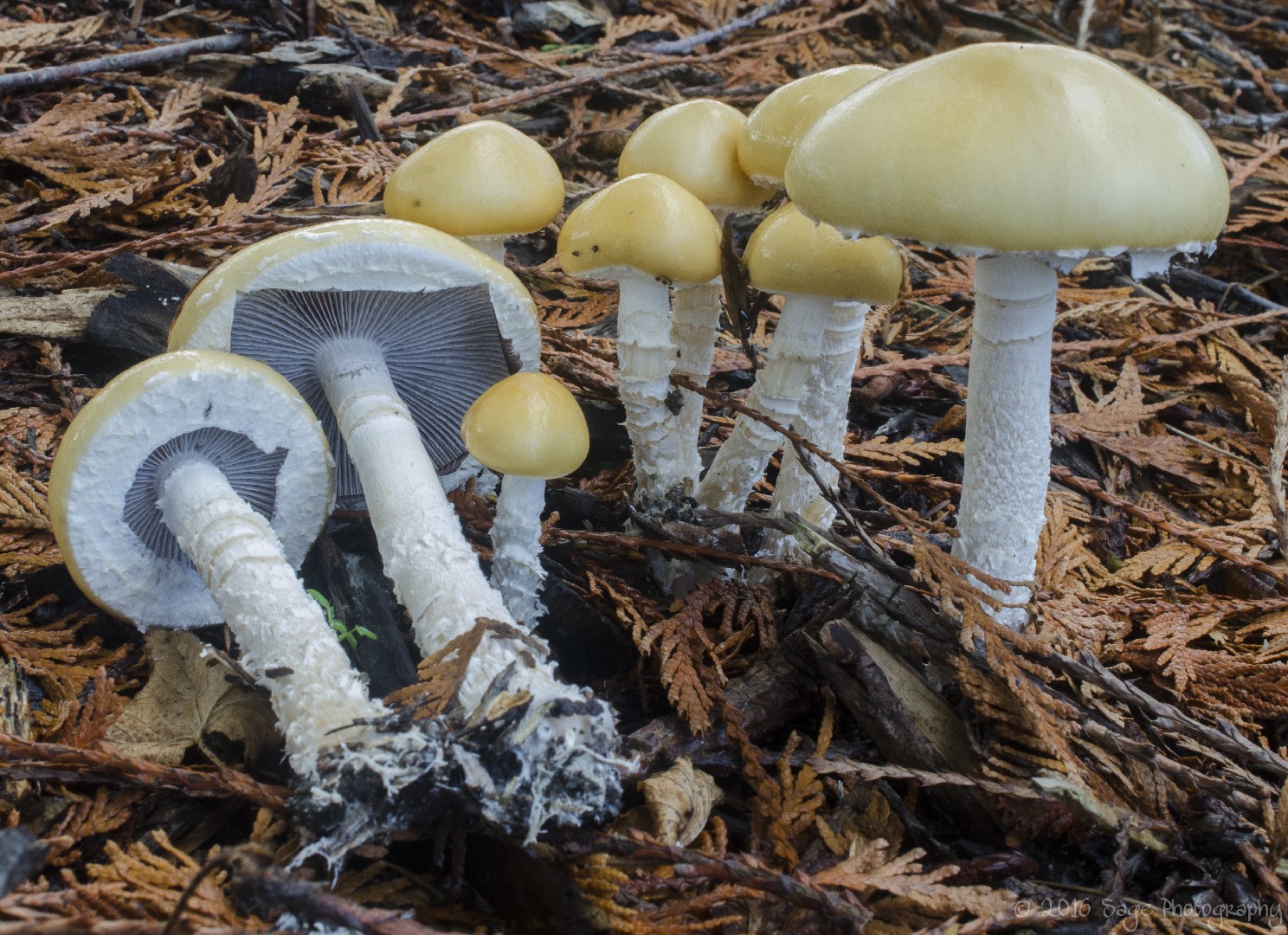
4. Questionable stropharia
The questionable stropharia is an odd-looking species that thrives in rich, wet soils along the western coast of North America. The species sports a shiny, yellow-brown cap with a white partial veil that looks almost as though it is dripping off the cap. "Questionable" is a fair title for this species, about which there are conflicting reports on edibility. Most experts recommend staying on the safe side and avoiding eating this mushroom.
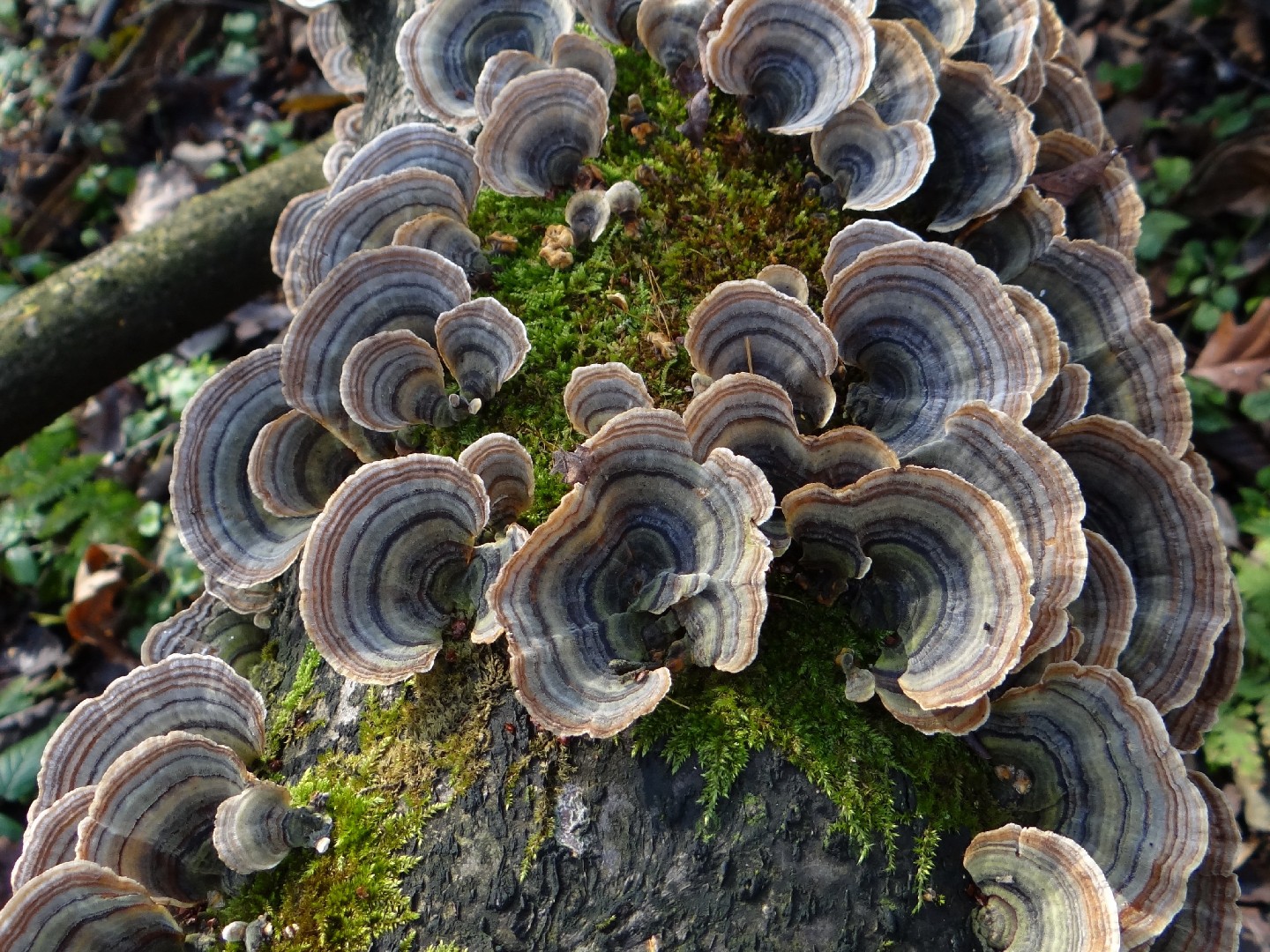
5. Turkey tail
The distinctively-striped turkey tail fungus grows on stumps and logs all over the forests of the northern hemisphere. It is, in fact, probably the most common species you will find. That doesn't mean this mushroom is plain, however; each cap is uniquely patterned. Look for bands of alternating textures as well as color.
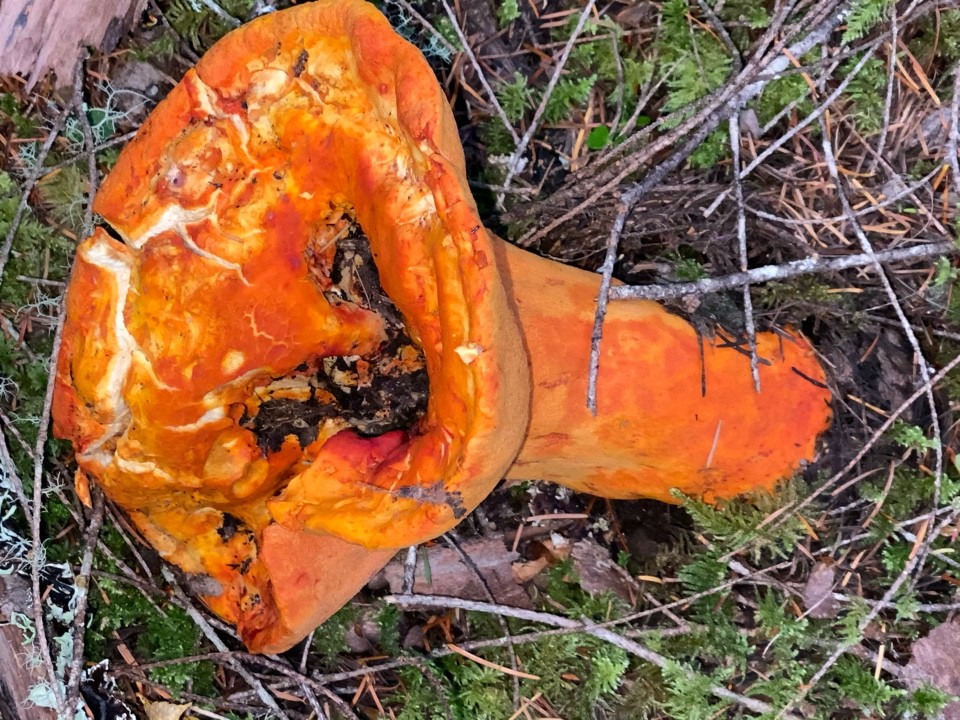
6. Lobster mushroom
The lobster mushroom is actually not a species of mushroom, per-se. When Hypomyces lactifluorum mold attacks one of several common species of Russula mushrooms, it transforms them into lobster mushrooms: they shrivel, harden slightly, and turn bright orange or vermillion. Surprisingly, this only makes them more flavorful. Lobster mushrooms are highly sought after for their distinctive, seafood-like flavor when cooked. Upset stomachs have been reported when eaten raw.
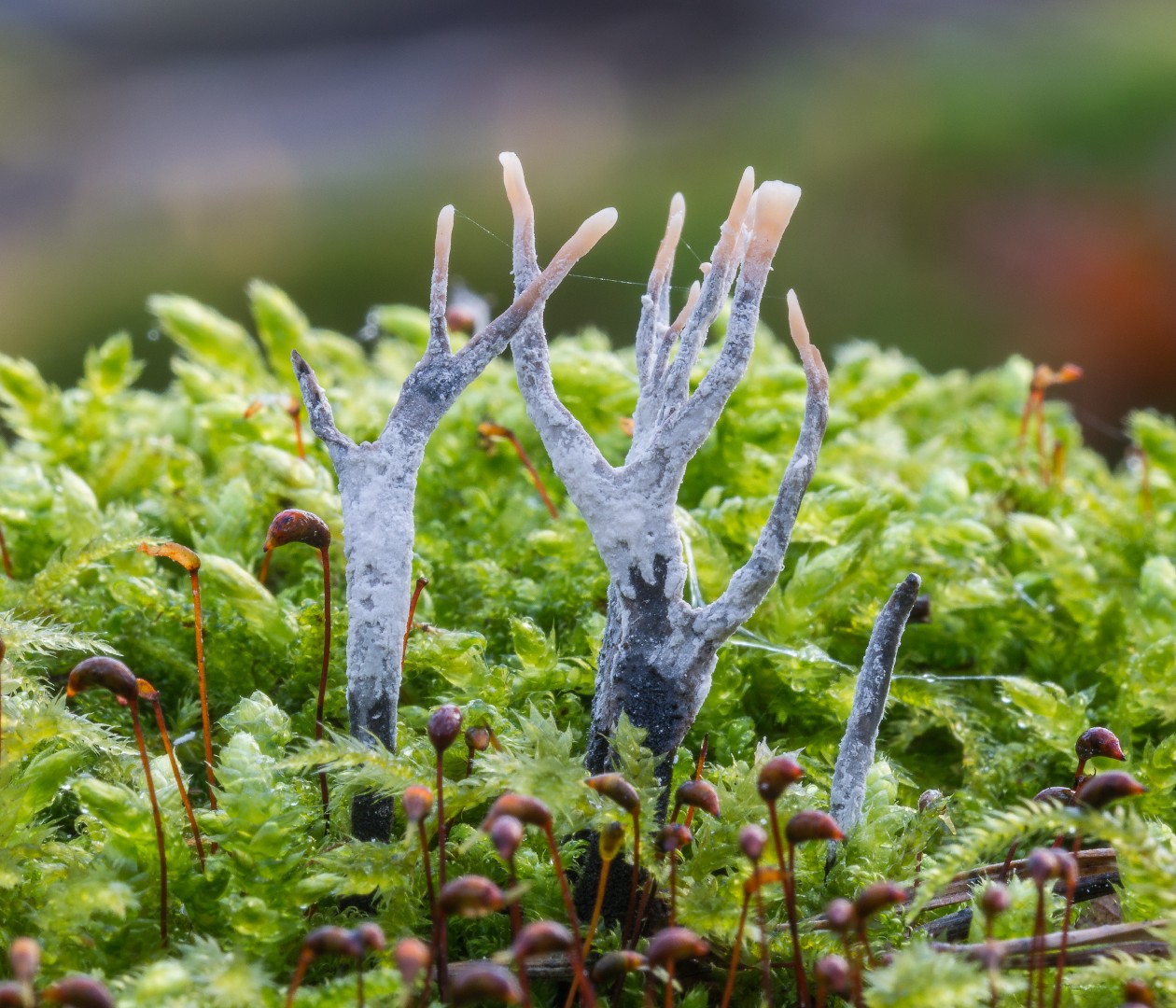
7. Candlesnuff fungus
The bizarre shape of the candlesnuff fungus (Xylaria hypoxylon) is one that you'll never forget. Finger-like growths explode from decaying wood, and look more like stalagmites or antlers than they do mushrooms. The shaft is black at the base, fading dramatically to bright white at the tip.
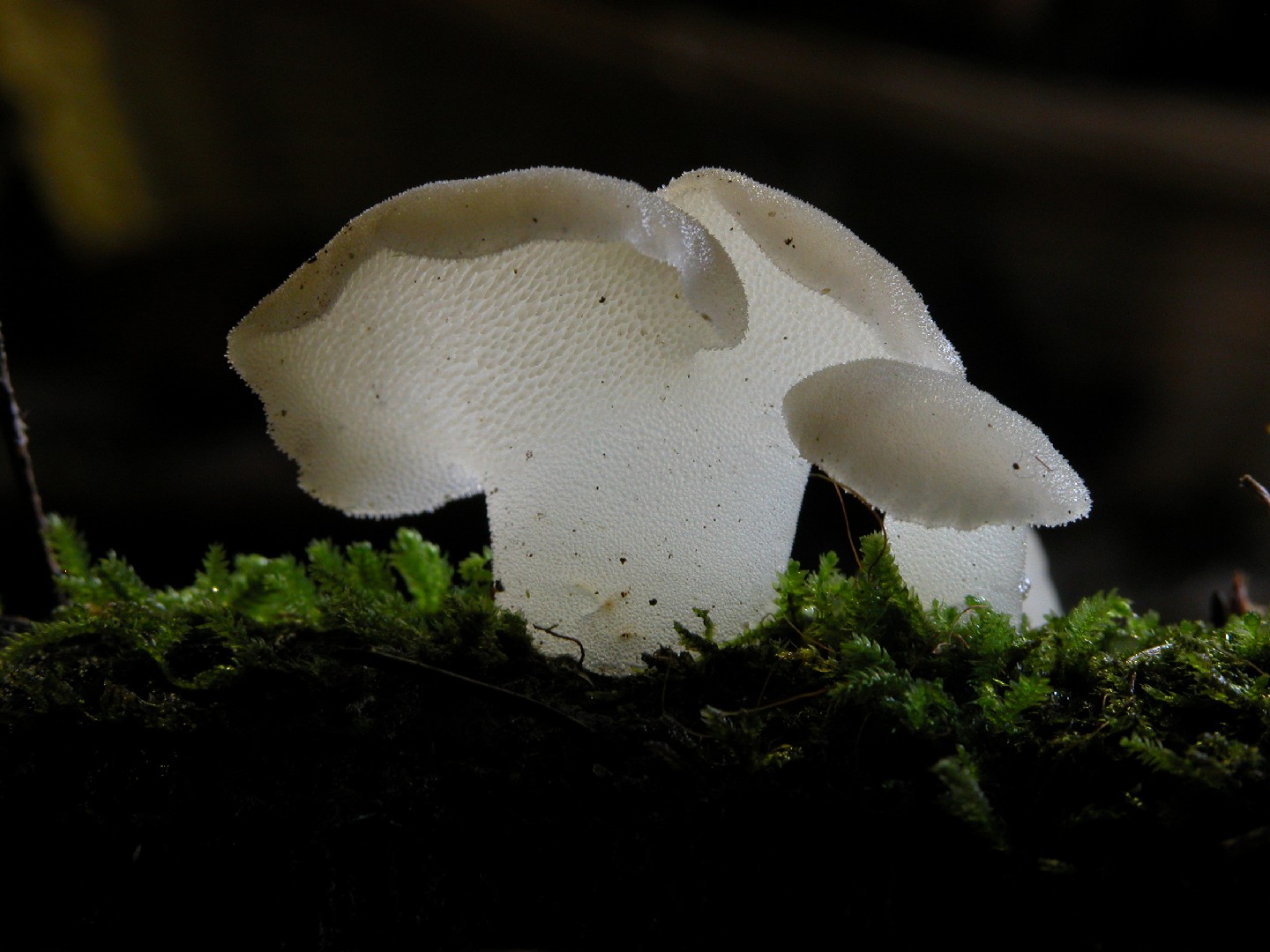
8. Toothed jelly fungus
This whimsically-named mushroom has a global distribution and a unique appearance. Toothed jelly fungus has a white, translucent - almost spectral - coloration and sports little downward pointing "teeth" on the underside of its cap. Although its toothed underside may scream "hedgehog mushroom", it is actually a member of a separate genus (Pseudohydnum, as opposed to Hydnum).
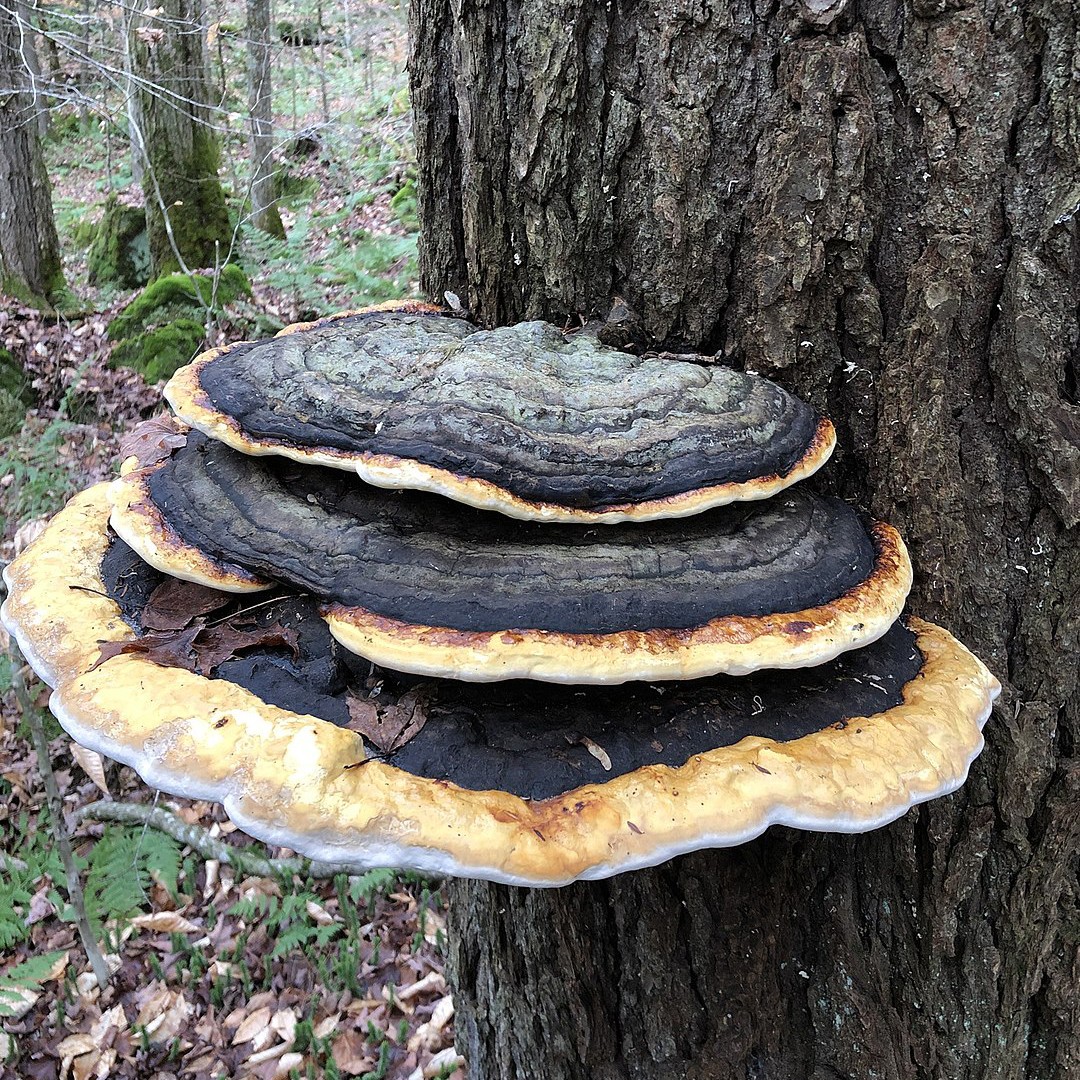
9. Red-belted polypore
Red-belted polypore is a shelf fungus that's usually seen on aspen, birch, and various conifer trees. This perennial mushroom is known to cause the cubical brown rot in host trees. A species new to science, it was named in honor of Irene Mounce, a Canadian mycologist. 
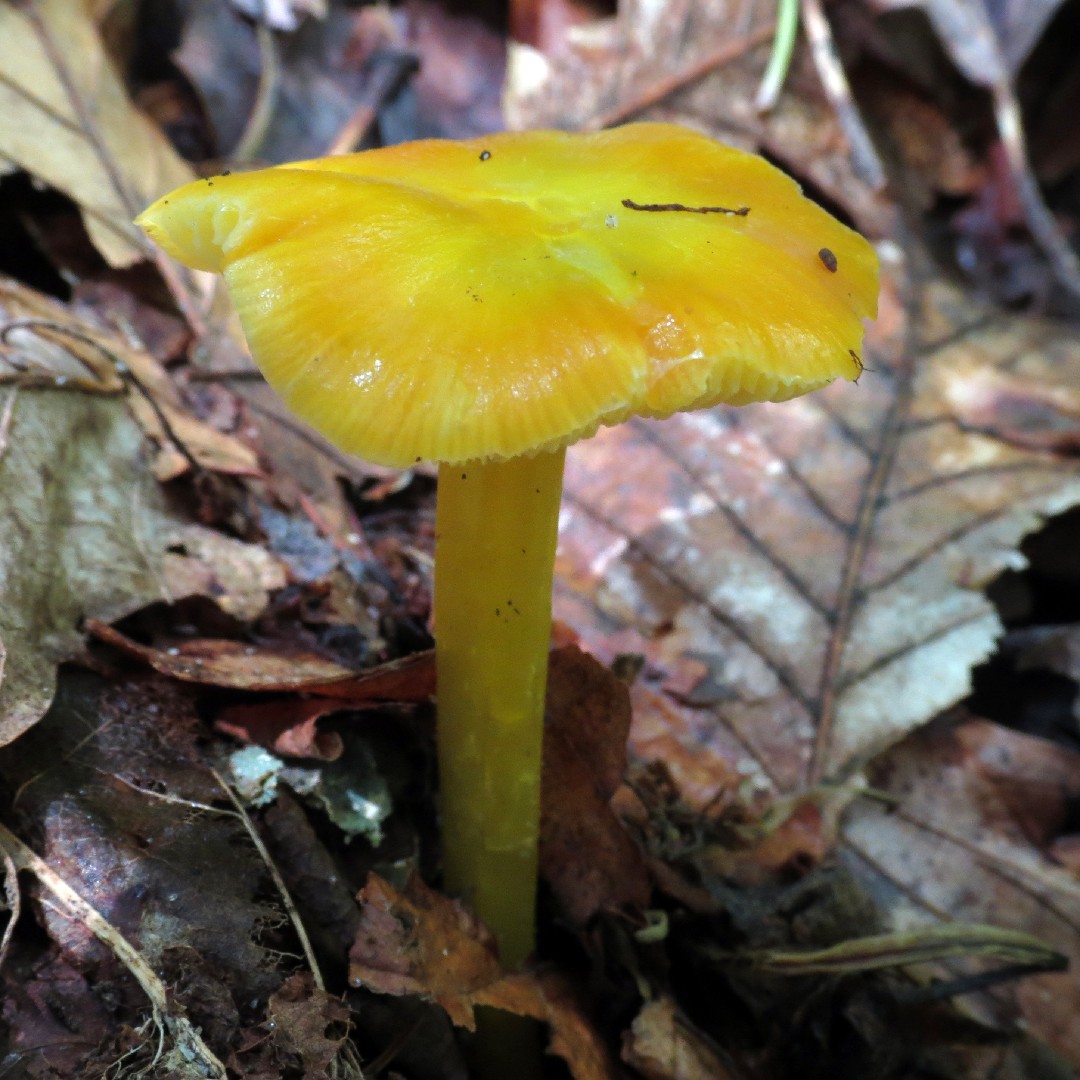
10. Golden waxcap
The golden waxcap (Hygrocybe flavescens) is a small mushroom in the Waxcap family with a cap that is both visibly shiny and sticky to the touch. The cap color ranges from a pale orange to predominately yellow and has relatively no hue change as it matures. This mushroom is found in the various leaf litter of both deciduous and conifer trees.
More







