




Top 20 Edible Mushrooms Popular in Oklahoma City
In the heart of the Midwest, Oklahoma City harbors a diverse array of 20 common edible mushrooms, a testament to its varied climate and unique terrain. From the tangled woods to rolling hills, each mushroom thrives in its particular habitat, flaunting its distinct appearance and taste. Savvy mushroom hunters and culinary enthusiasts will be enticed by our informative rundown. Stay with us as we delve into each mushroom's unique characteristics, uncovering their culinary potential in the process. This comprehensive guide ensures a safe, enjoyable, and edible adventure into the world of Oklahoma City's most common fungal flora.
* Disclaimer: Content feedback CAN NOT be used as any basis for EATING ANY PLANTS. Some plants can be VERY POISONOUS, please purchase edible plants through regular channels.

Most Popular Edible Mushrooms

1. Shaggy mane
The shaggy mane mushroom is commonly found in North American and European grasslands. Some peoples foraged for its young egg-shaped caps, but it has more recently been found to be a bioaccumulator of heavy metals, meaning it pulls toxic metals up from the soil where it grows. As a result, shaggy manes should not be eaten. The mushrooms usually appear in clusters or “fairy rings.”
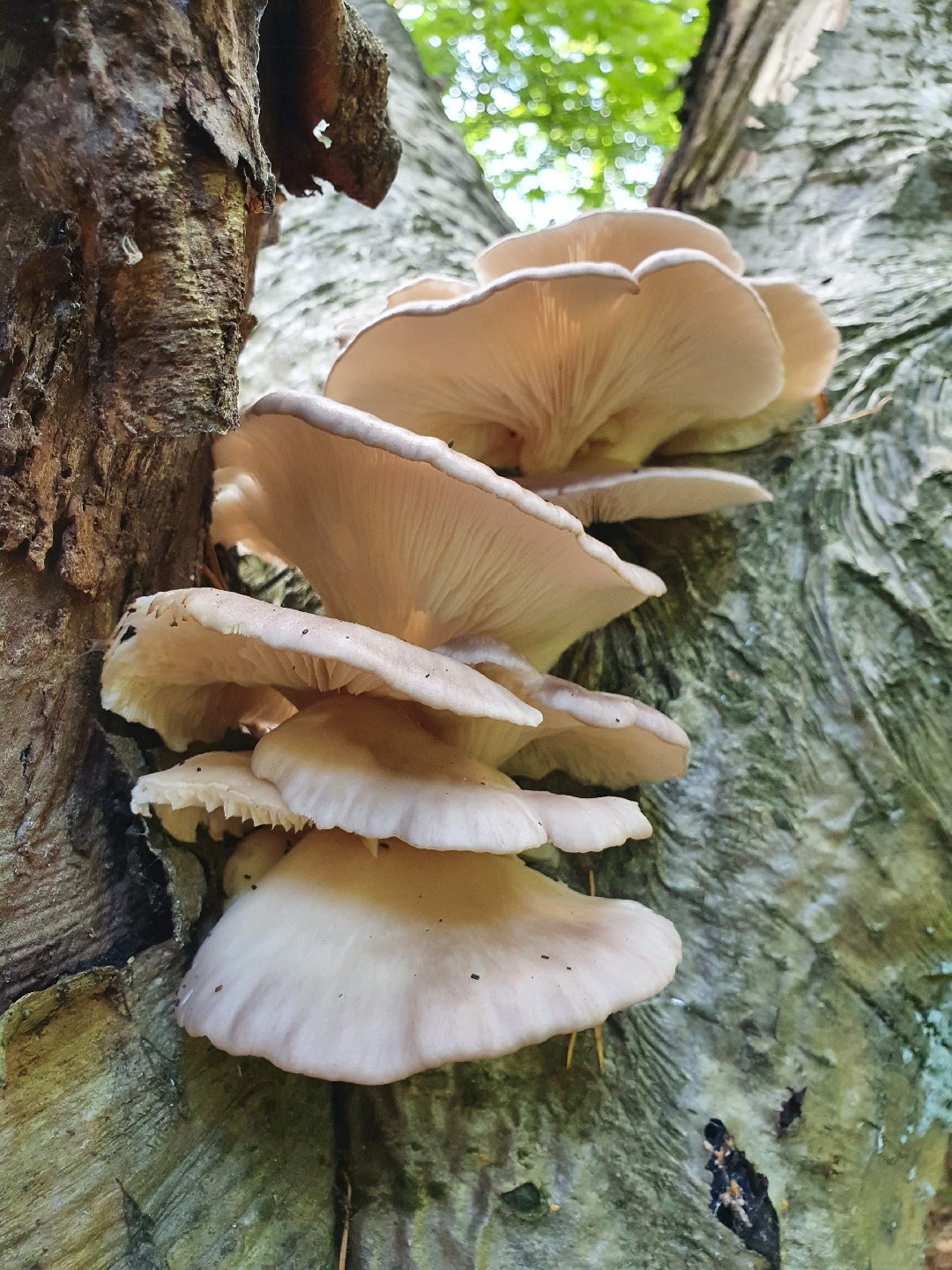
2. Oyster mushroom
Oyster mushrooms grow wild but are also cultivated for sale in supermarkets. They can even be cultivated at home. They will grow on coffee grounds and spent grain, and are occasionally even fashioned into an environmentally-friendly substitute for styrofoam. There are several toxic look-alike species, so it is best to buy these mushrooms at the store.
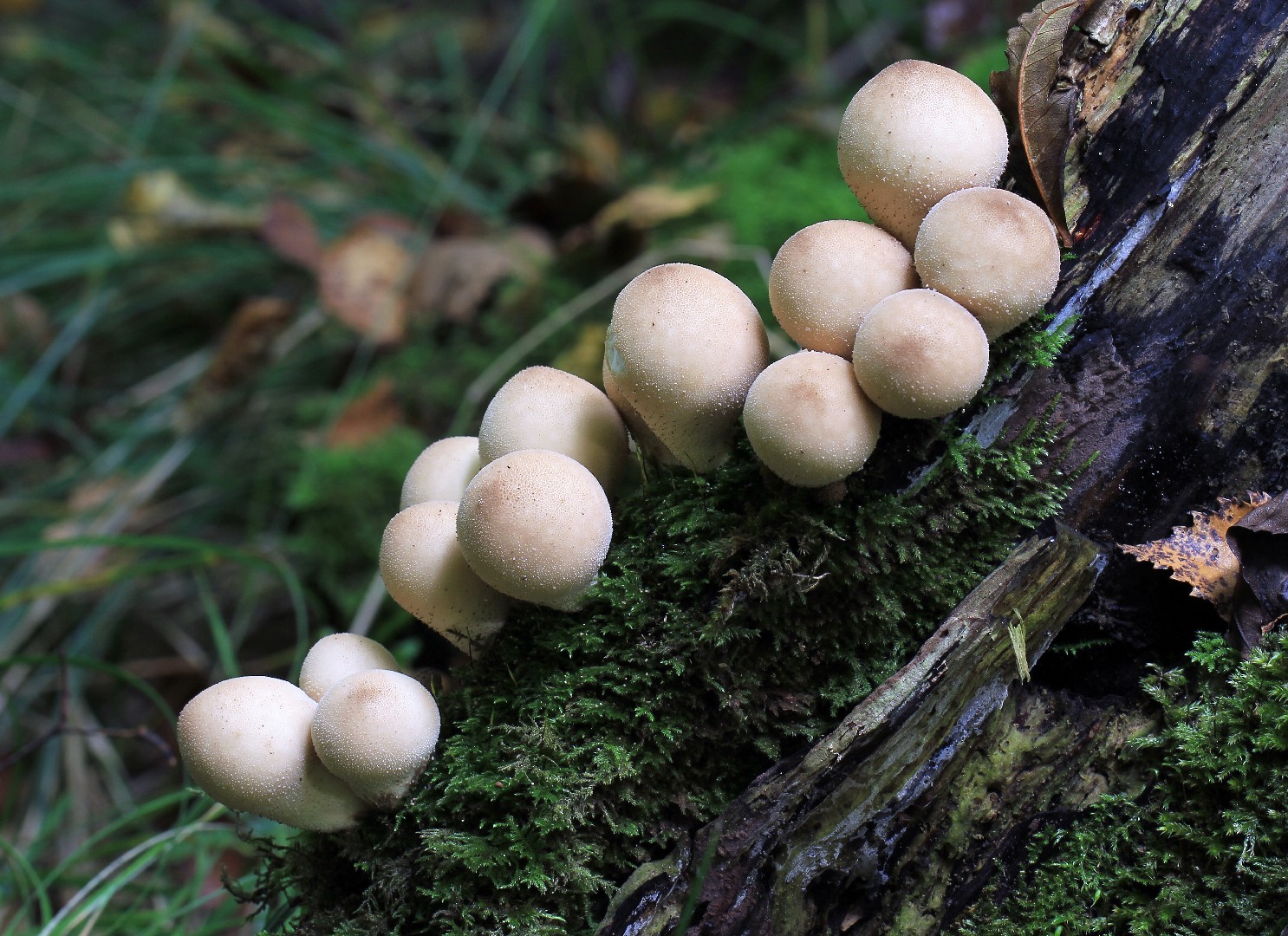
3. Pear-shaped puffball
The mushrooms of this species grow in such tight clusters that they may cover fallen trees and stumps almost entirely in a brownish, puffy coat. Pear-shaped puffballs appear all around the northern hemisphere on decaying hardwoods from fall through winter.
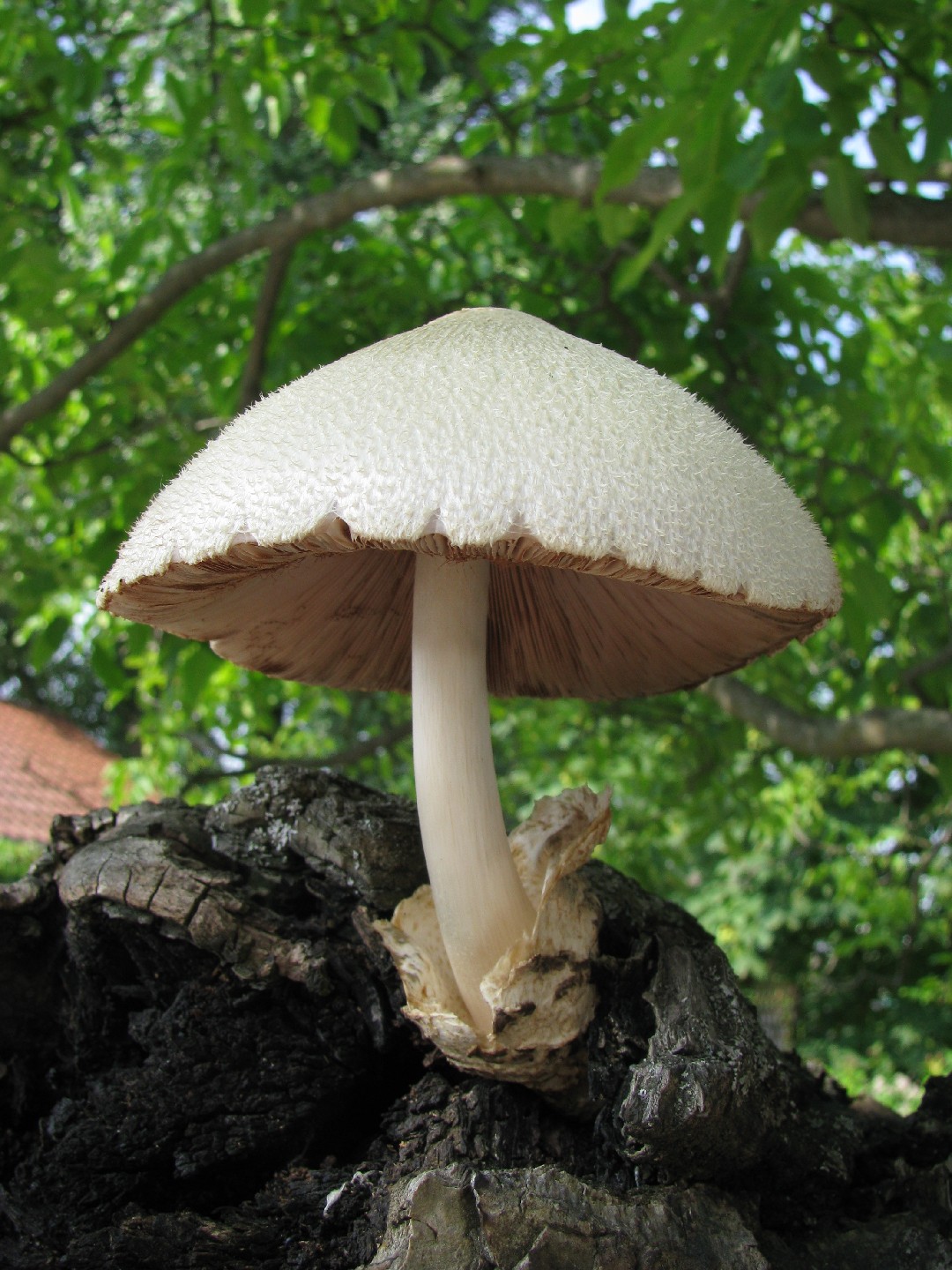
4. Silky sheath
Silky sheaths (Volvariella bombycina) are widely distributed, being found in temperate and sub-tropical forests around the world, but rare. The fruitbody emerges from a silky-textured volva, and the mushroom's white or off-white cap is usually quite smooth as well. One of this species' favored microhabitats is the rotted knotholes of mature maples, elms, oaks, or beeches.
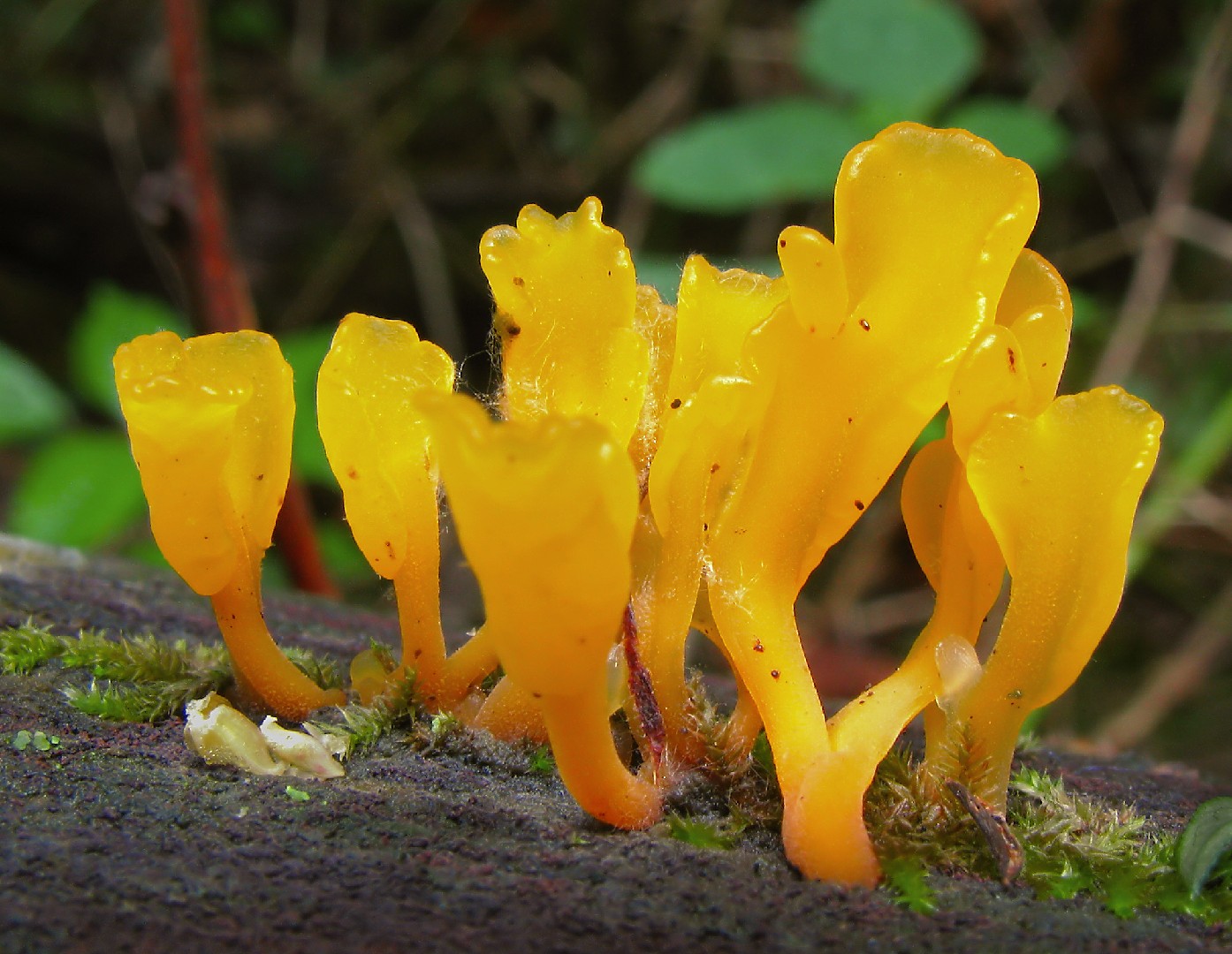
5. Fan-shaped jelly-fungus
Just as its Latin and the common English names suggest, the fan-shaped jelly-fungus (Dacryopinax spathularia) is a fan-shaped or spatula-shaped jelly-like mushroom. It commonly grows in wood cracks and it sometimes even appears in the cracks of the processed wood and lumber. Despite the word "jelly" in its name, the fan-shaped jelly-fungus is not considered edible.
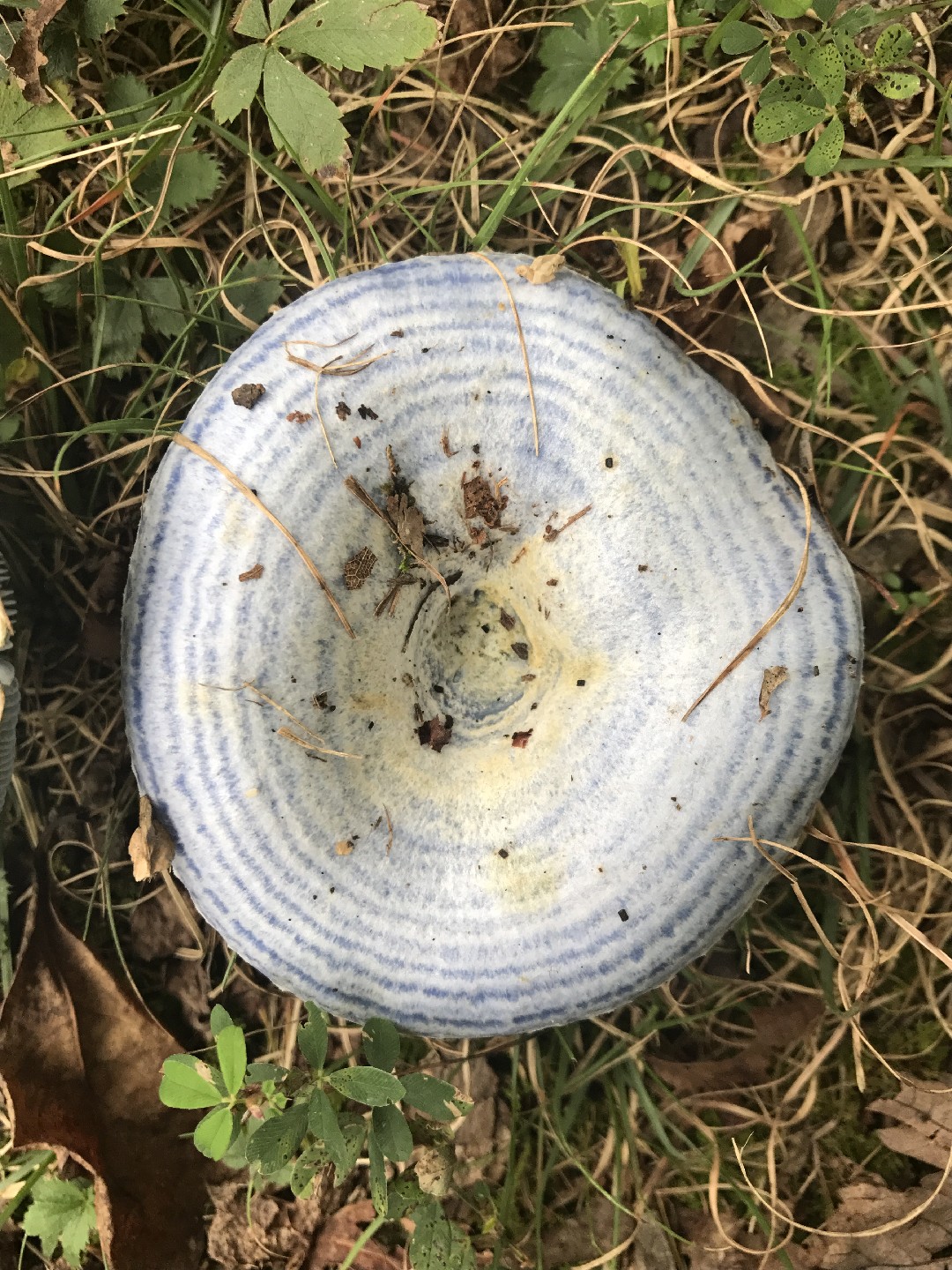
6. Indigo milk cap
This gorgeous species is unlike any other. The indigo milk cap, a member of the often-drab russula family, is deep blue in color. Like other milk caps, it bleeds a latex-like substance when cut or damaged, but instead of the usual white this species bleeds deep blue.
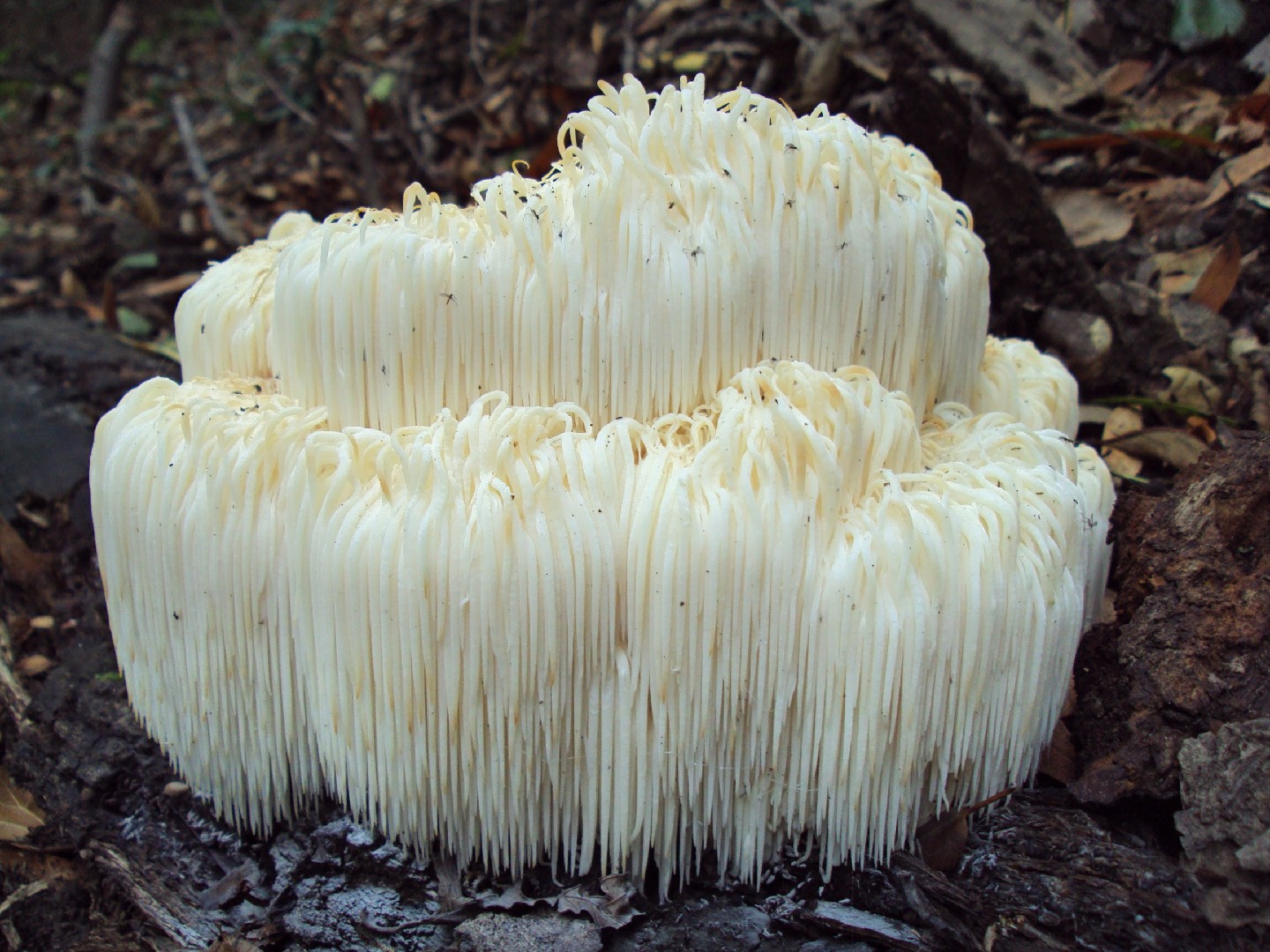
7. Lion's Mane Mushroom
Lion's Mane Mushroom(Hericium erinaceus) is easily identifiable by its characteristic appearance, reminiscent of the majestic mane of a lion. It often sprouts along hardwoods, which may be living or dead. Scientists thus debate whether this species is truly parasitic or merely saprophytic in nature.

8. Common puffball
These puffy mushrooms grow in small groups on the forest floor. Once they're mature, common puffballs turn yellow and "puff out" smoke-like spore clouds when disturbed. Be very careful when identifying these mushrooms, as their young, immature form looks very similar to the lethal Deathcap.
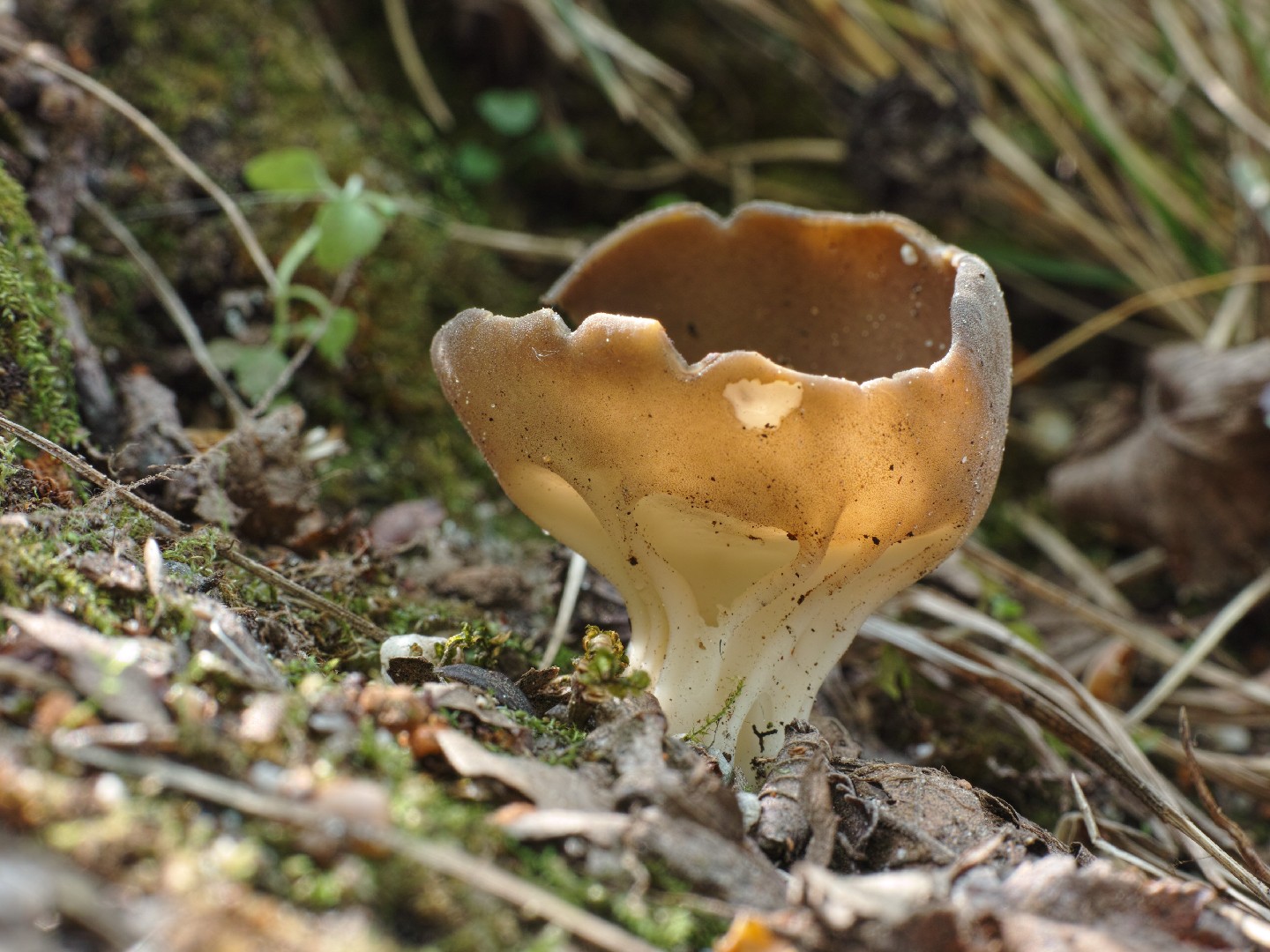
9. Vinegar cup
The vinegar cup (Helvella acetabulum) forms fruitbodies in the shape of vases or chalices with deeply convex caps. Its distinguishing feature is the way the stem’s ribs extend all the way up the sides of the “cup,” in some specimens resembling the folds of cabbage leaves. Common name aside, it is not considered edible.
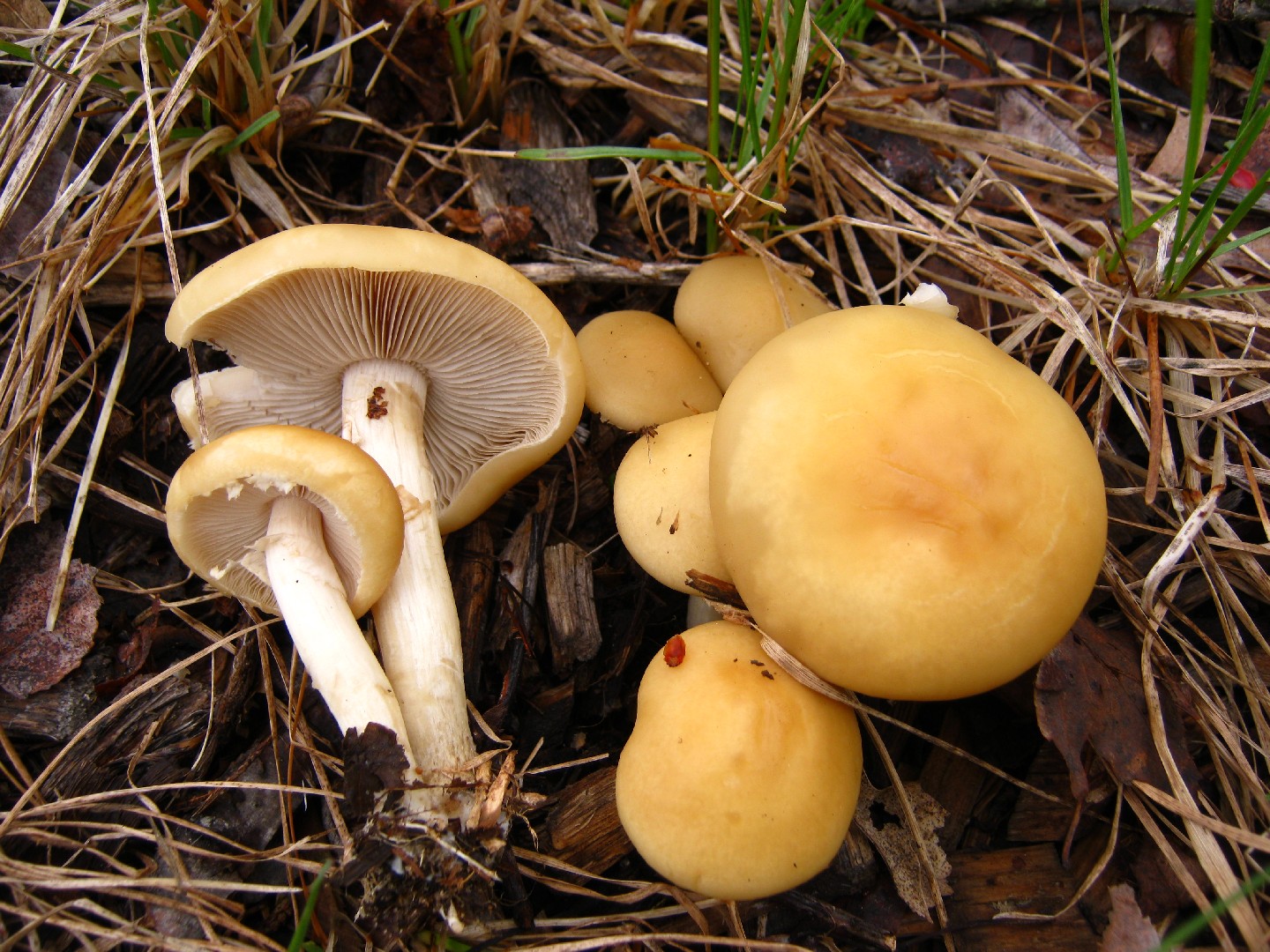
10. Spring fieldcap
The spring fieldcap (Agrocybe praecox) appears in spring and early summer, in scattered groups or in tufts across the edges of woodland paths. They may be a common sight in urban areas with wood chip mulch or compost piles. The species' scientific name comes from the same Latin root as the word "precocious," giving another clue regarding the early appearance one can expect from these little mushrooms.
More







