




Top 20 Edible Mushrooms Popular in Catalina Foothills
In the lush terrain of Catalina Foothills, a medley of 20 common edible mushrooms thrives under the warm, arid climate and varying altitudes. This diversity can largely be attributed to the region's unique mix of desert and forest habitats, providing fertile soils for different varieties to flourish. From the delicate texture of puffballs to the rich flavour of porcini, each mushroom has it's own unique qualities. Beyond their culinary uses, understanding their appearances and habitats offers a fascinating glimpse into the ecological wonder of mushrooms right in our backyards.
* Disclaimer: Content feedback CAN NOT be used as any basis for EATING ANY PLANTS. Some plants can be VERY POISONOUS, please purchase edible plants through regular channels.

Most Popular Edible Mushrooms
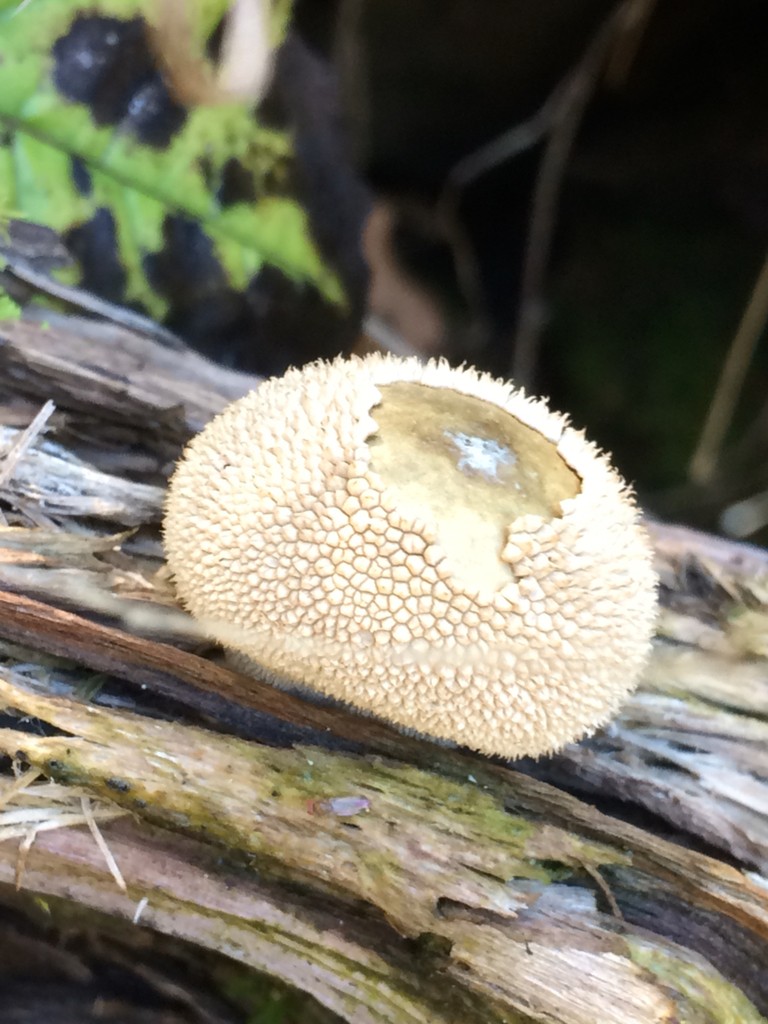
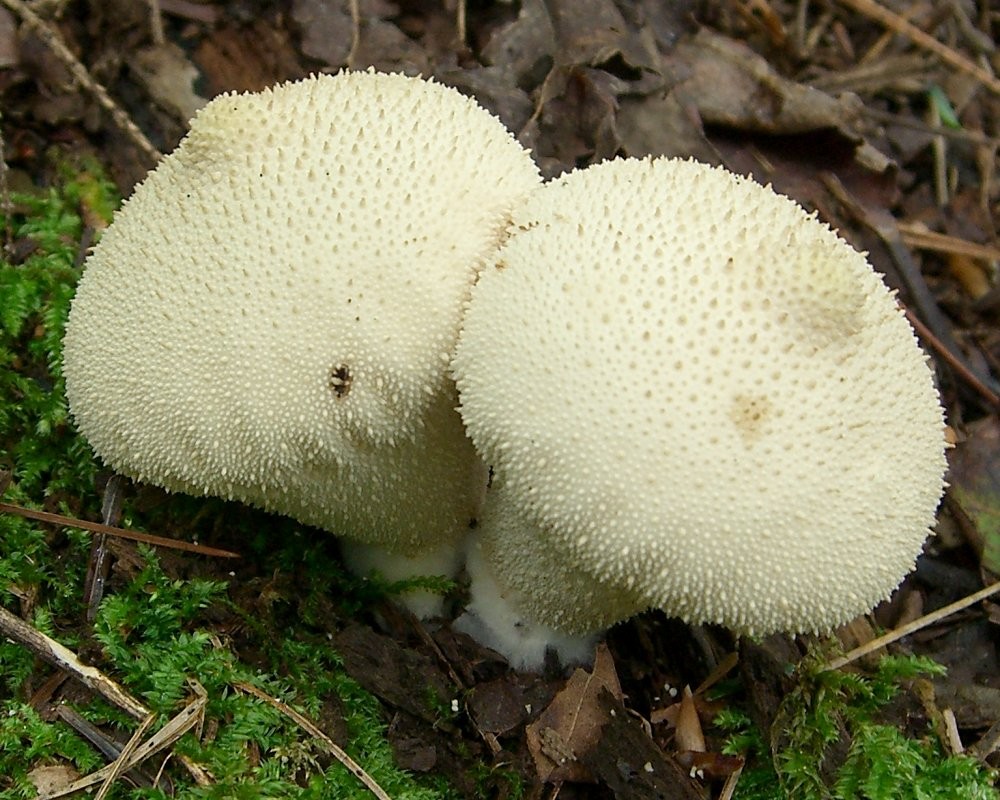
1. Peeling puffball
It is easy to spot as it resembles a puffball but has spines that gradually peel off as it ages. This appearance gave this mushroom its common name "peeling puffball." peeling puffball thrives underneath deciduous and conifer trees, getting its nutrients from decaying plant matter.
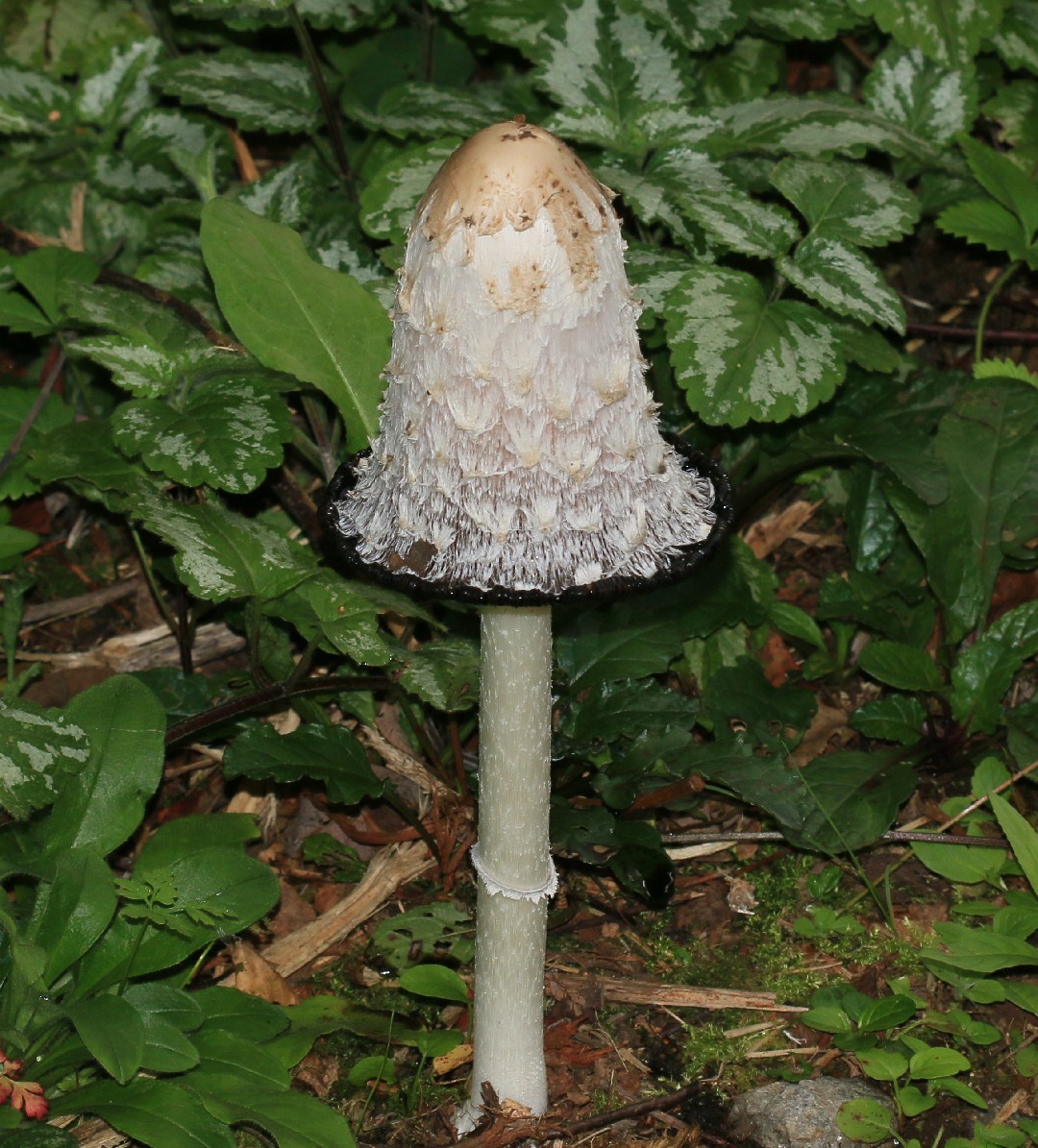
2. Shaggy mane
The shaggy mane mushroom is commonly found in North American and European grasslands. Some peoples foraged for its young egg-shaped caps, but it has more recently been found to be a bioaccumulator of heavy metals, meaning it pulls toxic metals up from the soil where it grows. As a result, shaggy manes should not be eaten. The mushrooms usually appear in clusters or “fairy rings.”
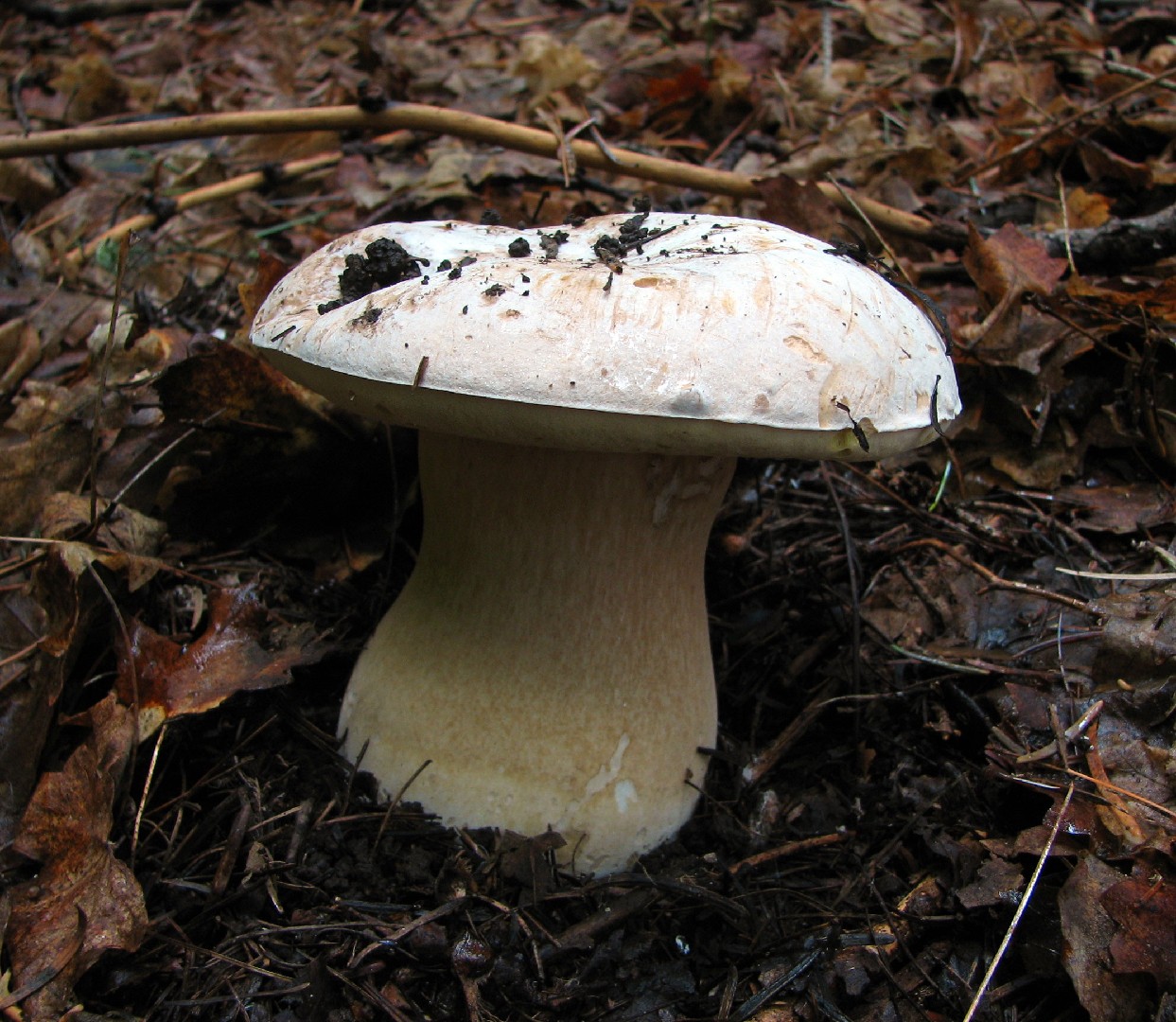
3. White king bolete
The habitat of the white king bolete is restricted to southwestern North America, but being a warm-weather species, it is most abundant in Arizona and New Mexico. The mushroom was given its scientific name Boletus barrowsii after the self-taught amateur mycologist Charles "Chuck" Barrows, who discovered the species just a few decades ago.

4. Felt saddle fungus
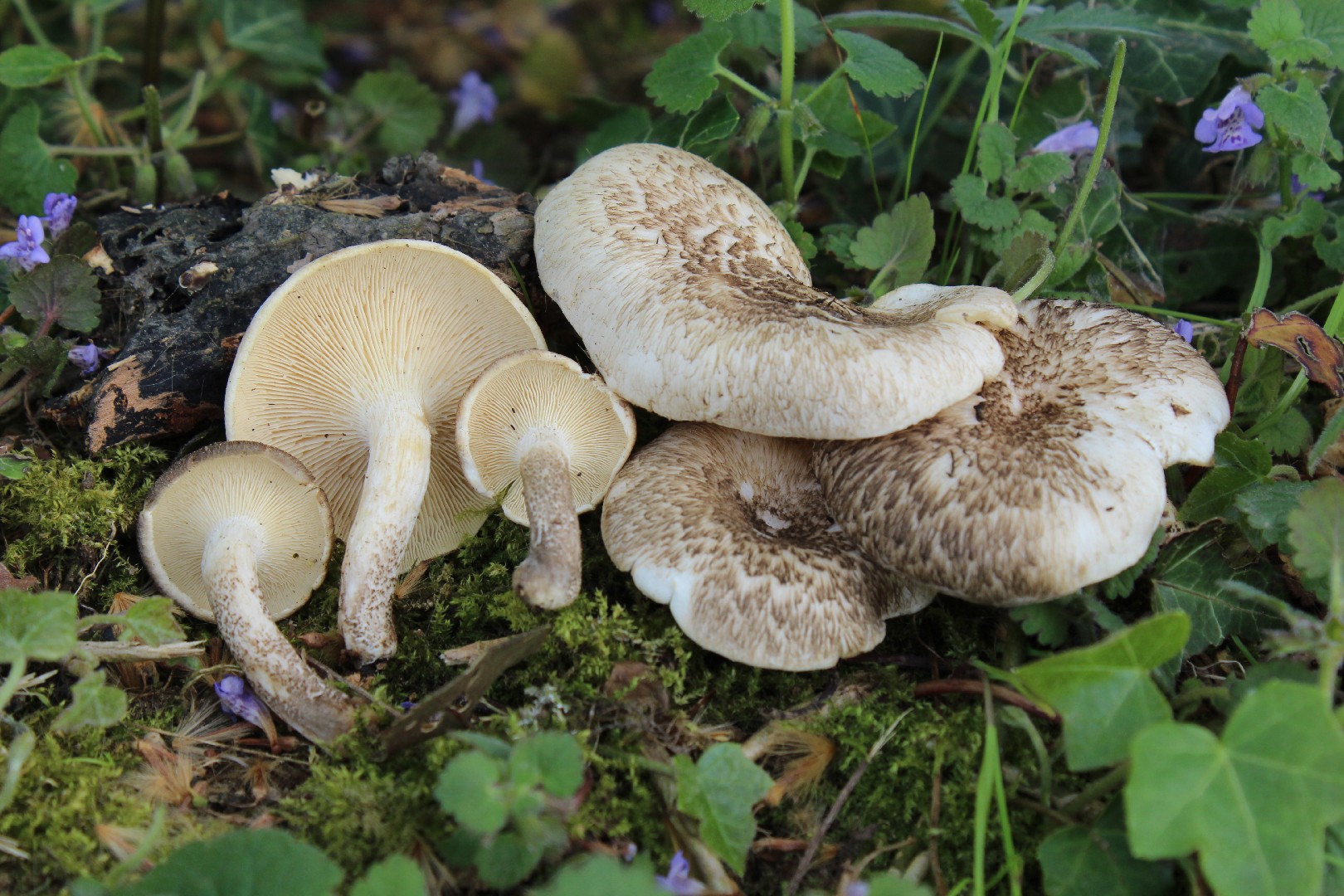
5. Tiger sawgill
The tiger sawgill (Lentinus tigrinus) is a small mushroom with a name that is not particularly accurate. Sporting neither the color nor the pattern that we commonly associate with the tiger, it has a subdued, pale cap that is usually covered in brown patches. The eighteenth-century European that named the species may have been thinking of a leopard.
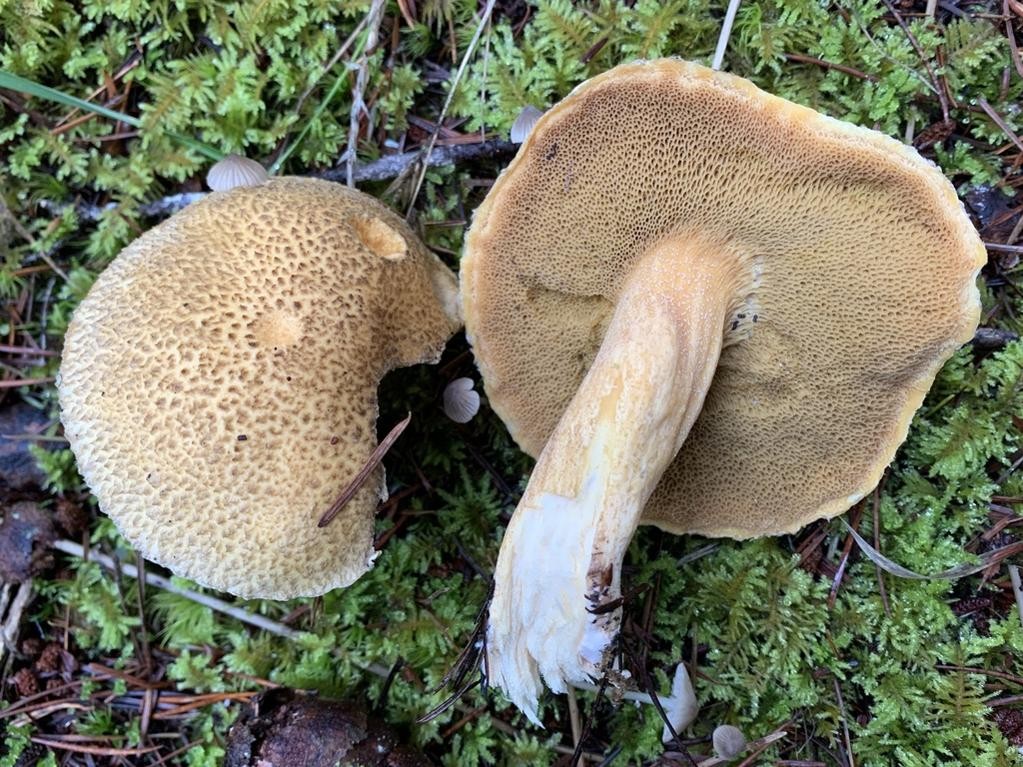
6. Blue-staining slippery jack
If you come across a blue-staining slippery jack (Suillus tomentosus) in the wilderness, chances are you're adventuring through a conifer forest after heavy rain. True to the common name, the caps can stain your hands a brownish-blue color. The surface area of the cap has a velvety texture when young.
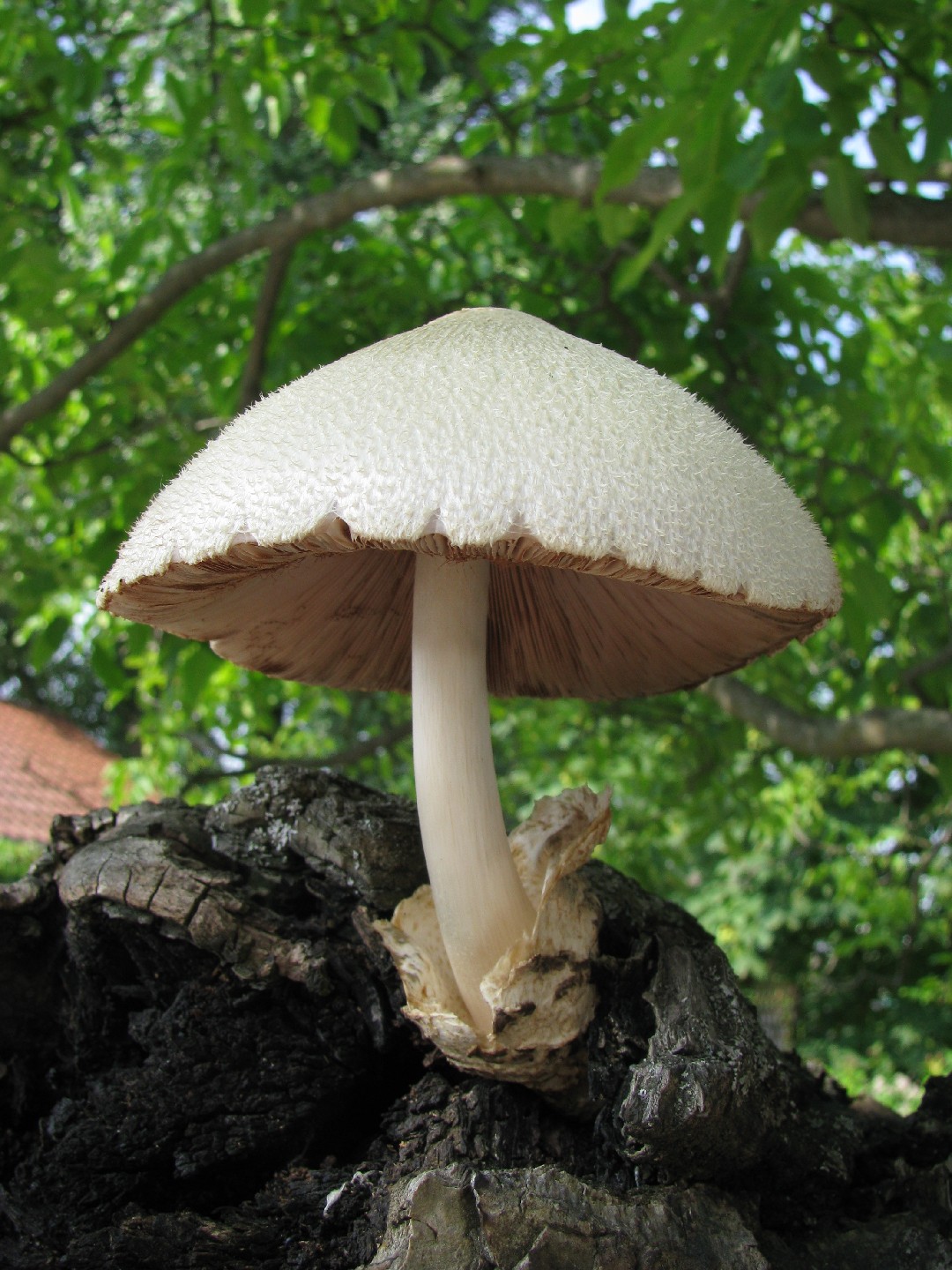
7. Silky sheath
Silky sheaths (Volvariella bombycina) are widely distributed, being found in temperate and sub-tropical forests around the world, but rare. The fruitbody emerges from a silky-textured volva, and the mushroom's white or off-white cap is usually quite smooth as well. One of this species' favored microhabitats is the rotted knotholes of mature maples, elms, oaks, or beeches.
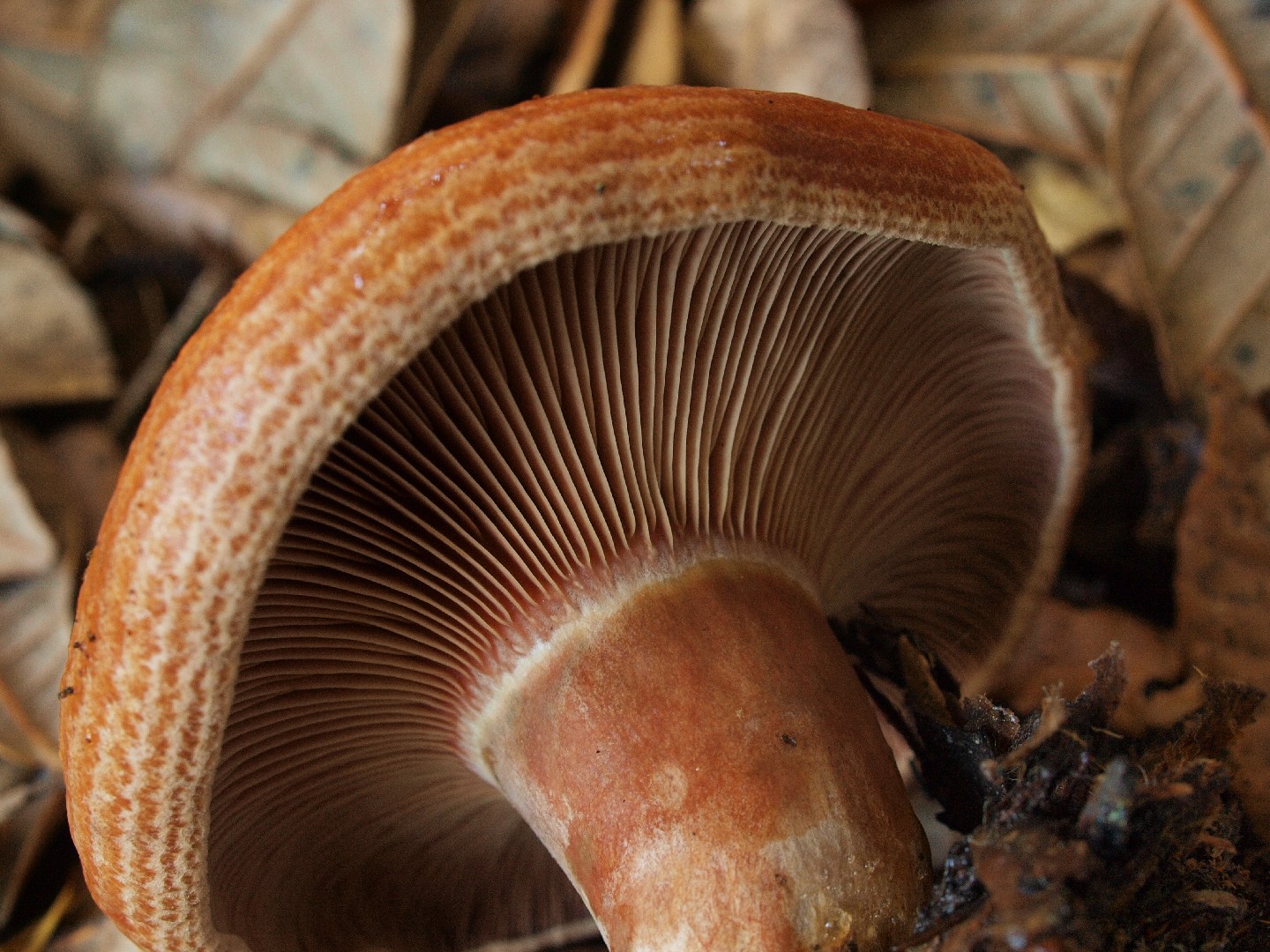
8. Bleeding milkcap
The bleeding milkcap (Lactarius rubrilacteus) is distinguished from other, more commonly found milkcaps by its burnt amber color and its propensity to grow beneath Douglas fir. When the cap is damaged, bruising appears green. If severely damaged, it will bleed a milky substance that is amber in color.
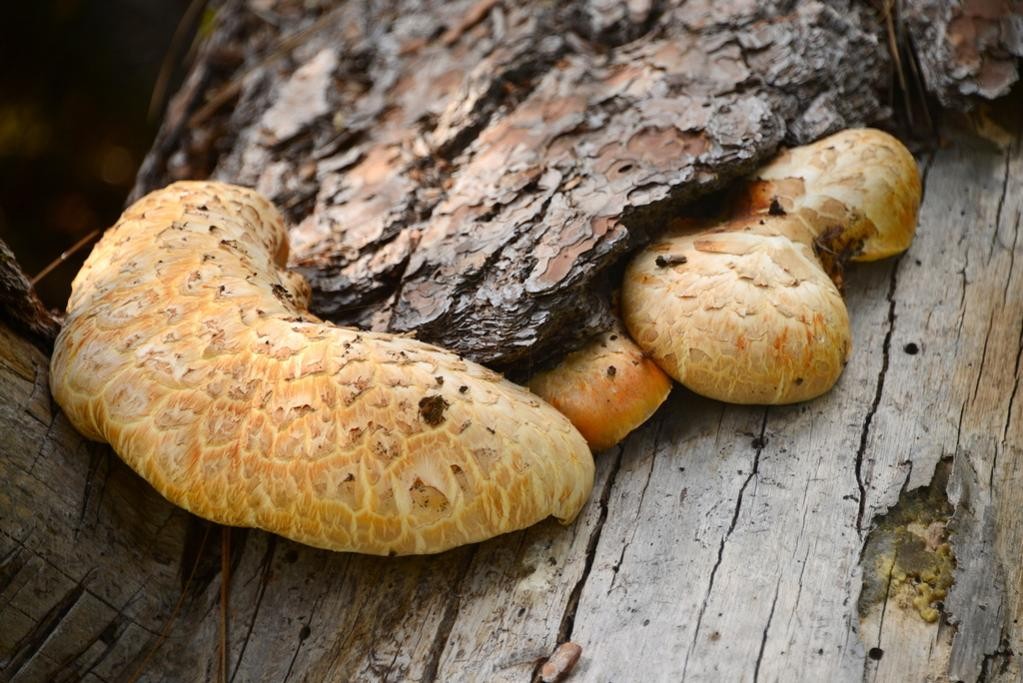
9. Giant sawgill
The impressively large caps of the giant sawgill (Neolentinus ponderosus) can spread up 30 cm across and encompass entire decaying stumps and logs. Unlike other mushrooms, the giant sawgill thrives in the hotter, drier months. Look for them near Ponderosa Pines.
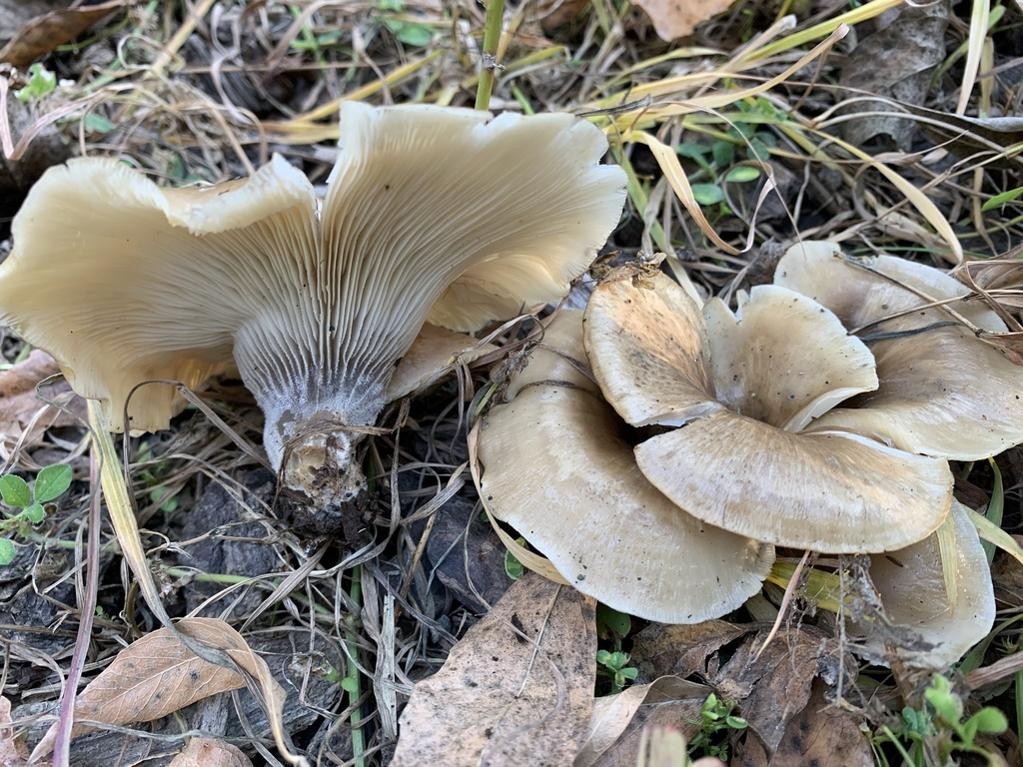
10. Shoehorn oyster
The shoehorn oyster (Hohenbuehelia petaloides) fruits with an elongated, petal-shaped cap that often bears a resemblance to a shoehorn. Shoehorn oysters are unusual in that, in addition to digesting decaying wood, they also have structures which allow them to capture and digest nematodes, tiny worms that often feed on mushrooms.

More







