




Top 20 Edible Mushrooms Popular in Zamora
Dive into the fascinating world of fungi in Zamora, a city that offers a rich ecosystem for mushroom growth, owing to its ideal weather conditions and diverse habitats. This resource highlights the top 20 most common edible mushrooms in Zamora. Each variety is explored in detail, considering their distinctive appearances, unique flavors, specific habitats, and culinary uses. This guide will serve as an invaluable resource for mycologists, home cooks, and all mushroom enthusiasts by providing credible, easy-to-understand, and detailed information.
* Disclaimer: Content feedback CAN NOT be used as any basis for EATING ANY PLANTS. Some plants can be VERY POISONOUS, please purchase edible plants through regular channels.

Most Popular Edible Mushrooms
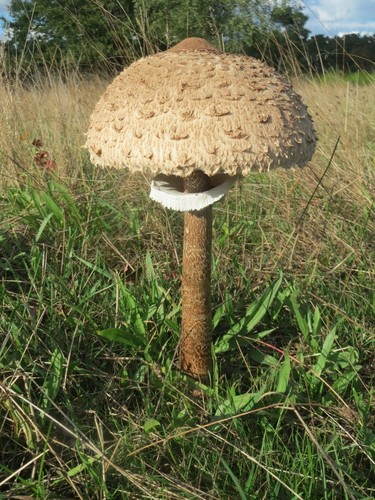
1. Parasol
Found in clearings and grassy areas in late summer, the wild parasol mushroom has a snakeskin-patterned stem. The brown spots on its cap make it look a bit shaggy, but that name is reserved for its poisonous counterpart, the Shaggy Parasol (Chlorophyllum rhacodes). You can distinguish the two by the stems: the latter has a smooth stem and red flesh inside.
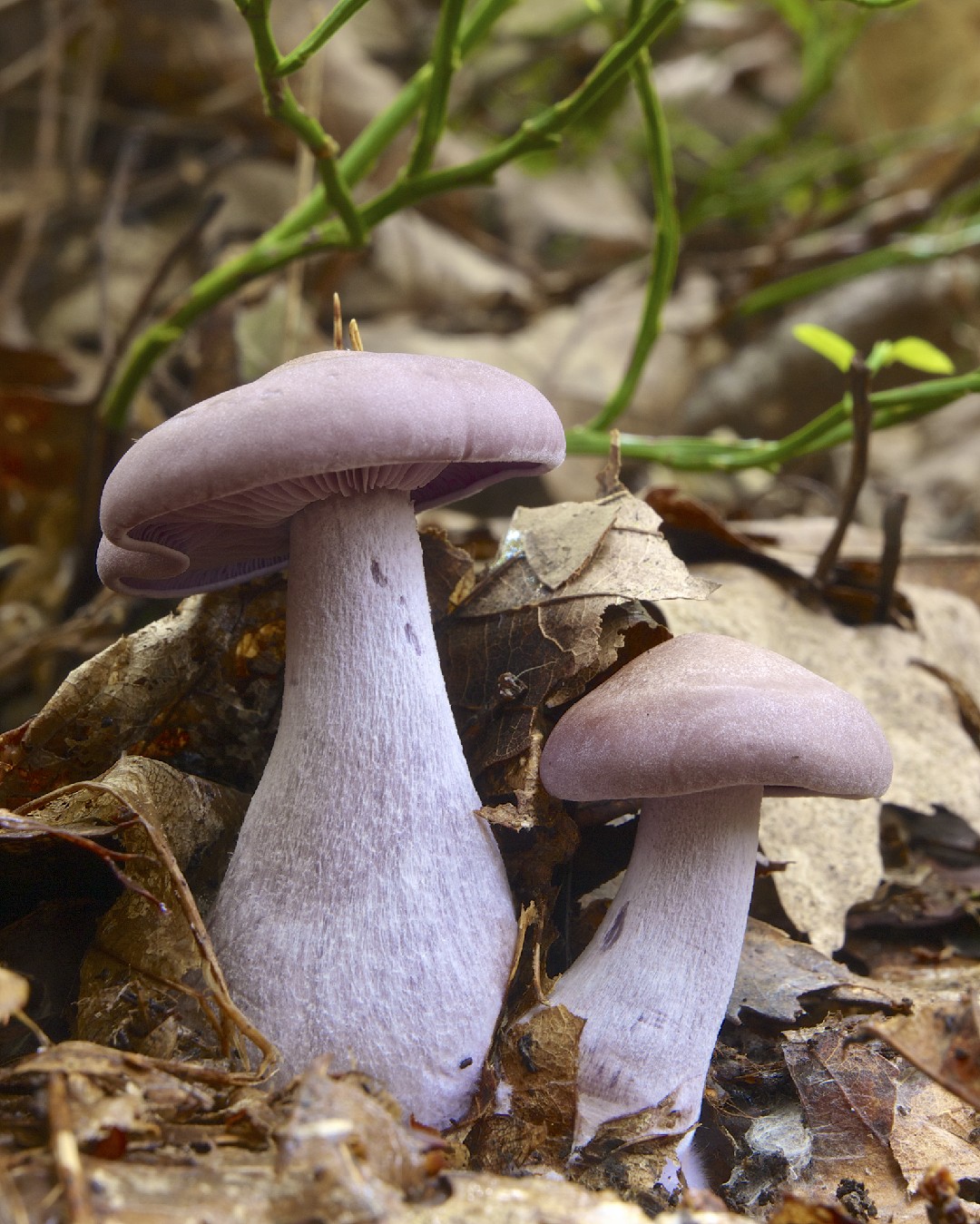
2. Blewit
The blewit mushroom grows in fallen leaves in autumn and winter, sometimes appearing in ‘fairy ring’ circles. It can be used to make a green dye when chopped and boiled in an iron pot. The scientific name, Lepista nuda, derives from Latin words meaning “bare goblet,” a reference to the shape and texture of the mushroom.
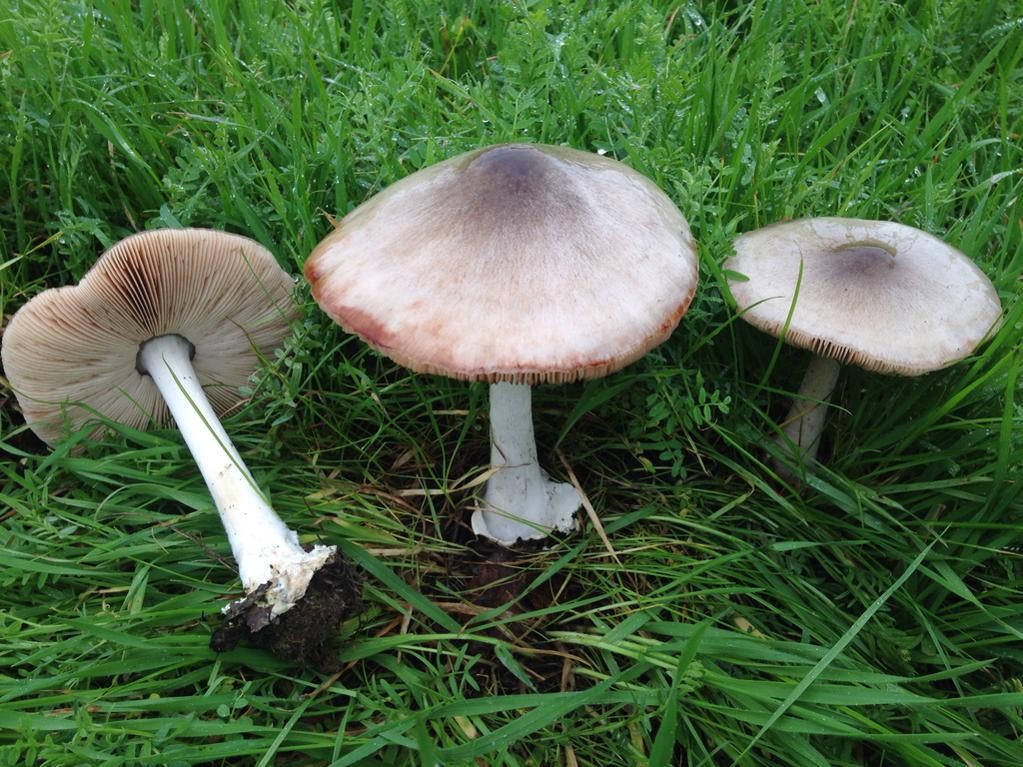
3. Big sheath mushroom
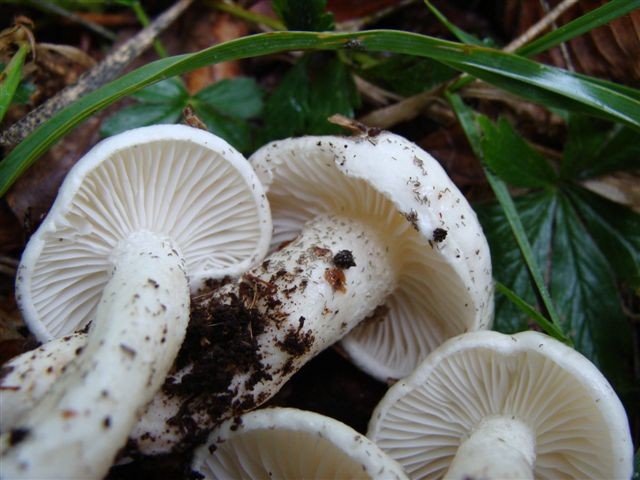
These large white mushrooms bloom all over cleared, harvested fields, as well as pastures and roadsides. The scientific species name comes from Greek words meaning “glue” (glioio) and “head” (cephalus), in reference to the sticky surface of this mushroom’s cap. The big sheath mushroom looks so similar to the poisonous Deathcap and Destroying Angel mushrooms that it should always be left alone.
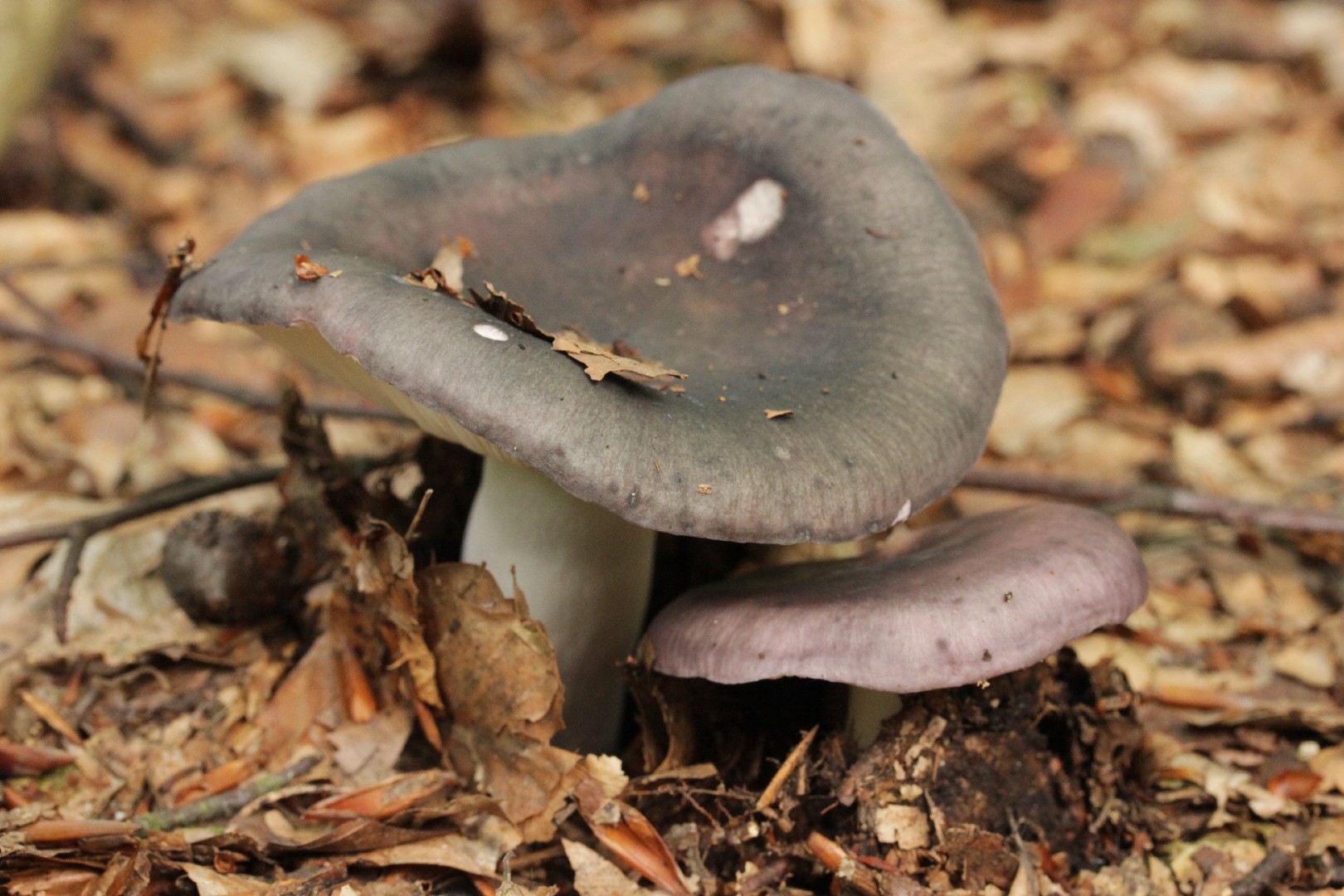
4. Charcoal burner
Most commonly found under beeches in forests or parks, this crumbly mushroom can appear in colors ranging from red and yellow to violet, blue-grey, or even green. Its scientific name represents this variability: Russula cyanoxantha means “reddish blue-blonde.”
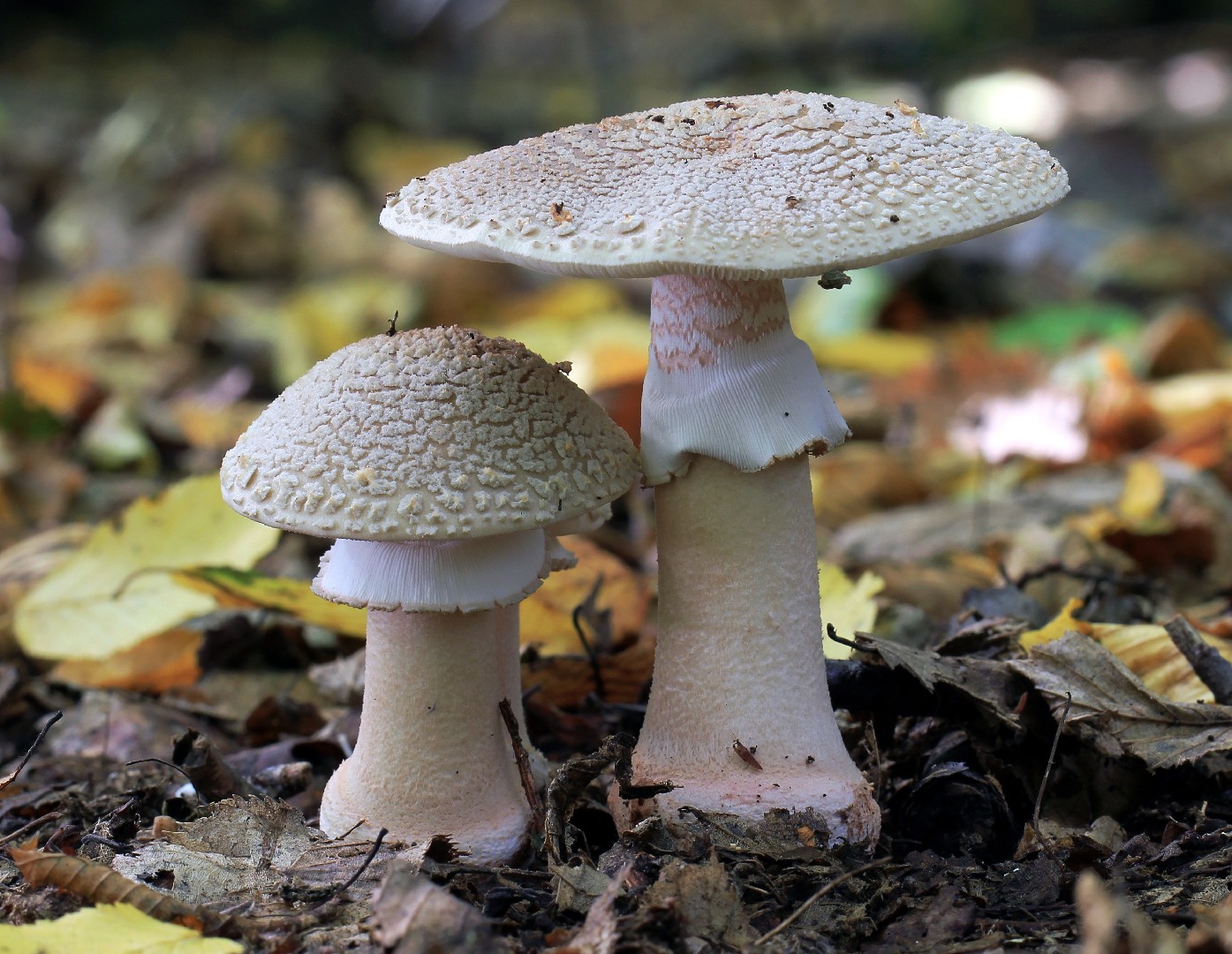
5. Blusher
The blusher mushroom is so named because it “blushes” to a pinkish red color when cut or bruised. It is found in many countries around the world, although it may not be native to the southern hemisphere. It contains a hemolytic toxin that can cause anemia if eaten.
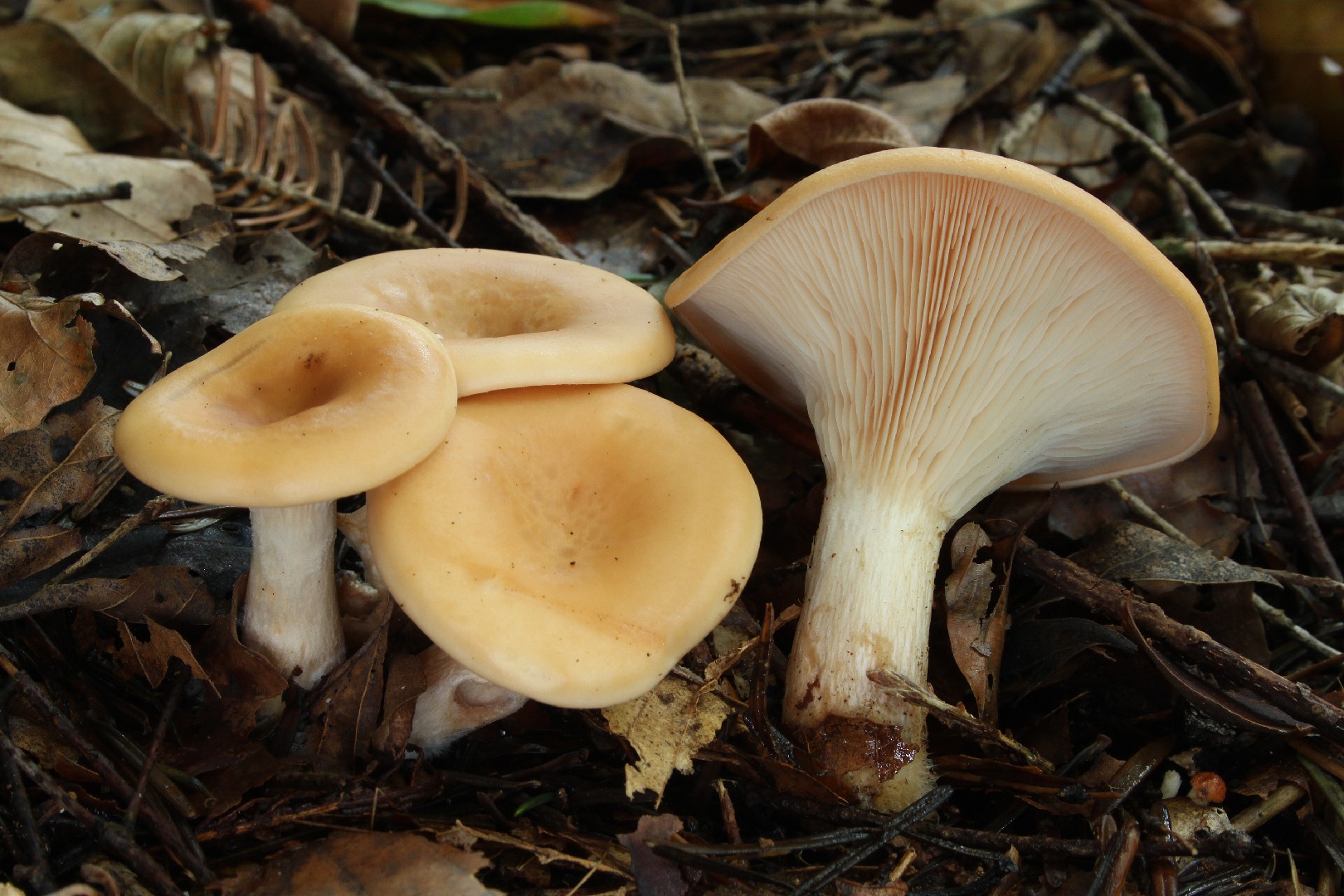
6. Tawny funnel cap
Tawny funnel cap grows in a variety of forest habitats, sometimes in fairy ring or line formations. Tawny funnel cap can have similar characteristics to a chanterelle but is lighter in color and has true gills instead of folded ridges underneath the cap.
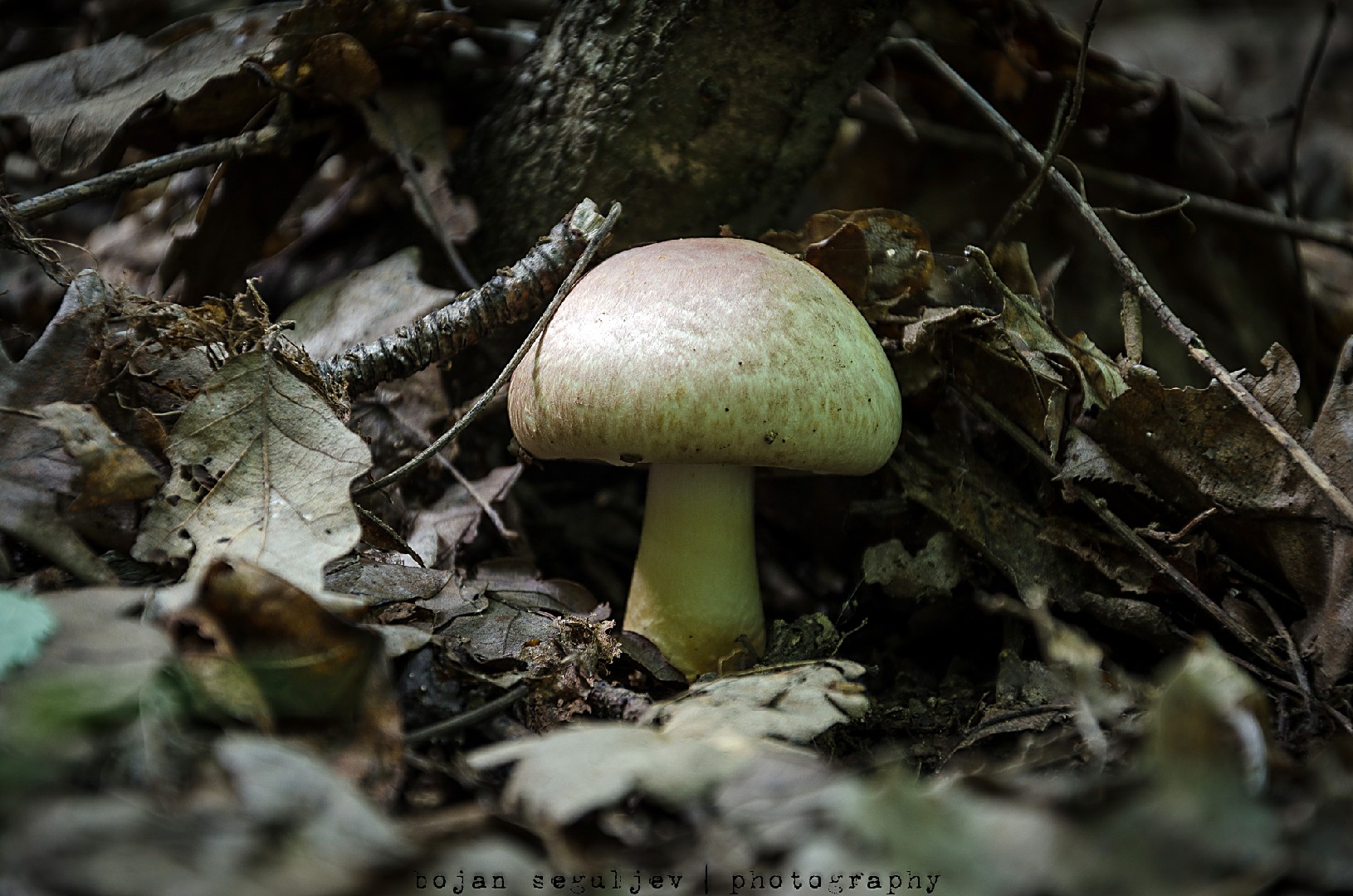
7. Lilac mushroom
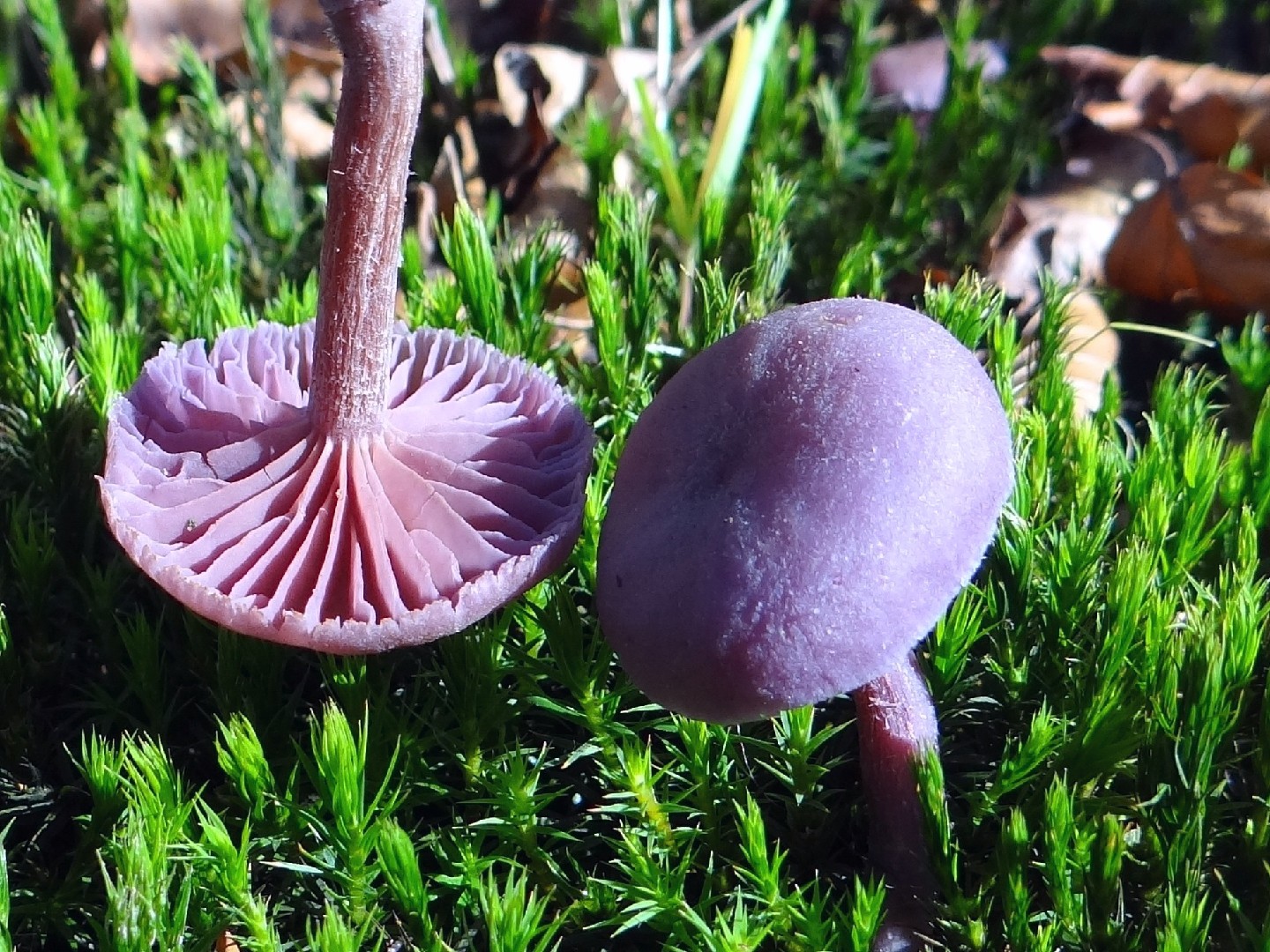
8. Amethyst deceiver
The amethyst deceiver (Laccaria amethystina) is a breathtaking mushroom that pops up from coniferous forest floors. The caps are a striking violet color in youth and are generally flat with a small indentation when the stem connects. As they mature, this violet color transforms to a less than breathtaking grey color, making it quite hard to identify after a certain age positively. Not edible.

9. Saffron ringless amanita
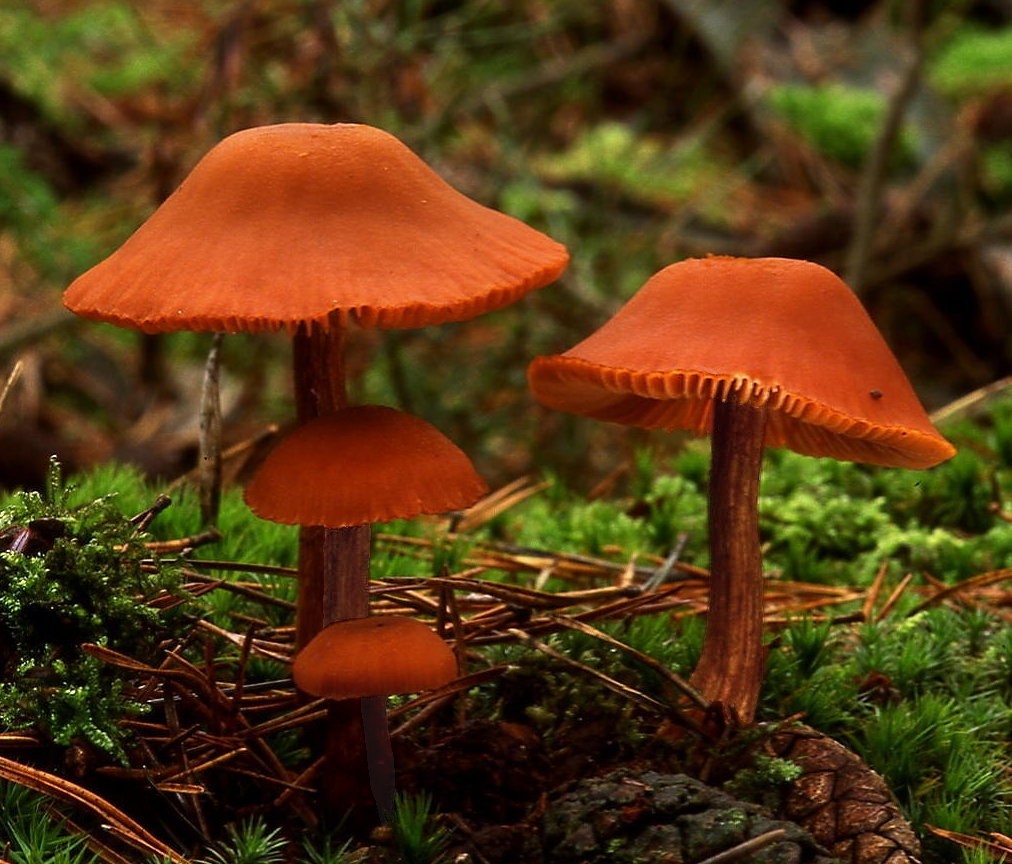
The saffron ringless amanita displays a orange-hued head. This coloring and the lack of a veil around its cap have given the fungus its name, saffron ringless amanita. This mushroom can be found in European hardwood forests from summer to fall. It has a sweet scent and, depending on location, can grow either in small or large groups.
10. Dead man's foot
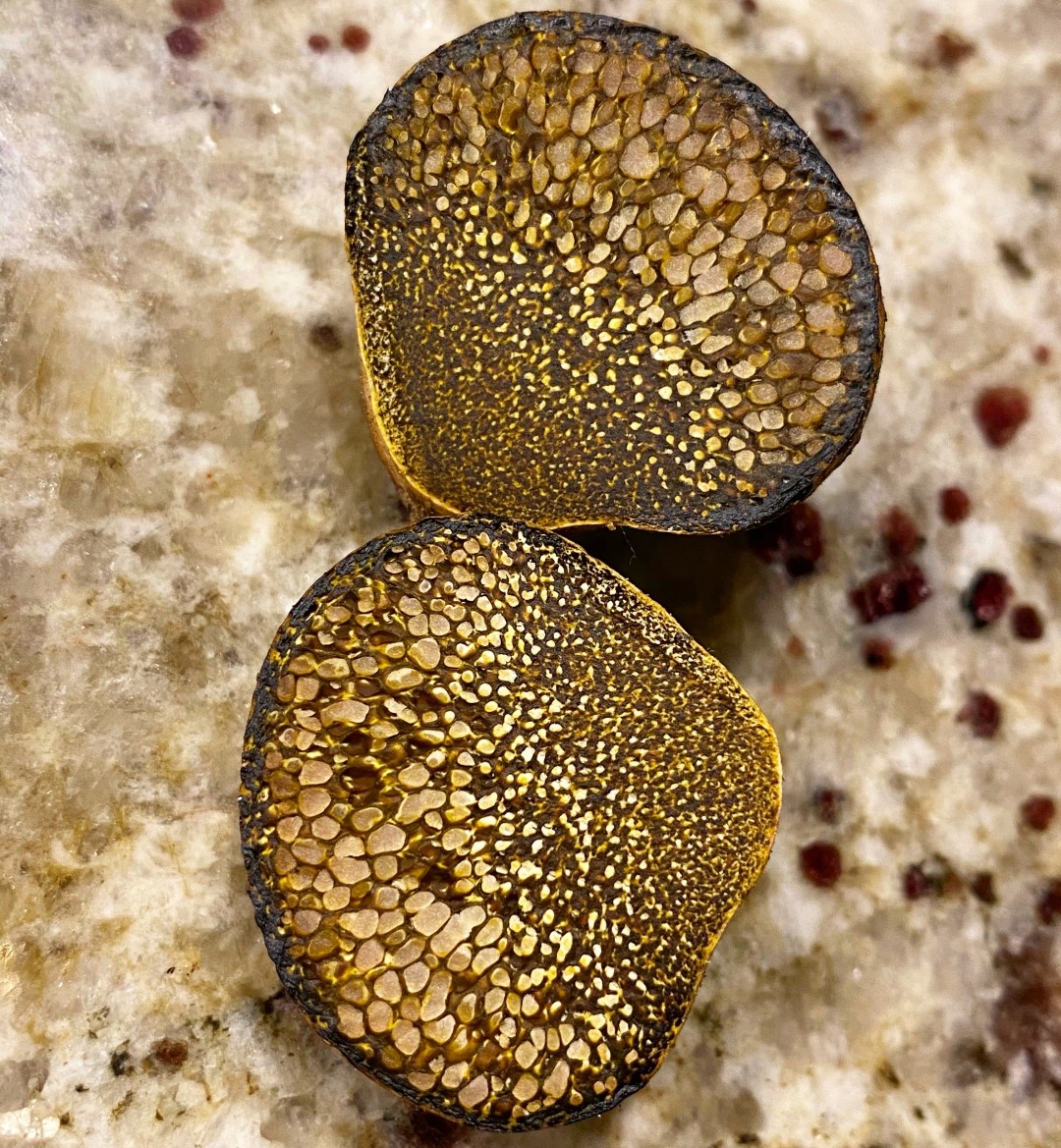
Dead man's foot (Pisolithus arhizus) actually bears a number of colorful names stemming from its unusual appearance, such as the horse dung fungus (Australia). It can be distilled into a viscous black gel, which is then used as a natural dye for clothing. It is considered to be inedible.

More







