




Top 20 Edible Mushrooms Popular in Ajaccio
Immerse yourself in the world of edible fungi from the diverse and enchanting landscapes of Ajaccio. Blessed with varying micro-climates, this region provides a perfect habitat for an array of tantalizing mushroom species. This guide unveils the top 20 most common mushrooms found in Ajaccio, trodding through their unique characteristics, mouth watering taste profiles, natural habitats, and the rich culinary traditions they passionately inspire.
* Disclaimer: Content feedback CAN NOT be used as any basis for EATING ANY PLANTS. Some plants can be VERY POISONOUS, please purchase edible plants through regular channels.

Most Popular Edible Mushrooms
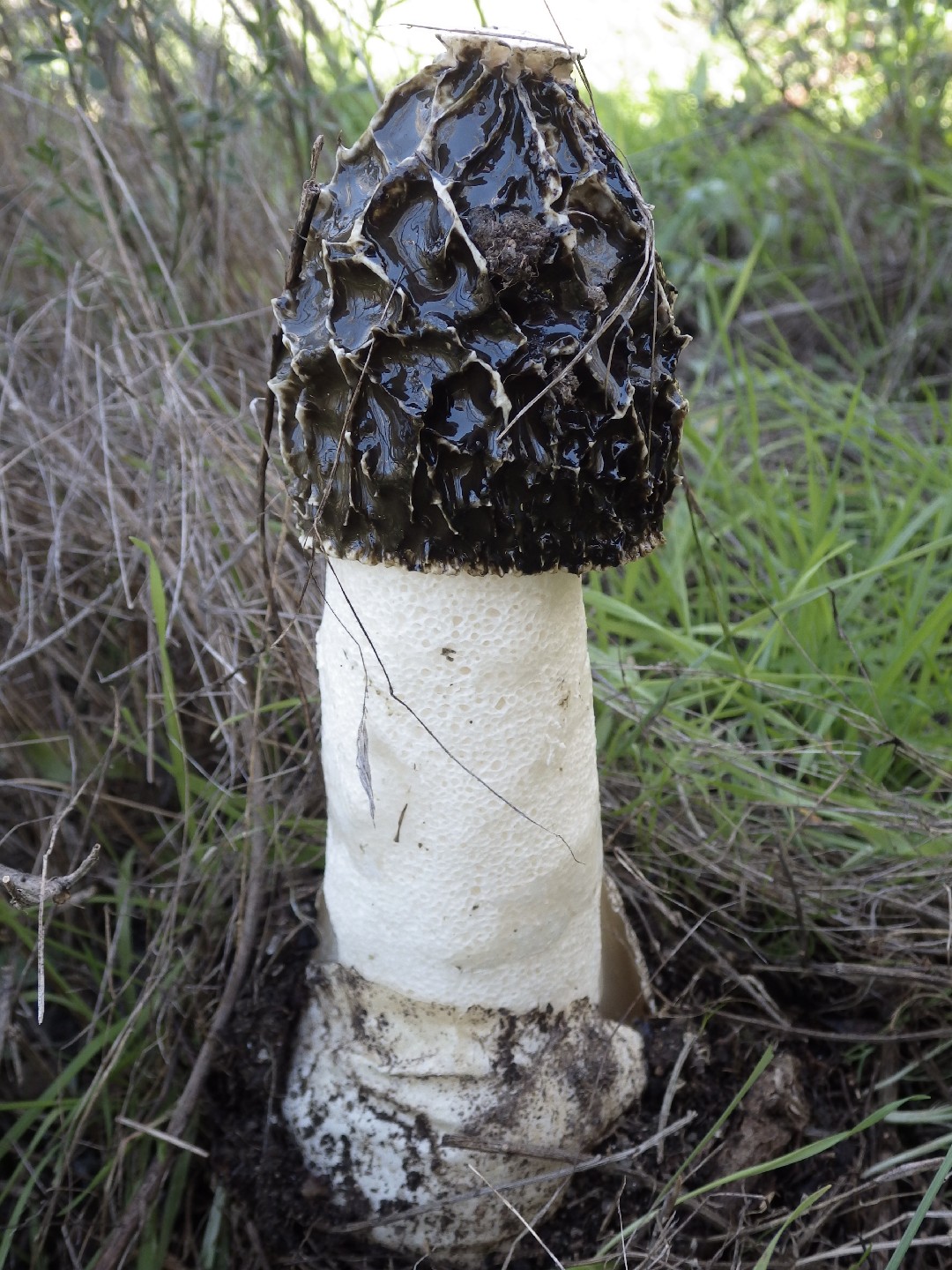
1. Common stinkhorn
The common stinkhorn (Phallus impudicus) grows incredibly quickly, sometimes nearing 30 cm in a single afternoon. Their caps are pitted in a way which makes them reminiscent of morels. However, there's little mistaking the common stinkhorn for a morel; the former, in addition to sporting a much longer stalk, has a clear and pungent odor.
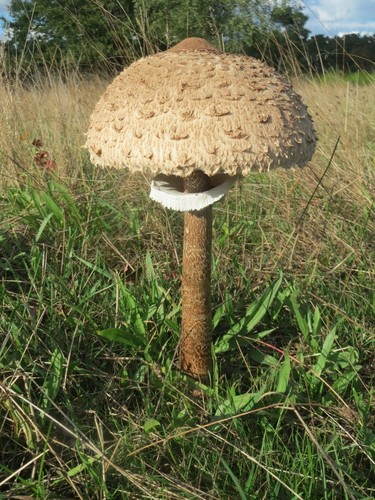
2. Parasol
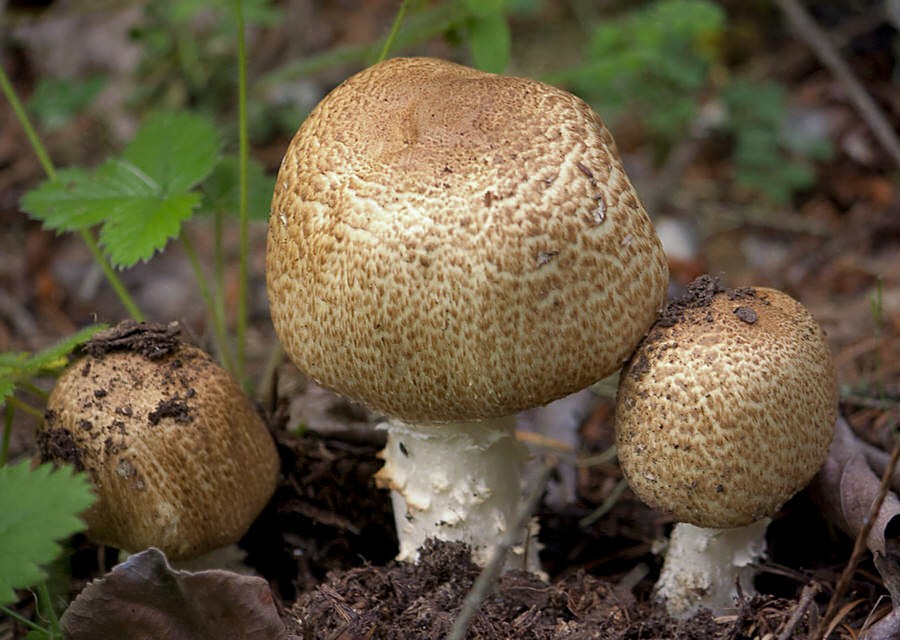
Found in clearings and grassy areas in late summer, the wild parasol mushroom has a snakeskin-patterned stem. The brown spots on its cap make it look a bit shaggy, but that name is reserved for its poisonous counterpart, the Shaggy Parasol (Chlorophyllum rhacodes). You can distinguish the two by the stems: the latter has a smooth stem and red flesh inside.

3. Saffron ringless amanita
The saffron ringless amanita displays a orange-hued head. This coloring and the lack of a veil around its cap have given the fungus its name, saffron ringless amanita. This mushroom can be found in European hardwood forests from summer to fall. It has a sweet scent and, depending on location, can grow either in small or large groups.
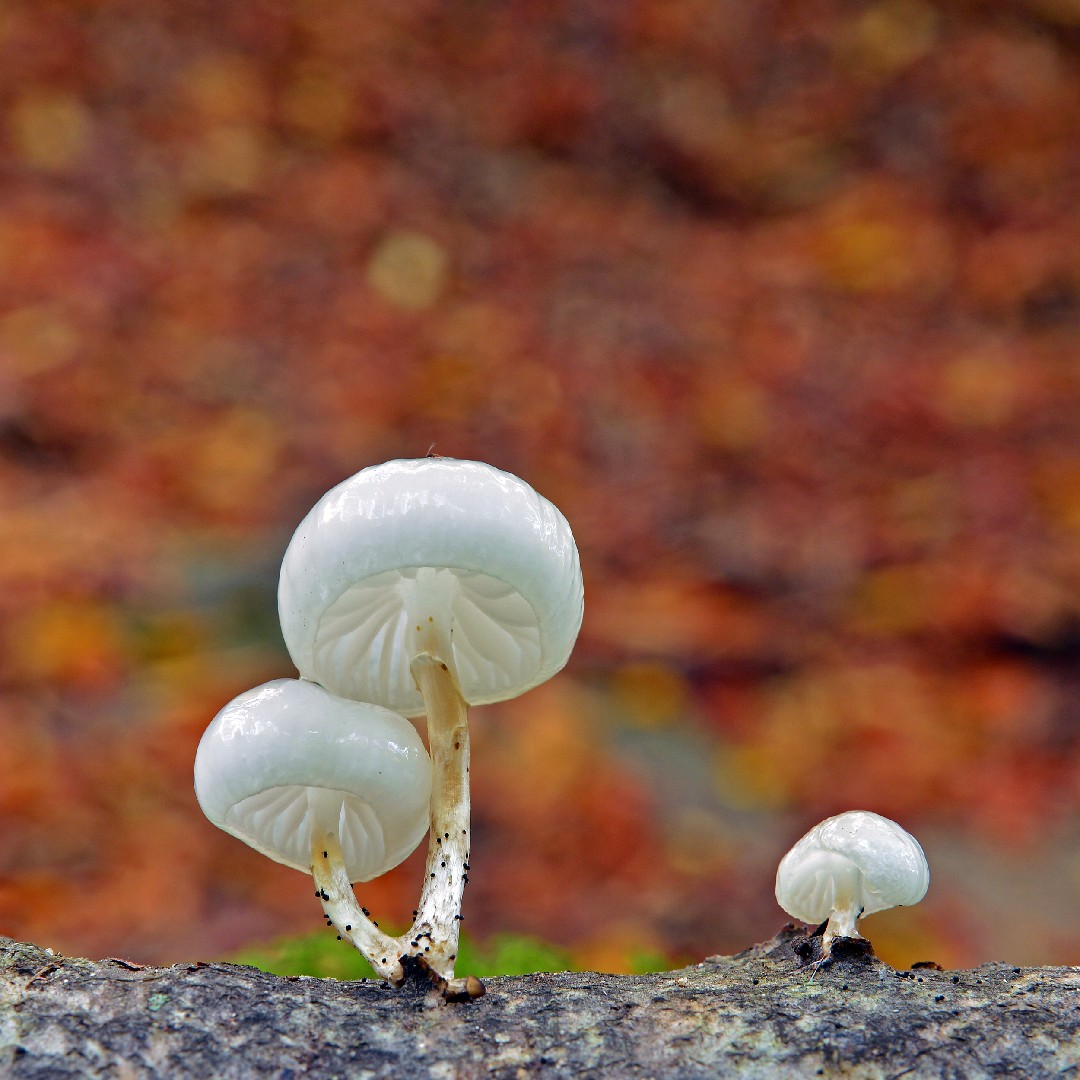
4. Porcelain mushroom
Porcelain mushroom can be found on a variety of deadwood including logs, dead standing trees, and dead upper branches. However, this mushroom is pickier about the type of deadwood, as it only grows on beech trees. This mushroom prefers to keep these trees to itself, releasing fungicides that can kill other mushrooms.
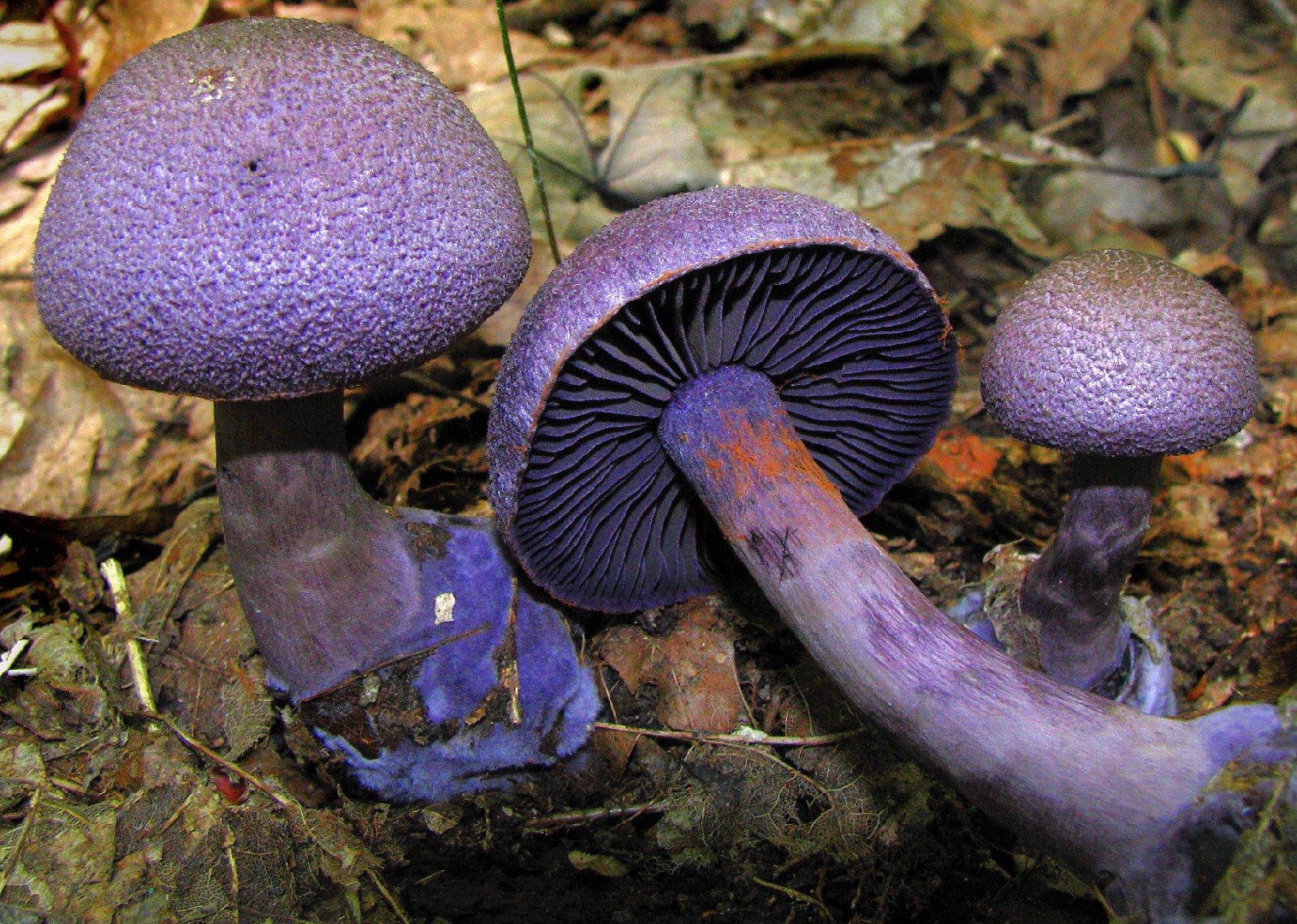
5. Violet webcap
This absolutely striking mushroom looks like something out of a fairy tale. The entire fruitbody of the violet webcap - cap, stalk, and gills - ranges in color from a light lavender to a very deep purple. The species' caps are bulbous and pockmarked, often appearing velvety. Though a feast for the eyes, this species is usually considered inedible.
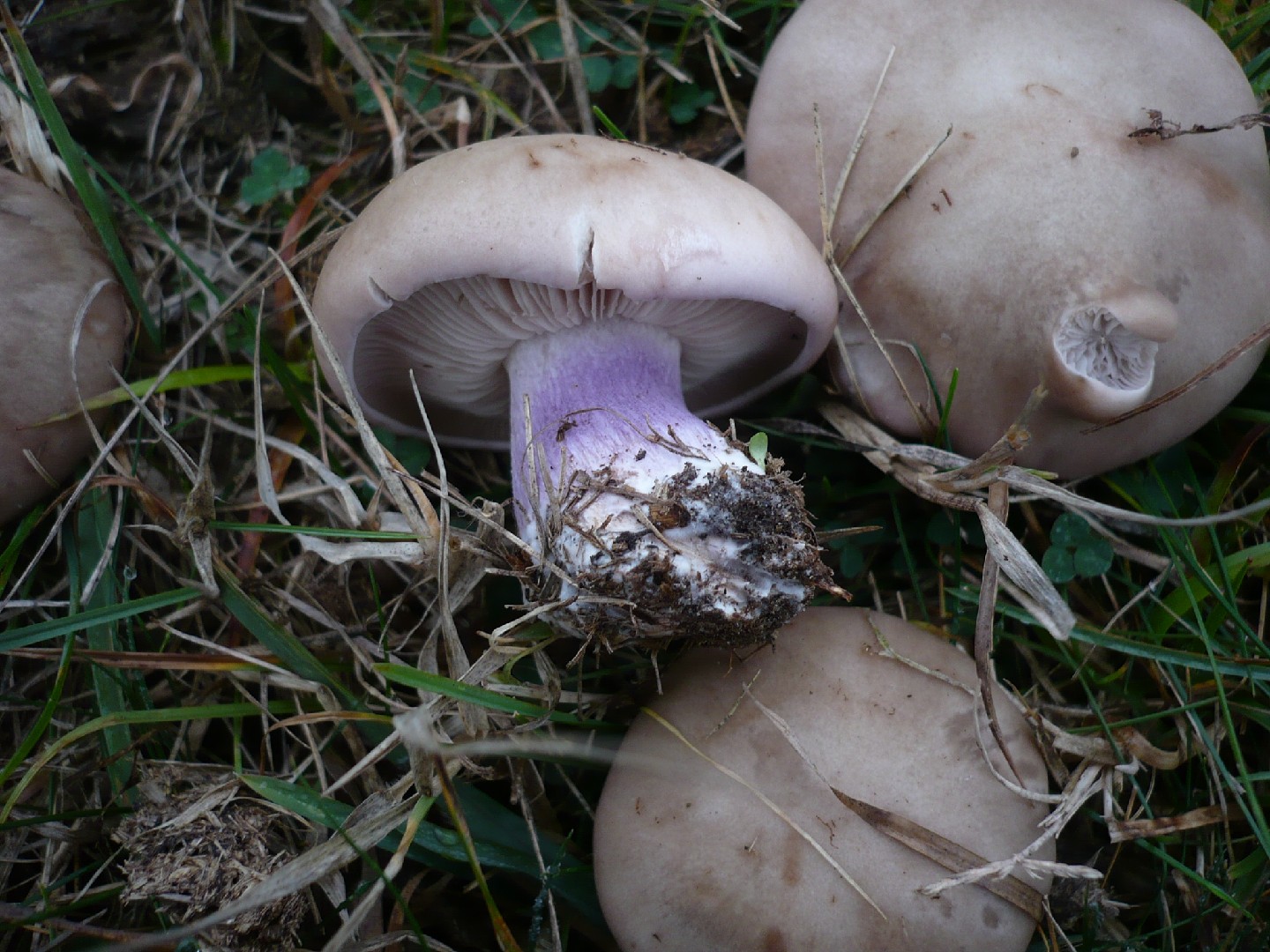
6. Field blewit
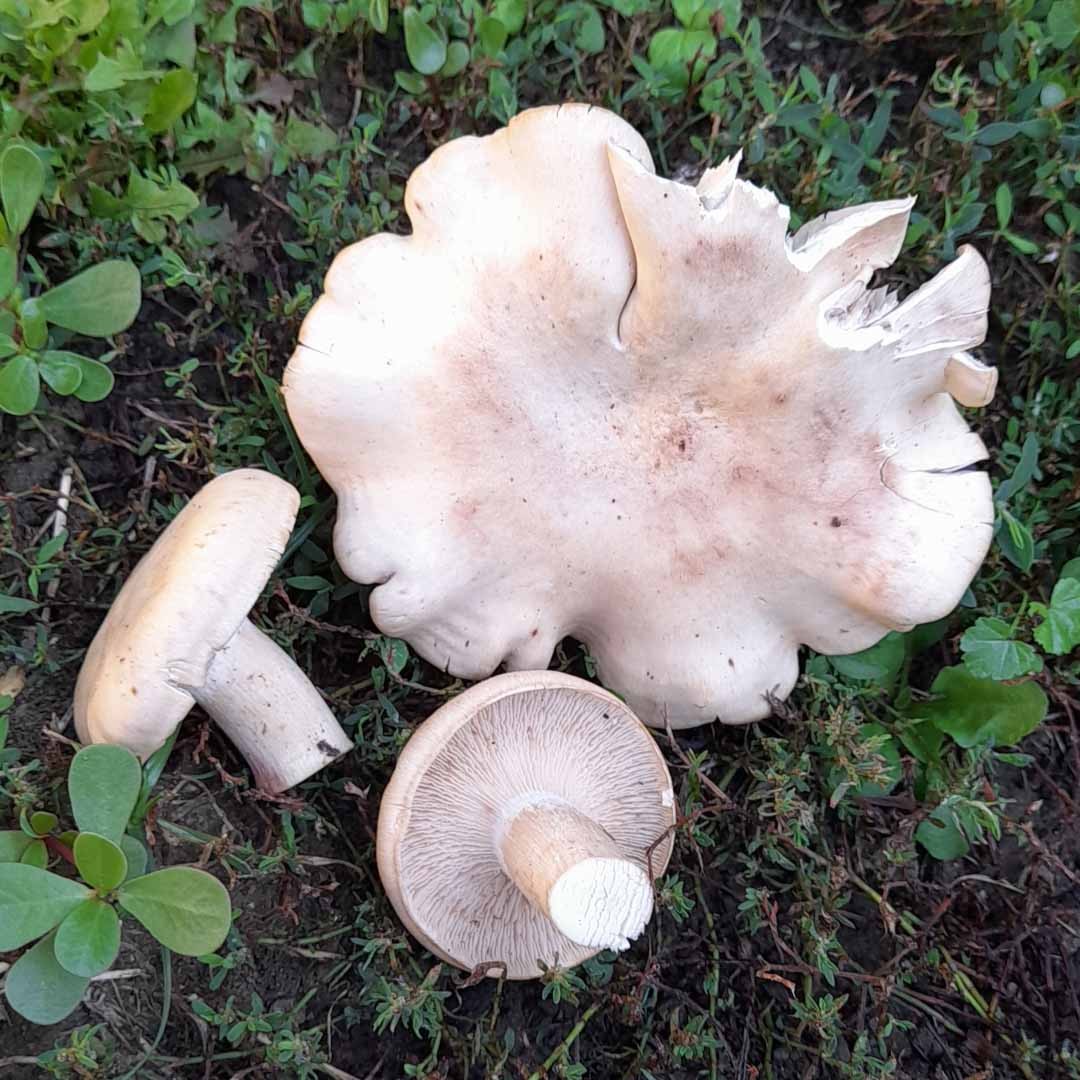
As the common name implies, fruitbodies of the field blewit (Lepista personata) can often be found in clusters or fairy rings in areas of open grassland. Their thick, creamy caps start off domed and morph into concave goblets as they age. Consumption of this mushroom has been reported to cause gastric distress.
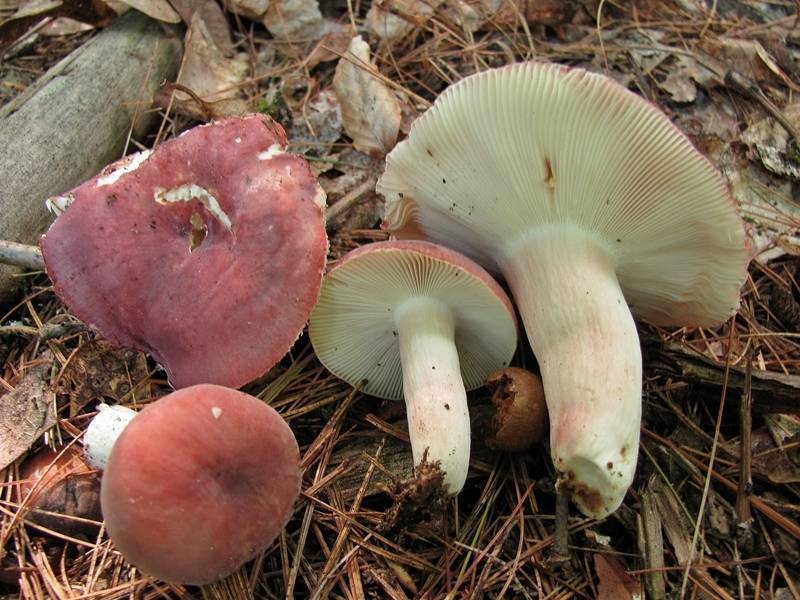
7. Russula amoena
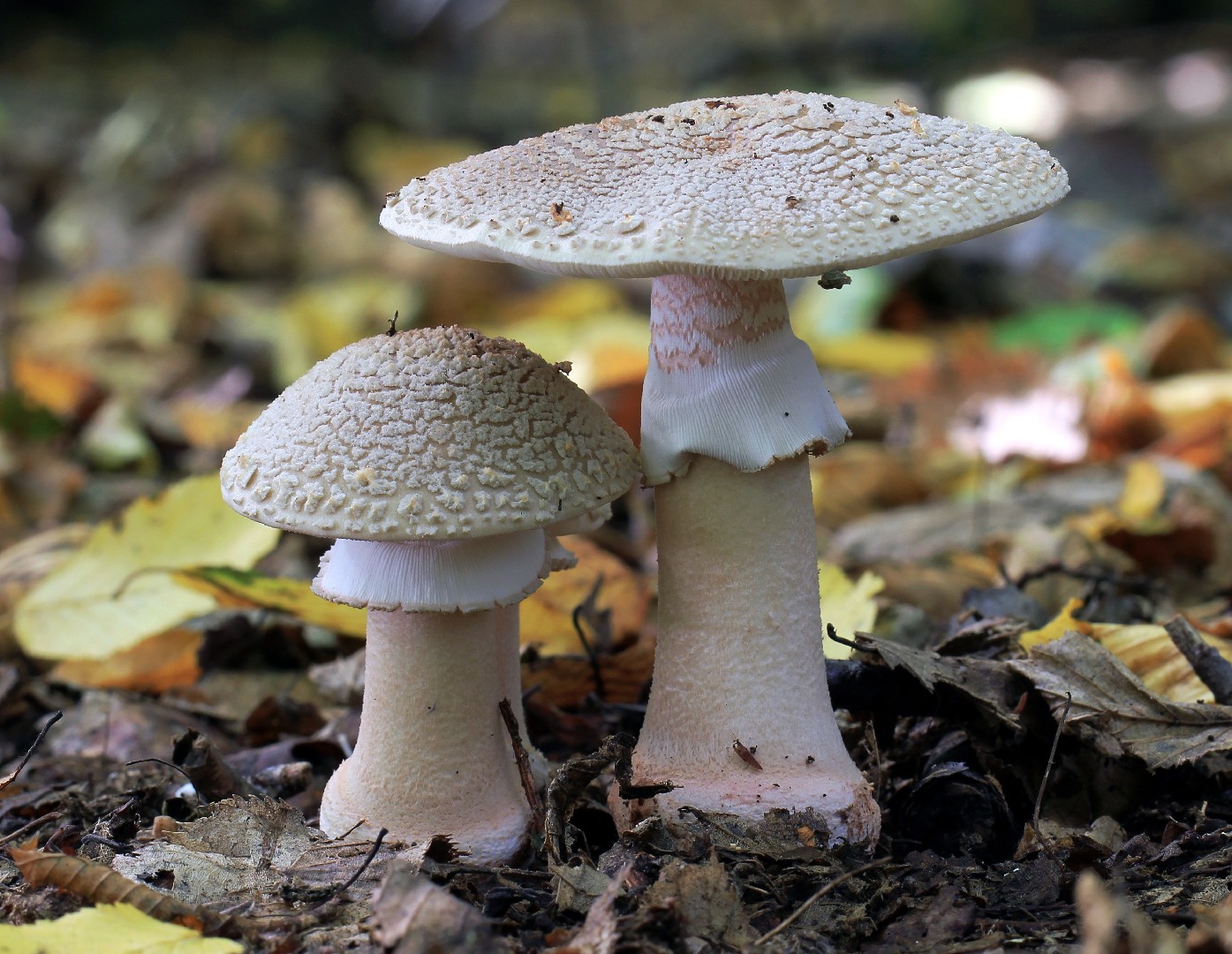
8. Blusher
The blusher mushroom is so named because it “blushes” to a pinkish red color when cut or bruised. It is found in many countries around the world, although it may not be native to the southern hemisphere. It contains a hemolytic toxin that can cause anemia if eaten.

9. Slate bolete
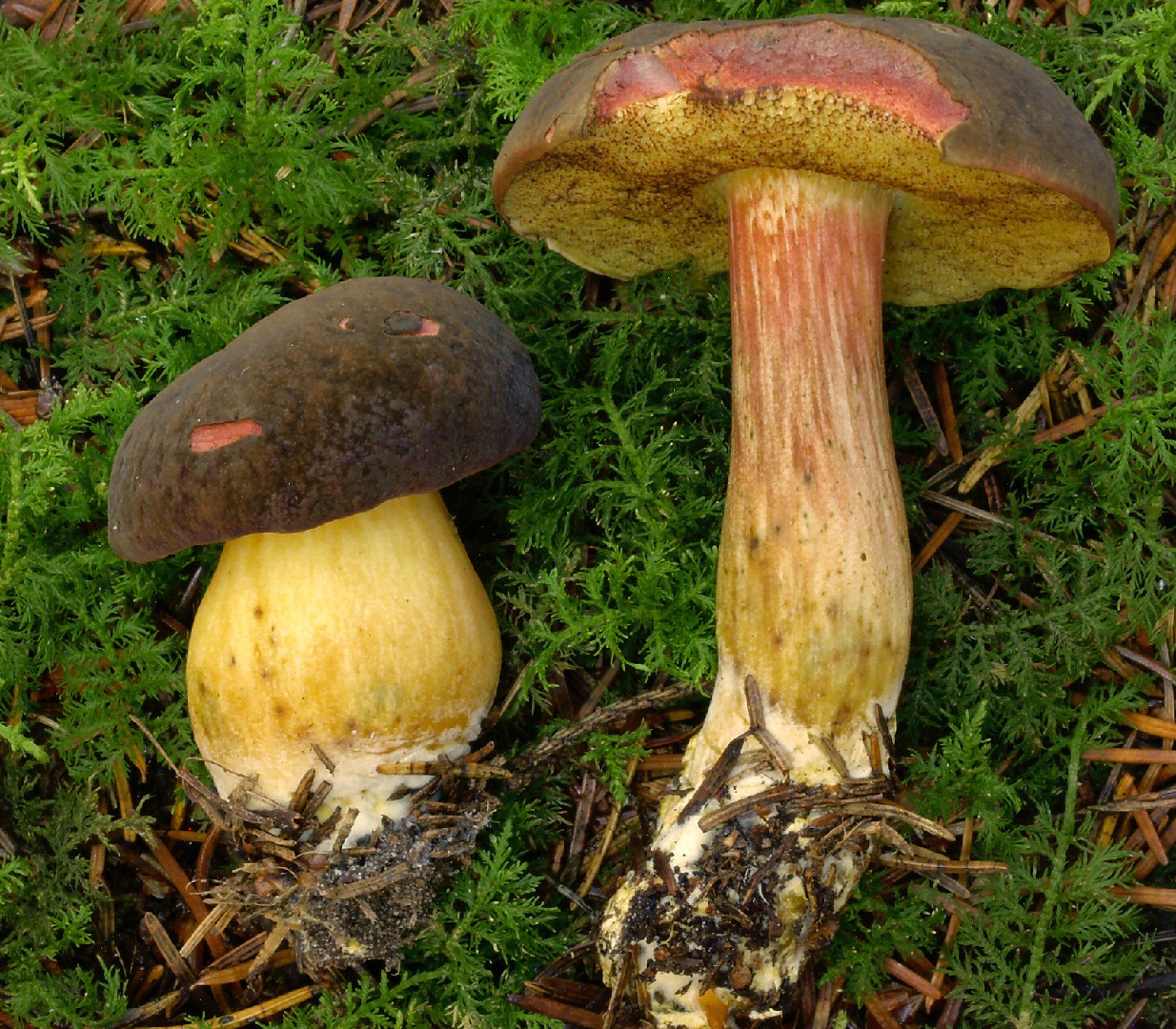
Slate bolete is a mushroom rich in vitamins such as potassium and magnesium. It is known as a useful mushroom for extracting elements from the soil. This symbiotic fungus is not cultivated and can most commonly be found under poplar trees, where it usually grows in groups.
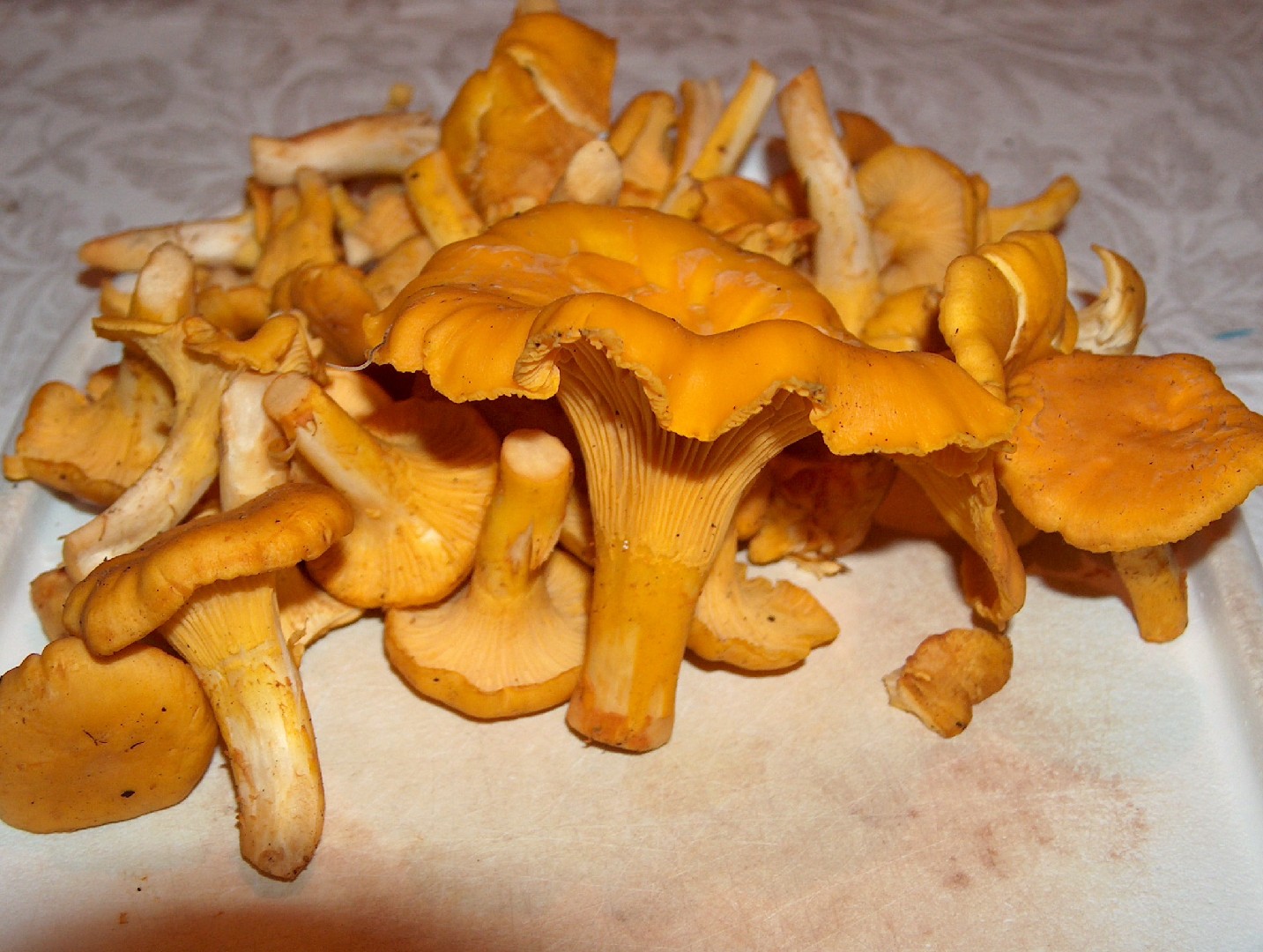
10. Golden chanterelle
Golden chanterelle mushrooms are popular in gourmet cuisine across Europe, where they grow wild during the warm (but not too hot) months. Similar species grow in other countries. Extremely popular with foragers, the golden chanterelle emits an apricot-like scent and contains an array of nutrients that benefit the human body. Several studies suggest consuming extremely large amounts may have detrimental effects on the eyes and muscles.


More







