




Top 20 Most Common Mushrooms in North Dakota
Nestled in the heart of the Midwest, North Dakota boasts diverse terrains that create a thriving habitat for a myriad of fungi. The rich soil, temperate weather, and ample rainfall make it a supreme ground for mushroom proliferation. This region is a mushroom wonderland, home to an impressive 20 common mushrooms. These species showcase a remarkable range of sizes, shapes, and colors, each adapted to survive in the unique ecological niches of North Dakota. Discover the splendid biological palette of North Dakota's mycological landscape.

Most Common Mushrooms

1. Shaggy mane
The shaggy mane mushroom is commonly found in North American and European grasslands. Some peoples foraged for its young egg-shaped caps, but it has more recently been found to be a bioaccumulator of heavy metals, meaning it pulls toxic metals up from the soil where it grows. As a result, shaggy manes should not be eaten. The mushrooms usually appear in clusters or “fairy rings.”

2. Chicken of the woods
Chicken of the woods is very noticeable in hardwood forests, appearing in clusters on standing tree trunks in bright orange and yellow hues that sometimes last through the entire winter. It is a parasite that causes an unfortunate brown heart rot, and is considered a particularly troublesome pest of Yew trees. If the fruitbodies can be seen, the tree is likely already beyond saving.
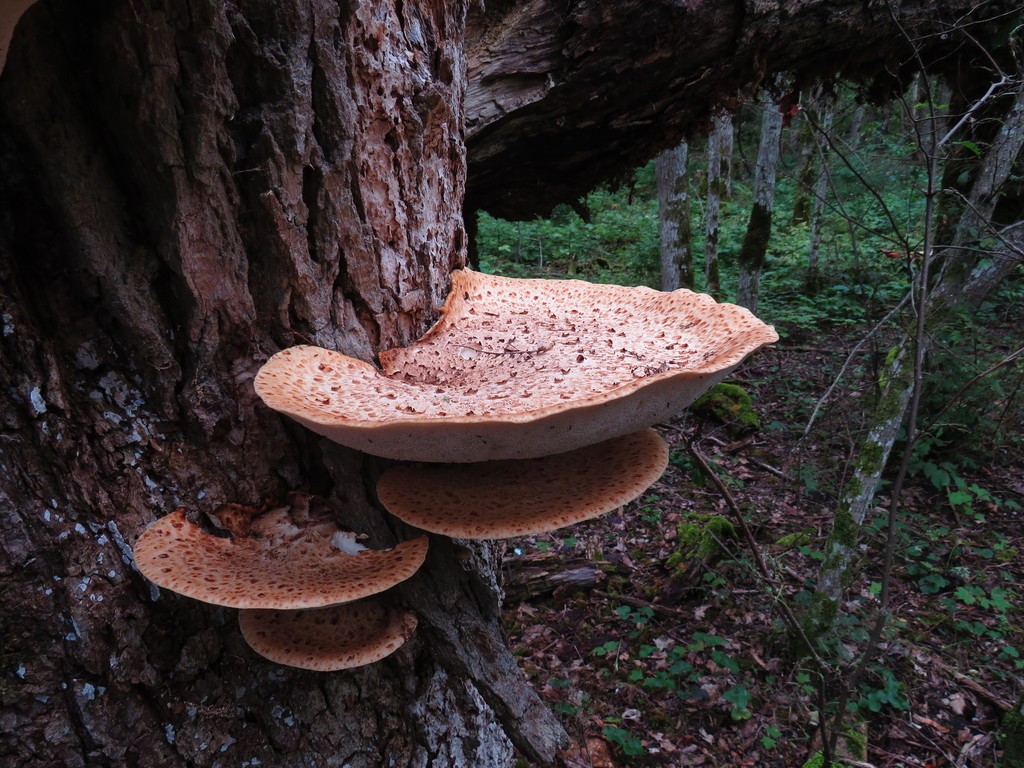
3. Dryad's saddle
A familiar sight to spring morel hunters, dryad's saddle is noteworthy for its large size, striking scales, and watermelon-like smell. Similar to other mushrooms in the bracket fungi family, dryad's saddle can be used to make paper. Younger mushrooms are better suited for this purpose due to their smaller and more consistent fibers.
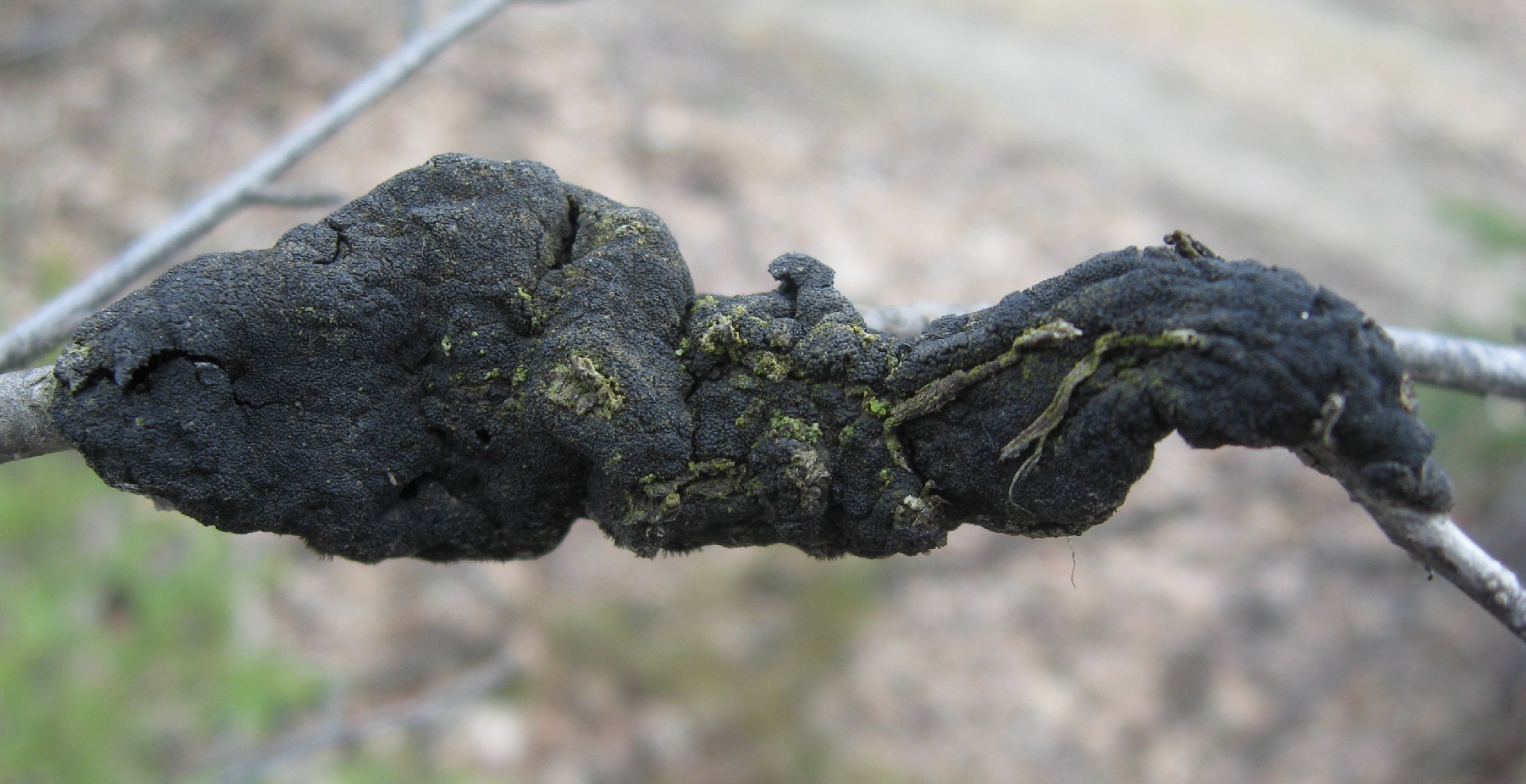
4. Black knot
The appearance of black knot (Apiosporina morbosa) is commonly found on various fruit-bearing trees and looks more like abnormally growing bark than it does a fungus. In youth, this bulbous growth is a lighter green but rapidly turns to dark brown and black. Black knot can kill trees and is not easily controllable using fungicides.
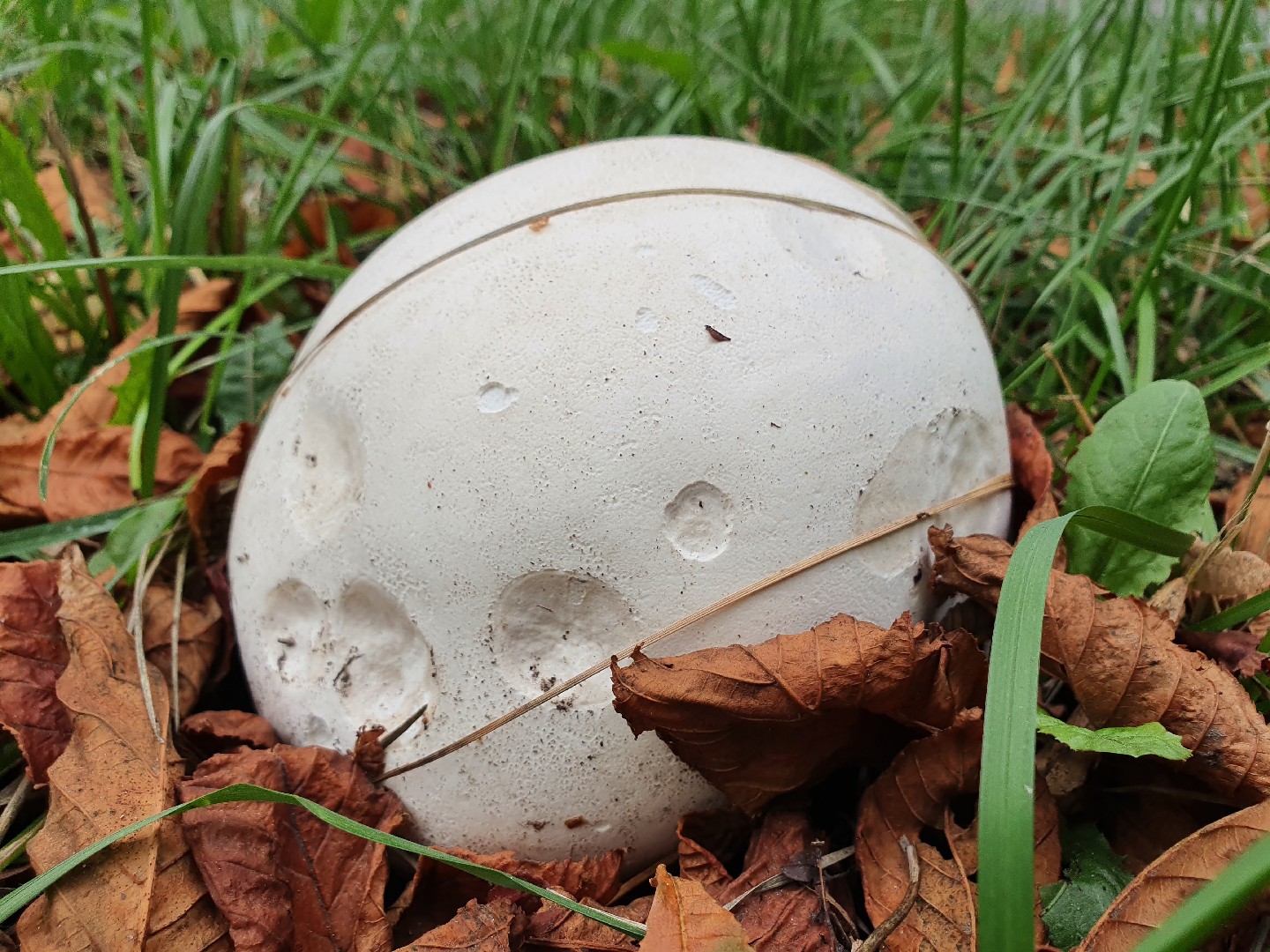
5. Giant puffball
These distinctive round, white fungi appear around the world in fields and at the edges of wooded areas. Living up to its name, a single giant puffball can grow as large as a watermelon. They have no stems, and produce trillions of spores that release into the air through holes in “puffs.” They have been used as slow-burning tinder and produce copious smoke when set aflame. Giant puffballs are technically edible, but should only be consumed when the mushroom is young and firm.
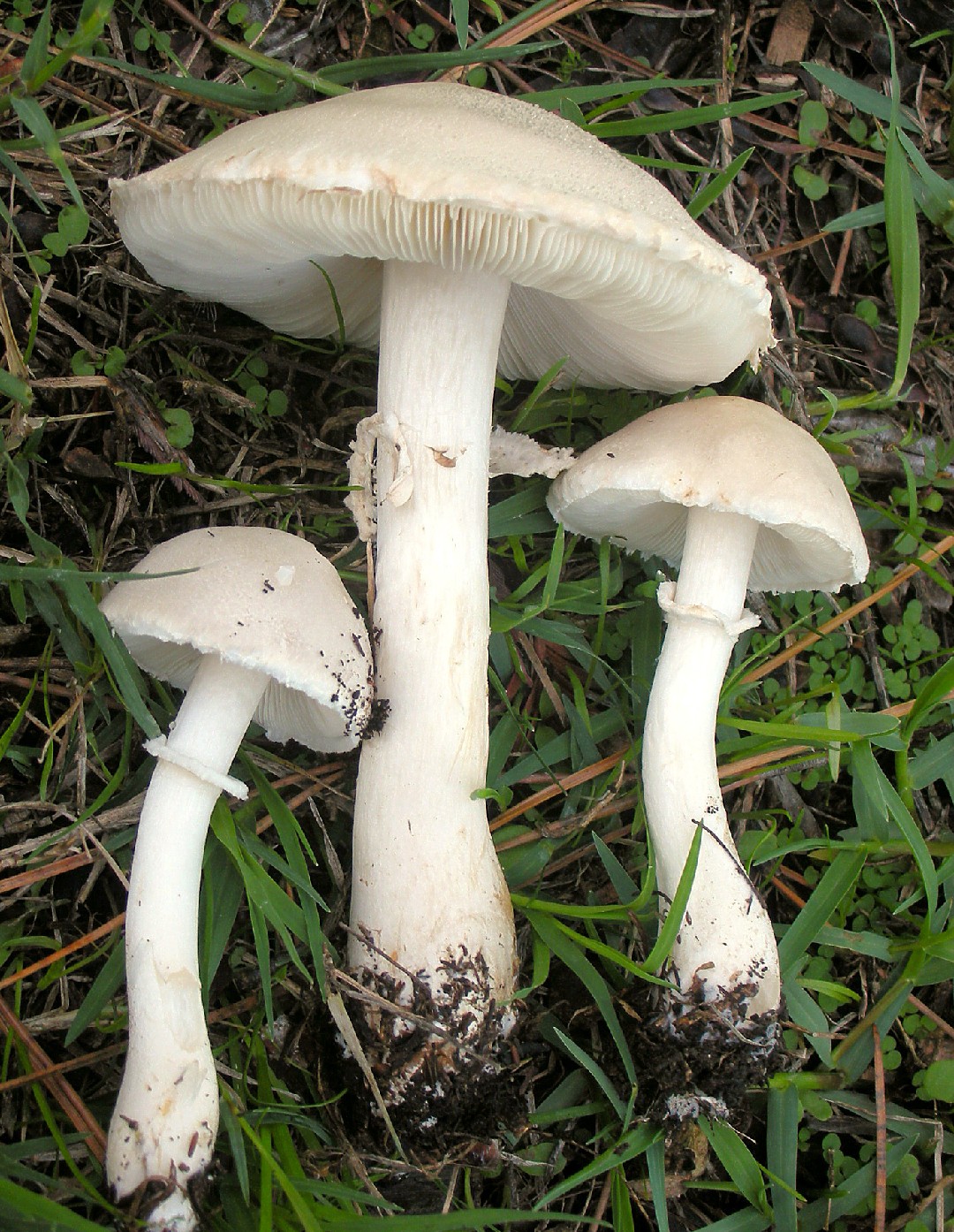
6. White dapperling
White dapperling mushrooms grow in scattered groups across open fields in the northern hemisphere. They can occasionally cause toxic reactions in humans, and their similarity to extremely poisonous lookalikes like Deathcap and Destroying Angel make them hazardous to handle.
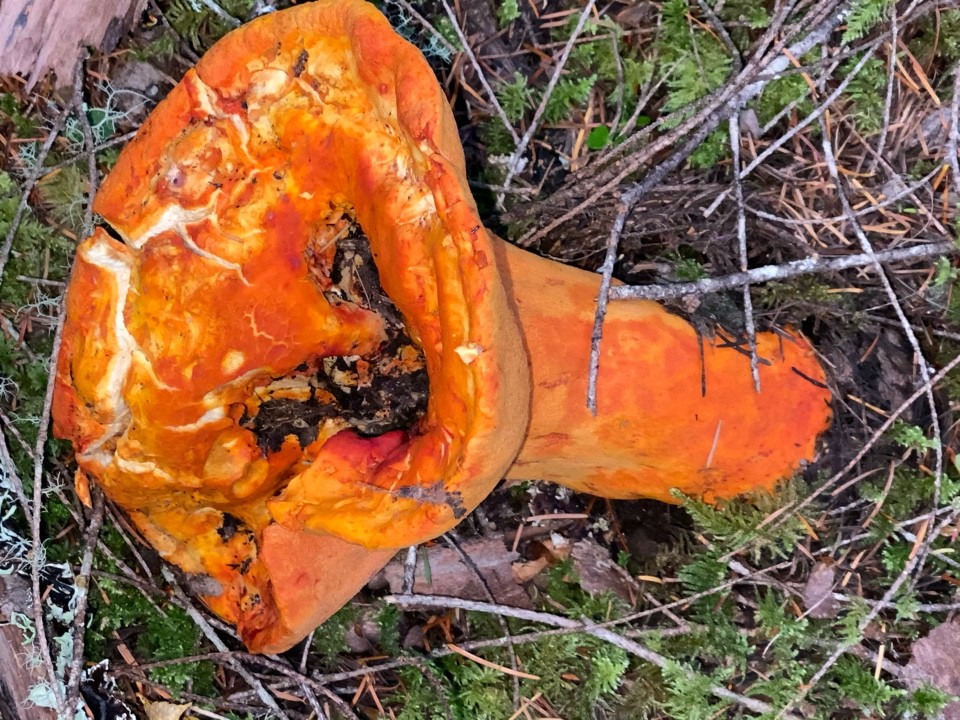
7. Lobster mushroom
The lobster mushroom is actually not a species of mushroom, per-se. When Hypomyces lactifluorum mold attacks one of several common species of Russula mushrooms, it transforms them into lobster mushrooms: they shrivel, harden slightly, and turn bright orange or vermillion. Surprisingly, this only makes them more flavorful. Lobster mushrooms are highly sought after for their distinctive, seafood-like flavor when cooked. Upset stomachs have been reported when eaten raw.
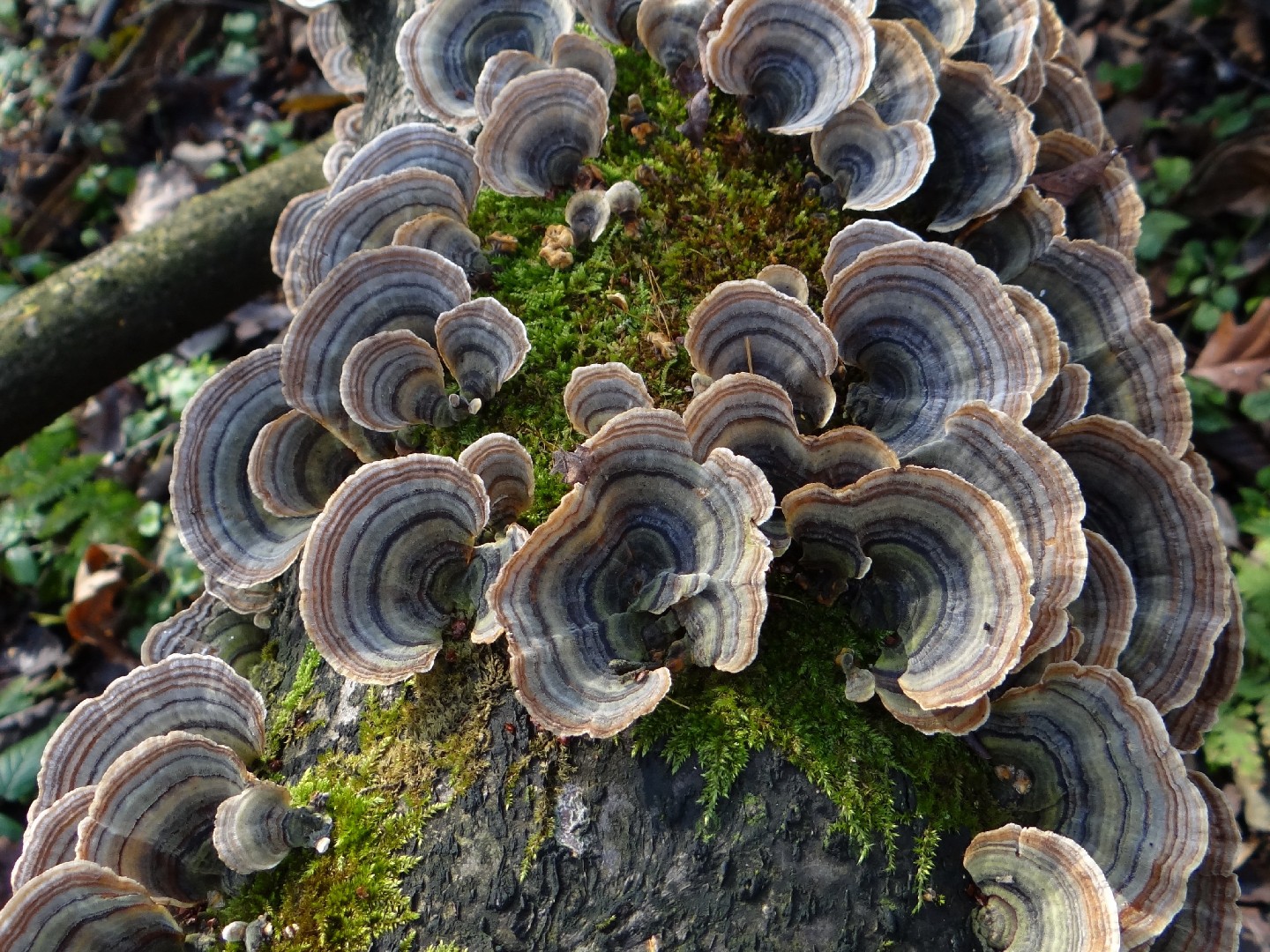
8. Turkey tail
The distinctively-striped turkey tail fungus grows on stumps and logs all over the forests of the northern hemisphere. It is, in fact, probably the most common species you will find. That doesn't mean this mushroom is plain, however; each cap is uniquely patterned. Look for bands of alternating textures as well as color.
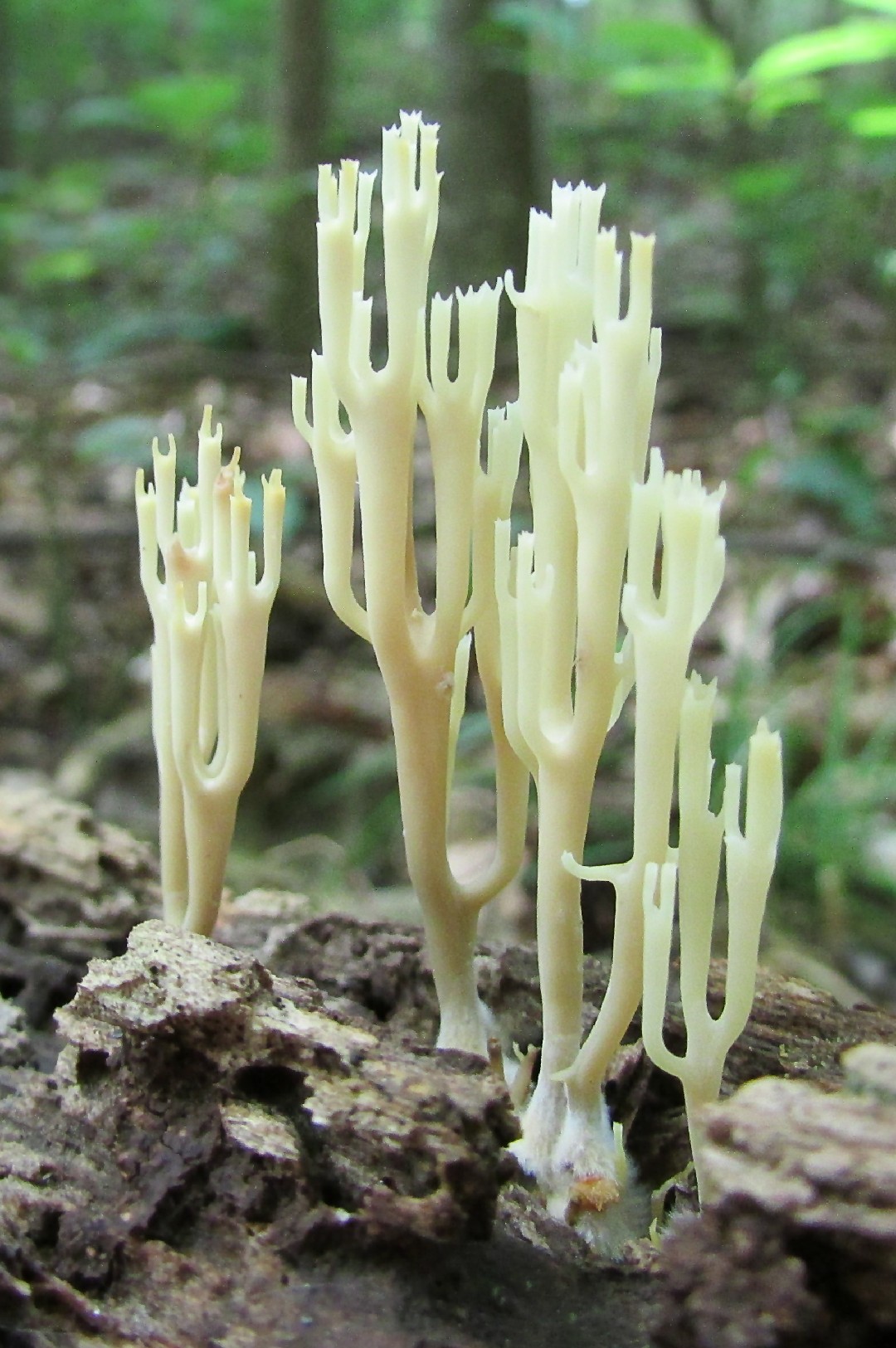
9. Crown-tipped coral
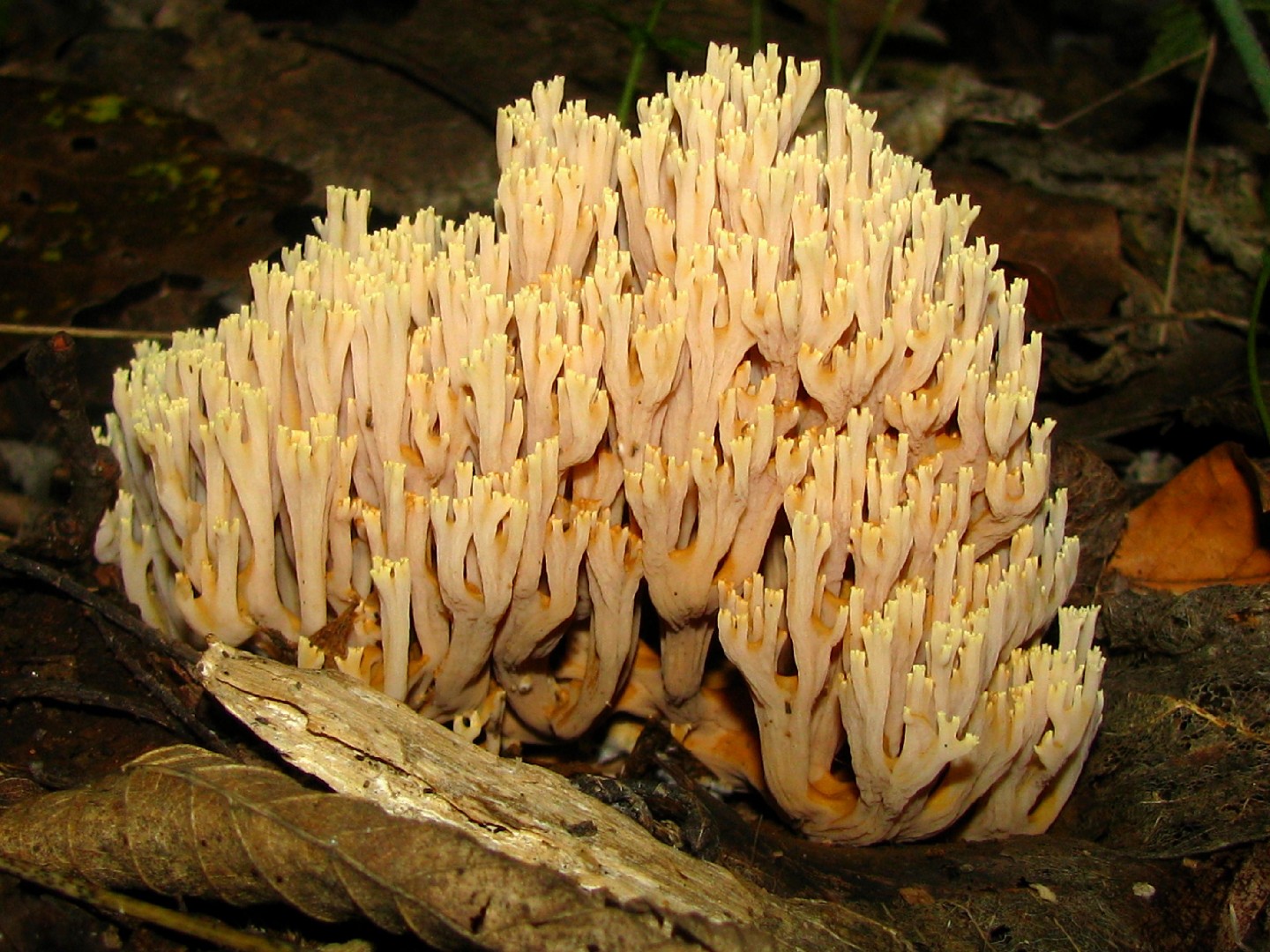
Crown-tipped coral(Artomyces pyxidatus) is a widespread but uncommon species in North America and Western Europe whose Latin name, meaning "box-like," is inspired by its structure. It is one of the few coral fungi to fruit on wood. After a period of absence lasting over a century, it has recently reappeared in Great Britain.
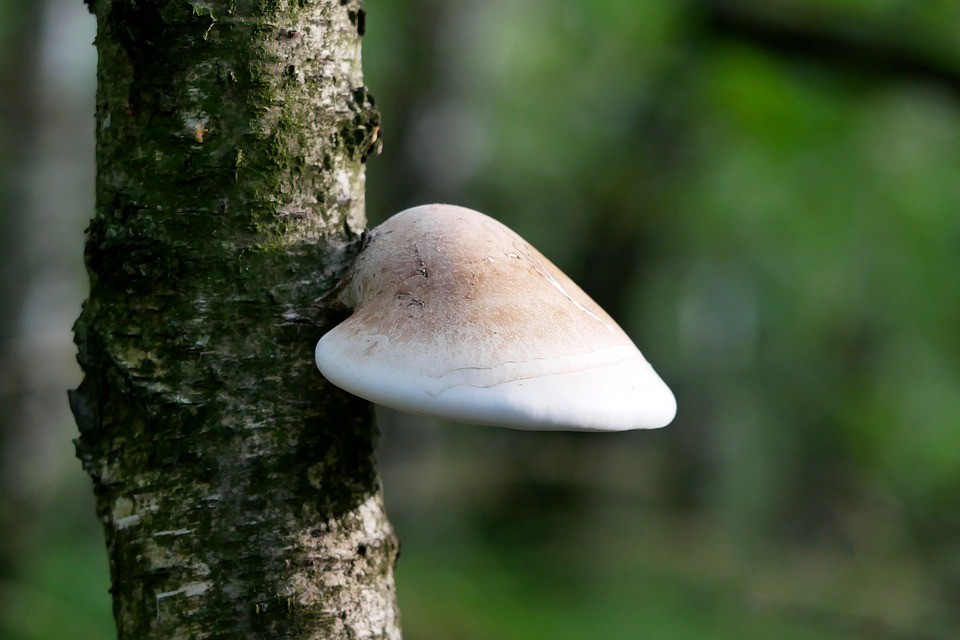
10. Birch polypore
The birch polypore has a variety of applications. Its thick skin has been used by barbers as a razor sharpener and as a mount for insect collectors. When dried, this mushroom was also used to carry fire over long distances because it burns slowly. The historical use of birch polypore doesn't stop there; pieces of this mushroom were found being carried by the five-thousand-year-old mummy Ötzi the Iceman.
More







