




Top 20 Edible Mushrooms Popular in Cornelia
In the lush landscapes of Cornelia, the allure of mycology - the study of fungi - truly comes to life. Encompassing various terrains, Cornelia lends itself as an abundant habitat for a unique assortment of edible mushrooms. Discover 20 of the most common, yet culinary delights these landscapes have to offer. With varying appearances, tastes, and culinary uses, these mushroom species should be on every forager's list. Get insights about their soft or hardy textures, mild or strong flavors, to even where to find them from forests to grassy fields. Let us delve into the fascinating world of Cornelia's edible mushrooms.
* Disclaimer: Content feedback CAN NOT be used as any basis for EATING ANY PLANTS. Some plants can be VERY POISONOUS, please purchase edible plants through regular channels.

Most Popular Edible Mushrooms
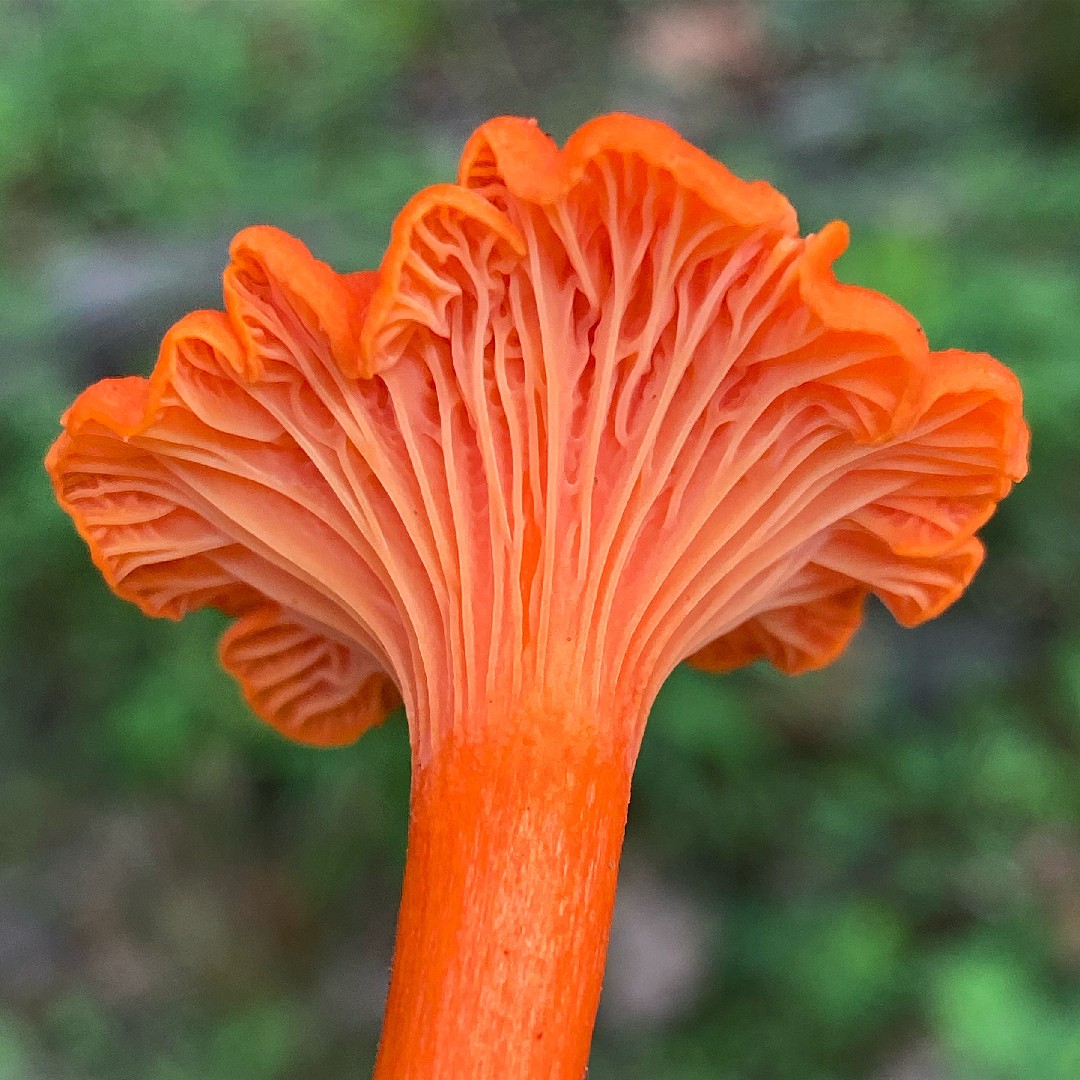
1. Red chanterelle
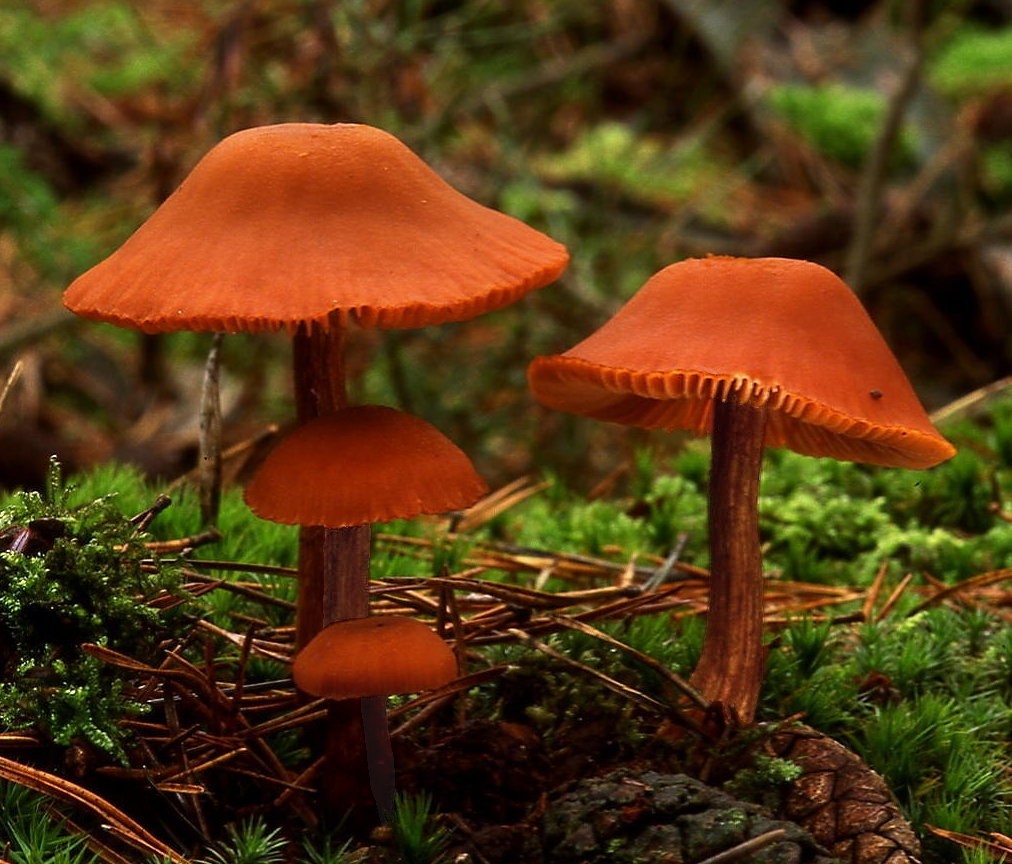
Red chanterelles can be found growing within hardwood forests across eastern North America. These small but striking mushrooms range from orange to red to pink in color. Edible and boasting complex flavors, many chanterelles are highly sought after. The red chanterelle, though less famous than some of its close relatives, is no exception. This species can be used in all sorts of recipes, with a vaguely sweet or piney taste.
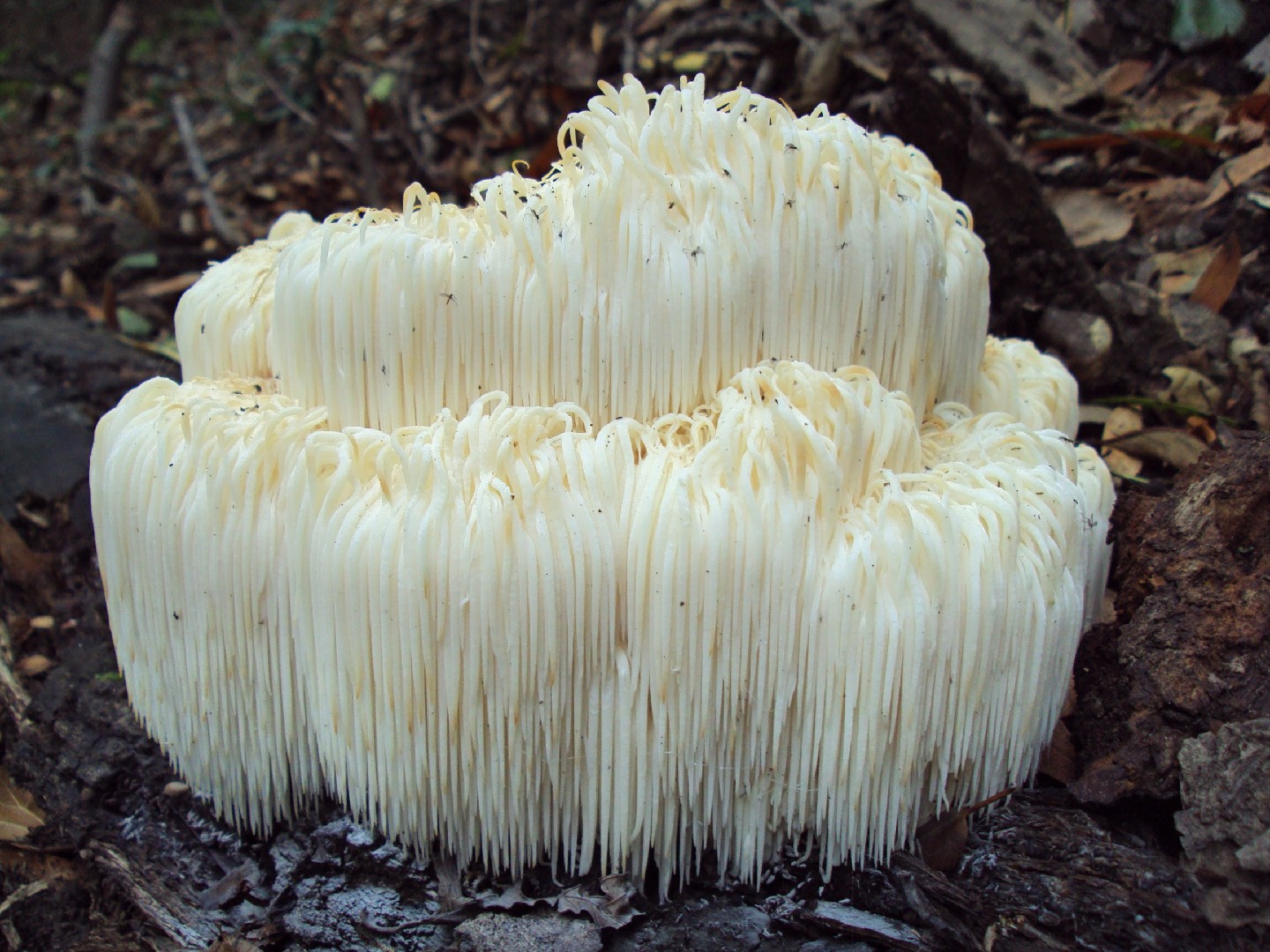
2. Lion's Mane Mushroom
Lion's Mane Mushroom(Hericium erinaceus) is easily identifiable by its characteristic appearance, reminiscent of the majestic mane of a lion. It often sprouts along hardwoods, which may be living or dead. Scientists thus debate whether this species is truly parasitic or merely saprophytic in nature.
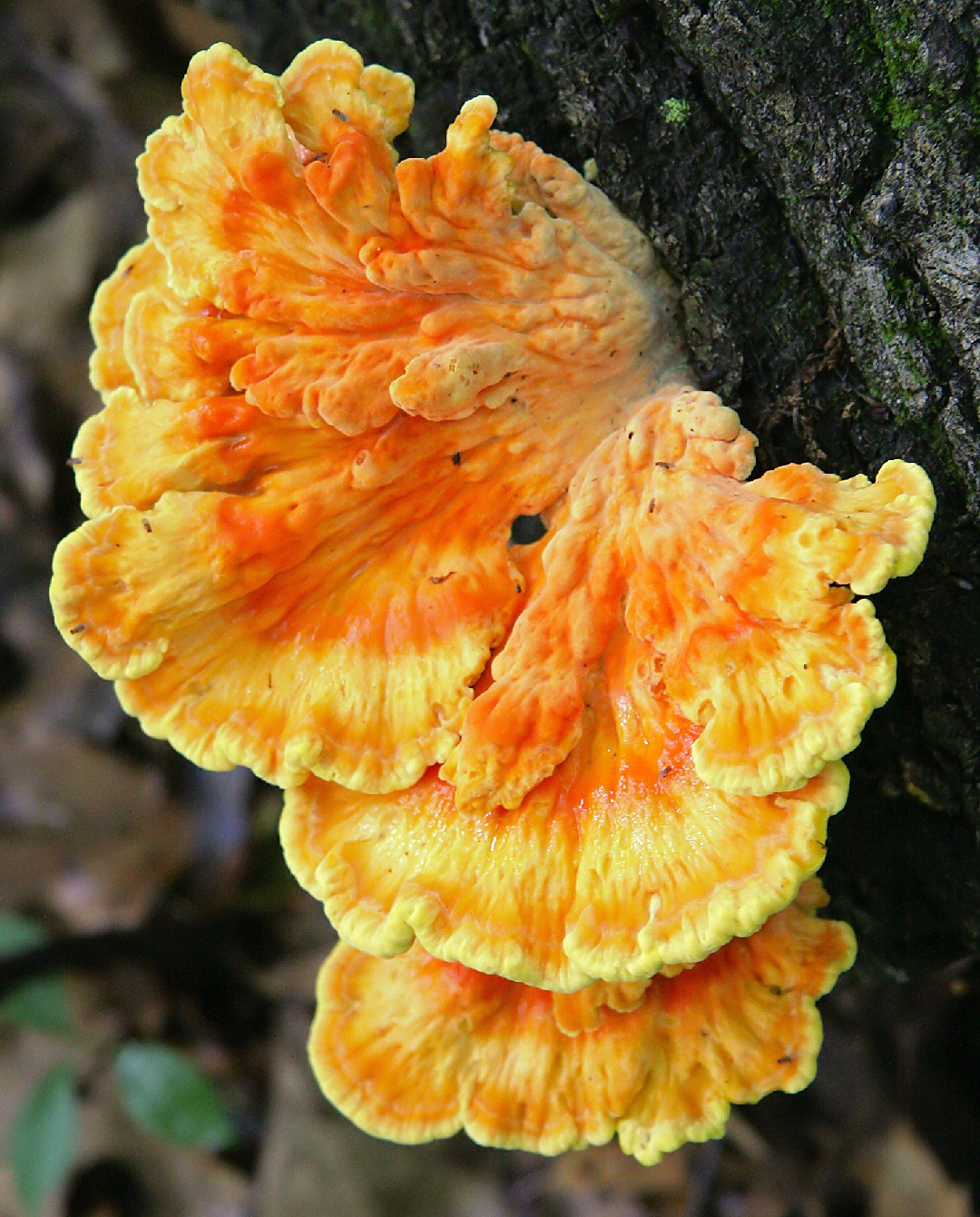
3. Chicken of the woods
Chicken of the woods is very noticeable in hardwood forests, appearing in clusters on standing tree trunks in bright orange and yellow hues that sometimes last through the entire winter. It is a parasite that causes an unfortunate brown heart rot, and is considered a particularly troublesome pest of Yew trees. If the fruitbodies can be seen, the tree is likely already beyond saving.
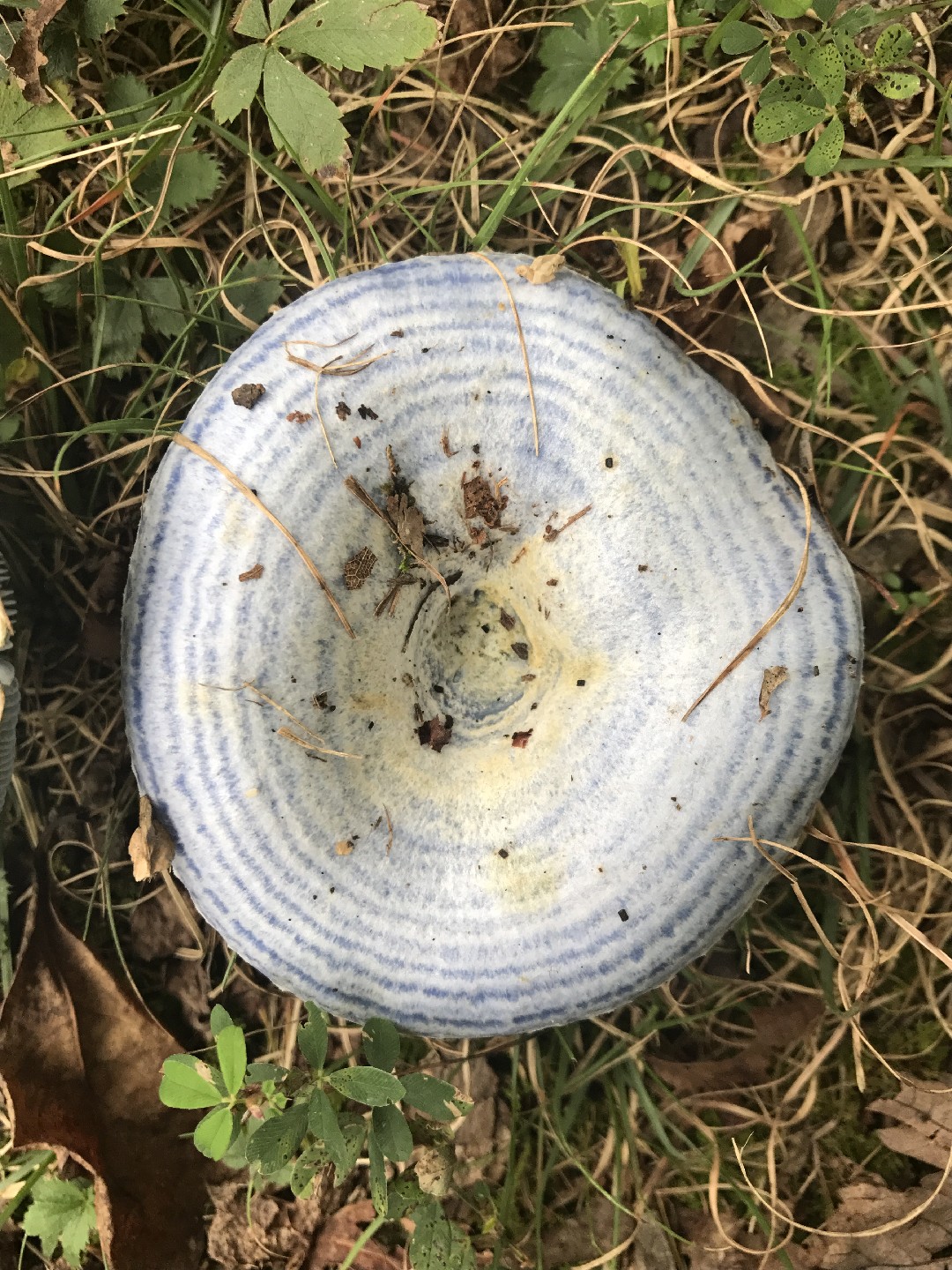
4. Indigo milk cap
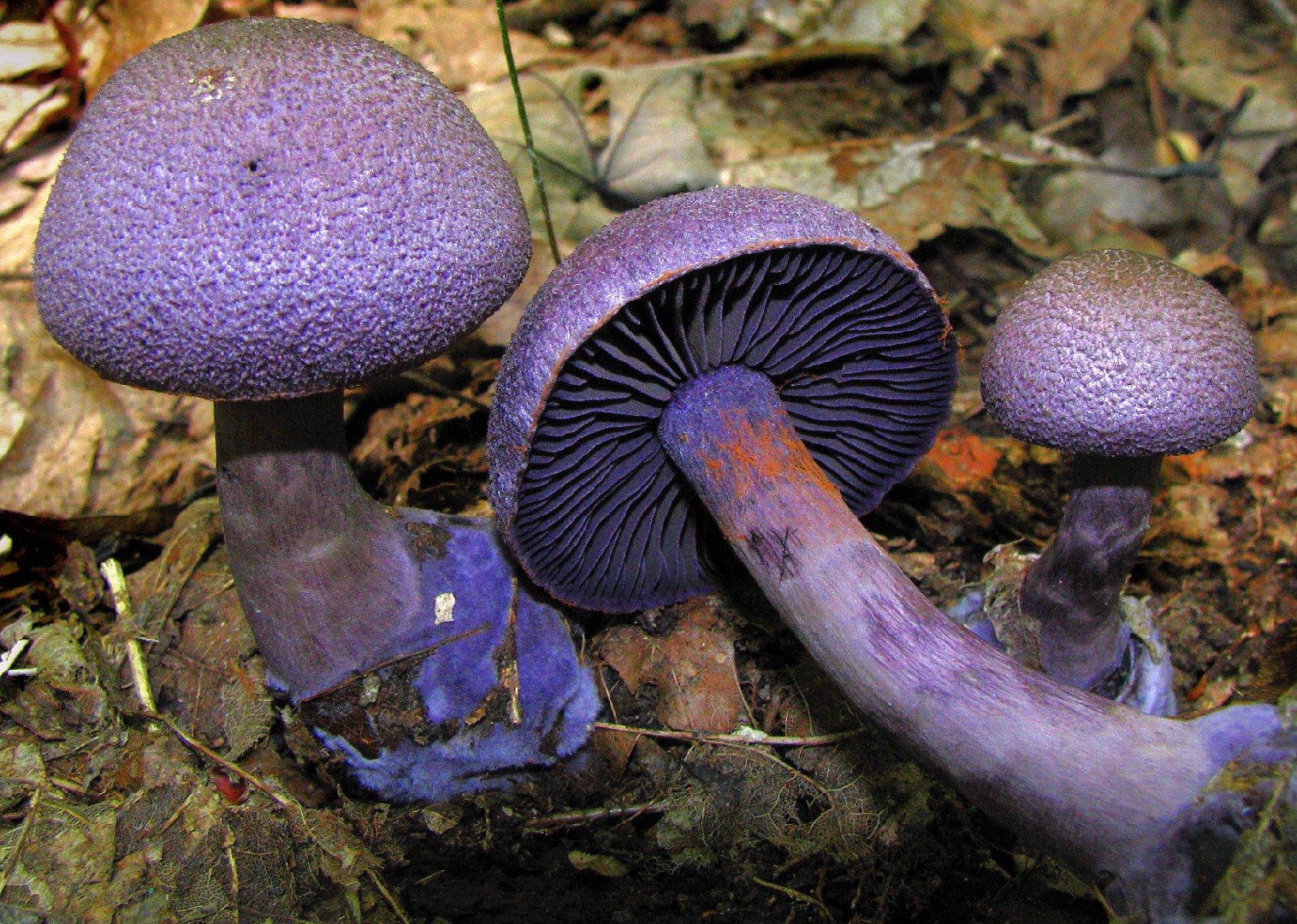
This gorgeous species is unlike any other. The indigo milk cap, a member of the often-drab russula family, is deep blue in color. Like other milk caps, it bleeds a latex-like substance when cut or damaged, but instead of the usual white this species bleeds deep blue.
5. Pear-shaped puffball
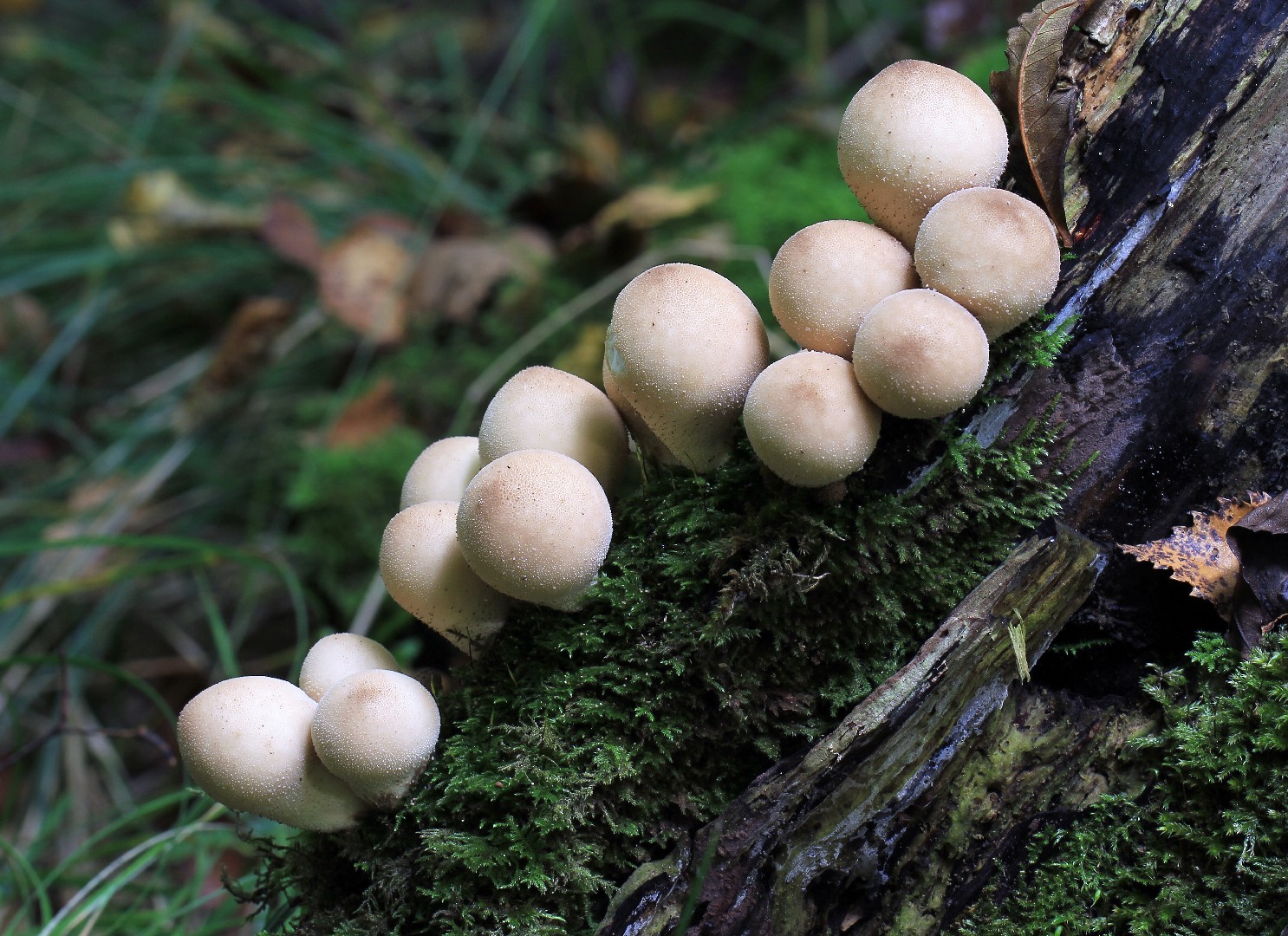
The mushrooms of this species grow in such tight clusters that they may cover fallen trees and stumps almost entirely in a brownish, puffy coat. Pear-shaped puffballs appear all around the northern hemisphere on decaying hardwoods from fall through winter.
6. Ornate-stalked bolete
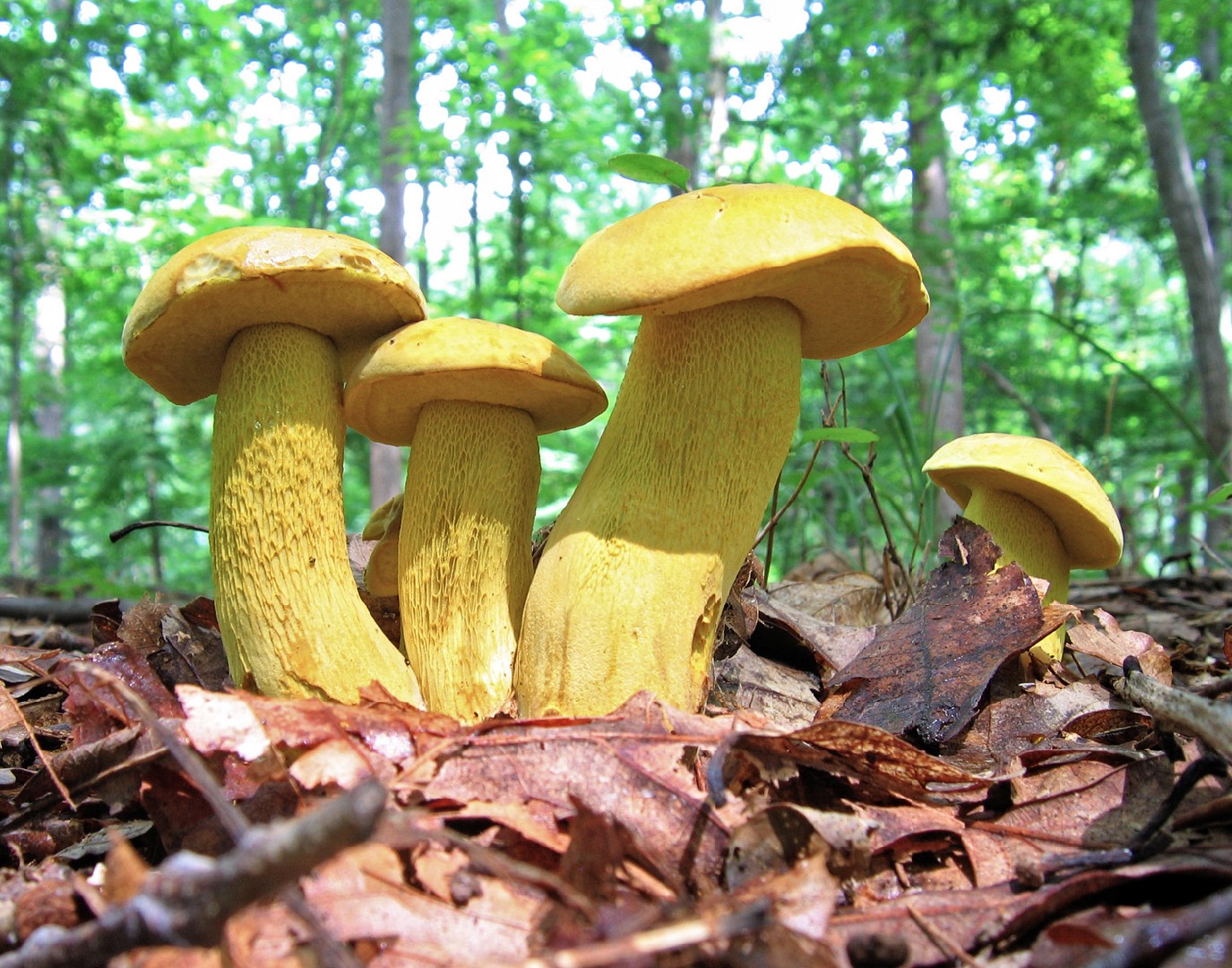
This beautiful, vivid species commonly associates with oaks and hickories. Like other members of the bolete family, the ornate-stalked bolete has a thick stalk and a bulbous cap - in this particular species, both are usually a bright yellow.
7. Old man of the woods
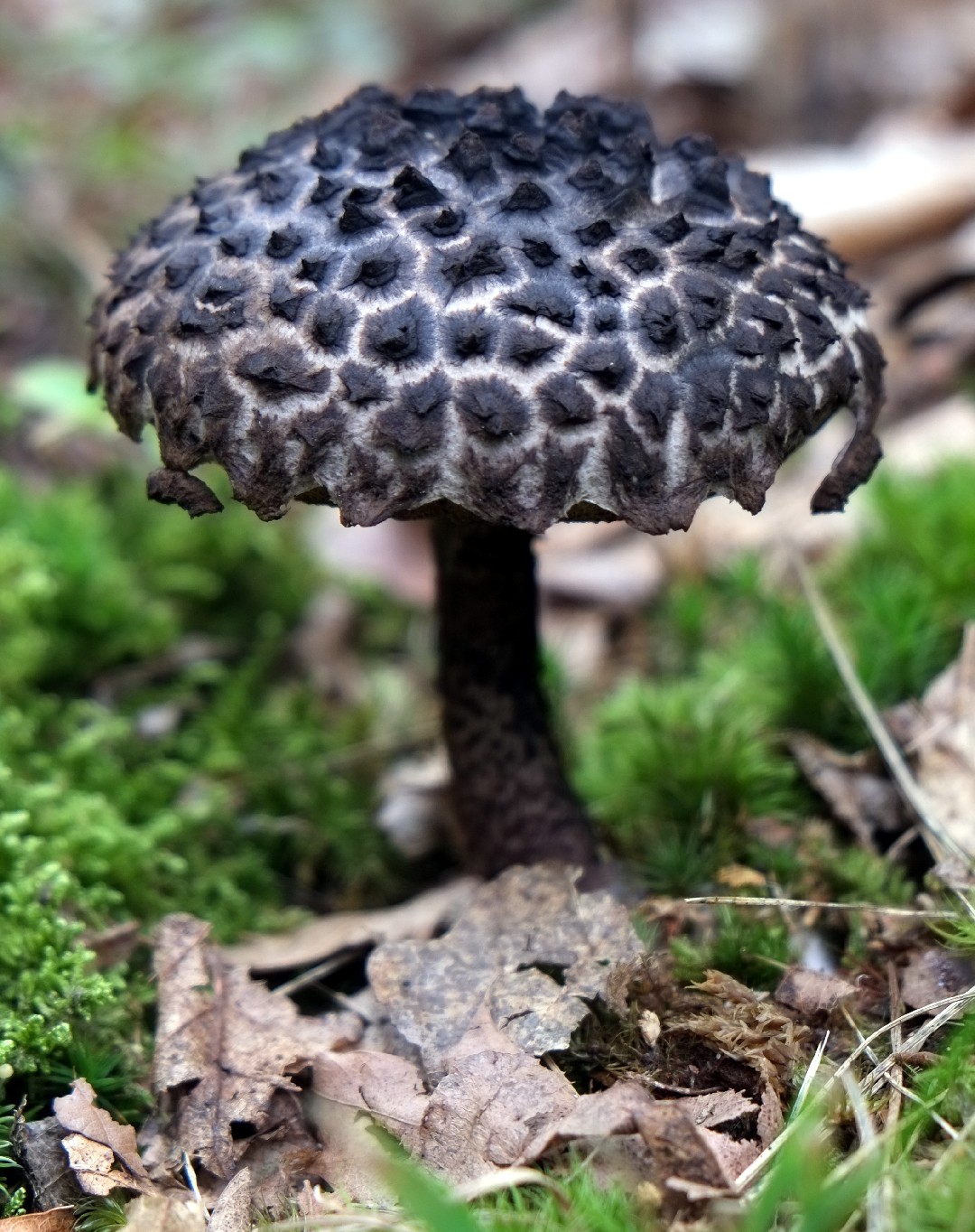
Native to Europe and North America, old man of the woods(Strobilomyces strobilaceus) is notable for its unusual coloring and texture, which visually resembles dark, overlapping scales against a white base. Interestingly, this mushroom has been depicted on a Swiss postal stamp worth fifty centimes.
8. Smooth chanterelle
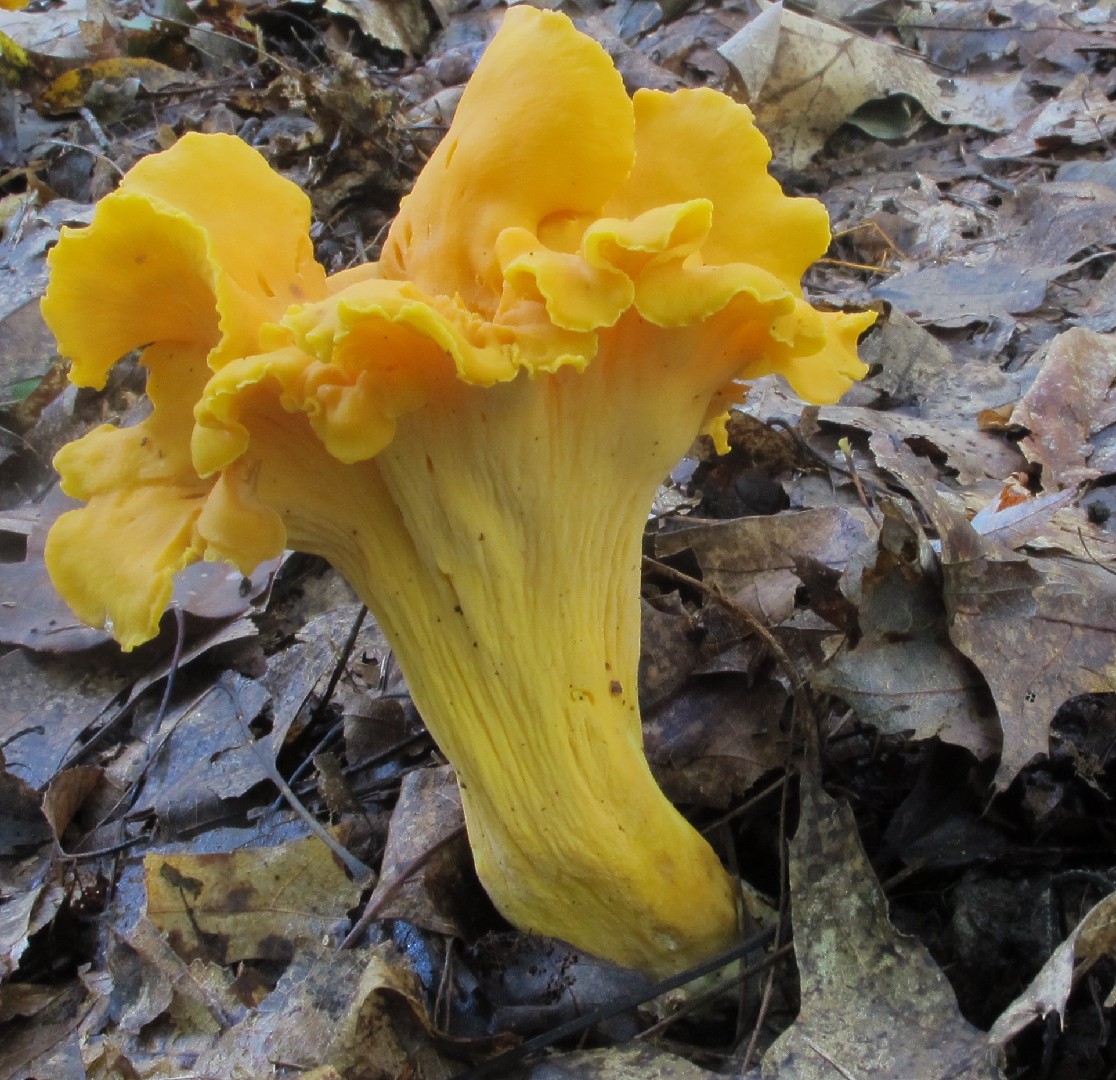
The smooth chanterelle is an orange mushroom that is said to give off an apricot-like aroma. It looks very similar to the poisonous jack-o'-lantern mushroom. This mushroom grows in association with tree roots - especially those of oaks - and forms a symbiotic relationship with the tree.
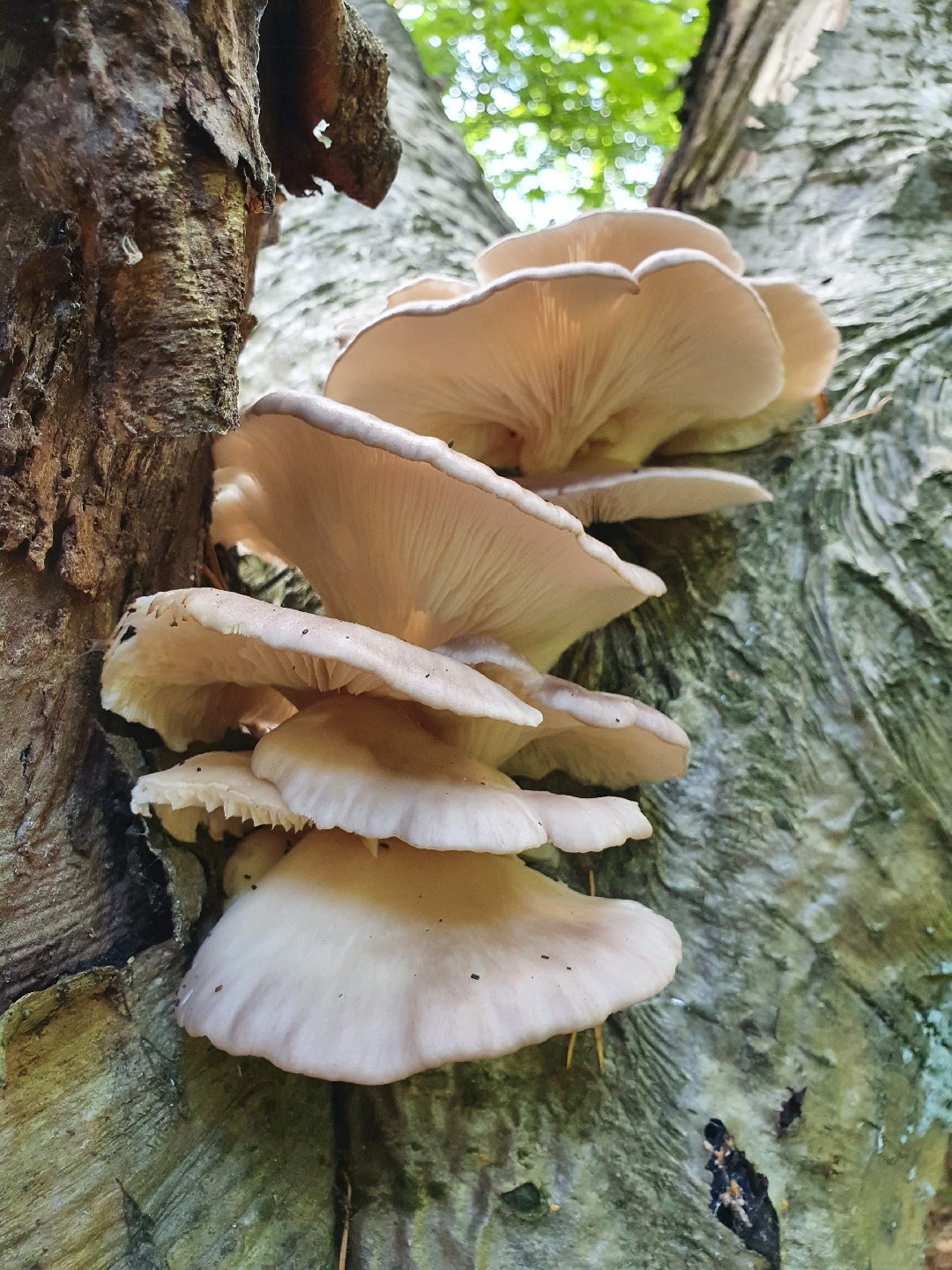
9. Oyster mushroom
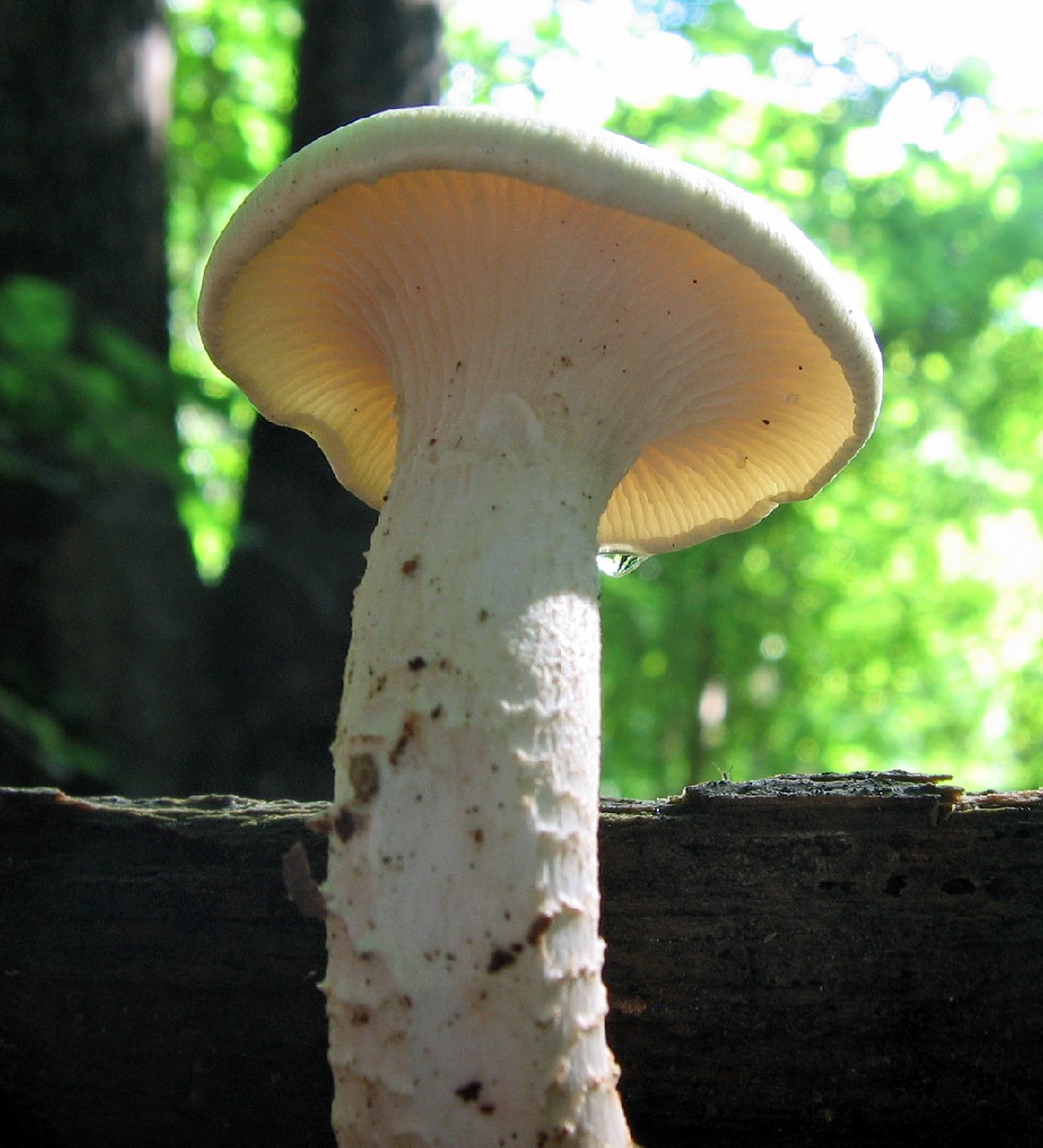
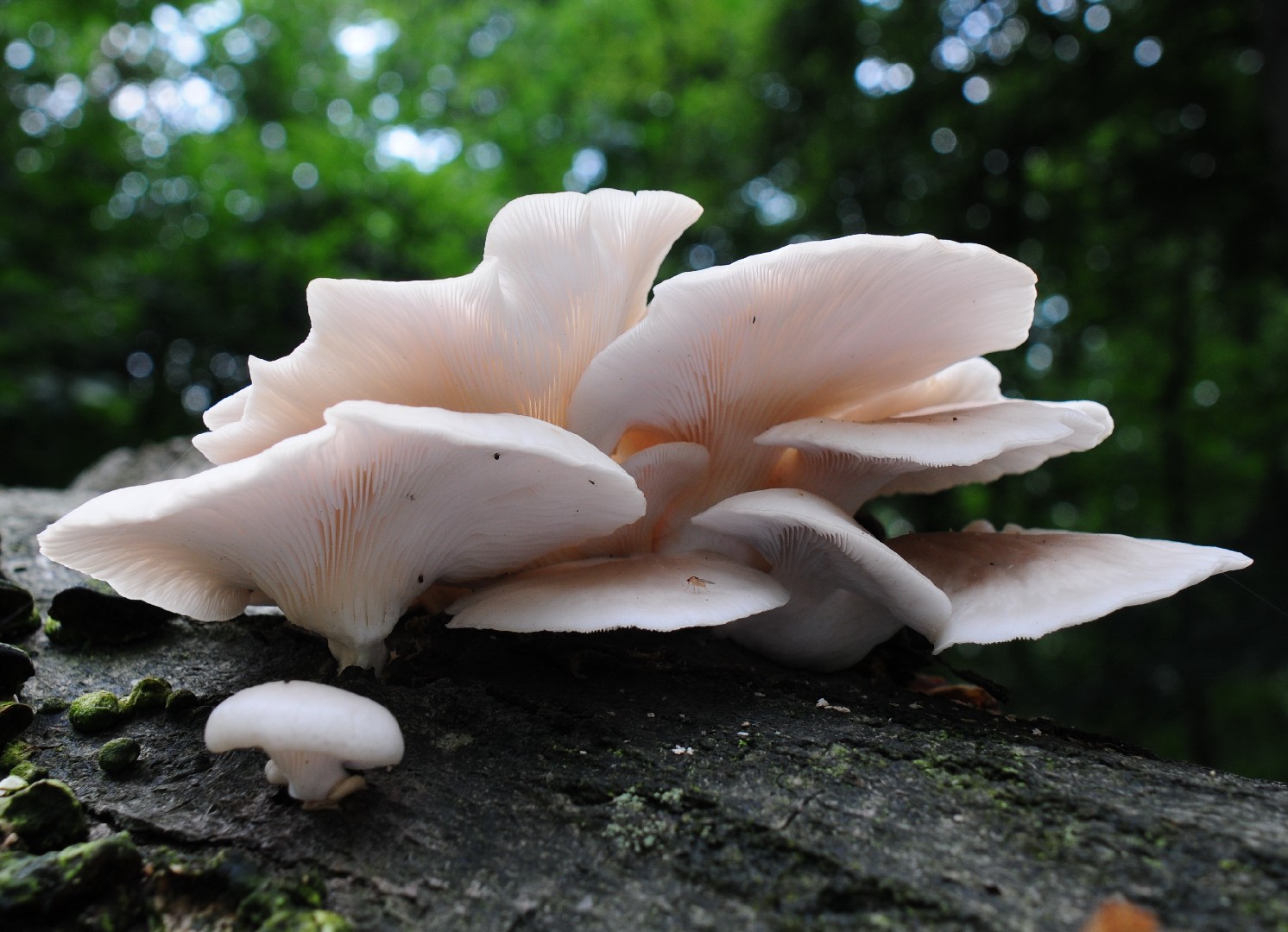
Oyster mushrooms grow wild but are also cultivated for sale in supermarkets. They can even be cultivated at home. They will grow on coffee grounds and spent grain, and are occasionally even fashioned into an environmentally-friendly substitute for styrofoam. There are several toxic look-alike species, so it is best to buy these mushrooms at the store.
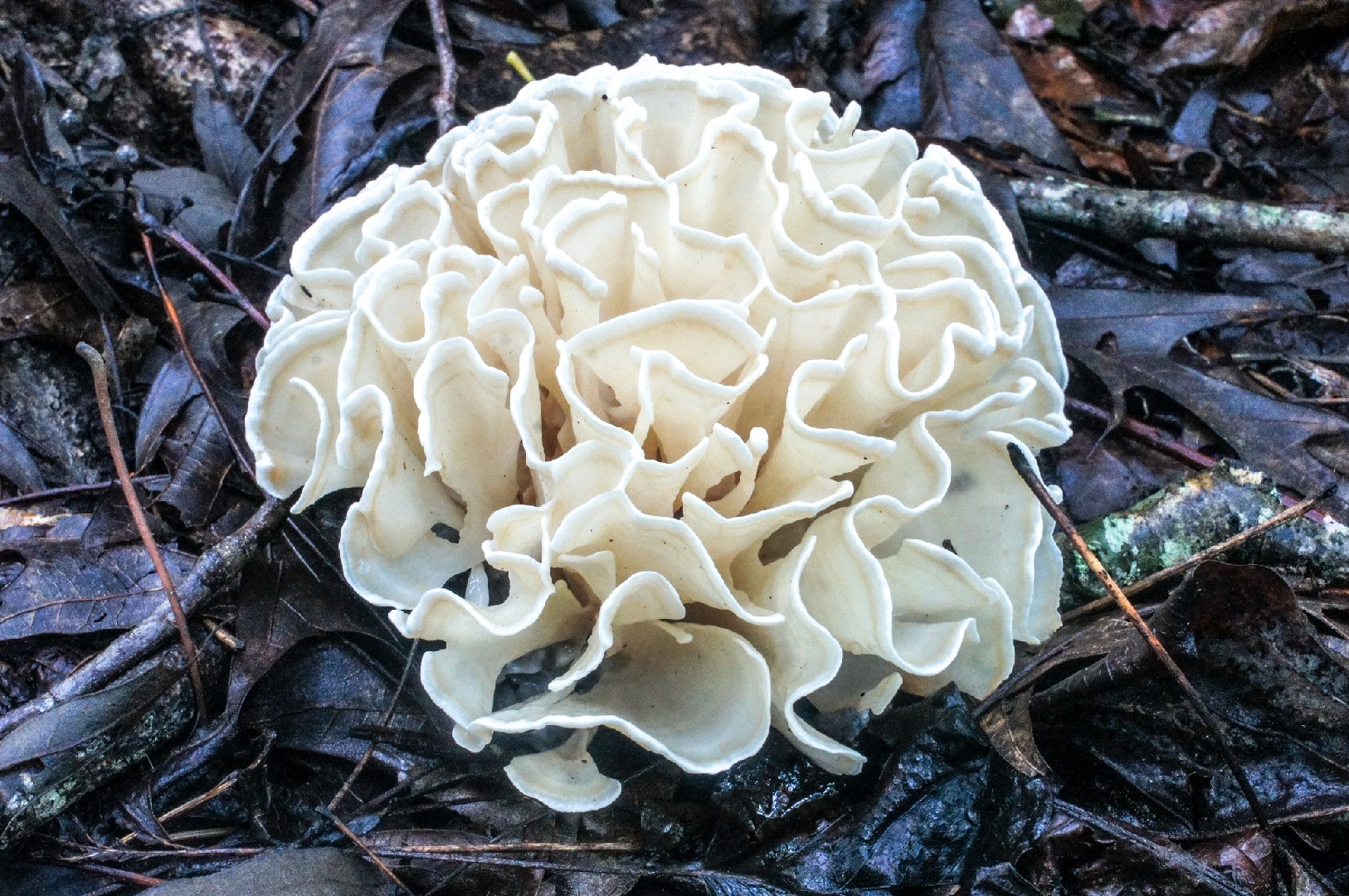
10. Eastern cauliflower mushroom
The appropriately named eastern cauliflower mushroom (Sparassis spathulata) looks strikingly like a cauliflower head but with more pronounced ridges that make up the cap. This rosette-shaped, quite large mushroom is white to tan in color and is found around older oak trees.
More







