




Top 20 Edible Mushrooms Popular in Santa Cruz
Nestled amidst enthralling topography and a unique aromatic maritime climate, Santa Cruz is a haven for diverse fungal species. In this captivating habitat grow the 20 most common edible mushrooms renowned for their striking appearances and culinary versatility. Spanning an array of flavors, these native mushrooms range from subtly sweet to piquantly earthy, growing in diverse settings from rich forest floors to damp mossy trails. Delve into a detailed exploration featuring these fungi in their colorful multitude, ripe for a gourmet adventure.
* Disclaimer: Content feedback CAN NOT be used as any basis for EATING ANY PLANTS. Some plants can be VERY POISONOUS, please purchase edible plants through regular channels.

Most Popular Edible Mushrooms
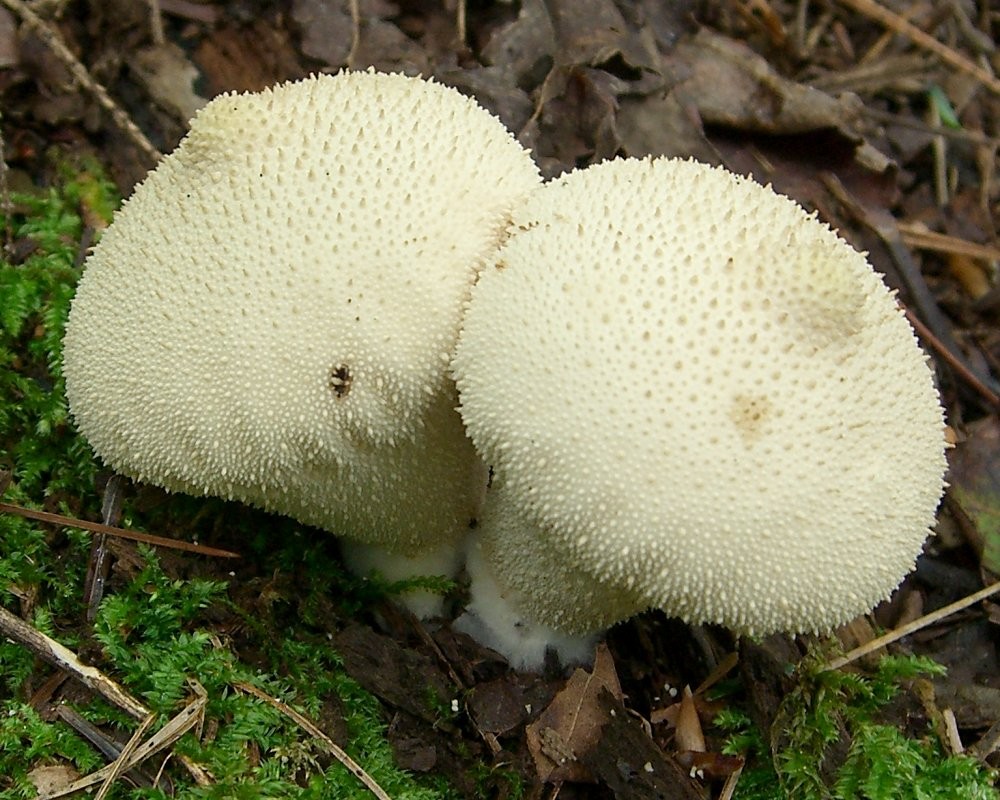
1. Common puffball
These puffy mushrooms grow in small groups on the forest floor. Once they're mature, common puffballs turn yellow and "puff out" smoke-like spore clouds when disturbed. Be very careful when identifying these mushrooms, as their young, immature form looks very similar to the lethal Deathcap.
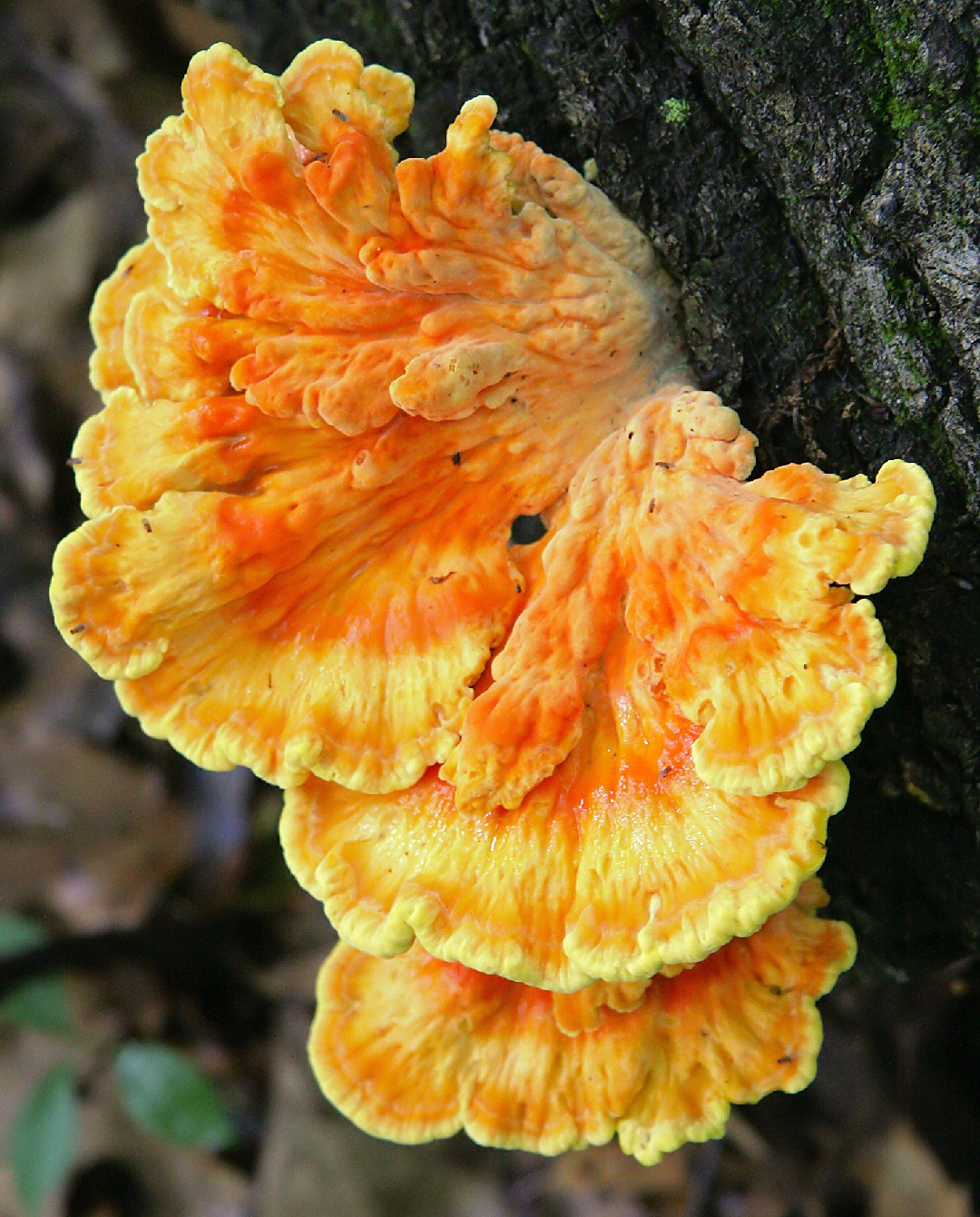
2. Chicken of the woods
Chicken of the woods is very noticeable in hardwood forests, appearing in clusters on standing tree trunks in bright orange and yellow hues that sometimes last through the entire winter. It is a parasite that causes an unfortunate brown heart rot, and is considered a particularly troublesome pest of Yew trees. If the fruitbodies can be seen, the tree is likely already beyond saving.
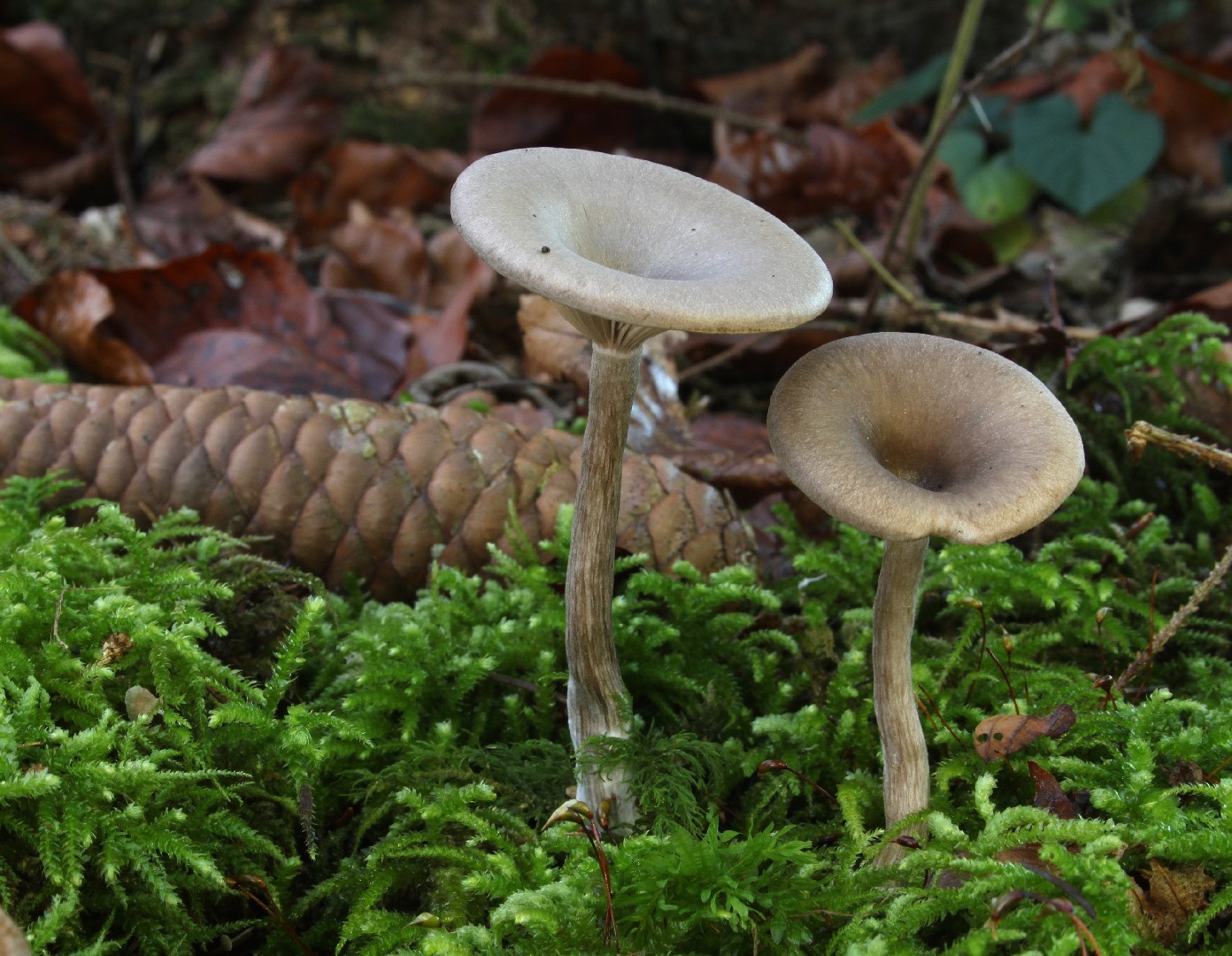
3. Goblet
This distinctively-shaped mushroom can be found pushing up tall through the detritus on forest floors all around the northern hemisphere during the late autumn. The goblet's edibility is not well known, and it looks very similar to the poisonous clitocybe rivulosa.
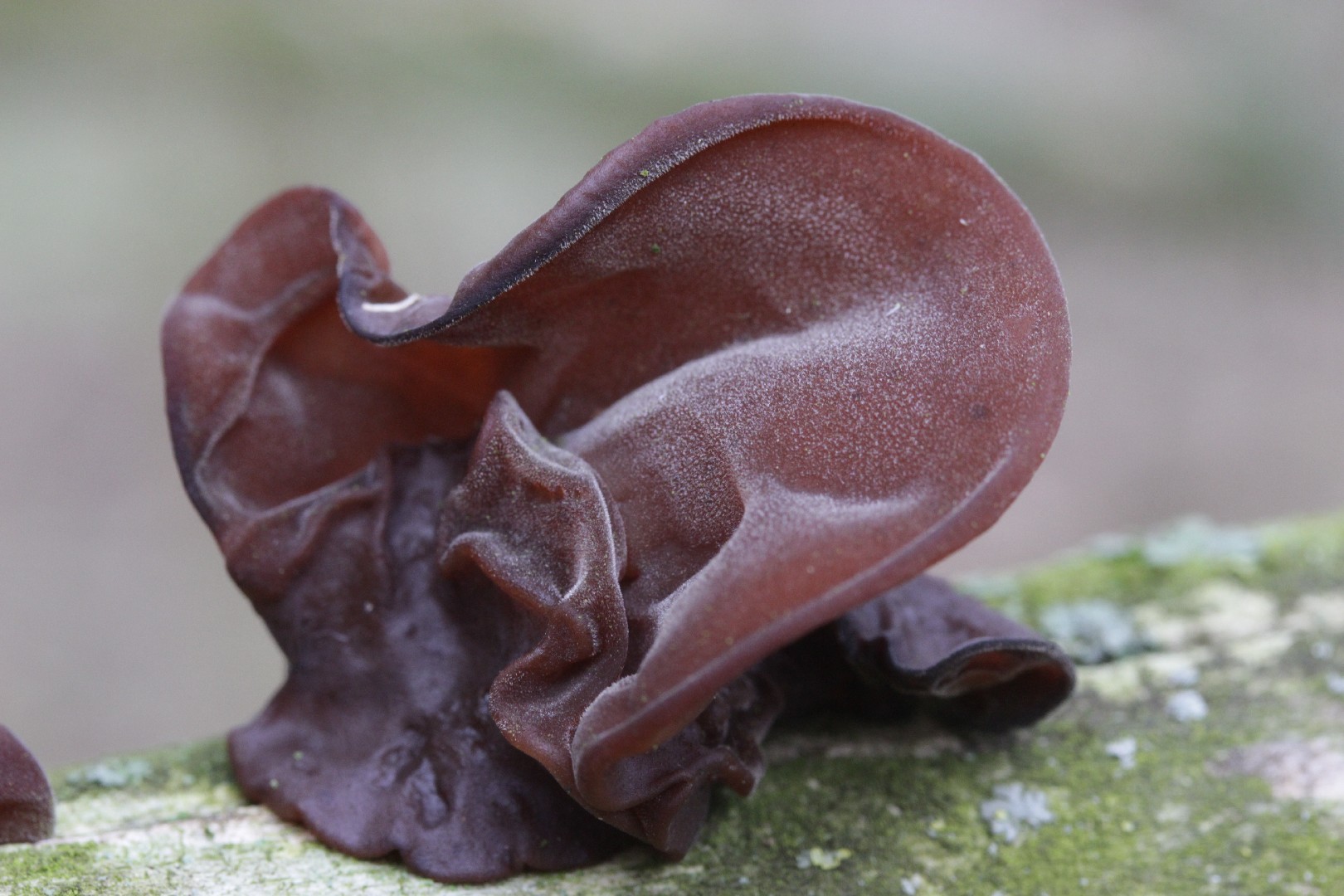
4. Jelly ear
The distinctive jelly ear grows mainly through winter and spring, mostly on the dead trunks and branches of elder trees. It occurs around the world and is often cooked into dishes in Asian countries. This ear-shaped jelly mushroom is often available in stores both fresh and dried.
5. Golden chanterelle
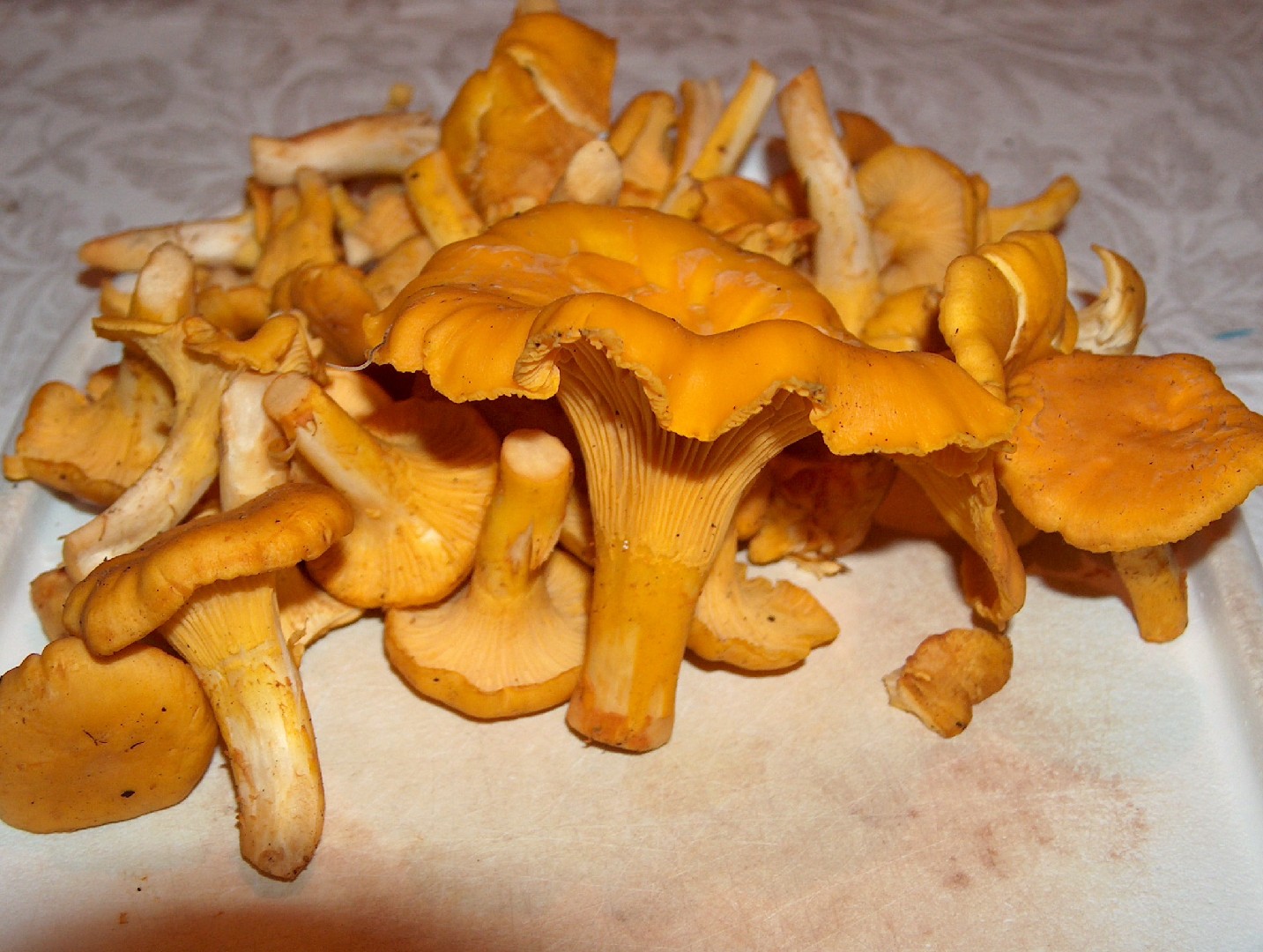
Golden chanterelle mushrooms are popular in gourmet cuisine across Europe, where they grow wild during the warm (but not too hot) months. Similar species grow in other countries. Extremely popular with foragers, the golden chanterelle emits an apricot-like scent and contains an array of nutrients that benefit the human body. Several studies suggest consuming extremely large amounts may have detrimental effects on the eyes and muscles.
6. Pirate brittlegill
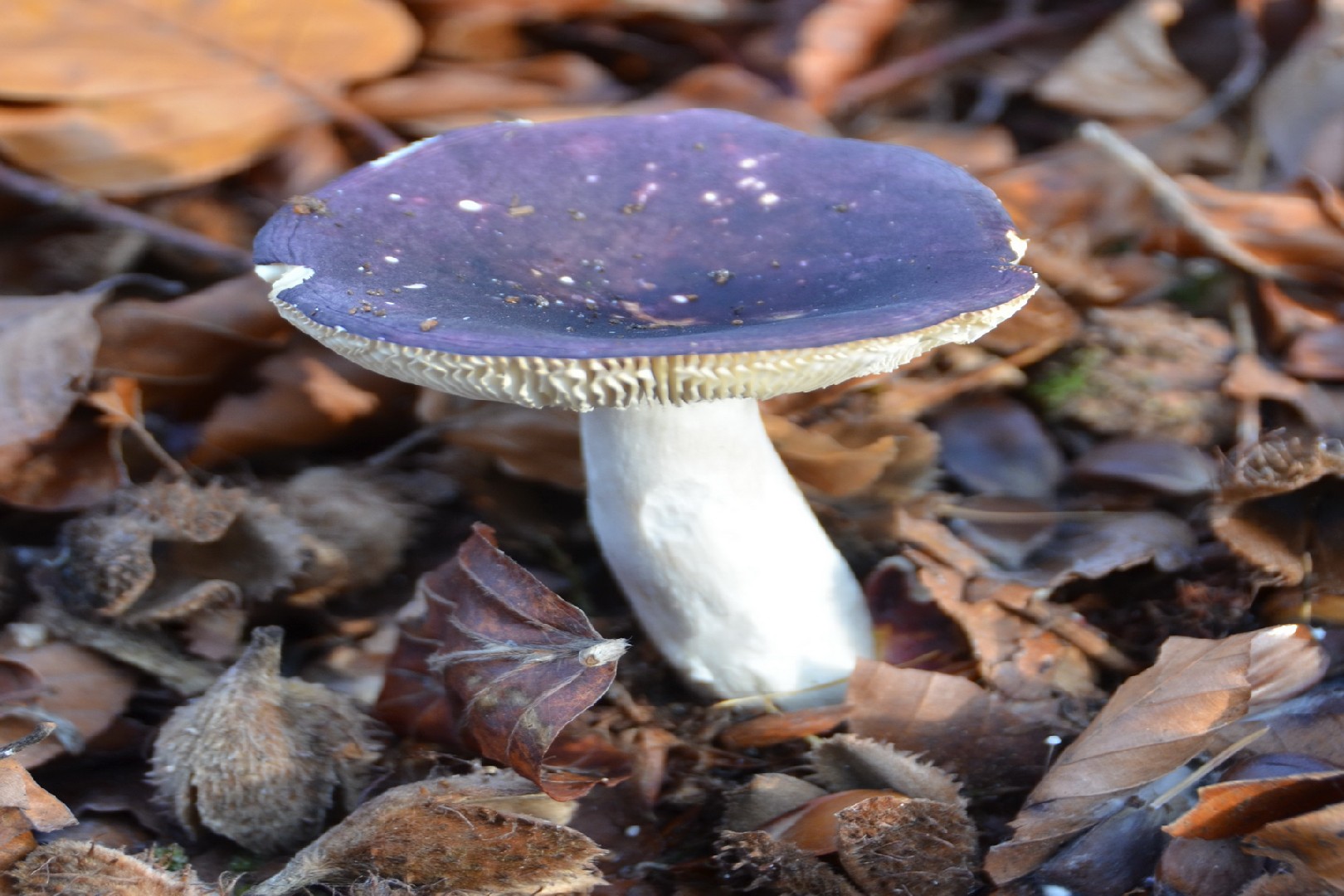
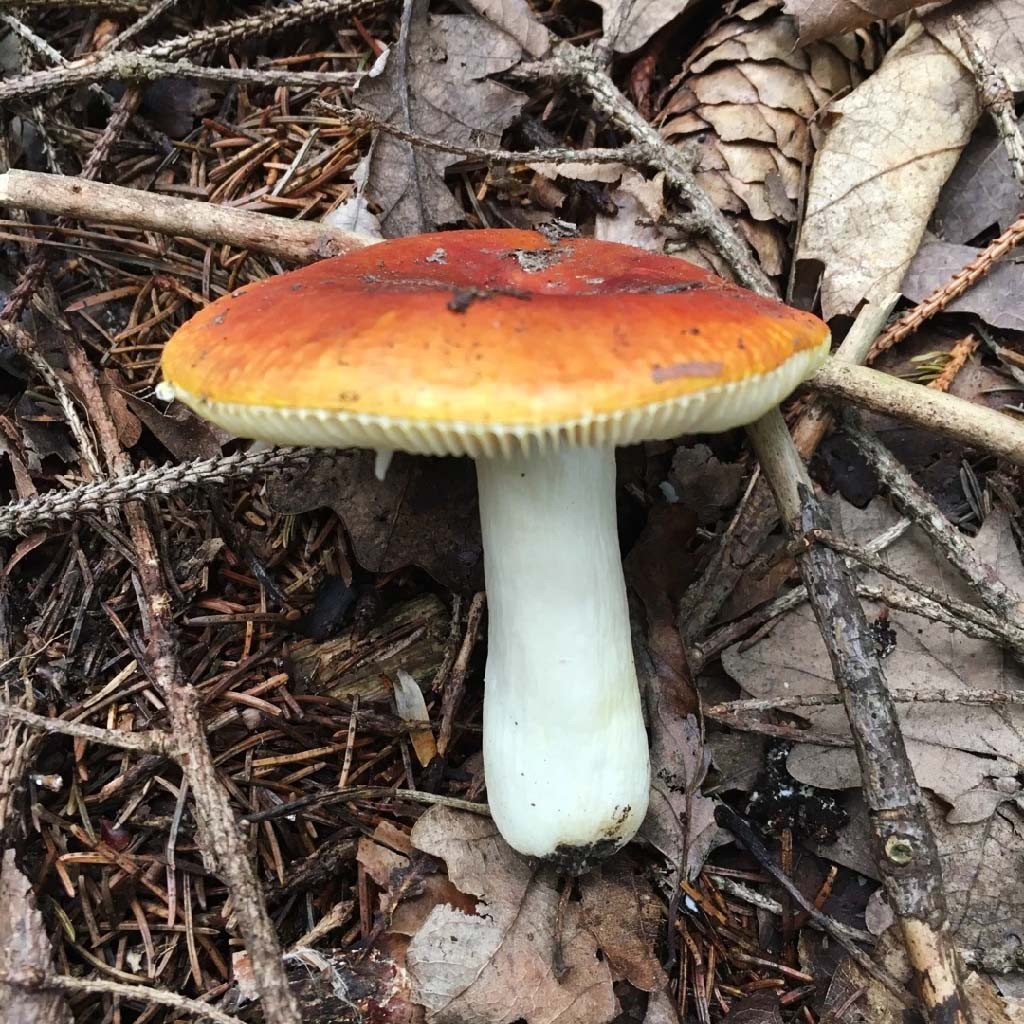
The cap is flat when young, matures to be somewhat funnel shaped, dark amethyst-violet to brownish pink. The margin is paler and noticeably matt. The cap grows up to 8 cm in diameter. The gills are cream to light ochre, rather crowded and connected at the base by cross veins. The spores are ochre. The stem is white and evenly thick. The flesh is white, and the base of the stem has a distinct smell of iodine. 
7. Common stinkhorn
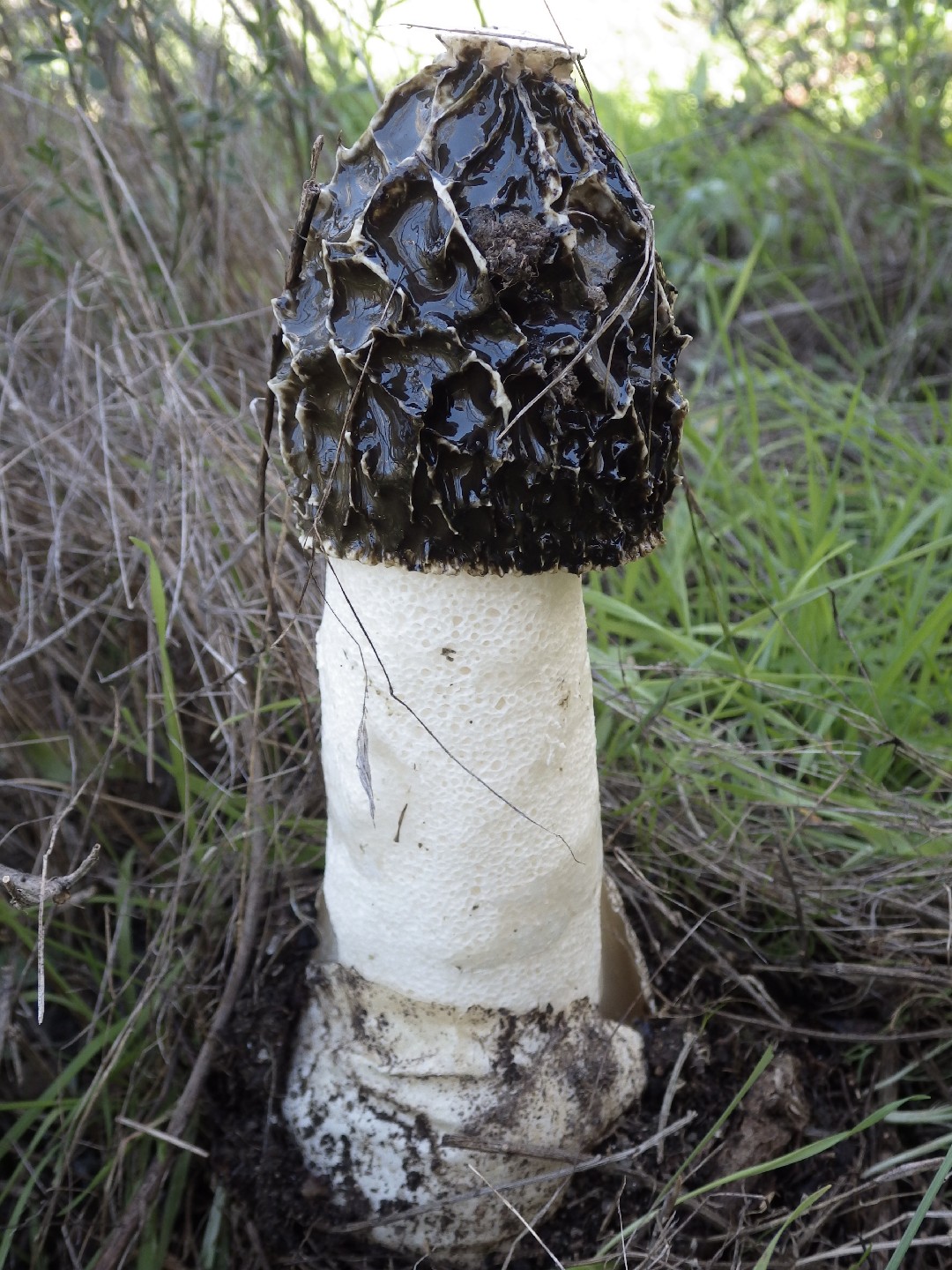
The common stinkhorn (Phallus impudicus) grows incredibly quickly, sometimes nearing 30 cm in a single afternoon. Their caps are pitted in a way which makes them reminiscent of morels. However, there's little mistaking the common stinkhorn for a morel; the former, in addition to sporting a much longer stalk, has a clear and pungent odor.
8. Bloody milk cap
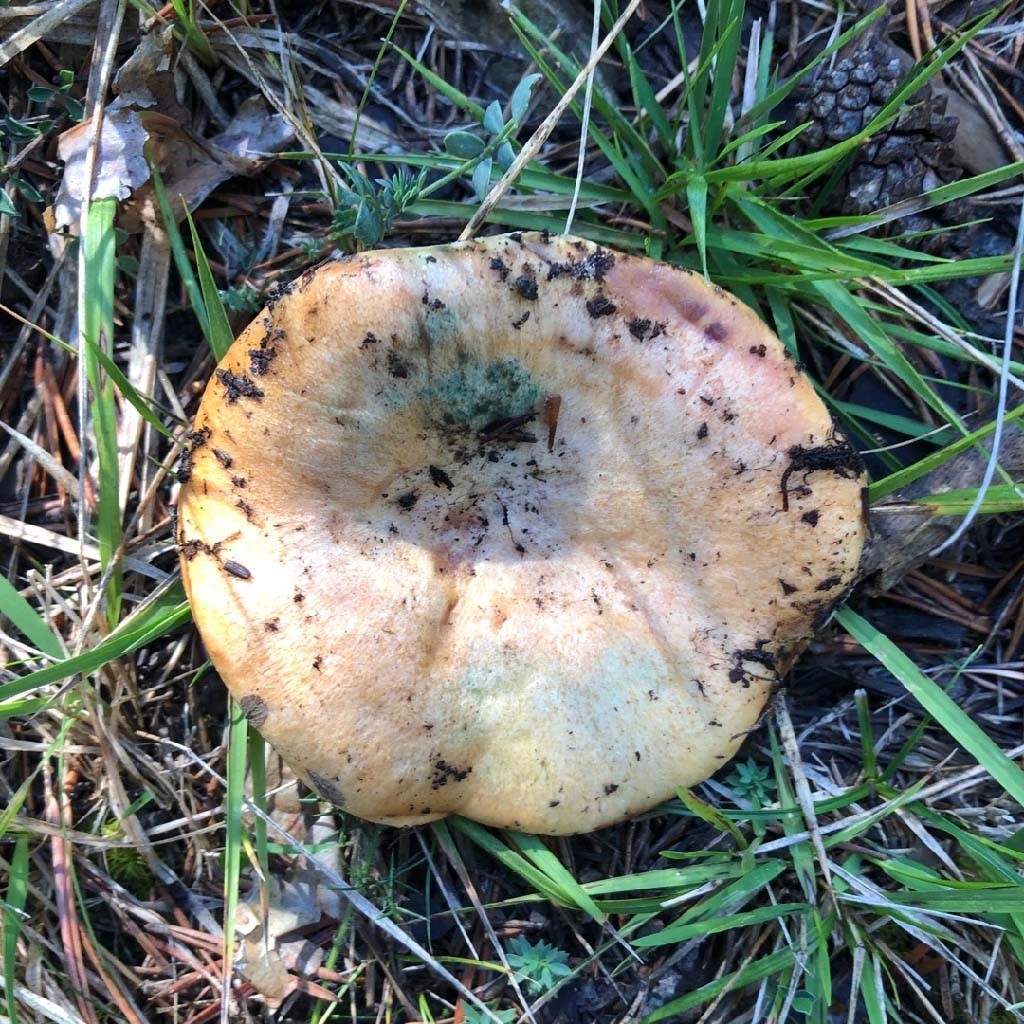
Bloody milk cap (Lactarius sanguifluus) has a distinctive appearance with its pale exterior but a deep blood-red interior, for which it is named. This mushroom can be found in pine forests where it grows in a mycorrhizal relationship with the trees. Bloody milk cap is known to accumulate large quantities of toxic heavy metals.
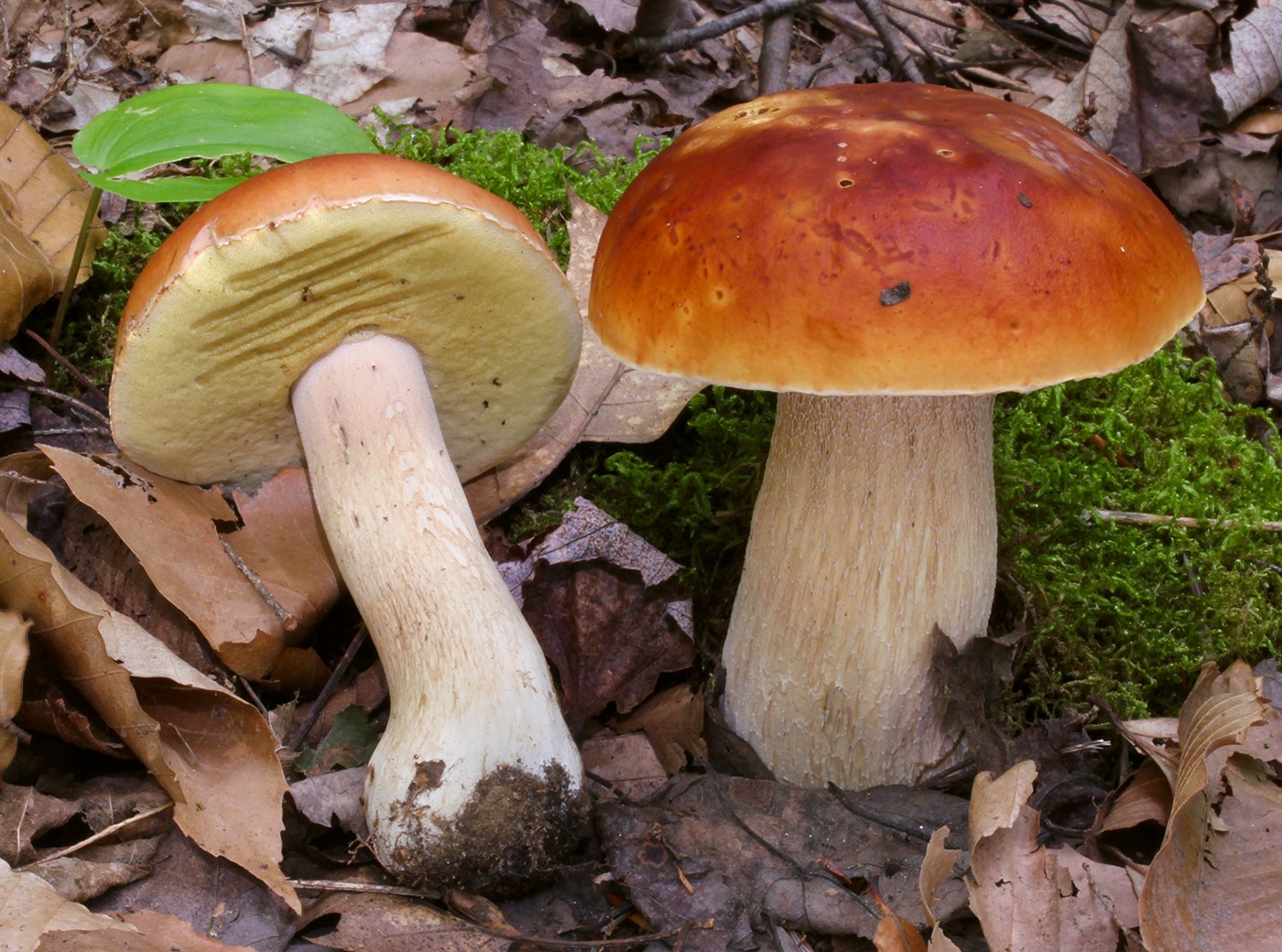
9. King bolete
Extremely popular in many cuisines, this edible wild mushroom grows around the world near the roots of forest trees. In some regions, king bolete mushrooms are collected in great enough volumes that their sale can support entire families during the harvest season. King boletes are reported to be high in fiber, vitamins B and C, calcium, potassium, magnesium, zinc, and several antioxidants.
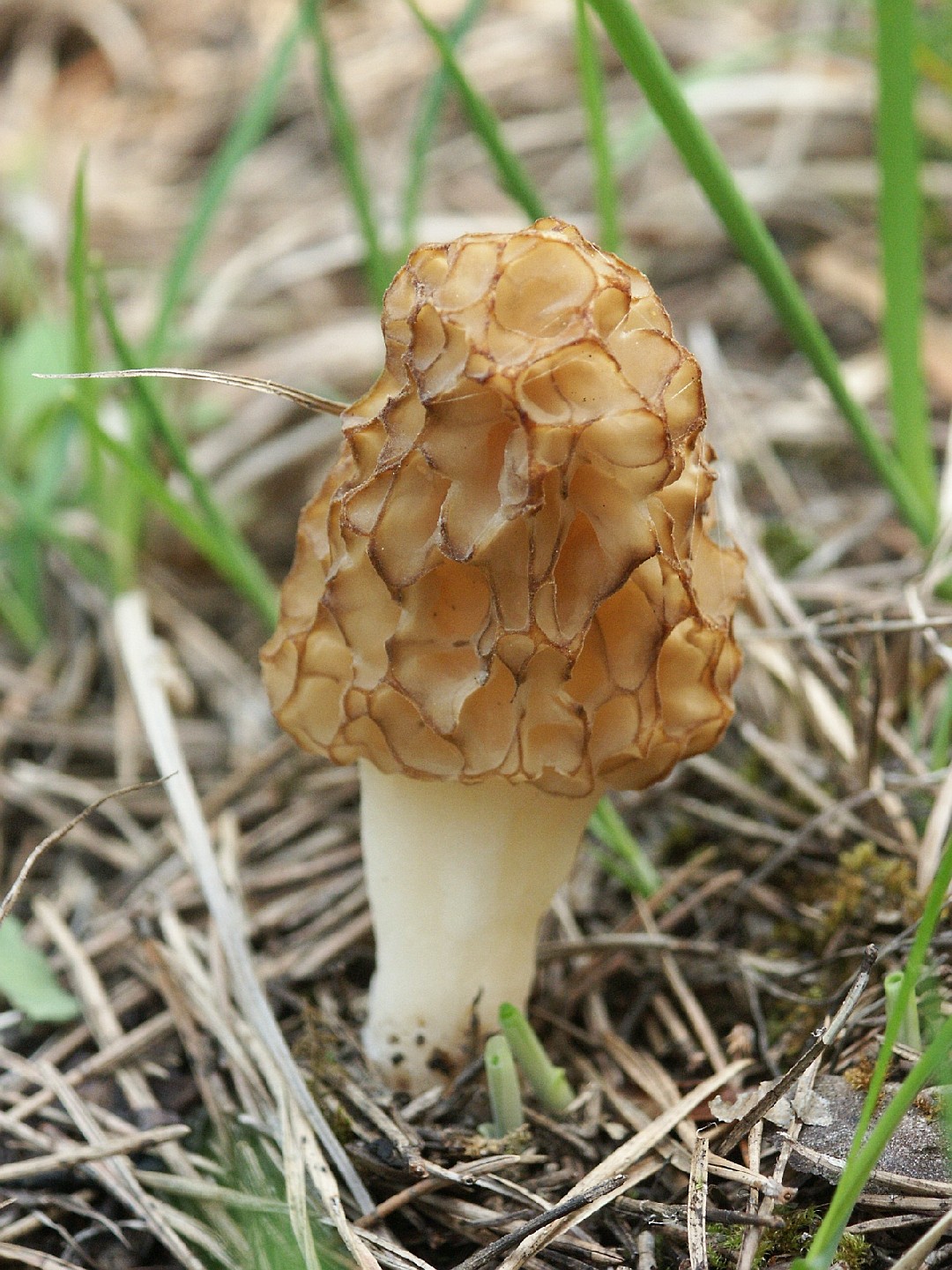
10. Yellow morel
The yellow morel (Morchella esculenta) is one of the most iconic and sought-after species of edible mushrooms. It is often one of the first species that novice mushroom gatherers will hunt for. Yellow morels have elongated caps that are "honeycombed", being filled with roughly polygonal holes. Splitting them down the middle reveals them to be hollow on the inside, a key feature that distinguishes them from toxic false morels. Experts recommend cooking or boiling this mushroom before consumption, as raw morels may cause an upset stomach.

More







