




Top 20 Edible Mushrooms Popular in Iceland
Discover the vibrant world of Icelandic mycology in our comprehensive guide on the Top 20 most common edible mushrooms. Delve into the distinctive characteristics of Iceland's backdrop, a haven for a rich diversity of mushrooms with its fertile soil, ample rainfall, and pristine wilderness. Get to know their unique features such as appearance, flavors, preferred habitats, and various culinary utilization. Different palates prefer these distinct fungi due to Iceland's indigenous mycological flora and age-old culinary habits, a testament to their gastronomic appeal. Enjoy the uniquely interactive opportunity to explore and appreciate Iceland's impressive fungi diversity.
* Disclaimer: Content feedback CAN NOT be used as any basis for EATING ANY PLANTS. Some plants can be VERY POISONOUS, please purchase edible plants through regular channels.

Most Popular Edible Mushrooms
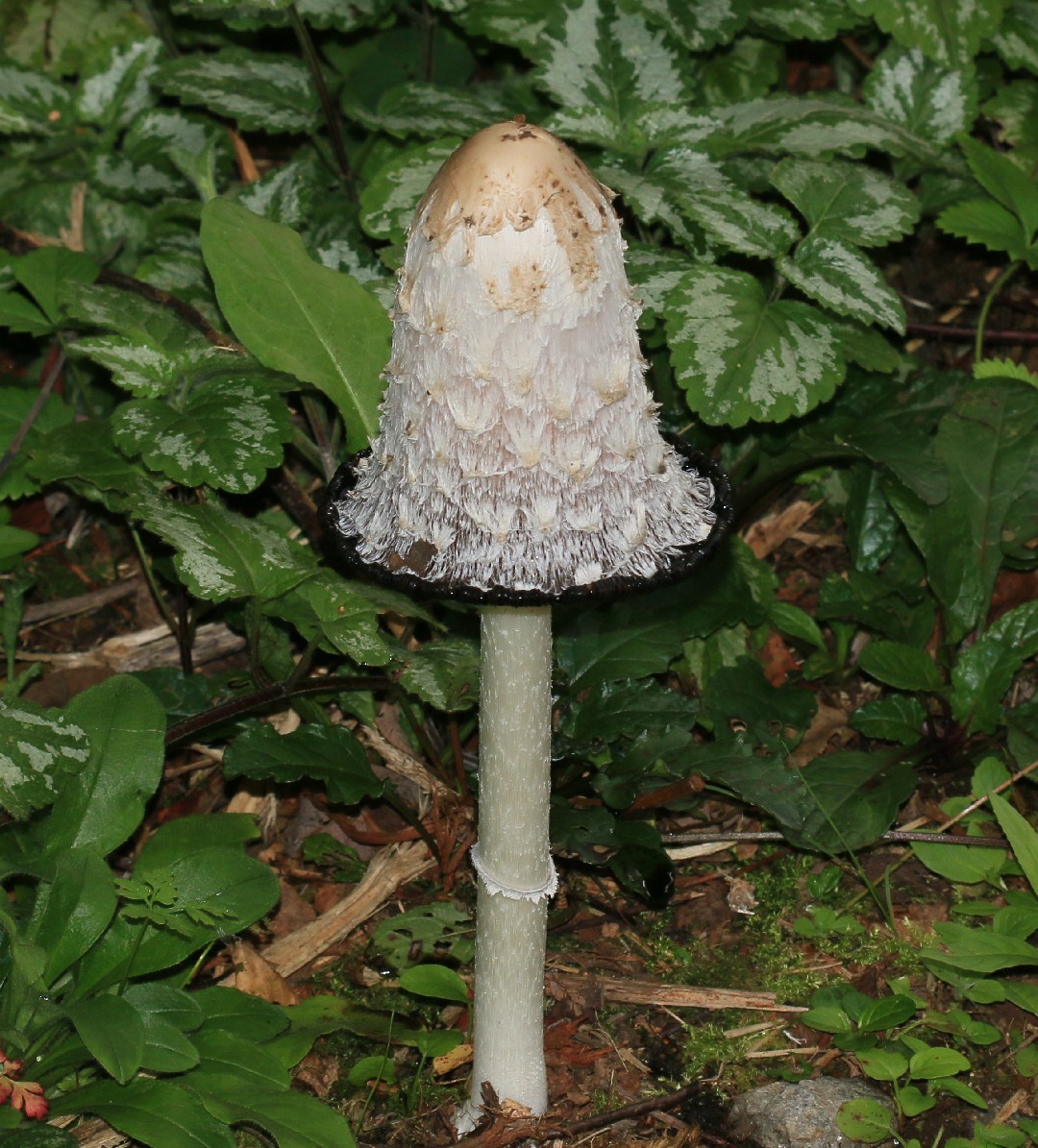
1. Shaggy mane
The shaggy mane mushroom is commonly found in North American and European grasslands. Some peoples foraged for its young egg-shaped caps, but it has more recently been found to be a bioaccumulator of heavy metals, meaning it pulls toxic metals up from the soil where it grows. As a result, shaggy manes should not be eaten. The mushrooms usually appear in clusters or “fairy rings.”
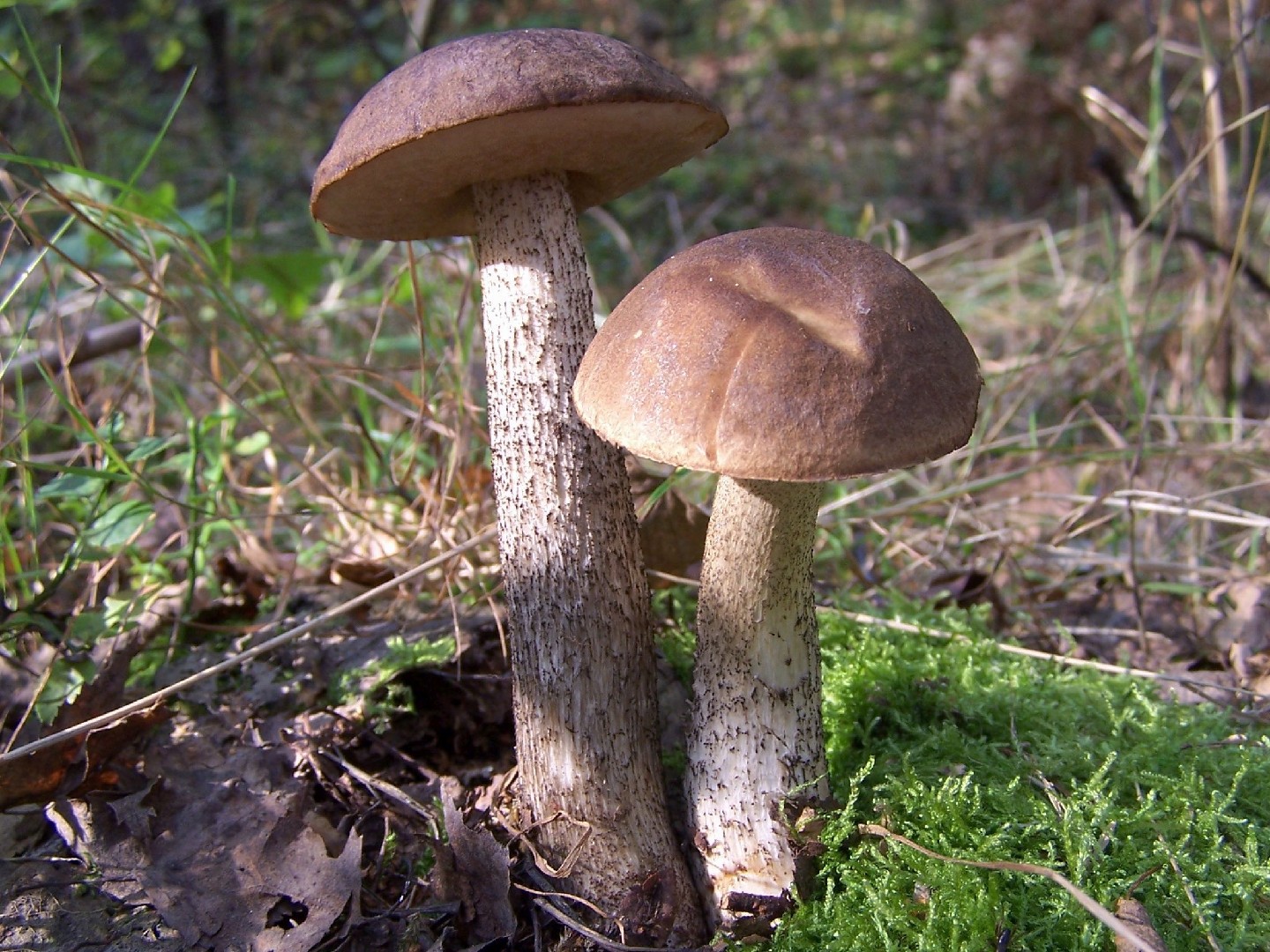
2. Brown birch-bolete
The brown birch-bolete is common around the northern hemisphere. It grows beneath birch trees and is usually easy to identify by its brown cap and scaly stem, the latter of which is referenced in its scientific name Leccinum scabrum. Occasionally, however, it can be found sporting a white cap.
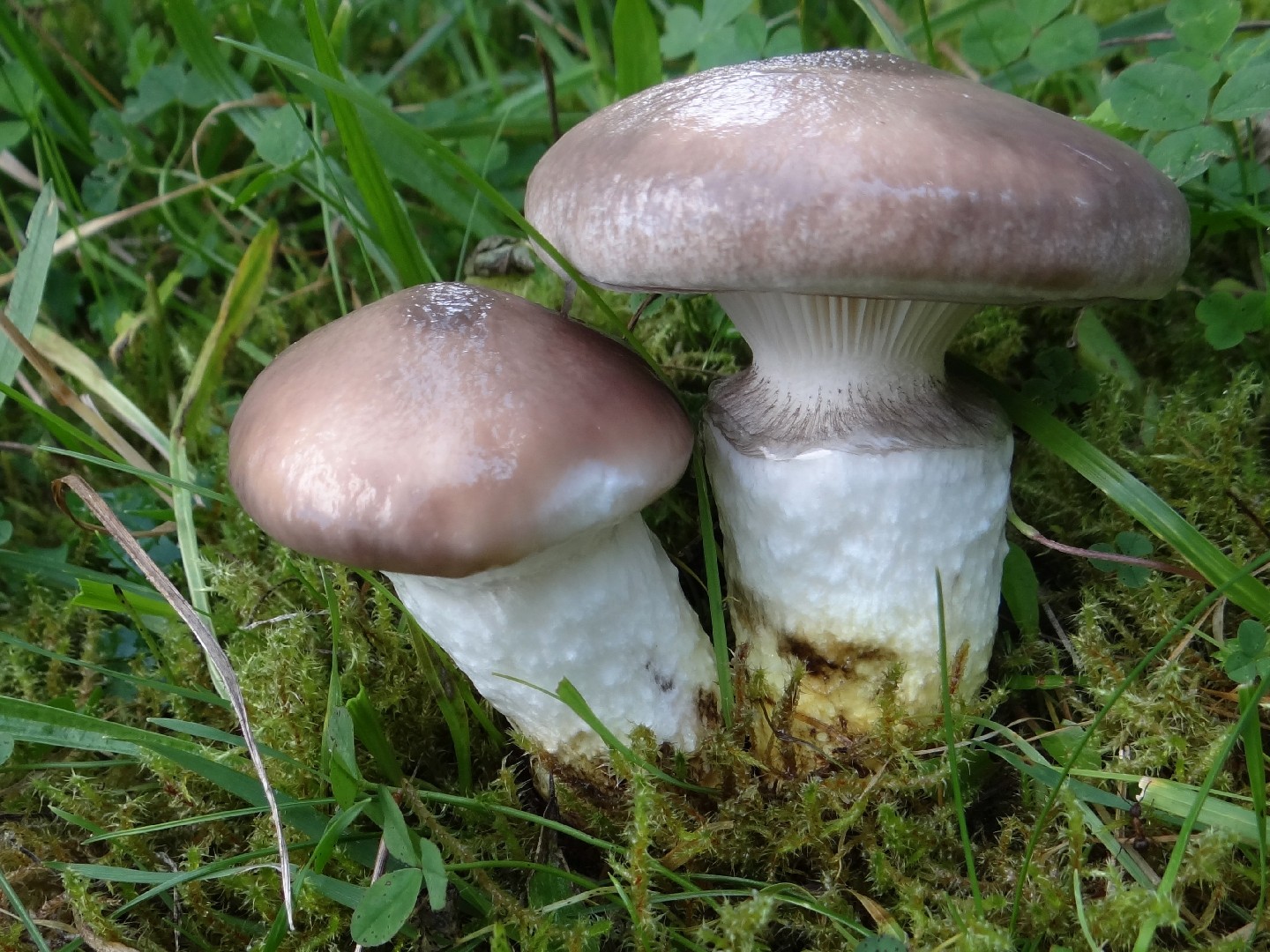
3. Slimy spike
A stocky, almost imposing mushroom, the slimy spike (Gomphidius glutinosus) has a round bulbous cap and a very thick stalk. This species is one of the more unusual members of the bolete order (Boletales) because it has gills, rather than a spongey pore surface. The "slimy" in this species' common name is well-earned - individuals are almost always coated in a shiny layer of slime.
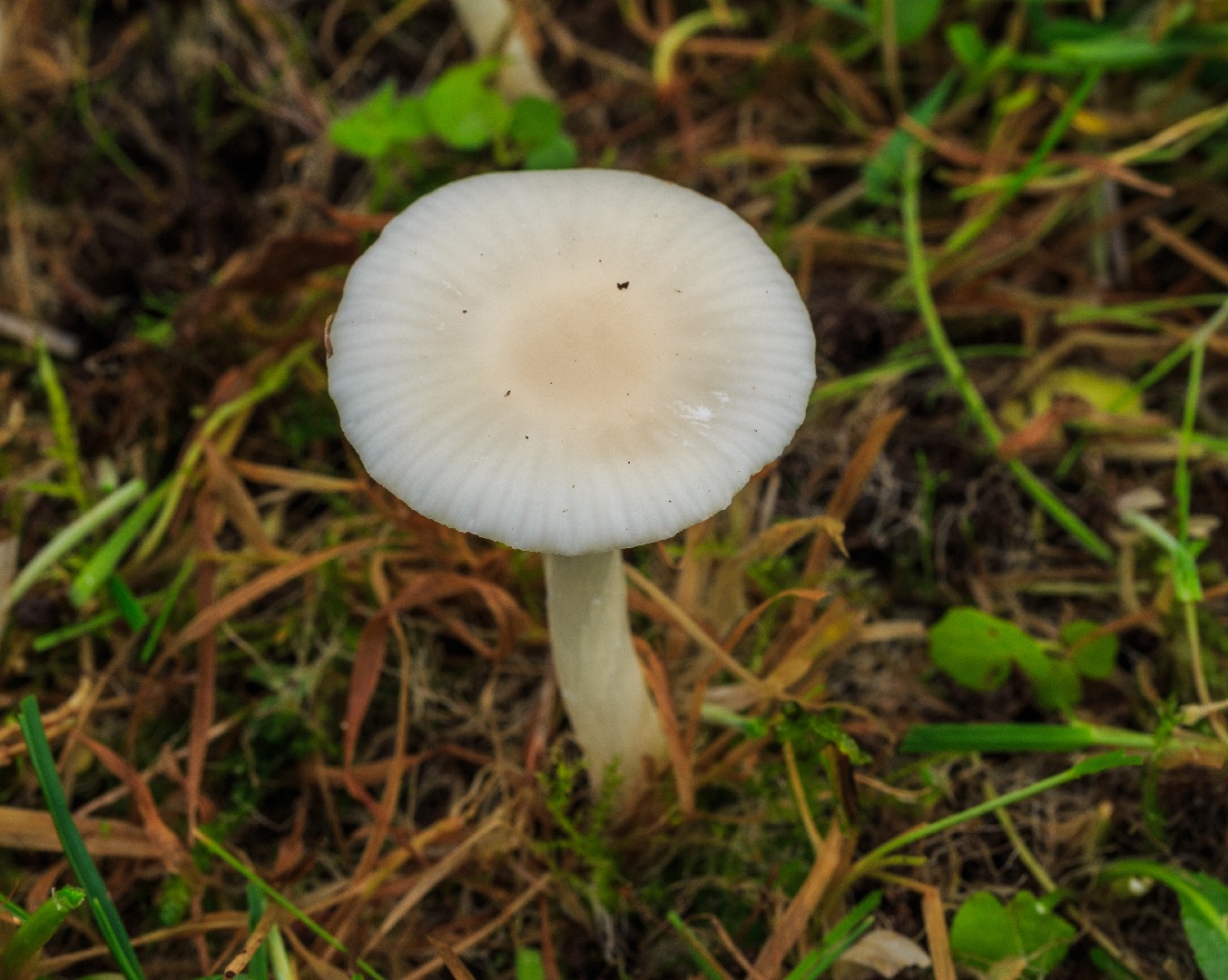
4. Snowy waxcap
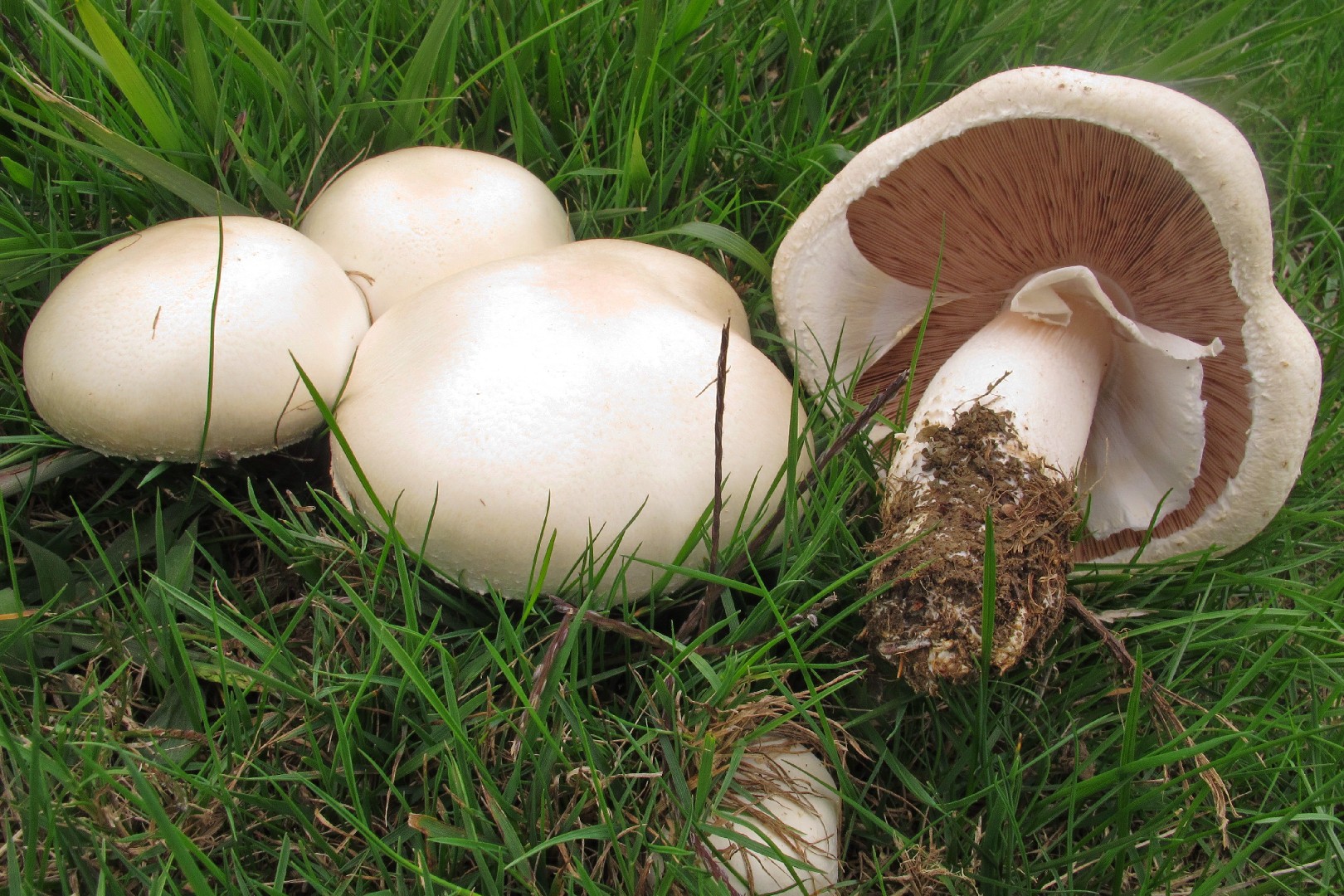
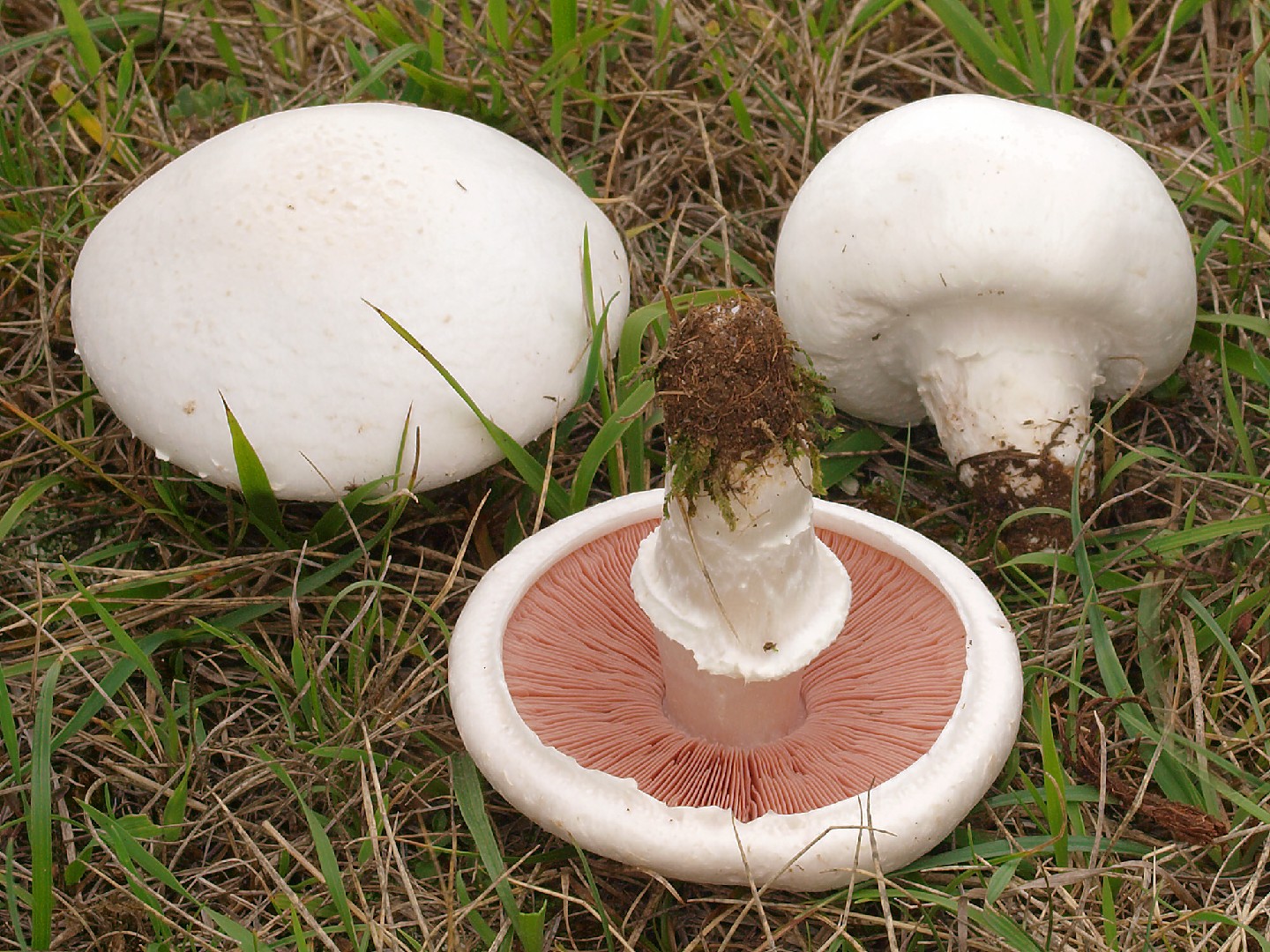
The snowy waxcap is so-named because its stalk, cap, and gills are often uniformly white; however, tinges of tan or peach may occur with age, especially on the center of the cap. The species can be found in temperate grasslands and woodlands across the northern hemisphere, and in some parts of Australia.
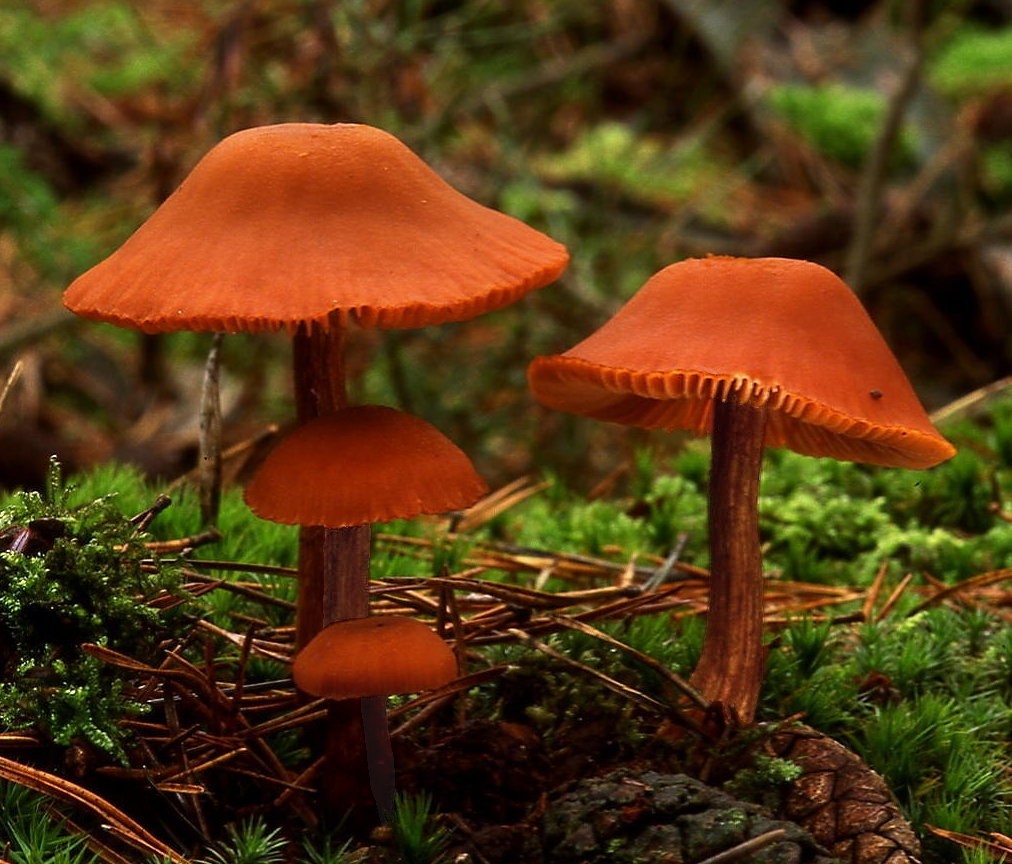
5. Common laccaria
Common laccaria may sound like a malevolent name for a mushroom, but fret not! This species is so-called because its appearance is highly variable, with individual caps taking on a whole host of colors, from whitish to pinkish to dark brown.
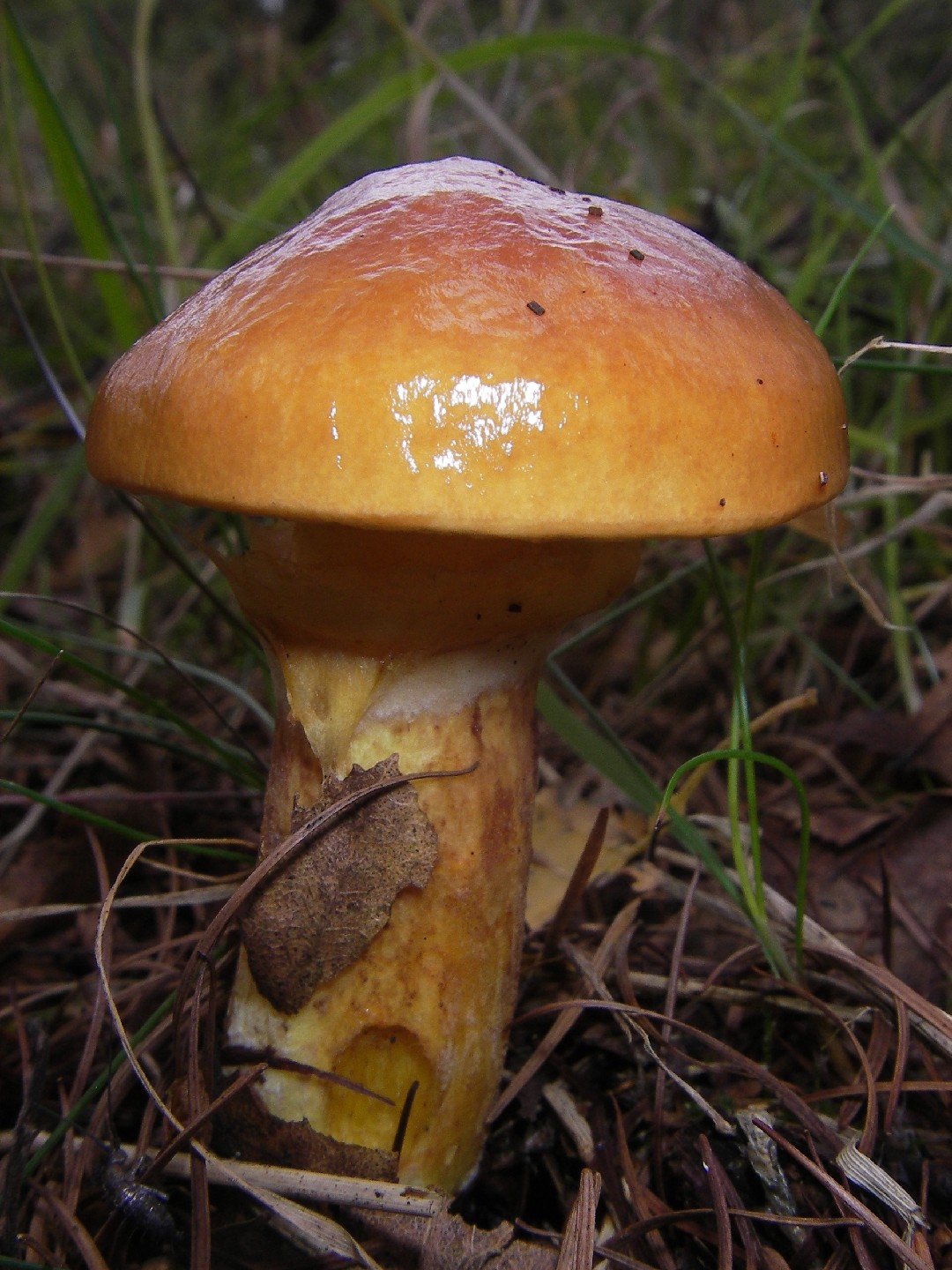
6. Larch bolete
Larch bolete is a vibrant member of the "slippery jack" genus. Like other members of that family, this species sports a slick or slimy cap and has a somewhat bulbous form. Suillus grevillei is also commonly called a "Larch Bolete" because it only associates with larch trees, with which it has a symbiotic relationship.
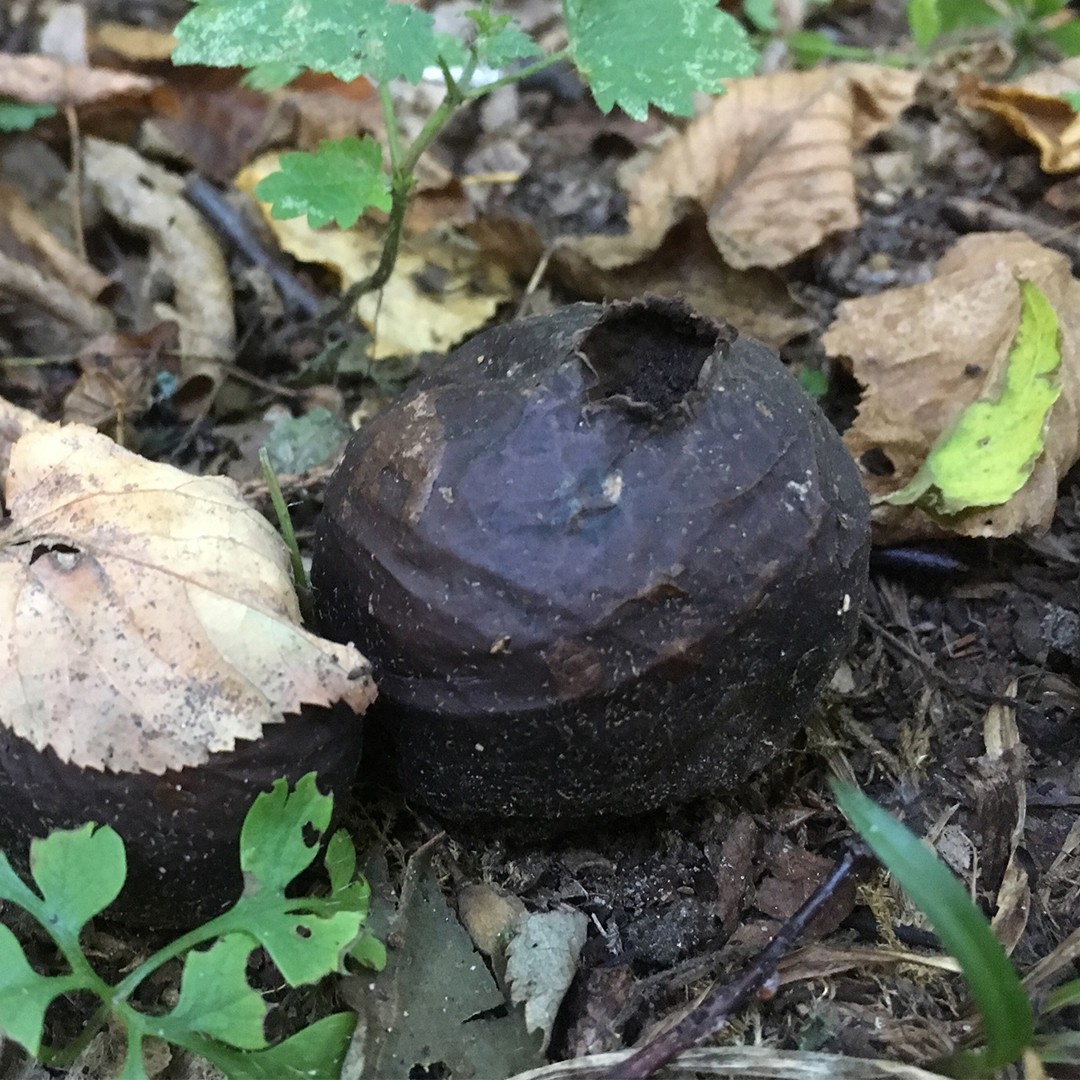
7. Dusty puffball
The fruit body of Bovista nigrescens is 3–6 cm across. The roughly spherical fruit body is slightly pointed at the bottom. Although it lacks a sterile base, the fruit body is attached to the substrate by a single mycelial cord which often breaks, leaving the fruit body free to roll about in the wind. The outer wall is white at first, but soon flakes off in large scales at maturity to expose the dark purple-brown to blackish inner wall that encloses the spore mass. These spores leave via an apical pore, which is caused by extensive splitting and cracking. The gleba is often dark purple-brown. The capillitium is highly branched with brown dendroid elements. Spores are brown and ovoid, with a diameter of 4.5–6 µm. They are thick-walled, and nearly smooth, with a central oil droplet, and a long, warted pedicel. 
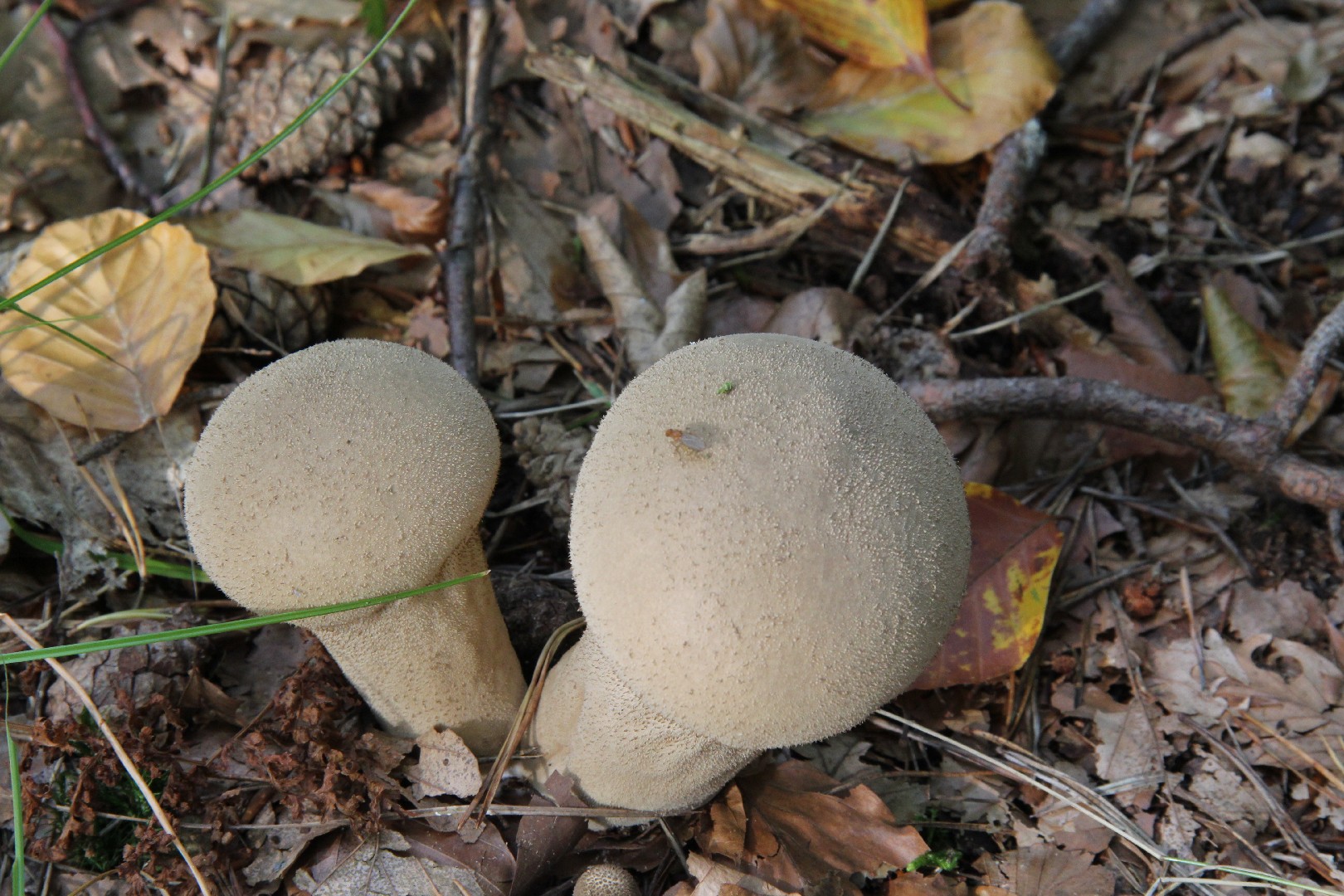
8. Pestle puffball
When compressed, the fruiting body of the pestle puffball releases its powdery, green-brown spores in a burst. These spores are seriously harmful to humans - inhaling the spores of a mature puffball can lead to a respiratory disease called lycoperdonosis. The stem part can survive winter and tends to pop out when the snow starts to melt.
9. Giant puffball
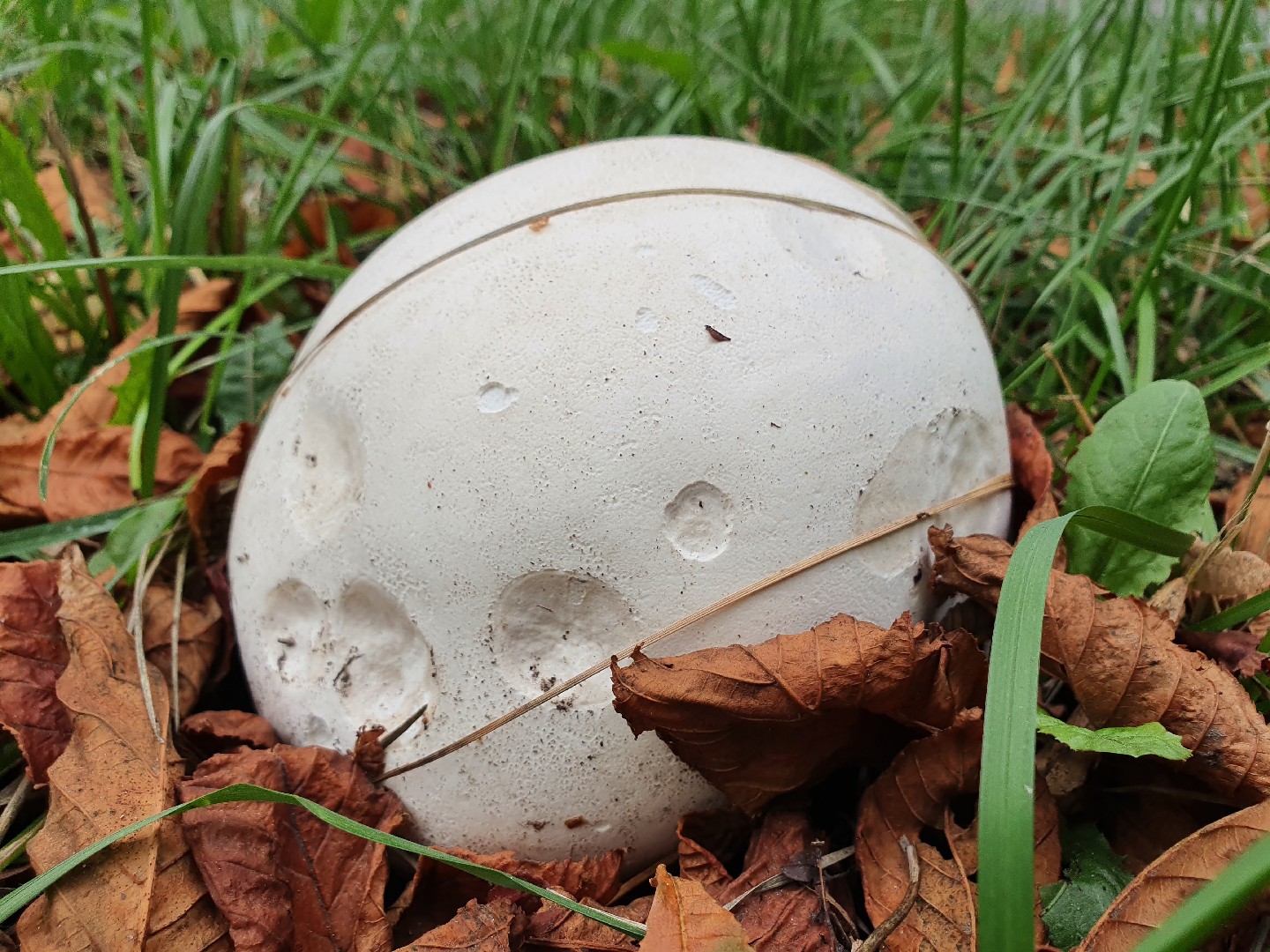
These distinctive round, white fungi appear around the world in fields and at the edges of wooded areas. Living up to its name, a single giant puffball can grow as large as a watermelon. They have no stems, and produce trillions of spores that release into the air through holes in “puffs.” They have been used as slow-burning tinder and produce copious smoke when set aflame. Giant puffballs are technically edible, but should only be consumed when the mushroom is young and firm.
10. Green-cracking russula
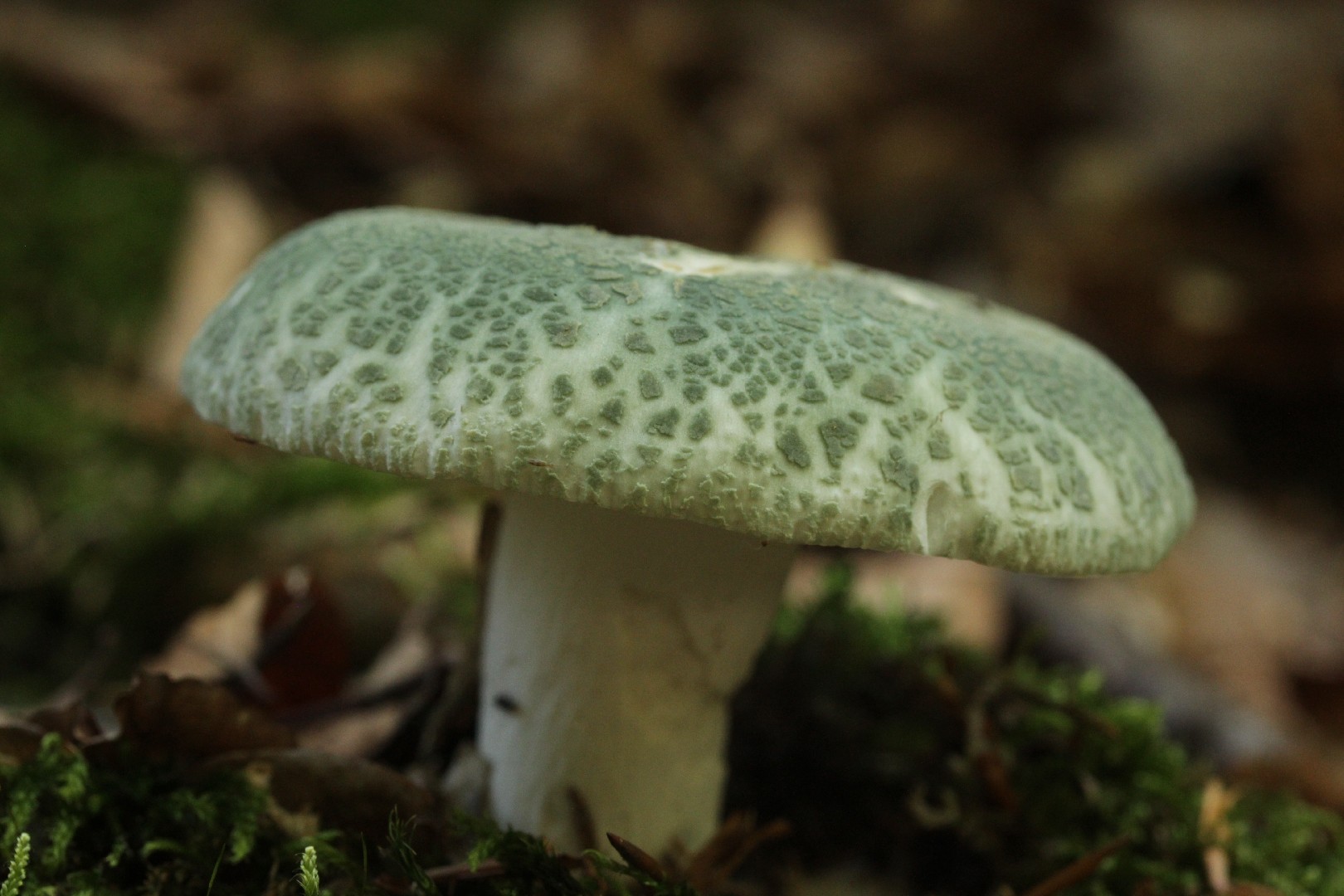
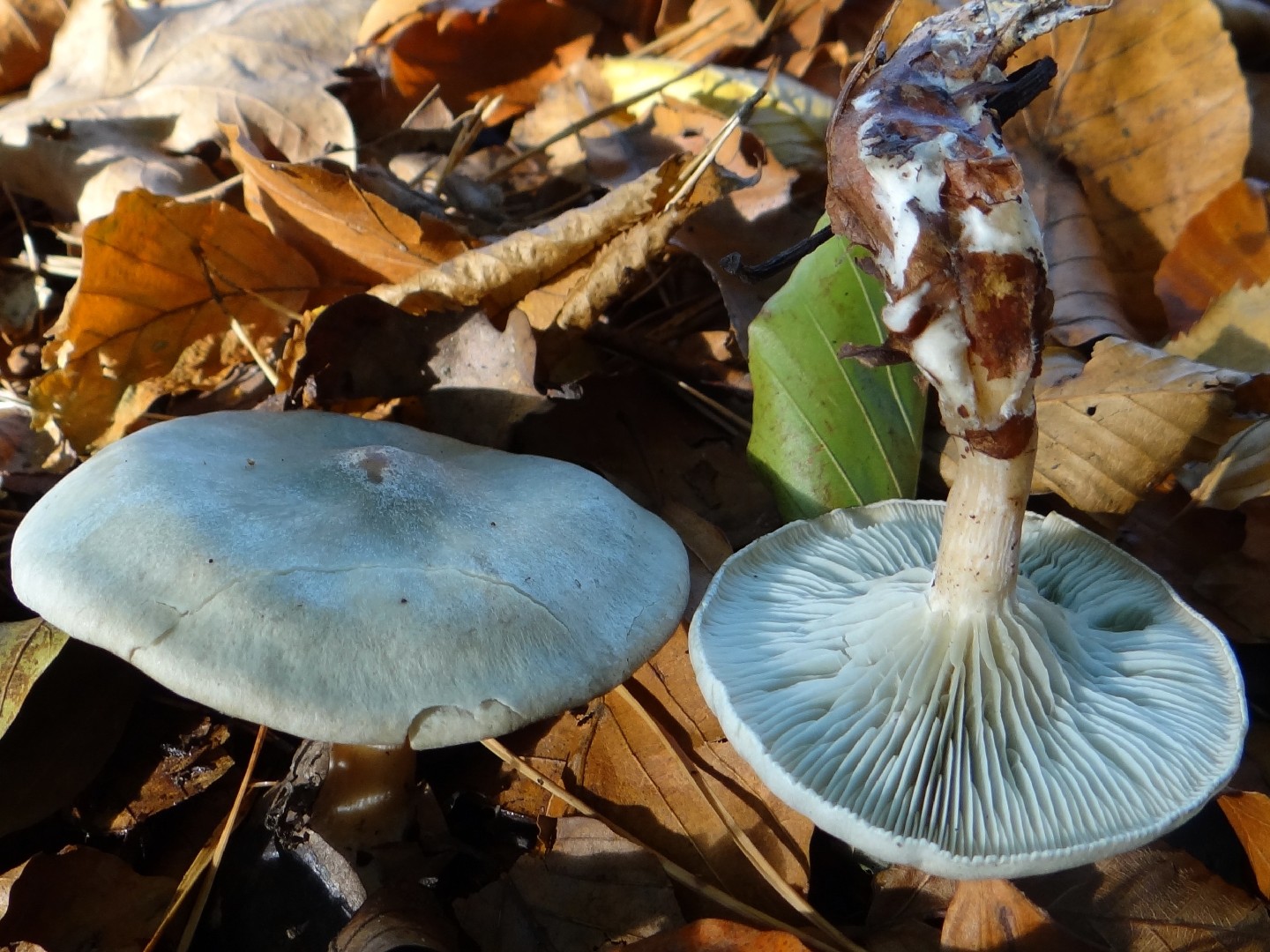
Green-cracking russula (Russula virescens) is easily recognized by its pale green cap and its preference for deciduous and mixed forests. An Old World species, its presence in North America has not yet been confirmed due to several cases of potentially mistaken identity with R. parvovirescens and R. crustosa, which are visually similar to Russula virescens.
More







