




Top 20 Most Common Mushrooms in State College
Nestled within the verdant hills of Pennsylvania, State College is a city boasting diverse ecosystems, a perfect Eden for mushroom growth. The abundance of mushrooms in State College's lush forests sparks intrigue within mycologists worldwide. This article endeavors to guide you through the 20 most common mushrooms sprouting in this fertile cradle. Stay tuned as we elegantly reveal the wild, organic artistry of nature's most understated creations.

Most Common Mushrooms
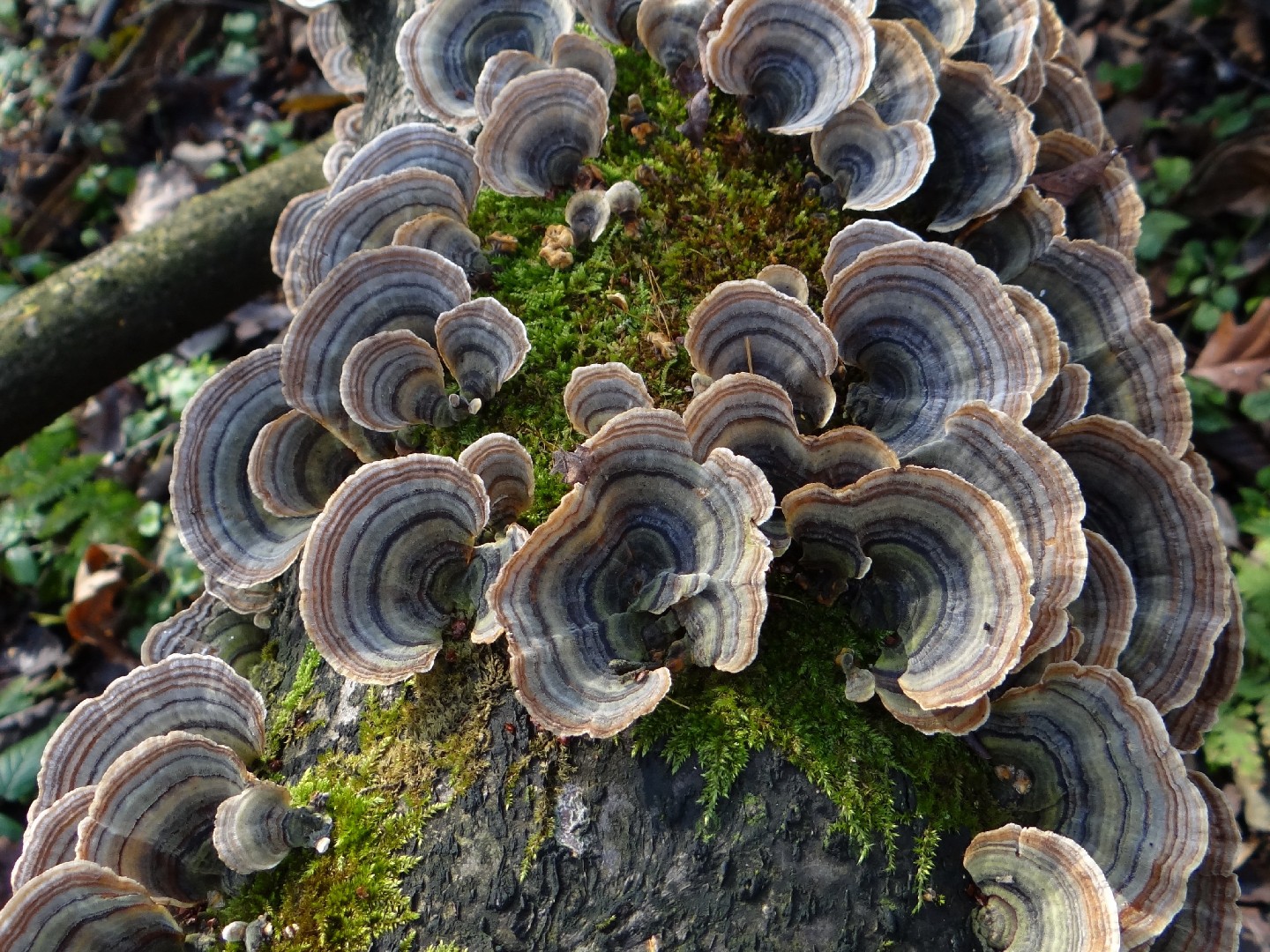
1. Turkey tail
The distinctively-striped turkey tail fungus grows on stumps and logs all over the forests of the northern hemisphere. It is, in fact, probably the most common species you will find. That doesn't mean this mushroom is plain, however; each cap is uniquely patterned. Look for bands of alternating textures as well as color.
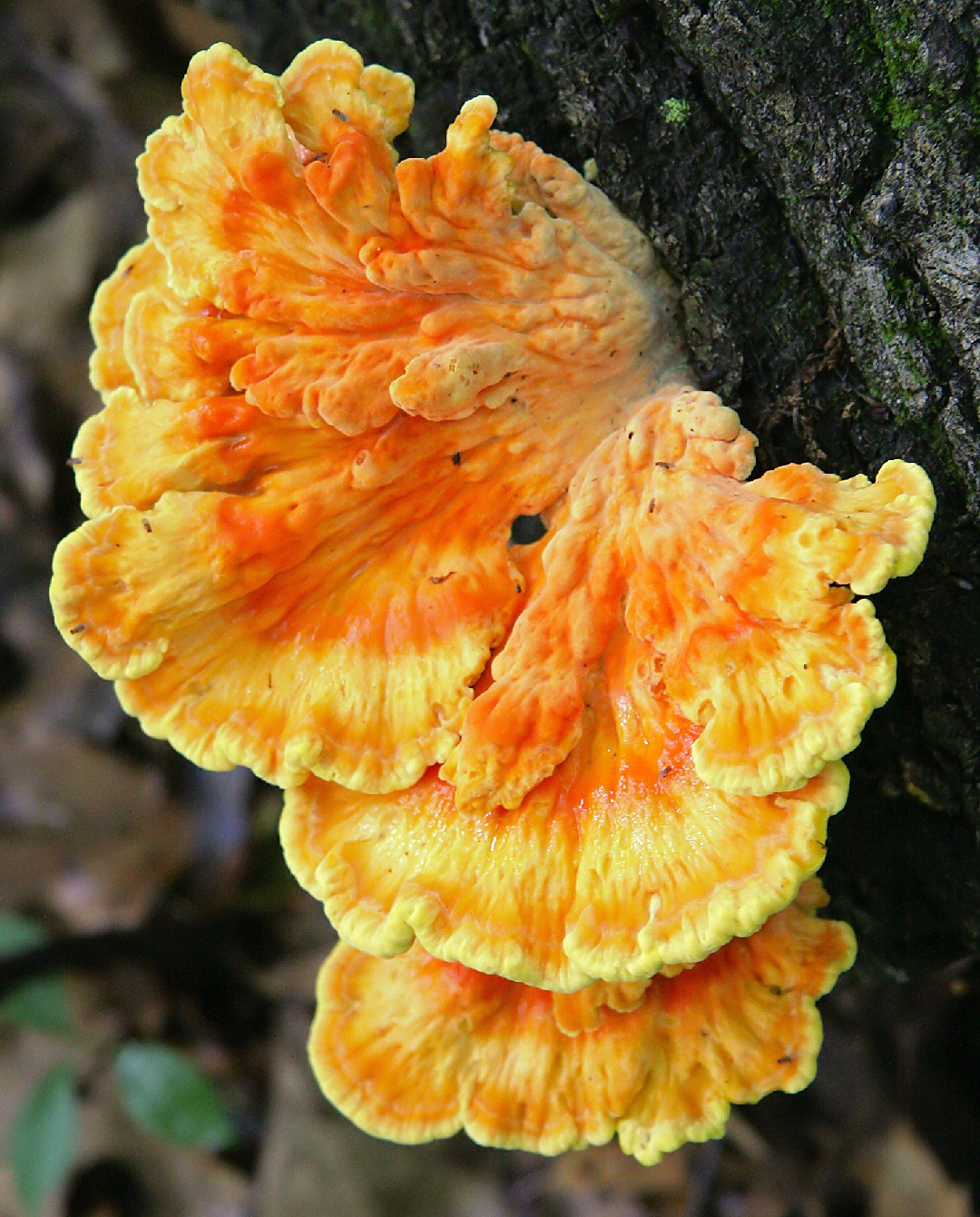
2. Chicken of the woods
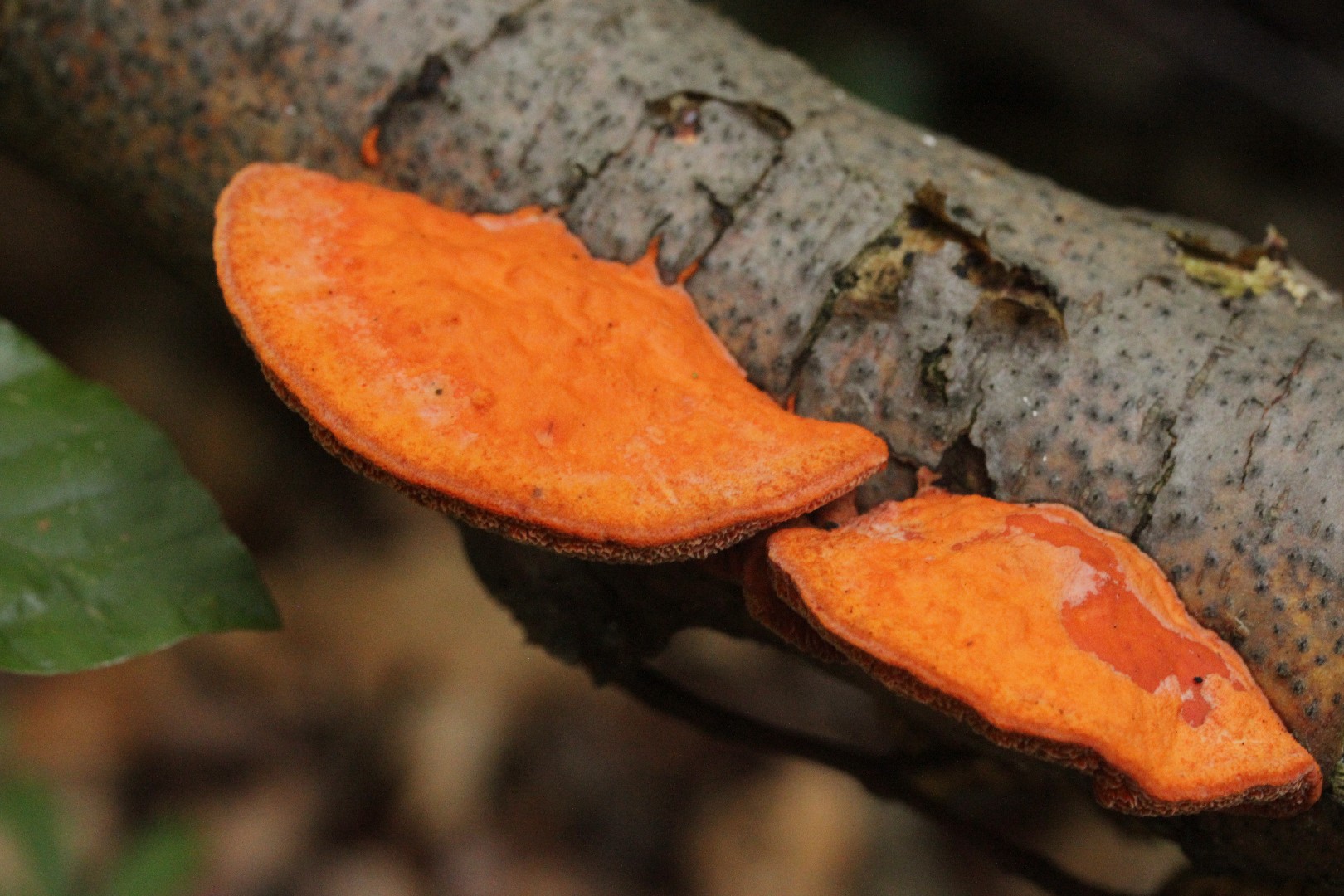
Chicken of the woods is very noticeable in hardwood forests, appearing in clusters on standing tree trunks in bright orange and yellow hues that sometimes last through the entire winter. It is a parasite that causes an unfortunate brown heart rot, and is considered a particularly troublesome pest of Yew trees. If the fruitbodies can be seen, the tree is likely already beyond saving.
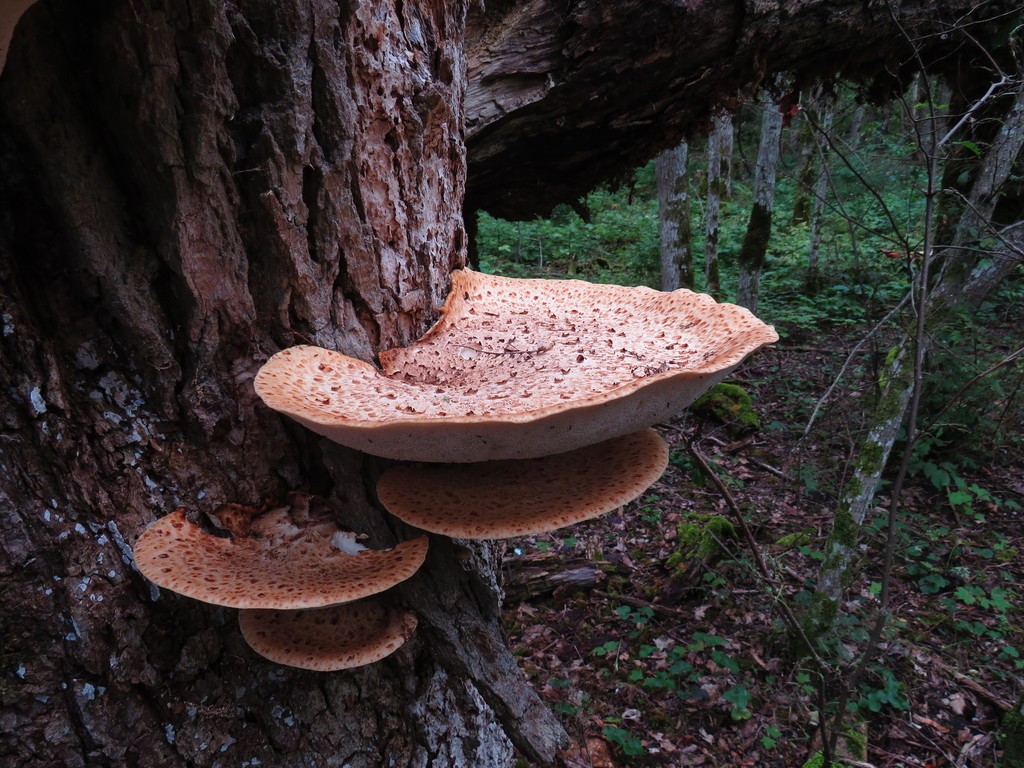
3. Dryad's saddle
A familiar sight to spring morel hunters, dryad's saddle is noteworthy for its large size, striking scales, and watermelon-like smell. Similar to other mushrooms in the bracket fungi family, dryad's saddle can be used to make paper. Younger mushrooms are better suited for this purpose due to their smaller and more consistent fibers.
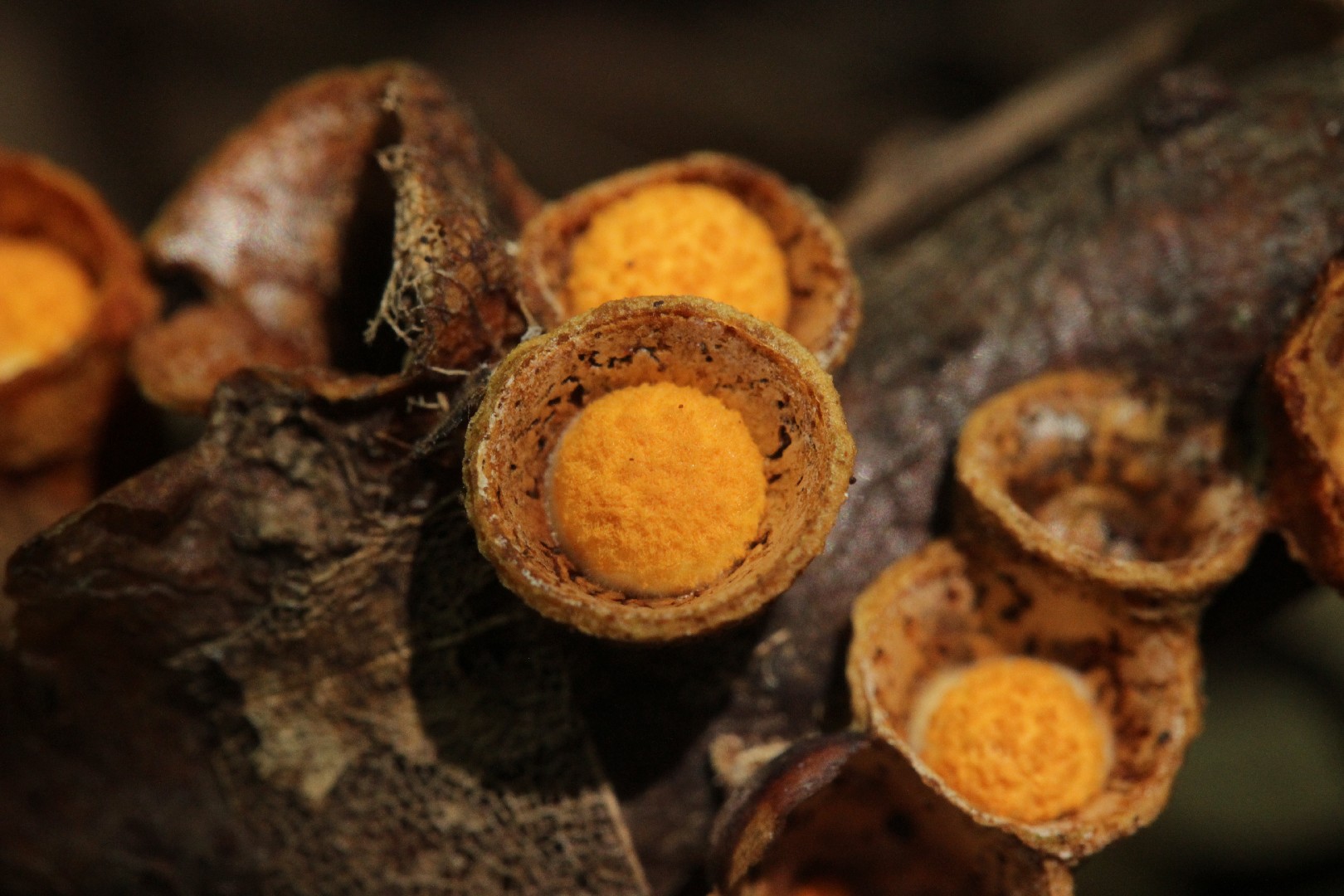
4. Common bird's-nest
The common bird's-nest (Crucibulum laeve ) emerges as a small, drum-shaped mushroom with a yellow or ochre-colored membrane across its top. When that membrane is shed or removed, it reveals a small cache of peridioles, which are small-egg shaped structures that contain the mushroom's spores. Together with the bowl-like base of the mushroom, the peridioles truly look like bird's eggs sitting in a nest.
5. Violet-toothed polypore
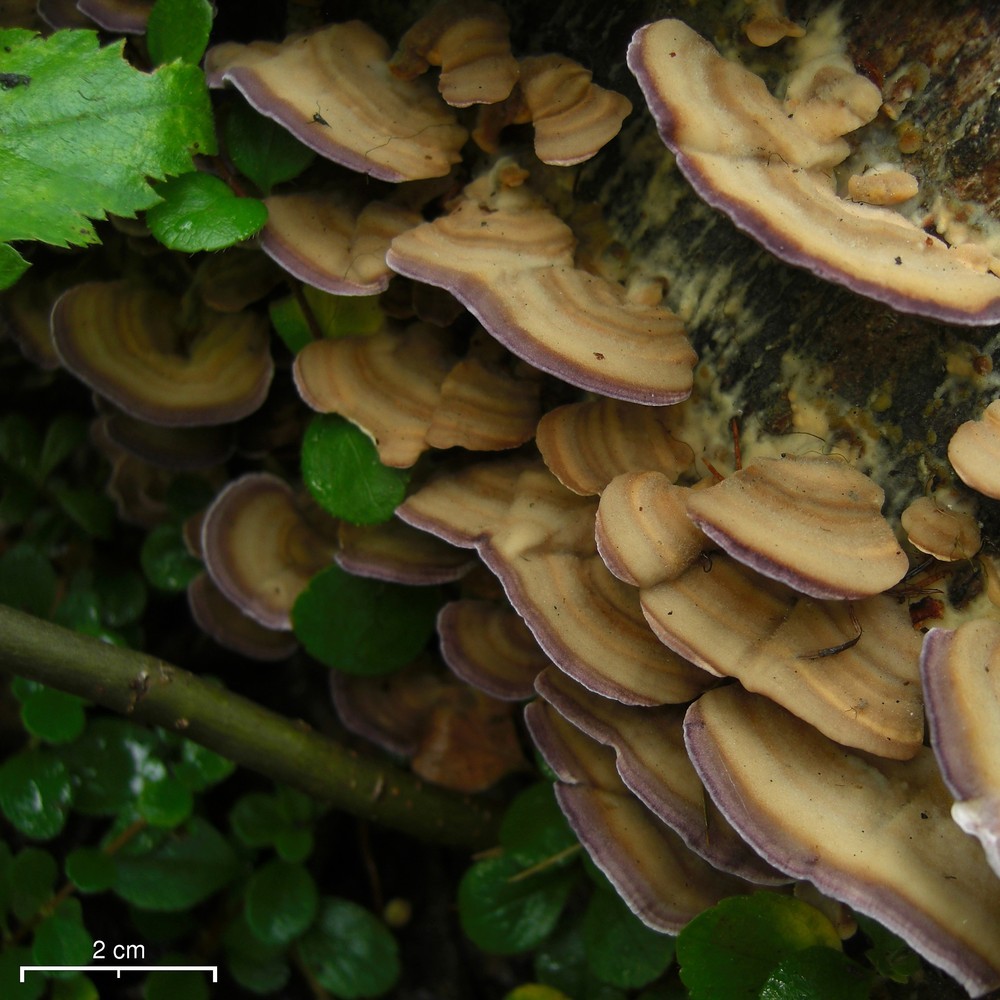
This inedible shelf or bracket fungus grows in overlapping clusters and layers on hardwood stumps and fallen logs. It also causes a sapwood rot in standing trees. Check under the violet-toothed polypore's cap for its secret lilac-shaded pore surface studded with descending “teeth.”
6. Hemlock varnish shelf
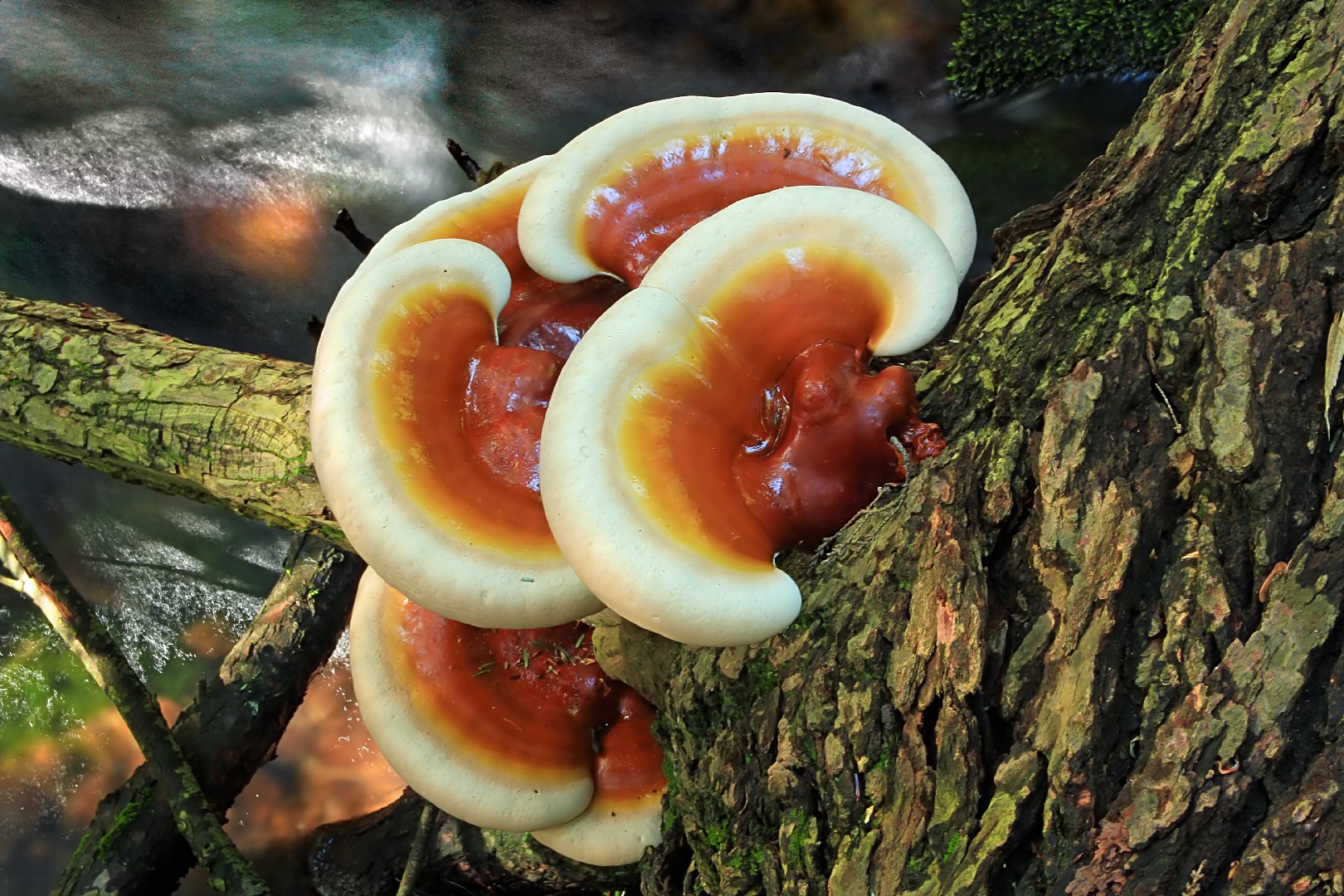
The hemlock varnish shelf is a parasitic species that can be found (unsurprisingly) on Hemlock trees. The species' range is limited to the eastern US - they are particularly common across Appalachia. As with other members of Ganoderma, hemlock varnish shelf has a shiny, lacquered-looking surface. This tough species is considered inedible.
7. Jack-o'lantern mushroom
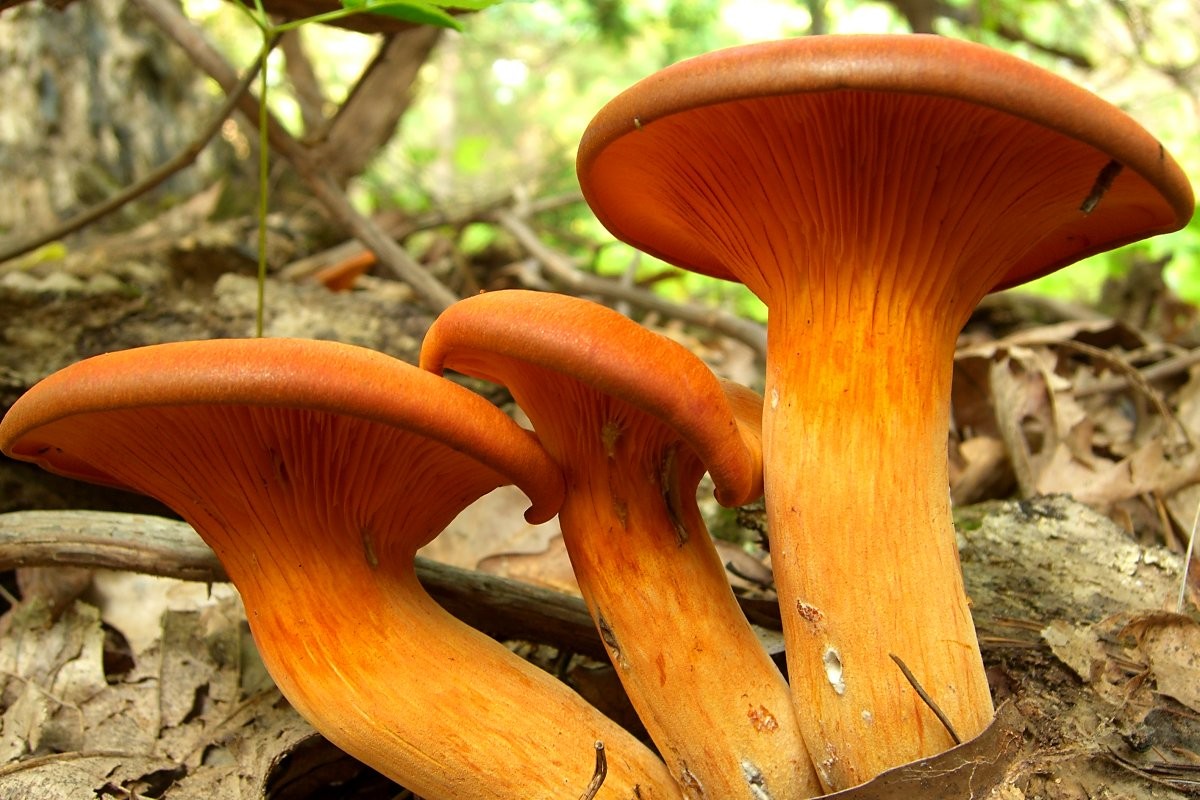
The jack-o'lantern mushroom is so-called because of its bright orange color, and because it often appears in the fall (usually before Halloween, though). This vibrant little mushroom can be found growing on decaying hardwood stumps and logs. The species does have some superficial resemblances to the highly edible chanterelle (Cantharellus cibarius), but it is toxic and should be avoided!
8. Pear-shaped puffball
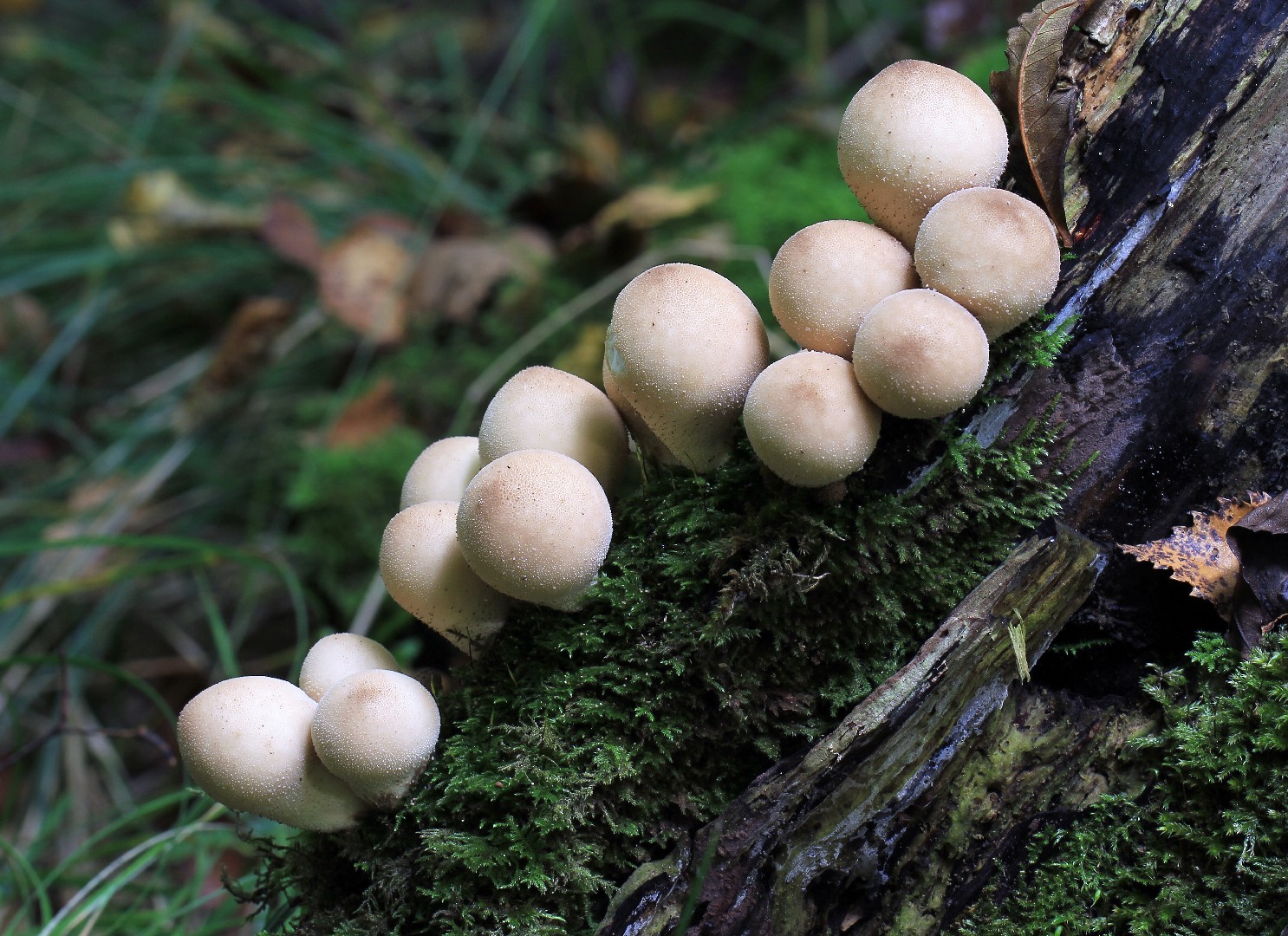
The mushrooms of this species grow in such tight clusters that they may cover fallen trees and stumps almost entirely in a brownish, puffy coat. Pear-shaped puffballs appear all around the northern hemisphere on decaying hardwoods from fall through winter.
9. Crowded parchment
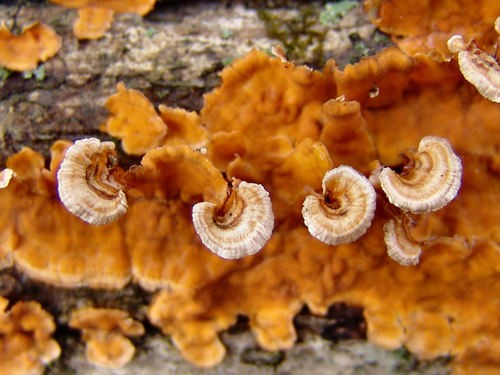
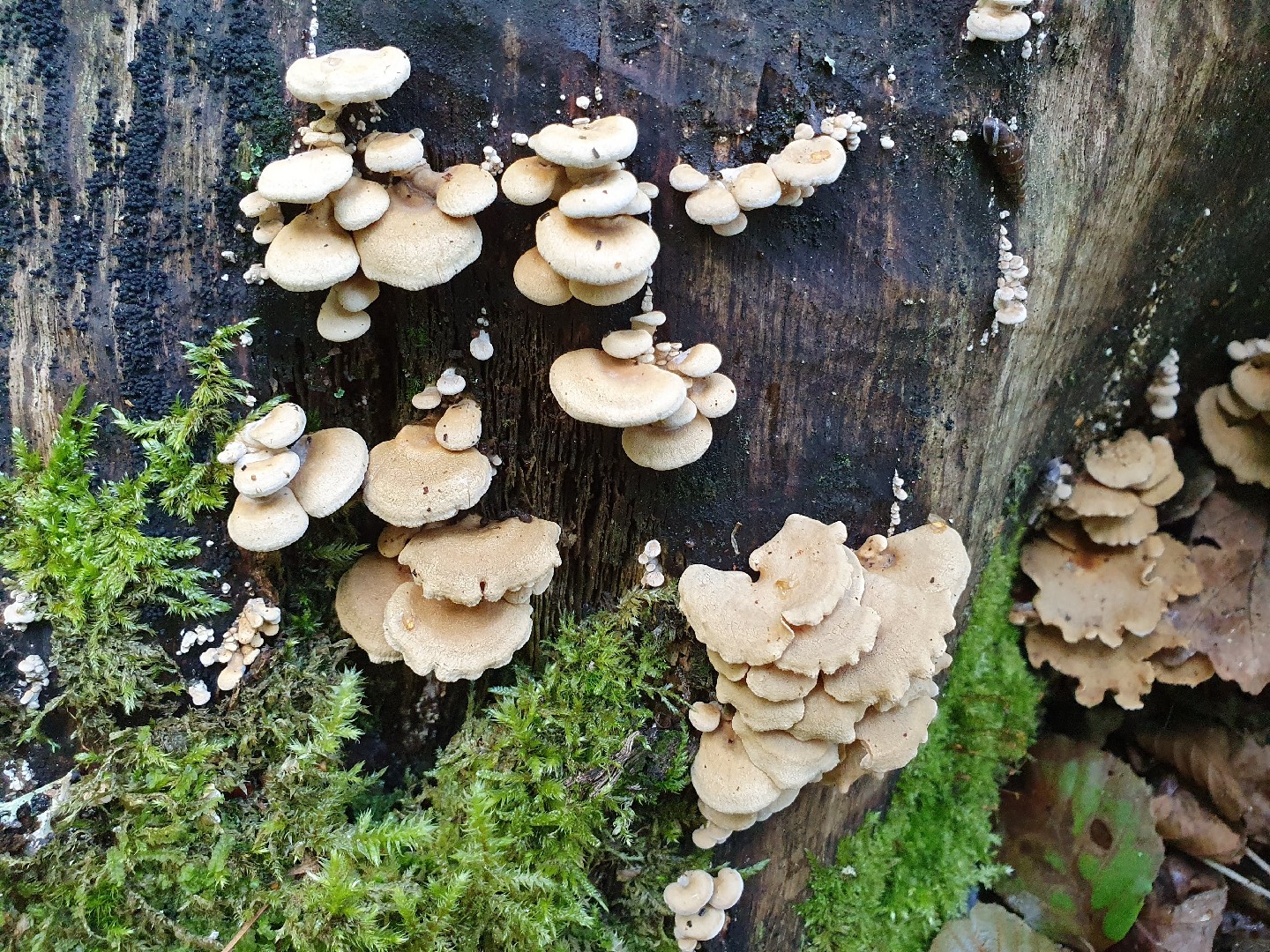
The crowded parchment is a common mushroom that can be found on dead hardwood material. The species is so-named because it grows in very thin, sheet-like shelves, which often become folded when they run up against each other. Crowded parchment is usually found in shades of brown, tan, or orange.
10. Birch polypore
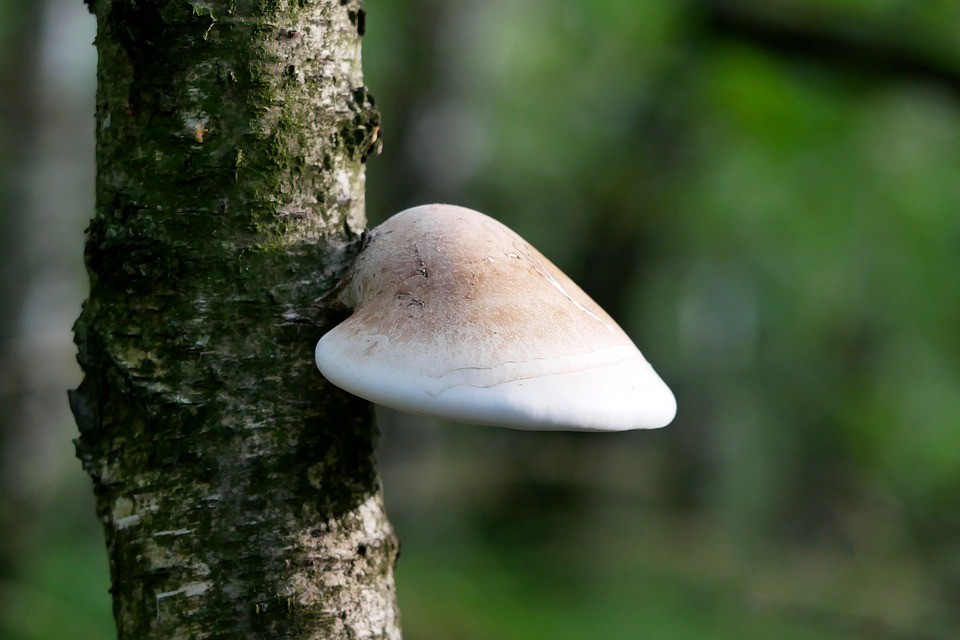
The birch polypore has a variety of applications. Its thick skin has been used by barbers as a razor sharpener and as a mount for insect collectors. When dried, this mushroom was also used to carry fire over long distances because it burns slowly. The historical use of birch polypore doesn't stop there; pieces of this mushroom were found being carried by the five-thousand-year-old mummy Ötzi the Iceman.



More







