




Top 20 Most Common Mushrooms in Nebraska
Behold the majestic beauty of Nebraska, a state peppered with diverse landscapes, from sprawling prairies to densely wooded forests—a genuine haven for mushroom enthusiasts. In this unique and varied ecosystem, 20 types of key mushroom species bloom. Each year, these fungal species emerge in multitudes, painting a vivid picture of the rich biodiversity within Nebraska. This page offers an insightful look into these organisms’ captivating world, presenting facts while observing SEO-compliance for easy reference.

Most Common Mushrooms
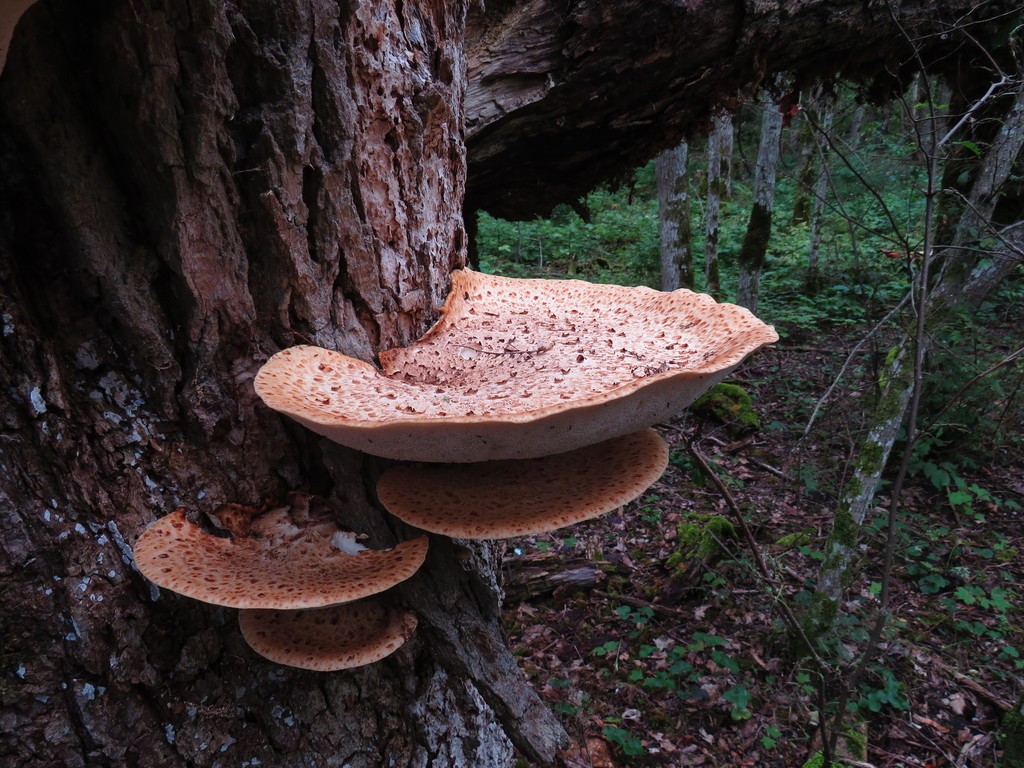
1. Dryad's saddle
A familiar sight to spring morel hunters, dryad's saddle is noteworthy for its large size, striking scales, and watermelon-like smell. Similar to other mushrooms in the bracket fungi family, dryad's saddle can be used to make paper. Younger mushrooms are better suited for this purpose due to their smaller and more consistent fibers.
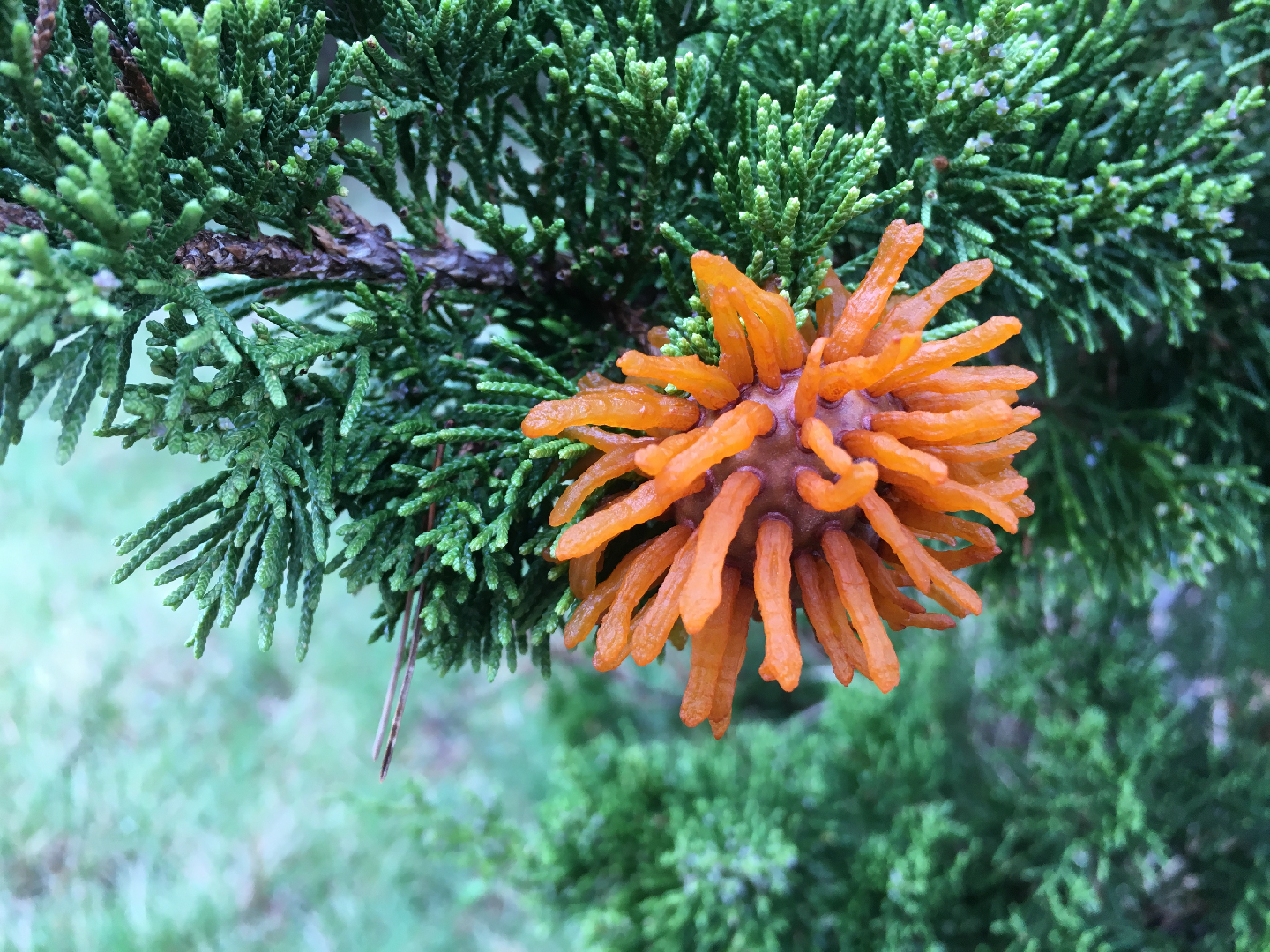
2. Cedar-apple rust
The vividly-colored fruitbodies of cedar-apple rust (Gymnosporangium juniperi-virginianae) might be mistaken for flowers, from a distance. Upon closer inspection they can be identified as fungal growths attacking the fruit of cedar trees. Their microscopic spores can travel up to an astounding 5 miles when carried on the wind and infect cedars quite far away, weakening the trees as they grow.
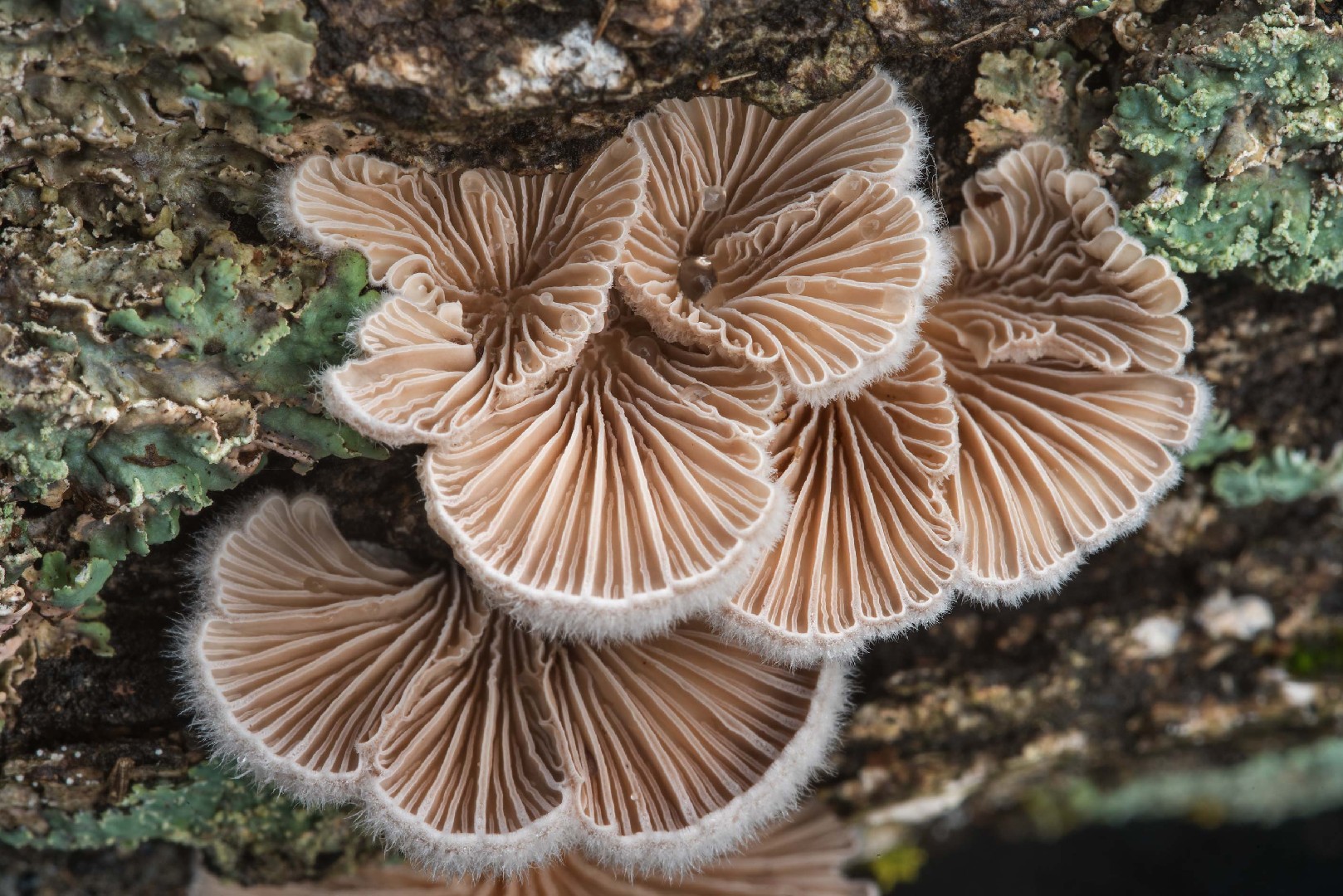
3. Split gill
Split gill(Schizophyllum commune) can be found across the globe. Uniquely, it is the only mushroom species known to display the capability to retract by movement. It is considered inedible, although not necessarily toxic. Furthermore, it is not recommended to smell this species, as the spores are capable of sprouting and growing in nasal passages.
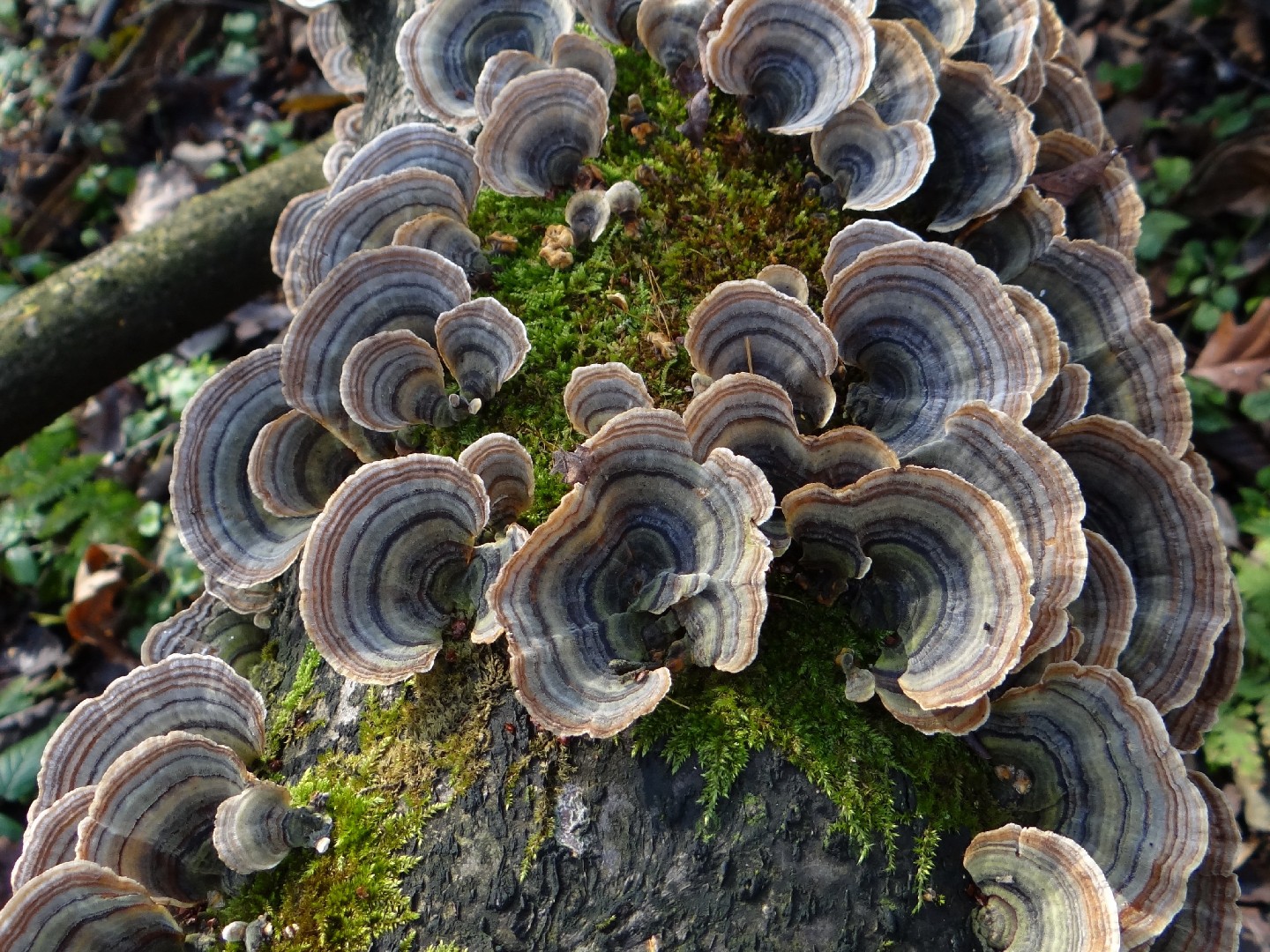
4. Turkey tail
The distinctively-striped turkey tail fungus grows on stumps and logs all over the forests of the northern hemisphere. It is, in fact, probably the most common species you will find. That doesn't mean this mushroom is plain, however; each cap is uniquely patterned. Look for bands of alternating textures as well as color.
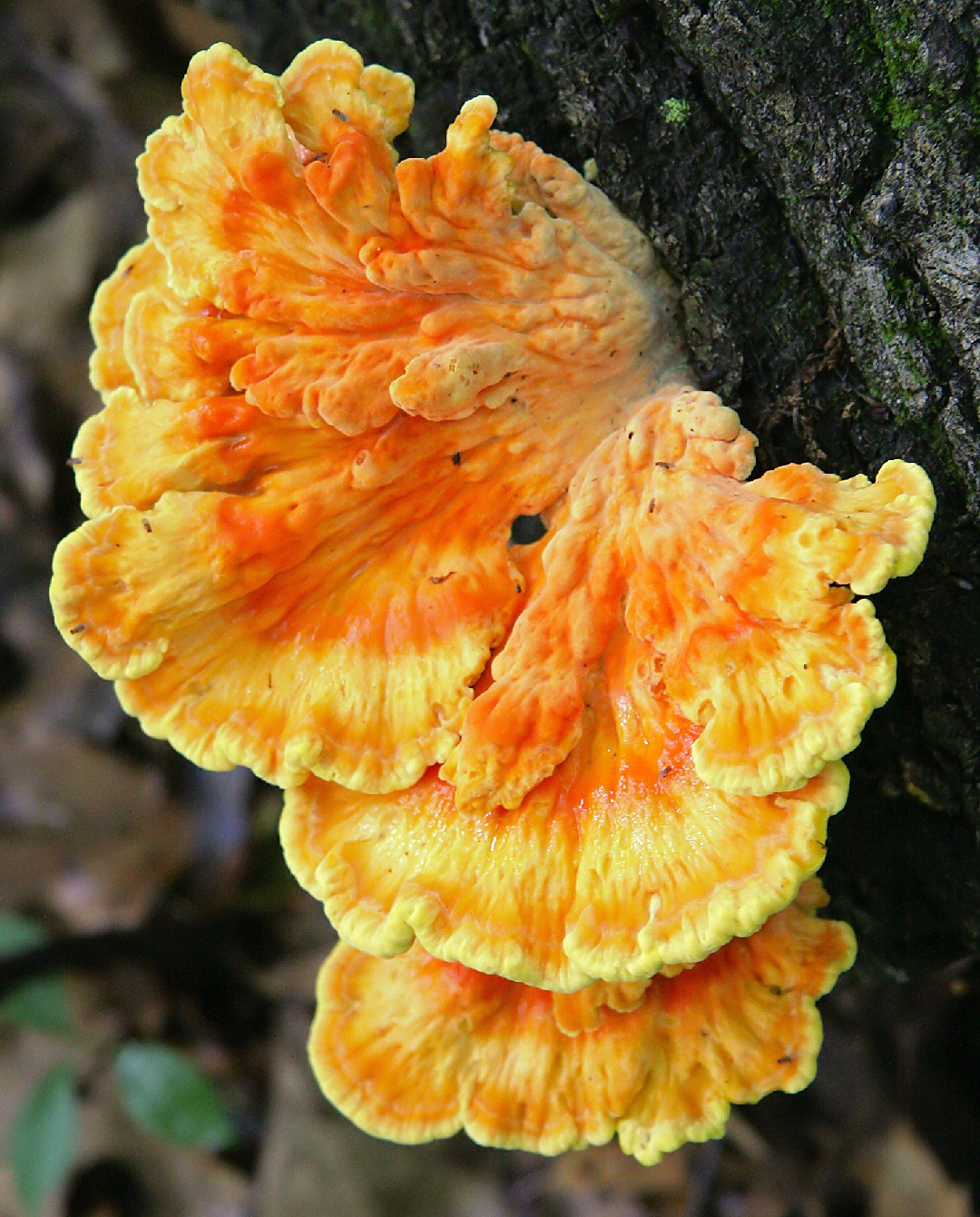
5. Chicken of the woods
Chicken of the woods is very noticeable in hardwood forests, appearing in clusters on standing tree trunks in bright orange and yellow hues that sometimes last through the entire winter. It is a parasite that causes an unfortunate brown heart rot, and is considered a particularly troublesome pest of Yew trees. If the fruitbodies can be seen, the tree is likely already beyond saving.

6. Shaggy mane
The shaggy mane mushroom is commonly found in North American and European grasslands. Some peoples foraged for its young egg-shaped caps, but it has more recently been found to be a bioaccumulator of heavy metals, meaning it pulls toxic metals up from the soil where it grows. As a result, shaggy manes should not be eaten. The mushrooms usually appear in clusters or “fairy rings.”
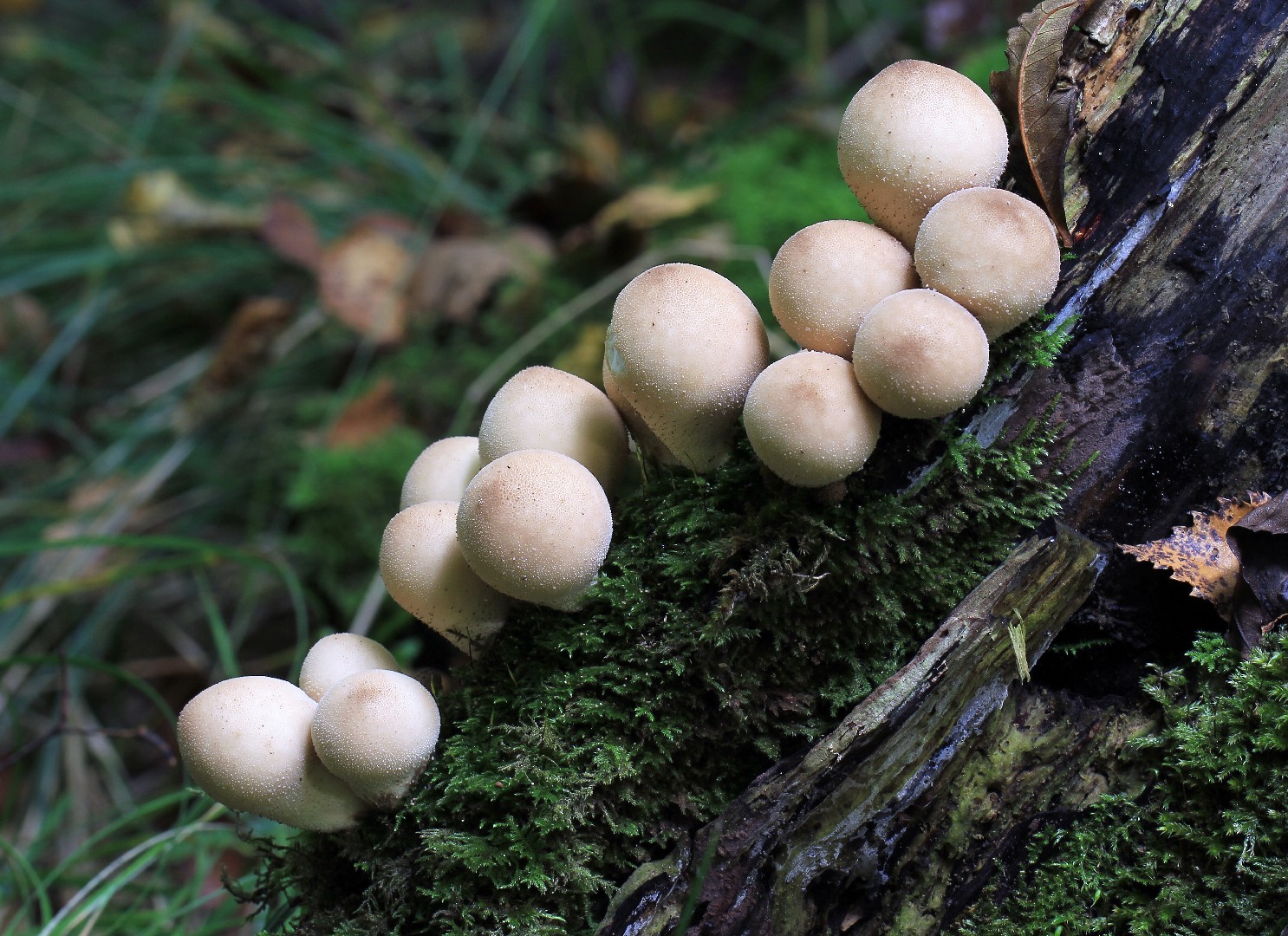
7. Pear-shaped puffball
The mushrooms of this species grow in such tight clusters that they may cover fallen trees and stumps almost entirely in a brownish, puffy coat. Pear-shaped puffballs appear all around the northern hemisphere on decaying hardwoods from fall through winter.
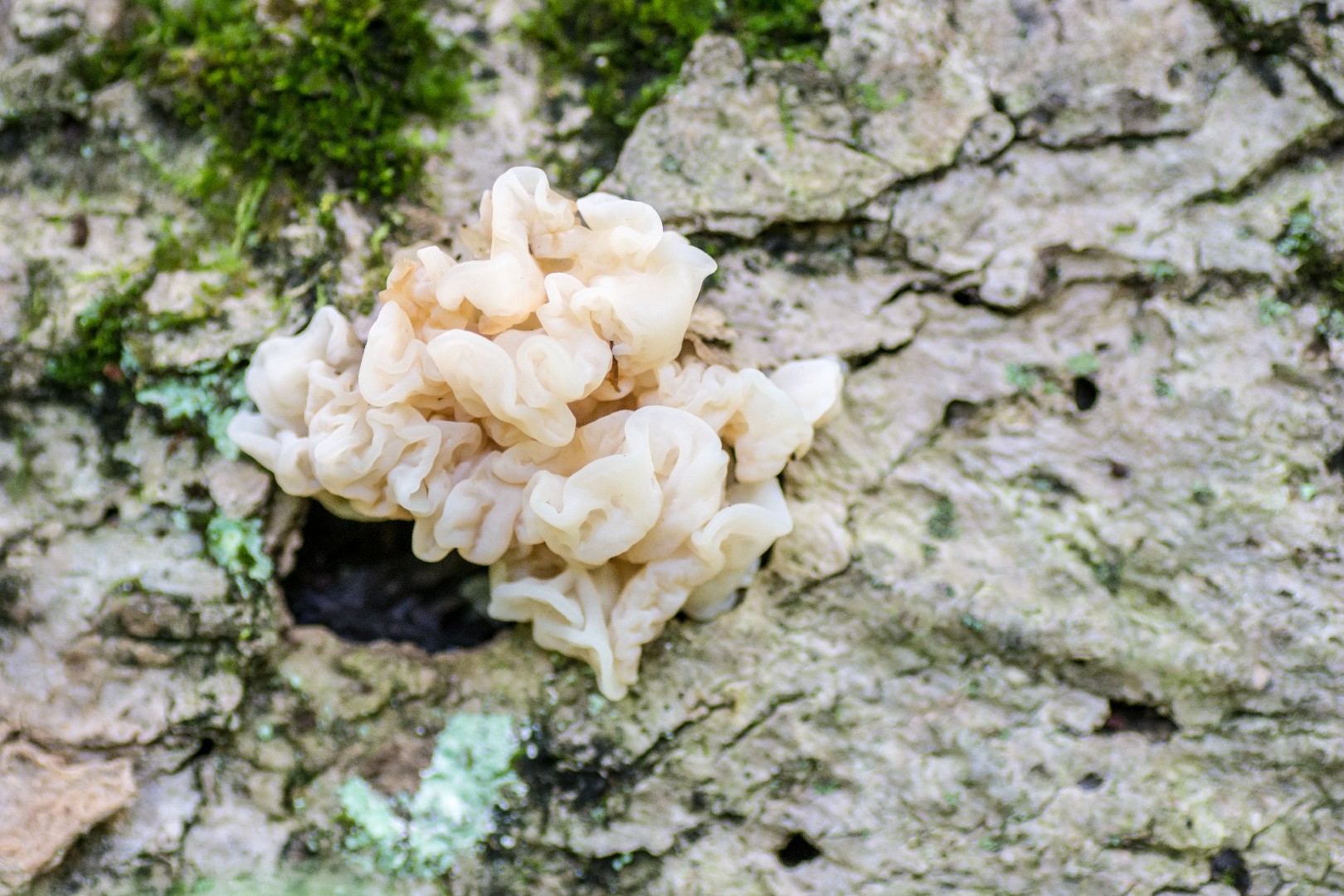
8. White jelly fungus
Unlike other jelly mushrooms, which are typically found on fresh deadwood, white jelly fungus grows on well-decayed wood from hardwood trees. Its fruiting body is indeed white, fading to muted brown hues with age. Its shape has garnered a wide range of comparisons, from brains to popcorn to coral.
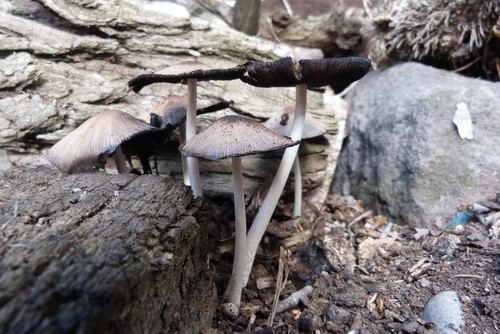
9. Mica cap
The bell-shaped mica cap mushrooms grow in clusters on wood debris and stumps, from spring to autumn. The caps appear wet and inky once they mature and begin to release spores. At that point, they can be boiled with cloves to create a useful black ink.
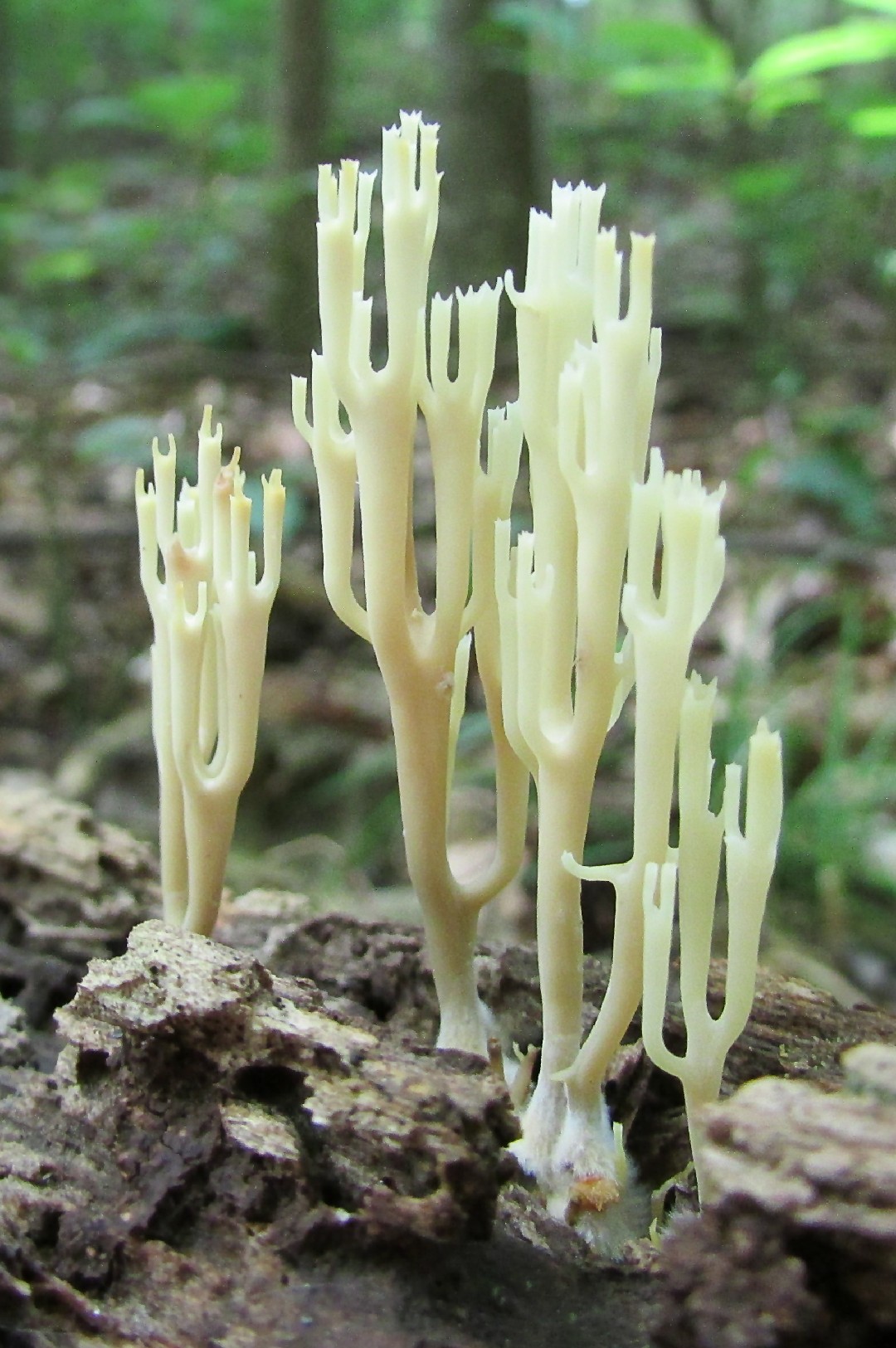
10. Crown-tipped coral
Crown-tipped coral(Artomyces pyxidatus) is a widespread but uncommon species in North America and Western Europe whose Latin name, meaning "box-like," is inspired by its structure. It is one of the few coral fungi to fruit on wood. After a period of absence lasting over a century, it has recently reappeared in Great Britain.
More







