




Top 20 Edible Mushrooms Popular in Arzachena
In the verdant realm of Arzachena, an oasis for mycology enthusiasts, the diverse landscape nurtures a bounty of 20 most common edible mushrooms. Each species distinct in their appearance and flavor, abounds in the terrain ranging from woodlands to grasslands. Immerse yourself in an exploration of the rich tastes, habitats, and culinary potential of these fungi in the captivating surroundings of Arzachena. Learn in detail, evolving your understanding of the earth's bountiful produce.
* Disclaimer: Content feedback CAN NOT be used as any basis for EATING ANY PLANTS. Some plants can be VERY POISONOUS, please purchase edible plants through regular channels.

Most Popular Edible Mushrooms
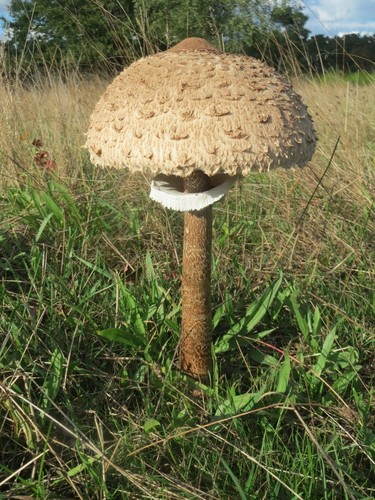
1. Parasol
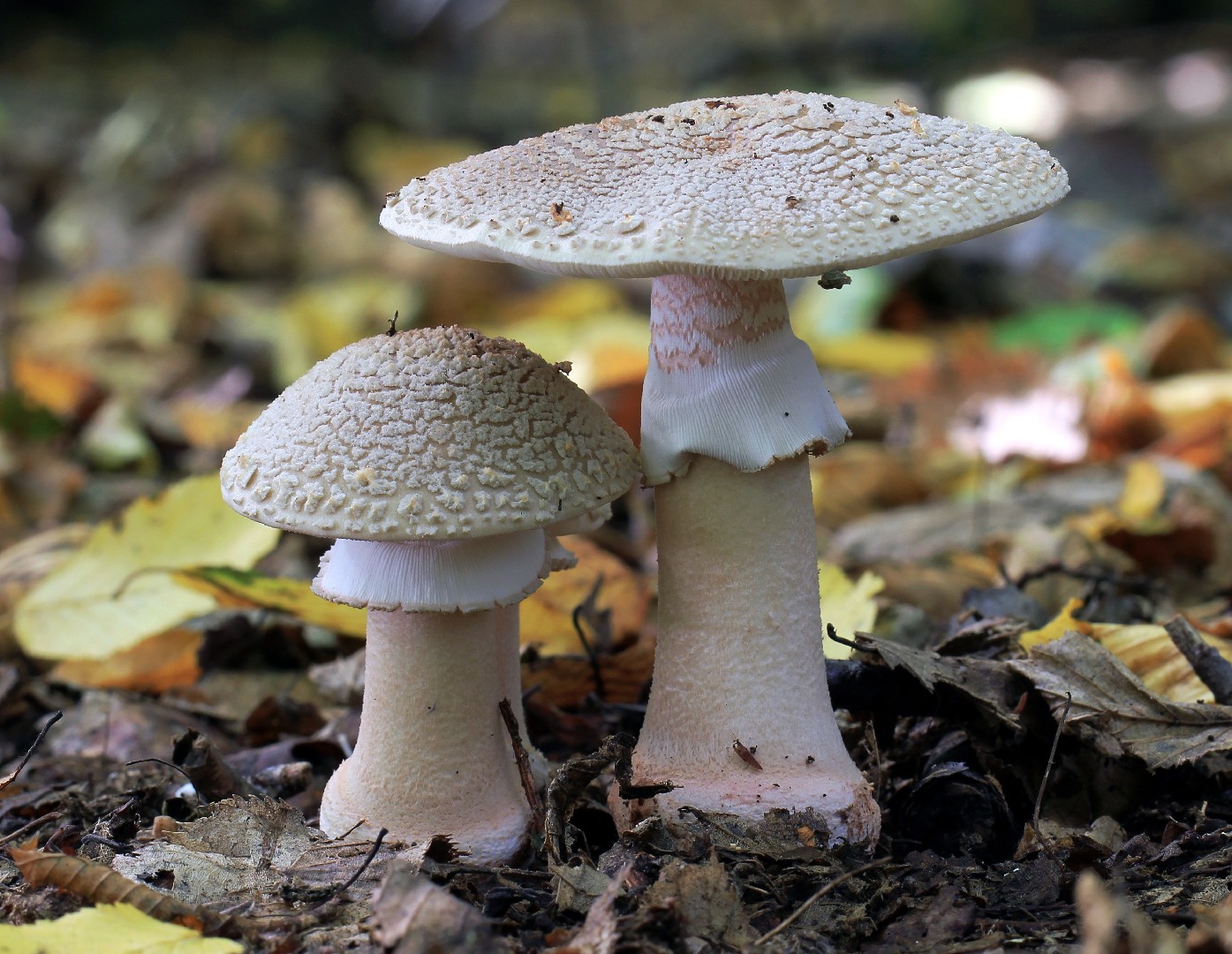
Found in clearings and grassy areas in late summer, the wild parasol mushroom has a snakeskin-patterned stem. The brown spots on its cap make it look a bit shaggy, but that name is reserved for its poisonous counterpart, the Shaggy Parasol (Chlorophyllum rhacodes). You can distinguish the two by the stems: the latter has a smooth stem and red flesh inside.
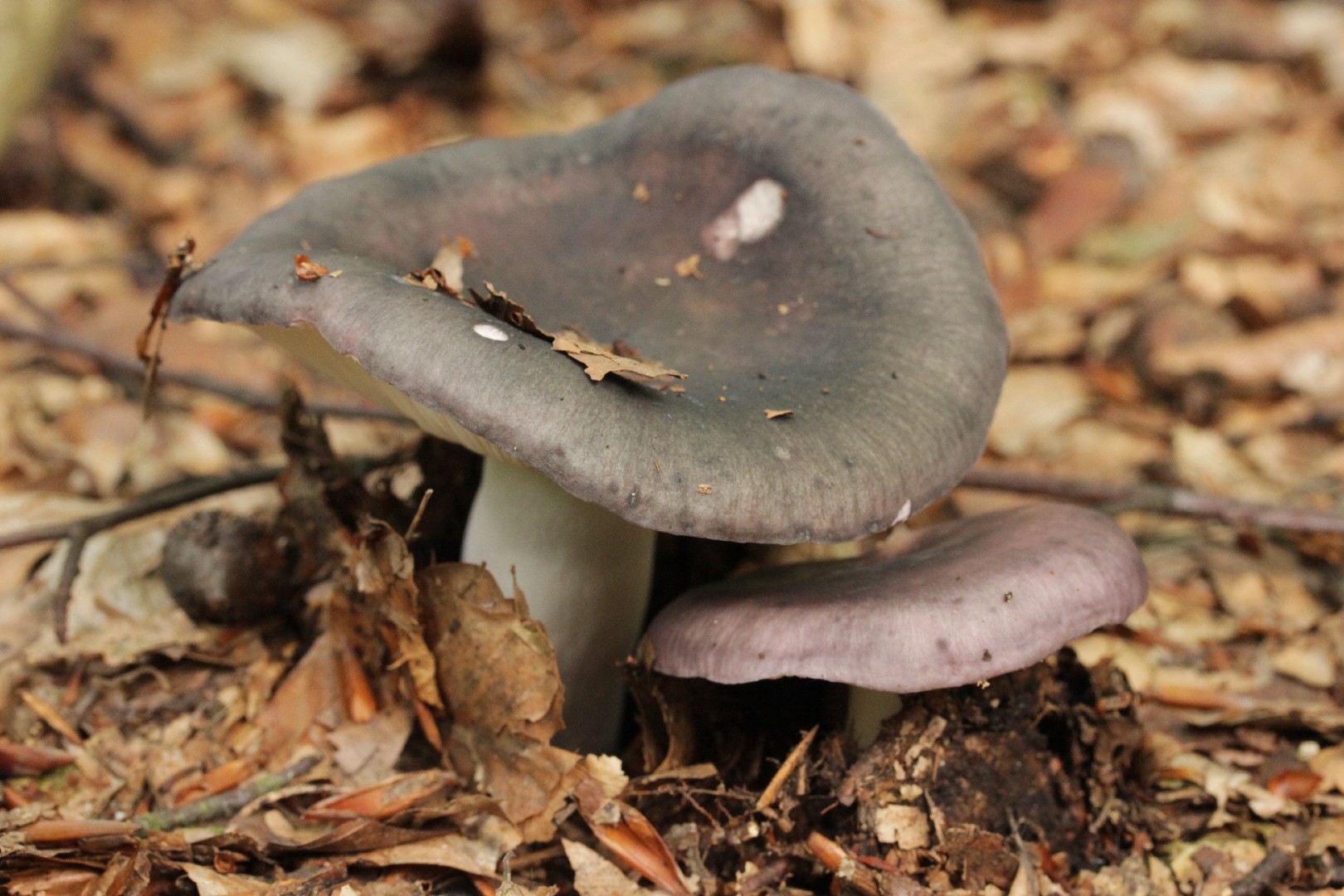
2. Charcoal burner
Most commonly found under beeches in forests or parks, this crumbly mushroom can appear in colors ranging from red and yellow to violet, blue-grey, or even green. Its scientific name represents this variability: Russula cyanoxantha means “reddish blue-blonde.”
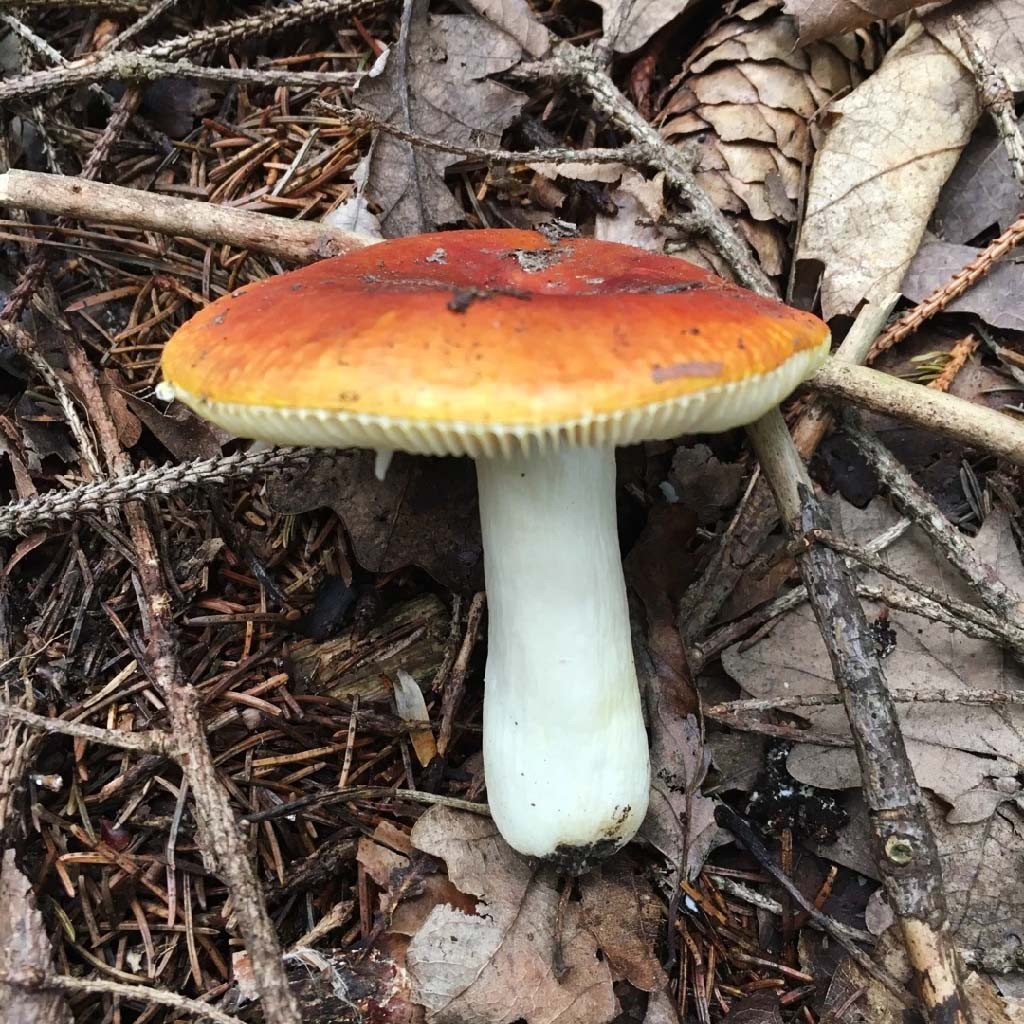
3. Gilded brittlegill
The cap is 4–9 cm (1.5–3.5 in) wide and a blood- or orange-red in colour with ridged margins. Sticky when wet, it is initially convex, then later flat, or depressed; it is able to be peeled half-way. The widely spaced gills are ochre with yellow edges, and adnexed or free. The stipe is up to 3–8 cm (1–3 in) long and 1–2.5 cm (0.39–0.98 in) wide, cylindrical and white or cream to golden-yellow. The brittle flesh is yellow and the taste mild. The spore print is ochre, the warty spores are oval or round and measure 7.5–9 × 6–8 μm. 
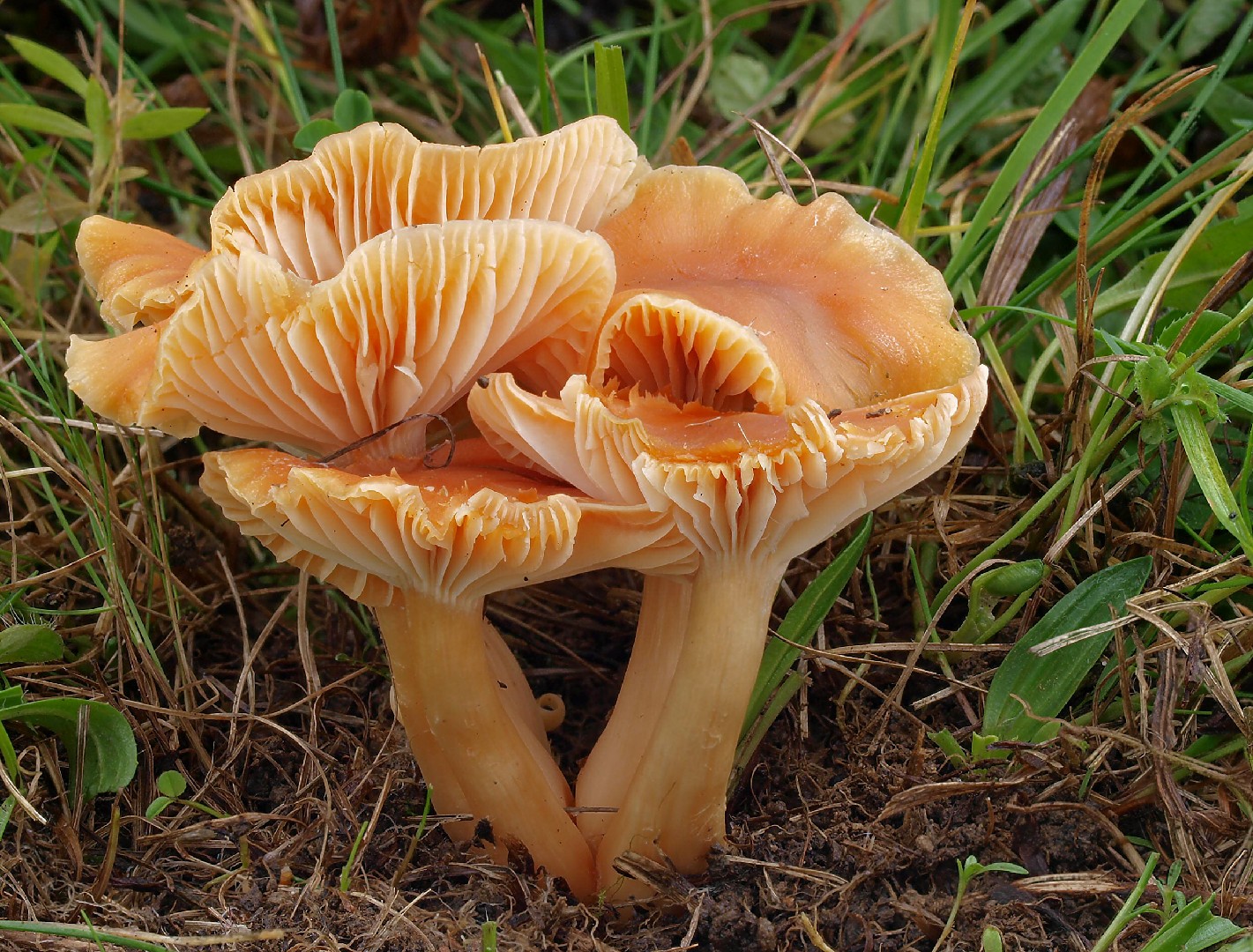
4. Meadow waxcap
The meadow waxcap is a medium-sized, salmon-colored species that can be found in temperate habitats around the world. The species has broad, thick gills and a relatively smooth (and not particularly waxy) cap.
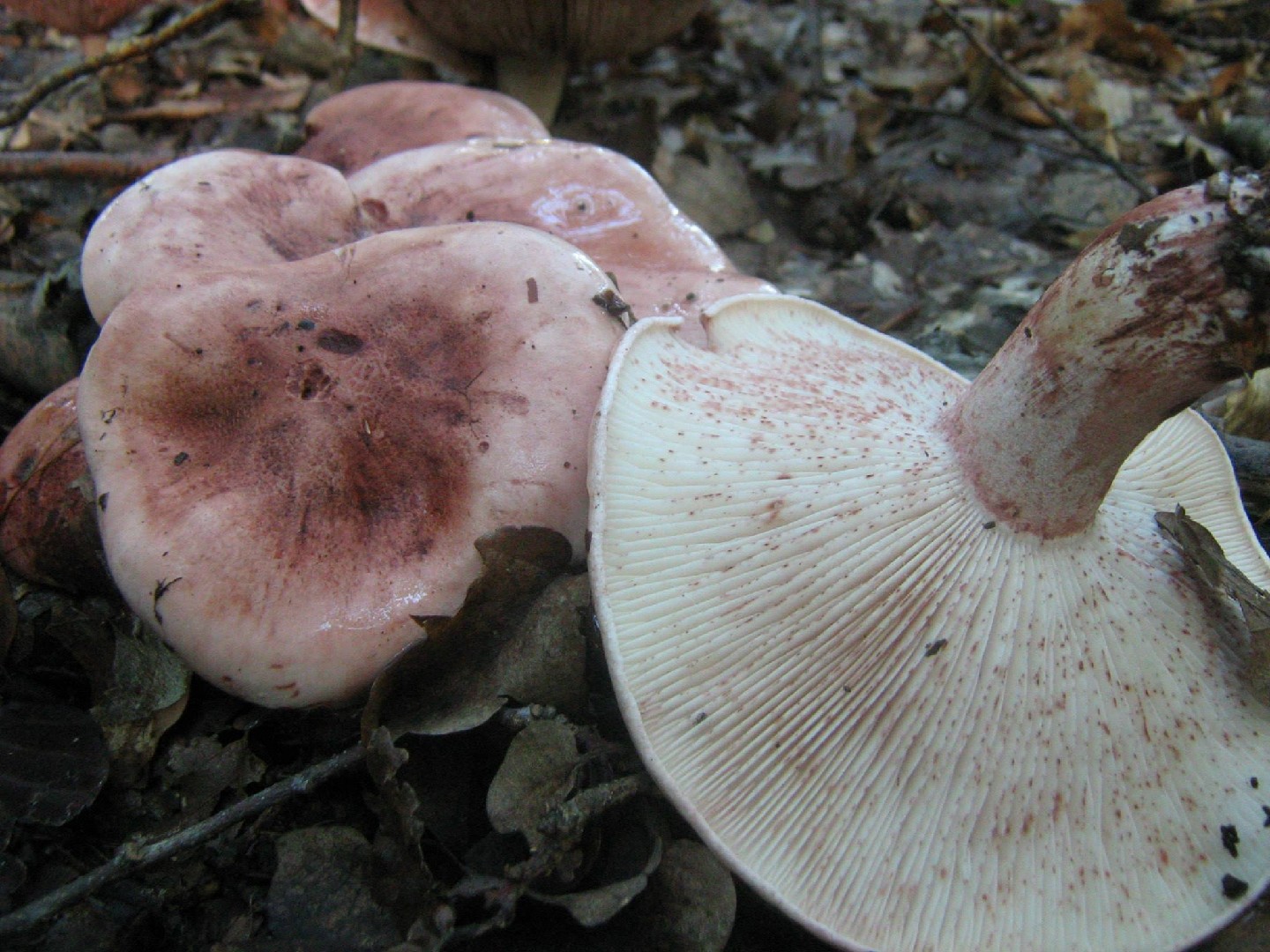
5. Pinkmottle woodwax
Although the species name references this mushroom’s physical similarity to a russula, the pinkmottle woodwax (Hygrophorus russula) is a waxy cap. The characteristic sticky cap of that genus dries out quickly in this tricky species. They are quite resistant to insect infestations.
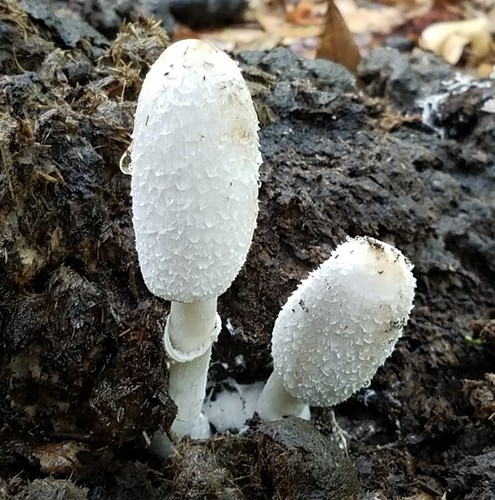
6. Midden inkcap
C. sterquilinus has an ellipsoid or ovoid cap, some 40 to 60 millimetres (1.6 to 2.4 in) by 20 to 30 millimetres (0.8 to 1.2 in) when closed, becoming conical and then flattening out to a width of 60 millimetres (2.4 in). It is white, flocculous and fibrillose when young, becoming more scaly with a creamy centre as it matures. There are more than fifty gills, white at first, turning to grey and then black. The stipe or stem is slender, 80 to 150 millimetres (3 to 6 in) tall, with a moveable ring just above the slightly bulbous base. The spores are ellipsoid and very large at 17–26 by 10–15 µm, very dark reddish-brown to black.
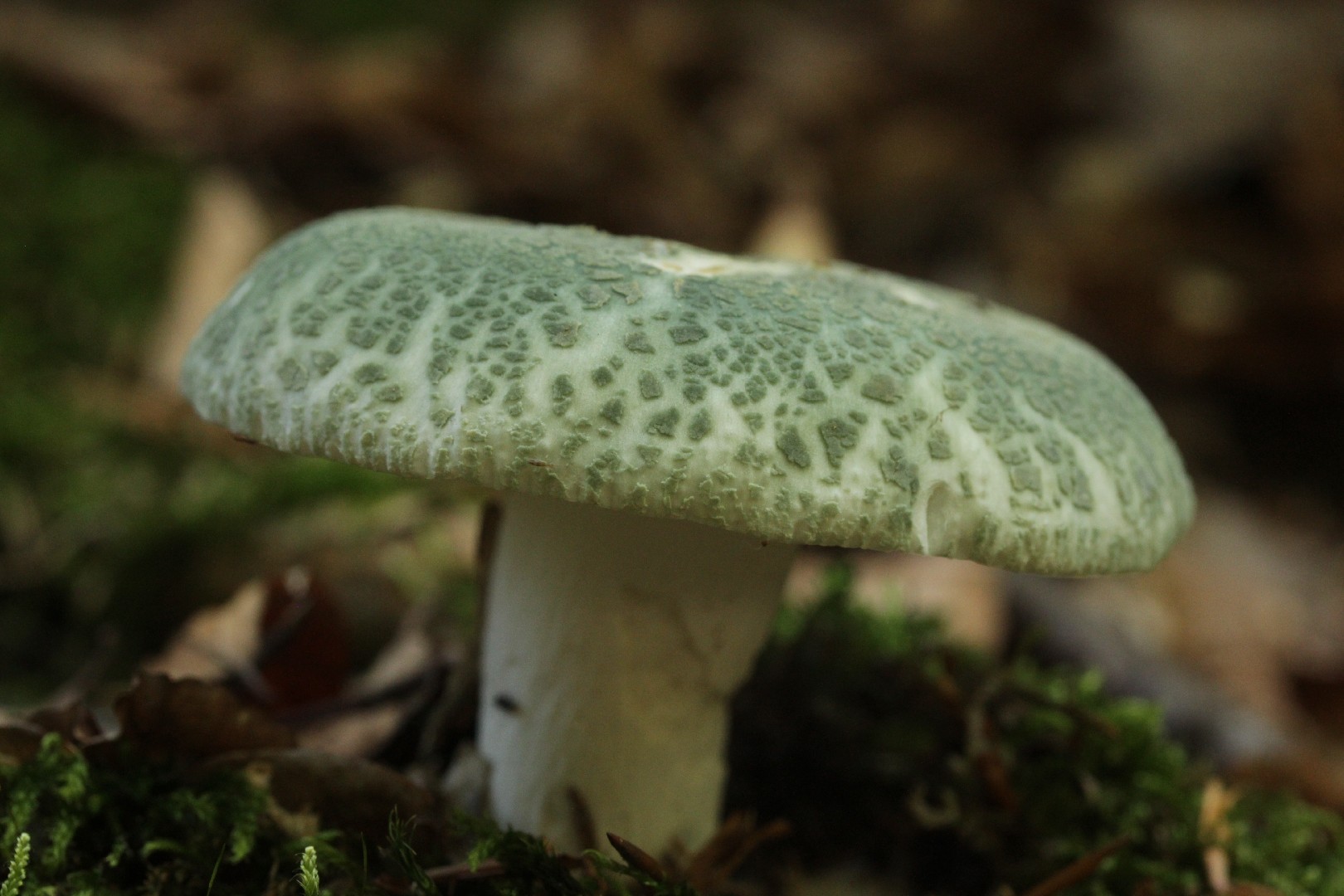
7. Green-cracking russula
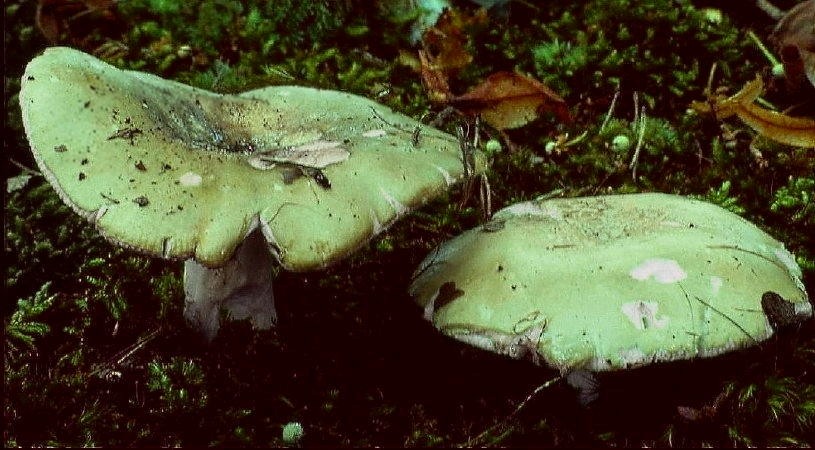
Green-cracking russula (Russula virescens) is easily recognized by its pale green cap and its preference for deciduous and mixed forests. An Old World species, its presence in North America has not yet been confirmed due to several cases of potentially mistaken identity with R. parvovirescens and R. crustosa, which are visually similar to Russula virescens.
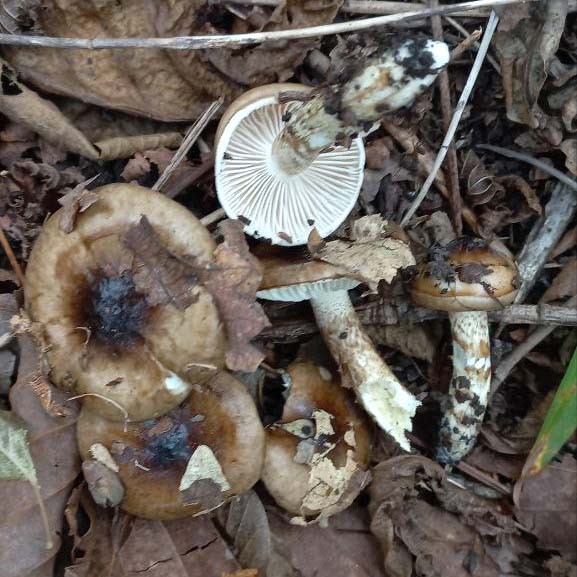
8. Hygrophorus persoonii
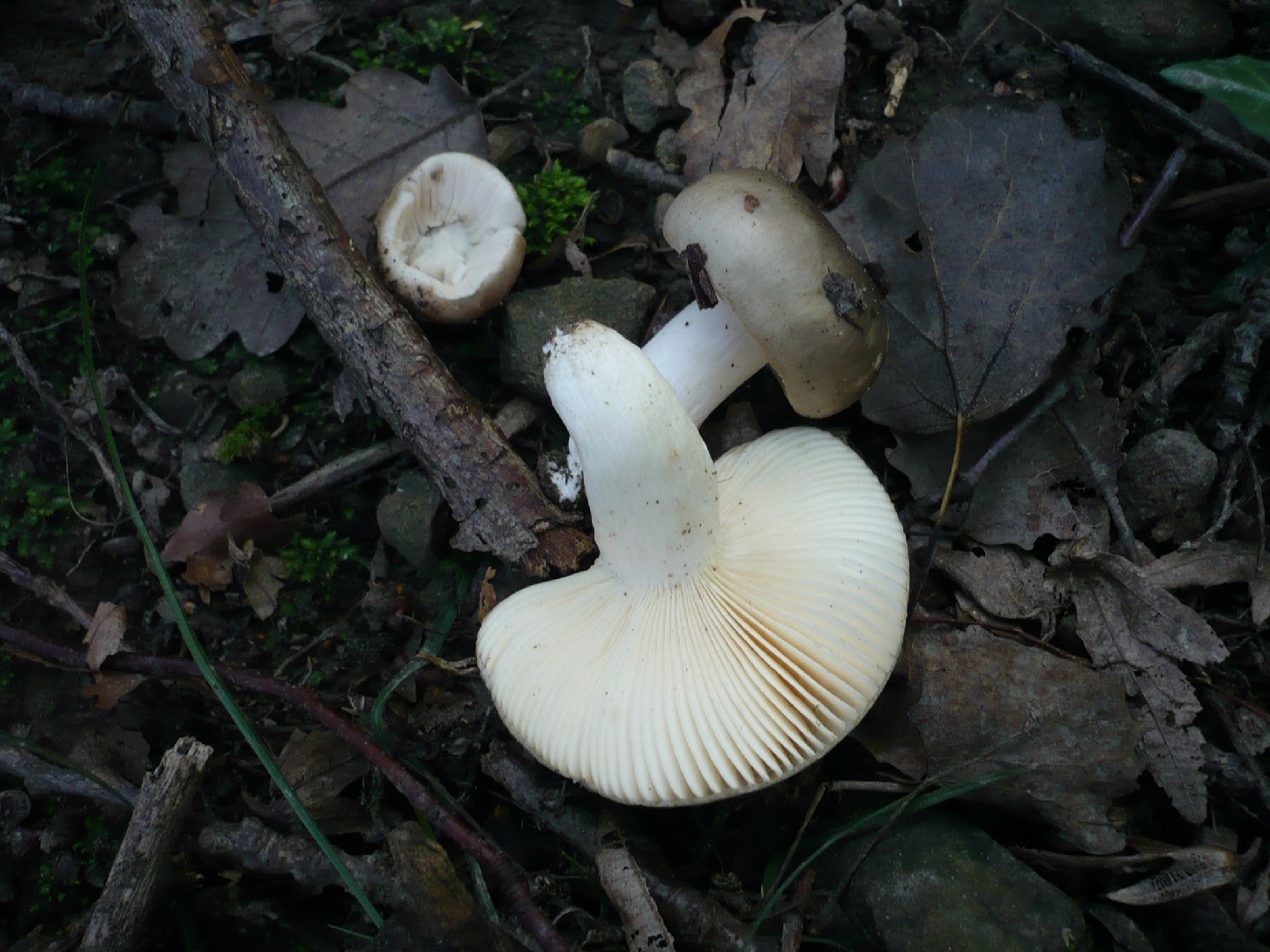
9. Russula medullata
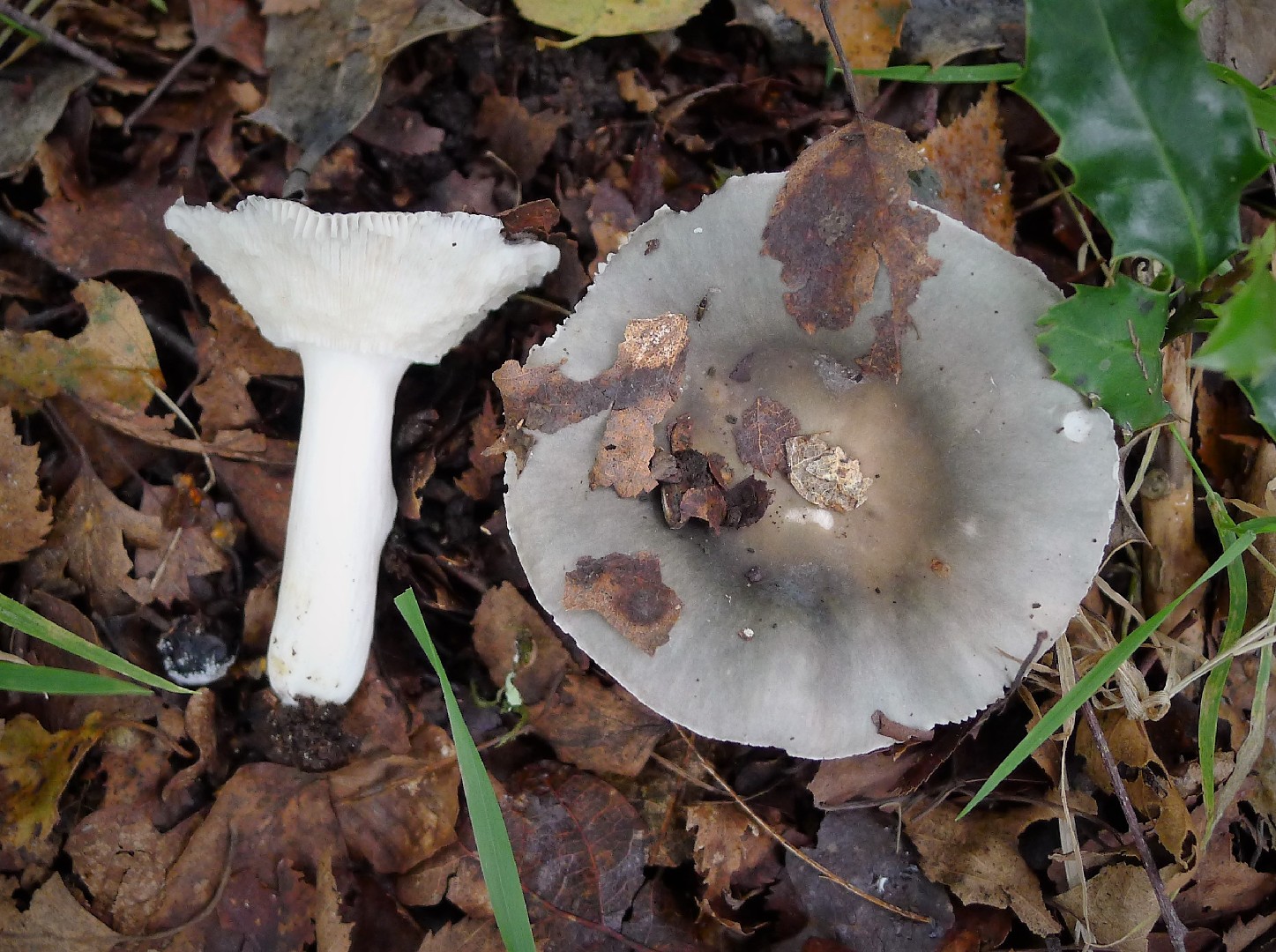
10. Russula grisea


More







