




Top 20 Most Common Mushrooms in Aurora
Welcome to a trove of mushroom marvels, where we bring you the Top 20 most prevalent fungi sprouting in Aurora, a place known for its unique mushroom biodiversity. With a diverse ecosystem conducive to fungal growth, Aurora is a mycologist's paradise. Broaden your fungi knowledge as we delve into this fascinating world.

Most Common Mushrooms
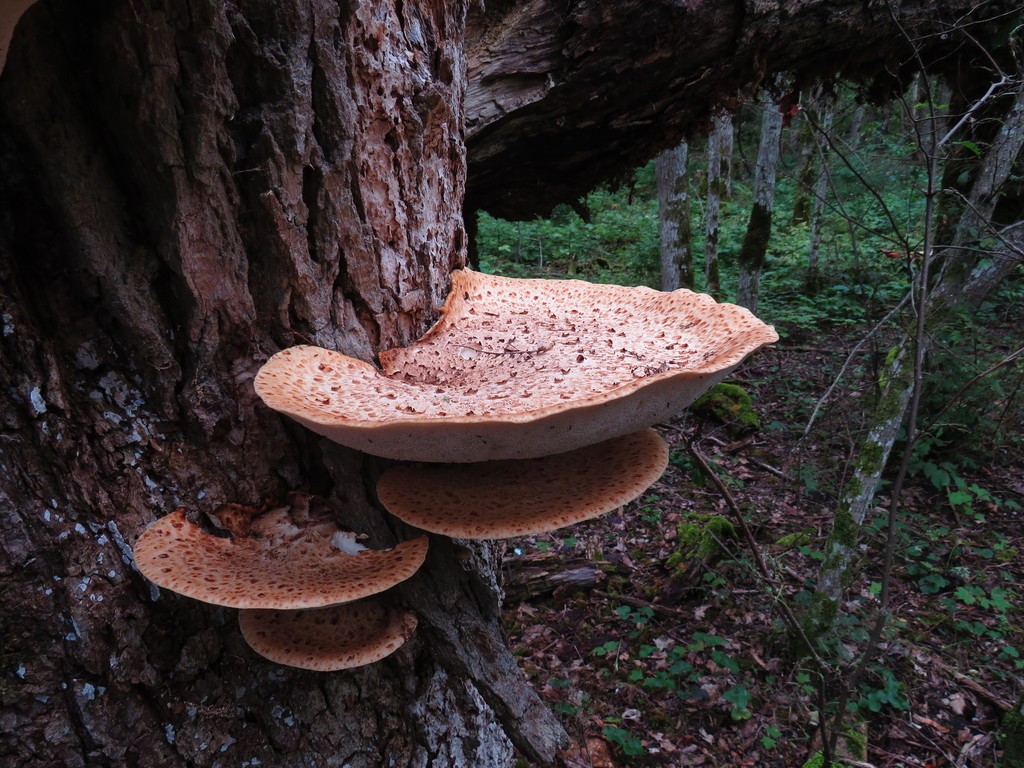
1. Dryad's saddle
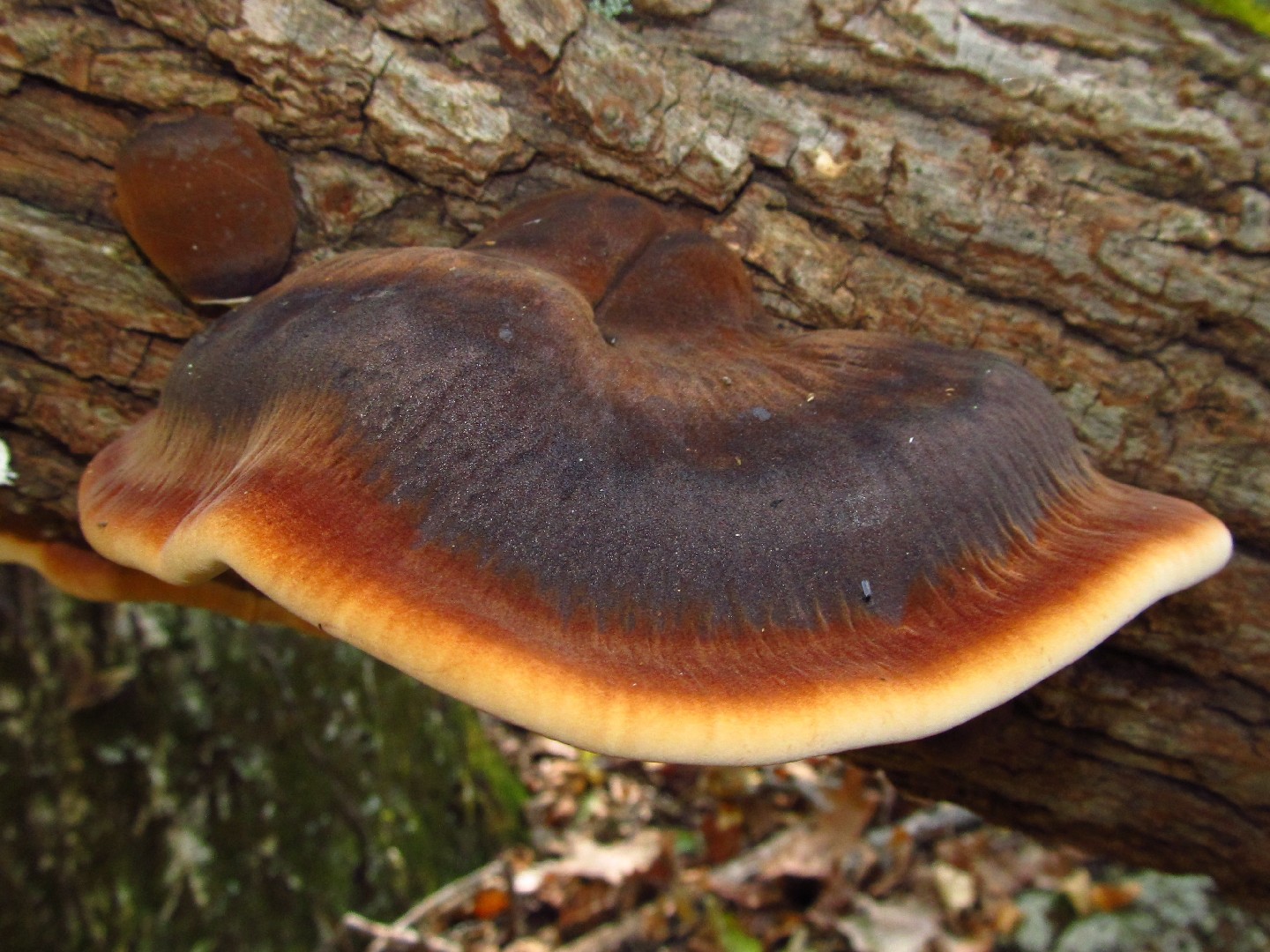
A familiar sight to spring morel hunters, dryad's saddle is noteworthy for its large size, striking scales, and watermelon-like smell. Similar to other mushrooms in the bracket fungi family, dryad's saddle can be used to make paper. Younger mushrooms are better suited for this purpose due to their smaller and more consistent fibers.
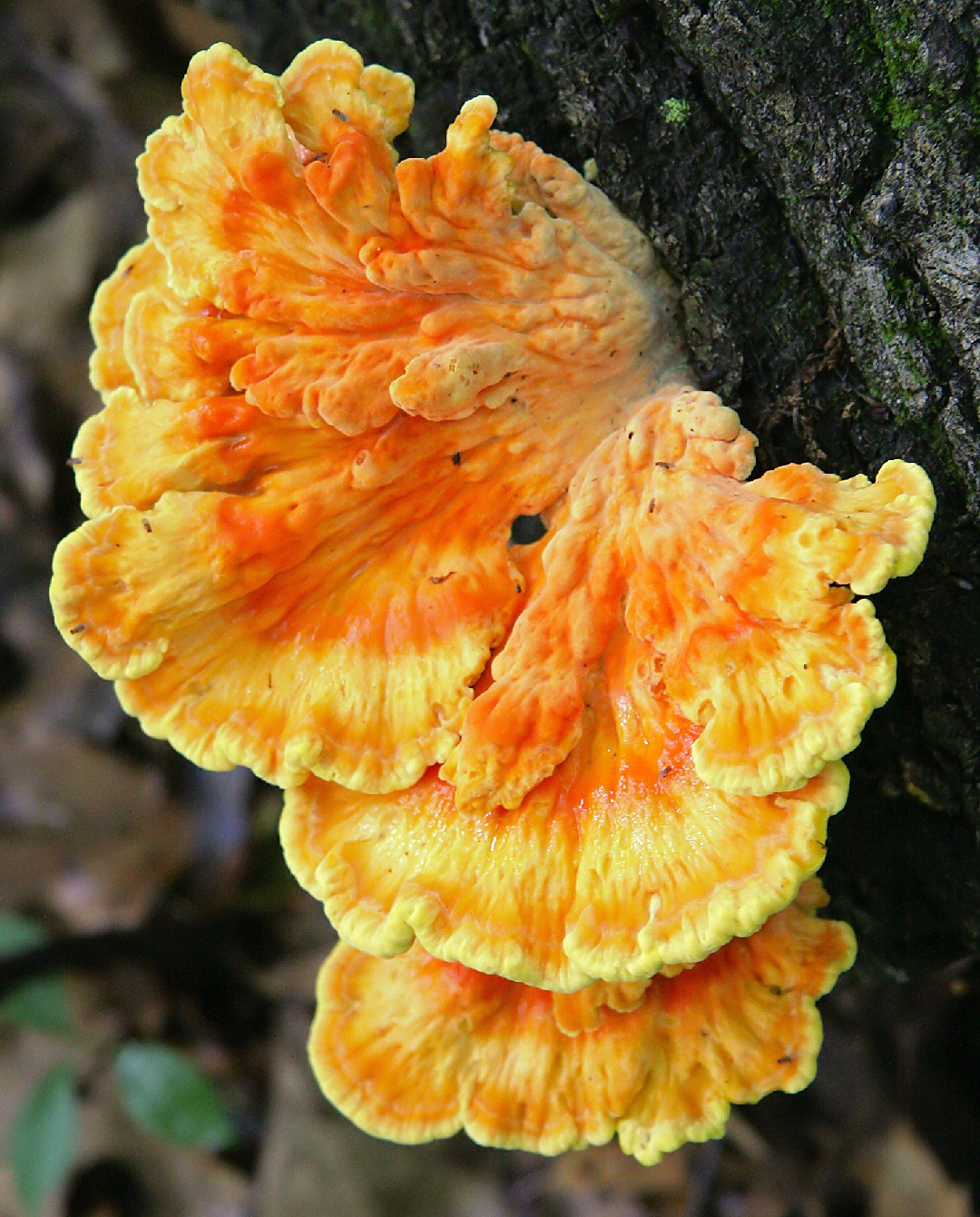
2. Chicken of the woods
Chicken of the woods is very noticeable in hardwood forests, appearing in clusters on standing tree trunks in bright orange and yellow hues that sometimes last through the entire winter. It is a parasite that causes an unfortunate brown heart rot, and is considered a particularly troublesome pest of Yew trees. If the fruitbodies can be seen, the tree is likely already beyond saving.
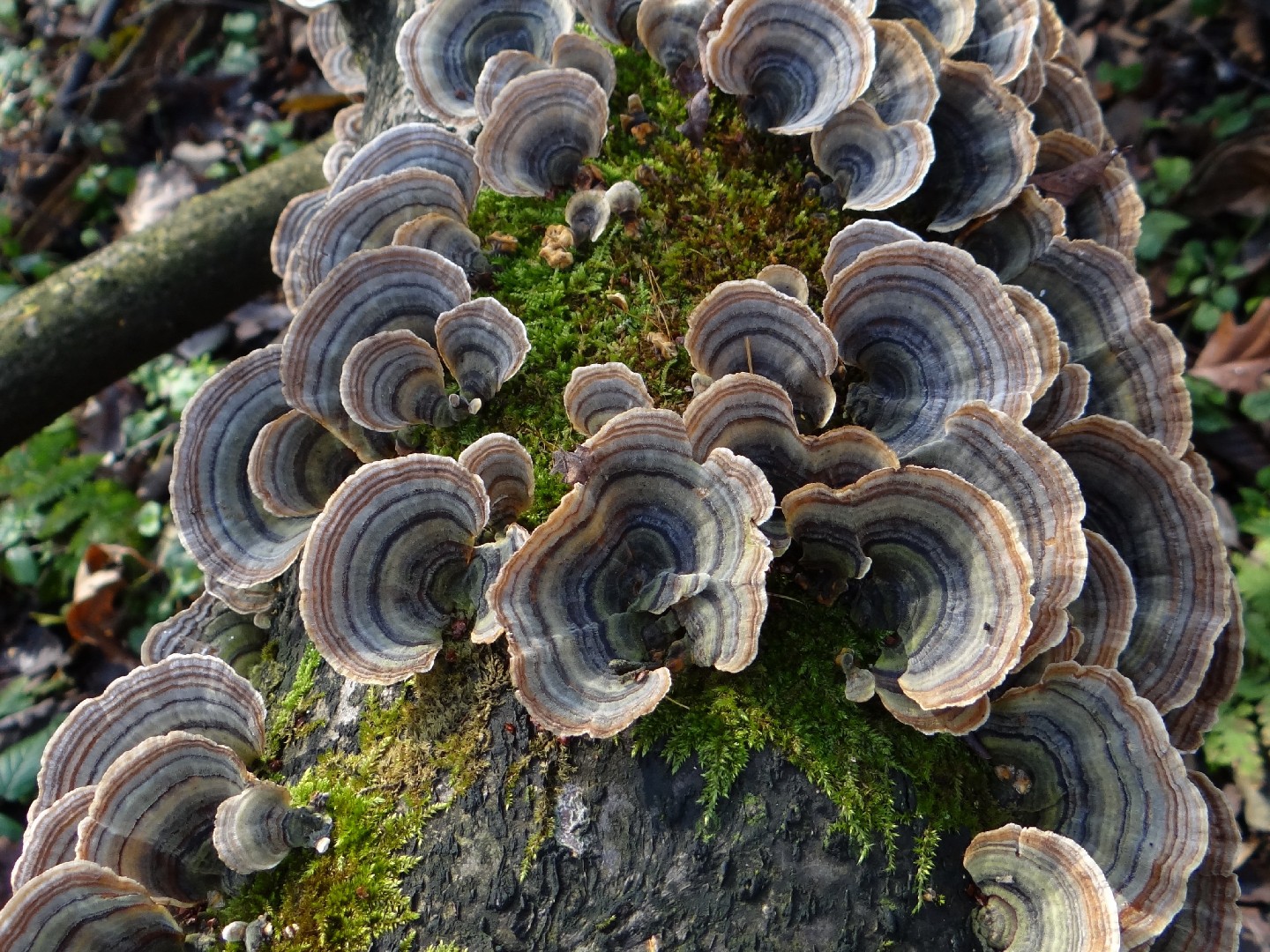
3. Turkey tail
The distinctively-striped turkey tail fungus grows on stumps and logs all over the forests of the northern hemisphere. It is, in fact, probably the most common species you will find. That doesn't mean this mushroom is plain, however; each cap is uniquely patterned. Look for bands of alternating textures as well as color.

4. Orange mycena
The orange mycena is a bold little mushroom that is often found growing in large clusters on dead hardwoods. The species can be found in moist forests across eastern North America. Some of its orange-red pigment may rub off and stain skin upon handling, so this mushroom is best left alone.
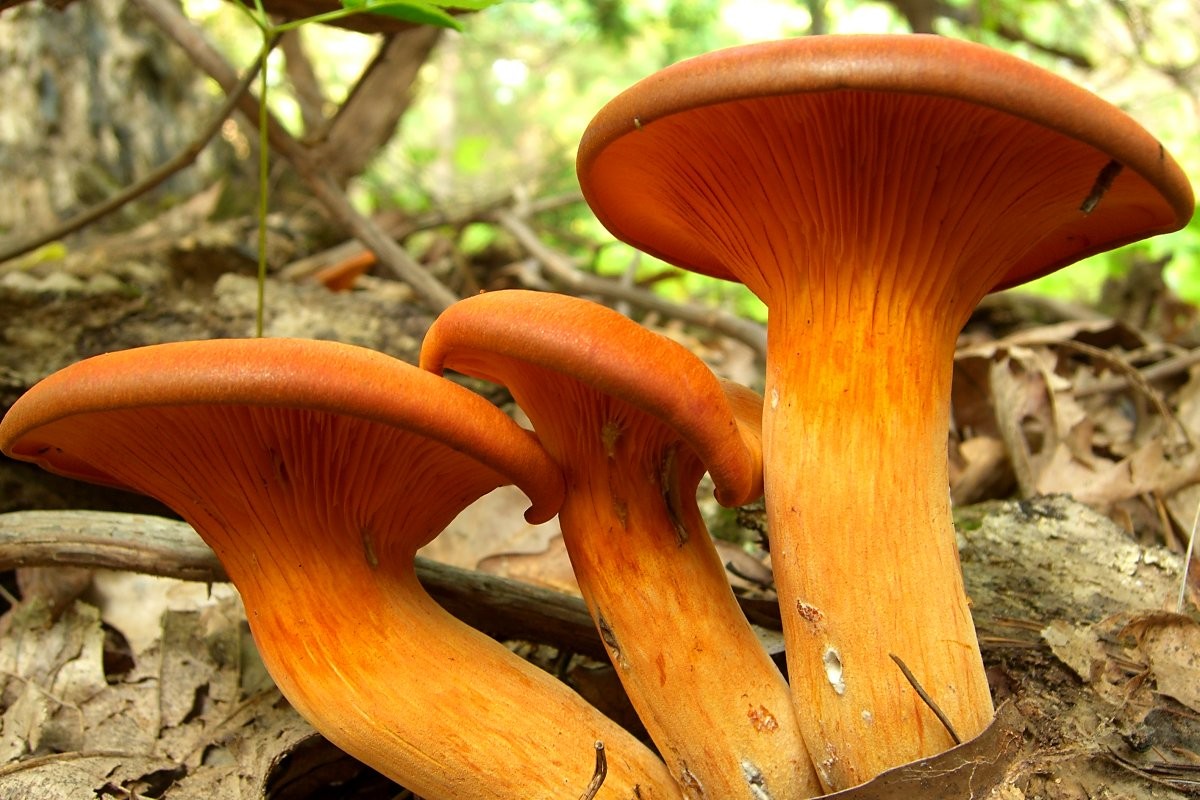
5. Jack-o'lantern mushroom
The jack-o'lantern mushroom is so-called because of its bright orange color, and because it often appears in the fall (usually before Halloween, though). This vibrant little mushroom can be found growing on decaying hardwood stumps and logs. The species does have some superficial resemblances to the highly edible chanterelle (Cantharellus cibarius), but it is toxic and should be avoided!
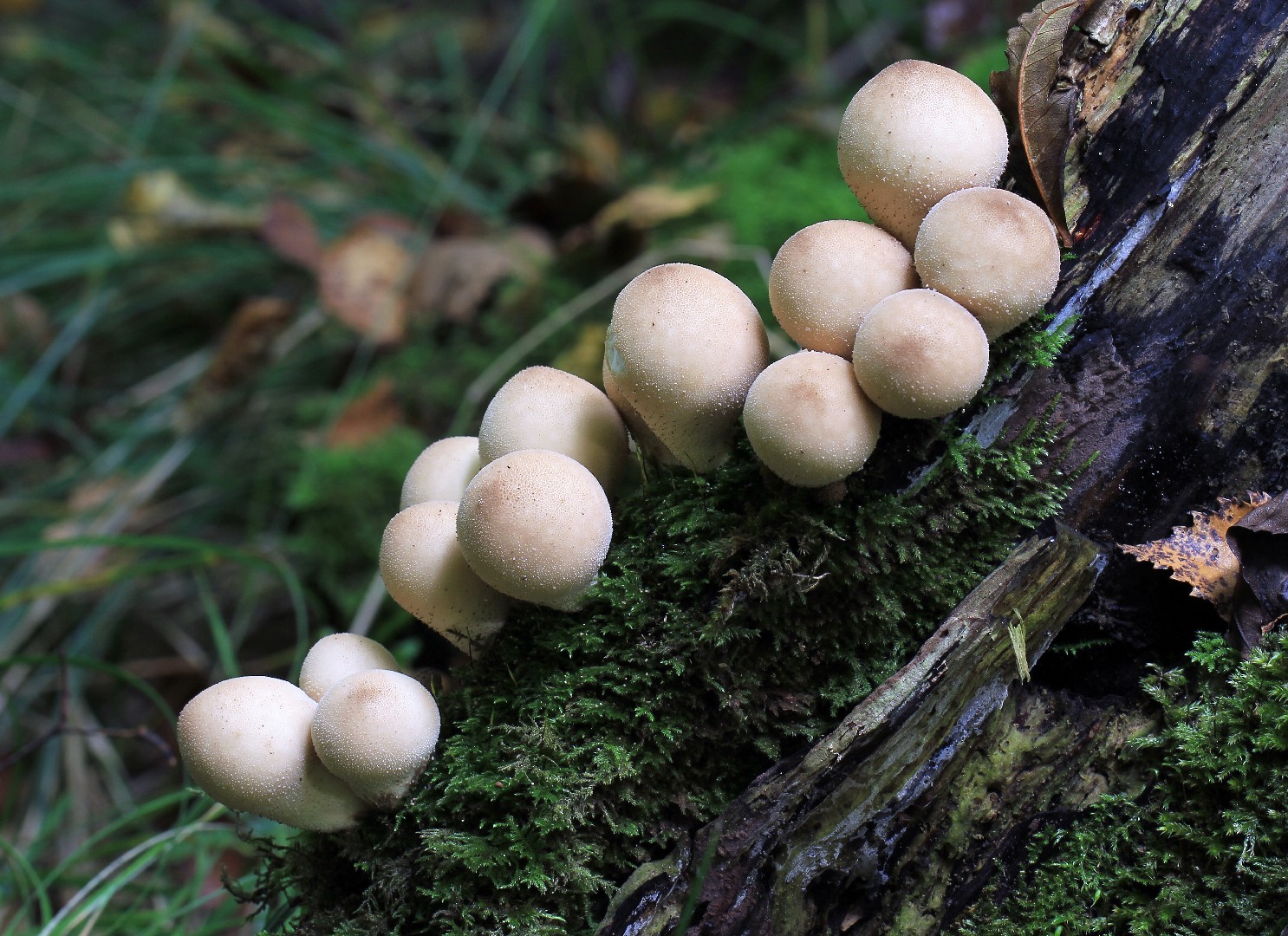
6. Pear-shaped puffball
The mushrooms of this species grow in such tight clusters that they may cover fallen trees and stumps almost entirely in a brownish, puffy coat. Pear-shaped puffballs appear all around the northern hemisphere on decaying hardwoods from fall through winter.
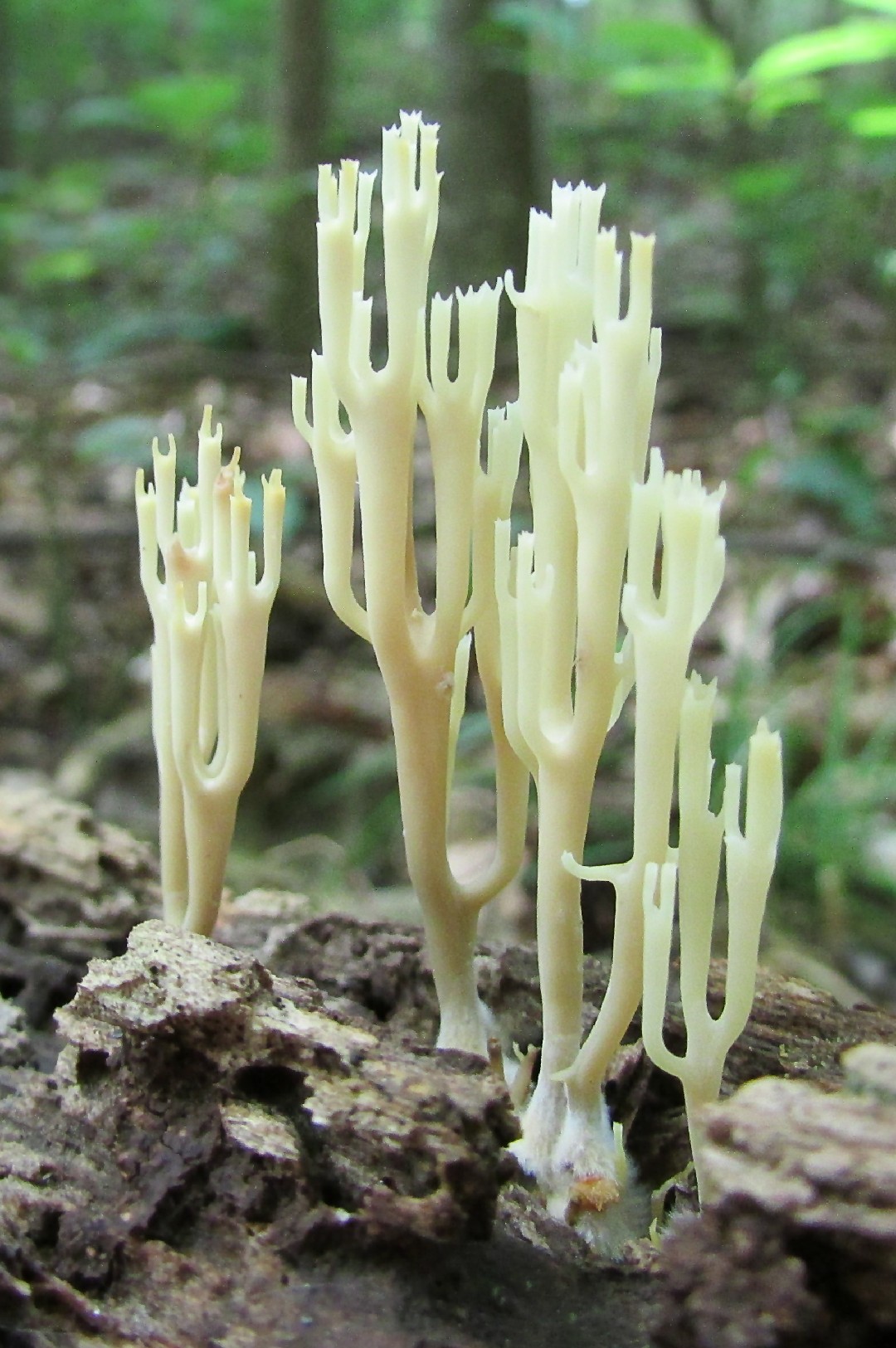
7. Crown-tipped coral
Crown-tipped coral(Artomyces pyxidatus) is a widespread but uncommon species in North America and Western Europe whose Latin name, meaning "box-like," is inspired by its structure. It is one of the few coral fungi to fruit on wood. After a period of absence lasting over a century, it has recently reappeared in Great Britain.
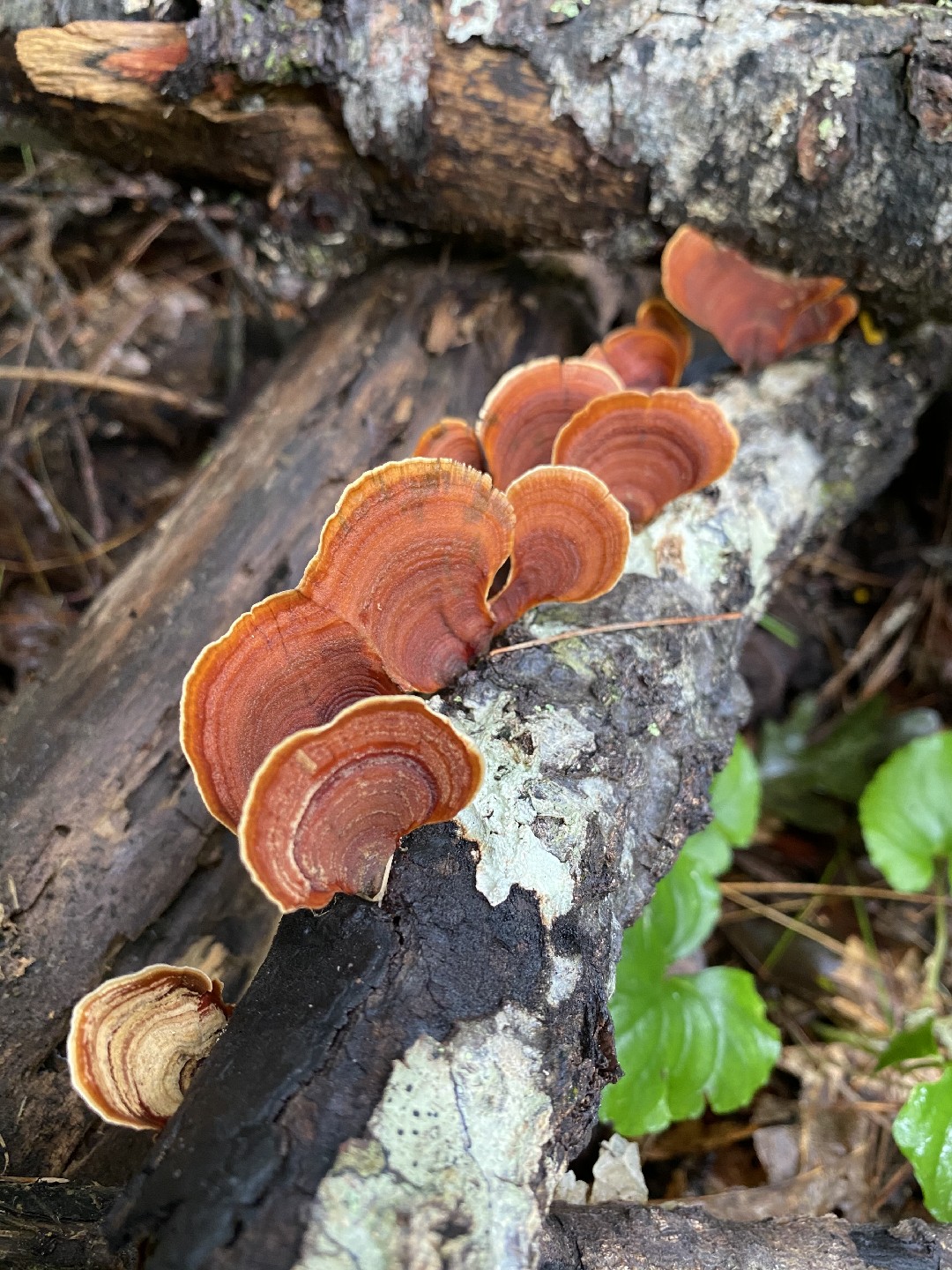
8. False turkey-tail
A common woodland fungus found across North America, the false turkey-tail thrives in wet environs and can be found in copious quantities on decaying wood. The species is so-called because it looks similar the also-common Turkey Tail (Tremetes versicolor) - both species grow in thin, roughly semi-circular sheets. False turkey-tails have tough, woody bodies and are considered to be inedible.
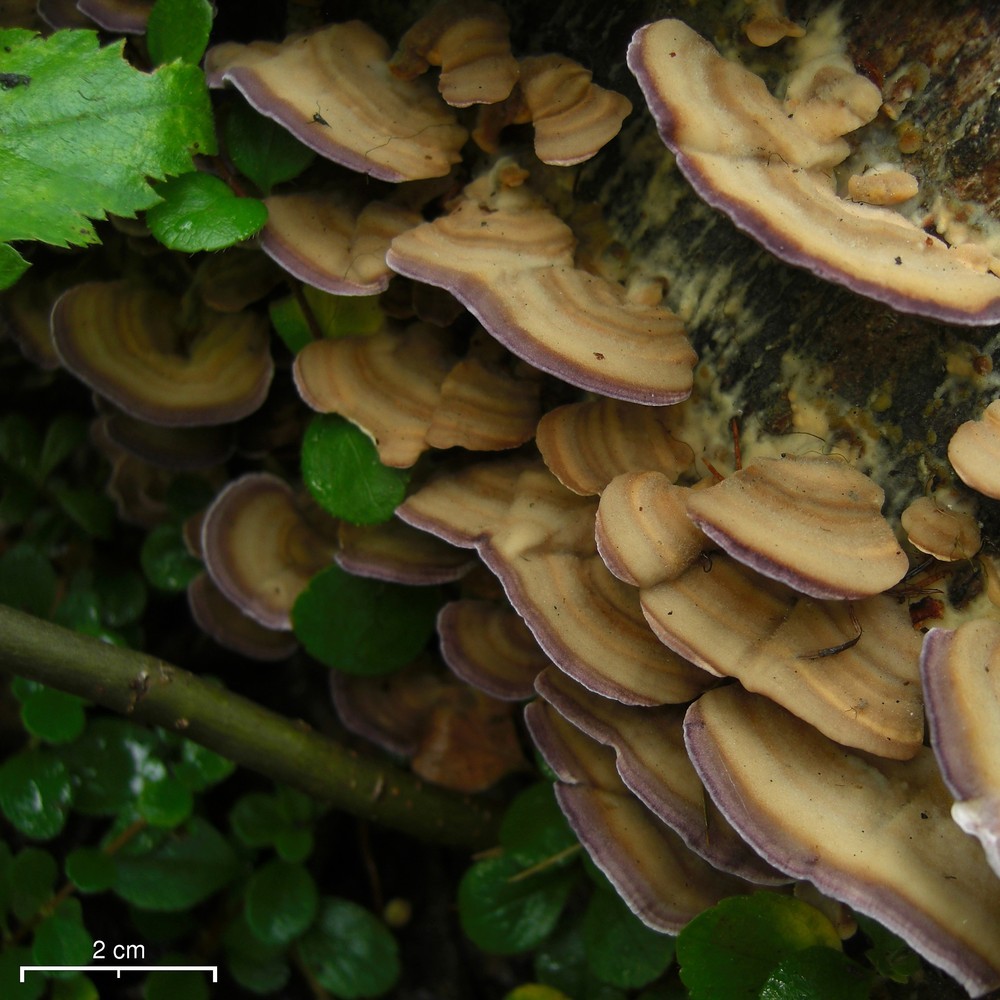
9. Violet-toothed polypore
This inedible shelf or bracket fungus grows in overlapping clusters and layers on hardwood stumps and fallen logs. It also causes a sapwood rot in standing trees. Check under the violet-toothed polypore's cap for its secret lilac-shaded pore surface studded with descending “teeth.”
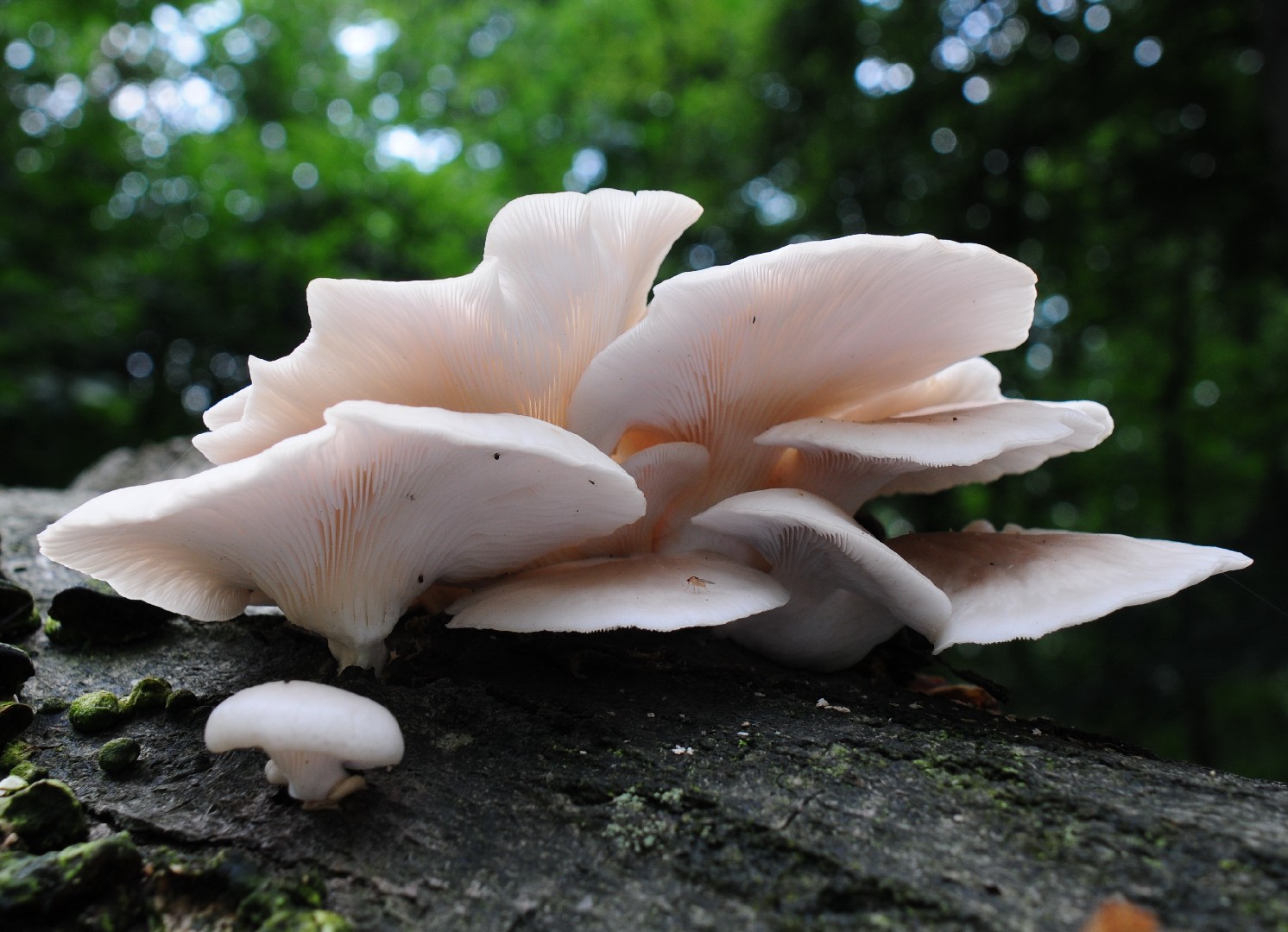
10. Lung oyster
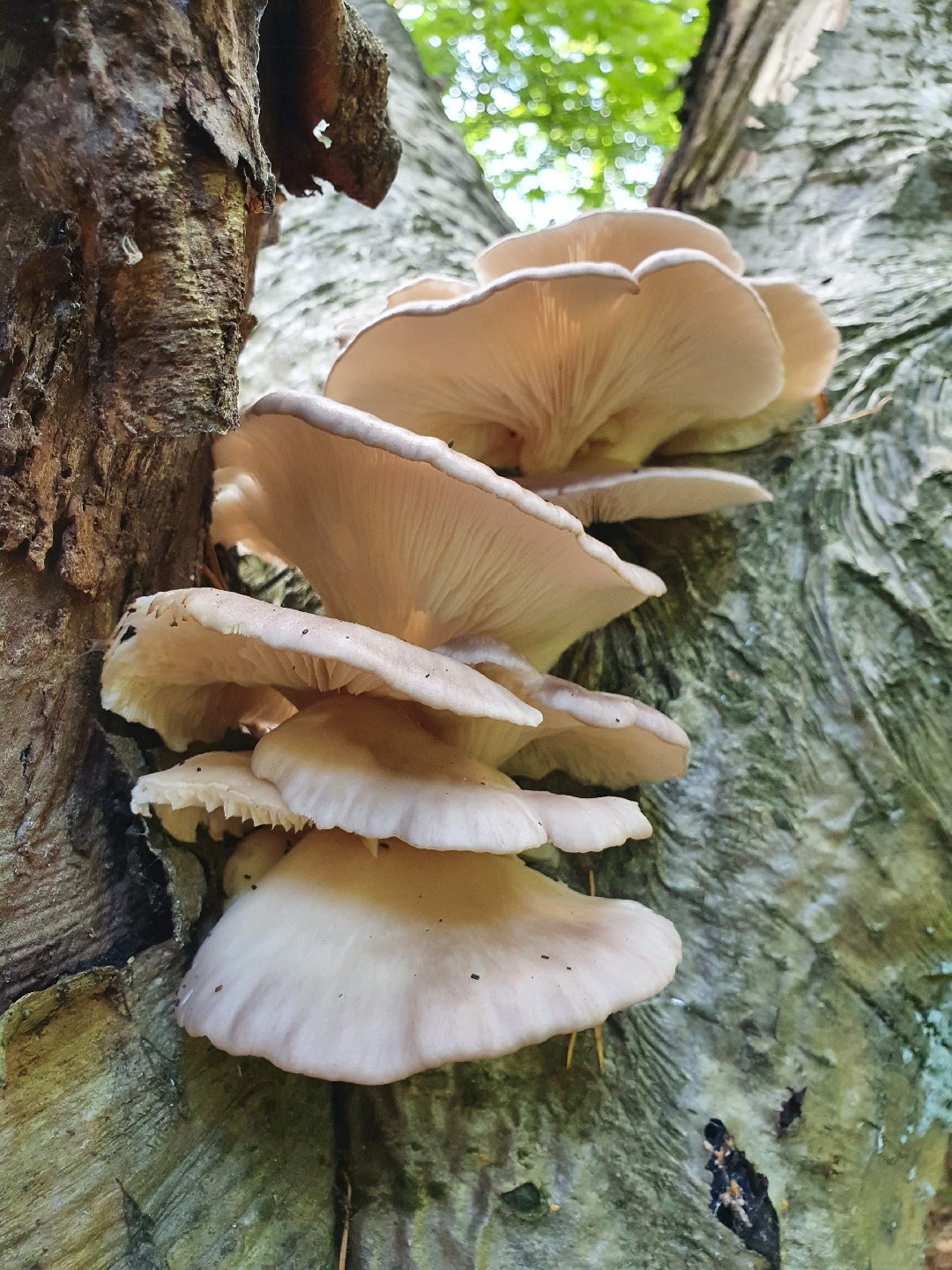
Developing all around the northern hemisphere, lung oyster mushrooms grow in overlapping shelf-like clusters on deciduous branches, trunks, and fallen logs in the wild. They are easy to cultivate on other substrates, like spent coffee grounds and sawdust, for commercial production. They are generally considered safe to eat, although some people may develop allergies.
More







