




Top 20 Most Common Mushrooms in Hannibal
Welcome to our exploration of the top 20 mushrooms found in abundance in Hannibal, a zone bursting with fungal diversity. Known for its unique blend of terrestrial features, Hannibal provides the ideal environment for a variety of mushroom species to thrive. Join us as we delve into the fascinating world of mycology rooted in Hannibal.

Most Common Mushrooms
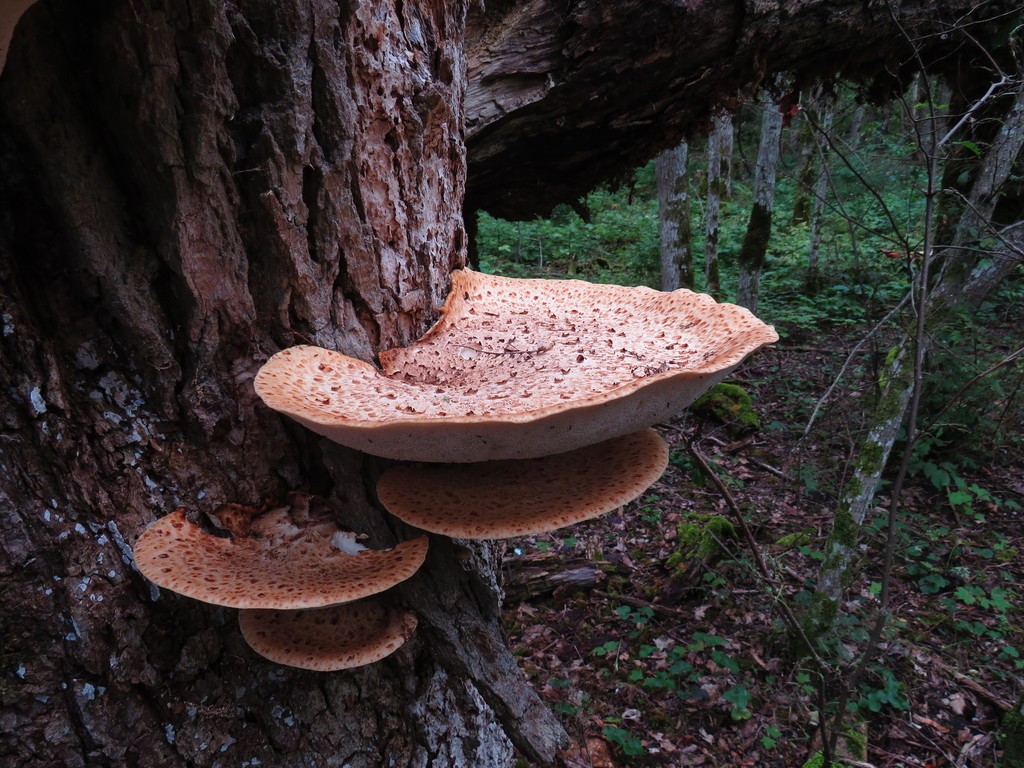
1. Dryad's saddle
A familiar sight to spring morel hunters, dryad's saddle is noteworthy for its large size, striking scales, and watermelon-like smell. Similar to other mushrooms in the bracket fungi family, dryad's saddle can be used to make paper. Younger mushrooms are better suited for this purpose due to their smaller and more consistent fibers.
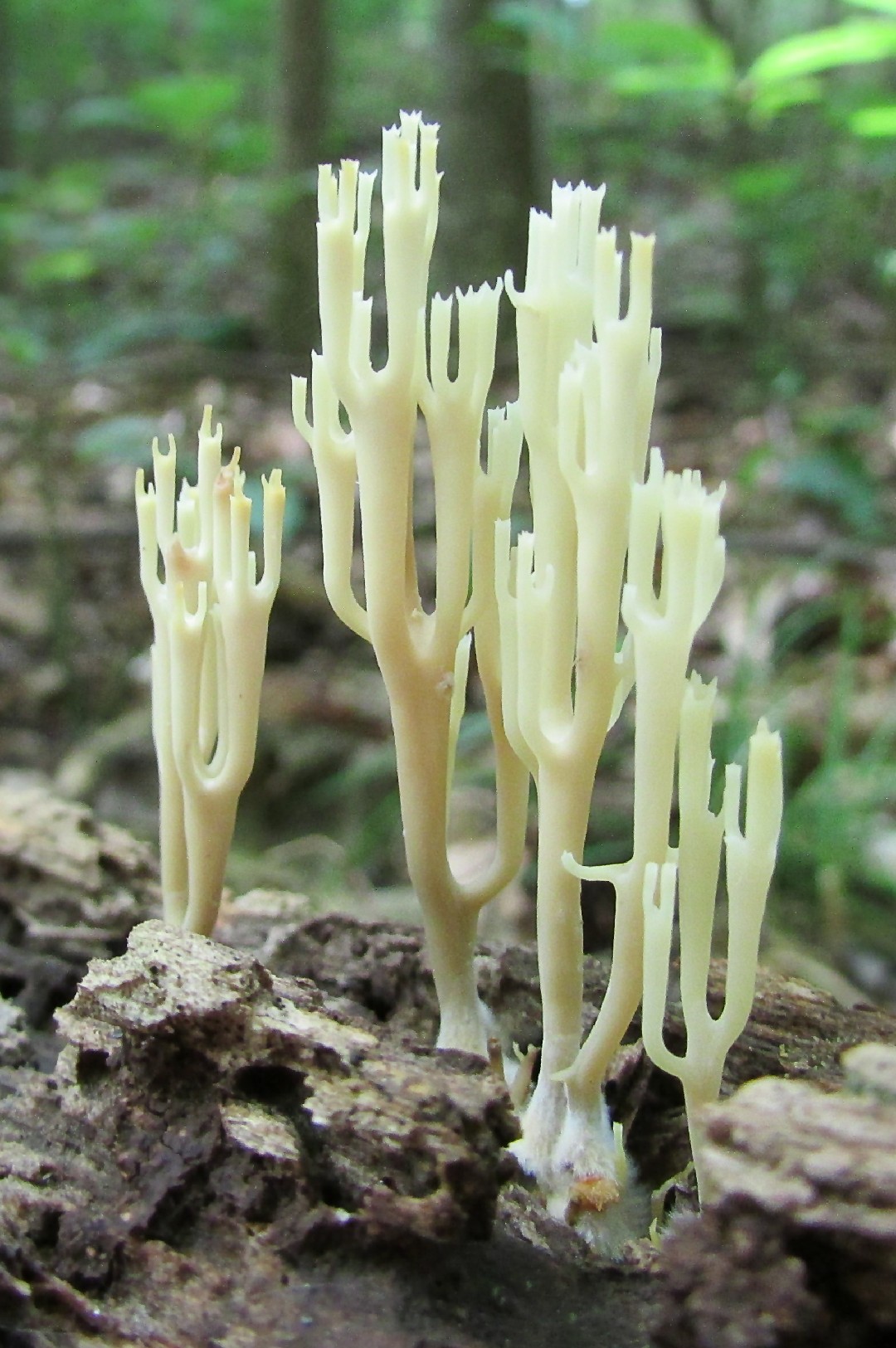
2. Crown-tipped coral
Crown-tipped coral(Artomyces pyxidatus) is a widespread but uncommon species in North America and Western Europe whose Latin name, meaning "box-like," is inspired by its structure. It is one of the few coral fungi to fruit on wood. After a period of absence lasting over a century, it has recently reappeared in Great Britain.
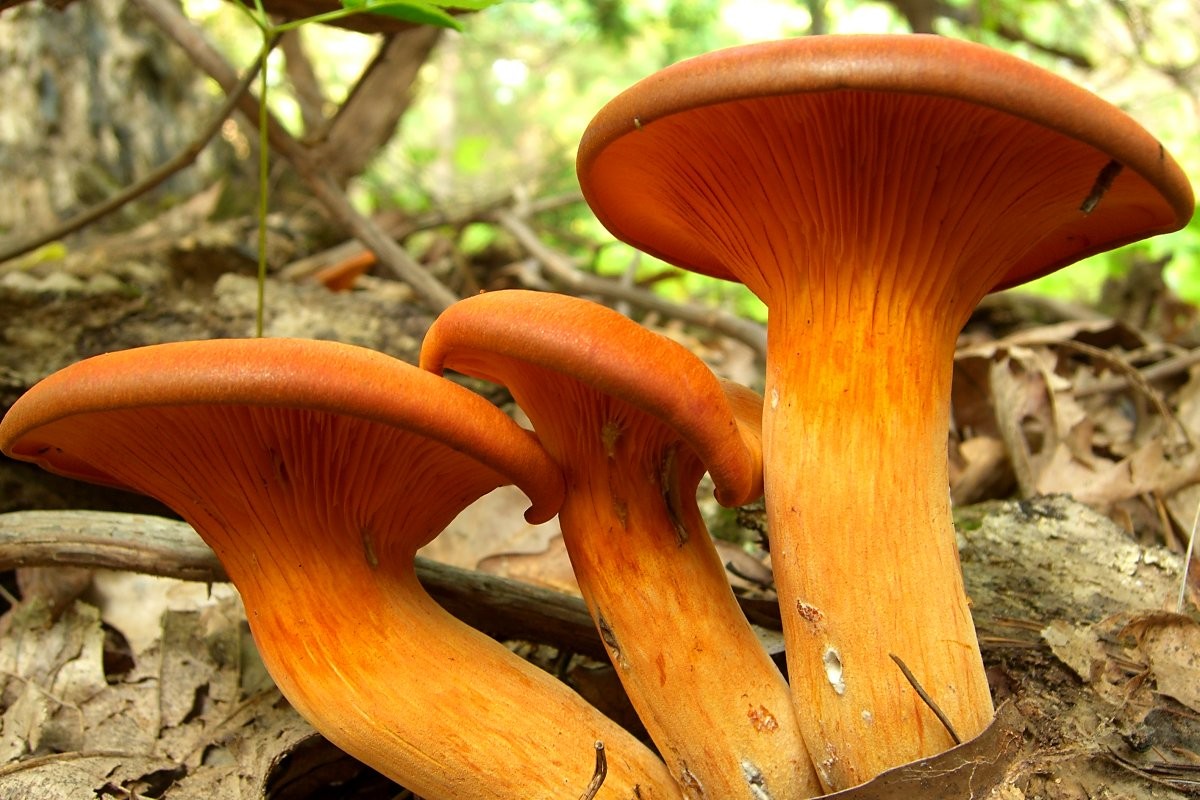
3. Jack-o'lantern mushroom
The jack-o'lantern mushroom is so-called because of its bright orange color, and because it often appears in the fall (usually before Halloween, though). This vibrant little mushroom can be found growing on decaying hardwood stumps and logs. The species does have some superficial resemblances to the highly edible chanterelle (Cantharellus cibarius), but it is toxic and should be avoided!
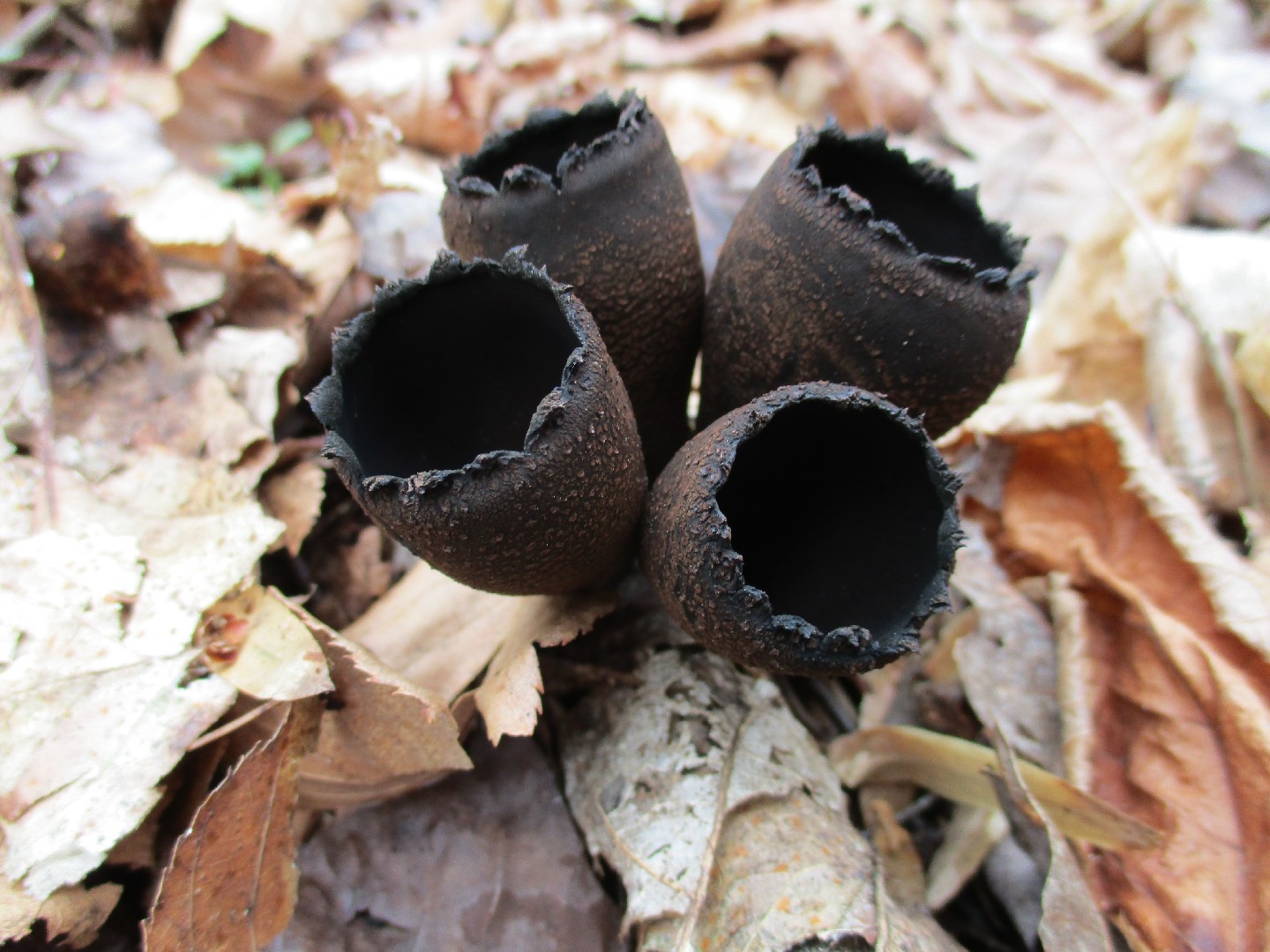
4. Devil's urn
The devil's urn (Urnula craterium) is a black or brown cup-shaped fungus. The species' tough, cracked outer layer and dark coloration may give it a scorched appearance. Devil's urns tend to grow in clusters and are usually found adorning fallen branches and rotting logs. Though the species is not edible itself, gatherers keep an eye out for it, as it usually fruits at about the same time as morels.
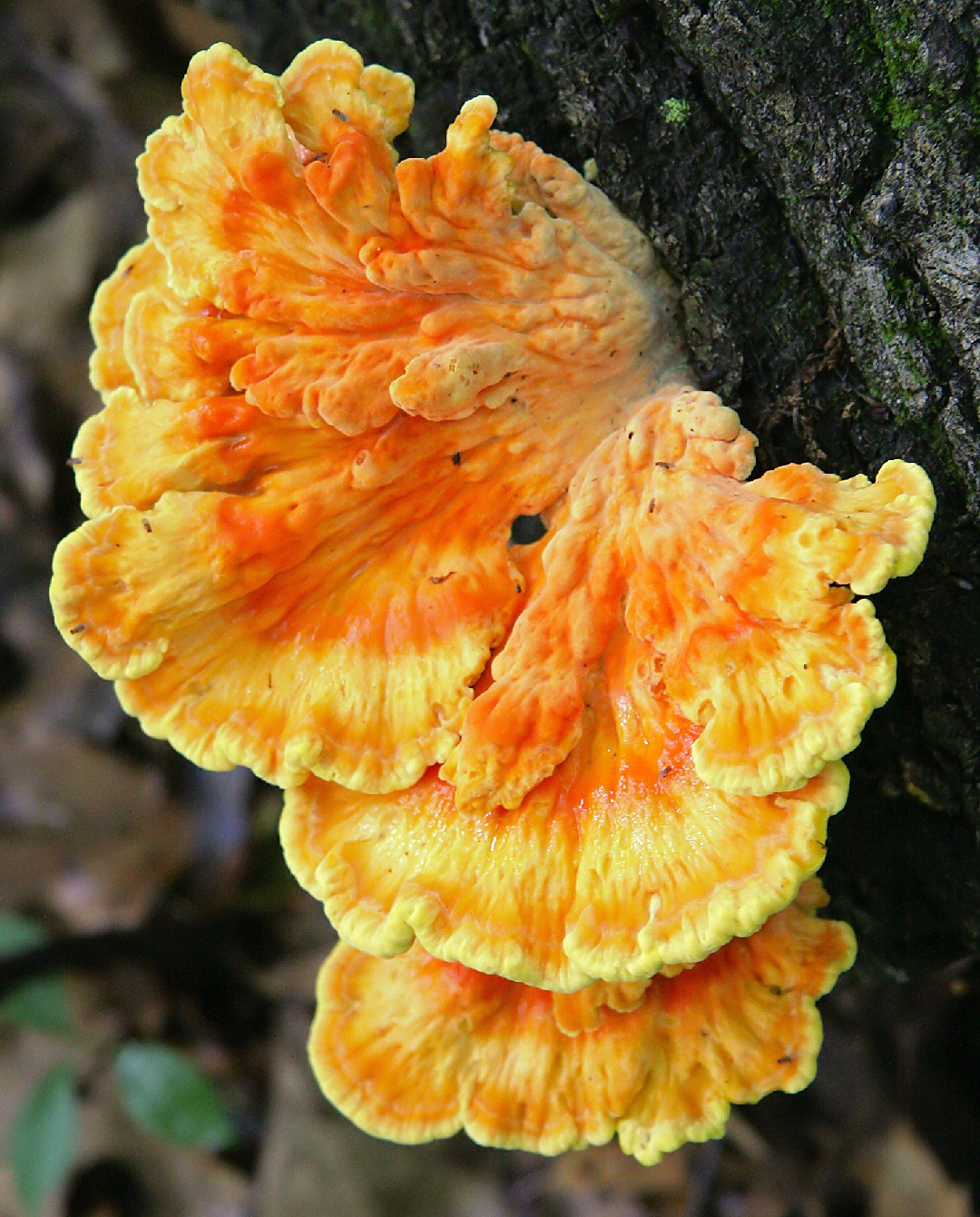
5. Chicken of the woods
Chicken of the woods is very noticeable in hardwood forests, appearing in clusters on standing tree trunks in bright orange and yellow hues that sometimes last through the entire winter. It is a parasite that causes an unfortunate brown heart rot, and is considered a particularly troublesome pest of Yew trees. If the fruitbodies can be seen, the tree is likely already beyond saving.
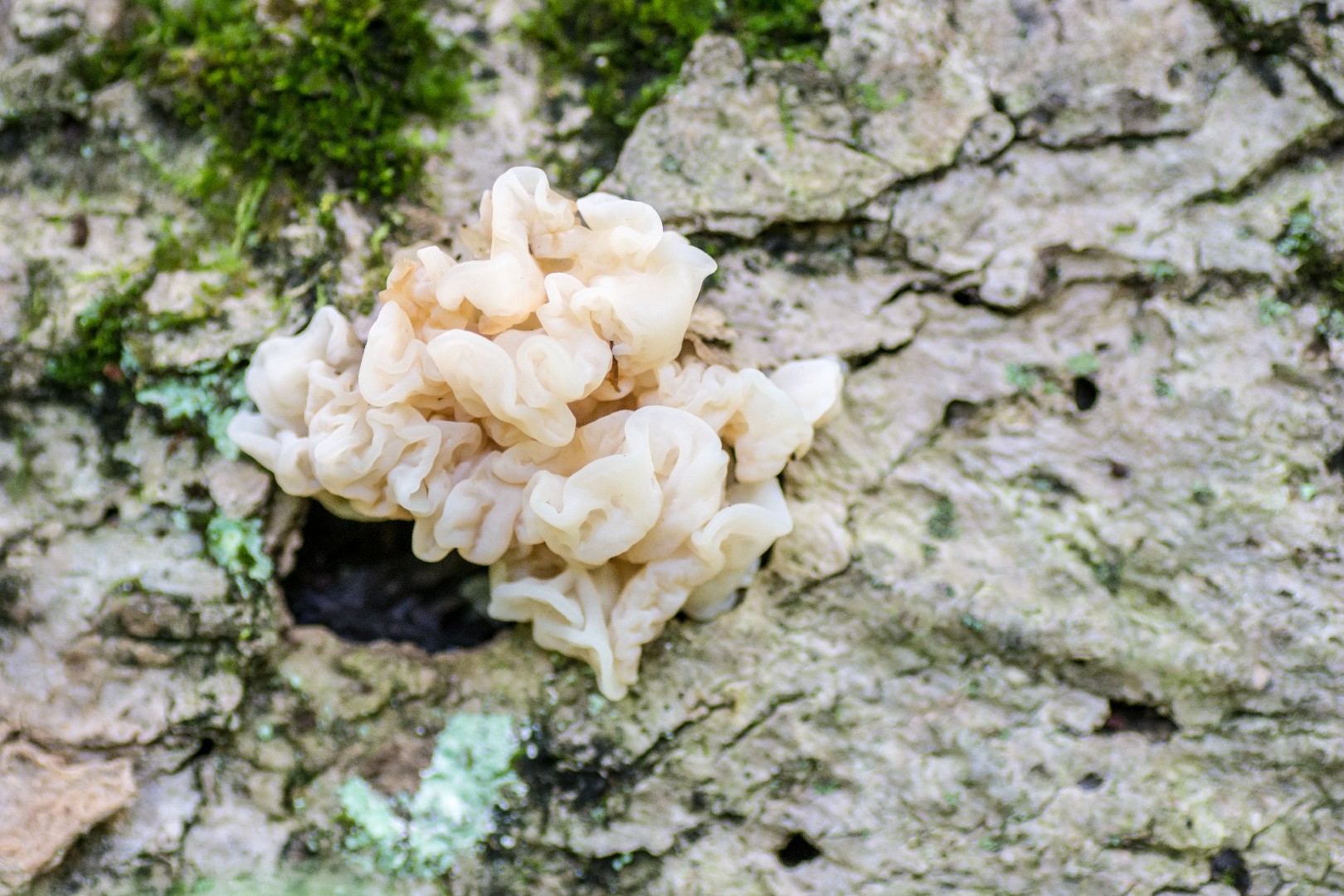
6. White jelly fungus
Unlike other jelly mushrooms, which are typically found on fresh deadwood, white jelly fungus grows on well-decayed wood from hardwood trees. Its fruiting body is indeed white, fading to muted brown hues with age. Its shape has garnered a wide range of comparisons, from brains to popcorn to coral.
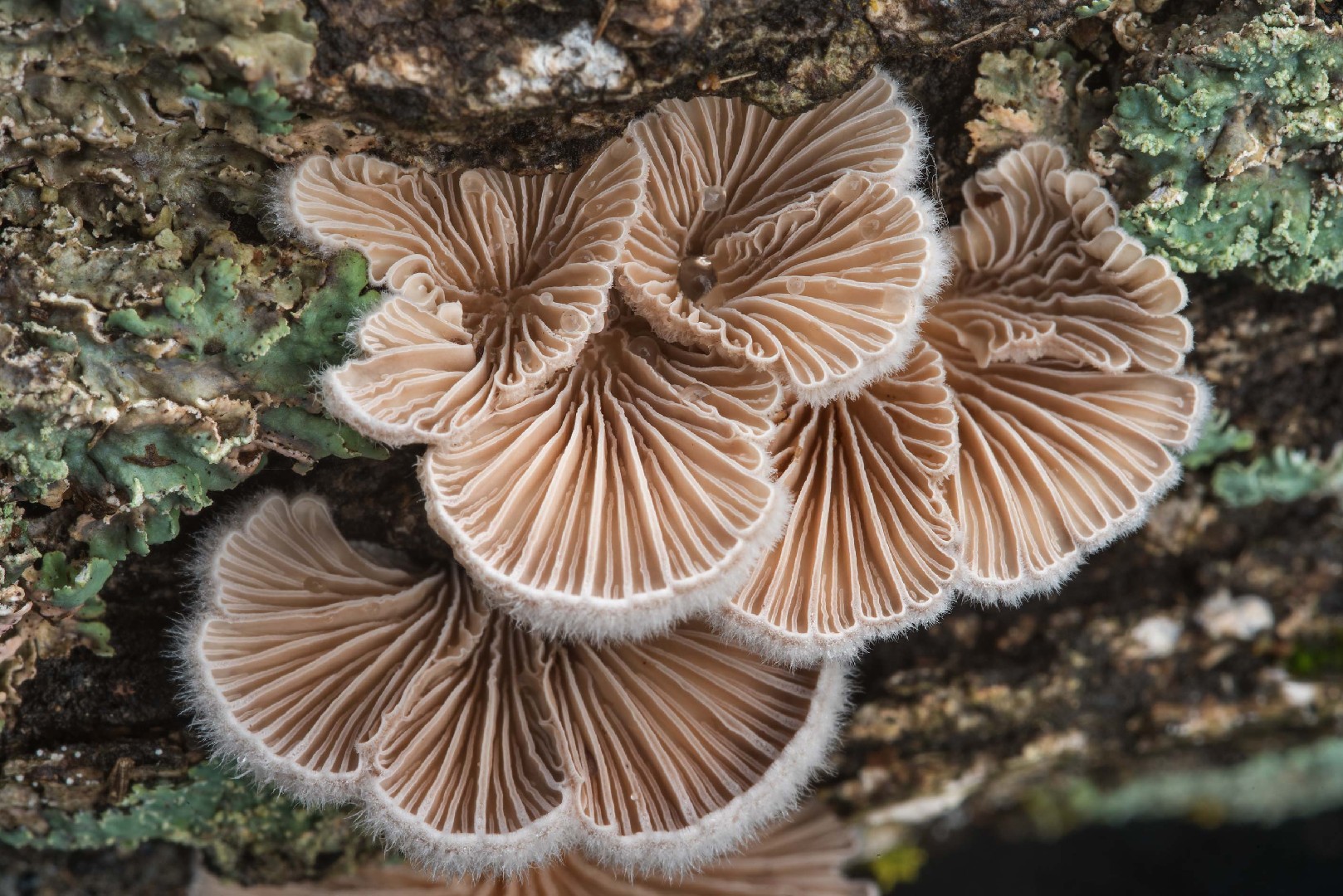
7. Split gill
Split gill(Schizophyllum commune) can be found across the globe. Uniquely, it is the only mushroom species known to display the capability to retract by movement. It is considered inedible, although not necessarily toxic. Furthermore, it is not recommended to smell this species, as the spores are capable of sprouting and growing in nasal passages.
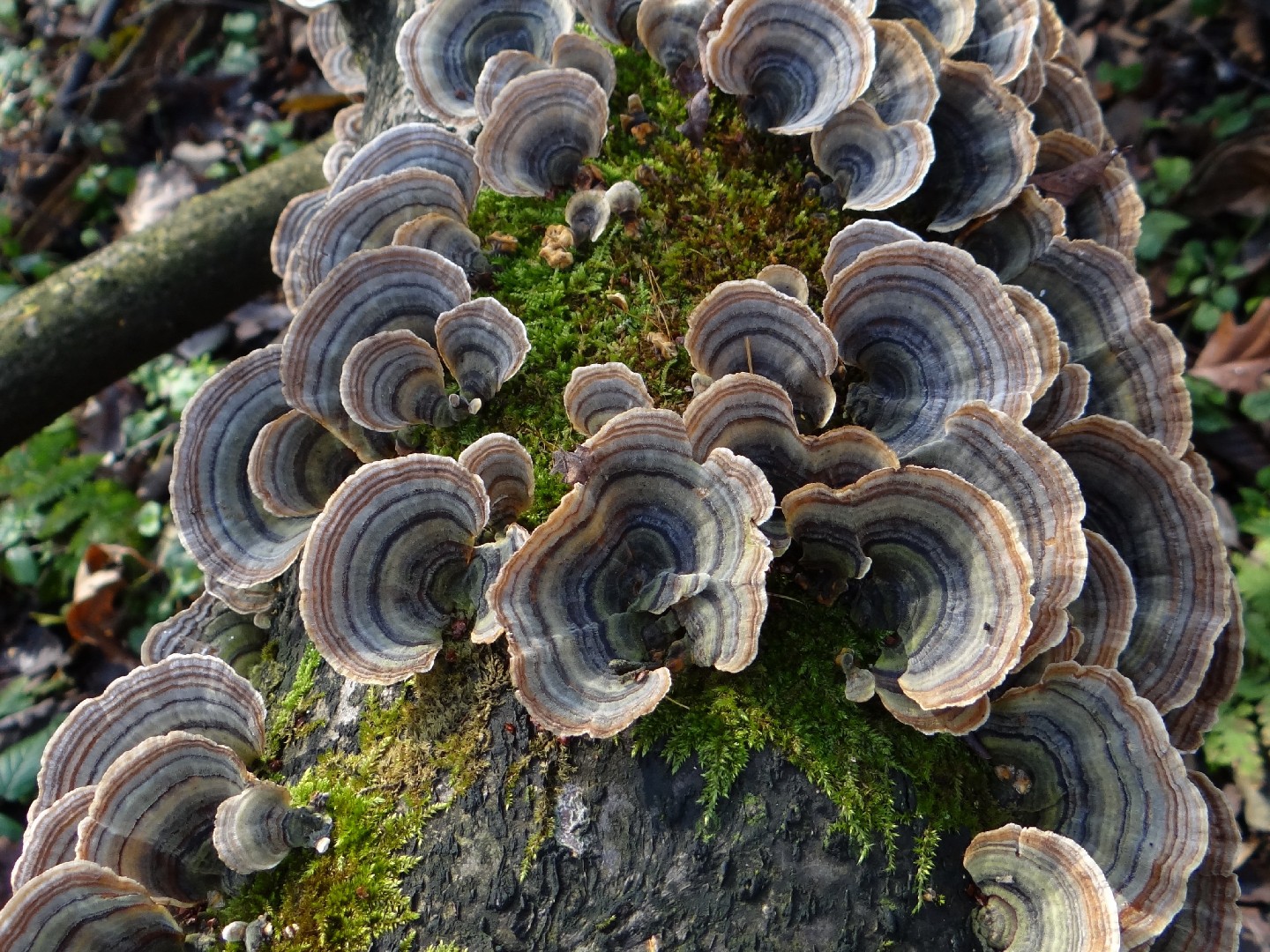
8. Turkey tail
The distinctively-striped turkey tail fungus grows on stumps and logs all over the forests of the northern hemisphere. It is, in fact, probably the most common species you will find. That doesn't mean this mushroom is plain, however; each cap is uniquely patterned. Look for bands of alternating textures as well as color.
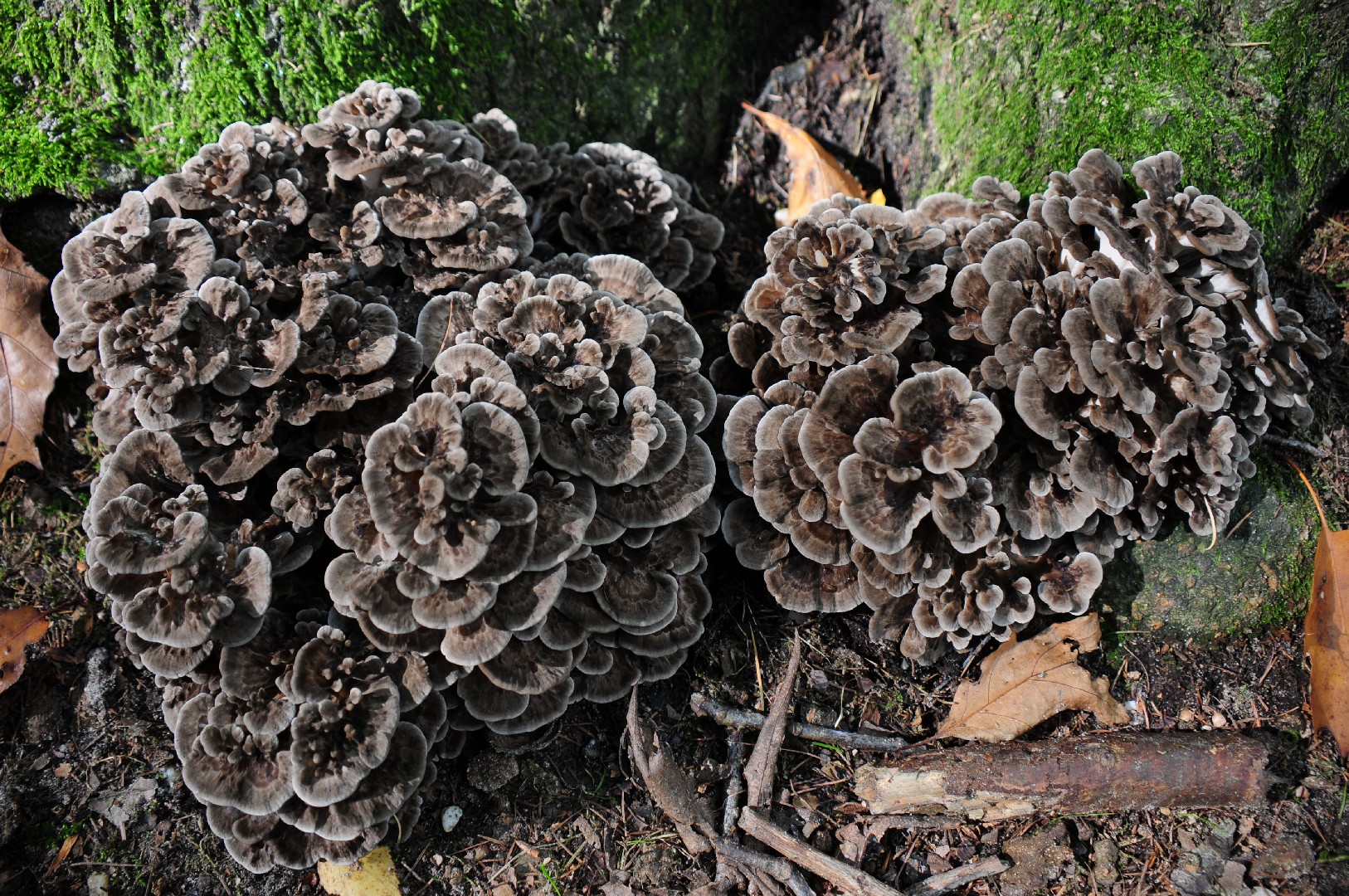
9. Hen-of-the-woods
Often found at the base of oak trees, this clustered fungus grows in distinctive rosettes. It attacks the roots of living hardwood trees. Hen-of-the-woods is considered edible when harvested young, and is cultivated in Japan on top of compressed sawdust.
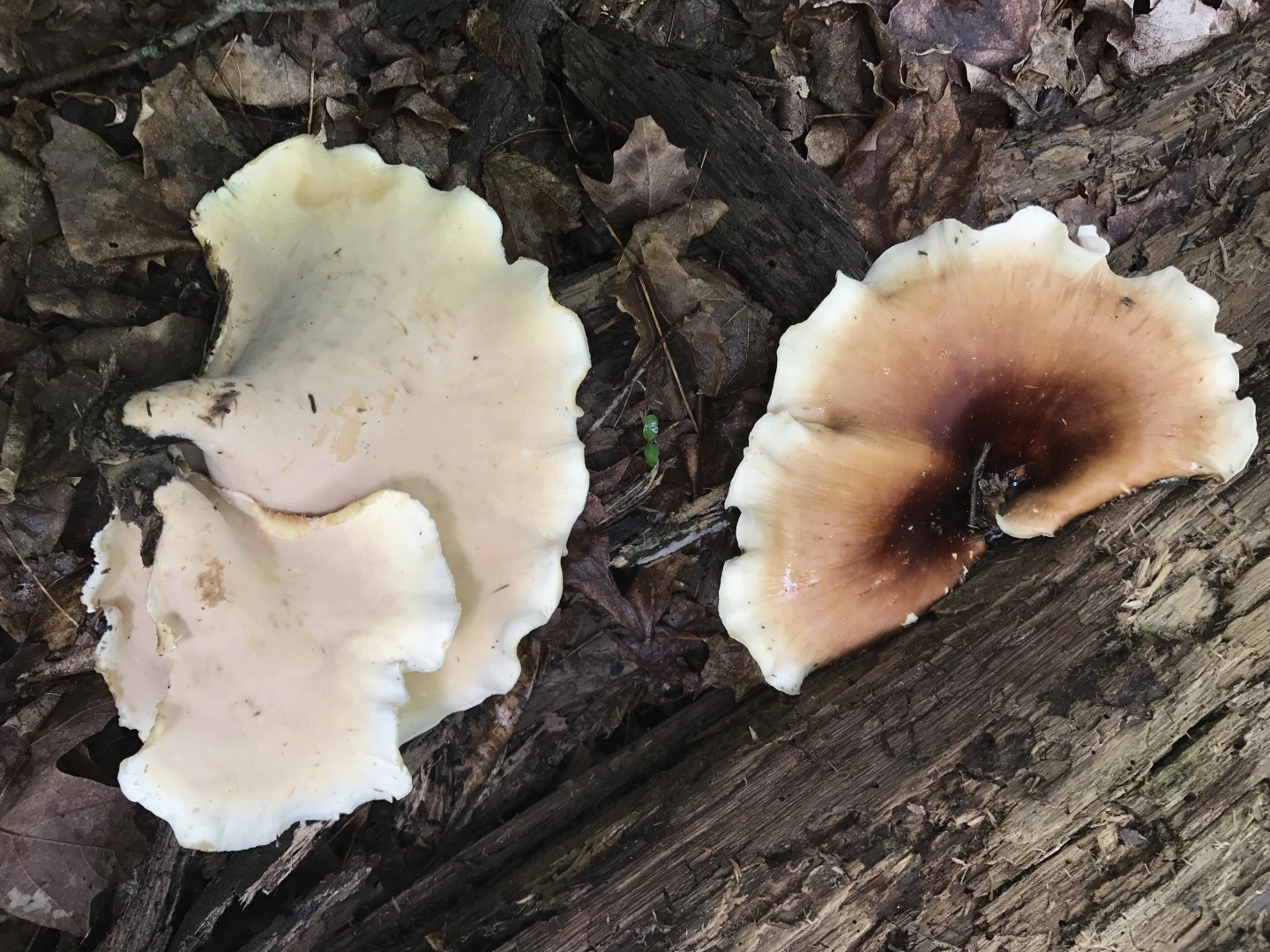
10. Black-footed polypore
This inedible fungus grows on fallen wood and stumps of deciduous trees. Black-footed polypores have the ability to remain through the winter, as they rot very slowly after releasing their spores. They are thus appreciated for providing a bit of visual interest in winter landscapes.


More







