




Top 20 Most Common Mushrooms in Big Rapids
Welcome to our exploration of the top 20 most prevalent fungi species in Big Rapids. A haven of natural beauty, Big Rapids is notable for its abundant moss-covered forests, rich soil, and climate, all of which provide an ideal environment for a myriad of mushrooms. With unparalleled variety, Big Rapids's fungi are as fascinating as they are plentiful in this remarkable ecosystem. So, prepared to be captivated as we delve into uncovering these common yet captivating varieties.

Most Common Mushrooms
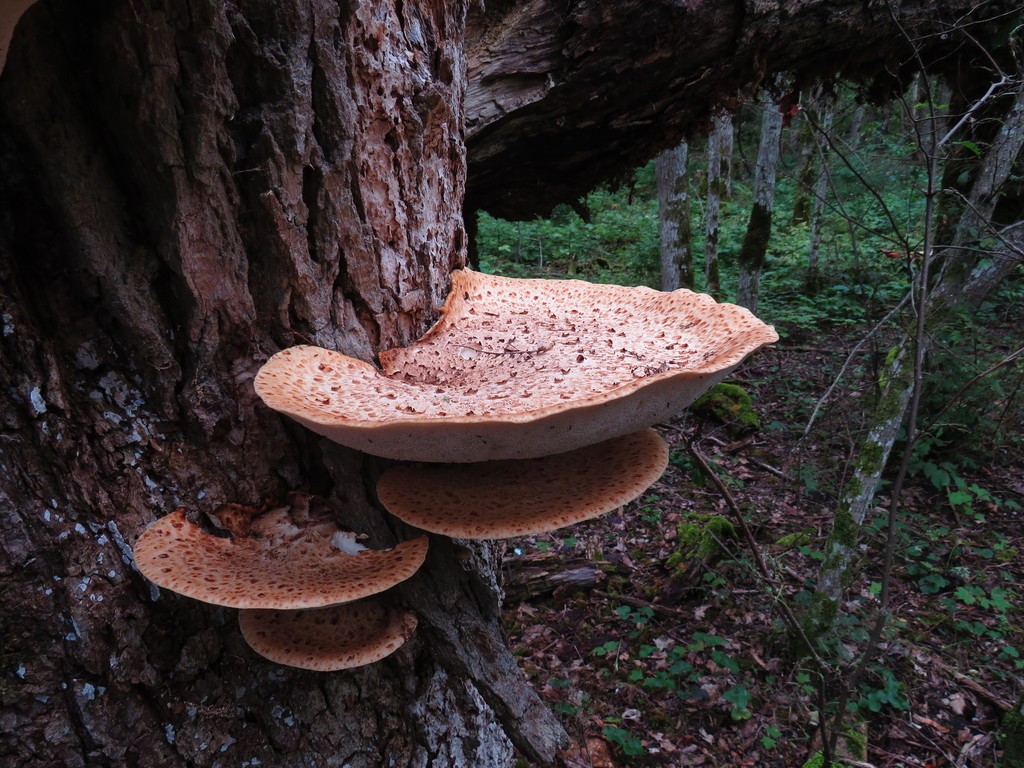
1. Dryad's saddle
A familiar sight to spring morel hunters, dryad's saddle is noteworthy for its large size, striking scales, and watermelon-like smell. Similar to other mushrooms in the bracket fungi family, dryad's saddle can be used to make paper. Younger mushrooms are better suited for this purpose due to their smaller and more consistent fibers.
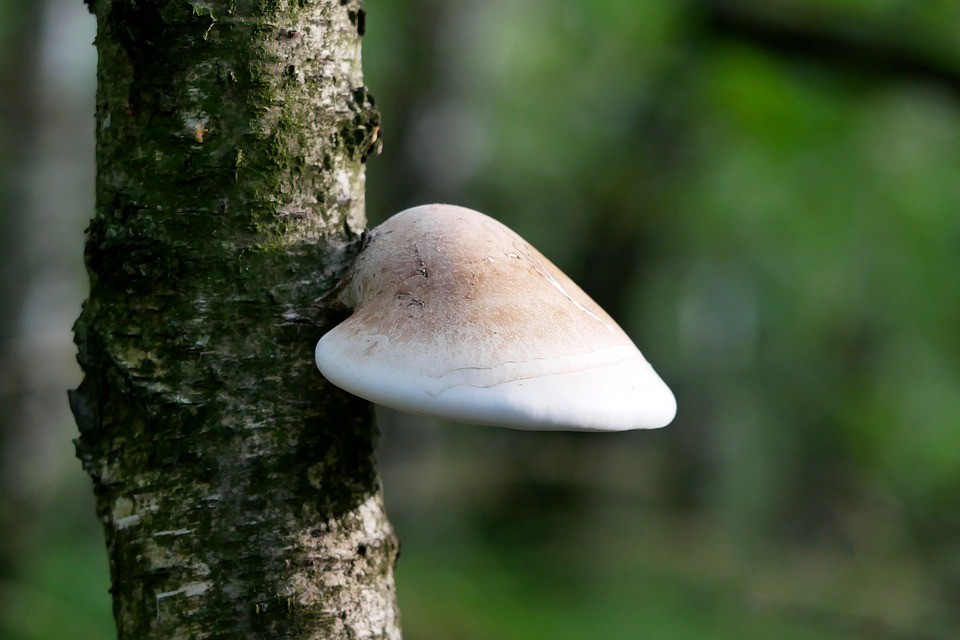
2. Birch polypore
The birch polypore has a variety of applications. Its thick skin has been used by barbers as a razor sharpener and as a mount for insect collectors. When dried, this mushroom was also used to carry fire over long distances because it burns slowly. The historical use of birch polypore doesn't stop there; pieces of this mushroom were found being carried by the five-thousand-year-old mummy Ötzi the Iceman.
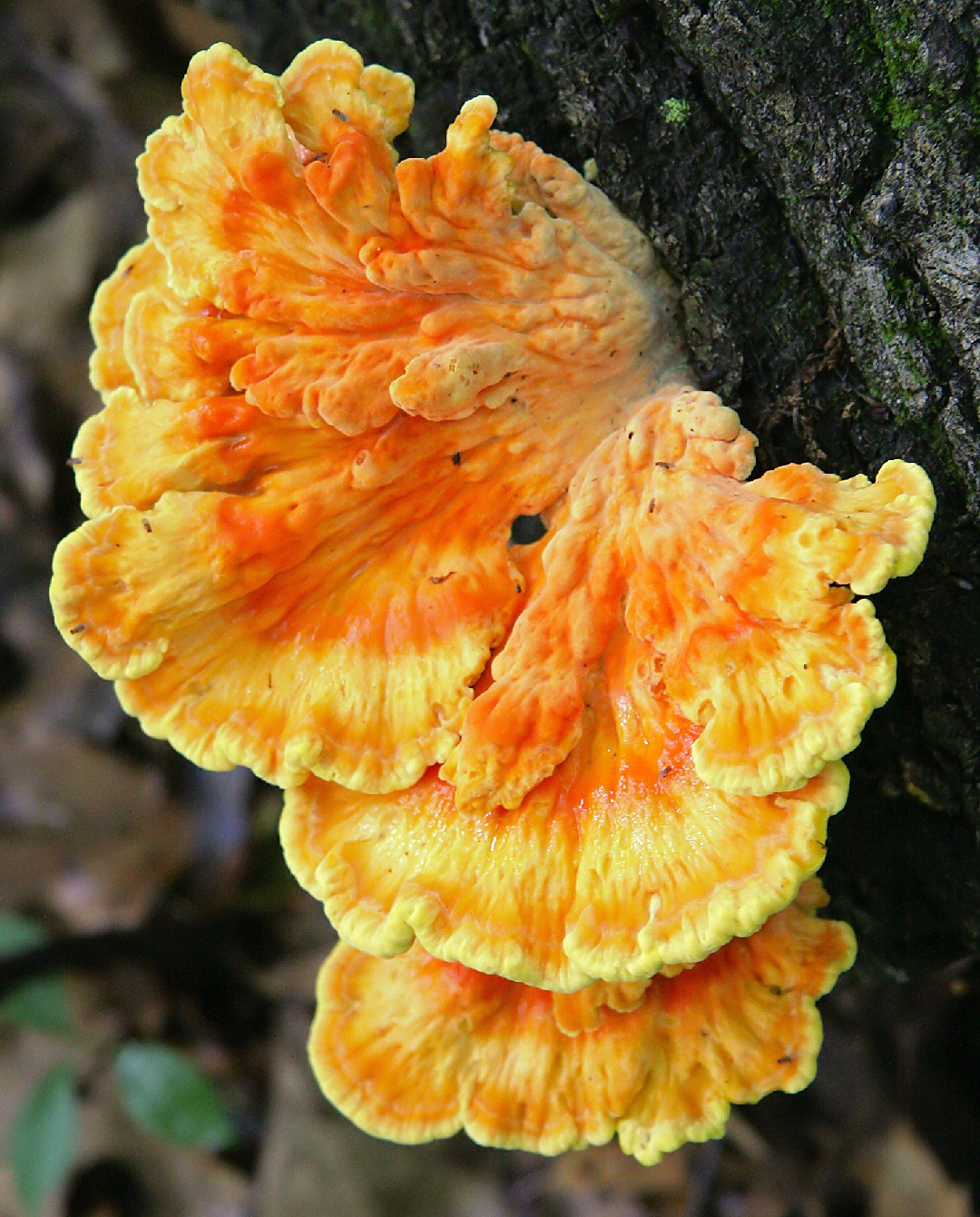
3. Chicken of the woods
Chicken of the woods is very noticeable in hardwood forests, appearing in clusters on standing tree trunks in bright orange and yellow hues that sometimes last through the entire winter. It is a parasite that causes an unfortunate brown heart rot, and is considered a particularly troublesome pest of Yew trees. If the fruitbodies can be seen, the tree is likely already beyond saving.
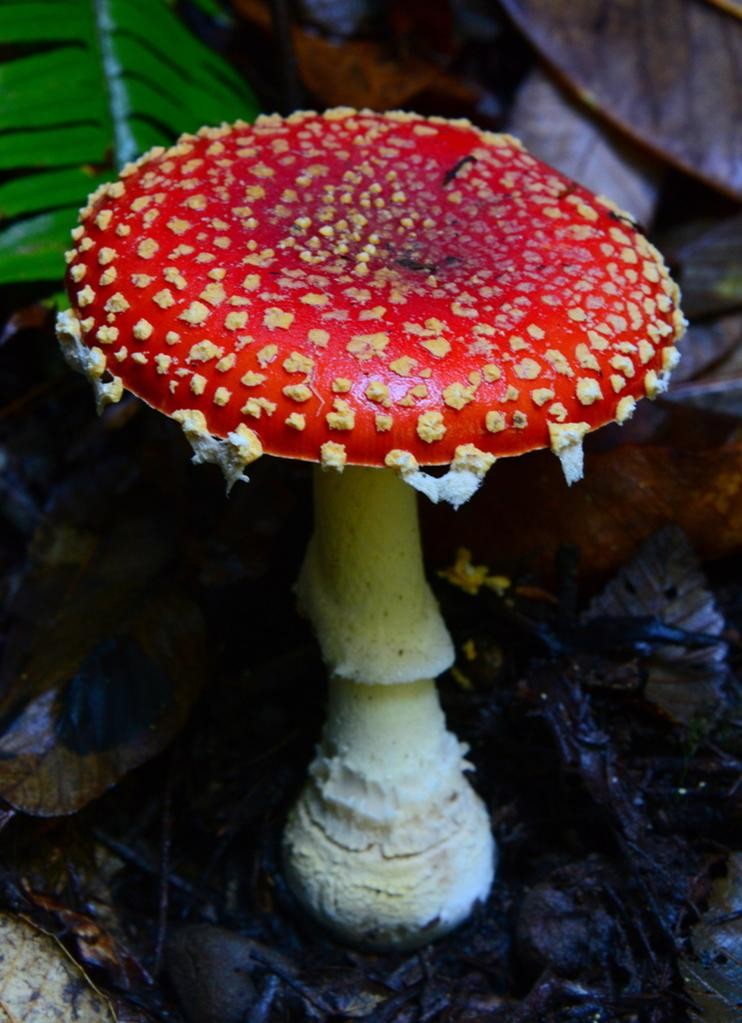
4. Fly agaric
In Northern Asia and Europe, fly agaric grows under trees near the winter solstice and is collected for ritual use tied to the season. Its characteristic shape and coloring are still ubiquitous in many European fairy tale illustrations and Christmas traditions. It is highly toxic.
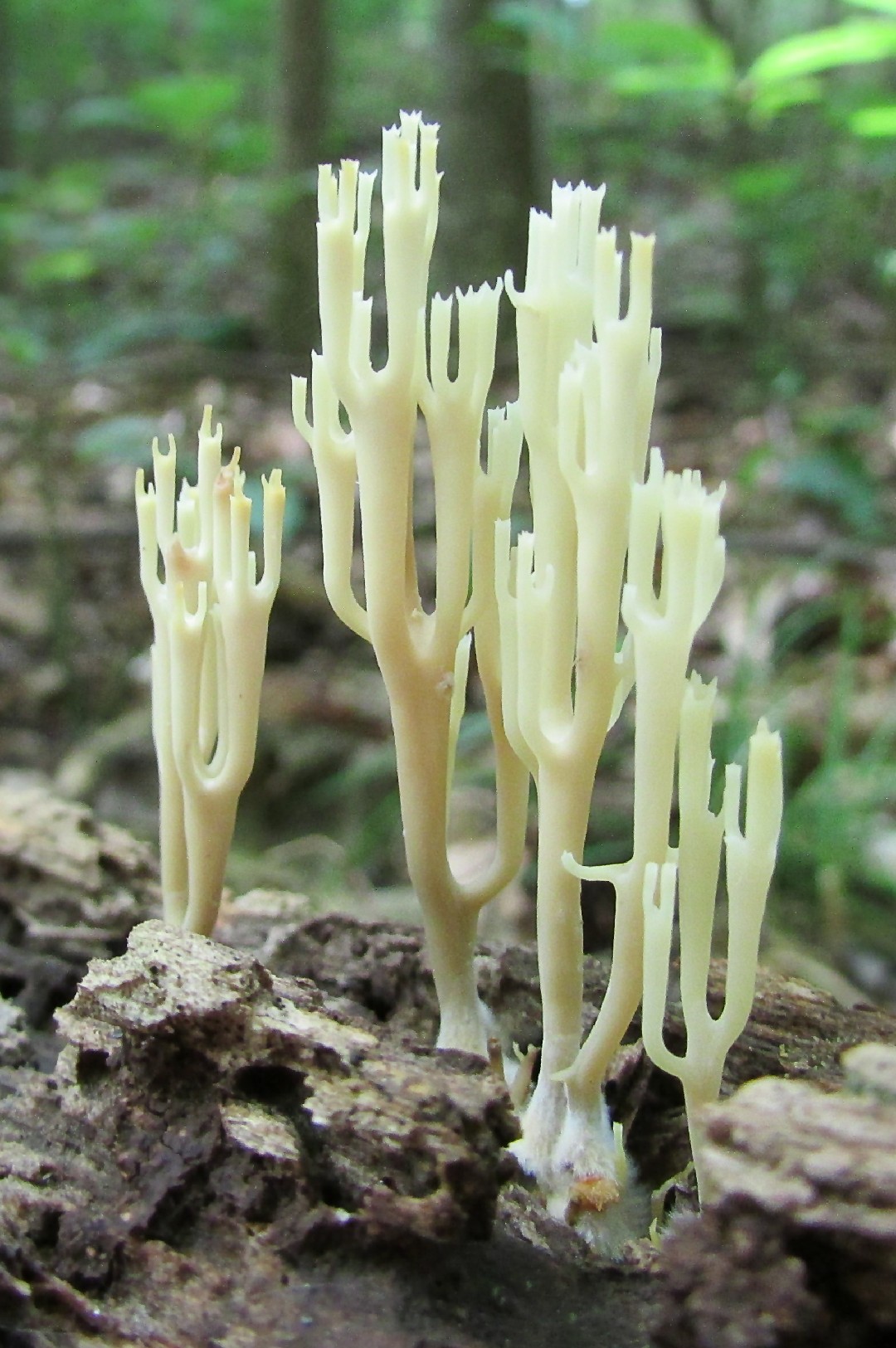
5. Crown-tipped coral
Crown-tipped coral(Artomyces pyxidatus) is a widespread but uncommon species in North America and Western Europe whose Latin name, meaning "box-like," is inspired by its structure. It is one of the few coral fungi to fruit on wood. After a period of absence lasting over a century, it has recently reappeared in Great Britain.
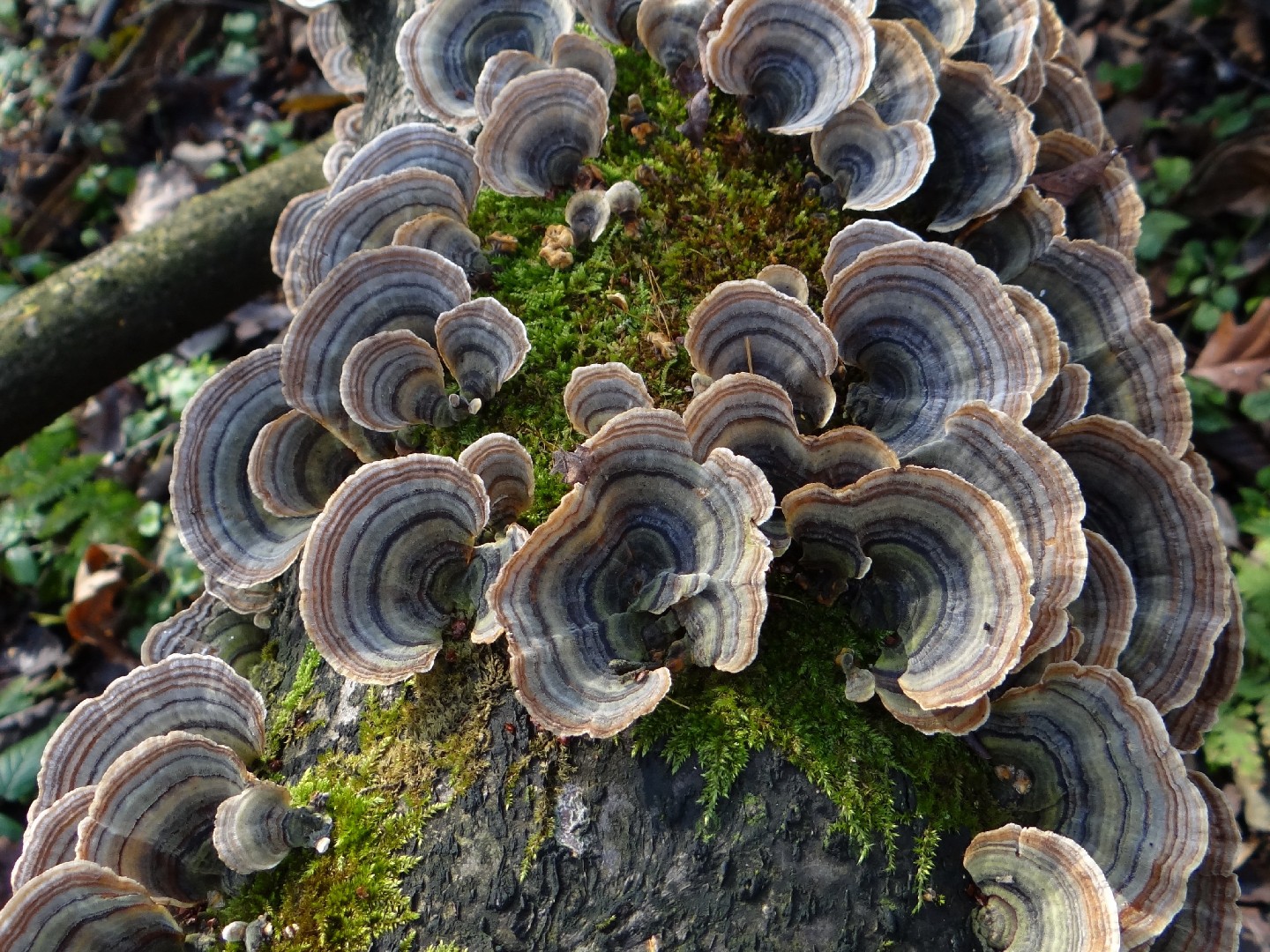
6. Turkey tail
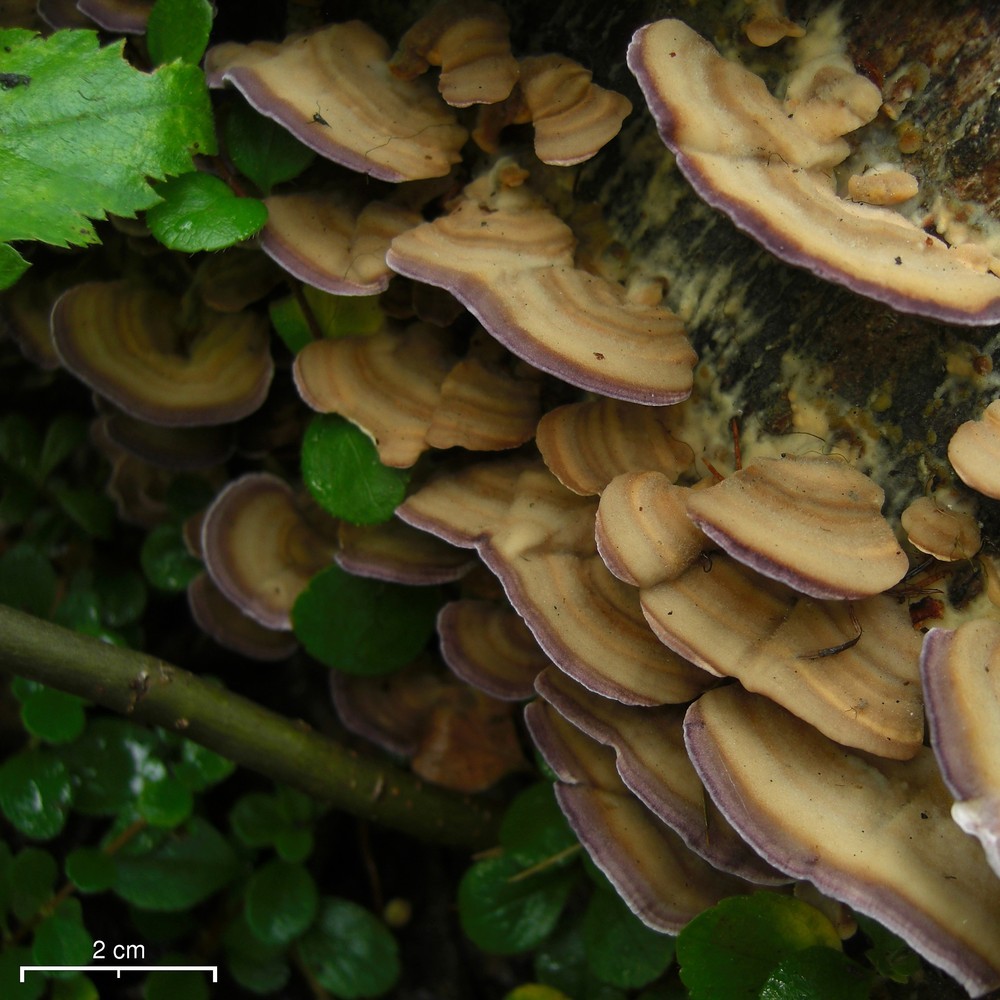
The distinctively-striped turkey tail fungus grows on stumps and logs all over the forests of the northern hemisphere. It is, in fact, probably the most common species you will find. That doesn't mean this mushroom is plain, however; each cap is uniquely patterned. Look for bands of alternating textures as well as color.
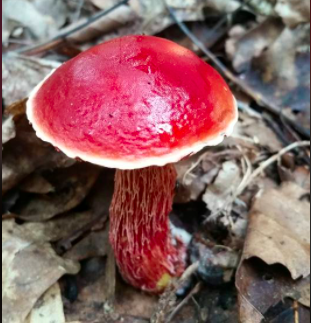
7. Frost's bolete
Frost's bolete is a favorite among photographers thanks to its photogenic apple-red color and bark-like stem. These characteristics mean that frost's bolete is rarely confused for other mushrooms, though the color can fade in older mushrooms. Additionally, this mushroom often bruises blue when touched and may have small drops of yellow water on its pore surface.
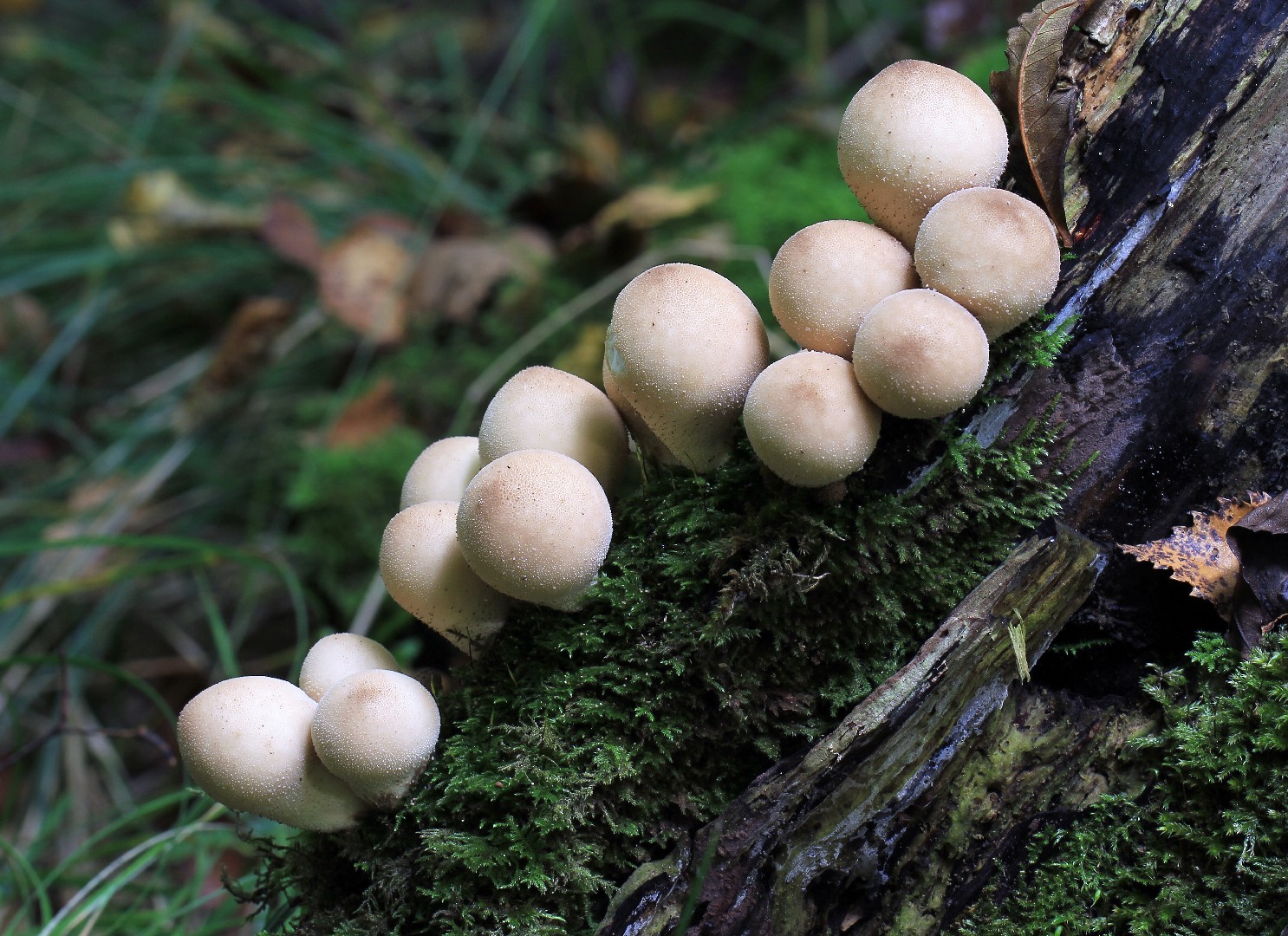
8. Pear-shaped puffball
The mushrooms of this species grow in such tight clusters that they may cover fallen trees and stumps almost entirely in a brownish, puffy coat. Pear-shaped puffballs appear all around the northern hemisphere on decaying hardwoods from fall through winter.

9. Shaggy mane
The shaggy mane mushroom is commonly found in North American and European grasslands. Some peoples foraged for its young egg-shaped caps, but it has more recently been found to be a bioaccumulator of heavy metals, meaning it pulls toxic metals up from the soil where it grows. As a result, shaggy manes should not be eaten. The mushrooms usually appear in clusters or “fairy rings.”
10. Red chanterelle
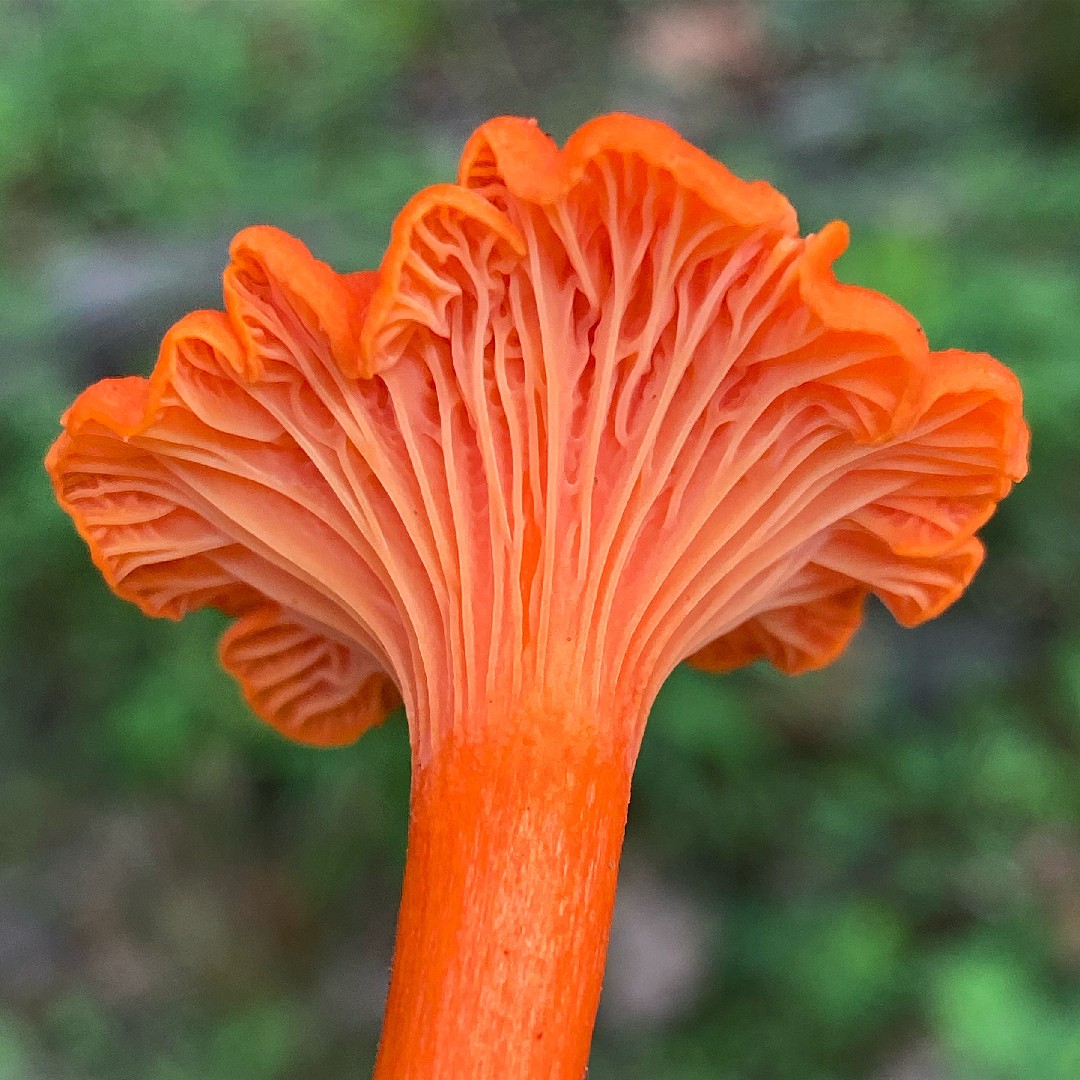
Red chanterelles can be found growing within hardwood forests across eastern North America. These small but striking mushrooms range from orange to red to pink in color. Edible and boasting complex flavors, many chanterelles are highly sought after. The red chanterelle, though less famous than some of its close relatives, is no exception. This species can be used in all sorts of recipes, with a vaguely sweet or piney taste.

More







