




Top 20 Most Common Mushrooms in Escondido
Welcome to a fungal kingdom flourishing in a city renowned for its Mediterranean climate, breath-taking landscapes, and distinctive vintages. Experience a world where 20 diverse varietals of the most common mushrooms thrive in Escondido's unique ecosystems. Our carefully curated guide unveils the earthy bounty concealed within Escondido's urban sprawl to its vast vineyards. Embark on a journey to uncover Escondido's mushroom wonders, backed by reliable data and thorough research.

Most Common Mushrooms
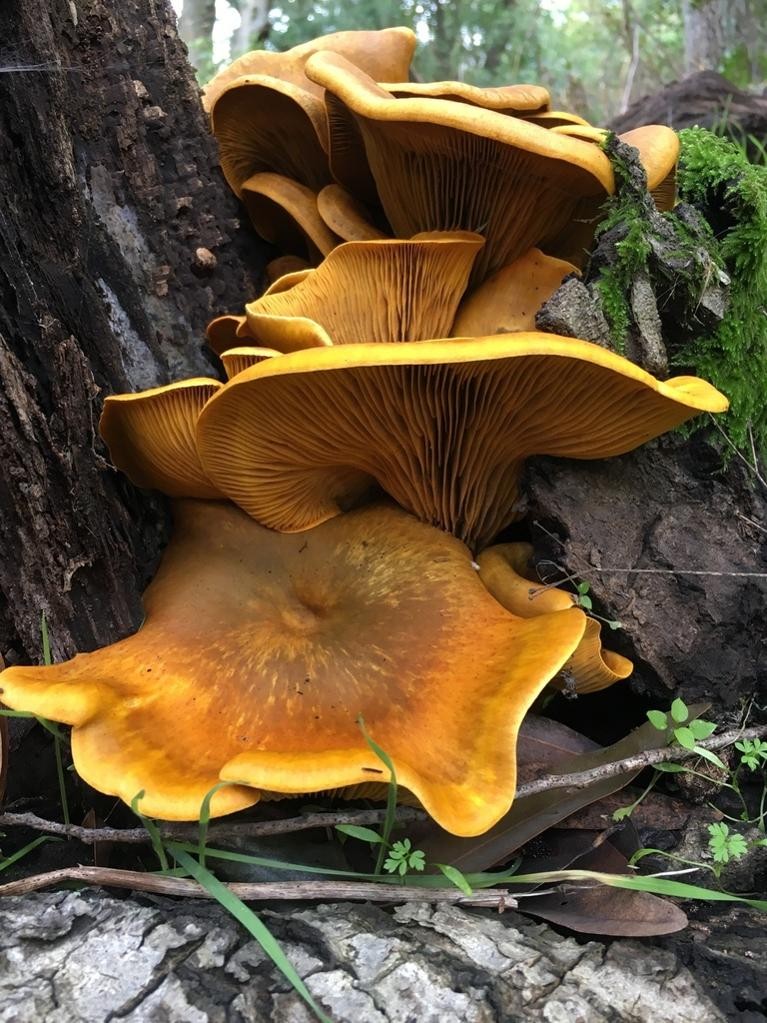
1. Western jack-o'-lantern mushroom
The western jack-o'-lantern mushroom (Omphalotus olivascens) may be the most visually striking mushroom of the forest during day and night. During the day, brilliant large orange flat caps grow from both the ground and decaying stumps. At night, these mushrooms may glow in the dark, depending on location and maturity.
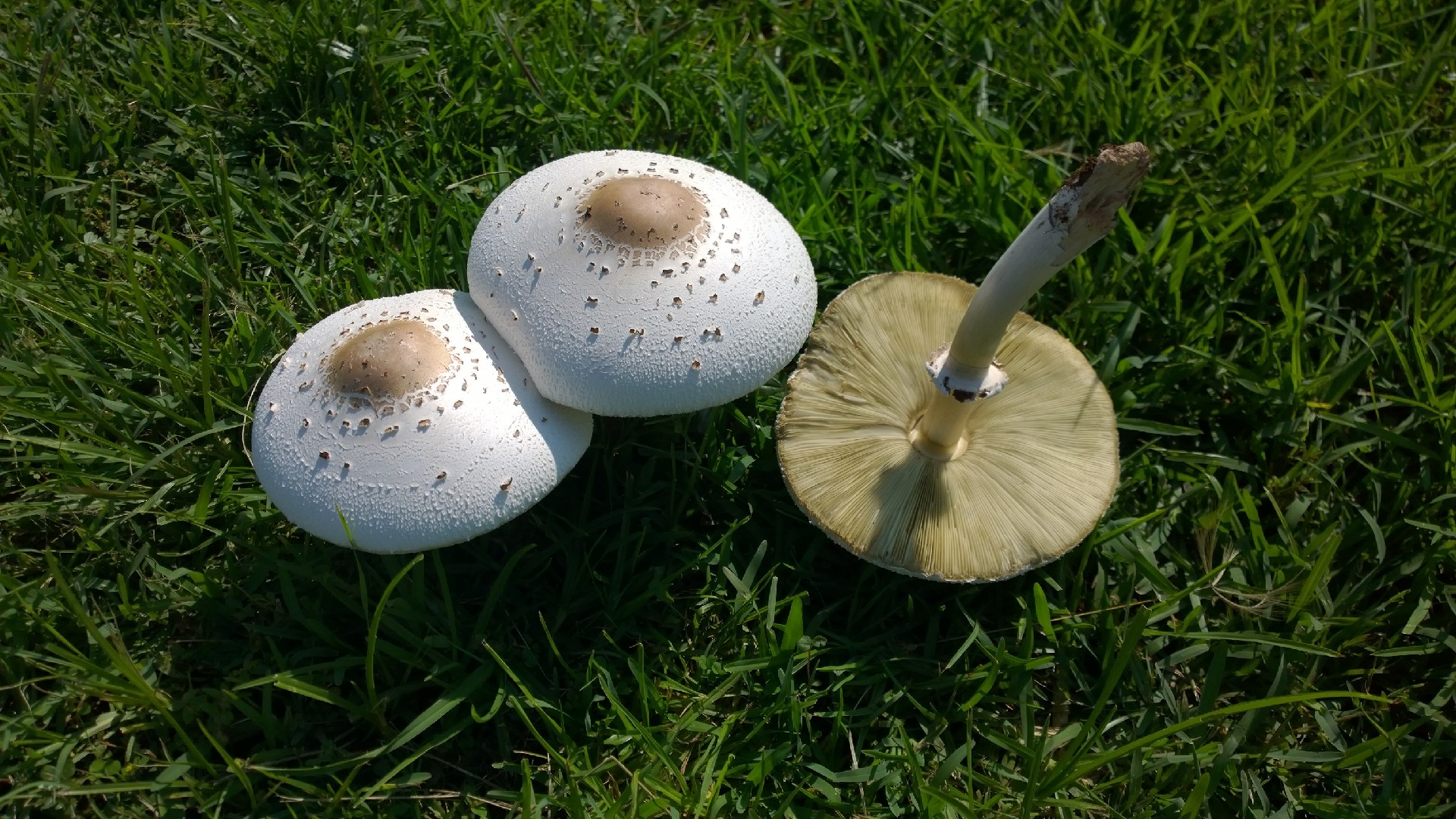
2. False parasol
Though the false parasol appears unassuming, the species is famous—or, infamous—for its toxicity. It looks unfortunately similar to Agericus campestrus, a commonly eaten mushroom, but the false parasol can be distinguished by its highly unusual green spore print. Although they are no good to eat, they can be pretty to look at. The species may grow in ring-shaped groups in meadows and on forest floors in what are sometimes called "fairy circles."
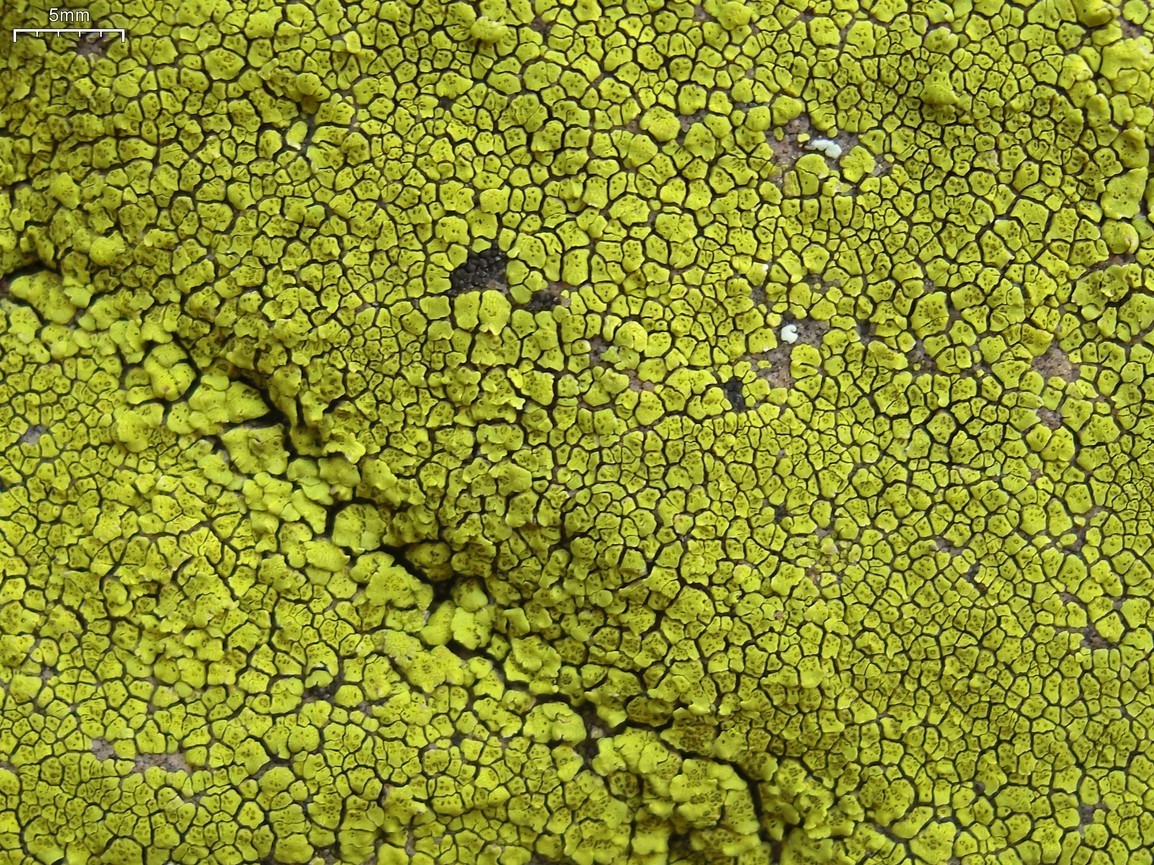
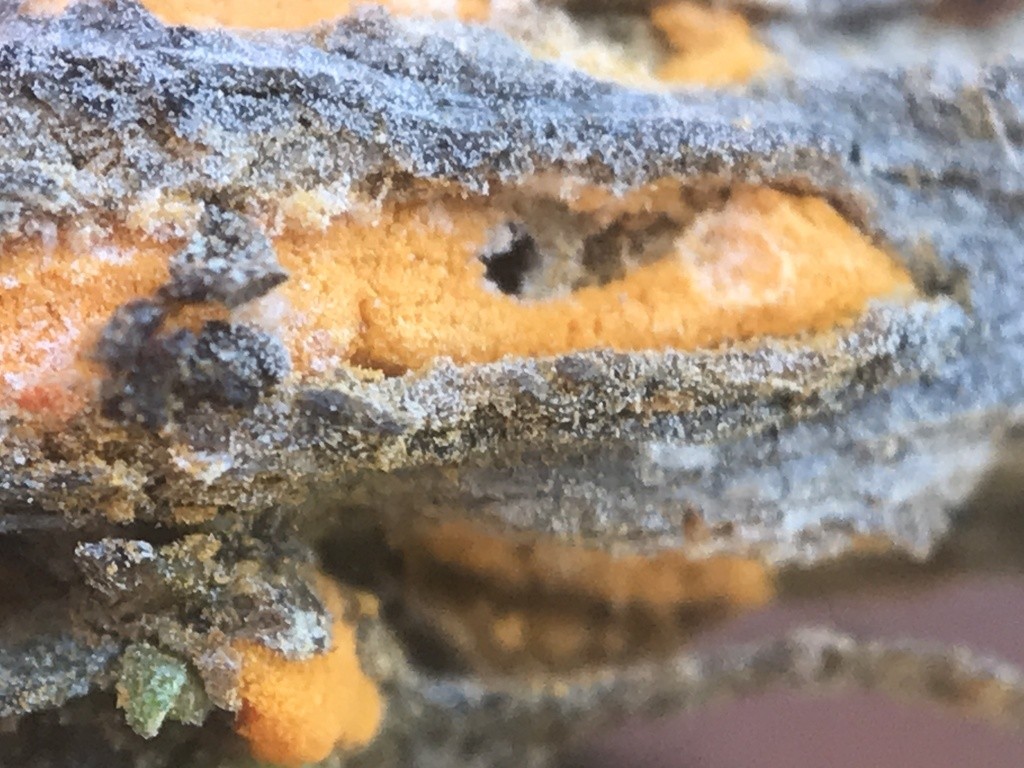
3. Bright cobblestone lichen
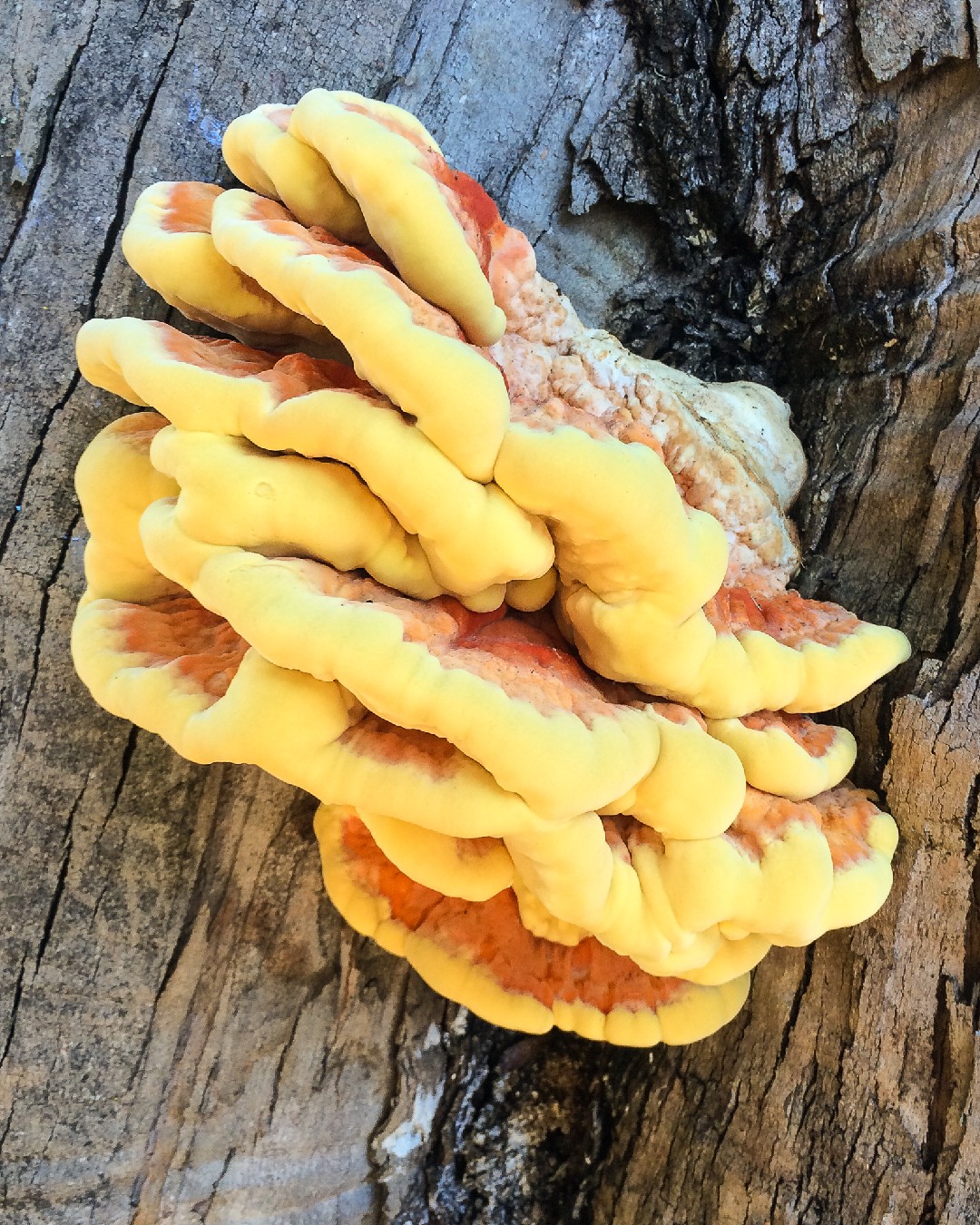
4. Chicken-of-the-woods
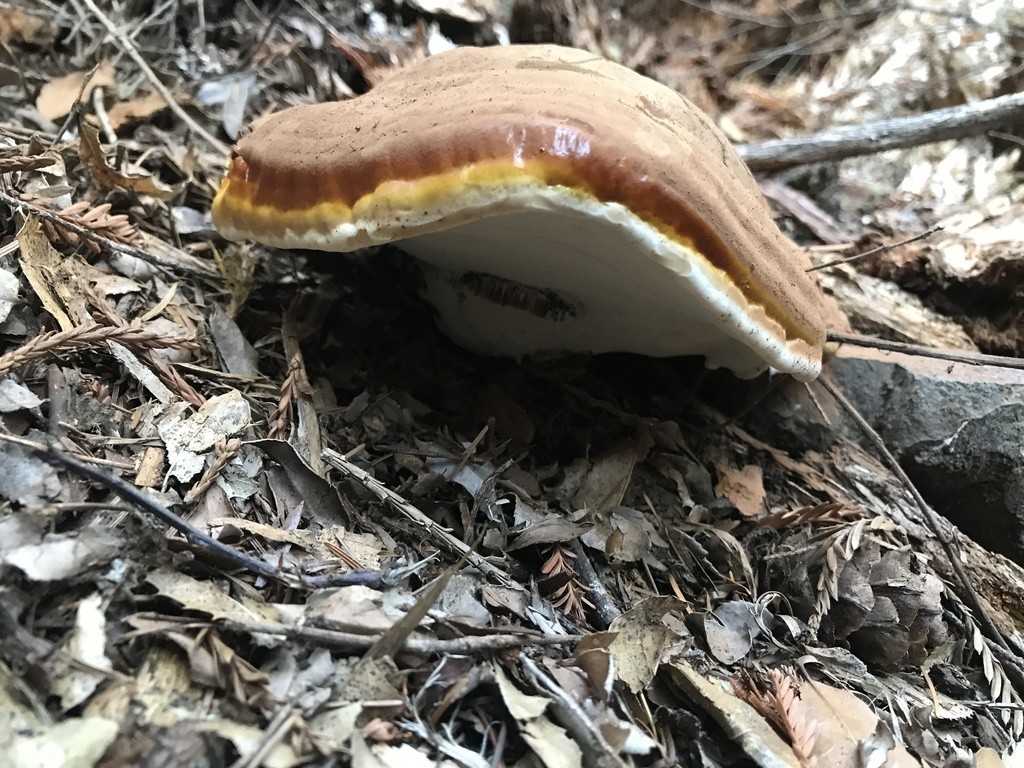
Chicken-of-the-woods is a brightly-colored polypore related to the famed Chicken-of-the-Woods (Laetiporus sulphereus). The species are so closely related, that it was not until the 2000s that mycologists considered them to be distinct. Unlike its famed relative, the species is not considered a choice edible - there are conflicting reports as to its edibility, with some probable cases of gastrointestinal distress noted.
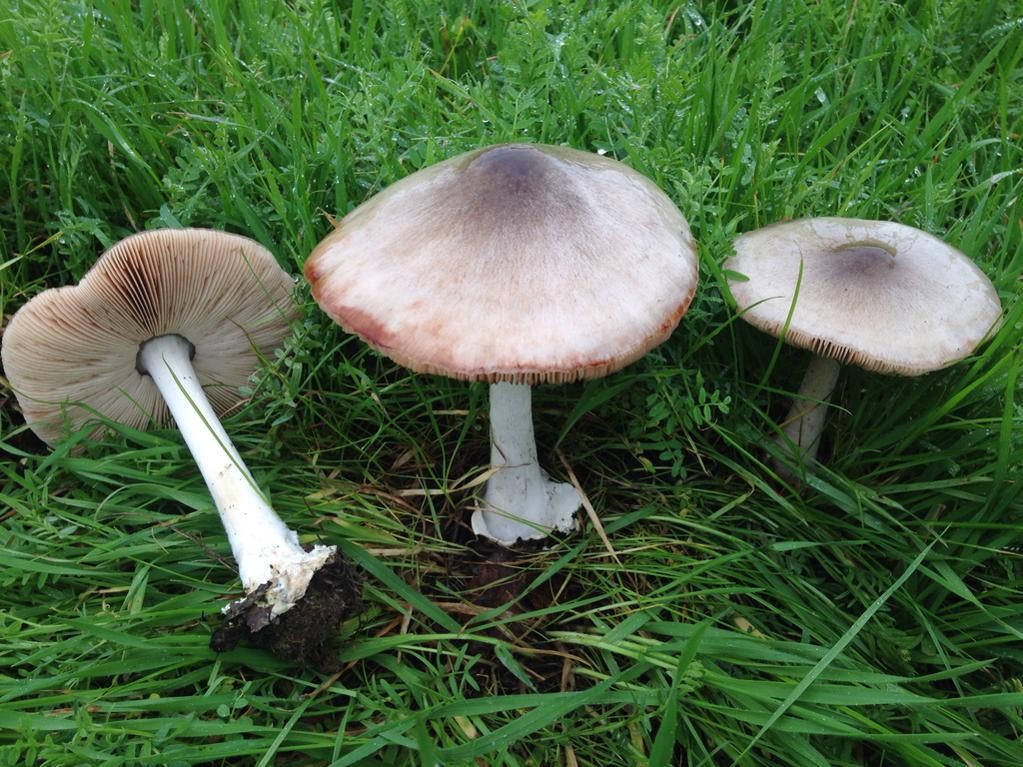
5. Big sheath mushroom
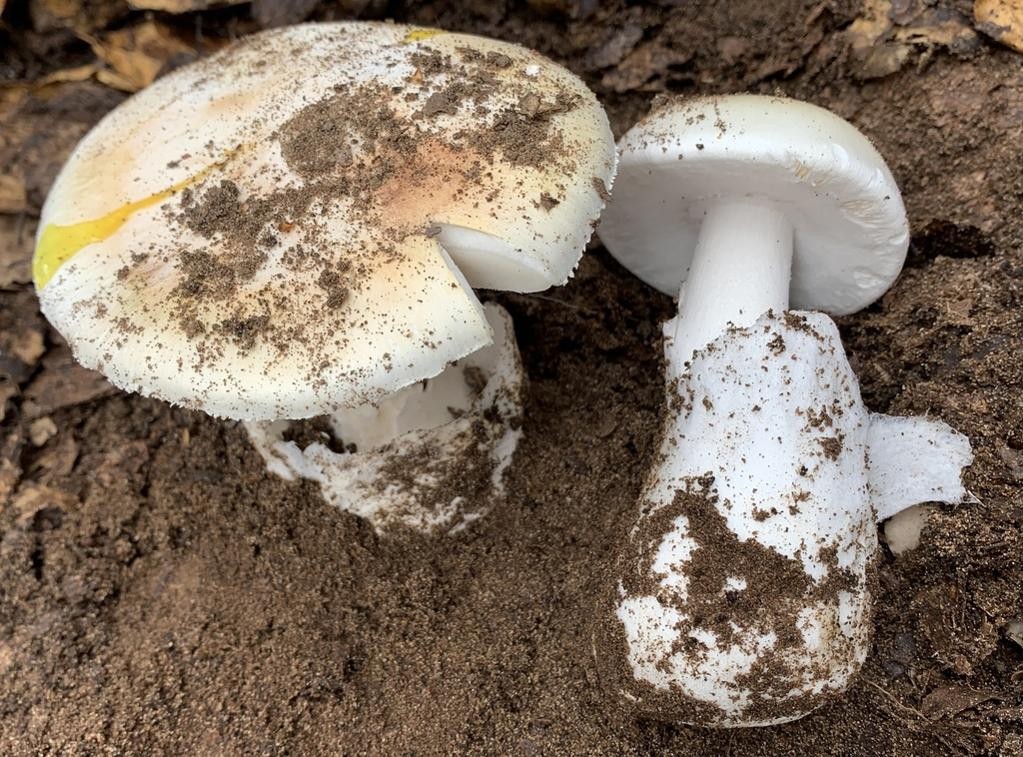
These large white mushrooms bloom all over cleared, harvested fields, as well as pastures and roadsides. The scientific species name comes from Greek words meaning “glue” (glioio) and “head” (cephalus), in reference to the sticky surface of this mushroom’s cap. The big sheath mushroom looks so similar to the poisonous Deathcap and Destroying Angel mushrooms that it should always be left alone.
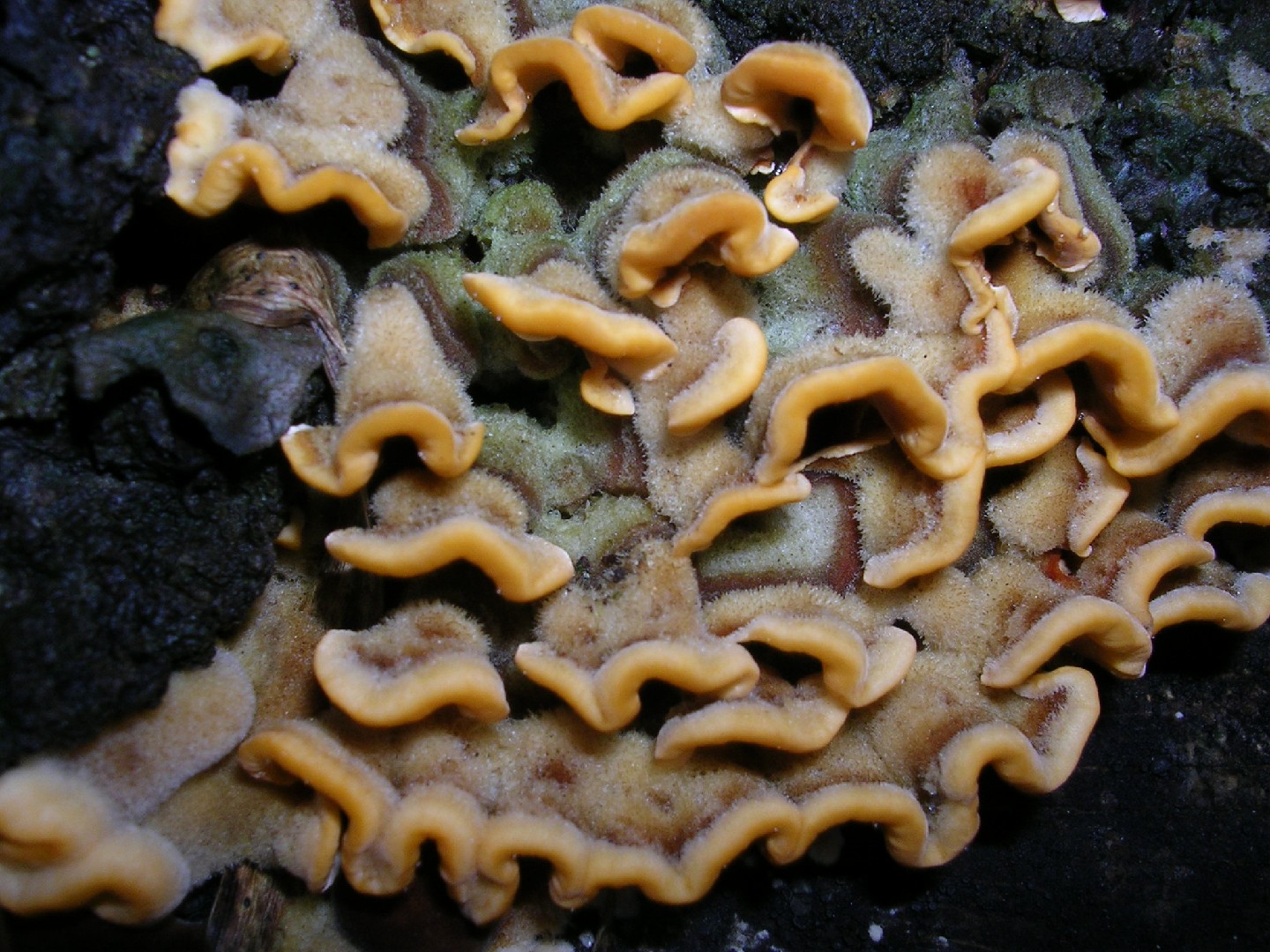
6. Hairy curtain crust
This clustered, overlapping fungus is found all over the world, and is considered native across both the northern and southern hemispheres. Both its common name, hairy curtain crust, and its scientific name, Stereum hirsutum, aptly describe its most obvious features: it is quite tough (stereum) and the younger fruitbodies are notably hairy (hirsutum).
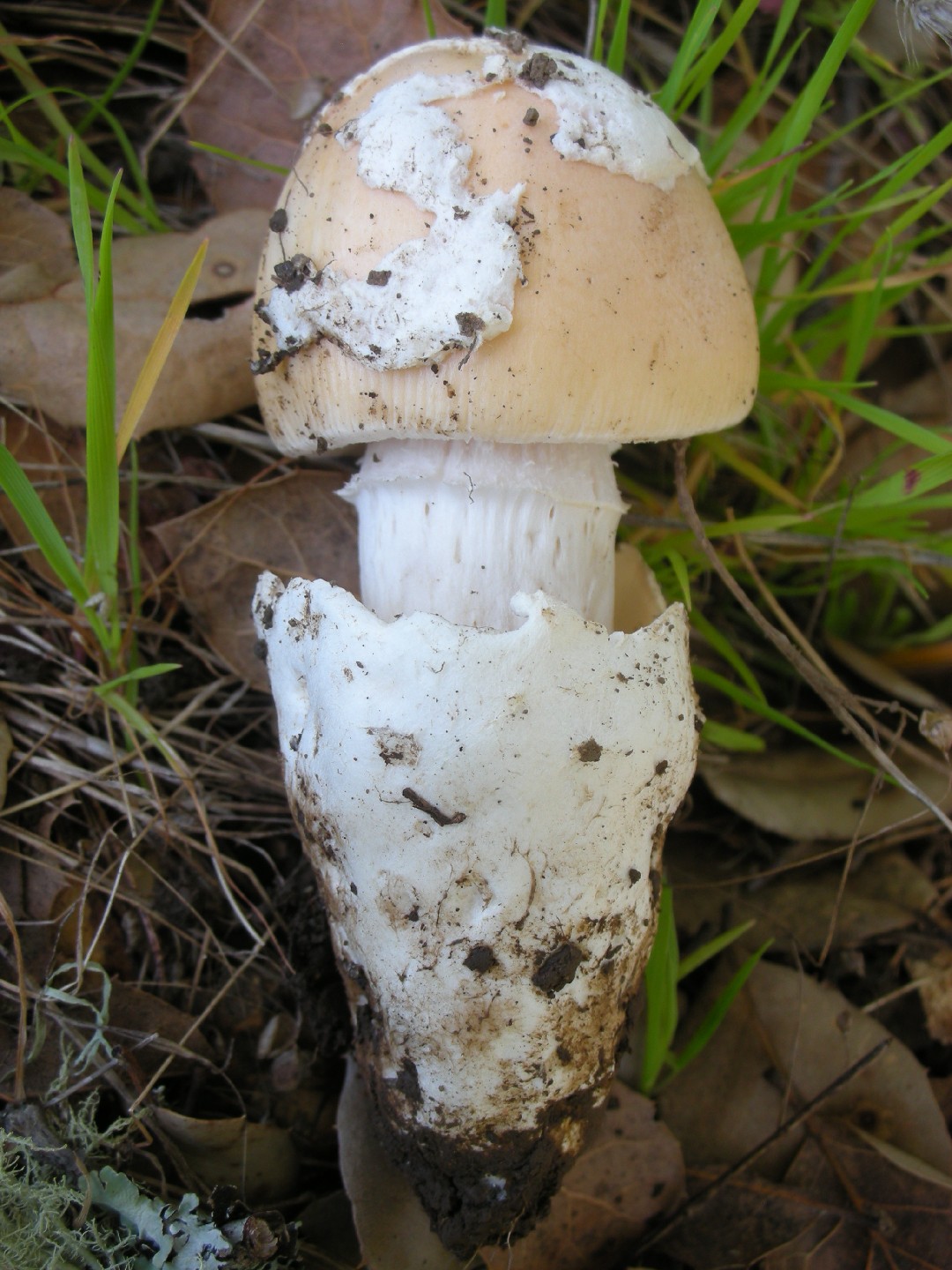
7. Springtime amanita
The springtime amanita is so-called because it normally fruits in late winter or early spring. The species, which has a cap toned with pale orange, pink, or brown, may be mistaken for toxic Amanita species, especially when it is young. Springtime amanitas can be found along the coast from southern Oregon down through California.
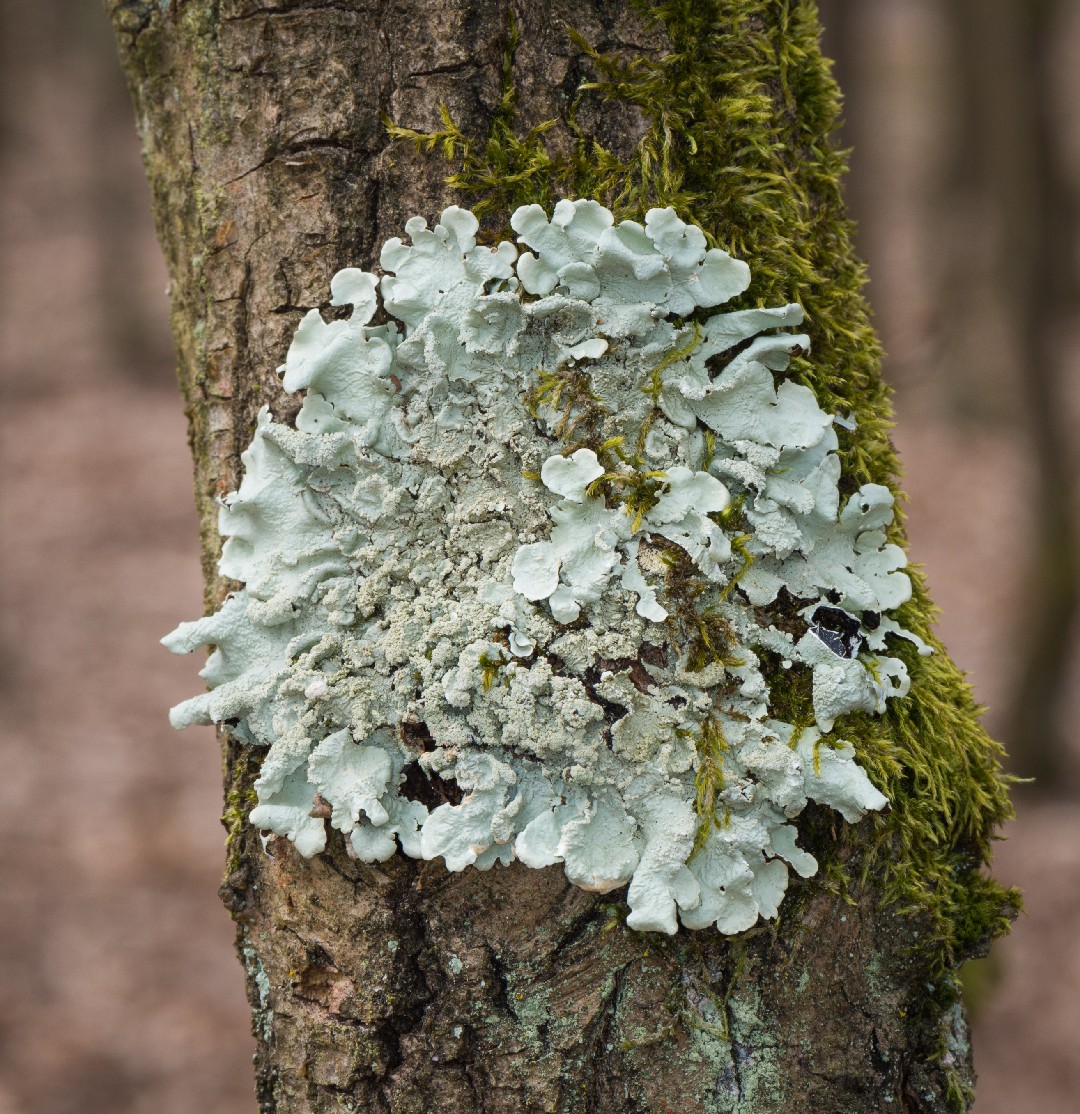
8. Common greenshield lichen
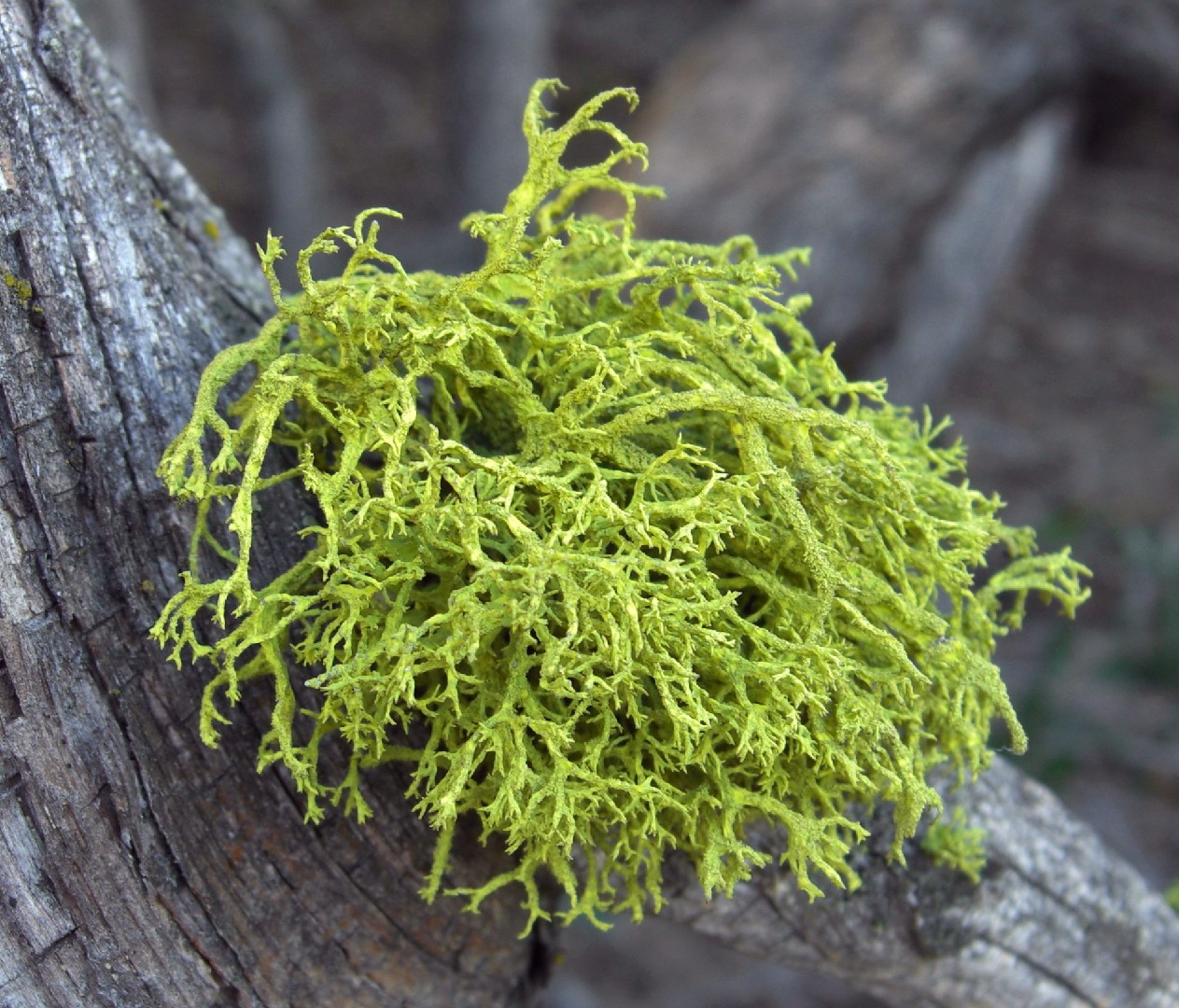
The common greenshield lichen is a familiar species in temperate forests around the world. It can be found growing on rock outcroppings and trees in a wide variety of habitats. Individuals can grow to be quite large and may be gregarious, forming large mats or sheets on suitable surfaces. Like other lichens, the common greenshield lichen will shrivel and harden when moisture is scarce.
9. Desert shaggy mane
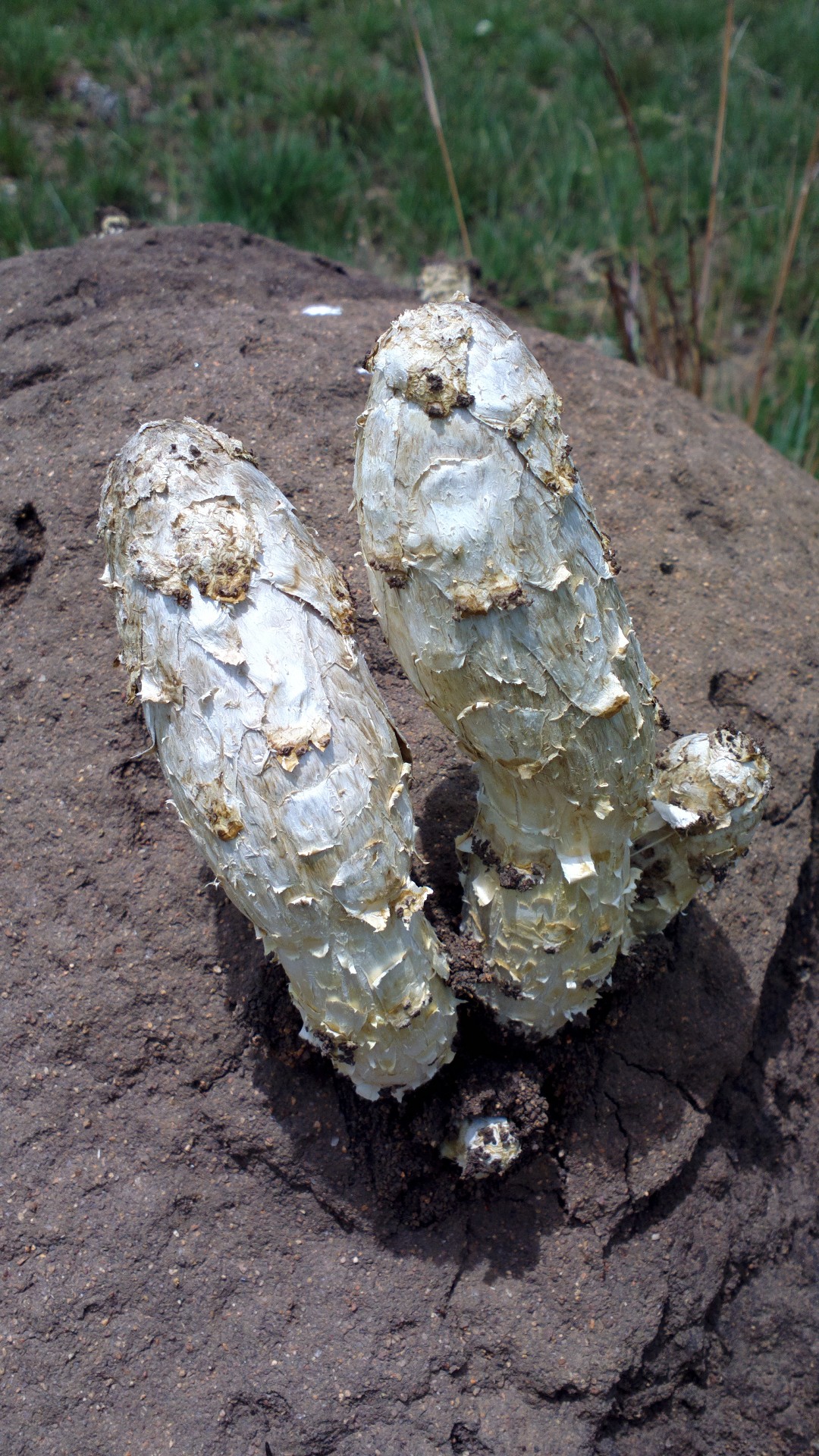
As its name suggests, the desert shaggy mane (Podaxis pistillaris) erupts from seemingly improbably conditions, out of the hot and arid ground in North American deserts. They are commonly found living harmoniously with colonies of termites in termite mounds. The desert shaggy mane is toxic and not safe to consume.
10. Common fieldcap
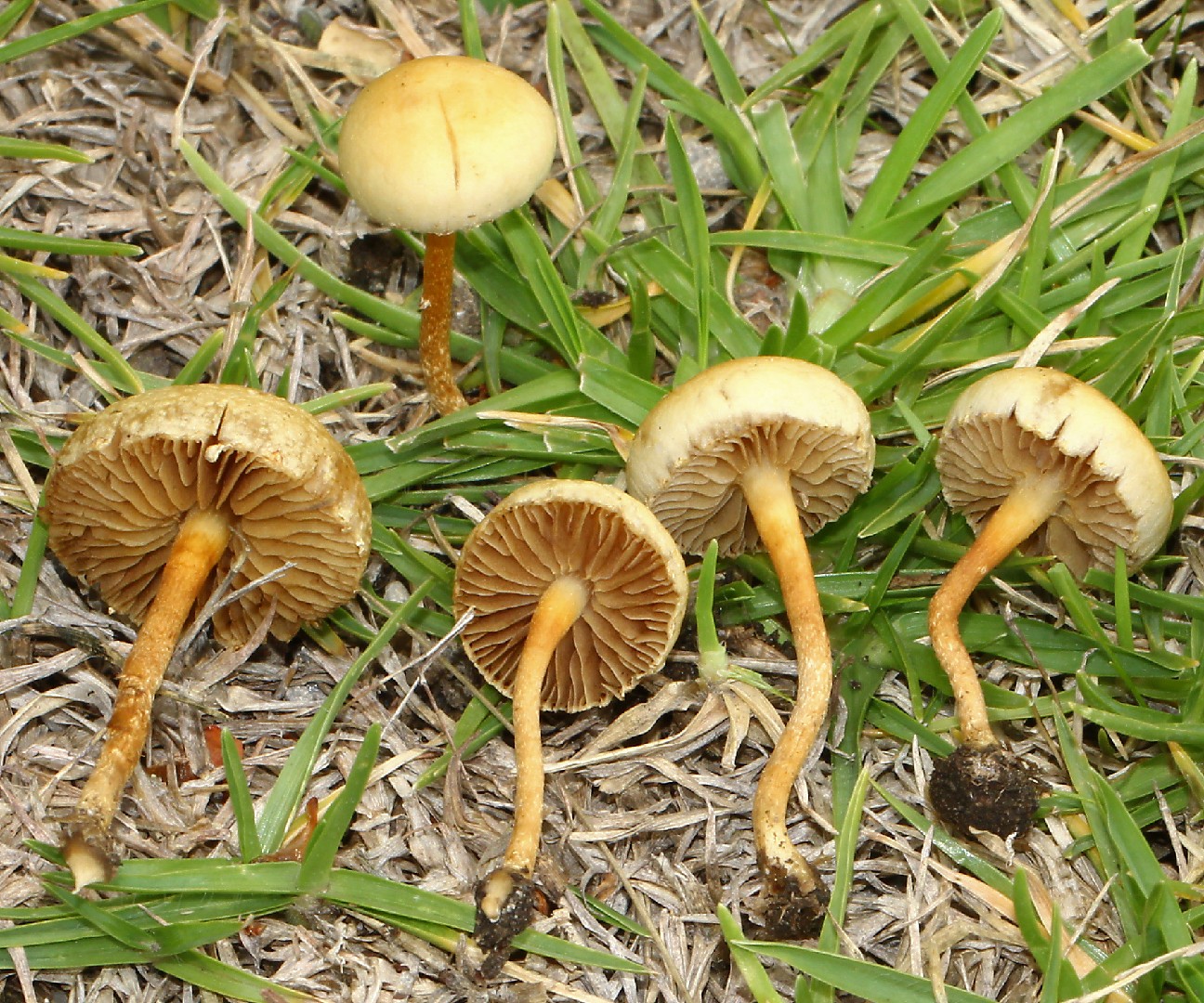
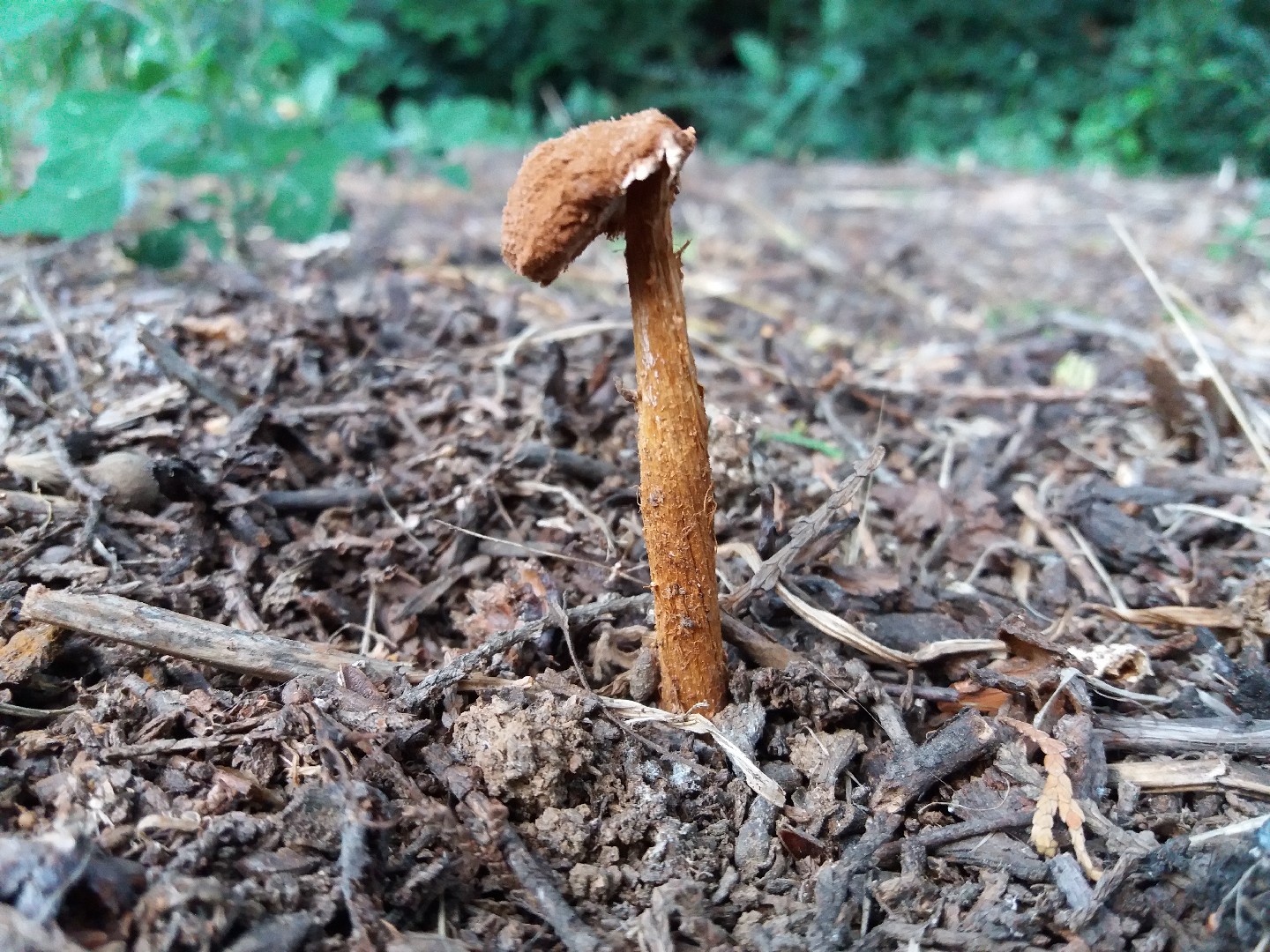
Easily confused with other small, brown mushrooms, the common fieldcap is one of few that grows in springtime in various countries around the world. It appears in groups in pasture land, lawns, and other open, grassy areas. And there are many poisonous mushrooms that look extremely similar.


More







