




Top 20 Most Common Mushrooms in Sedona
Welcome to your go-to guide on the top 20 most common mushrooms found within the picturesque landscapes of Sedona. Known for its vibrant red-sandstone cliffs and warm desert climate, Sedona offers an incredibly diverse array of fungal life. Its unique ecosystem supports a myriad of mushroom species, a testament to the raw beauty and biodiversity of this region. So, get ready to delve into the fascinating world of Sedona's abundant fungi.

Most Common Mushrooms
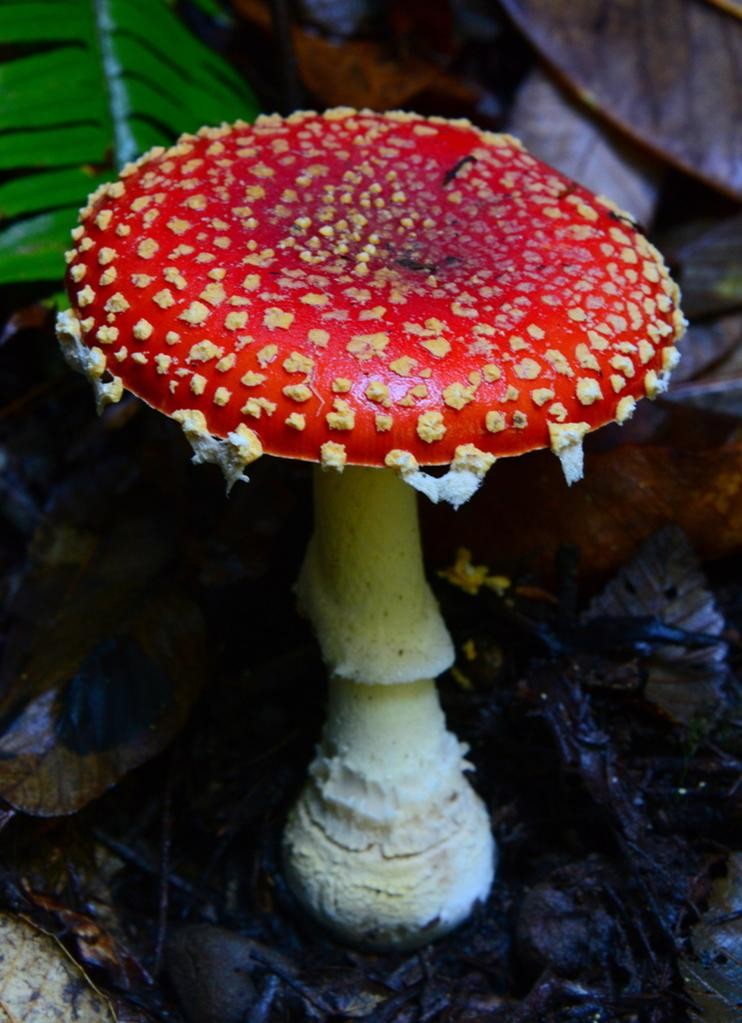
1. Fly agaric
In Northern Asia and Europe, fly agaric grows under trees near the winter solstice and is collected for ritual use tied to the season. Its characteristic shape and coloring are still ubiquitous in many European fairy tale illustrations and Christmas traditions. It is highly toxic.
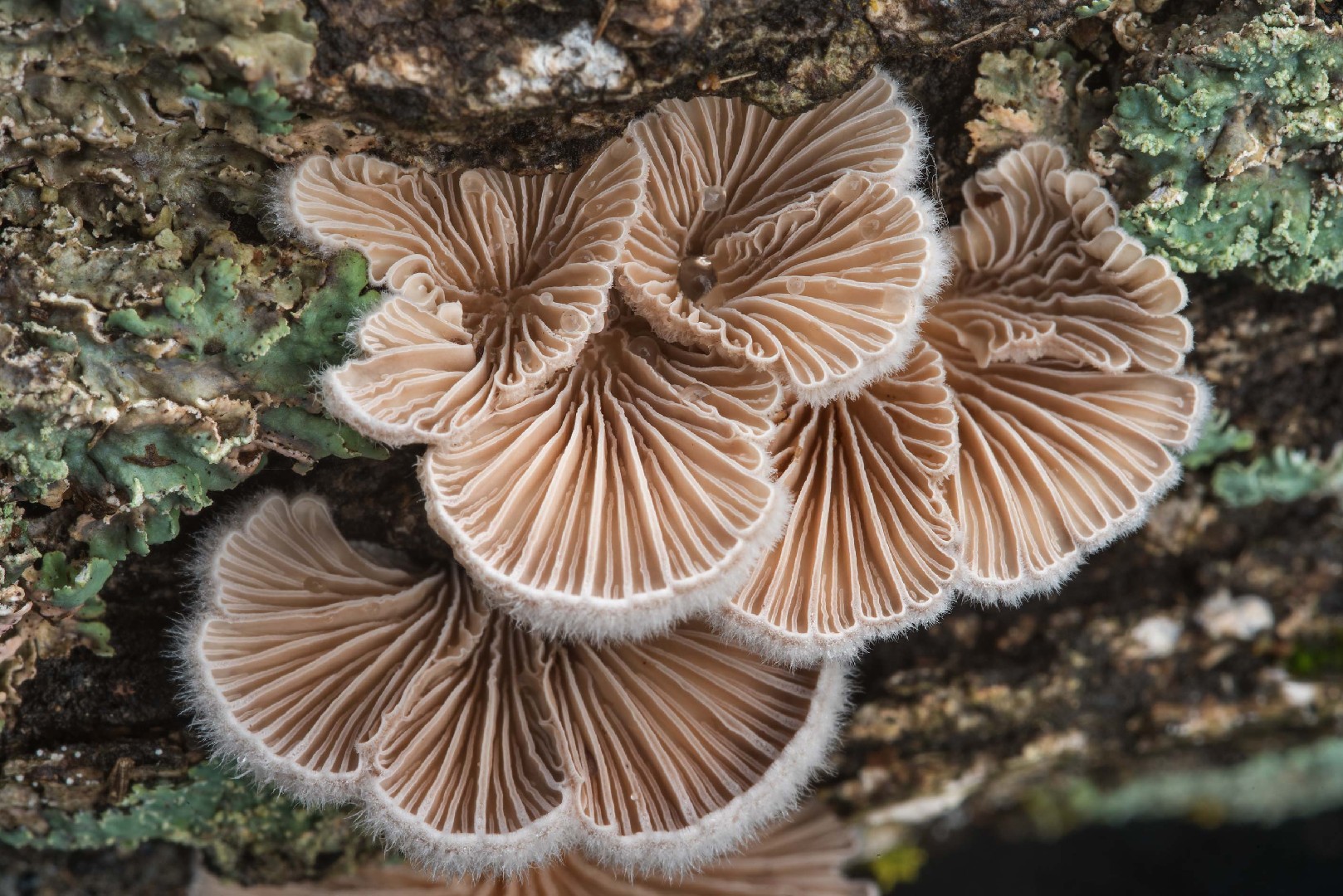
2. Split gill
Split gill(Schizophyllum commune) can be found across the globe. Uniquely, it is the only mushroom species known to display the capability to retract by movement. It is considered inedible, although not necessarily toxic. Furthermore, it is not recommended to smell this species, as the spores are capable of sprouting and growing in nasal passages.
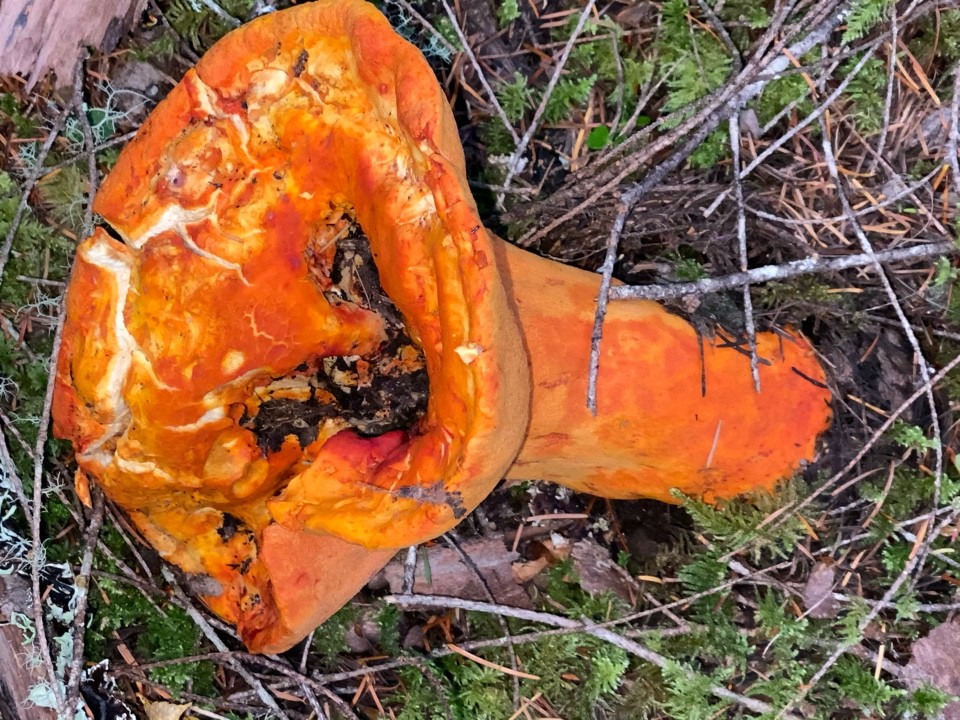
3. Lobster mushroom
The lobster mushroom is actually not a species of mushroom, per-se. When Hypomyces lactifluorum mold attacks one of several common species of Russula mushrooms, it transforms them into lobster mushrooms: they shrivel, harden slightly, and turn bright orange or vermillion. Surprisingly, this only makes them more flavorful. Lobster mushrooms are highly sought after for their distinctive, seafood-like flavor when cooked. Upset stomachs have been reported when eaten raw.
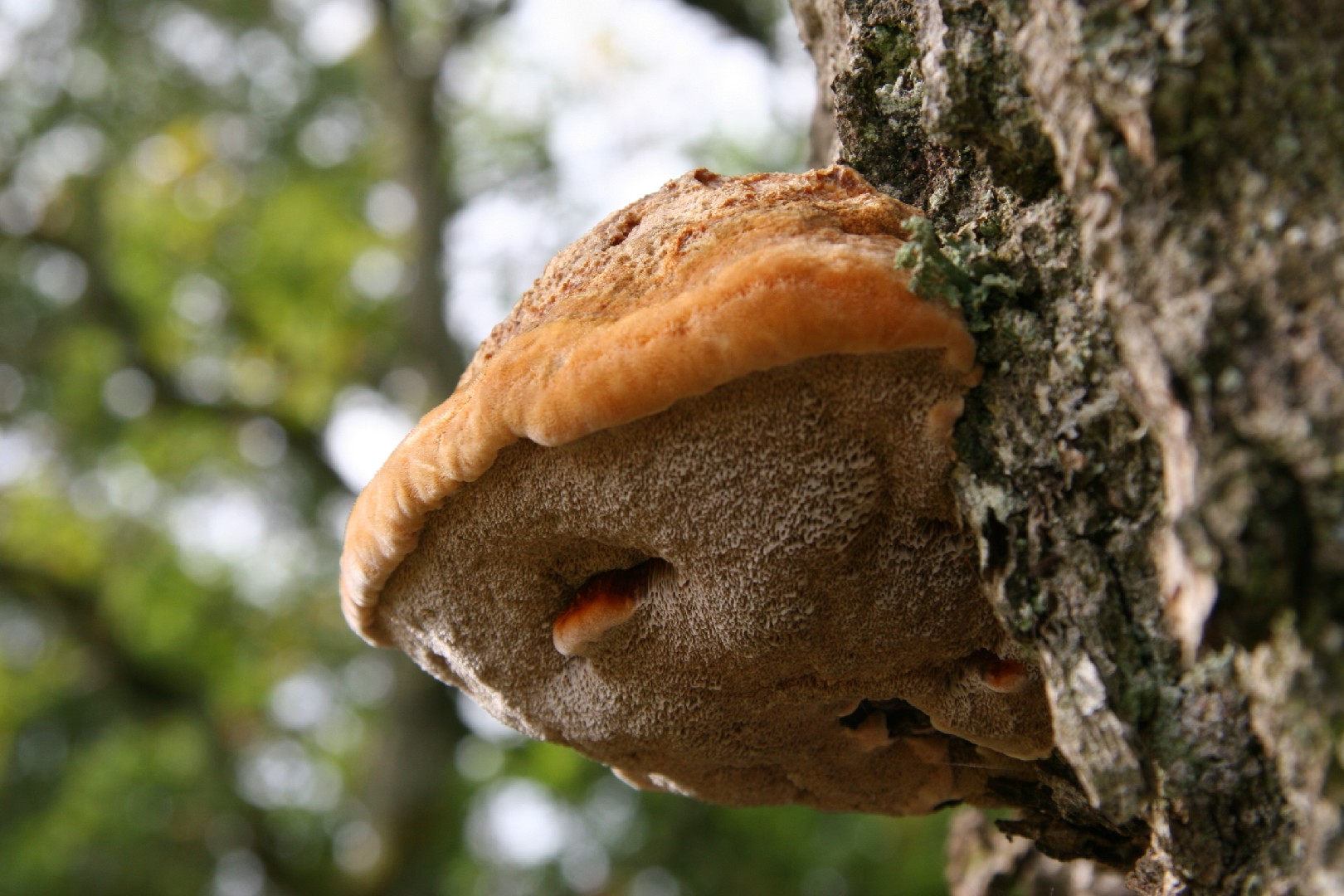
4. Inocutis dryophila
5. Turkey tail
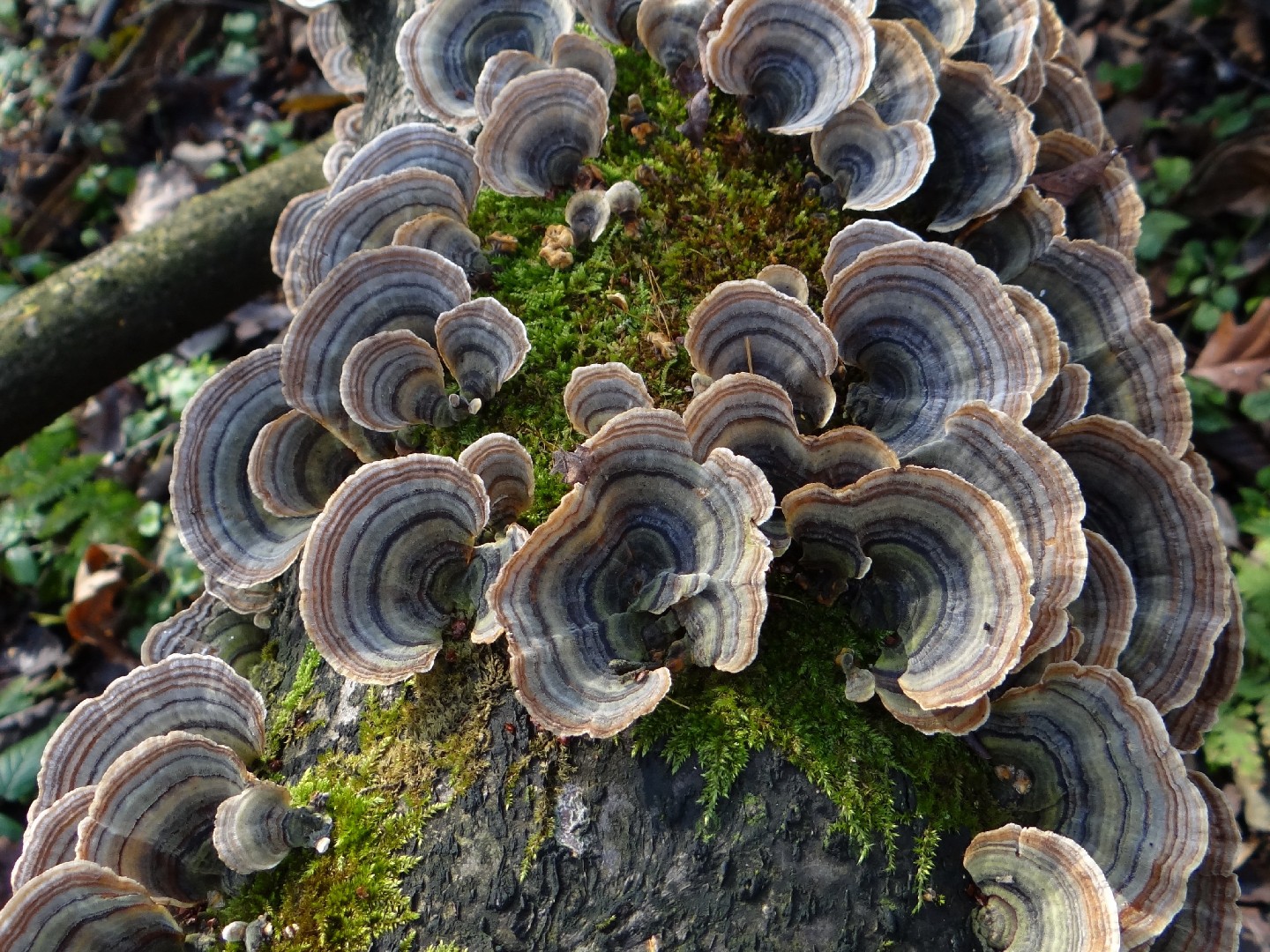
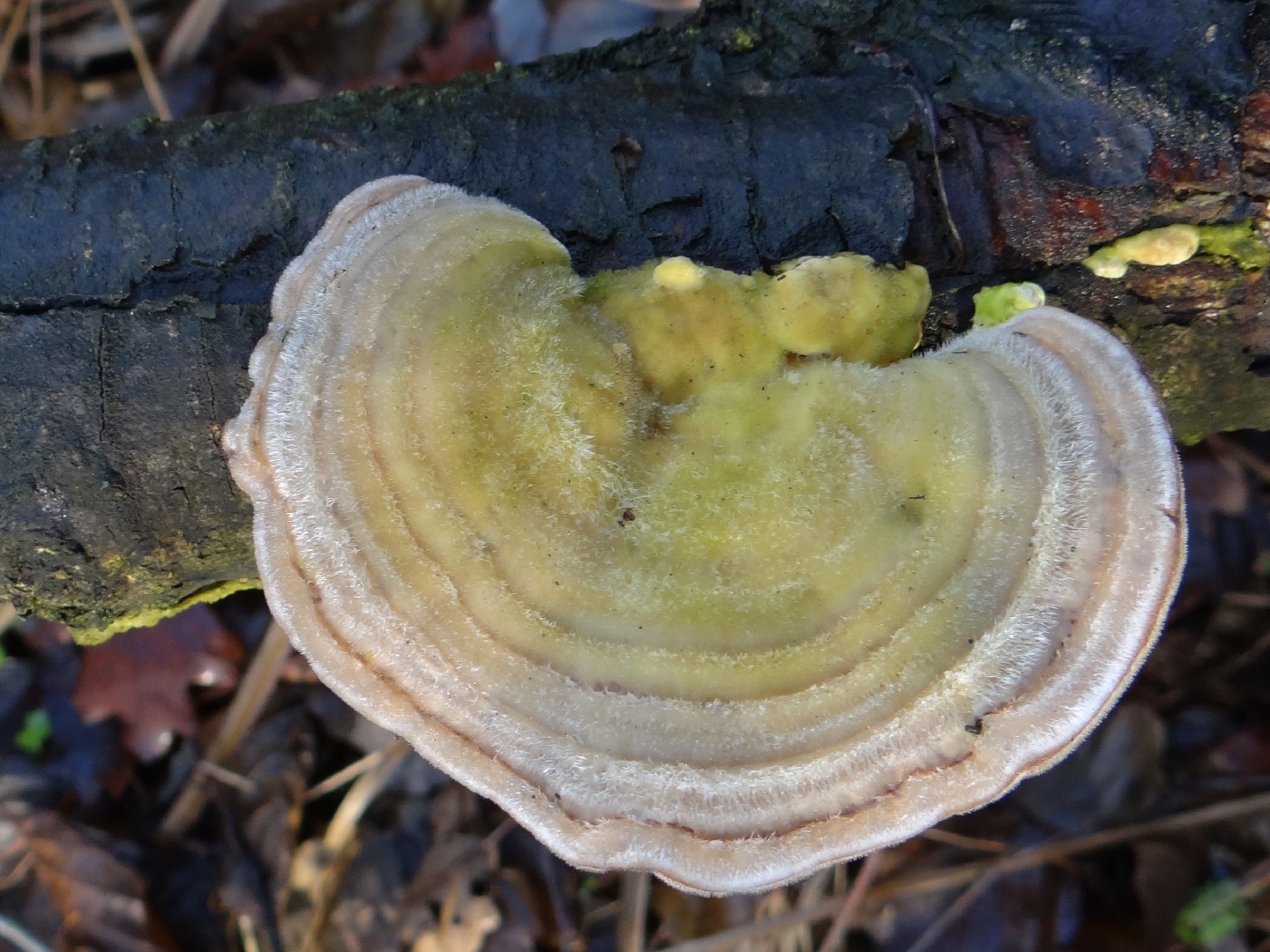
The distinctively-striped turkey tail fungus grows on stumps and logs all over the forests of the northern hemisphere. It is, in fact, probably the most common species you will find. That doesn't mean this mushroom is plain, however; each cap is uniquely patterned. Look for bands of alternating textures as well as color.
6. Shaggy mane
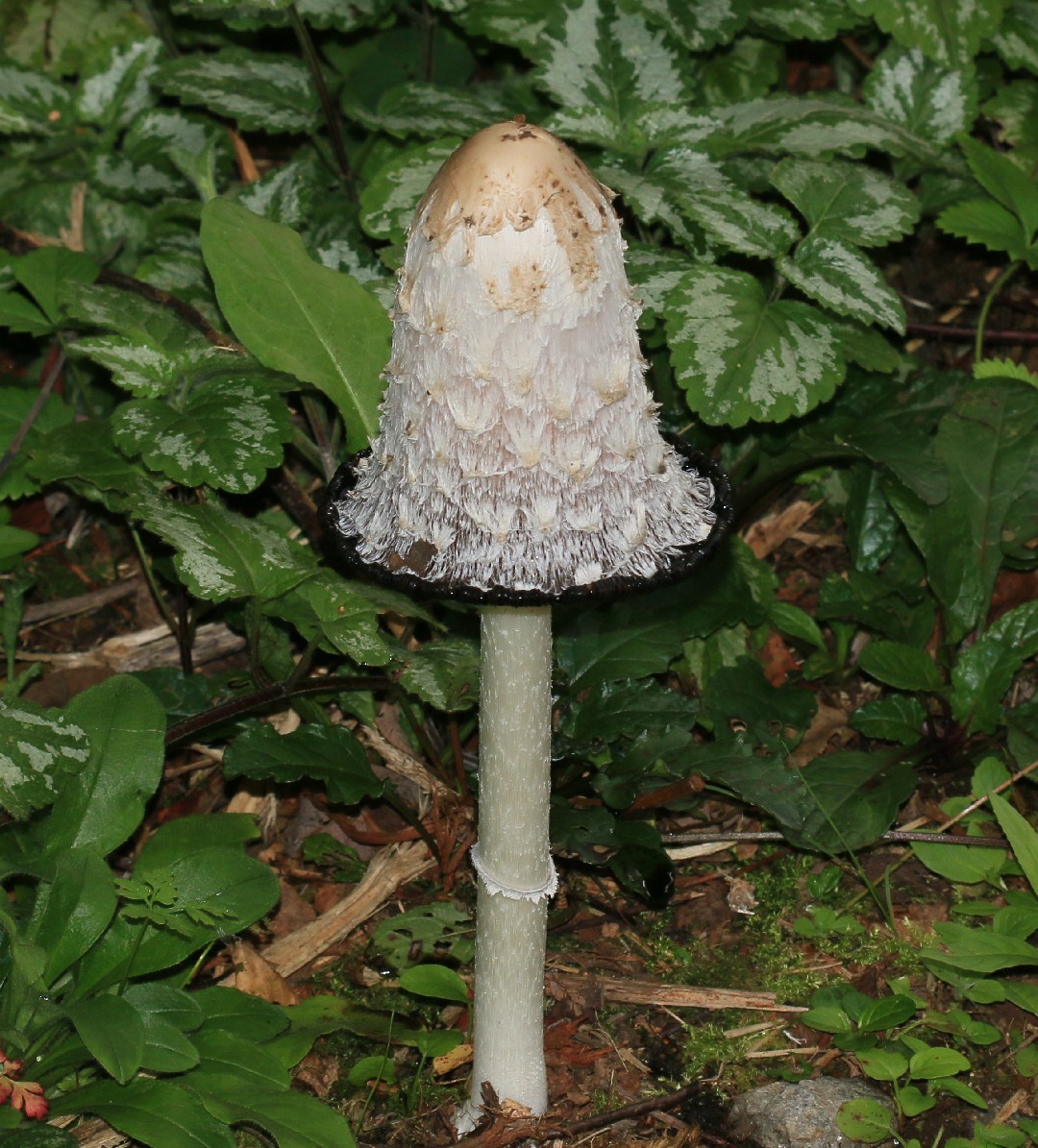
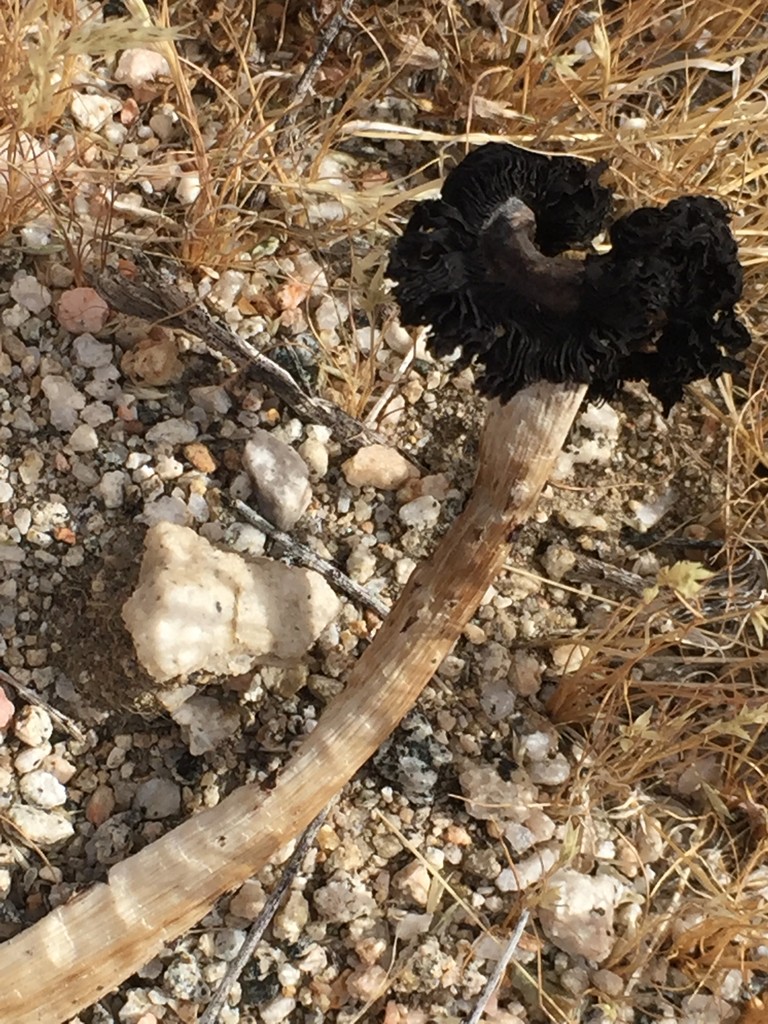
The shaggy mane mushroom is commonly found in North American and European grasslands. Some peoples foraged for its young egg-shaped caps, but it has more recently been found to be a bioaccumulator of heavy metals, meaning it pulls toxic metals up from the soil where it grows. As a result, shaggy manes should not be eaten. The mushrooms usually appear in clusters or “fairy rings.”
7. Spring polypore
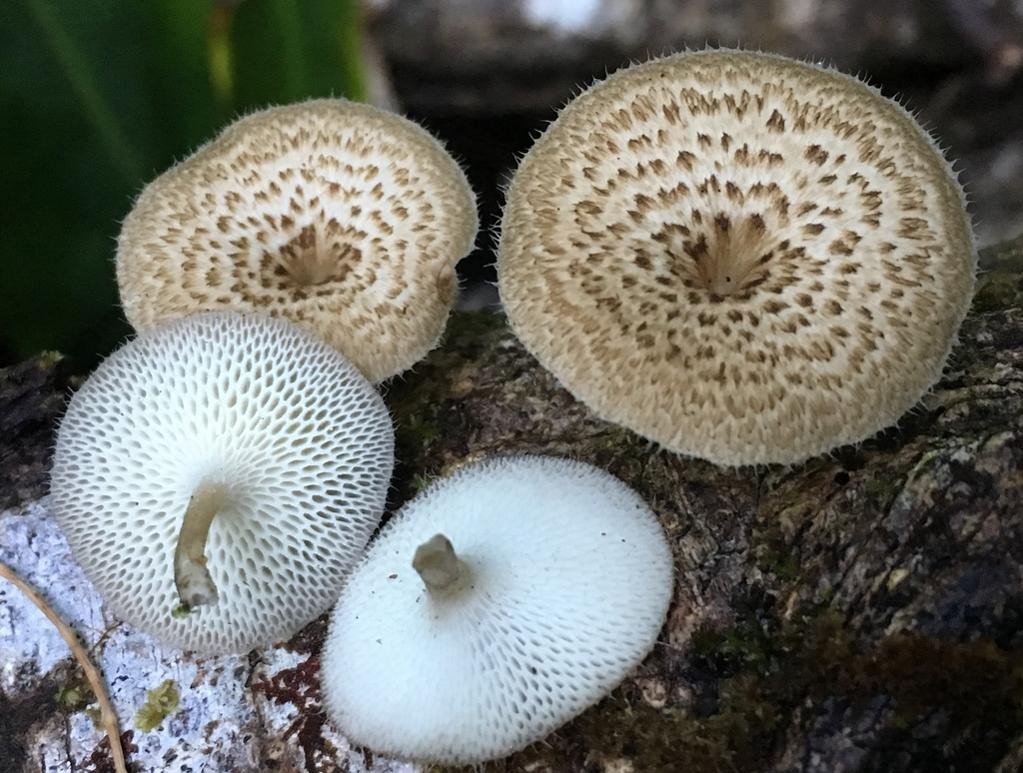
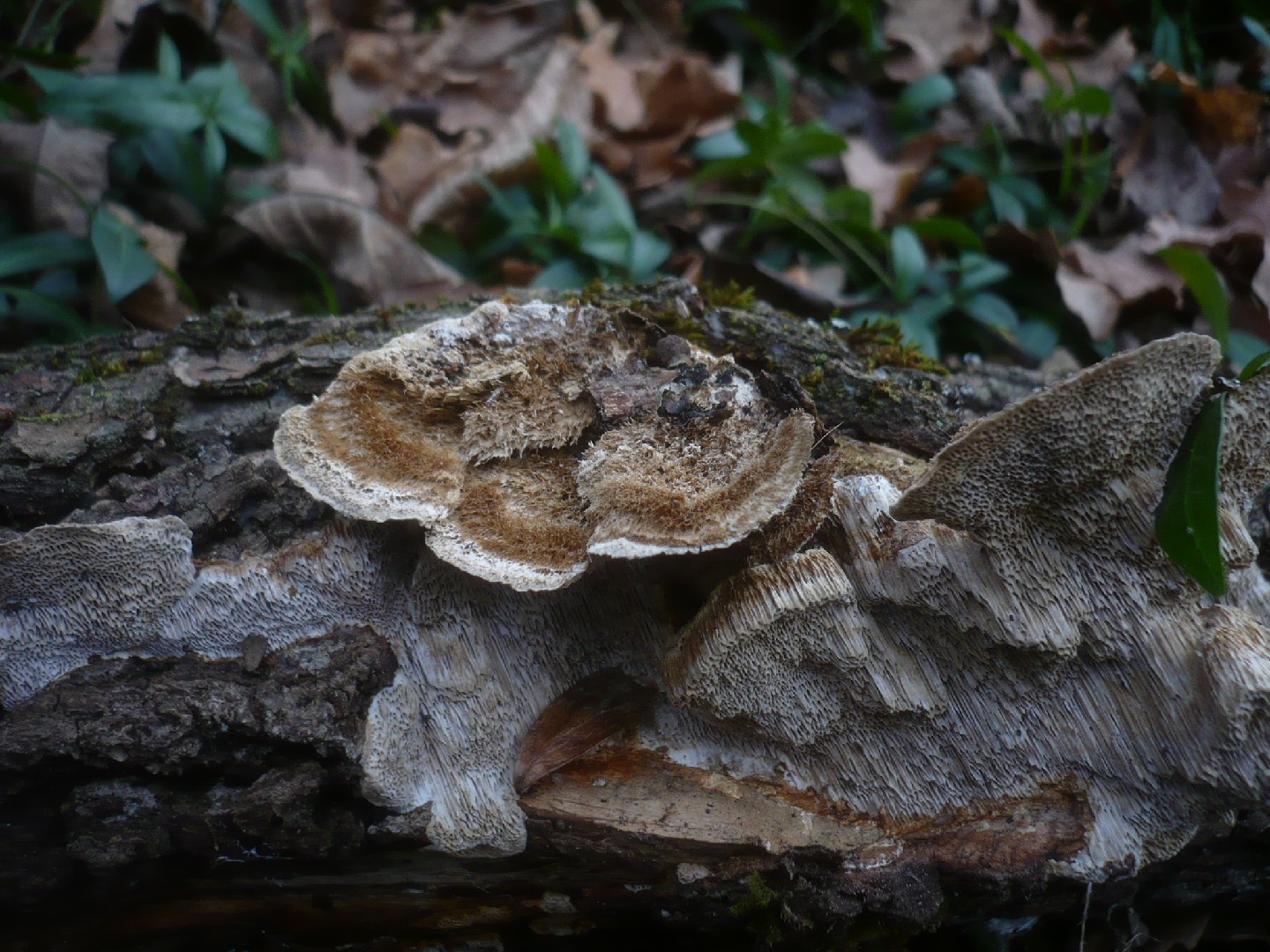
Morel mushroom hunters may be most familiar with spring polypore since it is one of the earliest mushrooms to appear in the spring, as hinted by its name. Lentinus mushrooms typically have gills, but when investigated, this mushroom reveals surprising honeycomb-shaped pores.

8. Torq
The torq (Agaricus bitorquis) is a white-capped agaric that bears a resemblance to, and is closely related to, the commonly-eaten button mushroom (Agaricus bisporus). This hardy, generalist species does well even in urban environments - their white fruiting bodies can be seen poking up through woodchips, mulch, sidewalk cracks, and even asphalt.
9. Suillus kaibabensis
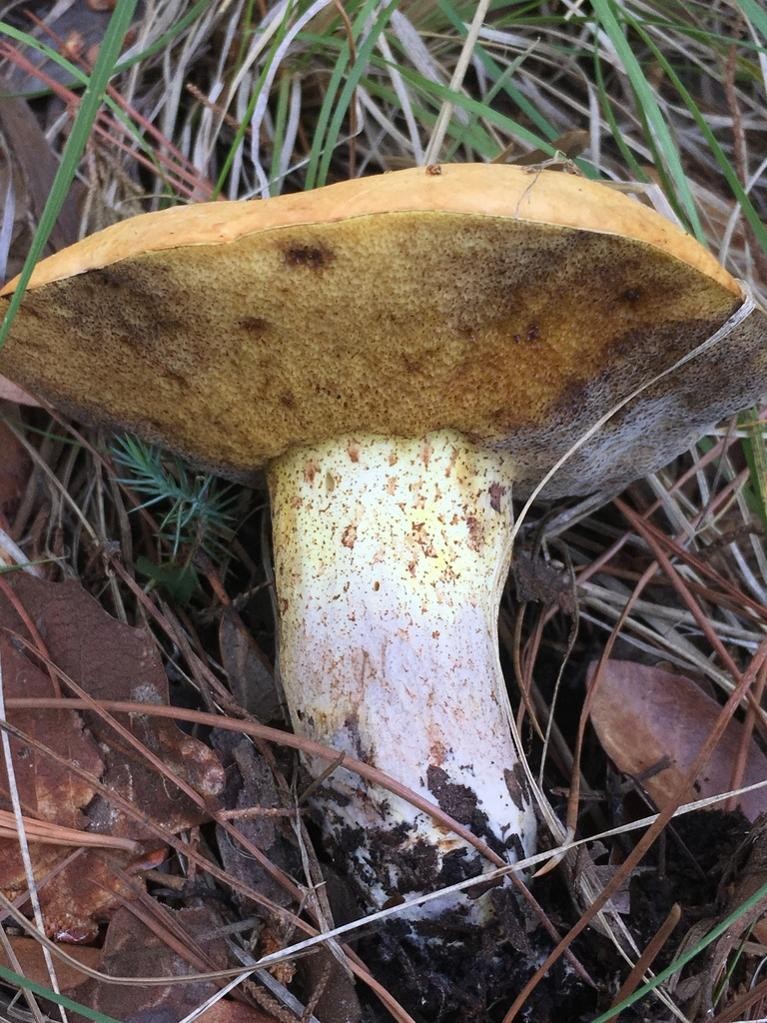
Suillus kaibabensis is a hardy yellow member of the genus Suillus. While yellow is the primary color, it can also include brown and white tones in varying degrees as well. This mushroom has a stem around 2–4 cm long, and 1–2 cm thick. The cap is broad and convex to flat, typical of many species of boletes. The stipe is bare, spotted with olive brown and can be reddish-brown at the base. The pores are yellowish-brown that can turn a salmon color with age. 
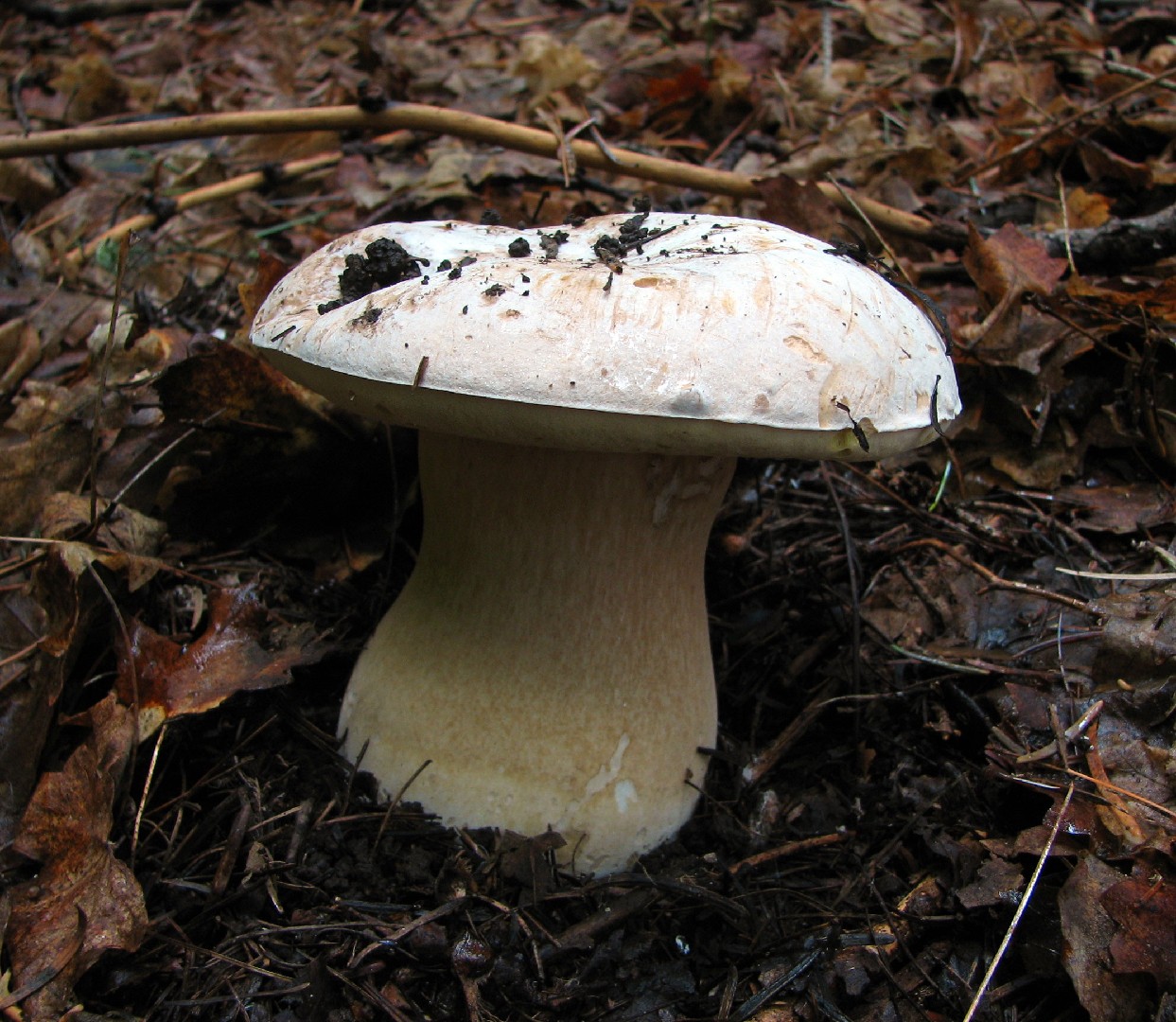
10. White king bolete
The habitat of the white king bolete is restricted to southwestern North America, but being a warm-weather species, it is most abundant in Arizona and New Mexico. The mushroom was given its scientific name Boletus barrowsii after the self-taught amateur mycologist Charles "Chuck" Barrows, who discovered the species just a few decades ago.


More







