




Top 20 Most Common Mushrooms in Palencia
Delve into the fascinating world of fungi with our spotlight on the top 20 most common mushrooms in Palencia. Renowned for its diverse ecological landscape, Palencia boasts thriving woodlands and humid climates that provide an idyllic habitat for mushrooms. With a stunning array of species available, each exhibiting unique flavors and textures, Palencia is a veritable goldmine for mycologists and culinary enthusiasts alike. Expand your knowledge on these local fungi as we take you on a journey through Palencia's mushroom treasures.

Most Common Mushrooms
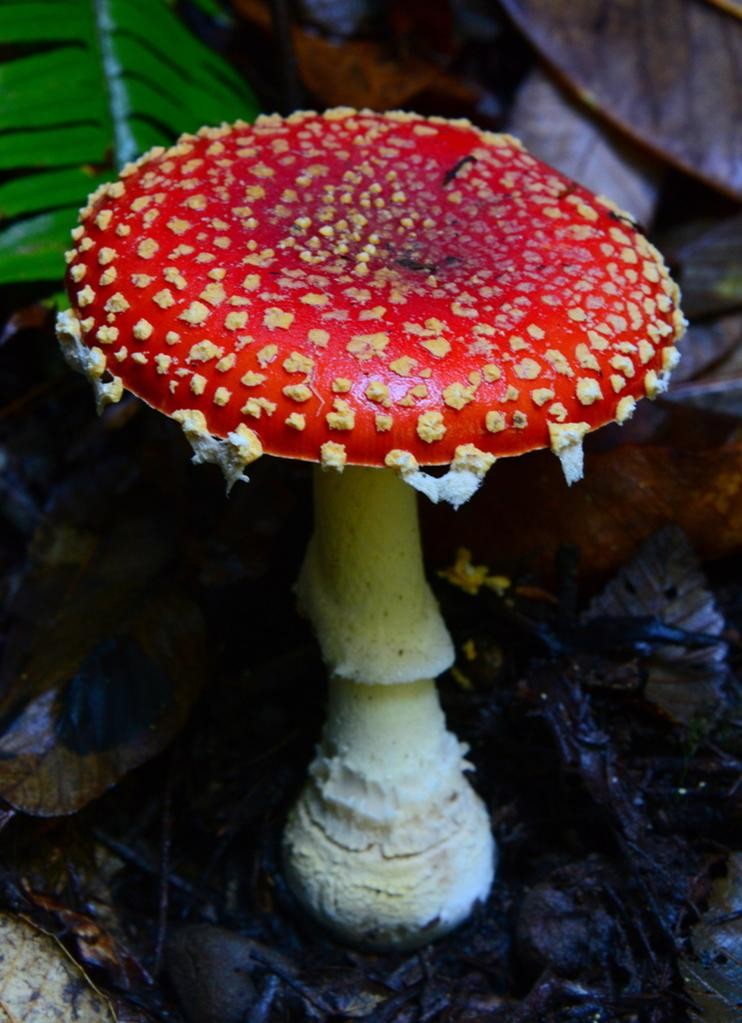
1. Fly agaric
In Northern Asia and Europe, fly agaric grows under trees near the winter solstice and is collected for ritual use tied to the season. Its characteristic shape and coloring are still ubiquitous in many European fairy tale illustrations and Christmas traditions. It is highly toxic.
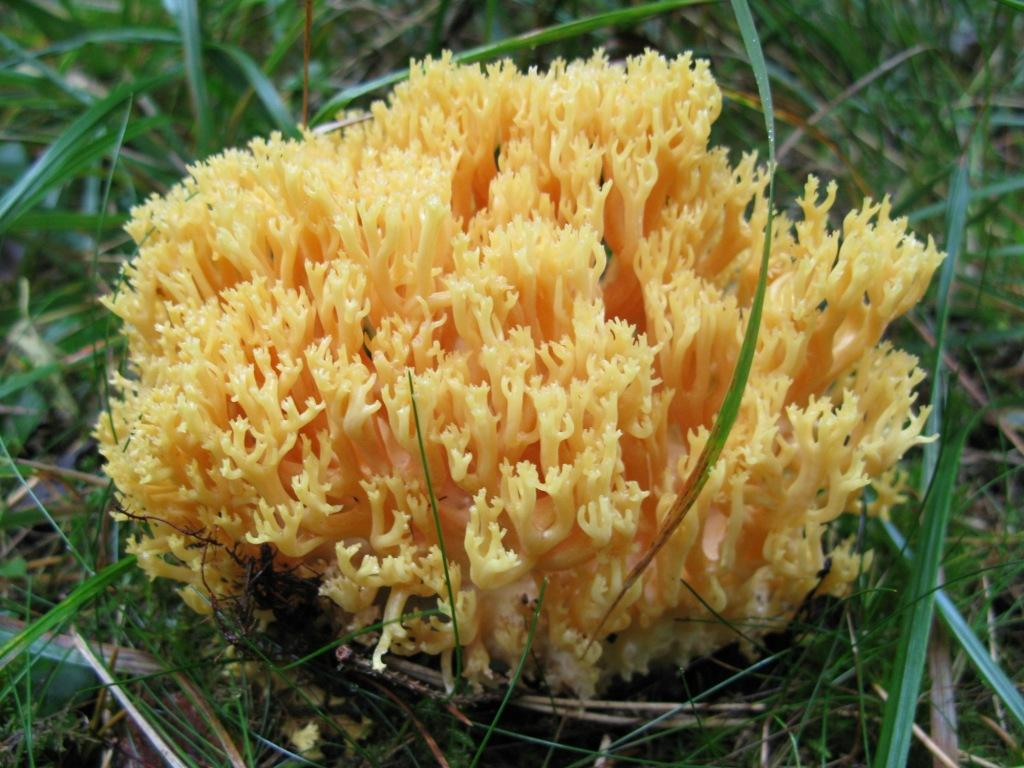
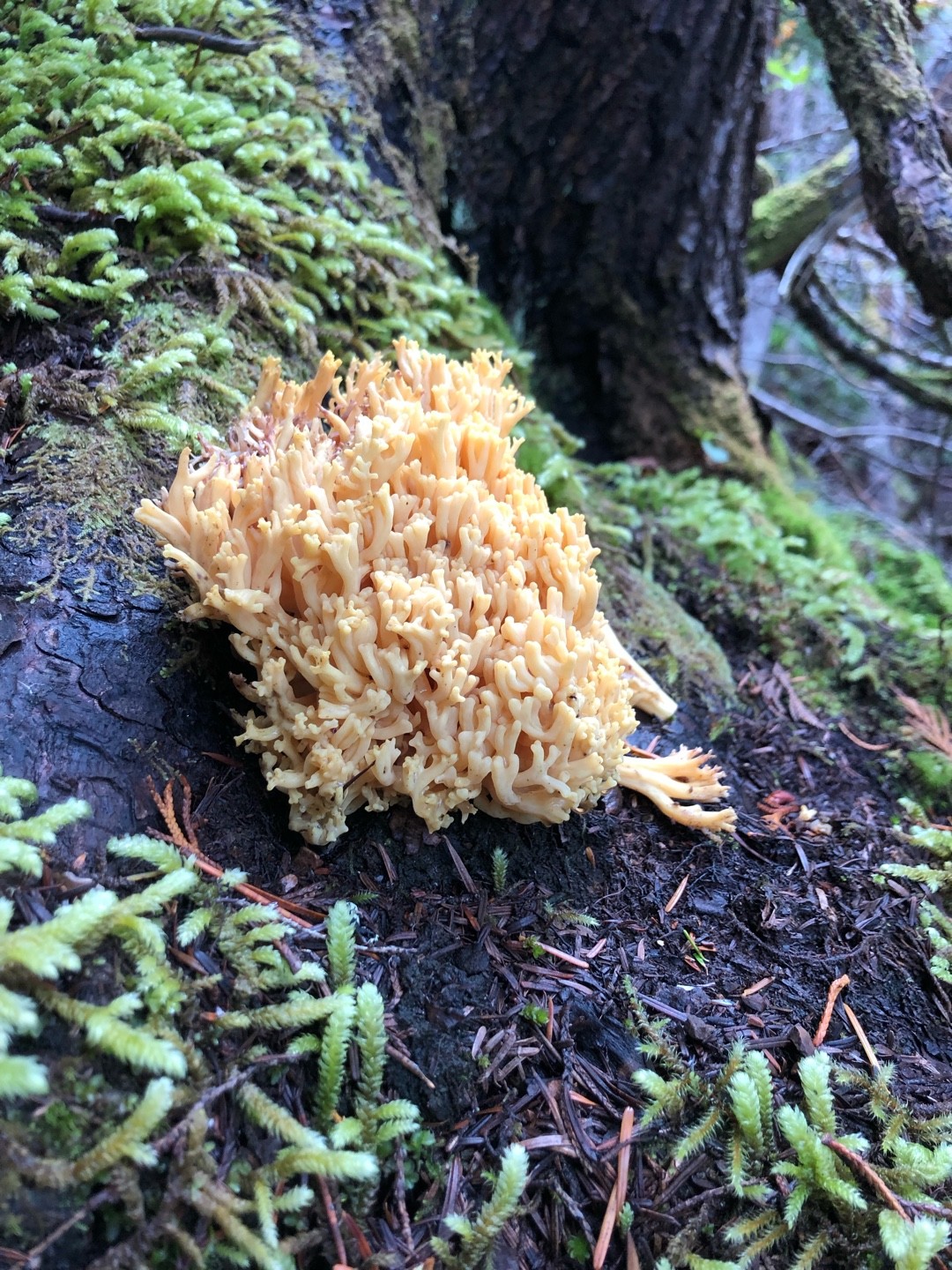
2. Ramaria flavescens
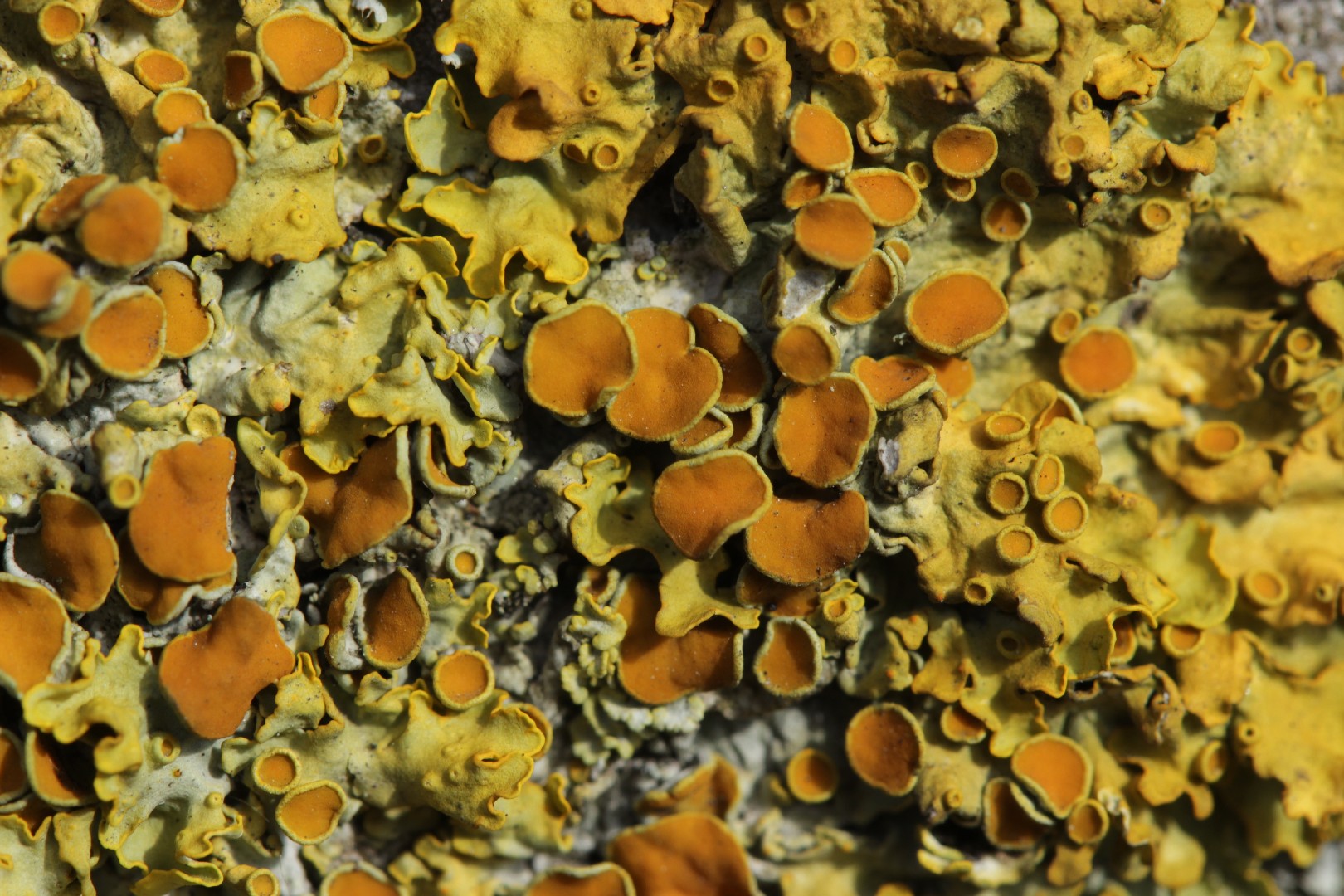
3. Common orange lichen
Common orange lichen was selected in 2006 by the United States Department of Energy as a model for genomic sequencing. Its widespread dispersal and bright yellow-orange color give the lichen its common name. It is primarily found growing on rocks, walls, and tree bark.
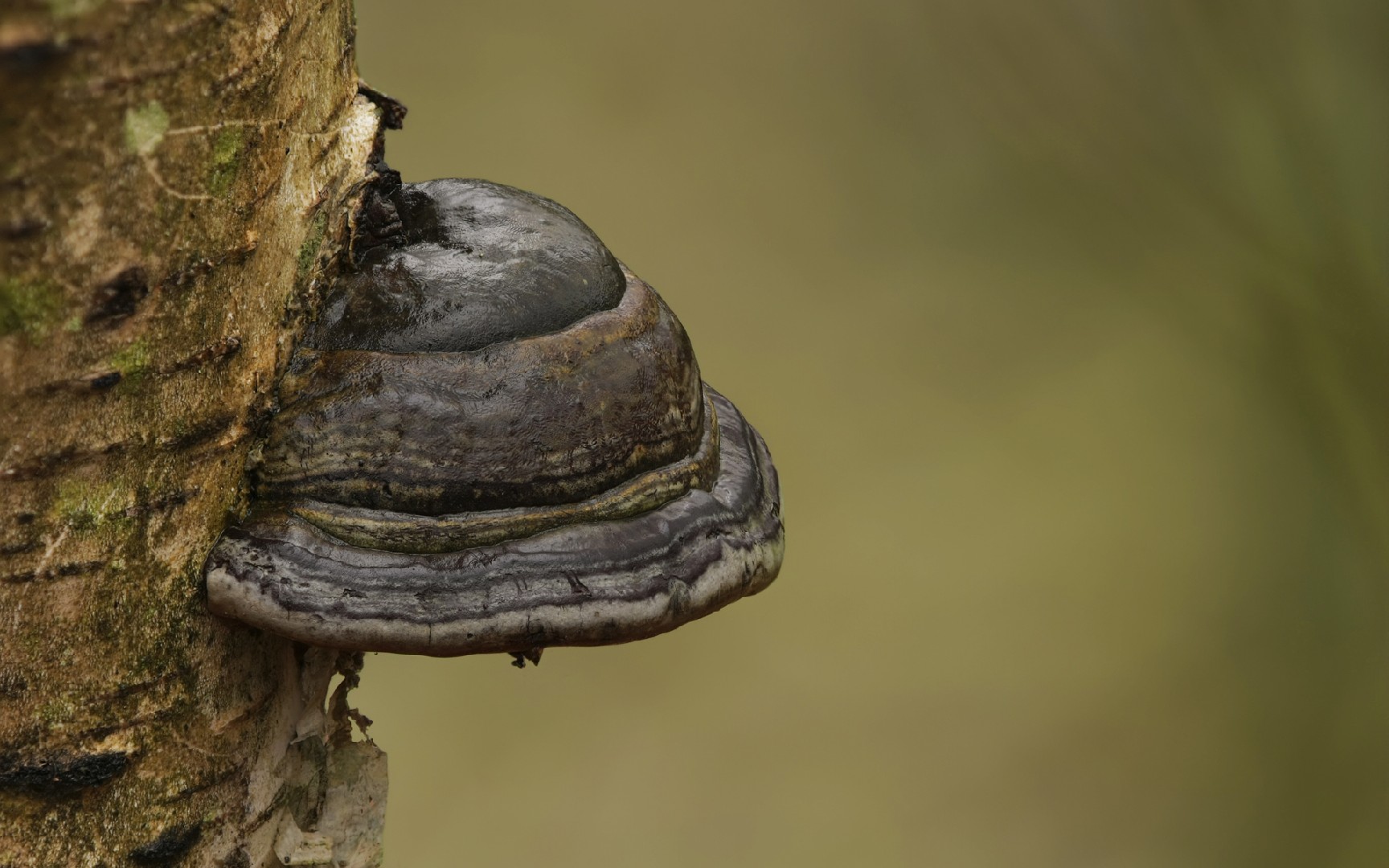
4. Tinder fungus
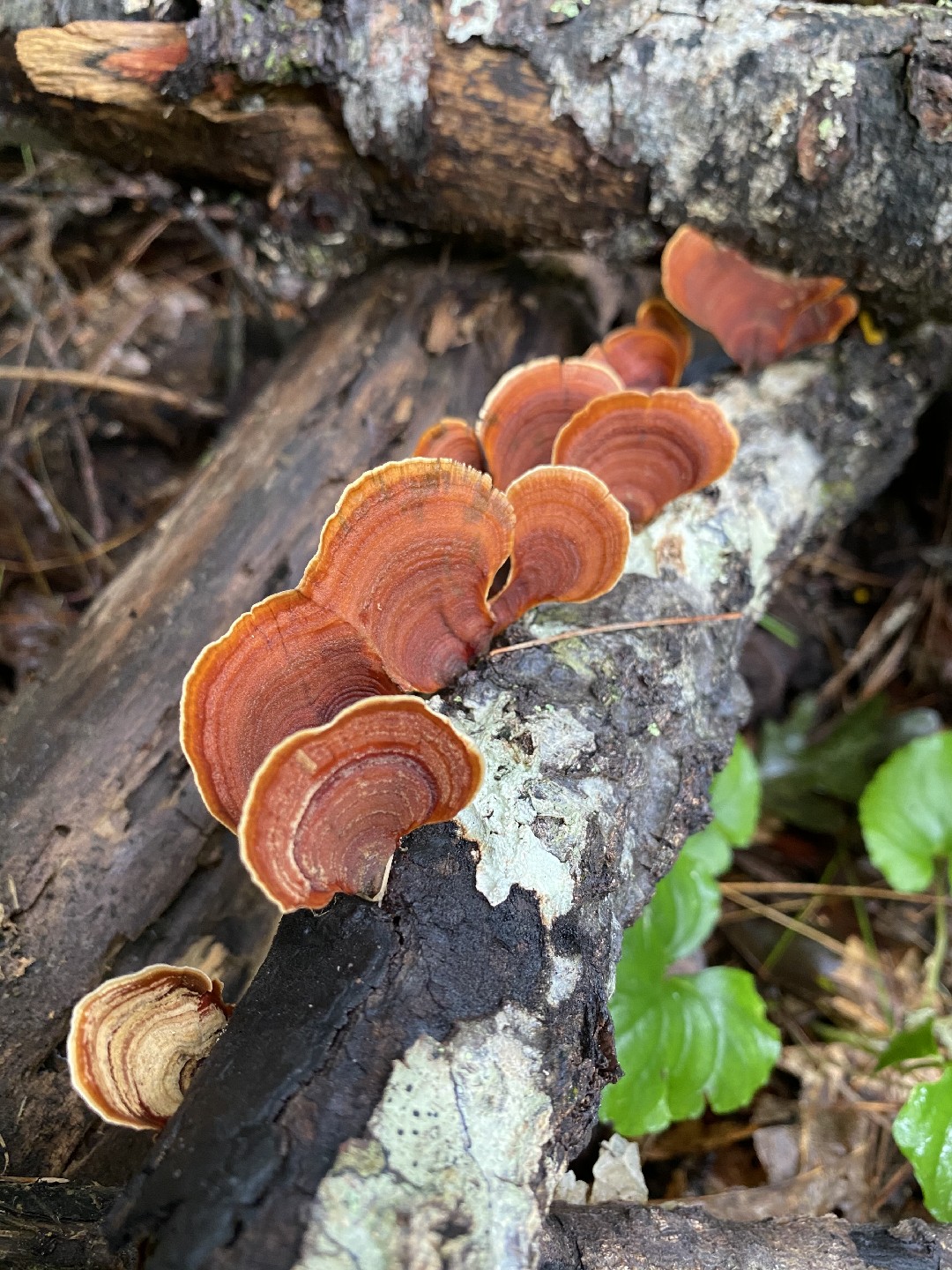
This large, tough shelf fungus can be found attached to birch, beech, and sycamore trees. It gets its common name, tinder fungus, from the fact that it burns quite slowly and can thus be used effectively for lighting fires. Dried pieces can also be a useful desiccant. A piece of this fungus was found in the possession of Otzi the Iceman, indicating that its usefulness has been known for millenia.
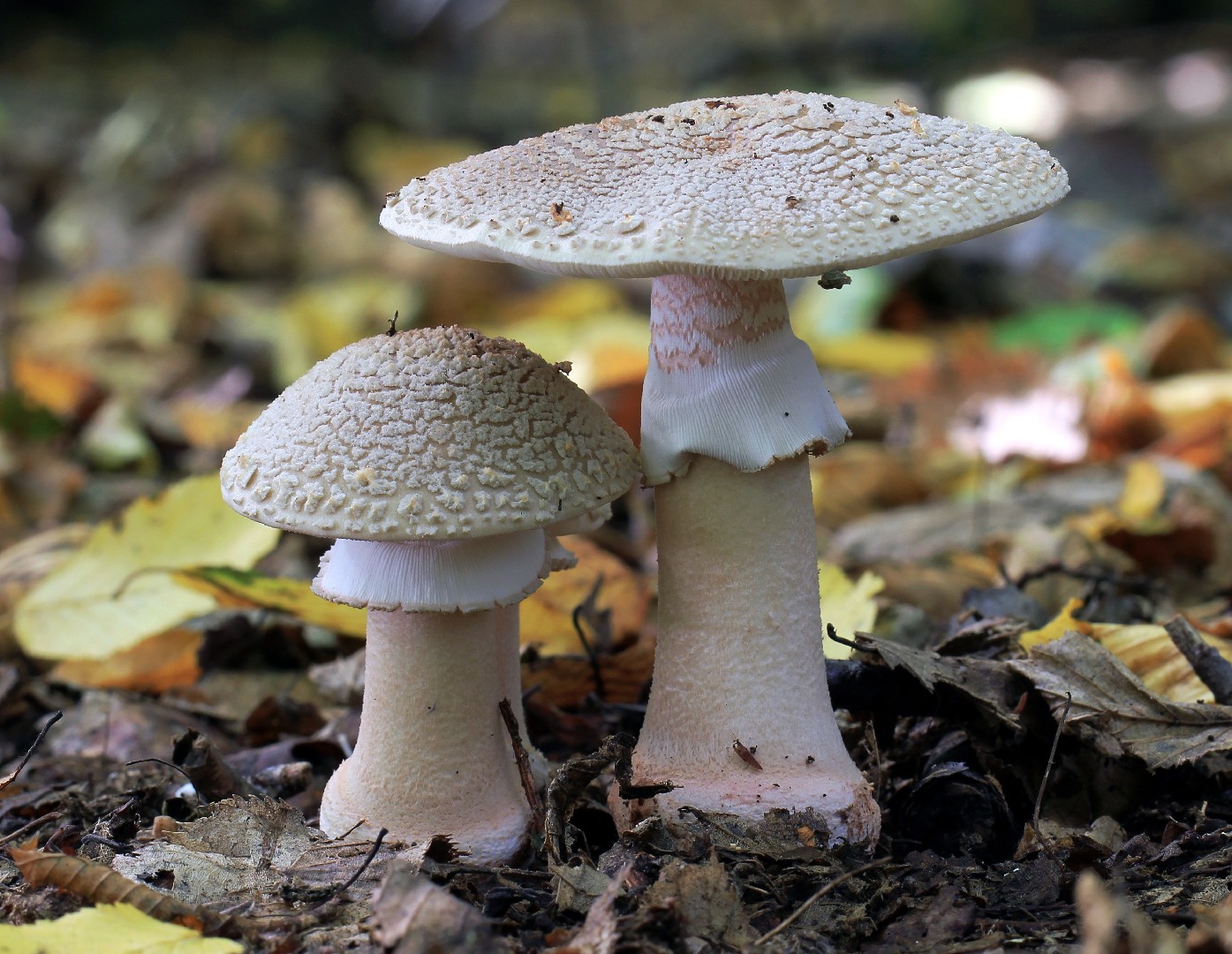
5. Blusher
The blusher mushroom is so named because it “blushes” to a pinkish red color when cut or bruised. It is found in many countries around the world, although it may not be native to the southern hemisphere. It contains a hemolytic toxin that can cause anemia if eaten.
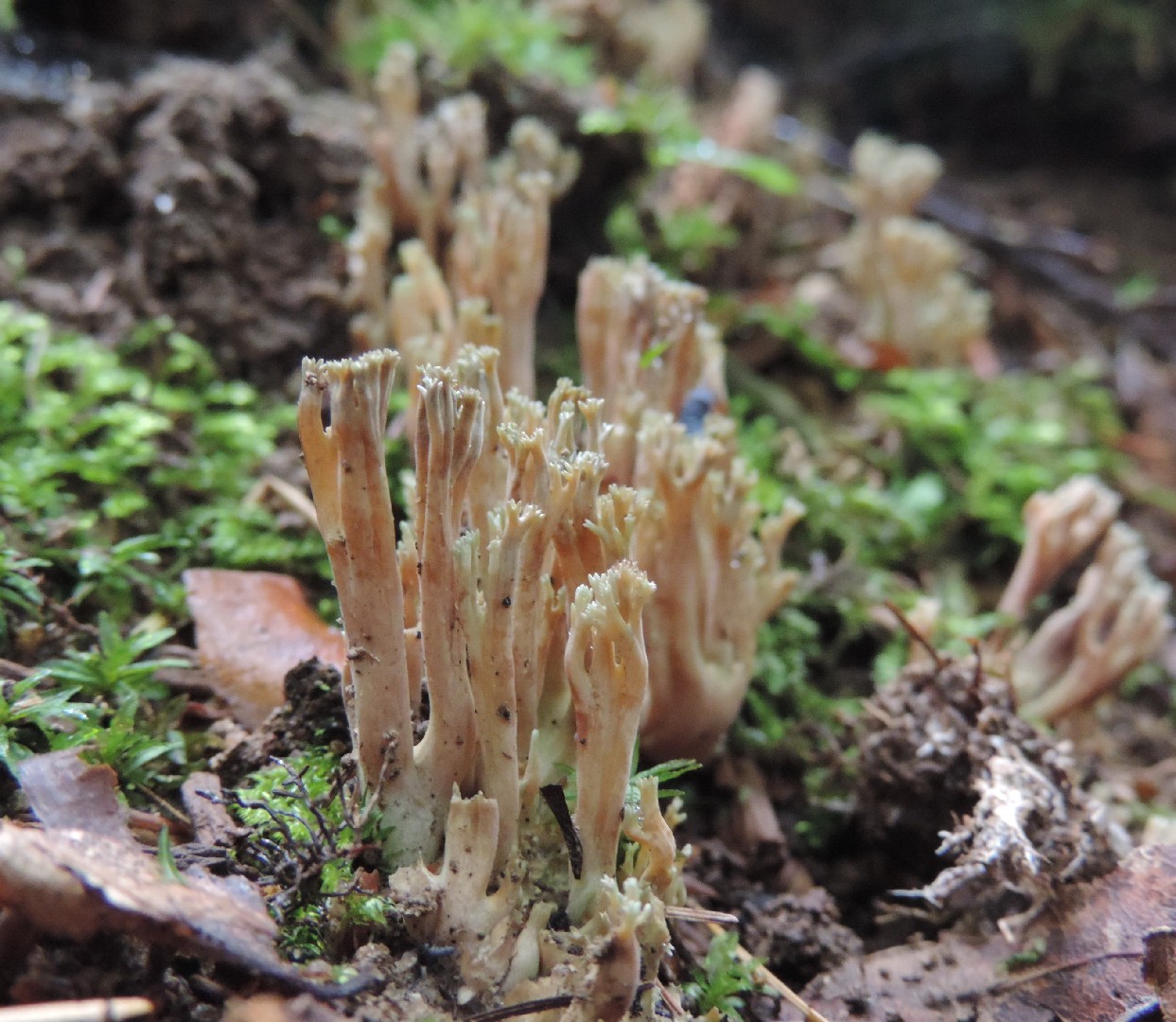
6. Green-tipped coral
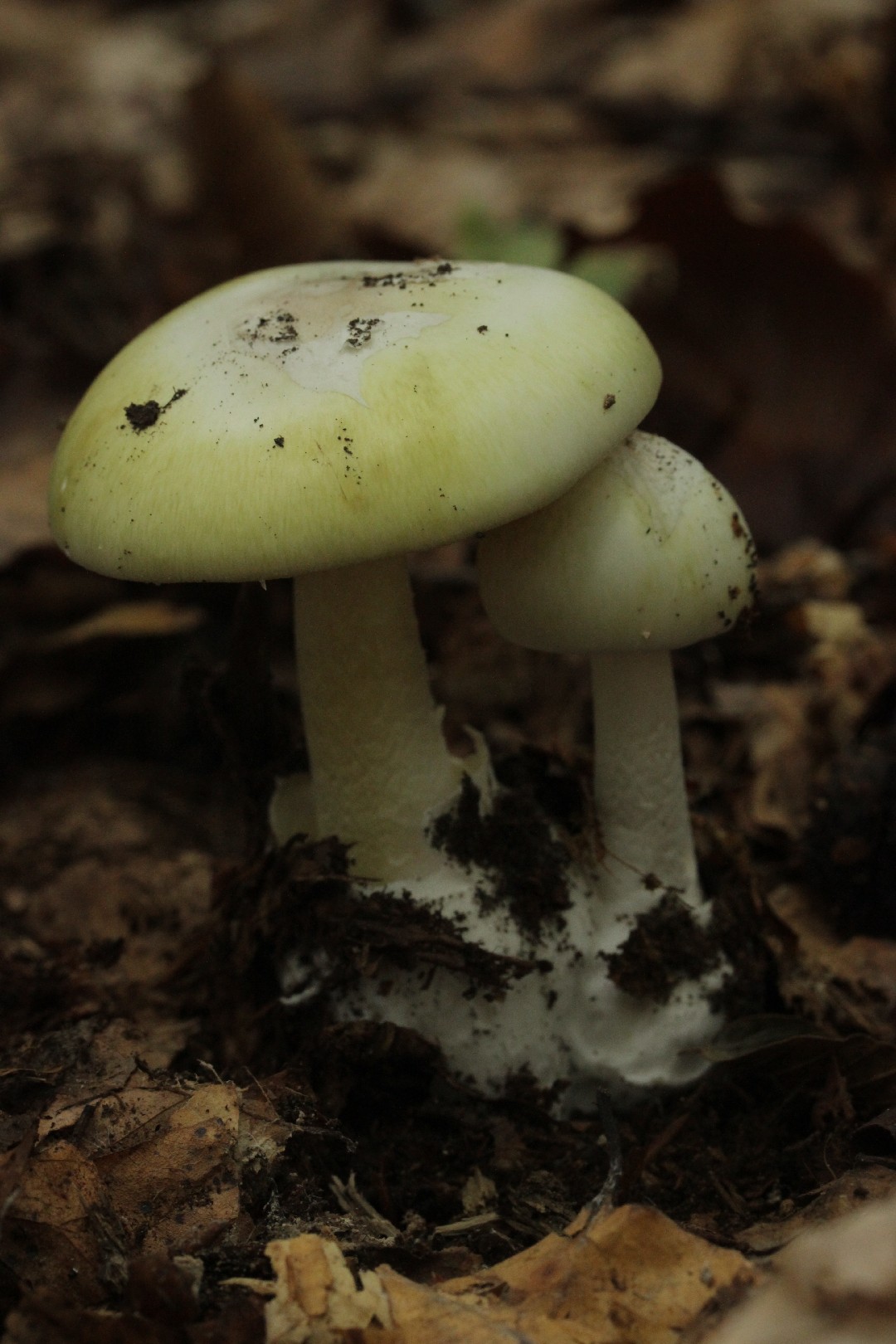
7. Death cap
The death cap is responsible for most of the mushroom-related fatalities around the world. Its toxin damages the liver and kidneys, creating symptoms that require hospitalization within hours of ingestion. It looks similar to many other mushrooms at varying stages of its development and has been used in assassinations since the days of the ancient Greeks.
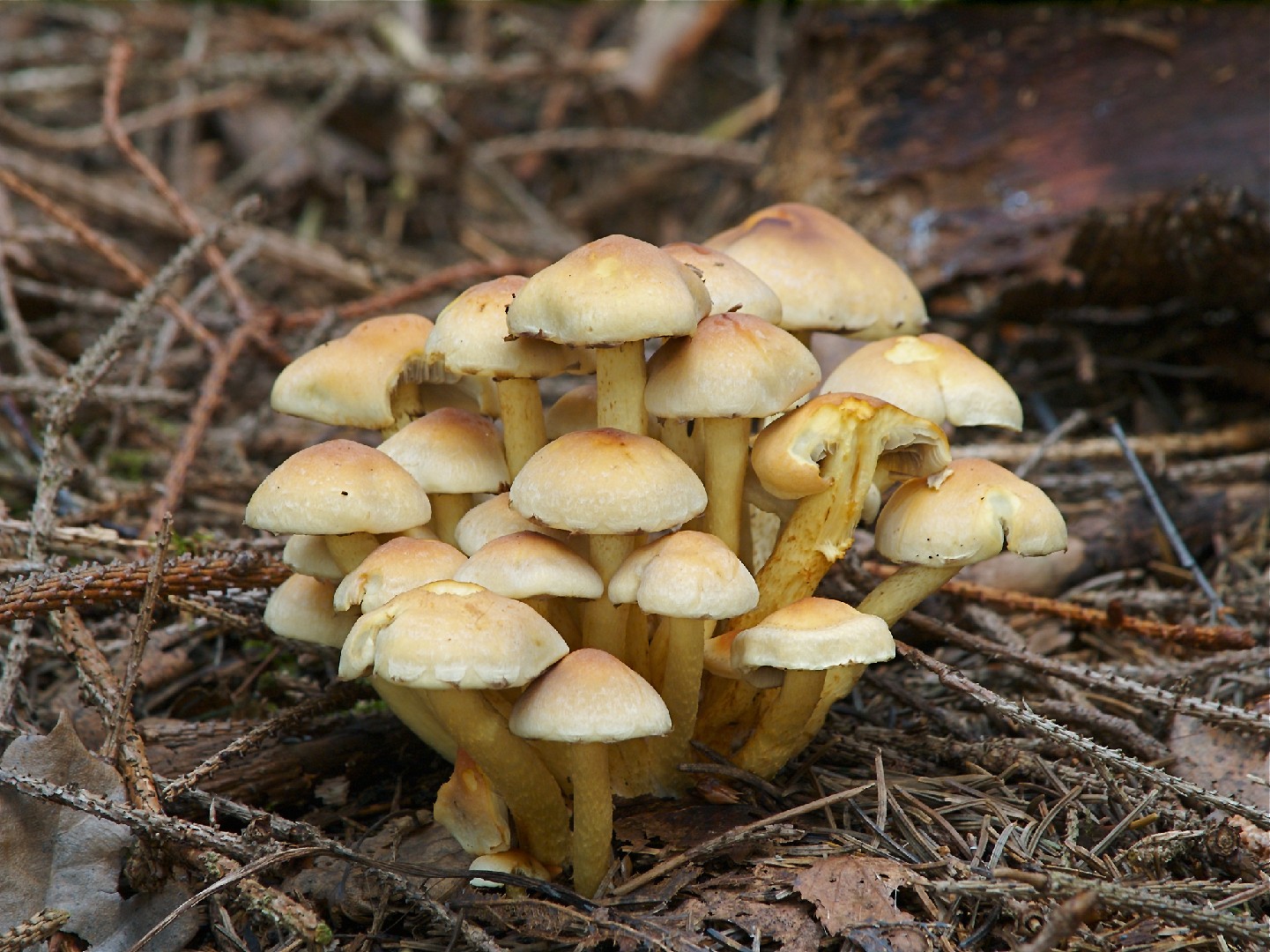
8. Sulphur tuft
The sulphur tuft grows on rotting wood of all types of trees; it is a particularly efficient decomposer of hardwoods. The mushrooms appear from spring to autumn and are often so tightly packed that they interfere with each other’s shape. This poisonous mushroom can cause temporary paralysis, distorted vision, and stomach pain if consumed.
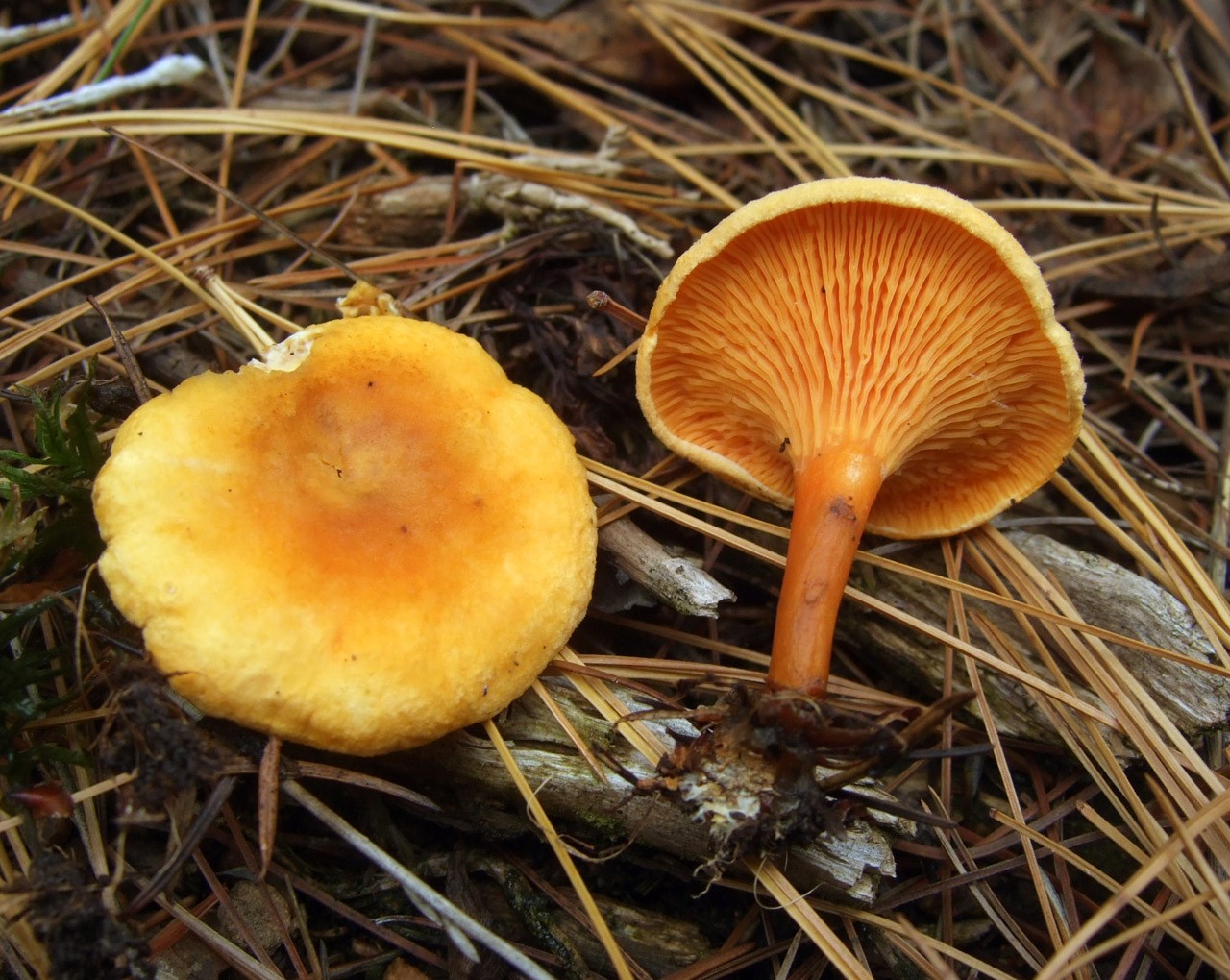
9. False chanterelle
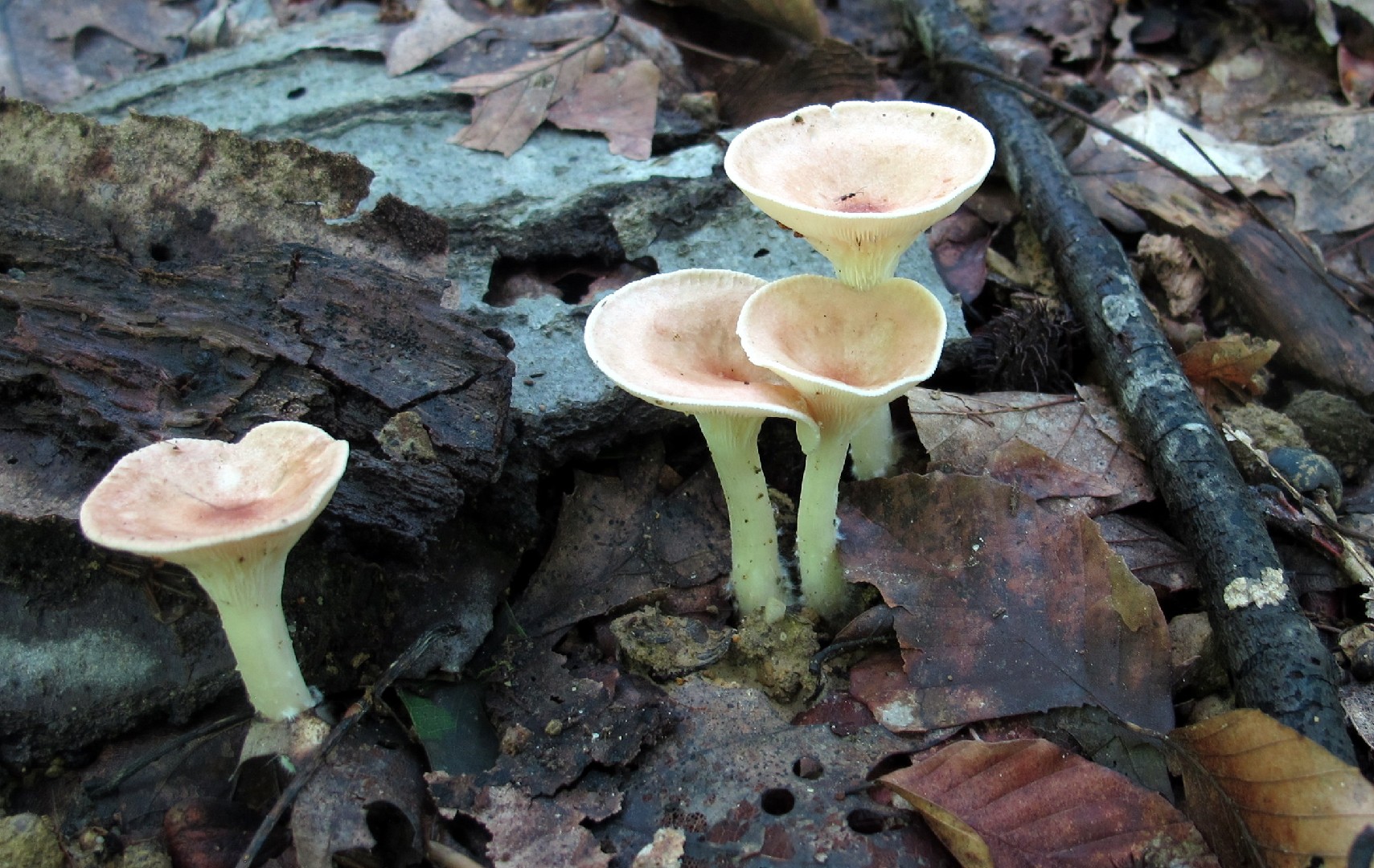
The common name of this mushroom refers to the fact that it looks very similar to the edible and highly prized Chanterelle. This species, however, tastes bitter and may cause poisoning symptoms. False chanterelle occurs around the northern hemisphere in autumn and winter, growing on coniferous detritus, and is more likely to fruit in dry conditions rather than the usual wet.
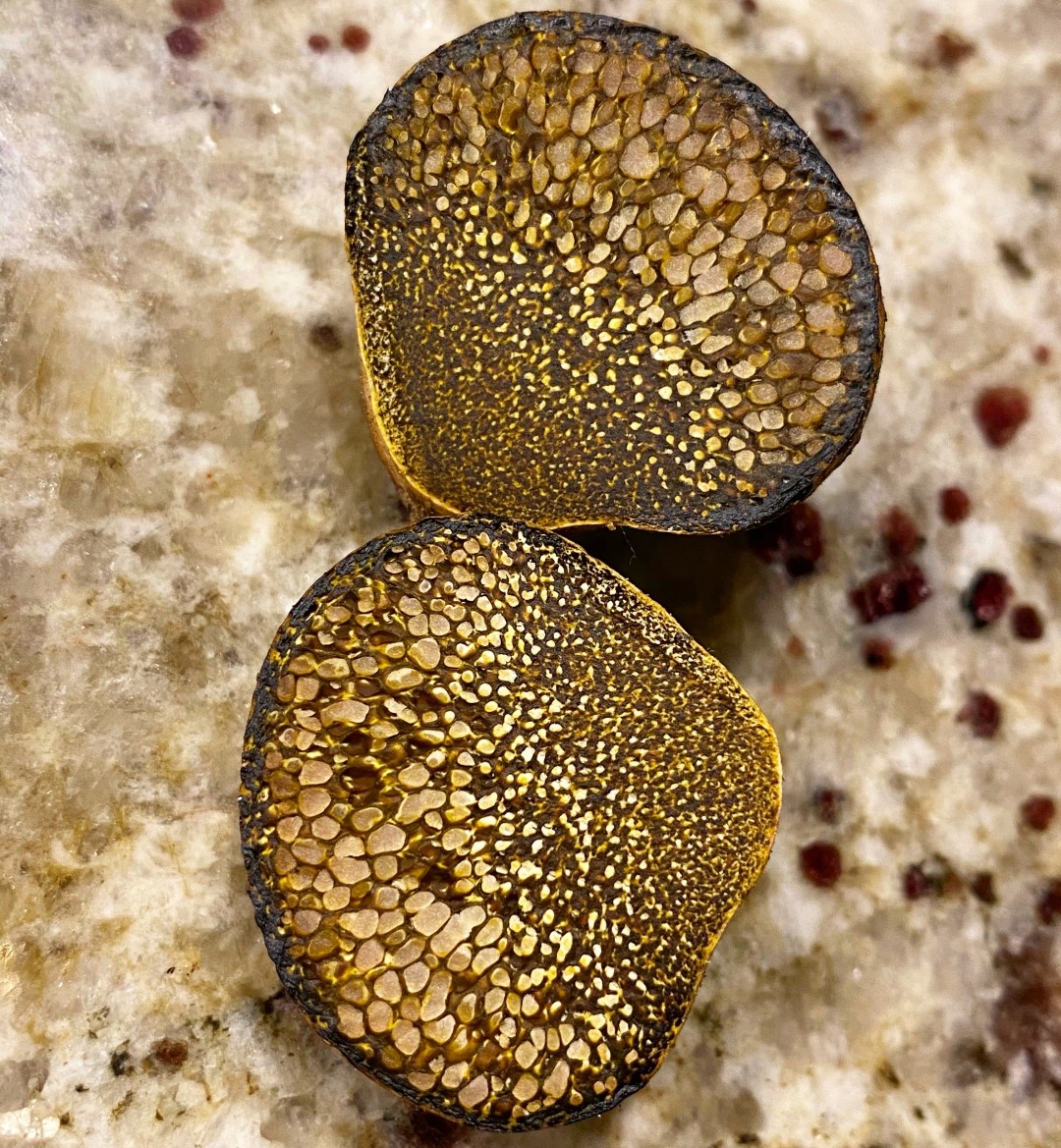
10. Dead man's foot
Dead man's foot (Pisolithus arhizus) actually bears a number of colorful names stemming from its unusual appearance, such as the horse dung fungus (Australia). It can be distilled into a viscous black gel, which is then used as a natural dye for clothing. It is considered to be inedible.

More







