




Top 20 Most Common Mushrooms in Limburg

Most Common Mushrooms
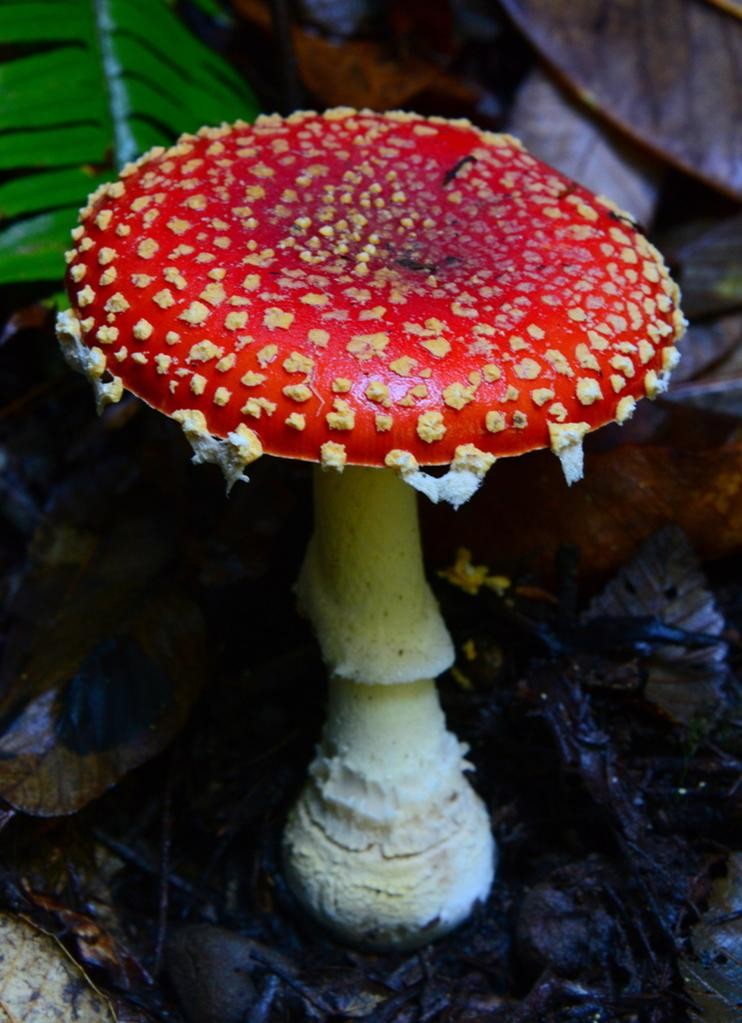
1. Fly agaric
In Northern Asia and Europe, fly agaric grows under trees near the winter solstice and is collected for ritual use tied to the season. Its characteristic shape and coloring are still ubiquitous in many European fairy tale illustrations and Christmas traditions. It is highly toxic.
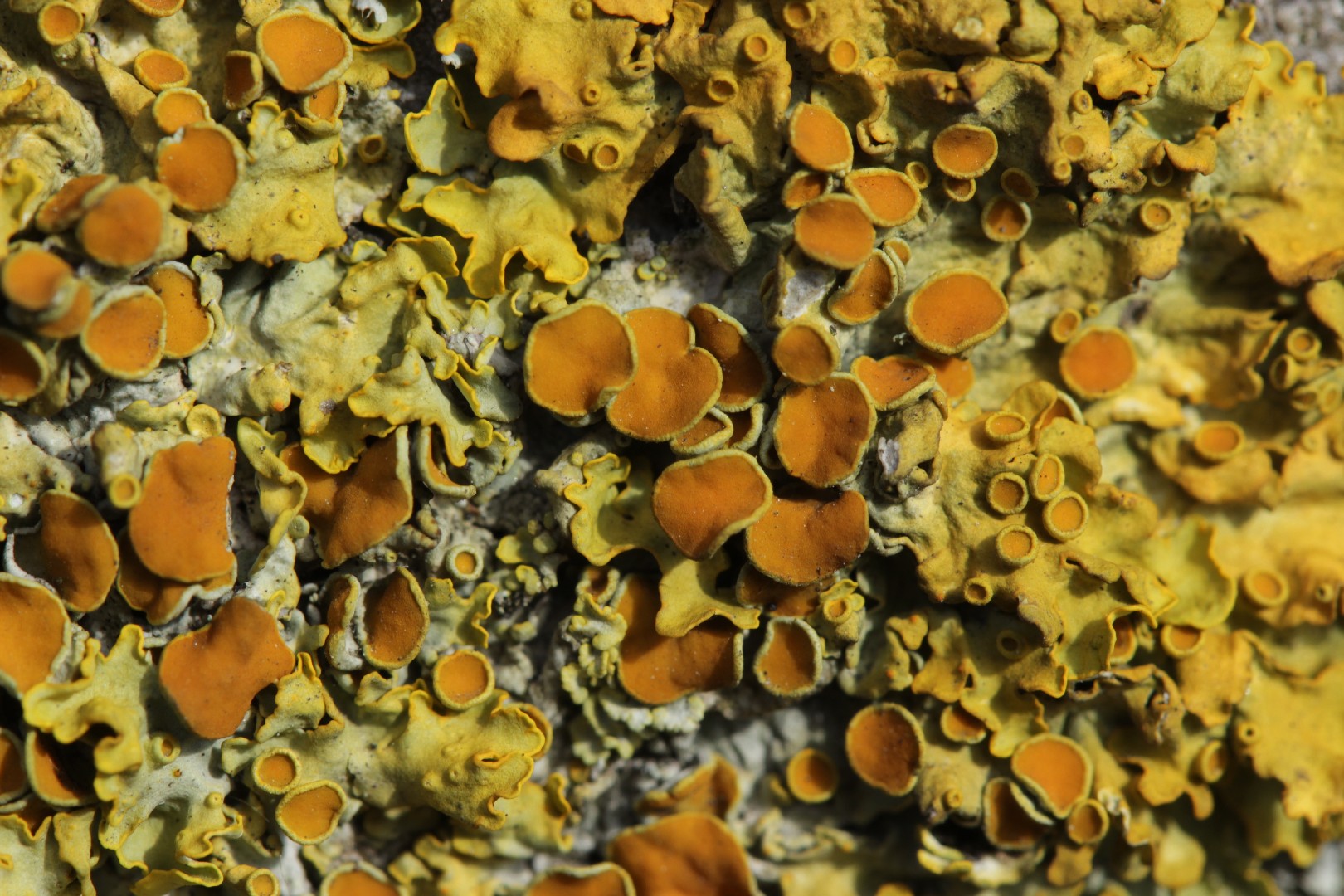
2. Common orange lichen
Common orange lichen was selected in 2006 by the United States Department of Energy as a model for genomic sequencing. Its widespread dispersal and bright yellow-orange color give the lichen its common name. It is primarily found growing on rocks, walls, and tree bark.
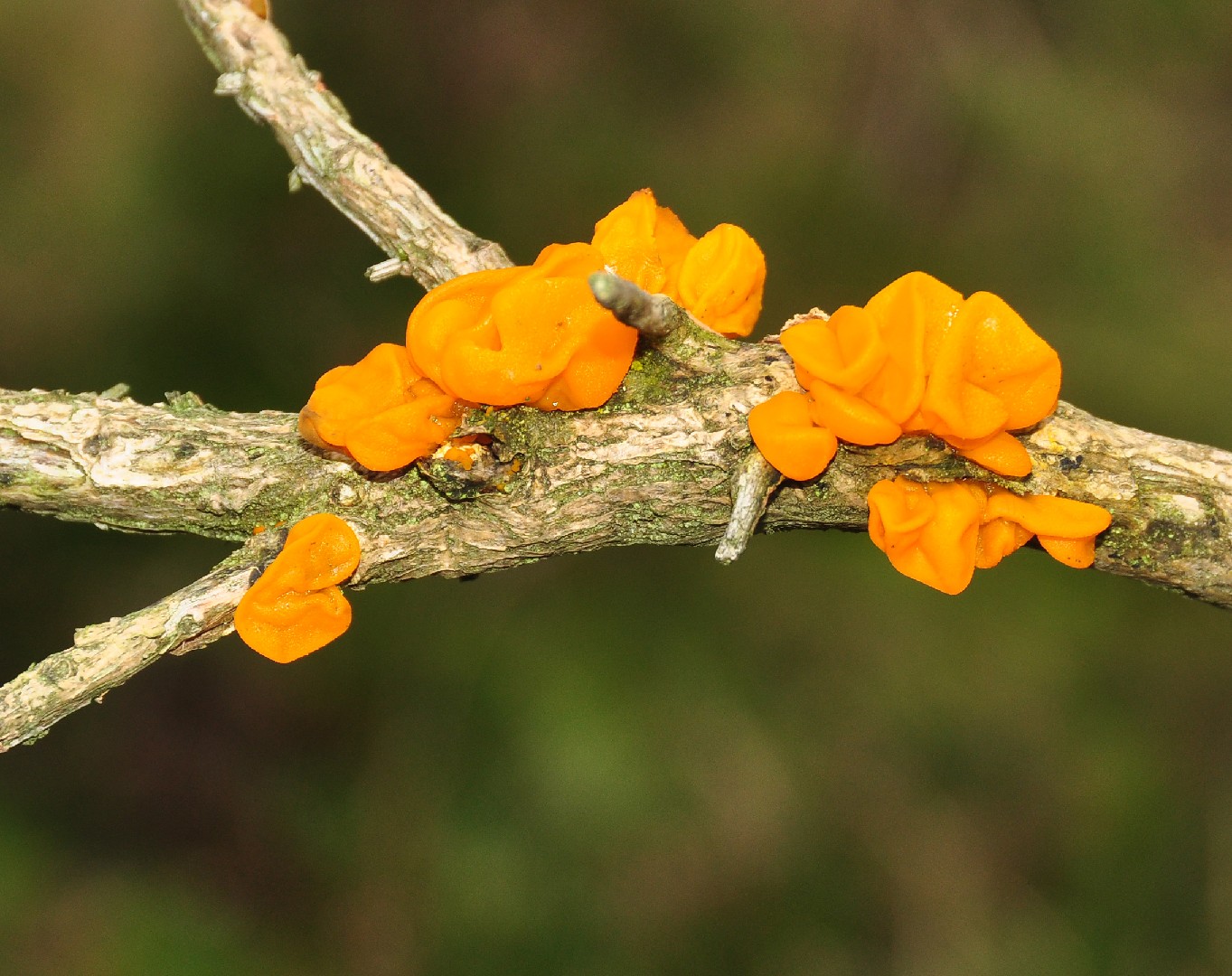
3. Witches' butter
Witches' butter (Tremella mesenterica) has an irregularly-shaped fruitbody that can be found growing on dead hardwood branches. It has a global distribution, being found in both temperate and tropical forests. Usually yellow in color, its hues may range from subdued lemon to bright canary.
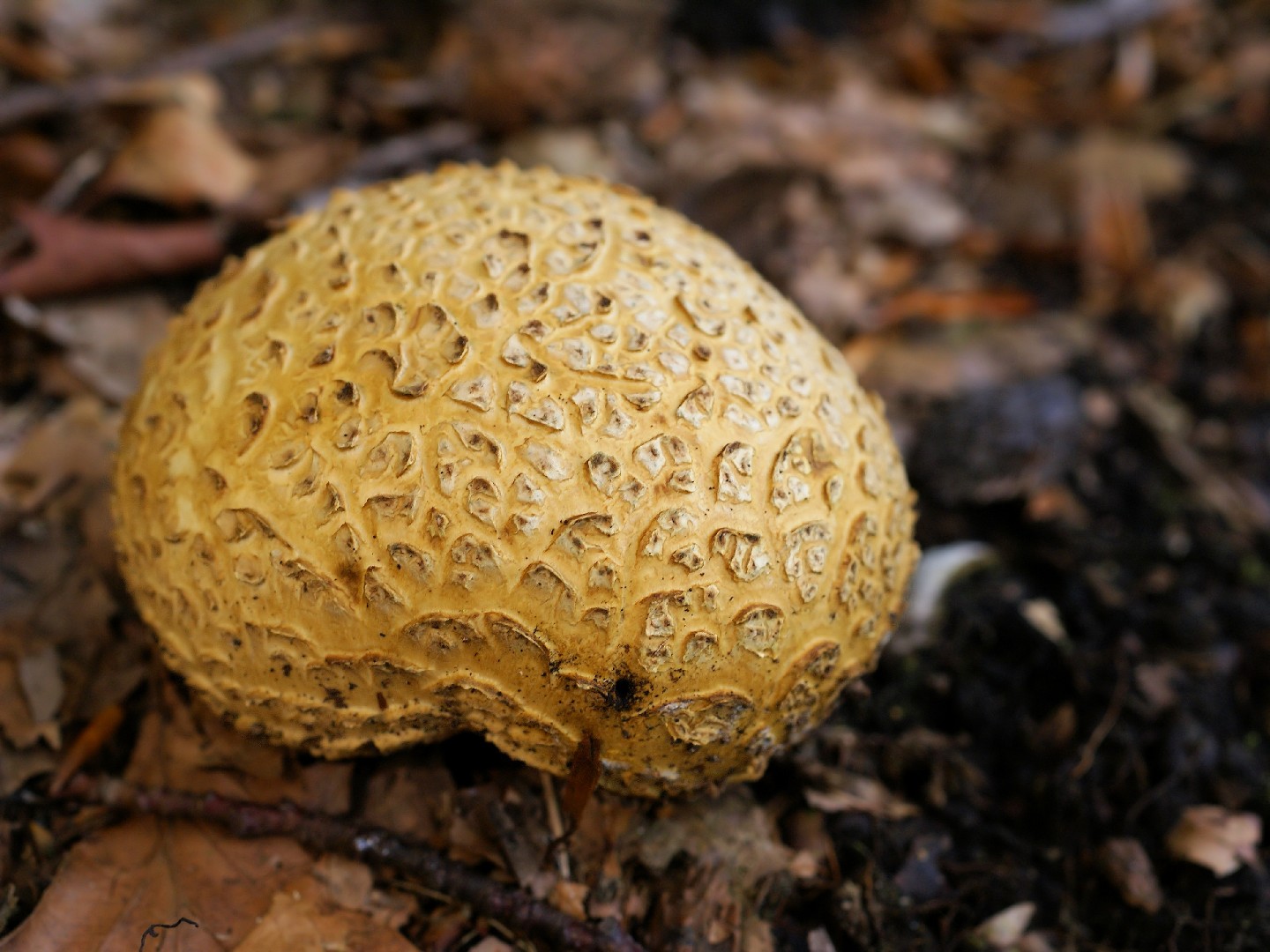
4. Common earthball
With an appearance similar to a crusty potato, the common earthball blooms from acidic soils, including compacted paths on the forest floor. It matures to a yellowish tinge and is found across the northern hemisphere. It is a close cousin to bolete mushrooms but is considered to be poisonous and is never eaten.
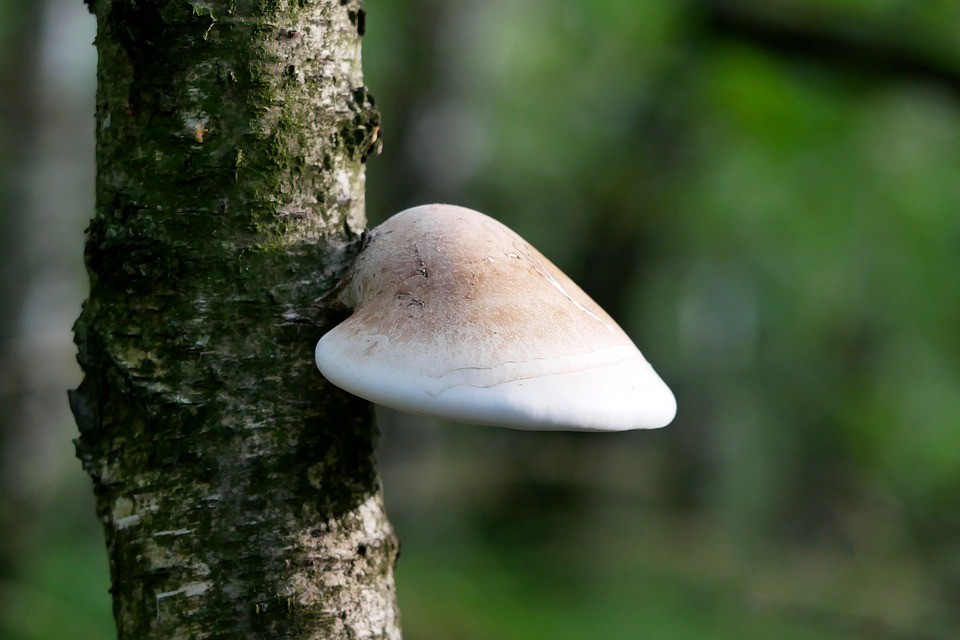
5. Birch polypore
The birch polypore has a variety of applications. Its thick skin has been used by barbers as a razor sharpener and as a mount for insect collectors. When dried, this mushroom was also used to carry fire over long distances because it burns slowly. The historical use of birch polypore doesn't stop there; pieces of this mushroom were found being carried by the five-thousand-year-old mummy Ötzi the Iceman.
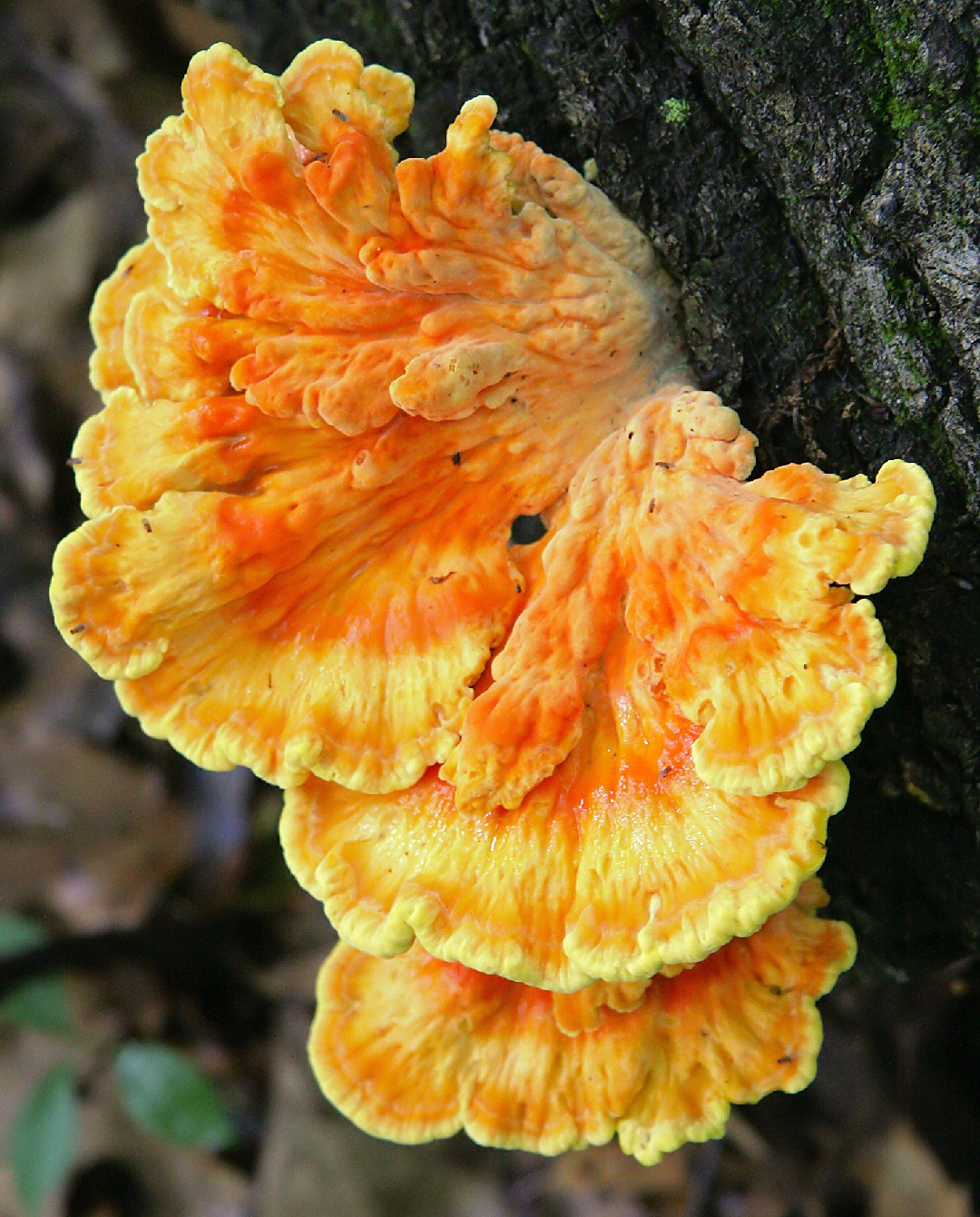
6. Chicken of the woods
Chicken of the woods is very noticeable in hardwood forests, appearing in clusters on standing tree trunks in bright orange and yellow hues that sometimes last through the entire winter. It is a parasite that causes an unfortunate brown heart rot, and is considered a particularly troublesome pest of Yew trees. If the fruitbodies can be seen, the tree is likely already beyond saving.

7. Shaggy mane
The shaggy mane mushroom is commonly found in North American and European grasslands. Some peoples foraged for its young egg-shaped caps, but it has more recently been found to be a bioaccumulator of heavy metals, meaning it pulls toxic metals up from the soil where it grows. As a result, shaggy manes should not be eaten. The mushrooms usually appear in clusters or “fairy rings.”
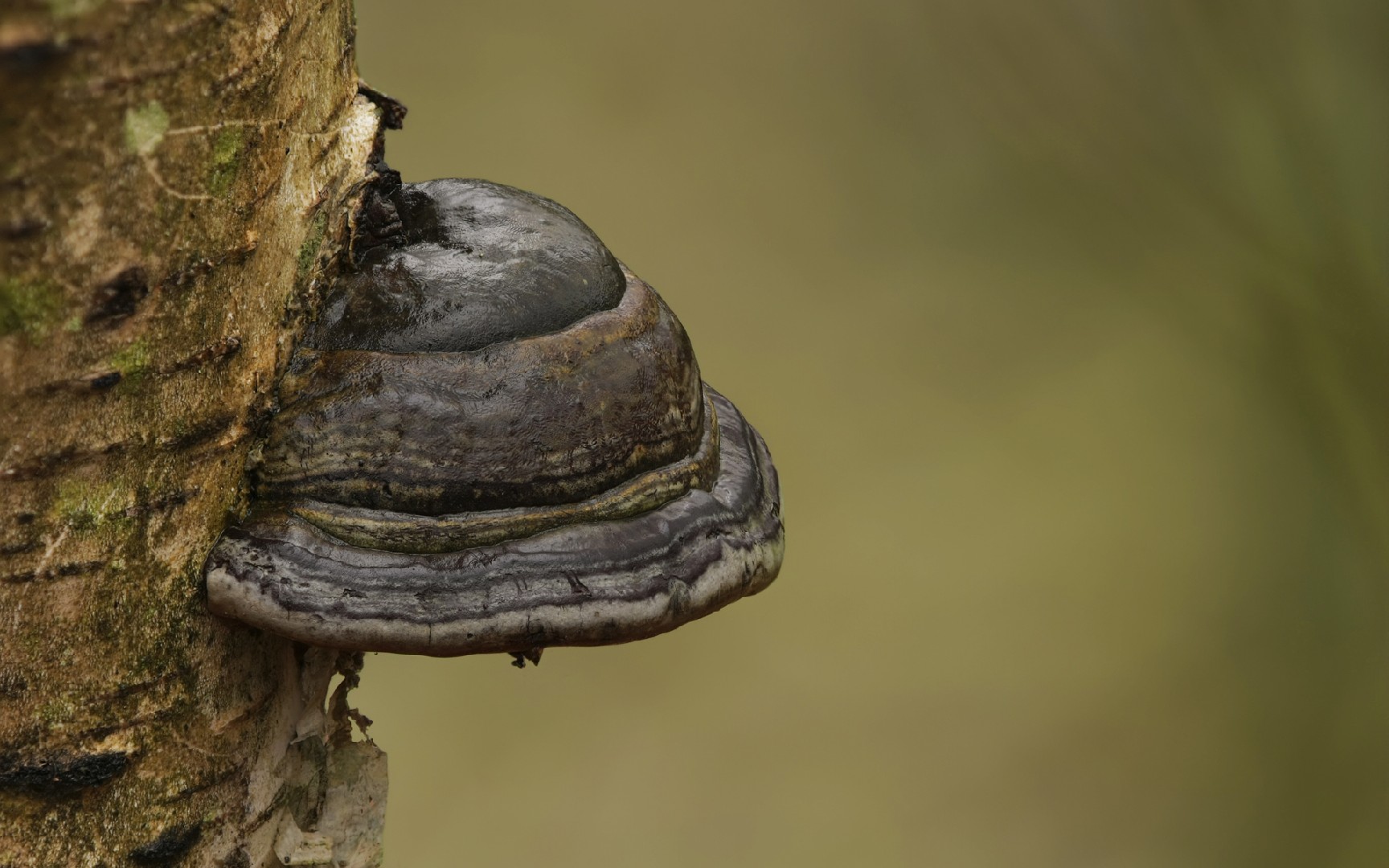
8. Tinder fungus
This large, tough shelf fungus can be found attached to birch, beech, and sycamore trees. It gets its common name, tinder fungus, from the fact that it burns quite slowly and can thus be used effectively for lighting fires. Dried pieces can also be a useful desiccant. A piece of this fungus was found in the possession of Otzi the Iceman, indicating that its usefulness has been known for millenia.
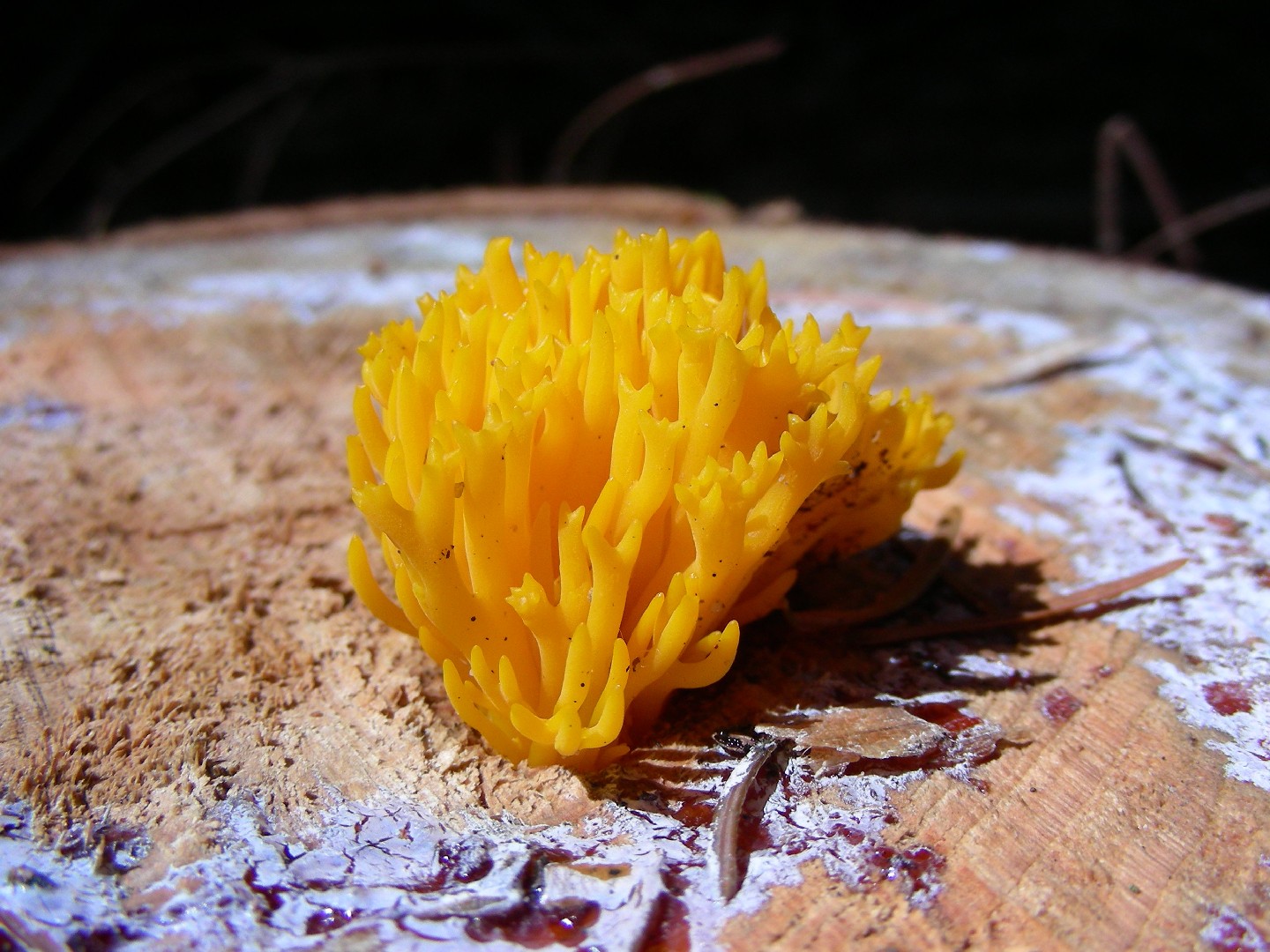
9. Yellow stagshorn
The yellow stagshorn is a brightly colored mushroom, similar to so-called coral mushrooms, but it differs from this group with its greasy texture. It's considered inedible due to its poor taste and gelatinous structure. Besides, it's too small to make a decent meal. It grows in dark parts of the woods.
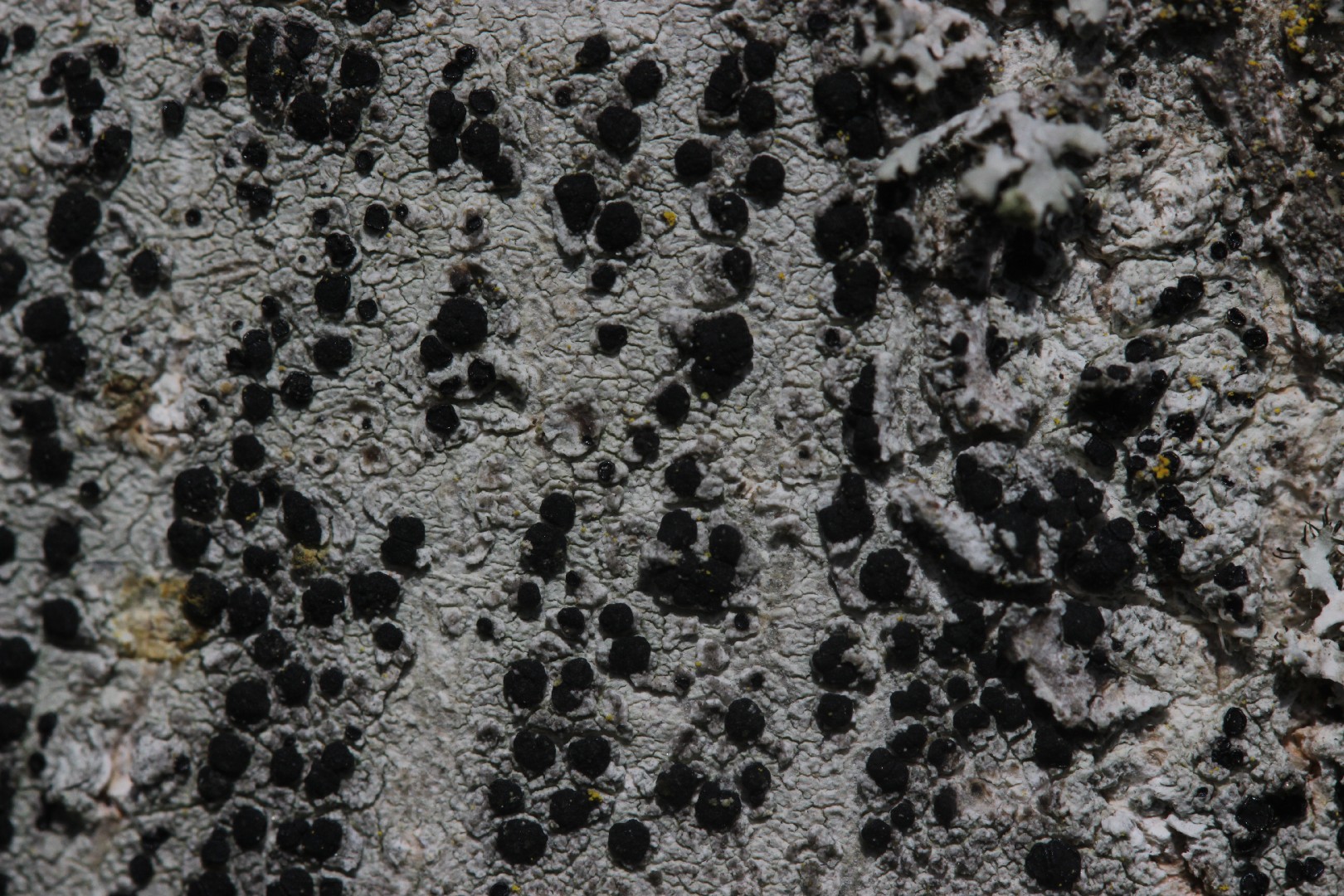
10. Lecidella lichen
Lecidella elaeochroma is a crust lichen, which means that its stock (Thallus) lies closely on the surface. The camp is whitish, gray, gray-green, olive or yellowish. Often it is also damaged by snail-eating and then greenish. The structure of the camp is smooth to grainy. Often it is weakly glossy or even limited by a black submission. The camp can sometimes be sorediös dissolved. It reaches diameter of 1 to 3 cm. The apothecia reach between 0.4 and 1.0 mm in diameter. Their discs are black to dark reddish brown and very rarely frosted. The Apotheciens are flat to strongly arched and can be deformed. Its edge is black and smooth. Overall, the appearance of this lichens is very rich in form.
More







