




Top 14 Most Common Toxic or Poisonous Mushrooms in St. Louis
Navigating the unique world of mycology in St. Louis, marked by its distinct climate and varied terrain, isn't just a hobby—it's an adventure. Recognizing the importance of safety is paramount, particularly when faced with the top 14 most common poisonous mushrooms in the region. With this comprehensive guide, you'll master the art of safe shroom hunting, helping you avoid harm while enjoying this enthralling exploration of nature's hidden gems.
* Disclaimer: Content feedback CAN NOT be used as any basis for EATING ANY PLANTS. Some plants can be VERY POISONOUS, please purchase edible plants through regular channels.

Most Common Toxic or Poisonous Mushrooms
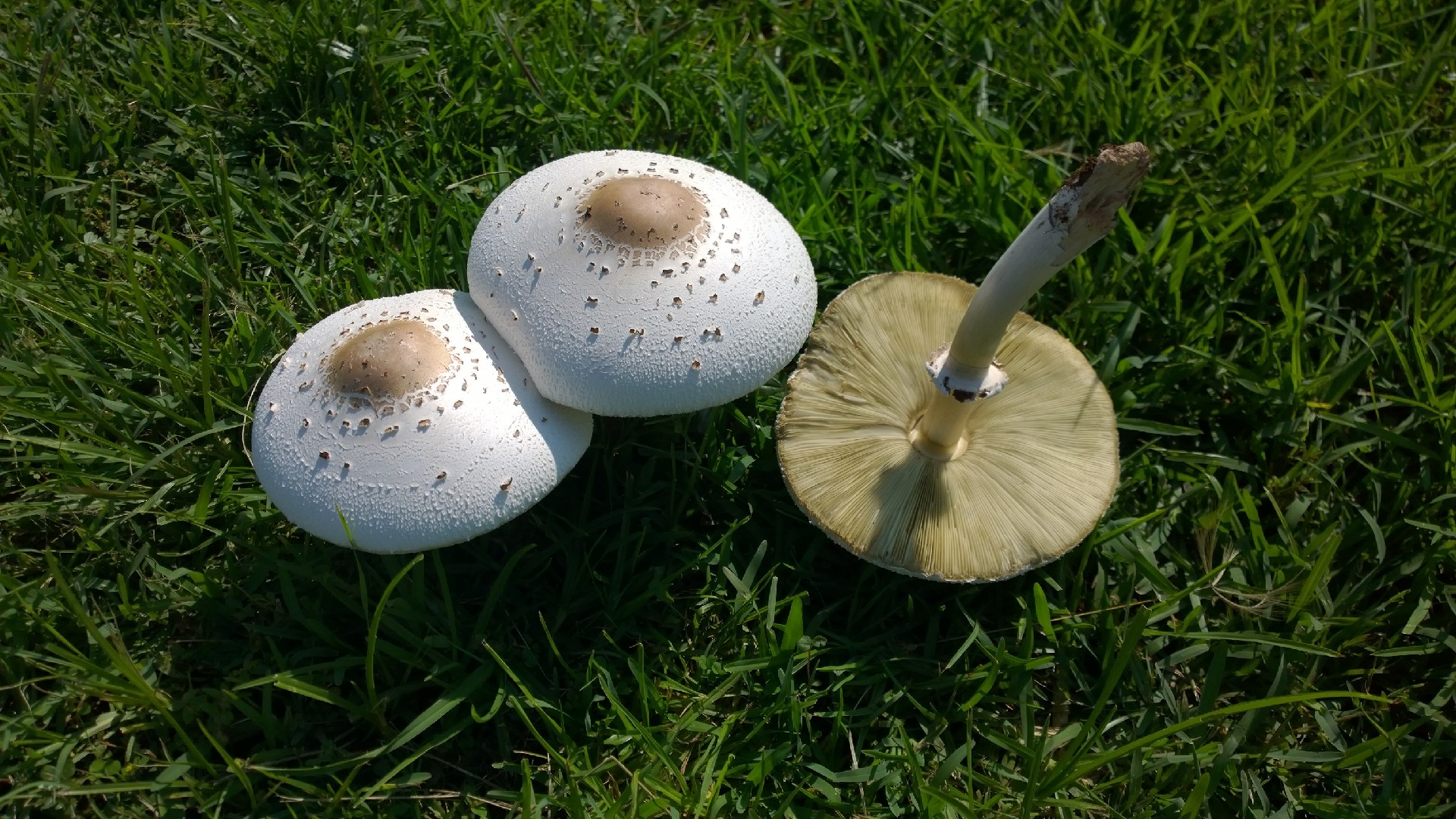
1. False parasol
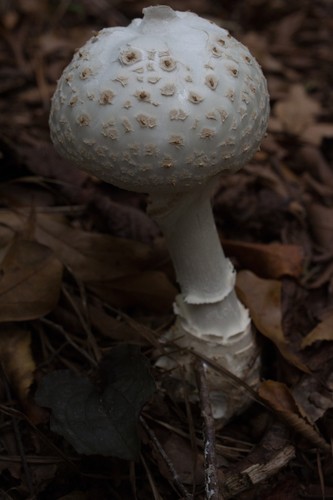
Though the false parasol appears unassuming, the species is famous—or, infamous—for its toxicity. It looks unfortunately similar to Agericus campestrus, a commonly eaten mushroom, but the false parasol can be distinguished by its highly unusual green spore print. Although they are no good to eat, they can be pretty to look at. The species may grow in ring-shaped groups in meadows and on forest floors in what are sometimes called "fairy circles."
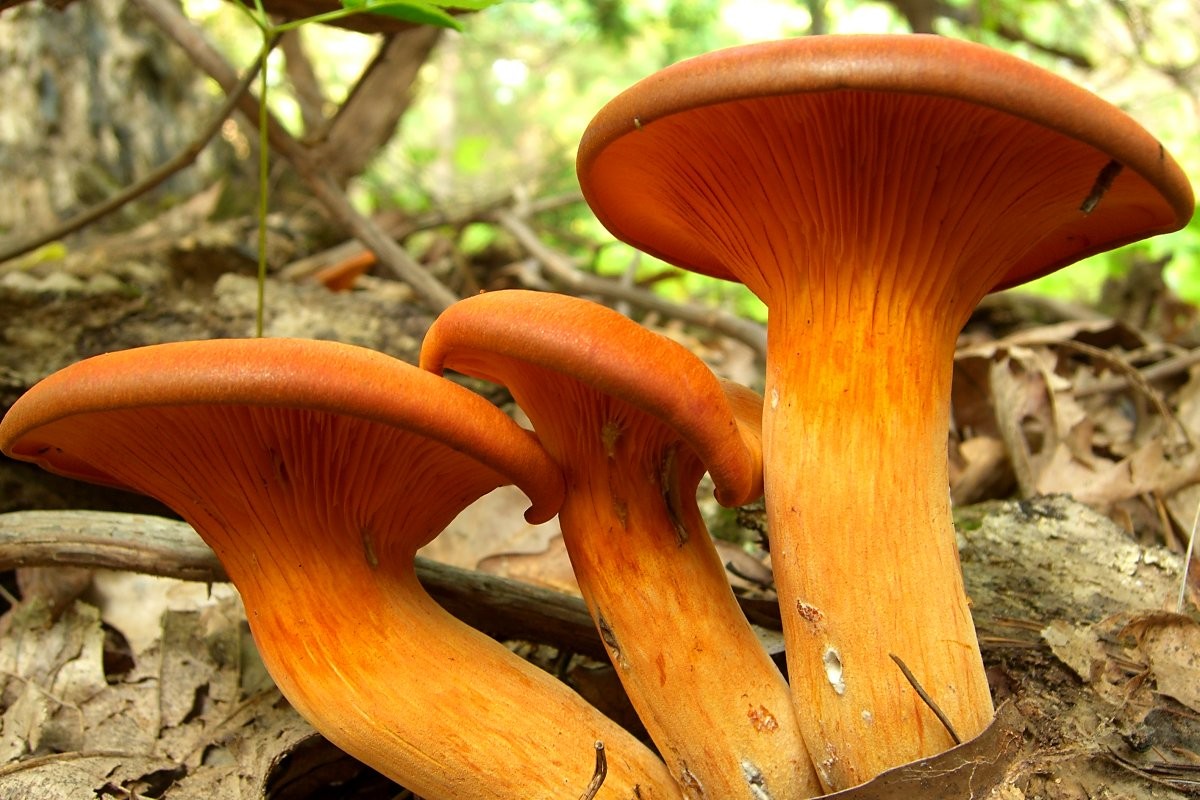
2. Jack-o'lantern mushroom
The jack-o'lantern mushroom is so-called because of its bright orange color, and because it often appears in the fall (usually before Halloween, though). This vibrant little mushroom can be found growing on decaying hardwood stumps and logs. The species does have some superficial resemblances to the highly edible chanterelle (Cantharellus cibarius), but it is toxic and should be avoided!
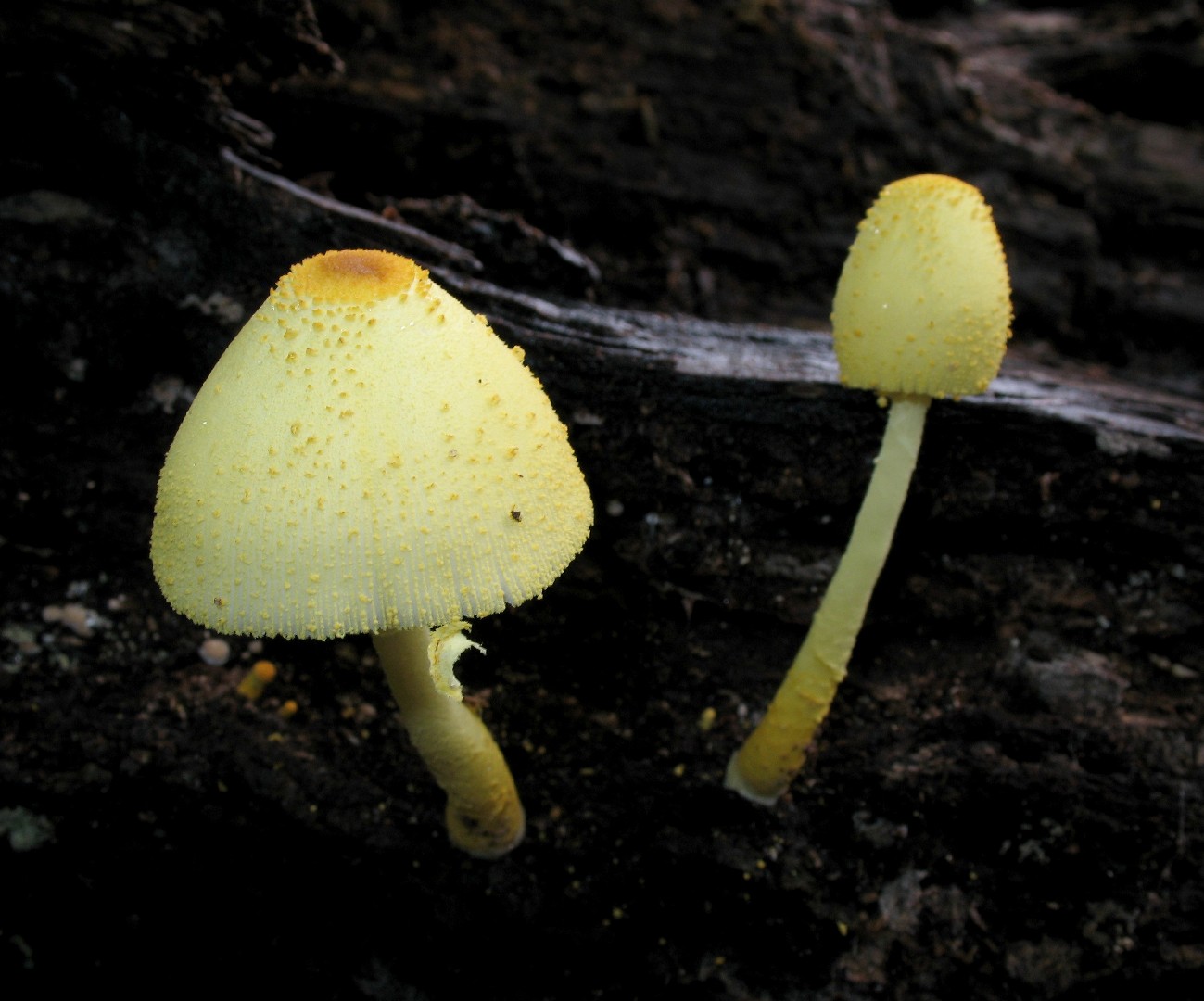
3. Flowerpot parasol
This tropical/subtropical mushroom is known to be toxic. If eaten it causes a very unpleasant stomachache with the risk of fatal complications. In temperate zones, flowerpot parasol is only found in hothouses and greenhouses, so the risk of accidental foraging is low, but it may occur with potted plants and indoor landscaping and pose a risk to curious children.
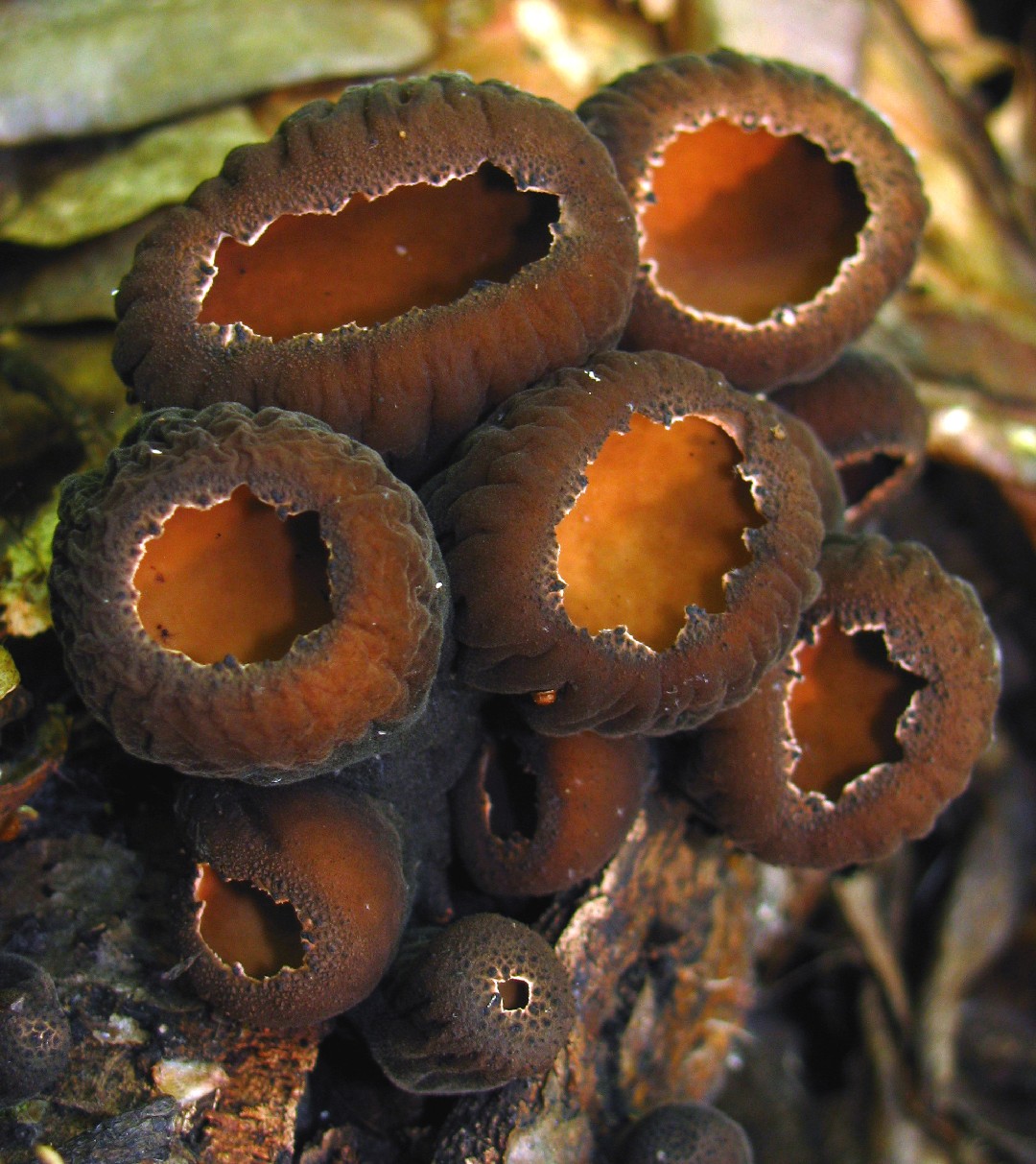
4. Rufous rubber cup
The rufous rubber cup is a tiny, cup-shaped, reddish-brown mushroom that commonly grows on twigs and fallen branches. The species is considered inedible, and its modest look almost certainly wouldn't attract anyone to consume it.
5. Mower's mushroom
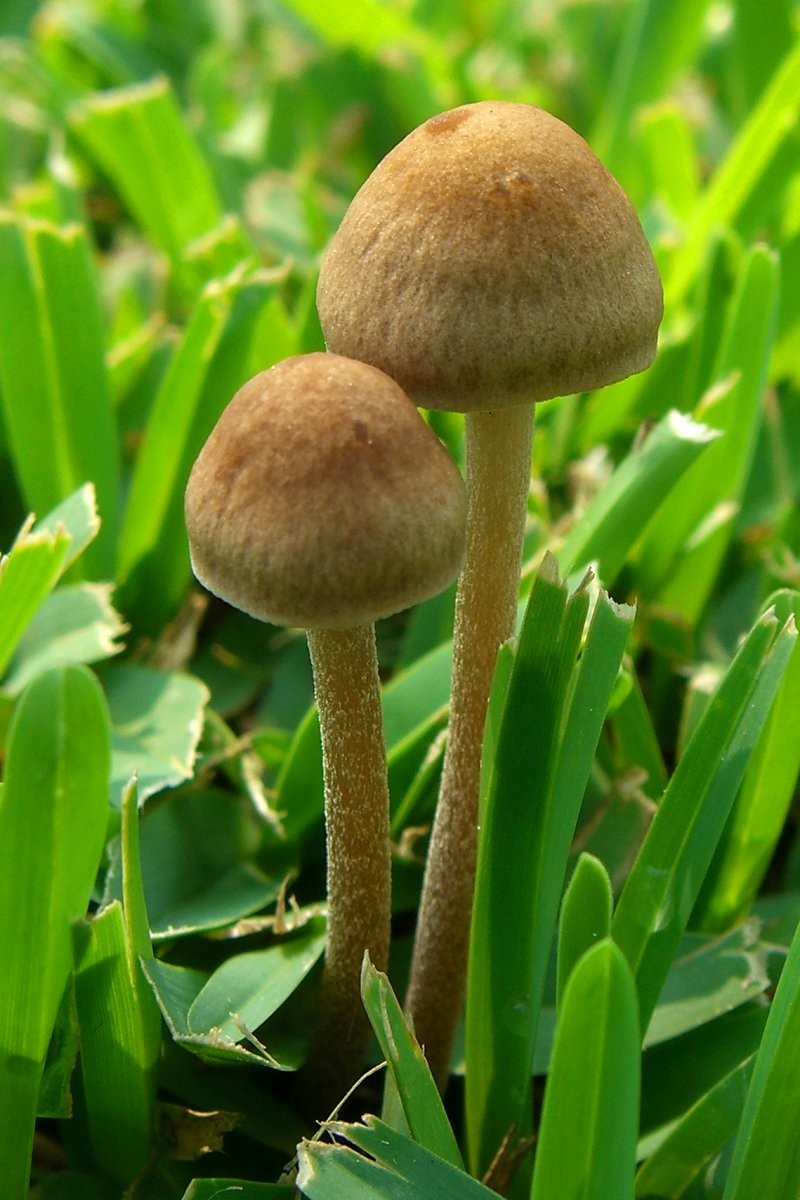
The mower's mushroom, also referred to as the lawnmower's mushroom, is so named because it frequently crops up in lawns. The species is rather nondescript, and it is considered a member of the infamously hard-to-distinguish "Little Brown Mushroom" (LBM) family. While the mower's mushroom is not known to be toxic to humans or dogs, several of these close look-alikes are.
6. Magpie inkcap
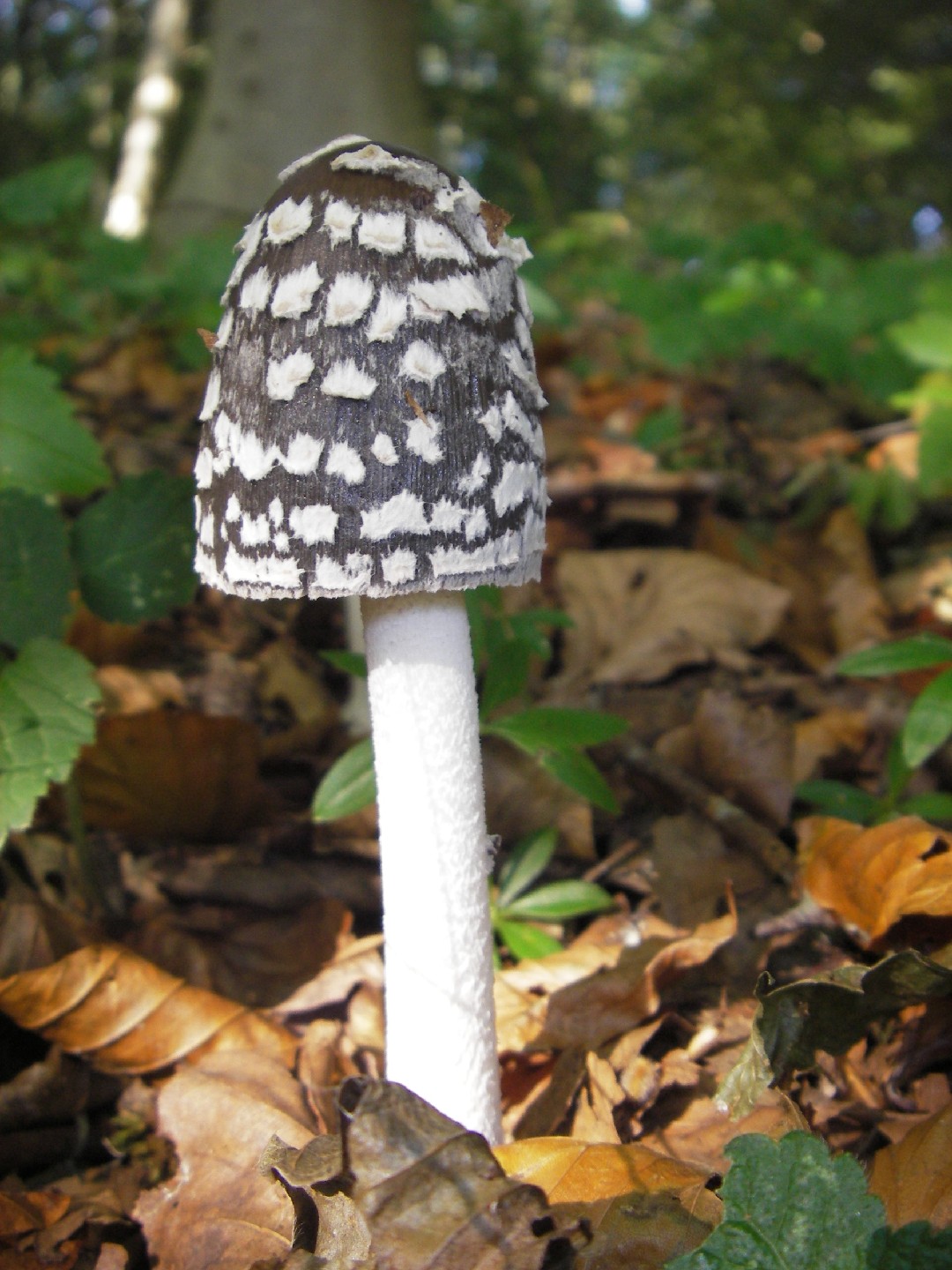
The magpie inkcap is a striking and poisonous species of inkcap that can be found in Europe, Australia, and North America. The species has an egg-shaped cap that is typical to inkcaps, but its coloration sets it apart; white spots or splotches adorn a solid, dark brown or black background, reminiscent of the coloration of a magpie.
7. Dead man's hand
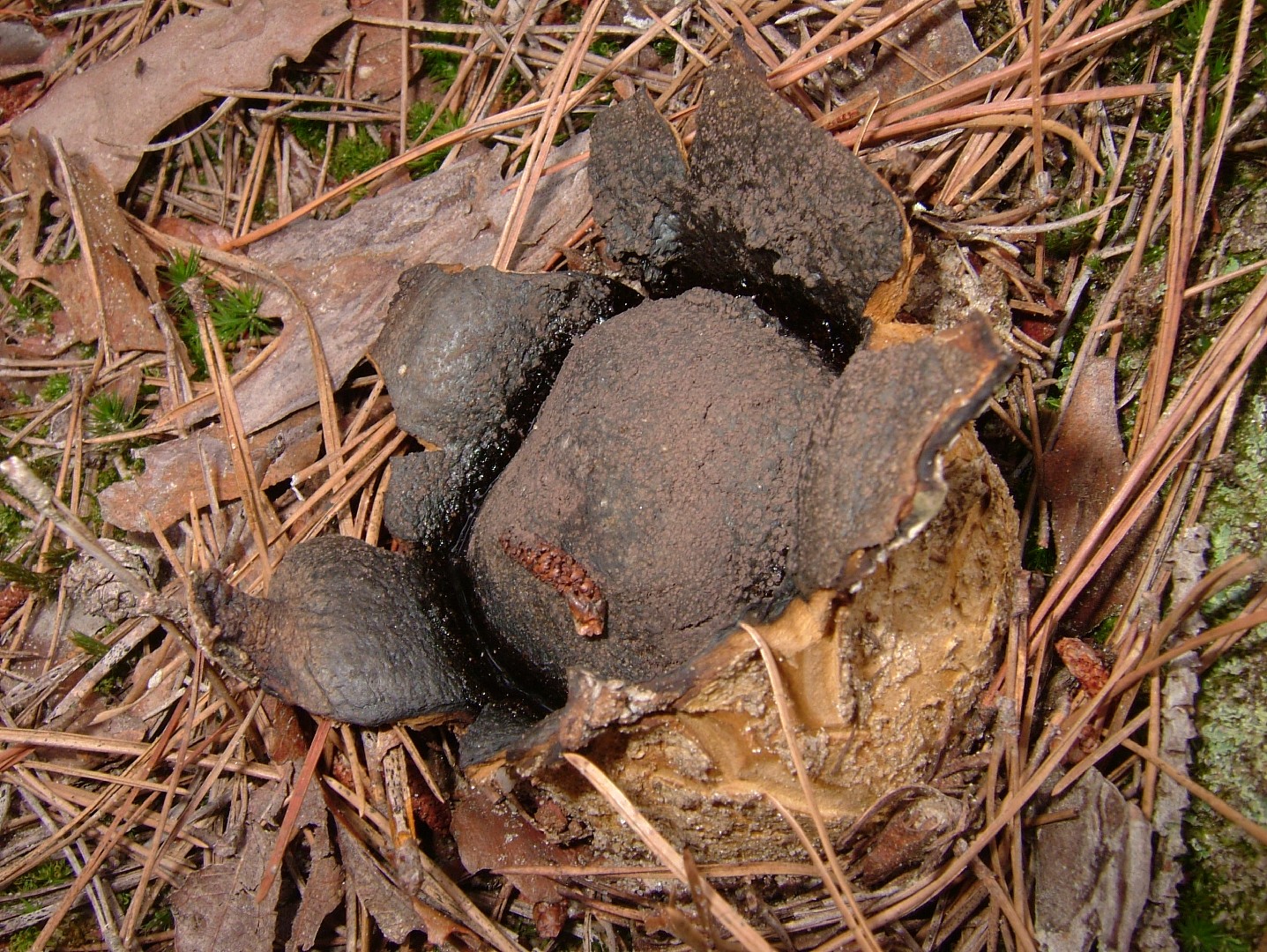
Sometimes referred to as a "false Truffle", a trained eye could not easily mistake the dead man's hand for these highly-valued mushrooms. This large puffball-like mushroom develops in the ground, emerging gradually until it finally cracks up and forms a star-shaped fruiting body. The dead man's hand is considered toxic and newbie mushroom hunters should be careful not to confuse it with edible puffballs.
8. Yellow patches
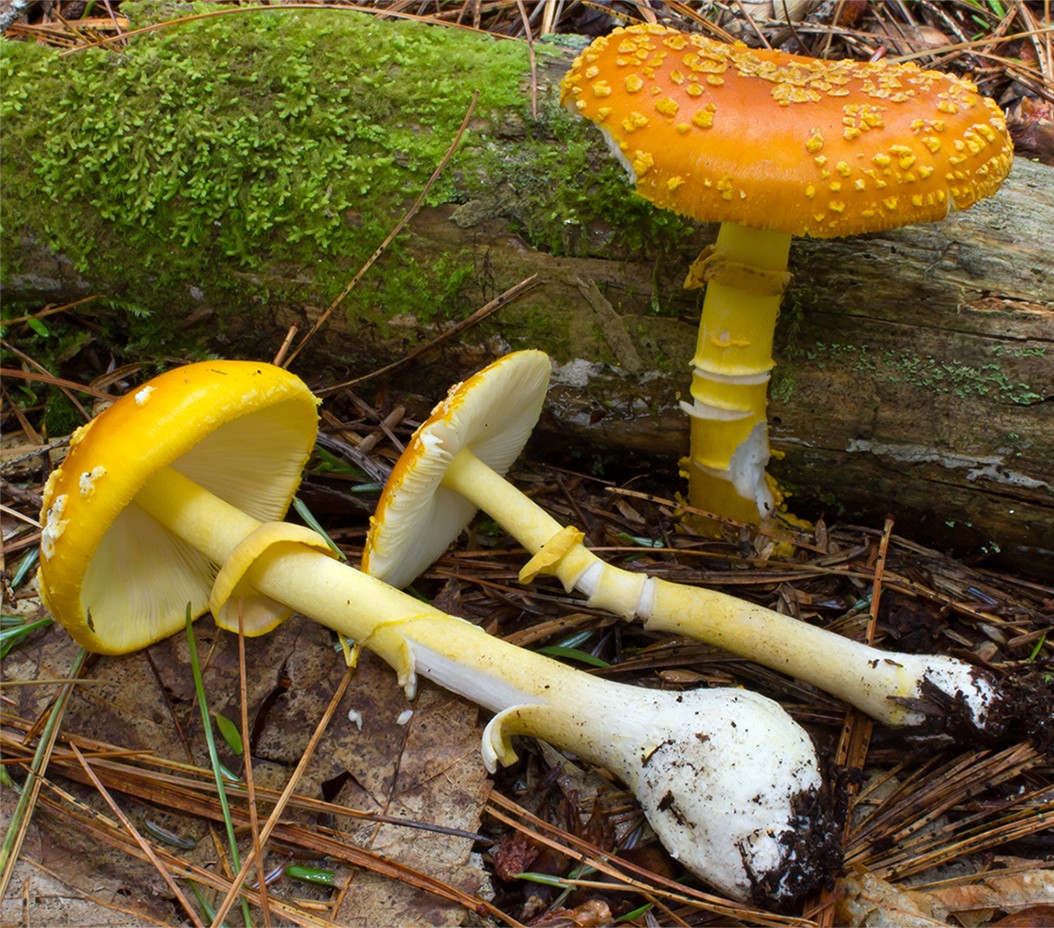
The yellow patches is a gorgeous, striking species with a deep marigold or vermillion cap that sometimes appears as a blend of the two. Like some other members of the Amanita genus, it also sports patchy white worts - when it's cap is still very convex, it somewhat resembles the famous white and red mushrooms from the Mario Bros video games. While beautiful to look at, this species is toxic and should not be harvested.
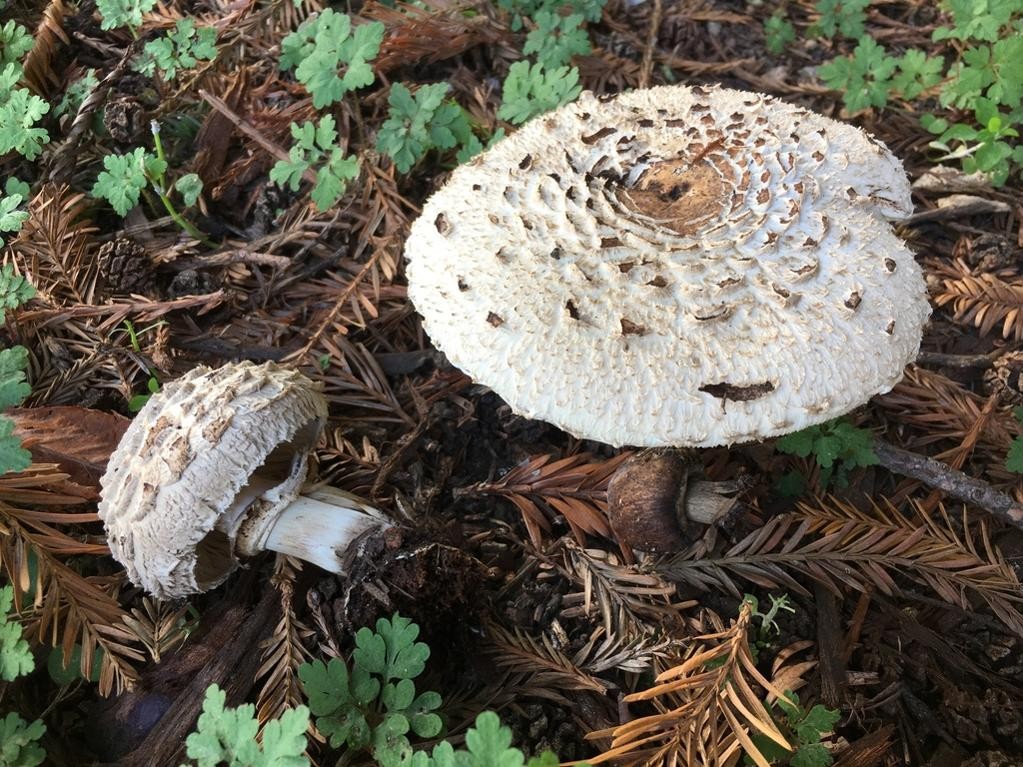
9. Shaggy parasol
The shaggy parasol grows singly or in groups from spring to fall. It can be found in lawns and gardens as well as the forest. It has a tendency to cause allergic reactions. Take care with identification as it is difficult to distinguish from the more deadly Amanitas.
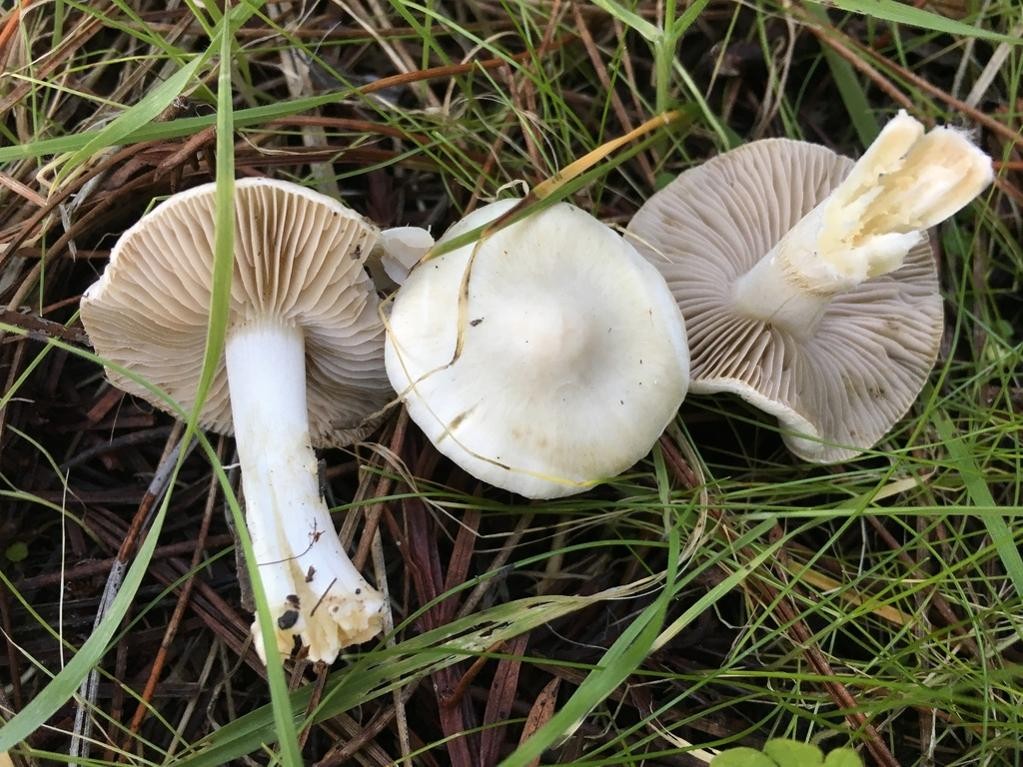
10. White fibercap
The white fibercap is found across Europe and North America. It's range extends impressively far north; it is one of the few mushroom species that does well in tundra. The species has a variant, Inocybe geophylla var. lilacina, that sports a beautiful, lilac-colored cap. As very few mushrooms bear purple hues, this variant is sought after by collectors. While pretty to look at, it is toxic.
More







