




Top 16 Most Common Toxic or Poisonous Mushrooms in Iowa City
Nestled in the heartland of America, Iowa City boasts a distinctive climate and terrain that makes it an intriguing habitat for various mushroom species. Here at our website, we're dedicated to helping you navigate the fascinating yet sometimes dangerous world of mycological wonders. With our guide to the top 16 most common poisonous mushrooms in Iowa City, you'll not only enhance your knowledge but also your foraging skills. This comprehensive guide will ensure your mushroom hunting is safer, while enriching your understanding of local fungi. Let's explore together the captivating subterranean realms of Iowa City's mycology!
* Disclaimer: Content feedback CAN NOT be used as any basis for EATING ANY PLANTS. Some plants can be VERY POISONOUS, please purchase edible plants through regular channels.

Most Common Toxic or Poisonous Mushrooms
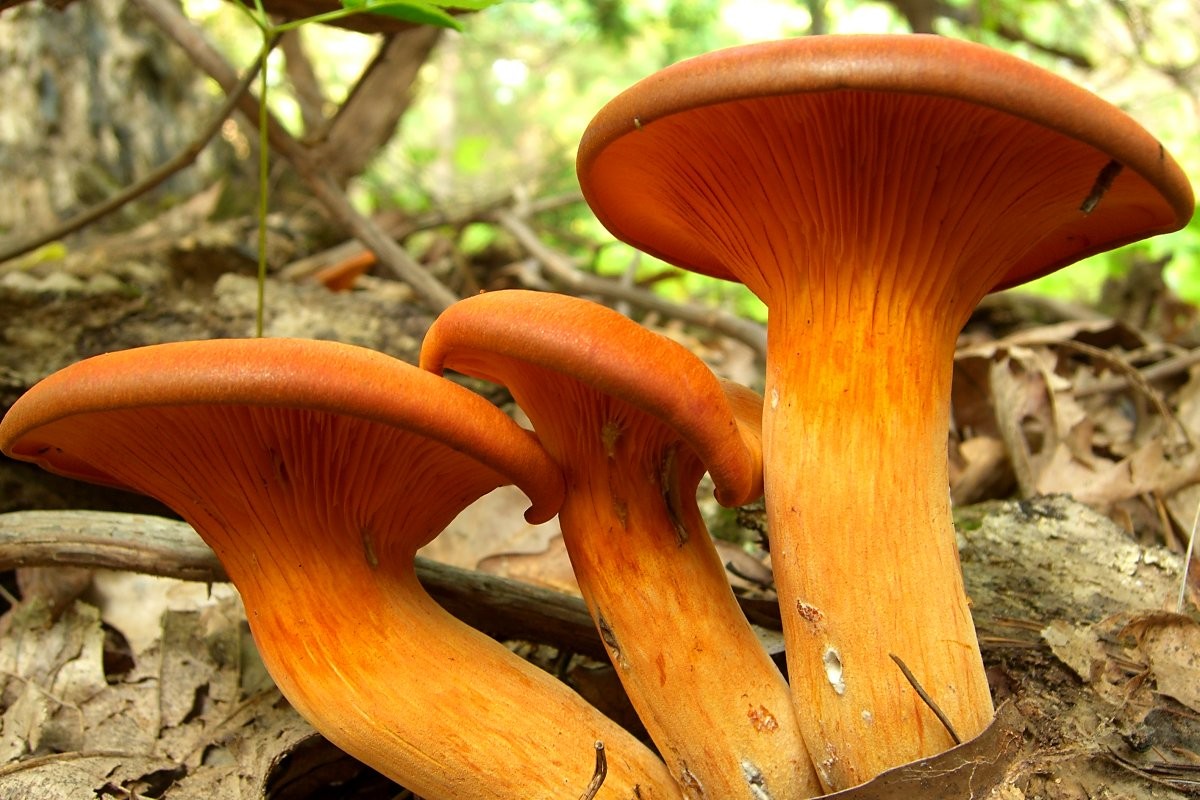
1. Jack-o'lantern mushroom
The jack-o'lantern mushroom is so-called because of its bright orange color, and because it often appears in the fall (usually before Halloween, though). This vibrant little mushroom can be found growing on decaying hardwood stumps and logs. The species does have some superficial resemblances to the highly edible chanterelle (Cantharellus cibarius), but it is toxic and should be avoided!
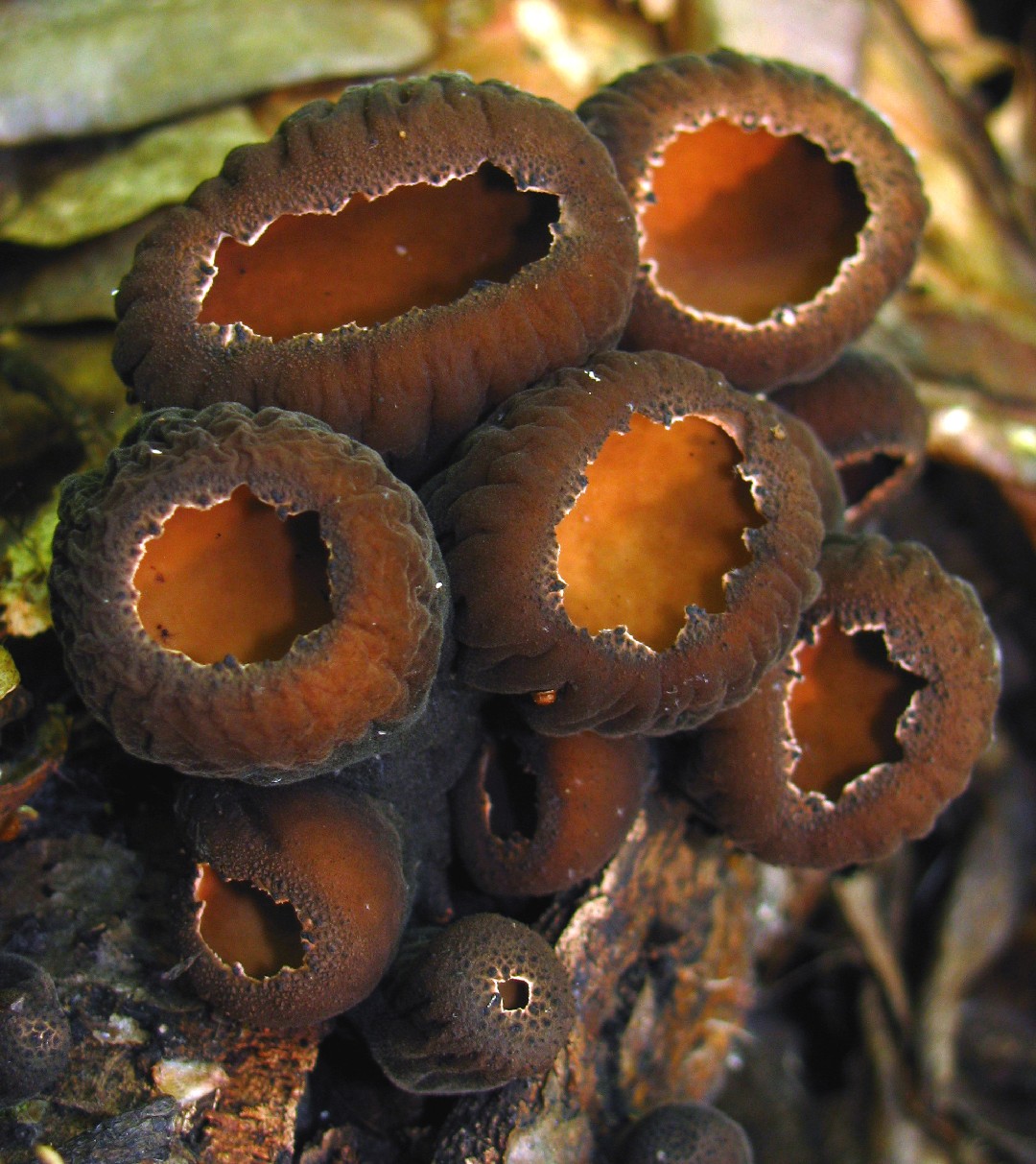
2. Rufous rubber cup
The rufous rubber cup is a tiny, cup-shaped, reddish-brown mushroom that commonly grows on twigs and fallen branches. The species is considered inedible, and its modest look almost certainly wouldn't attract anyone to consume it.
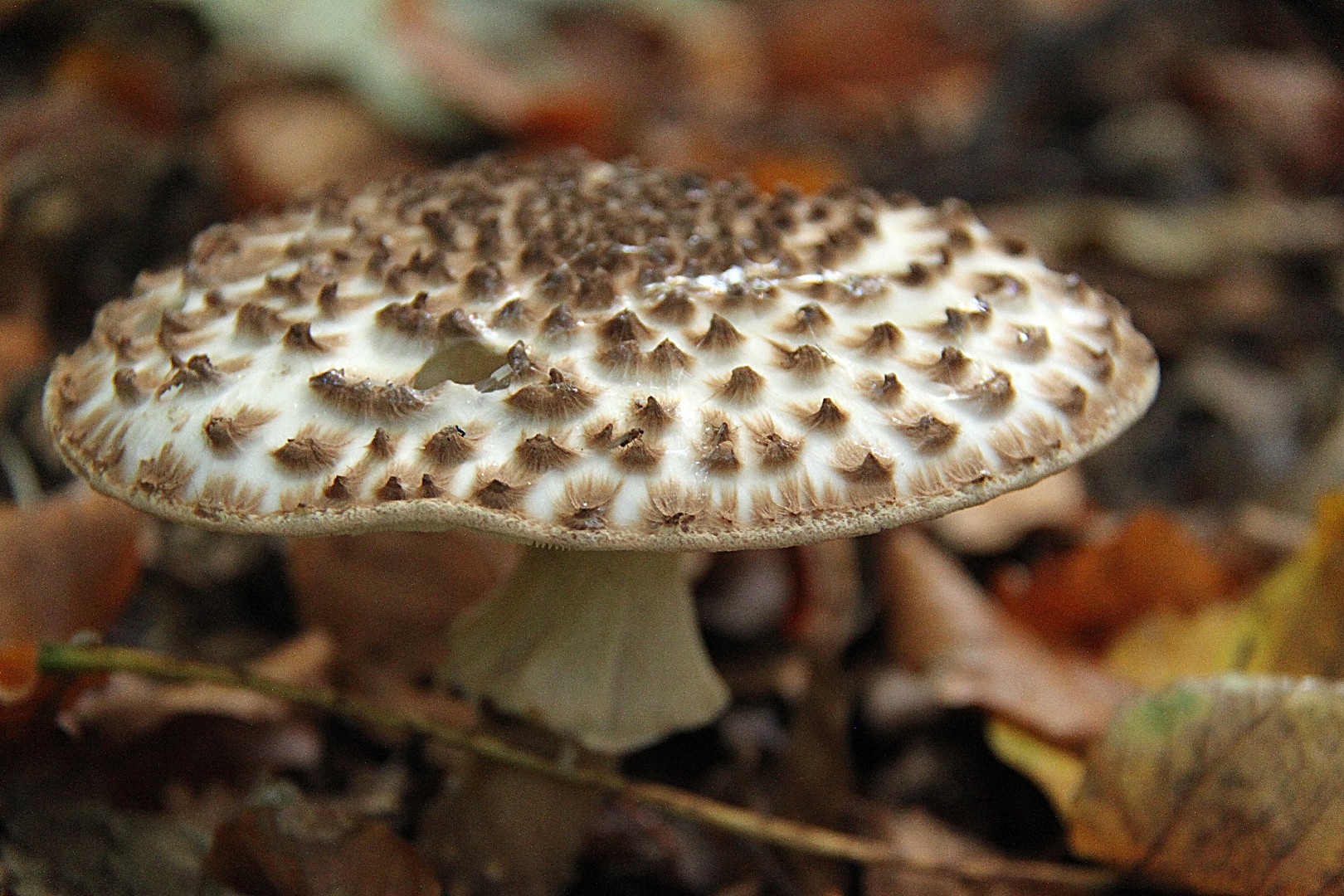
3. Freckled dapperling
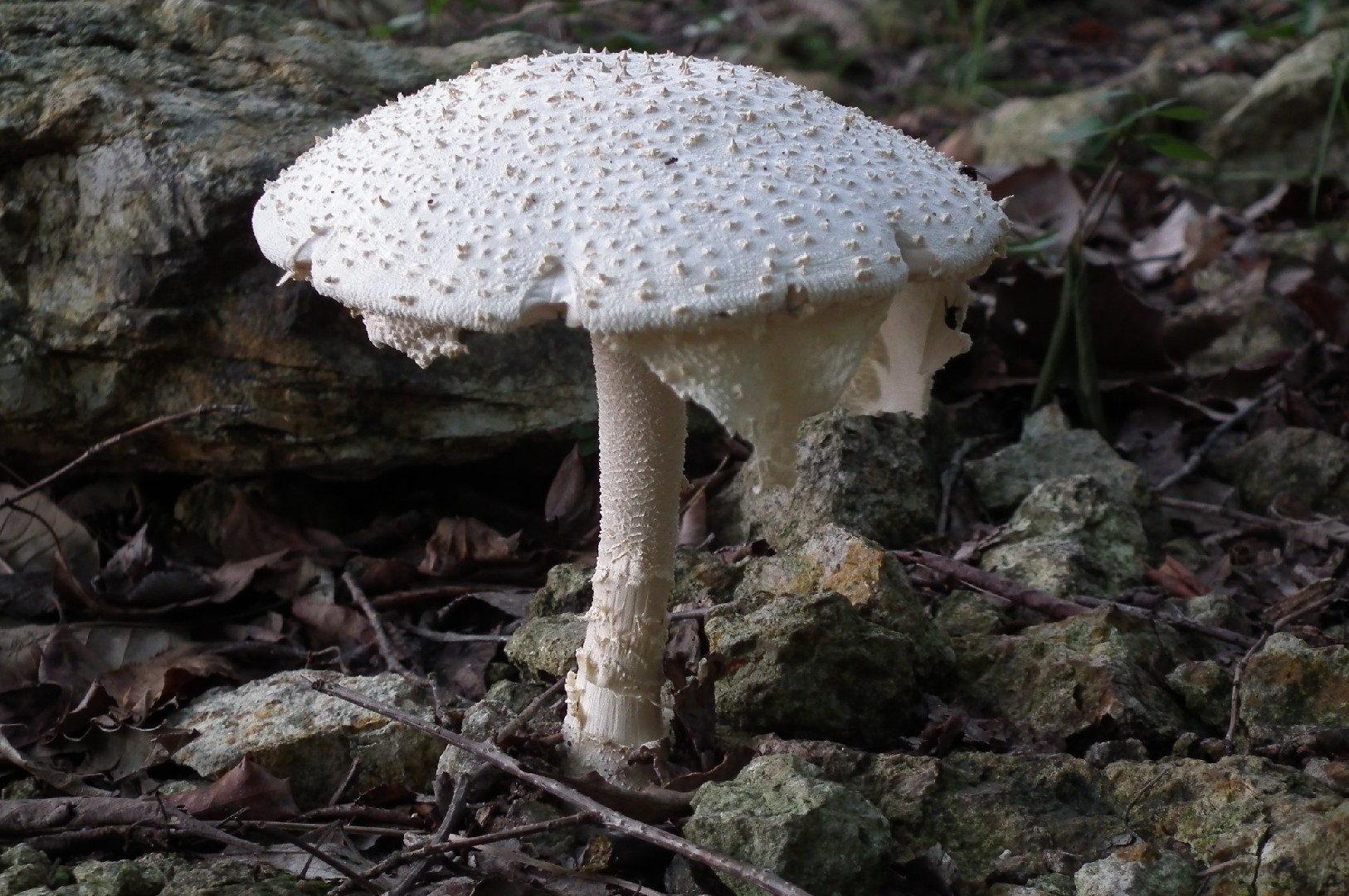
Freckled dapperling grows on decaying wood most commonly in woodlands but also on mulch or in gardens. Unfortunately, this mushroom may be indistinguishable from other species in the same genus, Echinoderma, without close inspection. However, its pyramid-shaped scales, as referenced by its name, are one aspect that can help differentiate freckled dapperling.
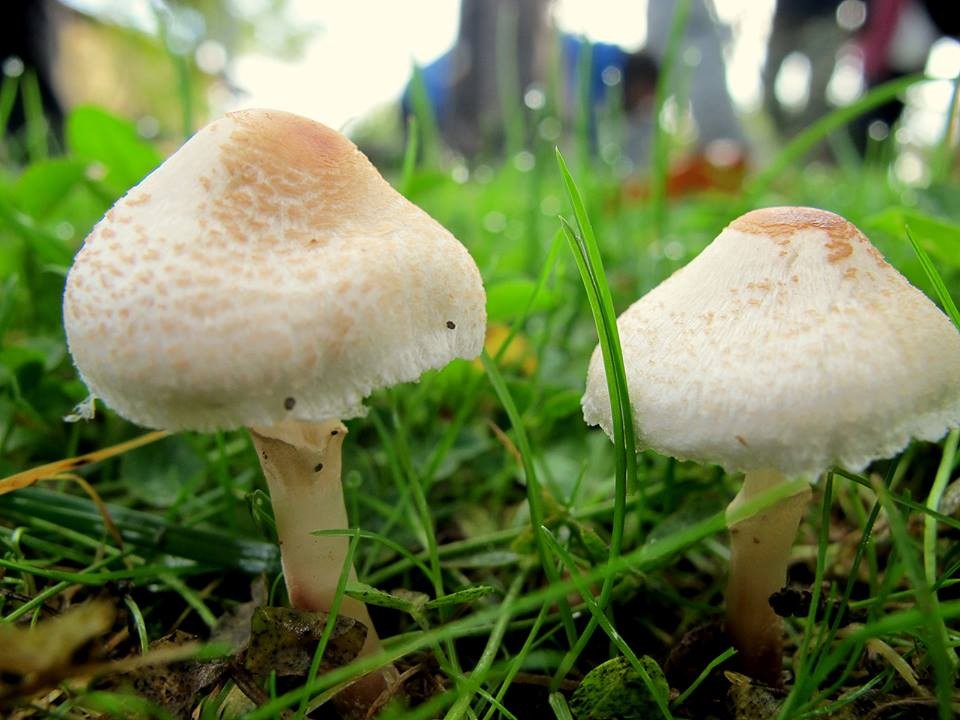
4. Stinking dapperling
The stinking dapperling is a small, delicate mushroom that is relatively nondescript in appearance - however, as its name suggests, it does have a powerful odor. The species is a habitat generalist, popping up in woodlands, gardens, lawns, and abandoned lots. The stinking dapperling also boasts a global distribution, being found across temperate areas of North America, Europe, Asia and the Antipodes.
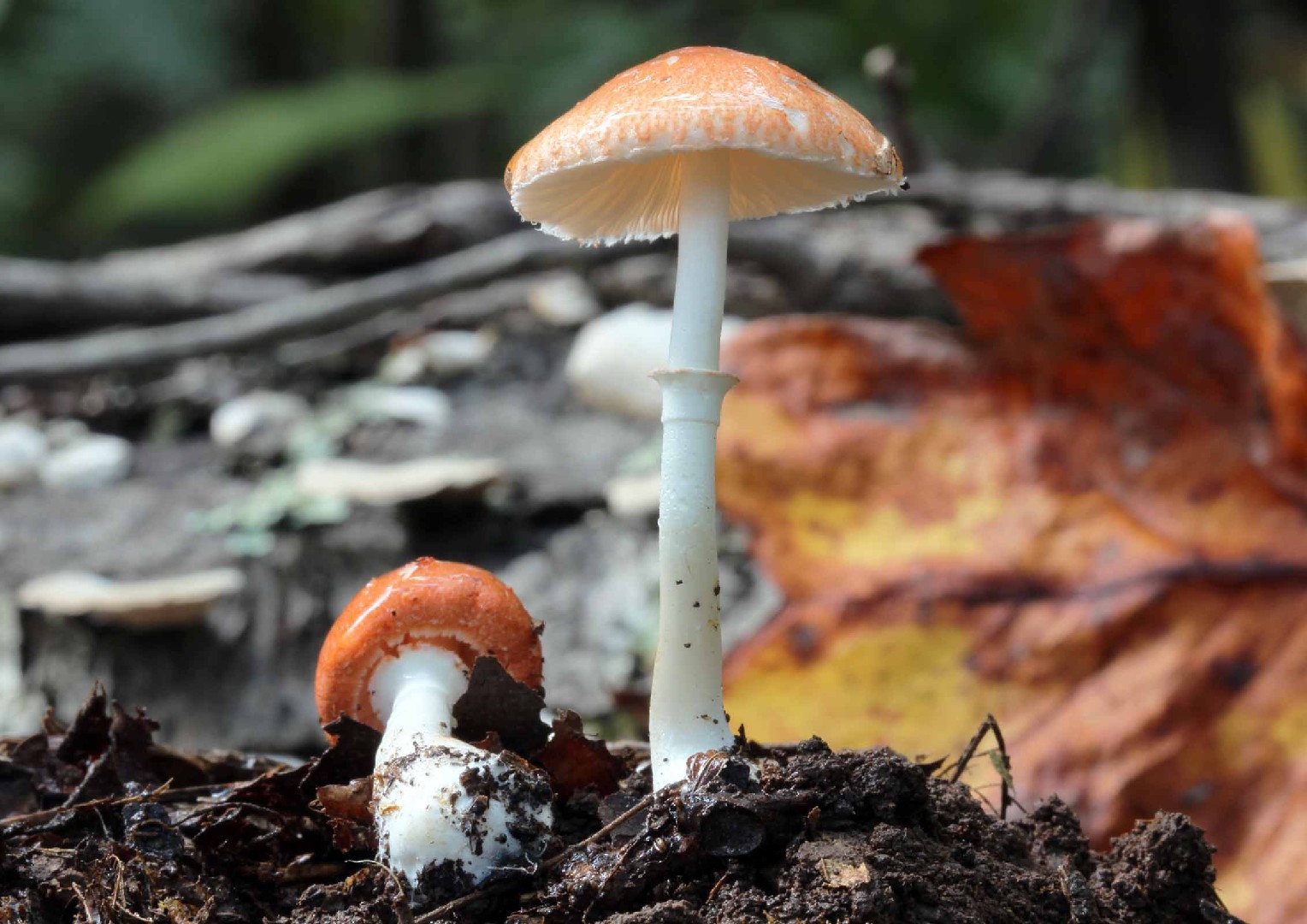
5. Red-tinged daperling
This beautiful mushroom is one of the first to pop out after early spring rains. Red-tinged daperling (Leucoagaricus rubrotinctus) is easily distinguished by its coral-red immature cap that remains pinkish in the center even when it matures. The species is not recommended for collecting and eating because its edibility status is still unknown.
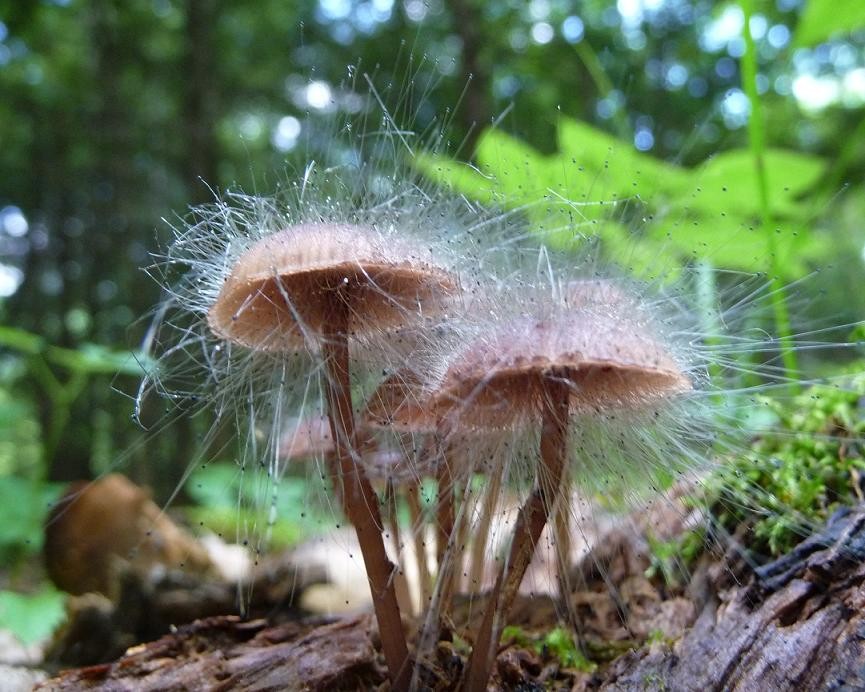
6. Bonnet mold
During the reproductive phase of its life cycle, Spinellus fusiger grows throughout the cap of the mushroom host, eventually breaking through to produce radiating reproductive stalks (sporangiophores) bearing minute, spherical, terminal spore-containing structures called sporangia. Ultimately, the spores in the sporangia are released after the breakdown of the outer sporangial wall, becoming passively dispersed to new locations via wind, water, and insects. The sporangia contain non-motile mitospores known as aplanospores. Like other Spinellus species, S. fusiger is homothallic, a condition where sexual zygospores can be produced union of branches from the same mycelium and so can be produced by the growth from a single spore. 
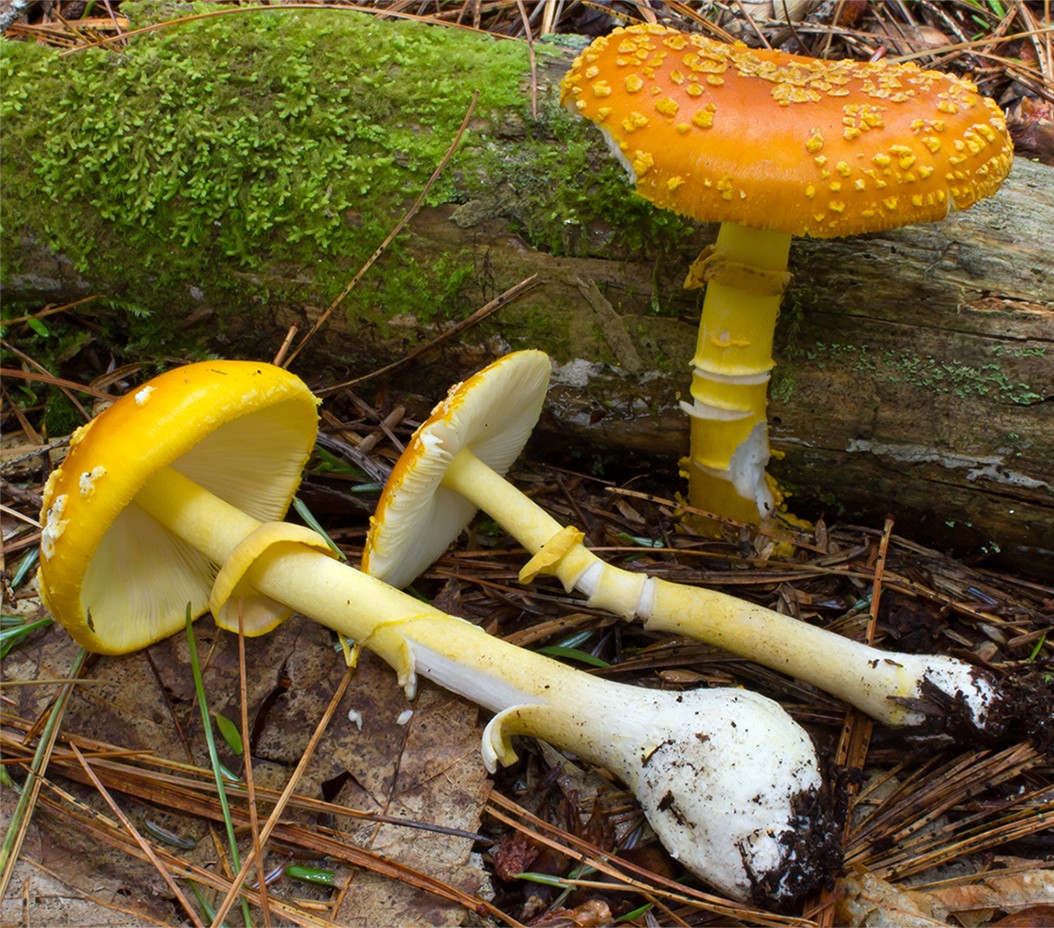
7. Yellow patches
The yellow patches is a gorgeous, striking species with a deep marigold or vermillion cap that sometimes appears as a blend of the two. Like some other members of the Amanita genus, it also sports patchy white worts - when it's cap is still very convex, it somewhat resembles the famous white and red mushrooms from the Mario Bros video games. While beautiful to look at, this species is toxic and should not be harvested.
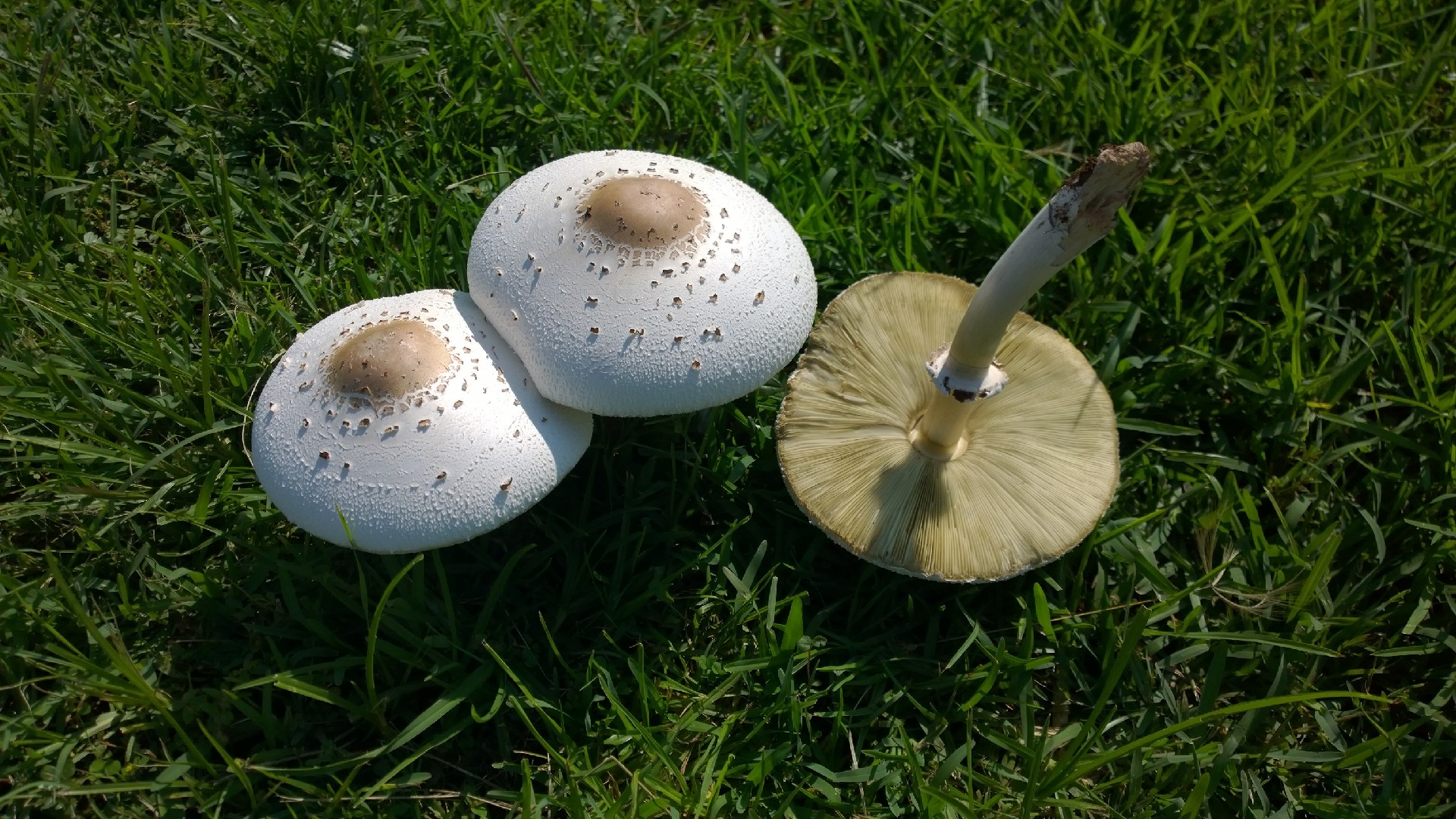
8. False parasol
Though the false parasol appears unassuming, the species is famous—or, infamous—for its toxicity. It looks unfortunately similar to Agericus campestrus, a commonly eaten mushroom, but the false parasol can be distinguished by its highly unusual green spore print. Although they are no good to eat, they can be pretty to look at. The species may grow in ring-shaped groups in meadows and on forest floors in what are sometimes called "fairy circles."
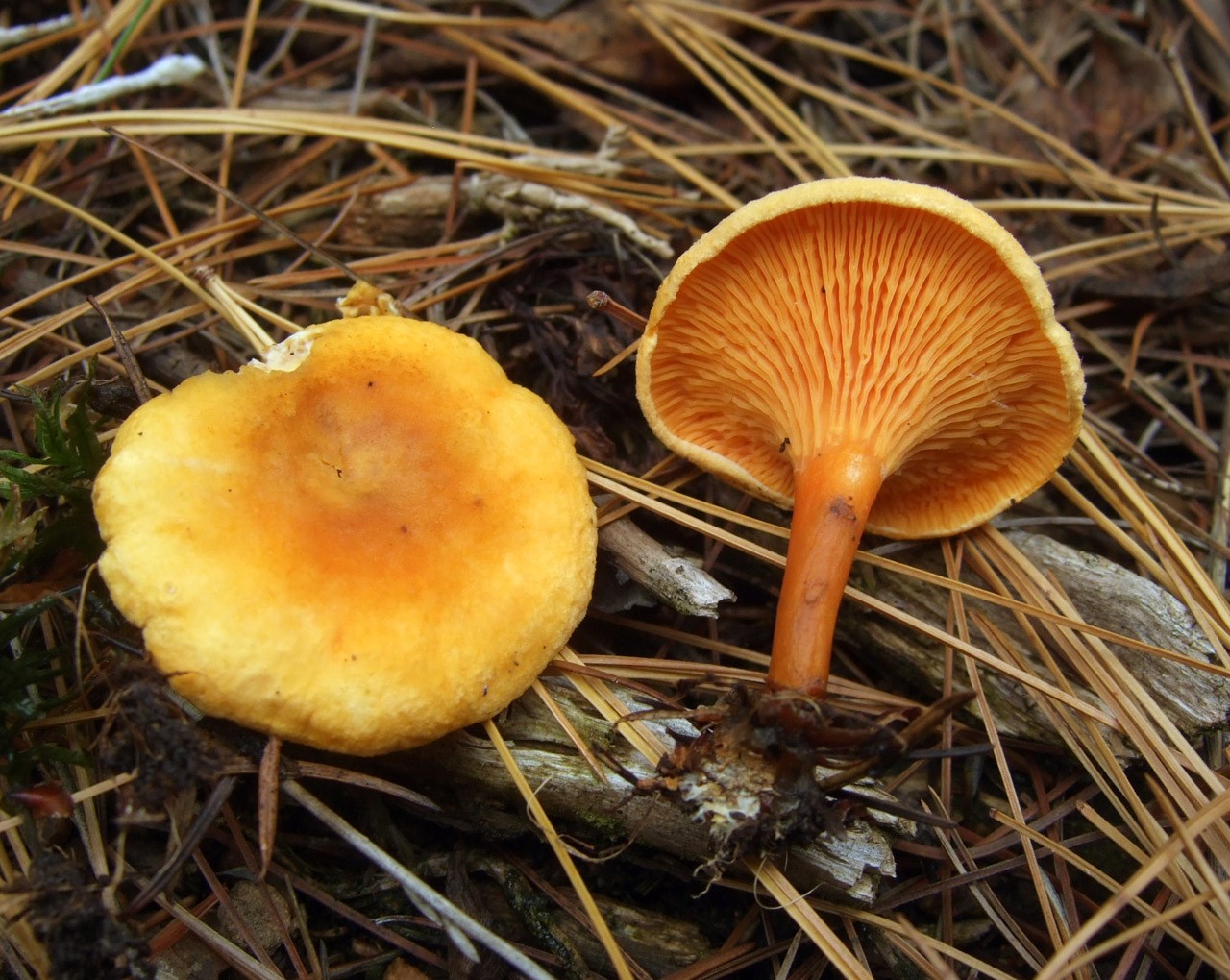
9. False chanterelle
The common name of this mushroom refers to the fact that it looks very similar to the edible and highly prized Chanterelle. This species, however, tastes bitter and may cause poisoning symptoms. False chanterelle occurs around the northern hemisphere in autumn and winter, growing on coniferous detritus, and is more likely to fruit in dry conditions rather than the usual wet.
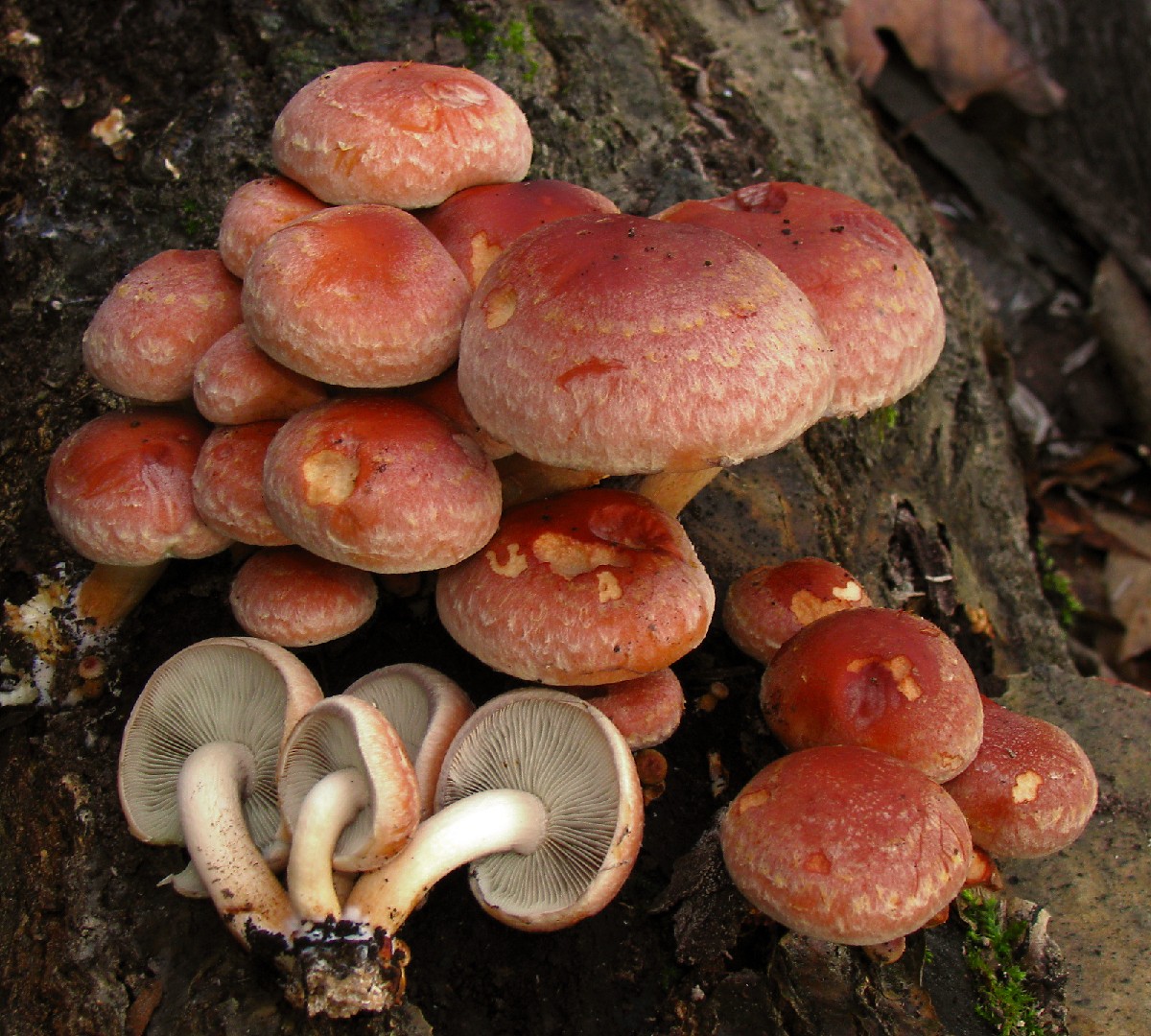
10. Brick cap
This tufting mushroom grows on hardwood stumps and deadwood. The brick cap seems particularly fond of oak wood. It is similar in most respects to the Sulfur Tuft or Conifer Tuft, except that its cap is a brick red color. Brick caps should be regarded as inedible and are likely to cause stomach problems if consumed.

More







