




Top 20 Edible Mushrooms Popular in East Orange
Uniquely situated within an urban environment, East Orange harbors an intriguing blend of ecosystems, making it a fruitful hub for edible mushrooms. Each type of these 20 most common fungi boasts its unique characteristics, from visual appearance and taste to preferred growing conditions and culinary applications. This guide is designed not only to help you identify these remarkable organisms but to appreciate their significance in our local ecosystem and cuisine. Let's enlighten ourselves about East Orange's diverse mushrooms, their habitats, and their culinary uses while ensuring responsible and sustainable foraging practices.
* Disclaimer: Content feedback CAN NOT be used as any basis for EATING ANY PLANTS. Some plants can be VERY POISONOUS, please purchase edible plants through regular channels.

Most Popular Edible Mushrooms
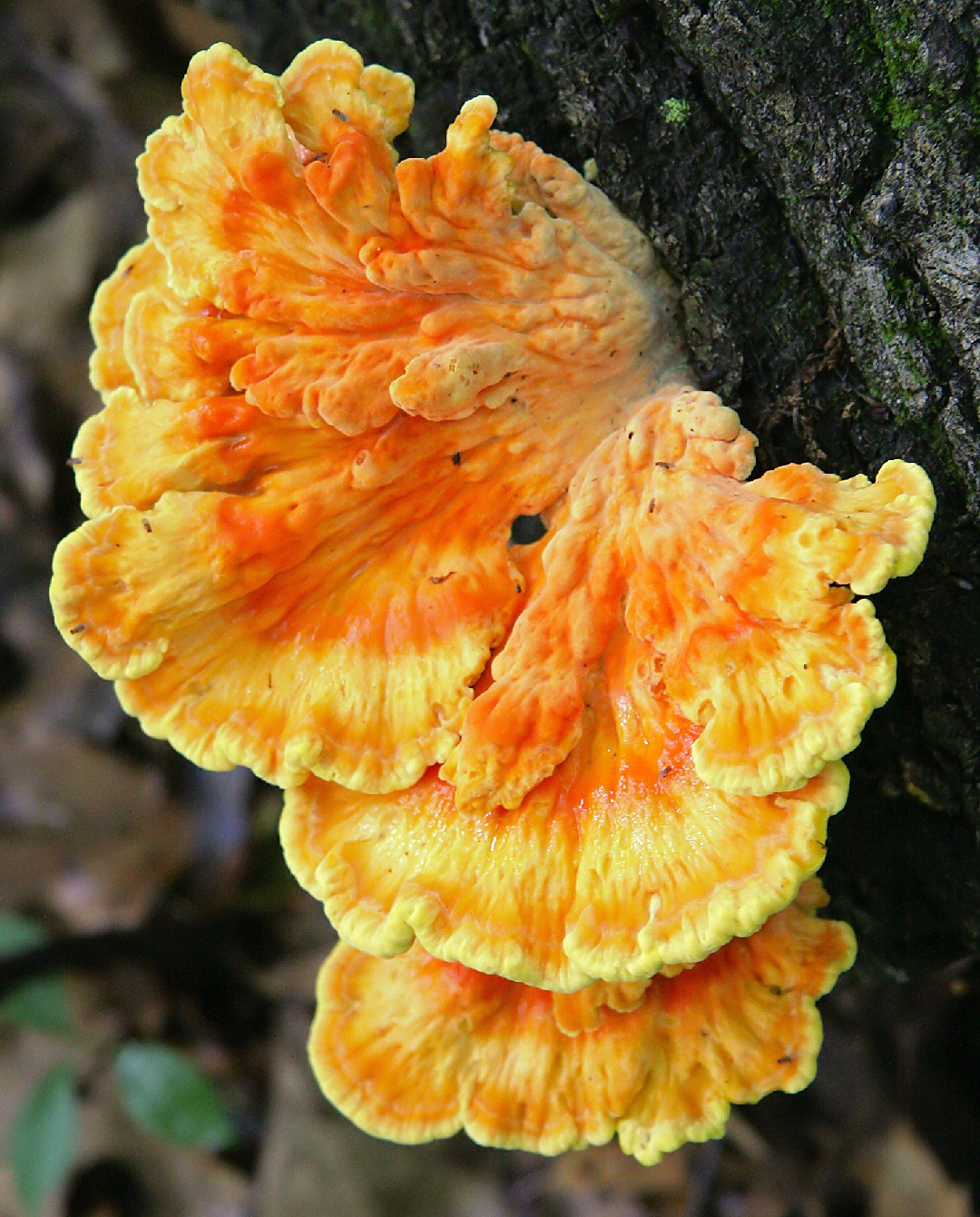
1. Chicken of the woods
Chicken of the woods is very noticeable in hardwood forests, appearing in clusters on standing tree trunks in bright orange and yellow hues that sometimes last through the entire winter. It is a parasite that causes an unfortunate brown heart rot, and is considered a particularly troublesome pest of Yew trees. If the fruitbodies can be seen, the tree is likely already beyond saving.
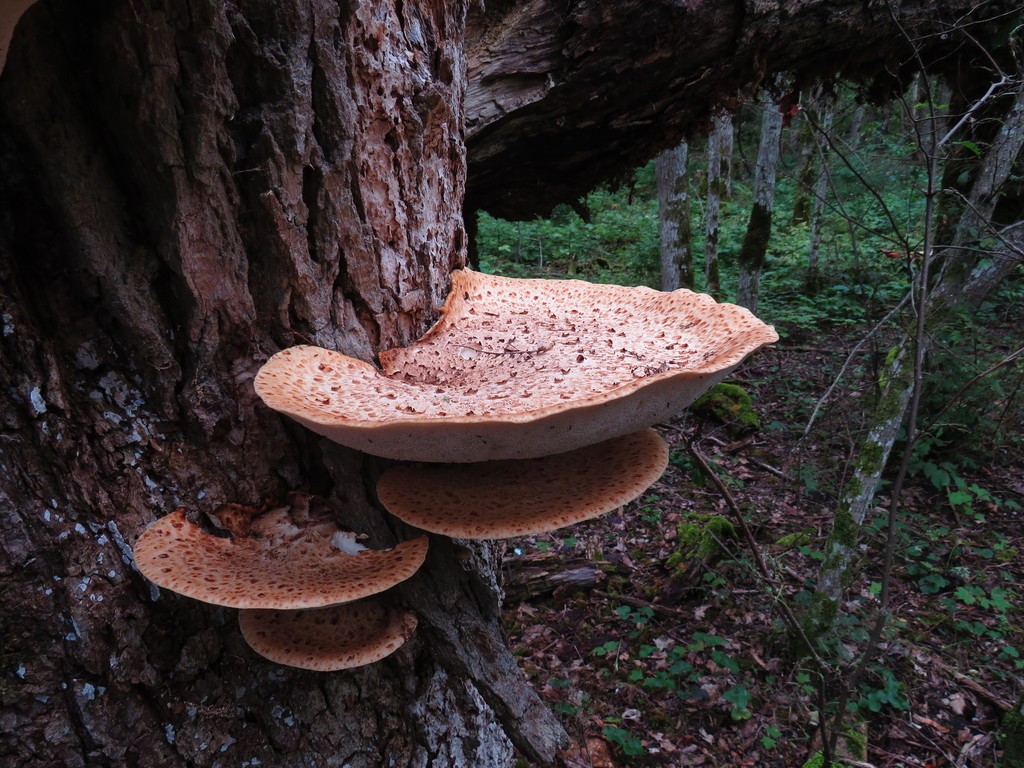
2. Dryad's saddle
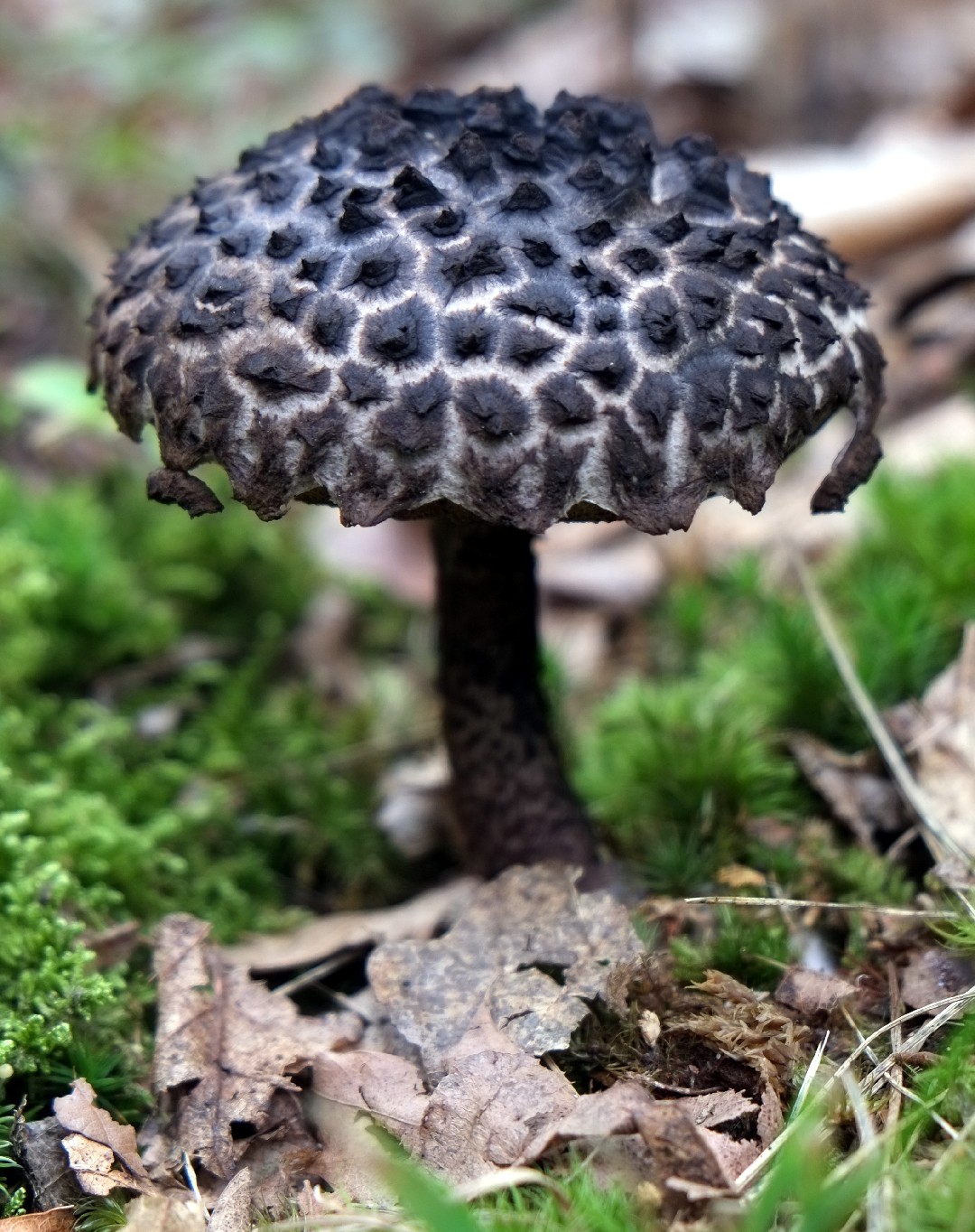
A familiar sight to spring morel hunters, dryad's saddle is noteworthy for its large size, striking scales, and watermelon-like smell. Similar to other mushrooms in the bracket fungi family, dryad's saddle can be used to make paper. Younger mushrooms are better suited for this purpose due to their smaller and more consistent fibers.
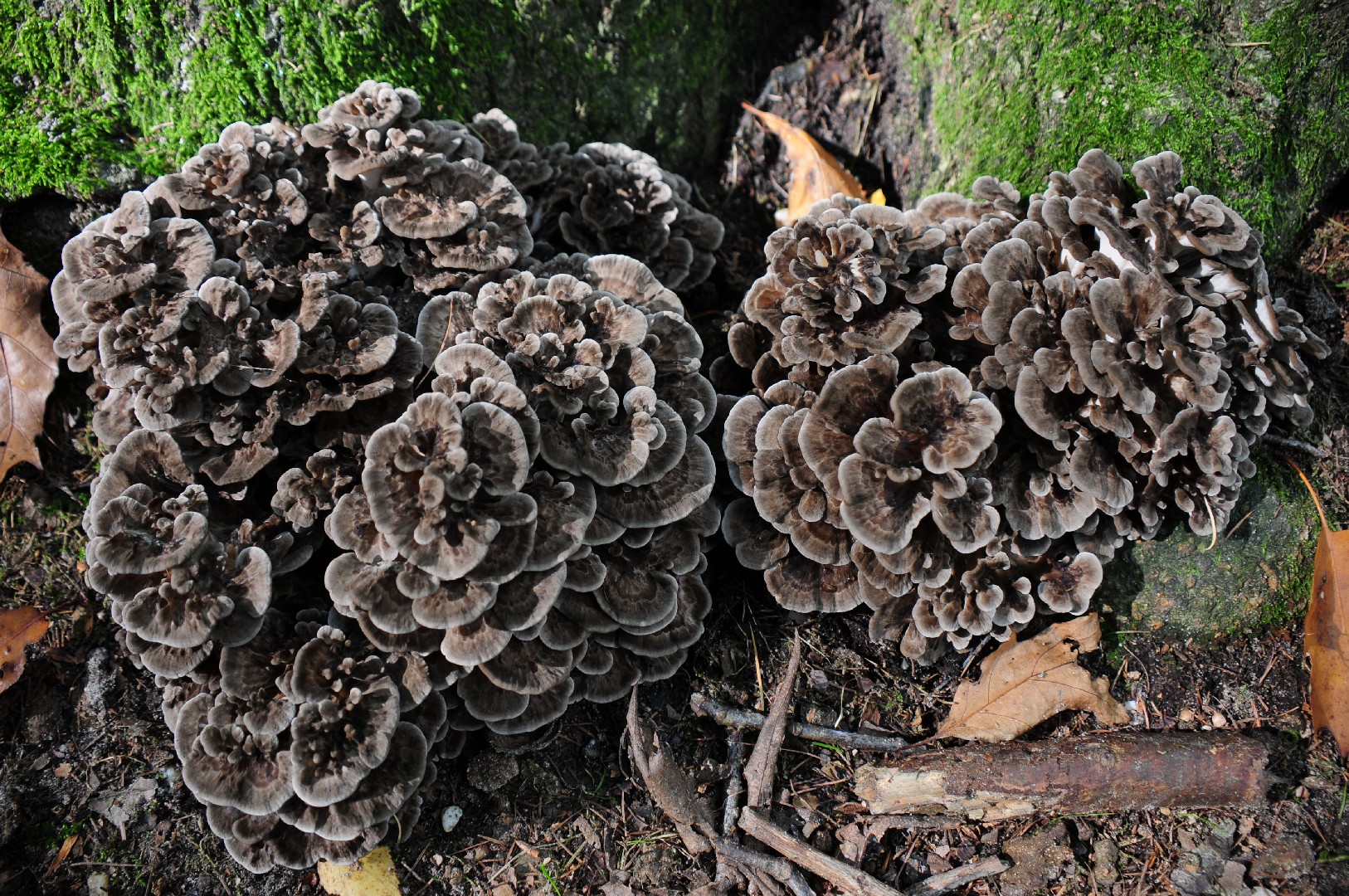
3. Hen-of-the-woods
Often found at the base of oak trees, this clustered fungus grows in distinctive rosettes. It attacks the roots of living hardwood trees. Hen-of-the-woods is considered edible when harvested young, and is cultivated in Japan on top of compressed sawdust.
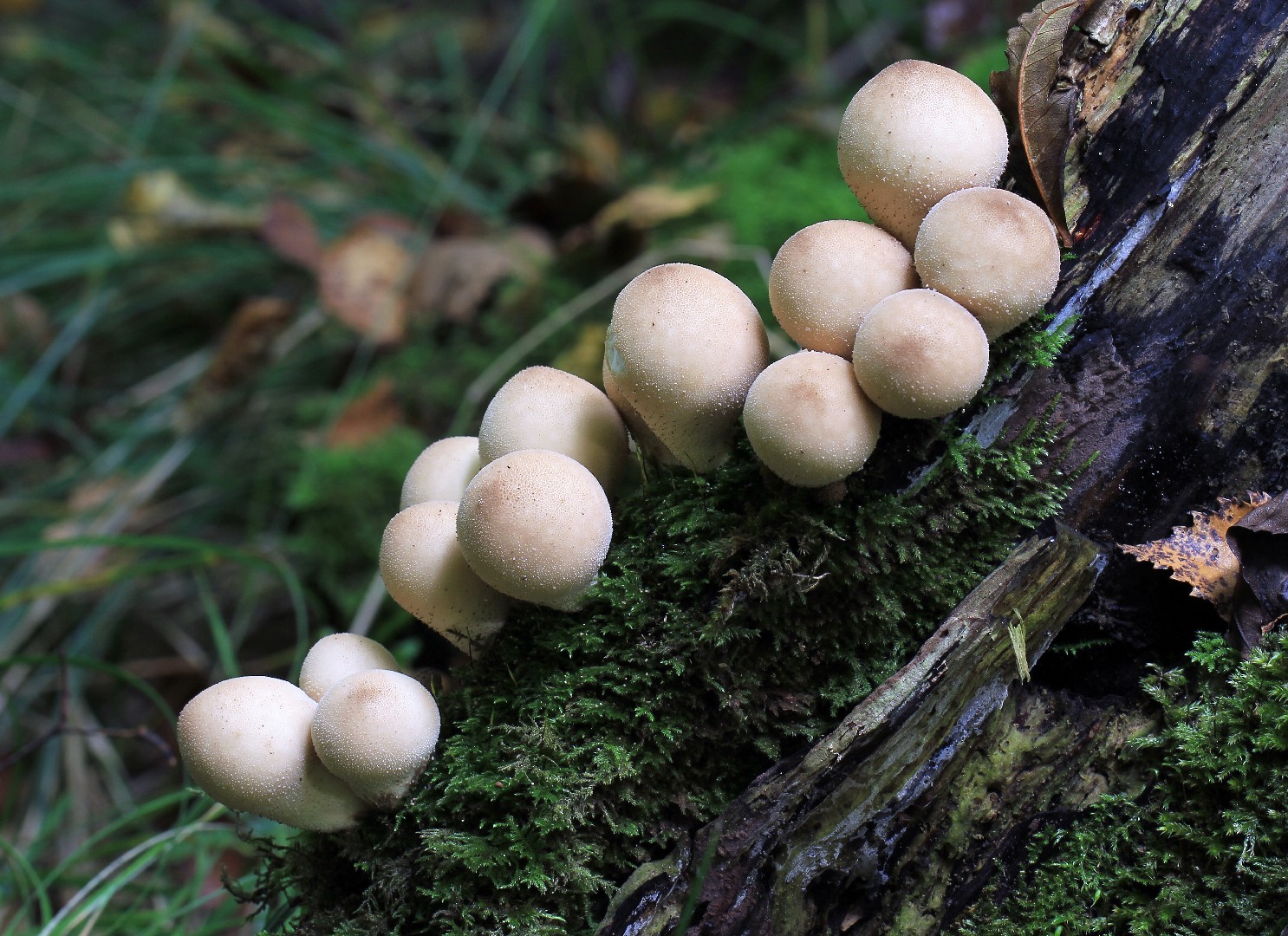
4. Pear-shaped puffball
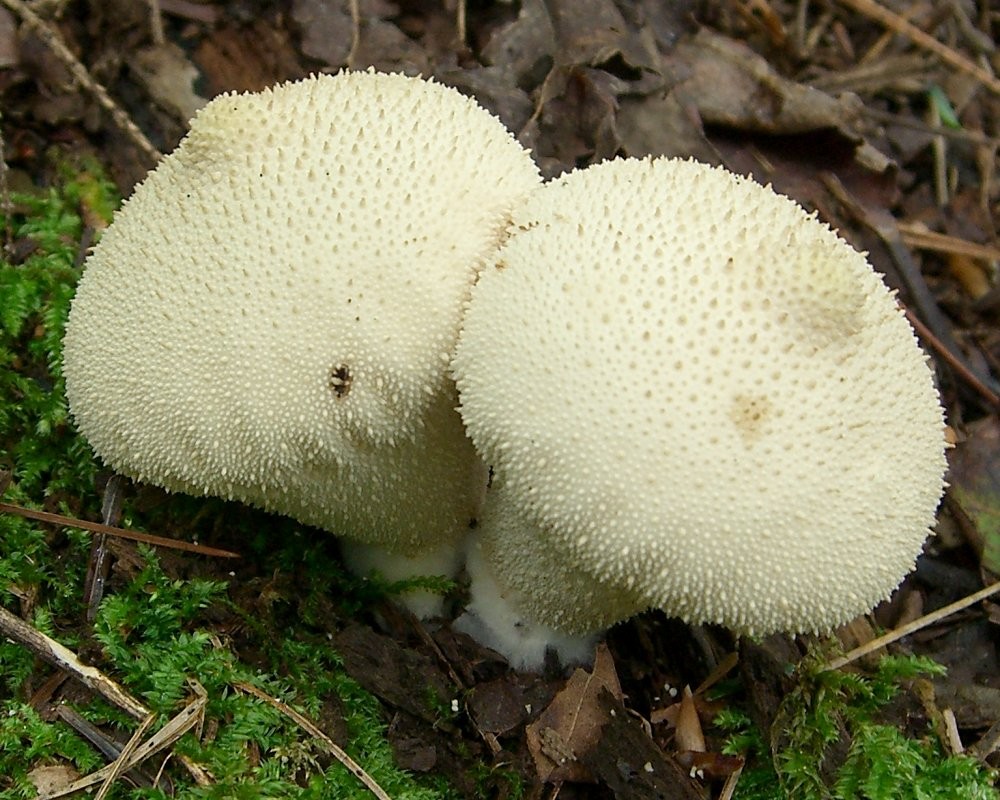
The mushrooms of this species grow in such tight clusters that they may cover fallen trees and stumps almost entirely in a brownish, puffy coat. Pear-shaped puffballs appear all around the northern hemisphere on decaying hardwoods from fall through winter.
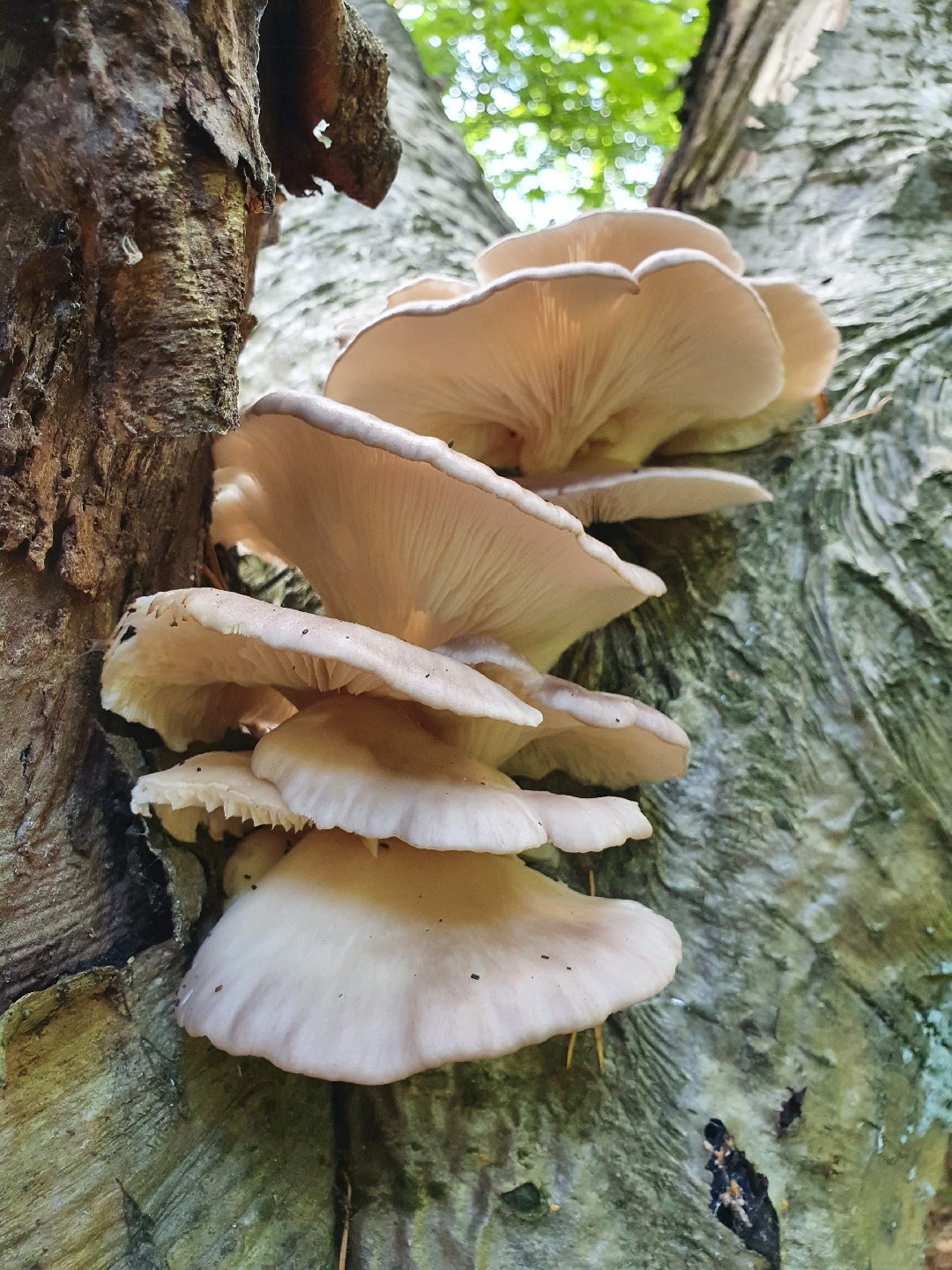
5. Oyster mushroom
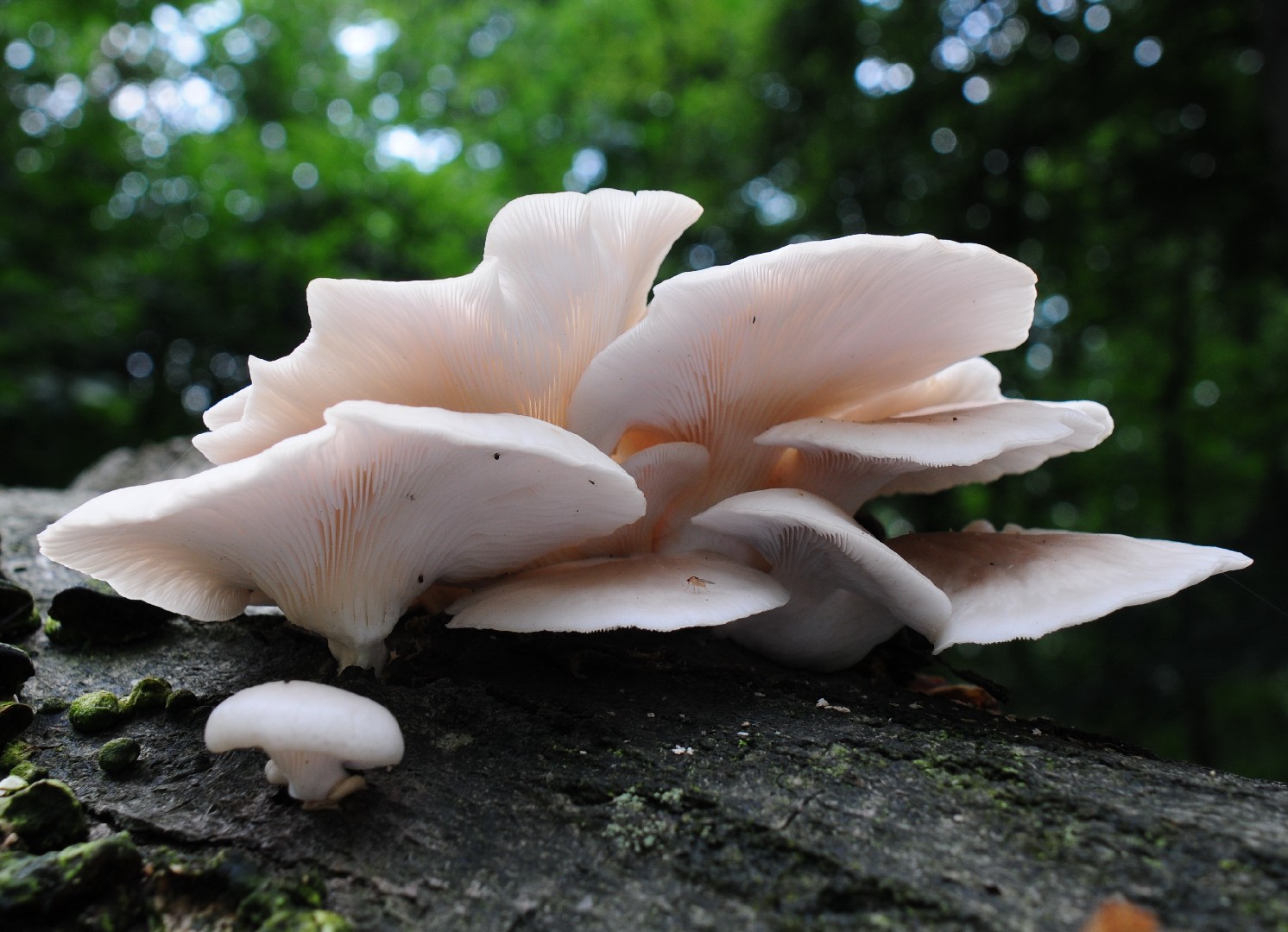
Oyster mushrooms grow wild but are also cultivated for sale in supermarkets. They can even be cultivated at home. They will grow on coffee grounds and spent grain, and are occasionally even fashioned into an environmentally-friendly substitute for styrofoam. There are several toxic look-alike species, so it is best to buy these mushrooms at the store.
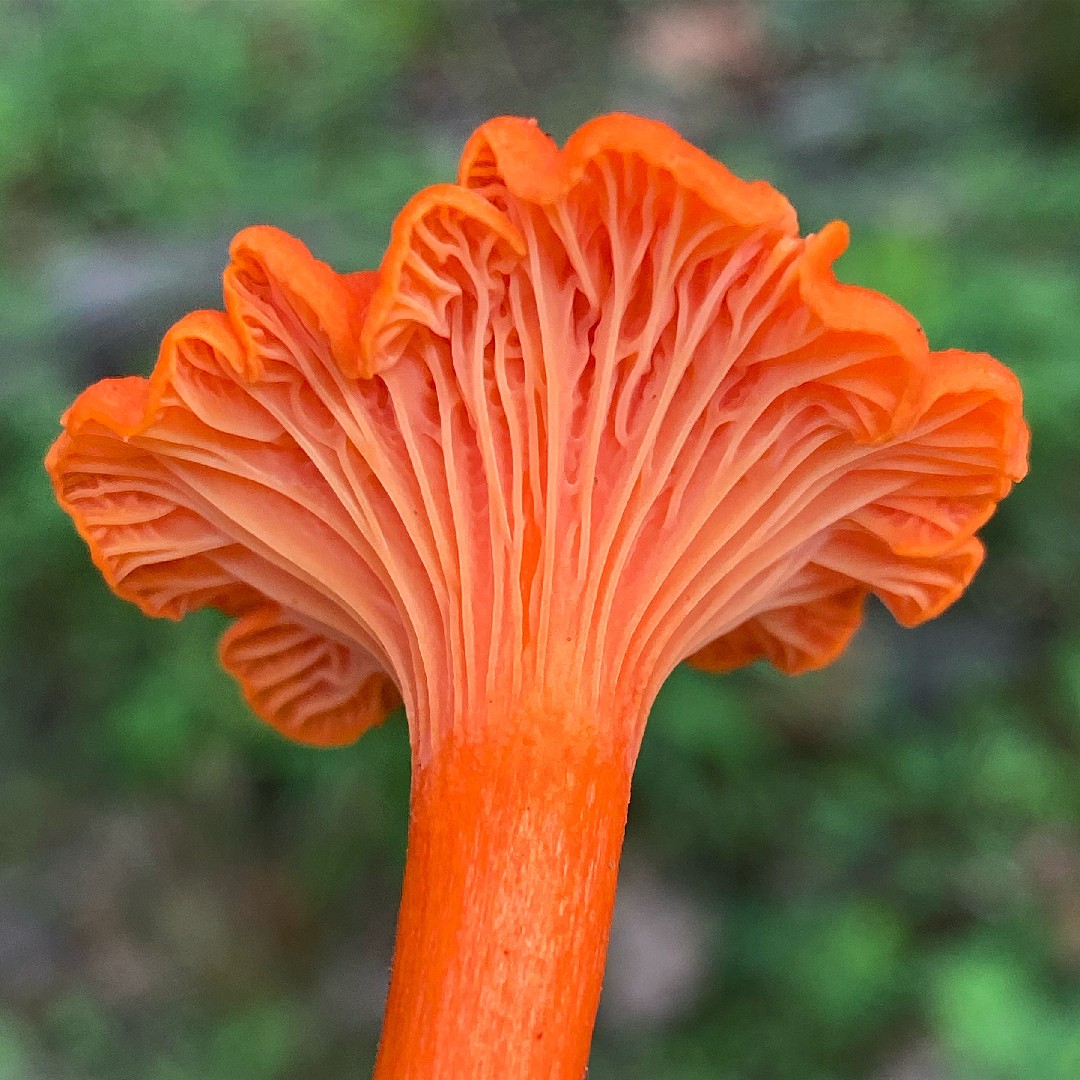
6. Red chanterelle
Red chanterelles can be found growing within hardwood forests across eastern North America. These small but striking mushrooms range from orange to red to pink in color. Edible and boasting complex flavors, many chanterelles are highly sought after. The red chanterelle, though less famous than some of its close relatives, is no exception. This species can be used in all sorts of recipes, with a vaguely sweet or piney taste.
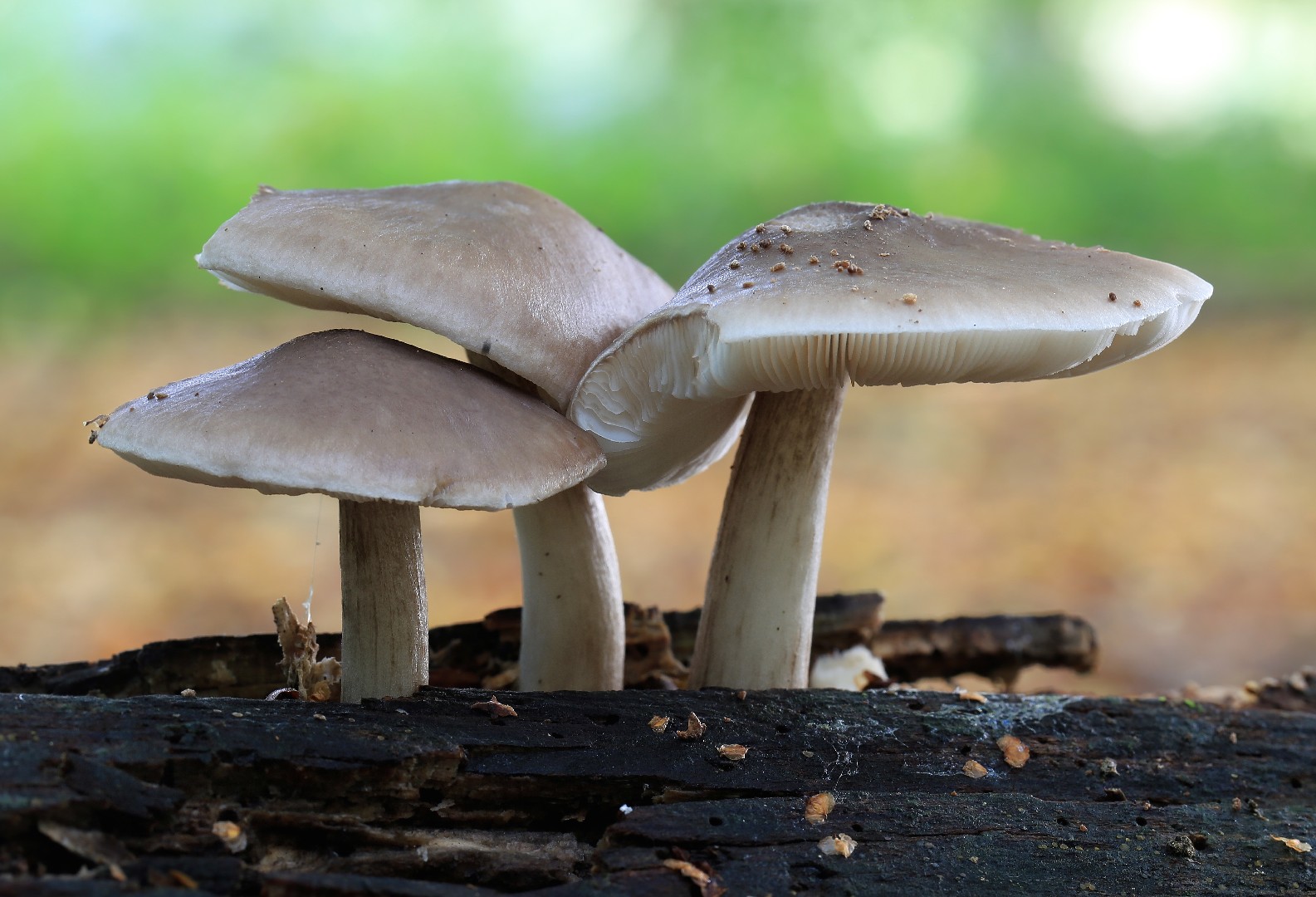
7. Deer mushroom
The deer mushroom is can be found sprouting up from rotting logs, branches, and roots, and while it may have a preference for hardwoods it isn't very picky. Unlike many other mushroom species, the fruitbodies can be found blooming across a wide range of seasons. They have a faint, radish-like odor.
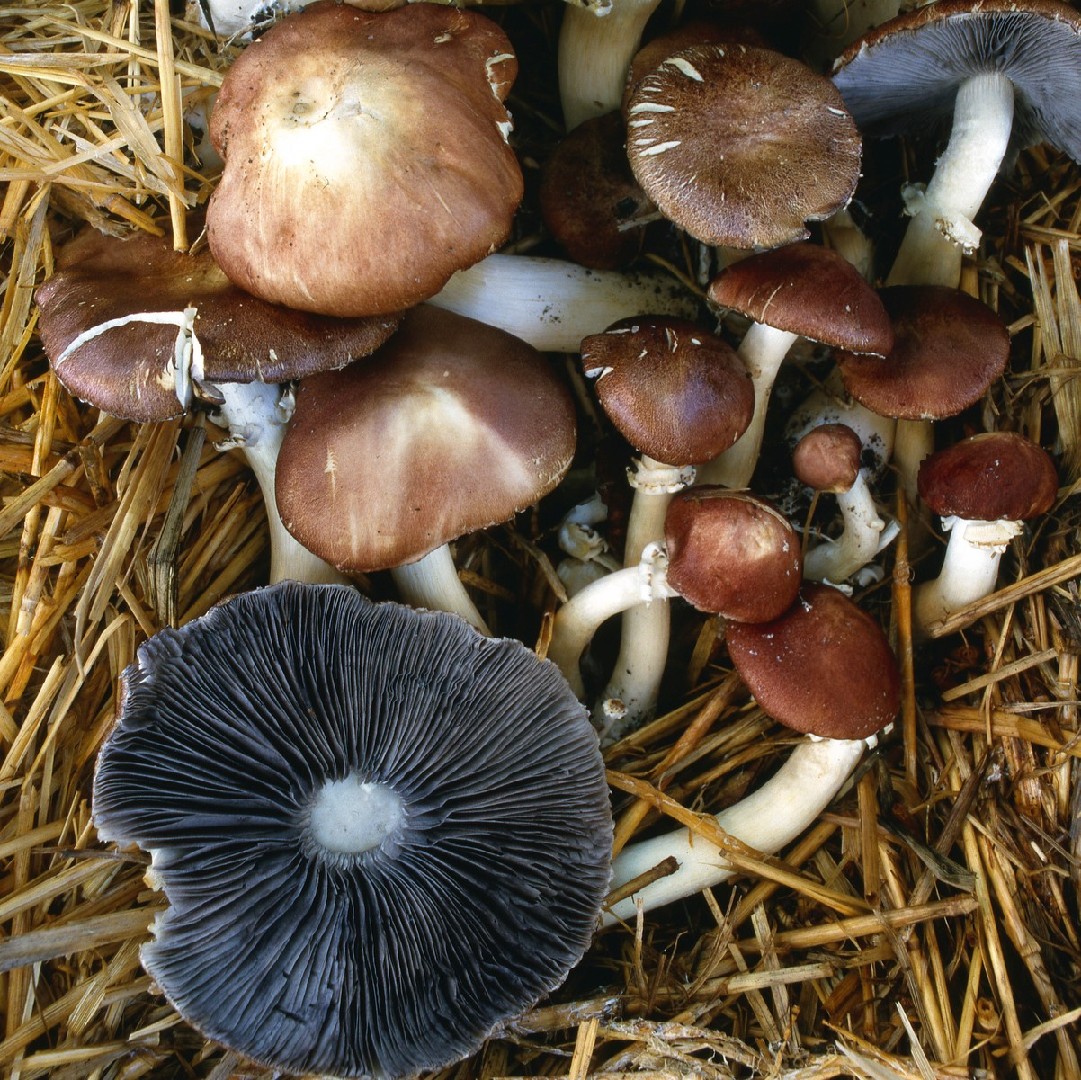
8. Wine cap stropharia
These large mushrooms have distinctive red caps when young, but the color soon fades to brown as they mature. Rare in the wild, wine cap stropharia are highly regarded among foragers as a desirable edible mushroom. Discard any specimens with holes in the stalk or caps, as flies use them to lay eggs. They are also cultivated.
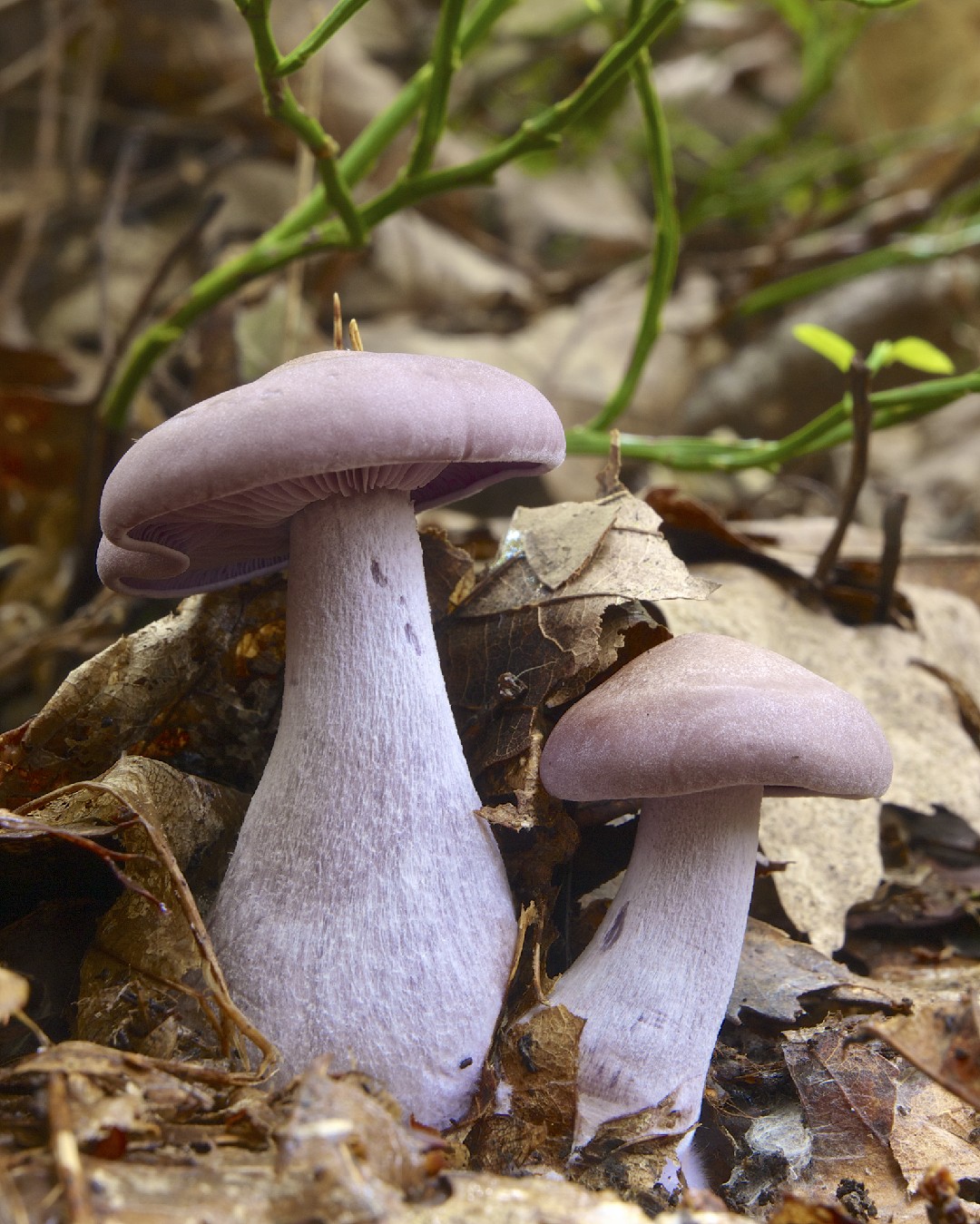
9. Blewit
The blewit mushroom grows in fallen leaves in autumn and winter, sometimes appearing in ‘fairy ring’ circles. It can be used to make a green dye when chopped and boiled in an iron pot. The scientific name, Lepista nuda, derives from Latin words meaning “bare goblet,” a reference to the shape and texture of the mushroom.
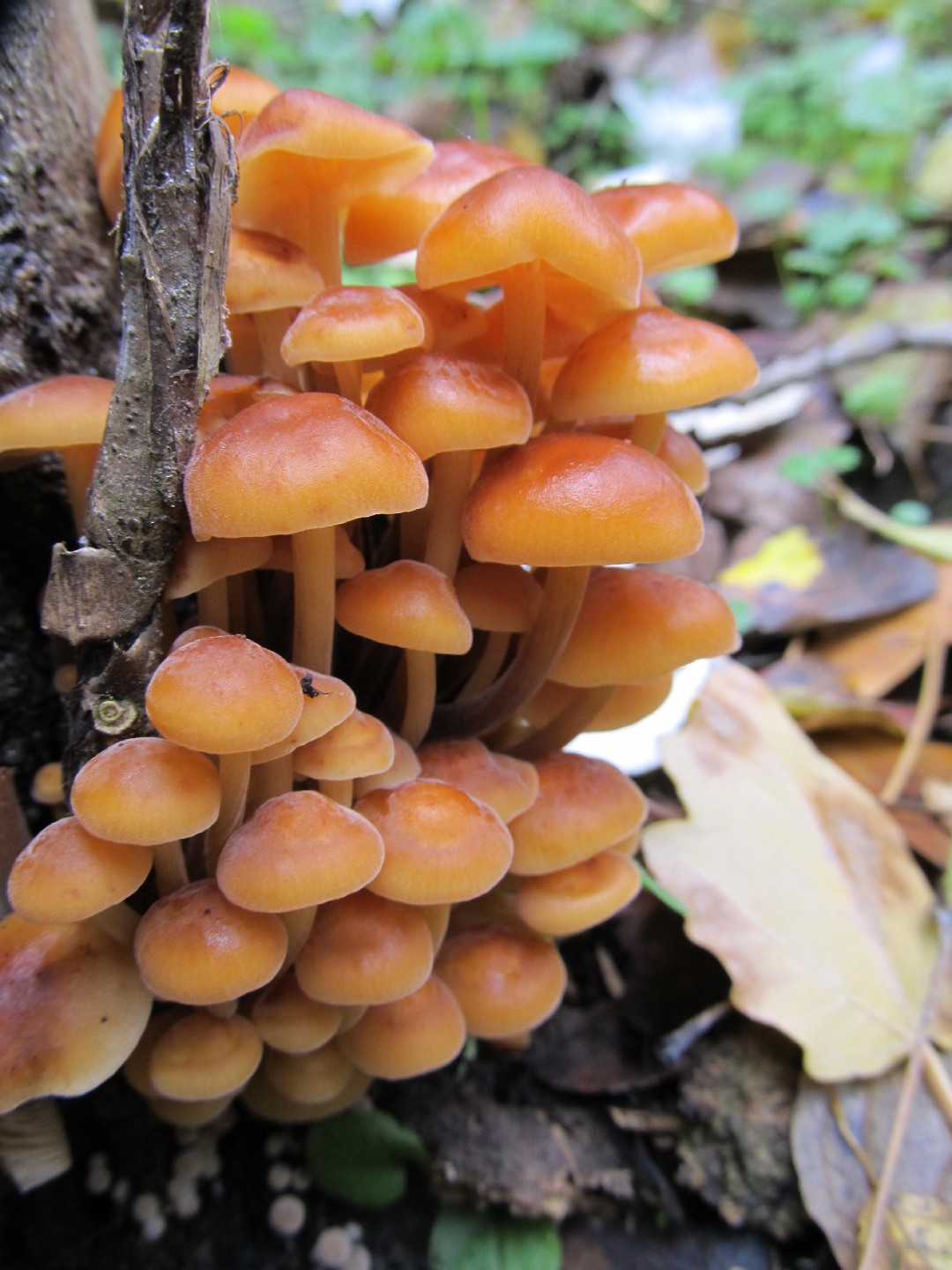
10. Enoki
The enoki grows wild on dead elm trees, and is also cultivated for human use. This flavorful species (Flammulina velutipes) has been used in dishes around the world for generations, being particularly high in nutrients. Though store-bought enoki are often plain white, wild ones can be found in a range of colors.

More







