




Top 20 Edible Mushrooms Popular in Netherlands
Boasting a diverse mycological flora in its verdant woodlands and moss-laden trails, Netherlands is home to an array of remarkable edible mushrooms. This guide, presenting the 20 most common types, will plunge you into the world of Dutch fungi. The conversation will range from each mushroom's distinctive appearance to its unique palate profiles, favoured natural habitats, and popular culinary uses, reflecting Netherlands's rich culinary traditions deeply influenced by the country's environment. Dive in, to enrich your knowledge and explore the edible forest treasures of Netherlands.
* Disclaimer: Content feedback CAN NOT be used as any basis for EATING ANY PLANTS. Some plants can be VERY POISONOUS, please purchase edible plants through regular channels.

Most Popular Edible Mushrooms

1. Shaggy mane
The shaggy mane mushroom is commonly found in North American and European grasslands. Some peoples foraged for its young egg-shaped caps, but it has more recently been found to be a bioaccumulator of heavy metals, meaning it pulls toxic metals up from the soil where it grows. As a result, shaggy manes should not be eaten. The mushrooms usually appear in clusters or “fairy rings.”
2. Jelly ear
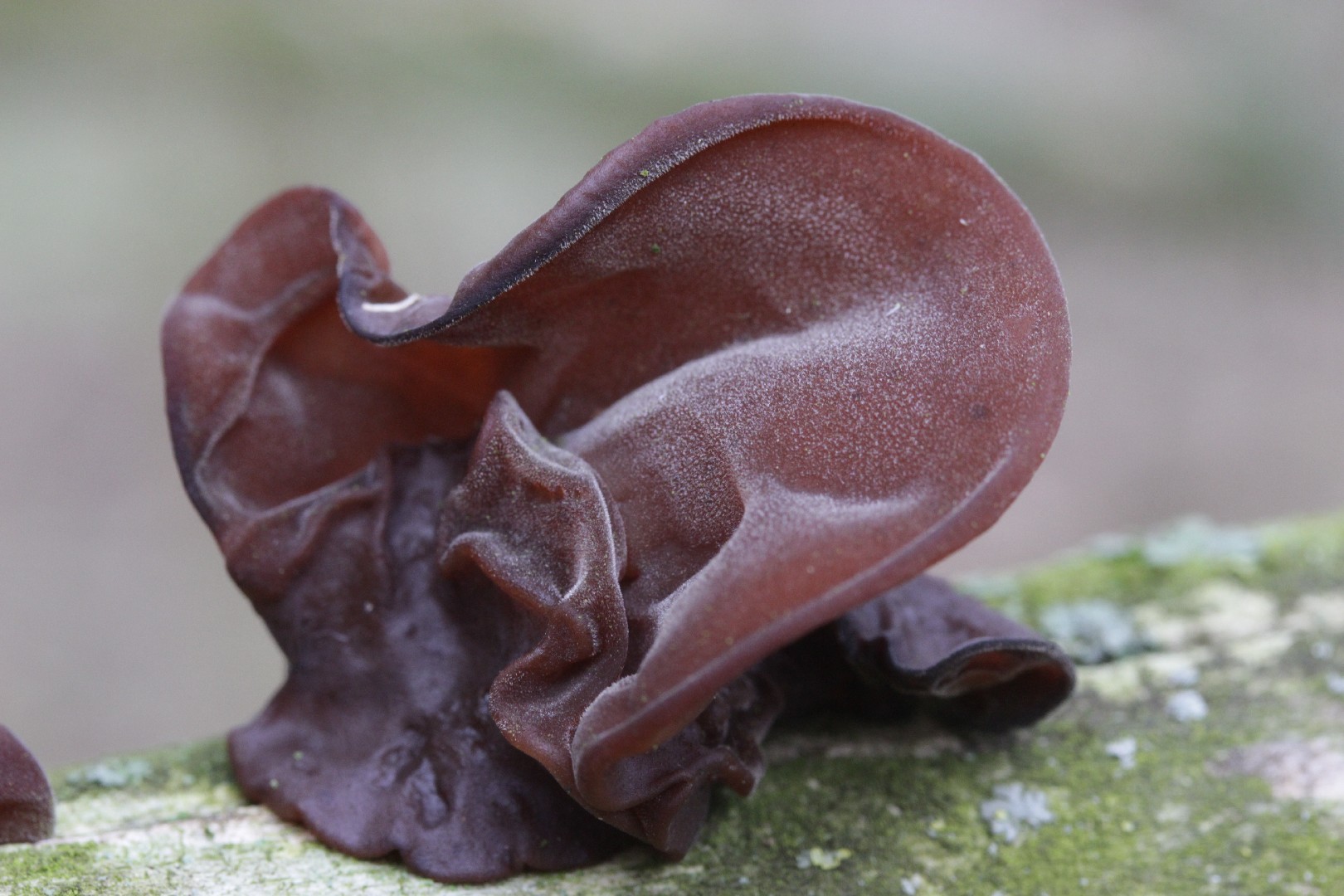
The distinctive jelly ear grows mainly through winter and spring, mostly on the dead trunks and branches of elder trees. It occurs around the world and is often cooked into dishes in Asian countries. This ear-shaped jelly mushroom is often available in stores both fresh and dried.
3. Chicken of the woods
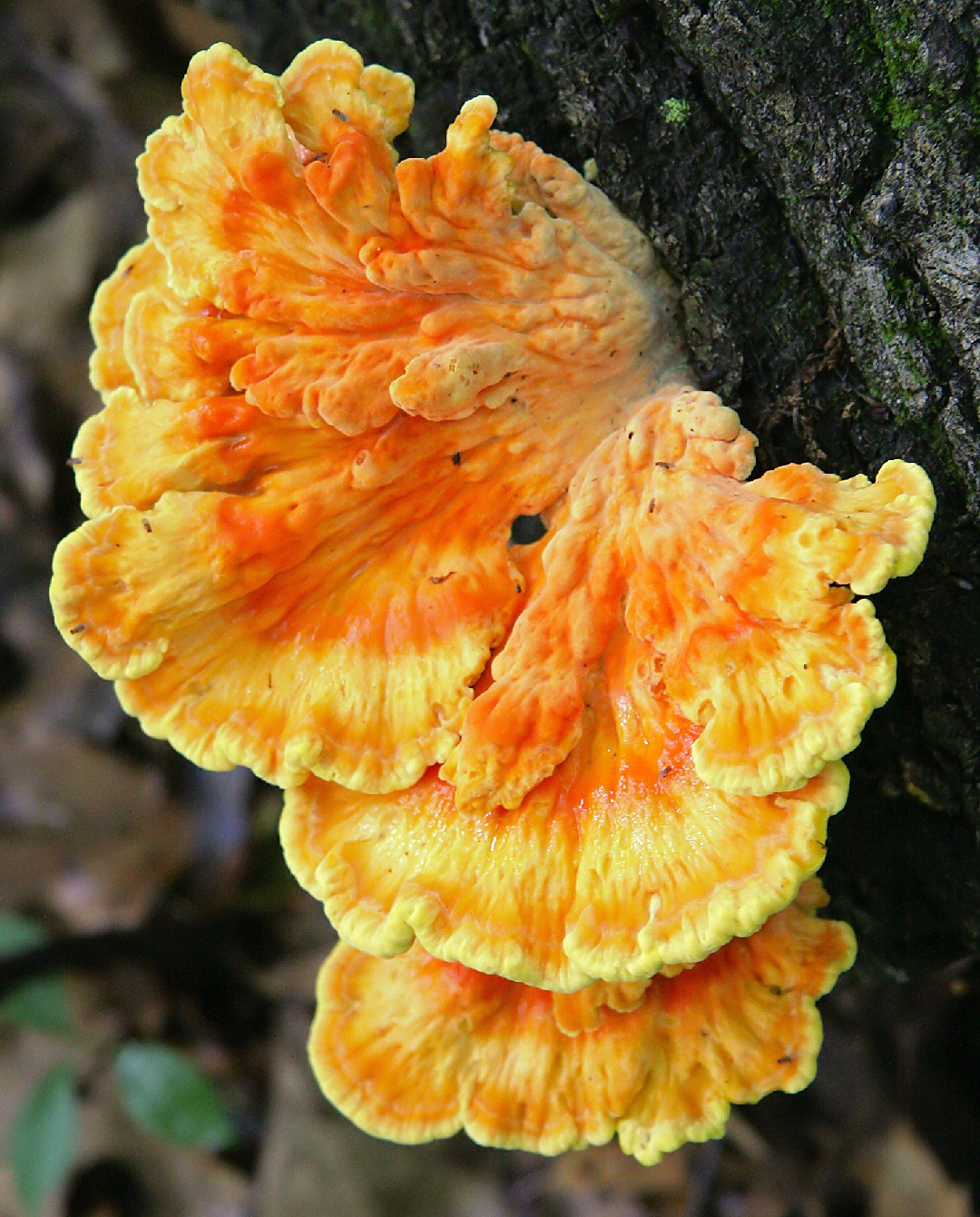
Chicken of the woods is very noticeable in hardwood forests, appearing in clusters on standing tree trunks in bright orange and yellow hues that sometimes last through the entire winter. It is a parasite that causes an unfortunate brown heart rot, and is considered a particularly troublesome pest of Yew trees. If the fruitbodies can be seen, the tree is likely already beyond saving.
4. Amethyst deceiver
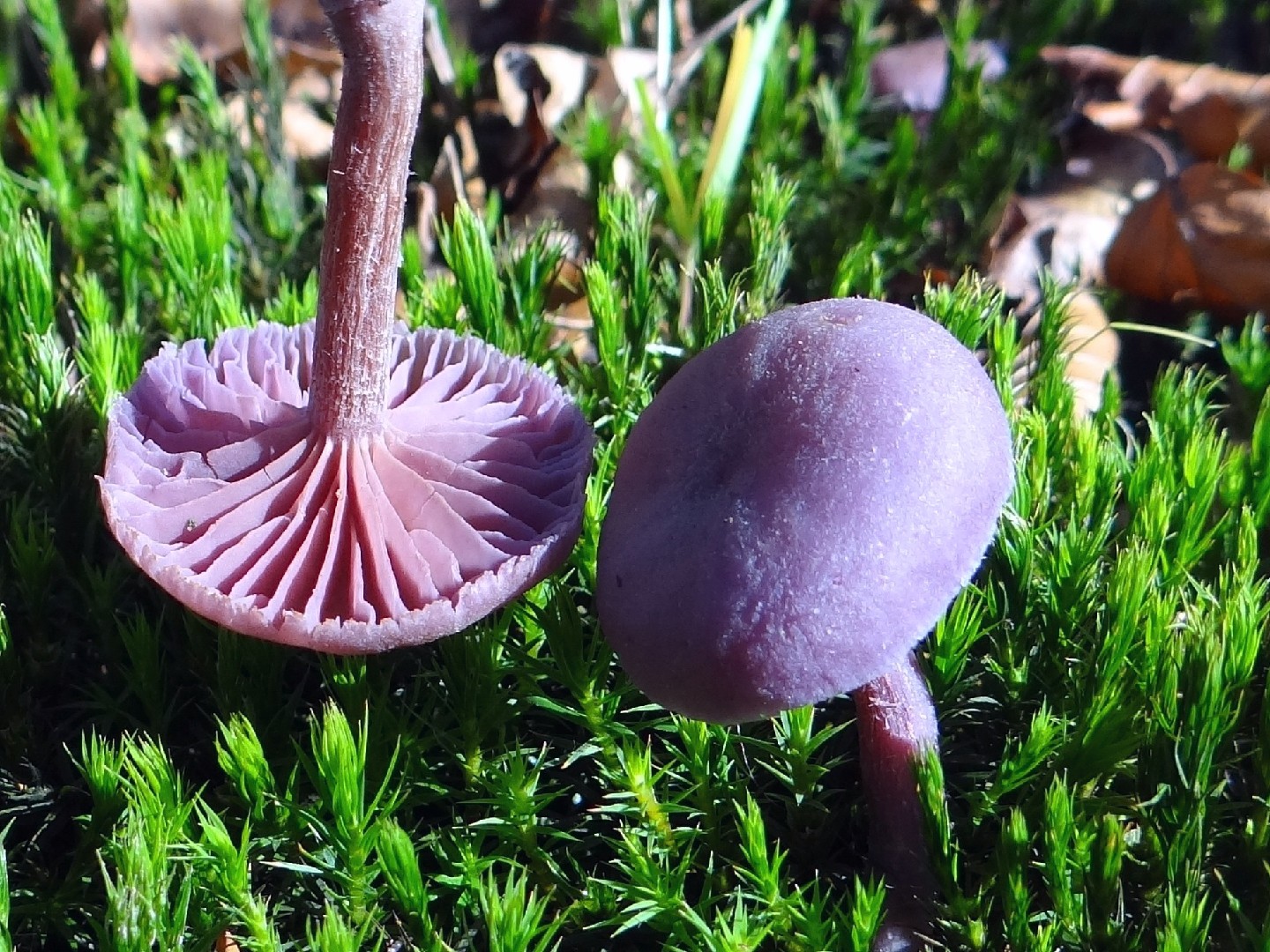
The amethyst deceiver (Laccaria amethystina) is a breathtaking mushroom that pops up from coniferous forest floors. The caps are a striking violet color in youth and are generally flat with a small indentation when the stem connects. As they mature, this violet color transforms to a less than breathtaking grey color, making it quite hard to identify after a certain age positively. Not edible.
5. Common stinkhorn
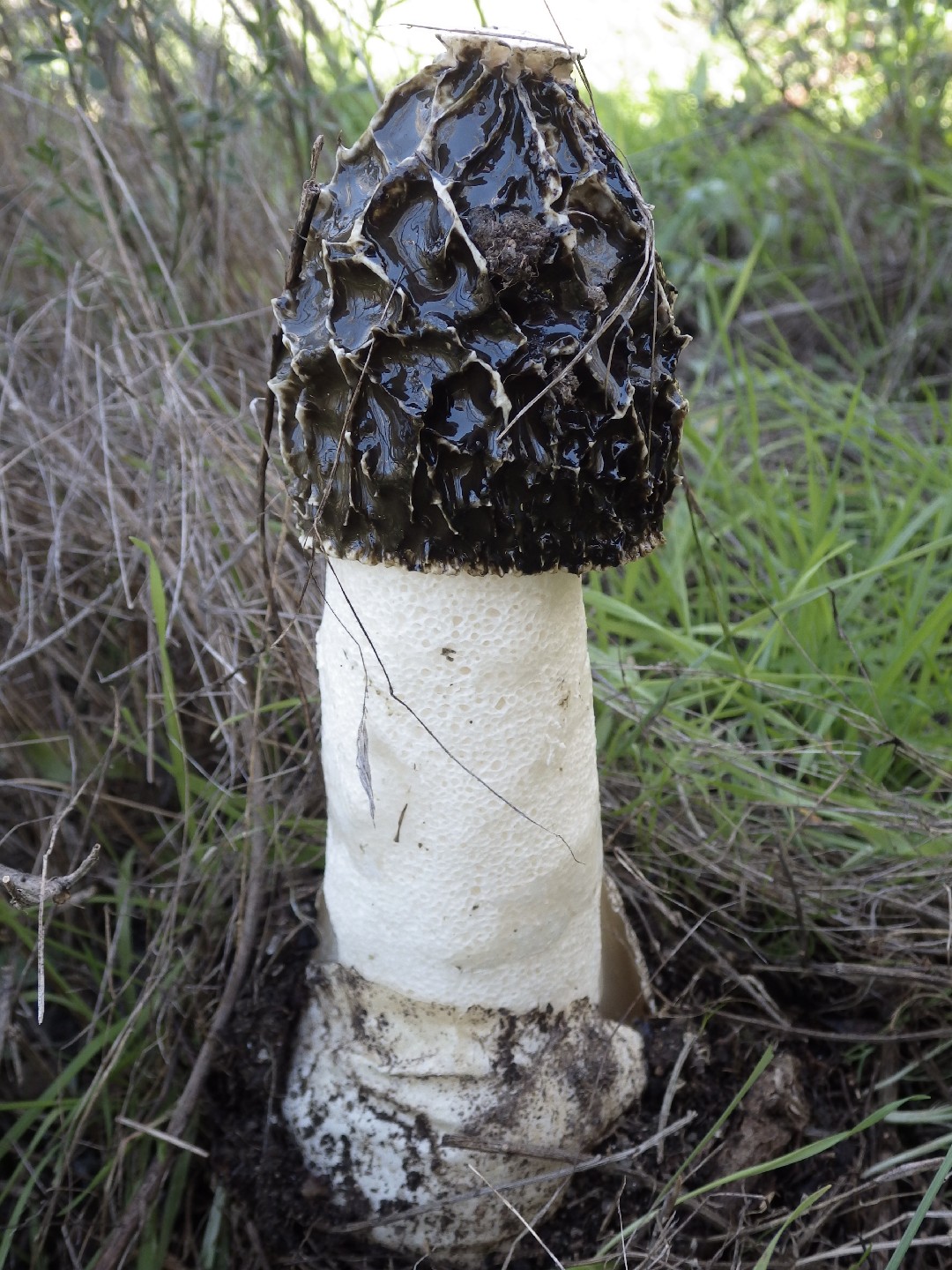
The common stinkhorn (Phallus impudicus) grows incredibly quickly, sometimes nearing 30 cm in a single afternoon. Their caps are pitted in a way which makes them reminiscent of morels. However, there's little mistaking the common stinkhorn for a morel; the former, in addition to sporting a much longer stalk, has a clear and pungent odor.
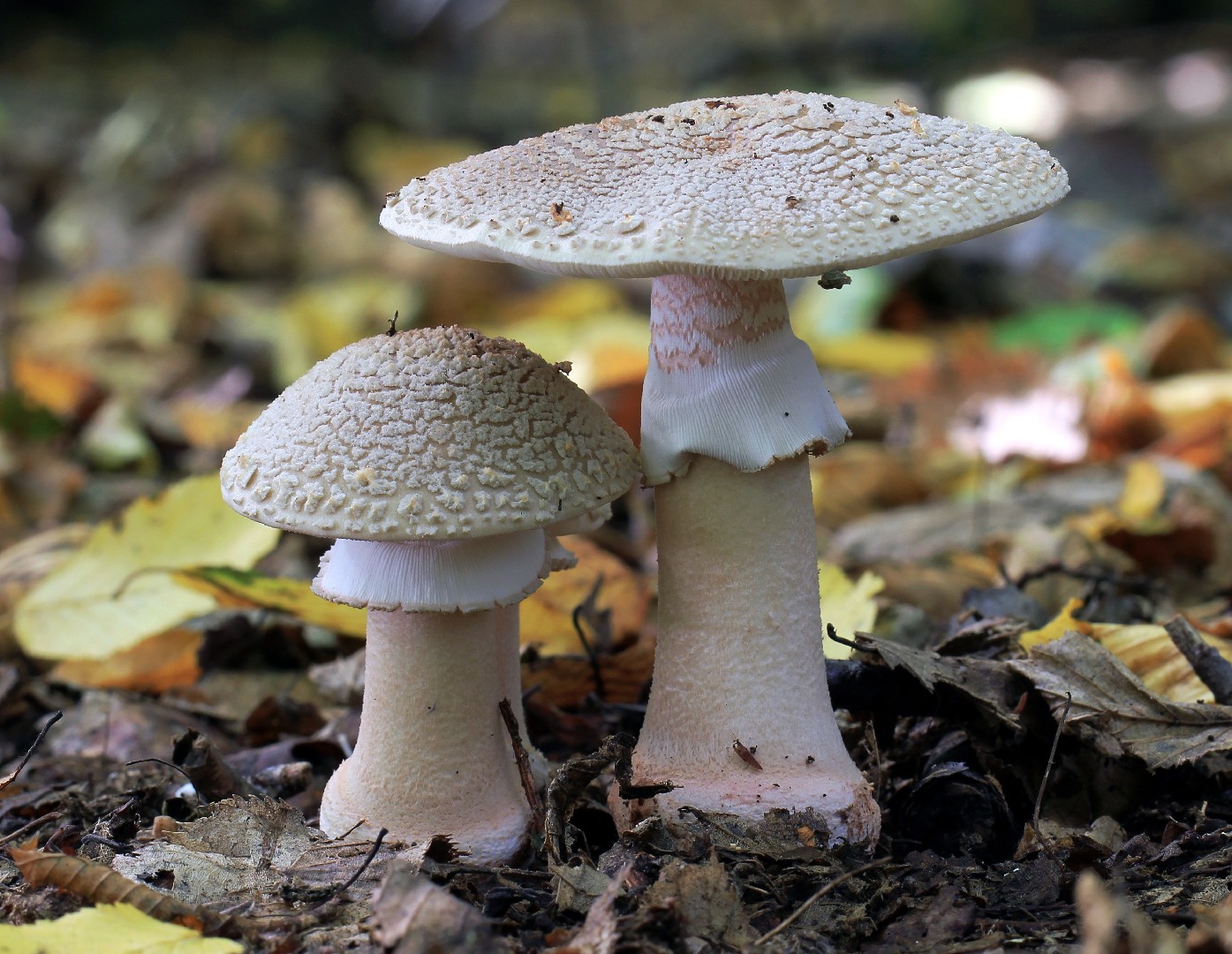
6. Blusher
The blusher mushroom is so named because it “blushes” to a pinkish red color when cut or bruised. It is found in many countries around the world, although it may not be native to the southern hemisphere. It contains a hemolytic toxin that can cause anemia if eaten.
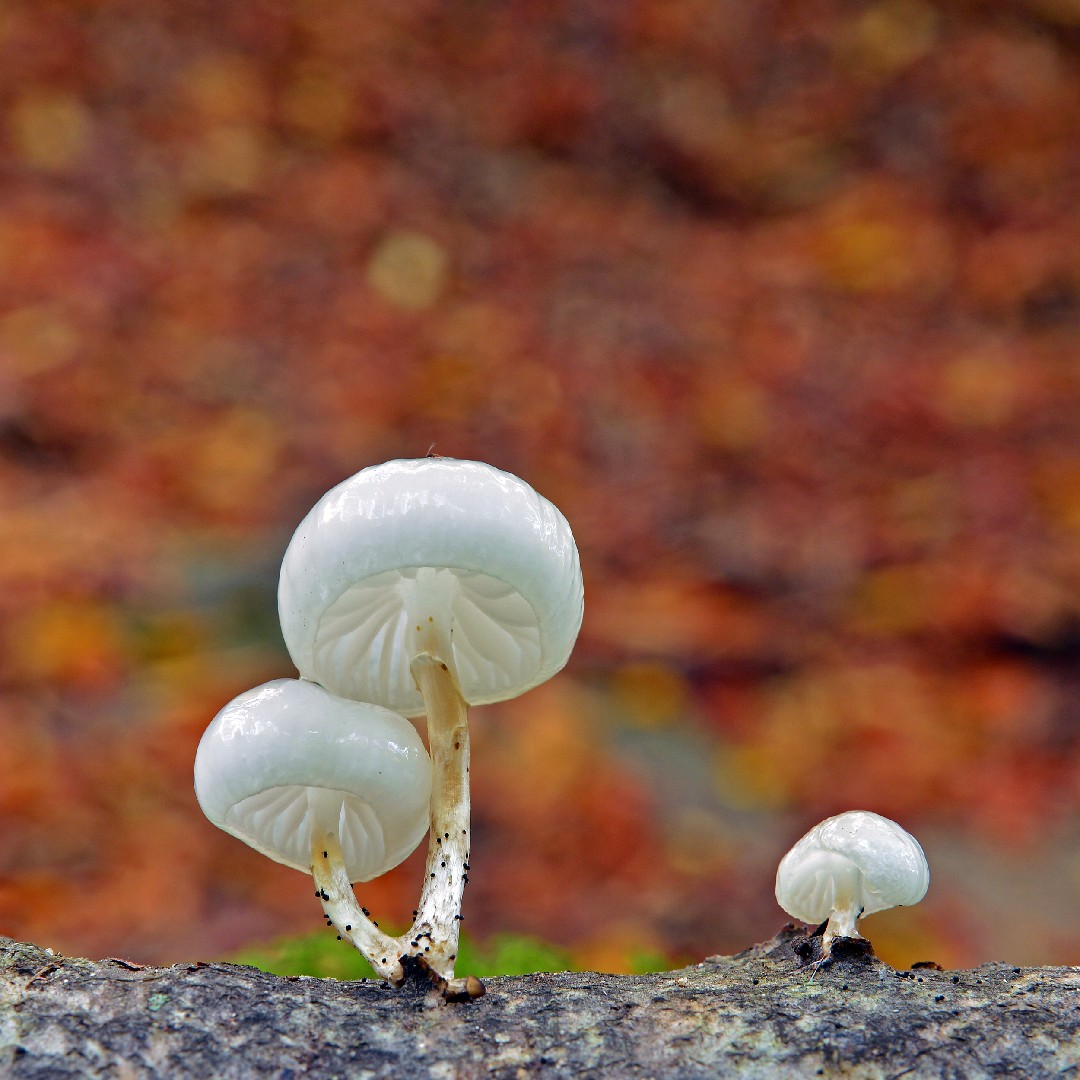
7. Porcelain mushroom
Porcelain mushroom can be found on a variety of deadwood including logs, dead standing trees, and dead upper branches. However, this mushroom is pickier about the type of deadwood, as it only grows on beech trees. This mushroom prefers to keep these trees to itself, releasing fungicides that can kill other mushrooms.
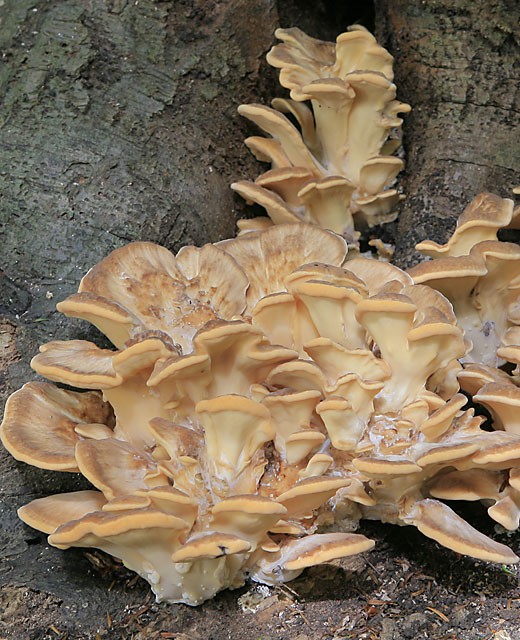
8. Giant polypore
The giant polypore (Meripilus giganteus) is a tough-fleshed shelf or bracket fungus that can be found parasitizing the roots, branches or boles of trees - especially hardwoods - across temperate regions of Europe and Asia (a very closely related species, Meripilus sumstenei, is distributed across North America - some sources list these two species as synonymous).
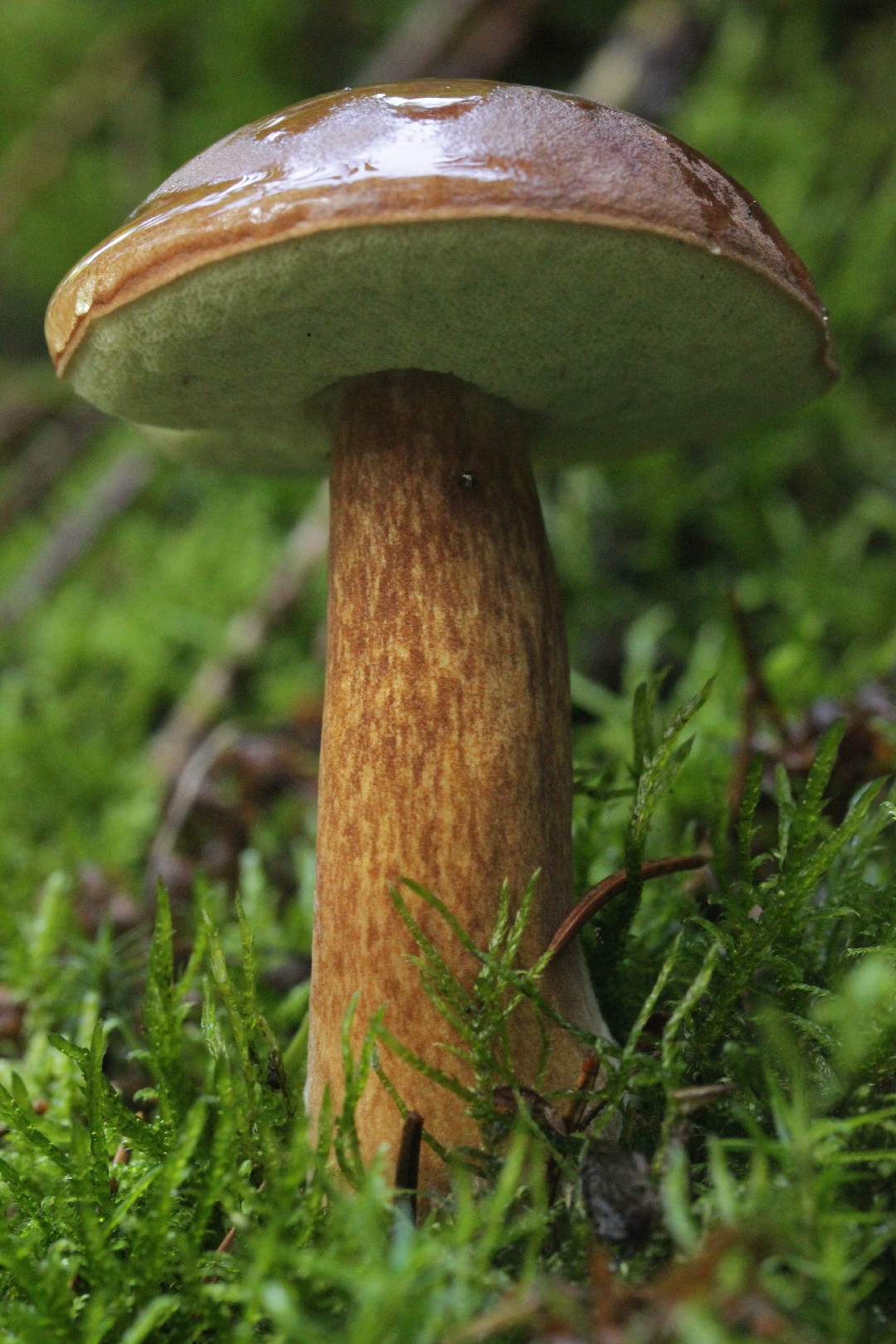
9. Bay bolete
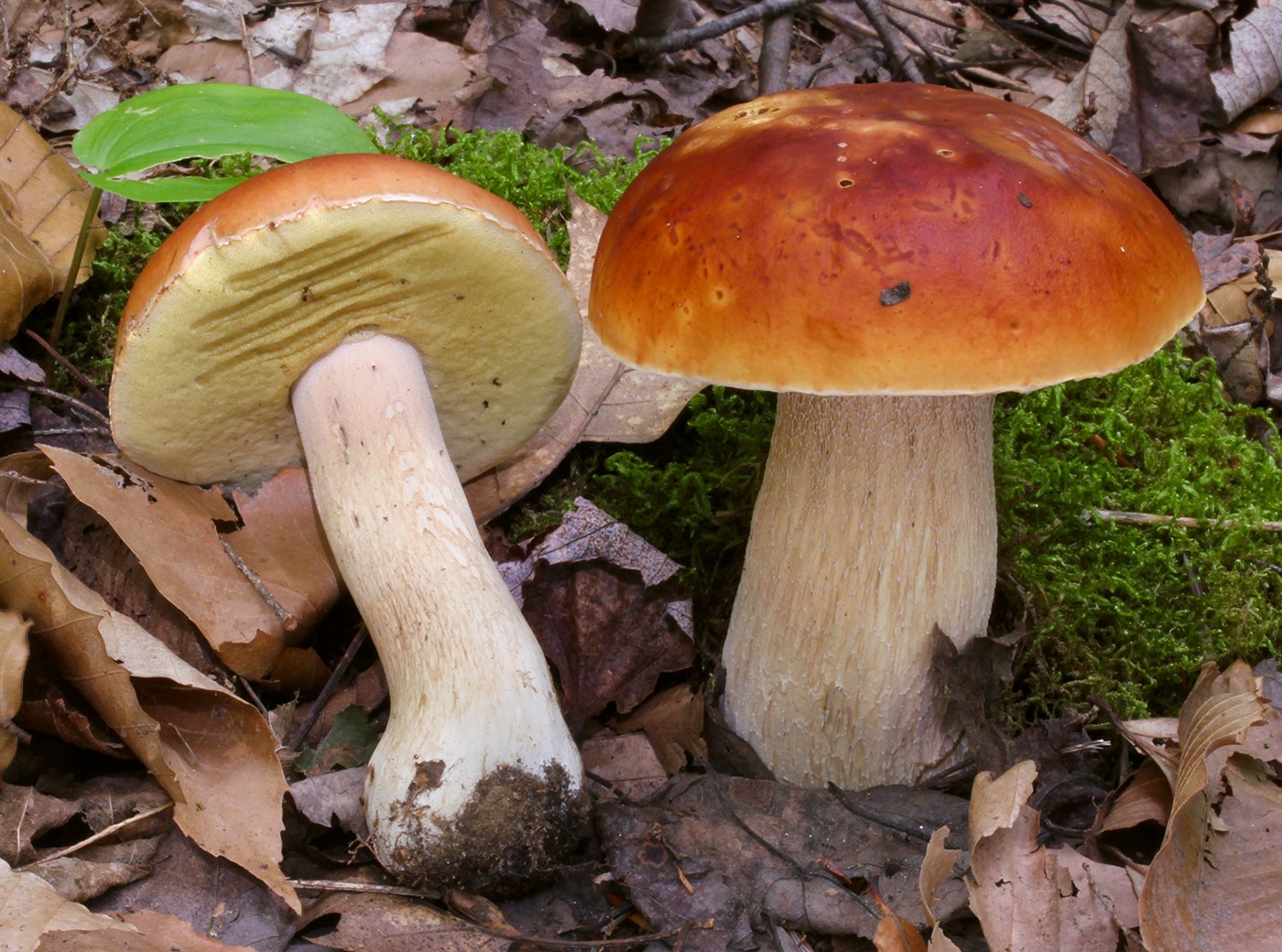
The common bay bolete is found across the northern hemisphere, often in spruce and pine forests and occasionally under deciduous trees. While it lives in a symbiotic relationship with a living tree, the mushrooms are most often found near well-decayed, mossy stumps, usually singly or in very small groups.
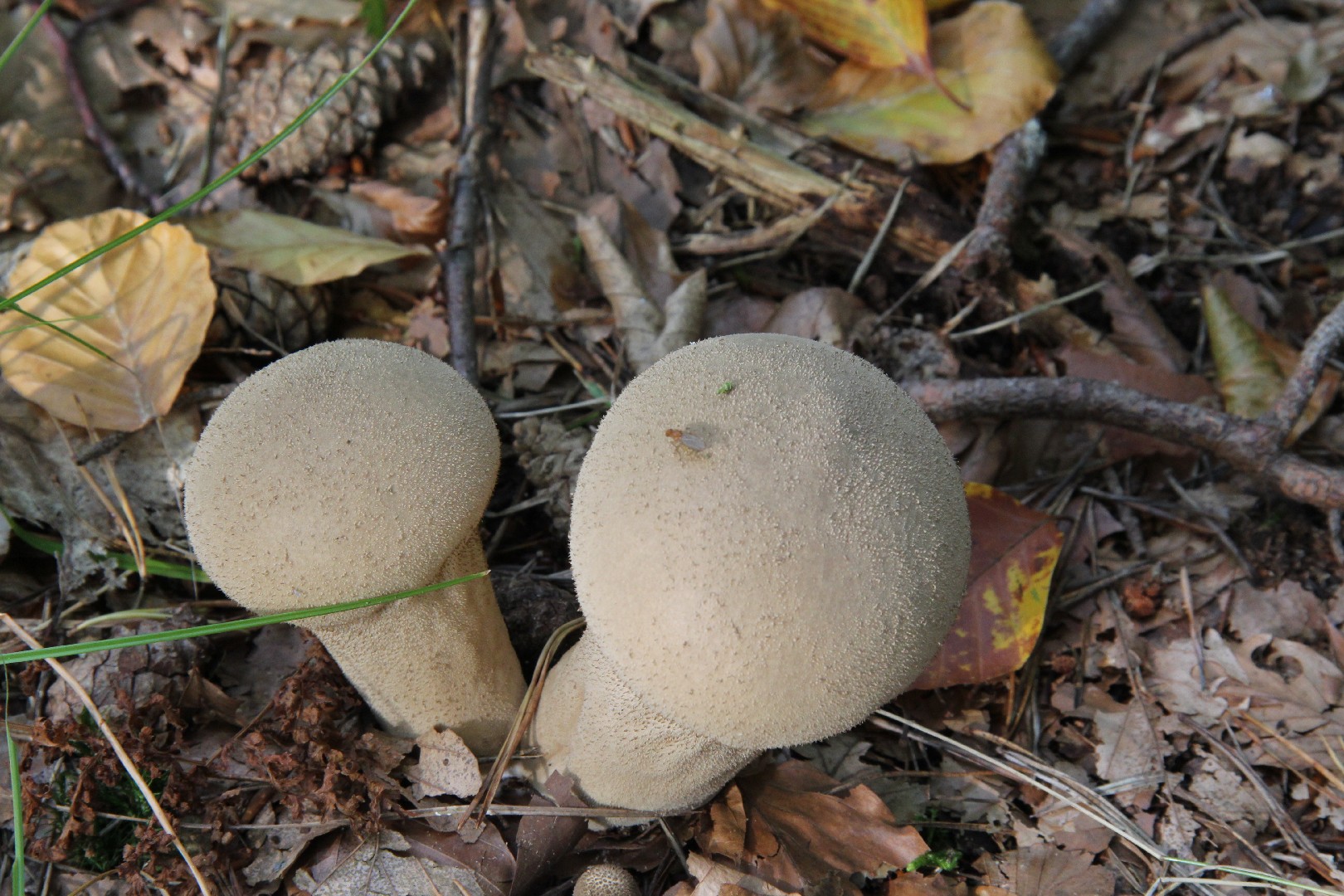
10. Pestle puffball
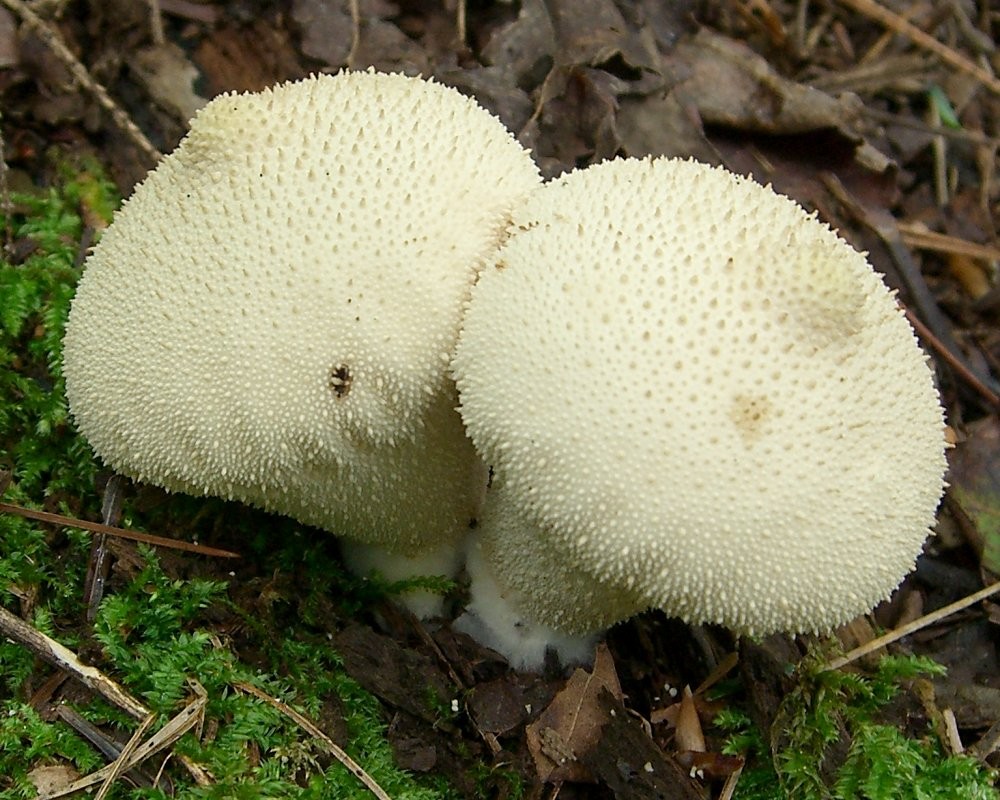
When compressed, the fruiting body of the pestle puffball releases its powdery, green-brown spores in a burst. These spores are seriously harmful to humans - inhaling the spores of a mature puffball can lead to a respiratory disease called lycoperdonosis. The stem part can survive winter and tends to pop out when the snow starts to melt.
More







