




Top 20 Edible Mushrooms Popular in Nakuru
Uncover the delicious world of 20 most populous edible mushrooms nestled in the lush, fertile expanses of Nakuru. This region's unique microclimate is a paradise for these diverse fungal inhabitants, each impressing with their distinct shape, color, flavor, and culinary versatility. Set out on a captivating journey to explore these fungi, marvel at their aesthetic appeal, perceive their taste dimensions, and understand their preferred habitat and use in cuisine. Let our comprehensive guide elevate your appreciation of Nakuru's edible mushroom diversity.
* Disclaimer: Content feedback CAN NOT be used as any basis for EATING ANY PLANTS. Some plants can be VERY POISONOUS, please purchase edible plants through regular channels.

Most Popular Edible Mushrooms
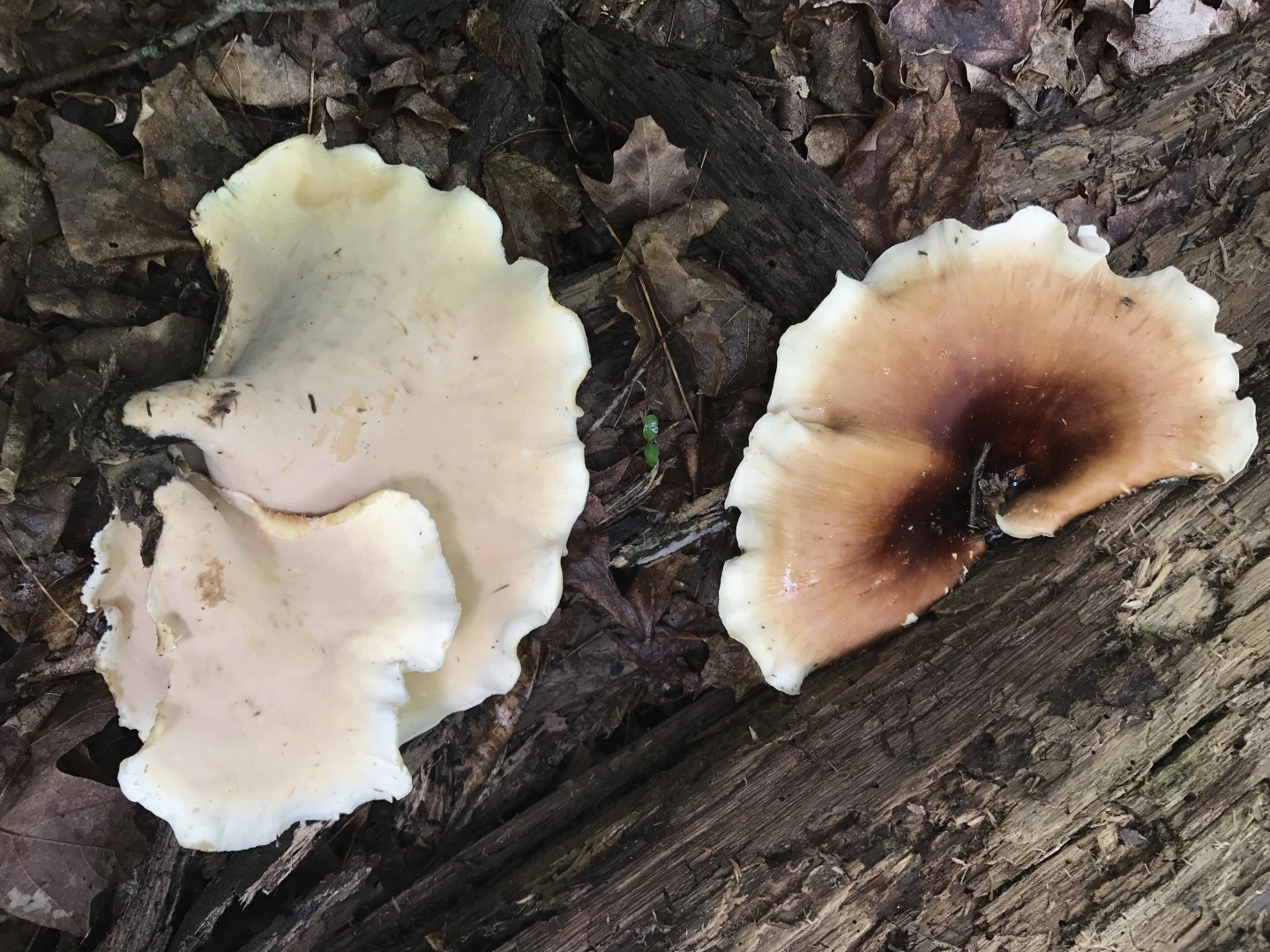
1. Black-footed polypore
This inedible fungus grows on fallen wood and stumps of deciduous trees. Black-footed polypores have the ability to remain through the winter, as they rot very slowly after releasing their spores. They are thus appreciated for providing a bit of visual interest in winter landscapes.
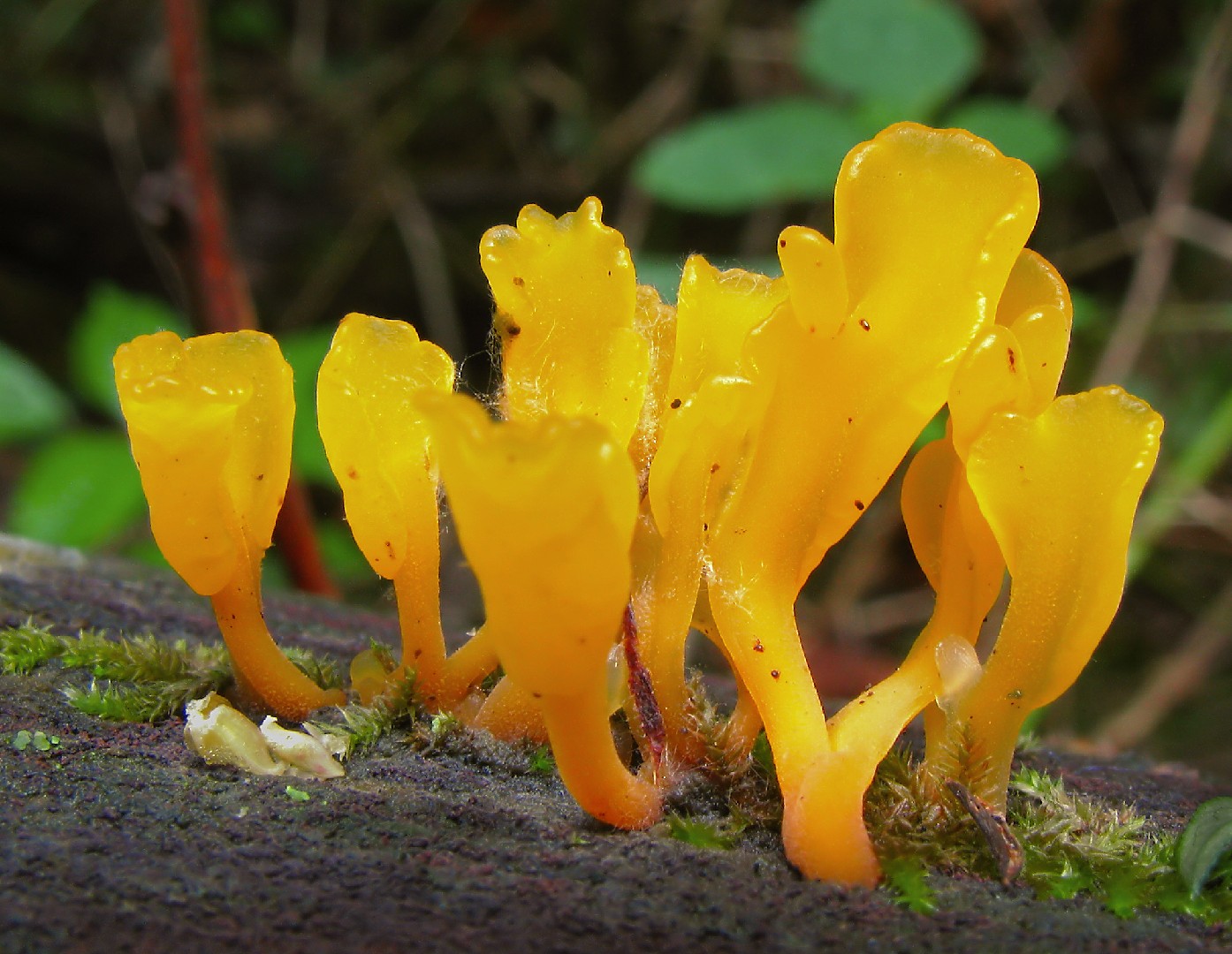
2. Fan-shaped jelly-fungus
Just as its Latin and the common English names suggest, the fan-shaped jelly-fungus (Dacryopinax spathularia) is a fan-shaped or spatula-shaped jelly-like mushroom. It commonly grows in wood cracks and it sometimes even appears in the cracks of the processed wood and lumber. Despite the word "jelly" in its name, the fan-shaped jelly-fungus is not considered edible.
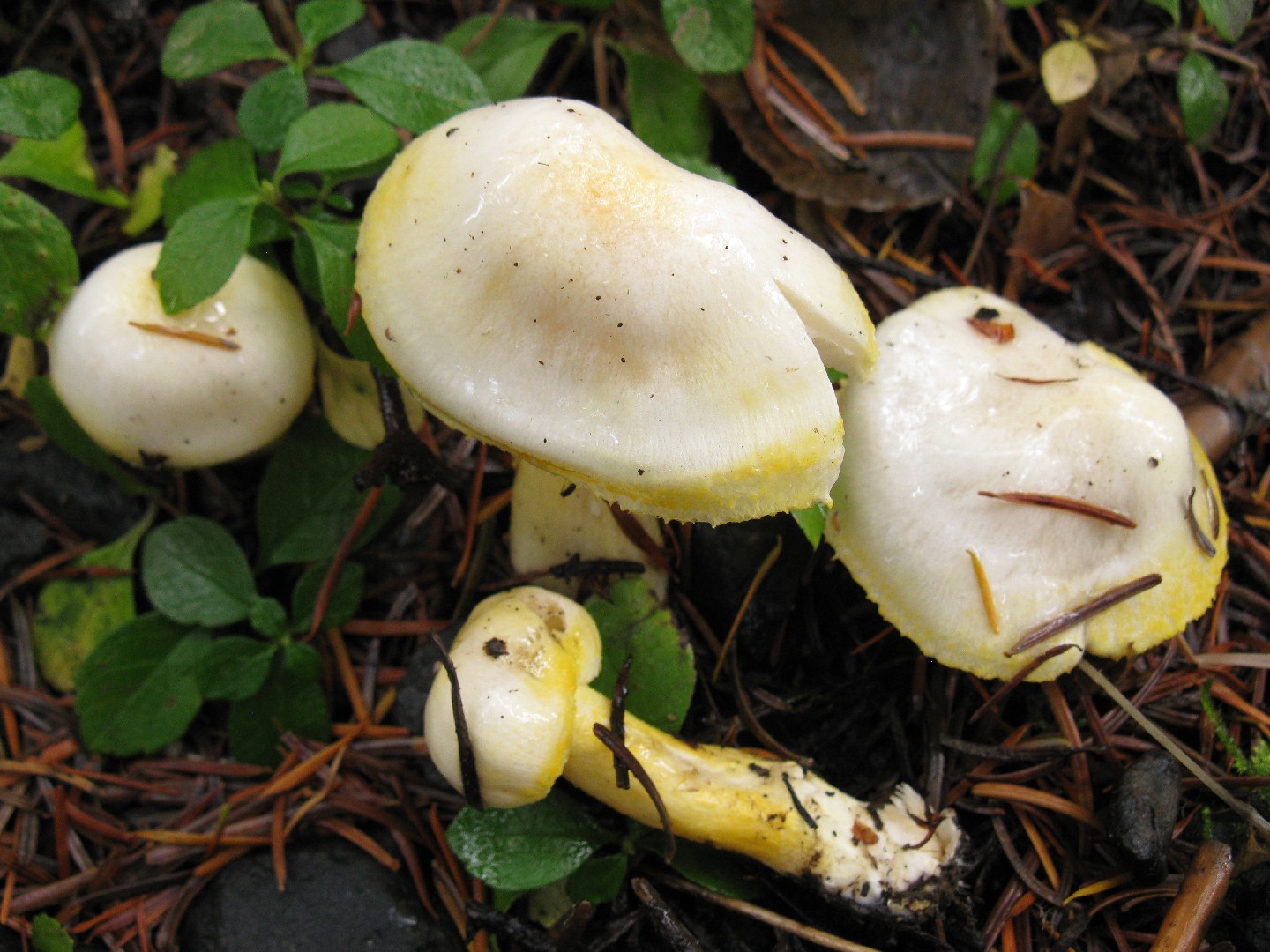
3. Gold-flecked woodwax
This rare mushroom’s claim to fame comes from the remarkable yellow scales scattered over an otherwise ivory fruitbody. However, not every specimen of the gold-flecked woodwax (Hygrophorus chrysodon) species boasts these brightly-colored speckles. Examples of this species can usually be found under conifers.
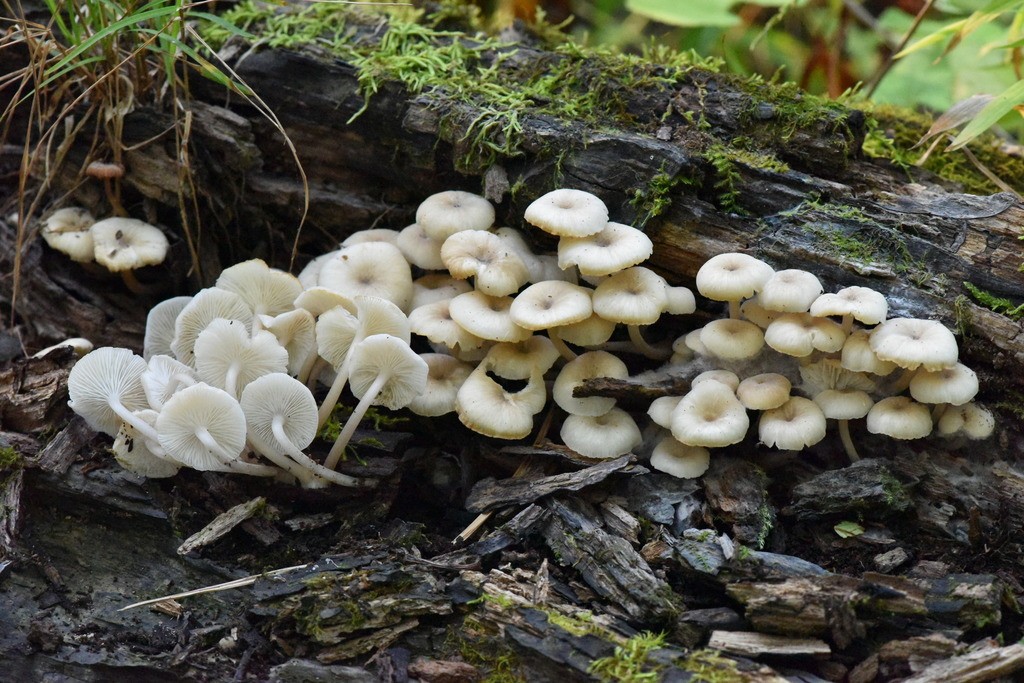
4. Clitocybula abundans
Clitocybula abundans grows on dead hardwood or conifer trees. Its specific epithet, abundans, was given for obvious reasons: the mushrooms sprout abundantly in clusters. Each fruiting body tends to grow with a belly-button-like center to the cap which may or may not be a darker color.
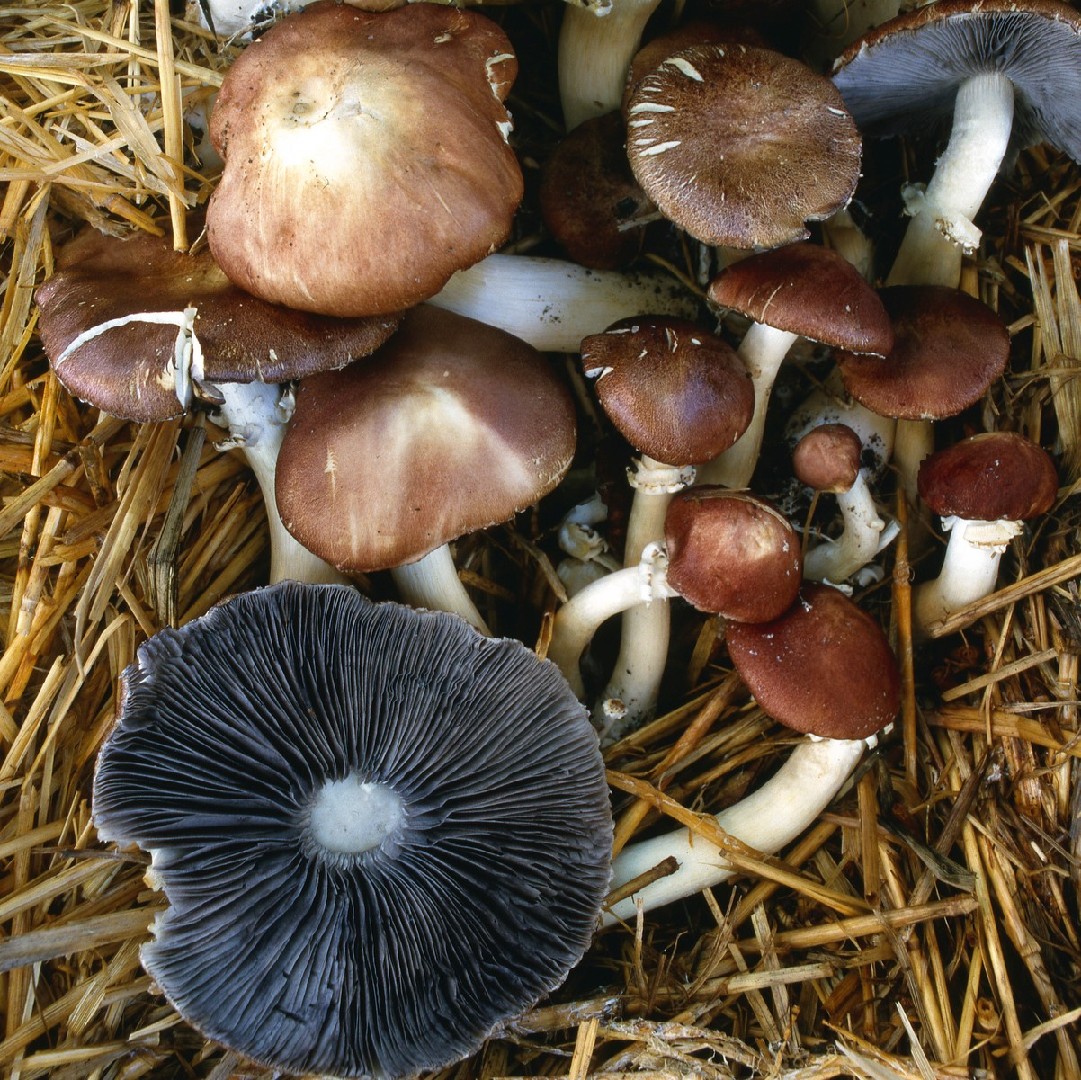
5. Wine cap stropharia
These large mushrooms have distinctive red caps when young, but the color soon fades to brown as they mature. Rare in the wild, wine cap stropharia are highly regarded among foragers as a desirable edible mushroom. Discard any specimens with holes in the stalk or caps, as flies use them to lay eggs. They are also cultivated.
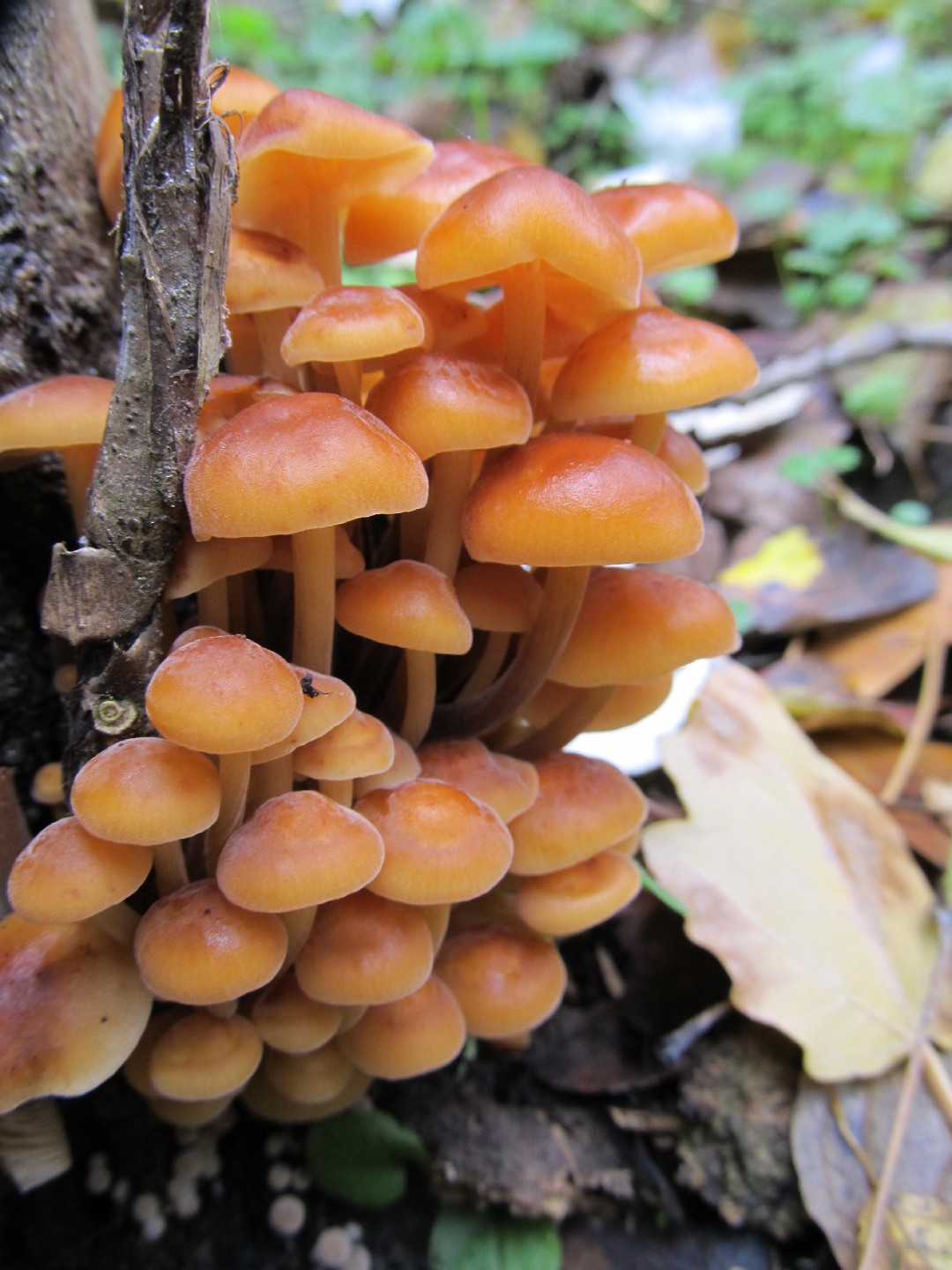
6. Enoki
The enoki grows wild on dead elm trees, and is also cultivated for human use. This flavorful species (Flammulina velutipes) has been used in dishes around the world for generations, being particularly high in nutrients. Though store-bought enoki are often plain white, wild ones can be found in a range of colors.
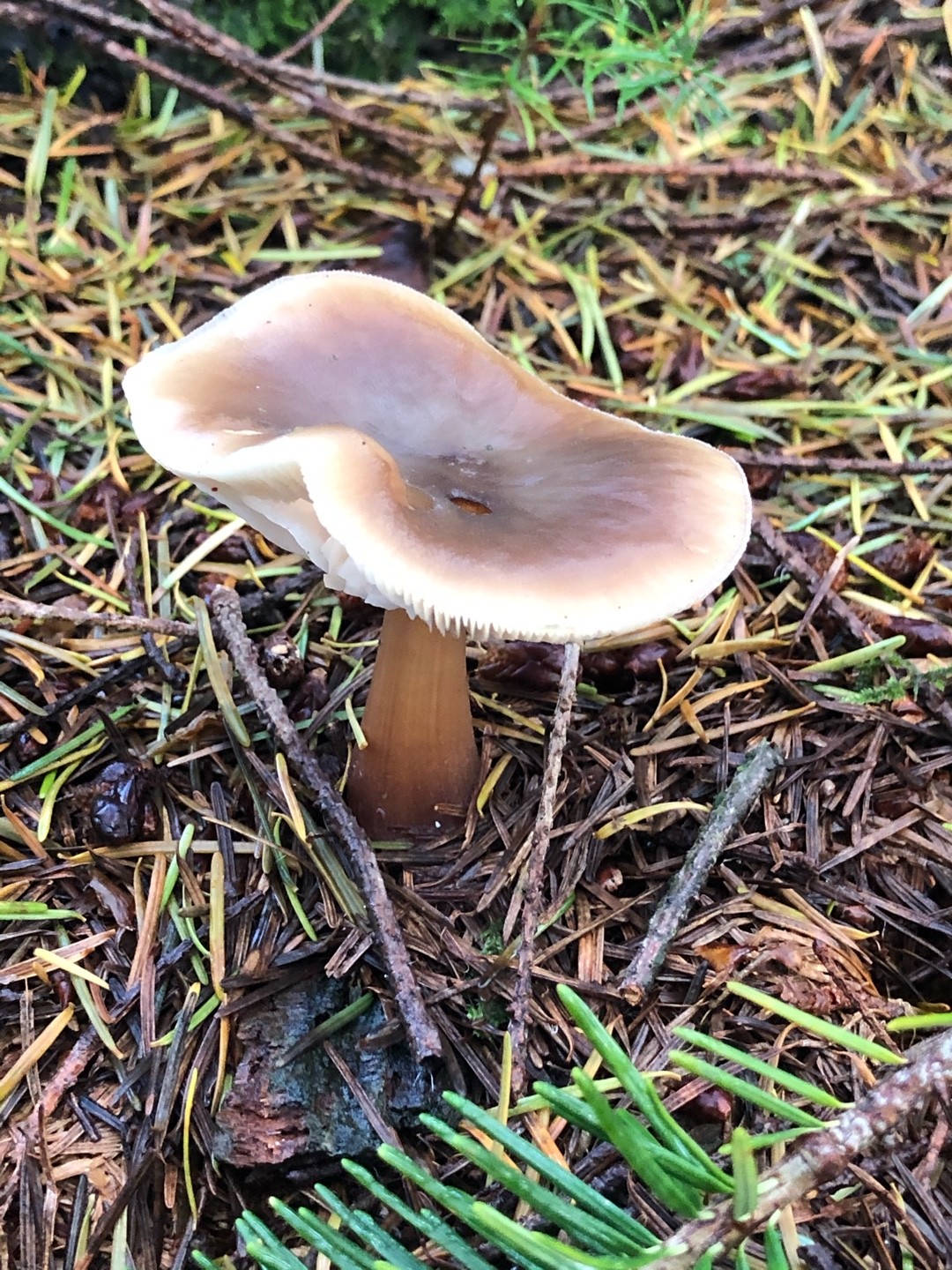
7. Buttery collybia
Buttery collybia mushrooms grow mainly on the floors of coniferous forests, from summer to winter across Europe and North America. This mushroom is called “buttery” not for its flavor, but rather the greasy texture of its surface. In the genus name, “rhodo” means pink, a reference to the shade of the gills beneath its cap.
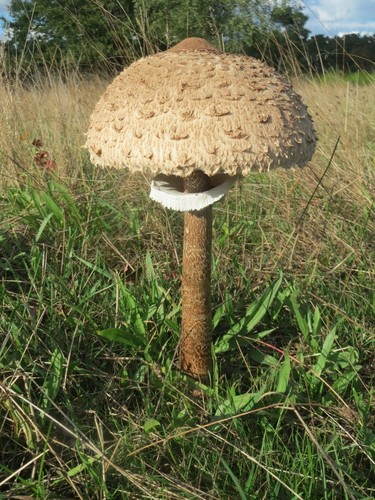
8. Parasol
Found in clearings and grassy areas in late summer, the wild parasol mushroom has a snakeskin-patterned stem. The brown spots on its cap make it look a bit shaggy, but that name is reserved for its poisonous counterpart, the Shaggy Parasol (Chlorophyllum rhacodes). You can distinguish the two by the stems: the latter has a smooth stem and red flesh inside.

9. Shaggy mane
The shaggy mane mushroom is commonly found in North American and European grasslands. Some peoples foraged for its young egg-shaped caps, but it has more recently been found to be a bioaccumulator of heavy metals, meaning it pulls toxic metals up from the soil where it grows. As a result, shaggy manes should not be eaten. The mushrooms usually appear in clusters or “fairy rings.”
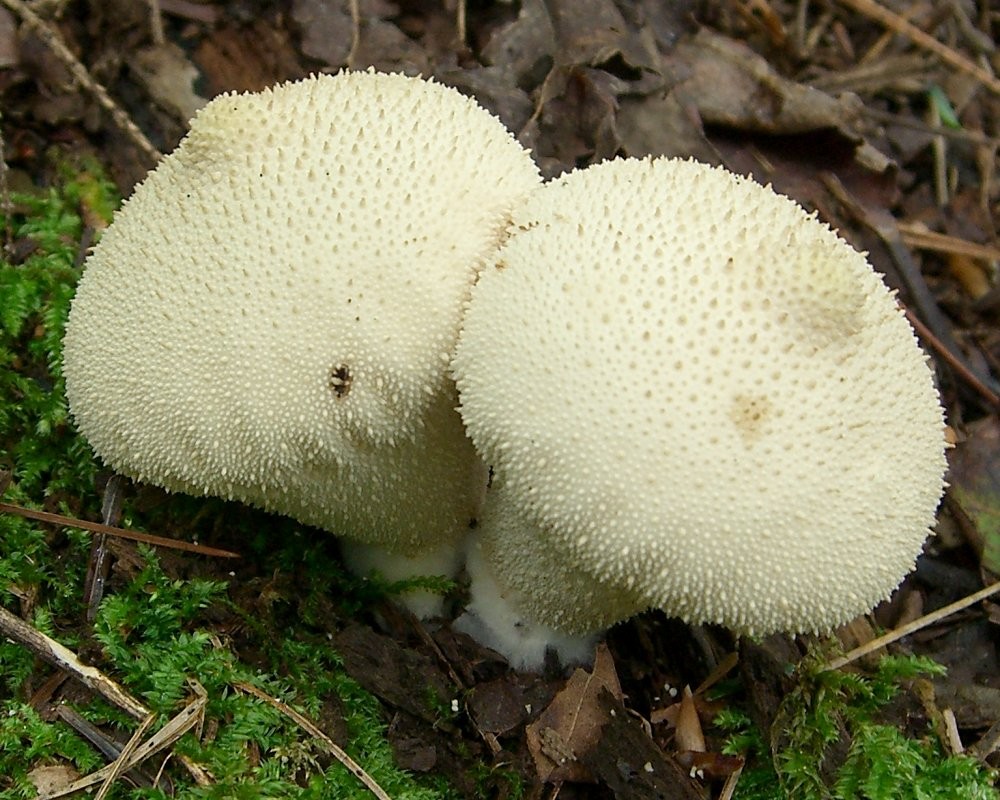
10. Common puffball
These puffy mushrooms grow in small groups on the forest floor. Once they're mature, common puffballs turn yellow and "puff out" smoke-like spore clouds when disturbed. Be very careful when identifying these mushrooms, as their young, immature form looks very similar to the lethal Deathcap.

More







