




Top 20 Edible Mushrooms Popular in Perth
Delve into the mycological treasure chest of Perth, a region renowned for its diverse ecology! With an ideal blend of rainfall and sunshine, Perth provides a perfect habitat for a wide range of edible fungi. Explore the top 20 common mushrooms, each unique in its appearance, taste, and culinary uses. Learn about their distinct habitats, indulging in the experience of mushroom foraging in the rich biodiversity of Perth. Unearth the delicious secrets of nature’s edible gems right here!
* Disclaimer: Content feedback CAN NOT be used as any basis for EATING ANY PLANTS. Some plants can be VERY POISONOUS, please purchase edible plants through regular channels.

Most Popular Edible Mushrooms
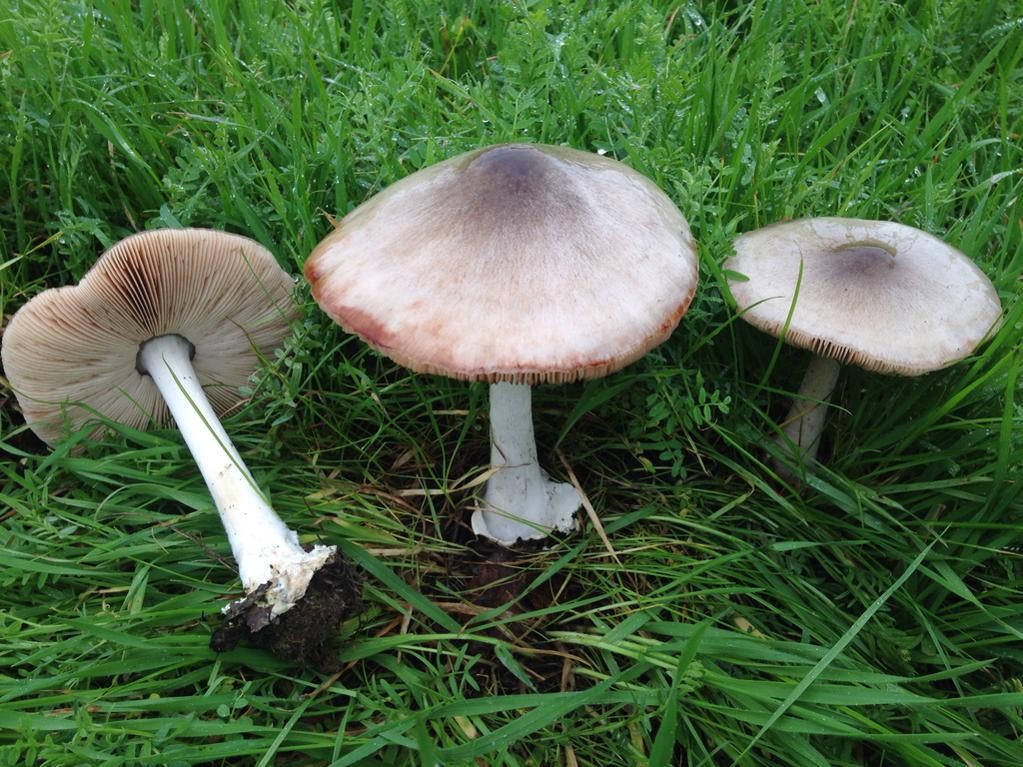
1. Big sheath mushroom
These large white mushrooms bloom all over cleared, harvested fields, as well as pastures and roadsides. The scientific species name comes from Greek words meaning “glue” (glioio) and “head” (cephalus), in reference to the sticky surface of this mushroom’s cap. The big sheath mushroom looks so similar to the poisonous Deathcap and Destroying Angel mushrooms that it should always be left alone.
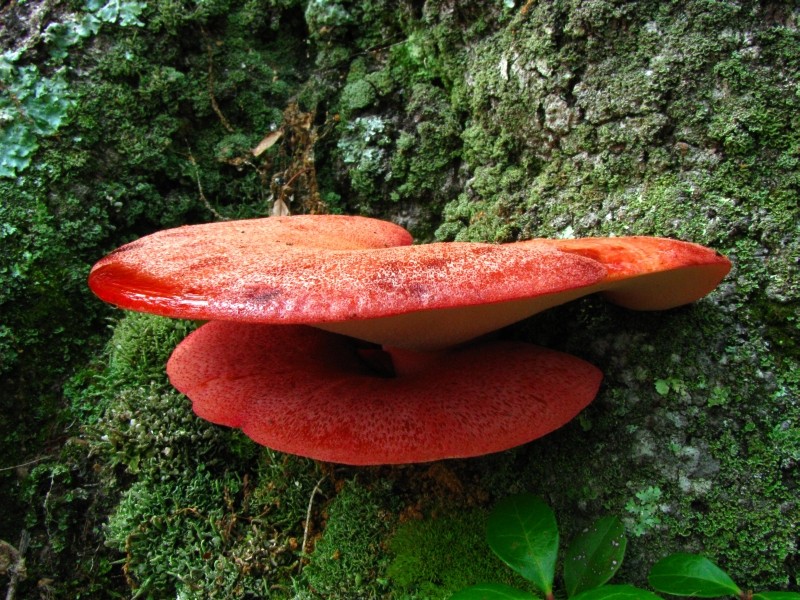
2. Beefsteak fungus
Beefsteak fungus(Fistulina hepatica) is an unusual fungus that visually resembles a slab of raw meat; cutting into it will cause a discharge of thick red liquid resembling blood, adding to this resemblance.

3. Rooting shank
Rooting shank has been known by over a dozen names throughout the years. Despite this identity crisis, this rooting shank is not difficult to recognize due to its distinctive long stem, much of which is often hiding in the soil. This mushroom can most frequently be found on stumps or deadwood beneath the ground.

4. Blushing morel
Blushing morel (Morchella rufobrunnea) is most commonly found clustered near piles of woodchips or decaying bark. Because such woodchips are commonly used in landscaping work, this species has also been nicknamed the "Landscaping Morel" for its tendency to sprout in such conditions.

5. Shaggy mane
The shaggy mane mushroom is commonly found in North American and European grasslands. Some peoples foraged for its young egg-shaped caps, but it has more recently been found to be a bioaccumulator of heavy metals, meaning it pulls toxic metals up from the soil where it grows. As a result, shaggy manes should not be eaten. The mushrooms usually appear in clusters or “fairy rings.”
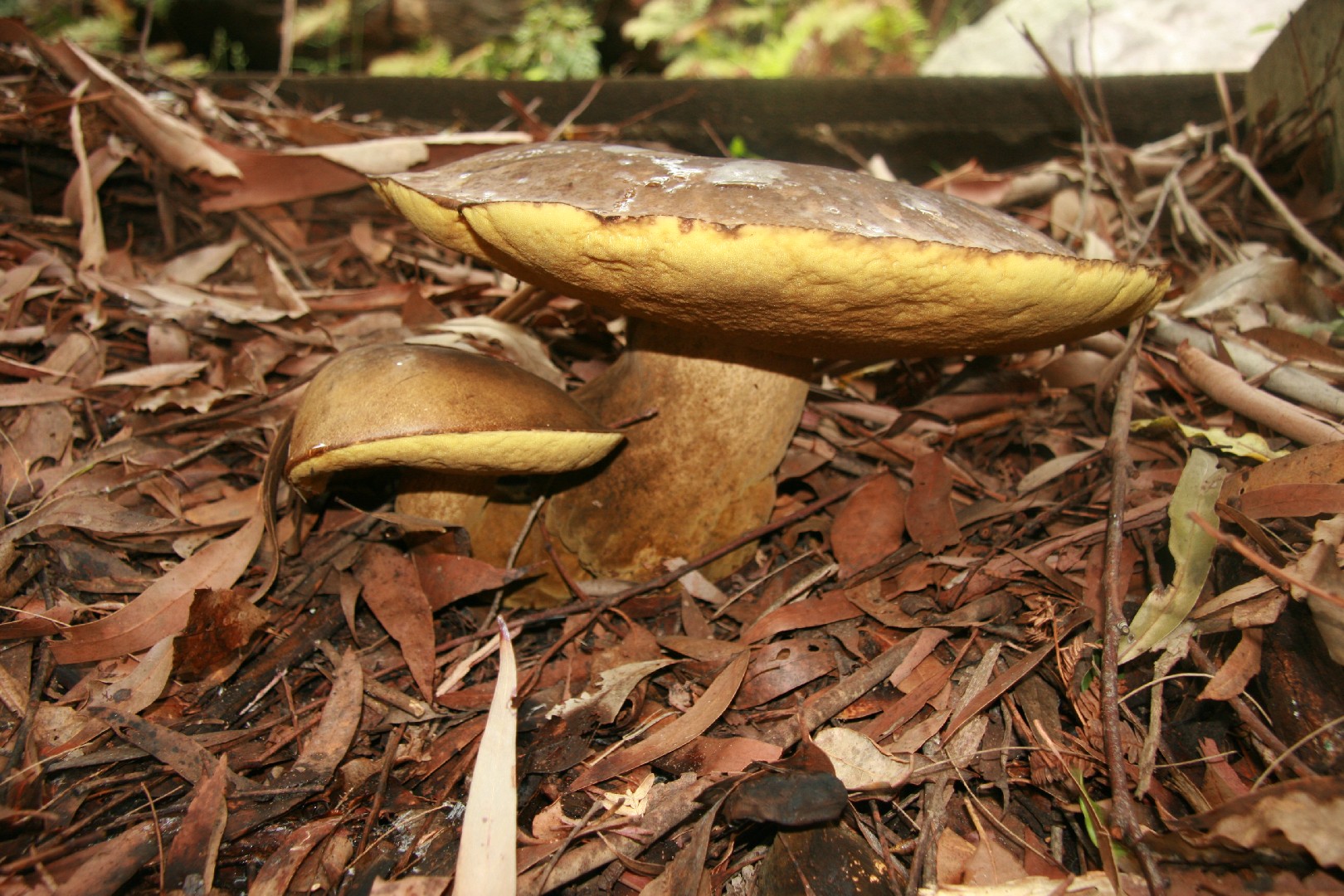
6. Salmon gum mushroom
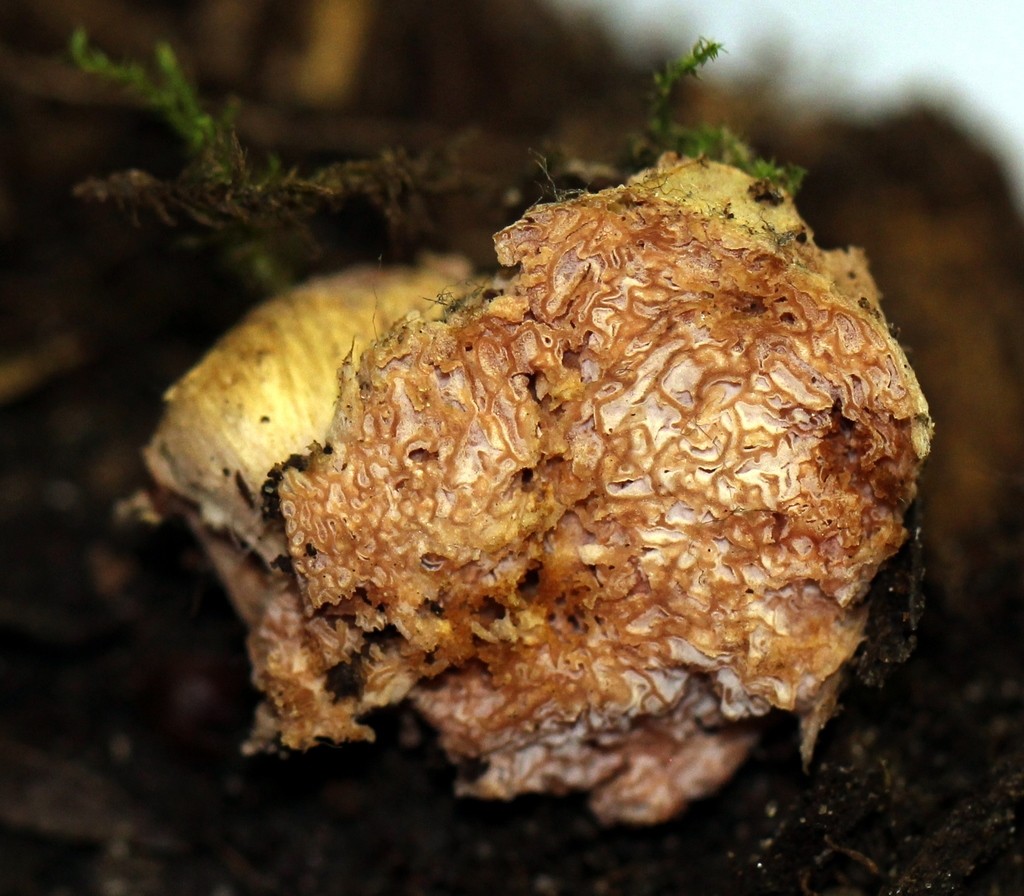
If you're in Western Australia and see a massive mushroom poking up from under Eucalyptus trees, chances are you're looking at a salmon gum mushroom (Phlebopus marginatus). These are the largest terrestrial mushroom in Australia, with one specimen weighing in at just under 70 lb. They are more beautiful from afar; up close you can expect to find them infested with maggots.
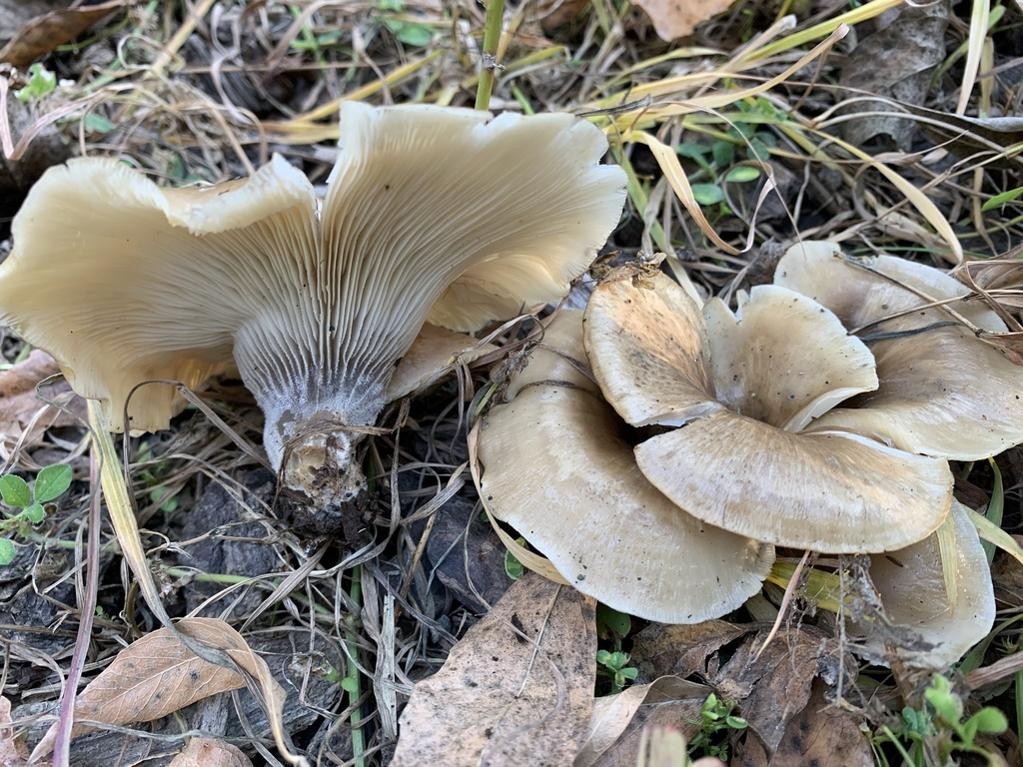
7. Shoehorn oyster
The shoehorn oyster (Hohenbuehelia petaloides) fruits with an elongated, petal-shaped cap that often bears a resemblance to a shoehorn. Shoehorn oysters are unusual in that, in addition to digesting decaying wood, they also have structures which allow them to capture and digest nematodes, tiny worms that often feed on mushrooms.
8. Dead man's foot
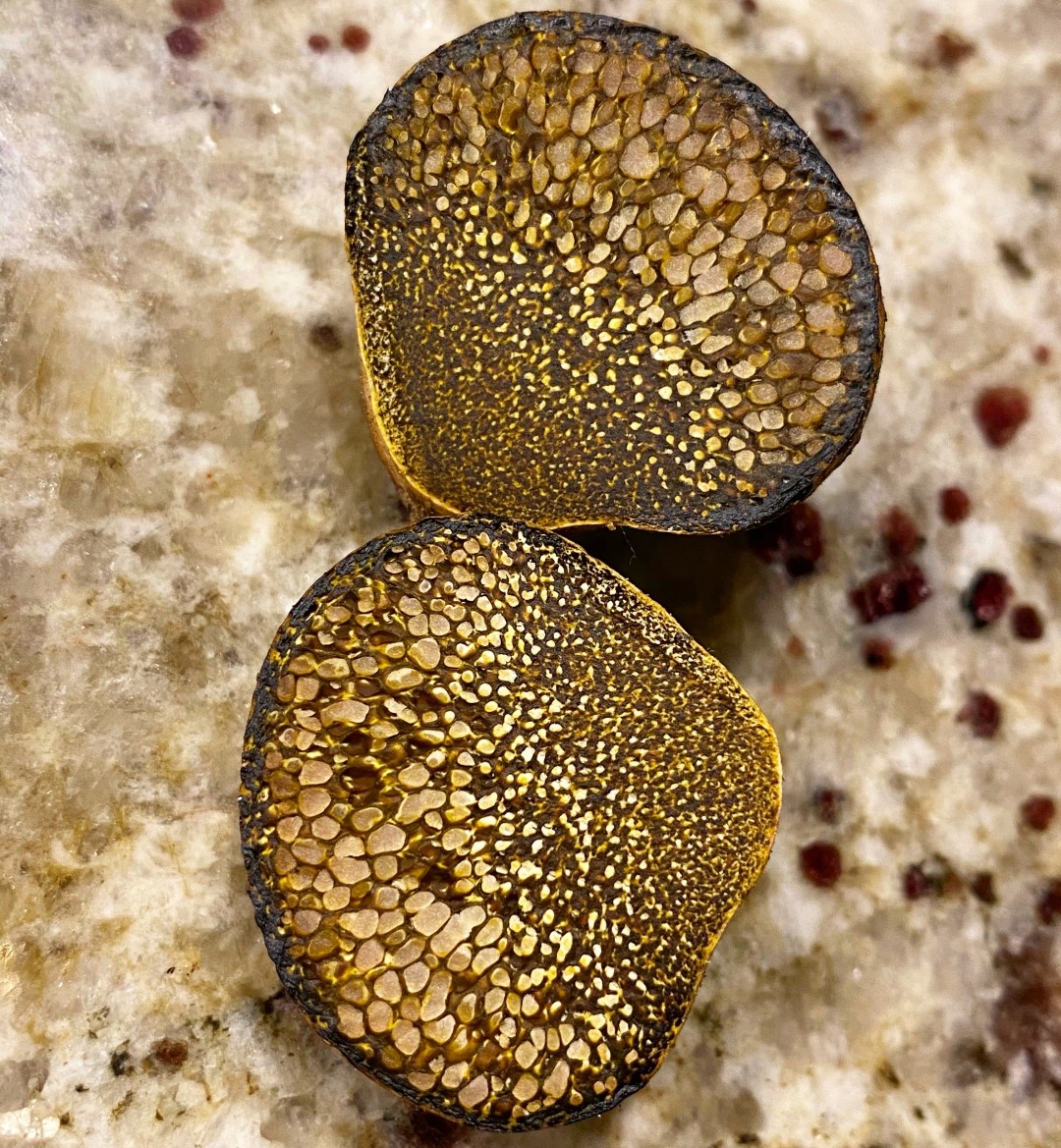
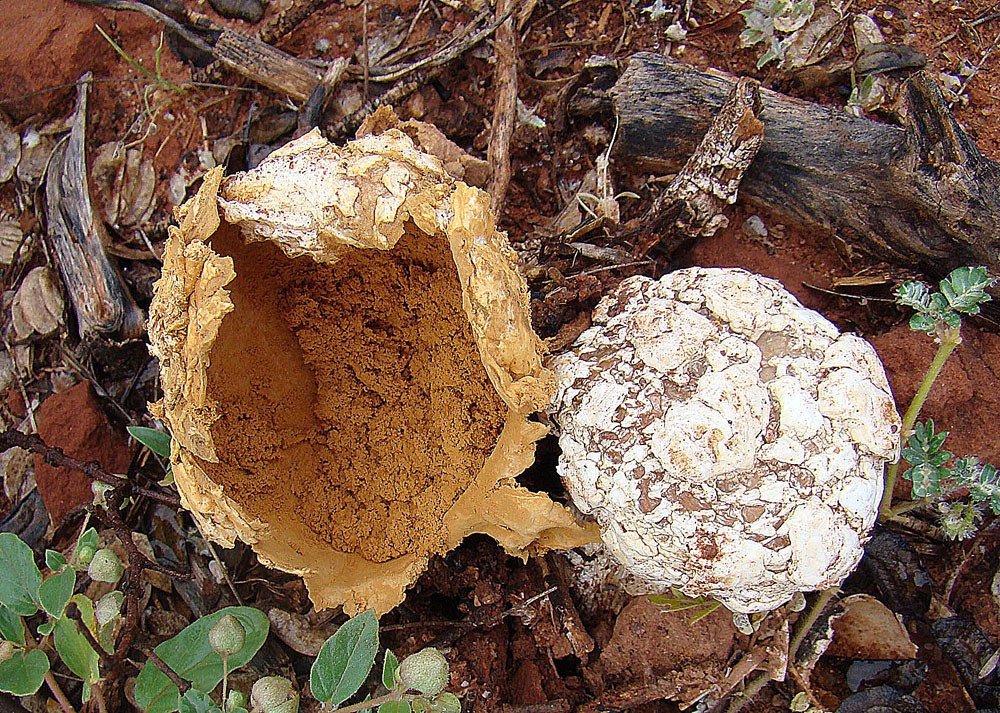
Dead man's foot (Pisolithus arhizus) actually bears a number of colorful names stemming from its unusual appearance, such as the horse dung fungus (Australia). It can be distilled into a viscous black gel, which is then used as a natural dye for clothing. It is considered to be inedible.
9. Suillus collinitus
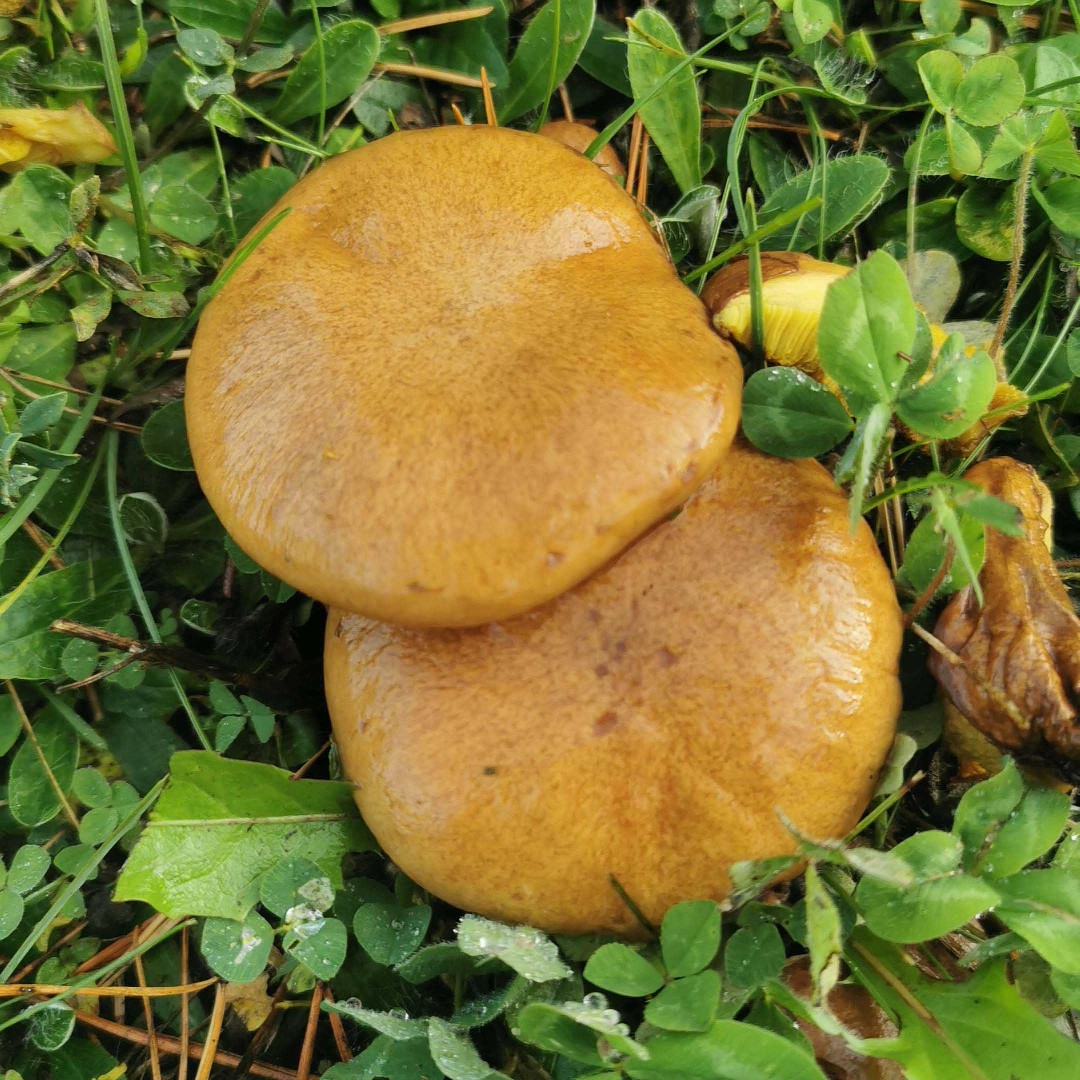
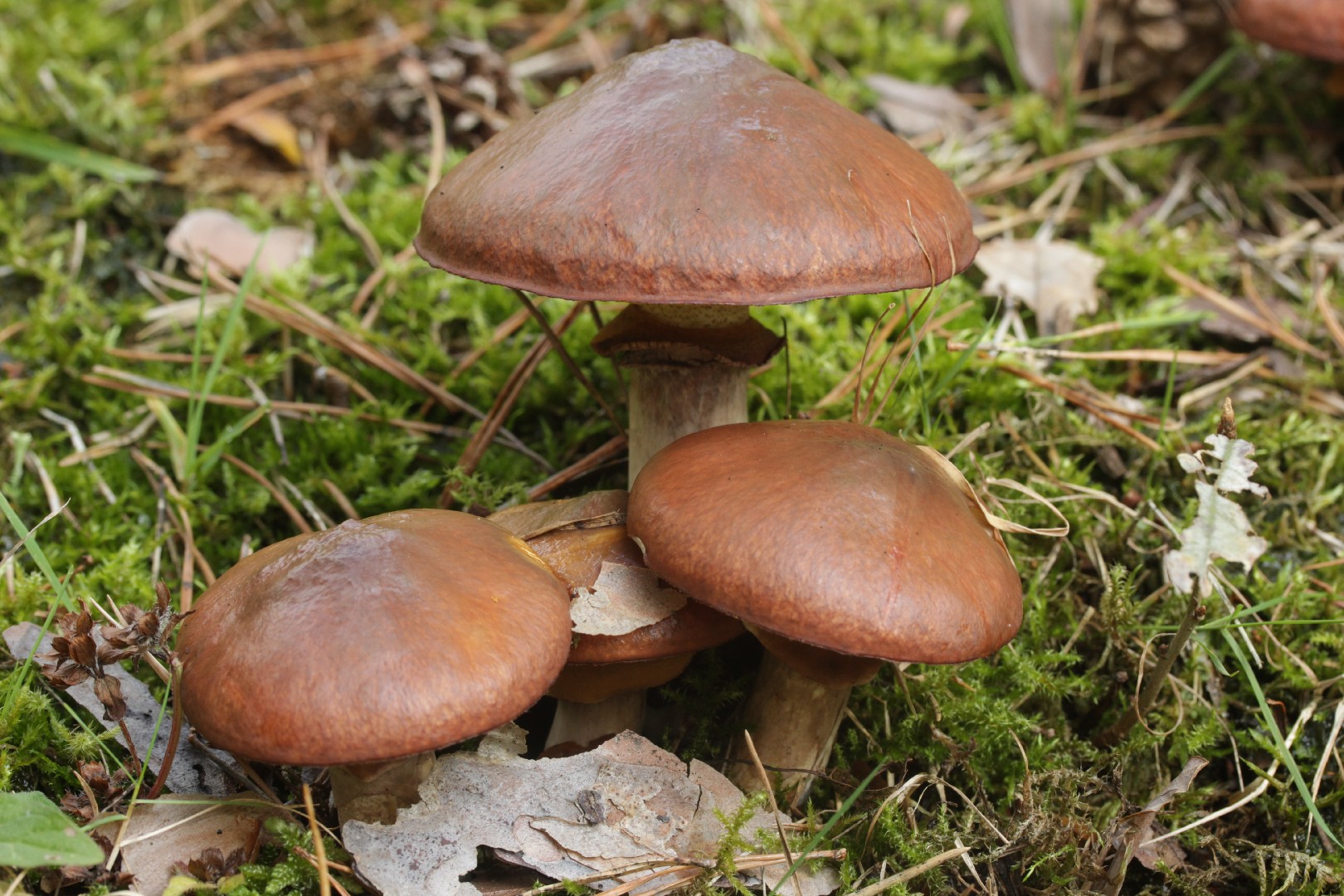
Suillus collinitus is a mushroom that grows in a symbiotic relationship with pine trees, particularly the Aleppo pine. This fungus is sometimes introduced to young pine trees to help them to become established in poor soils. It was listed as an endangered species in the United Kingdom, but its 'vulnerable' classification was removed from that nation's Red Data List in 2006.
10. Weeping bolete
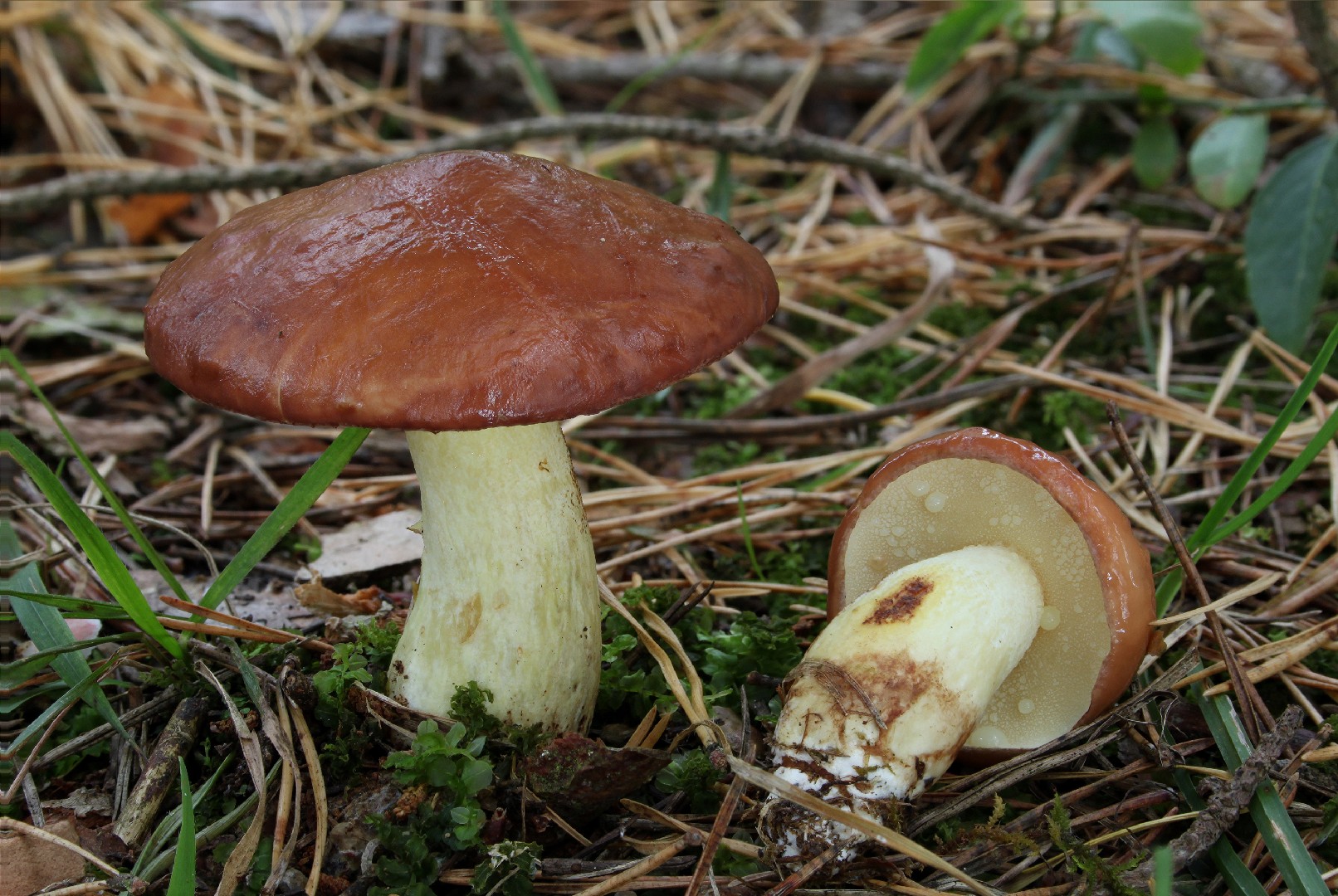
The weeping bolete features a greasy, sticky cap surface. When young, milky droplets are released through pores on its surface. It appears most commonly beneath Scots pine or other coniferous trees and forms a mutually beneficial relationship with its host.

More







