




Top 20 Edible Mushrooms Popular in San Carlos de Bariloche
Nestled in the heart of San Carlos de Bariloche, where diverse climate conditions permit a unique mushroom habitat. Discover the top 20 most common edible mushrooms thriving in this region. Each has distinctive features as well as varying subtle tastes and culinary applications. This guide will lead you on an exploration of their appearance, fond habitats, and potential uses in your kitchen. Arm yourself with reputable knowledge and delve into the fascinating world of fungi in San Carlos de Bariloche.
* Disclaimer: Content feedback CAN NOT be used as any basis for EATING ANY PLANTS. Some plants can be VERY POISONOUS, please purchase edible plants through regular channels.

Most Popular Edible Mushrooms
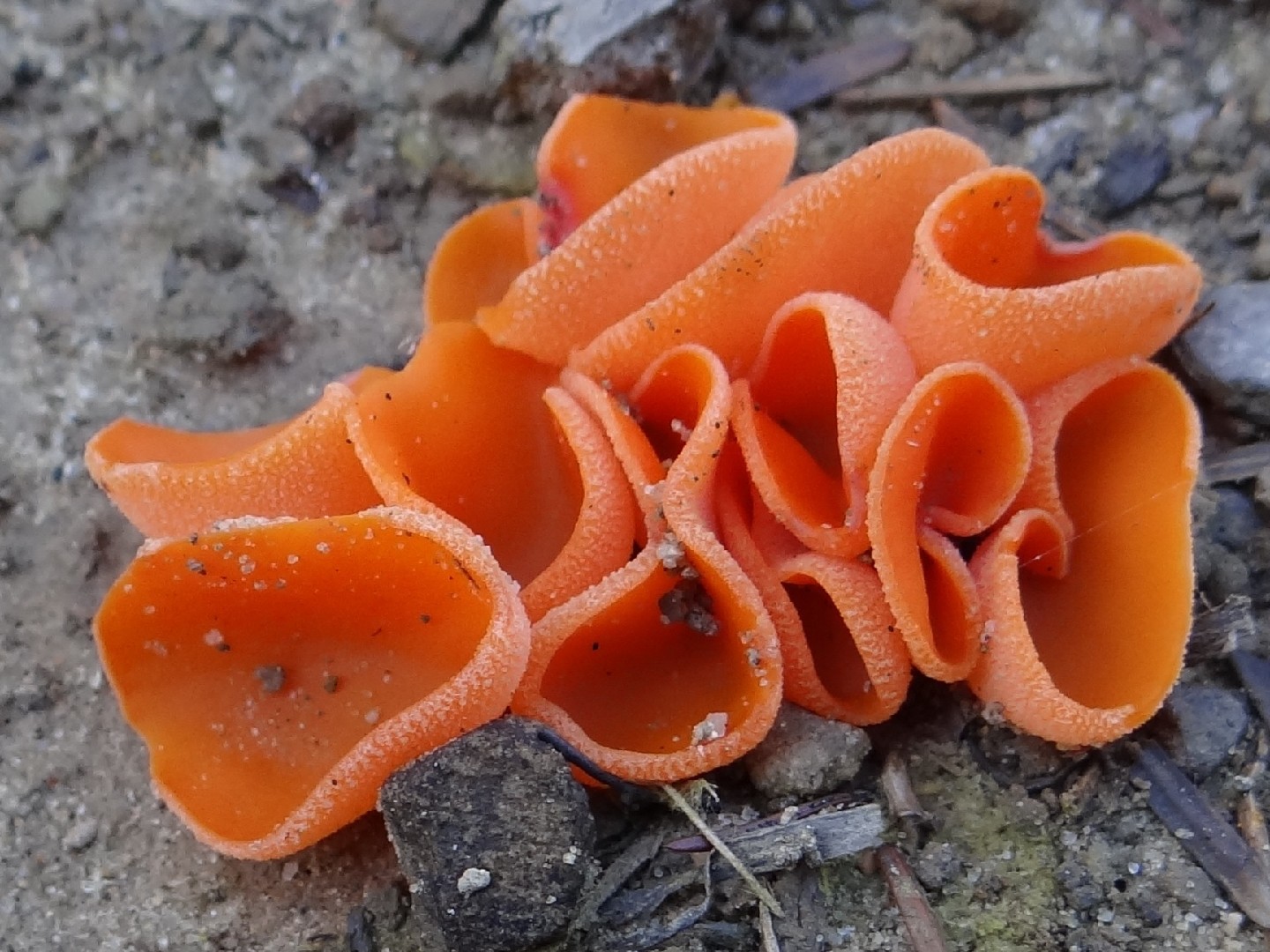
1. Orange peel fungus
The aptly-titled orange peel fungus (Aleuria aurantia) forms fruitbodies that strongly resemble peeled-off rinds of oranges. The species has an irregular folded shape and boasts a bright orange hue. Orange peel fungus usually grows directly out of soil and can be found across temperate regions of North America, Europe, and a few parts of Chile.
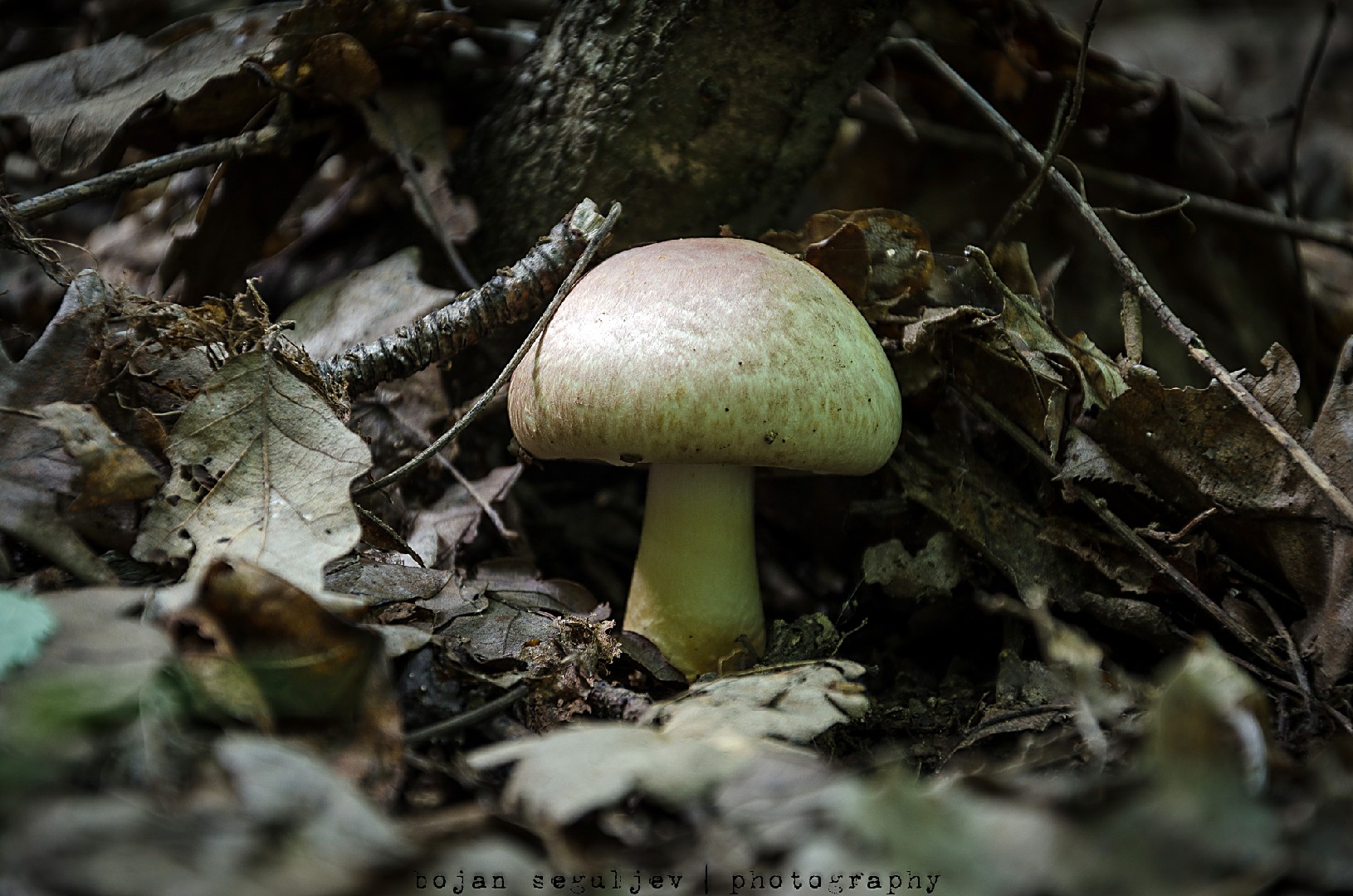
2. Lilac mushroom
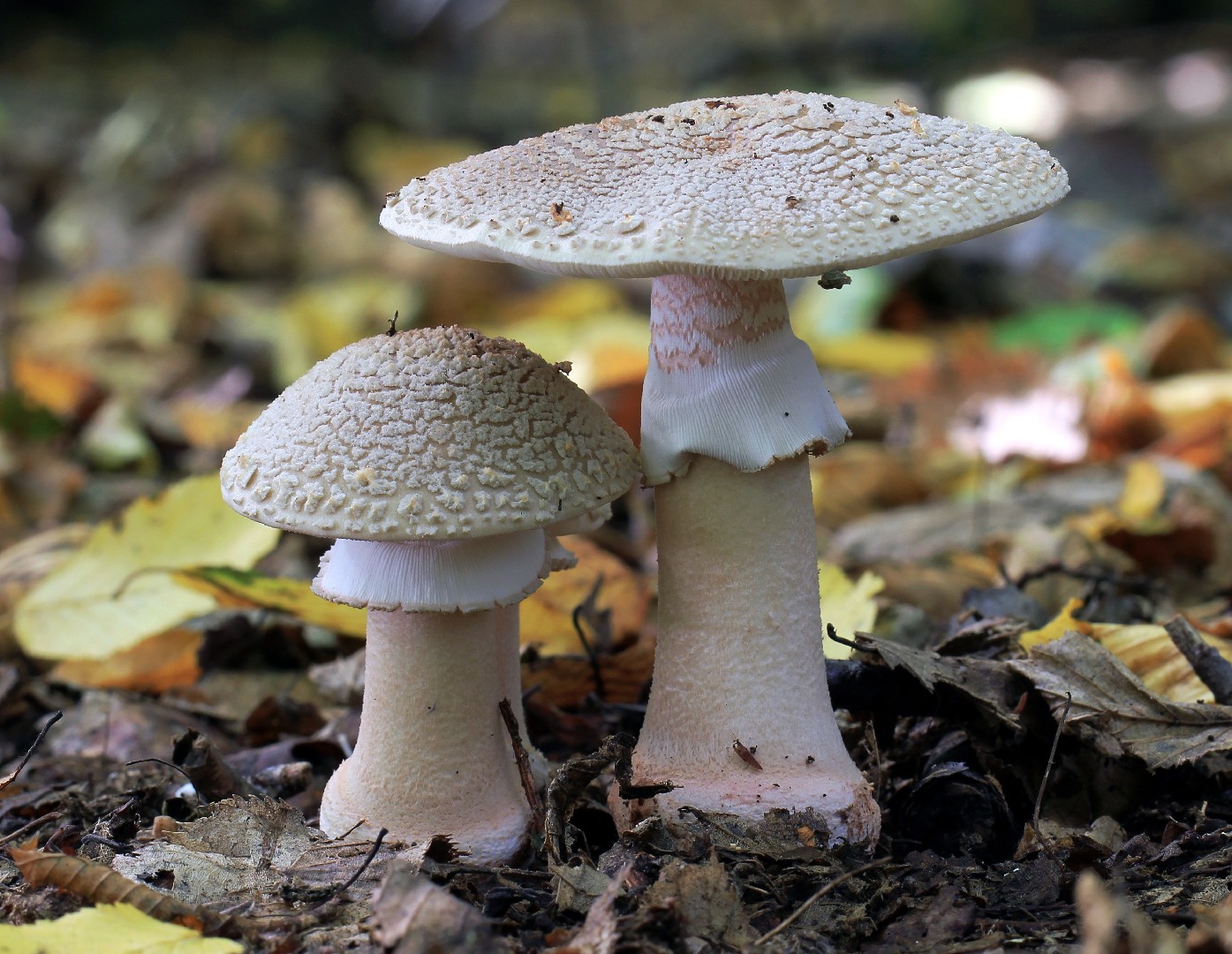
3. Blusher
The blusher mushroom is so named because it “blushes” to a pinkish red color when cut or bruised. It is found in many countries around the world, although it may not be native to the southern hemisphere. It contains a hemolytic toxin that can cause anemia if eaten.

4. Shaggy mane
The shaggy mane mushroom is commonly found in North American and European grasslands. Some peoples foraged for its young egg-shaped caps, but it has more recently been found to be a bioaccumulator of heavy metals, meaning it pulls toxic metals up from the soil where it grows. As a result, shaggy manes should not be eaten. The mushrooms usually appear in clusters or “fairy rings.”
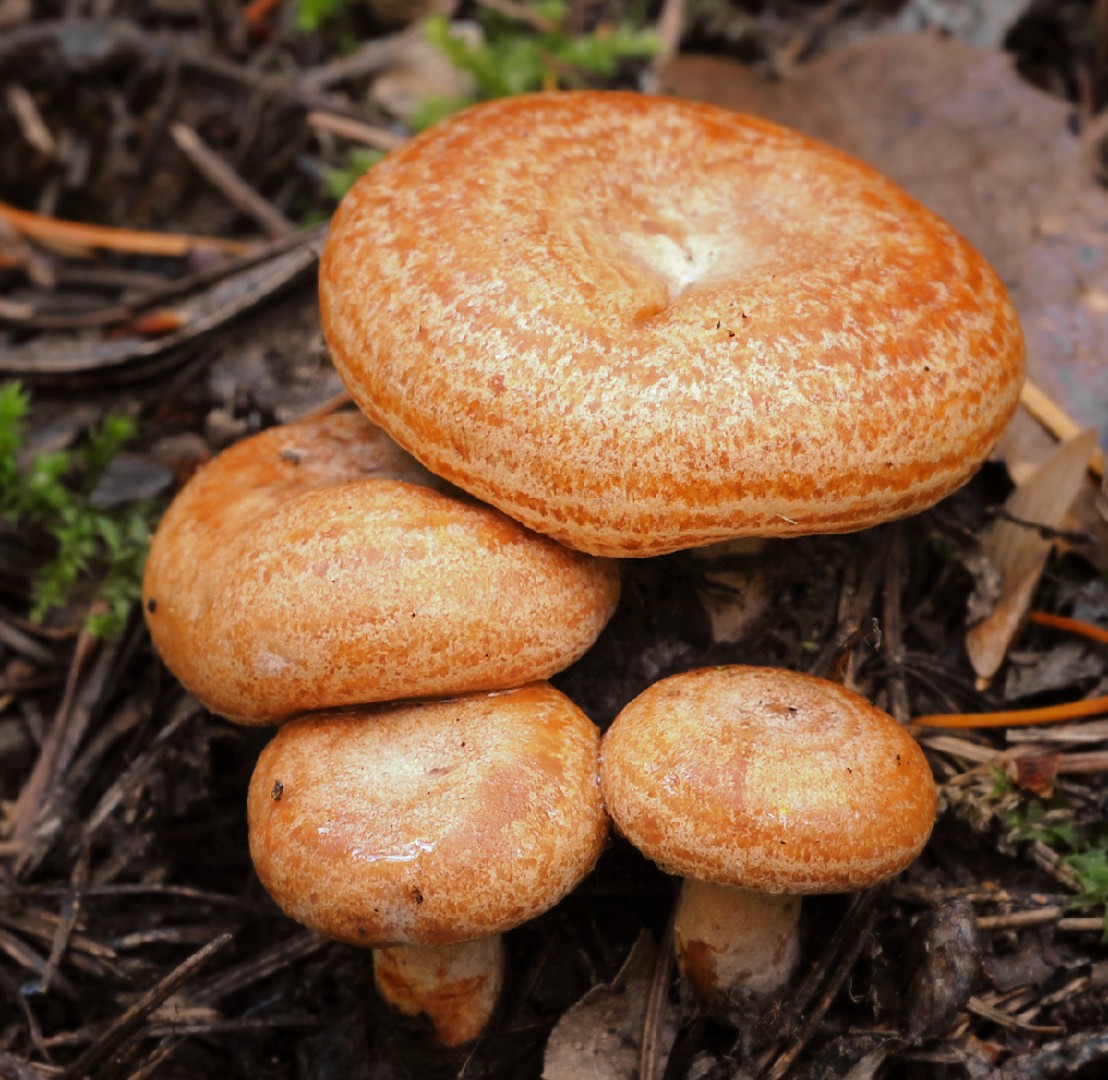
5. Saffron milk cap
Growing wild in the northern hemisphere and introduced to Australia, the saffron milk cap is found in pine forests during autumn. As the name implies, these mushrooms have been harvested for cooking for a long time. They have been known to cause stomach upset in some individuals, however, and carry a risk of being contaminated with heavy metals, so forage with caution.
6. Scarlet hood
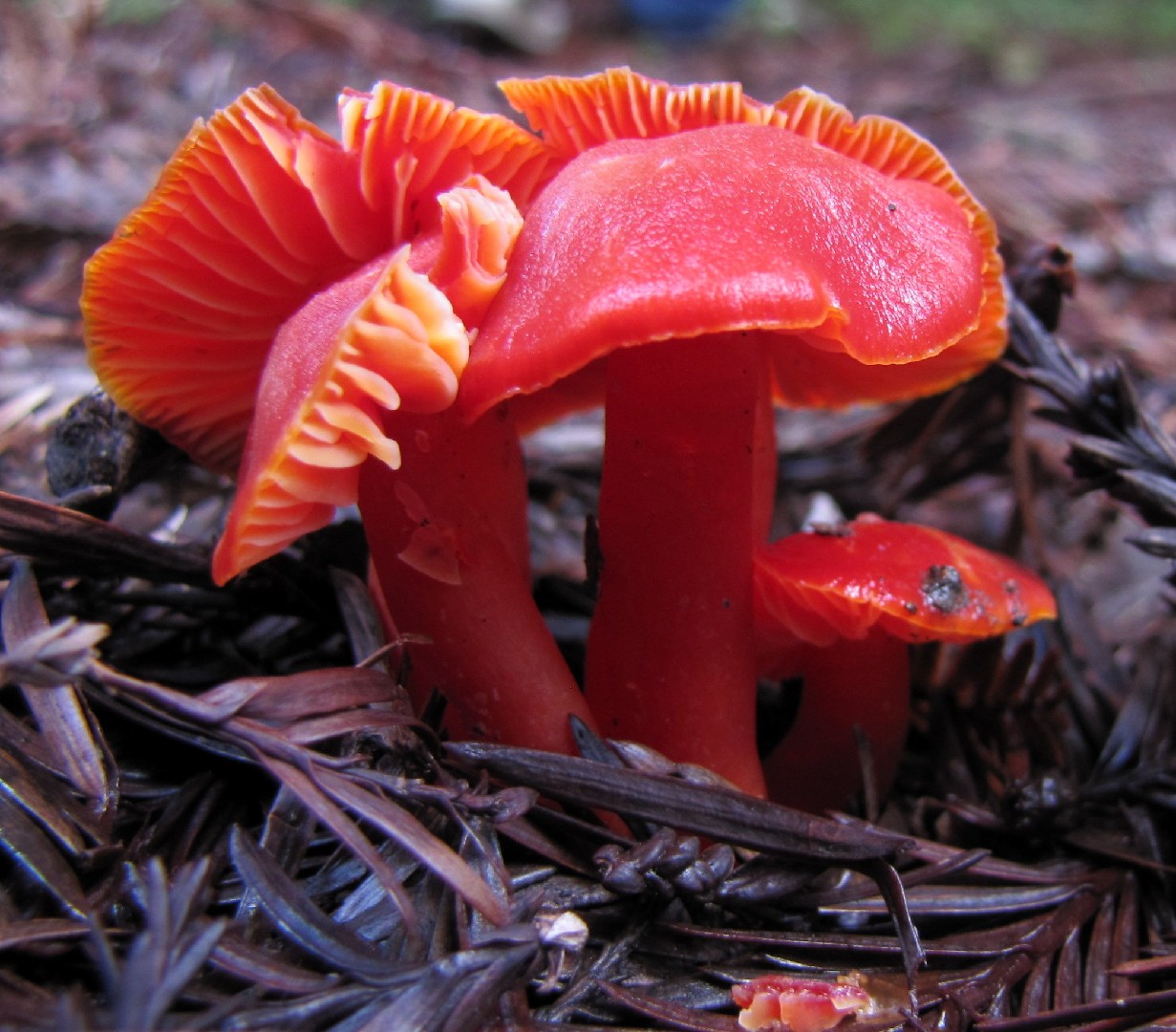
Scarlet hood(Hygrocybe coccinea) is named for its bright scarlet color, which renders it easy to spot among the grasses and woodlands among which it prefers to grow. Distributed across the Northern Hemisphere, it tends to be small and uncommon, making it of particular interest to photographers.
7. Shoehorn oyster
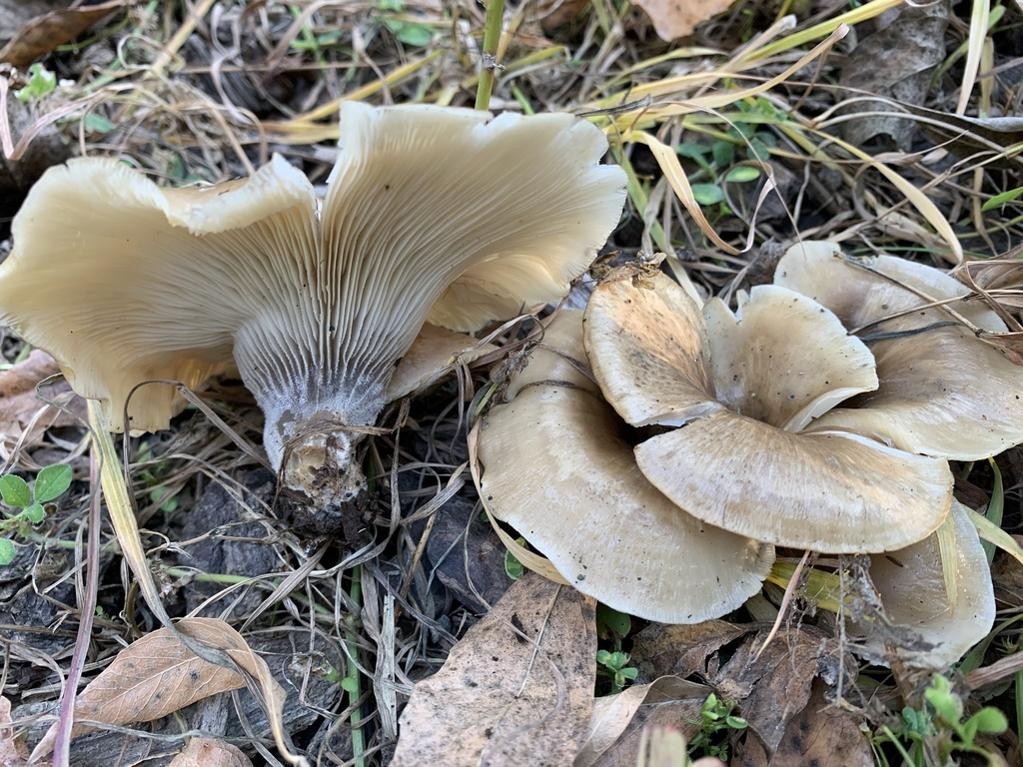
The shoehorn oyster (Hohenbuehelia petaloides) fruits with an elongated, petal-shaped cap that often bears a resemblance to a shoehorn. Shoehorn oysters are unusual in that, in addition to digesting decaying wood, they also have structures which allow them to capture and digest nematodes, tiny worms that often feed on mushrooms.
8. Pear-shaped puffball
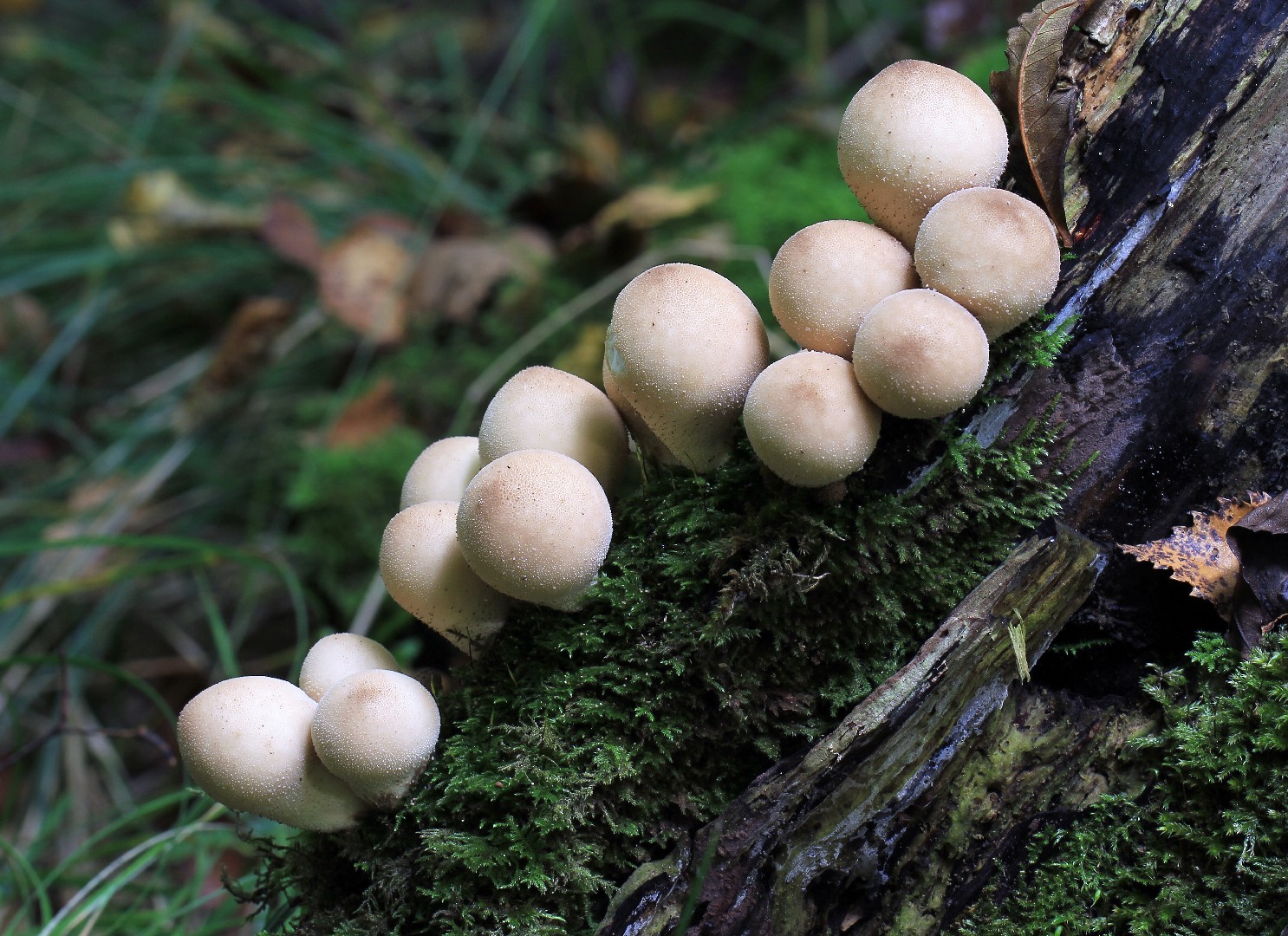
The mushrooms of this species grow in such tight clusters that they may cover fallen trees and stumps almost entirely in a brownish, puffy coat. Pear-shaped puffballs appear all around the northern hemisphere on decaying hardwoods from fall through winter.
9. Agaricus fuscofibrillosus
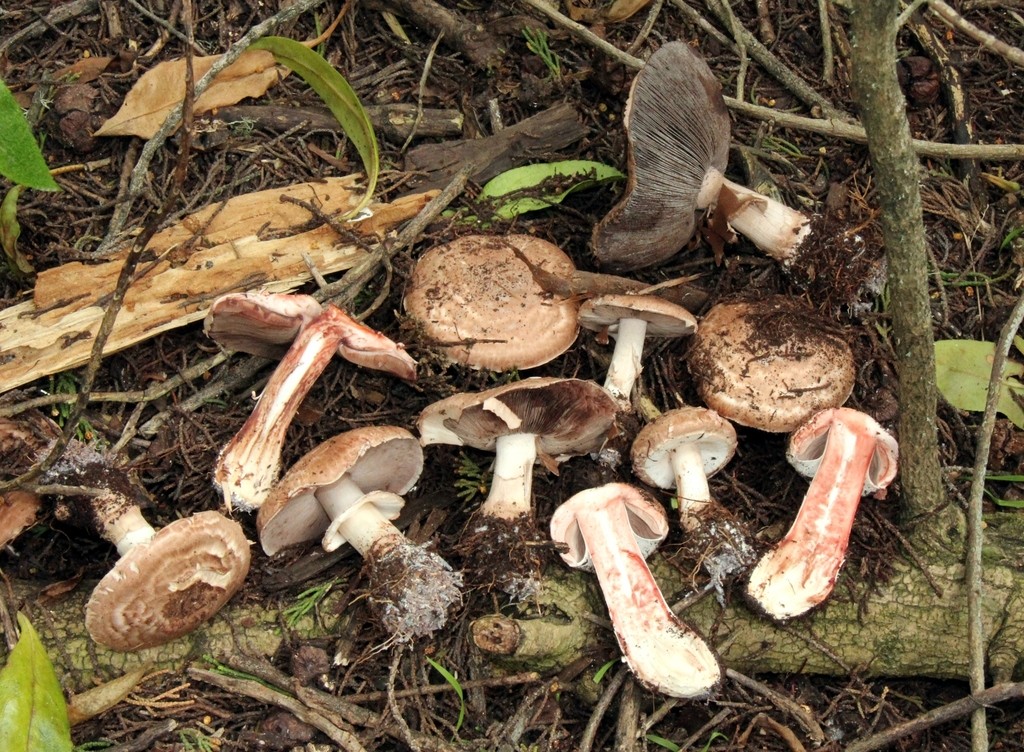
The cap is initially convex before flattening out, and reaches a diameter of 4–15 cm (1.6–5.9 in). The cap surface is dry, smooth, reddish-brown to coco-brown with silky fibrils or sometimes with flattened scales and often has a slight umbo. In maturity, the fibrils usually darken to walnut brown. The flesh is light brown and does not change color in KOH. When bruised or injured, the flesh turns bright red within 30 seconds, and later fades to brown. The odor of crushed flesh is mild and mushroomy. The gills are initially cream colored to pale pinkish or pinkish-gray before becoming brown, then dark chocolate-brown when the spores mature. In maturity, the gills are free from attachment to the stem, packed close together, with little intervening space between them. The stem is 4–15 cm (1.6–5.9 in) long, and 1.5–2.5 cm (0.6–1.0 in) thick, usually with an enlarged or bulbous base that has one or more coca-brown colored bands. Firm, smooth, and lacking the scales found on the cap, the stem is colored white or discolors bright red or dingy brownish in age or after handling. The partial veil is membranous, white, and forms a thin skirt-like ring on the upper portion of the stem. Spore prints are dark chocolate brown. The smooth, thick-walled spores are elliptical, and typically measure 5–6.5 by 3.5-4 μm. Cystidia on the gill edge (cheilocystidia) are scattered, club-shaped to cylindric and have dimensions of up to 22 by 7 μm. 
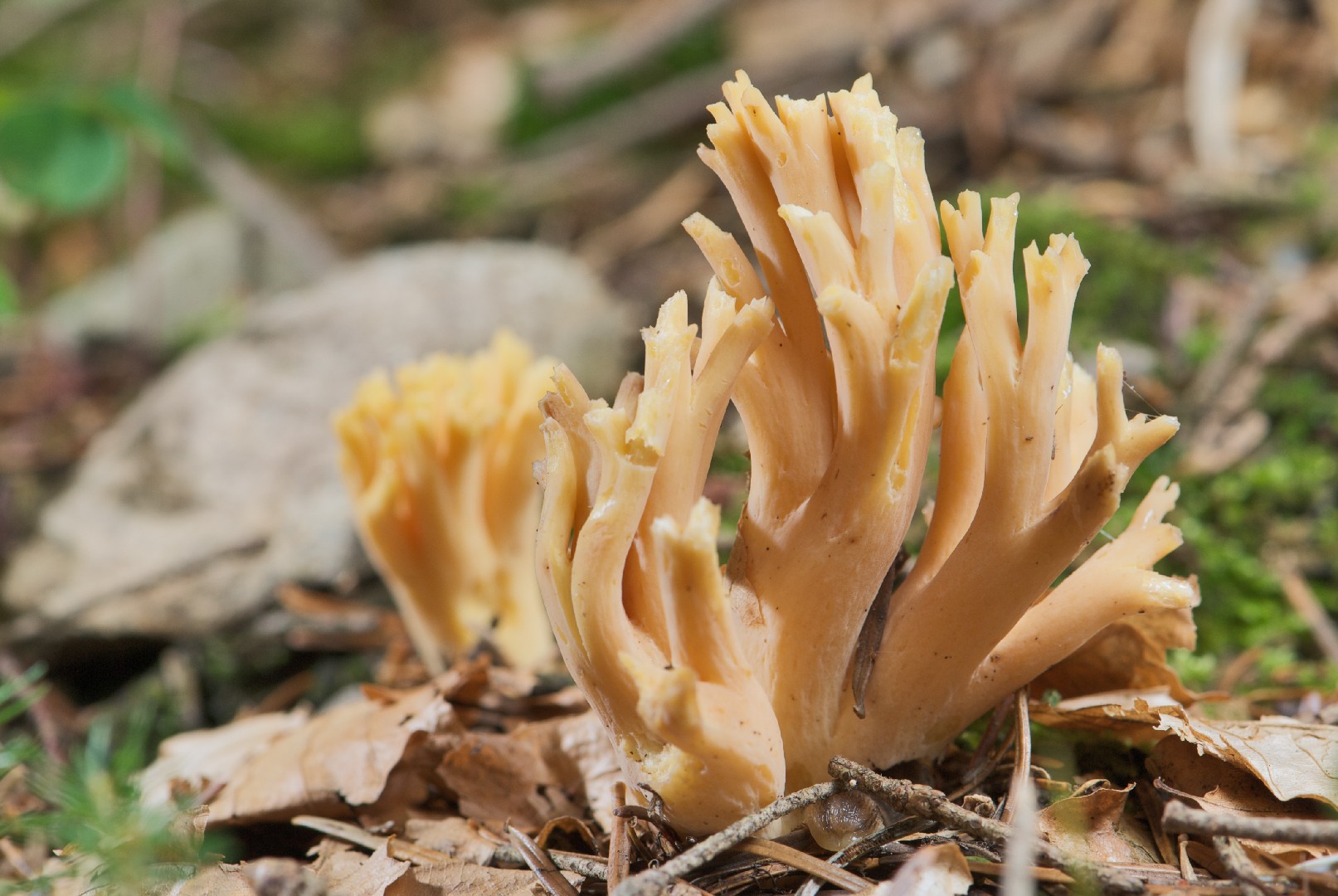
10. Changle
A beautiful fungus resembling undersea coral, the changle (Ramaria flava) appears as a bright tuft of lemony or sulfurous yellow when young. It fades into a deeper brown shade with age. The changle's cluster of branches is hard to distinguish from other coral species, some of which are quite poisonous.
More







