




Top 20 Most Common Mushrooms in Charlottesville
Nestled amidst the beautiful rolling hills of Charlottesville, visitors can easily be lured by its scenic charm. However, it's not just the picturesque vistas that captivate; Charlottesville also boasts a wealth of mushroom species that thrive in its unique climate. As we explore the top 20 most common mushrooms in Charlottesville, you'll discover a hidden treasure trove of fungi rivalling its stunning landscapes. These mushrooms, flourishing through every season, magnetizes mycologists and enthusiasts alike. Let's unearth the exotic mushroom charm beneath the verdant canopy of Charlottesville.

Most Common Mushrooms
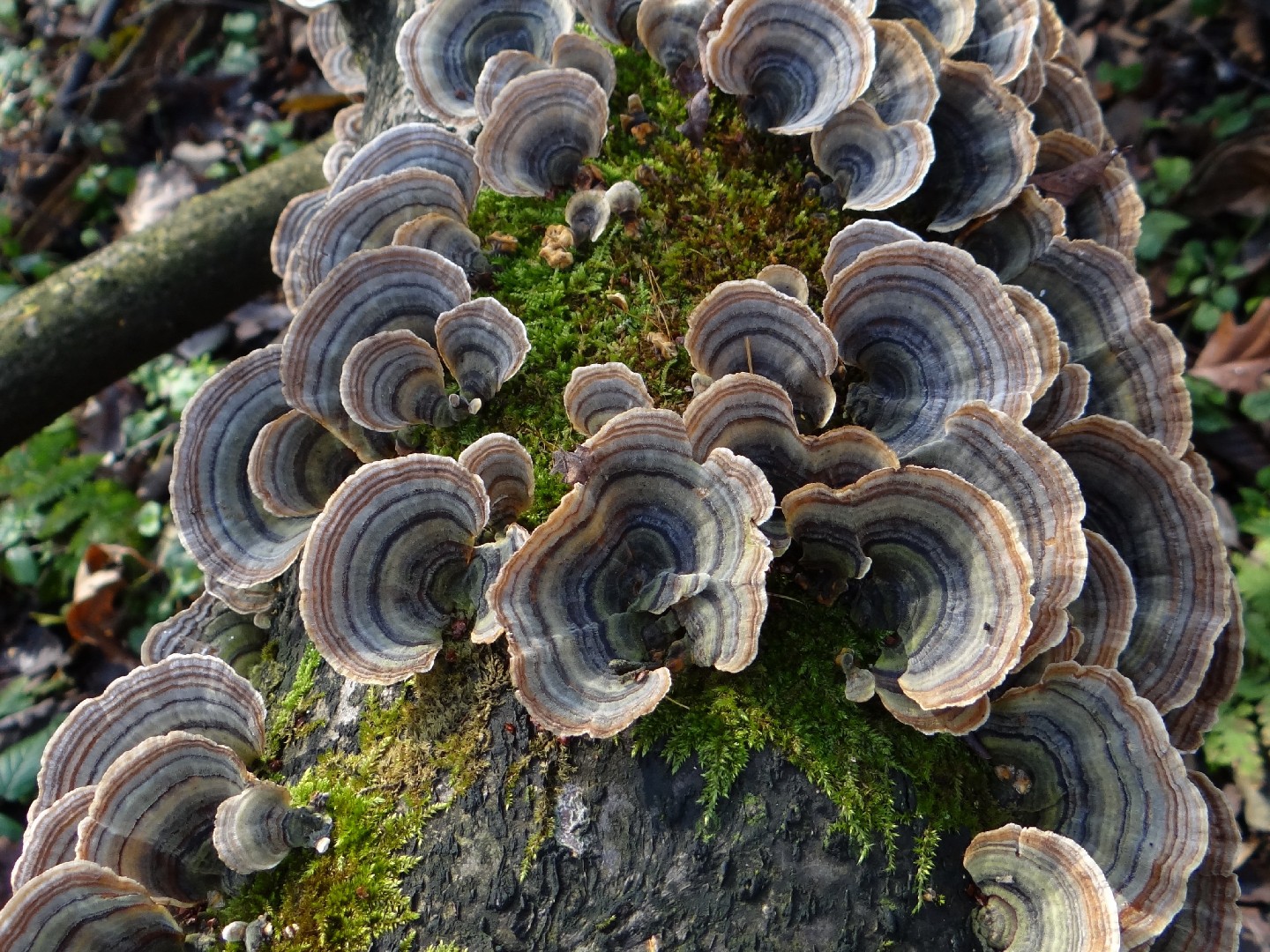
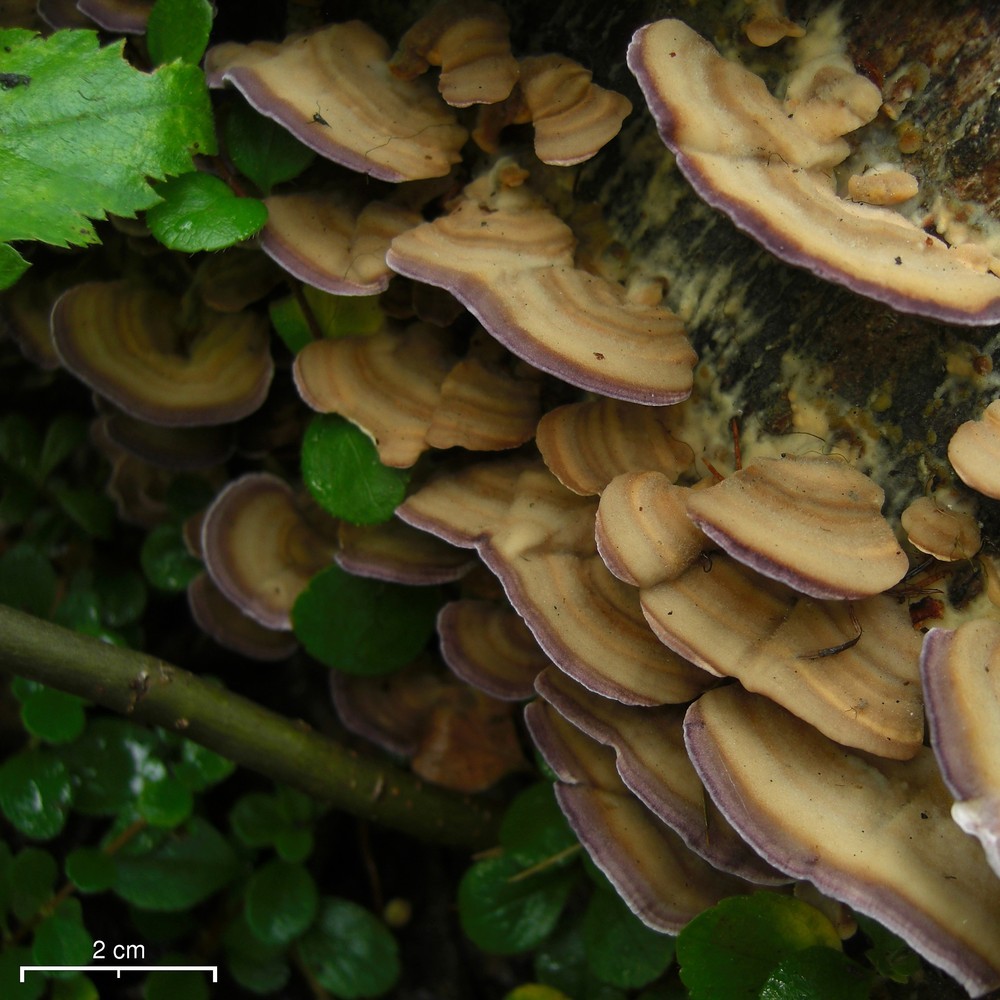
1. Turkey tail
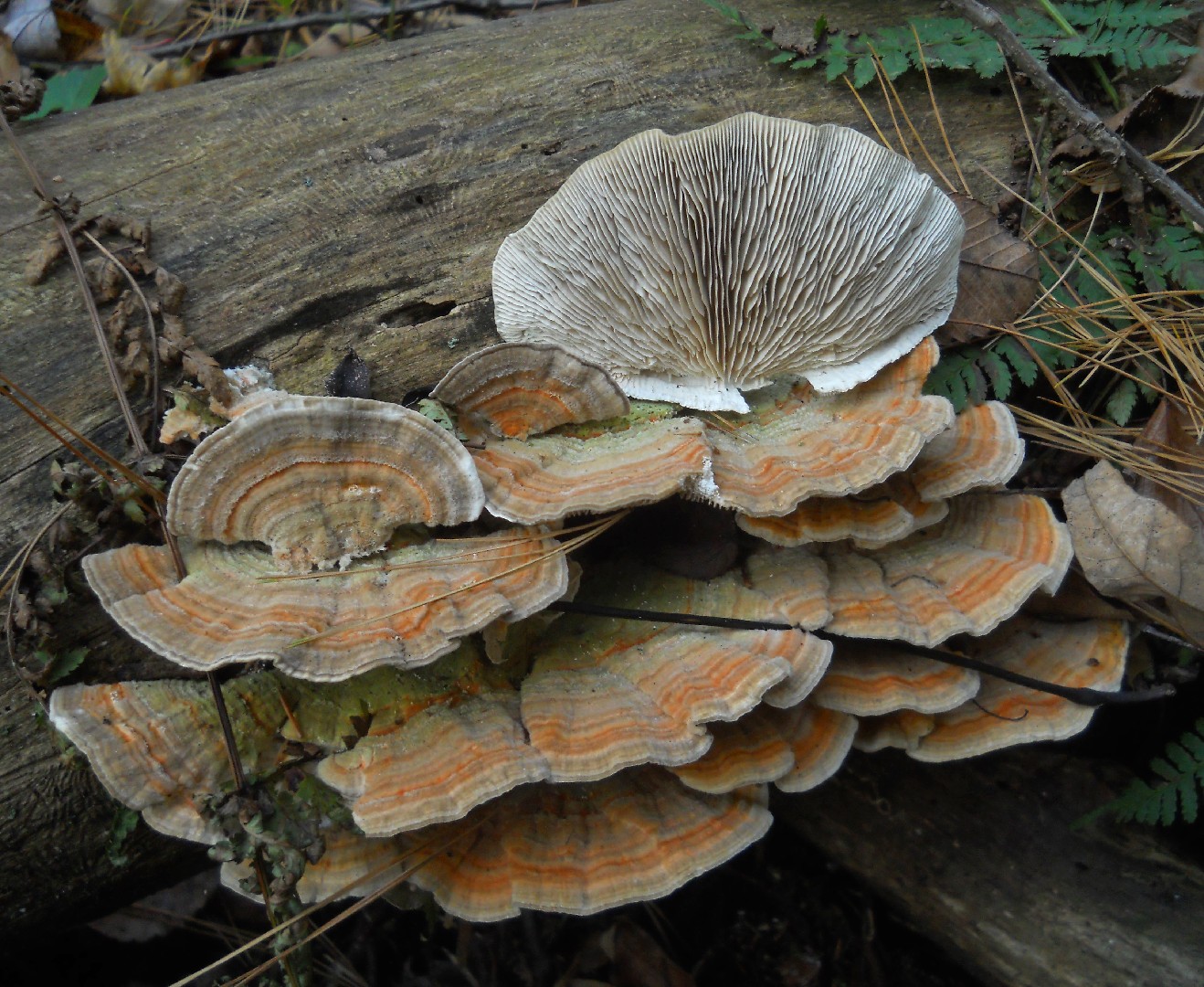
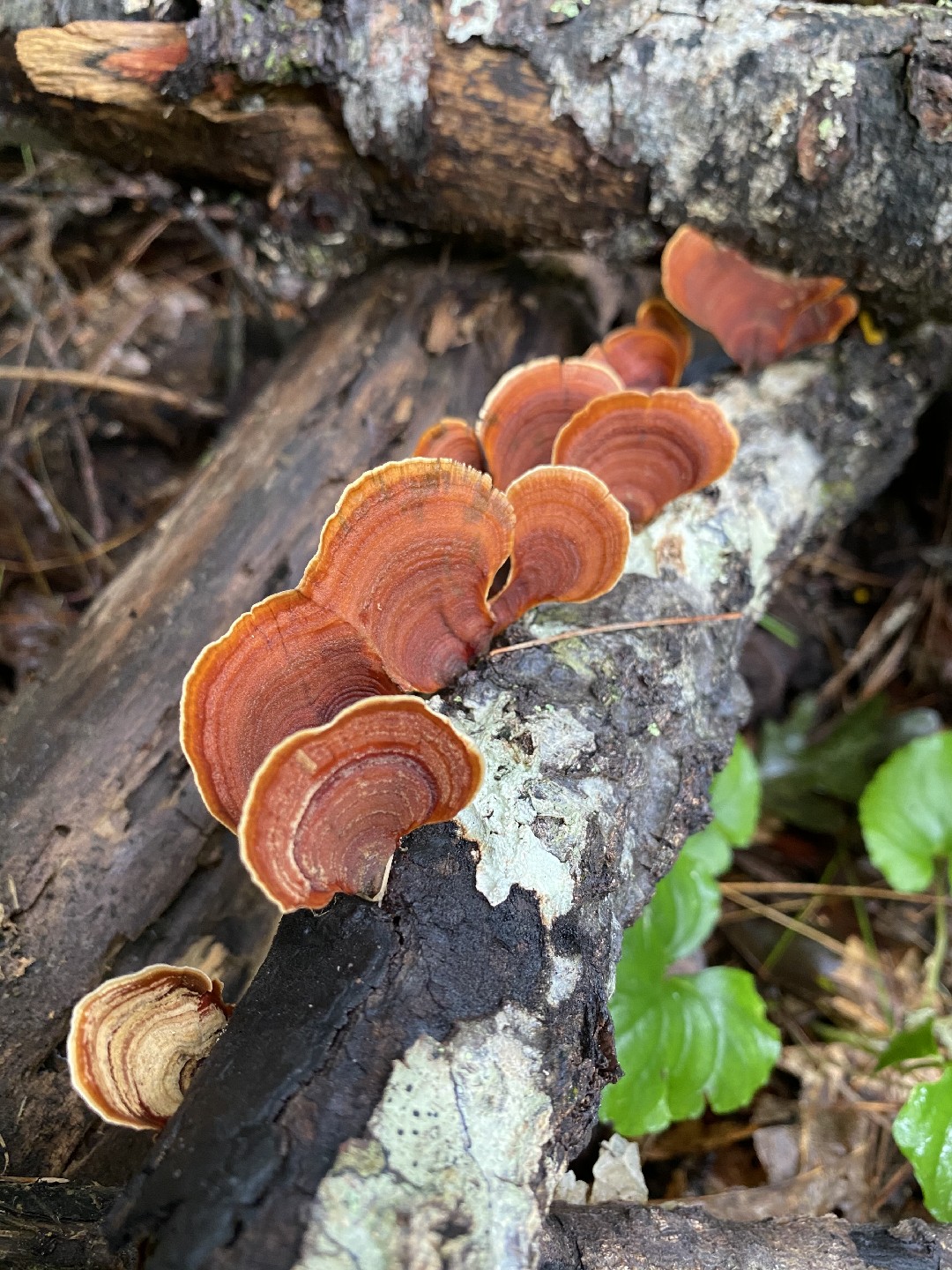
The distinctively-striped turkey tail fungus grows on stumps and logs all over the forests of the northern hemisphere. It is, in fact, probably the most common species you will find. That doesn't mean this mushroom is plain, however; each cap is uniquely patterned. Look for bands of alternating textures as well as color.
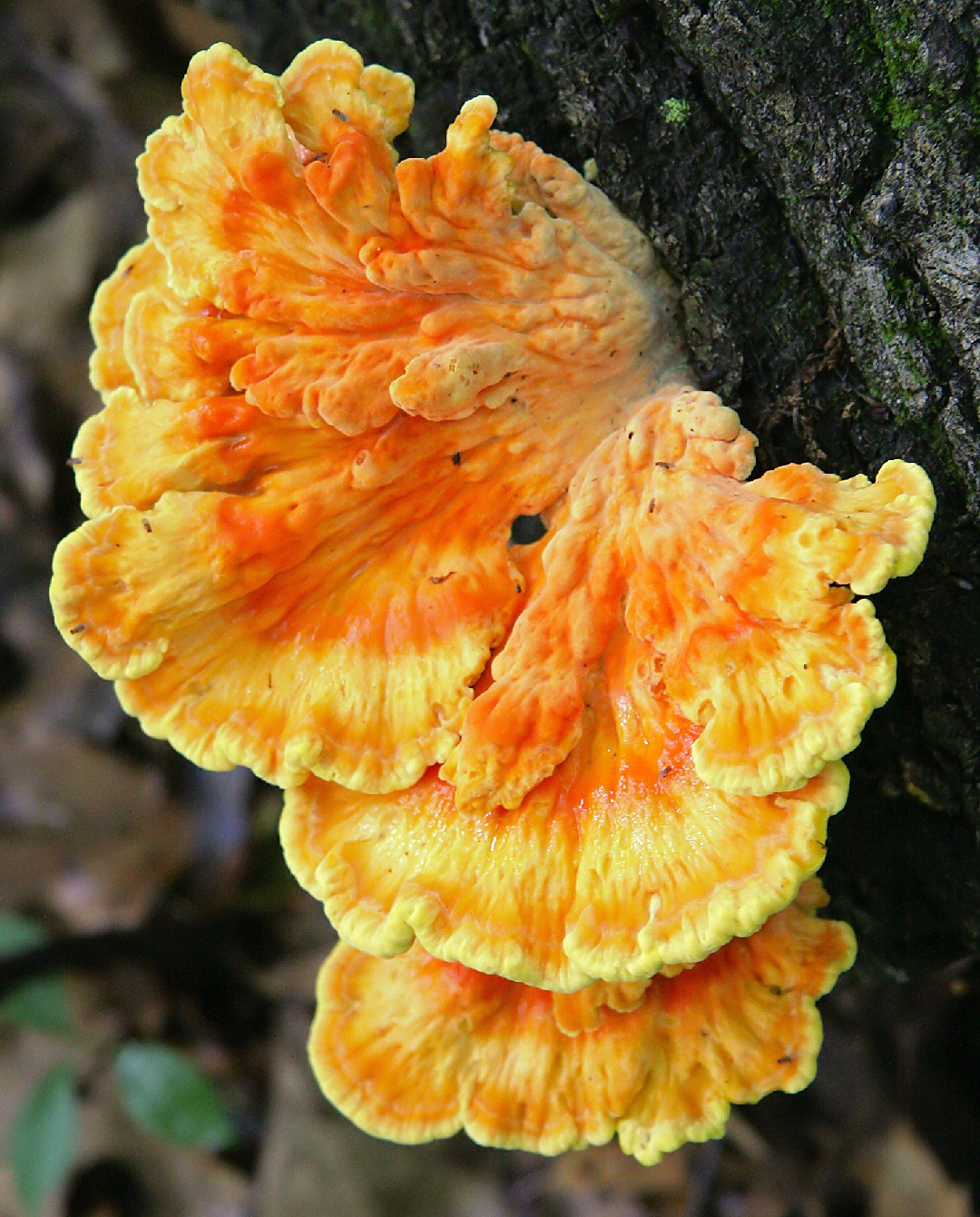
2. Chicken of the woods
Chicken of the woods is very noticeable in hardwood forests, appearing in clusters on standing tree trunks in bright orange and yellow hues that sometimes last through the entire winter. It is a parasite that causes an unfortunate brown heart rot, and is considered a particularly troublesome pest of Yew trees. If the fruitbodies can be seen, the tree is likely already beyond saving.
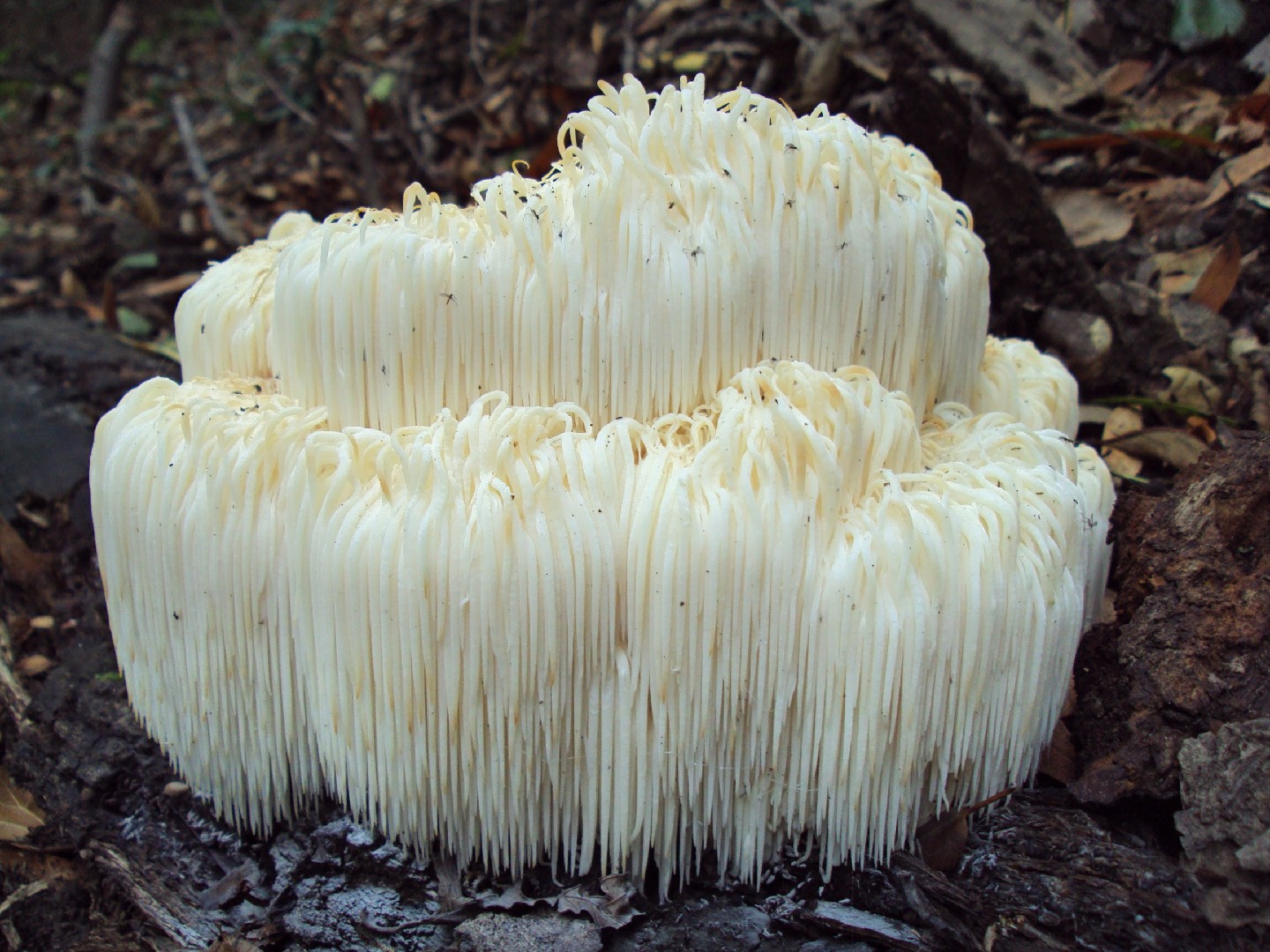
3. Lion's Mane Mushroom
Lion's Mane Mushroom(Hericium erinaceus) is easily identifiable by its characteristic appearance, reminiscent of the majestic mane of a lion. It often sprouts along hardwoods, which may be living or dead. Scientists thus debate whether this species is truly parasitic or merely saprophytic in nature.
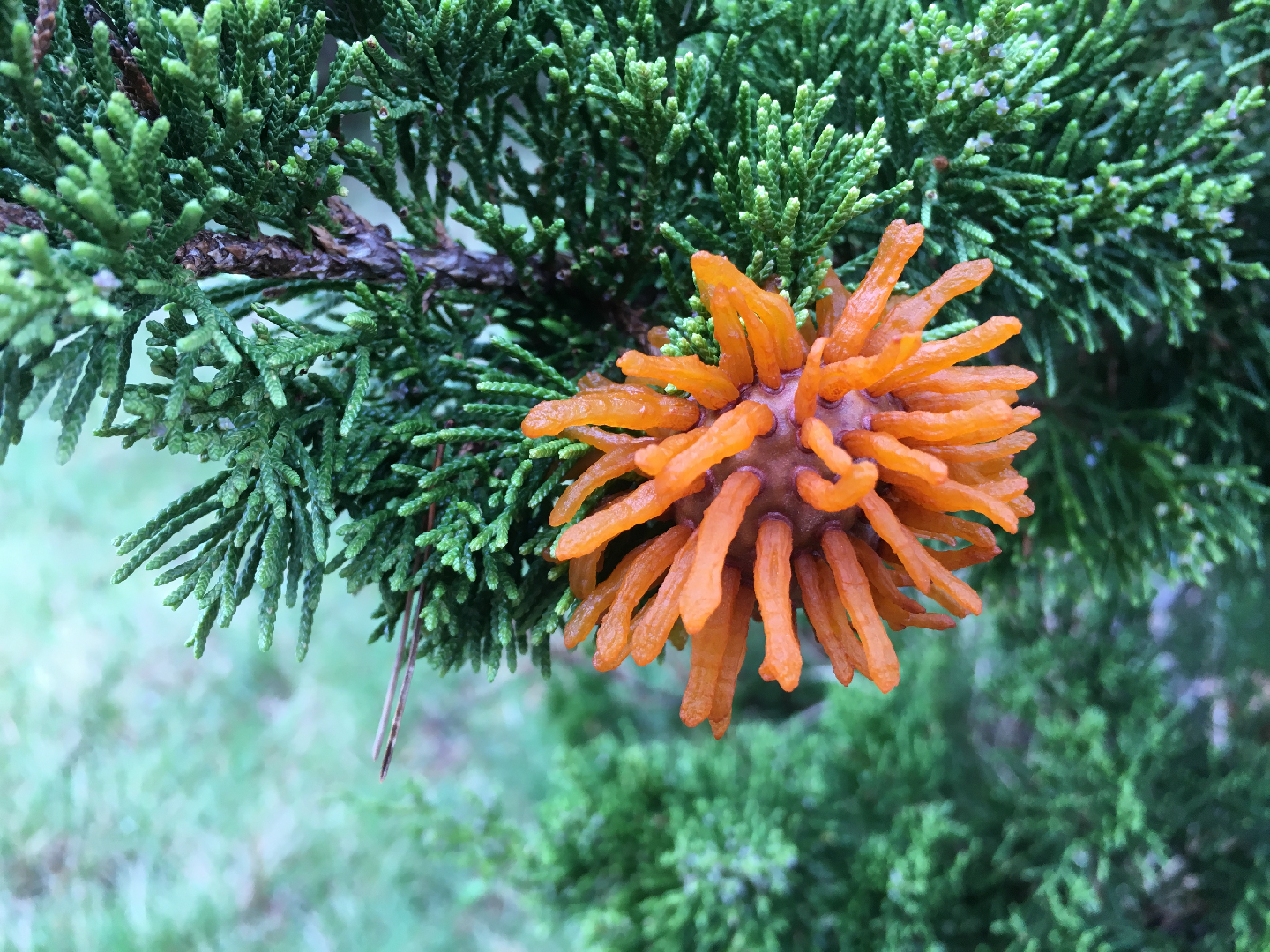
4. Cedar-apple rust
The vividly-colored fruitbodies of cedar-apple rust (Gymnosporangium juniperi-virginianae) might be mistaken for flowers, from a distance. Upon closer inspection they can be identified as fungal growths attacking the fruit of cedar trees. Their microscopic spores can travel up to an astounding 5 miles when carried on the wind and infect cedars quite far away, weakening the trees as they grow.
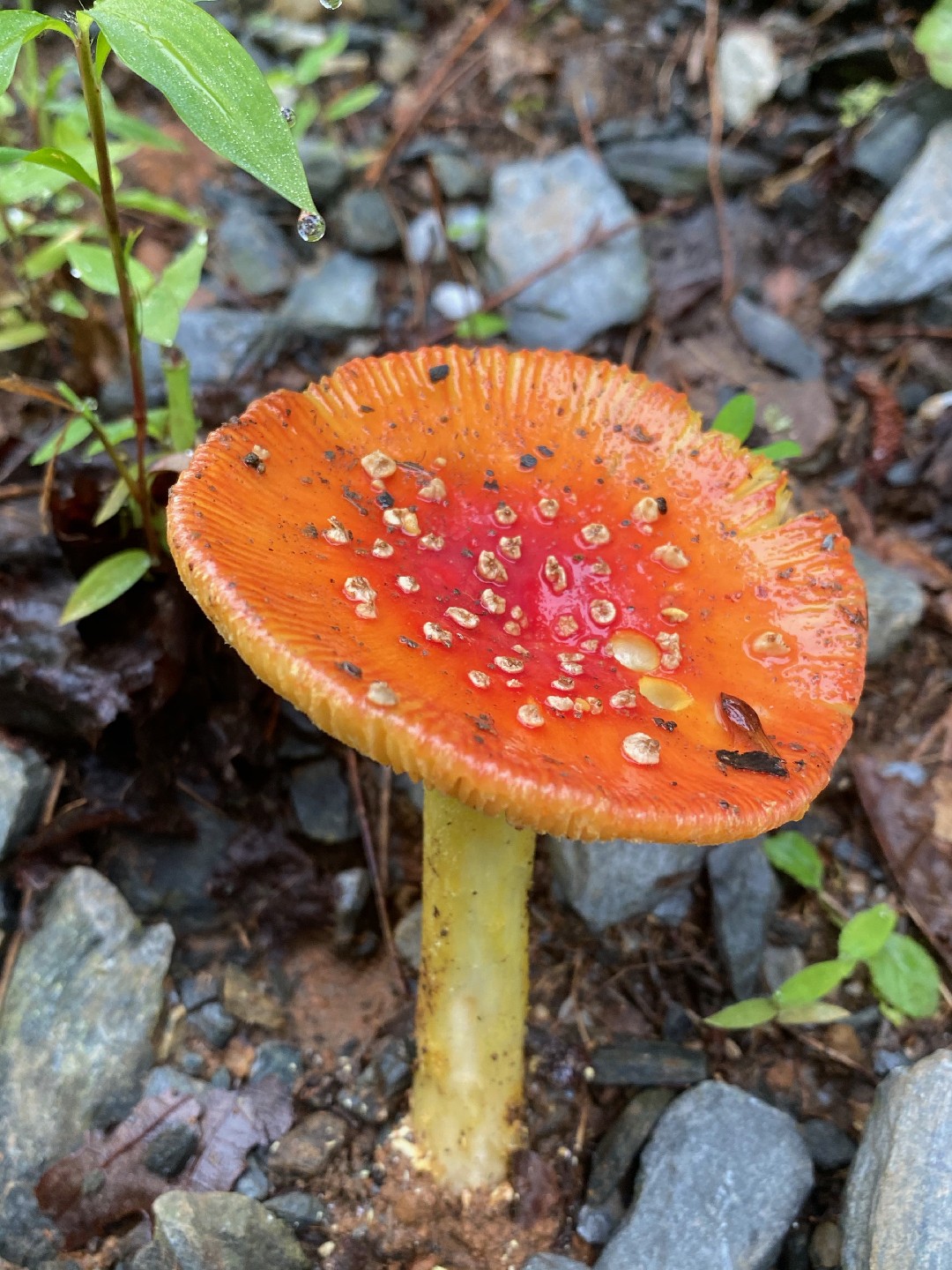
5. False Caesar's mushroom
The false Caesar's mushroom (Amanita parcivolvata) is an almost comical mushroom that looks like something from a cartoon. A brilliant red dome-shaped cap sits on top of a strikingly contrasting-colored stem. This cap also features notable yellow warts, which set it apart from other mushrooms of the same family.
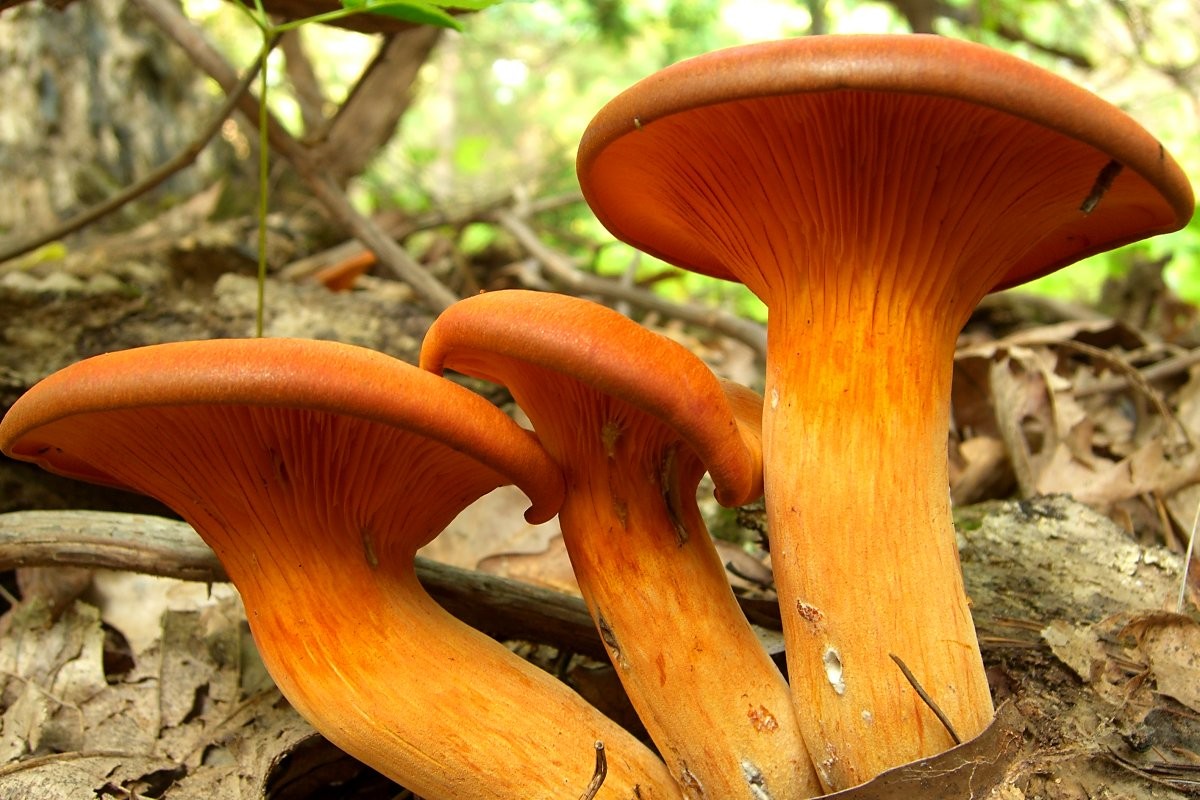
6. Jack-o'lantern mushroom
The jack-o'lantern mushroom is so-called because of its bright orange color, and because it often appears in the fall (usually before Halloween, though). This vibrant little mushroom can be found growing on decaying hardwood stumps and logs. The species does have some superficial resemblances to the highly edible chanterelle (Cantharellus cibarius), but it is toxic and should be avoided!
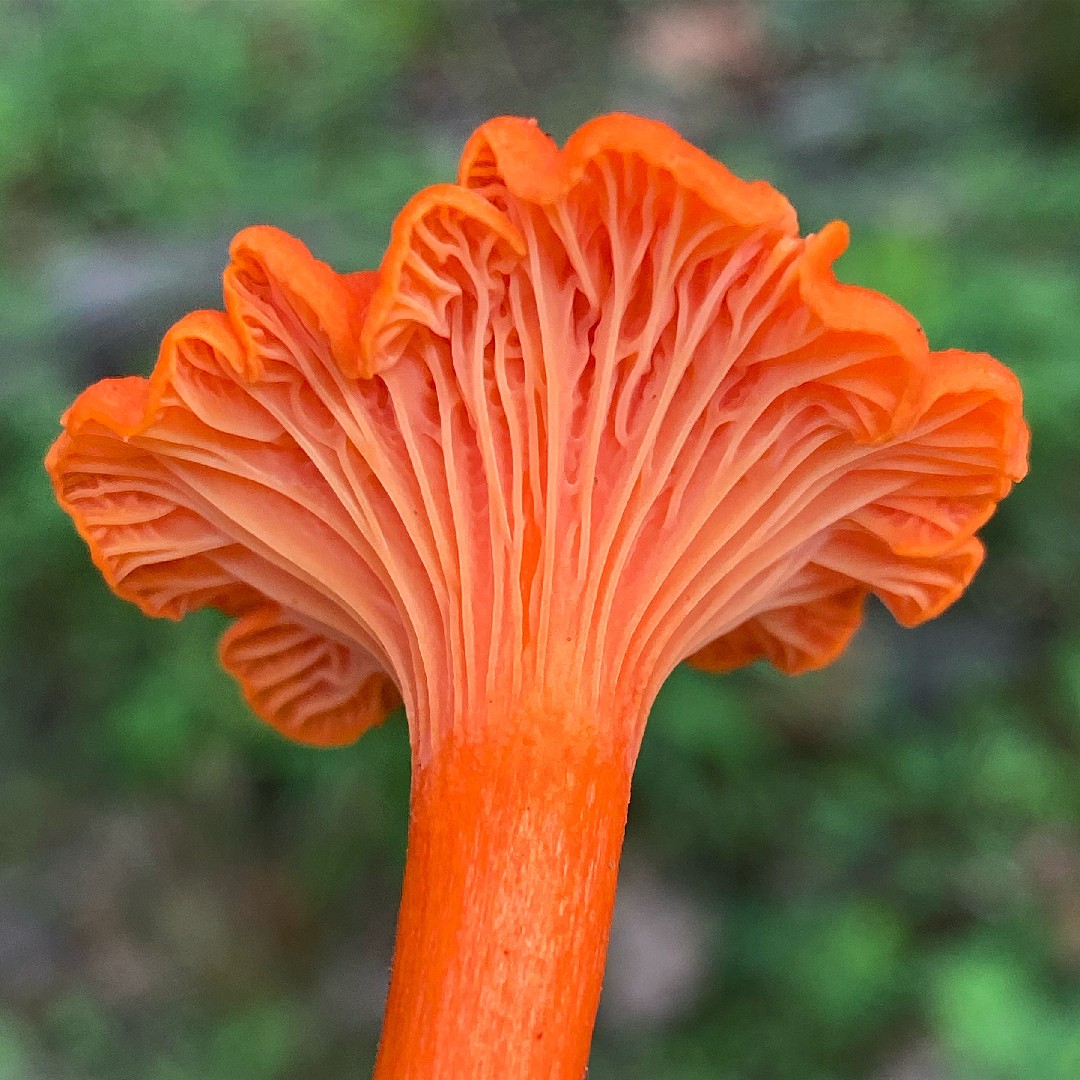
7. Red chanterelle
Red chanterelles can be found growing within hardwood forests across eastern North America. These small but striking mushrooms range from orange to red to pink in color. Edible and boasting complex flavors, many chanterelles are highly sought after. The red chanterelle, though less famous than some of its close relatives, is no exception. This species can be used in all sorts of recipes, with a vaguely sweet or piney taste.
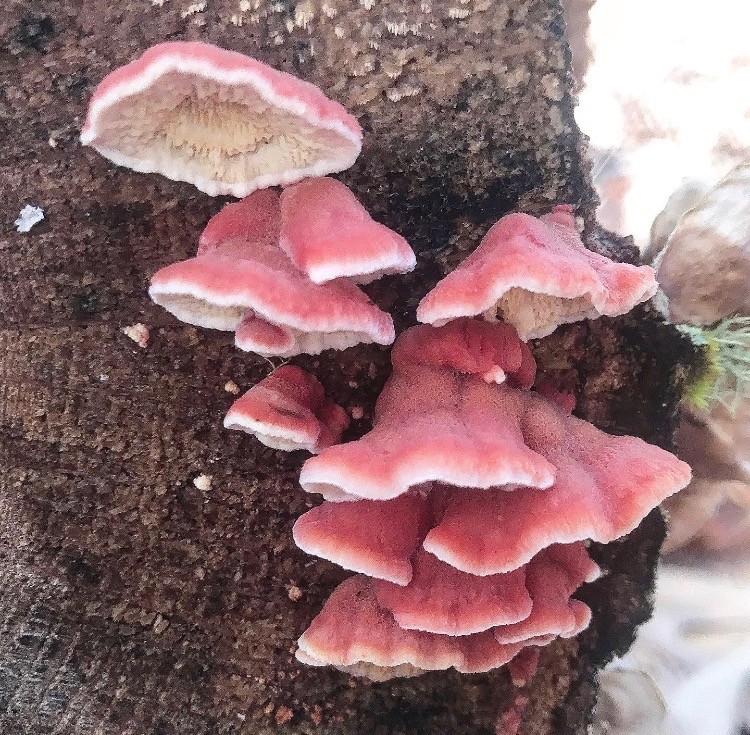
8. Coral-pink merulius
The coral-pink merulius is a distinctive pink mushroom that grows on rotten wood. Interestingly, this mushroom almost always appears together with the False turkey tail (Stereum ostrea). If you spot one of them, the other one is probably somewhere near.
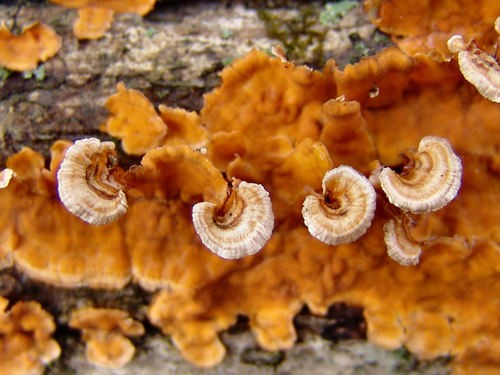
9. Crowded parchment
The crowded parchment is a common mushroom that can be found on dead hardwood material. The species is so-named because it grows in very thin, sheet-like shelves, which often become folded when they run up against each other. Crowded parchment is usually found in shades of brown, tan, or orange.
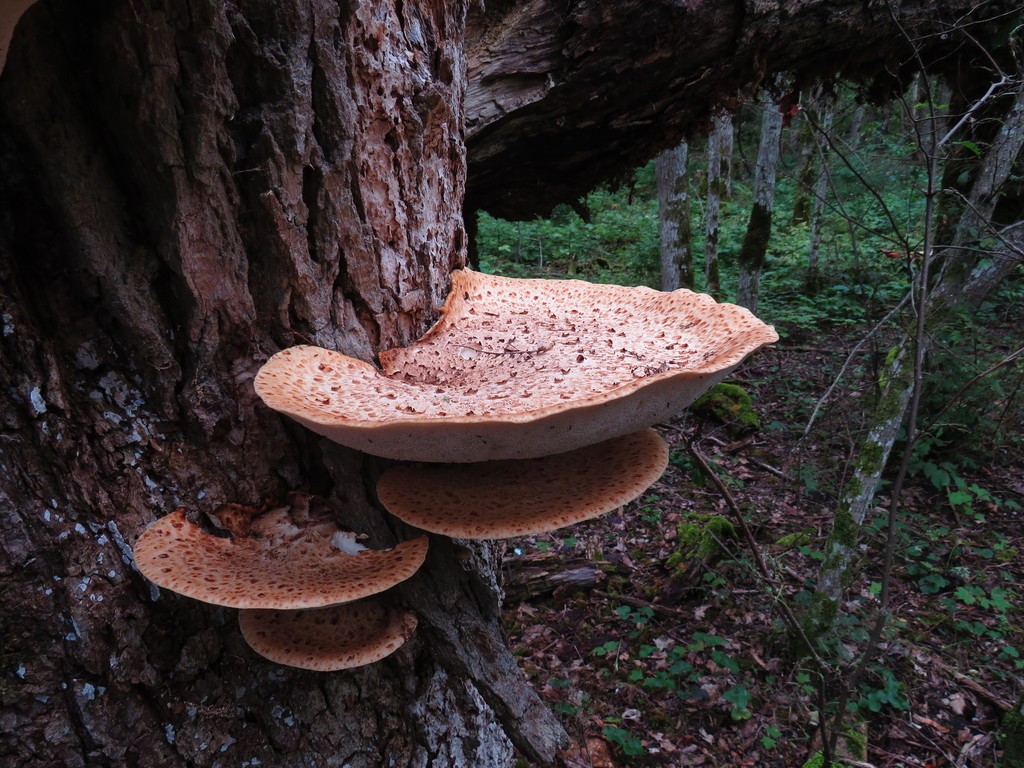
10. Dryad's saddle
A familiar sight to spring morel hunters, dryad's saddle is noteworthy for its large size, striking scales, and watermelon-like smell. Similar to other mushrooms in the bracket fungi family, dryad's saddle can be used to make paper. Younger mushrooms are better suited for this purpose due to their smaller and more consistent fibers.
More







