




Top 20 Most Common Mushrooms in Utah
Surrounded by captivating landscapes, Utah harbors ample conditions perfect for mushroom growth. Its diverse climatic ranges and rich, organic soils nurture a myriad of mushroom species. Connoisseurs and mycologists alike revel at Utah's fungal flora, showcasing 20 of the most popular mushrooms. This breathtaking diversity promises a myriad of culinary, medicinal, and environmental benefits that continue to pique interest and evoke exploration amongst enthusiasts. With a tantalizing array of colors and shapes, Utah mushroom species continue to inspire and fascinate.

Most Common Mushrooms

1. Shaggy mane
The shaggy mane mushroom is commonly found in North American and European grasslands. Some peoples foraged for its young egg-shaped caps, but it has more recently been found to be a bioaccumulator of heavy metals, meaning it pulls toxic metals up from the soil where it grows. As a result, shaggy manes should not be eaten. The mushrooms usually appear in clusters or “fairy rings.”
2. Spring orange peel fungus
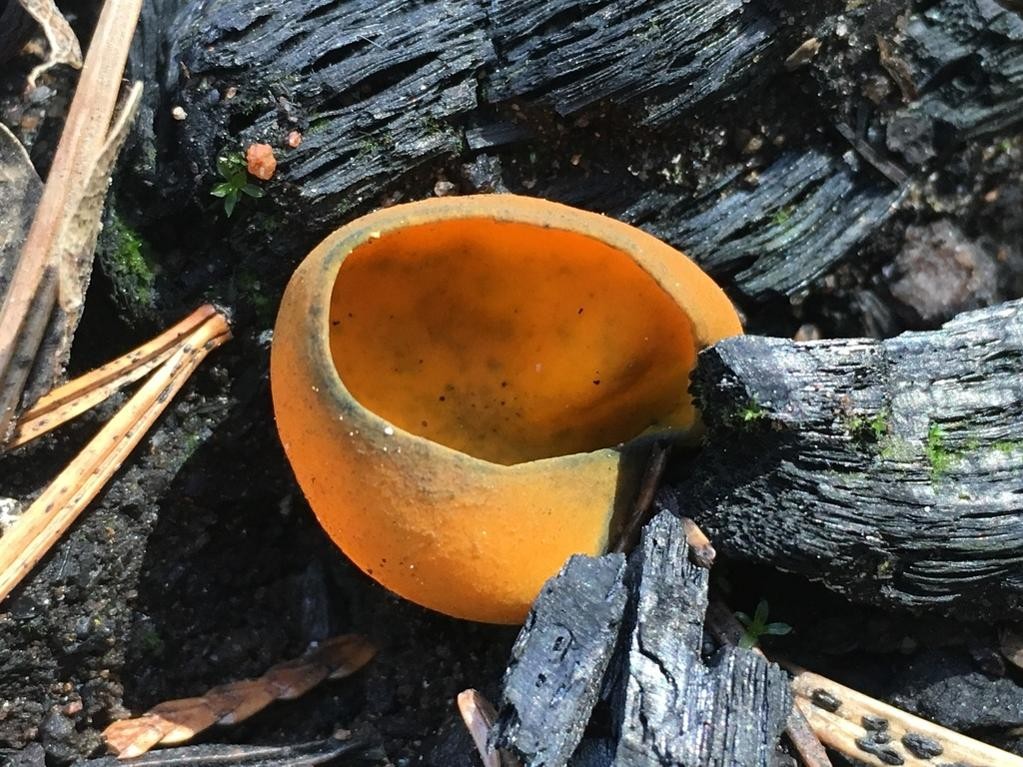
A rare albino mutant lacking orange pigment The fruiting body of C. fulgens is roughly cup-shaped, although the cup may be somewhat flattened, lopsided or split; the size is up to 4 centimetres (1.6 in) in diameter. The inner surface of the cup is orange-yellow, while the external surface is pale yellow. Either the margin around the rim or the entire outer surface may be stained olive-green. The green or bluish staining that occurs upon injury or with age is unique within the Pezizales order. The stem, if present, is rather short. The spore deposit is white. A single specimen of an albino form, 2 centimetres (0.8 in) in diameter, was discovered in Northern Idaho; it was found to be lacking the pigment responsible for staining the outer surface olive-green. The spores are translucent (hyaline), roughly spherical, thin-walled and smooth, with dimensions of 6–8 µm in diameter. The asci, the spore-bearing cells, are cylindrical and 80–100 by 7–8 µm; the paraphyses are thin and filamentous and contain orange granules. Edibility has not been recorded for this fungus. 
3. Common ink cap
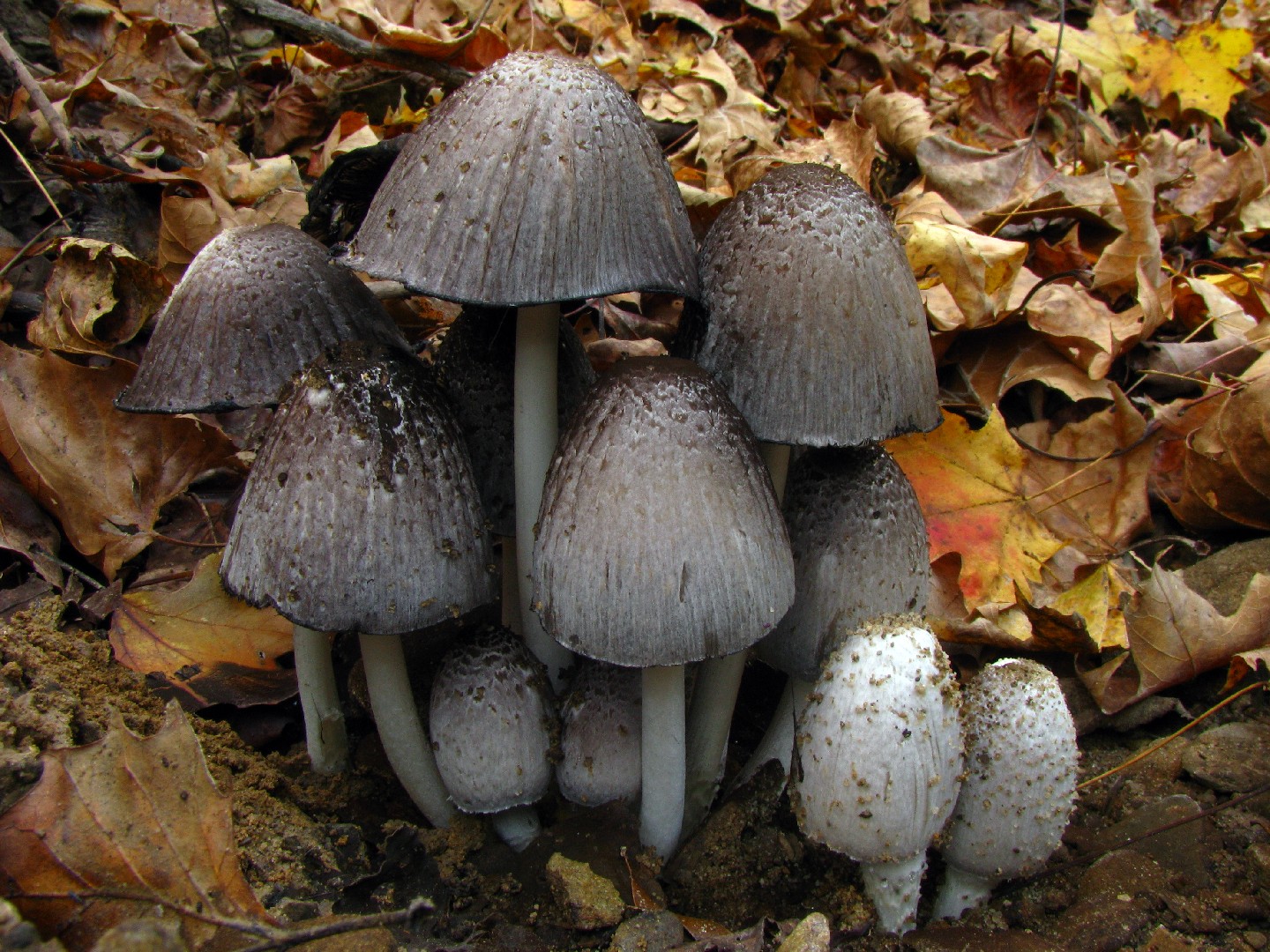
Common ink cap mushrooms grow in clumps from buried wood or tree stumps. They come up with such strength that they have been known to lift pavement or break through asphalt. As they age, their gills will turn black and liquefy, creating the "inky" substance for which they are named.
4. Veiled polypore
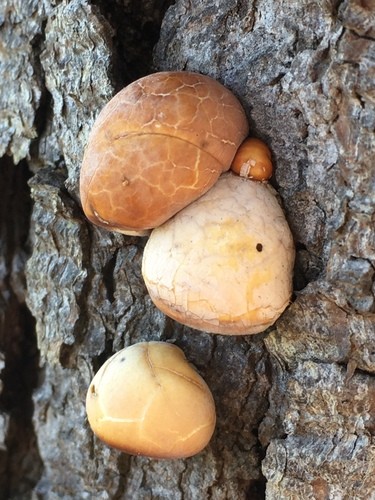
If you've ever gone on a walk through the woods where dead conifers are present, there's a good chance you've seen a veiled polypore. The fungus' name comes from the fact that it's pores are "veiled" by a rounded piece of tissue. Indeed, rather than growing in sheet-like formations like other polypores, the veiled polypore can be nearly spherical. These mushrooms are especially prevalent in pine stands that have been ravaged by fire or beetles.
5. Enoki
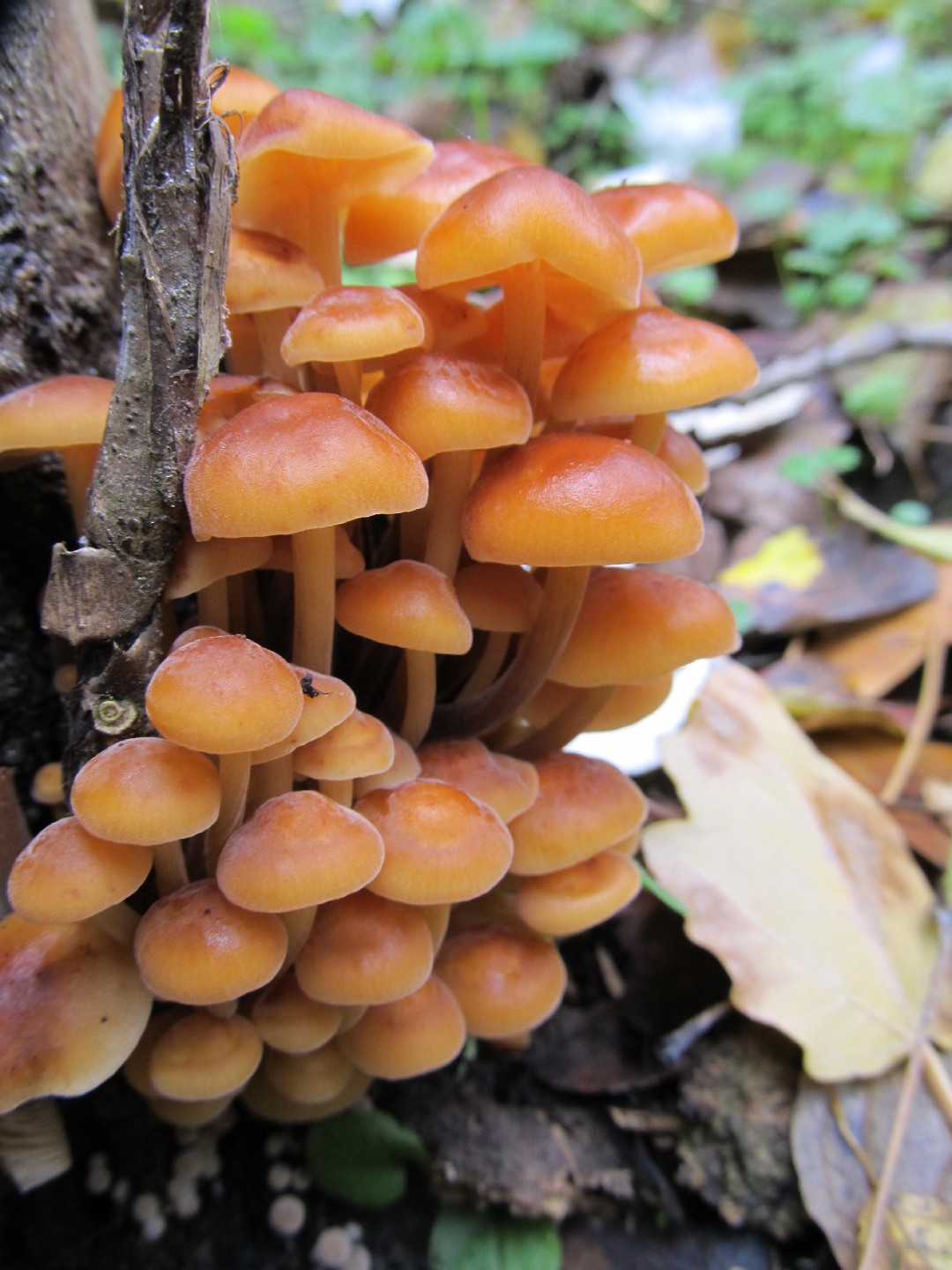
The enoki grows wild on dead elm trees, and is also cultivated for human use. This flavorful species (Flammulina velutipes) has been used in dishes around the world for generations, being particularly high in nutrients. Though store-bought enoki are often plain white, wild ones can be found in a range of colors.
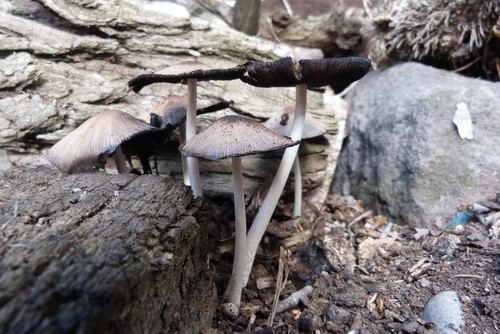
6. Mica cap
The bell-shaped mica cap mushrooms grow in clusters on wood debris and stumps, from spring to autumn. The caps appear wet and inky once they mature and begin to release spores. At that point, they can be boiled with cloves to create a useful black ink.
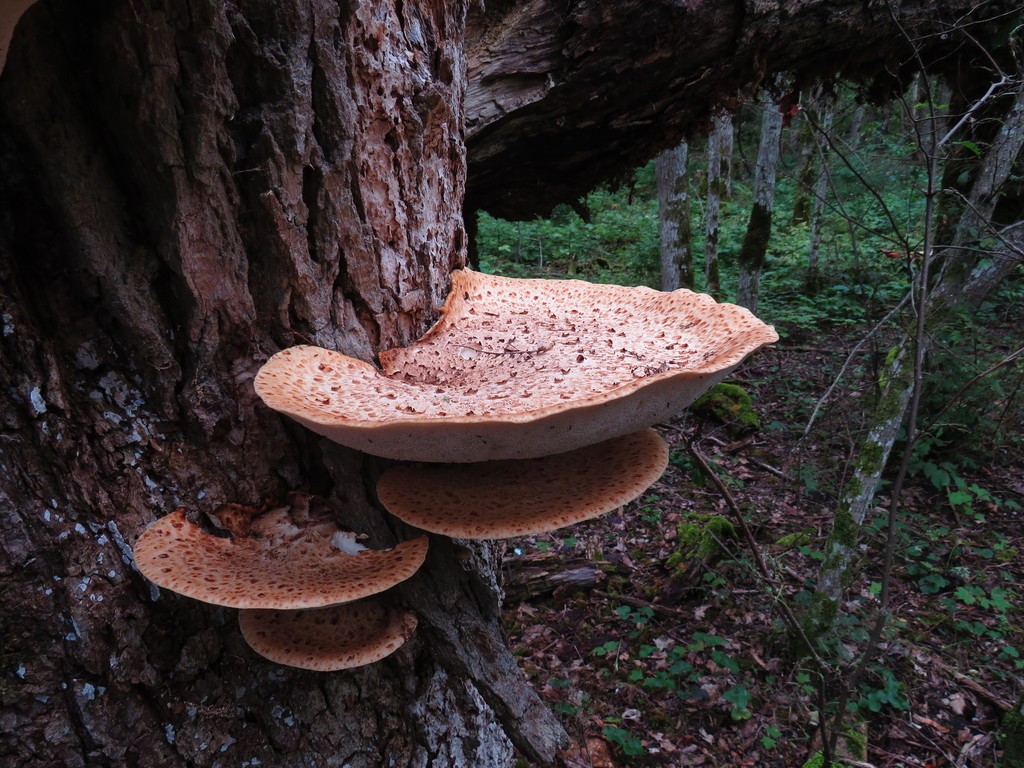
7. Dryad's saddle
A familiar sight to spring morel hunters, dryad's saddle is noteworthy for its large size, striking scales, and watermelon-like smell. Similar to other mushrooms in the bracket fungi family, dryad's saddle can be used to make paper. Younger mushrooms are better suited for this purpose due to their smaller and more consistent fibers.
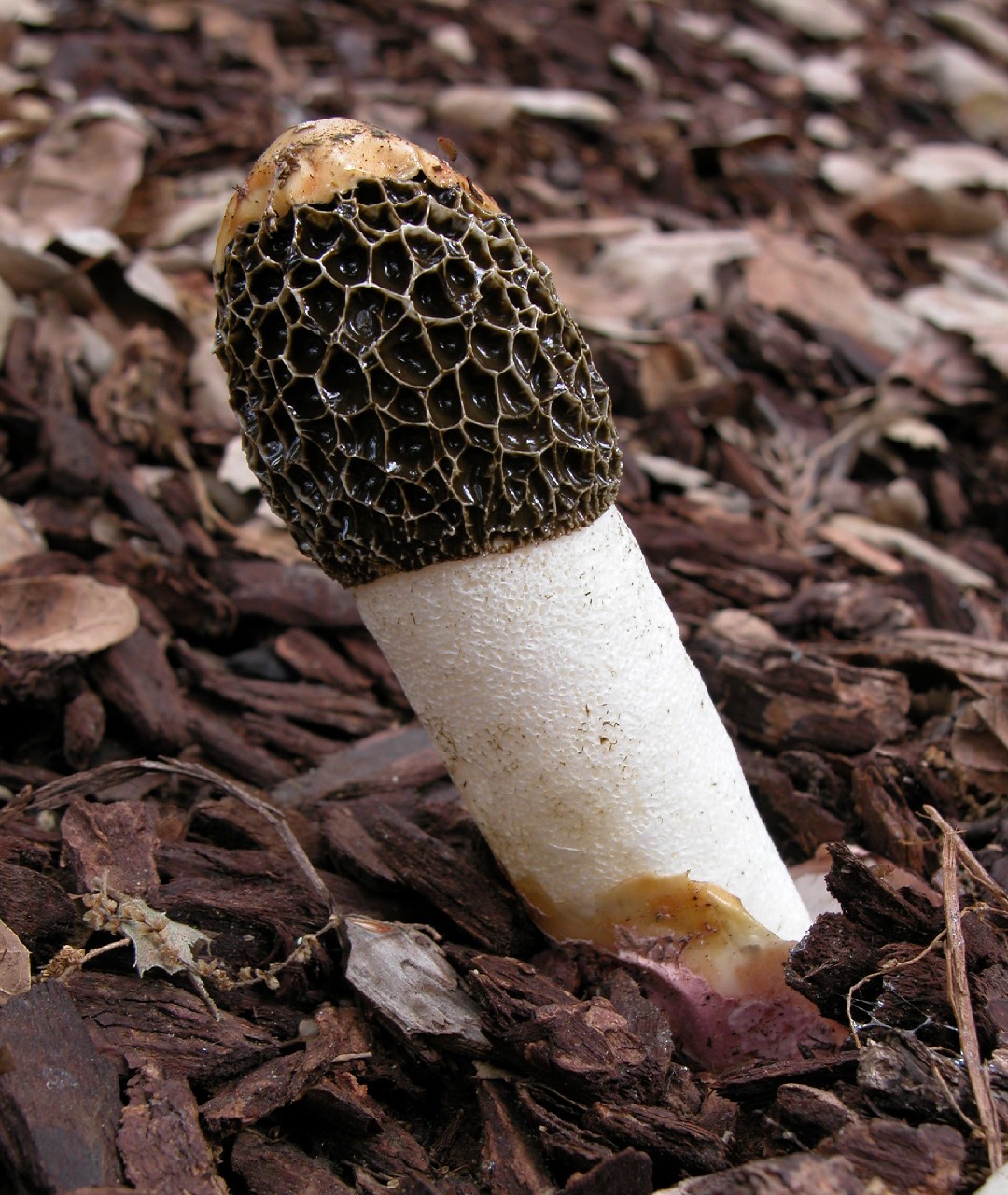
8. Dune stinkhorn
The dune stinkhorn (Phallus hadriani) is a distinctive species that, to novices, may bear a rough resemblance to the common morel. Although it favors sandy soils or dunes, can be found growing in all manner of disturbed habitats, from lawns to lots to gardens. The mushroom's stalk and cap sprout from a round, sheathed "egg." When mature, the dune stinkhorn has a long, thick stalk and a slimy, honeycombed cap.
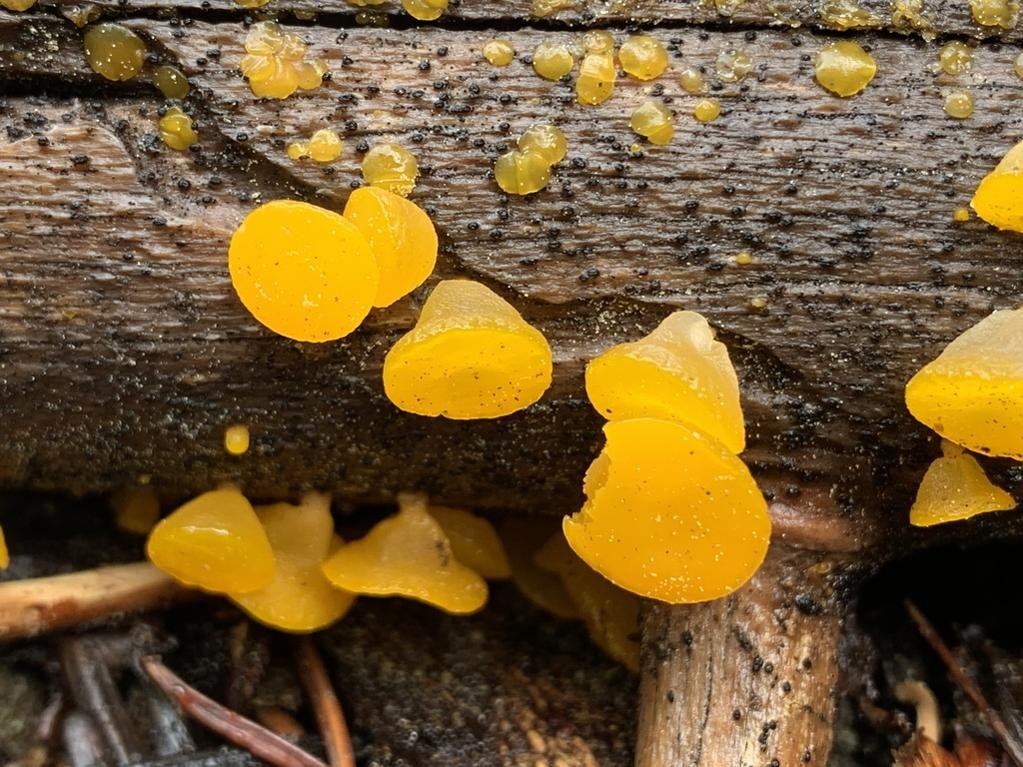
9. Jelly cup
Jelly cup fungus grows on decaying conifer wood that has lost its bark. It is considered a snowbank fungus and appears soon after the mountain snows melt away. The specific epithet, alpina, reflects this mountain habitat. Jelly cup is a nuisance species for construction work - it can cause even treated lumber (especially red cedar) to deteriorate.
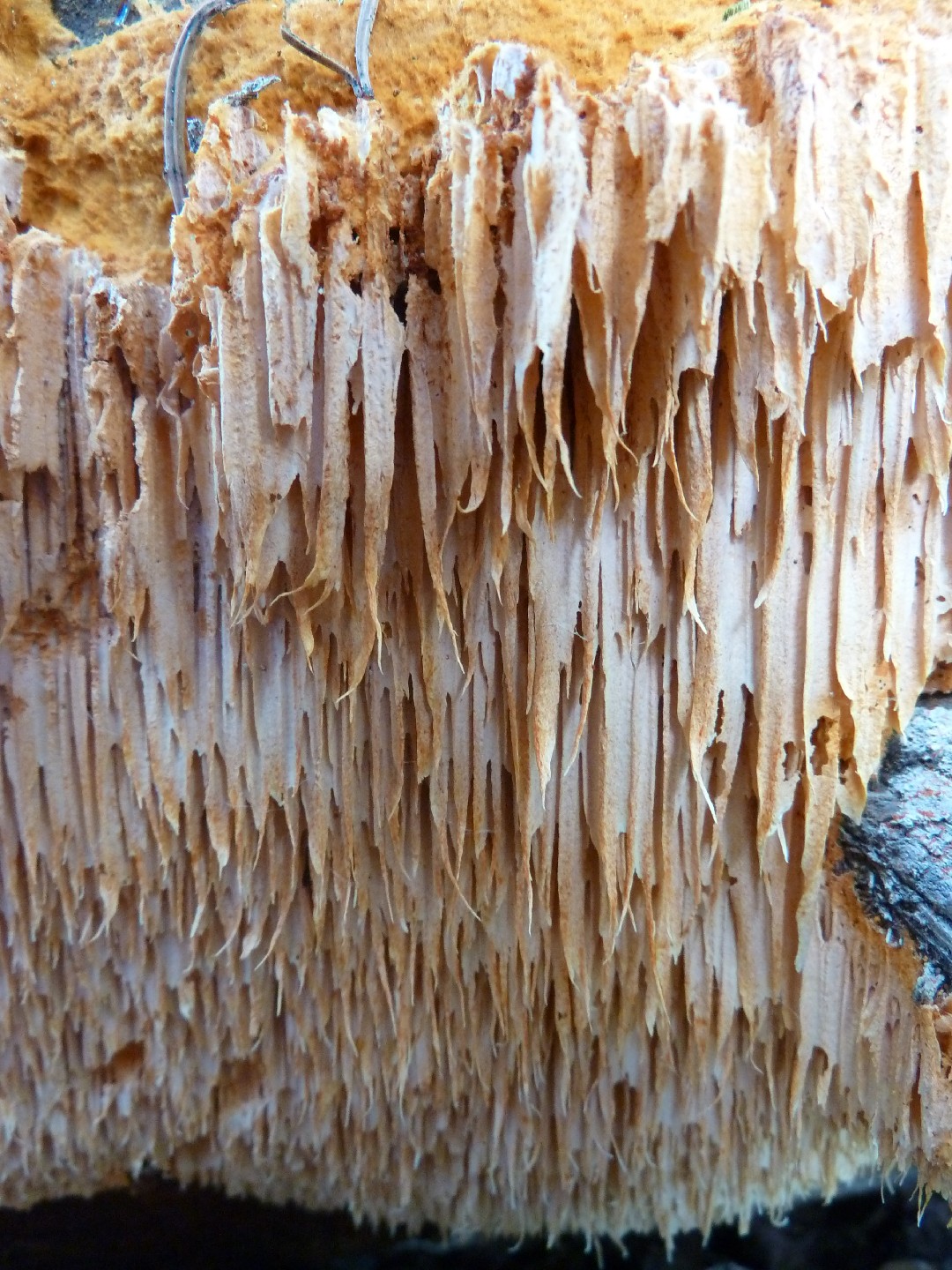
10. Orange sponge polypore
The distinctive orange sponge polypore is most notable for causing brown cubical rot of conifer wood. With no mushroom caps, the fruitbodies of this fungus appear as a collection of curtains hanging on the underside of the log. It was given the name "Orange spore polyphore" due to its bright orange, finely grooved, spongy fruitbodies with orange pores.

More







