




Top 19 Most Common Mushrooms in Las Vegas
Welcome to our definitive guide highlighting the top 19 most common mushrooms native to the radiant city of Las Vegas. Known for its vibrant nightlife and shimmering cityscape, Las Vegas also hosts an exceptional array of mycological specimens. Despite its arid setting, Las Vegas flourishes with an unexpected abundance of mushroom species, reinforcing the diverse adaptability inherent in fungi.

Most Common Mushrooms
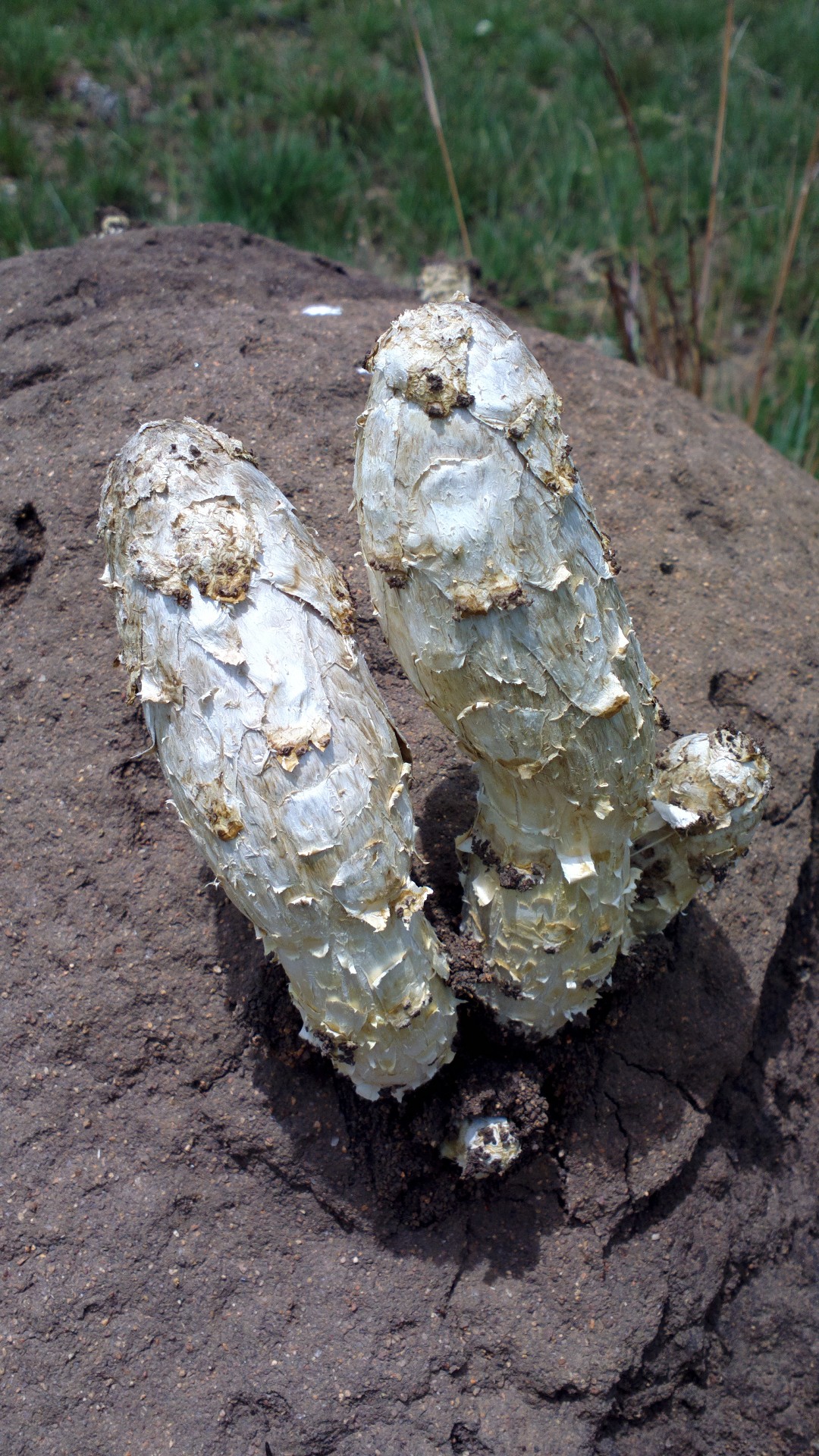
1. Desert shaggy mane
As its name suggests, the desert shaggy mane (Podaxis pistillaris) erupts from seemingly improbably conditions, out of the hot and arid ground in North American deserts. They are commonly found living harmoniously with colonies of termites in termite mounds. The desert shaggy mane is toxic and not safe to consume.
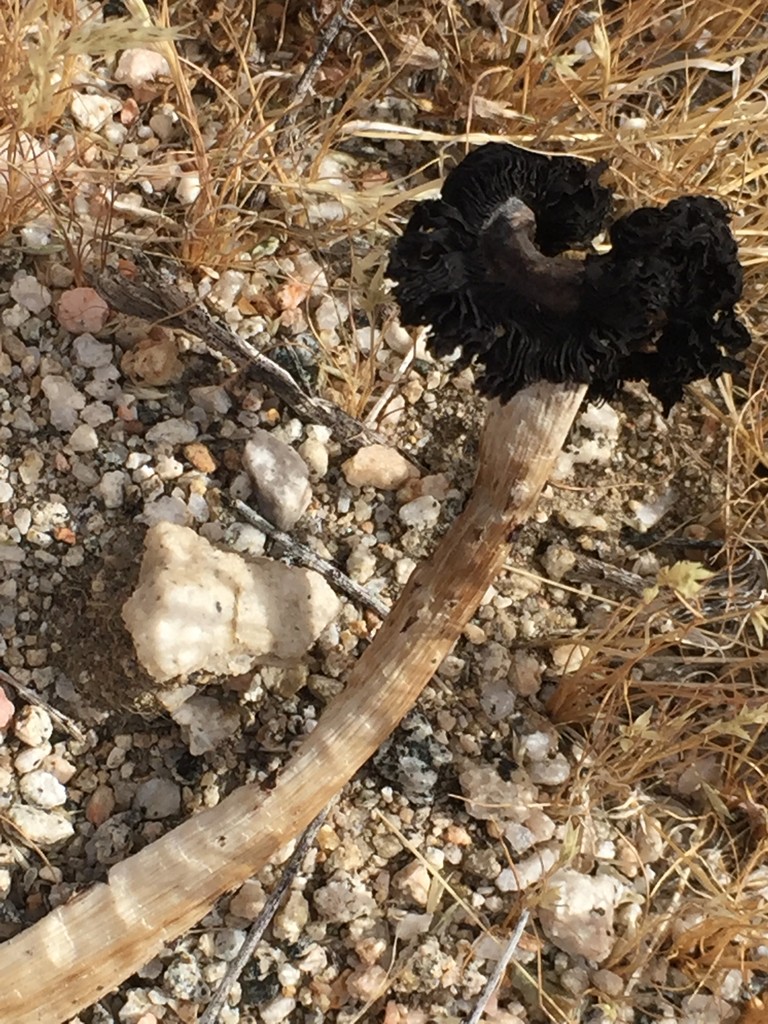
2. Montagnea arenaria
The cap of montagnea arenaria (Montagnea arenaria) has tough skin that acts as a shield to protect its dark spores until they are mature. Although the cap is rigid, it is commonly found looking tattered and weather-worn, almost fringe-like. Unlike many other mushrooms, they thrive in arid areas and are seen in deserts and other places with very little rainfall.

3. Shaggy mane
The shaggy mane mushroom is commonly found in North American and European grasslands. Some peoples foraged for its young egg-shaped caps, but it has more recently been found to be a bioaccumulator of heavy metals, meaning it pulls toxic metals up from the soil where it grows. As a result, shaggy manes should not be eaten. The mushrooms usually appear in clusters or “fairy rings.”
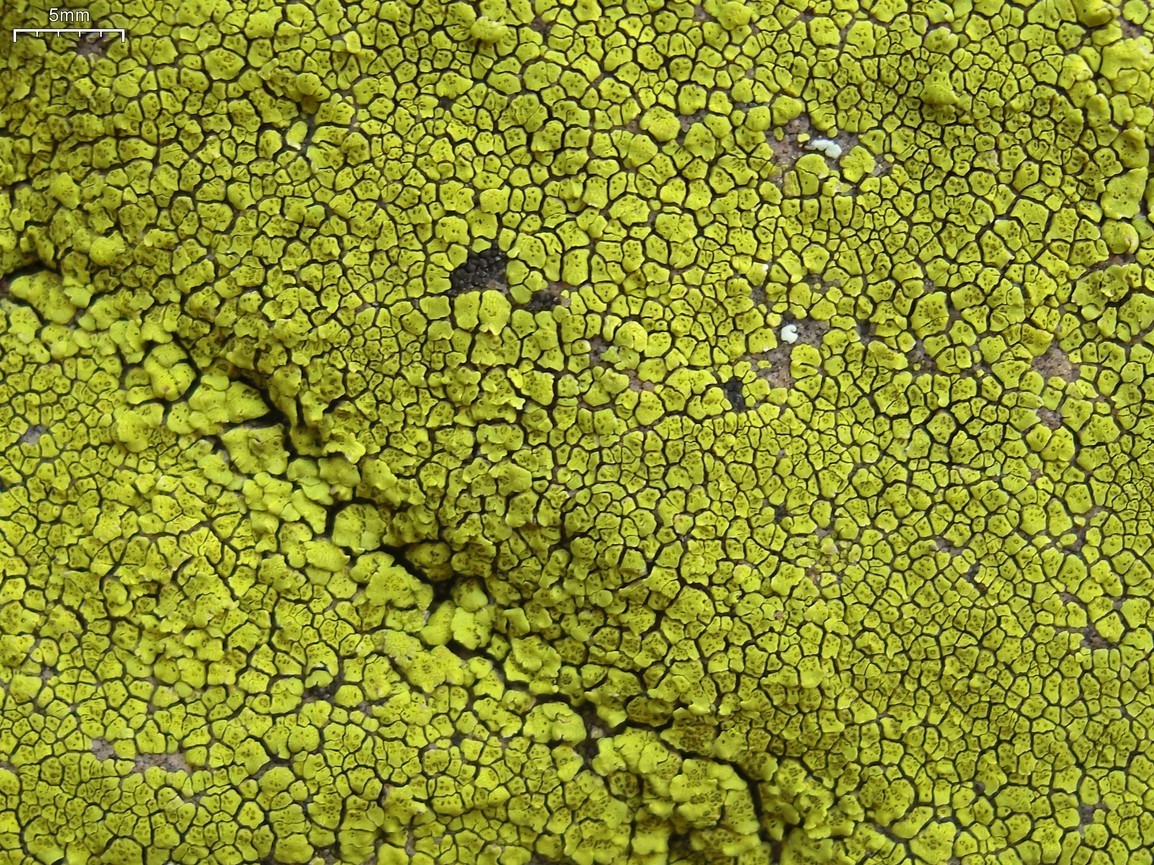
4. Bright cobblestone lichen
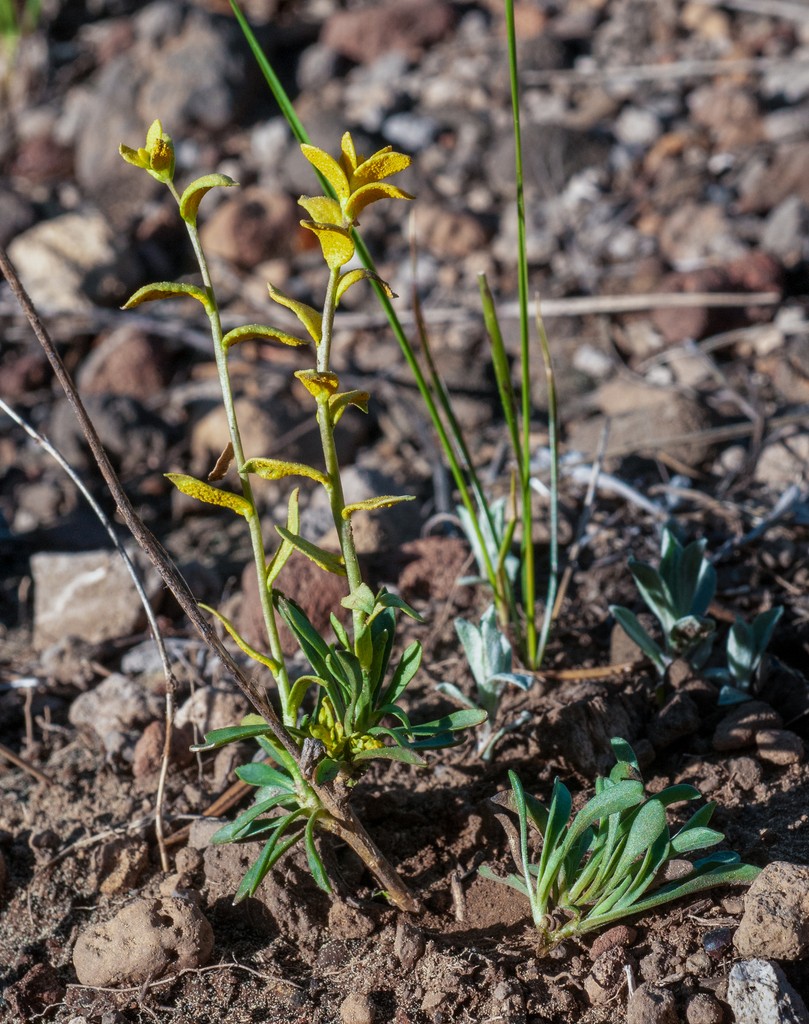
5. Mustard flower rust
6. Fishscale lichens
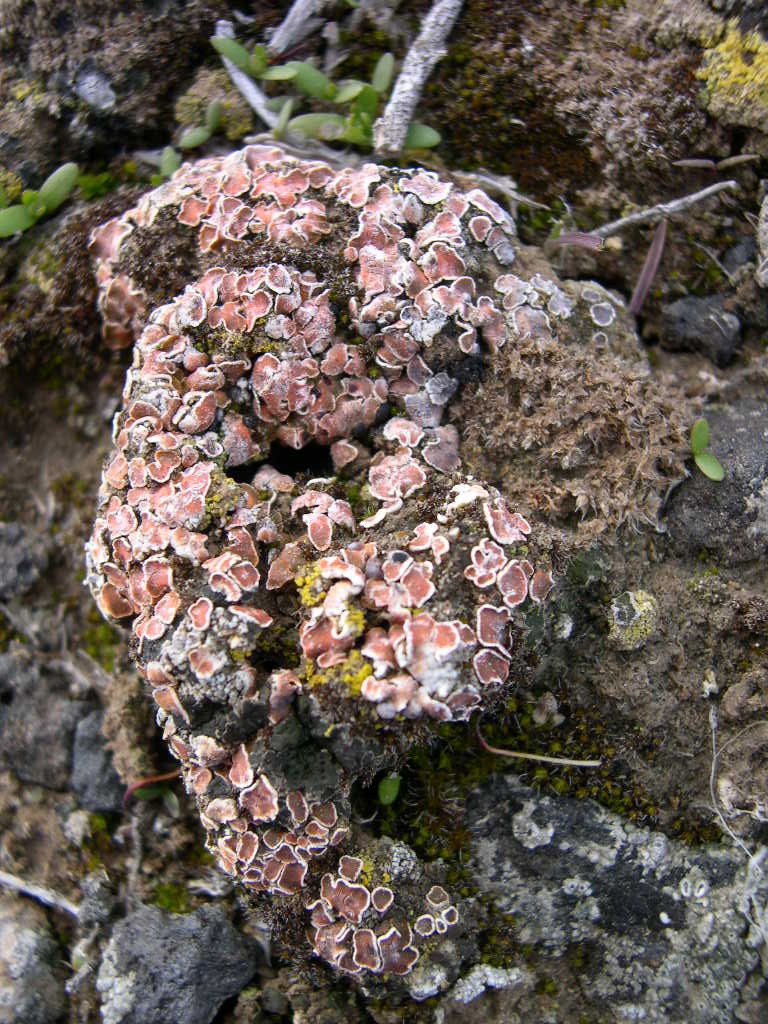
The Thallus of Psora decipiens consists of up to 4 mm wide, brownish, brownish red or pinkish scales with whitish edges. These overlap only rarely, are roundish to be booked or slightly notched and whitish below. Apothecaries are rather rare, marginal, black and untouched.
7. Veiled polypore
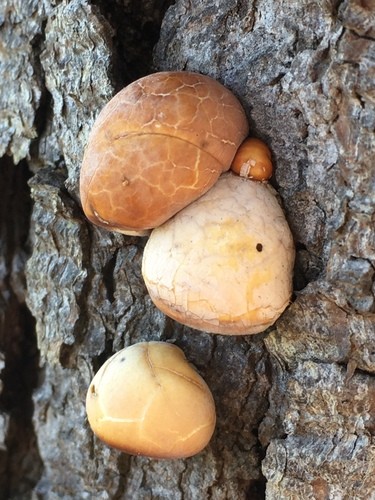
If you've ever gone on a walk through the woods where dead conifers are present, there's a good chance you've seen a veiled polypore. The fungus' name comes from the fact that it's pores are "veiled" by a rounded piece of tissue. Indeed, rather than growing in sheet-like formations like other polypores, the veiled polypore can be nearly spherical. These mushrooms are especially prevalent in pine stands that have been ravaged by fire or beetles.
8. Floccularia Albolanaripes
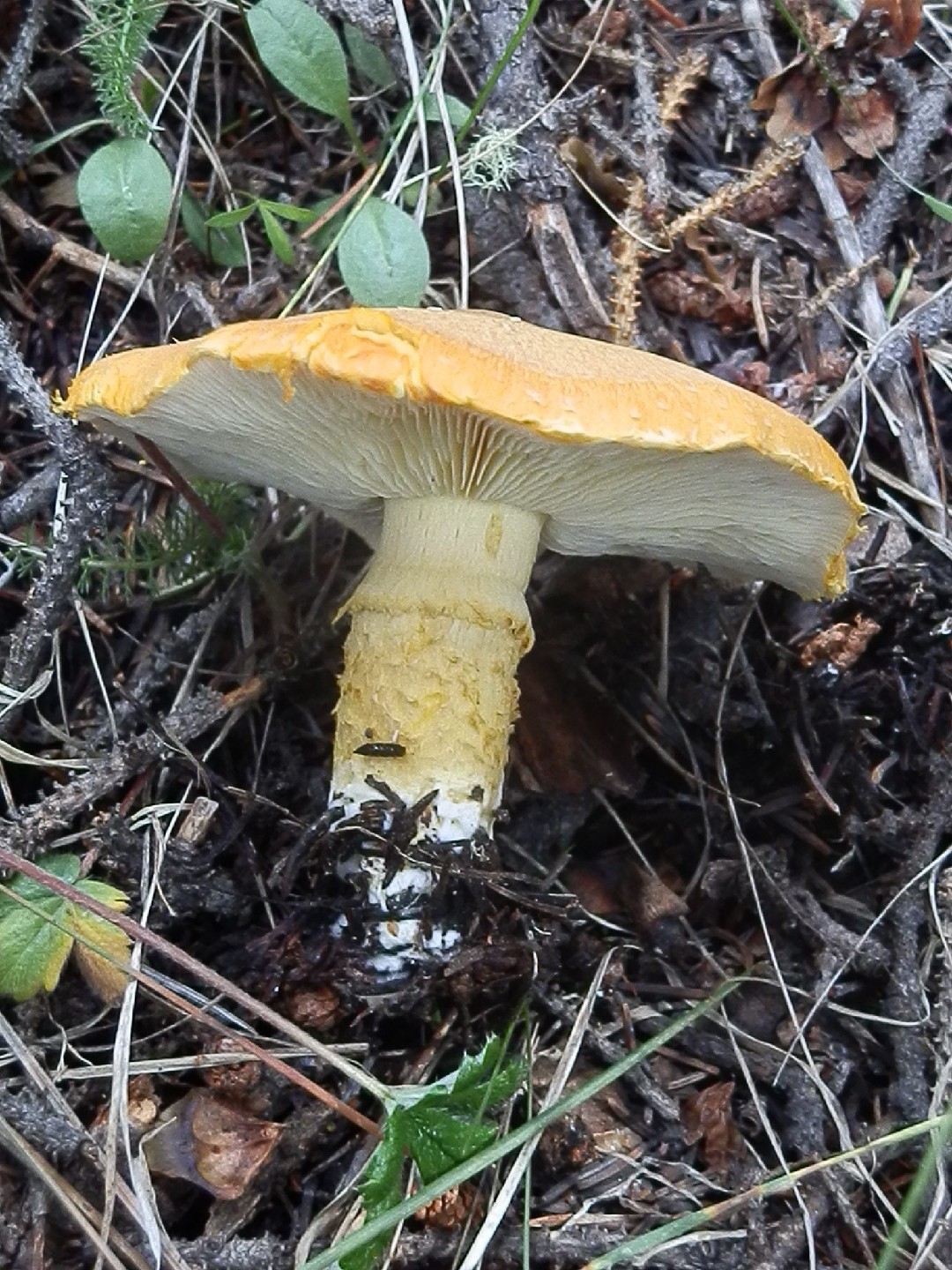
Associated with conifers of the Rocky Mountains, the floccularia Albolanaripes can be found prominently during fall rains from fall to winter. It has a vibrant yellow orange-brown cap when young, developing into a drab yellowish-brown in its maturity.
9. Chicken-of-the-woods
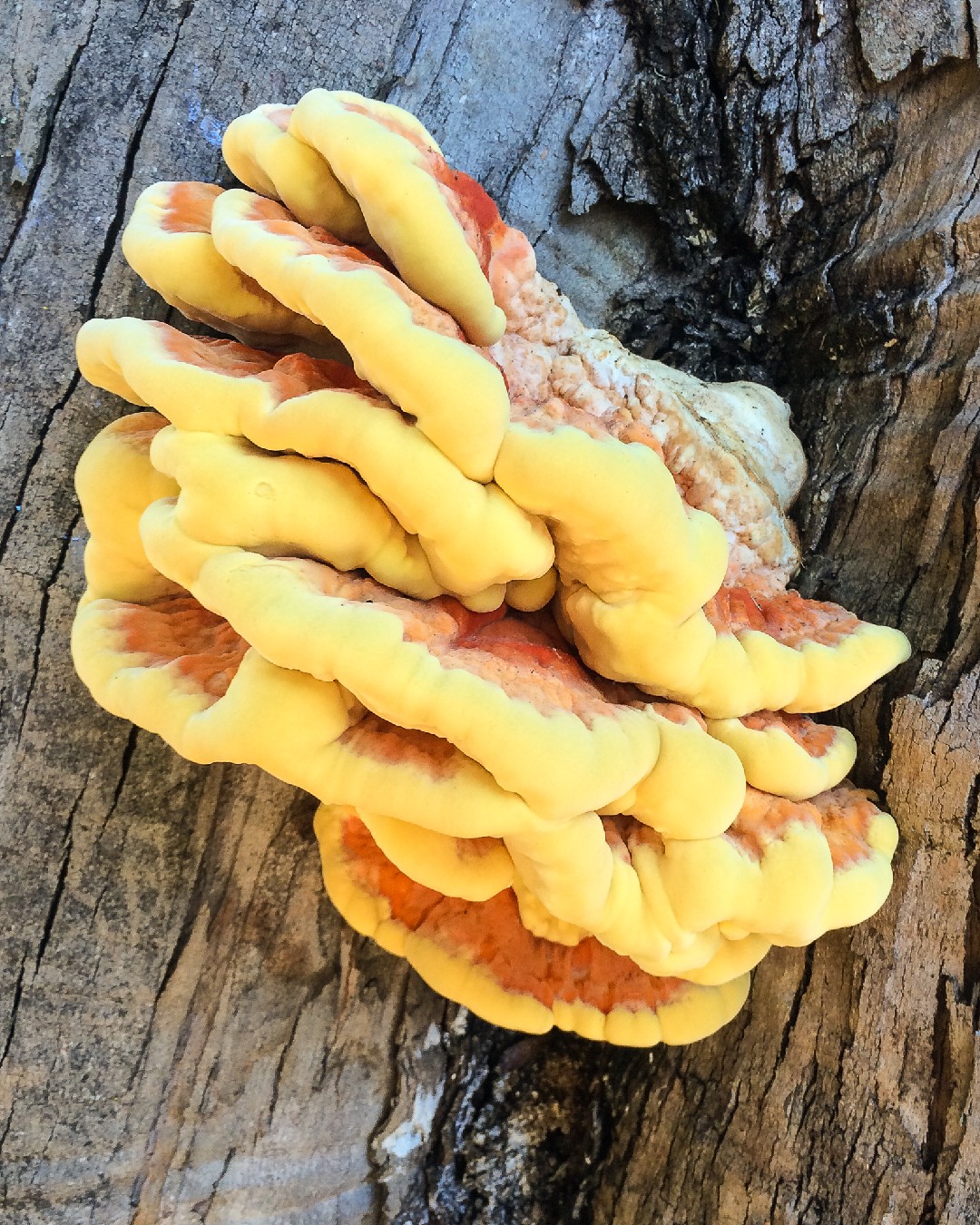
Chicken-of-the-woods is a brightly-colored polypore related to the famed Chicken-of-the-Woods (Laetiporus sulphereus). The species are so closely related, that it was not until the 2000s that mycologists considered them to be distinct. Unlike its famed relative, the species is not considered a choice edible - there are conflicting reports as to its edibility, with some probable cases of gastrointestinal distress noted.
10. Barometer earthstar
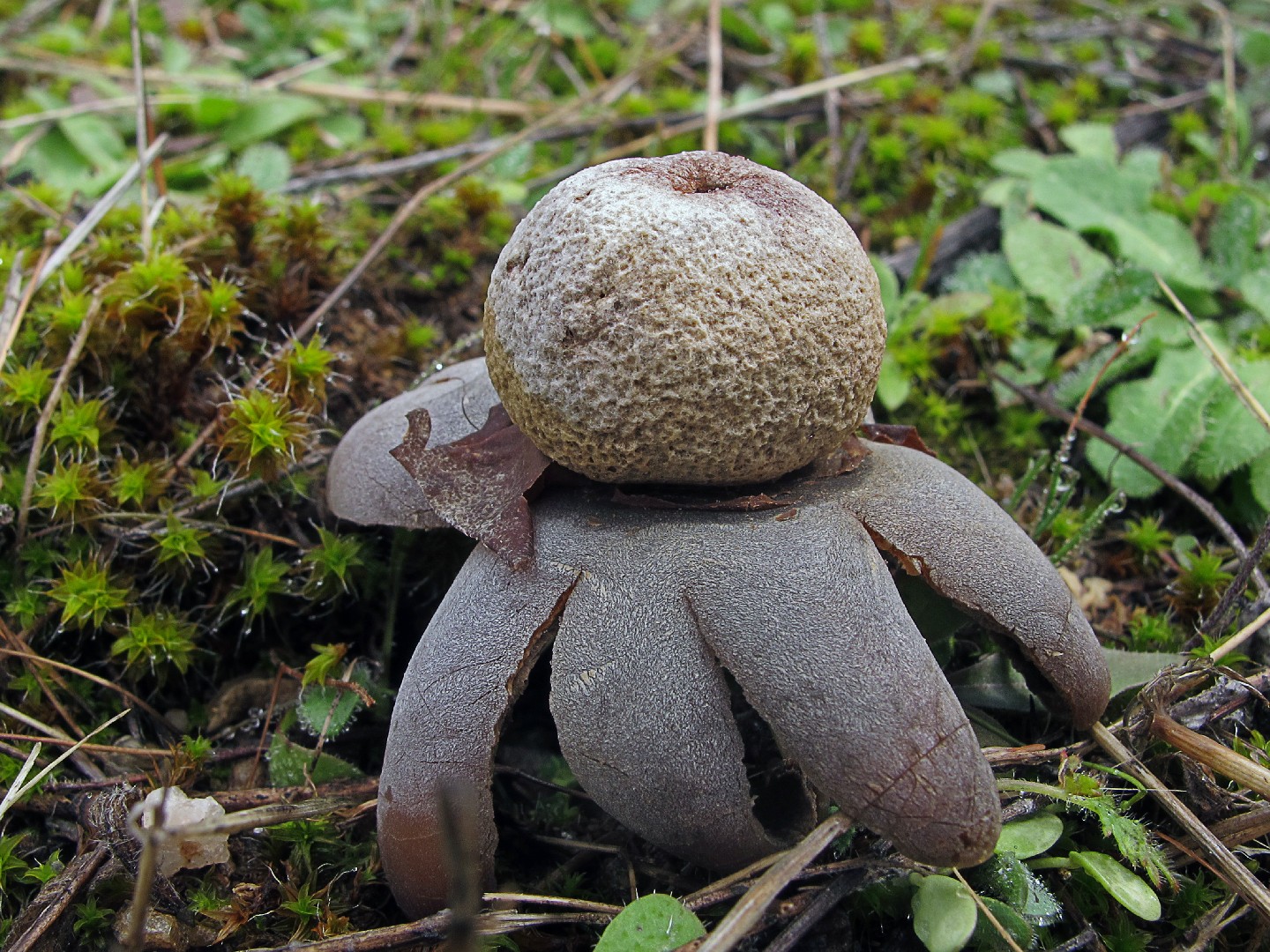
The barometer earthstar (Astraeus hygrometricus) is a fascinating species that closely resembles earthstars of the genus Geastrum, even though it is only distantly related. The petal-like appendages of the fruitbody open, or "bloom", in response to changes in ambient moisture levels. When its fronds are contracted, the mushroom resembles a puffball. The species range is believed to be restricted to Mediterranean Europe.

More







