




Top 20 Most Common Mushrooms in Connecticut
Nestled amidst the northeastern charm of the Connecticut, lies an adventurous and exquisite habitat conducive for the growth of myriad mushroom species. Connecticut, with its humid climate and rich, fertile soil, supports a diverse range of fungi, making it a treasure trove for mycologists and mushroom enthusiasts. This write-up delves into the world of the 20 most common mushrooms found in Connecticut, a testament to the area's vibrant myco-diversity. Expect a lavish feast of facts, enlightening you about these common, yet fascinating fungi specimens.

Most Common Mushrooms
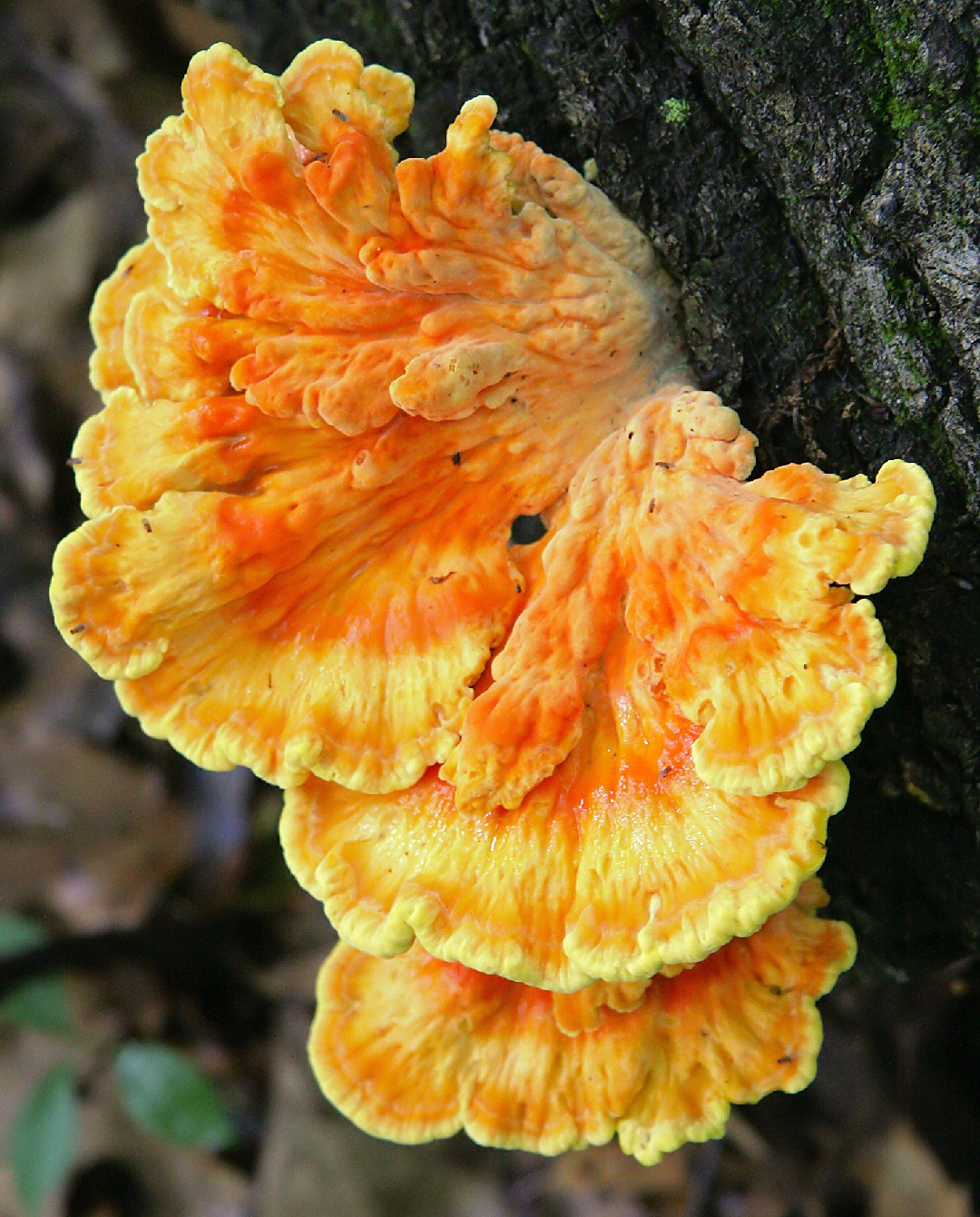
1. Chicken of the woods
Chicken of the woods is very noticeable in hardwood forests, appearing in clusters on standing tree trunks in bright orange and yellow hues that sometimes last through the entire winter. It is a parasite that causes an unfortunate brown heart rot, and is considered a particularly troublesome pest of Yew trees. If the fruitbodies can be seen, the tree is likely already beyond saving.
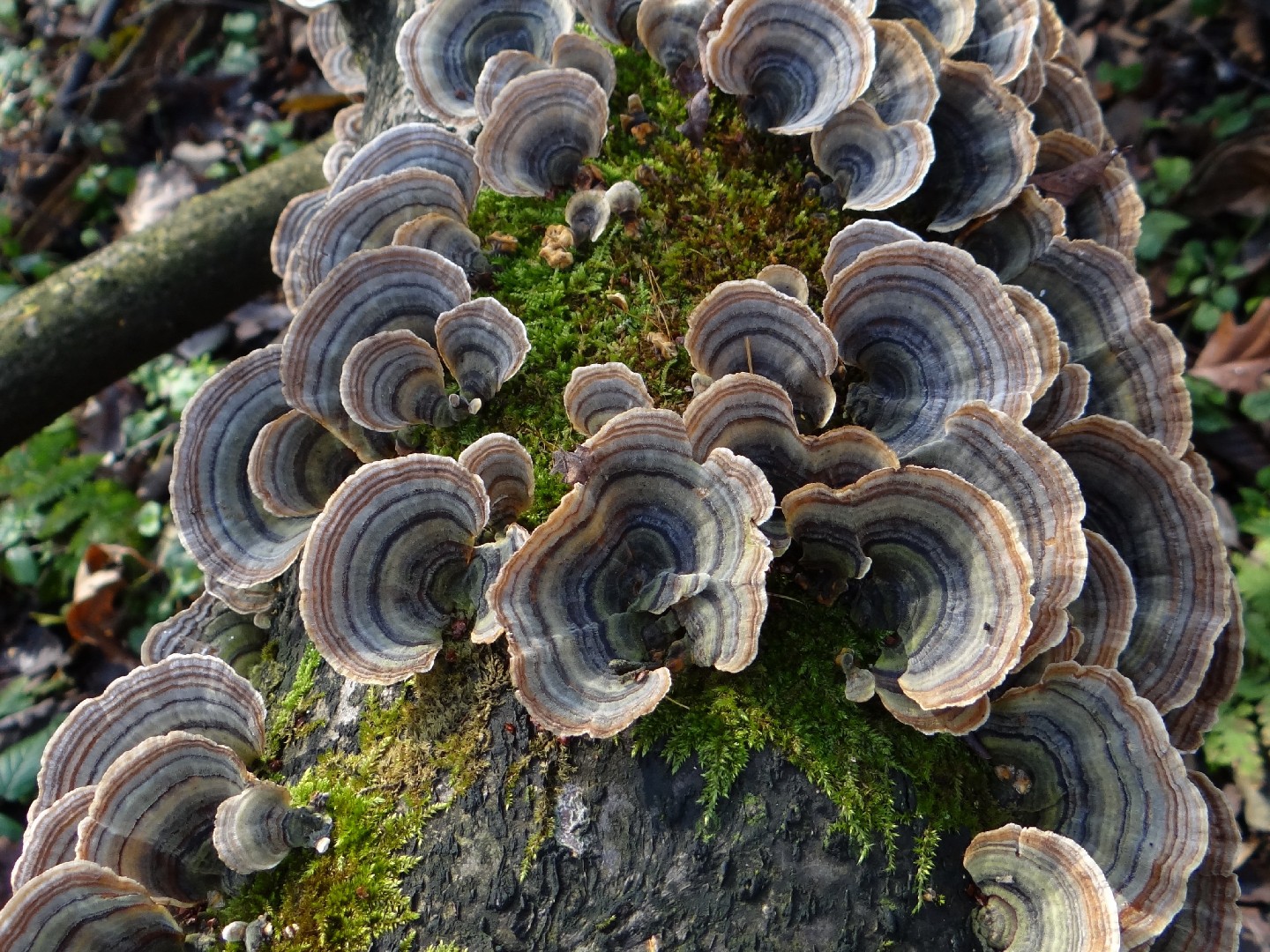
2. Turkey tail
The distinctively-striped turkey tail fungus grows on stumps and logs all over the forests of the northern hemisphere. It is, in fact, probably the most common species you will find. That doesn't mean this mushroom is plain, however; each cap is uniquely patterned. Look for bands of alternating textures as well as color.
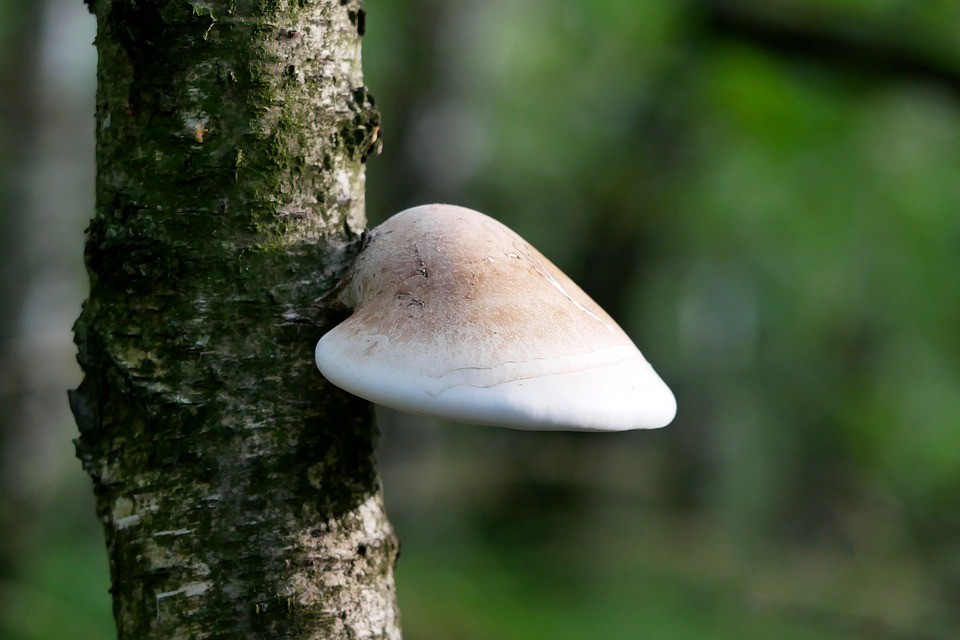
3. Birch polypore
The birch polypore has a variety of applications. Its thick skin has been used by barbers as a razor sharpener and as a mount for insect collectors. When dried, this mushroom was also used to carry fire over long distances because it burns slowly. The historical use of birch polypore doesn't stop there; pieces of this mushroom were found being carried by the five-thousand-year-old mummy Ötzi the Iceman.
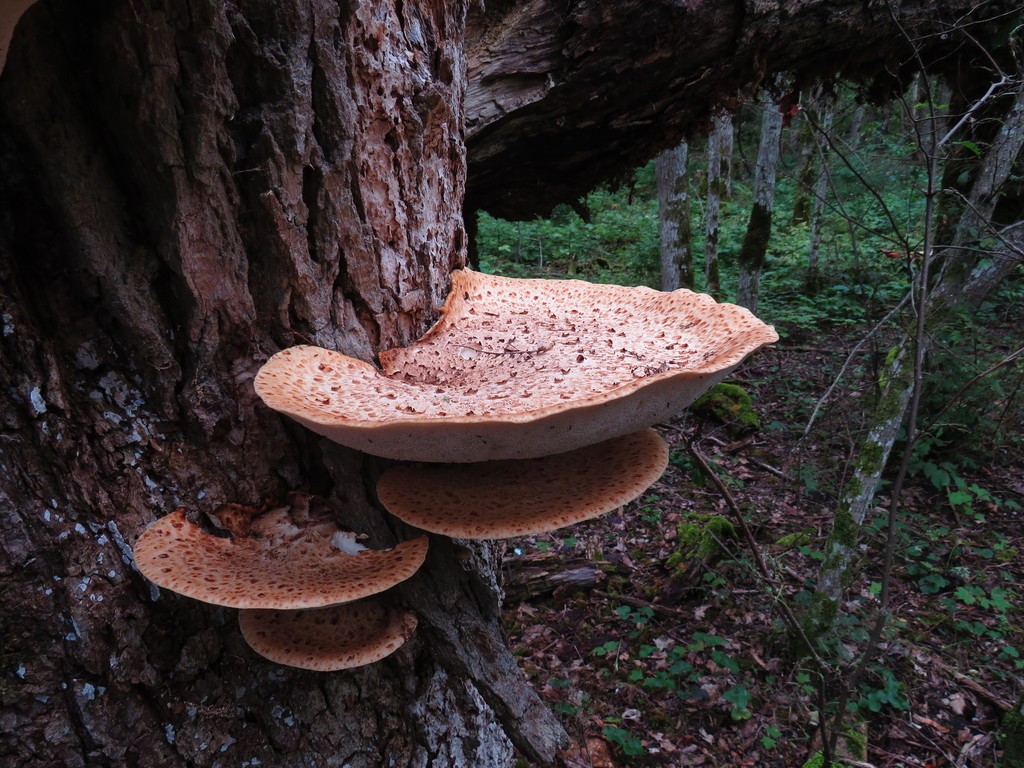
4. Dryad's saddle
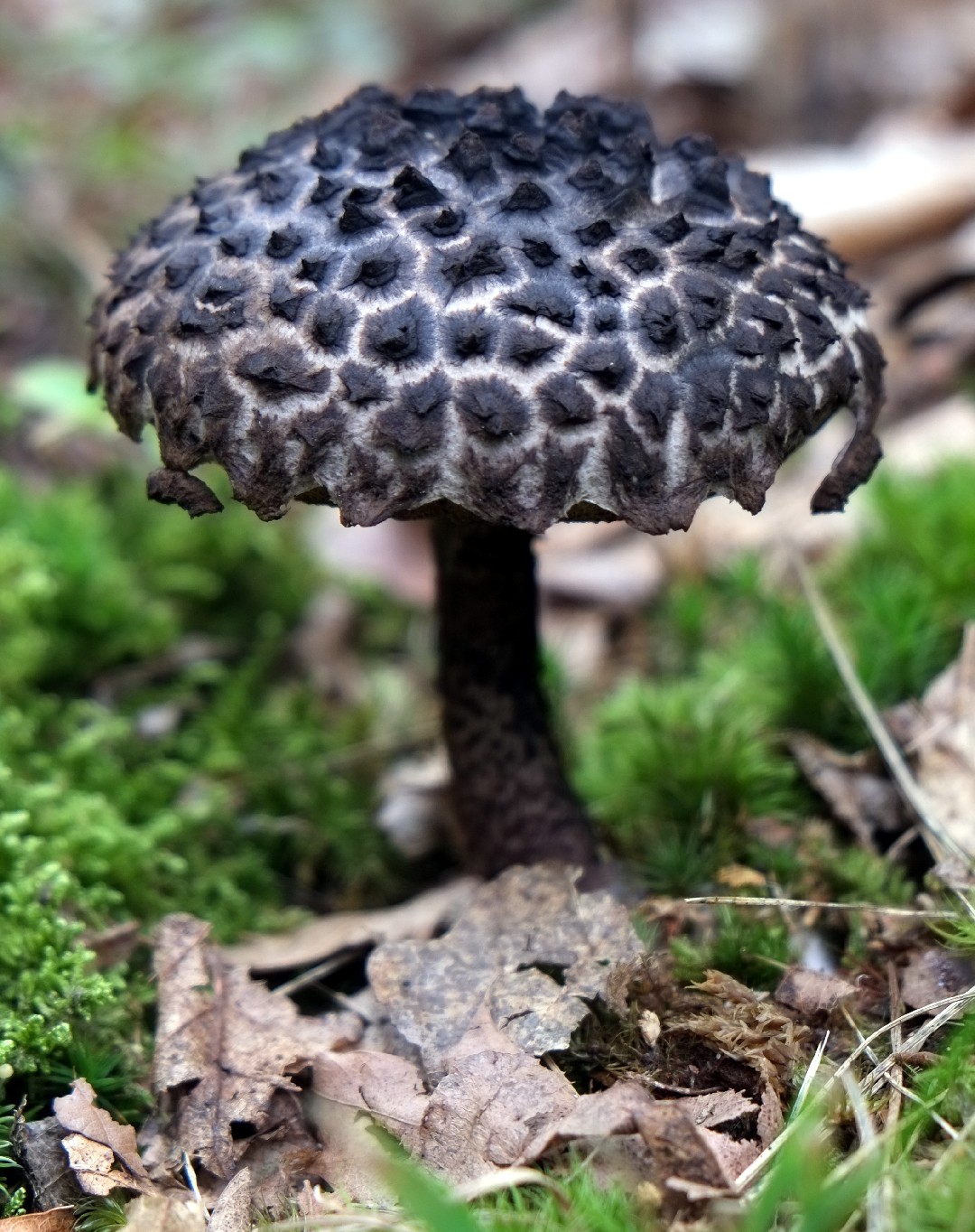
A familiar sight to spring morel hunters, dryad's saddle is noteworthy for its large size, striking scales, and watermelon-like smell. Similar to other mushrooms in the bracket fungi family, dryad's saddle can be used to make paper. Younger mushrooms are better suited for this purpose due to their smaller and more consistent fibers.
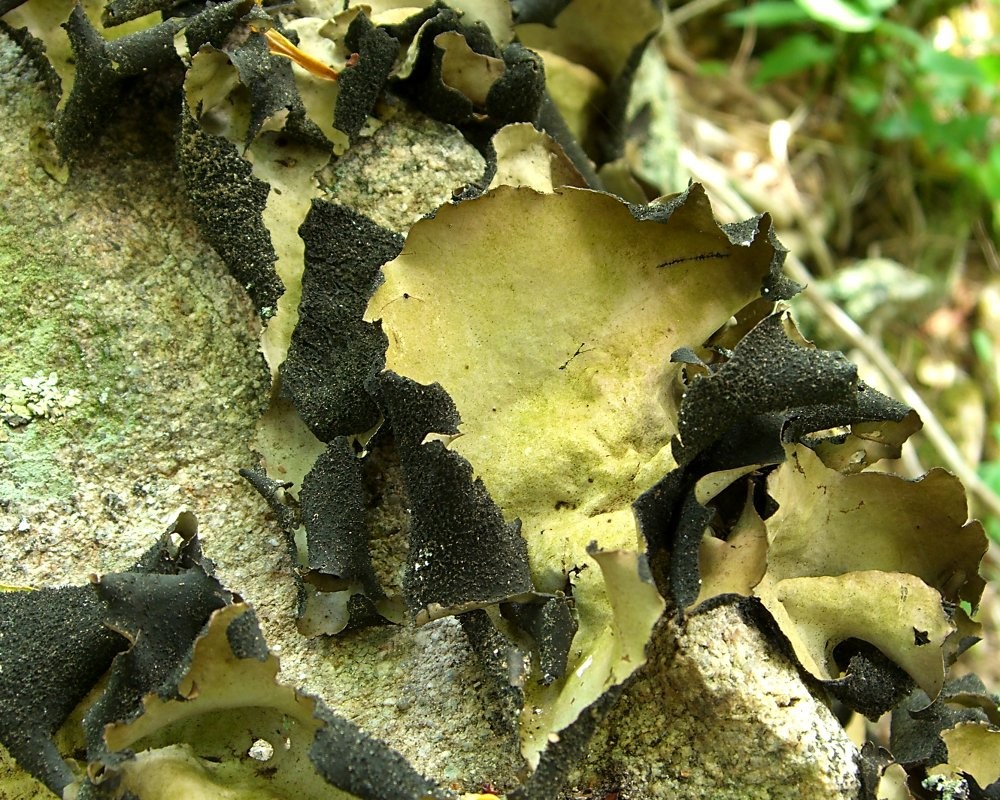
5. Smooth rock tripe
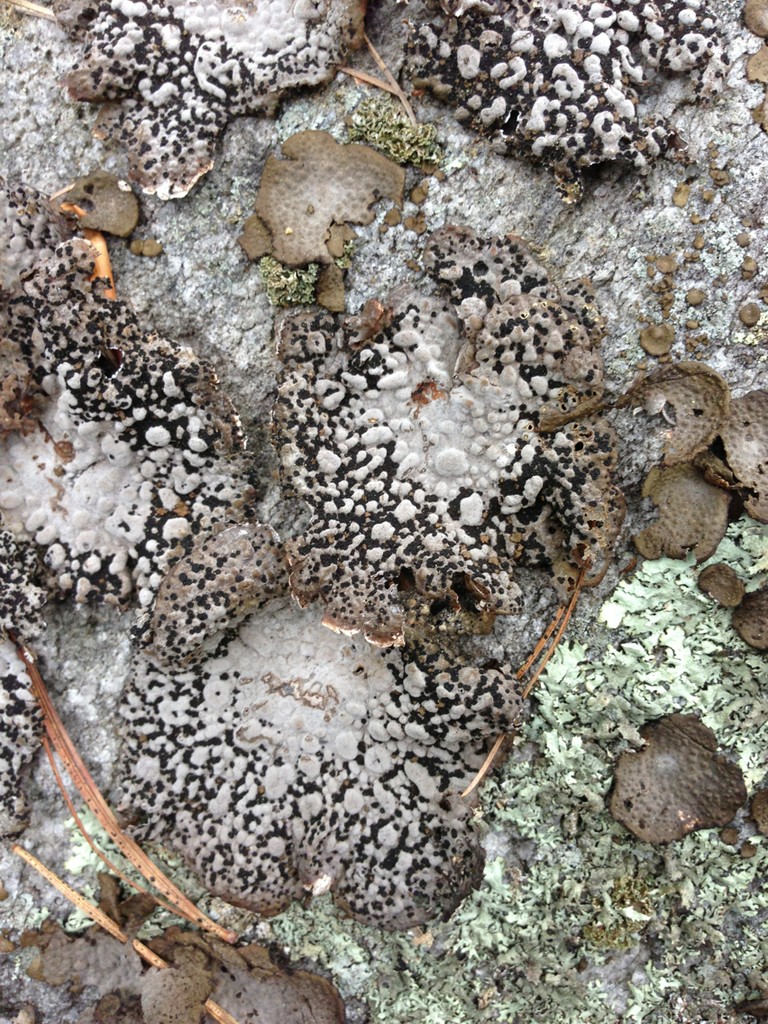
Smooth rock tripe is one of the largest types of lichen in the world. The vegetative part of a lichen's body has been recorded reaching 63 cm across. Though directly translating to "small-breasted," the mammulata epithet was given because many specimens develop a navel-like shape. The common name of "tripe" references its similarity to the food of the same name.
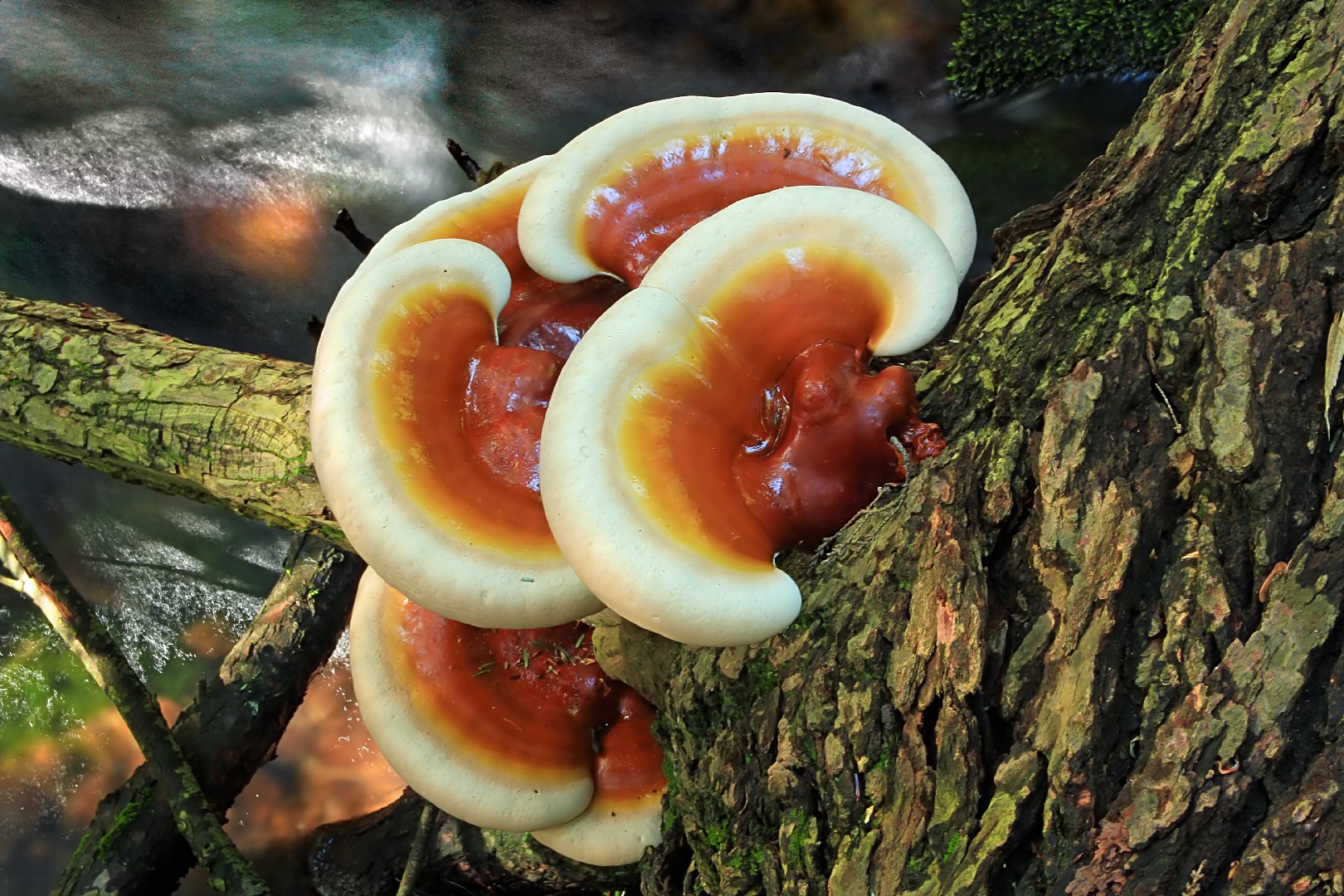
6. Hemlock varnish shelf
The hemlock varnish shelf is a parasitic species that can be found (unsurprisingly) on Hemlock trees. The species' range is limited to the eastern US - they are particularly common across Appalachia. As with other members of Ganoderma, hemlock varnish shelf has a shiny, lacquered-looking surface. This tough species is considered inedible.
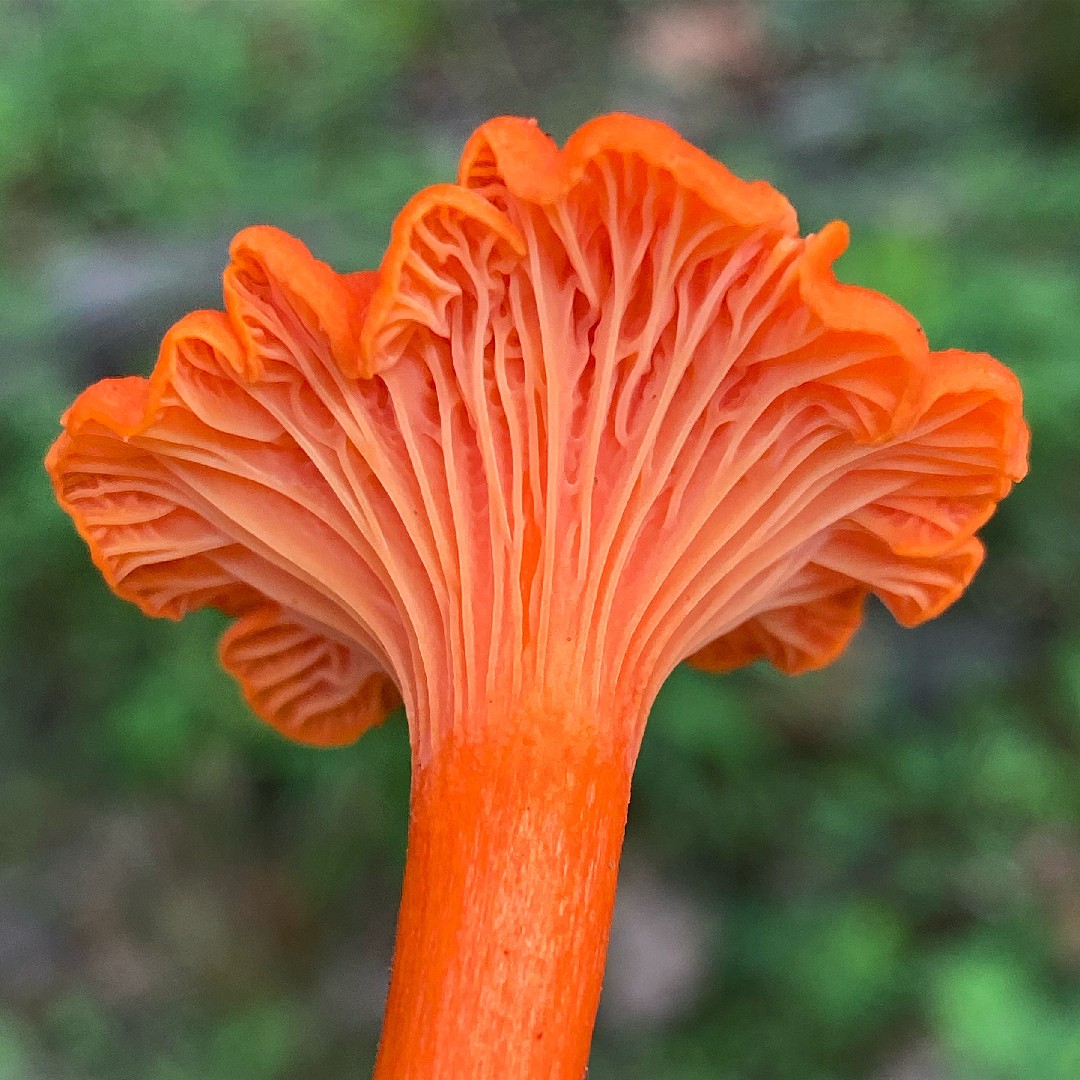
7. Red chanterelle
Red chanterelles can be found growing within hardwood forests across eastern North America. These small but striking mushrooms range from orange to red to pink in color. Edible and boasting complex flavors, many chanterelles are highly sought after. The red chanterelle, though less famous than some of its close relatives, is no exception. This species can be used in all sorts of recipes, with a vaguely sweet or piney taste.

8. Spotted cort
Spotted cort thrives in oak forests due to the mutually beneficial relationship it has with the trees’ roots. The mushroom provides nutrition to the tree and keeps the soil chemistry favorable for both species. The lavender-hued caps make spotted cort easy to identify, even when brown age spots start to appear.
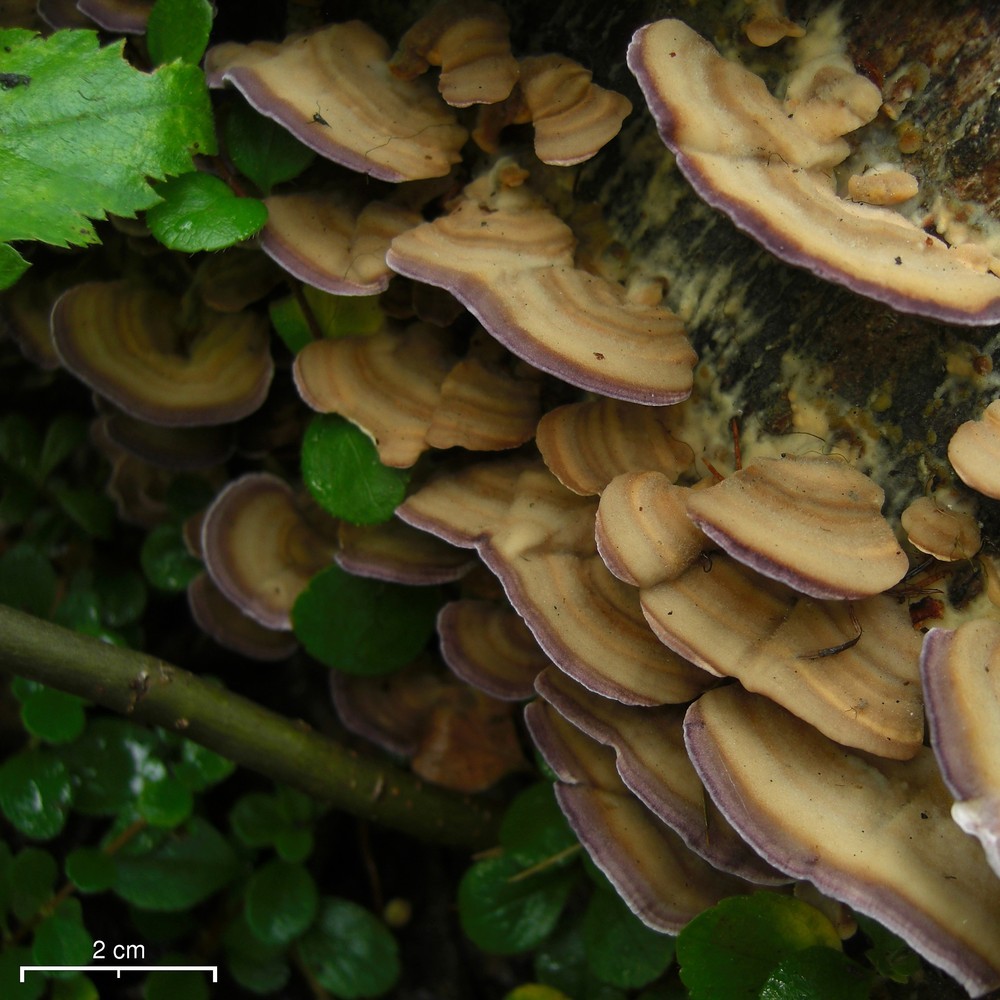
9. Violet-toothed polypore
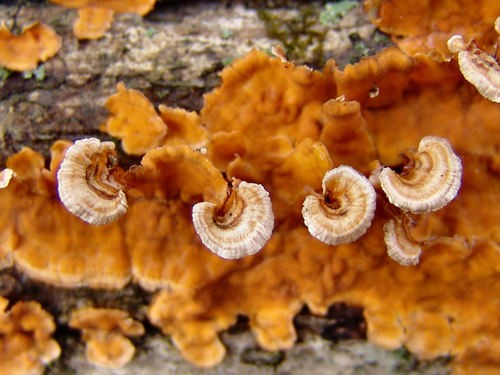
This inedible shelf or bracket fungus grows in overlapping clusters and layers on hardwood stumps and fallen logs. It also causes a sapwood rot in standing trees. Check under the violet-toothed polypore's cap for its secret lilac-shaded pore surface studded with descending “teeth.”
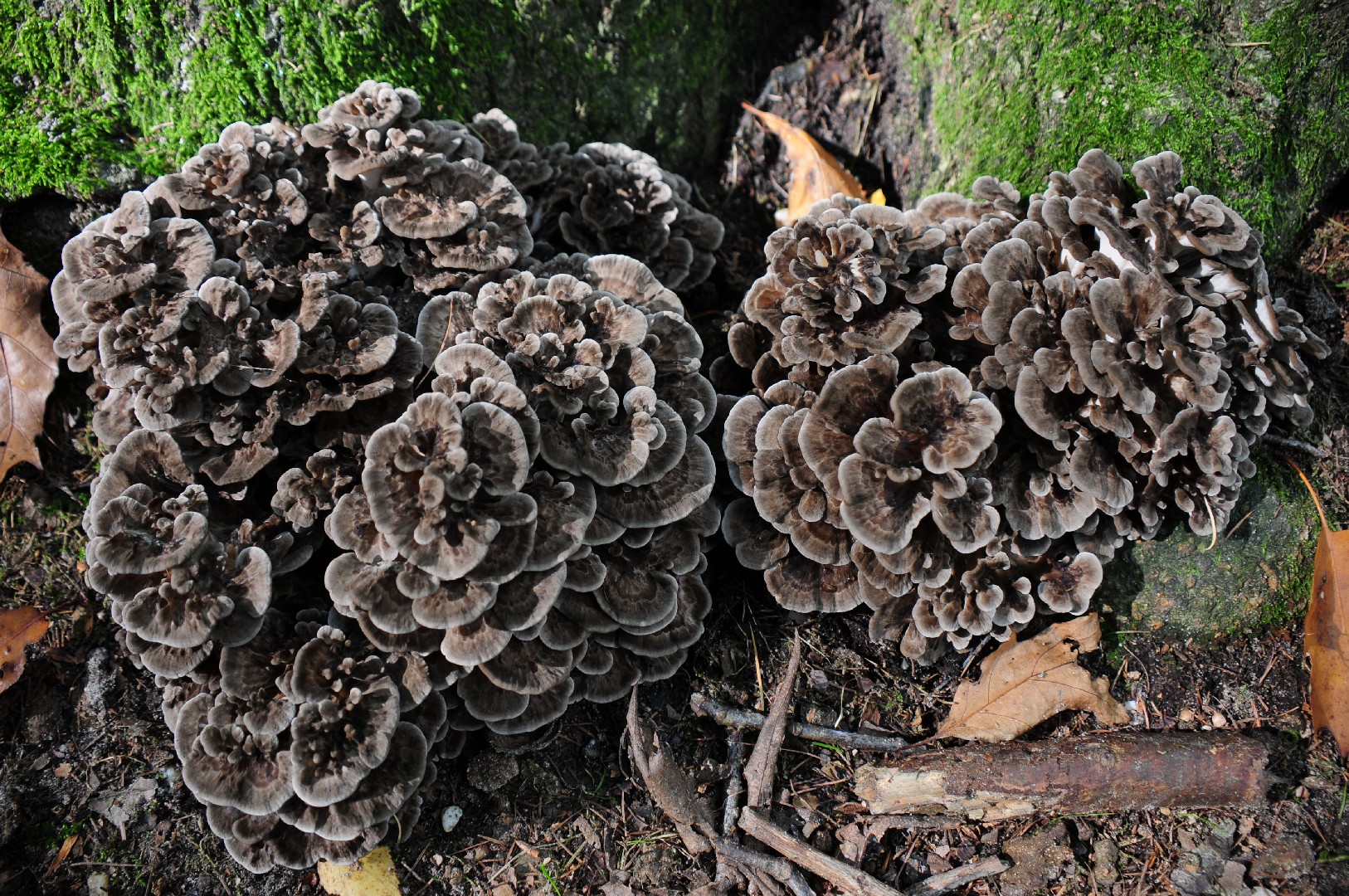
10. Hen-of-the-woods
Often found at the base of oak trees, this clustered fungus grows in distinctive rosettes. It attacks the roots of living hardwood trees. Hen-of-the-woods is considered edible when harvested young, and is cultivated in Japan on top of compressed sawdust.
More







