




Top 20 Most Common Mushrooms in Trinidad And Tobago
Rich, biodiverse and pristine, Trinidad And Tobago offers an astonishing arena for fungal flourish. Defined by its tropical climate, diverse soil types and minimal human intervention, this twin-island nation is a haven for numerous mushroom varieties. With an impressively vast array of native flora and fauna contributing to a thriving ecosystem, Trinidad And Tobago harbors a rich wealth of mushroom species ready to be explored. In this writing, a comprehensive look at the top 20 most common mushrooms in Trinidad And Tobago is presented, shedding light on the unique characteristics and habitats of each. Dive into this fungal wonderland and discover its hidden gems.

Most Common Mushrooms
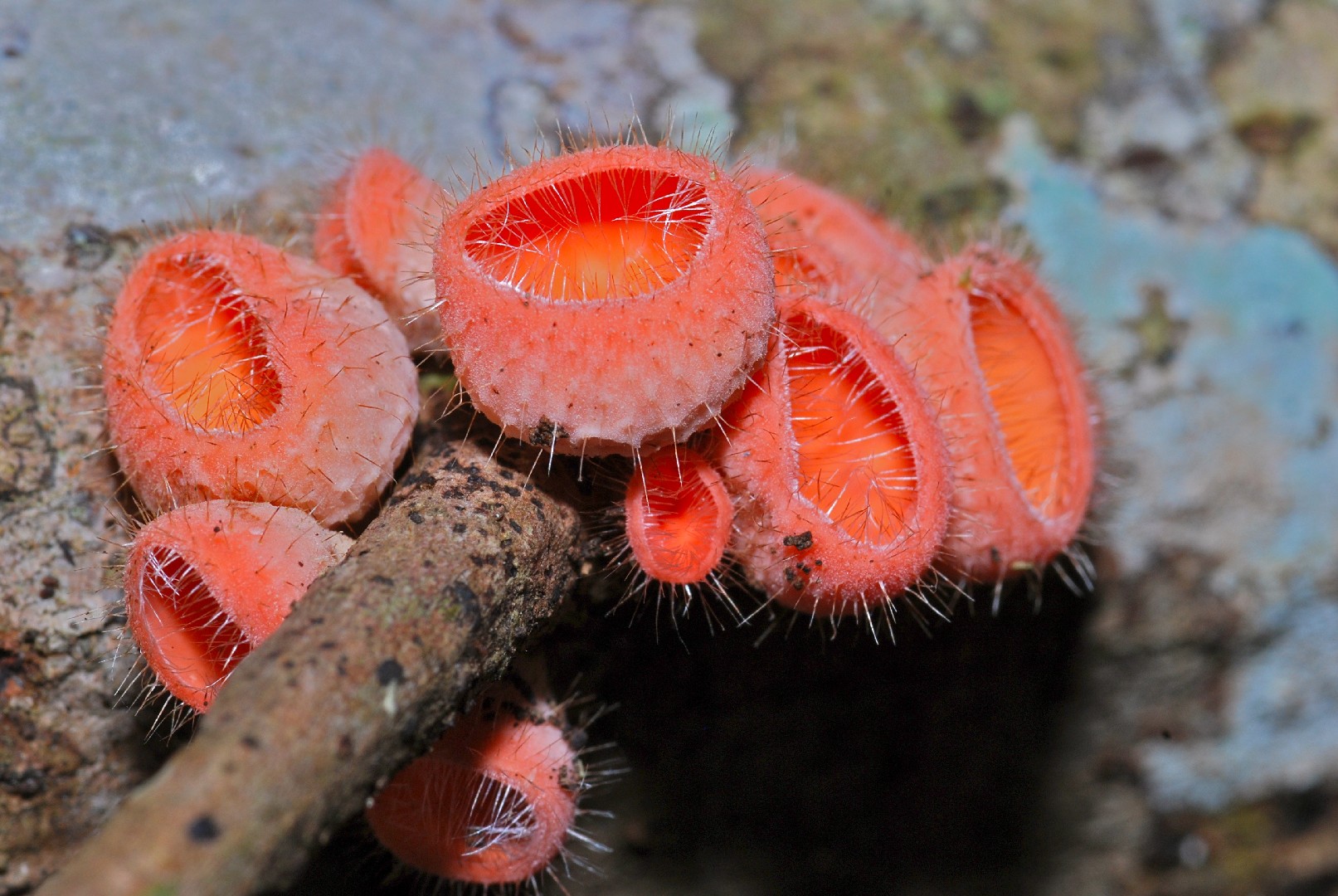
1. Cookeina tricholoma
Cookeina tricholoma is a hose mushroom from the family of the Kelchbecherlingsverwandten.
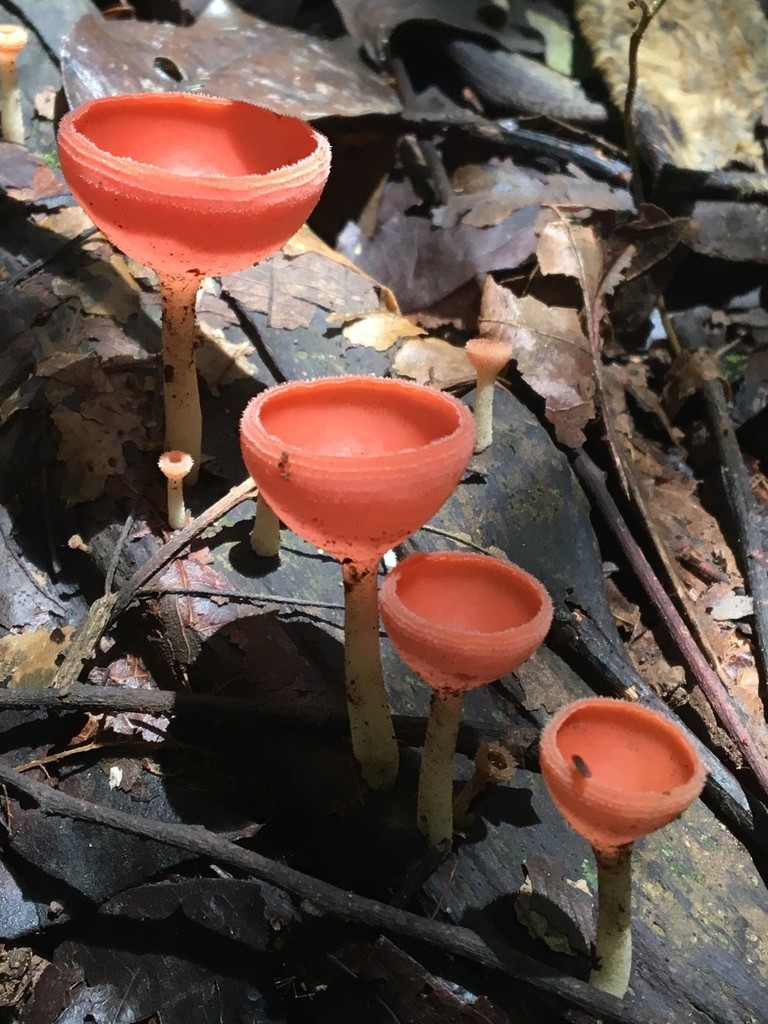
2. Cookeina speciosa
Cookeina speciosa is a hose mushroom from the family of the cupbearer relatives.
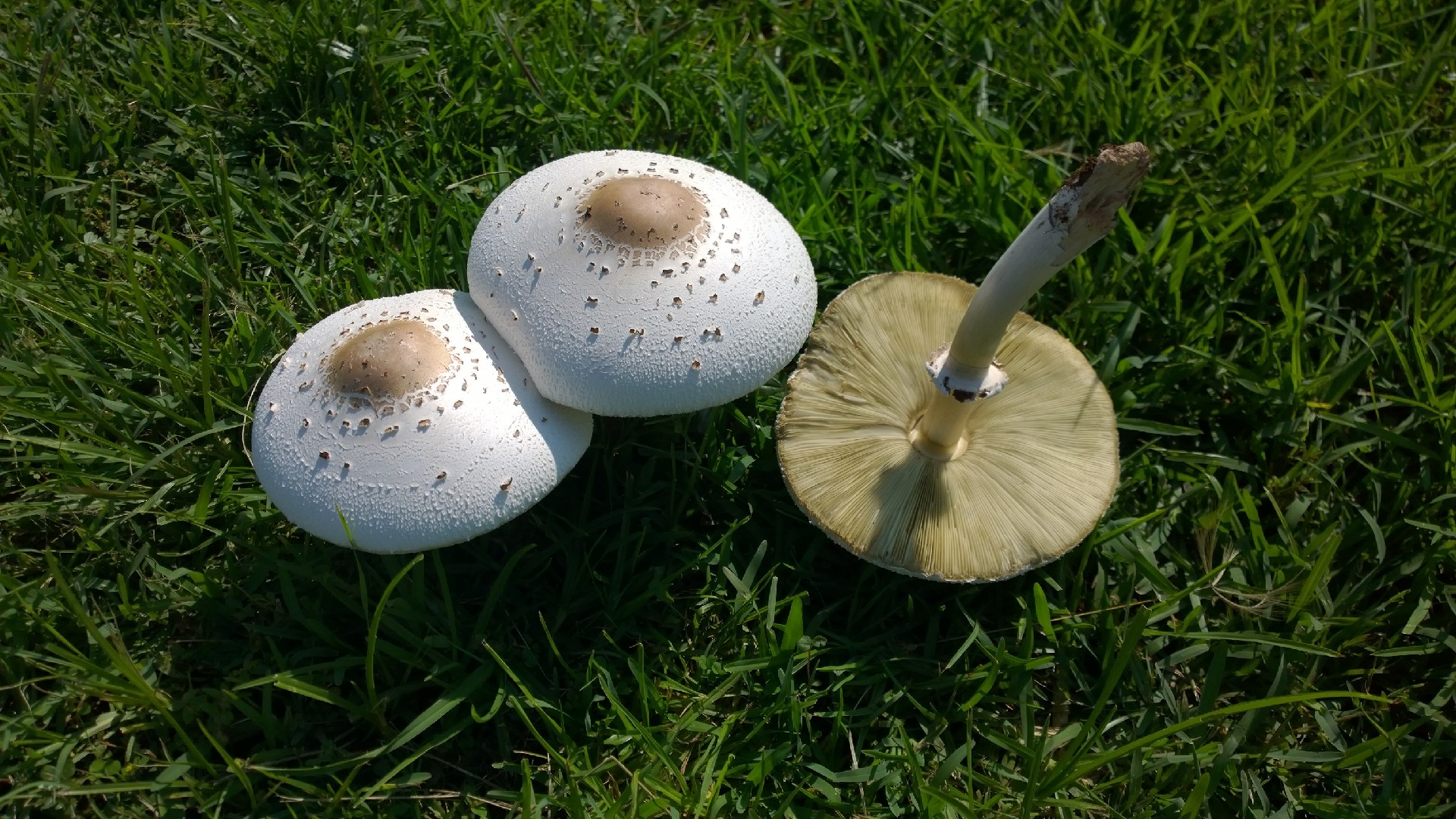
3. False parasol
Though the false parasol appears unassuming, the species is famous—or, infamous—for its toxicity. It looks unfortunately similar to Agericus campestrus, a commonly eaten mushroom, but the false parasol can be distinguished by its highly unusual green spore print. Although they are no good to eat, they can be pretty to look at. The species may grow in ring-shaped groups in meadows and on forest floors in what are sometimes called "fairy circles."
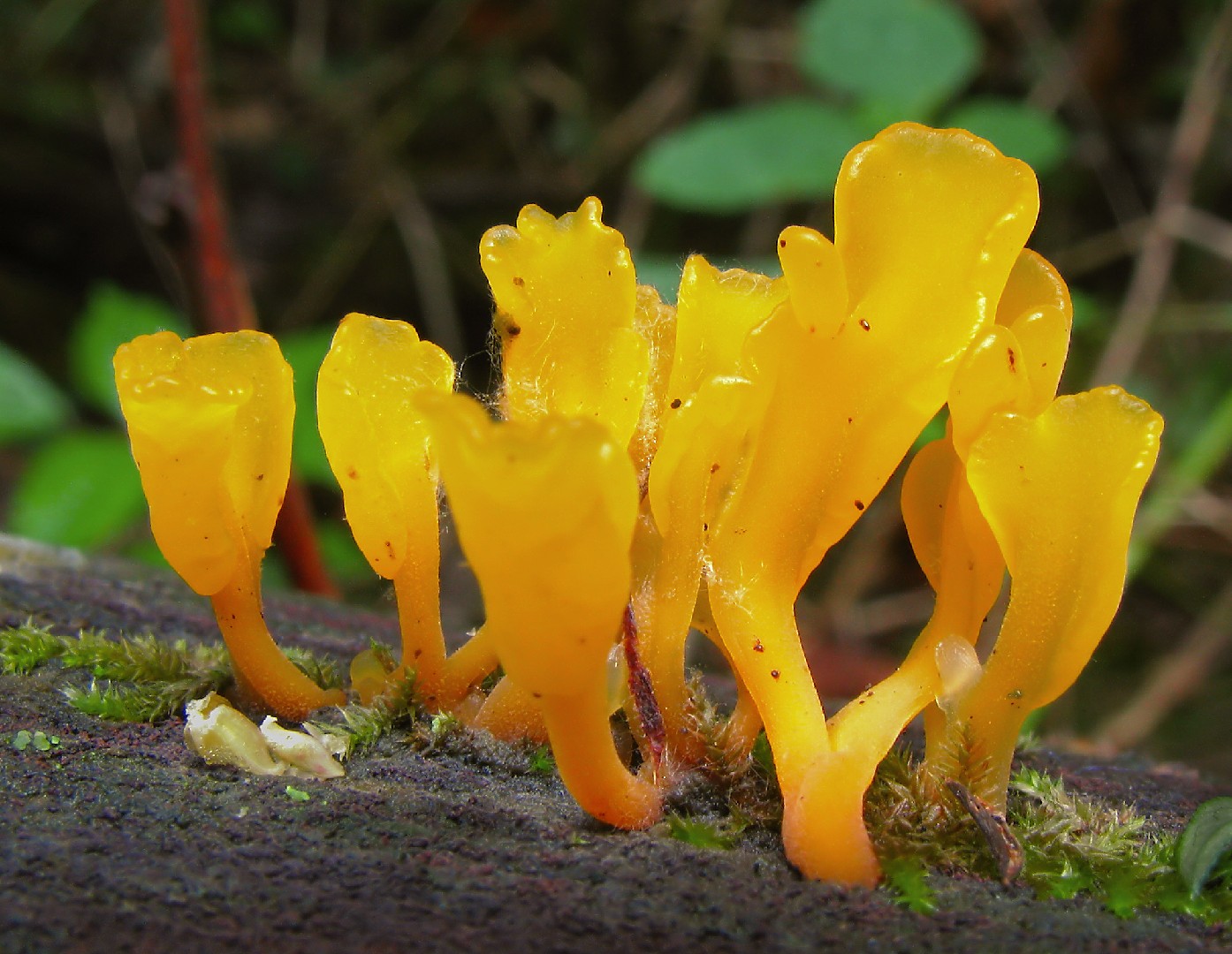
4. Fan-shaped jelly-fungus
Just as its Latin and the common English names suggest, the fan-shaped jelly-fungus (Dacryopinax spathularia) is a fan-shaped or spatula-shaped jelly-like mushroom. It commonly grows in wood cracks and it sometimes even appears in the cracks of the processed wood and lumber. Despite the word "jelly" in its name, the fan-shaped jelly-fungus is not considered edible.
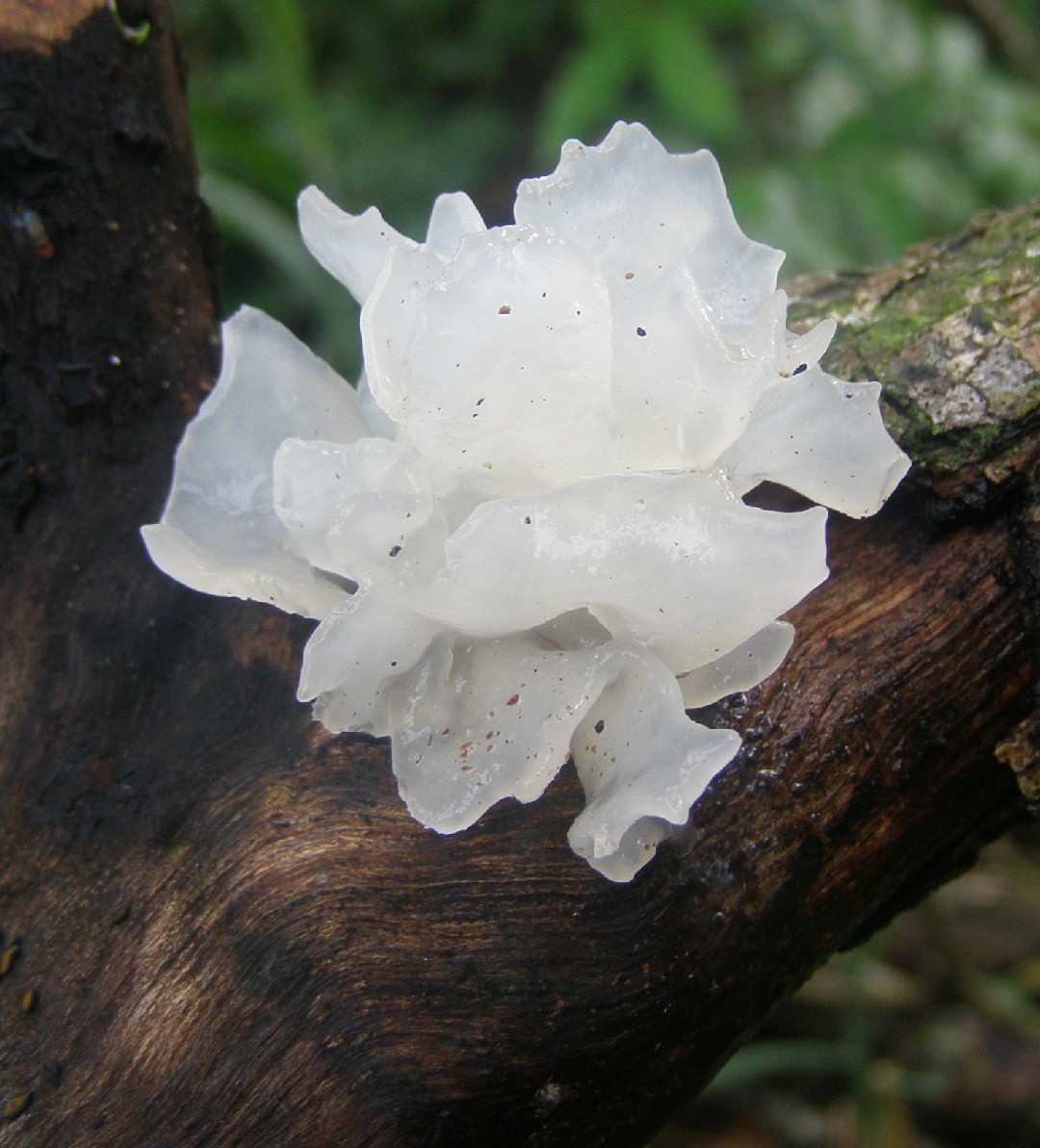
5. Snow fungus
Snow fungus (Tremella fuciformis) is so-named not because it is associated with winter, but, rather, because its fruitbodies look like little piles of snow fungus on the ground. This fungus actually inhabits very warm - tropical and subtropical - locations around the globe. Snow fungus does not have much taste, but it is cultivated for culinary use across East Asia, where it is often added to thicken soups and desserts.

6. Mauve parachute
The tiny mauve parachute (Marasmius haematocephalus) is a miniature delight. A broad, delicate, brightly-hued cap sits like an open umbrella atop a slender, delicate, darkly-colored stalk. In dry conditions, the caps shrivel and become near-invisible beneath the detritus of the forest floor, but the next rain will open these hardy little mushrooms right back up again.
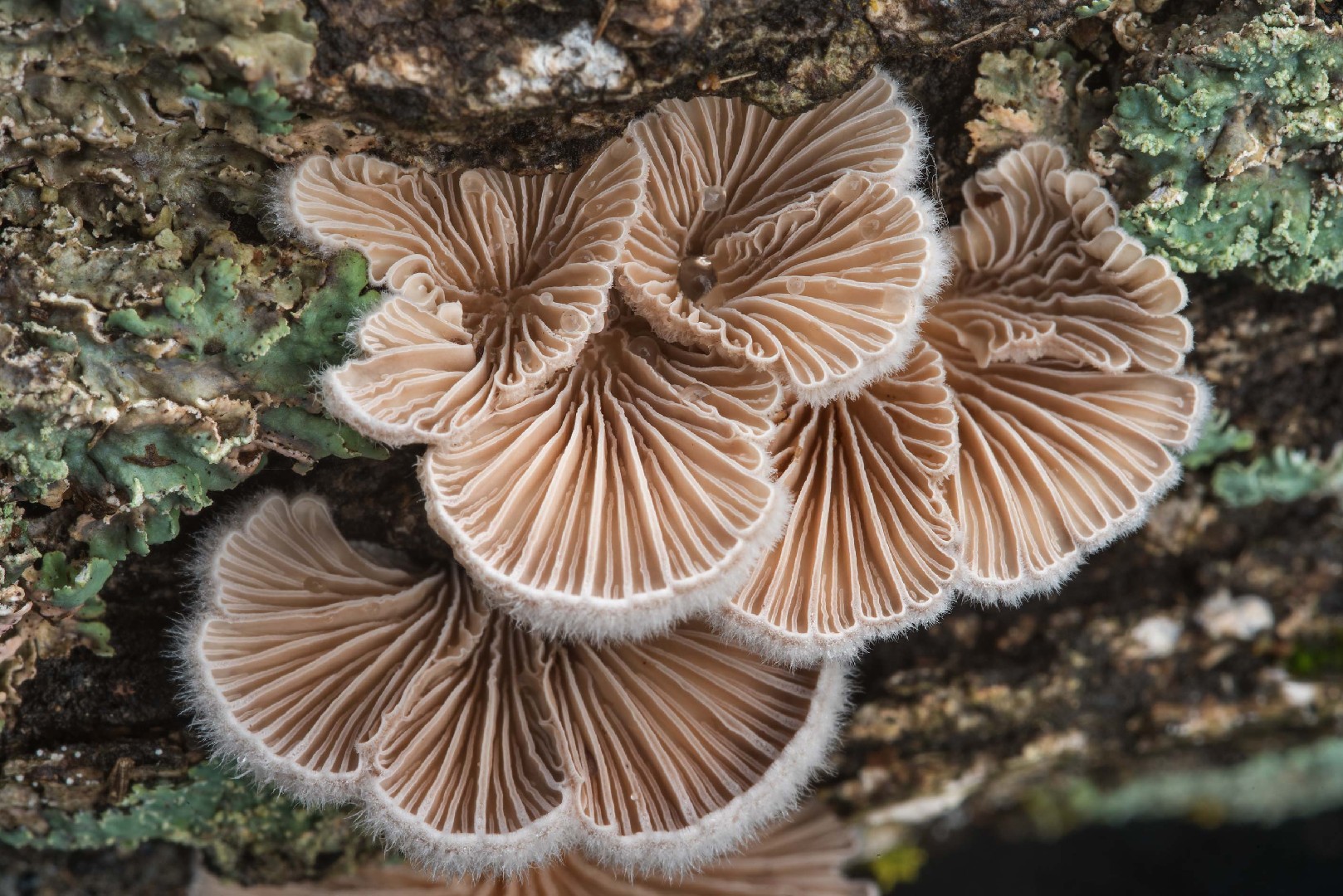
7. Split gill
Split gill(Schizophyllum commune) can be found across the globe. Uniquely, it is the only mushroom species known to display the capability to retract by movement. It is considered inedible, although not necessarily toxic. Furthermore, it is not recommended to smell this species, as the spores are capable of sprouting and growing in nasal passages.
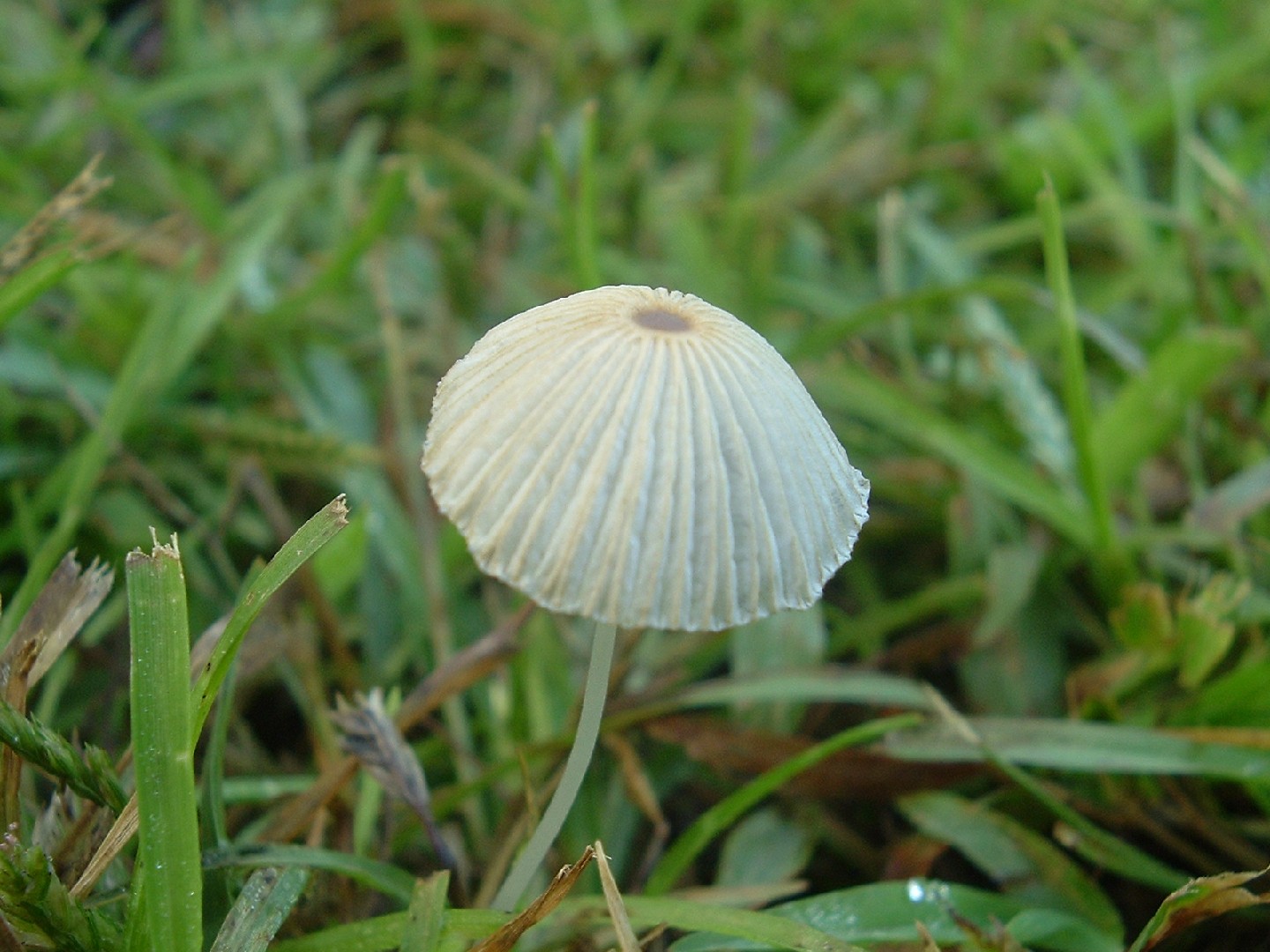
8. Pleated inkcap
This extremely delicate little mushroom appears during the night after rains, in areas of short grass or detritus. The entire pleated inkcap fruitbody rises, expands, sheds its spores, and decays within 24 hours. Its scientific name Parasola plicatilis refers to the pleated umbrella shape of the mushroom cap.
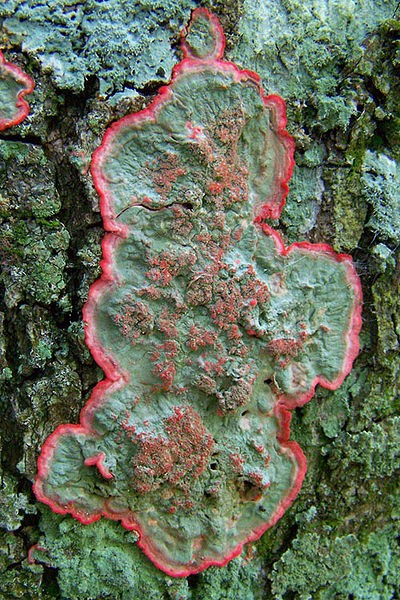
9. Christmas lichen
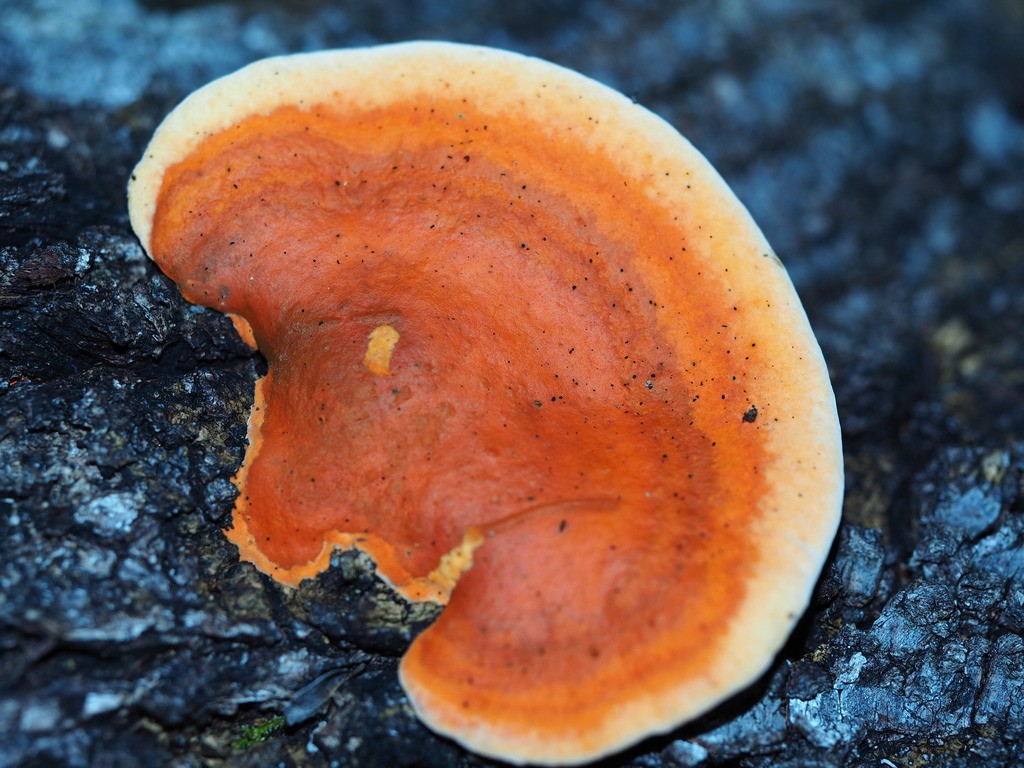
10. Southern cinnabar polypore
Southern cinnabar polypore grows in a variety of contexts, though it prefers to grow on deadwood near open water sources. This mushroom fruits from the late summer to early winter. True to its name, young southern cinnabar polypore has a bright orange color that's similar to cinnabar but may fade in older age.

More







