




Top 20 Most Common Mushrooms in Khanty-Mansiysk

Most Common Mushrooms
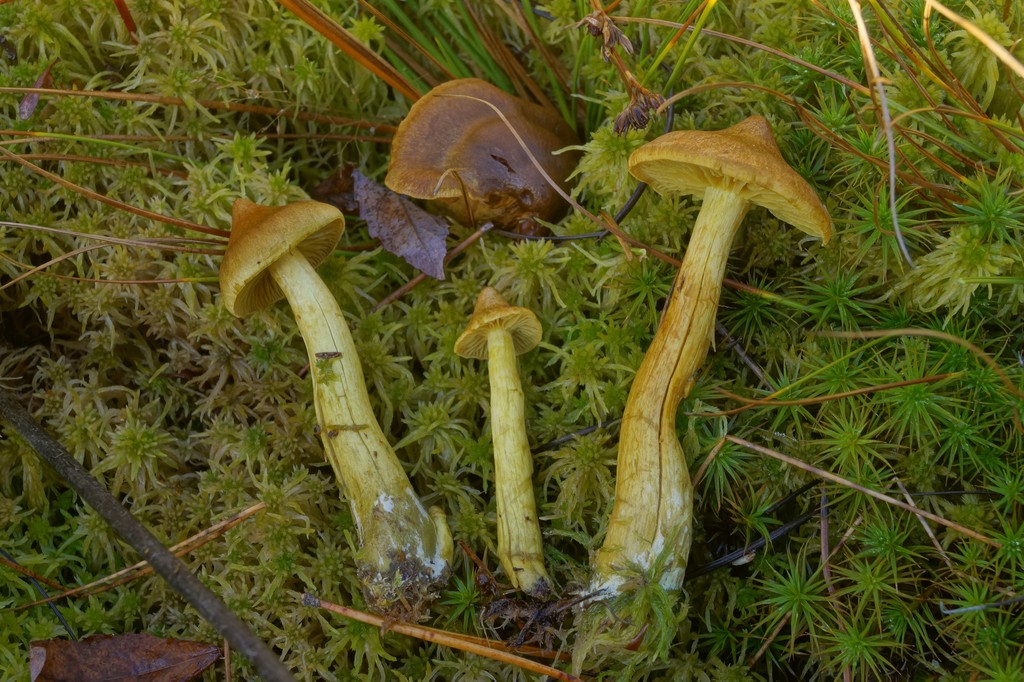
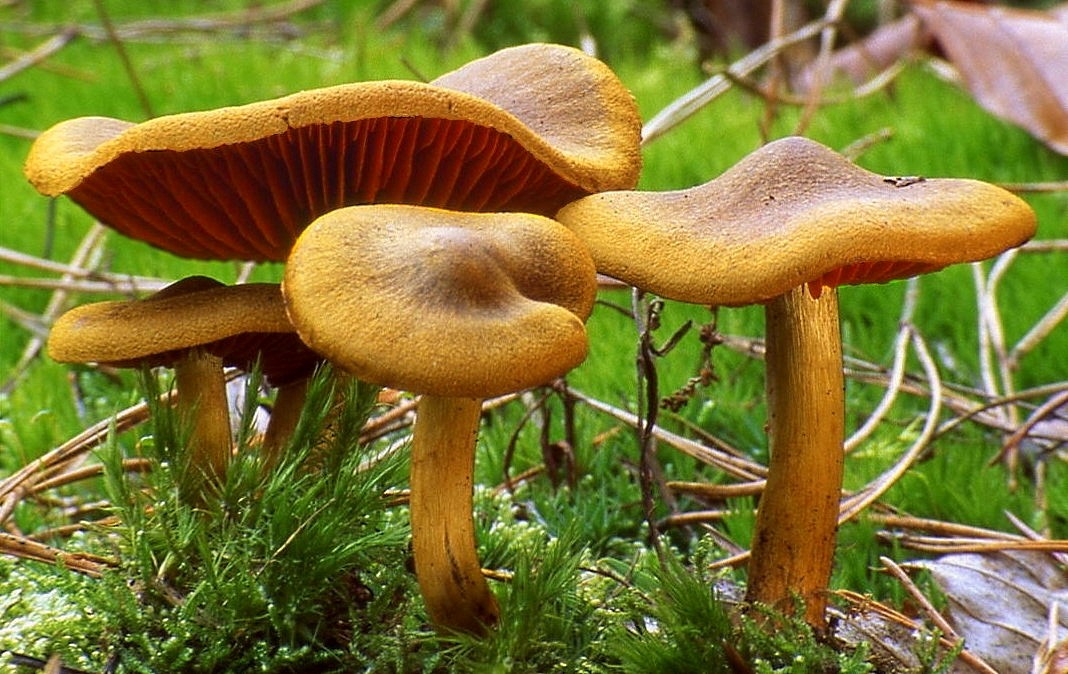
1. Cortinarius chrysolitus
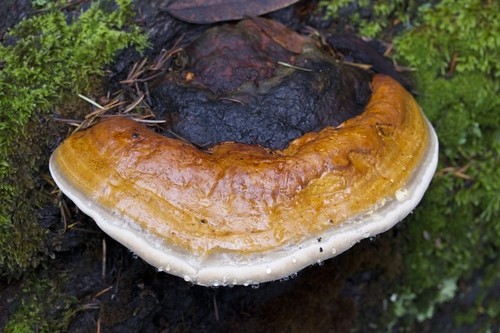
2. Red-belted conk
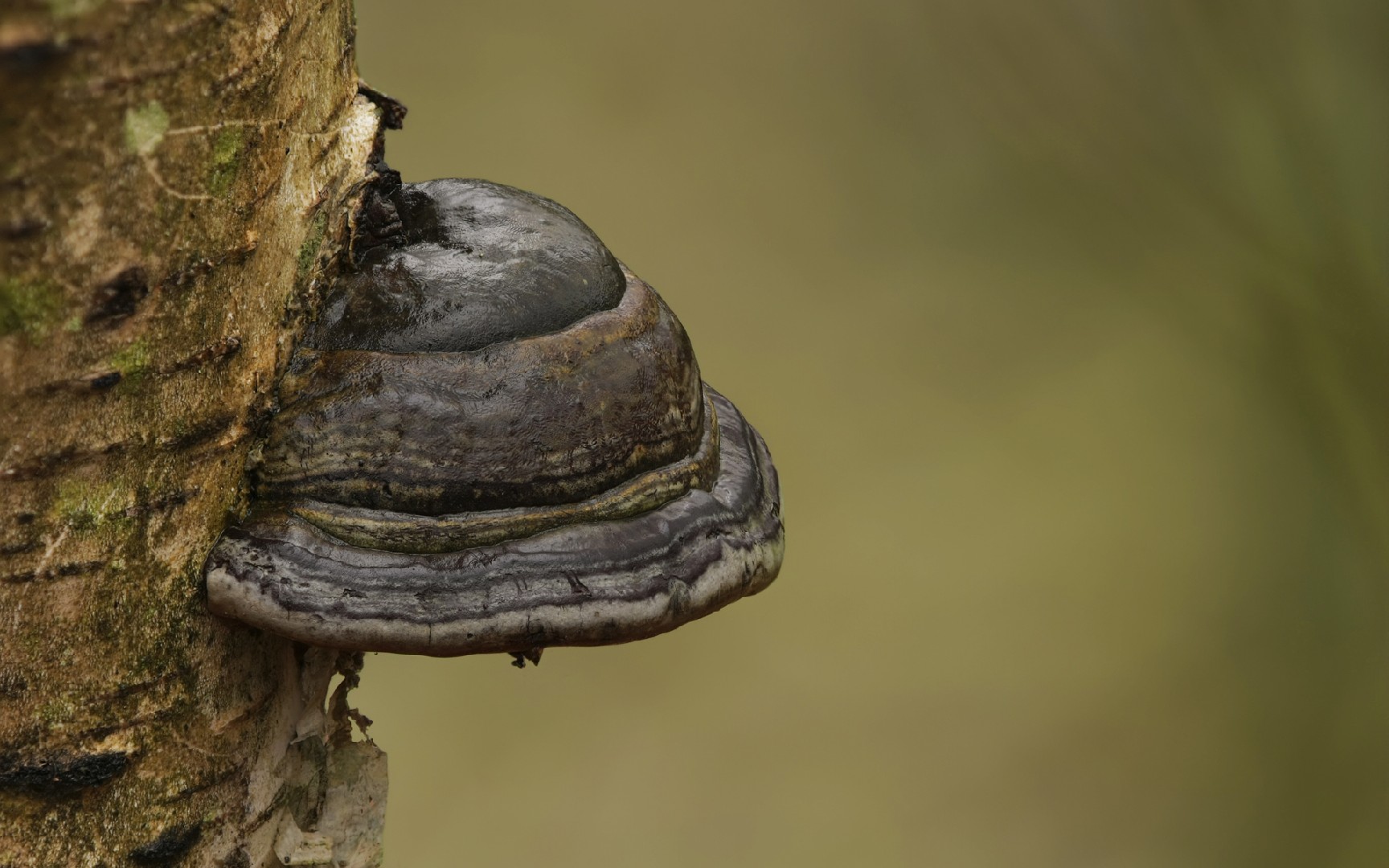
This bracket or shelf fungus grows for years on both living and dead conifer trees. Its annual growth creates distinctive rings or ridges, with a bright red or orange band separating the old layers from the current growth. Red-belted conk is only a danger to living trees if it colonizes a very deep cut or broken top.
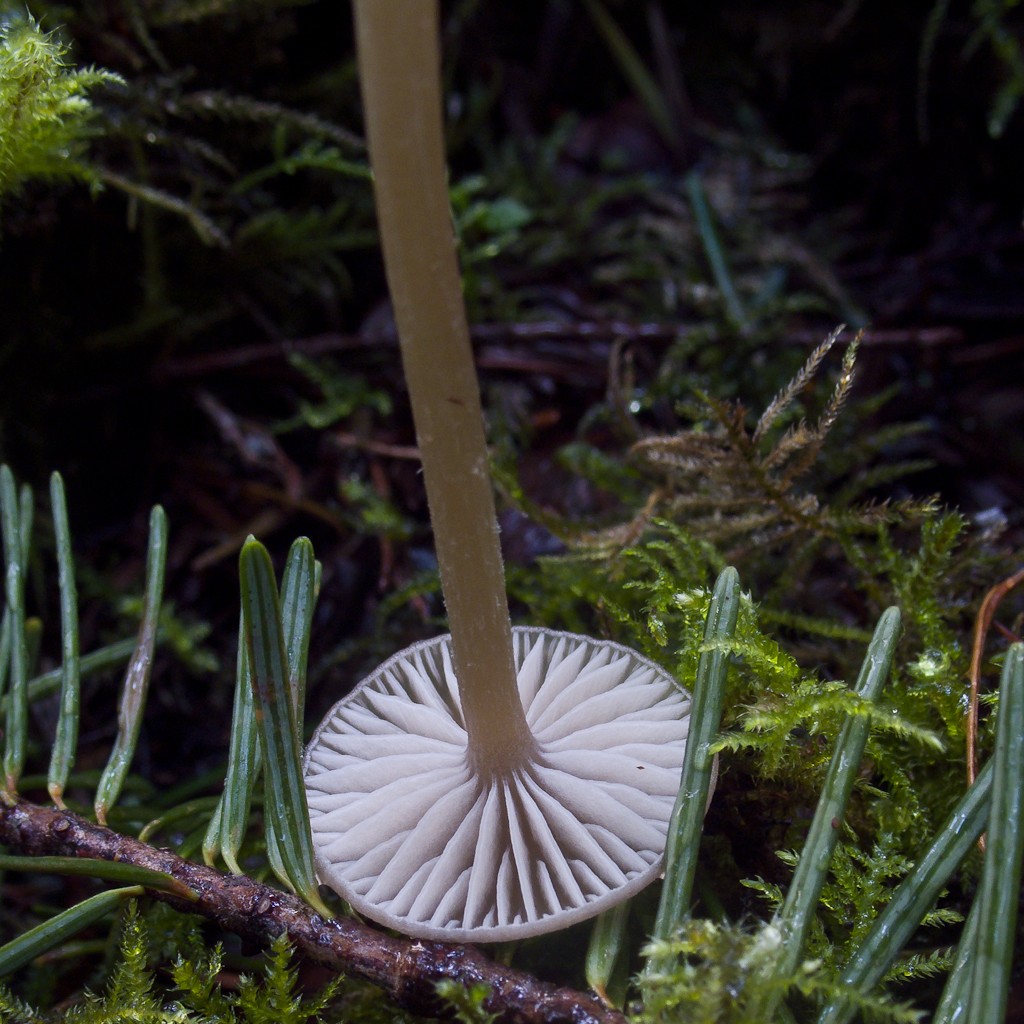
3. Sphagnum greyling
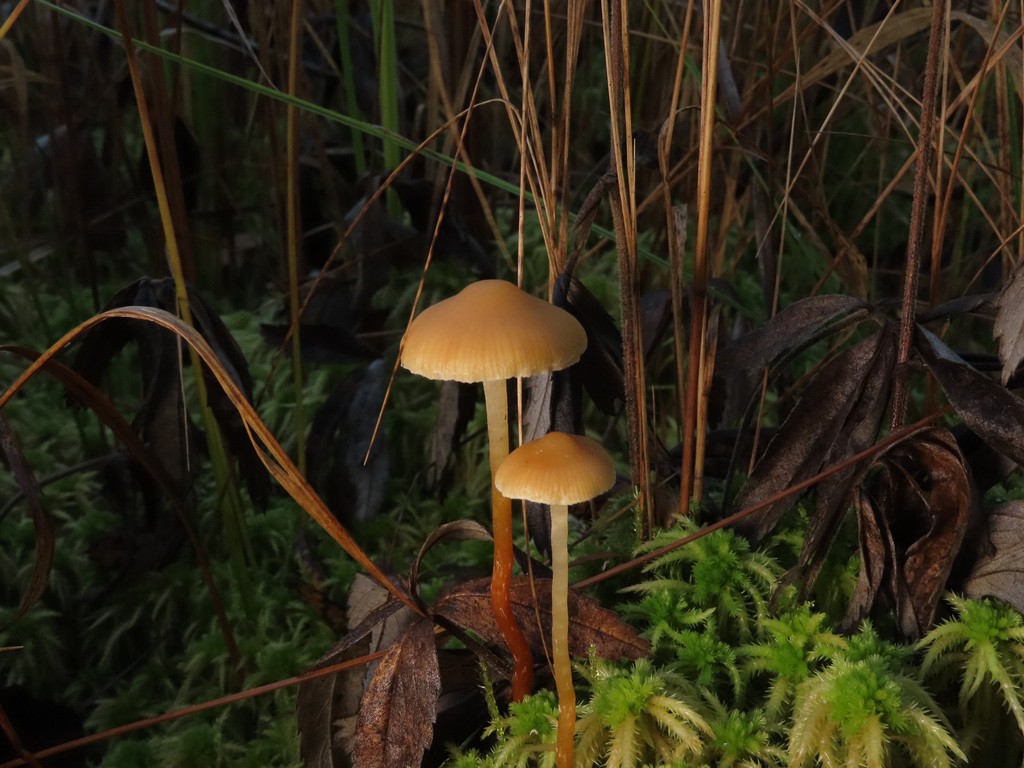
Sphagnurus paluster can be white pruinose when young and does not stain or bruise when crushed. Its flesh is thin, soft, and watery. The cap is 1 to 3 centimetres (0.39 to 1.2 in) in diameter, starting as conical or bell shape when young, expanding flat with a distinct umbo when older. It is smooth, striate, and hygrophanous; usually an olive-brown when moist, drying to a pale grey color. The white to grey gills are adnate or with a slight tooth. Subgills are often present creating a close to subdistant spacing. The stem is 2 to 10 centimetres (0.79 to 3.9 in) long and 1 to 5 mm (0.039 to 0.20 in) in diameter, equal and hollow. The coloring is usually lighter than the cap, being grey-brown or grey. The white to cream colored spores are 5.5 to 8.5 µm x 4 to 4.5 µm, elliptical, and smooth. 
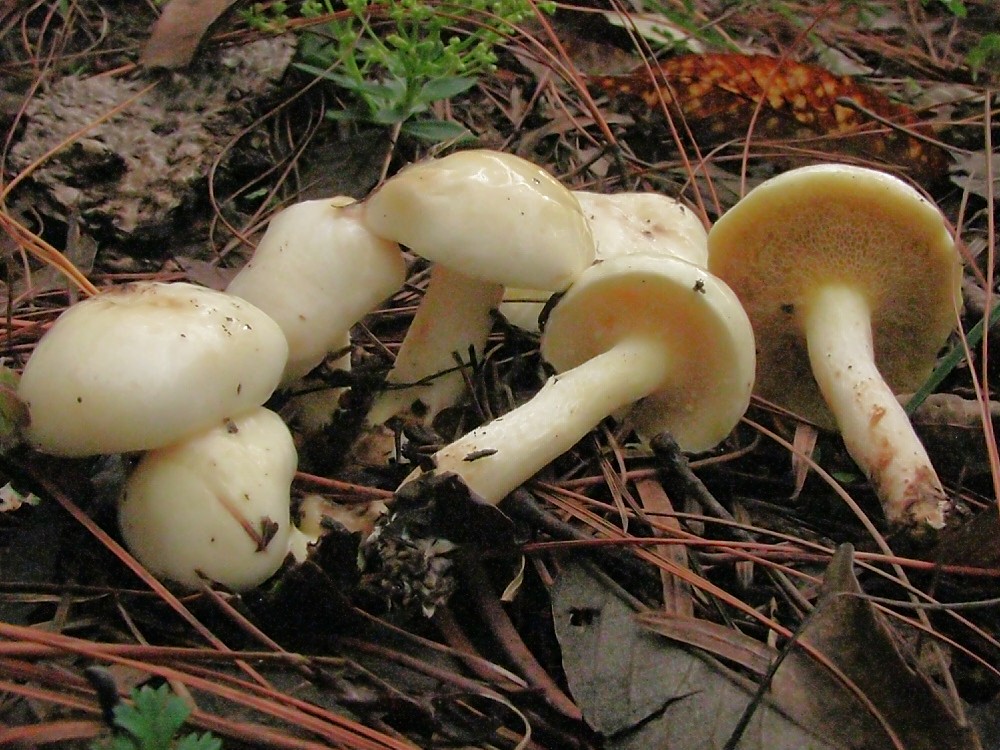
4. Slippery white bolete
The slippery white bolete can be found beneath pine trees. Its large, slimy caps are particularly frequent sights around forest edges. Its scientific name, Suillus placidus, translates to “gentle and swine-like,” in poetic reference to the mushroom’s shape and greasy appearance.
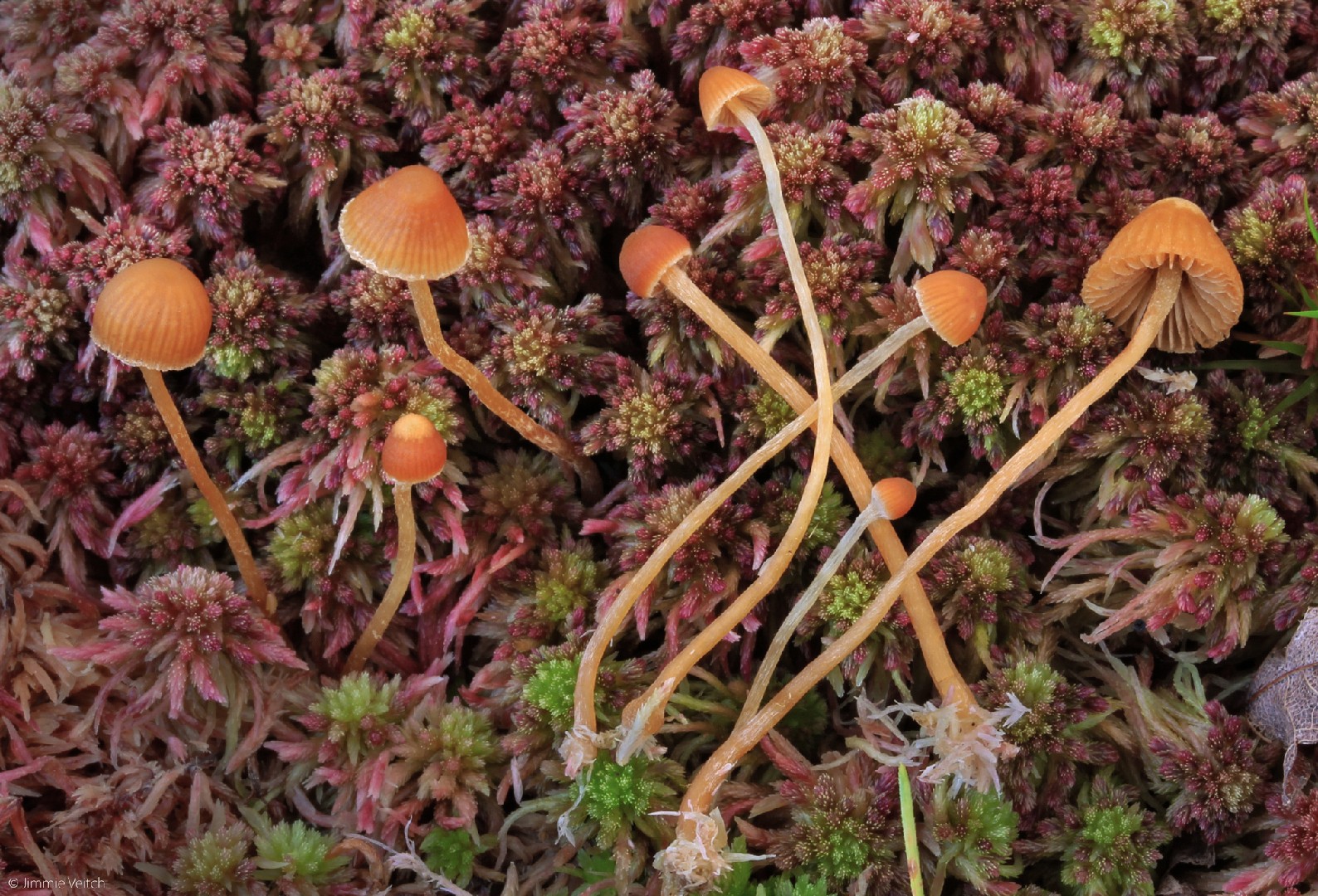
5. Galerina sphagnicola
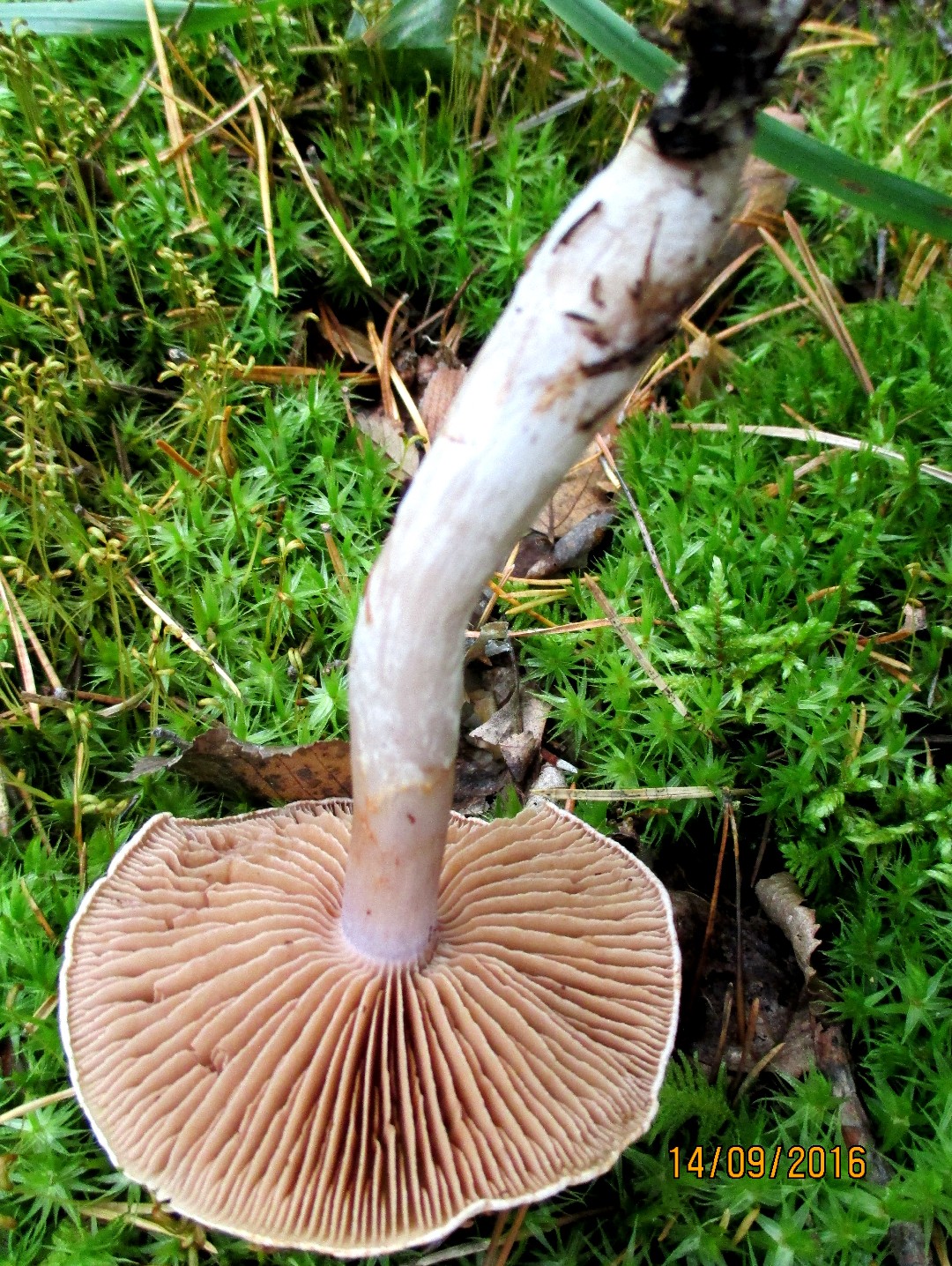
6. Cortinarius biformis
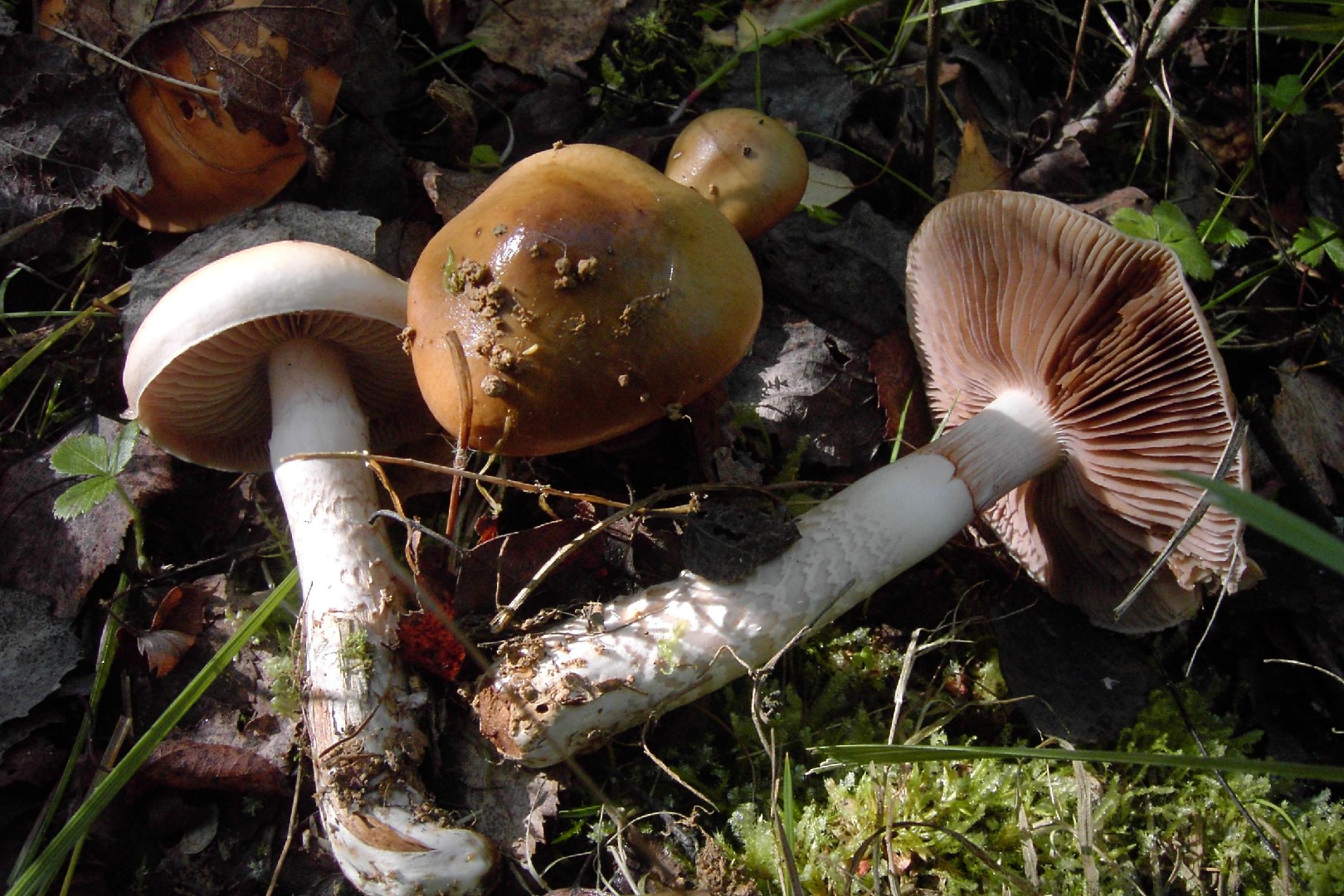
7. Girded webcap
The scientific name "Cortinarius trivialis" is a bit deceptive - this mushroom species is sturdy and sizable, not trivial or diminutive. Though it sports a fair amount of variability in color, girded webcap almost always has a slimy cap and a thick, shaggy stalk. The species can be found in temperate forests across Europe and North America; in the latter location, it commonly associates with quaking aspen.
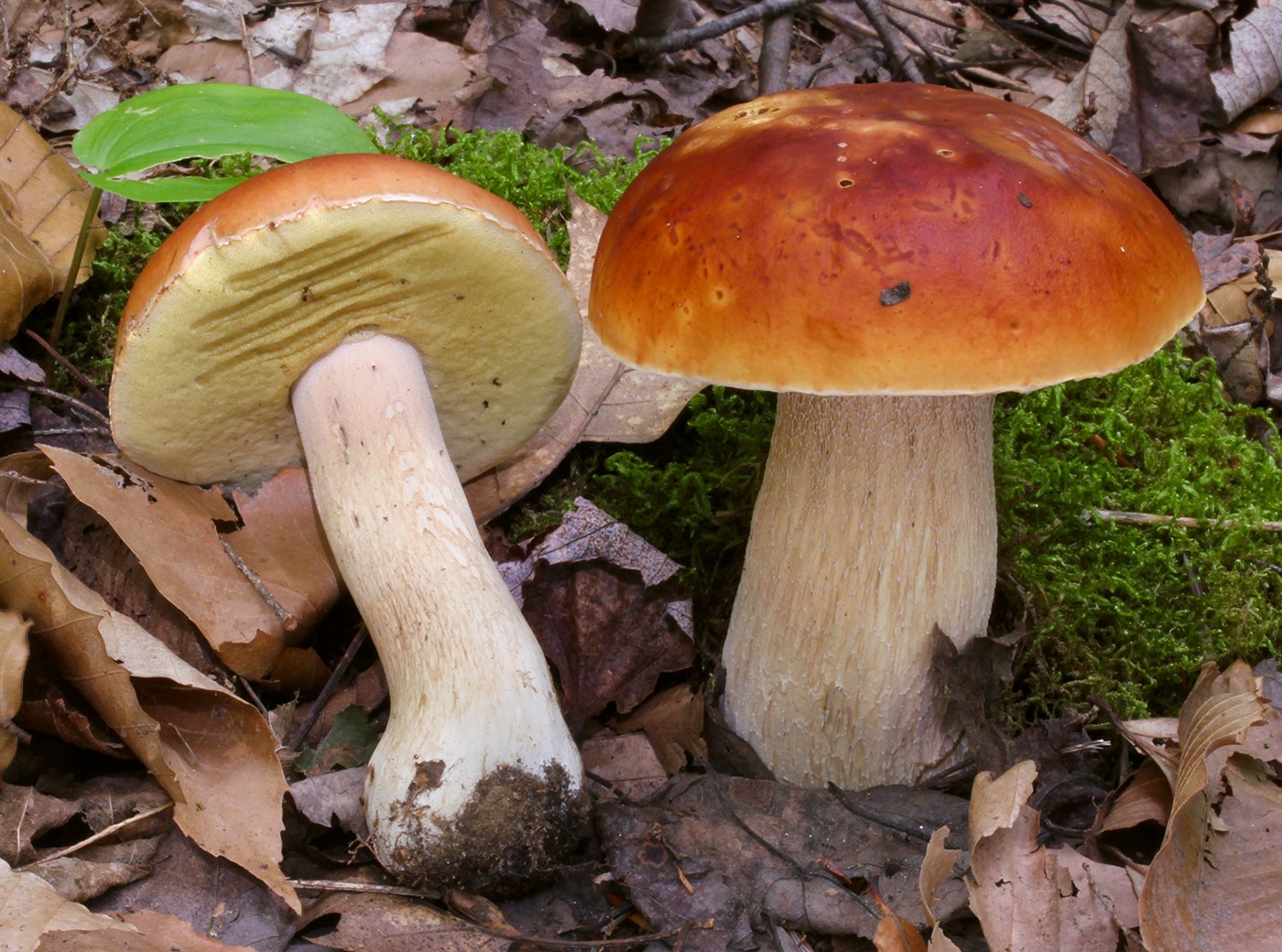
8. King bolete
Extremely popular in many cuisines, this edible wild mushroom grows around the world near the roots of forest trees. In some regions, king bolete mushrooms are collected in great enough volumes that their sale can support entire families during the harvest season. King boletes are reported to be high in fiber, vitamins B and C, calcium, potassium, magnesium, zinc, and several antioxidants.
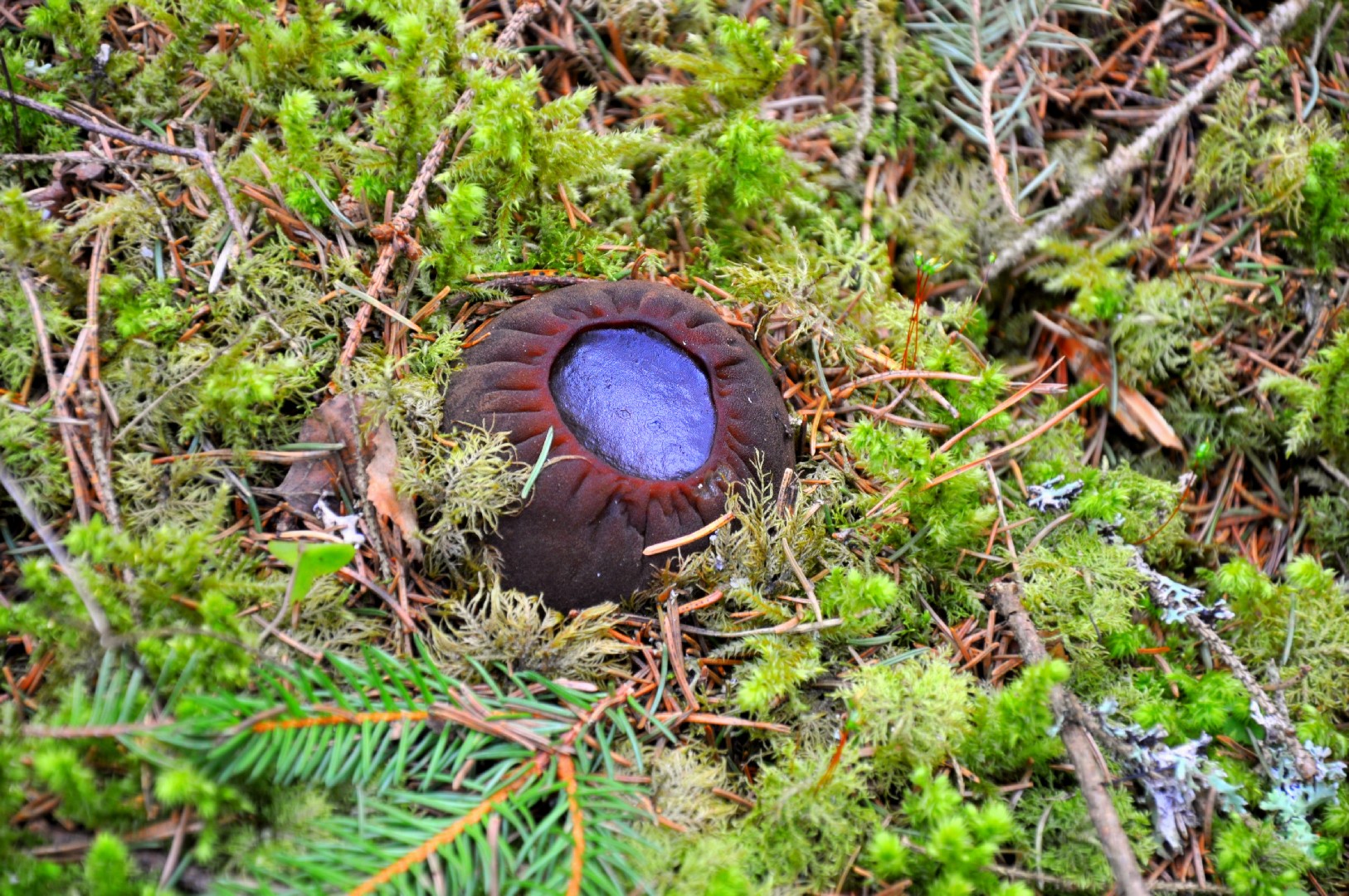
9. Charred-pancake cup
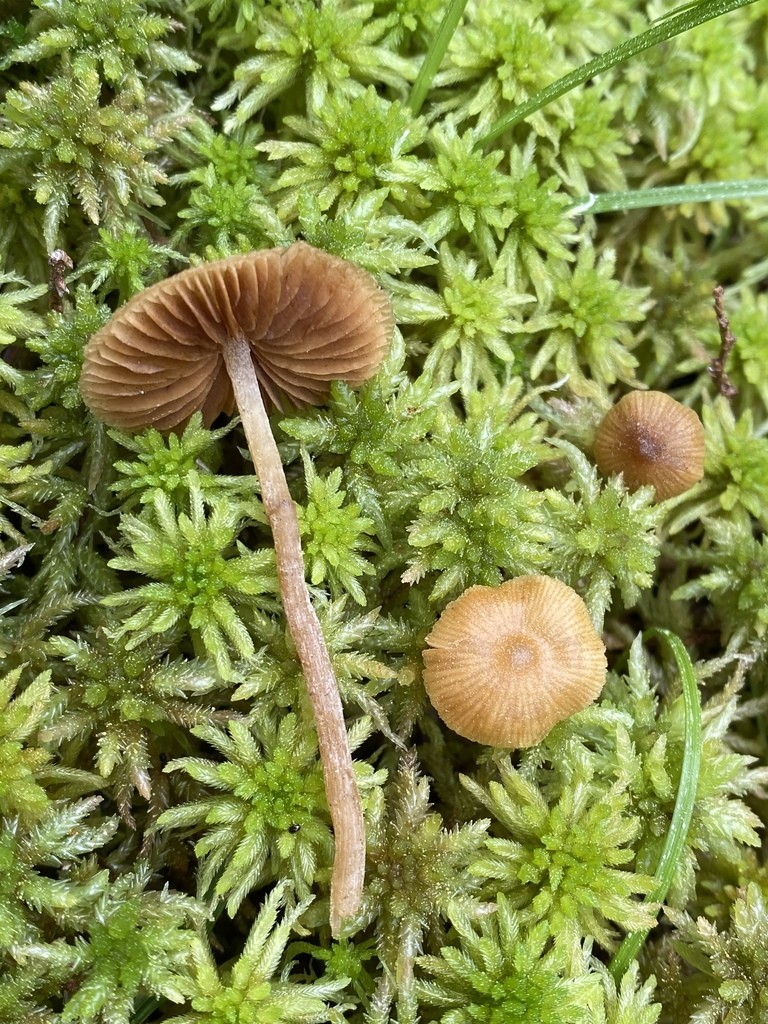
10. Galerina tibiicystis

More







