




Top 19 Most Common Mushrooms in Kodaikanal

Most Common Mushrooms
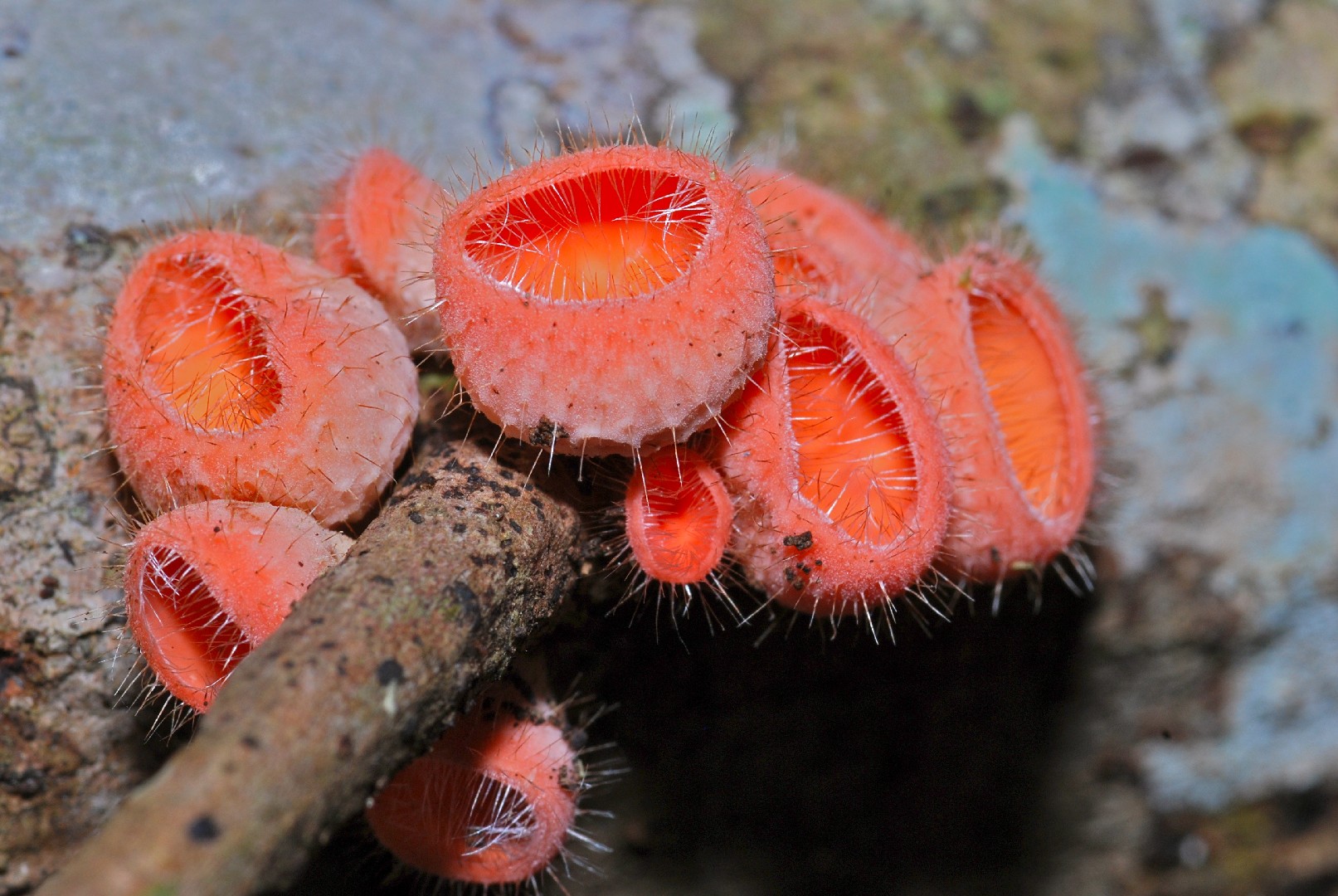
1. Cookeina tricholoma
Cookeina tricholoma is a hose mushroom from the family of the Kelchbecherlingsverwandten.
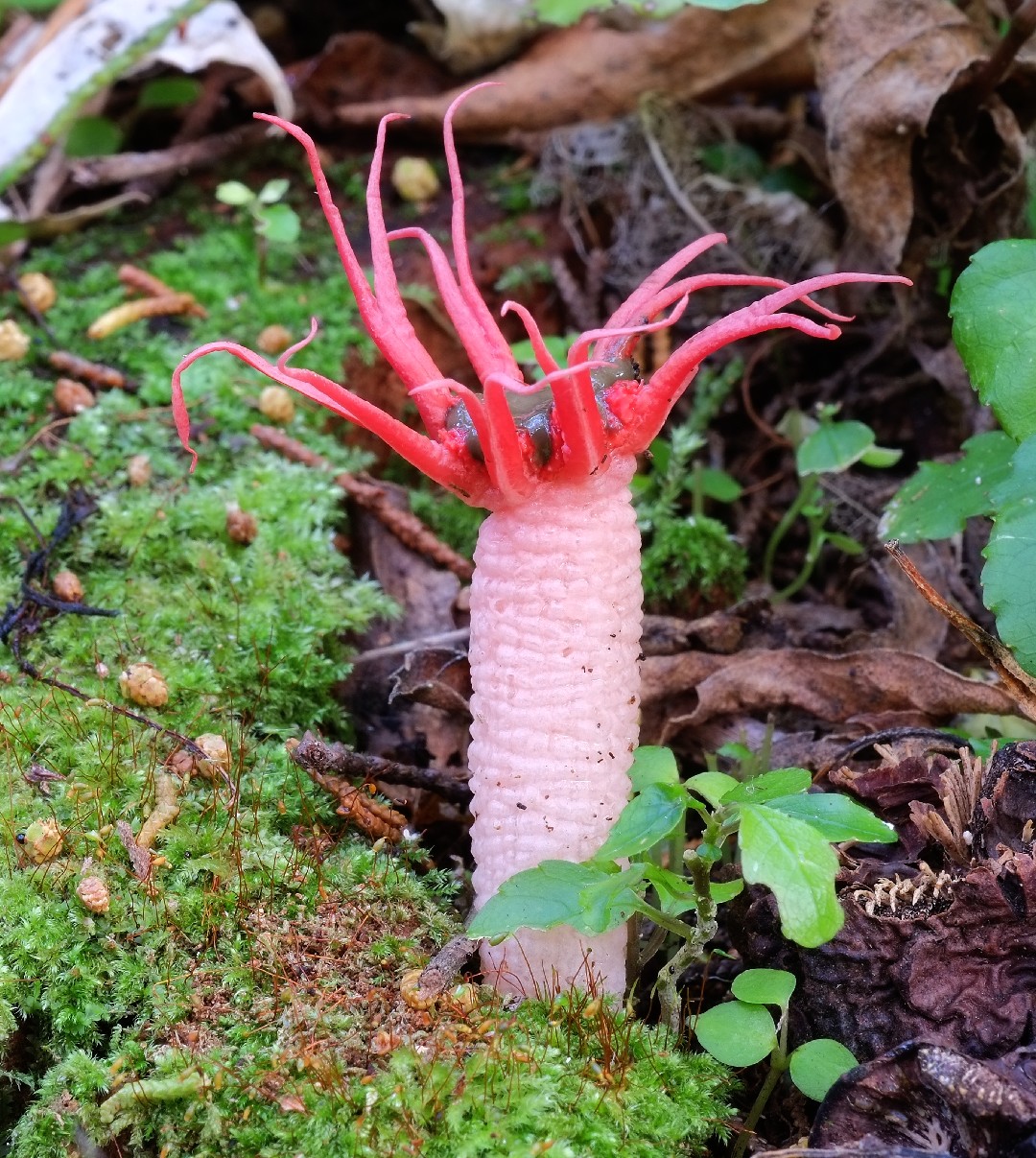
2. Anemone stinkhorn
The anemone stinkhorn (Aseroe rubra) looks like a creature straight from the depths of the ocean…or perhaps a horror movie! This Australian native starts fruiting with a white, egg-like ball that breaks open to reveal bright red tentacle-like fingers that spread toward the sky with radial symmetry and the odor of rotting meat. It has spread to tropical and sub-tropical areas around the world and is potentially poisonous.
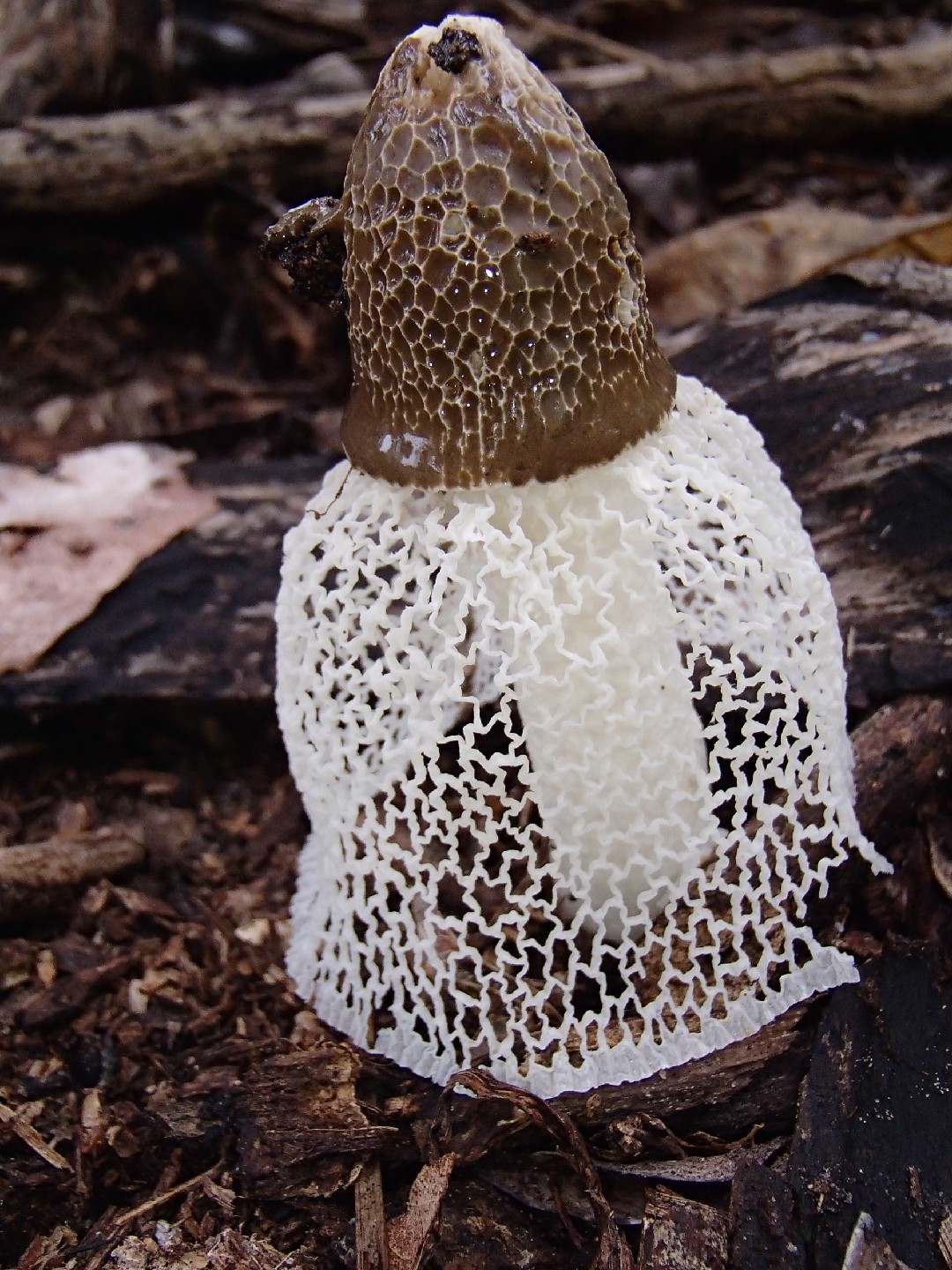
3. Bridal veil stinkhorn
Bridal veil stinkhorn (Phallus indusiatus) can be found rising up from the ground in tropical forests around the world. A distinctive netted fringe “skirt” descends from the cap along the length of the stalk. A type of “stinkhorn,” the fruitbodies of this species produce scents that vary between sickly-sweet to just plain unpleasant. The odor is meant to attract insects that usually lay their eggs in carrion.
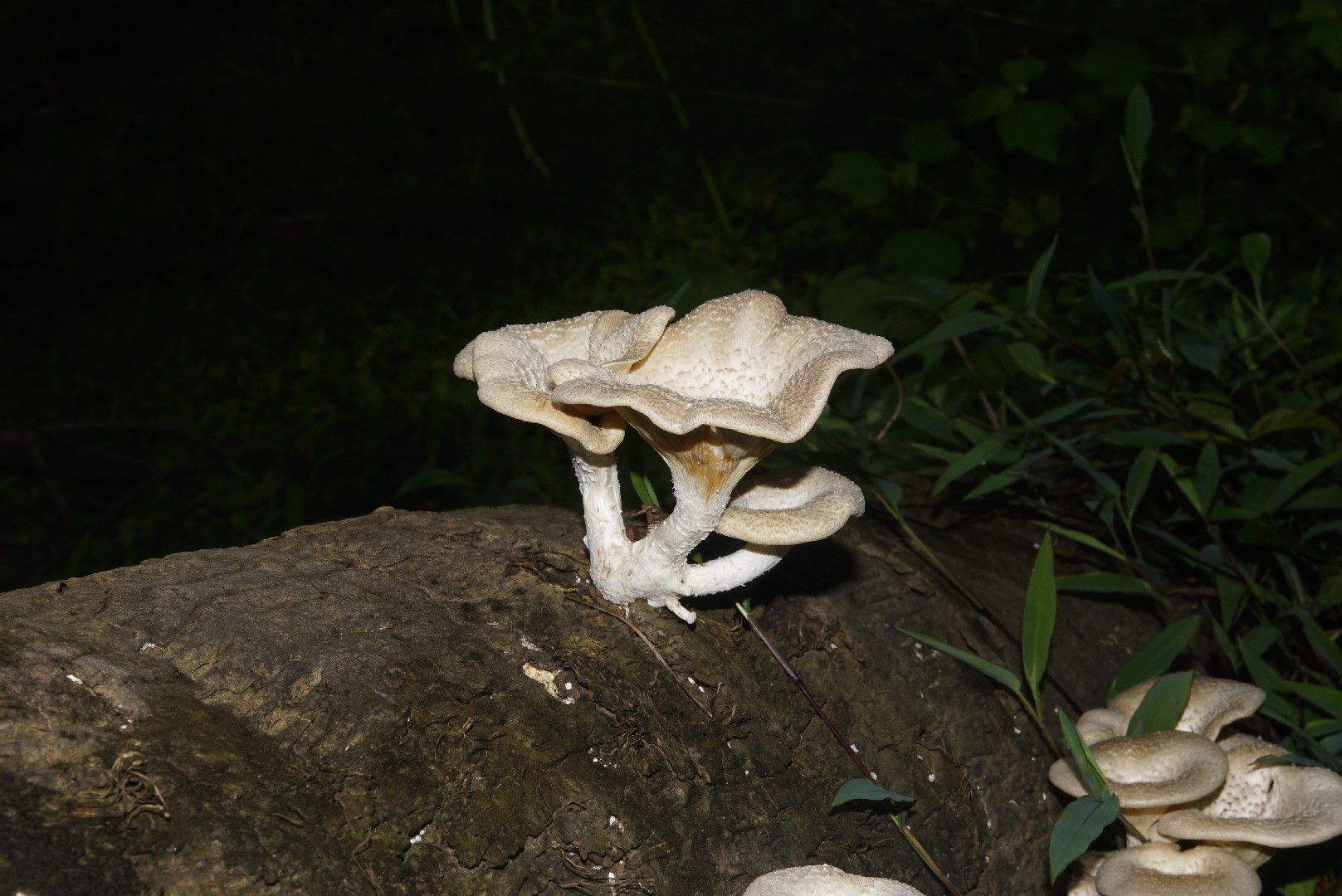
4. Lentinus squarrosulus
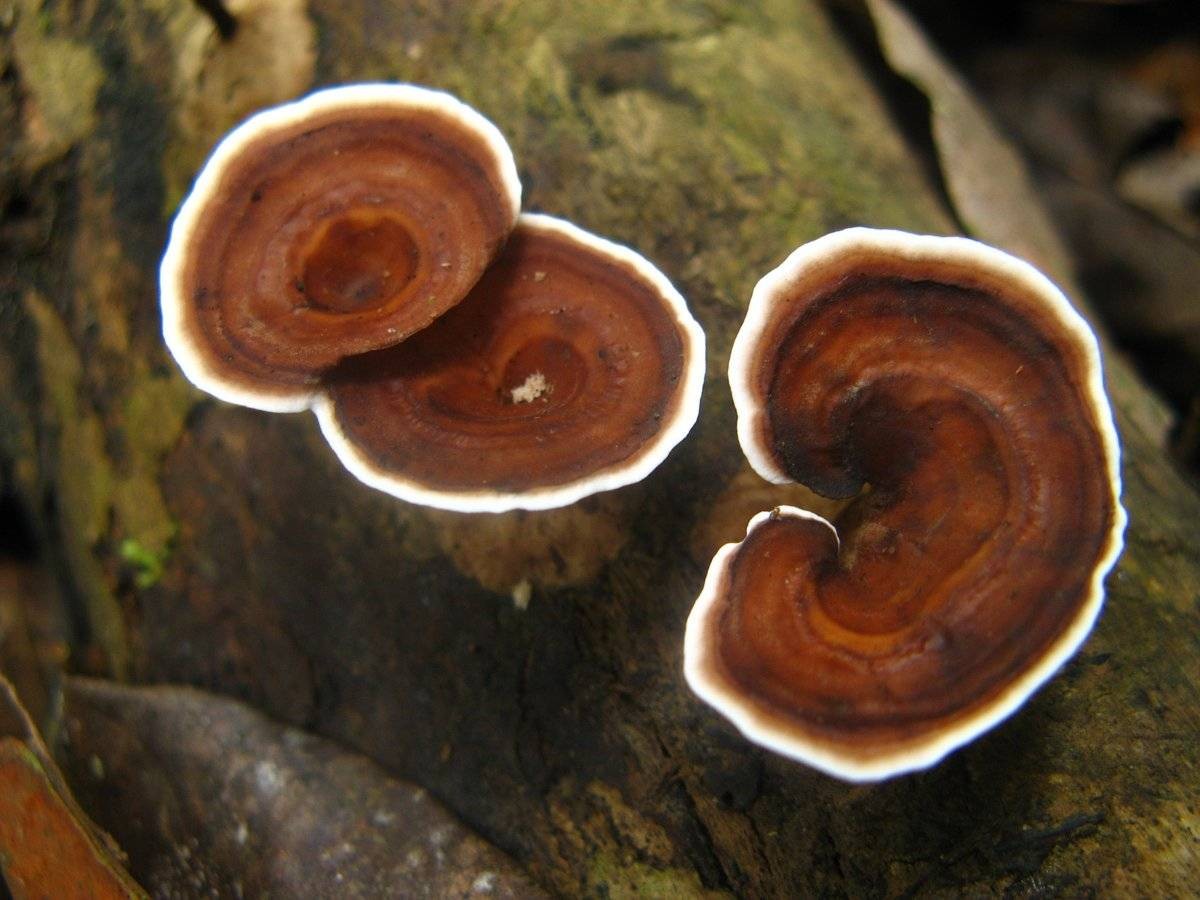
5. Yellow-footed micropore
The scientific name of the yellow-footed micropore (Microporus xanthopus) translates to “tiny-pored yellow foot.” Its short stem is usually yellow, leading up to a concave, funnel-like cap. The species is common in all the tropics of the world outside of the Americas. The striated, multi-hued caps grow largest in wet, darkly-shaded locations.
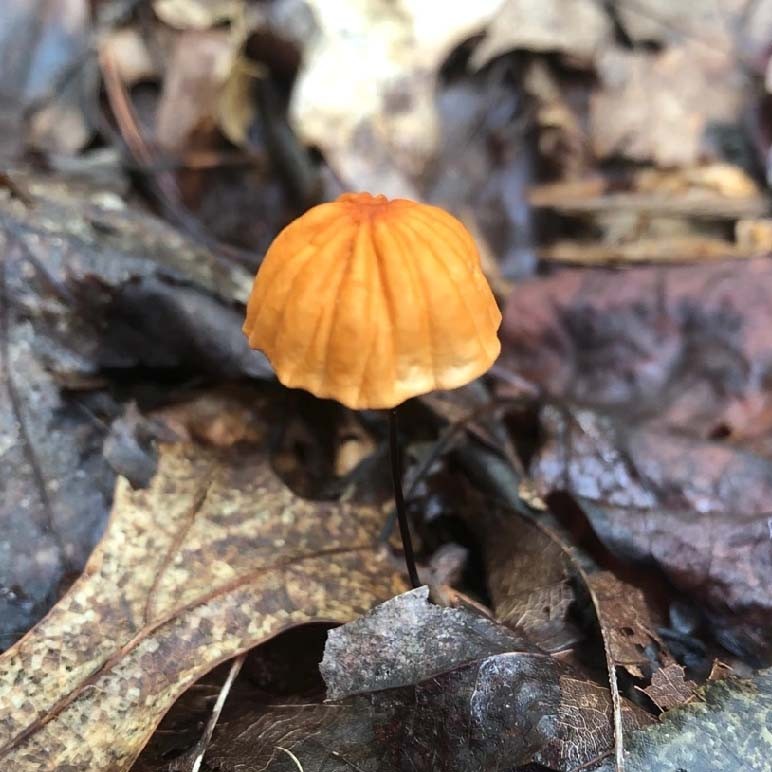
6. Orange pinwheel
Orange pinwheel is a pretty mushroom that resembles a small orange pinwheel or beach umbrella. It grows up from leaves and plant debris near hardwood trees. Its distinct gills make it easy to recognize from similar species.

7. Mauve parachute
The tiny mauve parachute (Marasmius haematocephalus) is a miniature delight. A broad, delicate, brightly-hued cap sits like an open umbrella atop a slender, delicate, darkly-colored stalk. In dry conditions, the caps shrivel and become near-invisible beneath the detritus of the forest floor, but the next rain will open these hardy little mushrooms right back up again.
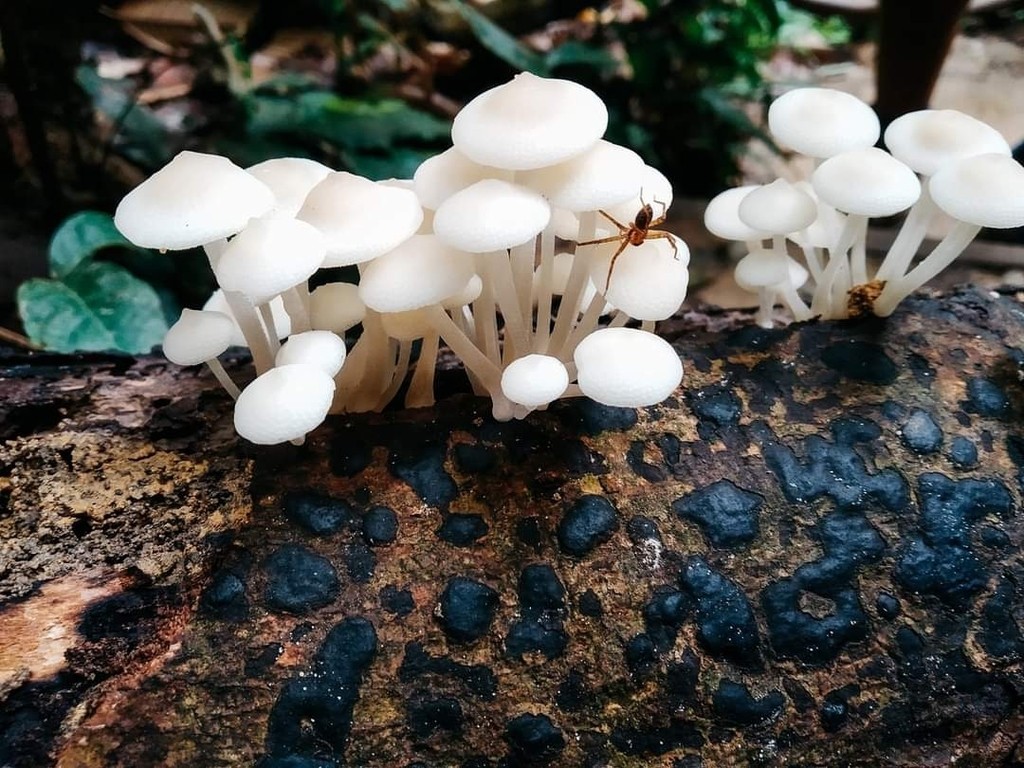
8. Favolaschia manipularis
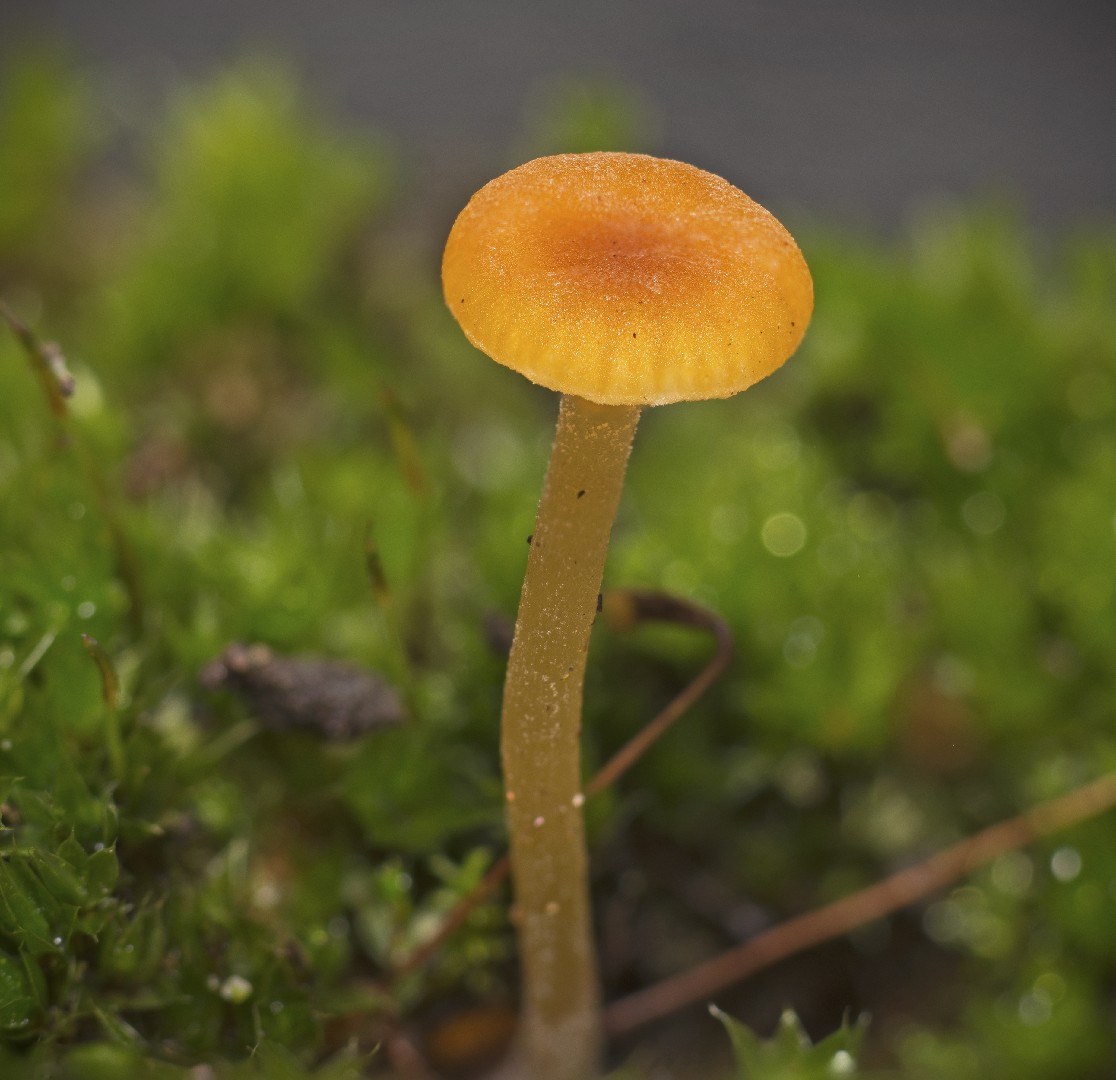
9. Orange moss agaric
The uniquely tiny cap of the orange moss agaric (Rickenella fibula) erupts from tufts of moss in dense woodlands. It is easy to overlook this delicate little mushroom, as the cap barely grows to be 1 cm across! They are most commonly seen after spring rain showers and thrive in damp conditions.
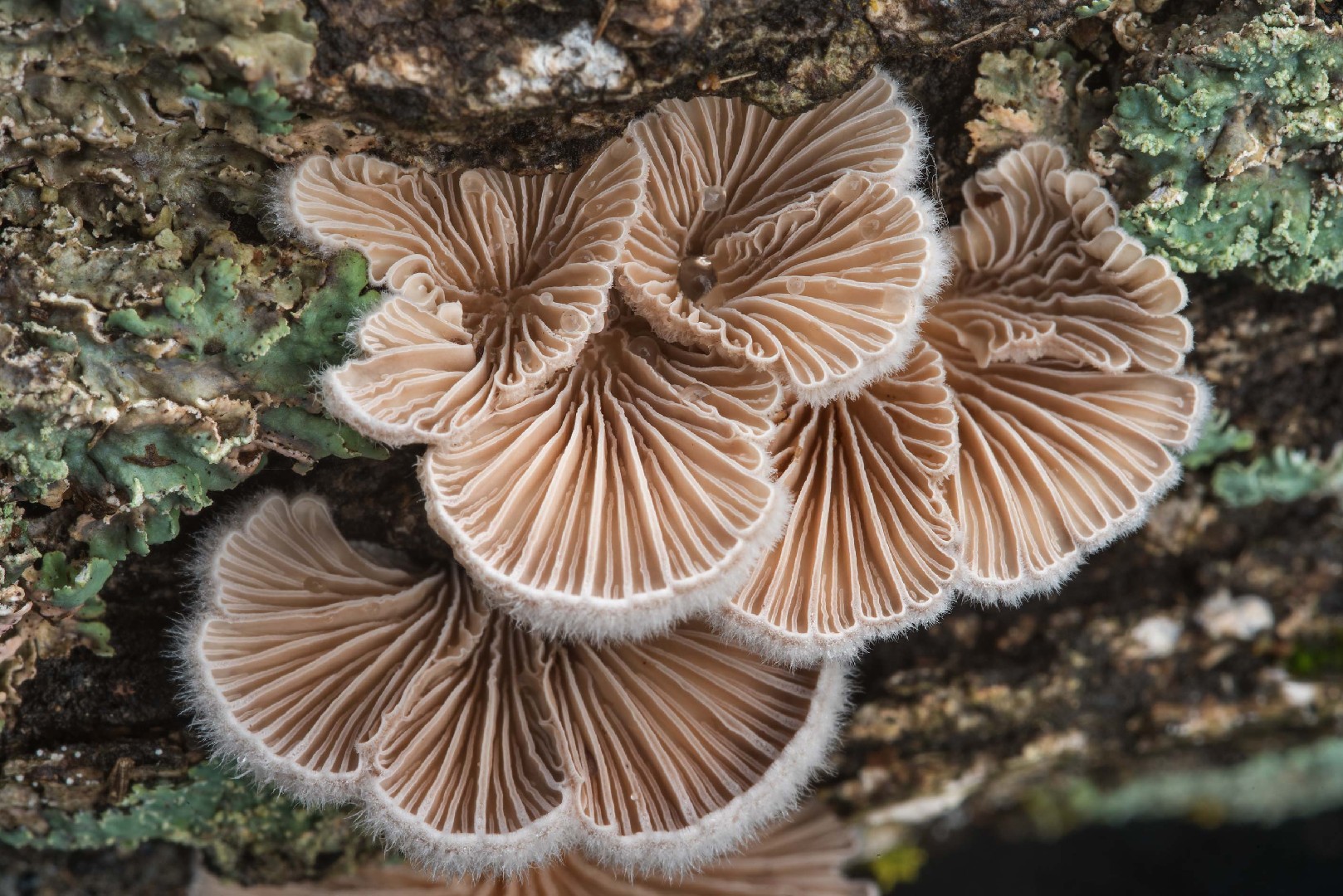
10. Split gill
Split gill(Schizophyllum commune) can be found across the globe. Uniquely, it is the only mushroom species known to display the capability to retract by movement. It is considered inedible, although not necessarily toxic. Furthermore, it is not recommended to smell this species, as the spores are capable of sprouting and growing in nasal passages.

More







