




Top 20 Most Common Mushrooms in Honduras
With a diverse landscape ranging from lush rainforests to sunny beaches, Honduras boasts an environment conducive for mushroom growth. The tropical climate, naturally fertile soil, and diverse local flora foster a habitat rich in numerous mushroom species. Explore the world of Honduras's fungi with our in-depth guide into the 20 most common mushroom species found in this biodiverse country. Learn about their appearances, habitats, and unique characteristics. This knowledge expands your understanding of fungal life in Honduras, providing a comprehensive look into the complex world of mycology that thrives within its borders. Delve into Honduras's mushroom kingdom with us!

Most Common Mushrooms
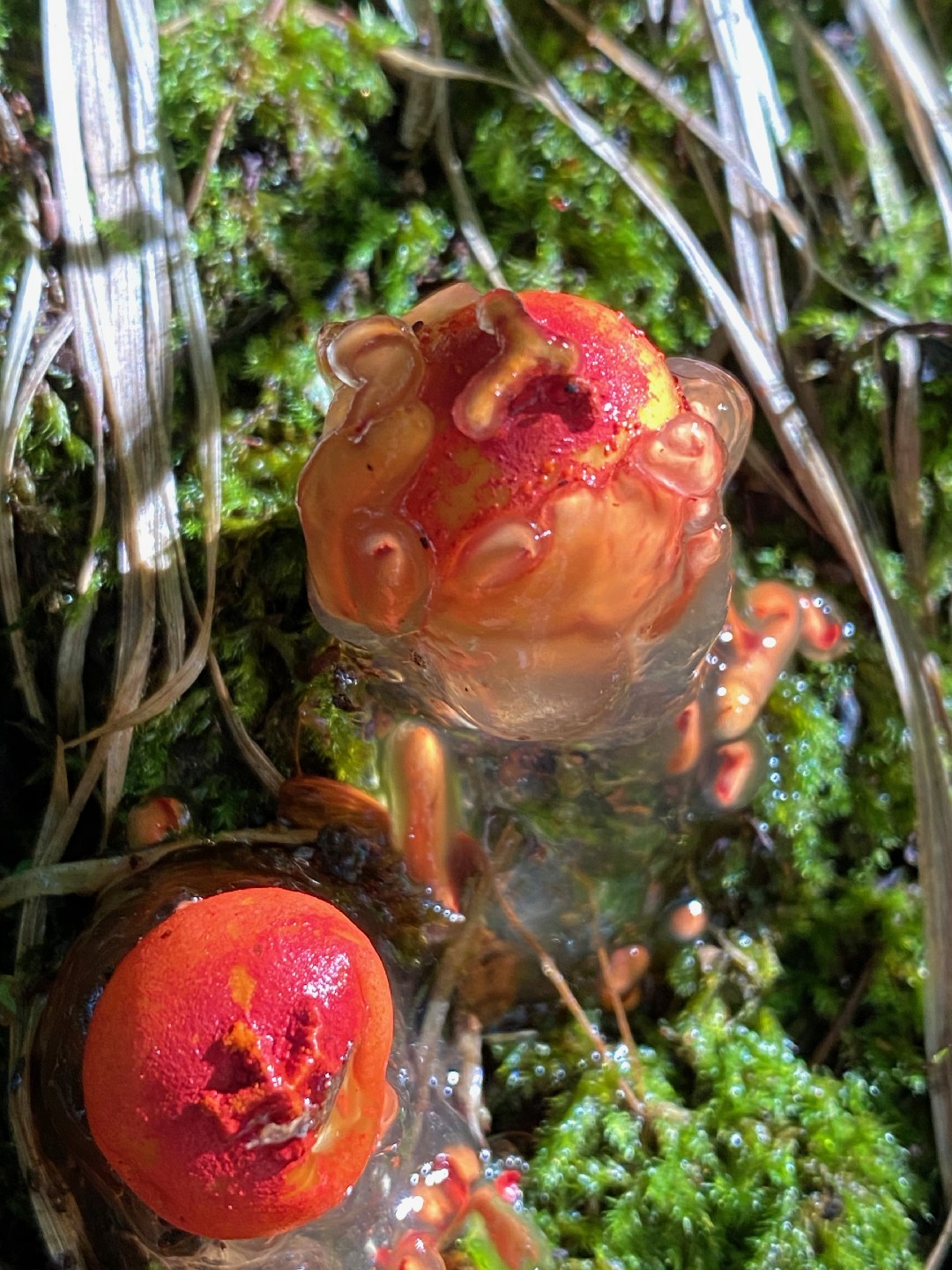
1. Slimy stalked-puffball
The slimy stalked-puffball is beautiful and repulsive at the same time. With its unusual shape and striking red color make it a distinctive species, the gelatinous chunks that it produces while shedding really create an unpleasant visual.
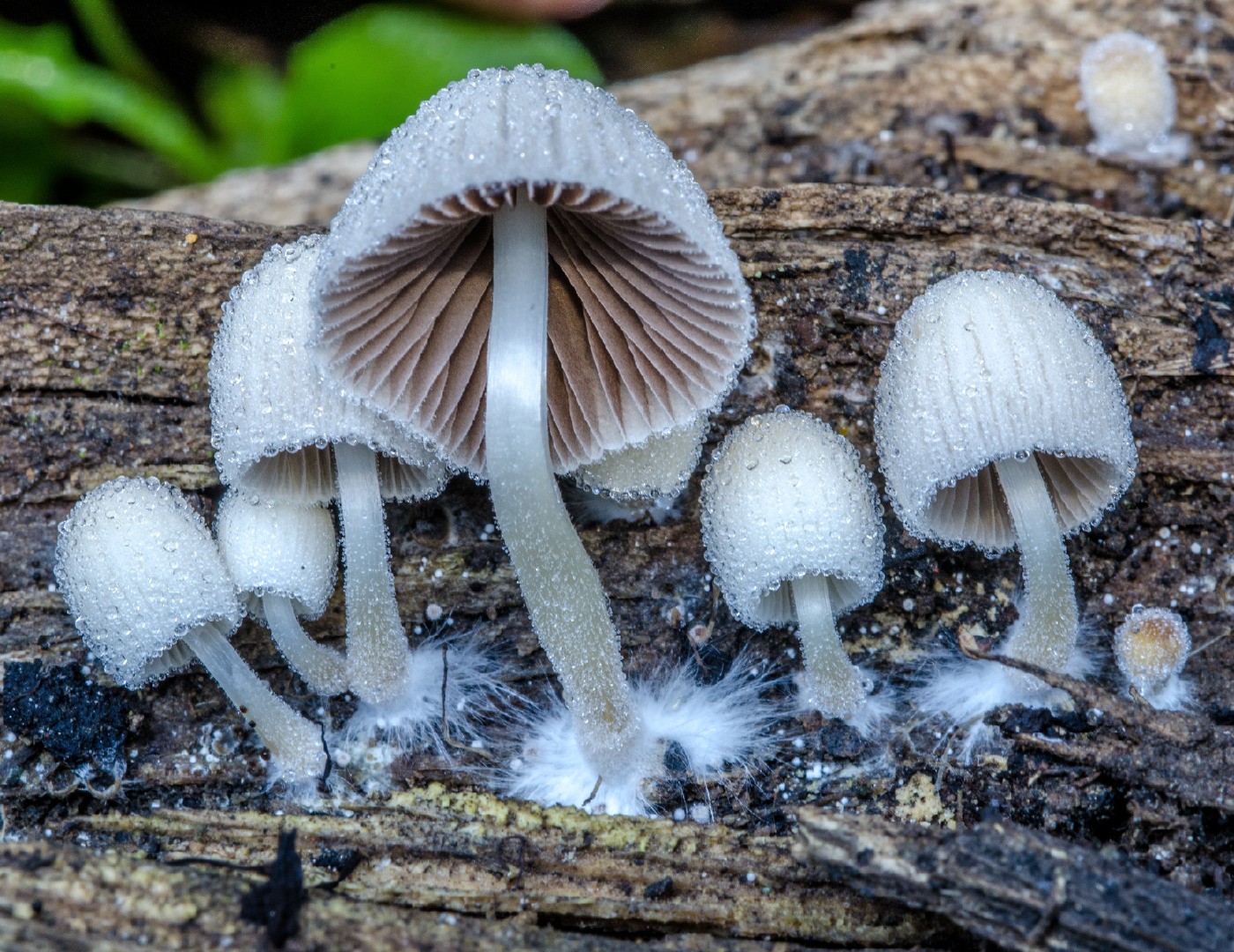
2. Fairy inkcap
The mushrooms of the fairy inkcap species have a tendency to congregate in large masses over dead tree stumps and decaying roots. They appear all around the world from early spring all the way to the first frosts, but each fruit only lasts a few days before turning black and distributing its spores.
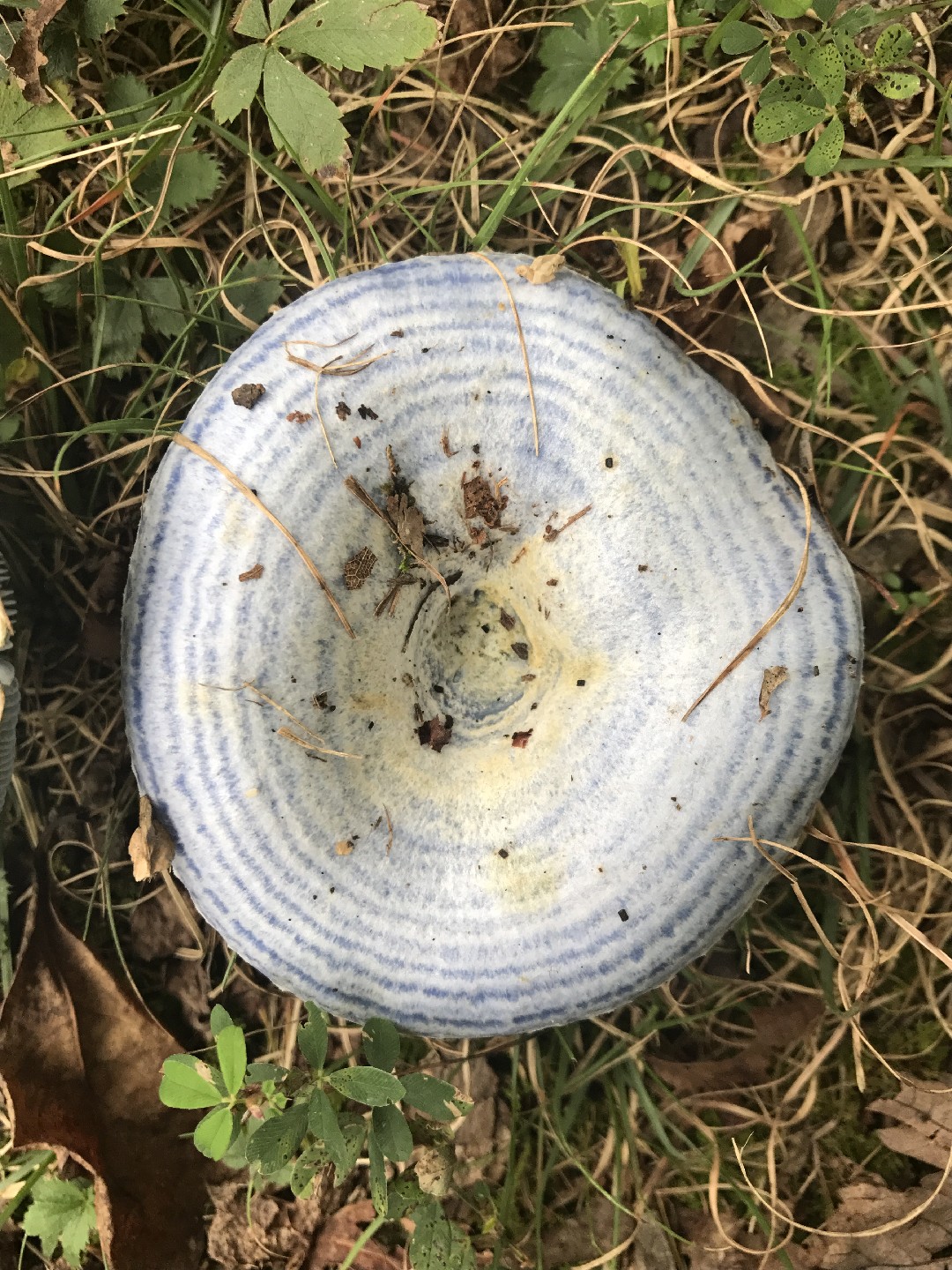
3. Indigo milk cap
This gorgeous species is unlike any other. The indigo milk cap, a member of the often-drab russula family, is deep blue in color. Like other milk caps, it bleeds a latex-like substance when cut or damaged, but instead of the usual white this species bleeds deep blue.
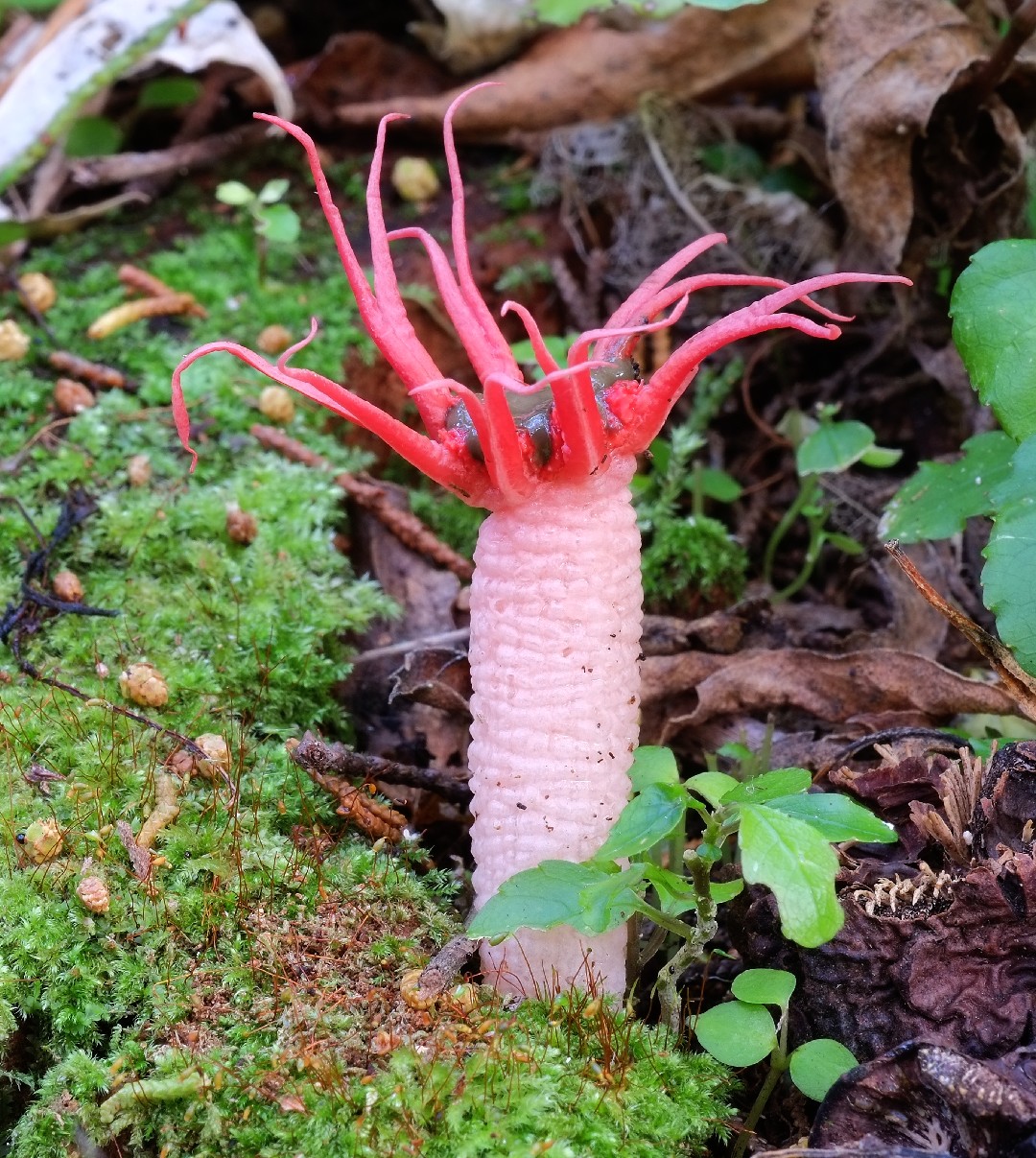
4. Anemone stinkhorn
The anemone stinkhorn (Aseroe rubra) looks like a creature straight from the depths of the ocean…or perhaps a horror movie! This Australian native starts fruiting with a white, egg-like ball that breaks open to reveal bright red tentacle-like fingers that spread toward the sky with radial symmetry and the odor of rotting meat. It has spread to tropical and sub-tropical areas around the world and is potentially poisonous.
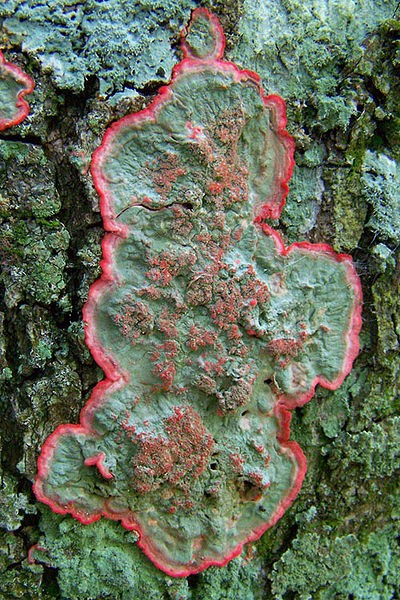
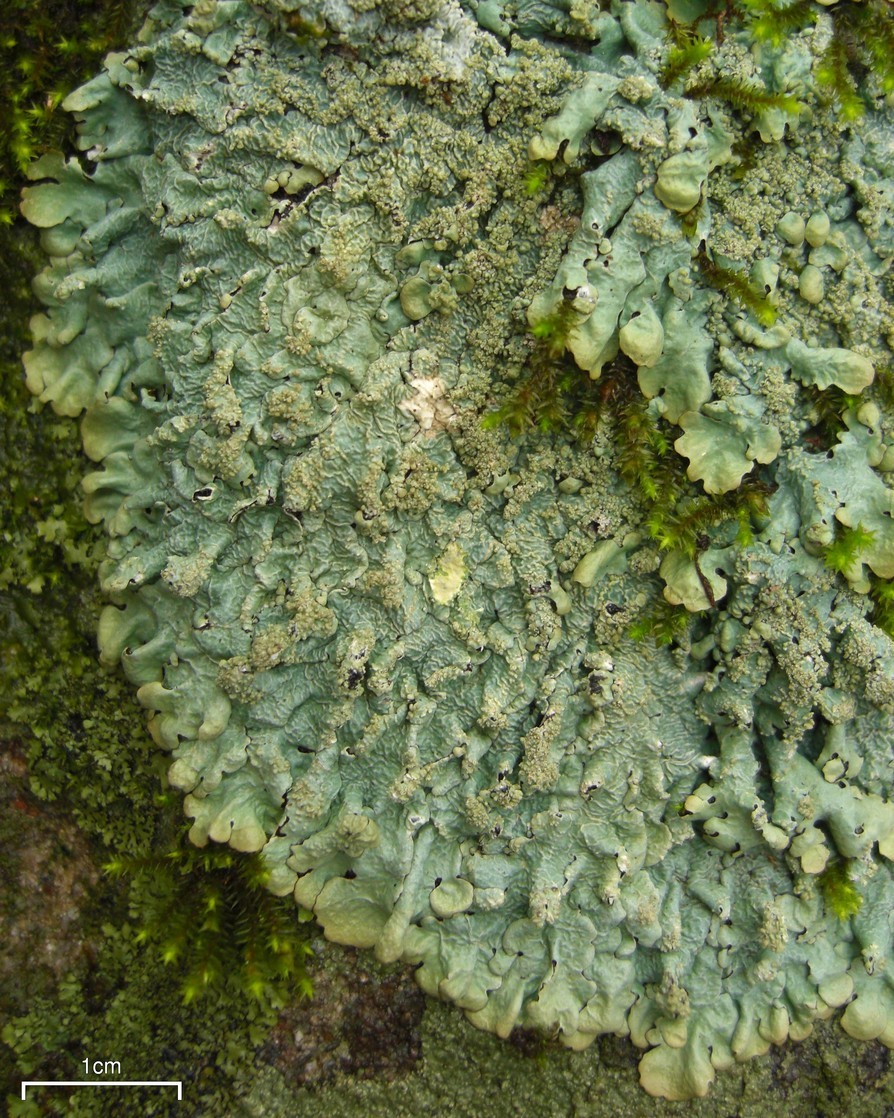
5. Christmas lichen
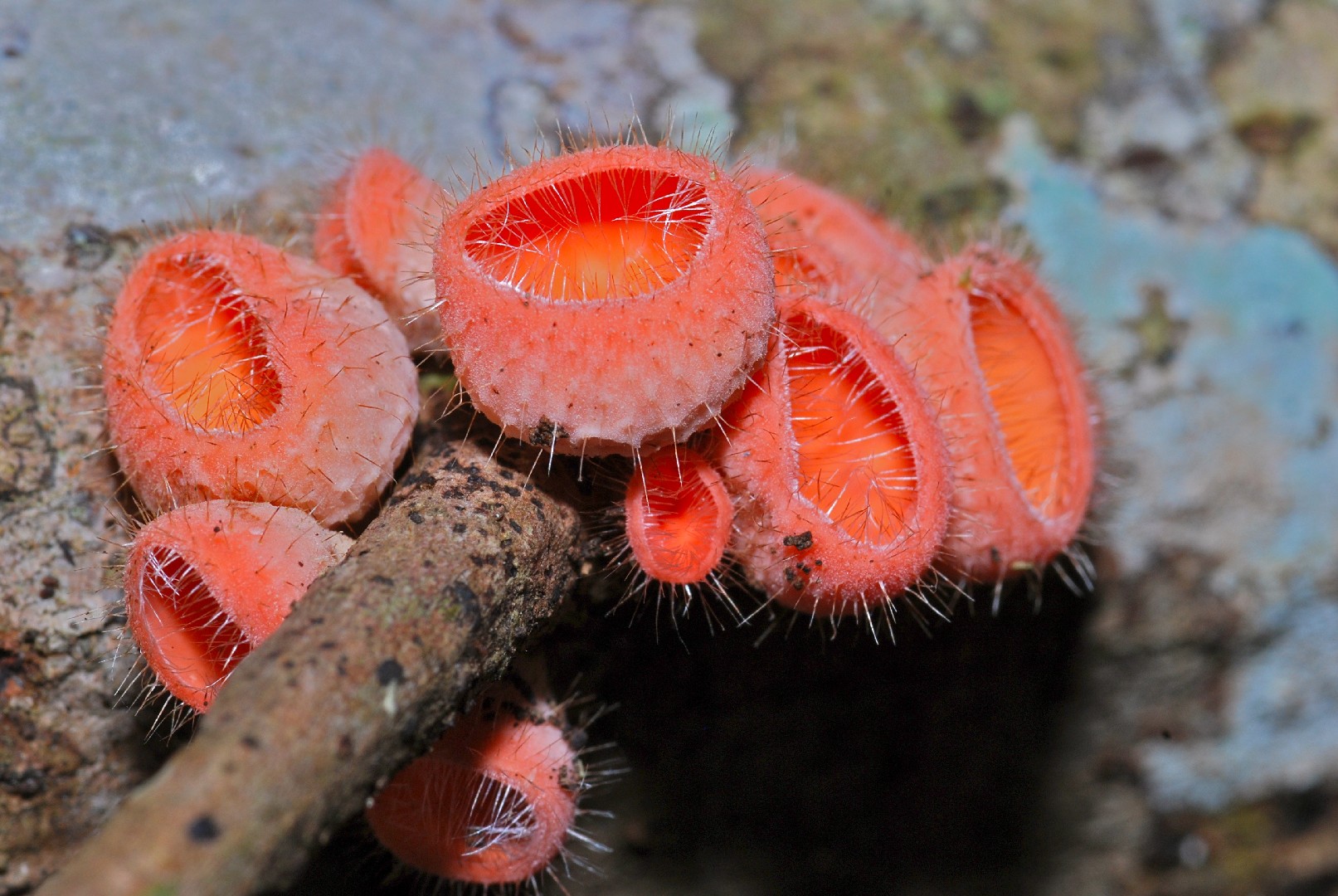
6. Cookeina tricholoma
Cookeina tricholoma is a hose mushroom from the family of the Kelchbecherlingsverwandten.
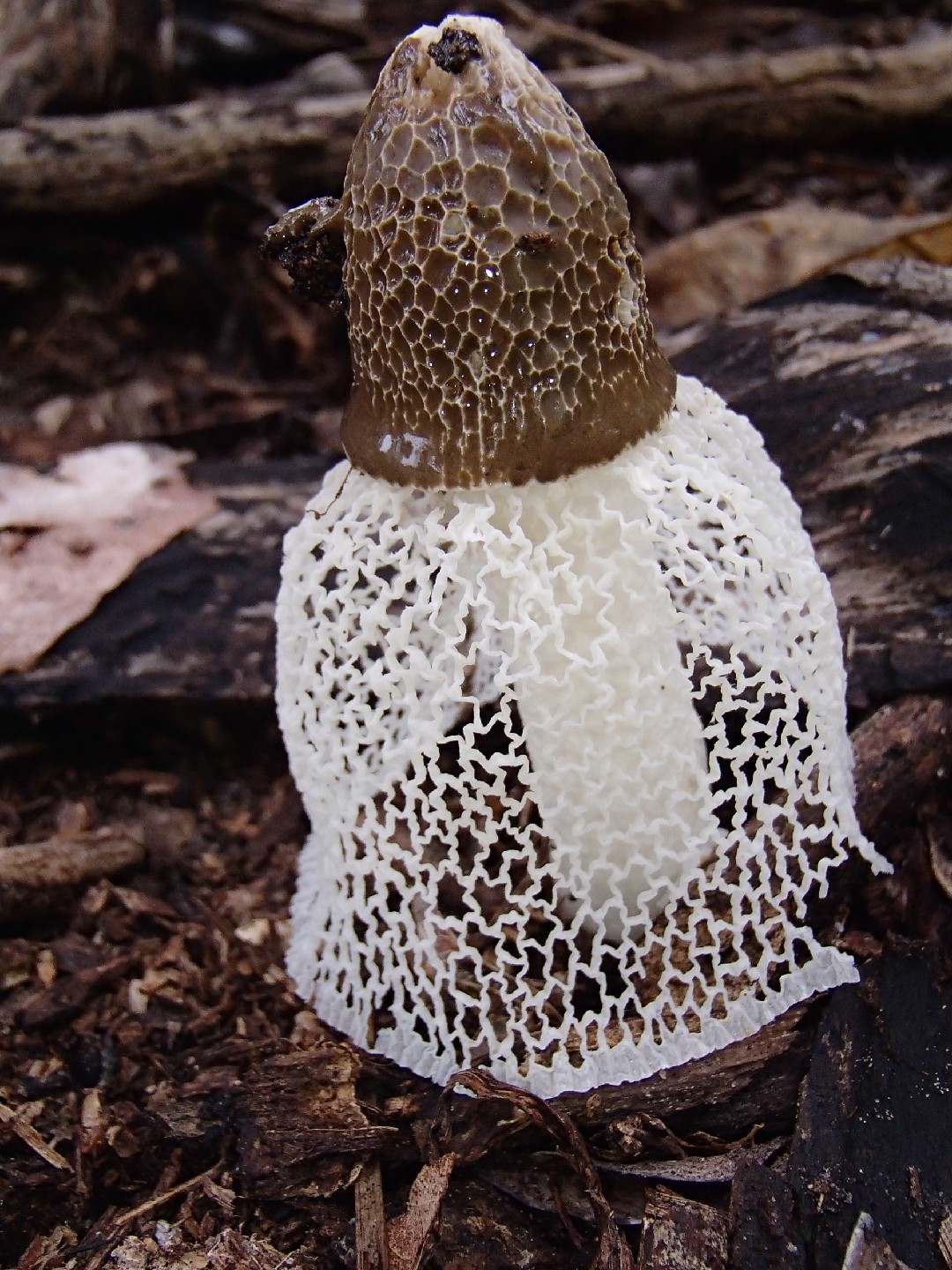
7. Bridal veil stinkhorn
Bridal veil stinkhorn (Phallus indusiatus) can be found rising up from the ground in tropical forests around the world. A distinctive netted fringe “skirt” descends from the cap along the length of the stalk. A type of “stinkhorn,” the fruitbodies of this species produce scents that vary between sickly-sweet to just plain unpleasant. The odor is meant to attract insects that usually lay their eggs in carrion.
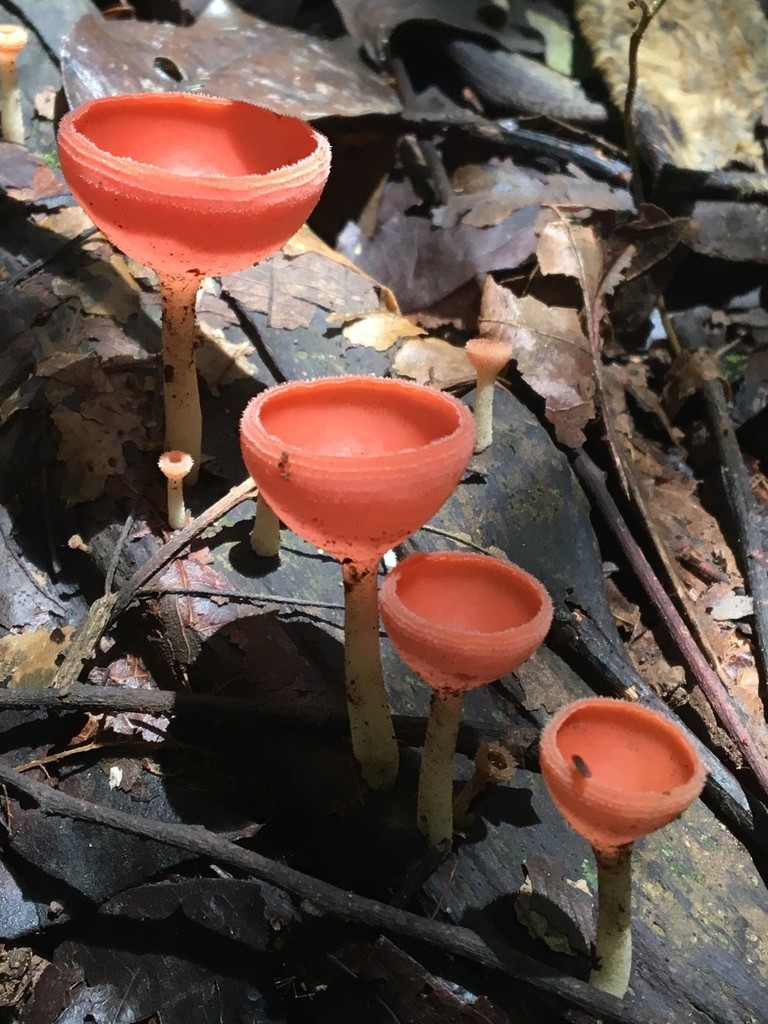
8. Cookeina speciosa
Cookeina speciosa is a hose mushroom from the family of the cupbearer relatives.
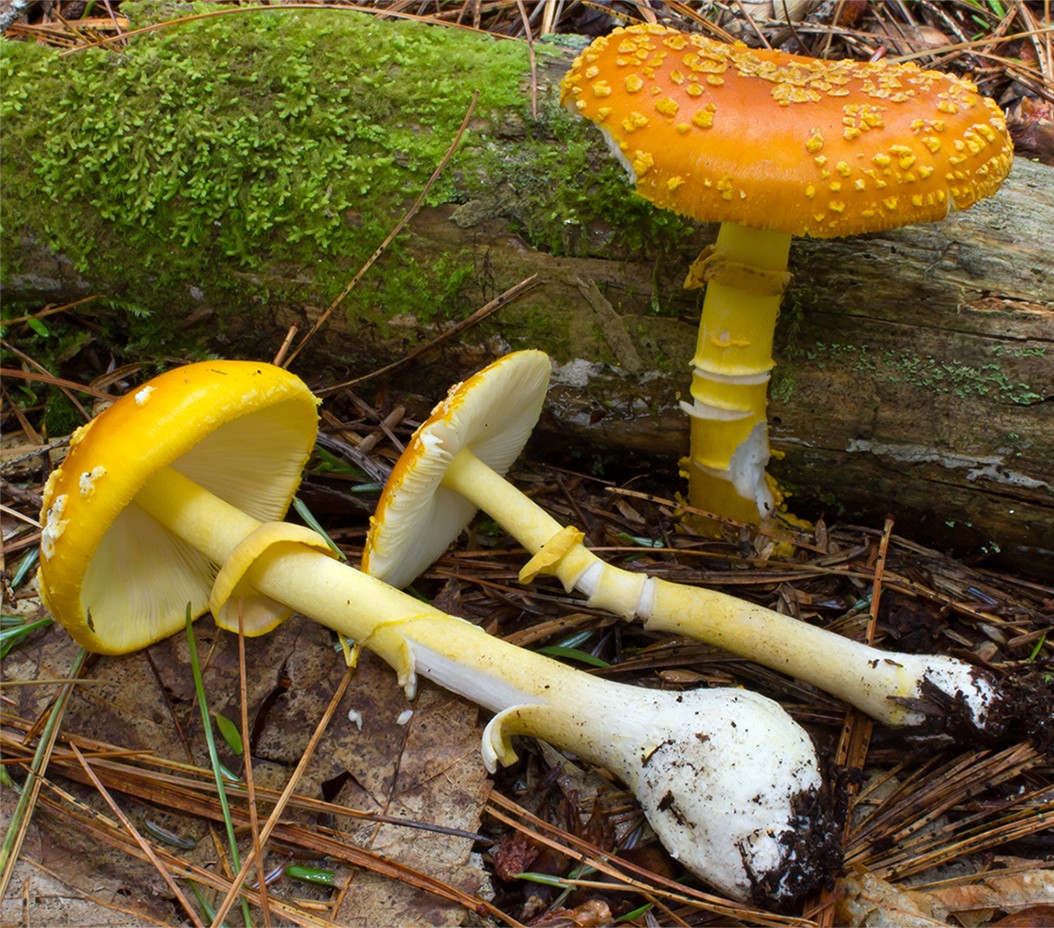
9. Yellow patches
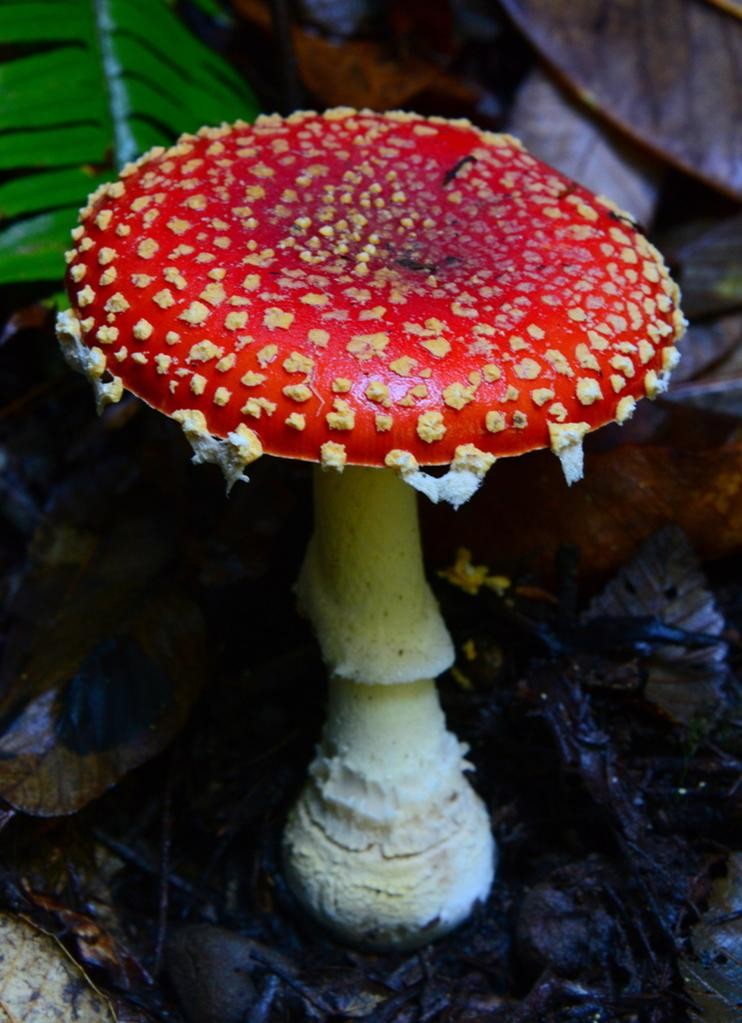
The yellow patches is a gorgeous, striking species with a deep marigold or vermillion cap that sometimes appears as a blend of the two. Like some other members of the Amanita genus, it also sports patchy white worts - when it's cap is still very convex, it somewhat resembles the famous white and red mushrooms from the Mario Bros video games. While beautiful to look at, this species is toxic and should not be harvested.
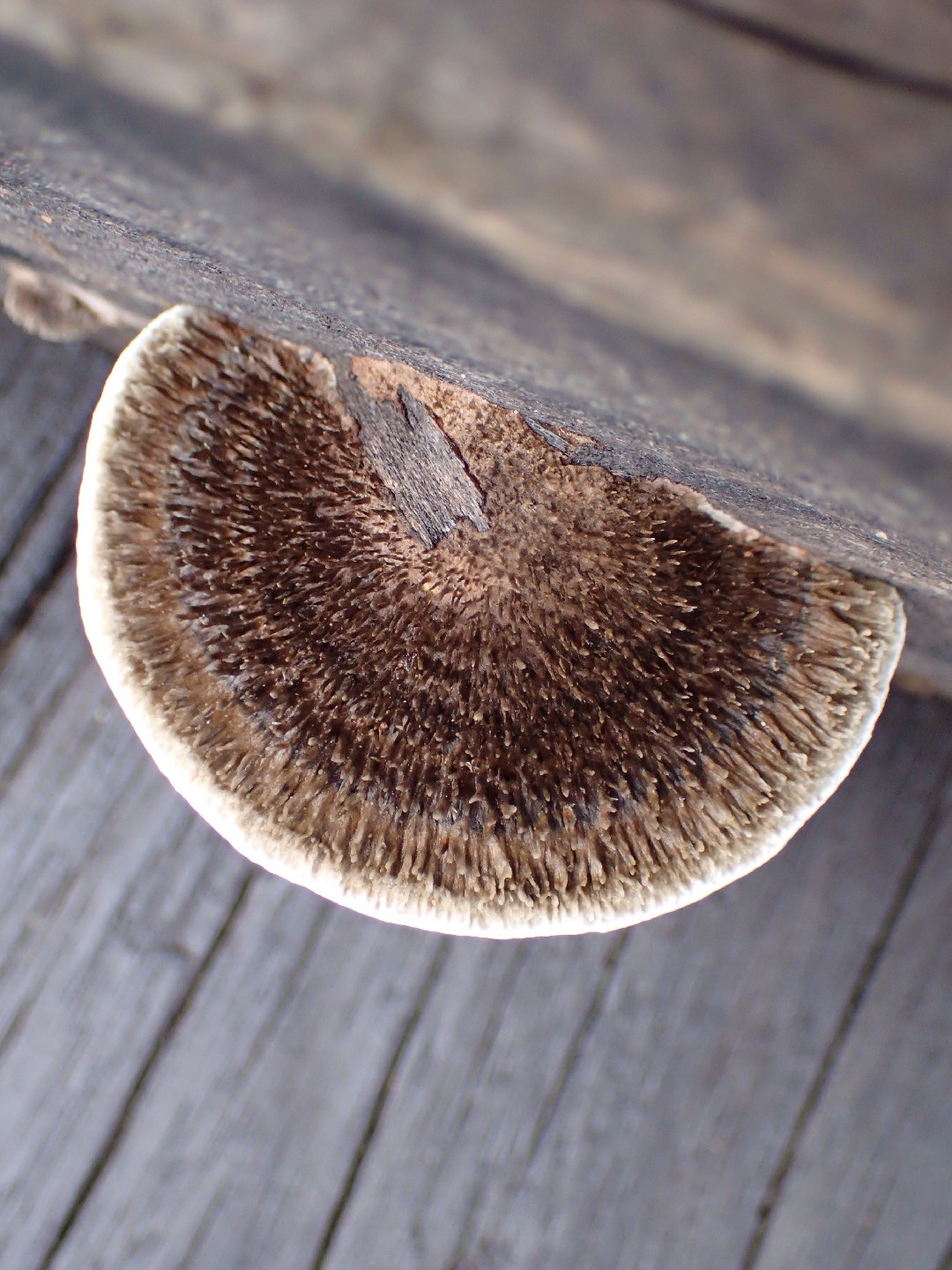
10. Hairy hexagonia
The hairy hexagonia (Hexagonia hydnoides) is not the most common mushroom you'll find, but has very distinctive qualities. Stiff, dark brown, bristle-like hairs emerge from an ochre flat cap and are found growing from a decaying tree stump or wood. The large pores on the cap's underside create an almost sponge-like appearance, and the stem is otherwise not visible.

More







