




Top 12 Edible Mushrooms Popular in Nairobi City
In the diverse and thriving ecosystem of Nairobi City, a myriad of edible mushroom species thrive. From the tantalizing aroma to the rich, varied textures, mushrooms play an integral part in the culinary culture of the region. Venture with us as we explore the 12 most common edible mushroom species, highlighting each type's unique appearance, taste, culinary applications, and specific habitats. Our verified, well-documented, and reliable data ensures an in-depth, enlightening journey into the fascinating world of Nairobi City’s mycological treasures.
* Disclaimer: Content feedback CAN NOT be used as any basis for EATING ANY PLANTS. Some plants can be VERY POISONOUS, please purchase edible plants through regular channels.

Most Popular Edible Mushrooms
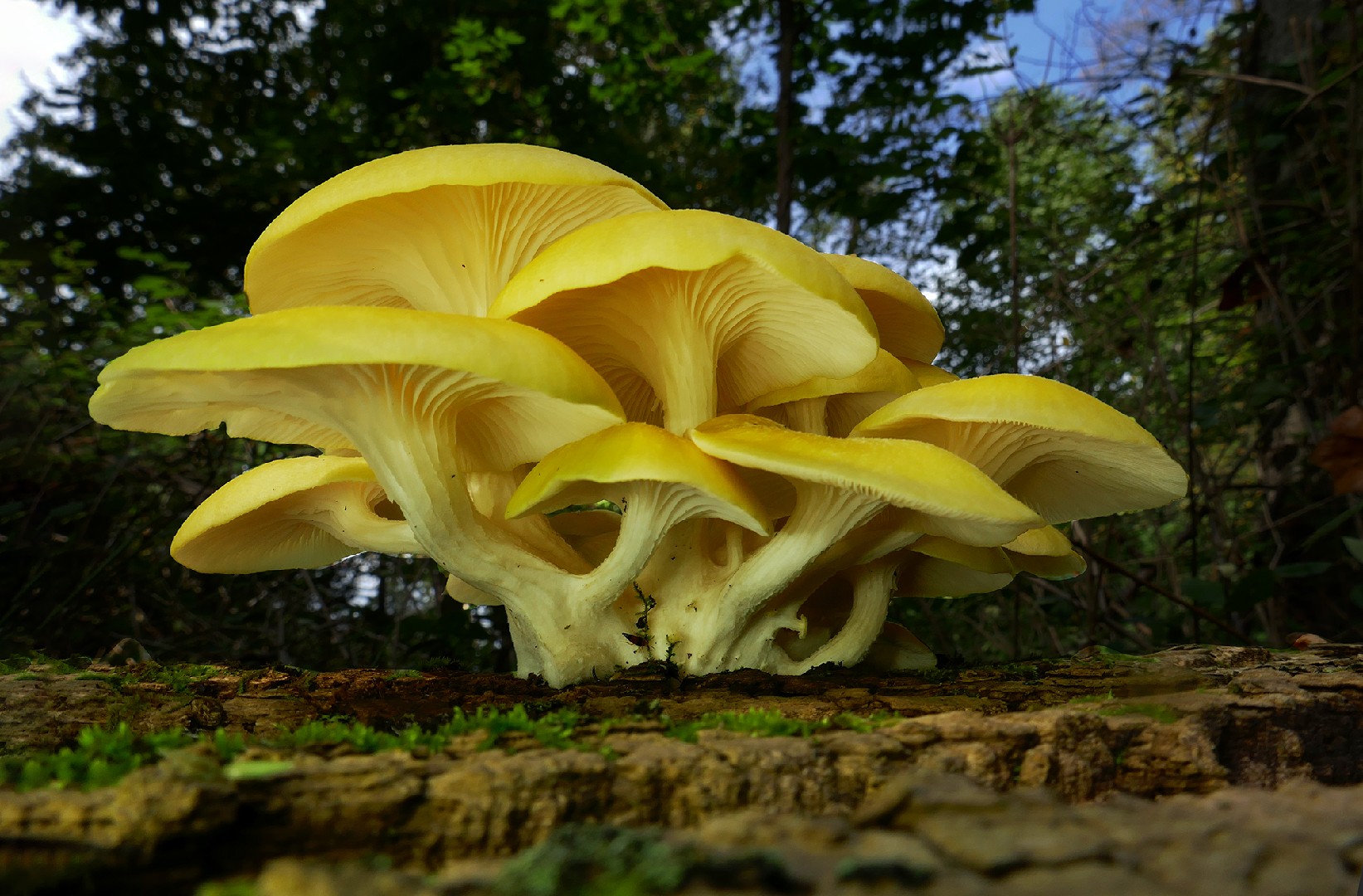
1. Golden oyster
The golden oyster(Pleurotus citrinopileatus) can be distinguished from other mushrooms by an iridescent butter-yellow cap that matures into the color of sunshine. As the color intensifies, the cap also becomes more brittle, making it very difficult to handle. The golden oyster is a delicious species that is highly desirable for culinary uses.
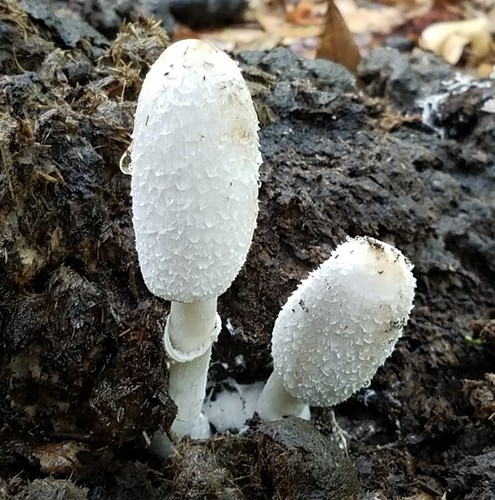
2. Midden inkcap
C. sterquilinus has an ellipsoid or ovoid cap, some 40 to 60 millimetres (1.6 to 2.4 in) by 20 to 30 millimetres (0.8 to 1.2 in) when closed, becoming conical and then flattening out to a width of 60 millimetres (2.4 in). It is white, flocculous and fibrillose when young, becoming more scaly with a creamy centre as it matures. There are more than fifty gills, white at first, turning to grey and then black. The stipe or stem is slender, 80 to 150 millimetres (3 to 6 in) tall, with a moveable ring just above the slightly bulbous base. The spores are ellipsoid and very large at 17–26 by 10–15 µm, very dark reddish-brown to black. 
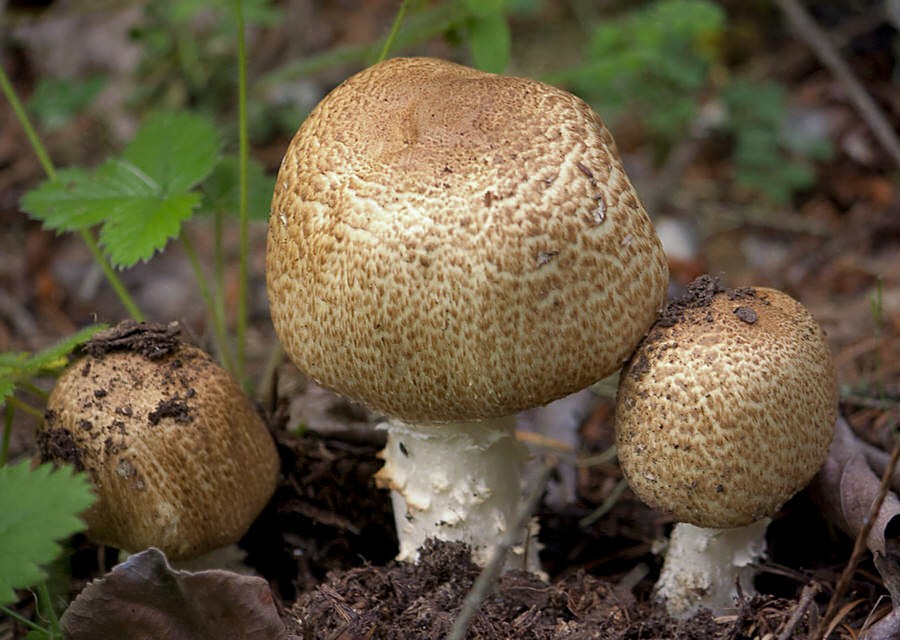
3. The prince
This attractive mushroom grows around the world in open woodlands and parks, especially near conifers. The prince has a scent reminiscent of bitter almonds. Its firm, thick caps grow quite large, but often become quickly infested by maggots. Allergic reactions have been reported to this mushroom so it is best treated as a "look, but do not touch" species.
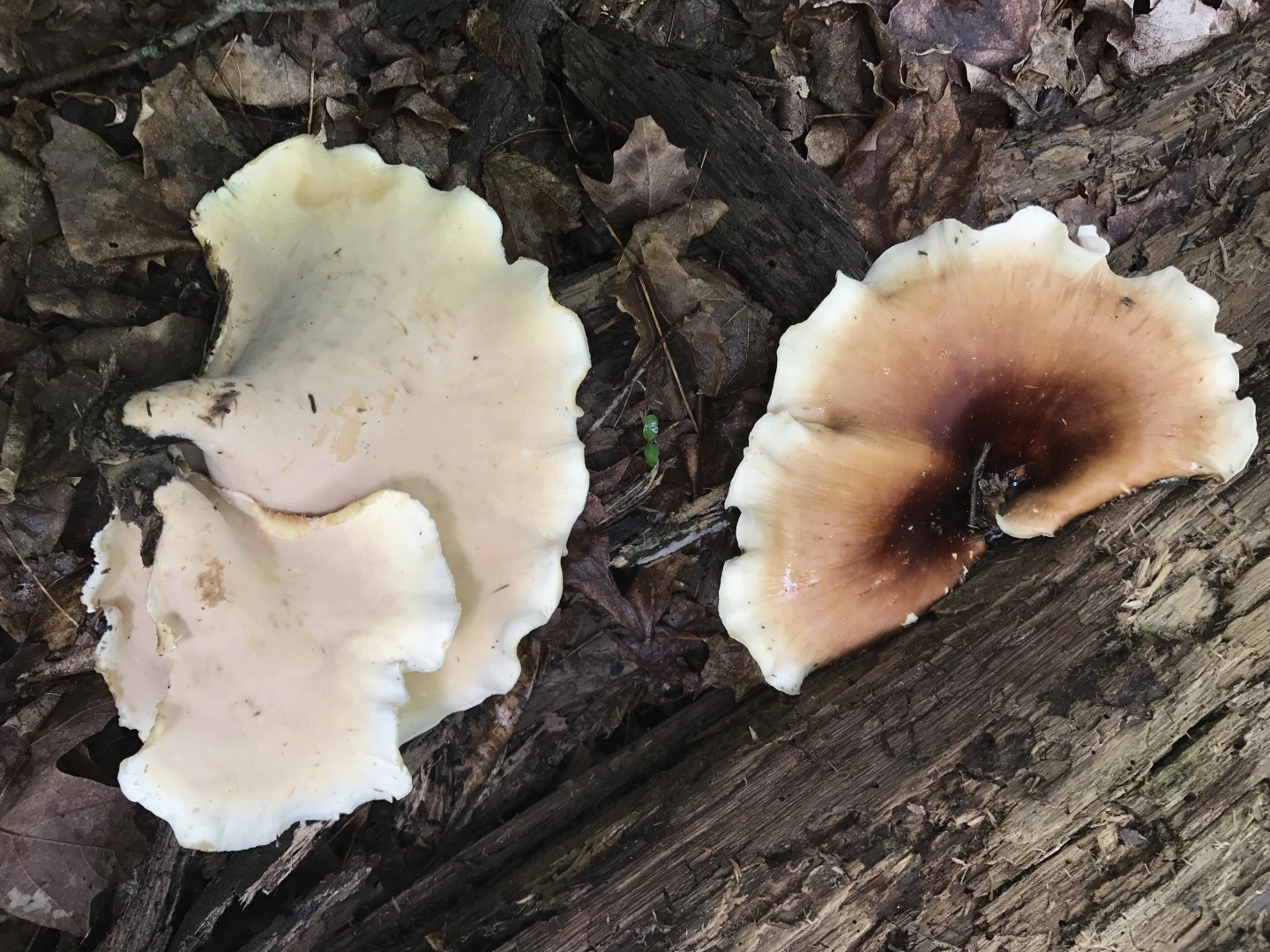
4. Black-footed polypore
This inedible fungus grows on fallen wood and stumps of deciduous trees. Black-footed polypores have the ability to remain through the winter, as they rot very slowly after releasing their spores. They are thus appreciated for providing a bit of visual interest in winter landscapes.
5. Golden oyster
The golden oyster(Pleurotus citrinopileatus) can be distinguished from other mushrooms by an iridescent butter-yellow cap that matures into the color of sunshine. As the color intensifies, the cap also becomes more brittle, making it very difficult to handle. The golden oyster is a delicious species that is highly desirable for culinary uses.
6. Midden inkcap
C. sterquilinus has an ellipsoid or ovoid cap, some 40 to 60 millimetres (1.6 to 2.4 in) by 20 to 30 millimetres (0.8 to 1.2 in) when closed, becoming conical and then flattening out to a width of 60 millimetres (2.4 in). It is white, flocculous and fibrillose when young, becoming more scaly with a creamy centre as it matures. There are more than fifty gills, white at first, turning to grey and then black. The stipe or stem is slender, 80 to 150 millimetres (3 to 6 in) tall, with a moveable ring just above the slightly bulbous base. The spores are ellipsoid and very large at 17–26 by 10–15 µm, very dark reddish-brown to black.
7. Black-footed polypore
This inedible fungus grows on fallen wood and stumps of deciduous trees. Black-footed polypores have the ability to remain through the winter, as they rot very slowly after releasing their spores. They are thus appreciated for providing a bit of visual interest in winter landscapes.
8. The prince
This attractive mushroom grows around the world in open woodlands and parks, especially near conifers. The prince has a scent reminiscent of bitter almonds. Its firm, thick caps grow quite large, but often become quickly infested by maggots. Allergic reactions have been reported to this mushroom so it is best treated as a "look, but do not touch" species.
9. Golden oyster
The golden oyster(Pleurotus citrinopileatus) can be distinguished from other mushrooms by an iridescent butter-yellow cap that matures into the color of sunshine. As the color intensifies, the cap also becomes more brittle, making it very difficult to handle. The golden oyster is a delicious species that is highly desirable for culinary uses.
10. Midden inkcap
C. sterquilinus has an ellipsoid or ovoid cap, some 40 to 60 millimetres (1.6 to 2.4 in) by 20 to 30 millimetres (0.8 to 1.2 in) when closed, becoming conical and then flattening out to a width of 60 millimetres (2.4 in). It is white, flocculous and fibrillose when young, becoming more scaly with a creamy centre as it matures. There are more than fifty gills, white at first, turning to grey and then black. The stipe or stem is slender, 80 to 150 millimetres (3 to 6 in) tall, with a moveable ring just above the slightly bulbous base. The spores are ellipsoid and very large at 17–26 by 10–15 µm, very dark reddish-brown to black.
More







