




Top 20 Edible Mushrooms Popular in Policoro
In the verdant landscapes of Policoro, a myriad of remarkable mushrooms thrive, with 20 commonly edible variations. This region, packed with fertile forests and sprawling grasslands, provides an ideal habitat for fungi, especially culinary-worthy mushrooms. Discover each type’s unique features, from their diverse appearances to their distinct tastes and ways they enrich local cuisine. As this guide delves into their preferred habitats and culinary uses, you're sure to get a well-rounded understanding of Policoro's most prevalent edible fungi.
* Disclaimer: Content feedback CAN NOT be used as any basis for EATING ANY PLANTS. Some plants can be VERY POISONOUS, please purchase edible plants through regular channels.

Most Popular Edible Mushrooms
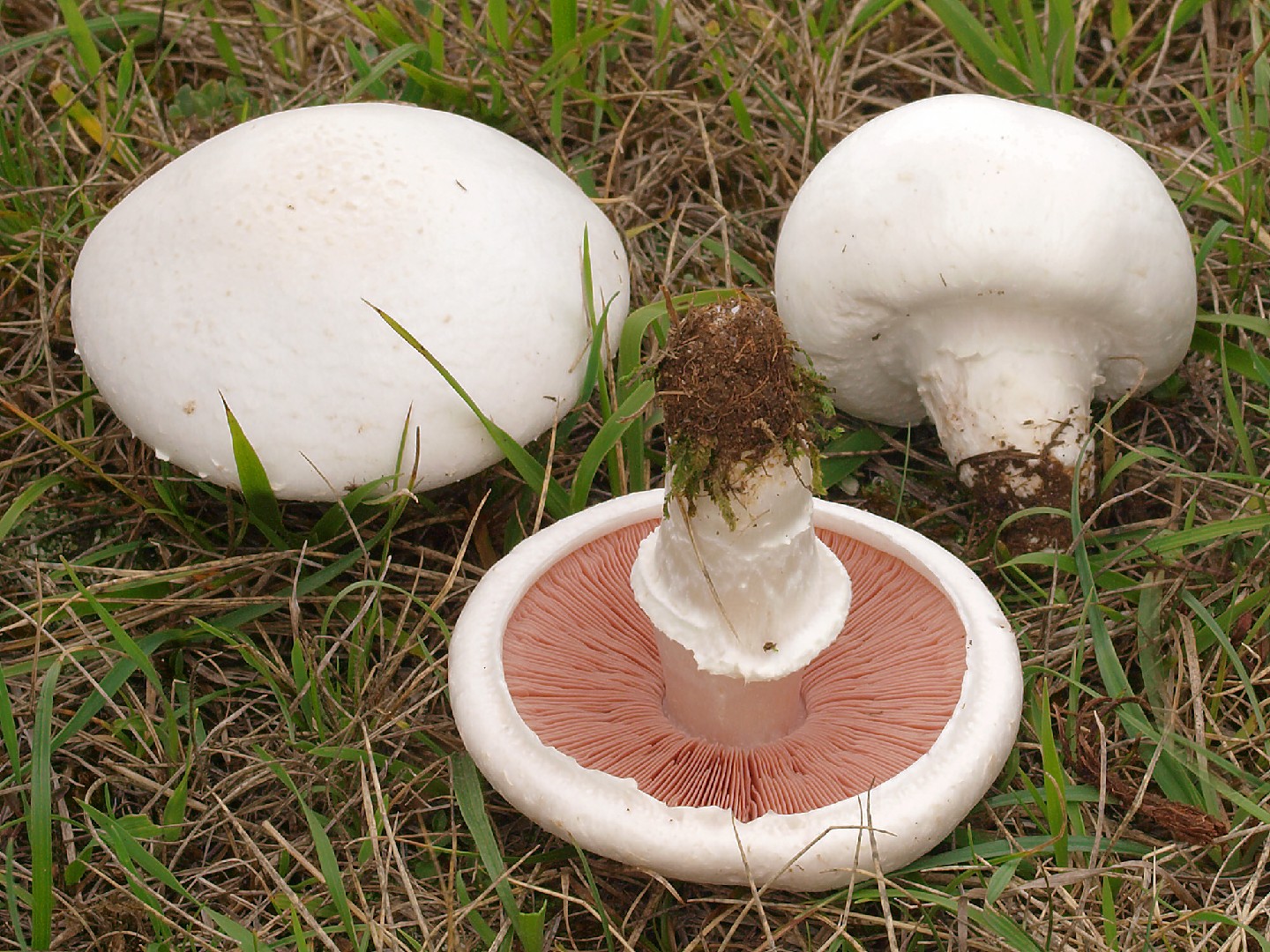
1. Meadow mushroom
The meadow mushroom grows in meadows and pastures around the world—especially those rich in manure—when the weather is warm and wet. They are known to appear in “fairy ring” shapes. Originally identified in Europe, it is possible that North American specimens identified as meadow mushrooms may genetically belong to other species.
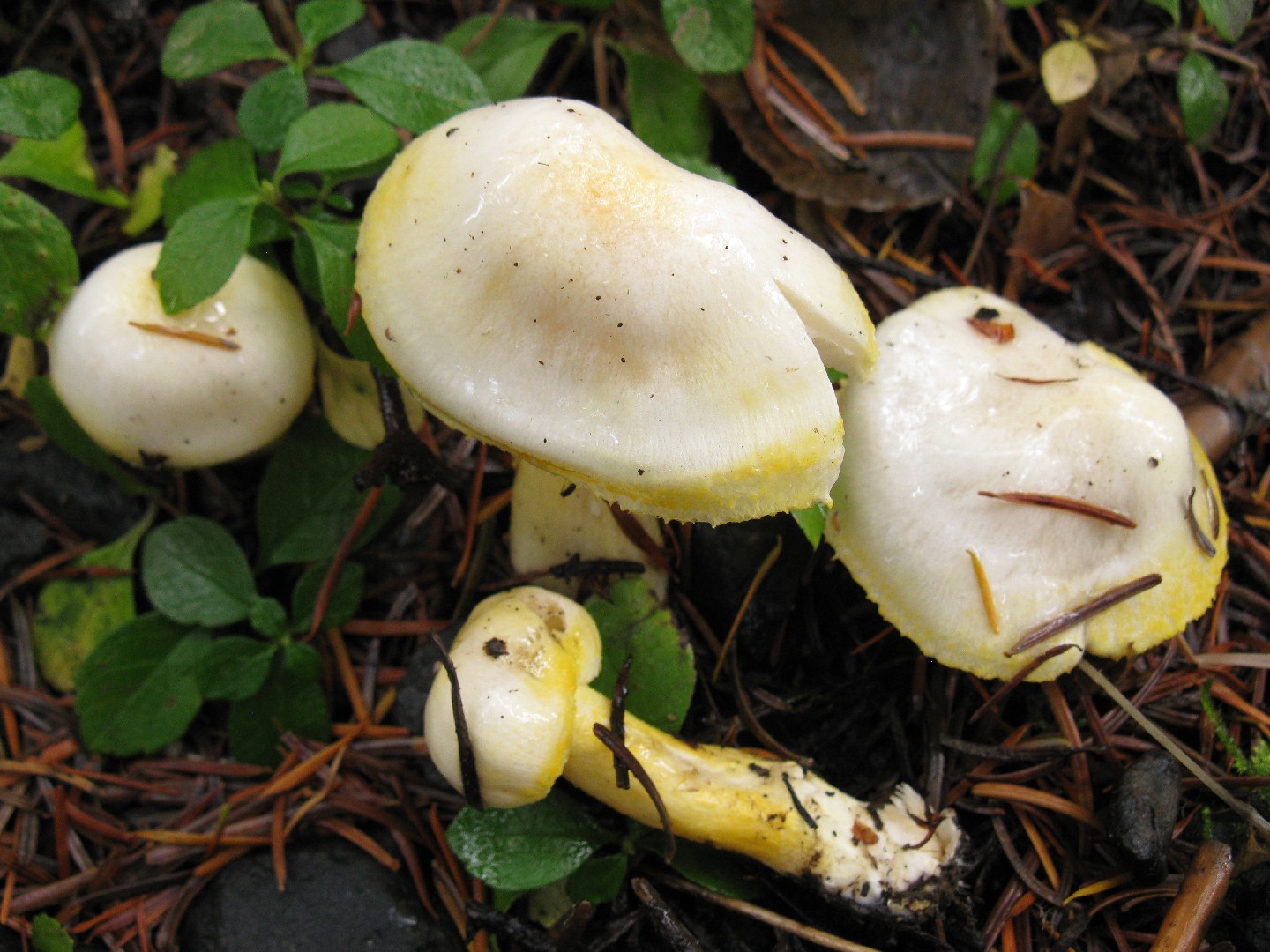
2. Gold-flecked woodwax
This rare mushroom’s claim to fame comes from the remarkable yellow scales scattered over an otherwise ivory fruitbody. However, not every specimen of the gold-flecked woodwax (Hygrophorus chrysodon) species boasts these brightly-colored speckles. Examples of this species can usually be found under conifers.
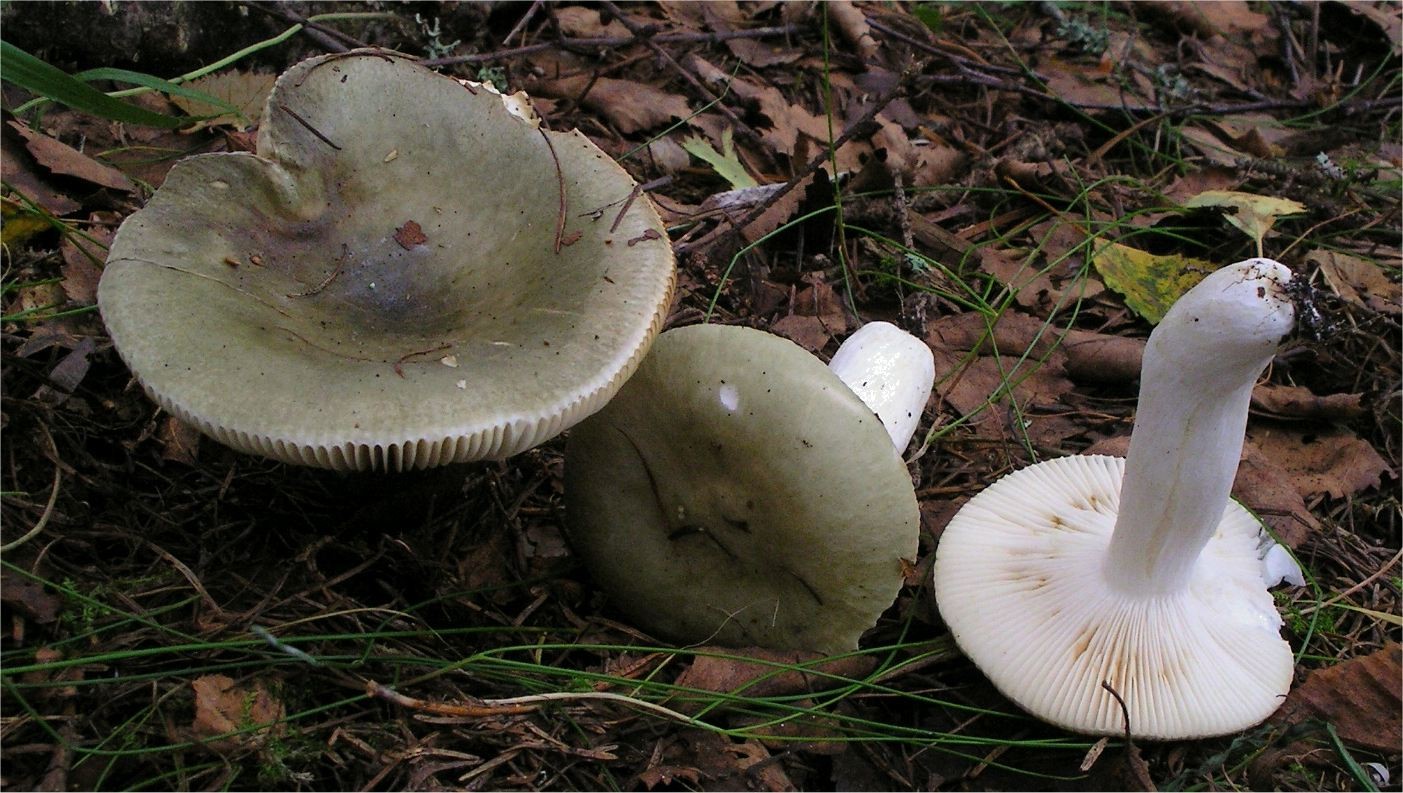
3. Green brittlegill
The color of green brittlegill (Russula aeruginea) caps is quite unusual for a genus named for its usually-reddish color. They appear in small scattered groups under trees or skirting forest edges. The green brittlegill is particularly associated with birch trees.
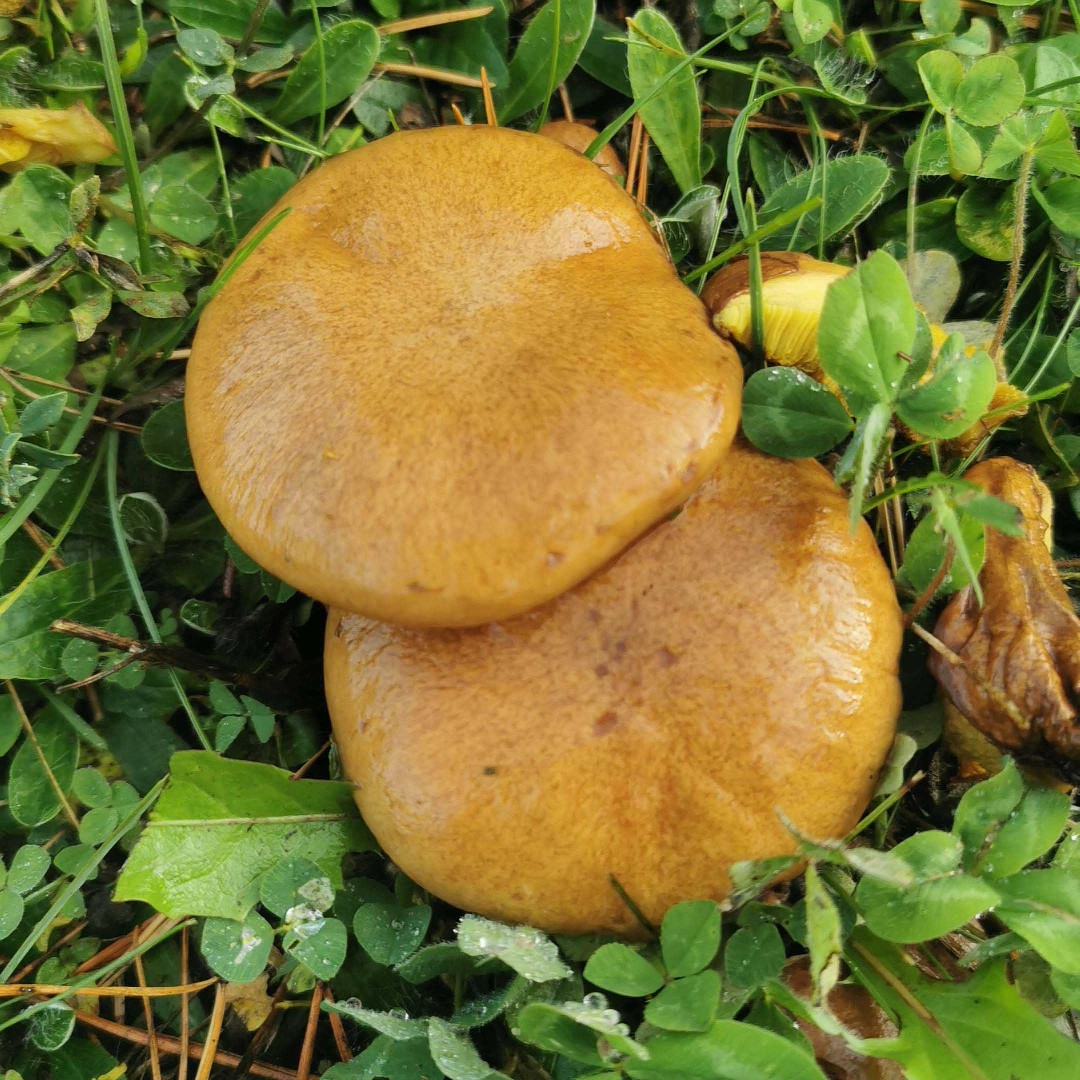
4. Suillus collinitus
Suillus collinitus is a mushroom that grows in a symbiotic relationship with pine trees, particularly the Aleppo pine. This fungus is sometimes introduced to young pine trees to help them to become established in poor soils. It was listed as an endangered species in the United Kingdom, but its 'vulnerable' classification was removed from that nation's Red Data List in 2006.
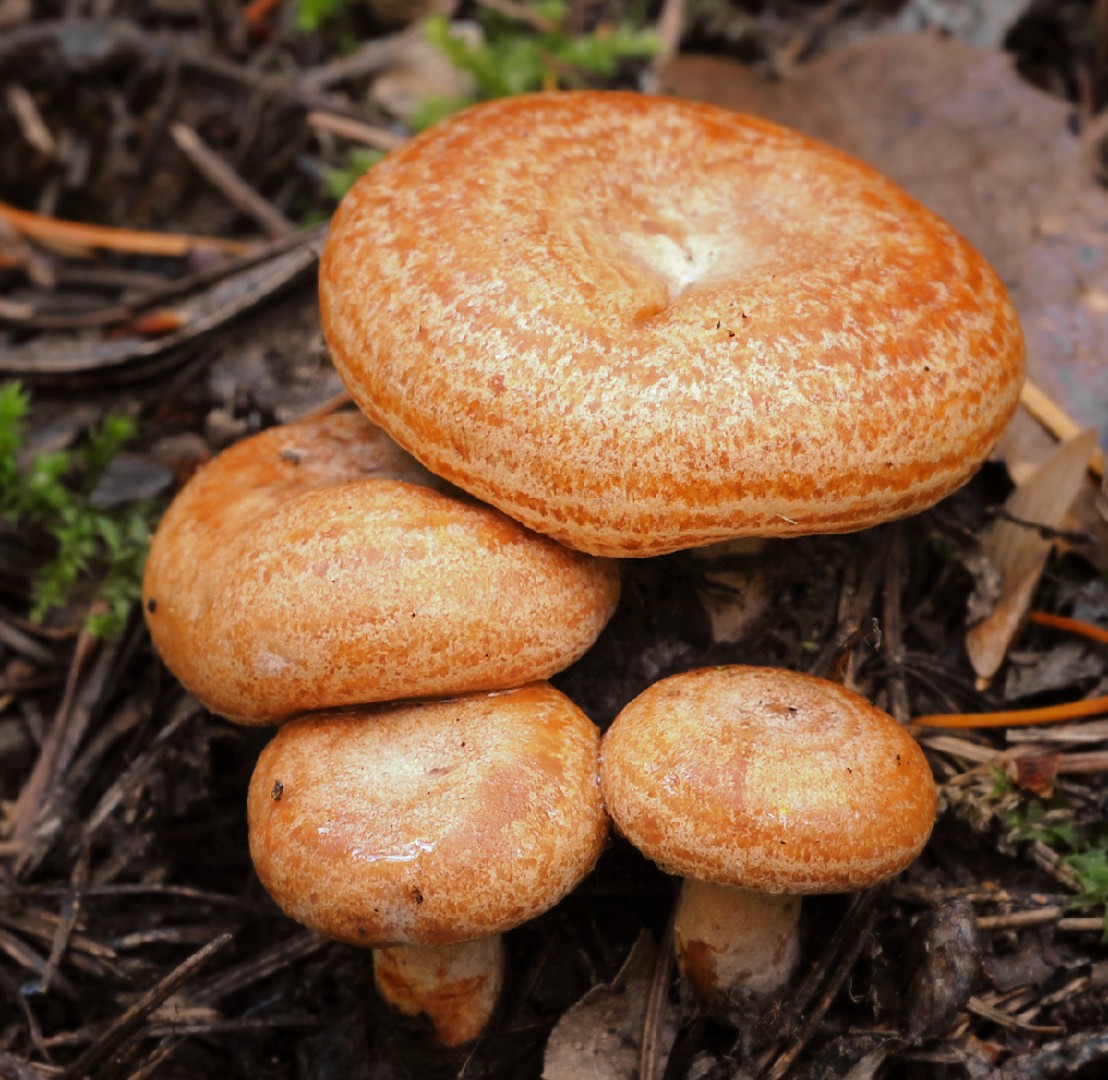
5. Saffron milk cap
Growing wild in the northern hemisphere and introduced to Australia, the saffron milk cap is found in pine forests during autumn. As the name implies, these mushrooms have been harvested for cooking for a long time. They have been known to cause stomach upset in some individuals, however, and carry a risk of being contaminated with heavy metals, so forage with caution.
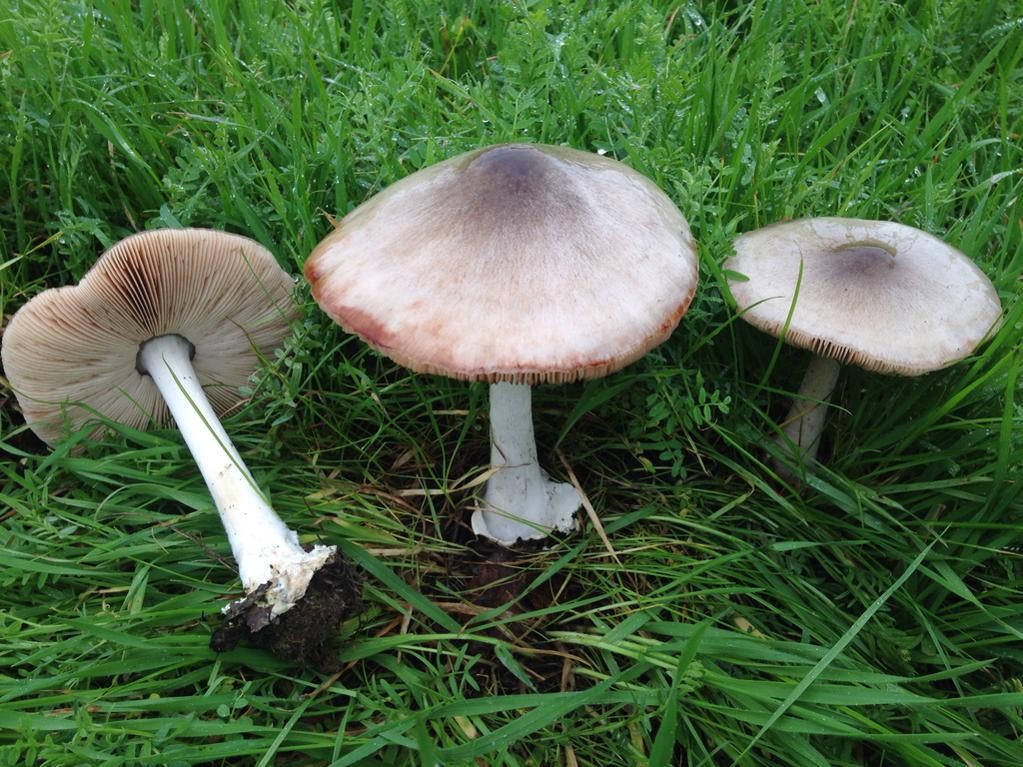
6. Big sheath mushroom
These large white mushrooms bloom all over cleared, harvested fields, as well as pastures and roadsides. The scientific species name comes from Greek words meaning “glue” (glioio) and “head” (cephalus), in reference to the sticky surface of this mushroom’s cap. The big sheath mushroom looks so similar to the poisonous Deathcap and Destroying Angel mushrooms that it should always be left alone.
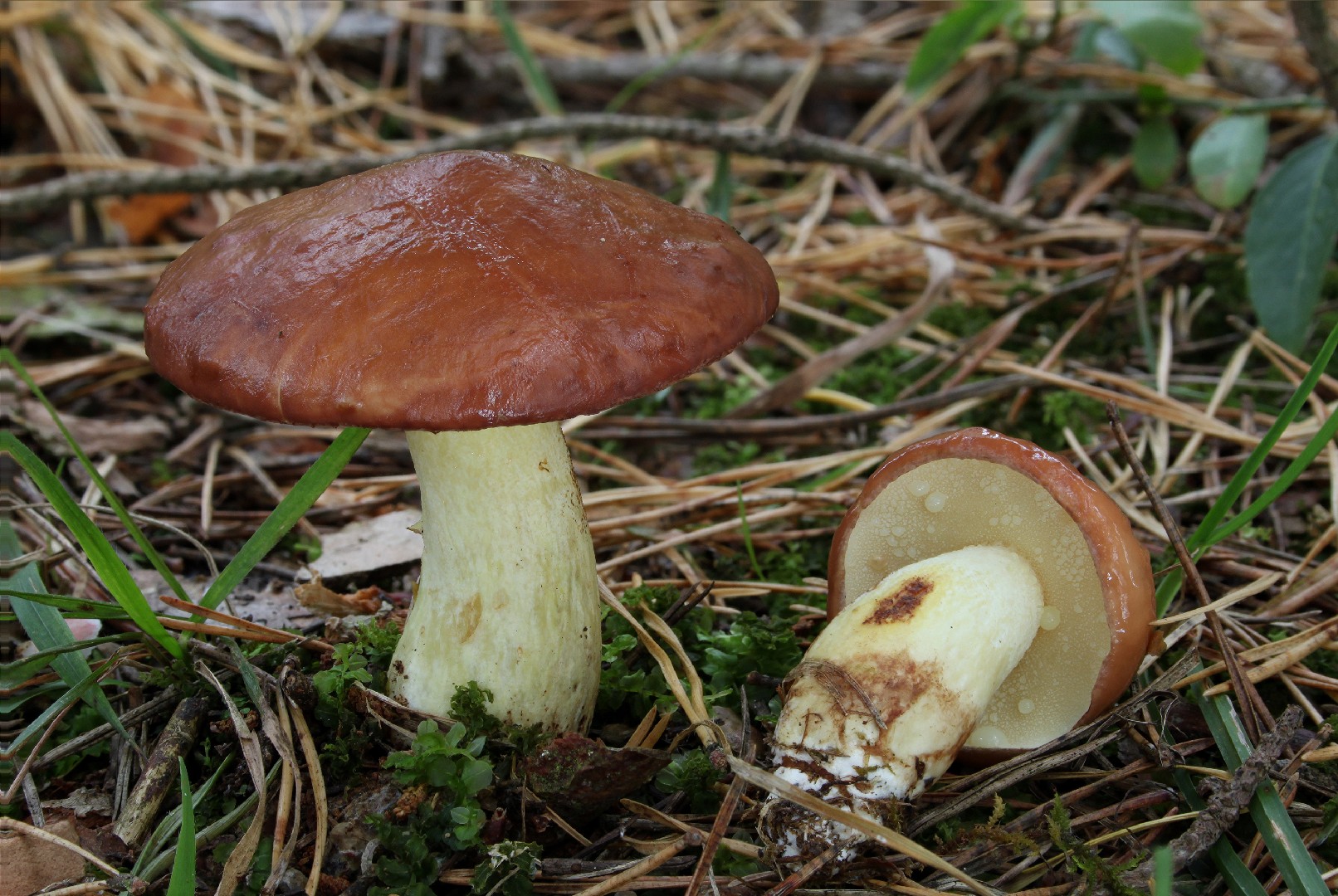
7. Weeping bolete
The weeping bolete features a greasy, sticky cap surface. When young, milky droplets are released through pores on its surface. It appears most commonly beneath Scots pine or other coniferous trees and forms a mutually beneficial relationship with its host.
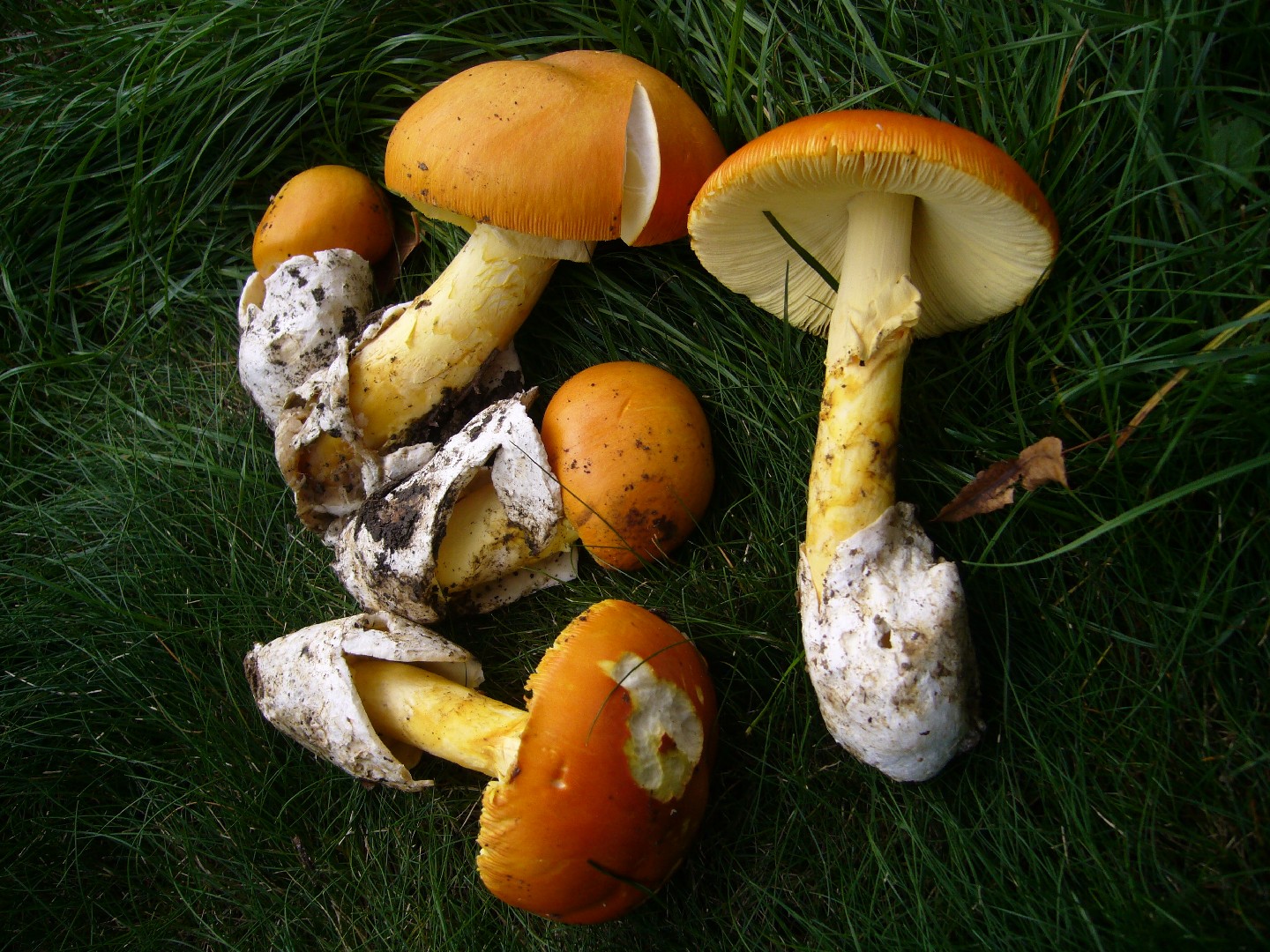
8. Caesar's mushroom
Caesar's mushroom (Amanita caesarea) is a brightly colored Amanita associated with ancient Roman nobility. Sporting a vivid orange cap and a yellow stalk and gills, this mushroom is an exciting find - however, because faded or young individuals may resemble the highly deadly Death Cap, it is recommended that this species be treated with a "look but do not touch" policy.
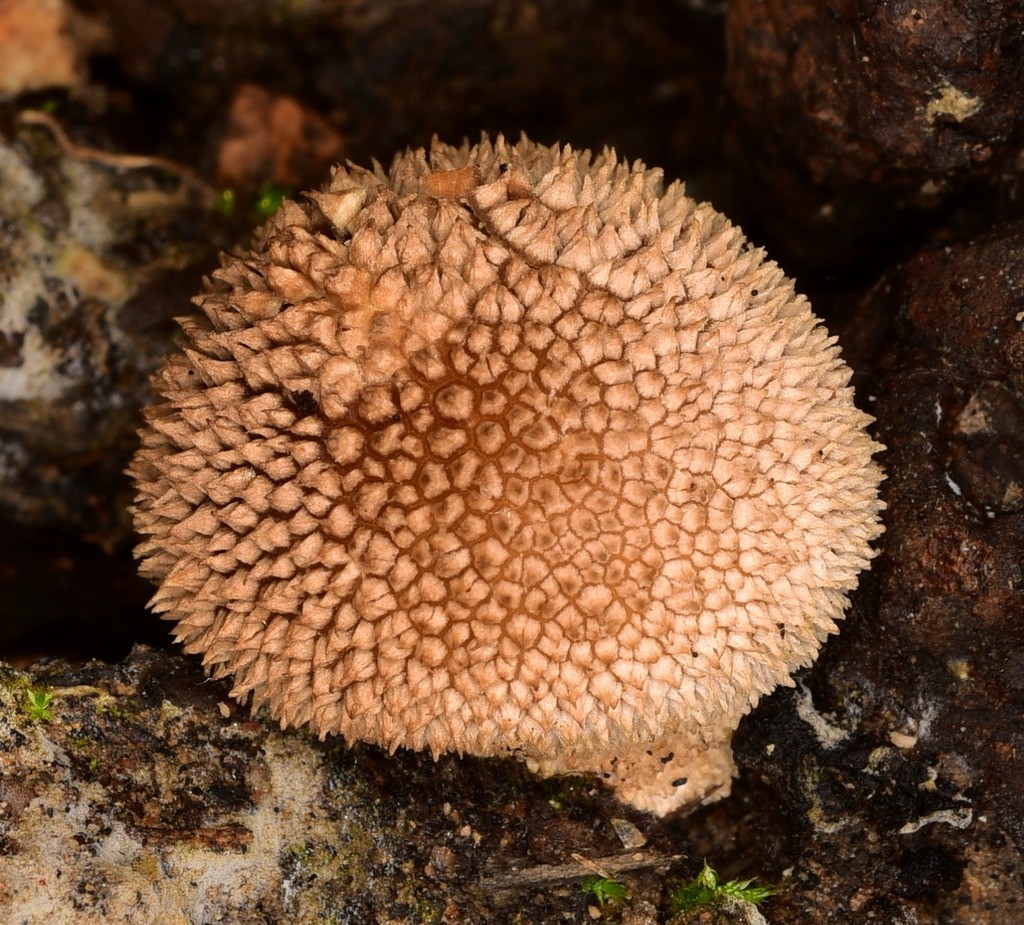
9. Spiny puffball
The ball-shaped head of the spiny puffball (Lycoperdon echinatum) is covered with soft, spine-like protrusions clustered in groups of three and fused at the tips. Its scientific name comes from a Greek word meaning “sea urchin” or “hedgehog.” As the mushroom grows, it darkens and loses these spines. This species of puffball is inedible, even when young.
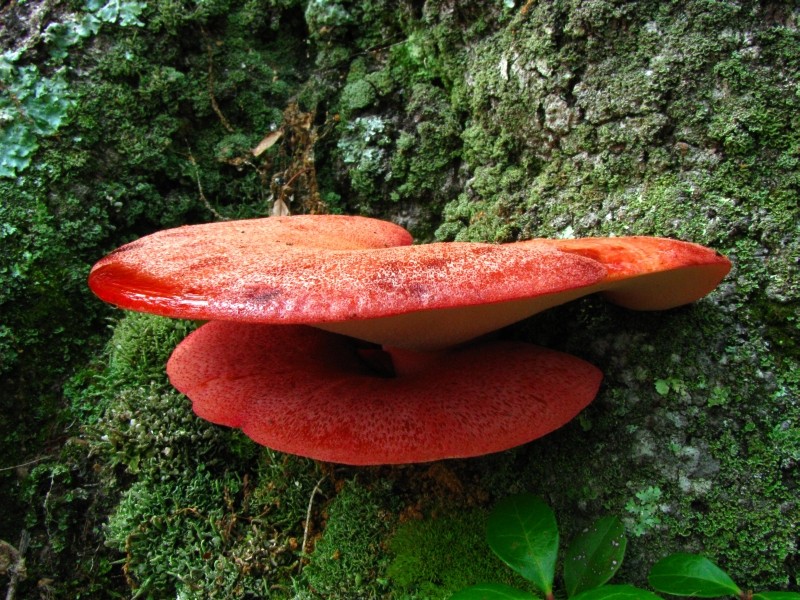
10. Beefsteak fungus
Beefsteak fungus(Fistulina hepatica) is an unusual fungus that visually resembles a slab of raw meat; cutting into it will cause a discharge of thick red liquid resembling blood, adding to this resemblance.
More







