




Top 20 Edible Mushrooms Popular in Kamloops
Delve into the world of fungi with our guide to the top 20 most common edible mushrooms of Kamloops. With its varied climate and extensive wild spaces, Kamloops is a mycological treasure, providing a perfect habitat conducive to the growth of an array of delicious and nutritious fungi. Our expert guide will take you through each mushroom species in detail, exploring their distinctive attributes, delectable taste profiles, favored habitats, and culinary uses. Get ready to discover and tantalize your taste buds!
* Disclaimer: Content feedback CAN NOT be used as any basis for EATING ANY PLANTS. Some plants can be VERY POISONOUS, please purchase edible plants through regular channels.

Most Popular Edible Mushrooms

1. Shaggy mane
The shaggy mane mushroom is commonly found in North American and European grasslands. Some peoples foraged for its young egg-shaped caps, but it has more recently been found to be a bioaccumulator of heavy metals, meaning it pulls toxic metals up from the soil where it grows. As a result, shaggy manes should not be eaten. The mushrooms usually appear in clusters or “fairy rings.”
2. Yellow fan
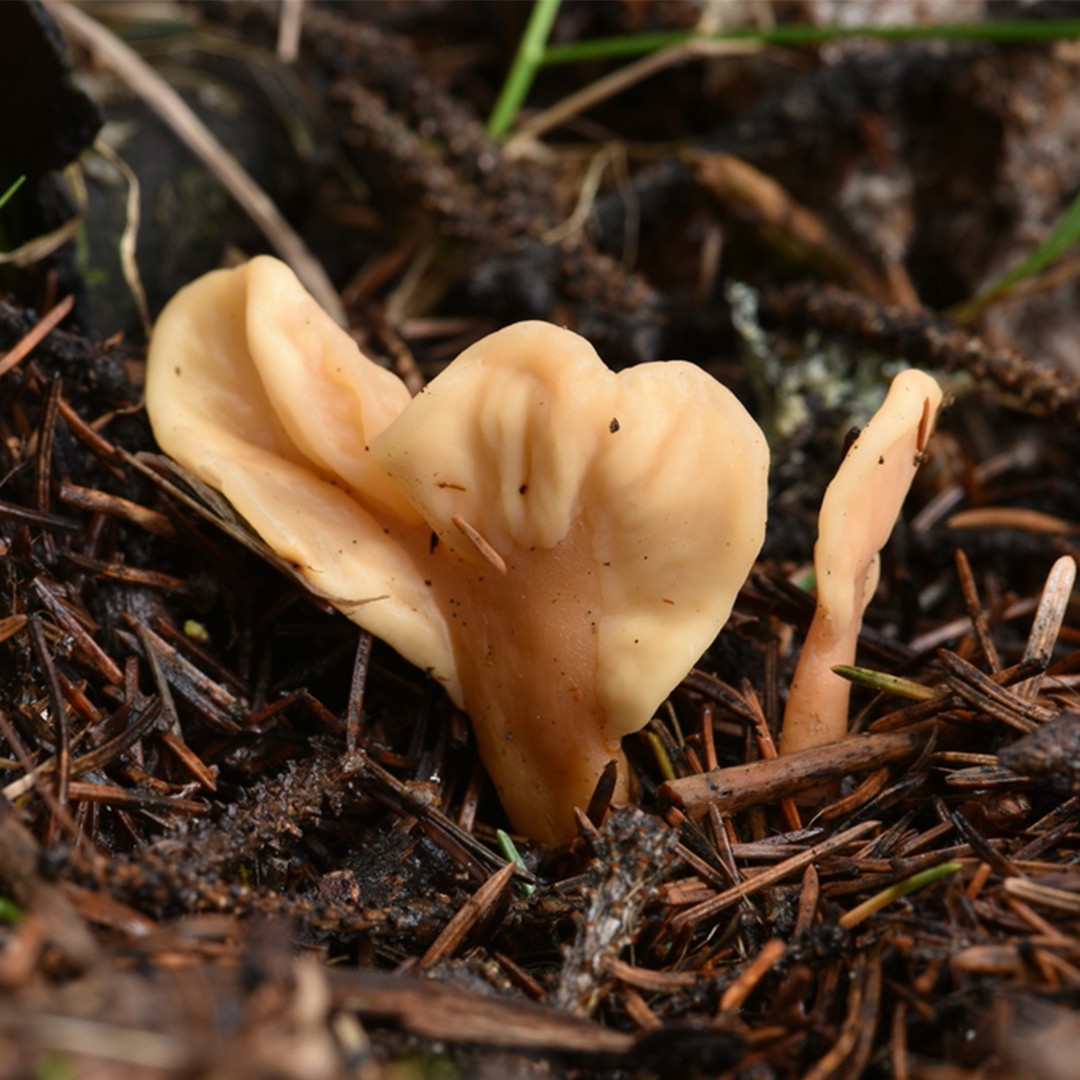
The fan- or spoon-shaped fruit bodies of S. flavida may be up to 8 cm (3.1 in) high, although a range between 2–5 cm (0.8–2.0 in) is more typical. Occasionally, fruit bodies are produced with the "head" split into two separate lobes. The color is light to strong yellow, the flattened fertile area at times paler; the color tends to deepen with the age of the fruit body. The fertile area (the region that produces spores) is often irregularly wrinkled and sometimes notched at apex, and is up to 2 cm (0.8 in) wide; it tapers down the length of either side of the stem (i.e., decurrently) from a half to a third of the total stem length. The division between the head and the stem is sharply defined. The stem is hollow, smooth (glabrous), and has a white to yellowish mycelium at its base. The flesh of the fruit body is whitish, but becomes yellowish-brown when dry. The edibility of Spathularia flavida is variously described as untested, unknown, or "edible, but rather tough". The small size would likely discourage table use. The odor and taste are not distinctive. 
3. Gypsy mushroom
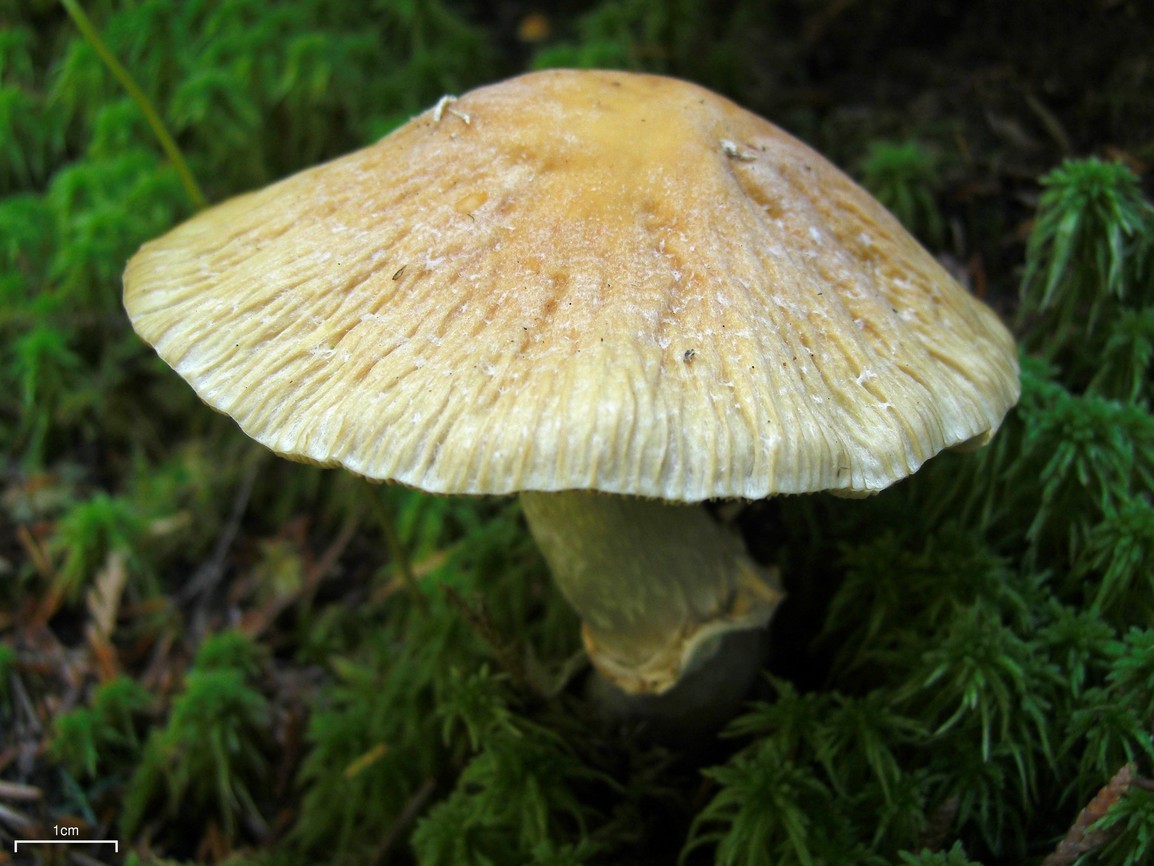
Cortinarius caperatus, commonly referred to as the gypsy mushroom, is a sought-after species that grows across the temperate regions of the Northern Hemisphere. The fruitbodies sport ochre-colored caps and pale gills and stems - their cap color fades over time though, which may lead to their being confused with other, more toxic species.
4. Pear-shaped puffball
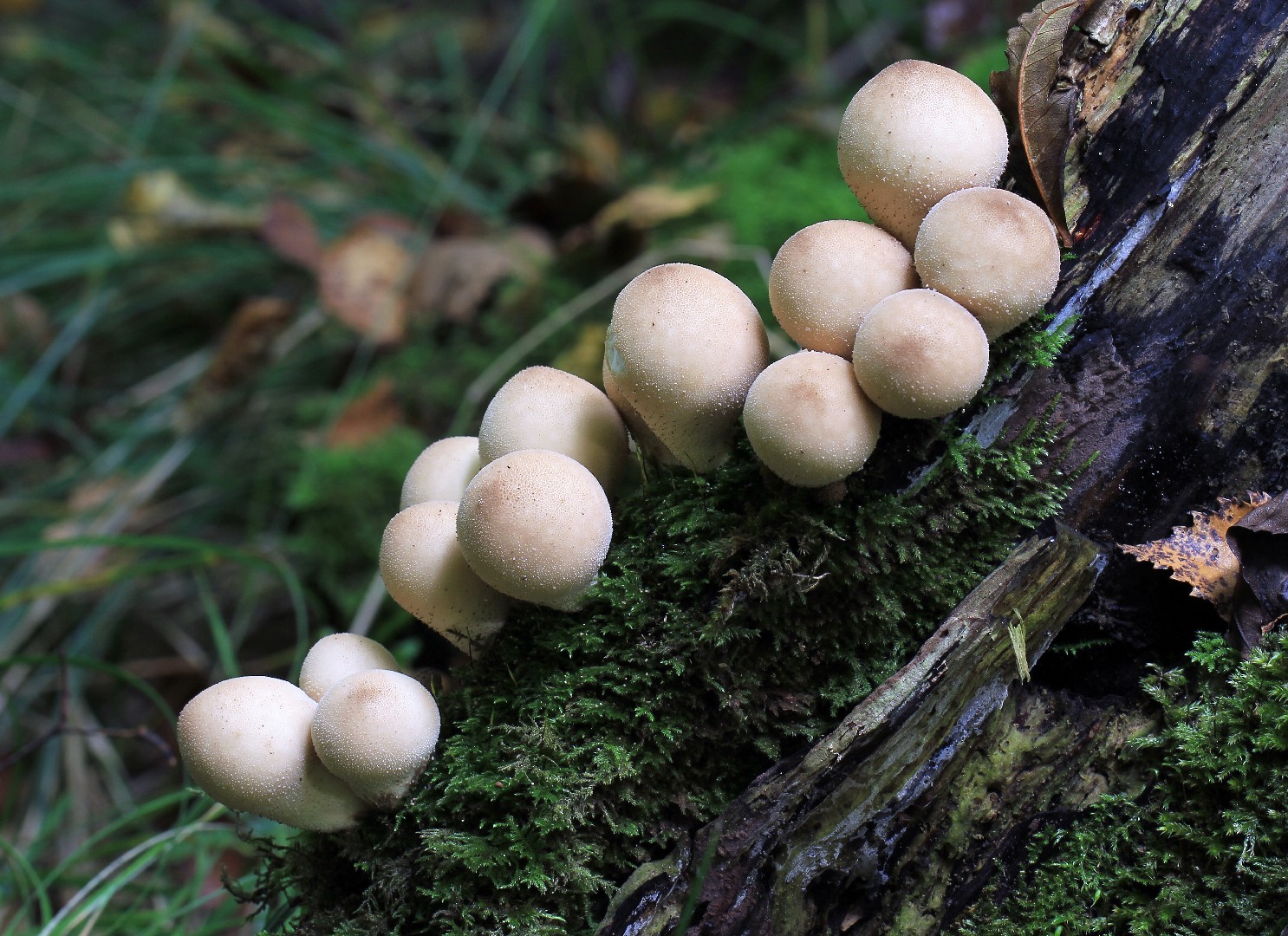
The mushrooms of this species grow in such tight clusters that they may cover fallen trees and stumps almost entirely in a brownish, puffy coat. Pear-shaped puffballs appear all around the northern hemisphere on decaying hardwoods from fall through winter.
5. Purple coral
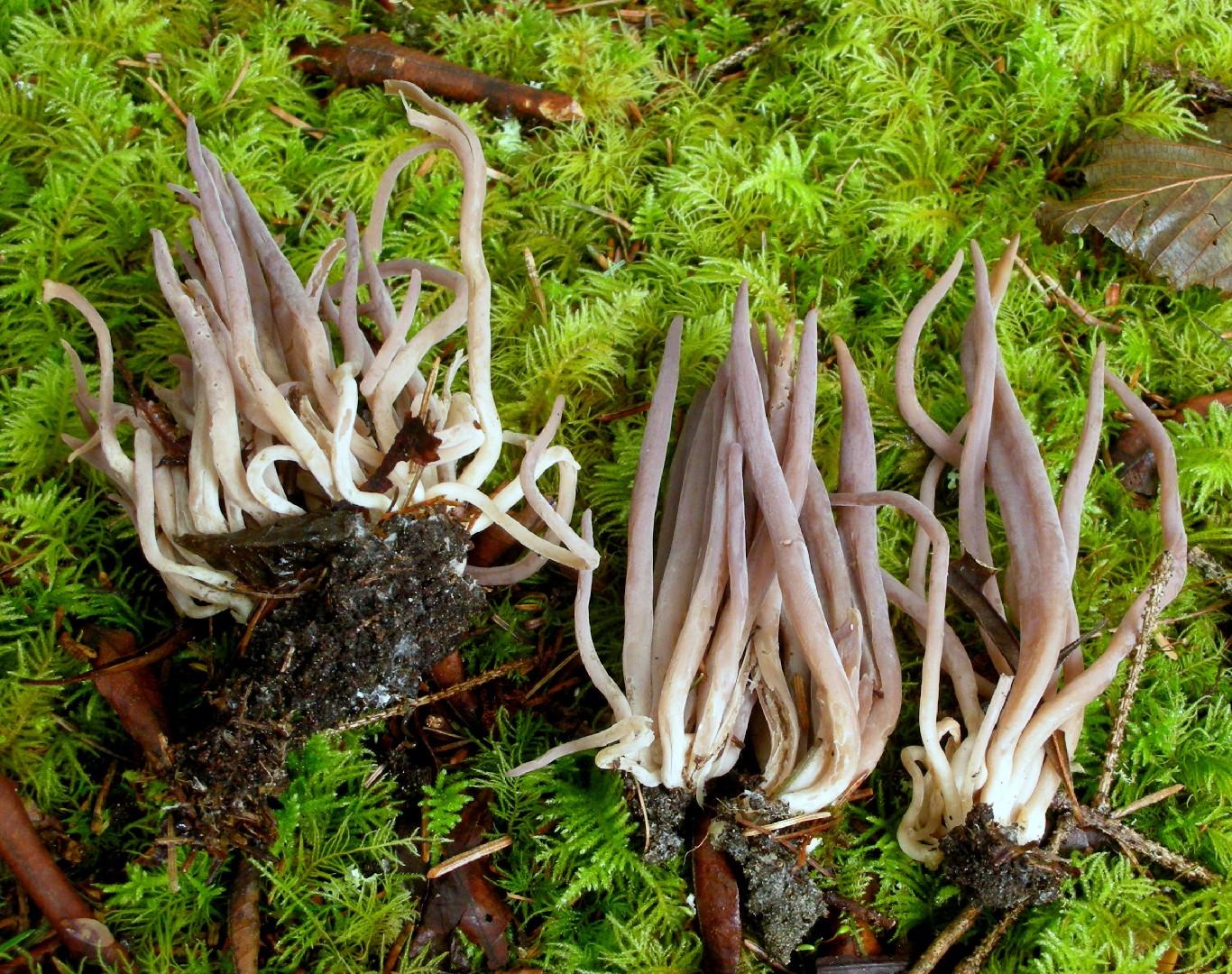
The purple coral is a tiny, but beautiful and impressive fungus that can be immediately distinguished from other Alloclavaria and Clavaria species by its distinctive purple colour. This mushroom grows in large clusters, but it's still unclear whether it's a saprobic or mycorrhizal species.
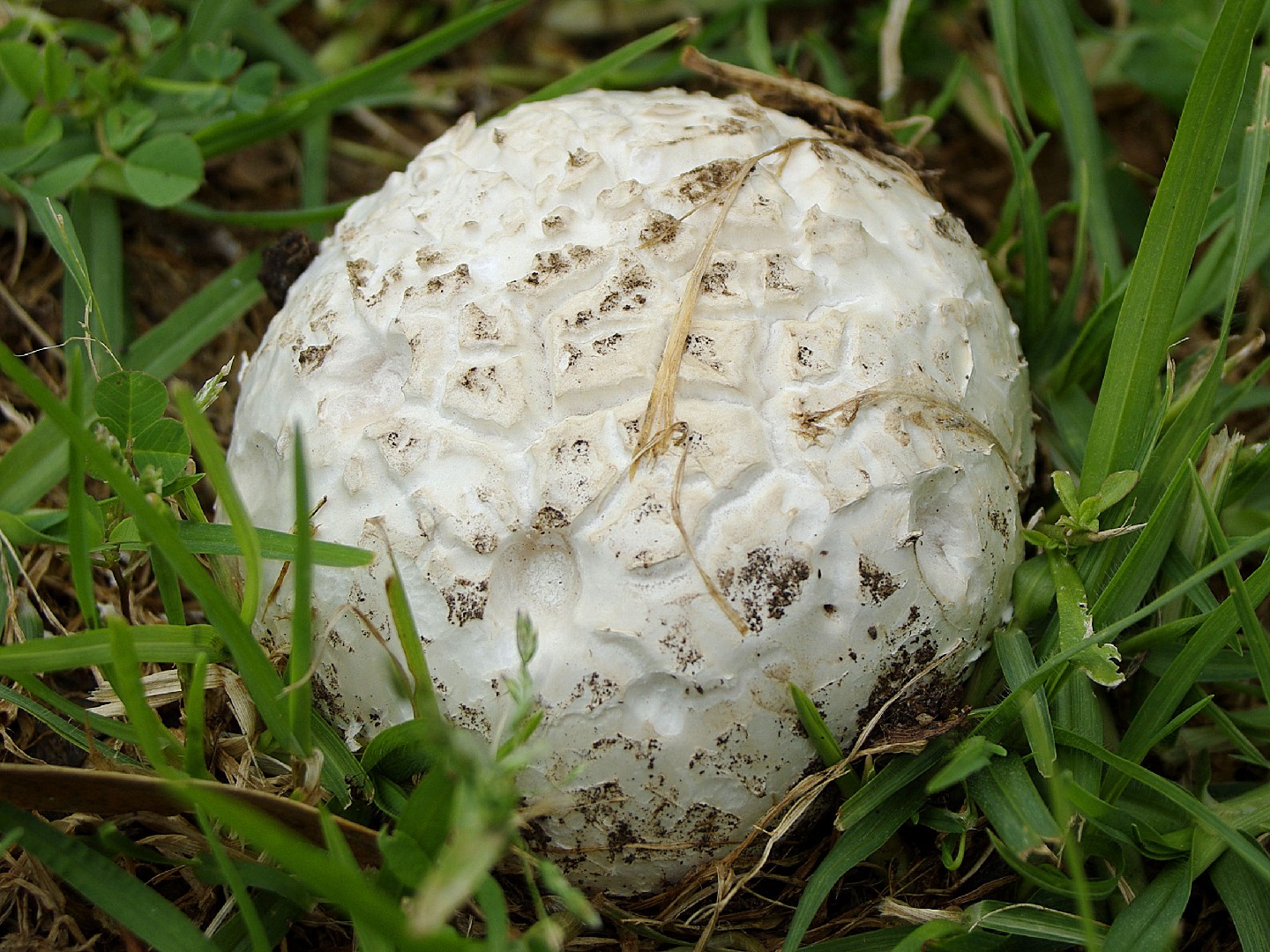
6. Western giant puffball
The western giant puffball is the largest puffball in North America, reaching up to 70 cm in diameter. It is as large as its European counterpart the Giant puffball (Calvatia gigantea), although it features a more irregular shape than its European cousin.
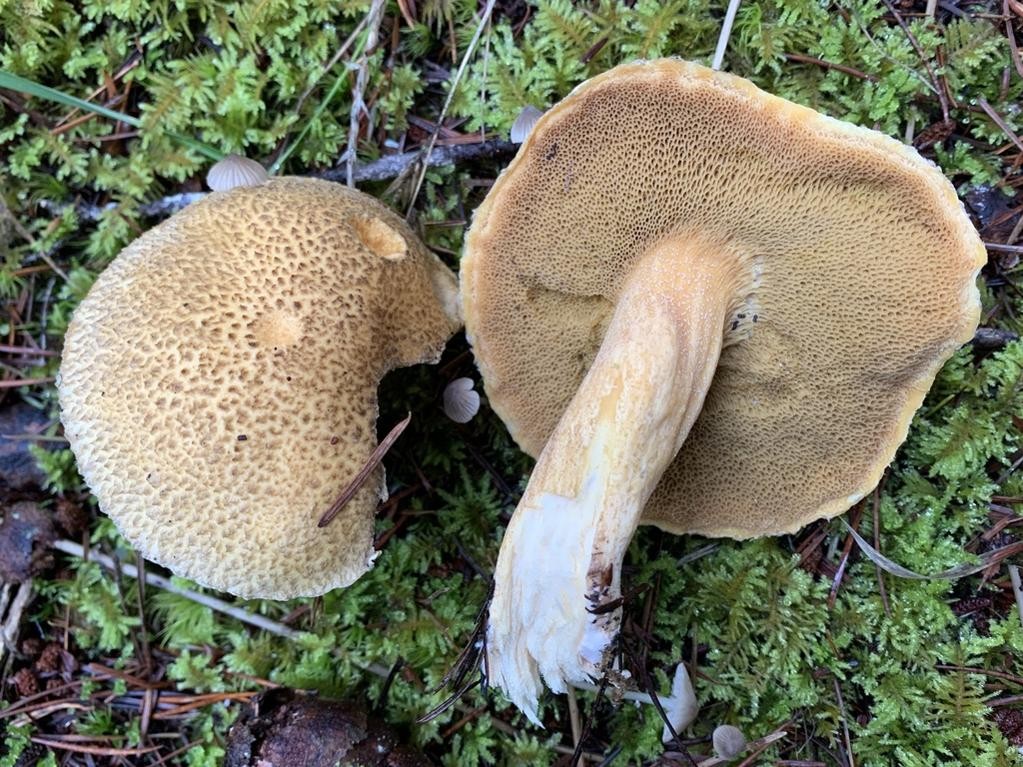
7. Blue-staining slippery jack
If you come across a blue-staining slippery jack (Suillus tomentosus) in the wilderness, chances are you're adventuring through a conifer forest after heavy rain. True to the common name, the caps can stain your hands a brownish-blue color. The surface area of the cap has a velvety texture when young.
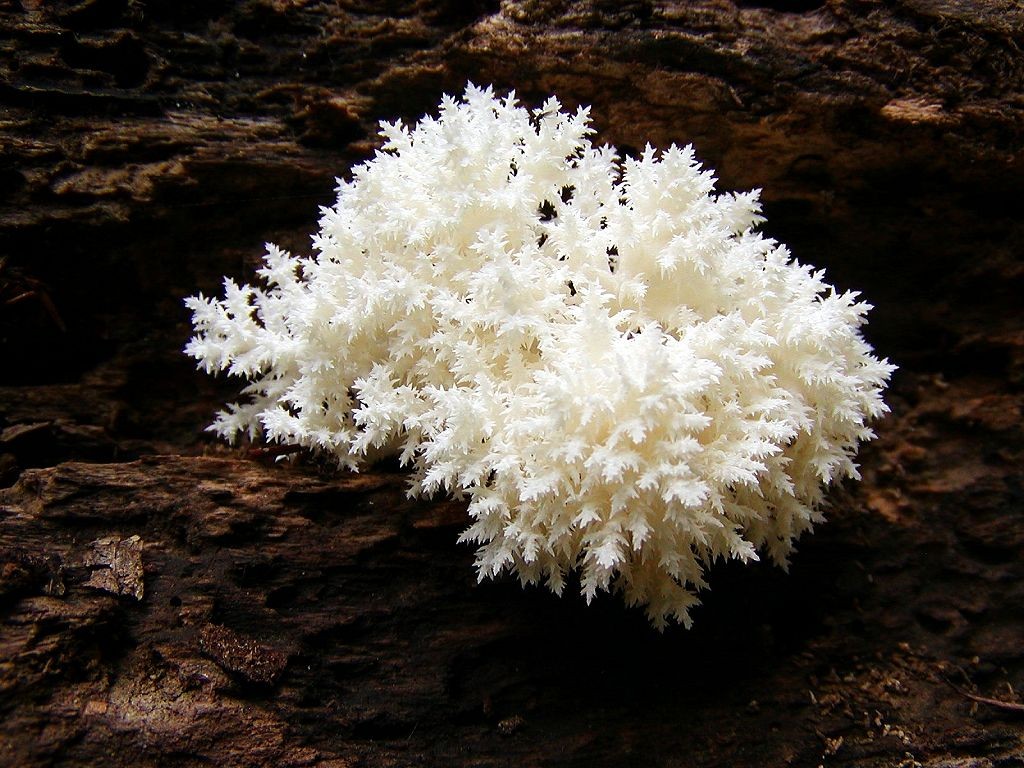
8. Coral tooth fungus
Coral tooth fungus (Hericium coralloides) is a species of coral mushroom most frequently sighted on dead or decaying hardwoods. Generally, younger specimens are white and become increasingly yellowish as they mature. Found around the world, the Māori refer to this species as pekepekekiore.

9. Orange-capped bolete
Orange-capped bolete (Leccinum aurantiacum) is easily recognizable for its thick stalk and colorful red-orange cap. Bruised skin may turn burgundy before becoming gray. It sprouts in summer and autumn throughout North America and Europe, where it is particularly associated with the poplar tree.
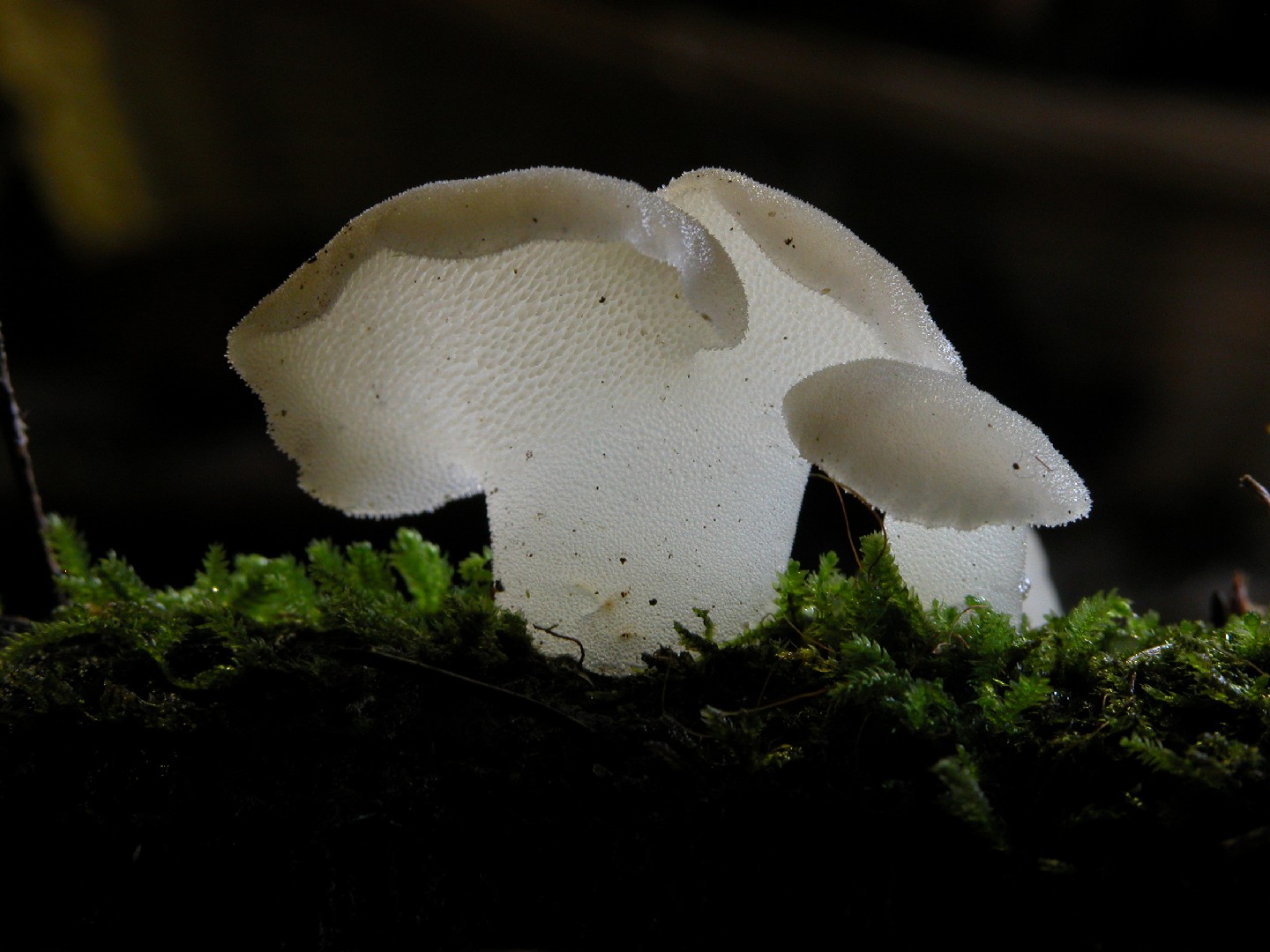
10. Toothed jelly fungus
This whimsically-named mushroom has a global distribution and a unique appearance. Toothed jelly fungus has a white, translucent - almost spectral - coloration and sports little downward pointing "teeth" on the underside of its cap. Although its toothed underside may scream "hedgehog mushroom", it is actually a member of a separate genus (Pseudohydnum, as opposed to Hydnum).
More







