




Top 20 Most Common Mushrooms in Virginia Beach
Welcome to the world of fungi! Nestled along the Atlantic coastline, Virginia Beach boasts a temperate climate and diverse ecosystems making it a haven for mushroom enthusiasts. Among its lush landscapes, you'll find a fascinating array of 20 common species indigenous to the area. Get ready to explore the thriving mycological scene right under your feet in Virginia Beach.

Most Common Mushrooms
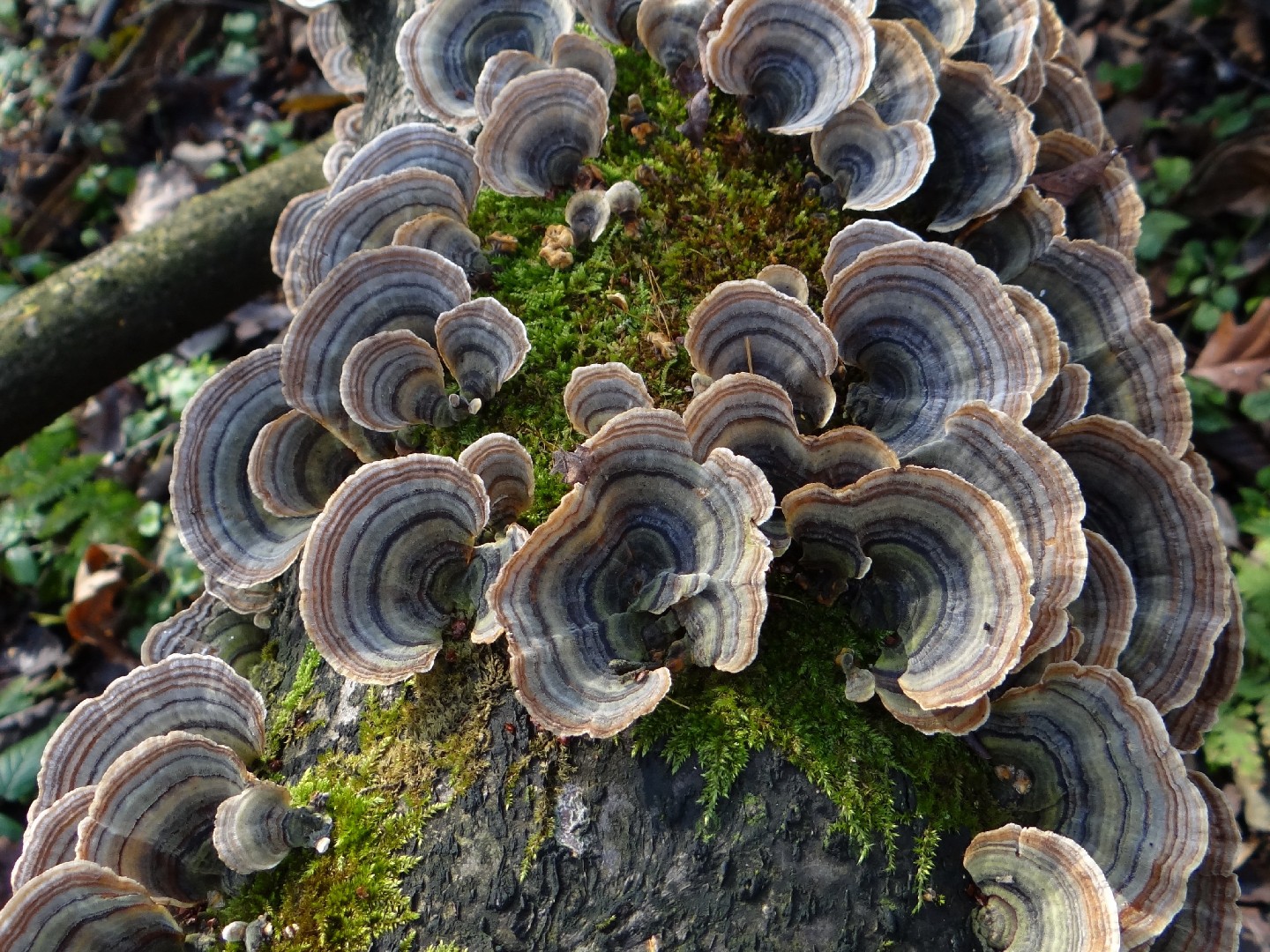
1. Turkey tail
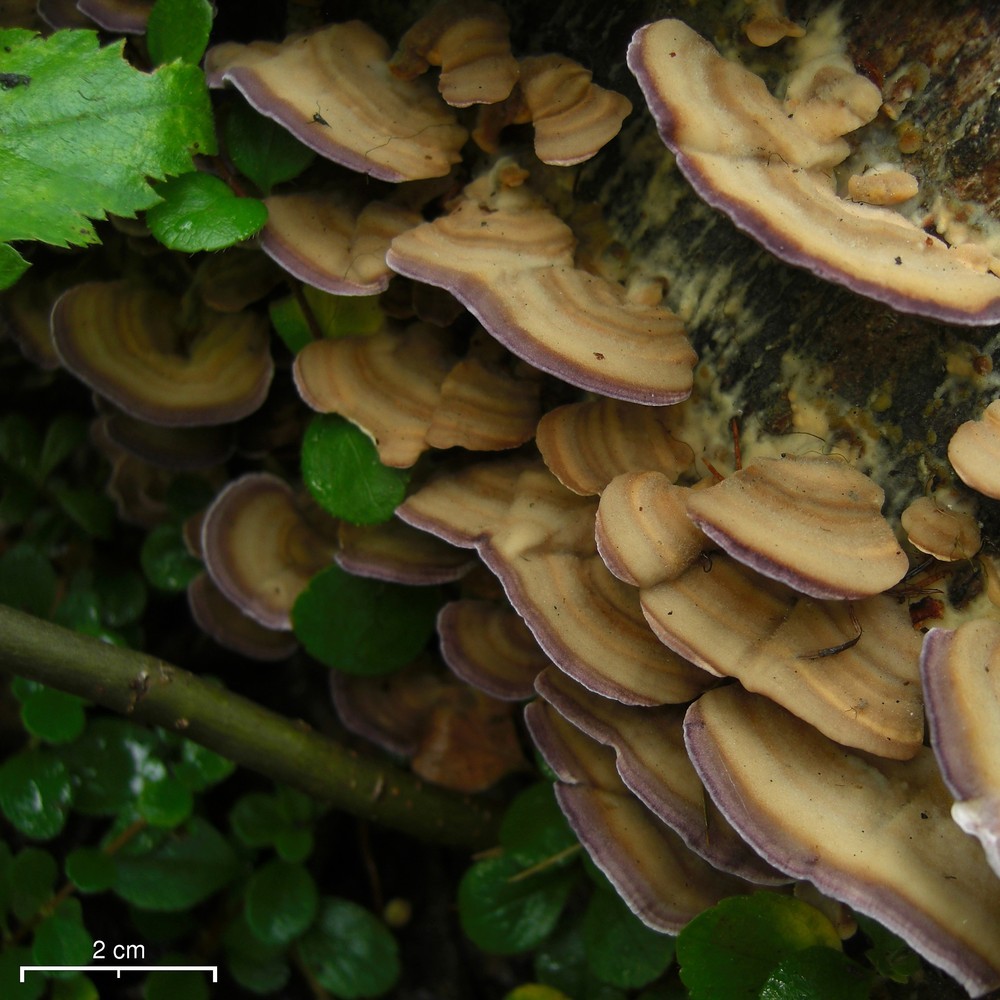
The distinctively-striped turkey tail fungus grows on stumps and logs all over the forests of the northern hemisphere. It is, in fact, probably the most common species you will find. That doesn't mean this mushroom is plain, however; each cap is uniquely patterned. Look for bands of alternating textures as well as color.
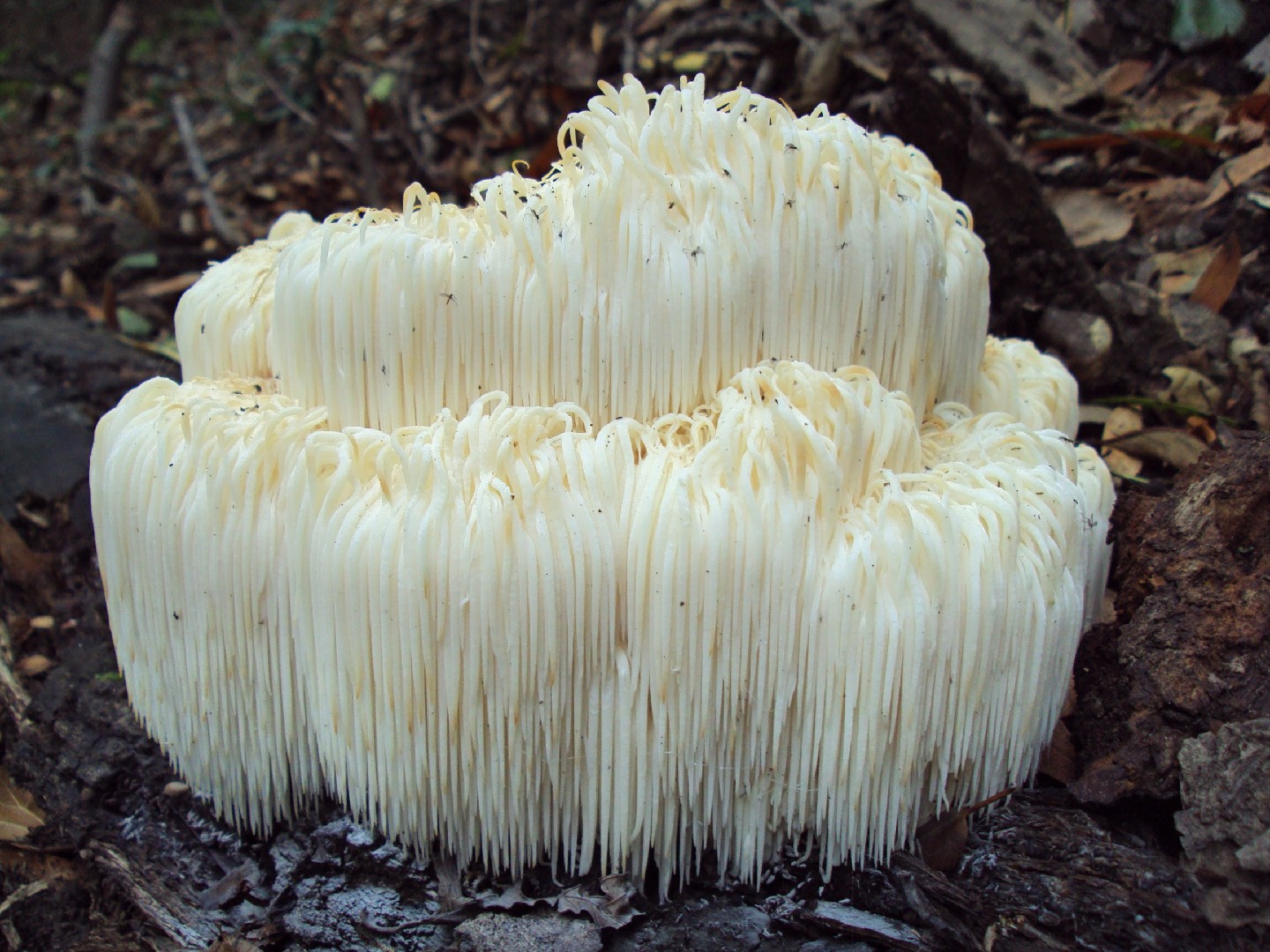
2. Lion's Mane Mushroom
Lion's Mane Mushroom(Hericium erinaceus) is easily identifiable by its characteristic appearance, reminiscent of the majestic mane of a lion. It often sprouts along hardwoods, which may be living or dead. Scientists thus debate whether this species is truly parasitic or merely saprophytic in nature.
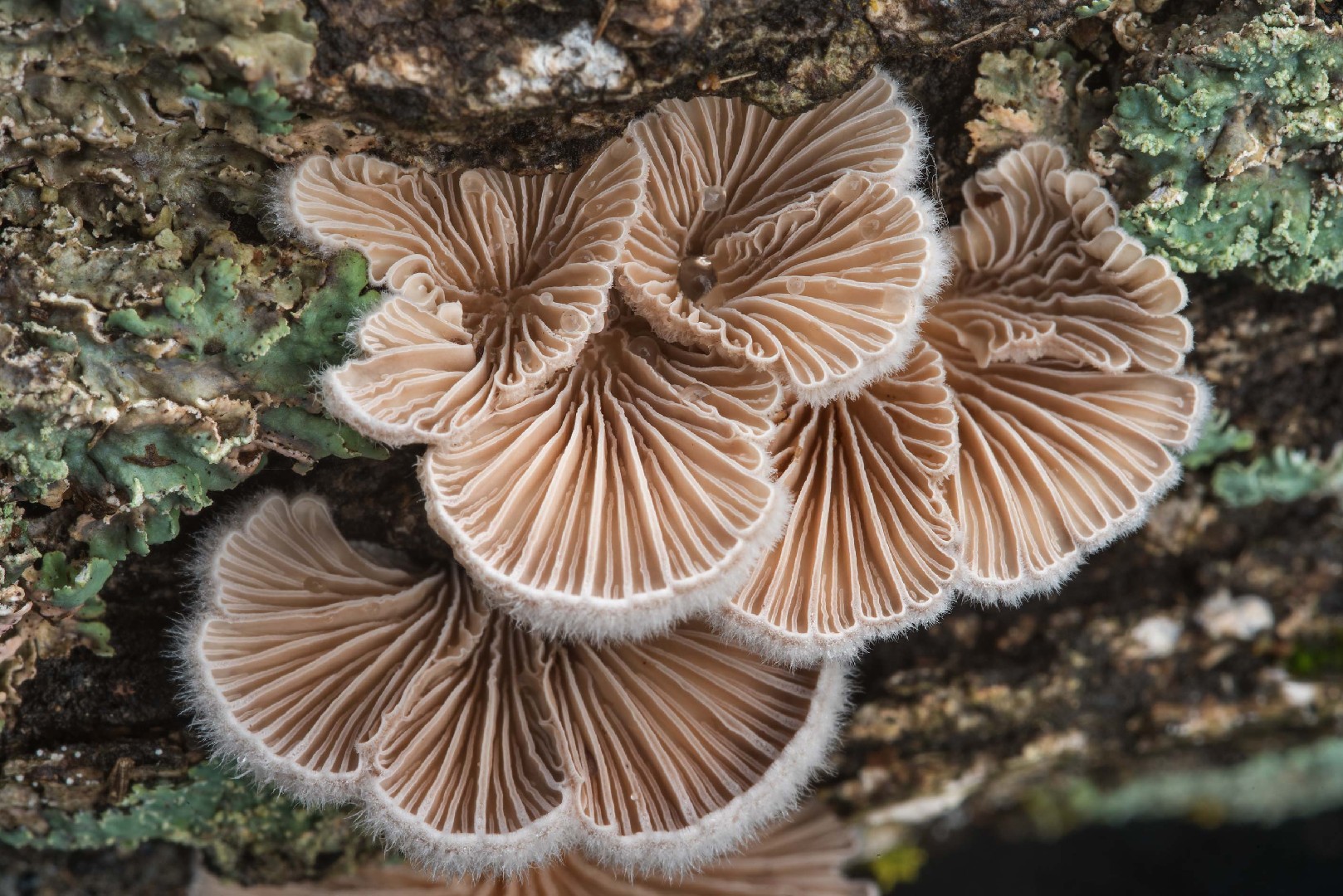
3. Split gill
Split gill(Schizophyllum commune) can be found across the globe. Uniquely, it is the only mushroom species known to display the capability to retract by movement. It is considered inedible, although not necessarily toxic. Furthermore, it is not recommended to smell this species, as the spores are capable of sprouting and growing in nasal passages.
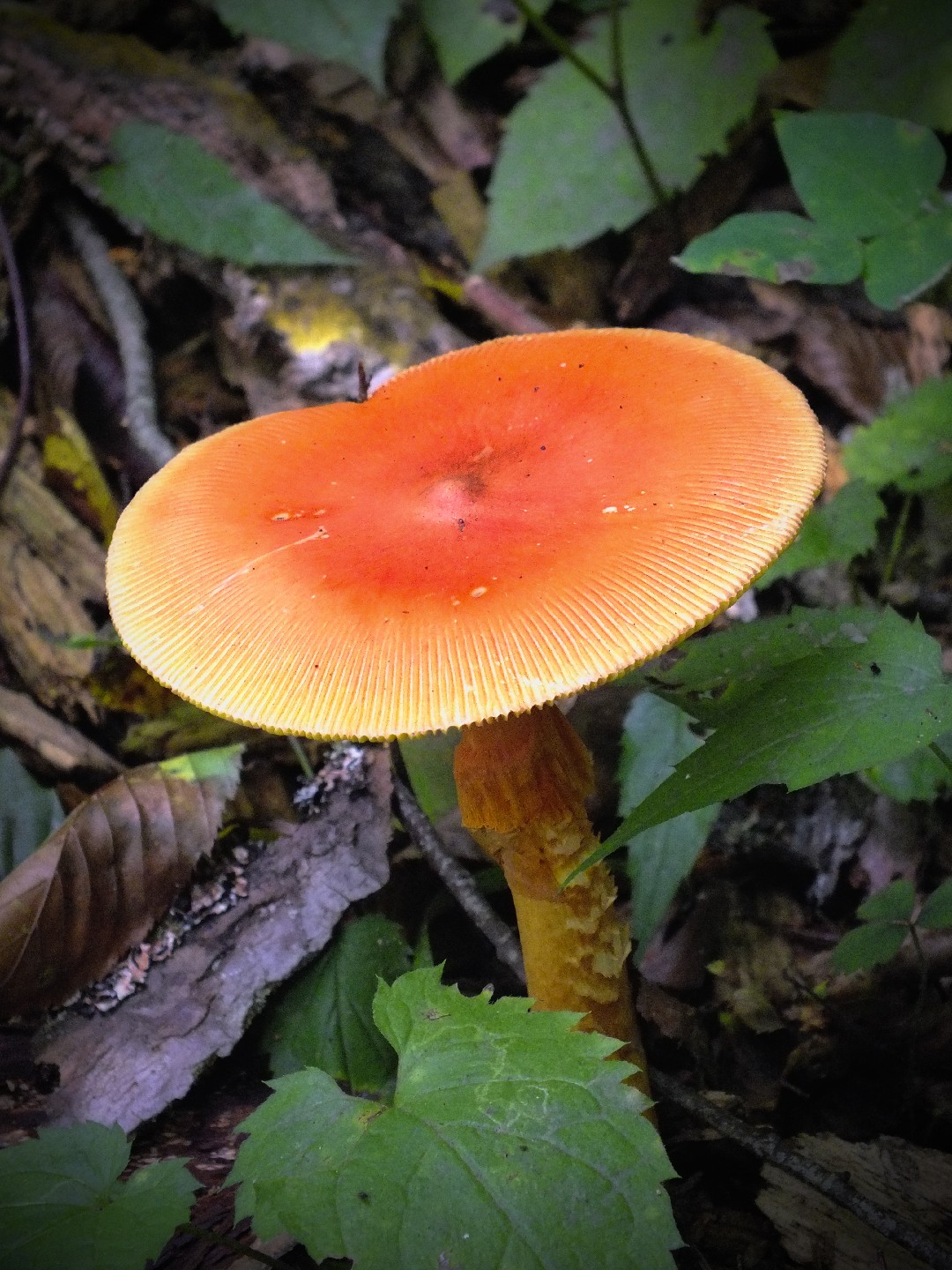
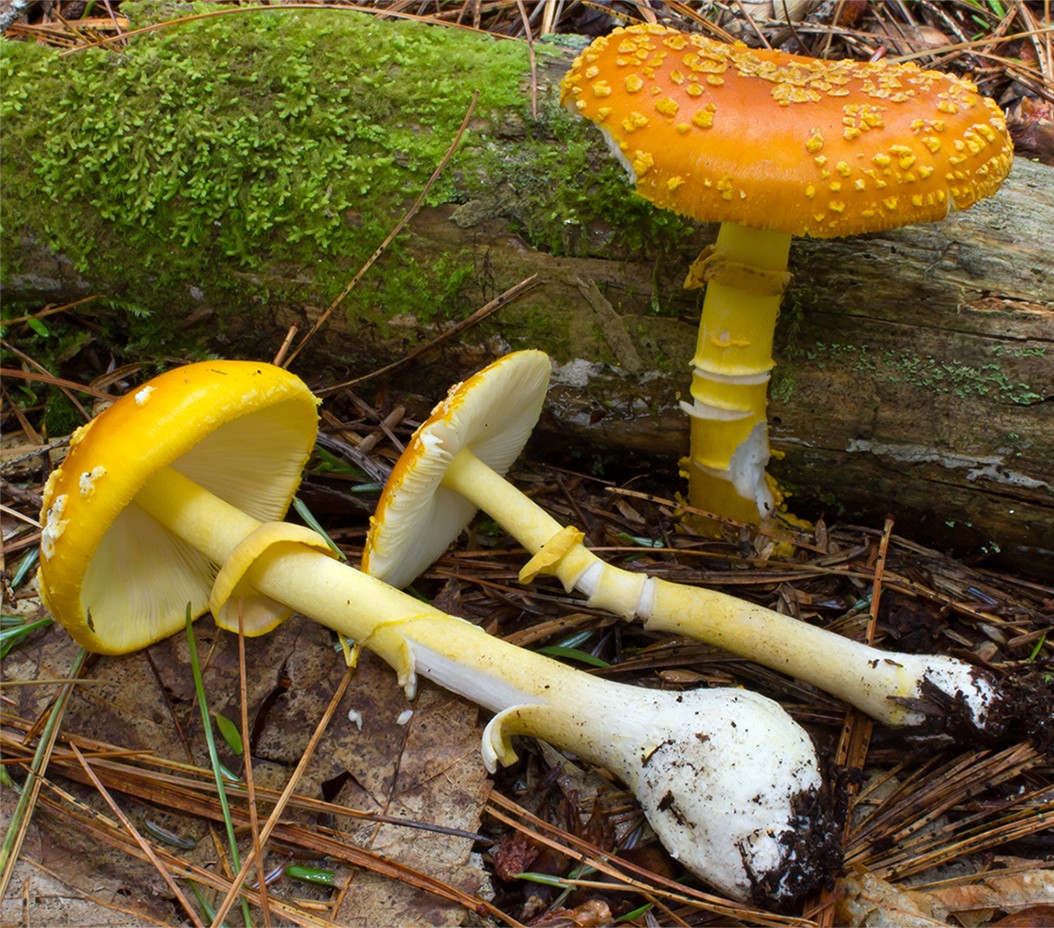
4. Jackson's slender caesar
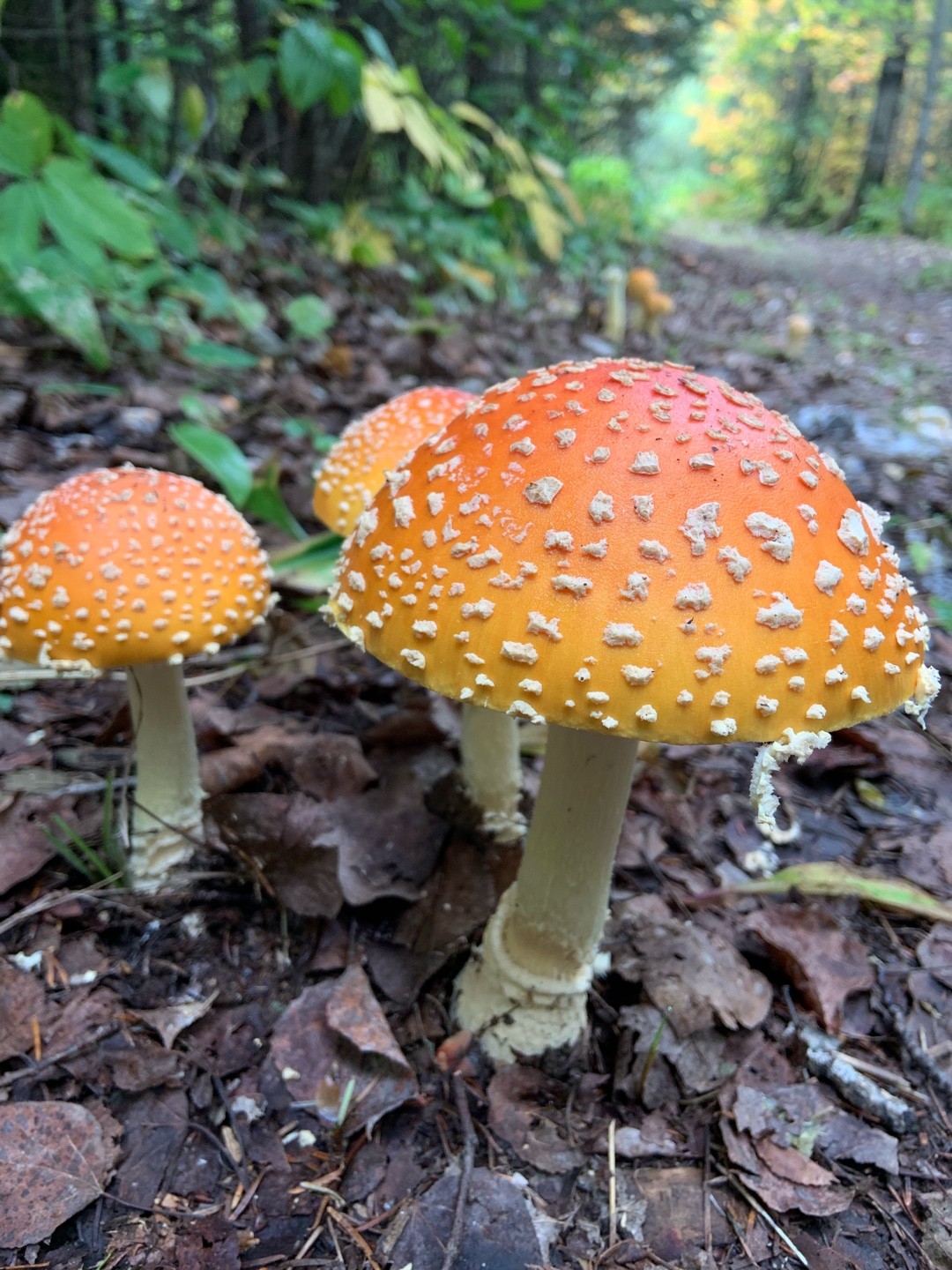
The jackson's slender caesar is a strikingly colorful member of the Amanita genus. The mushroom's bold hues - it often sports deep reds, oranges, or yellows - make it easily identifiable. Jackson's slender caesars are native to eastern North America, and particularly common in the pine forests of the American southeast.
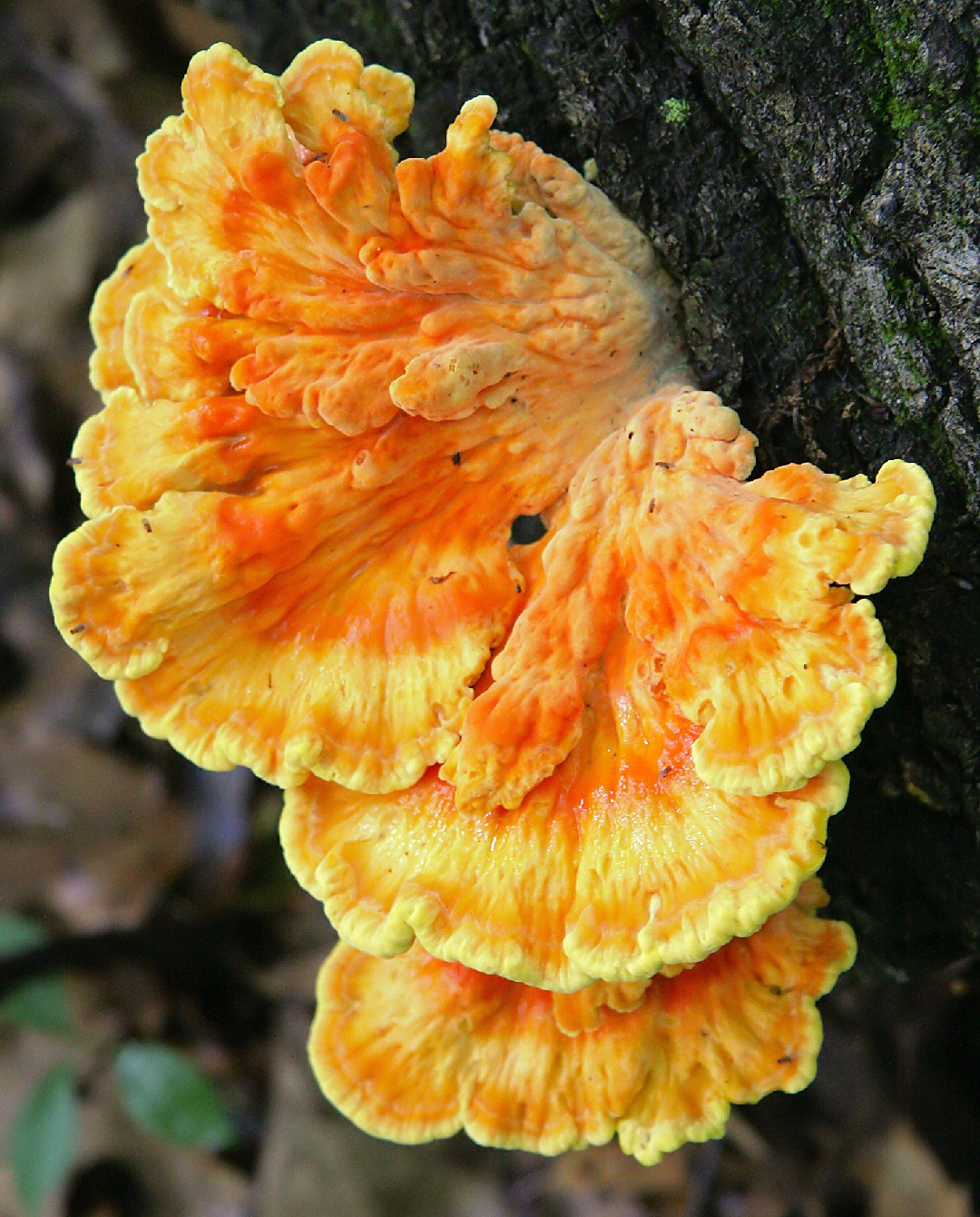
5. Chicken of the woods
Chicken of the woods is very noticeable in hardwood forests, appearing in clusters on standing tree trunks in bright orange and yellow hues that sometimes last through the entire winter. It is a parasite that causes an unfortunate brown heart rot, and is considered a particularly troublesome pest of Yew trees. If the fruitbodies can be seen, the tree is likely already beyond saving.
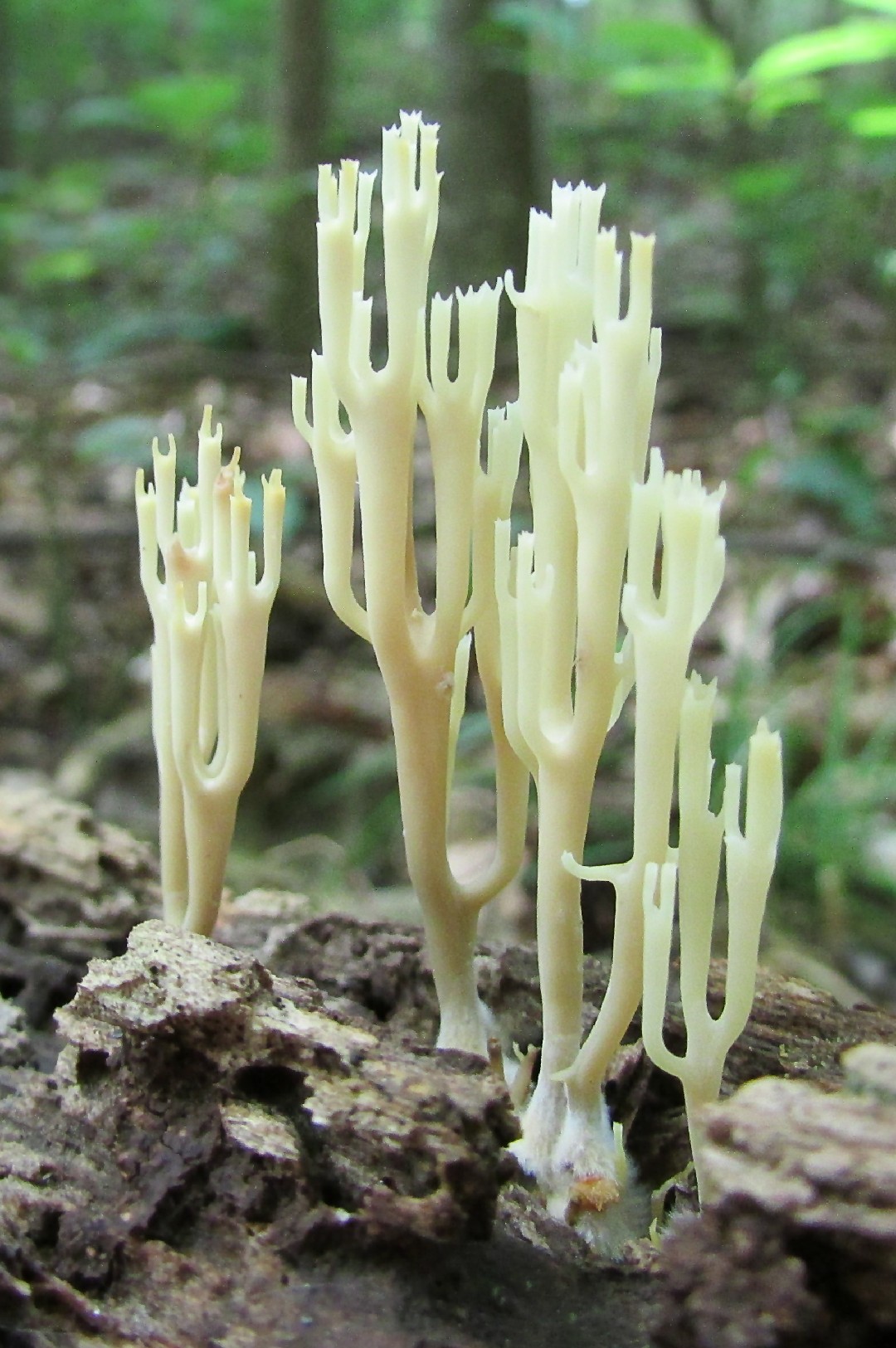
6. Crown-tipped coral
Crown-tipped coral(Artomyces pyxidatus) is a widespread but uncommon species in North America and Western Europe whose Latin name, meaning "box-like," is inspired by its structure. It is one of the few coral fungi to fruit on wood. After a period of absence lasting over a century, it has recently reappeared in Great Britain.
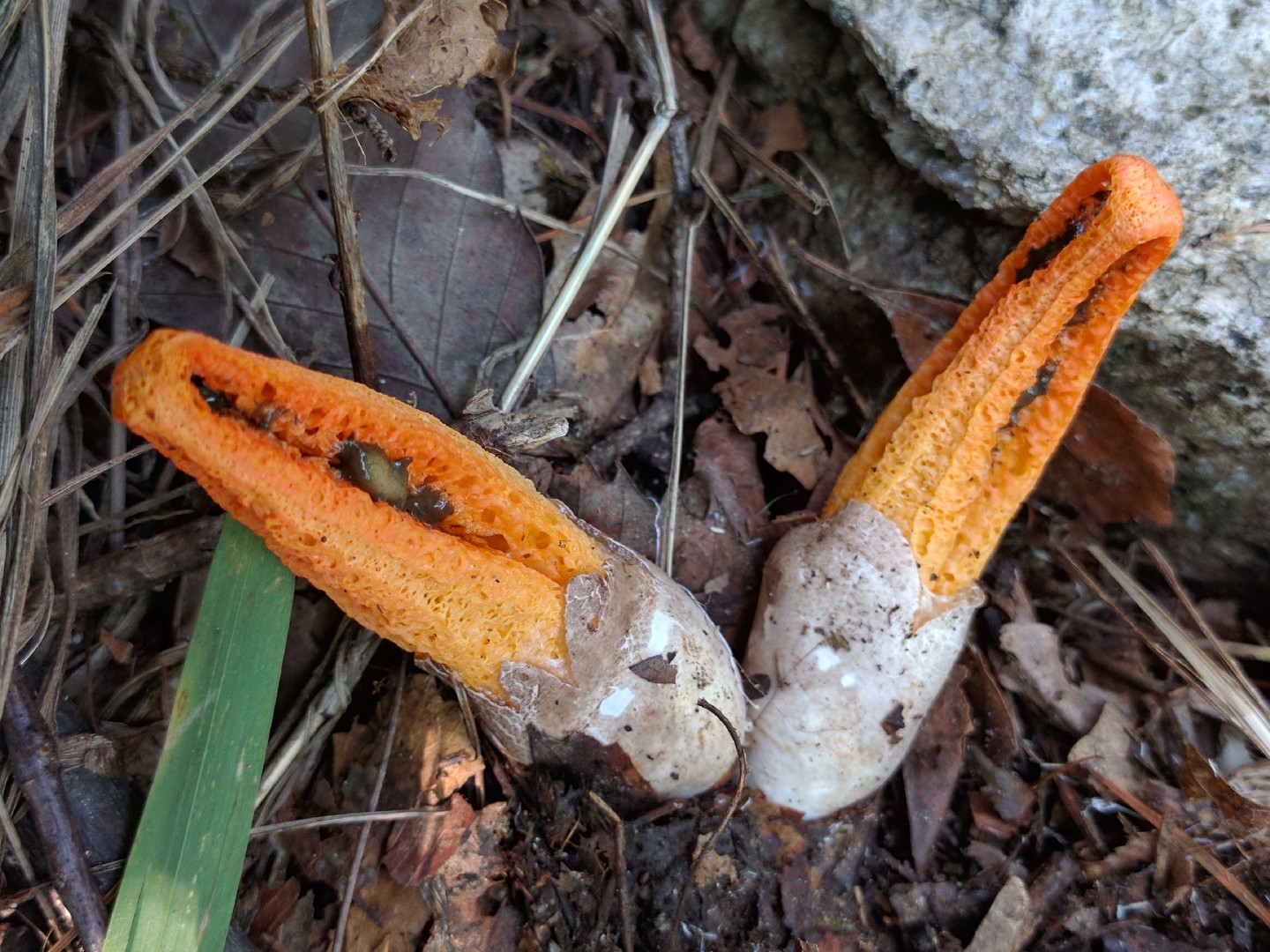
7. Column stinkhorn
The slime of the column stinkhorn emits an extremely foul odour, but many insects, particularly flies, find this slime very attractive. Attracting flies is the fungus' method for spreading its spores. This warm climate fungus has been introduced to North America, probably together with exotic plants.
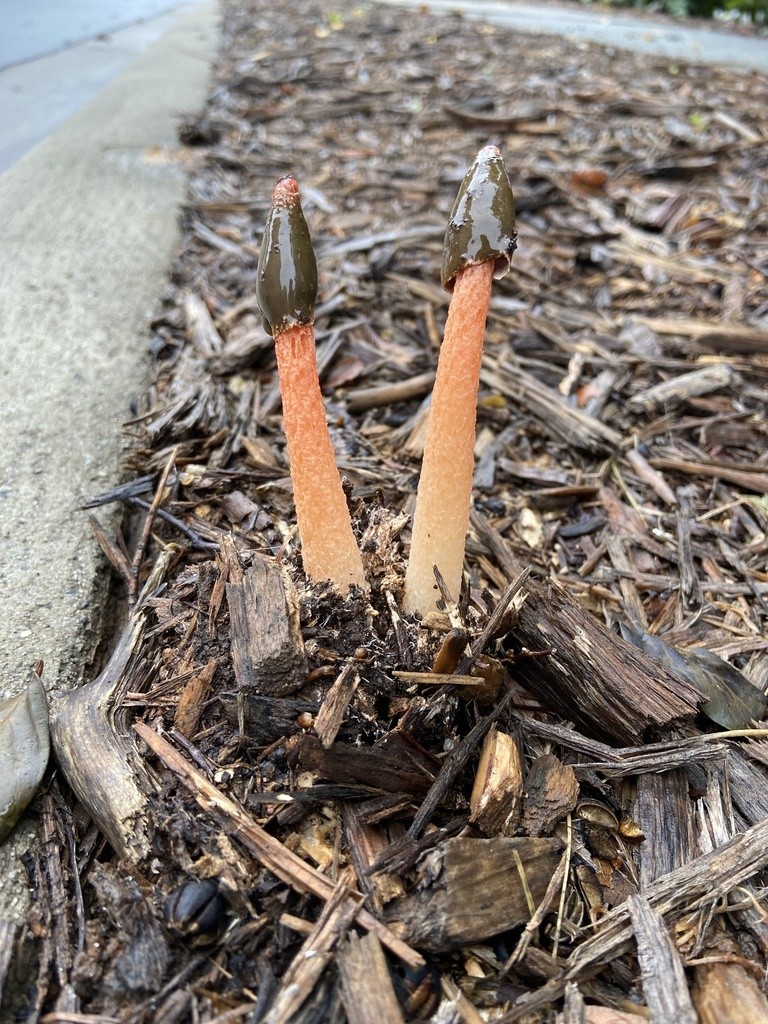
8. Phallus rugulosus
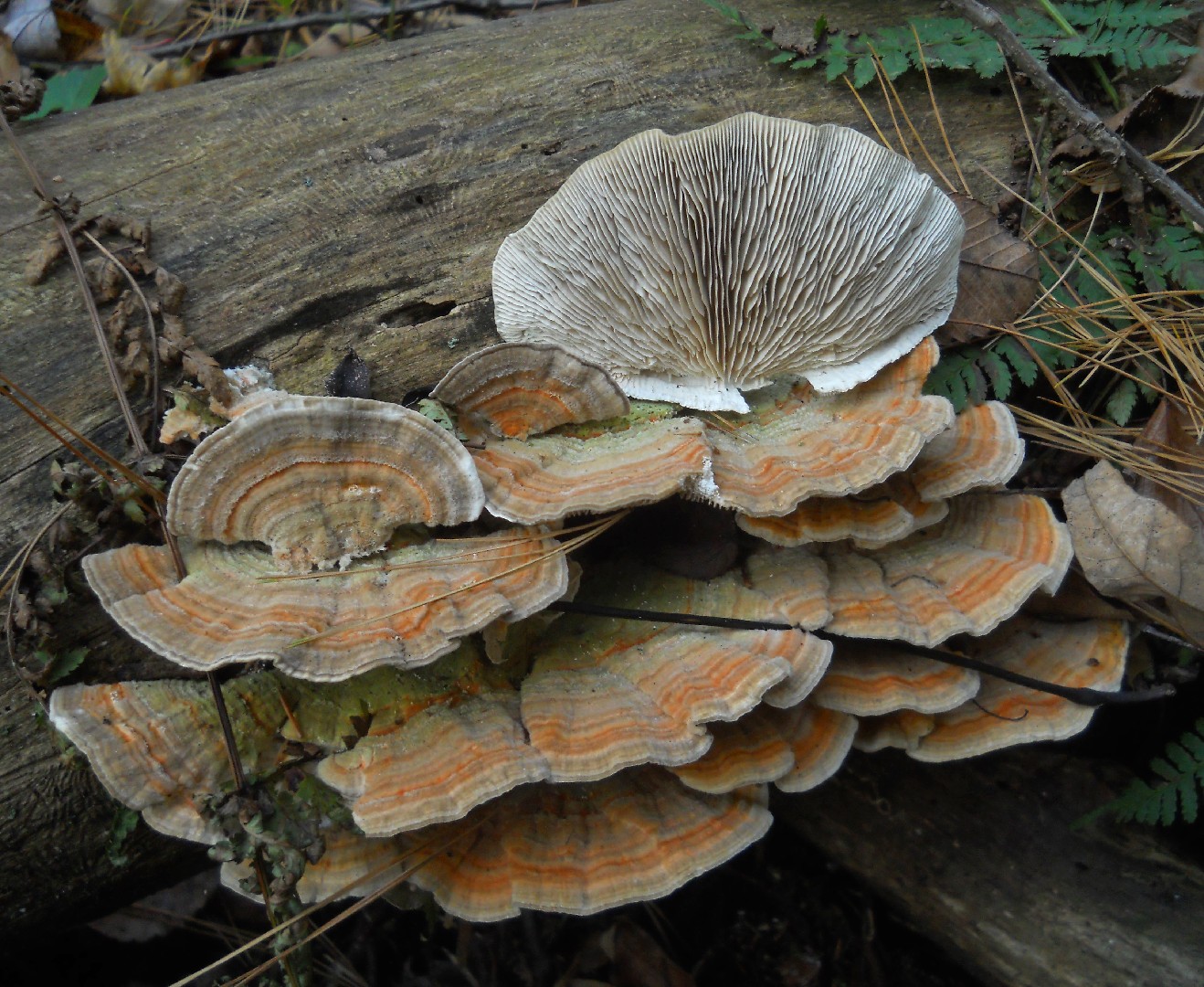
9. Birch mazegill
Birch mazegill(Lenzites betulina) is commonly found on decaying coniferous or deciduous woods. While its natural color is a yellowish brown, it may sometimes appear green due to its propensity to host algae. It is considered to be inedible on account of its tough and leathery texture.
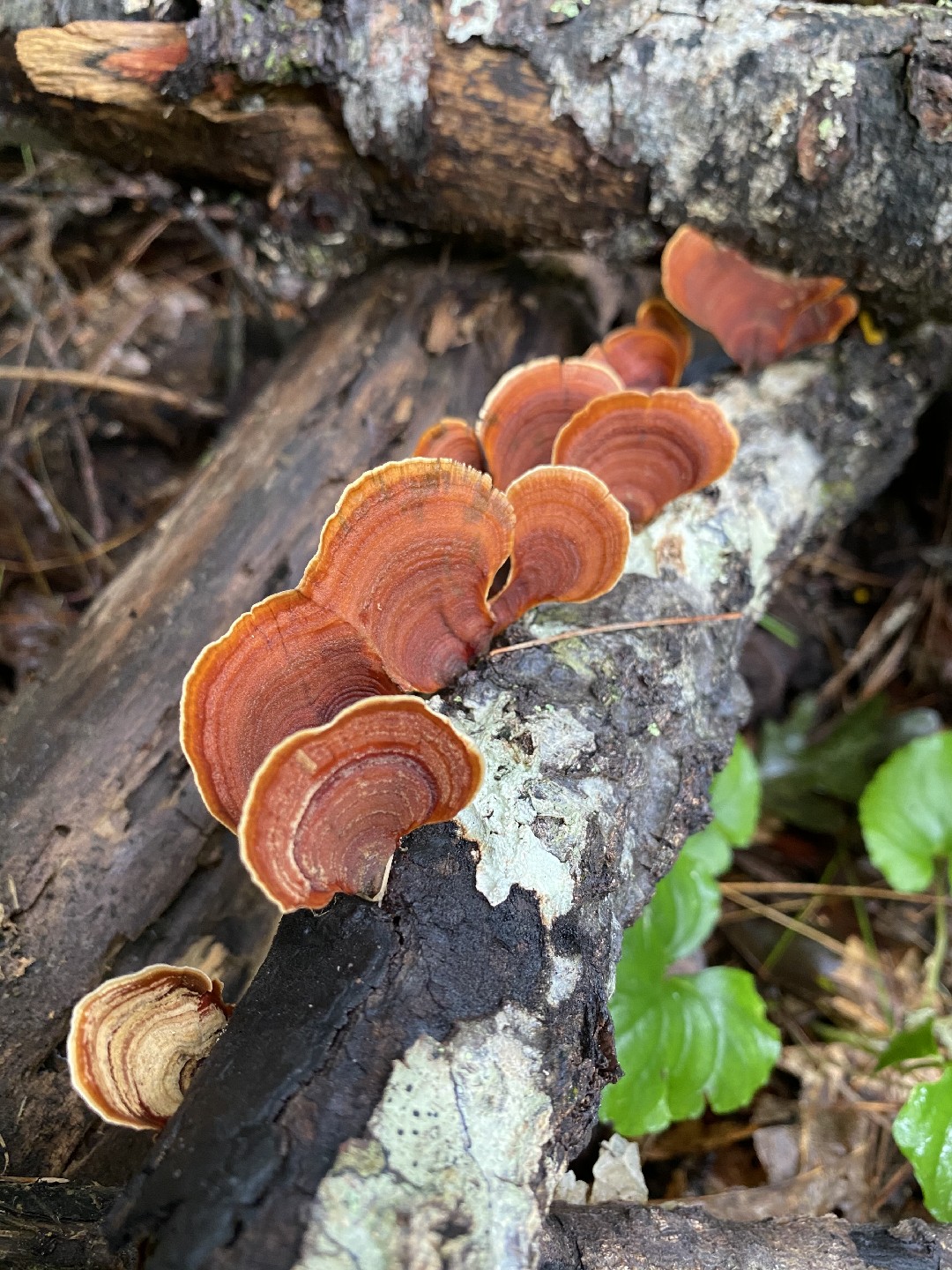
10. False turkey-tail
A common woodland fungus found across North America, the false turkey-tail thrives in wet environs and can be found in copious quantities on decaying wood. The species is so-called because it looks similar the also-common Turkey Tail (Tremetes versicolor) - both species grow in thin, roughly semi-circular sheets. False turkey-tails have tough, woody bodies and are considered to be inedible.
More







