




Top 20 Most Common Mushrooms in Bartlett
Welcome to our editorial feature on the top 20 most prevalent mushrooms across the lush landscapes of Bartlett. The city, famed for its versatile flora, harbors a myriad of mushroom species. An epitome of biodiversity, Bartlett presents an impressive abundance of these fungi, making it a veritable paradise for mycologists and fungi enthusiasts alike. Our focus today, illuminates the unique characteristics and proliferation of the top 20 most common mushrooms found in this region.

Most Common Mushrooms
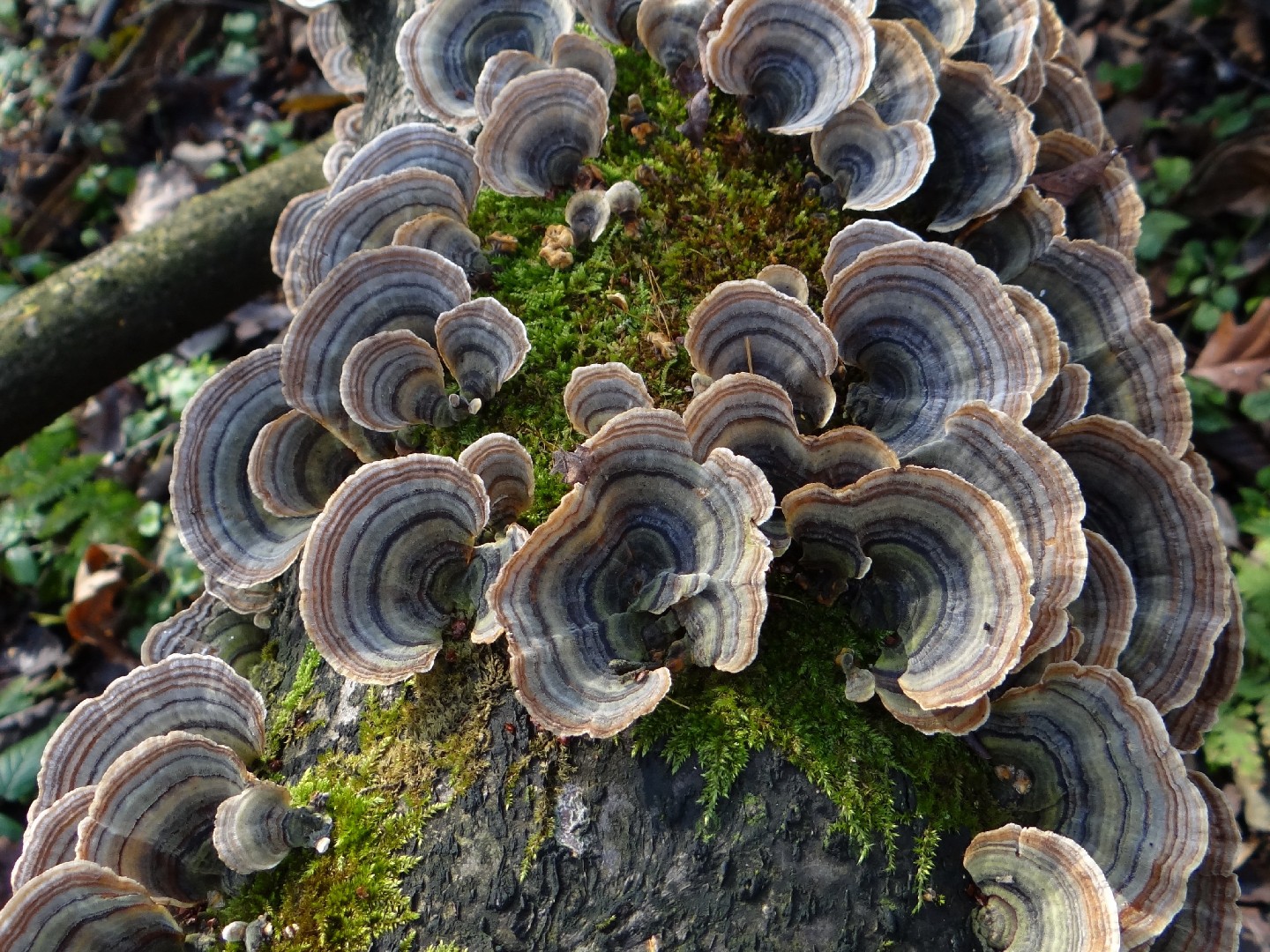
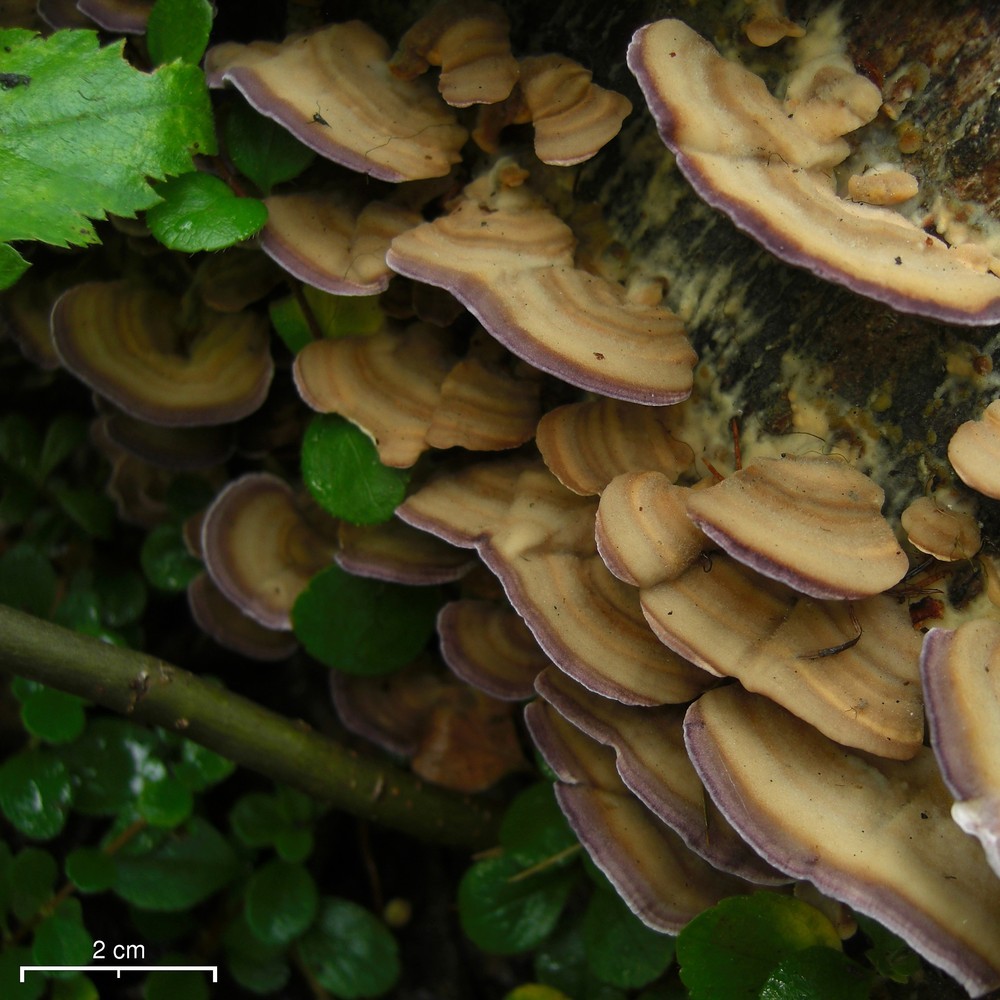
1. Turkey tail
The distinctively-striped turkey tail fungus grows on stumps and logs all over the forests of the northern hemisphere. It is, in fact, probably the most common species you will find. That doesn't mean this mushroom is plain, however; each cap is uniquely patterned. Look for bands of alternating textures as well as color.
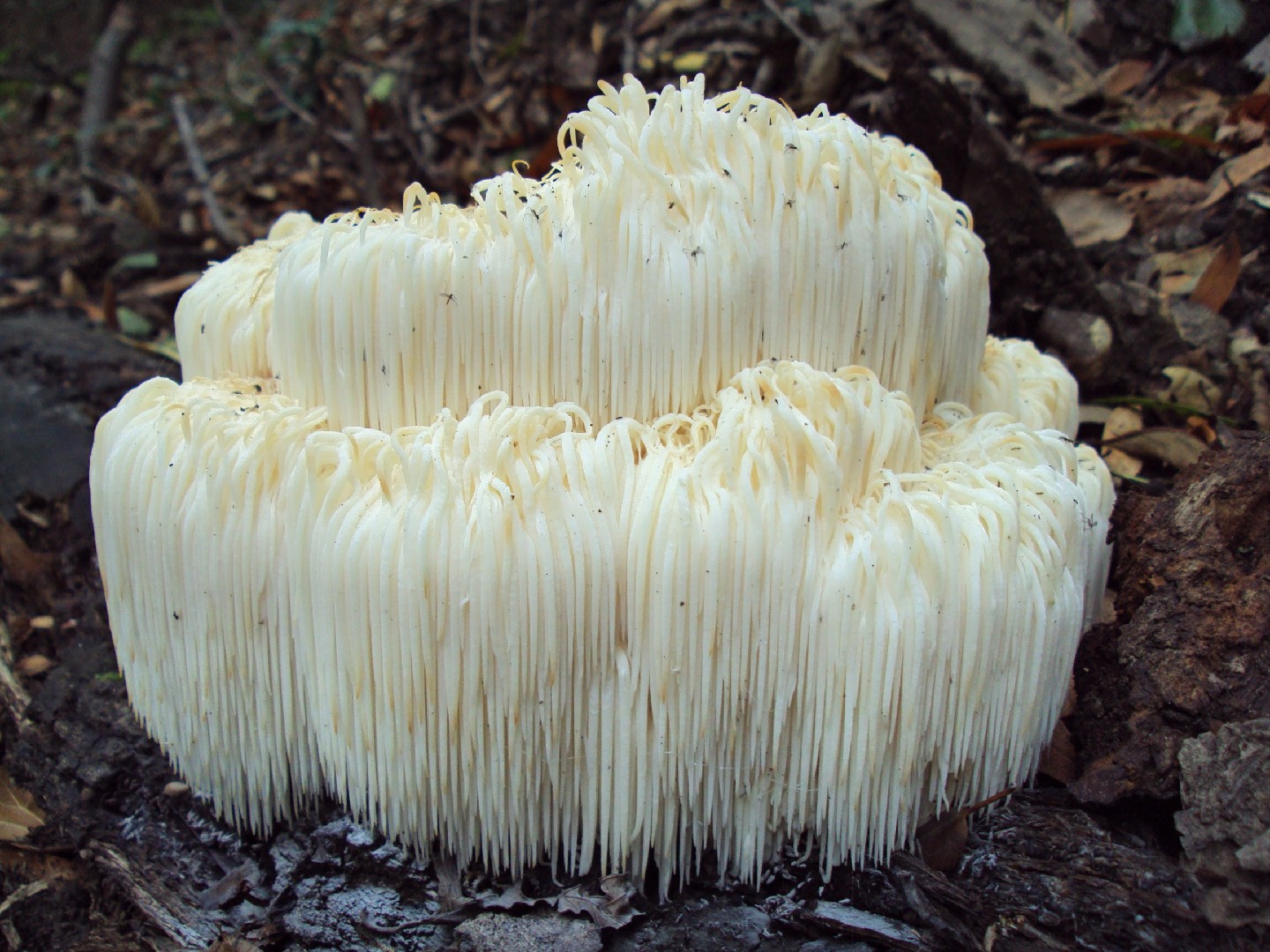
2. Lion's Mane Mushroom
Lion's Mane Mushroom(Hericium erinaceus) is easily identifiable by its characteristic appearance, reminiscent of the majestic mane of a lion. It often sprouts along hardwoods, which may be living or dead. Scientists thus debate whether this species is truly parasitic or merely saprophytic in nature.
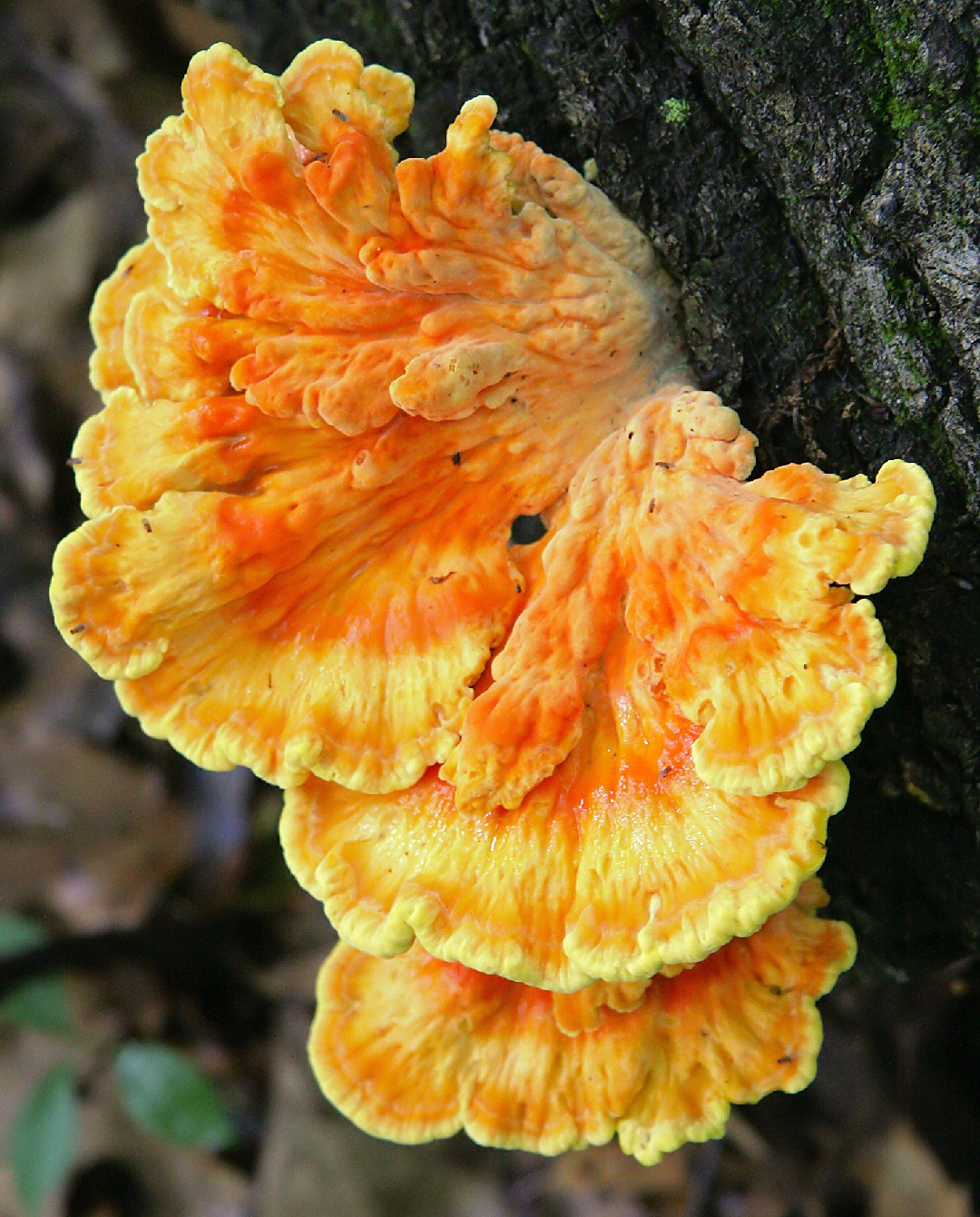
3. Chicken of the woods
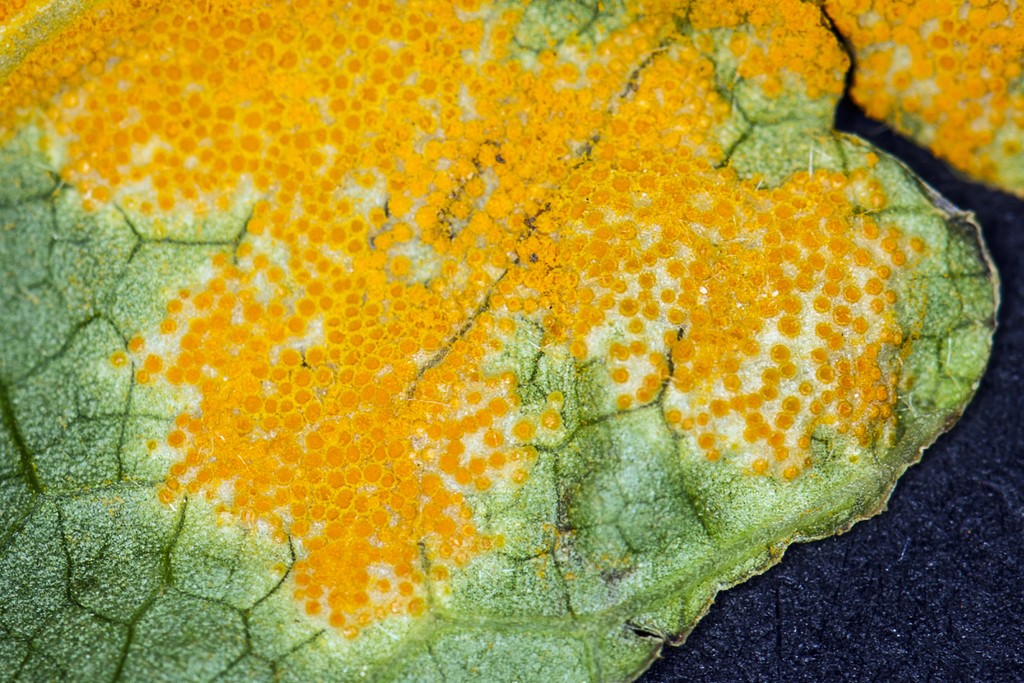
Chicken of the woods is very noticeable in hardwood forests, appearing in clusters on standing tree trunks in bright orange and yellow hues that sometimes last through the entire winter. It is a parasite that causes an unfortunate brown heart rot, and is considered a particularly troublesome pest of Yew trees. If the fruitbodies can be seen, the tree is likely already beyond saving.
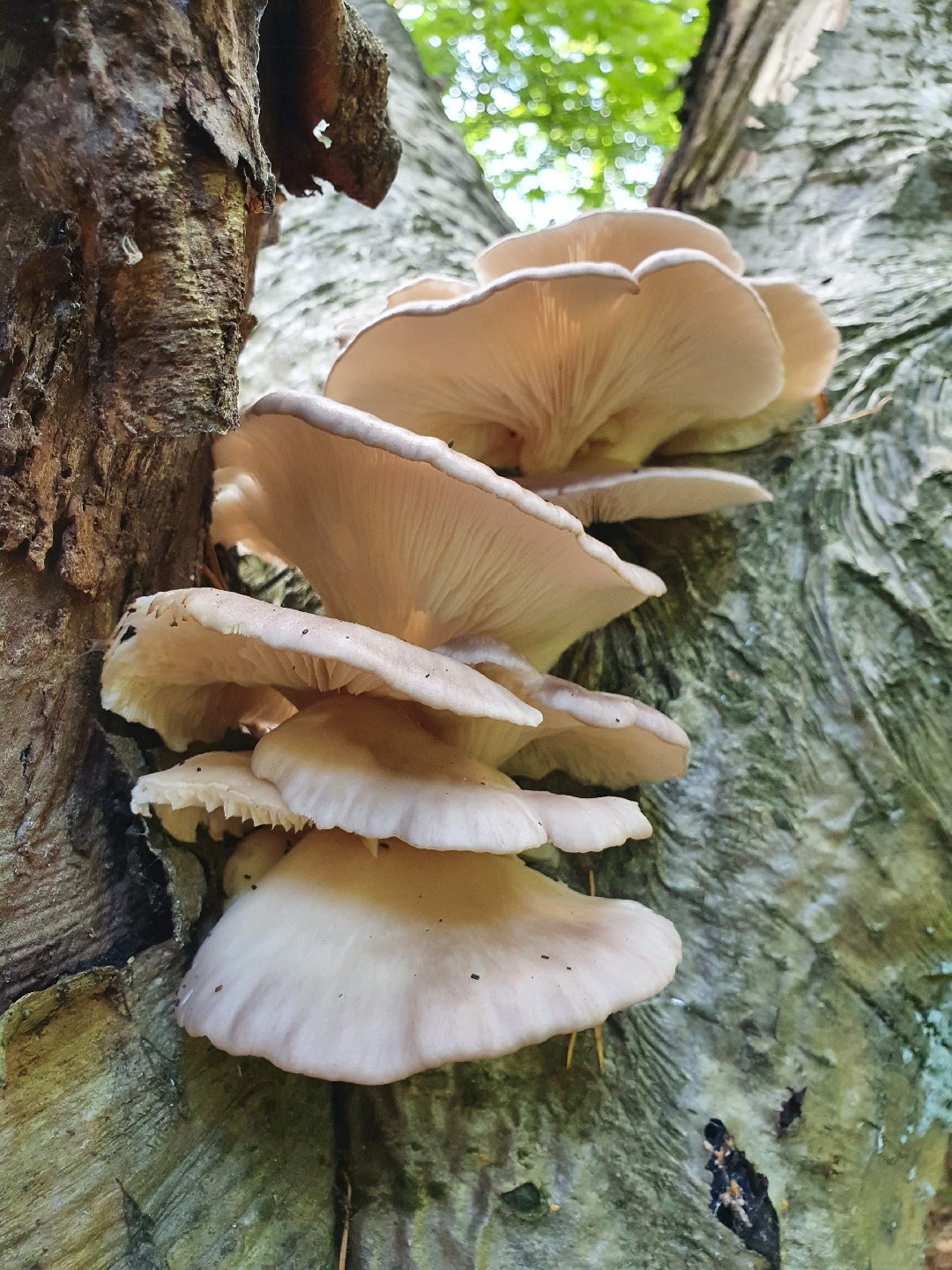
4. Oyster mushroom
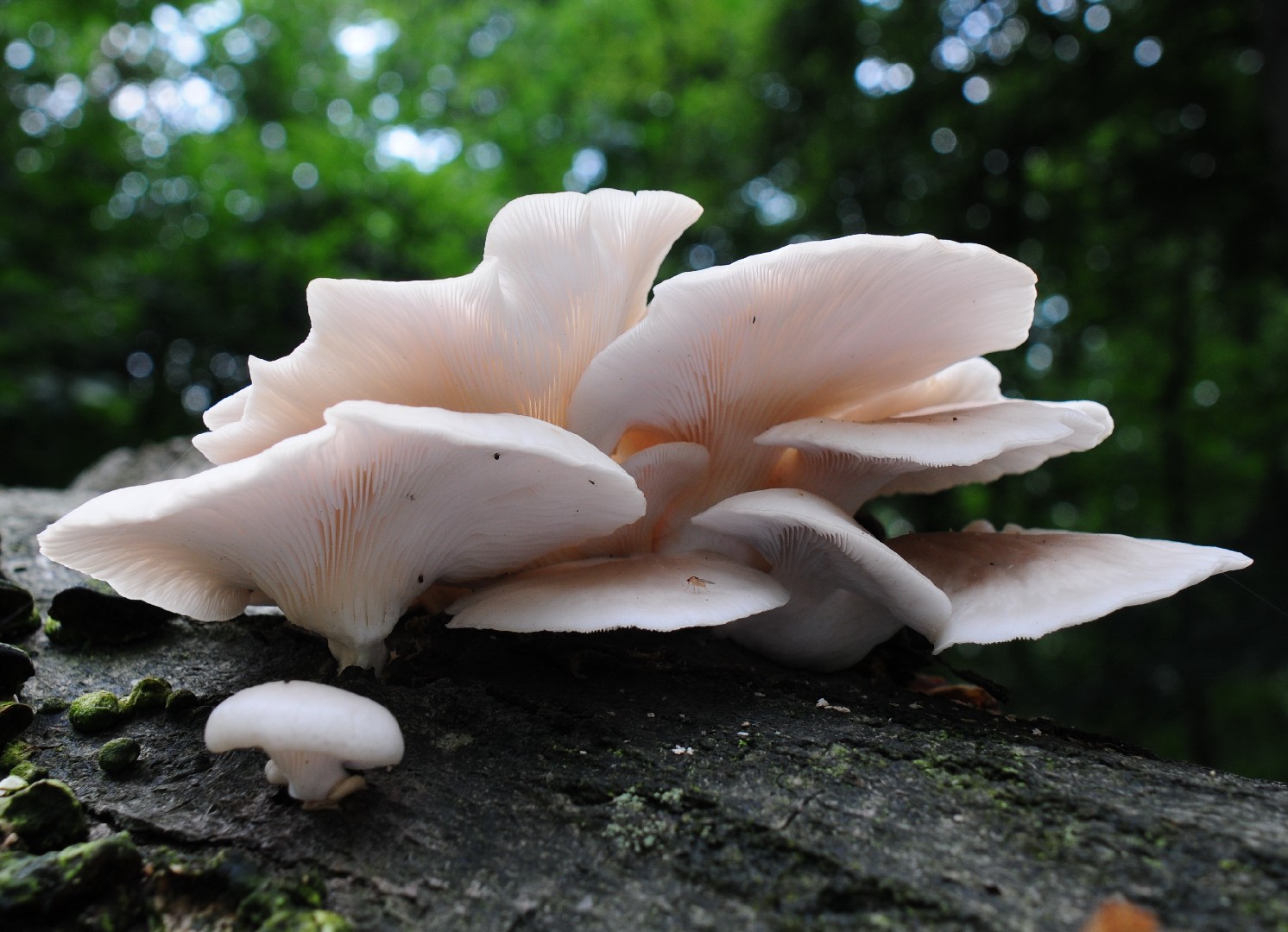
Oyster mushrooms grow wild but are also cultivated for sale in supermarkets. They can even be cultivated at home. They will grow on coffee grounds and spent grain, and are occasionally even fashioned into an environmentally-friendly substitute for styrofoam. There are several toxic look-alike species, so it is best to buy these mushrooms at the store.
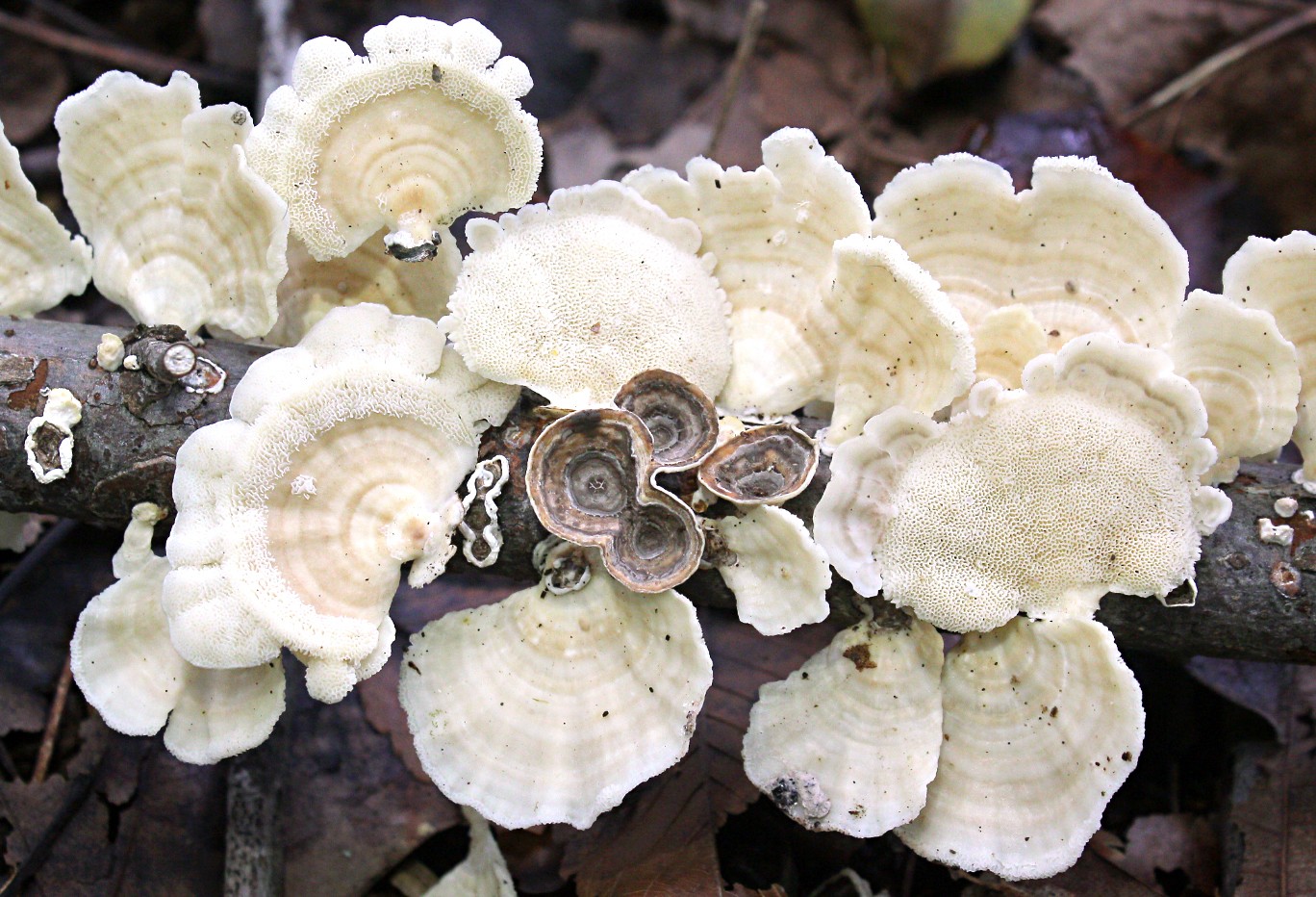
5. Little nest polypore
Little nest polypore can grow in the form of either shelf- or cup-shaped structures. The cup-like shapes help the fungus shed spores whenever it is hit and shaken by raindrops. Though the fungus itself will readily survive the winter, the more fragile cup and shelf structures typically get eaten by insect larvae before the new season.
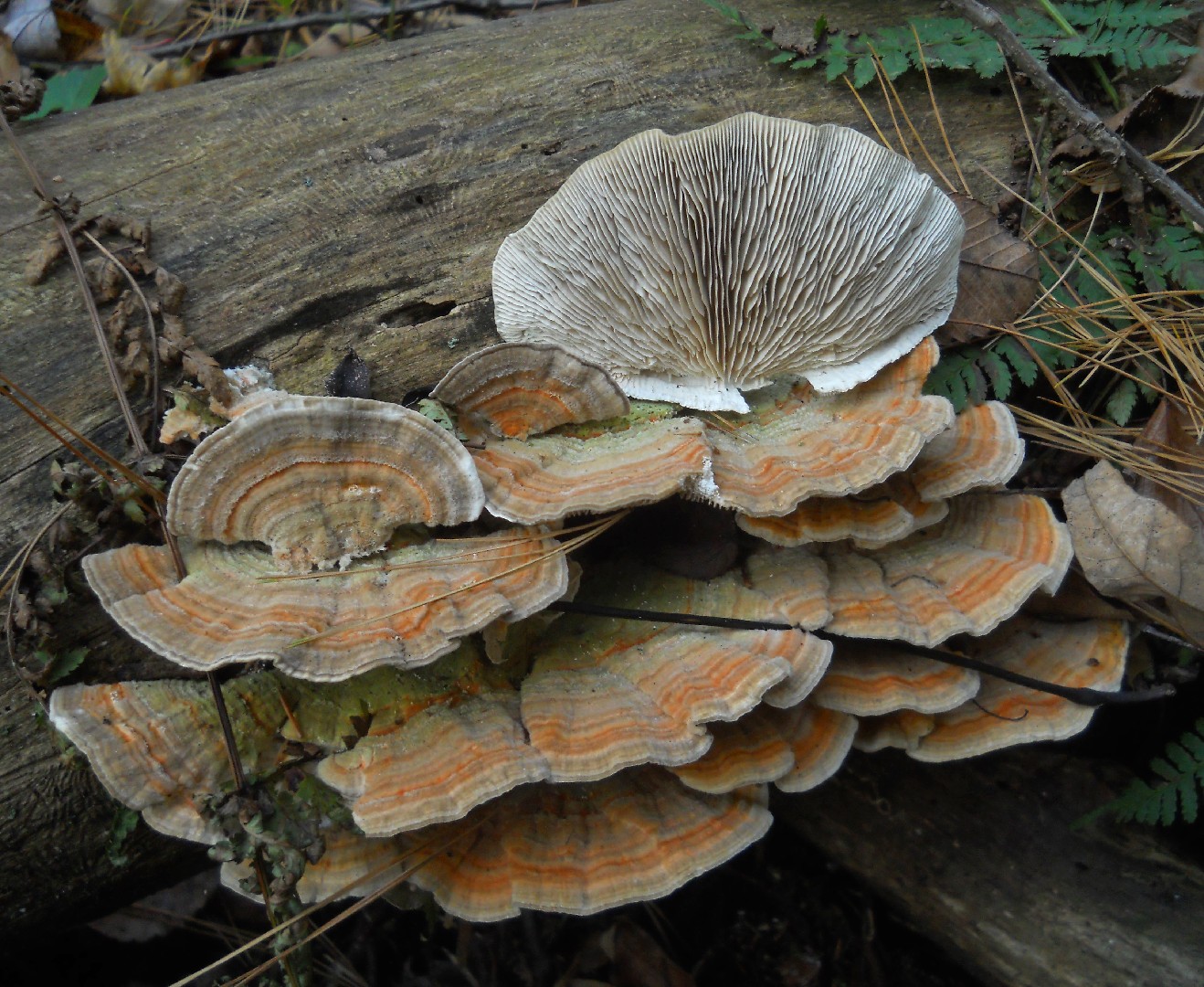
6. Birch mazegill
Birch mazegill(Lenzites betulina) is commonly found on decaying coniferous or deciduous woods. While its natural color is a yellowish brown, it may sometimes appear green due to its propensity to host algae. It is considered to be inedible on account of its tough and leathery texture.
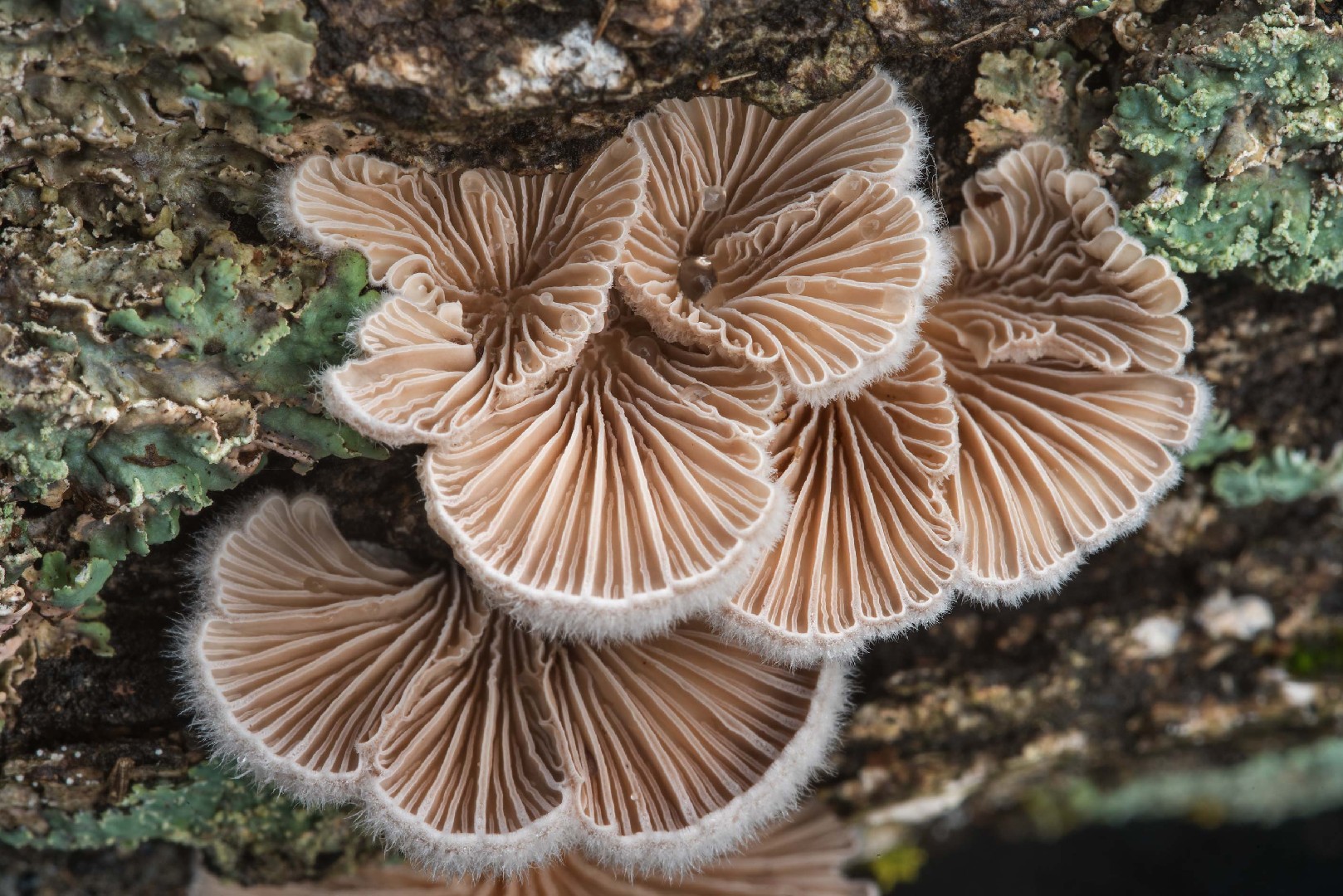
7. Split gill
Split gill(Schizophyllum commune) can be found across the globe. Uniquely, it is the only mushroom species known to display the capability to retract by movement. It is considered inedible, although not necessarily toxic. Furthermore, it is not recommended to smell this species, as the spores are capable of sprouting and growing in nasal passages.
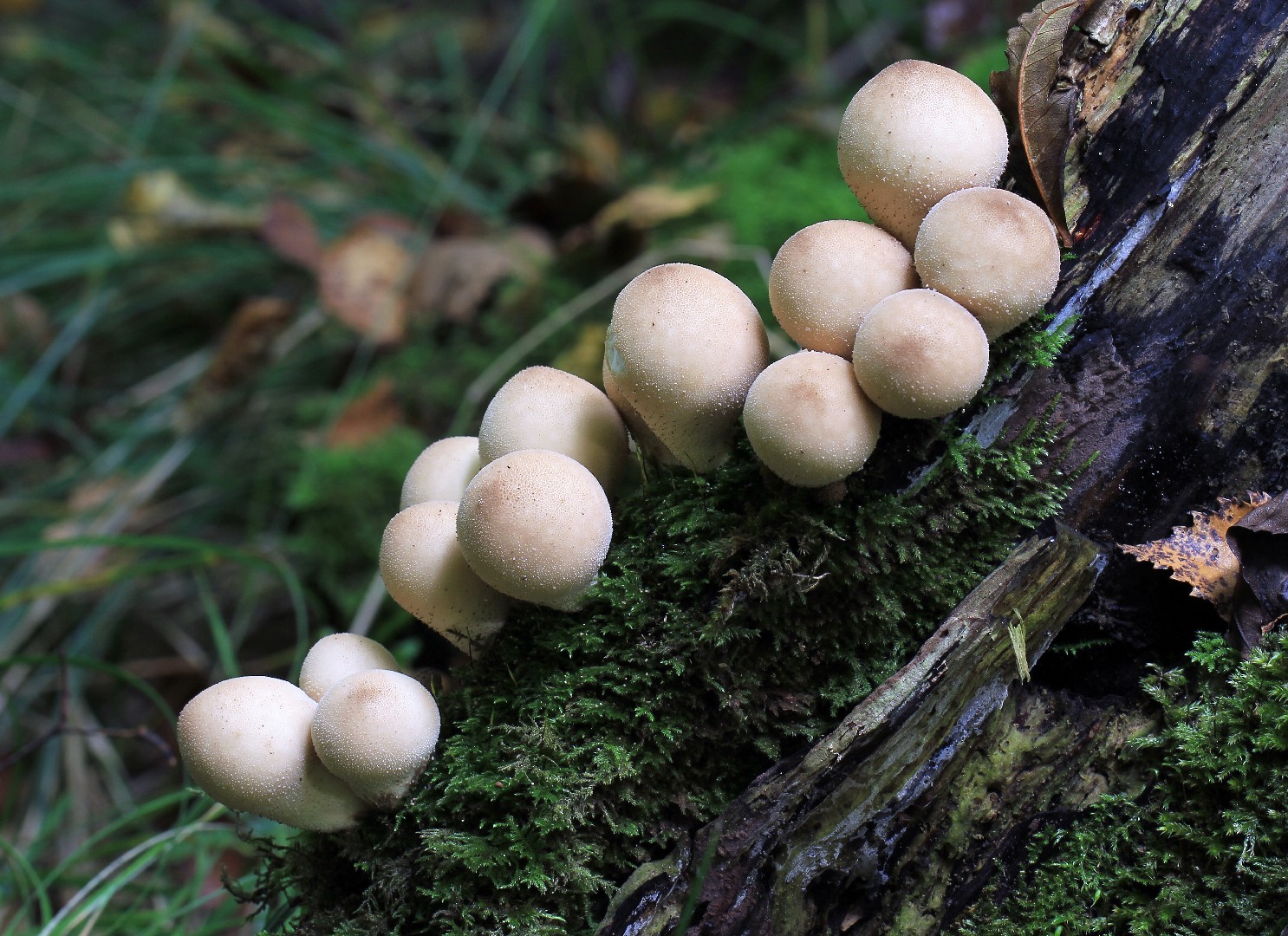
8. Pear-shaped puffball
The mushrooms of this species grow in such tight clusters that they may cover fallen trees and stumps almost entirely in a brownish, puffy coat. Pear-shaped puffballs appear all around the northern hemisphere on decaying hardwoods from fall through winter.
9. Crowded parchment
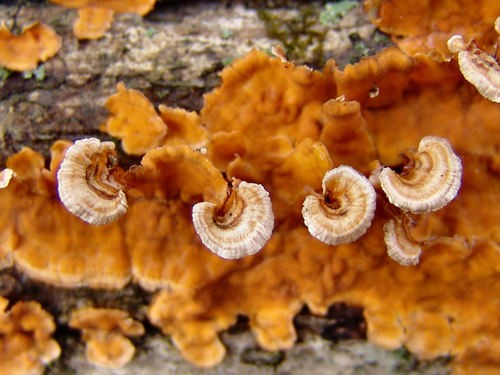
The crowded parchment is a common mushroom that can be found on dead hardwood material. The species is so-named because it grows in very thin, sheet-like shelves, which often become folded when they run up against each other. Crowded parchment is usually found in shades of brown, tan, or orange.
10. Devil's urn
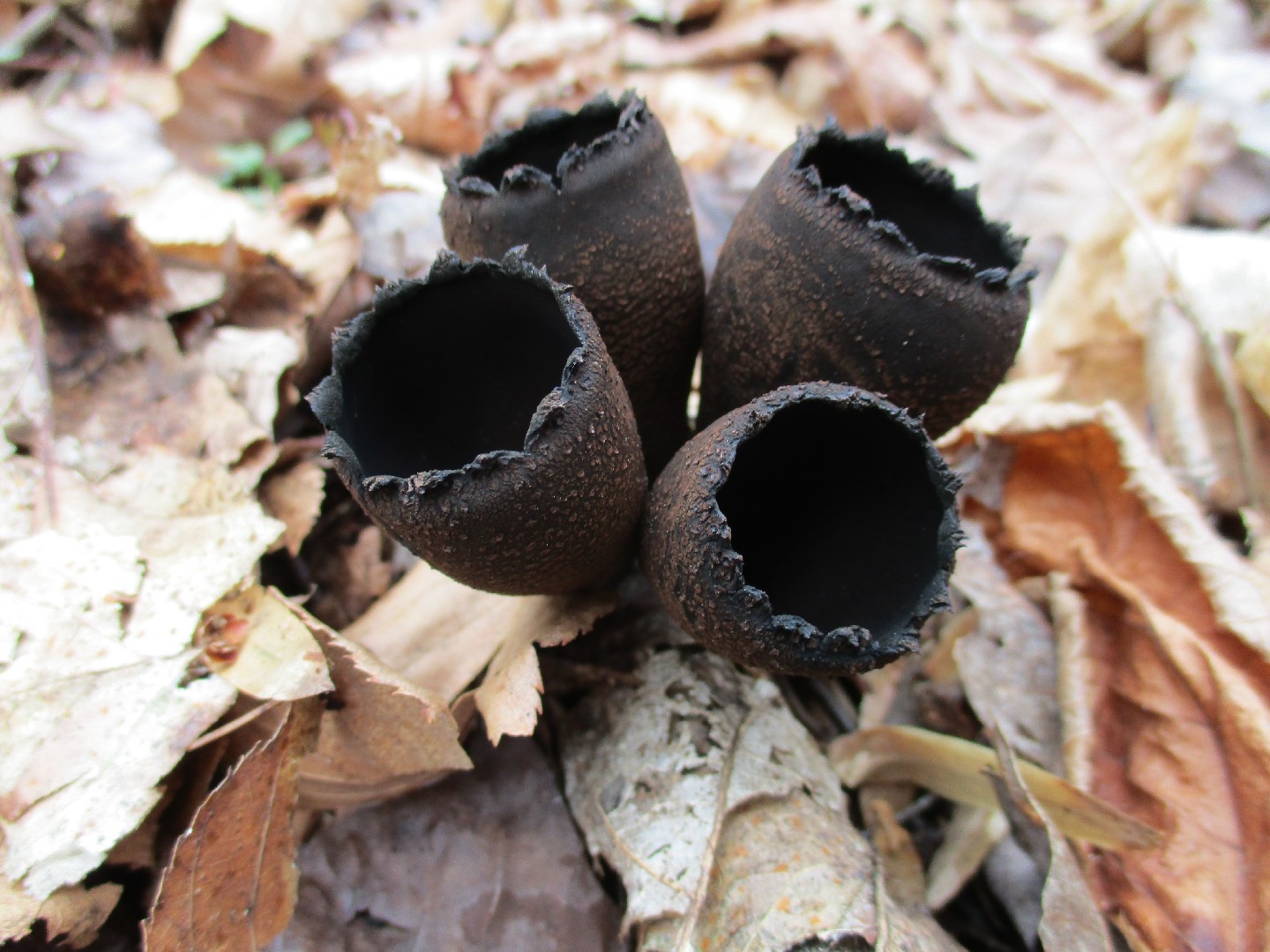
The devil's urn (Urnula craterium) is a black or brown cup-shaped fungus. The species' tough, cracked outer layer and dark coloration may give it a scorched appearance. Devil's urns tend to grow in clusters and are usually found adorning fallen branches and rotting logs. Though the species is not edible itself, gatherers keep an eye out for it, as it usually fruits at about the same time as morels.

More







