




Top 20 Most Common Mushrooms in Goldsboro
Nestled in the American Southeast, Goldsboro is a delight for mycophiles. Boasting a subtropical, humid climate, the city provides the perfect environment for a bounty of fungi. Out of this fungal cornucopia, the '20' top ranked mushrooms hold a special place. This article sheds light on these prominent species, highlighting their unique traits and growing conditions.

Most Common Mushrooms
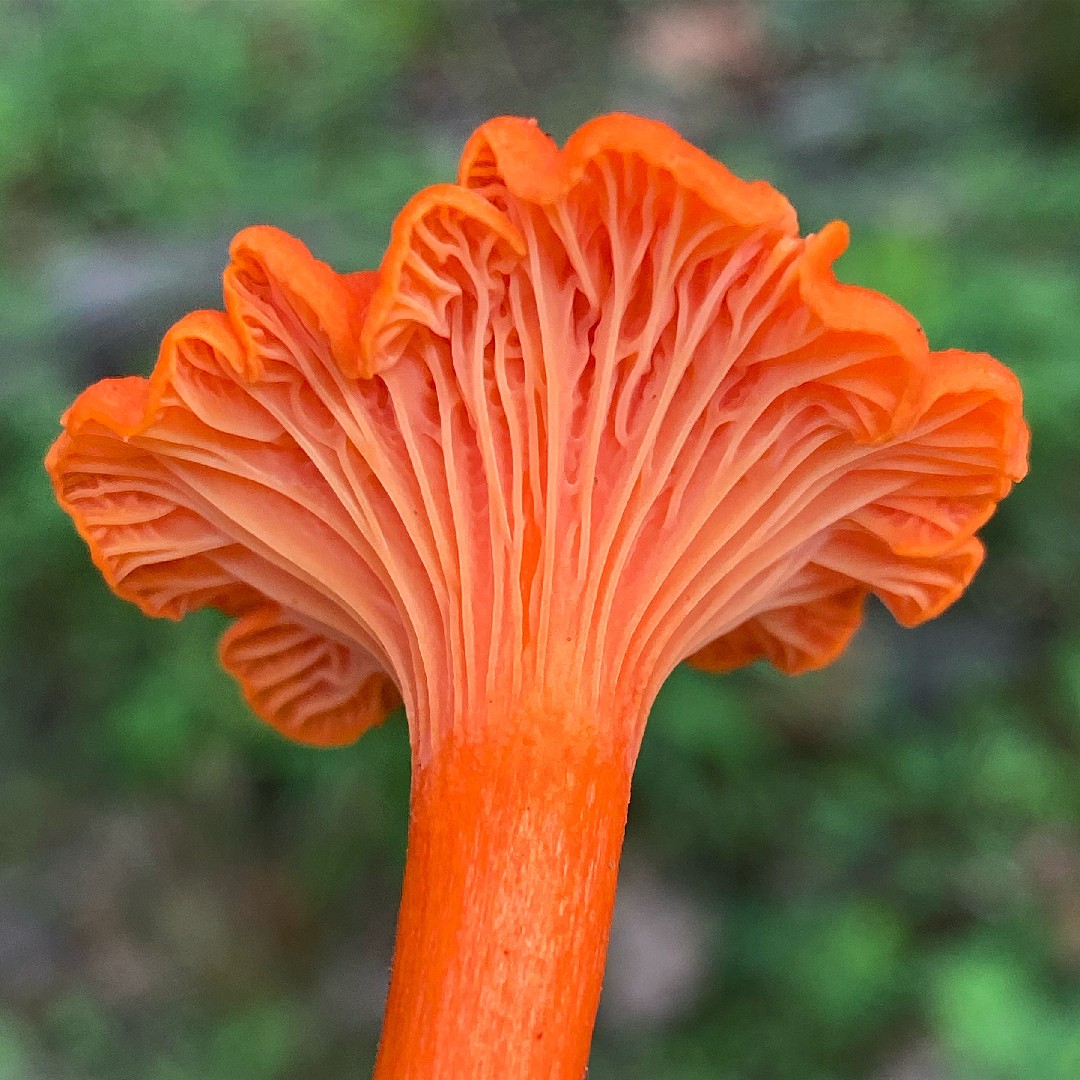
1. Red chanterelle
Red chanterelles can be found growing within hardwood forests across eastern North America. These small but striking mushrooms range from orange to red to pink in color. Edible and boasting complex flavors, many chanterelles are highly sought after. The red chanterelle, though less famous than some of its close relatives, is no exception. This species can be used in all sorts of recipes, with a vaguely sweet or piney taste.
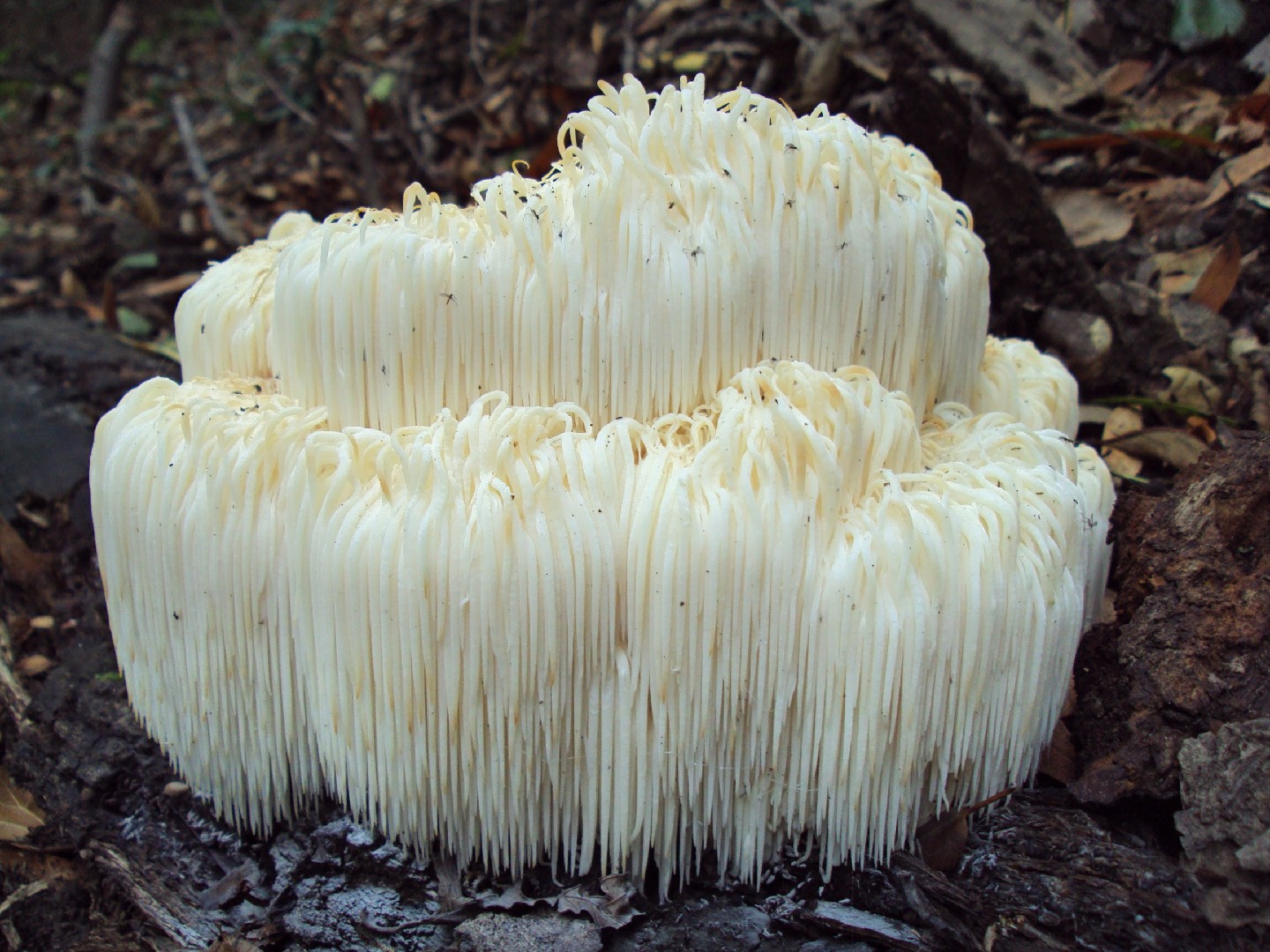
2. Lion's Mane Mushroom
Lion's Mane Mushroom(Hericium erinaceus) is easily identifiable by its characteristic appearance, reminiscent of the majestic mane of a lion. It often sprouts along hardwoods, which may be living or dead. Scientists thus debate whether this species is truly parasitic or merely saprophytic in nature.
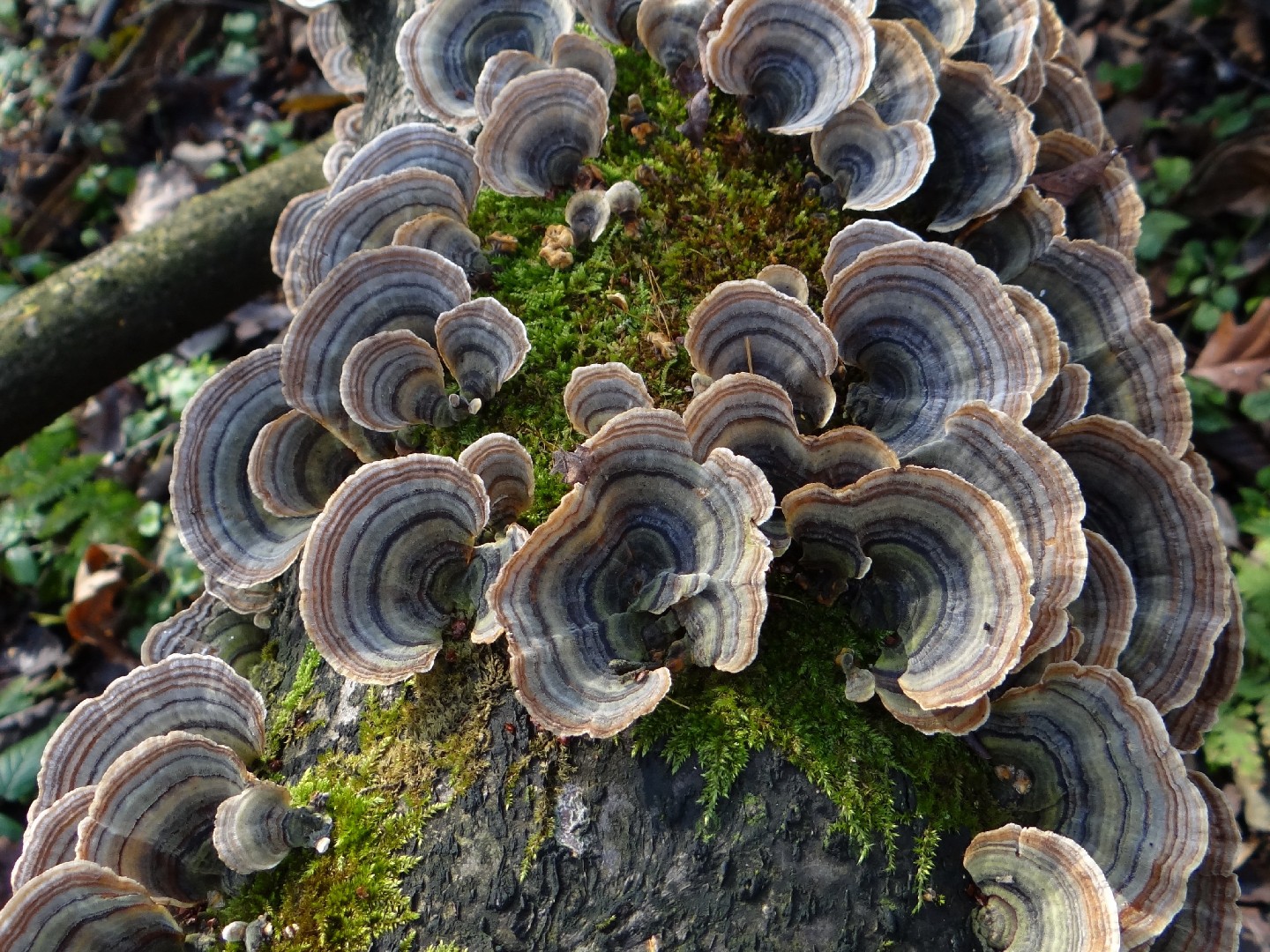
3. Turkey tail
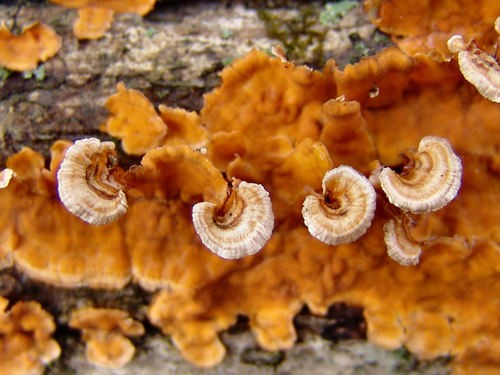
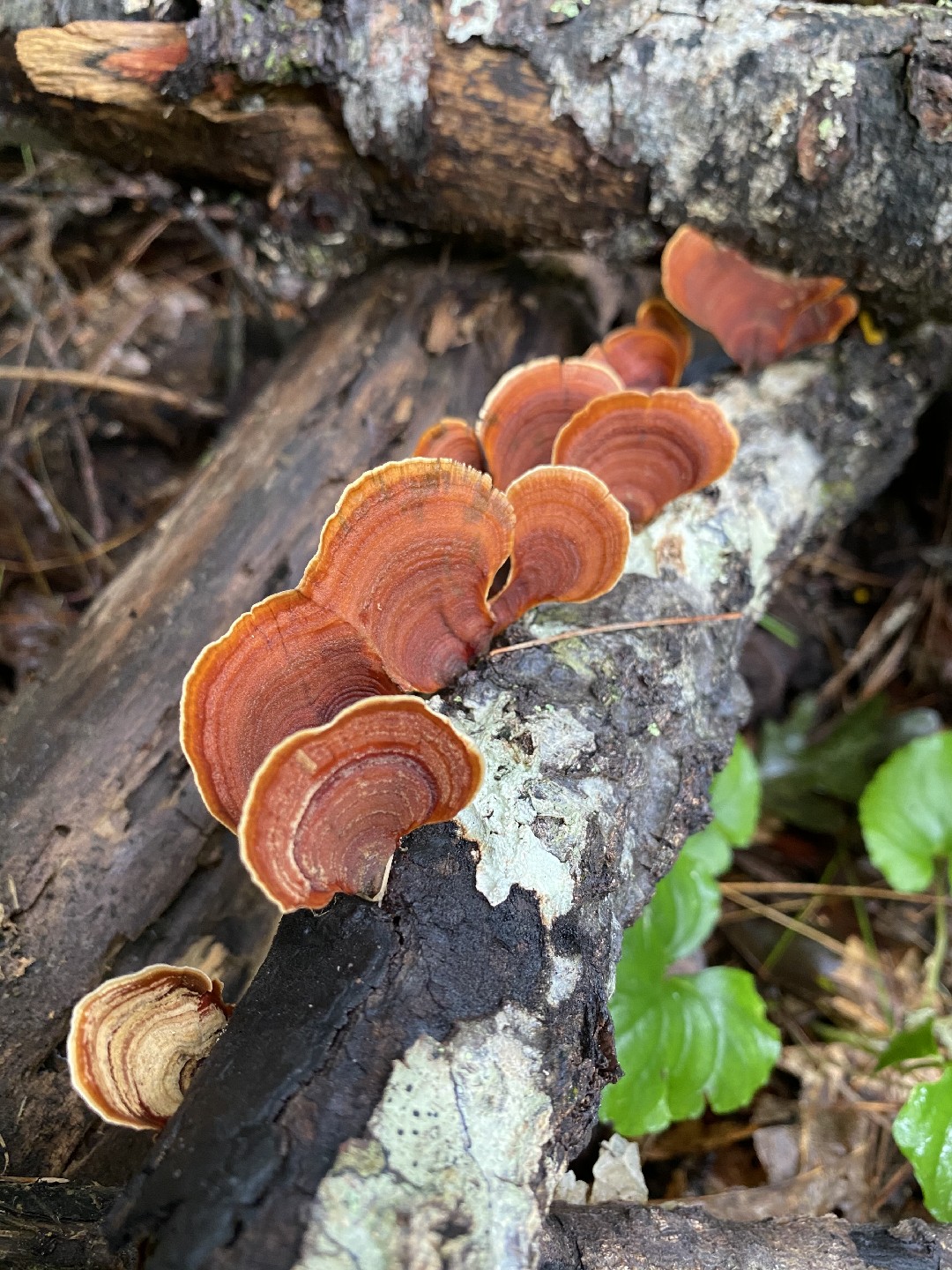
The distinctively-striped turkey tail fungus grows on stumps and logs all over the forests of the northern hemisphere. It is, in fact, probably the most common species you will find. That doesn't mean this mushroom is plain, however; each cap is uniquely patterned. Look for bands of alternating textures as well as color.
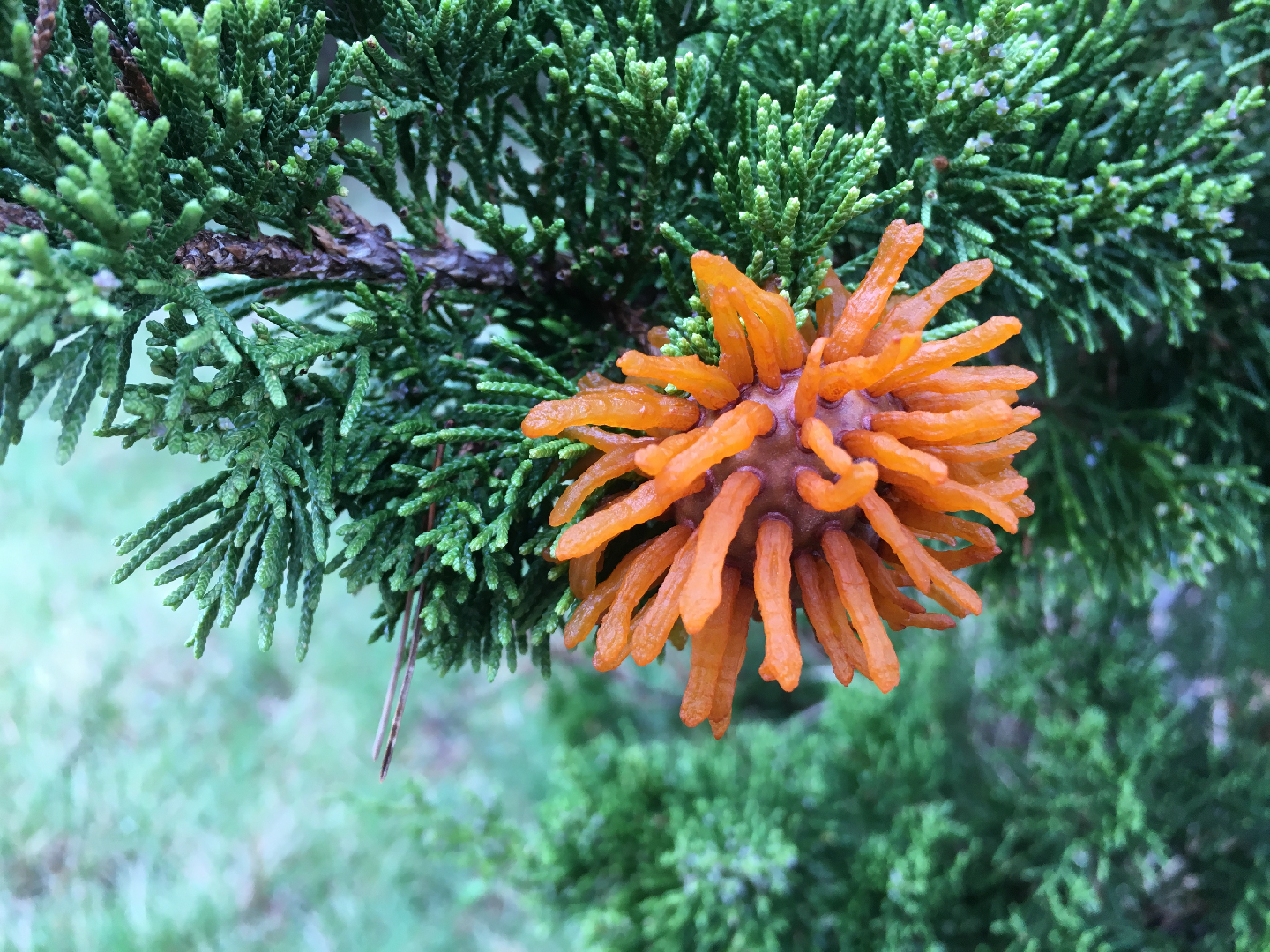
4. Cedar-apple rust
The vividly-colored fruitbodies of cedar-apple rust (Gymnosporangium juniperi-virginianae) might be mistaken for flowers, from a distance. Upon closer inspection they can be identified as fungal growths attacking the fruit of cedar trees. Their microscopic spores can travel up to an astounding 5 miles when carried on the wind and infect cedars quite far away, weakening the trees as they grow.
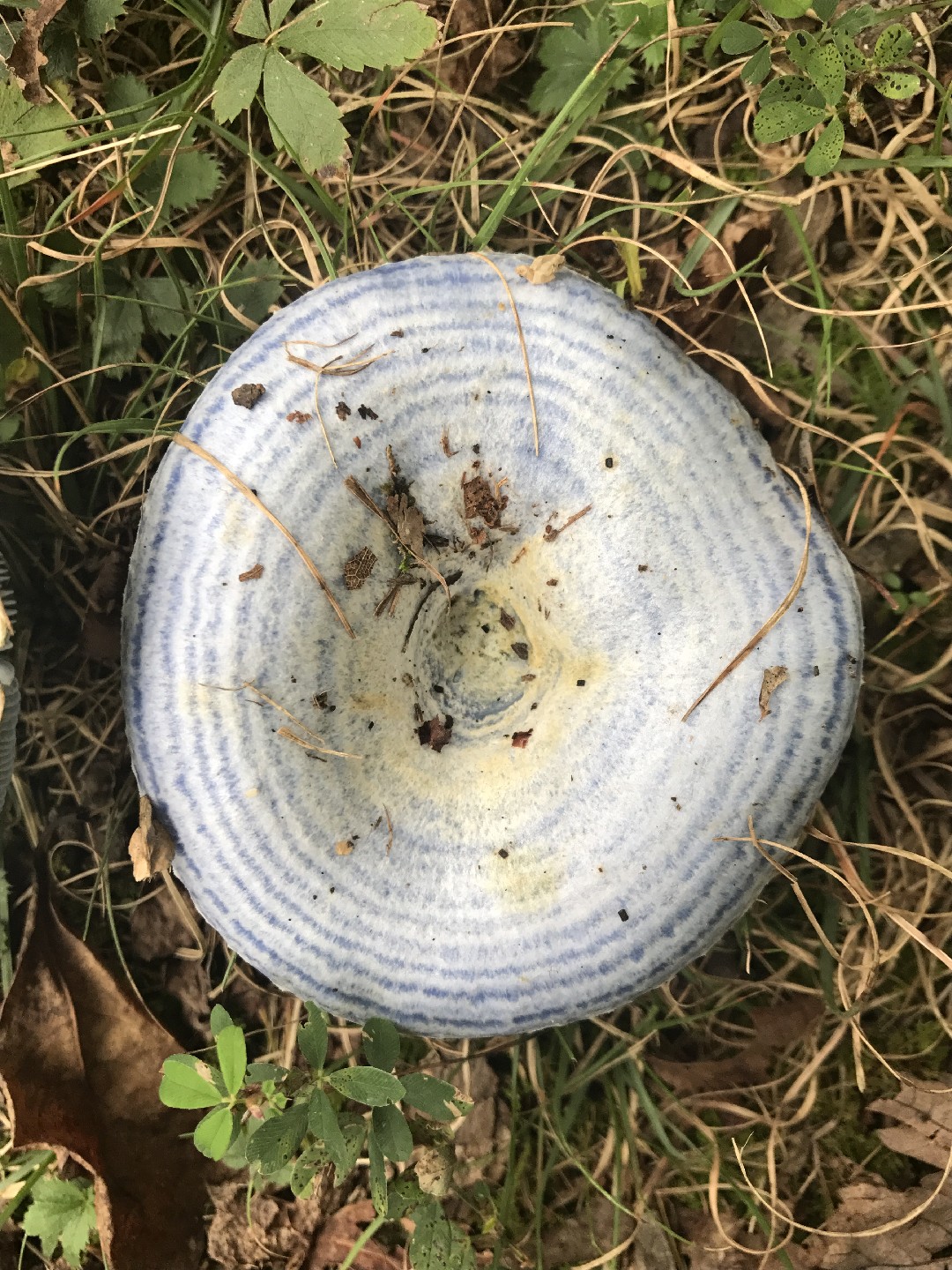
5. Indigo milk cap
This gorgeous species is unlike any other. The indigo milk cap, a member of the often-drab russula family, is deep blue in color. Like other milk caps, it bleeds a latex-like substance when cut or damaged, but instead of the usual white this species bleeds deep blue.
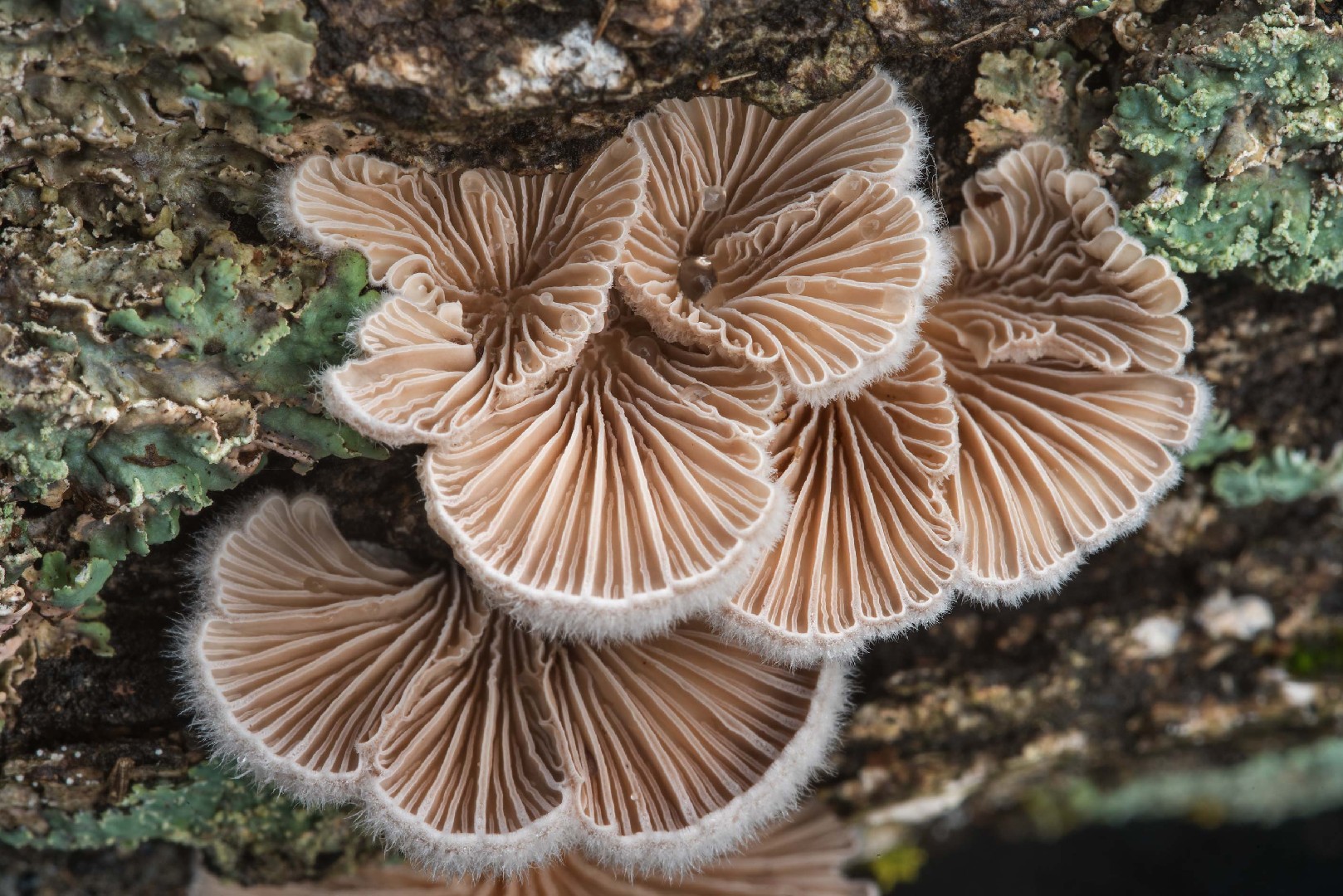
6. Split gill
Split gill(Schizophyllum commune) can be found across the globe. Uniquely, it is the only mushroom species known to display the capability to retract by movement. It is considered inedible, although not necessarily toxic. Furthermore, it is not recommended to smell this species, as the spores are capable of sprouting and growing in nasal passages.
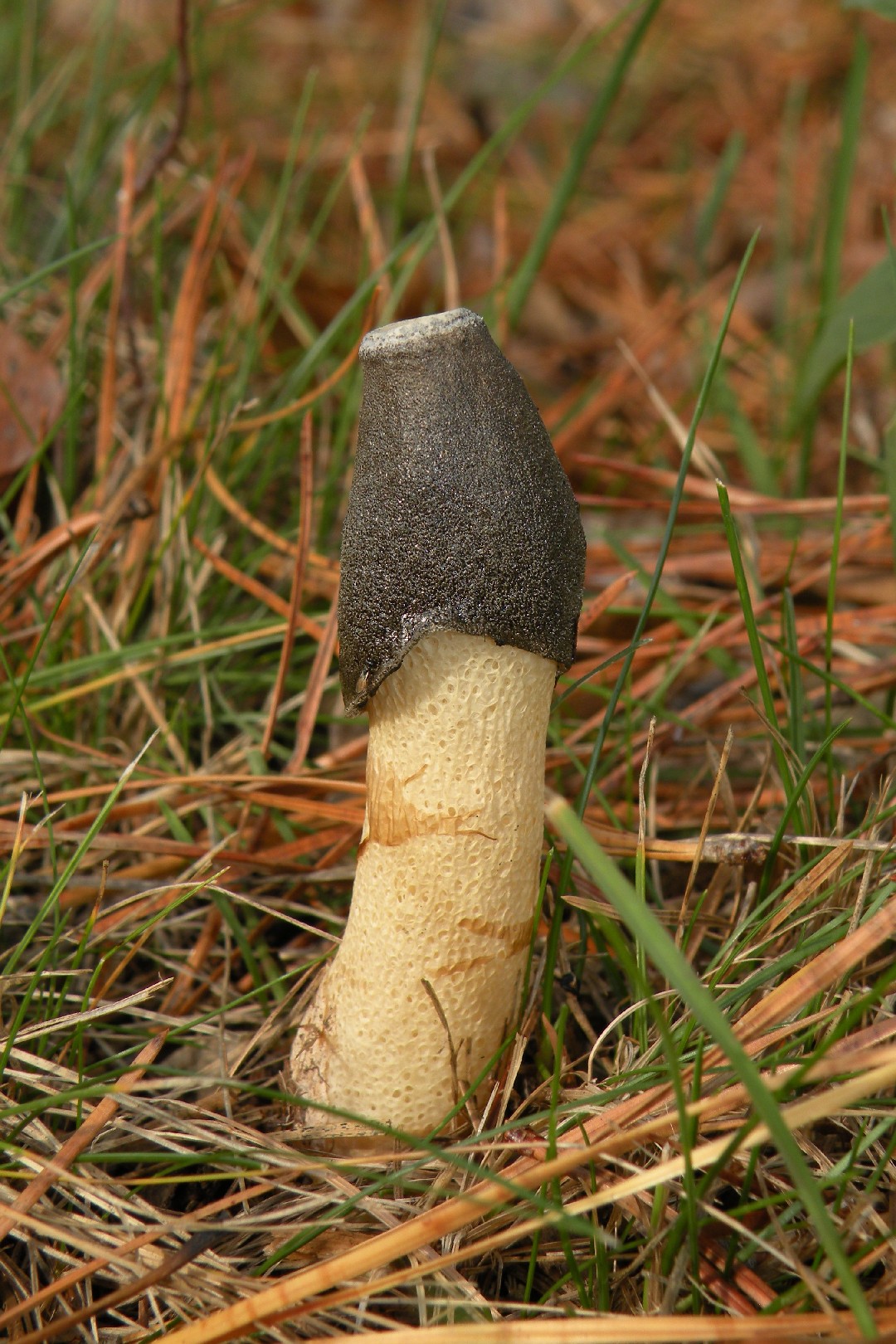
7. Ravenel's stinkhorn
Ravenel's stinkhorn (Phallus ravenelii), as its quite evocative common name may suggest, is easily identified by the pungent odor that emanates from this diminutive mushroom. The elongated, spongy cap towers over a plain white stem. The cap itself secretes not only a strong scent but also a slime that attracts various insects. The repulsive smell makes it inedible and extremely undesirable.
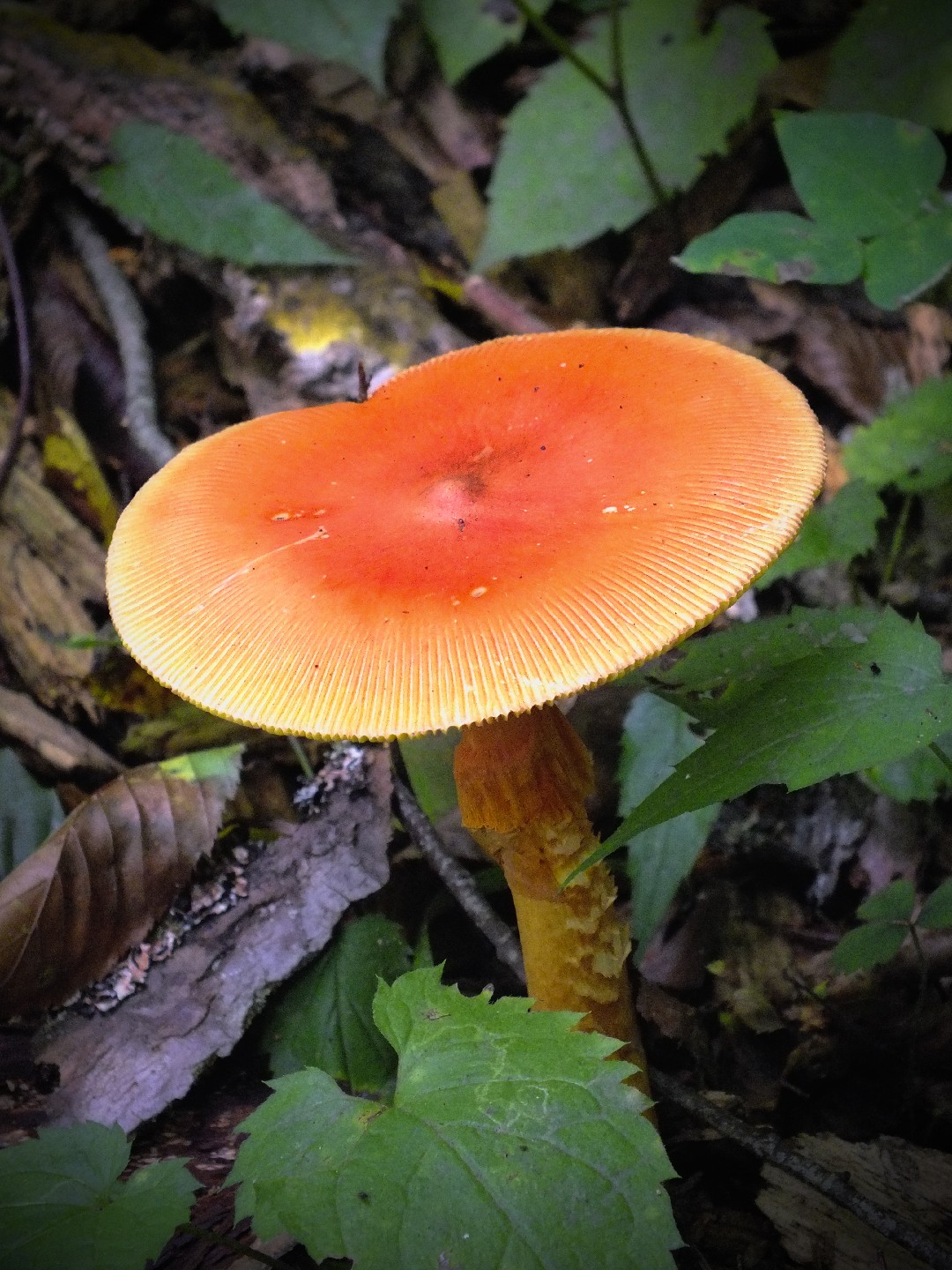
8. Jackson's slender caesar
The jackson's slender caesar is a strikingly colorful member of the Amanita genus. The mushroom's bold hues - it often sports deep reds, oranges, or yellows - make it easily identifiable. Jackson's slender caesars are native to eastern North America, and particularly common in the pine forests of the American southeast.
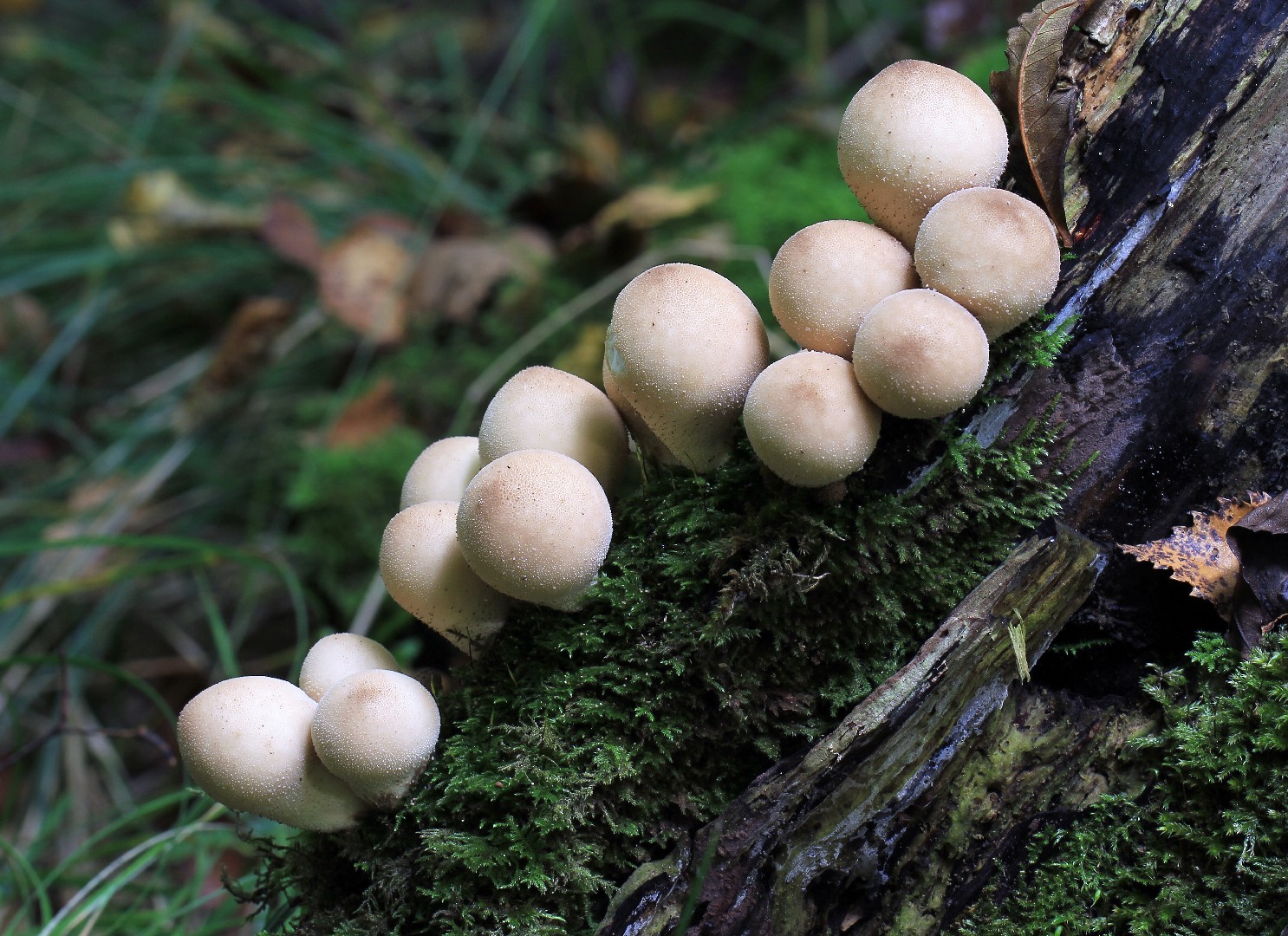
9. Pear-shaped puffball
The mushrooms of this species grow in such tight clusters that they may cover fallen trees and stumps almost entirely in a brownish, puffy coat. Pear-shaped puffballs appear all around the northern hemisphere on decaying hardwoods from fall through winter.
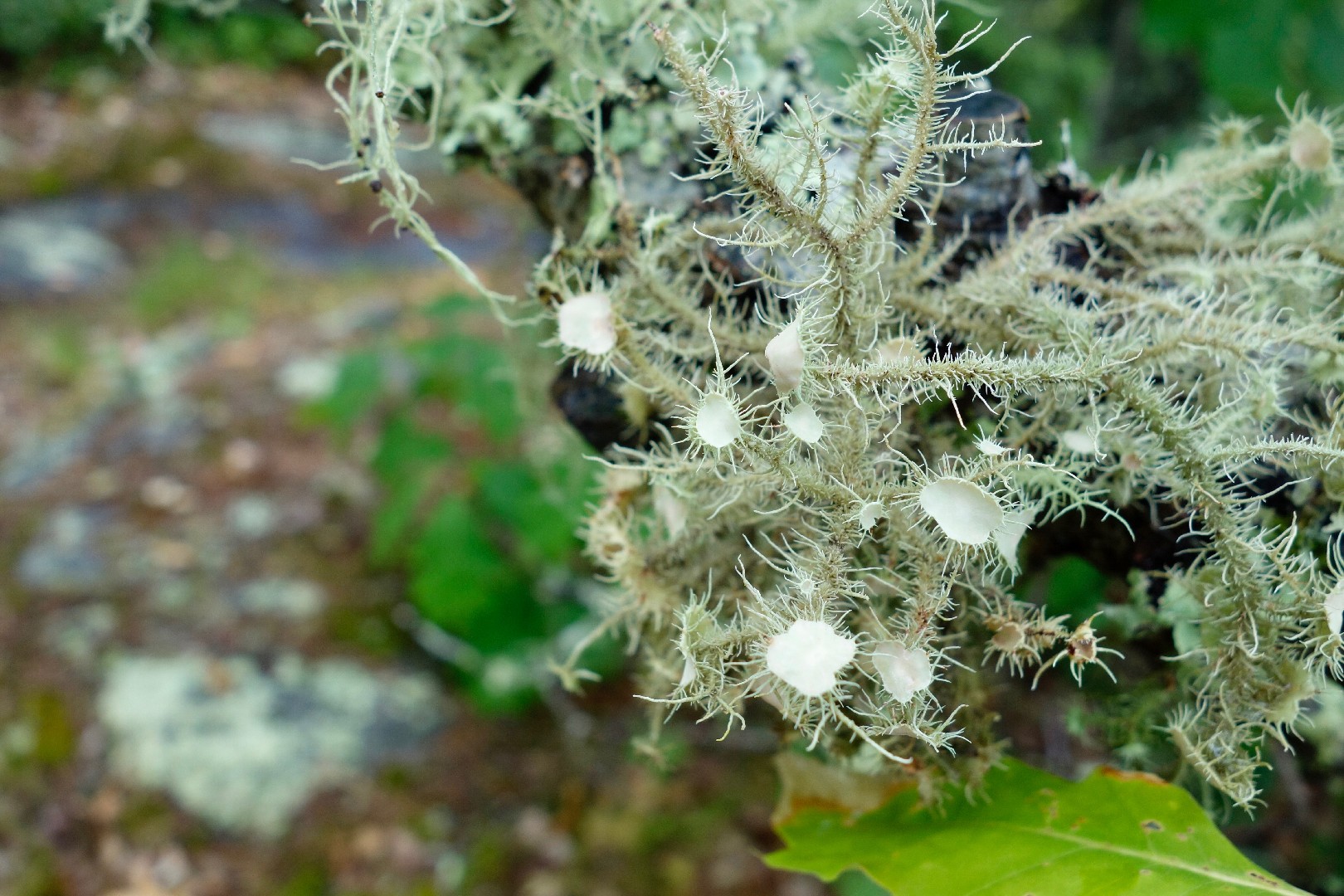
10. Bush beard lichen
Bush beard lichen is a shrub-like lichen. It is called Bush beard lichen after its white and dangling heads that have the appearance of beards. It is incredibly small at only 4 cm tall and can be found on deadwood bark.


More







