




Top 20 Most Common Mushrooms in Wakefield
In the verdant expanses of Wakefield, mushroom enthusiasts uncover a mycological Eden. Mother Nature offers 20 of the most recognized fungi species here. The region's temperate climate and rich, diversified soil create a veritable playground for diverse mushrooms, positioning Wakefield as a gourmet truffle's paradise. The information here is reliable and well-documented, aiming to educate about the most common fungi found in Wakefield. Let's begin our fungi-focused journey.

Most Common Mushrooms
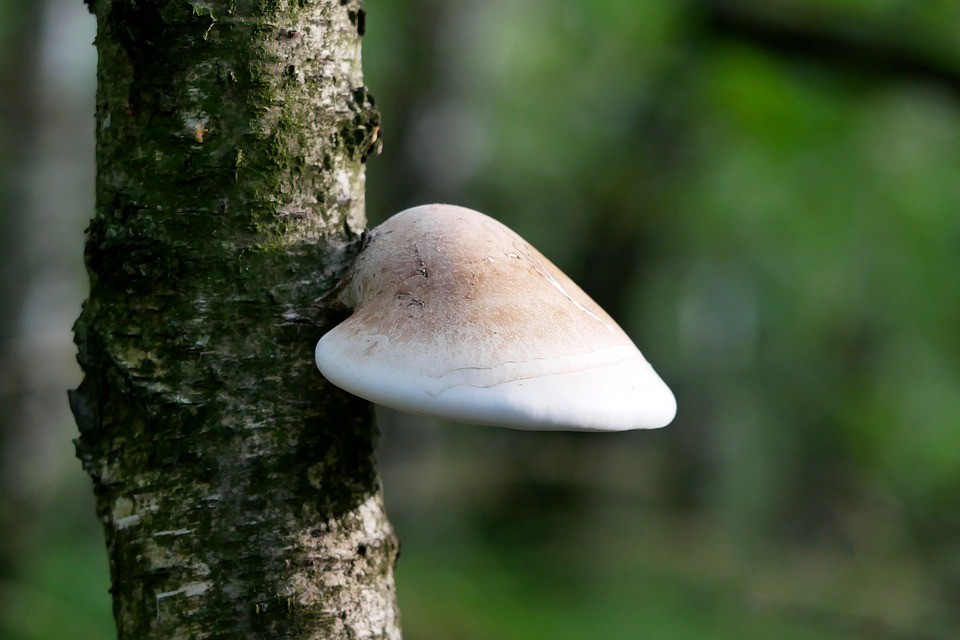
1. Birch polypore
The birch polypore has a variety of applications. Its thick skin has been used by barbers as a razor sharpener and as a mount for insect collectors. When dried, this mushroom was also used to carry fire over long distances because it burns slowly. The historical use of birch polypore doesn't stop there; pieces of this mushroom were found being carried by the five-thousand-year-old mummy Ötzi the Iceman.
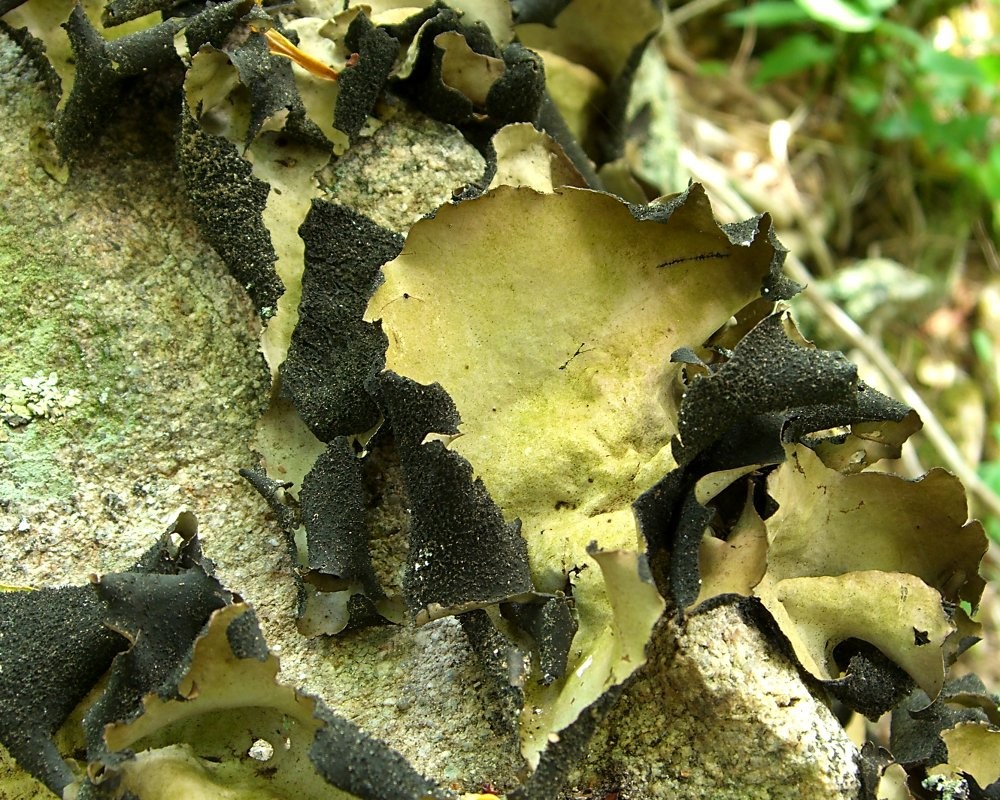
2. Smooth rock tripe
Smooth rock tripe is one of the largest types of lichen in the world. The vegetative part of a lichen's body has been recorded reaching 63 cm across. Though directly translating to "small-breasted," the mammulata epithet was given because many specimens develop a navel-like shape. The common name of "tripe" references its similarity to the food of the same name.
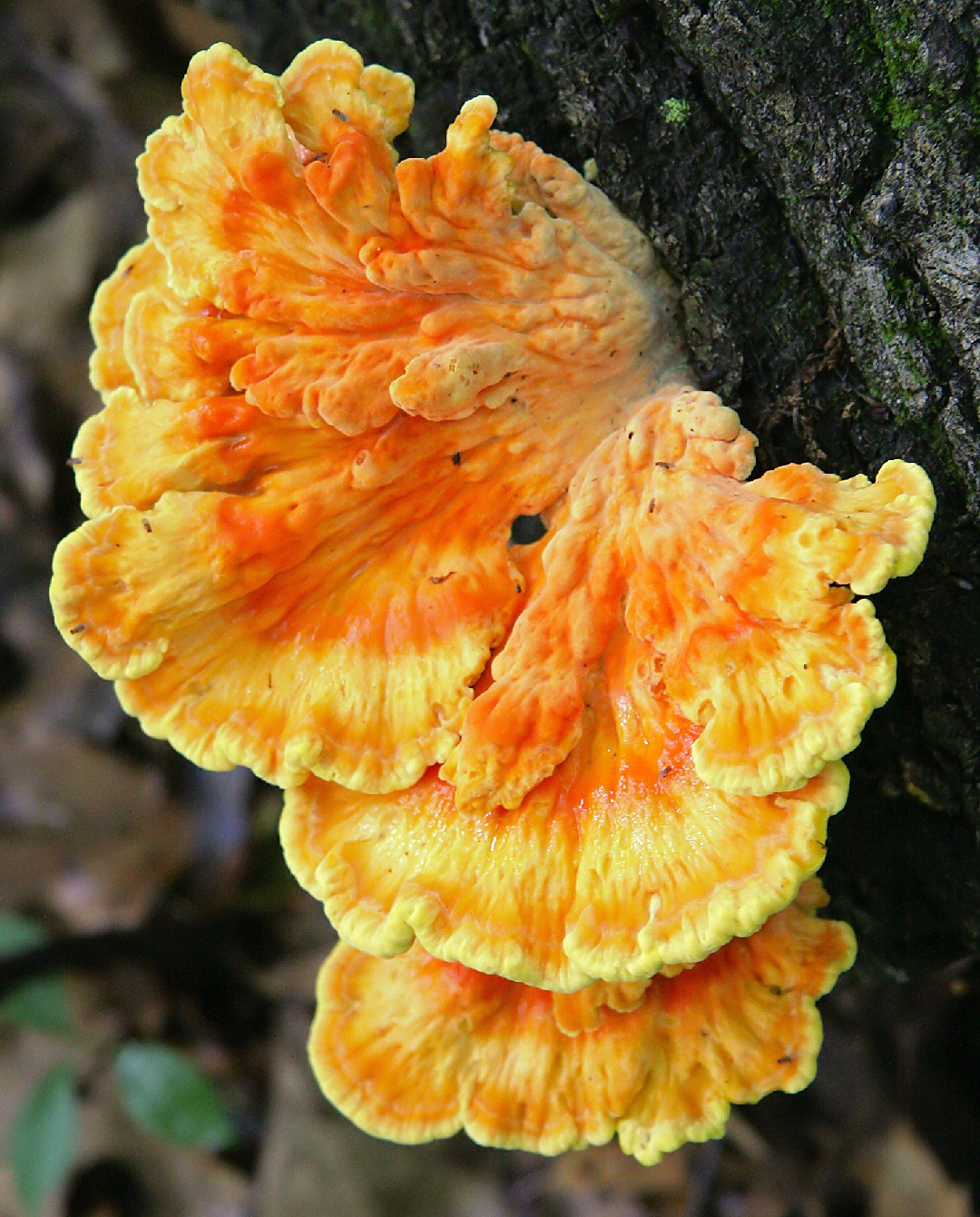
3. Chicken of the woods
Chicken of the woods is very noticeable in hardwood forests, appearing in clusters on standing tree trunks in bright orange and yellow hues that sometimes last through the entire winter. It is a parasite that causes an unfortunate brown heart rot, and is considered a particularly troublesome pest of Yew trees. If the fruitbodies can be seen, the tree is likely already beyond saving.
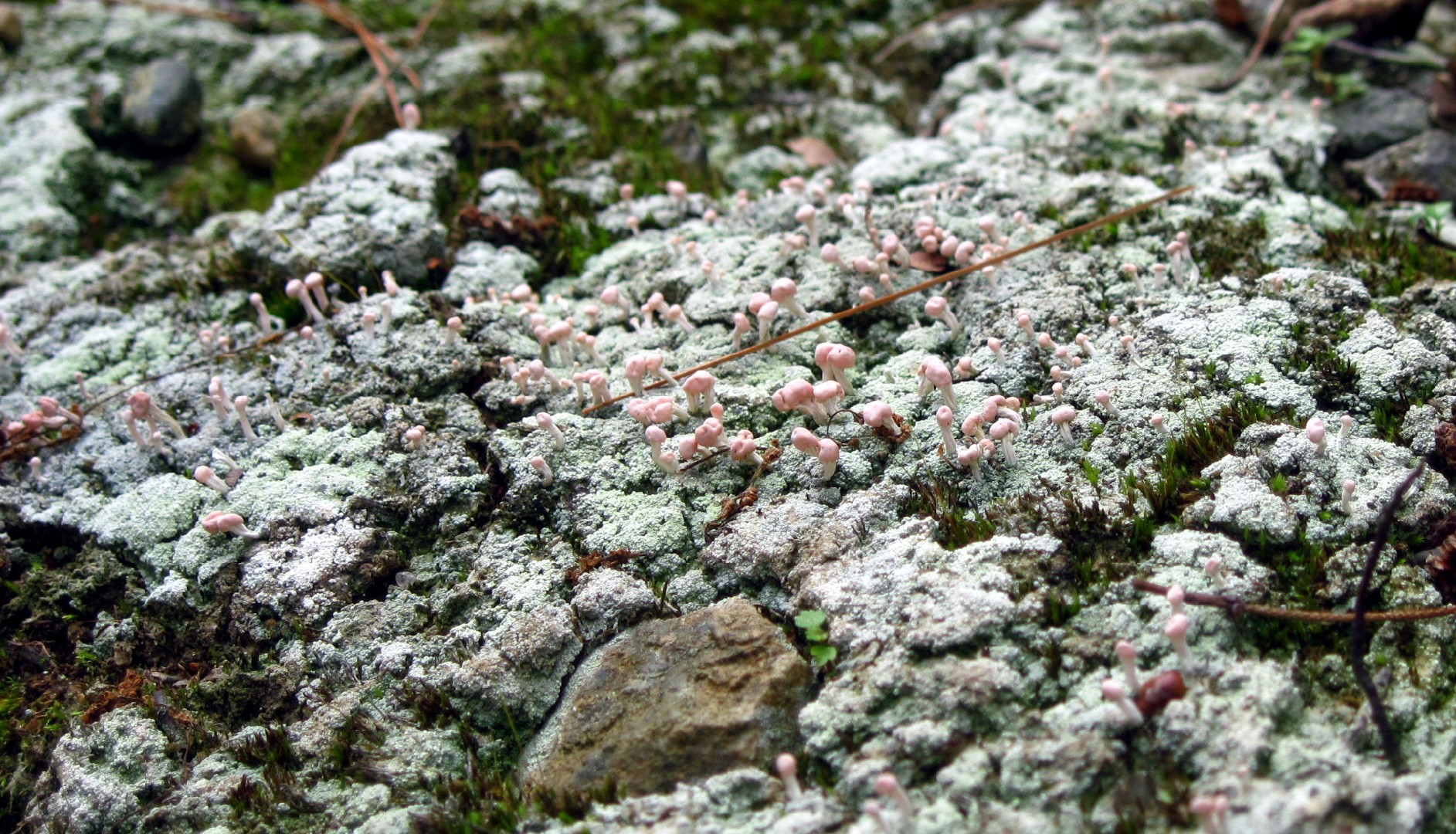
4. Pink earth lichen
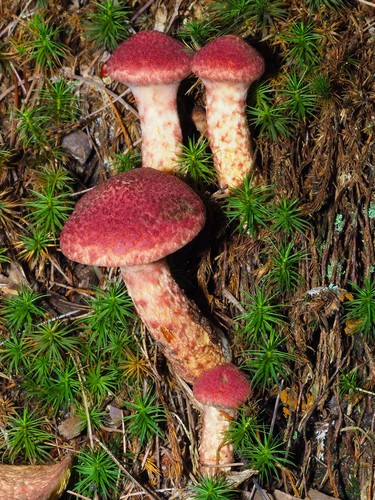
Pink earth lichen is noted for its pink discs and preference for disturbed land. The pink discs of pink earth lichen grow upon petite stalks. Has a bushy or coral like growth structure and can be mistaken for British Soldiers, which have a red tip.
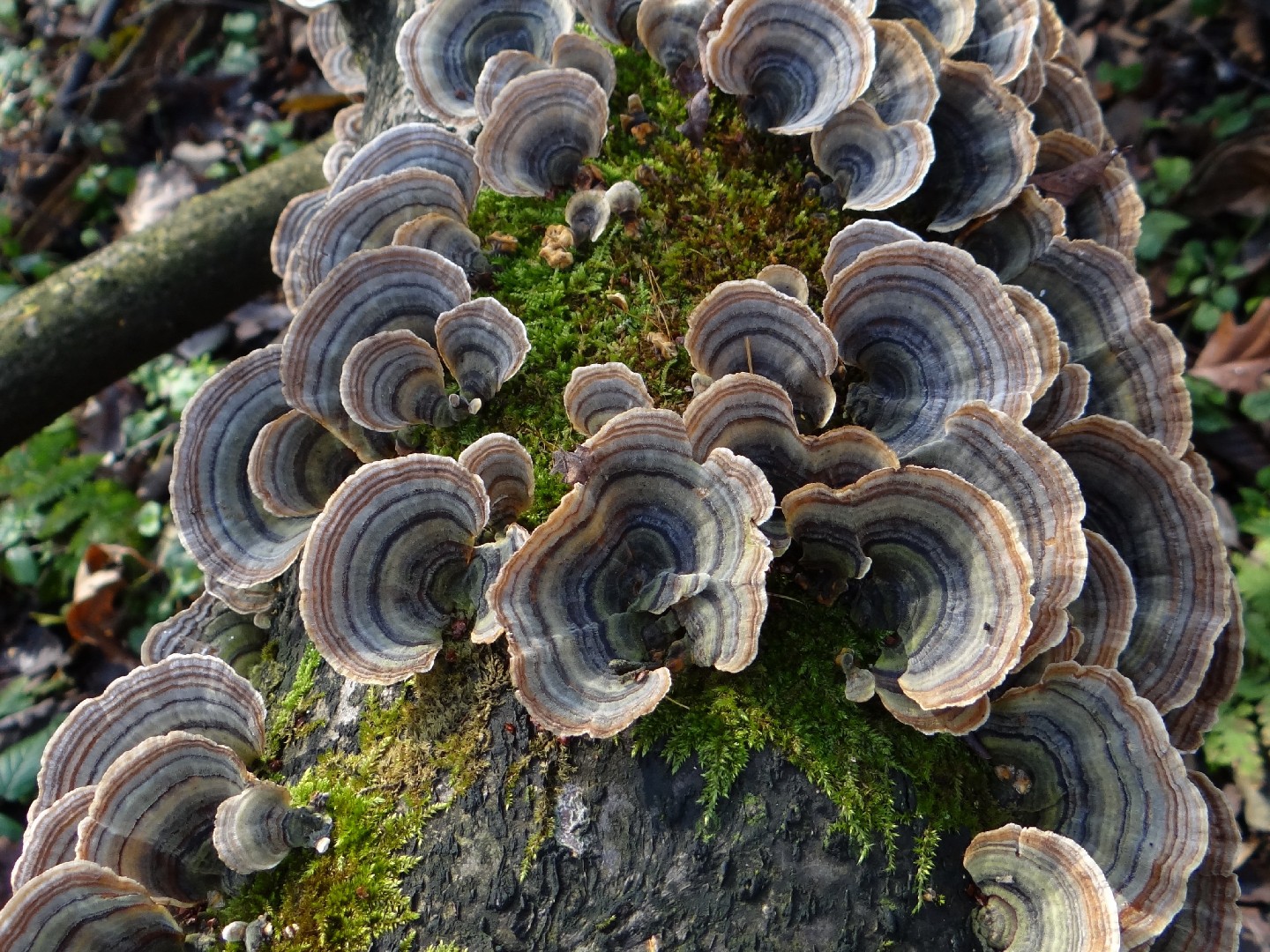
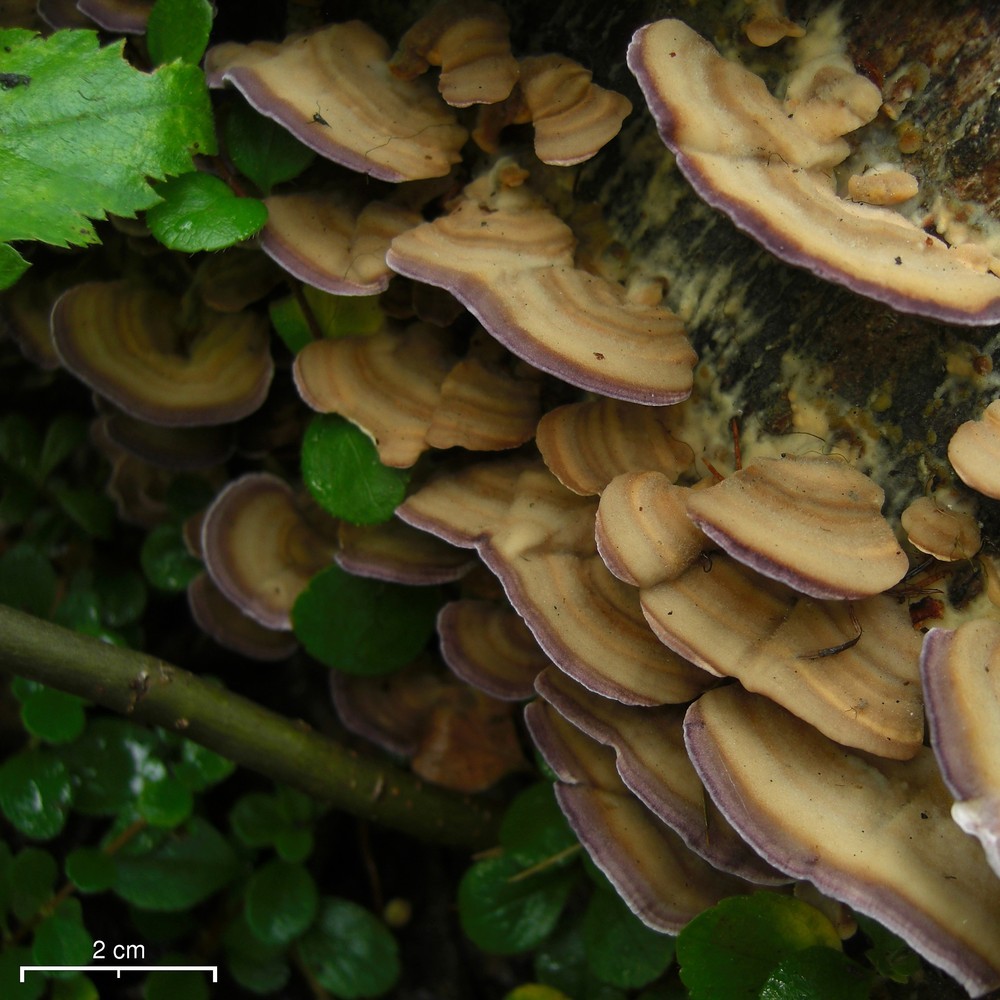
5. Turkey tail
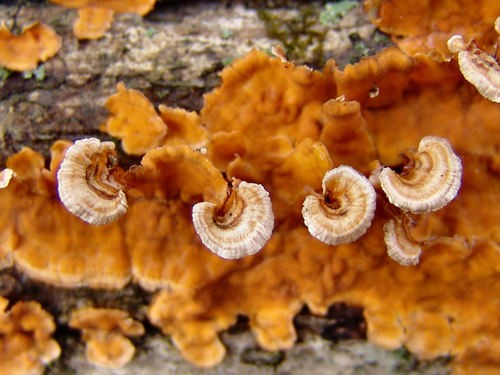
The distinctively-striped turkey tail fungus grows on stumps and logs all over the forests of the northern hemisphere. It is, in fact, probably the most common species you will find. That doesn't mean this mushroom is plain, however; each cap is uniquely patterned. Look for bands of alternating textures as well as color.
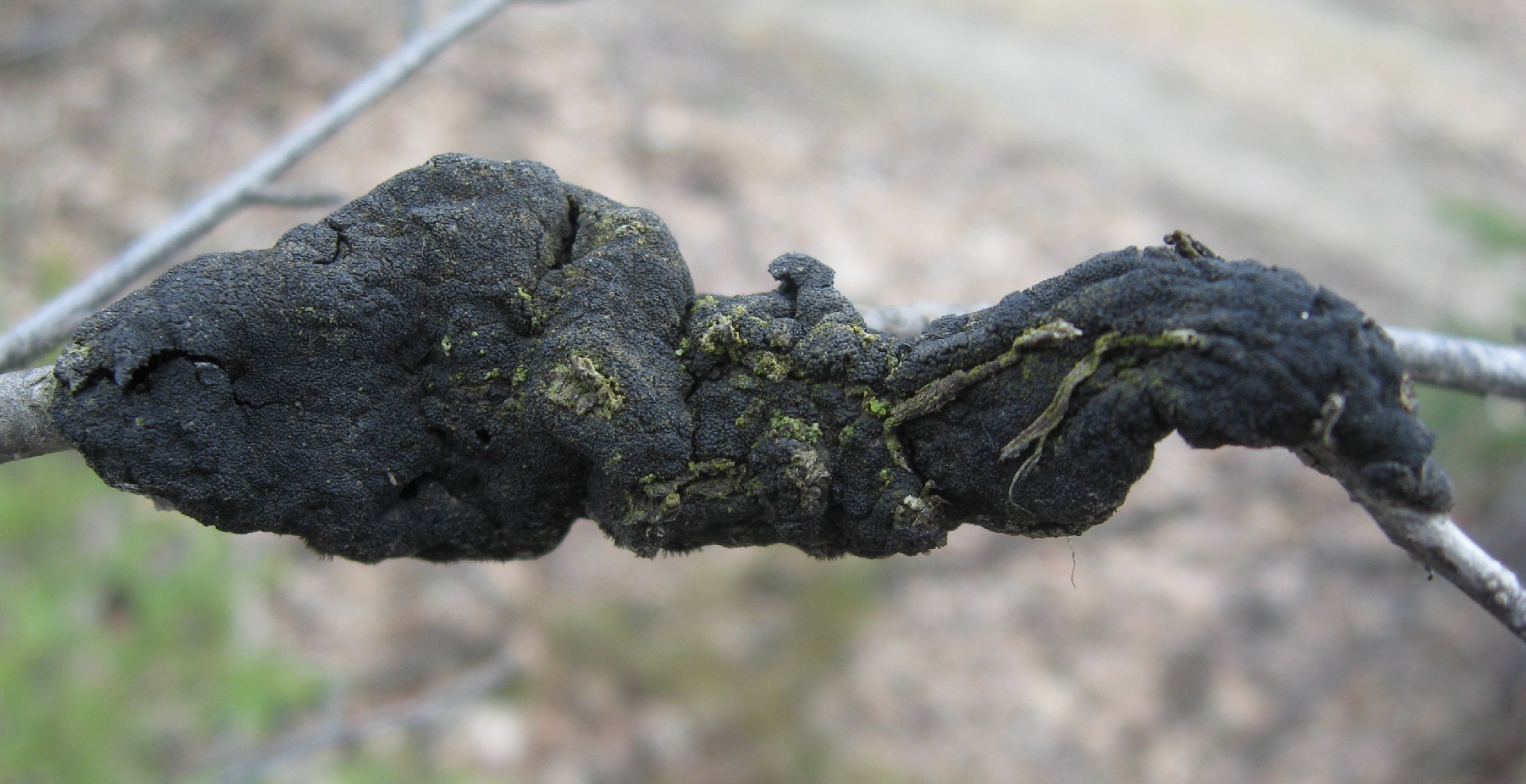
6. Black knot
The appearance of black knot (Apiosporina morbosa) is commonly found on various fruit-bearing trees and looks more like abnormally growing bark than it does a fungus. In youth, this bulbous growth is a lighter green but rapidly turns to dark brown and black. Black knot can kill trees and is not easily controllable using fungicides.
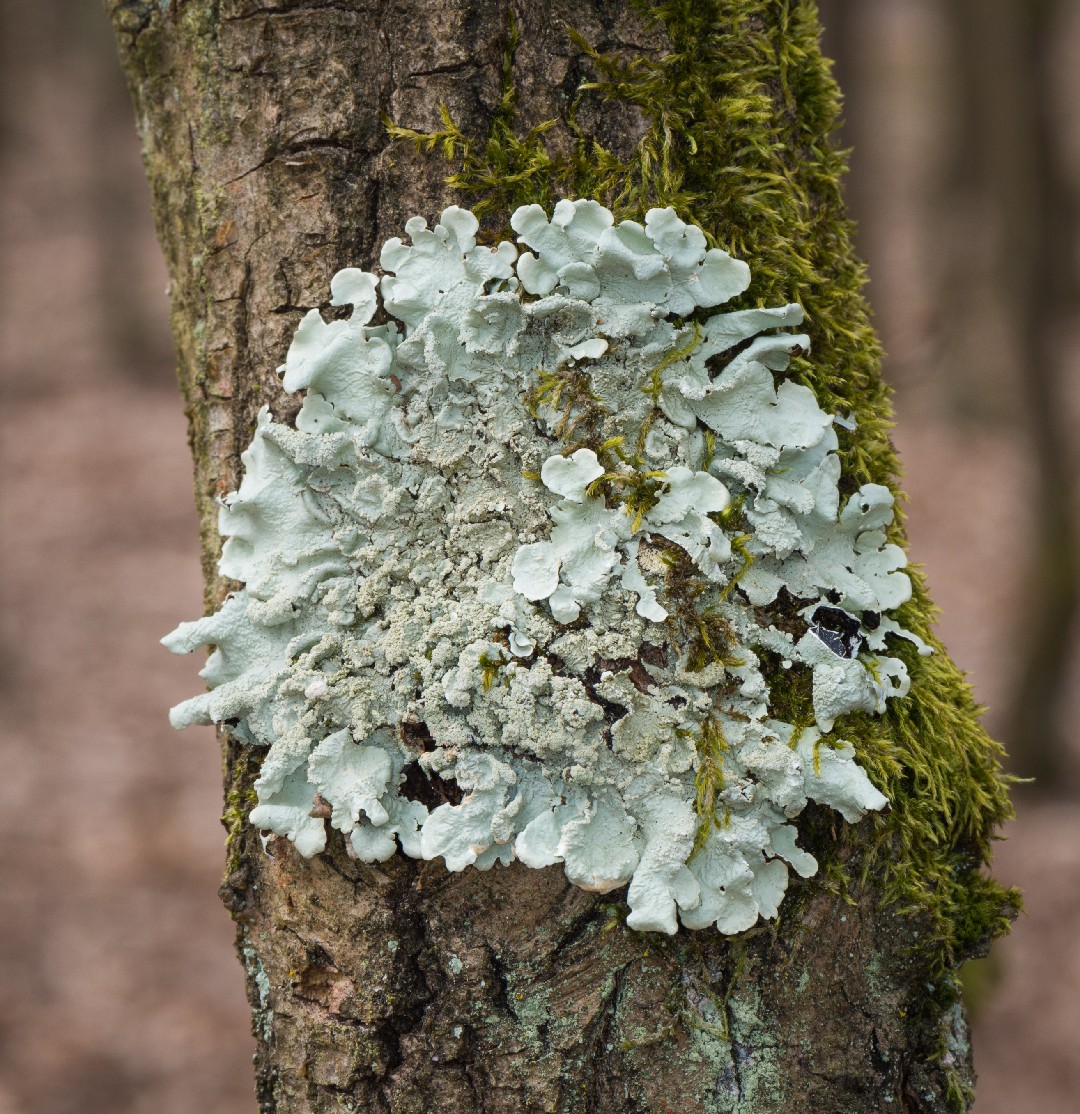
7. Common greenshield lichen
The common greenshield lichen is a familiar species in temperate forests around the world. It can be found growing on rock outcroppings and trees in a wide variety of habitats. Individuals can grow to be quite large and may be gregarious, forming large mats or sheets on suitable surfaces. Like other lichens, the common greenshield lichen will shrivel and harden when moisture is scarce.
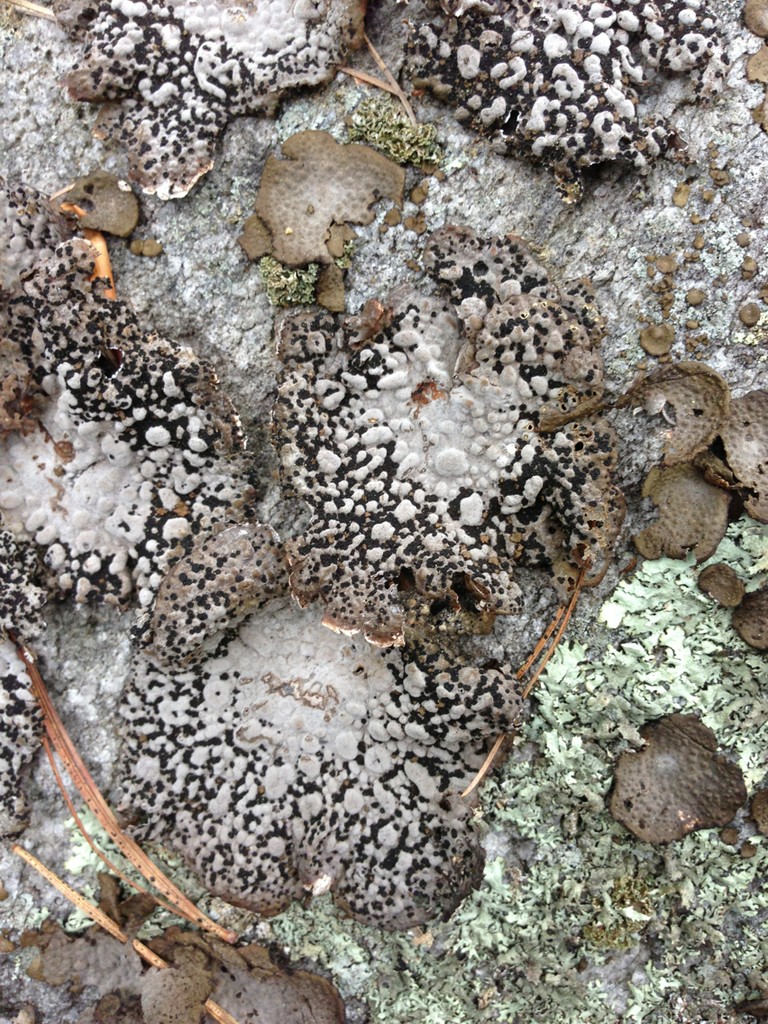
8. Common toadskin
9. Split gill
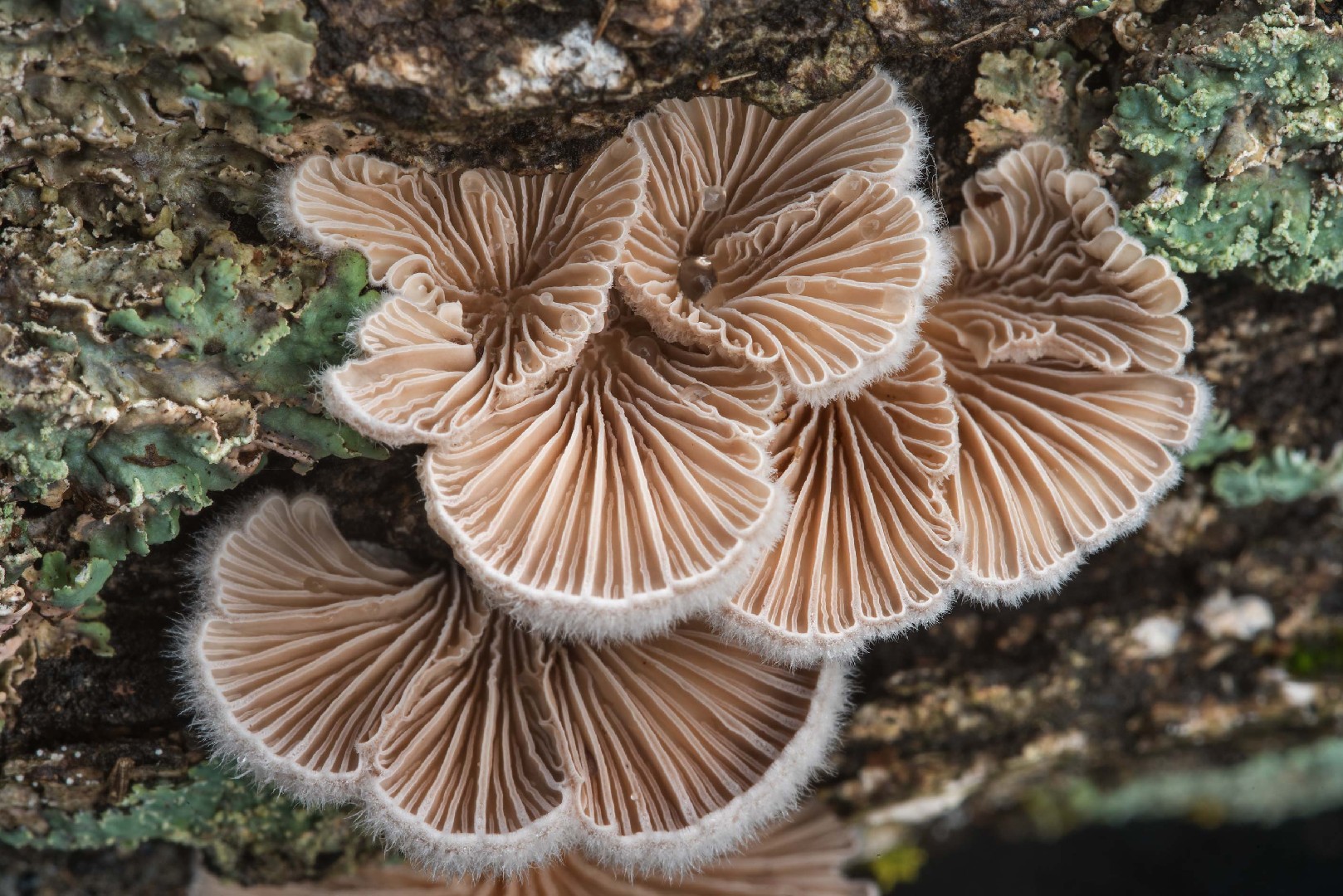
Split gill(Schizophyllum commune) can be found across the globe. Uniquely, it is the only mushroom species known to display the capability to retract by movement. It is considered inedible, although not necessarily toxic. Furthermore, it is not recommended to smell this species, as the spores are capable of sprouting and growing in nasal passages.
10. Porpidia lichen

More







