




Top 20 Most Common Mushrooms in Ruston
Nestled amidst fertile landscapes, Ruston is a treasure trove of natural beauty. Known for its lush surroundings and mild climate, it fosters the growth of a diverse range of mushrooms, garnering the attention of mycologists worldwide. This article takes a closer look at the Top 20 richly abundant mushroom species nestled in Ruston's enchanting terrains, a splendid reflection of the city's vibrant mycological flora.

Most Common Mushrooms
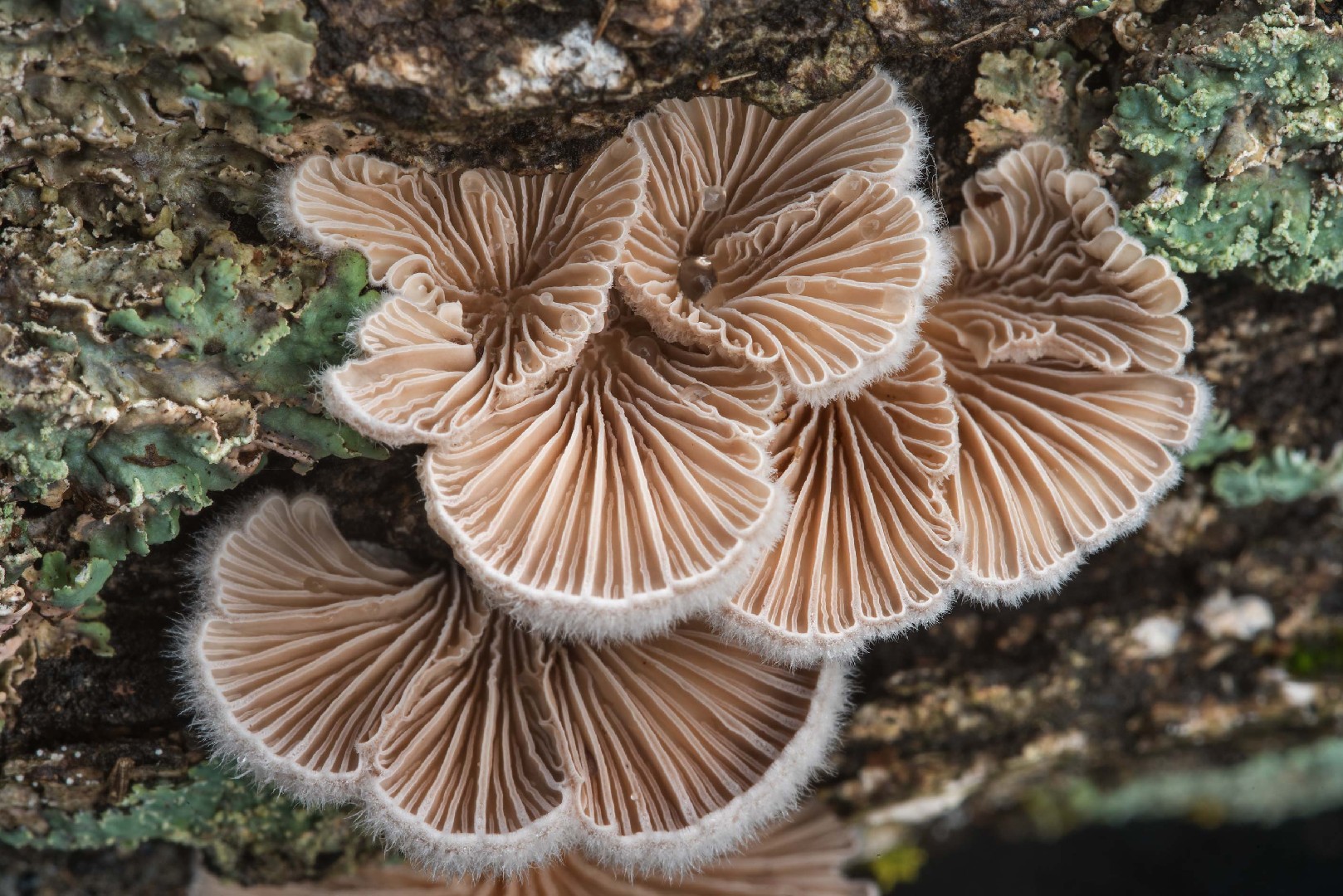
1. Split gill
Split gill(Schizophyllum commune) can be found across the globe. Uniquely, it is the only mushroom species known to display the capability to retract by movement. It is considered inedible, although not necessarily toxic. Furthermore, it is not recommended to smell this species, as the spores are capable of sprouting and growing in nasal passages.
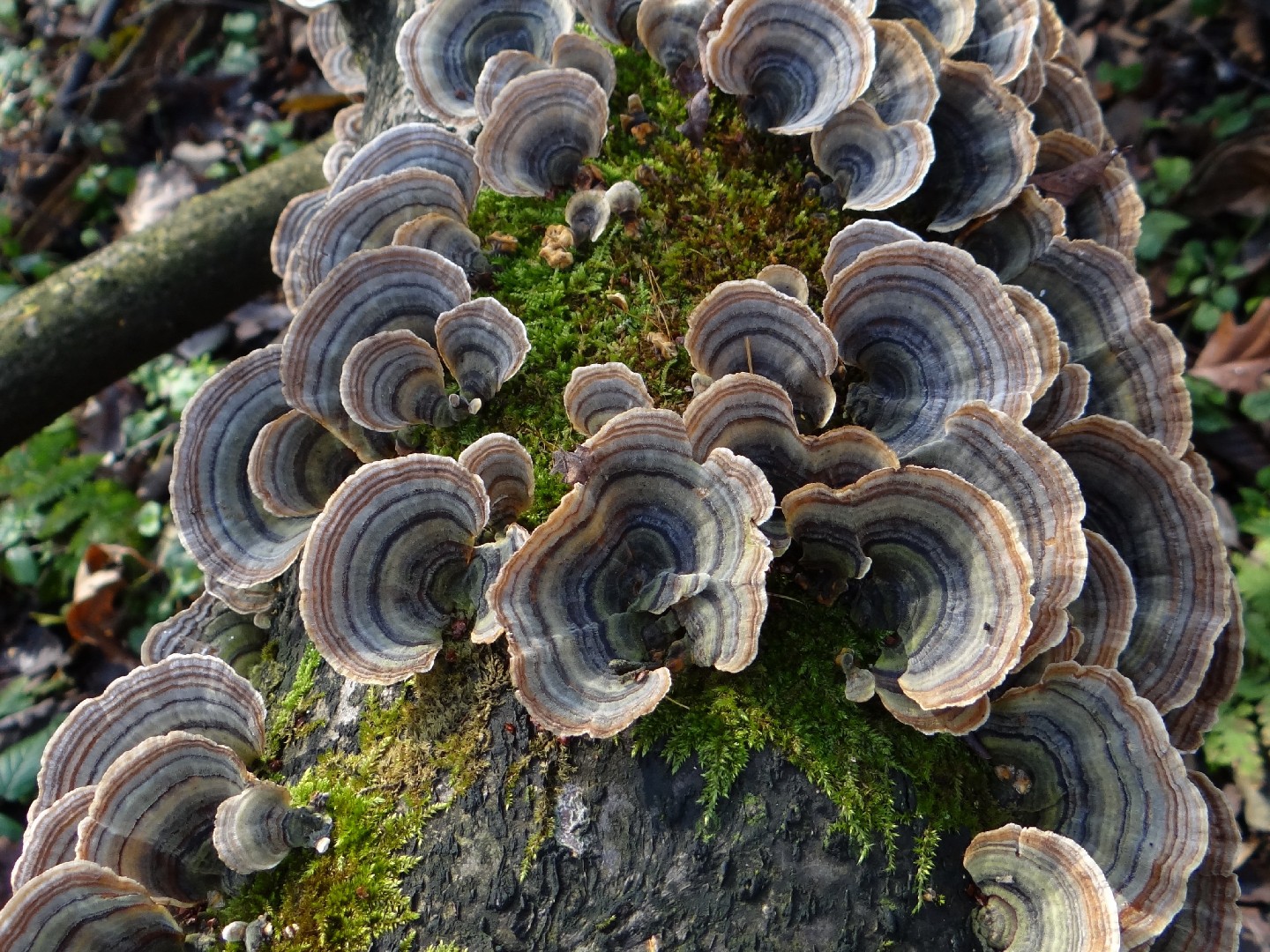
2. Turkey tail
The distinctively-striped turkey tail fungus grows on stumps and logs all over the forests of the northern hemisphere. It is, in fact, probably the most common species you will find. That doesn't mean this mushroom is plain, however; each cap is uniquely patterned. Look for bands of alternating textures as well as color.
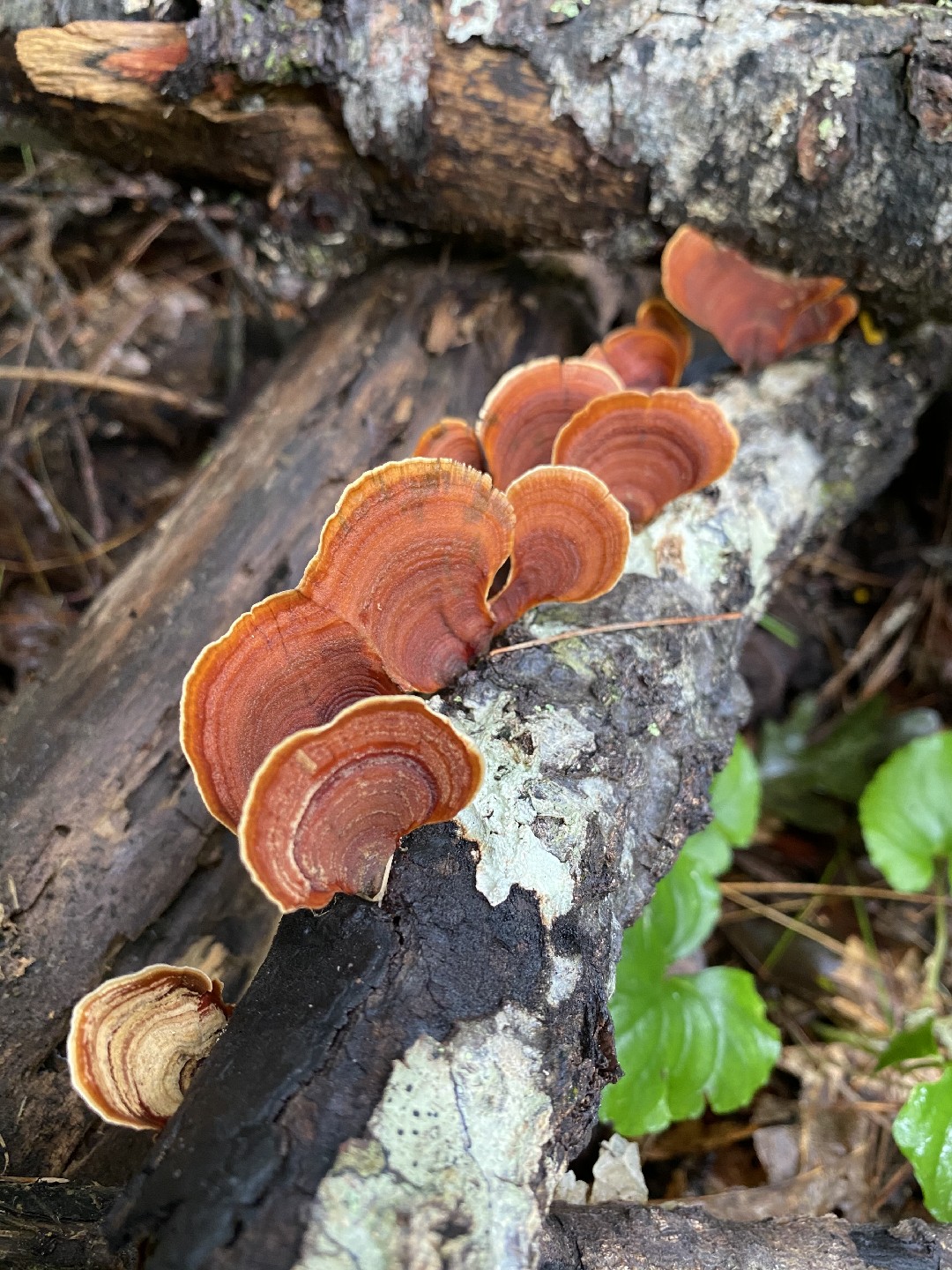
3. False turkey-tail
A common woodland fungus found across North America, the false turkey-tail thrives in wet environs and can be found in copious quantities on decaying wood. The species is so-called because it looks similar the also-common Turkey Tail (Tremetes versicolor) - both species grow in thin, roughly semi-circular sheets. False turkey-tails have tough, woody bodies and are considered to be inedible.
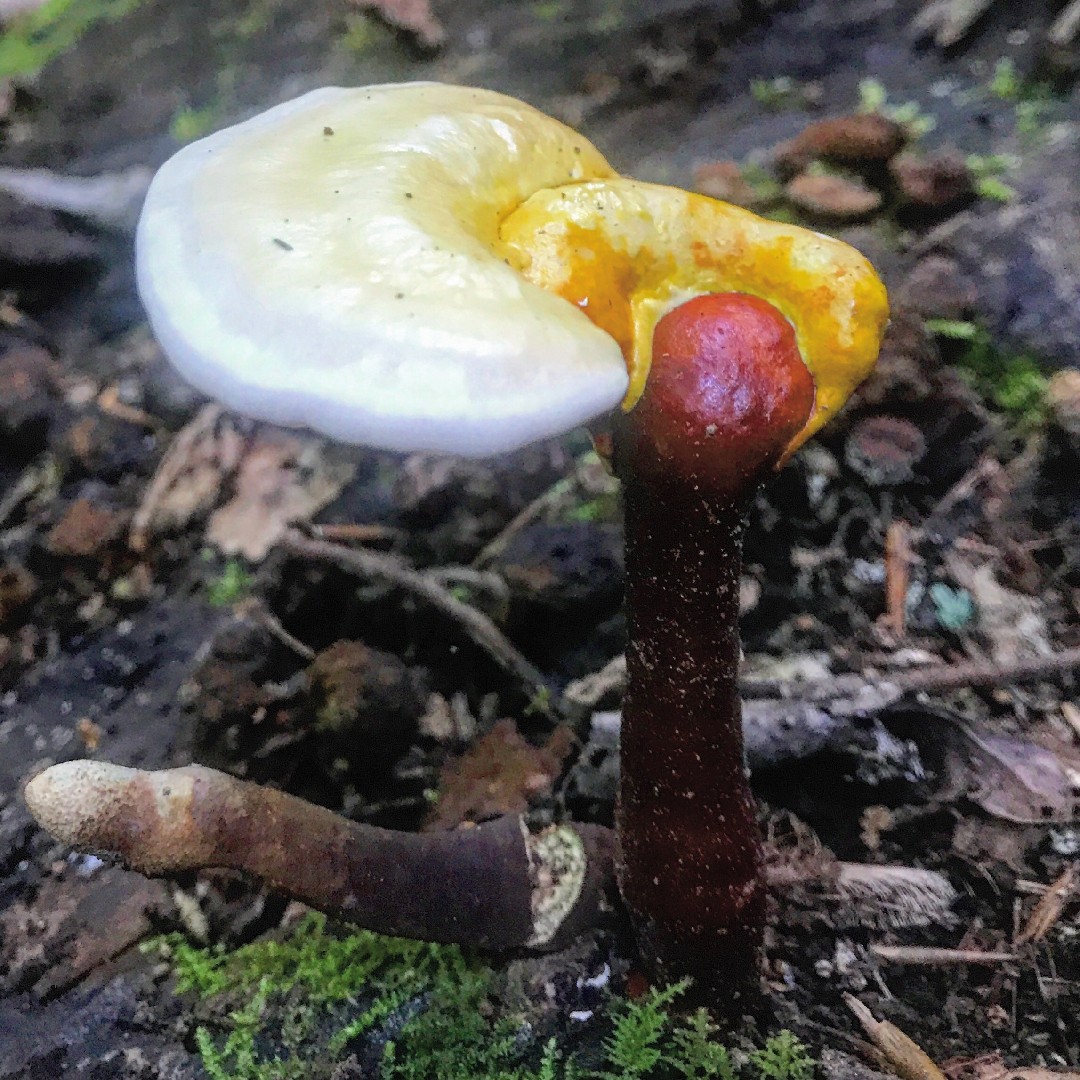
4. Golden reishi
The golden reishi is a tough-fleshed fungus that can be found on dead or live hardwoods, and sometimes conifers, sporting deep shades of red, orange or yellow, although some can be quite pale. While some claim that the golden reishi may convey health benefits, there is no evidence to support this, and the species is considered inedible.
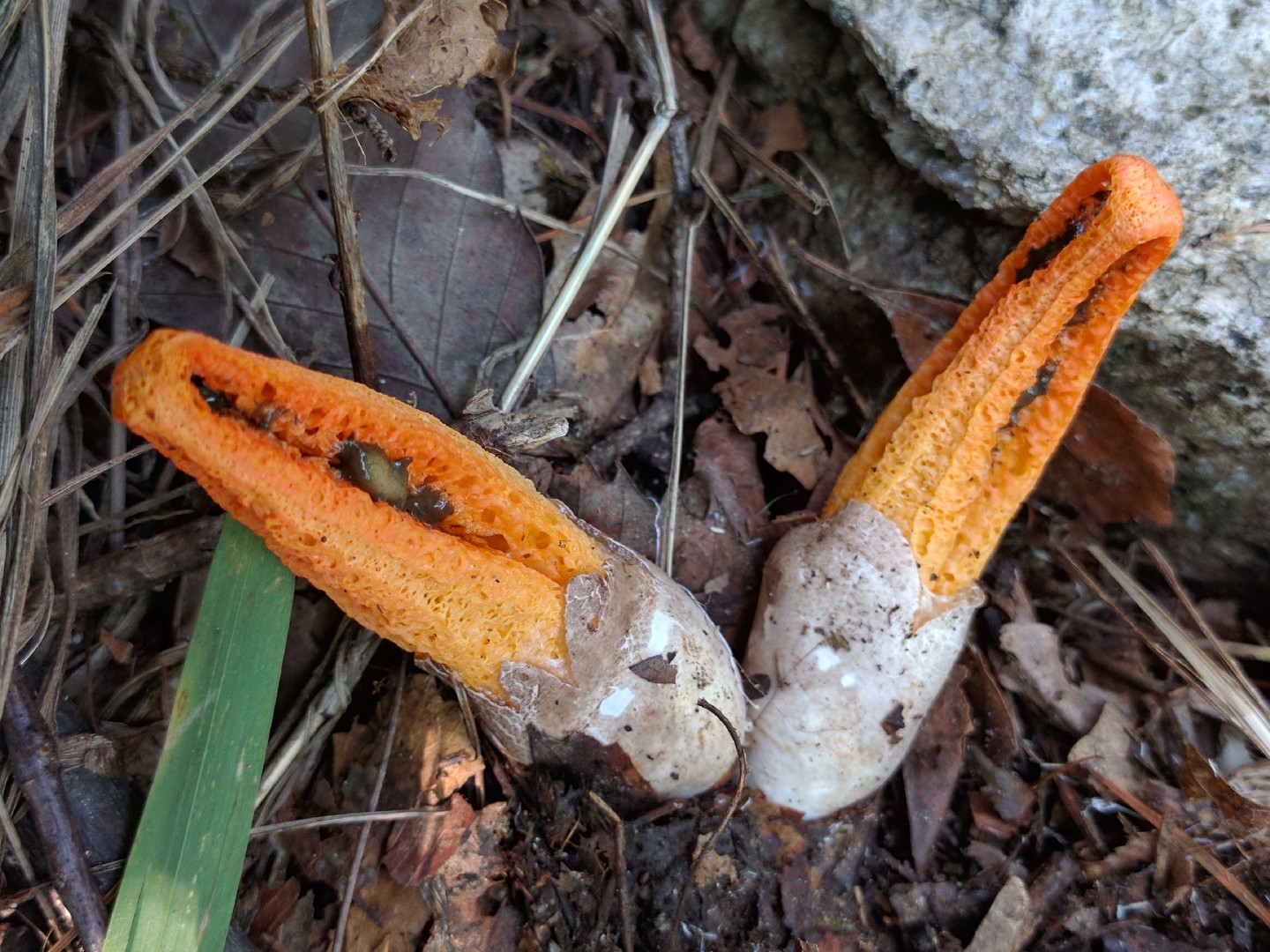
5. Column stinkhorn
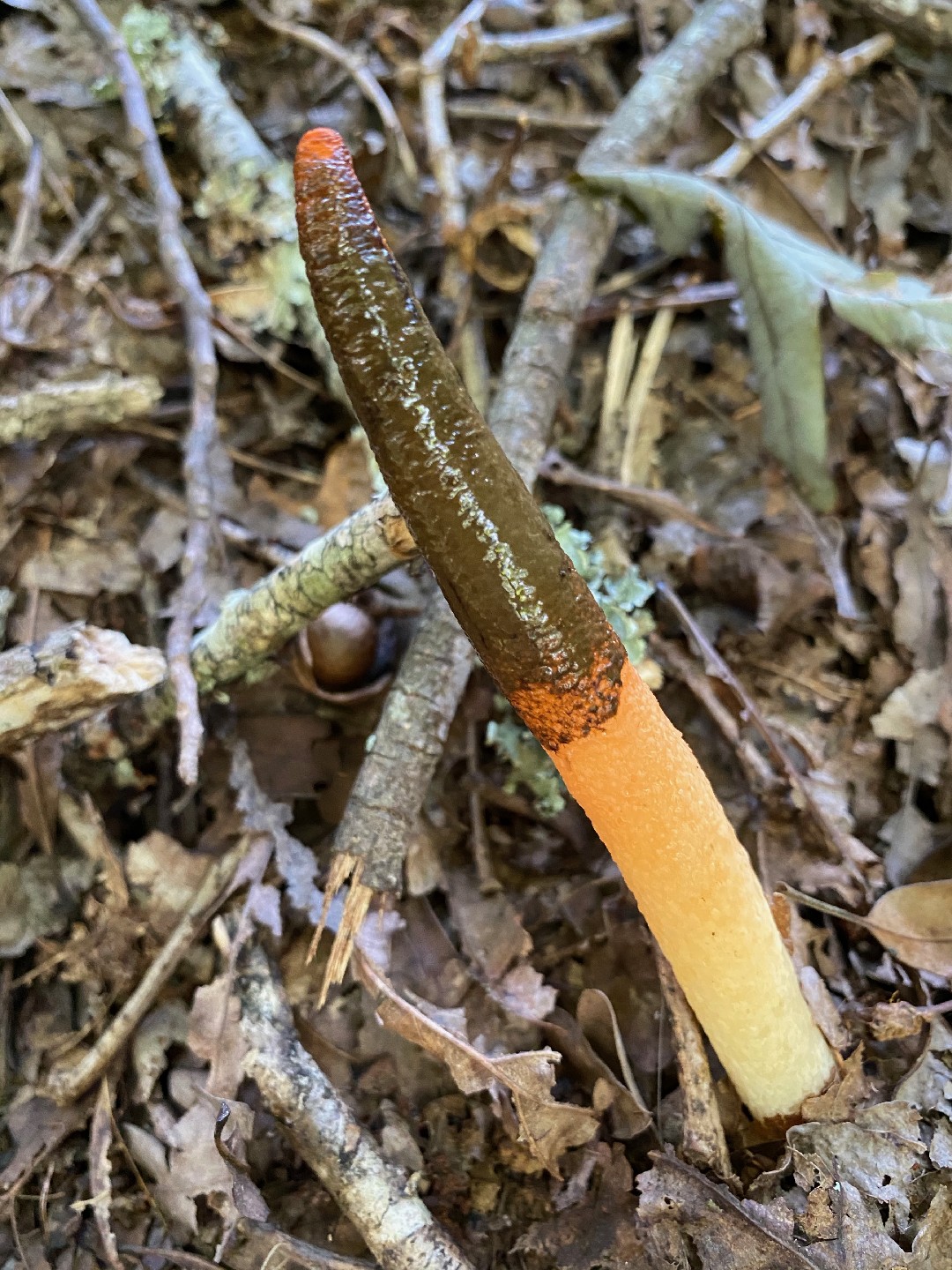
The slime of the column stinkhorn emits an extremely foul odour, but many insects, particularly flies, find this slime very attractive. Attracting flies is the fungus' method for spreading its spores. This warm climate fungus has been introduced to North America, probably together with exotic plants.
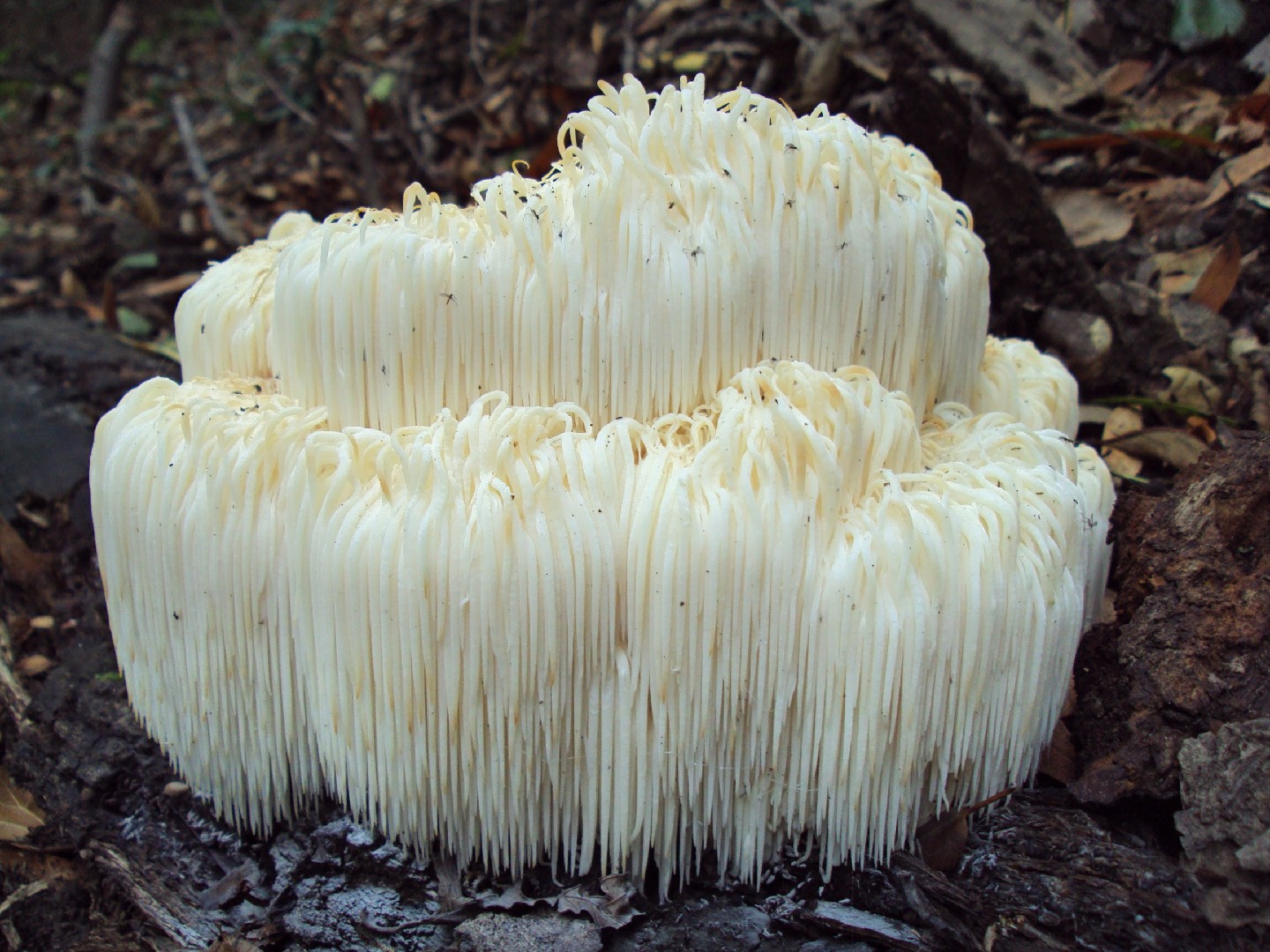
6. Lion's Mane Mushroom
Lion's Mane Mushroom(Hericium erinaceus) is easily identifiable by its characteristic appearance, reminiscent of the majestic mane of a lion. It often sprouts along hardwoods, which may be living or dead. Scientists thus debate whether this species is truly parasitic or merely saprophytic in nature.
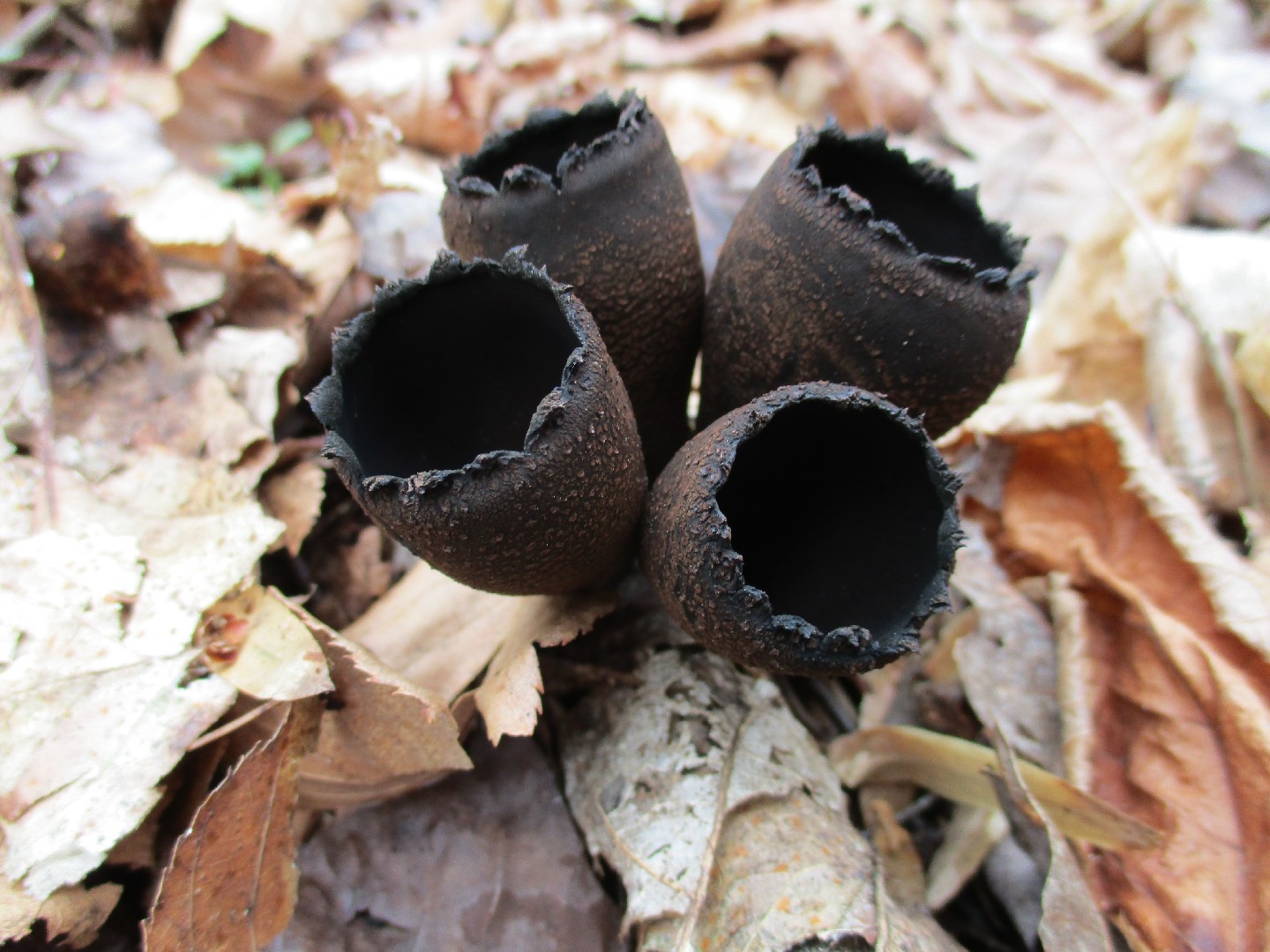
7. Devil's urn
The devil's urn (Urnula craterium) is a black or brown cup-shaped fungus. The species' tough, cracked outer layer and dark coloration may give it a scorched appearance. Devil's urns tend to grow in clusters and are usually found adorning fallen branches and rotting logs. Though the species is not edible itself, gatherers keep an eye out for it, as it usually fruits at about the same time as morels.
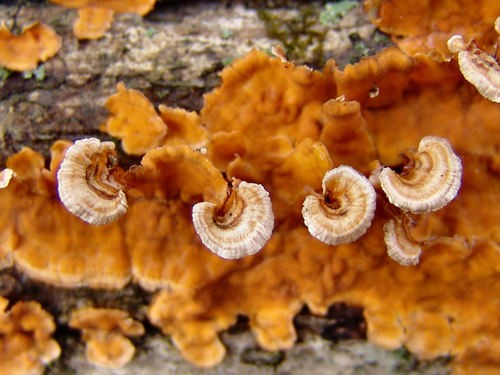
8. Crowded parchment
The crowded parchment is a common mushroom that can be found on dead hardwood material. The species is so-named because it grows in very thin, sheet-like shelves, which often become folded when they run up against each other. Crowded parchment is usually found in shades of brown, tan, or orange.
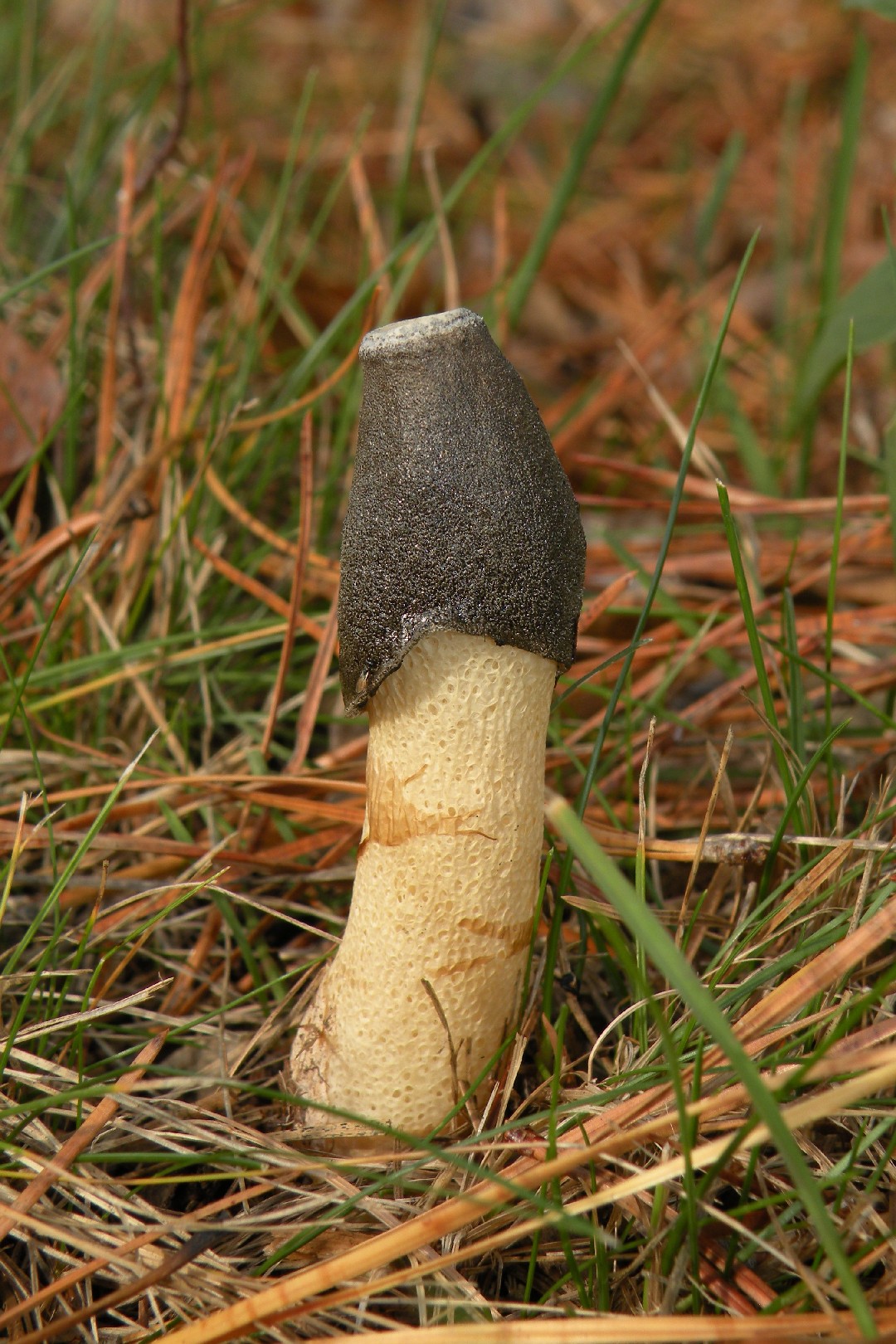
9. Ravenel's stinkhorn
Ravenel's stinkhorn (Phallus ravenelii), as its quite evocative common name may suggest, is easily identified by the pungent odor that emanates from this diminutive mushroom. The elongated, spongy cap towers over a plain white stem. The cap itself secretes not only a strong scent but also a slime that attracts various insects. The repulsive smell makes it inedible and extremely undesirable.
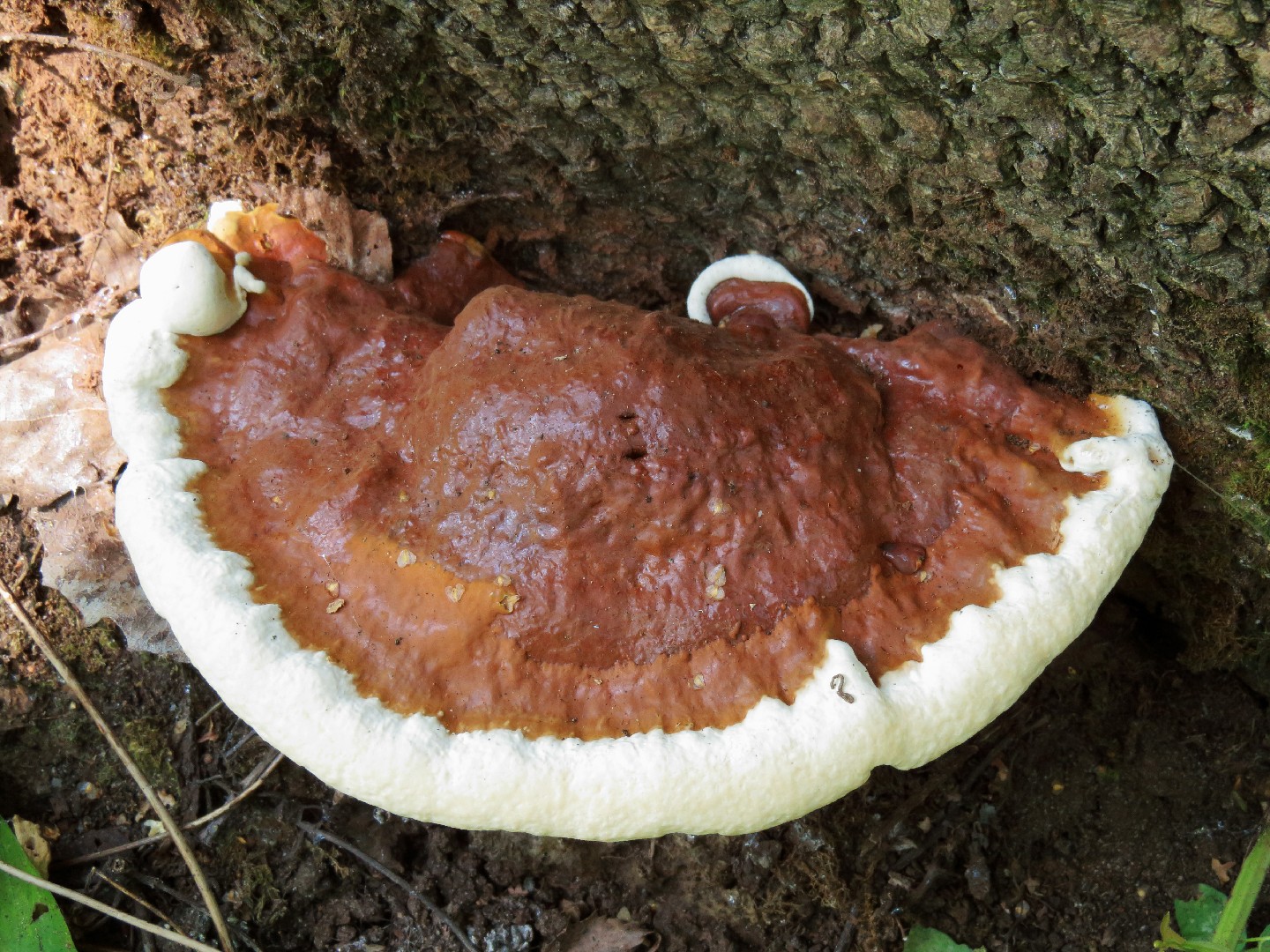
10. Ganoderma resinaceum
The Harzige Lackporling is a console-shaped mushroom that can be 15-35 cm long, 10-20 wide and 4-8 cm thick. The top is colored red or purple-brown. The hat is covered by a pale yellow resin crust, which melts in the match or lighter flame. The beaded rim is fresh yellow to yellow orange, creamy in a dry state. The underside of the mushroom covered with round pores (3 per mm) is young white and later cream colored. The tubes are about 8-10 mm long. The relatively thin trama is light brown and tough cork-like. Juicing occurs when young fruiting bodies are cut, which solidifies into a resinous mass within a short time. The fruiting bodies are annual.


More







