




Top 20 Most Common Mushrooms in Ottawa
Welcome to our exploration of the Top 20 most common mushrooms in Ottawa, the earthy oasis renowned for its diverse climatic conditions, complementing the mushroom habitat. Famed for its lush landscapes that foster a remarkable spectrum of mushrooms, Ottawa hosts an array of unique fungi that nature enthusiasts cherish. Let's delve into the captivating world of Ottawa's most ubiquitous mushroom varieties.

Most Common Mushrooms
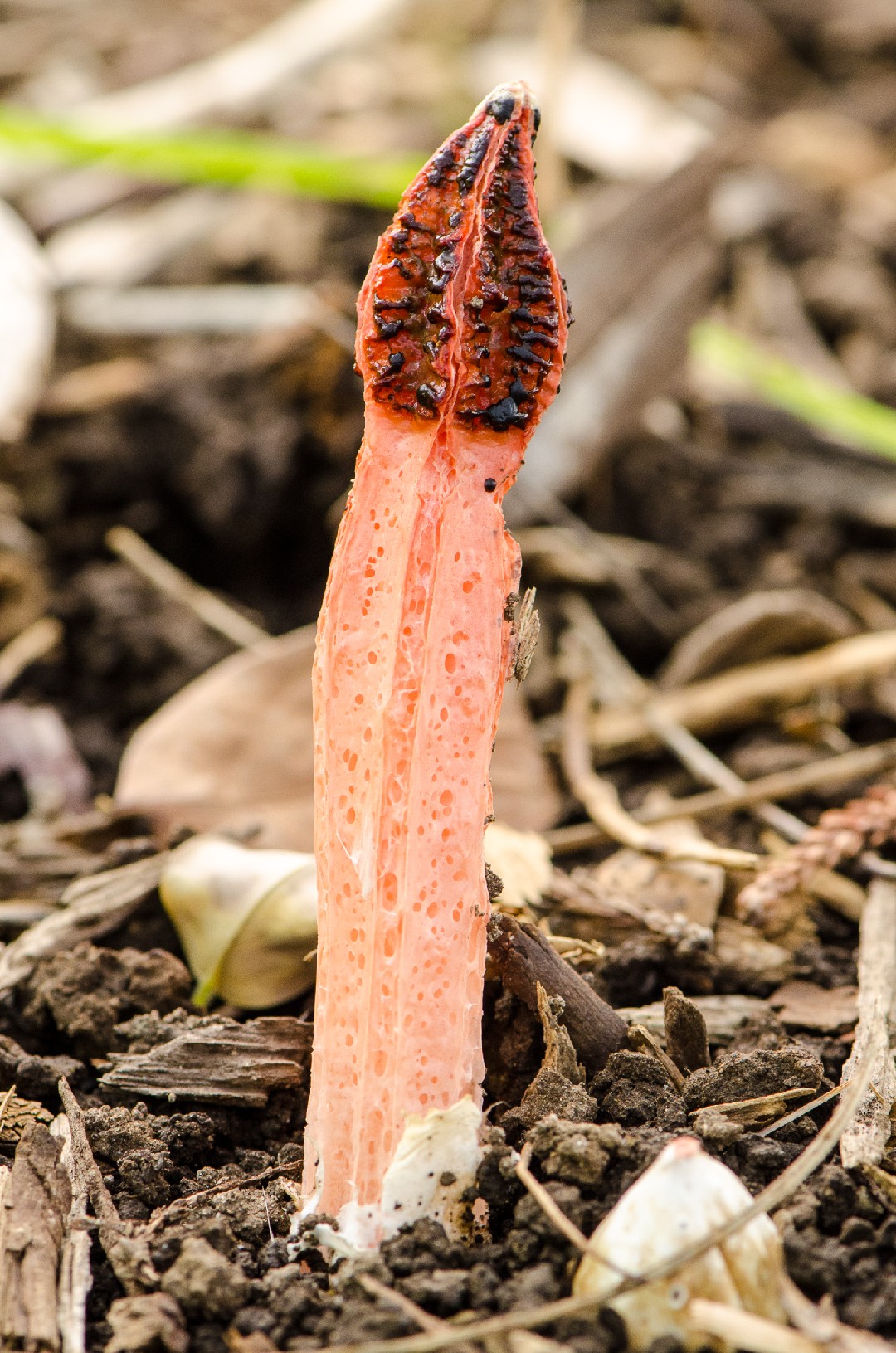
1. Lantern stinkhorn
Distinctive even among the outlandish varieties of the stinkhorn family, the lantern stinkhorn (Lysurus mokusin) bursts from the ground with a squared, flat-sided stem that’s ribbed like a churro. Atop this stipe is a hollow claw, like a hand with all its fingertips pressed together. The inside surface of this claw is coated with sticky, stinky goo meant to attract insects that will spread its spores.
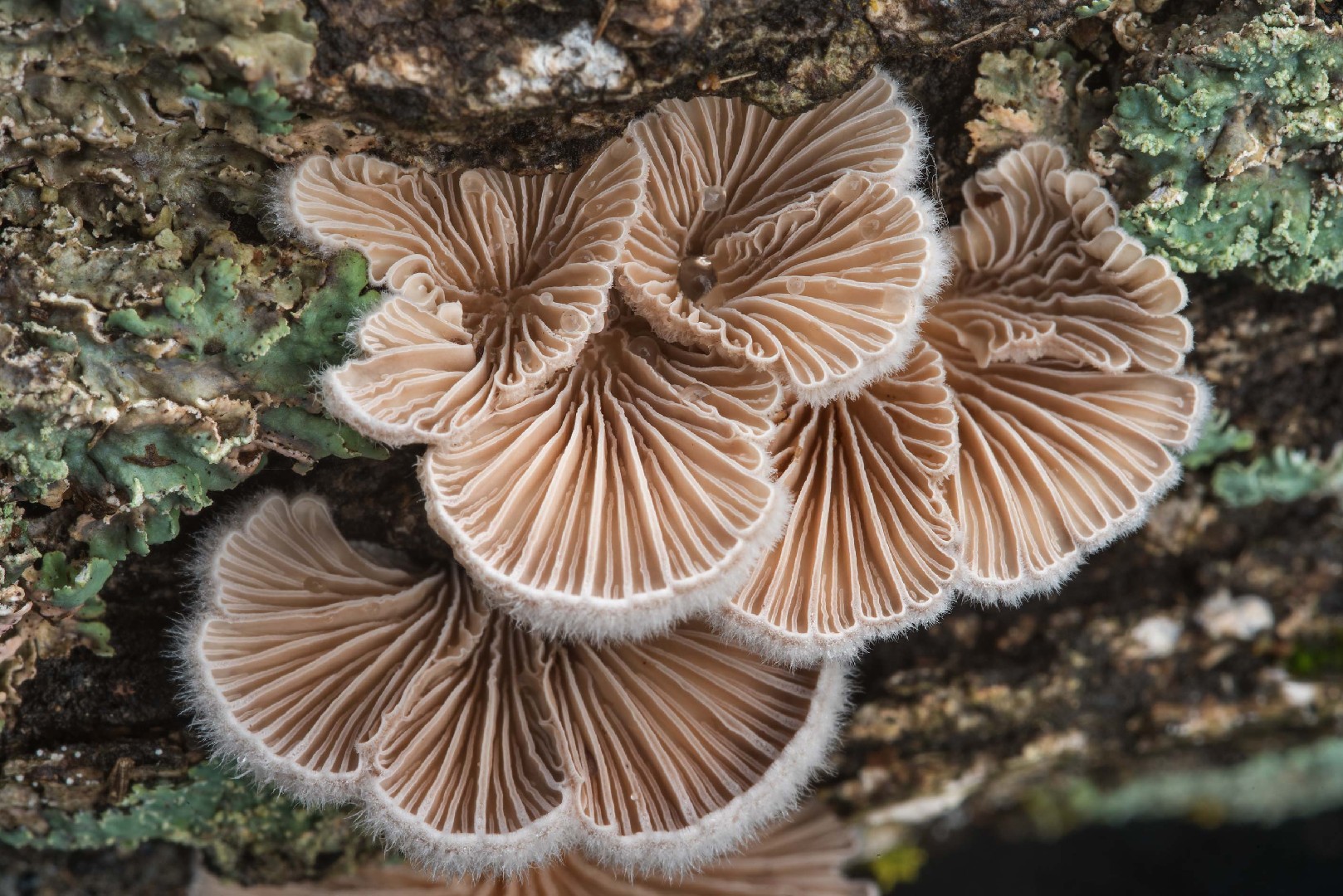
2. Split gill
Split gill(Schizophyllum commune) can be found across the globe. Uniquely, it is the only mushroom species known to display the capability to retract by movement. It is considered inedible, although not necessarily toxic. Furthermore, it is not recommended to smell this species, as the spores are capable of sprouting and growing in nasal passages.
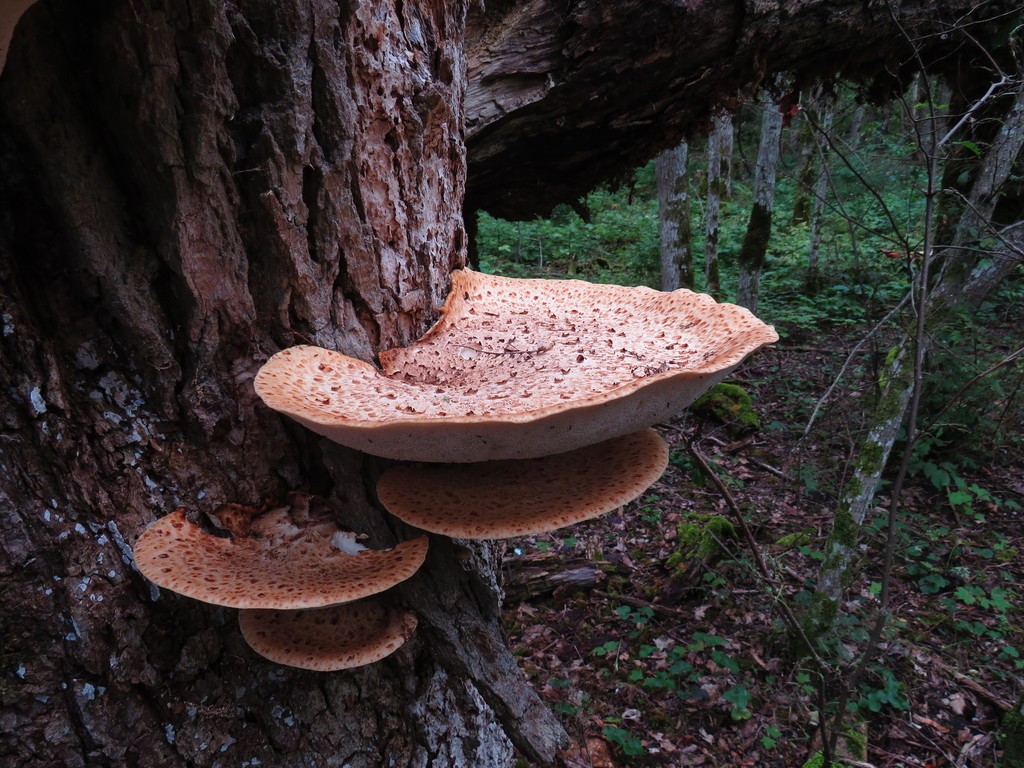
3. Dryad's saddle
A familiar sight to spring morel hunters, dryad's saddle is noteworthy for its large size, striking scales, and watermelon-like smell. Similar to other mushrooms in the bracket fungi family, dryad's saddle can be used to make paper. Younger mushrooms are better suited for this purpose due to their smaller and more consistent fibers.
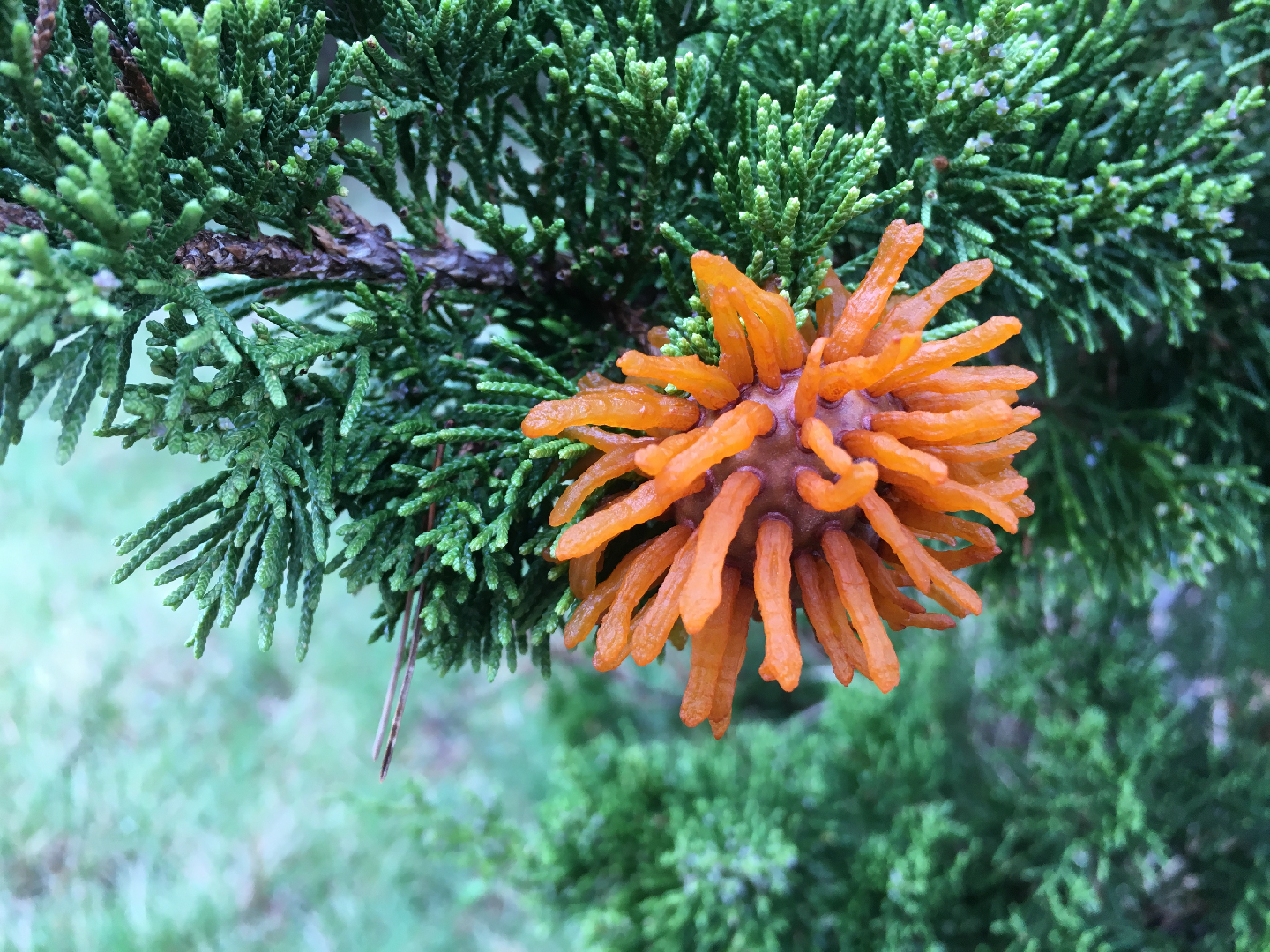
4. Cedar-apple rust
The vividly-colored fruitbodies of cedar-apple rust (Gymnosporangium juniperi-virginianae) might be mistaken for flowers, from a distance. Upon closer inspection they can be identified as fungal growths attacking the fruit of cedar trees. Their microscopic spores can travel up to an astounding 5 miles when carried on the wind and infect cedars quite far away, weakening the trees as they grow.
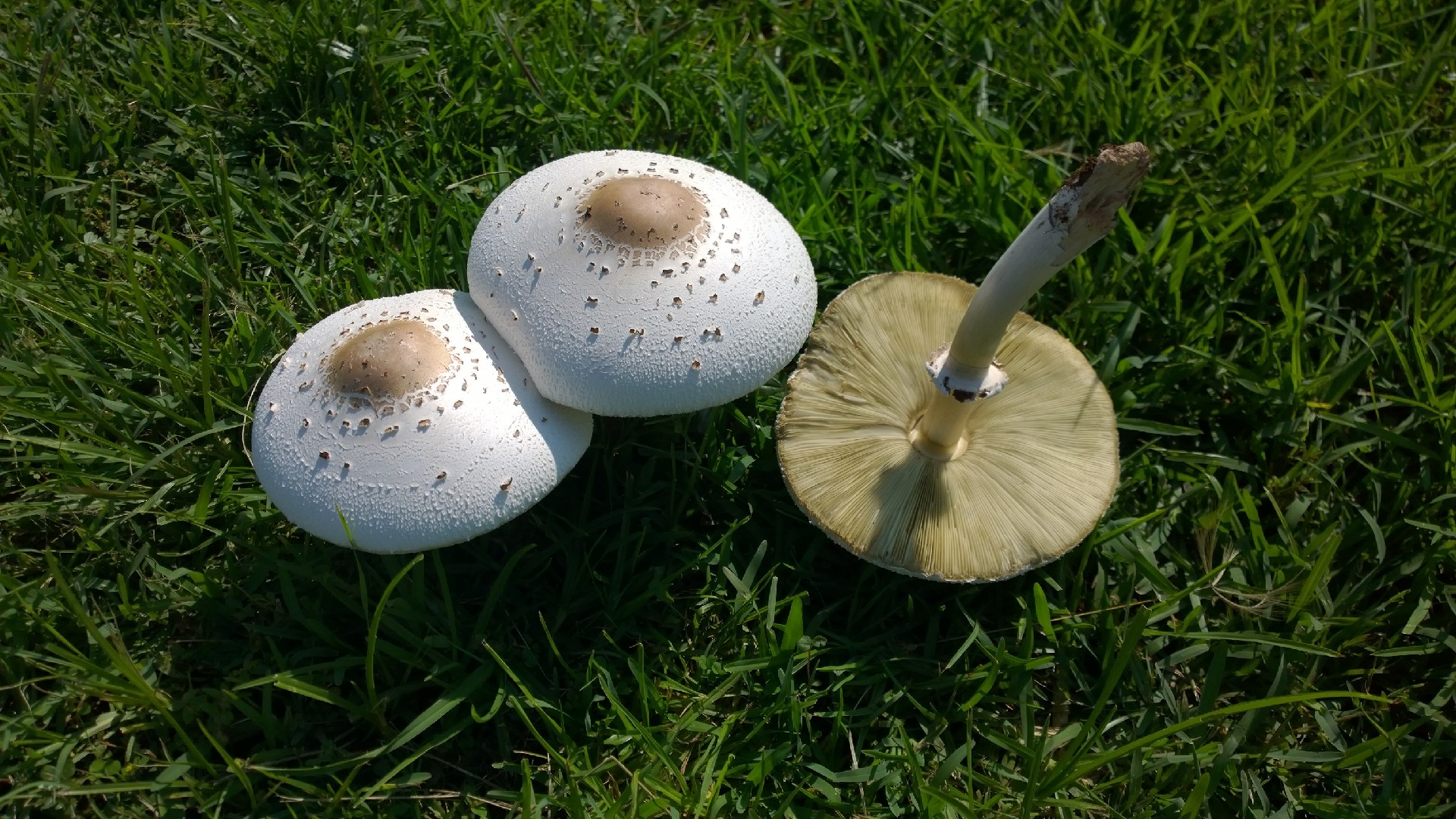
5. False parasol
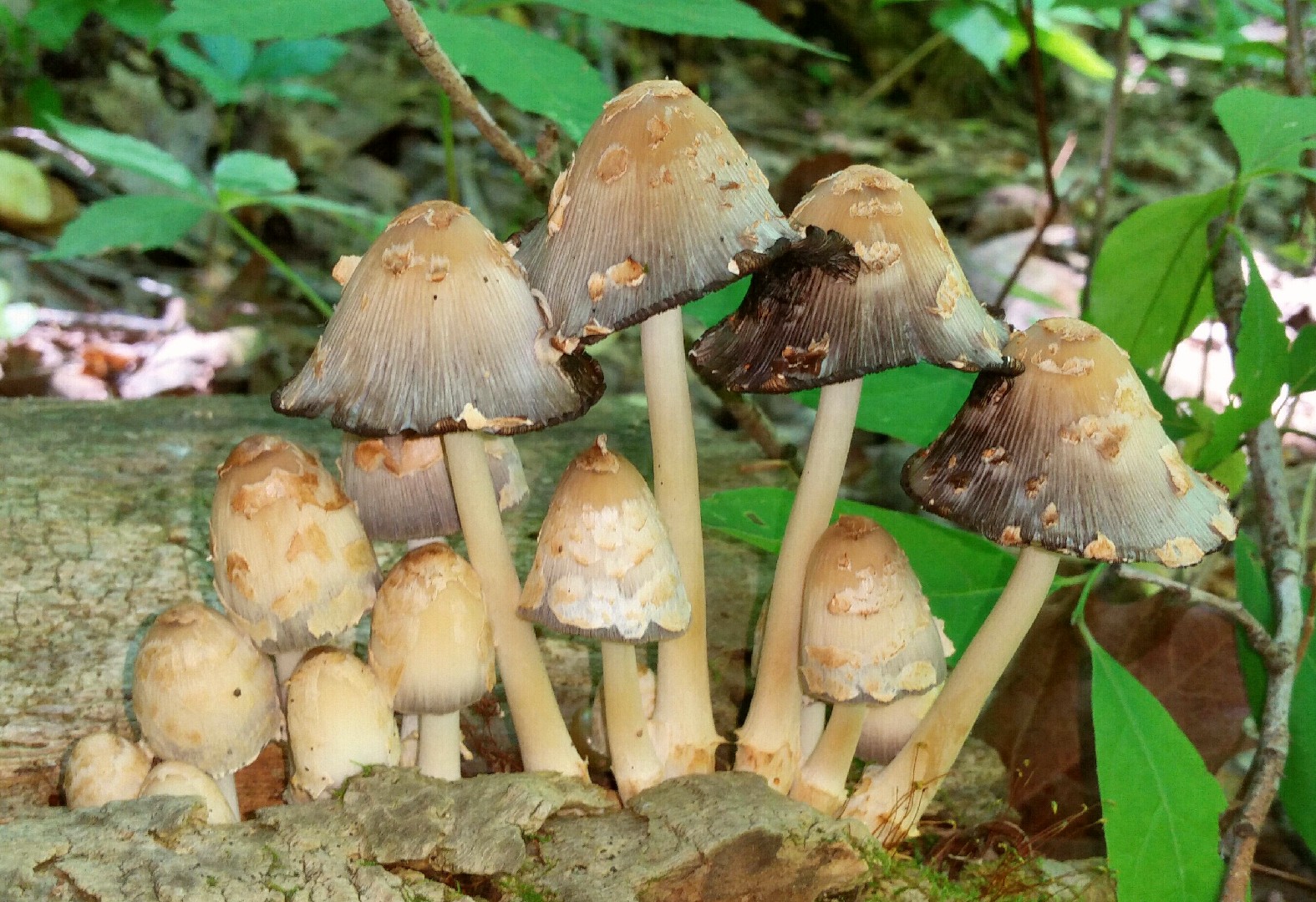
Though the false parasol appears unassuming, the species is famous—or, infamous—for its toxicity. It looks unfortunately similar to Agericus campestrus, a commonly eaten mushroom, but the false parasol can be distinguished by its highly unusual green spore print. Although they are no good to eat, they can be pretty to look at. The species may grow in ring-shaped groups in meadows and on forest floors in what are sometimes called "fairy circles."
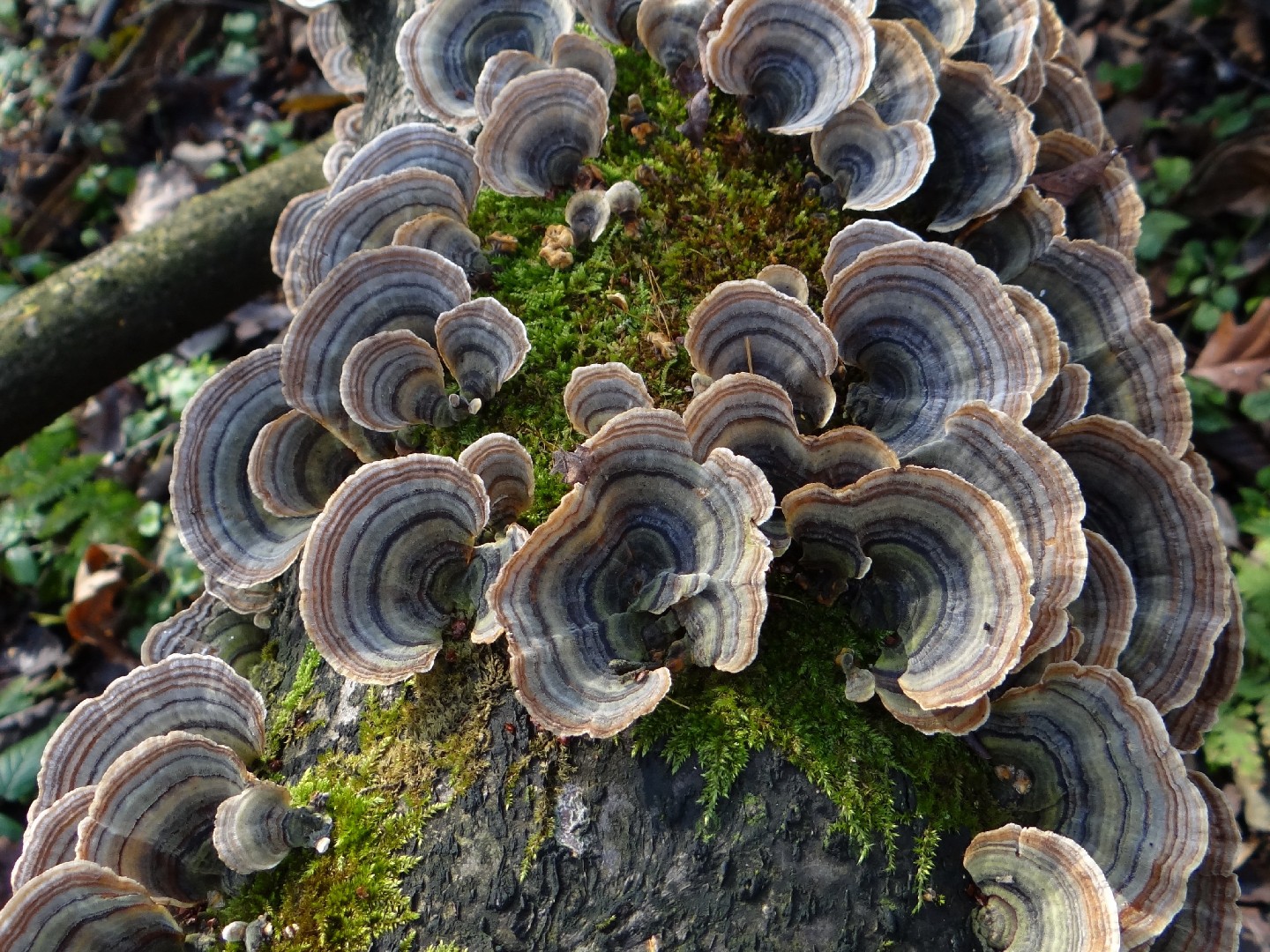
6. Turkey tail
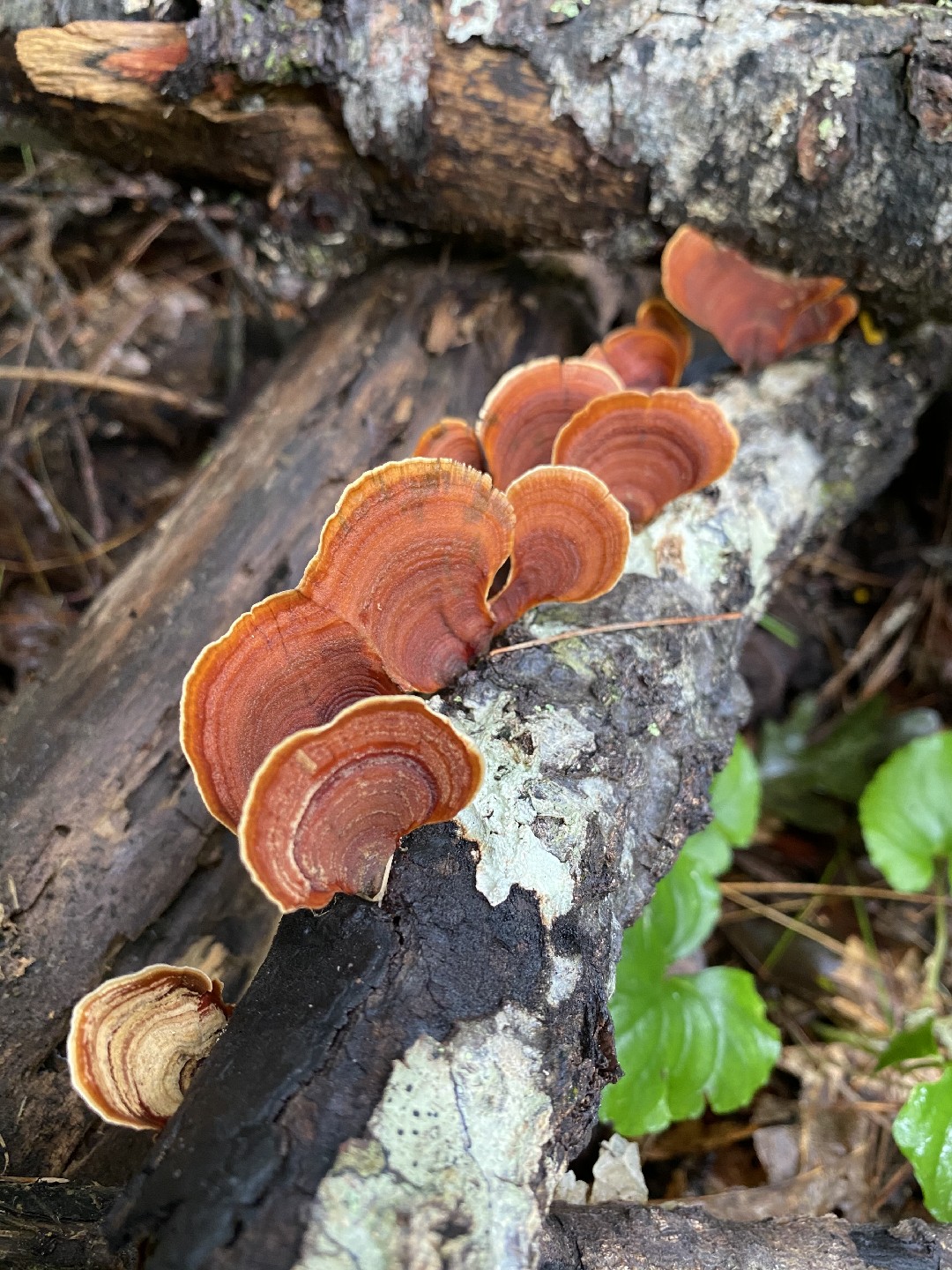
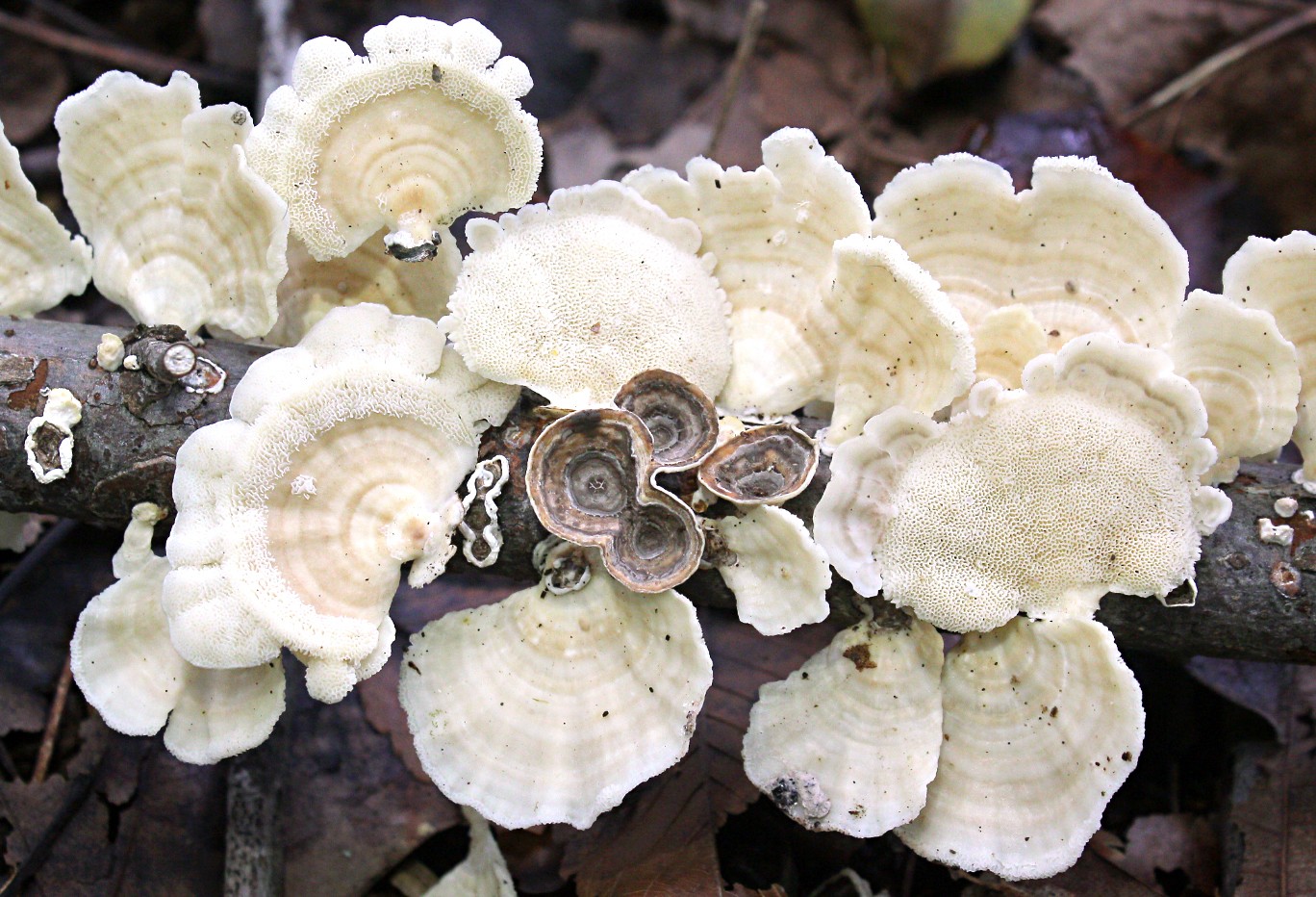
The distinctively-striped turkey tail fungus grows on stumps and logs all over the forests of the northern hemisphere. It is, in fact, probably the most common species you will find. That doesn't mean this mushroom is plain, however; each cap is uniquely patterned. Look for bands of alternating textures as well as color.
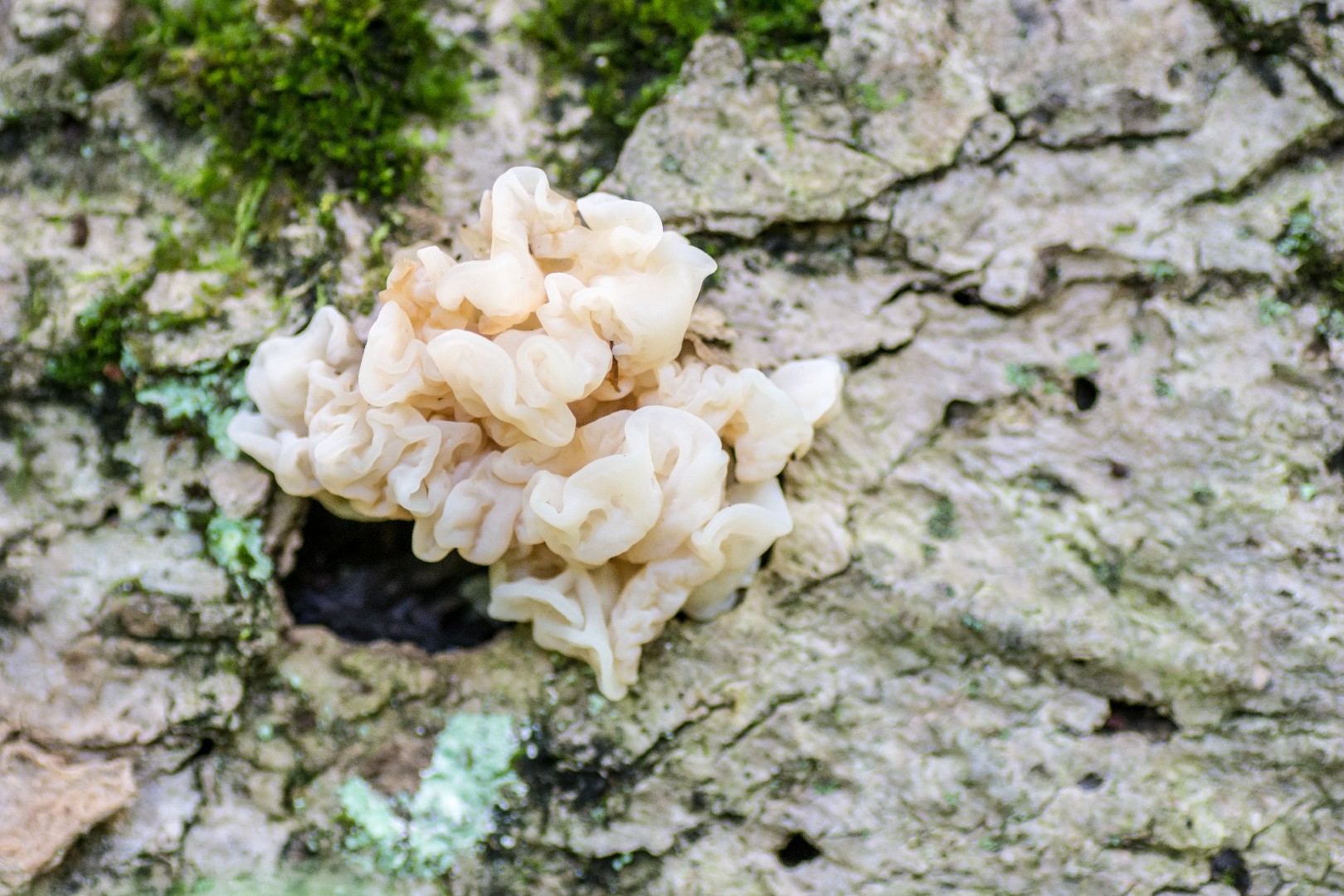
7. White jelly fungus
Unlike other jelly mushrooms, which are typically found on fresh deadwood, white jelly fungus grows on well-decayed wood from hardwood trees. Its fruiting body is indeed white, fading to muted brown hues with age. Its shape has garnered a wide range of comparisons, from brains to popcorn to coral.
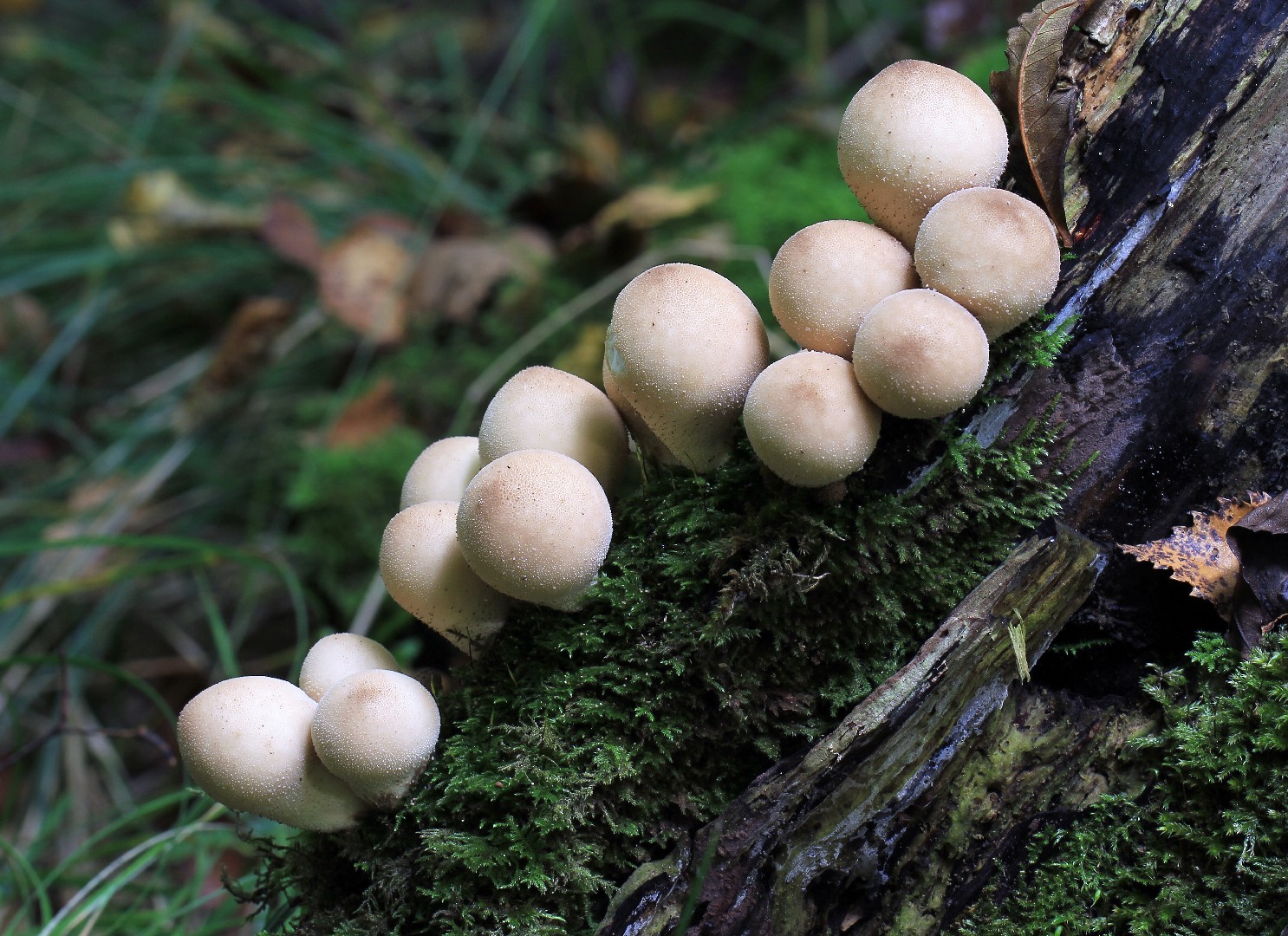
8. Pear-shaped puffball
The mushrooms of this species grow in such tight clusters that they may cover fallen trees and stumps almost entirely in a brownish, puffy coat. Pear-shaped puffballs appear all around the northern hemisphere on decaying hardwoods from fall through winter.
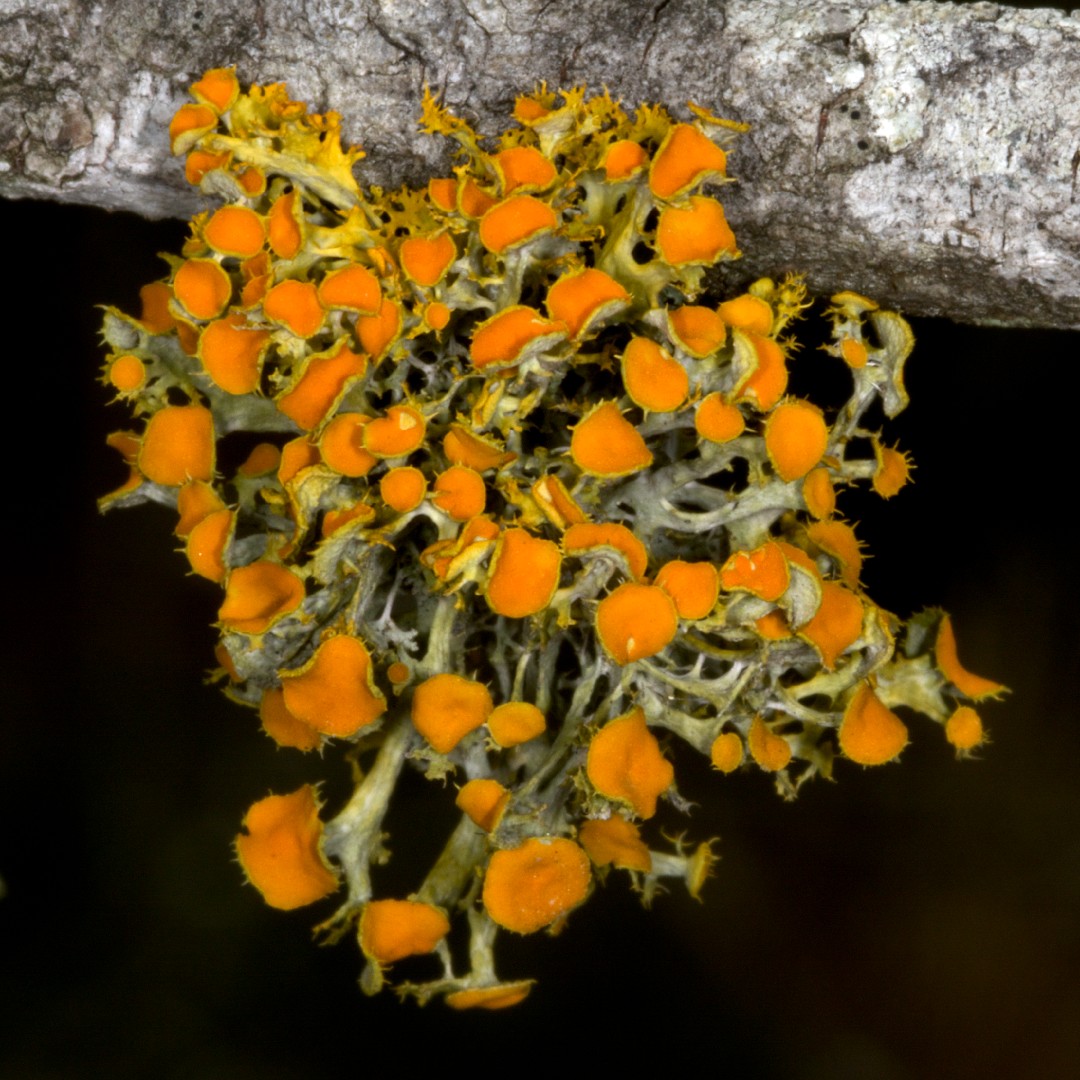
9. Gold-eye lichen
The almost indistinguishable species is a gray-yellow or light to orange-orange, bush-shaped camp with marginal fibrils. However, adhesive fibers are missing. The length of the slightly flattened sections is about 1.5 cm. The frequently formed fruiting bodies (apothecaries) have an orange disc with characteristic eyelashes on the edge and a diameter of 2 to 7 mm. The Photobiont is a member of the green algae genus Trebouxia.
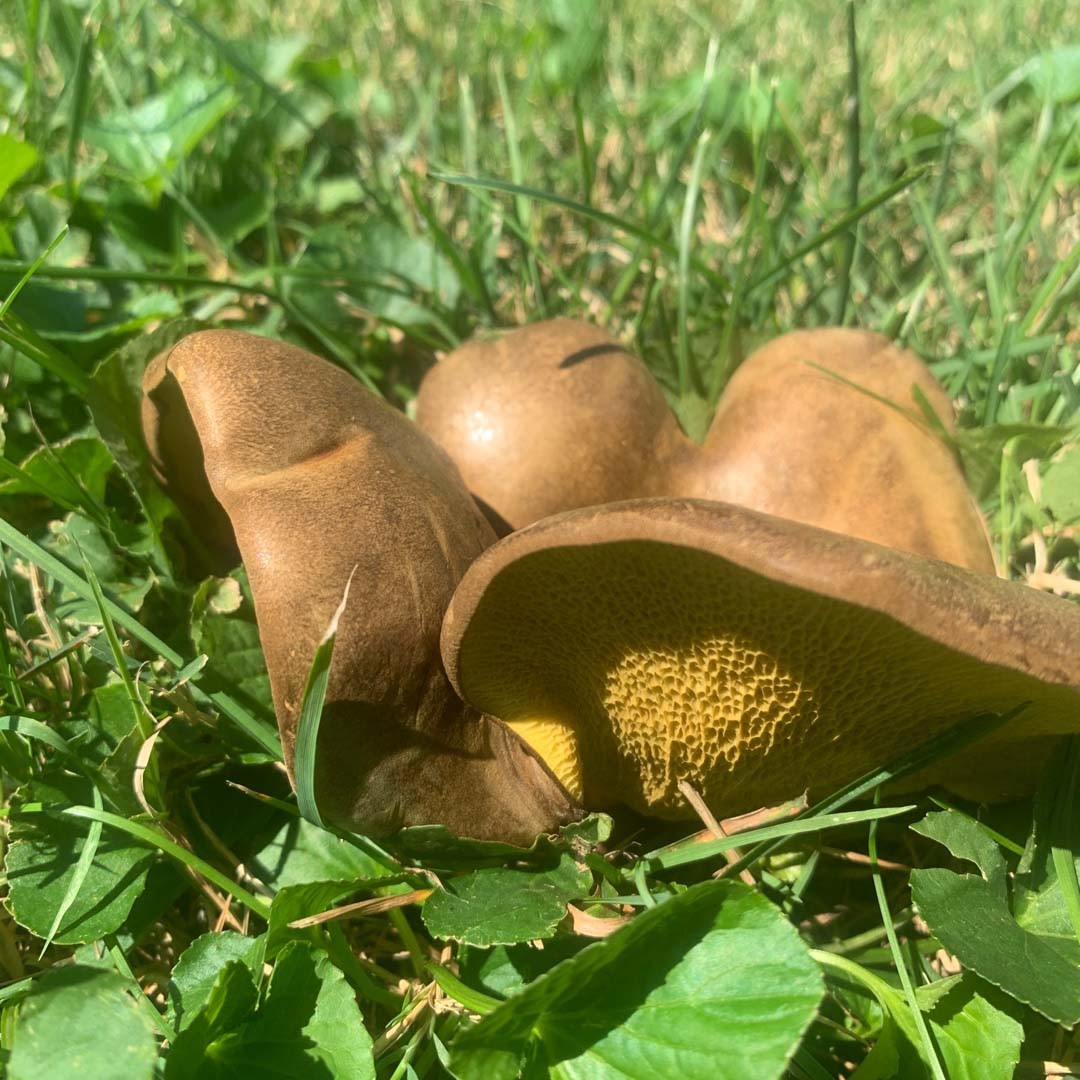
10. Ash-tree bolete
As hinted by its name, ash-tree bolete only grows under ash trees. However, this association is not with the tree itself but with the leafcurl ash aphid. This mushroom forms a protective barrier around the aphid while it feeds on the tree's roots. The usefulness of ash-tree bolete extends beyond the realm of insects, as it has also been used to dye wool.
More







