




Top 20 Most Common Mushrooms in Georgia
Georgia, a region characterized by rich soil and diverse climates, is a habitat that fosters a plethora of mushrooms. This state is renowned for its splendid array of over 20 commonly found mushroom species, varying from the choice edible to the dangerously toxic ones. Each species hides a fascinating tale of endurance and adaptation. Explore along as we delve into the captivating world of Georgia's fungi, enriching your mycological knowledge.

Most Common Mushrooms
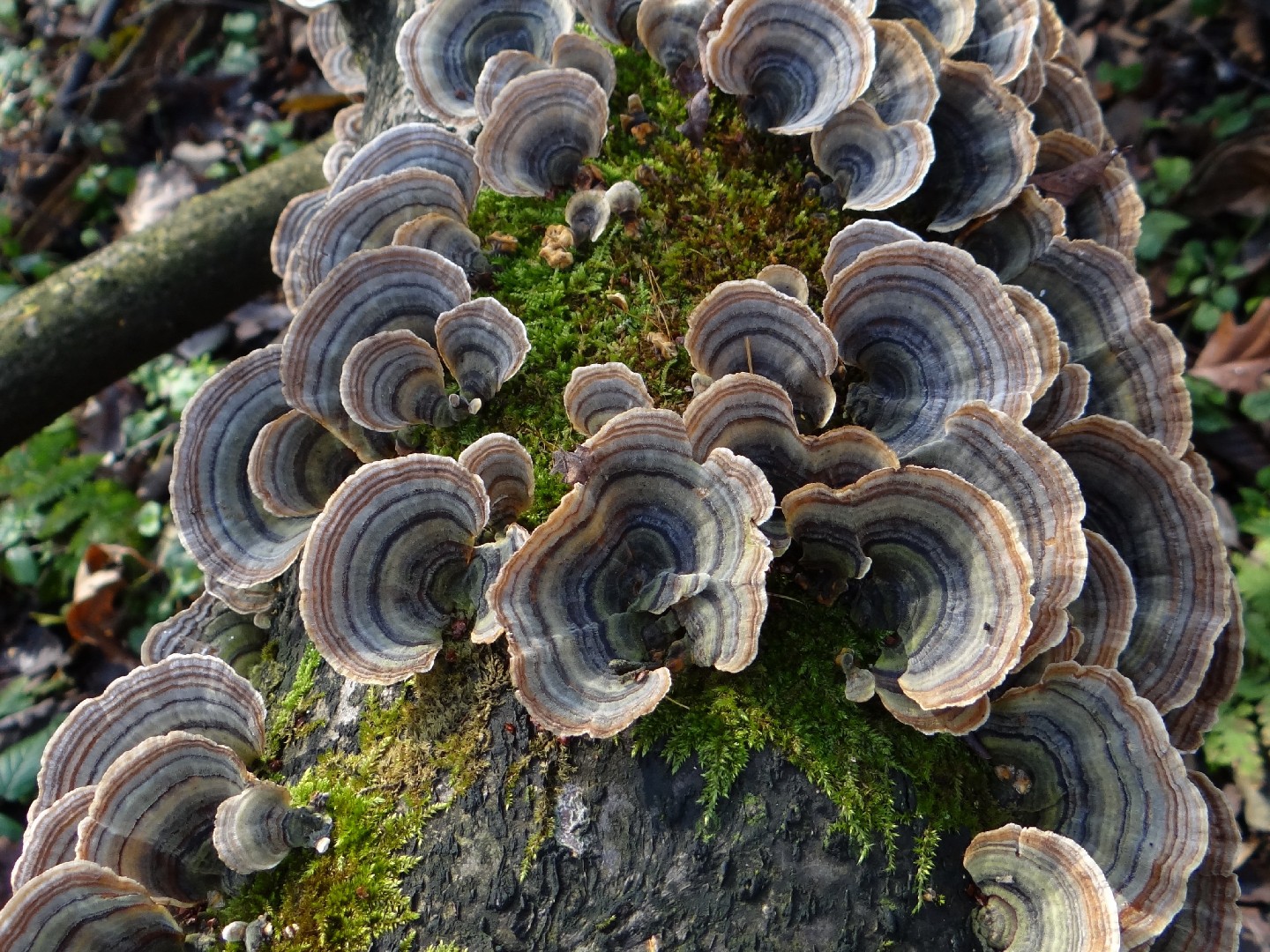
1. Turkey tail
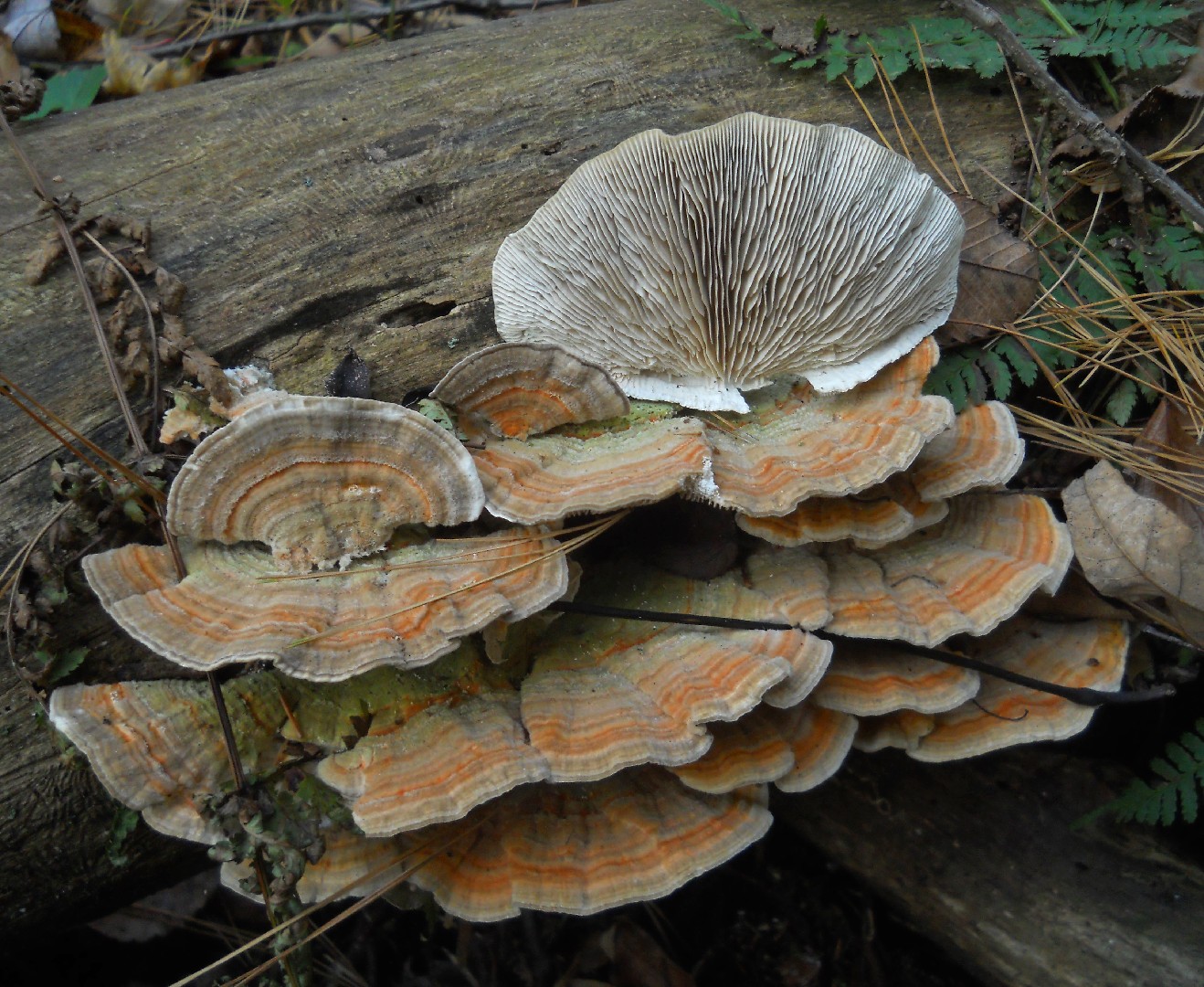
The distinctively-striped turkey tail fungus grows on stumps and logs all over the forests of the northern hemisphere. It is, in fact, probably the most common species you will find. That doesn't mean this mushroom is plain, however; each cap is uniquely patterned. Look for bands of alternating textures as well as color.
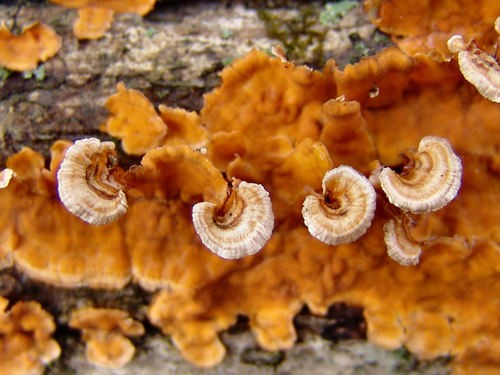
2. Crowded parchment
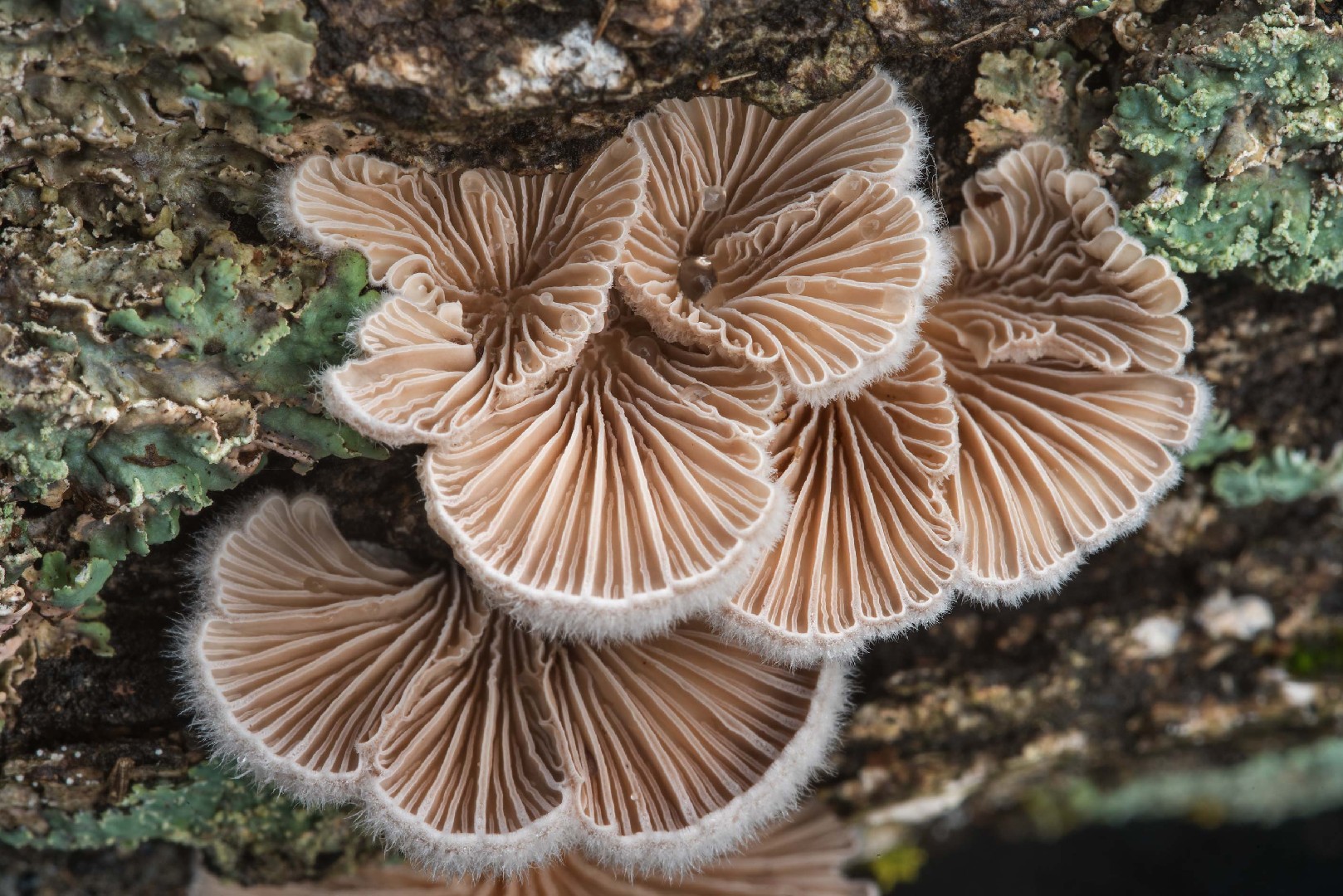
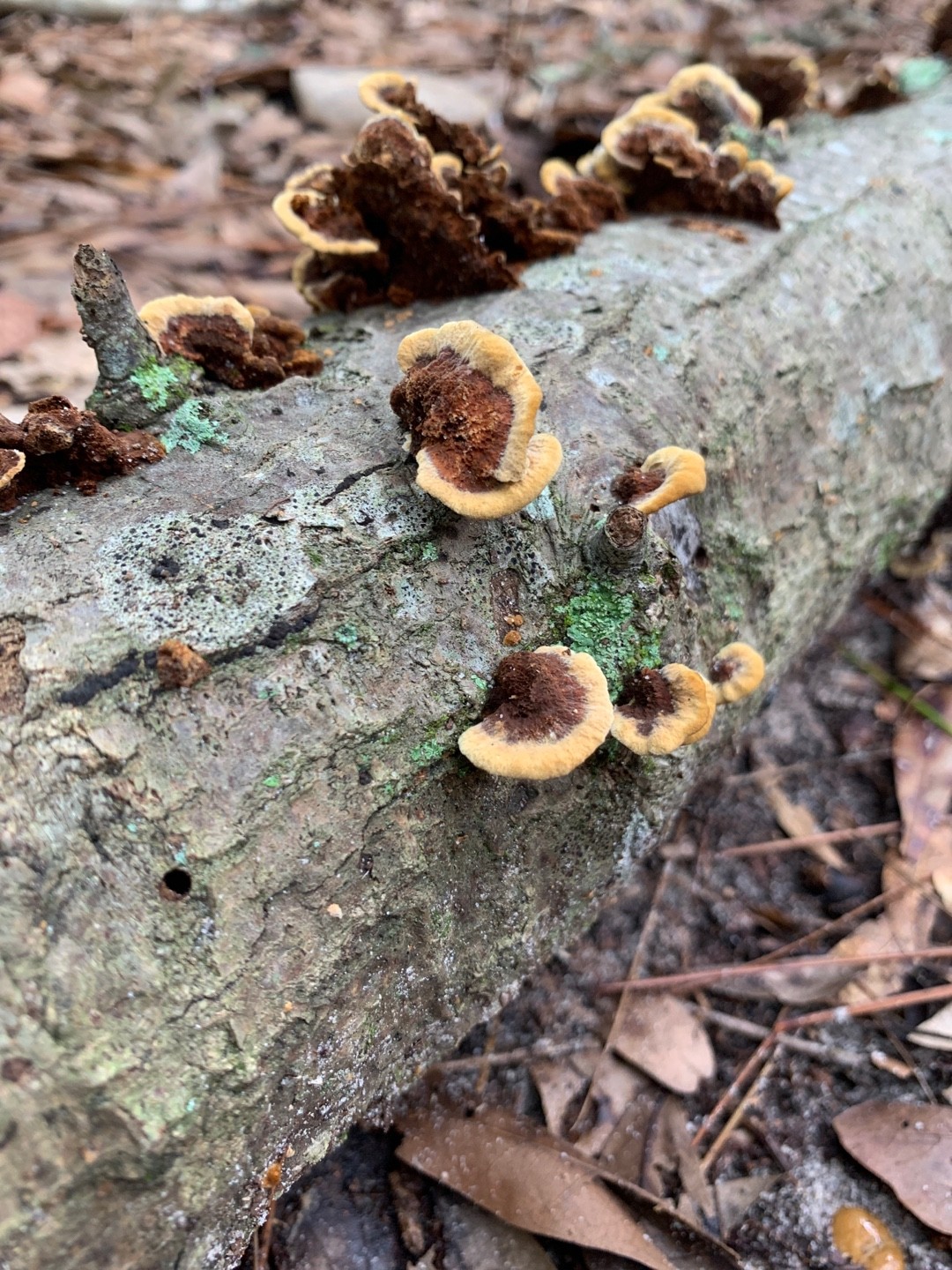
The crowded parchment is a common mushroom that can be found on dead hardwood material. The species is so-named because it grows in very thin, sheet-like shelves, which often become folded when they run up against each other. Crowded parchment is usually found in shades of brown, tan, or orange.
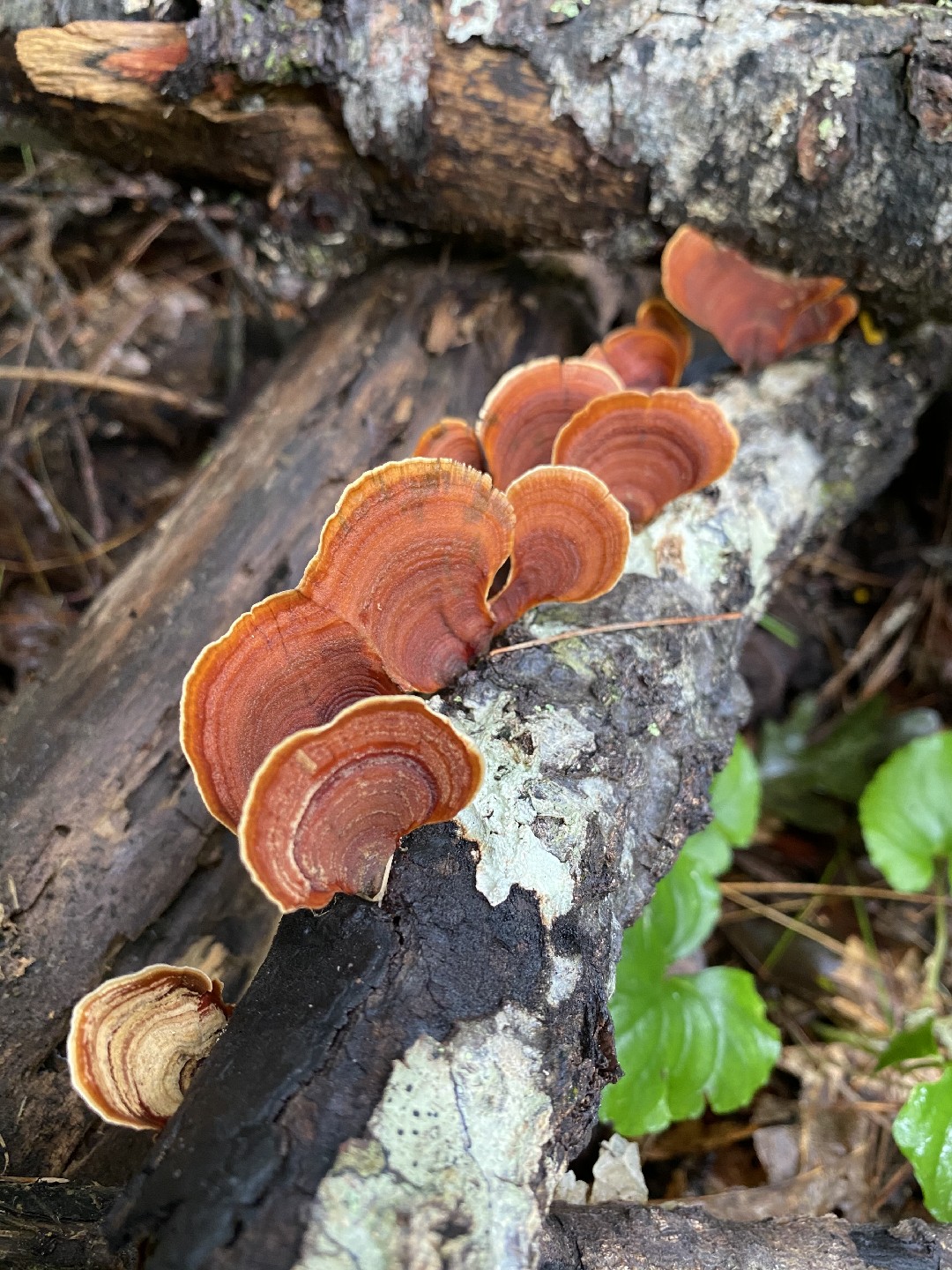
3. False turkey-tail
A common woodland fungus found across North America, the false turkey-tail thrives in wet environs and can be found in copious quantities on decaying wood. The species is so-called because it looks similar the also-common Turkey Tail (Tremetes versicolor) - both species grow in thin, roughly semi-circular sheets. False turkey-tails have tough, woody bodies and are considered to be inedible.
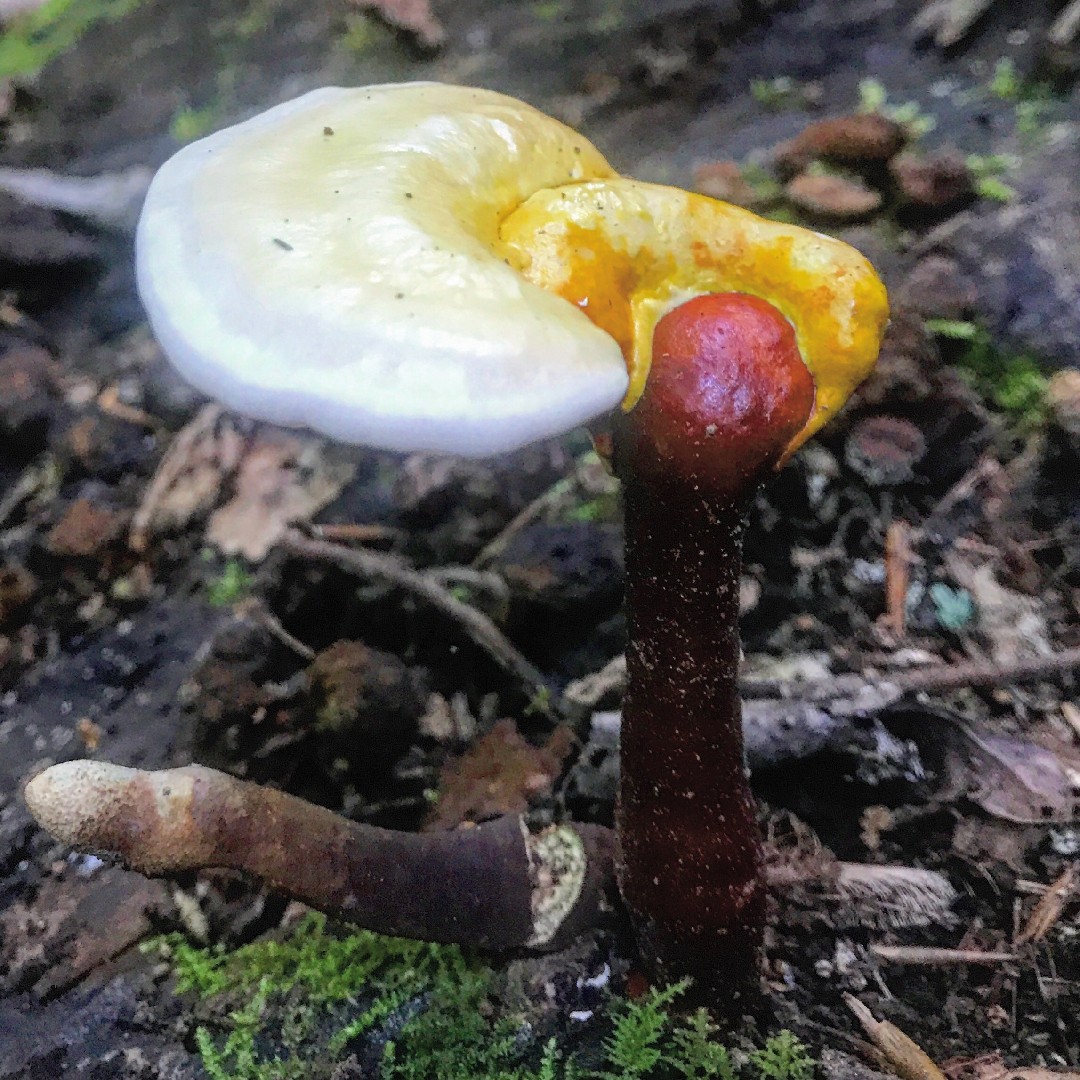
4. Golden reishi
The golden reishi is a tough-fleshed fungus that can be found on dead or live hardwoods, and sometimes conifers, sporting deep shades of red, orange or yellow, although some can be quite pale. While some claim that the golden reishi may convey health benefits, there is no evidence to support this, and the species is considered inedible.
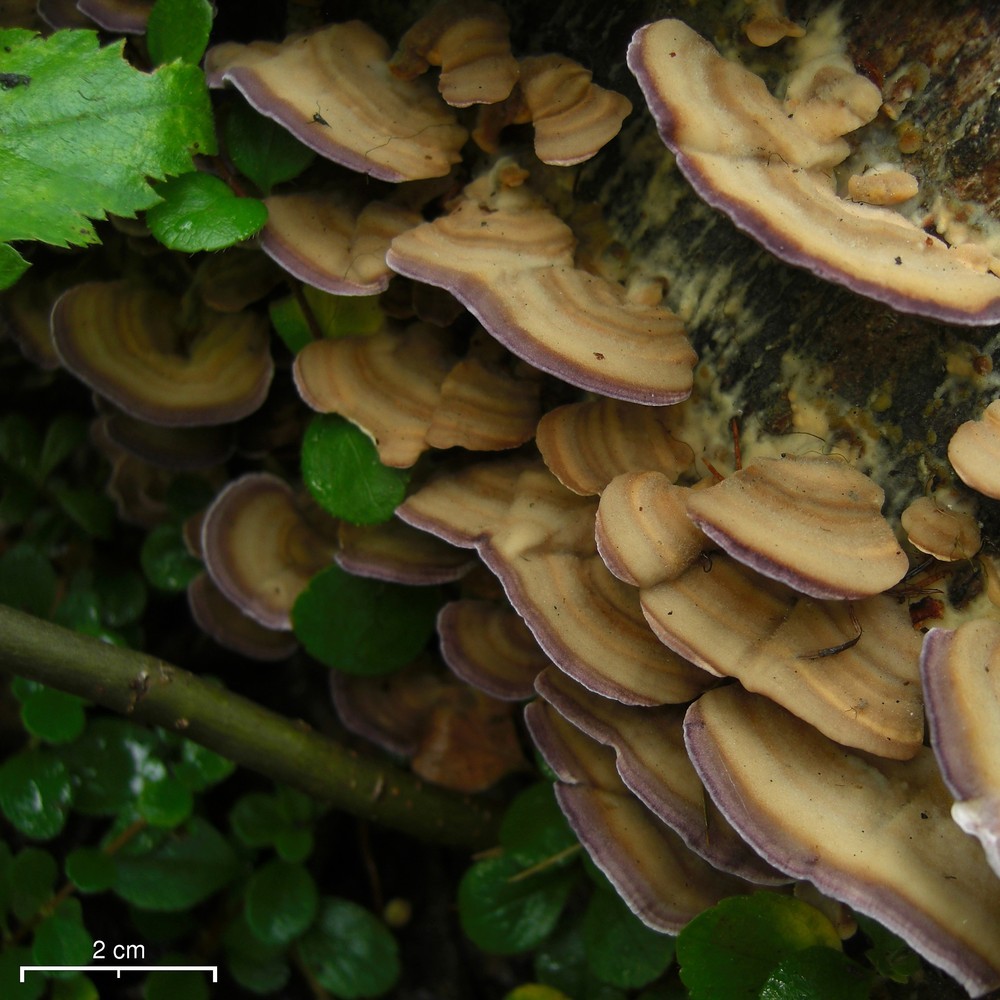
5. Violet-toothed polypore
This inedible shelf or bracket fungus grows in overlapping clusters and layers on hardwood stumps and fallen logs. It also causes a sapwood rot in standing trees. Check under the violet-toothed polypore's cap for its secret lilac-shaded pore surface studded with descending “teeth.”
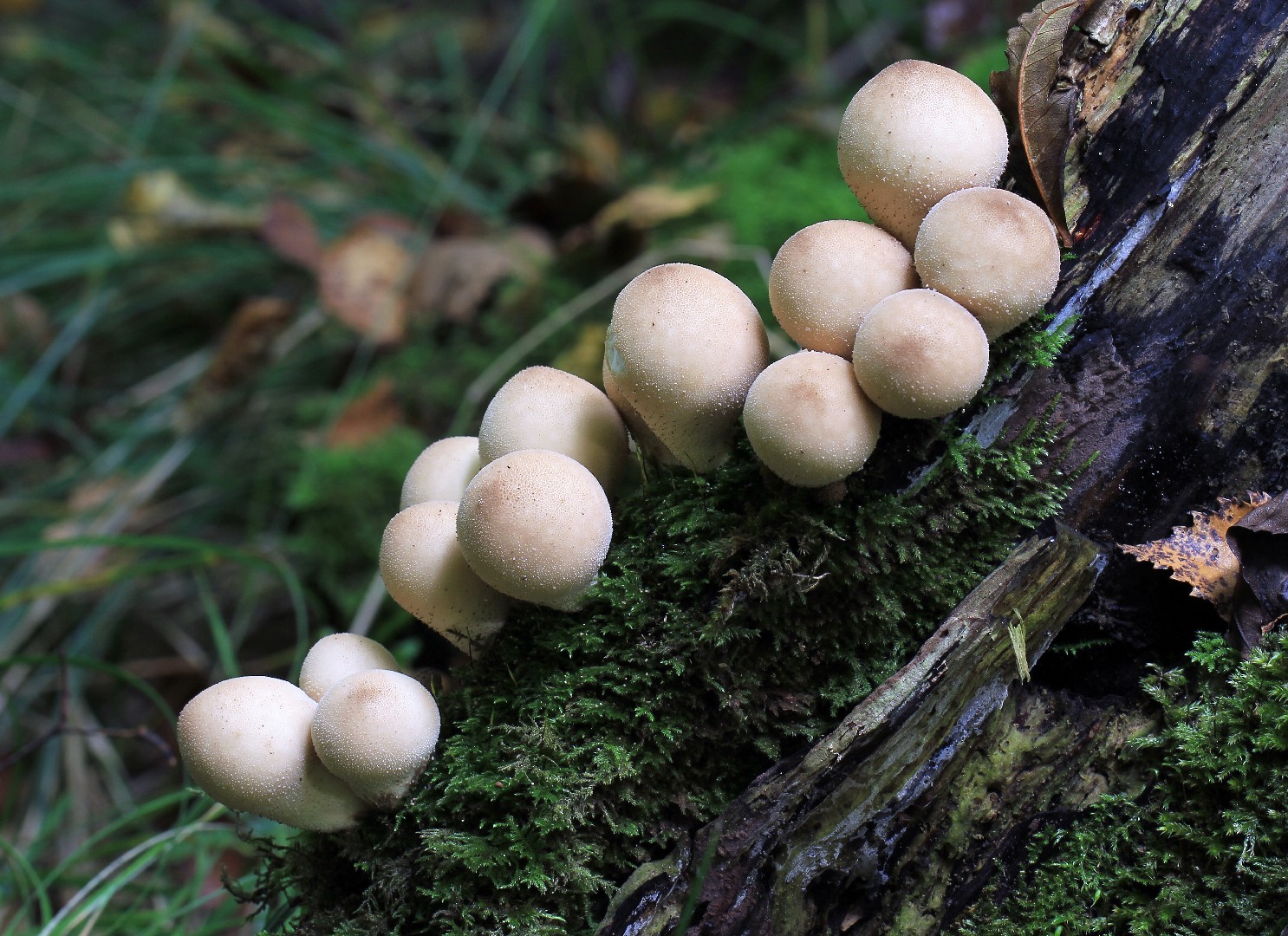
6. Pear-shaped puffball
The mushrooms of this species grow in such tight clusters that they may cover fallen trees and stumps almost entirely in a brownish, puffy coat. Pear-shaped puffballs appear all around the northern hemisphere on decaying hardwoods from fall through winter.
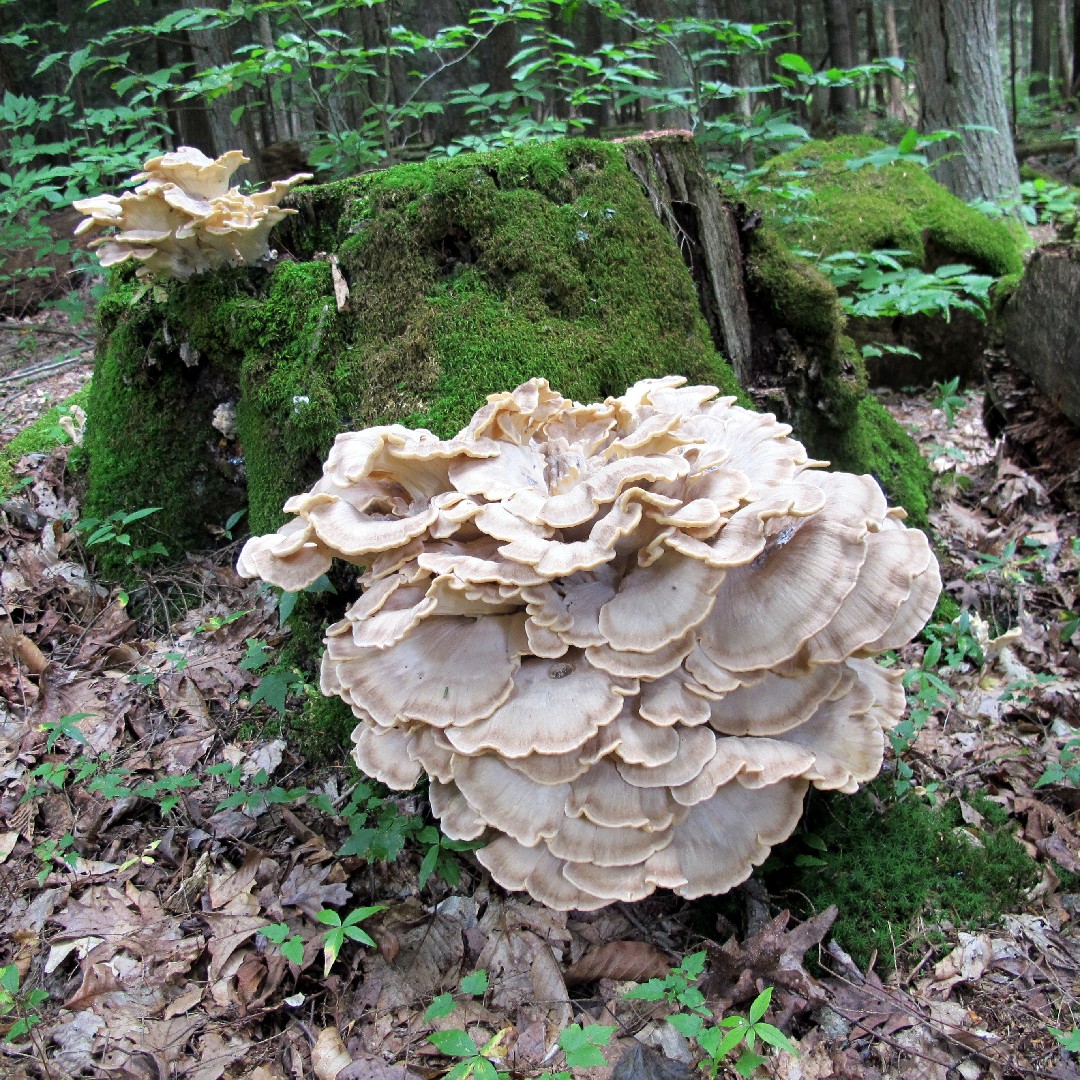
7. Black-staining polypore
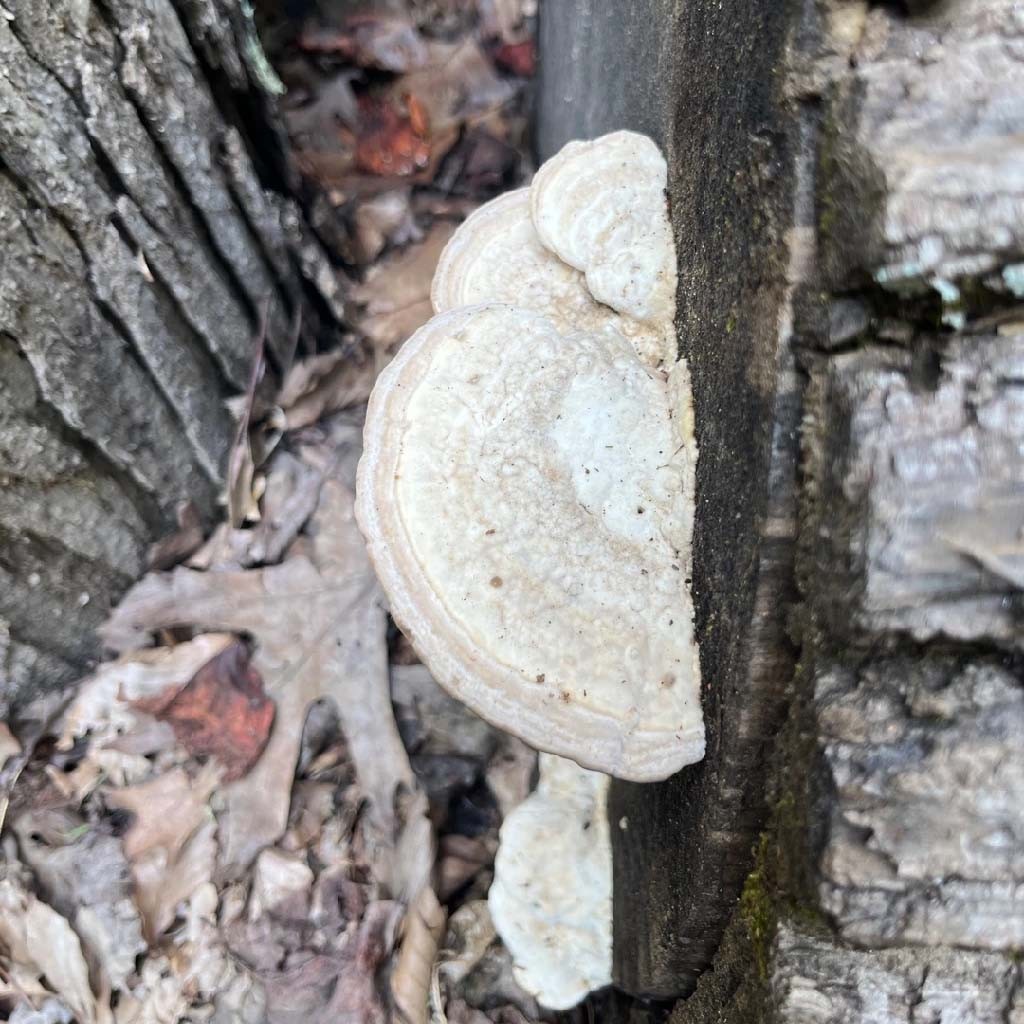
The black-staining polypore (Meripilus sumstinei) is strikingly large. This giant mushroom erupts from decaying tree roots and displays its flat caps in a rosette pattern. They range in color as they mature, starting out a pale yellow and turning dark and smokey looking with occasional black spots.

8. Oak bracket
Oak bracket(Pseudoinonotus dryadeus) is a rather large fungus that acts as a parasite to living or recently deceased oaks. Particularly striking are the amber-colored droplets of liquid this species secretes, which may resemble honey in appearance. If sufficiently mature, the fungus can ring the circumference of an entire oak tree. It is thought to be inedible.
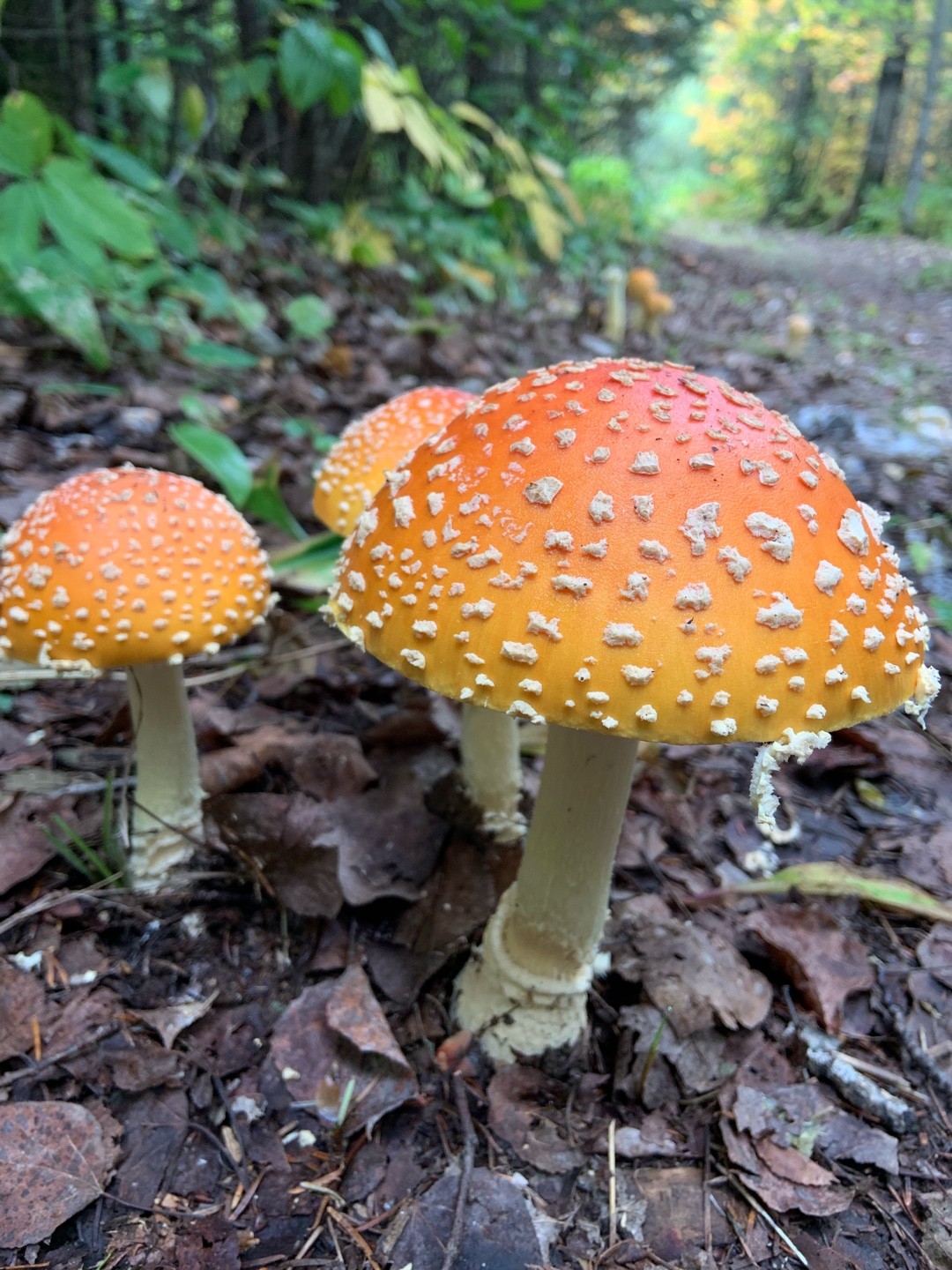
9. Peach-colored fly agaric
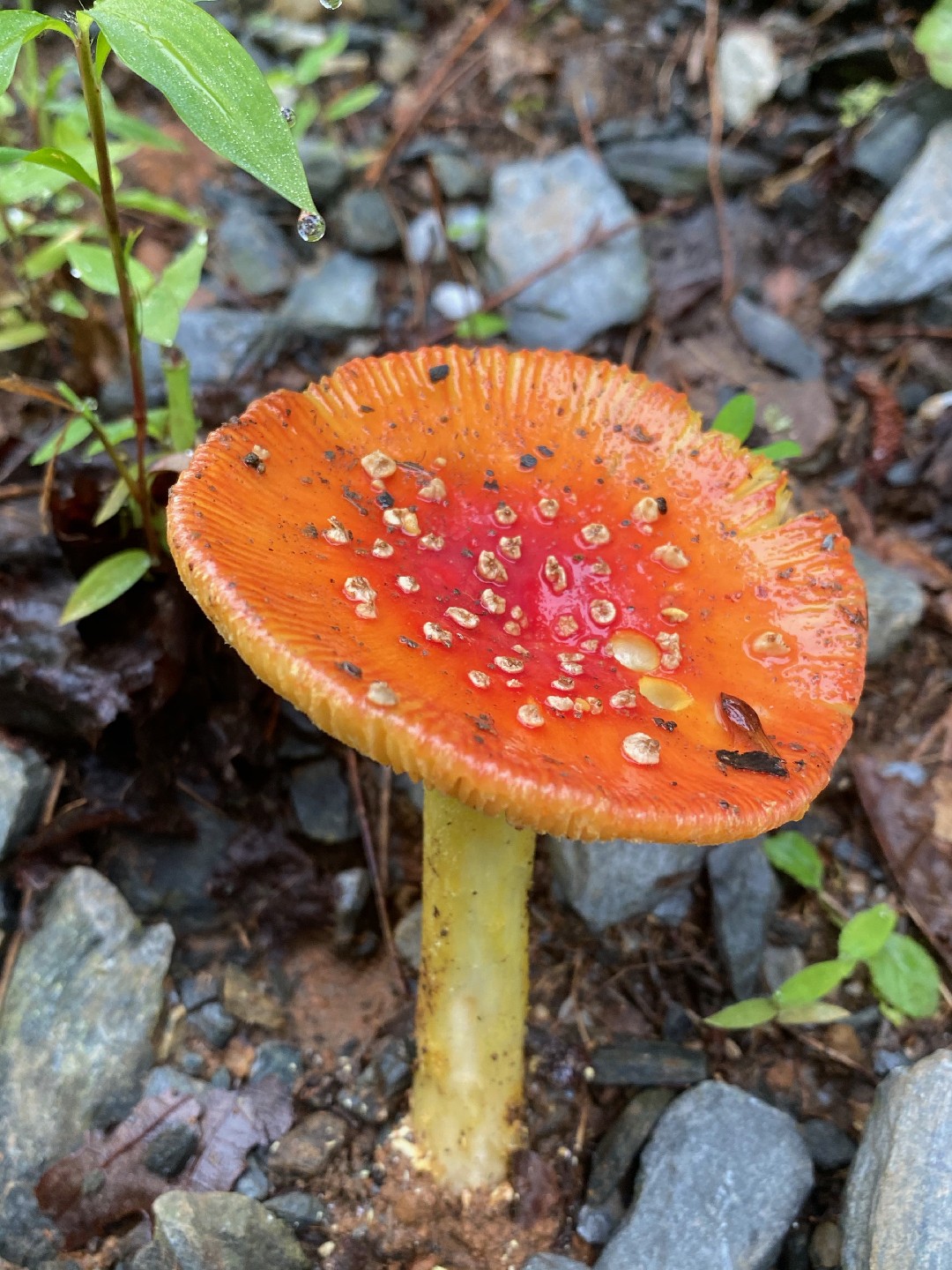
If you're looking for peach-colored fly agaric (Amanita persicina), start by hunting around in the leaf litter of hemlock, pine, and oak trees on the eastern coast of North America. Their rotund cap can commonly be overlooked, but well worth seeking out just to view the freckles and color. This species is poisonous, so take nothing but a photograph.
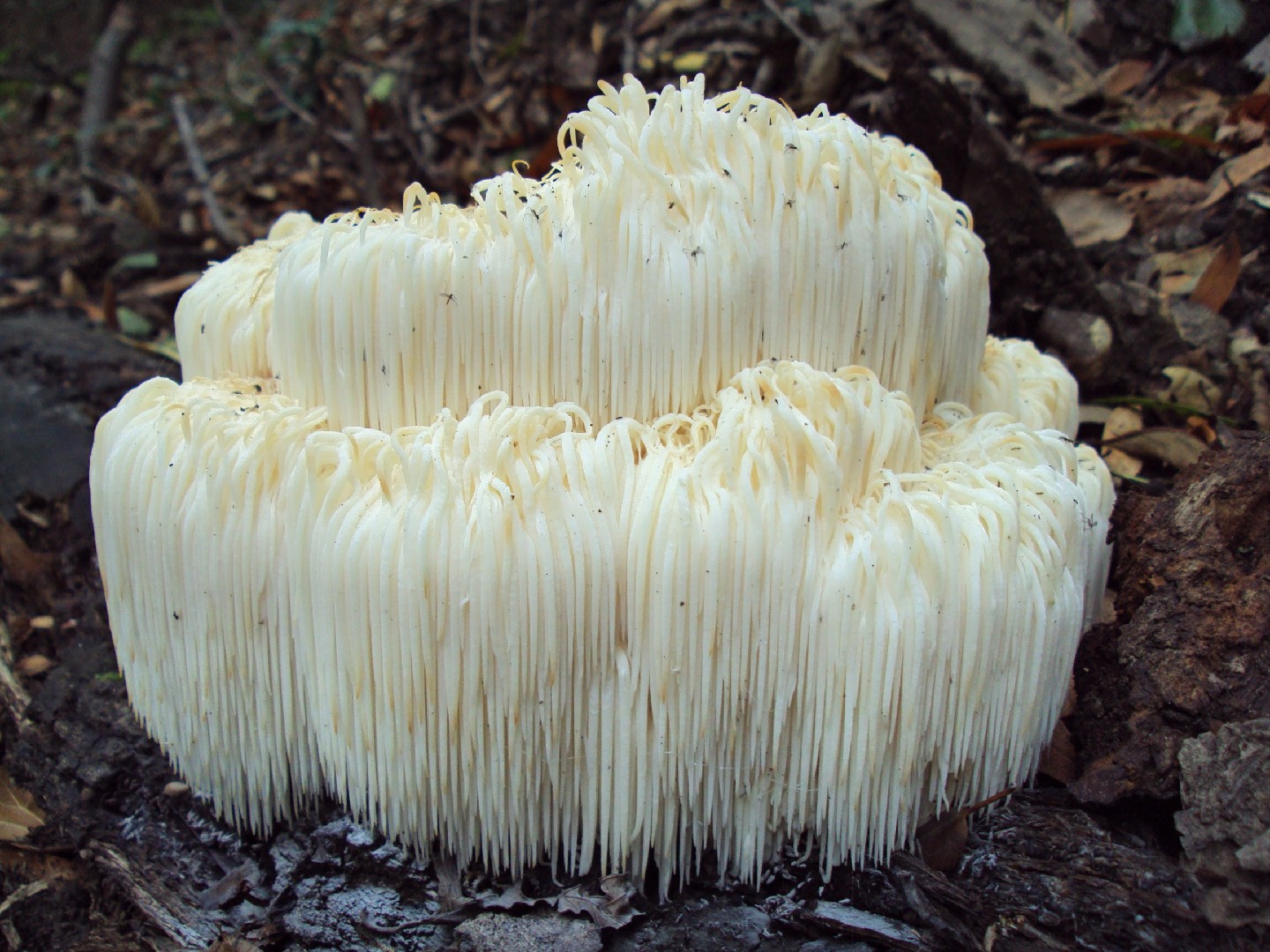
10. Lion's Mane Mushroom
Lion's Mane Mushroom(Hericium erinaceus) is easily identifiable by its characteristic appearance, reminiscent of the majestic mane of a lion. It often sprouts along hardwoods, which may be living or dead. Scientists thus debate whether this species is truly parasitic or merely saprophytic in nature.
More







